Overview
Planning the essay is a critical foundational skill for achieving a high score on the ACT Writing test. While many students are tempted to begin writing immediately after reading the prompt, successful test-takers understand that investing 5-8 minutes in strategic planning dramatically improves essay quality, coherence, and persuasiveness. The planning phase involves analyzing the prompt, developing a clear thesis, organizing supporting evidence, and creating a structural roadmap that guides the writing process. This preparatory work ensures that essays maintain focus, demonstrate sophisticated reasoning, and effectively address all required elements of the ACT rubric.
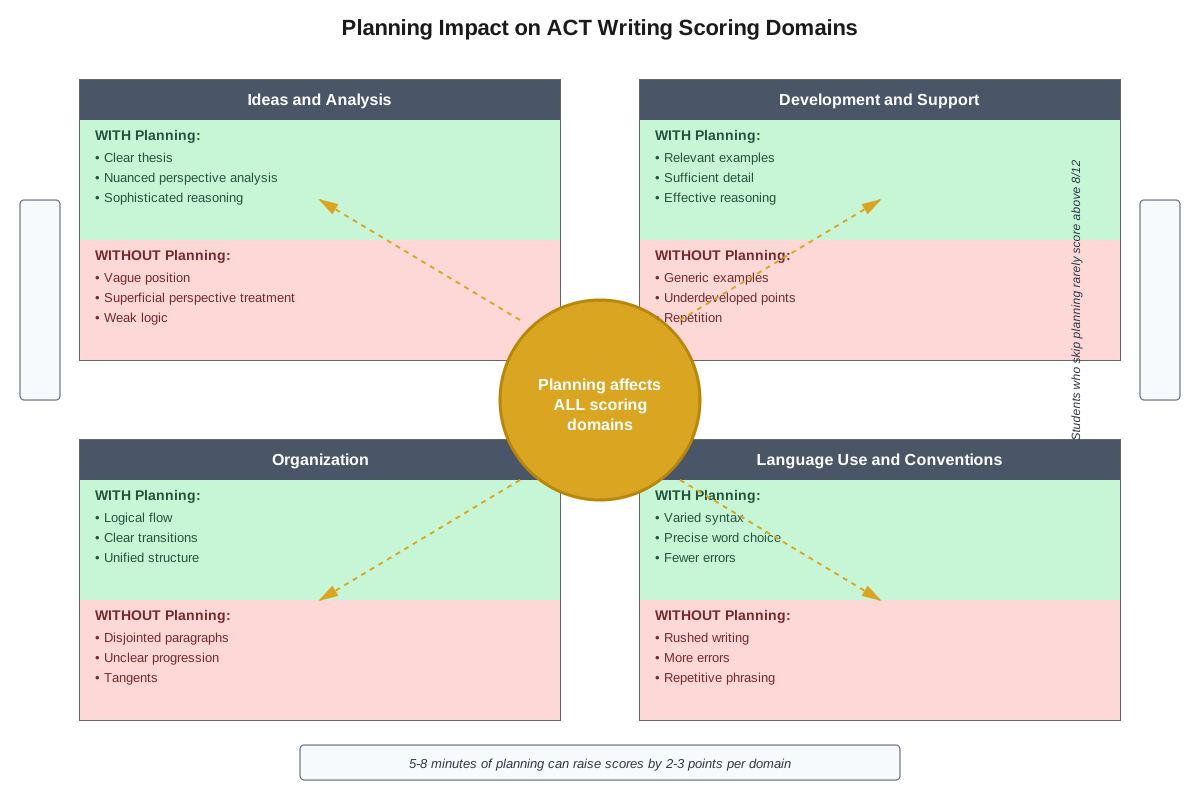
The ACT Writing test evaluates students' ability to construct a well-reasoned argument in response to a complex issue, and ACT planning the essay directly impacts performance across all four scoring domains: Ideas and Analysis, Development and Support, Organization, and Language Use and Conventions. Without adequate planning, essays often suffer from weak thesis statements, disorganized paragraphs, insufficient evidence, and logical inconsistencies—all factors that significantly lower scores. The planning stage is where students make crucial decisions about their argumentative stance, identify the most compelling evidence, and establish the logical flow that will carry readers through their reasoning.
Understanding how to efficiently plan an ACT essay connects directly to broader writing competencies, including rhetorical analysis, argumentative structure, and time management under pressure. This skill serves as the bridge between reading comprehension (understanding the prompt and perspectives) and effective composition (producing a coherent, persuasive essay). Mastery of essay planning enables students to approach the Writing test with confidence, knowing they have a systematic process for transforming complex prompts into high-scoring responses within the 40-minute time constraint.
Learning Objectives
- [ ] Identify when Planning the essay is being tested
- [ ] Explain the core rule or strategy behind Planning the essay
- [ ] Apply Planning the essay to ACT-style questions accurately
- [ ] Analyze ACT Writing prompts to extract key issues and perspectives within 2 minutes
- [ ] Construct a thesis statement that takes a clear position while acknowledging complexity
- [ ] Develop a strategic outline that allocates appropriate space to each essay component
- [ ] Evaluate potential evidence and examples for relevance and persuasive power before writing
Prerequisites
- Understanding of argumentative essay structure: Students must recognize the basic components of introduction, body paragraphs, and conclusion to create an effective organizational plan
- Familiarity with thesis statements: Knowing how to formulate a clear, debatable claim is essential for planning an essay's central argument
- Basic time management skills: Students should understand how to allocate limited time across multiple tasks to appreciate why planning is a worthwhile investment
- Reading comprehension of complex texts: The ability to quickly understand multi-perspective prompts is necessary before planning can begin
Why This Topic Matters
Essay planning is not merely a recommended practice—it is a fundamental determinant of ACT Writing success. Research on standardized test performance consistently shows that students who spend adequate time planning produce essays with significantly higher scores across all rubric dimensions. The ACT Writing test appears as an optional component of the ACT, but many competitive colleges require or strongly recommend it, making strong performance essential for college admissions.
On the ACT Writing test, every essay prompt presents a complex issue with three distinct perspectives, requiring students to analyze multiple viewpoints, develop their own position, and explain relationships between perspectives. This complexity makes planning indispensable—attempting to navigate these requirements without a roadmap typically results in disorganized, superficial responses. Statistically, essays scoring in the top range (10-12 on the 12-point scale) demonstrate clear organizational structure and purposeful development, both of which originate in the planning phase.
The ACT Writing test consistently evaluates planning through its impact on the final product. Graders specifically assess whether essays maintain a clear focus, develop ideas logically, and demonstrate coherent organization—all outcomes that depend on effective planning. Common manifestations include: essays that address all three given perspectives systematically, arguments that build progressively toward a conclusion, and body paragraphs that each serve a distinct purpose in supporting the thesis. Students who skip or rush planning typically produce essays with abrupt transitions, redundant paragraphs, or incomplete analysis of perspectives.
Core Concepts
The Planning Process Framework
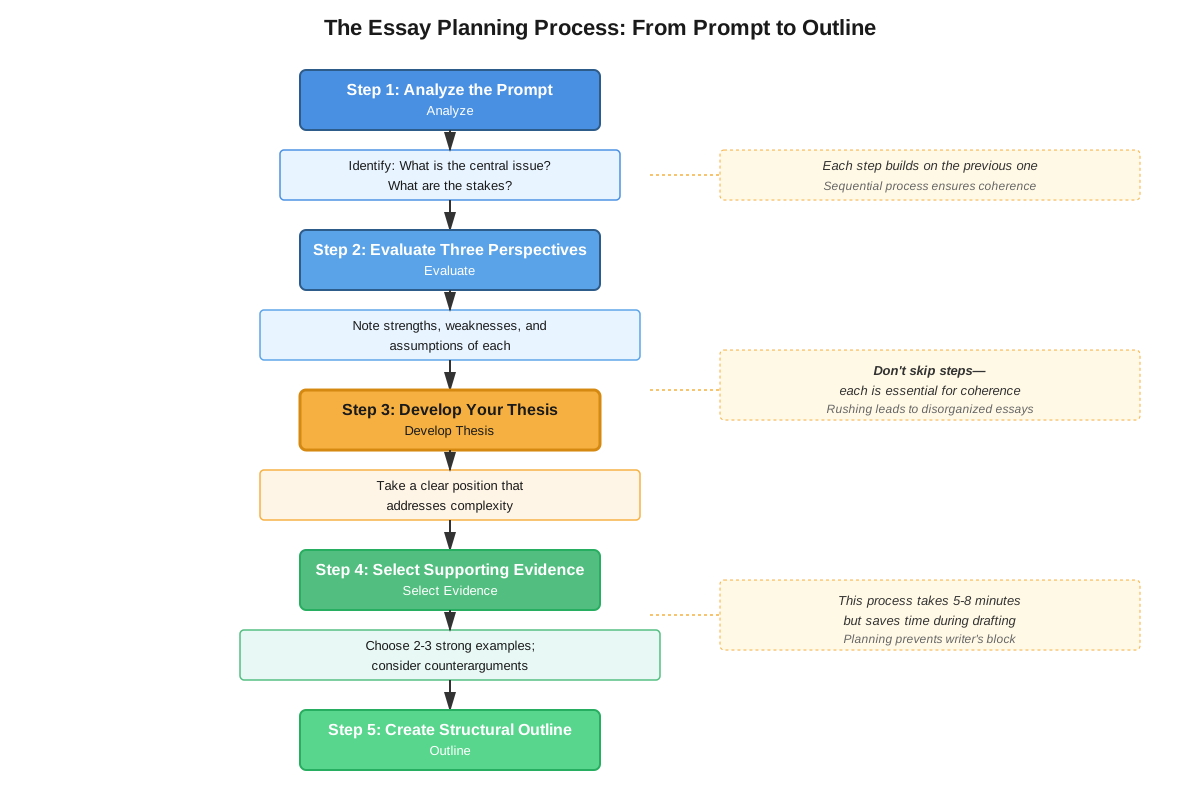
The planning the essay process for the ACT Writing test follows a systematic sequence designed to maximize efficiency within time constraints. This framework consists of five distinct phases: prompt analysis, perspective evaluation, thesis formulation, evidence selection, and structural outlining. Each phase builds upon the previous one, creating a comprehensive blueprint for the essay.
Prompt analysis (1-2 minutes) involves carefully reading the issue statement and identifying the core question or tension being presented. Students should underline key terms and rephrase the central issue in their own words to ensure comprehension. For example, if the prompt discusses whether schools should prioritize STEM education over arts programs, the core tension involves educational priorities and resource allocation.
Perspective evaluation (1-2 minutes) requires examining each of the three provided perspectives, noting their main claims and underlying assumptions. Effective planners create a quick chart or list identifying what each perspective values and what concerns it raises. This evaluation helps students understand the full spectrum of viewpoints before committing to their own position.
Thesis Development Strategy
A strong thesis statement serves as the foundation for the entire essay, and developing it during planning prevents mid-essay confusion or position shifts. The ACT rewards thesis statements that demonstrate nuanced thinking rather than simple agreement or disagreement with a single perspective. Effective thesis development involves three components: taking a clear position, acknowledging complexity, and previewing the reasoning structure.
The position component states the writer's stance on the issue directly and unambiguously. Rather than hedging with phrases like "it depends" or "there are many factors," strong theses make definitive claims such as "Schools must maintain robust arts programs alongside STEM education to develop well-rounded, creative problem-solvers."
The complexity acknowledgment shows sophisticated thinking by recognizing valid concerns from other perspectives or identifying conditions that affect the argument. This might include phrases like "while budget constraints present real challenges" or "although STEM skills are economically valuable." This element demonstrates the Ideas and Analysis dimension that ACT graders evaluate.
The reasoning preview briefly indicates how the essay will develop its argument, often through a "because" clause or by mentioning the main supporting points. This roadmap helps both the writer stay focused and the reader follow the argument's progression.
Evidence Selection and Categorization
During planning, students must identify specific examples, reasoning, and evidence that will support their thesis. The ACT Writing rubric rewards essays that develop ideas with relevant examples and explanations, making evidence selection a critical planning task. Effective planners categorize potential evidence into three types: personal experience, current events/historical examples, and logical reasoning.
Personal experience provides concrete, specific illustrations but should be used strategically rather than exclusively. Current events and historical examples demonstrate broader awareness and can strengthen credibility. Logical reasoning involves explaining cause-and-effect relationships, considering implications, or analyzing assumptions.
The key planning decision involves matching evidence to specific points in the argument. Rather than listing random examples, strategic planners assign each piece of evidence to a particular claim or paragraph, ensuring balanced development throughout the essay.
Structural Outlining Techniques
The outline created during planning serves as the essay's architectural blueprint. Effective ACT planning the essay outlines include specific components for each paragraph, not just vague topic labels. A comprehensive outline typically follows this structure:
| Essay Section | Planning Elements | Time Allocation |
|---|---|---|
| Introduction | Hook, context, thesis statement | 1 paragraph |
| Body Paragraph 1 | First main point, evidence, analysis | 2-3 paragraphs |
| Body Paragraph 2 | Second main point, evidence, analysis | (addressing perspectives) |
| Body Paragraph 3 | Counterargument/alternative perspective | Optional but recommended |
| Conclusion | Synthesis, broader implications | 1 paragraph |
Each body paragraph in the outline should note: (1) the main claim or topic sentence, (2) which perspective(s) it addresses, (3) specific evidence to include, and (4) the analytical point being made. This level of detail prevents writer's block during composition and ensures each paragraph serves a clear purpose.
Perspective Integration Planning
A distinctive feature of ACT Writing prompts is the requirement to analyze and respond to three given perspectives. Strategic planning involves deciding how to integrate these perspectives throughout the essay rather than simply summarizing them in sequence. Effective approaches include: using perspectives as counterarguments to address and refute, incorporating perspectives as supporting evidence when they align with the thesis, or synthesizing multiple perspectives to develop a more complex position.
During planning, students should annotate each perspective with their intended use: "Perspective 1 - refute in paragraph 3," "Perspective 2 - partially support my thesis," "Perspective 3 - acknowledge limitation but explain why my position is stronger." This strategic approach demonstrates the sophisticated engagement with multiple viewpoints that distinguishes high-scoring essays.
Time Management Within Planning
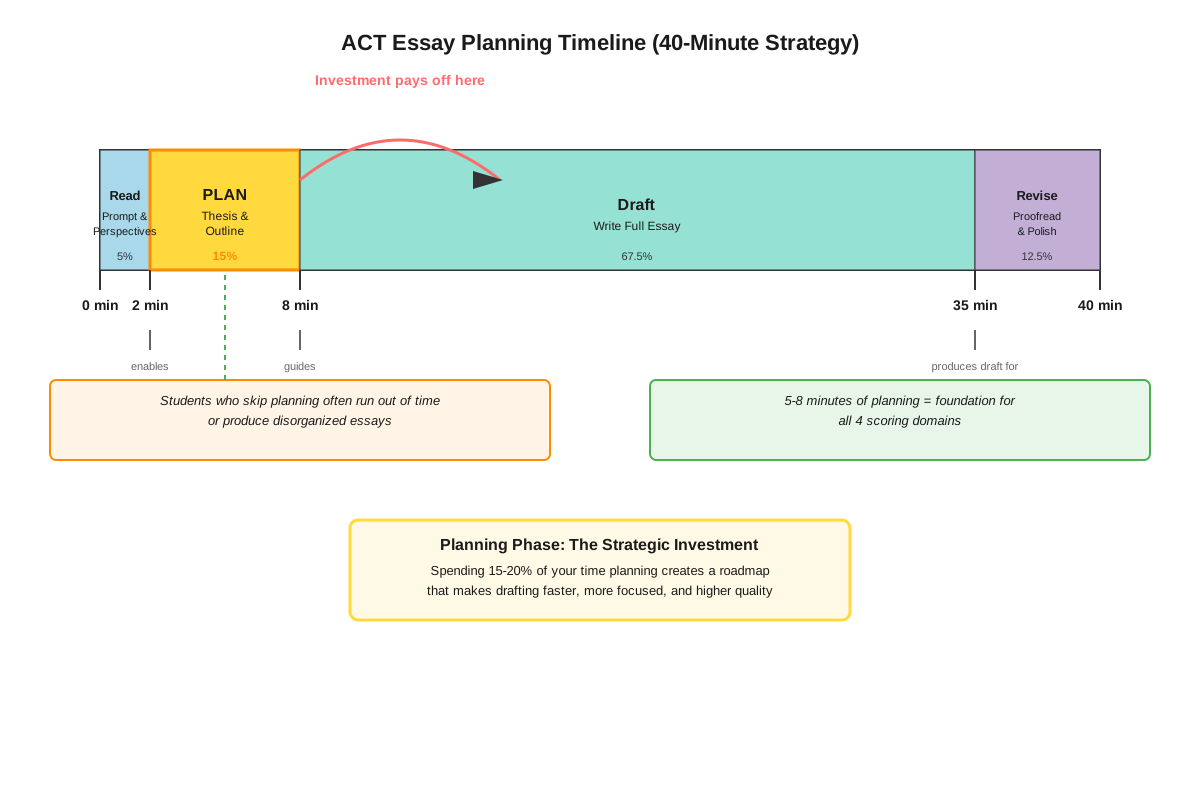
Effective essay planning requires disciplined time allocation. The recommended distribution for the 40-minute ACT Writing test is: 5-8 minutes planning, 25-30 minutes writing, 3-5 minutes revising. Students often resist spending this much time on planning, but research consistently shows this investment improves overall essay quality and actually saves time during writing by preventing false starts and organizational problems.
During planning, students should set mini-deadlines: 2 minutes for prompt analysis, 2 minutes for thesis development, 2 minutes for evidence selection, and 2 minutes for outlining. Using a watch or the test room clock to monitor these intervals ensures planning remains efficient rather than consuming excessive time.
Concept Relationships
The concepts within essay planning form an interconnected system where each element depends on and reinforces the others. Prompt analysis serves as the foundation, enabling accurate perspective evaluation, which in turn informs thesis development. The thesis then guides evidence selection, as students choose examples that specifically support their position. Finally, structural outlining organizes all previous planning decisions into a coherent sequence.
This planning process connects directly to the prerequisite knowledge of argumentative essay structure—students apply their understanding of introduction-body-conclusion format to create their outline. The thesis development concept builds on prior knowledge of thesis statements, extending it to the specific requirements of multi-perspective ACT prompts.
The relationship between planning and actual essay writing is bidirectional: effective planning improves writing quality, while understanding what makes strong writing helps students plan more strategically. Students who have analyzed high-scoring ACT essays can plan more effectively because they recognize which organizational patterns and evidence types produce the best results.
Concept Flow: Prompt Analysis → Perspective Evaluation → Thesis Development → Evidence Selection → Structural Outlining → Efficient Essay Composition
High-Yield Facts
⭐ The ACT Writing test provides exactly three perspectives on every prompt, and high-scoring essays must address all three in some meaningful way.
⭐ Spending 5-8 minutes on planning typically results in higher overall scores than spending that time writing additional paragraphs without a plan.
⭐ The thesis statement should take a clear position while acknowledging complexity—simple agreement with one perspective rarely scores in the top range.
⭐ Effective outlines include specific evidence and analytical points for each paragraph, not just vague topic labels.
⭐ The ACT Writing rubric evaluates four domains: Ideas and Analysis, Development and Support, Organization, and Language Use—planning directly impacts the first three.
- Planning should include decisions about which perspective(s) to address in each body paragraph to ensure systematic coverage.
- The most effective essay structures often dedicate one body paragraph to developing the writer's main argument and another to addressing counterarguments or alternative perspectives.
- Evidence selection during planning should prioritize specific, detailed examples over vague generalizations.
- Time management during planning involves setting mini-deadlines for each planning phase to prevent spending excessive time on any single element.
- The outline created during planning should be detailed enough that the writer can compose the essay by expanding each outline point into full sentences and paragraphs.
Quick check — test yourself on Planning the essay so far.
Try Flashcards →Common Misconceptions
Misconception: Planning wastes valuable writing time that could be used to produce a longer essay.
Correction: Research consistently shows that planned essays score higher than unplanned ones, even when slightly shorter, because they demonstrate better organization, focus, and development. Length without coherence does not improve scores.
Misconception: The thesis should simply agree with whichever perspective seems most reasonable.
Correction: High-scoring essays develop nuanced positions that may synthesize multiple perspectives, qualify a perspective with conditions, or present an alternative viewpoint. Simple agreement with one perspective limits the sophistication of analysis.
Misconception: All three perspectives must receive equal attention and development in the essay.
Correction: While essays should address all three perspectives meaningfully, they need not devote equal space to each. The writer's own perspective should receive the most development, with other perspectives addressed strategically as support or counterargument.
Misconception: Planning means writing out complete sentences and detailed notes for every paragraph.
Correction: Effective planning uses abbreviated notes, symbols, and shorthand to capture ideas quickly. The outline should be detailed enough to guide writing but concise enough to complete within 5-8 minutes.
Misconception: Personal examples are less valuable than historical or current event examples.
Correction: The ACT values specific, well-developed examples regardless of source. A detailed personal example with clear analytical connection to the thesis can be more effective than a vague reference to a historical event.
Misconception: The planning outline must be followed exactly during writing, with no deviations.
Correction: The outline serves as a flexible guide. If better ideas emerge during writing, students can adapt their approach while maintaining the overall organizational structure established during planning.
Worked Examples
Example 1: Technology in Education Prompt
Prompt Summary: Should schools increase technology integration in classrooms? Perspective 1 argues technology enhances learning through personalization. Perspective 2 warns that technology distracts from deep thinking. Perspective 3 suggests technology should supplement but not replace traditional instruction.
Planning Process Demonstration:
Step 1 - Prompt Analysis (1 minute):
Core issue: appropriate role of technology in education
Key tension: innovation/efficiency vs. traditional learning/depth
Underlying question: what produces the best educational outcomes?
Step 2 - Perspective Evaluation (1.5 minutes):
- P1: Values personalization, assumes technology improves engagement
- P2: Values deep thinking, assumes technology creates distraction
- P3: Values balance, assumes both approaches have merit
Step 3 - Thesis Development (2 minutes):
Position: Schools should strategically integrate technology for specific learning objectives while preserving substantial time for traditional instruction and face-to-face interaction.
Complexity acknowledgment: While technology offers valuable tools for differentiation and engagement (P1), research shows that excessive screen time can fragment attention (P2).
Reasoning preview: The most effective approach combines technology's strengths with traditional instruction's depth (P3, but with specific conditions).
Step 4 - Evidence Selection (2 minutes):
- Personal: My AP History class used primary source databases (technology) but required handwritten analysis essays (traditional)
- Current event: Studies showing students retain information better from physical books than screens
- Logical reasoning: Technology excels at providing immediate feedback and multiple practice opportunities; traditional instruction excels at fostering discussion and critical thinking
Step 5 - Structural Outline (2.5 minutes):
- Intro: Hook about classroom transformation, context about debate, thesis
- Body 1: Technology's legitimate benefits (address P1) - personalization example, immediate feedback, accessibility for diverse learners
- Body 2: Limitations and risks (address P2) - attention fragmentation research, depth vs. breadth concern, social skill development
- Body 3: Strategic integration approach (develop my position building on P3) - specific use cases where technology adds value, importance of teacher discretion, my AP History example
- Conclusion: Synthesis - neither extreme works; thoughtful integration based on learning objectives
Total Planning Time: 8 minutes
This planning process addresses all learning objectives: it identifies what the prompt is testing (ability to analyze multiple perspectives on technology in education), explains the strategy (systematic evaluation leading to nuanced thesis), and provides a roadmap for applying the strategy to produce a high-scoring essay.
Example 2: Community Service Requirement Prompt
Prompt Summary: Should high schools require community service for graduation? Perspective 1 argues requirements teach civic responsibility. Perspective 2 contends forced service isn't genuine volunteerism. Perspective 3 suggests students should choose their own ways to contribute.
Planning Process Demonstration:
Step 1 - Prompt Analysis (1 minute):
Core issue: mandatory vs. voluntary community engagement
Key tension: educational/civic goals vs. authenticity/autonomy
Underlying question: how do we develop responsible citizens?
Step 2 - Perspective Evaluation (1.5 minutes):
- P1: Values civic education, assumes experience creates lasting habits
- P2: Values authenticity, assumes coercion undermines genuine service
- P3: Values student autonomy, assumes multiple paths to civic engagement
Step 3 - Thesis Development (2 minutes):
Position: High schools should require community engagement but allow students significant choice in selecting service activities that align with their interests and values.
Complexity acknowledgment: While mandatory requirements risk creating resentment rather than genuine commitment (P2), structured exposure to service often sparks lasting engagement that wouldn't occur otherwise (P1).
Reasoning preview: A flexible requirement balances educational goals with student autonomy (synthesizing all three perspectives).
Step 4 - Evidence Selection (1.5 minutes):
- Personal: My required service at animal shelter led to continued volunteering and career interest in veterinary medicine
- Logical reasoning: Exposure effect - people often develop appreciation for activities after trying them; choice within structure maximizes both exposure and authenticity
- Current event: Schools with flexible service requirements show higher post-graduation volunteer rates than schools with rigid programs or no requirements
Step 5 - Structural Outline (2 minutes):
- Intro: Hook about discovering unexpected passions, thesis
- Body 1: Why some requirement is valuable (support P1, refute complete voluntarism) - exposure to new experiences, equity (ensures all students have opportunities), civic education mission of schools
- Body 2: Why rigid requirements fail (acknowledge P2) - resentment, box-checking mentality, my personal example of initial resistance
- Body 3: Flexible requirement solution (my position, incorporating P3) - choice within structure, various qualifying activities, how this addresses concerns from both P1 and P2
- Conclusion: Requirements with choice create authentic engagement
Total Planning Time: 7 minutes
This example demonstrates how planning enables sophisticated argumentation that synthesizes multiple perspectives rather than simply choosing one. The outline shows clear paragraph purposes and strategic perspective integration throughout the essay.
Exam Strategy
When approaching ACT Writing test planning, students should follow a systematic process that maximizes efficiency while ensuring comprehensive preparation. Begin by reading the prompt twice: once for general understanding and once to identify specific requirements and nuances. During the second reading, physically mark or underline key terms in the issue statement and main claims in each perspective.
Trigger words and phrases that signal planning opportunities include: "some people believe," "others argue," "consider," "evaluate," "develop your own perspective." These phrases indicate that the prompt requires analysis of multiple viewpoints and development of a personal position—tasks that demand careful planning.
The most effective process-of-elimination approach during planning involves quickly identifying which perspectives are easiest to refute, which align partially with your thinking, and which might be synthesized. This evaluation helps determine your argumentative strategy. If two perspectives seem equally valid, consider developing a thesis that synthesizes them or identifies conditions under which each applies.
Time allocation advice specific to planning:
- Set a firm 8-minute maximum for planning (use your watch to monitor)
- If you reach 8 minutes without completing your outline, stop and begin writing with whatever plan you've developed
- Prioritize thesis development and basic structure over detailed evidence notes—you can generate additional examples while writing if needed
- Write your outline on the planning pages provided, not on scratch paper, so you can reference it easily while writing
Exam Tip: If you find yourself stuck during planning, skip to outlining your basic structure (intro, 2-3 body paragraphs, conclusion) and fill in specific evidence as you write. A partial plan is infinitely better than no plan.
Strategic approach for different prompt types: Some ACT prompts present perspectives that are clearly opposed (pro vs. con), while others present three distinct approaches to an issue. For opposed perspectives, plan to develop your position and address the strongest counterargument. For three distinct approaches, plan to explain why your position is superior to the alternatives or how it synthesizes their strengths.
Memory Techniques
PASTE - A mnemonic for the five planning phases:
- Prompt analysis
- Analyze perspectives
- State your thesis
- Tick off evidence
- Establish outline
The 3-2-1 Rule for time management:
- 3 perspectives to evaluate
- 2 minutes maximum per planning phase
- 1 clear thesis that guides everything
SPEC - What each body paragraph outline should include:
- Specific claim/topic sentence
- Perspective(s) addressed
- Evidence to include
- Connection to thesis (analytical point)
Visualization strategy: Picture your essay as a building. The thesis is the foundation—everything rests on it. Each body paragraph is a supporting pillar—they must be strong and properly positioned. The outline is the blueprint that ensures all structural elements work together. This mental image reinforces why planning (creating the blueprint) is essential before construction (writing) begins.
The "Because Test" for thesis development: After writing your position statement, add "because" and complete the sentence. If you can articulate clear reasons, your thesis is ready. If you struggle, you need more planning time to clarify your thinking.
Summary
Planning the essay is the foundational skill that determines ACT Writing success across all scoring domains. The systematic planning process—involving prompt analysis, perspective evaluation, thesis development, evidence selection, and structural outlining—transforms complex multi-perspective prompts into manageable writing tasks. Effective planning requires 5-8 minutes of focused work but dramatically improves essay organization, coherence, and persuasiveness. The key to successful planning lies in developing a clear, nuanced thesis that acknowledges complexity while taking a definitive position, then creating a detailed outline that assigns specific evidence and analytical points to each paragraph. Students who master essay planning approach the Writing test with confidence, knowing they have a reliable process for producing high-scoring responses that demonstrate sophisticated thinking, logical organization, and thorough development of ideas.
Key Takeaways
- Invest 5-8 minutes in planning to improve overall essay quality and efficiency—this time investment consistently produces higher scores than rushing into writing
- Develop a thesis that takes a clear position while acknowledging complexity; simple agreement with one perspective limits analytical sophistication
- Create a detailed outline that includes specific claims, evidence, and analytical points for each paragraph, not just vague topic labels
- Address all three provided perspectives meaningfully throughout the essay, using them strategically as support, counterargument, or synthesis opportunities
- Use the PASTE mnemonic (Prompt analysis, Analyze perspectives, State thesis, Tick off evidence, Establish outline) to ensure comprehensive planning
- Monitor time during planning with mini-deadlines for each phase to prevent spending excessive time on any single element
- Remember that the outline serves as a flexible guide—adapt as needed during writing while maintaining the overall organizational structure
Related Topics
Analyzing ACT Writing Prompts: This topic explores techniques for quickly identifying the core issue, understanding perspective nuances, and recognizing implicit assumptions in prompts—skills that directly support effective planning.
Developing Strong Thesis Statements: Mastery of thesis development enables students to create the clear, nuanced positions that guide high-scoring essays and serve as the foundation of effective planning.
Organizing Argumentative Essays: Understanding organizational patterns and paragraph structure helps students create more effective outlines during the planning phase.
Integrating Multiple Perspectives: This advanced skill builds on planning fundamentals by teaching students how to weave perspective analysis throughout their essays rather than addressing perspectives in isolation.
Time Management for Timed Writing: Broader time management strategies help students allocate their 40 minutes effectively across planning, writing, and revision phases.
Practice CTA
Now that you understand the systematic approach to planning ACT essays, it's time to apply these strategies to actual prompts. Complete the practice questions to test your ability to analyze prompts, develop nuanced theses, and create effective outlines within time constraints. Use the flashcards to reinforce key planning concepts and memorize the PASTE framework. Remember: planning is a skill that improves dramatically with practice. Each planning session you complete builds the mental habits and efficiency that will serve you on test day. Your investment in mastering this foundational skill will pay dividends across all aspects of ACT Writing performance!
Sign up free to keep reading
Create a free AnvayaPrep account to finish this ACT guide on Planning the essay — plus flashcards and practice questions.