Overview
Comparative legal passages represent a distinctive question format within the LSAT reading comprehension section, introduced in 2007 to test a student's ability to analyze and synthesize information from two related but distinct texts. Unlike traditional single-passage questions, comparative reading presents two shorter passages (Passage A and Passage B) that address the same general topic from different perspectives, with different emphases, or through contrasting argumentative approaches. In the legal domain specifically, these passages typically explore judicial opinions, legal theories, statutory interpretations, or debates about legal principles, requiring test-takers to navigate the nuanced differences between legal reasoning styles, doctrinal positions, or policy arguments.
The significance of lsat comparative legal passages extends beyond mere comprehension of individual arguments. These questions demand sophisticated analytical skills: identifying points of agreement and disagreement, recognizing implicit assumptions underlying legal reasoning, understanding how different authors use evidence to support their positions, and synthesizing information across texts to draw broader conclusions. Legal passages are particularly common in comparative format because the law inherently involves competing interpretations, evolving doctrines, and debates between different schools of jurisprudential thought. Students must develop the ability to hold two distinct legal perspectives in mind simultaneously while tracking their relationships and differences.
Mastering comparative legal passages is essential for LSAT success because they appear in every administration of the test and typically comprise one of the four reading comprehension passages. These questions test the same fundamental skills required throughout the Reading Comprehension section—identifying main ideas, understanding structure, recognizing tone and purpose, making inferences—but add the critical dimension of relational analysis. Success with comparative passages builds directly on skills used in single-passage questions while preparing students for the type of multi-source analysis required in law school, where cases, statutes, and secondary sources must be synthesized to construct legal arguments.
Learning Objectives
- [ ] Identify how Comparative legal passages appears in LSAT questions
- [ ] Explain the reasoning pattern behind Comparative legal passages
- [ ] Apply Comparative legal passages to solve LSAT-style problems accurately
- [ ] Distinguish between points of agreement and disagreement across paired legal texts
- [ ] Analyze how different authors use legal reasoning, evidence, and rhetorical strategies to advance their positions
- [ ] Synthesize information from both passages to answer questions requiring integrated understanding
- [ ] Recognize common relationship patterns between paired legal passages (complementary, contrasting, response-based)
Prerequisites
- Basic reading comprehension skills: Ability to identify main ideas, supporting details, and authorial purpose in single passages—essential foundation for tracking these elements across two texts
- Understanding of argument structure: Recognition of premises, conclusions, and evidence—necessary for comparing how two authors construct different legal arguments
- Familiarity with LSAT question types: Knowledge of inference, main idea, function, and application questions—comparative passages use these same question types with added relational dimensions
- Basic legal vocabulary: Understanding terms like precedent, statute, doctrine, and judicial reasoning—legal passages assume familiarity with fundamental legal concepts
- Active reading strategies: Ability to annotate, track structure, and identify tone—critical for managing two passages simultaneously
Why This Topic Matters
Comparative legal passages represent approximately 25% of the Reading Comprehension section (one of four passages), making them a high-frequency, high-stakes component of the LSAT. Every test administration since 2007 has included exactly one comparative reading set, and legal topics appear in roughly 40-50% of these comparative sets. This consistency makes comparative legal passages one of the most predictable elements of the exam, rewarding students who develop specialized strategies for this format.
In real-world legal practice, attorneys constantly engage in comparative analysis: distinguishing cases, reconciling conflicting precedents, analyzing competing statutory interpretations, and synthesizing multiple sources to construct arguments. Law school pedagogy emphasizes this skill through the case method, where students must compare judicial opinions, identify evolving legal standards, and understand how different courts approach similar issues. The LSAT's comparative legal passages directly assess readiness for this type of analytical work.
Common manifestations of comparative legal passages include: paired judicial opinions reaching different conclusions on similar facts; a legal theory passage paired with a critique or application of that theory; historical and contemporary perspectives on a legal doctrine; formalist versus functionalist approaches to statutory interpretation; competing views on constitutional principles; and debates about legal reform proposals. Questions typically ask students to identify relationships between the passages (agreement, disagreement, complementarity), compare the authors' tones or purposes, determine how one author would respond to the other's argument, or synthesize information from both passages to answer a question neither passage alone could address.
Core Concepts
Structure of Comparative Legal Passages
Comparative legal passages follow a consistent structural format that distinguishes them from traditional reading comprehension passages. The passage set begins with a brief introductory statement (typically 1-3 sentences) that establishes the common topic or theme connecting both passages. This introduction provides essential context for understanding the relationship between Passage A and Passage B. Following this introduction, Passage A appears first, typically ranging from 200-300 words, presenting one perspective, argument, or approach to the legal topic. Passage B follows immediately, usually of similar length, offering a related but distinct perspective.
The combined length of both passages approximates that of a single traditional passage (450-550 words total), but the cognitive demand differs significantly. Students must track not only the content of each passage independently but also maintain awareness of their relationship throughout the reading process. The passages are always labeled "Passage A" and "Passage B," and questions explicitly reference these labels when asking about specific passages versus both passages together.
Types of Relationships Between Passages
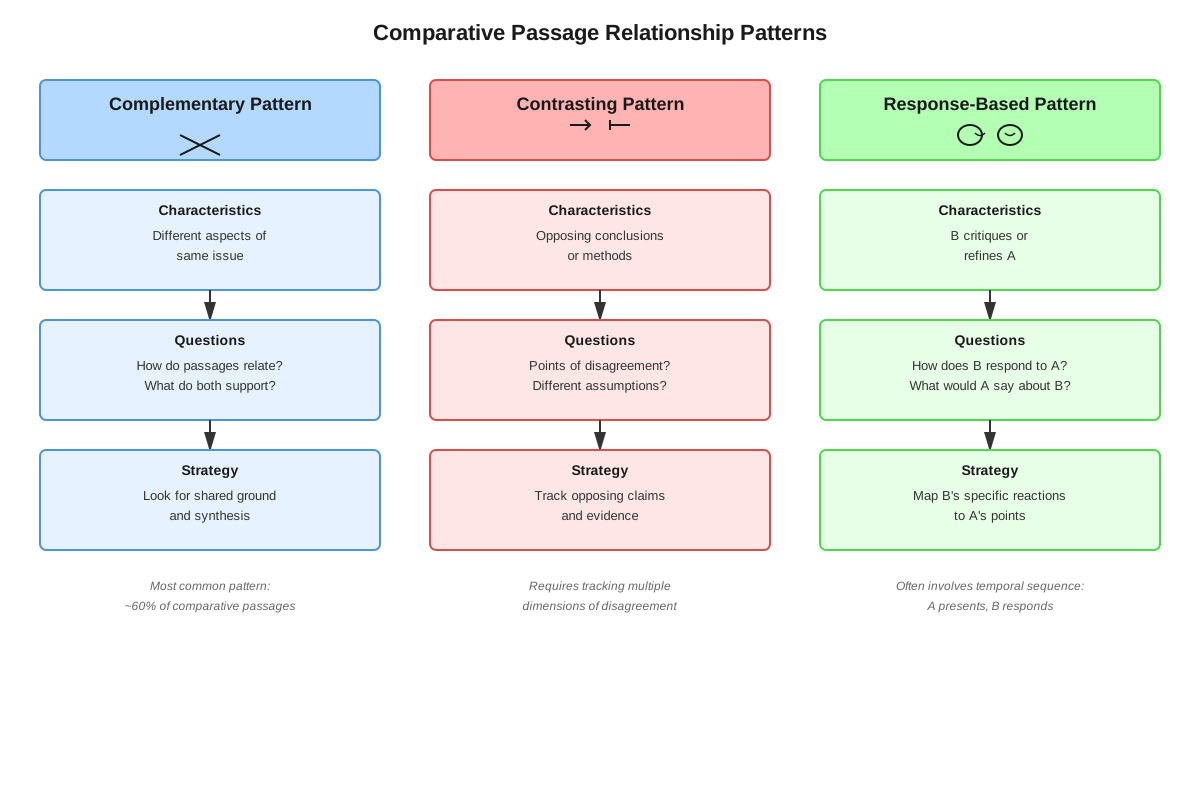
Understanding the relationship between paired passages is fundamental to answering comparative reading questions accurately. Legal passages typically exhibit one of several relationship patterns:
Contrasting Perspectives: The most common relationship involves two passages presenting opposing viewpoints on a legal issue. For example, Passage A might argue for strict textualist interpretation of statutes while Passage B advocates for purposivist interpretation considering legislative intent. These passages disagree on fundamental principles, methodology, or conclusions, though they may share some common ground on background facts or subsidiary points.
Complementary Perspectives: Some passage pairs present different aspects of the same issue without direct conflict. Passage A might discuss the historical development of a legal doctrine while Passage B examines its contemporary application. Both passages contribute to understanding the topic from different angles without necessarily contradicting each other.
Response Relationship: Occasionally, Passage B directly responds to, critiques, or builds upon arguments presented in Passage A. This creates an asymmetric relationship where Passage B explicitly engages with Passage A's claims, while Passage A (written first) makes no reference to Passage B's position.
Specific-to-General or General-to-Specific: One passage may present a broad legal principle or theory while the other examines a specific application, case study, or example illustrating that principle in practice.
Question Types Specific to Comparative Reading
Comparative legal passages generate several distinctive question types beyond standard reading comprehension questions:
Relationship Questions ask students to characterize how the passages relate to each other overall or how specific elements correspond. These questions might ask: "Which one of the following most accurately describes the relationship between the two passages?" or "The relationship between Passage A and Passage B is most analogous to the relationship between which one of the following pairs?"
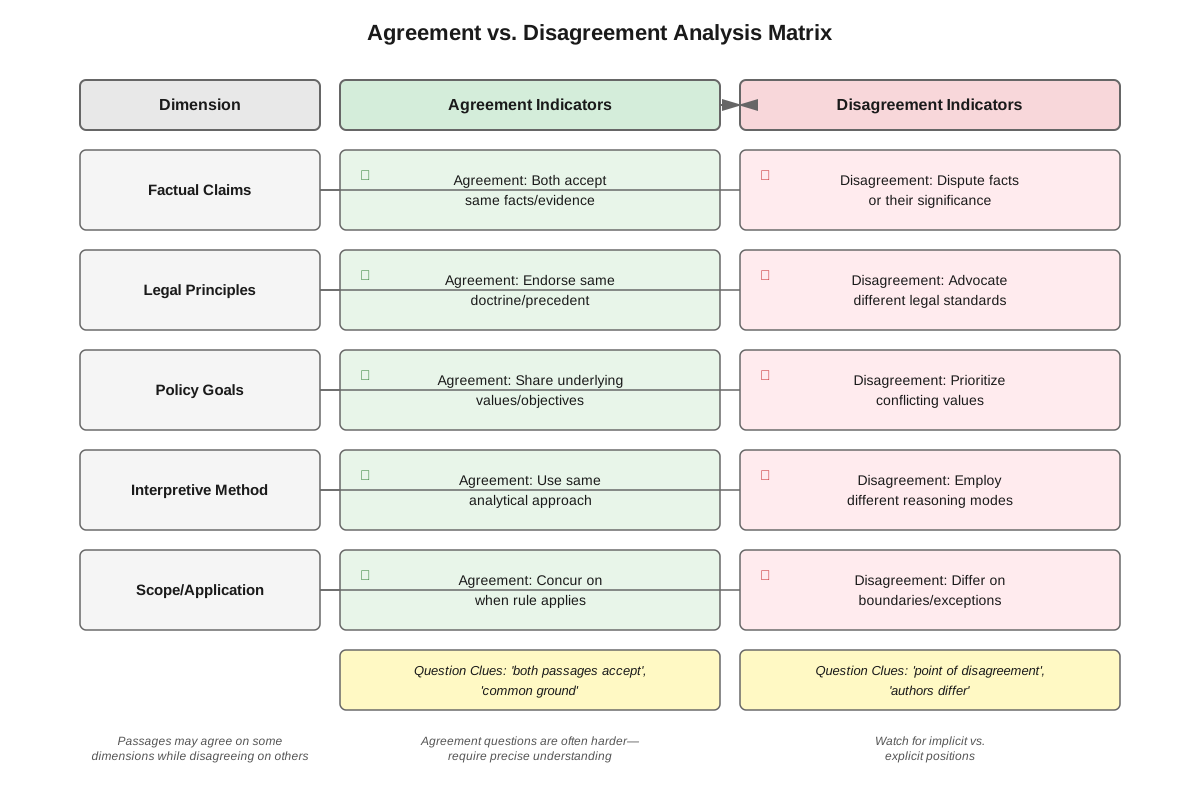
Agreement/Disagreement Questions require identifying points on which the authors would agree or disagree. These questions test whether students can distinguish between explicit disagreements, implicit disagreements based on underlying assumptions, and areas of potential agreement despite overall opposing positions.
Cross-Passage Application Questions ask how one author would respond to claims, evidence, or reasoning from the other passage. For example: "The author of Passage B would most likely respond to the argument in lines 15-20 of Passage A by..." These questions demand understanding both passages deeply enough to extrapolate how one author's framework would evaluate the other's claims.
Synthesis Questions require integrating information from both passages to reach a conclusion neither passage alone supports. These might ask about the combined implications of both passages or require identifying a principle consistent with both authors' positions.
Passage-Specific Questions function like traditional reading comprehension questions but specify which passage they concern. These questions test comprehension of individual passages within the comparative format.
Reading Strategies for Comparative Legal Passages
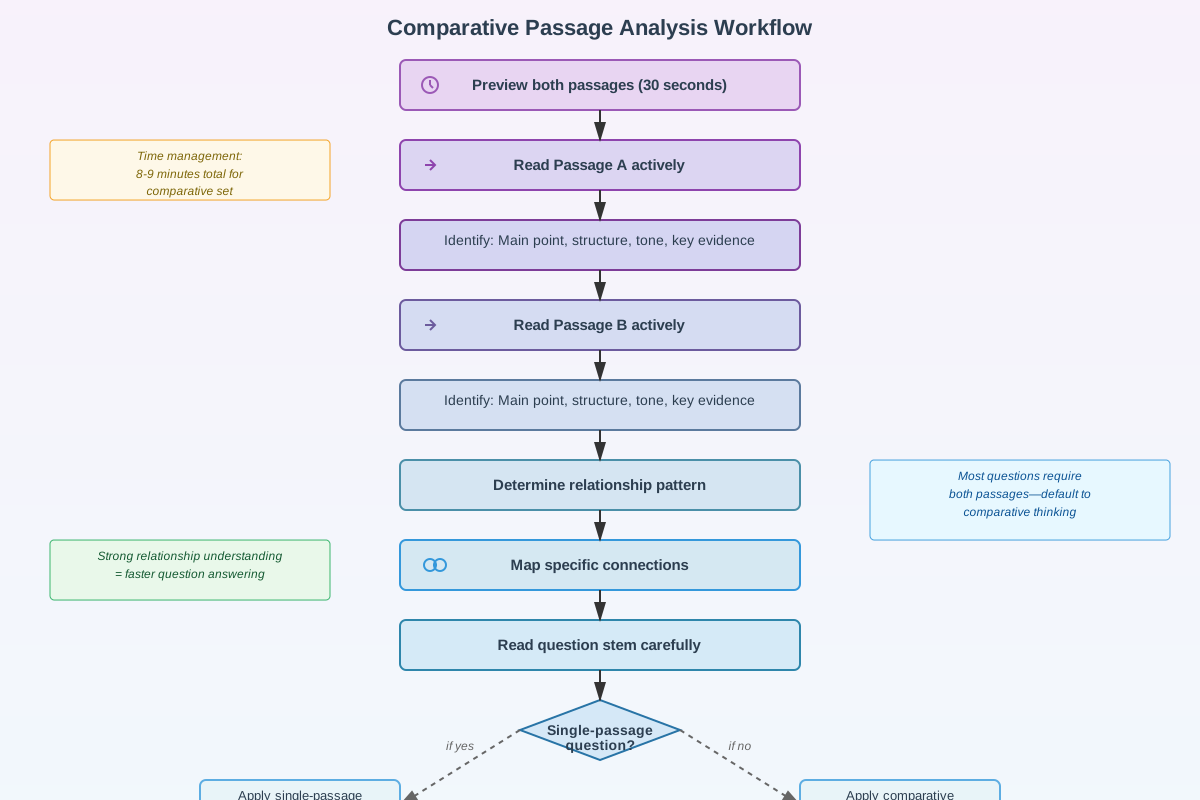
Effective navigation of comparative legal passages requires modified reading strategies. The two-pass approach involves reading Passage A completely first, noting its main argument, structure, tone, and key evidence, then reading Passage B while actively comparing it to Passage A. This strategy allows students to establish a baseline understanding before engaging in comparative analysis.
The relationship-focused approach emphasizes identifying the connection between passages as the primary reading goal. Students should articulate the relationship in a brief phrase ("A argues for X, B argues against X" or "A presents theory, B applies theory") before attempting questions. This mental framework guides efficient question-answering.
Active annotation becomes even more critical with comparative passages. Students should mark parallel sections (where both passages discuss the same subtopic), points of agreement, points of disagreement, and distinctive features of each passage's argument. Using different annotation symbols for each passage helps maintain clarity.
Common Legal Topics in Comparative Passages
Certain legal topics appear frequently in comparative reading sets. Judicial interpretation passages often contrast different methodologies judges use to interpret statutes or constitutional provisions—textualism versus purposivism, originalism versus living constitutionalism, or formalism versus functionalism. Legal theory passages might present competing jurisprudential schools, such as legal realism versus legal formalism, or natural law versus legal positivism.
Legal reform debates provide rich material for comparative passages, with one passage advocating for changes to existing legal rules and another defending the status quo or proposing alternative reforms. Historical legal developments often appear in comparative format, with passages examining how legal doctrines evolved over time or how different eras approached similar legal problems.
Comparative law passages present legal approaches from different jurisdictions—common law versus civil law systems, or how different countries address similar legal issues. These passages test students' ability to understand different legal frameworks without requiring specialized knowledge of foreign legal systems.
Concept Relationships
The core concepts within comparative legal passages form an interconnected analytical framework. The structure of comparative passages (introductory statement, Passage A, Passage B) creates the foundation upon which all other concepts build. Understanding this structure enables recognition of relationship types, which in turn determines the most effective reading strategy to employ. The relationship between passages directly influences which question types will appear and how to approach them efficiently.
Reading strategies connect bidirectionally with question types: effective reading strategies anticipate common question types, while familiarity with question types informs which aspects of the passages to emphasize during reading. Both reading strategies and question types depend on accurate identification of common legal topics, as recognizing familiar patterns (judicial interpretation debates, legal reform arguments) accelerates comprehension and prediction of likely questions.
The relationship map flows as follows:
Passage Structure → enables identification of → Relationship Types → determines optimal → Reading Strategy → prepares for → Question Types → which test understanding of → Legal Topics → which manifest through → Passage Structure
This cyclical relationship means that mastery of any single concept enhances understanding of all others. Students who recognize common legal topics can more quickly identify relationship types; those who understand relationship types can select appropriate reading strategies; and those who anticipate question types can read more strategically from the outset.
High-Yield Facts
⭐ Every LSAT since 2007 includes exactly one comparative reading passage set, comprising approximately 25% of the Reading Comprehension section
⭐ Comparative passages always include questions asking about the relationship between passages—these are unique to comparative reading and appear in every set
⭐ Legal topics appear in 40-50% of comparative reading sets, making them the most common subject matter for this format
⭐ The combined word count of both passages approximates a single traditional passage (450-550 words), but typically generates 6-8 questions rather than 5-7
⭐ Questions explicitly reference "Passage A," "Passage B," or "both passages," eliminating ambiguity about which text to consult
- Contrasting perspectives represent the most common relationship type between comparative legal passages, appearing in approximately 60% of sets
- Agreement questions often contain trap answers identifying superficial similarities while missing fundamental disagreements, or vice versa
- The introductory statement before both passages always provides essential context and should never be skipped, despite its brevity
- Cross-passage application questions (asking how one author would respond to the other) are among the most difficult question types, with lower average accuracy rates
- Passage B questions tend to be slightly more difficult than Passage A questions because they require maintaining information from both passages in working memory
Quick check — test yourself on Comparative legal passages so far.
Try Flashcards →Common Misconceptions
Misconception: Comparative passages always present directly opposing viewpoints that disagree on every point.
Correction: While contrasting perspectives are common, passages often agree on background facts, problem identification, or subsidiary points while disagreeing on solutions, interpretations, or underlying principles. Recognizing nuanced partial agreement is essential for answering agreement/disagreement questions accurately.
Misconception: Students should read both passages completely before looking at any questions.
Correction: While reading both passages before questions is generally advisable, students should pause briefly after Passage A to articulate its main point and structure before proceeding to Passage B. This creates a mental framework for comparative analysis and prevents the passages from blurring together.
Misconception: Questions about "both passages" are always more difficult than questions about individual passages.
Correction: Question difficulty depends on the specific cognitive task required, not merely whether one or both passages are referenced. Some "both passages" questions simply ask for information stated in both texts, while some single-passage questions require complex inferences.
Misconception: The introductory statement is just a title and contains no testable information.
Correction: The introductory statement establishes the common theme and often provides context essential for understanding the relationship between passages. Information from the introduction can be necessary for answering questions, particularly relationship questions.
Misconception: Passage A and Passage B always have equal importance and should receive equal reading time.
Correction: While both passages merit careful reading, Passage B often requires slightly more attention because it must be understood both independently and in relation to Passage A. Additionally, more questions typically reference Passage B or both passages than reference Passage A alone.
Misconception: Legal comparative passages require specialized legal knowledge beyond general LSAT preparation.
Correction: Like all LSAT reading comprehension passages, comparative legal passages are self-contained. All information necessary to answer questions appears in the passages themselves. Legal terminology is explained in context, and no outside legal knowledge is required or advantageous.
Worked Examples
Example 1: Contrasting Judicial Interpretation Approaches
Passage Setup: Passage A argues that judges should interpret statutes by focusing exclusively on the plain meaning of the statutory text, without considering legislative history or policy consequences. The author contends this approach promotes predictability and respects legislative supremacy. Passage B argues that judges must consider legislative purpose and practical consequences when statutory language is ambiguous, as purely textual interpretation can produce absurd results contrary to legislative intent.
Question: The authors of the two passages would be most likely to disagree over whether
(A) statutory interpretation is an important judicial function
(B) legislative intent is relevant to statutory interpretation
(C) some statutory language is ambiguous
(D) judges should respect legislative authority
(E) legal predictability is a desirable goal
Worked Solution:
Step 1: Identify what each passage explicitly states about each answer choice.
Step 2: Analyze choice (A): Both passages assume statutory interpretation is important—neither questions this premise. This represents common ground, not disagreement. Eliminate.
Step 3: Analyze choice (B): Passage A explicitly rejects considering legislative intent, stating judges should focus only on text. Passage B explicitly endorses considering legislative purpose when text is ambiguous. This represents a clear, fundamental disagreement on a central issue. Keep as strong contender.
Step 4: Analyze choice (C): Passage A doesn't deny that ambiguity exists; it simply argues that even ambiguous text should be interpreted textually. Passage B explicitly acknowledges ambiguity. This isn't a point of disagreement—both can accept that ambiguity exists while disagreeing about how to resolve it. Eliminate.
Step 5: Analyze choice (D): Both passages value legislative authority—Passage A argues textualism respects it, while Passage B argues purposivism respects it by honoring legislative intent. They disagree about how to respect legislative authority, not whether to respect it. Eliminate.
Step 6: Analyze choice (E): Passage A explicitly values predictability. Passage B doesn't reject predictability as undesirable; it simply prioritizes other values (avoiding absurd results) in cases of ambiguity. This isn't a clear disagreement about whether predictability is desirable. Eliminate.
Answer: (B) represents the clearest point of disagreement—whether legislative intent should play a role in statutory interpretation.
Connection to Learning Objectives: This example demonstrates how to identify disagreement by distinguishing between fundamental disputes (whether to consider legislative intent) and disputes about means to shared ends (how to respect legislative authority). It applies the reasoning pattern of comparative legal passages by recognizing that authors can share background assumptions while disagreeing on central methodological questions.
Example 2: Synthesis Across Complementary Passages
Passage Setup: Passage A discusses the historical development of the attorney-client privilege in English common law, explaining how it evolved from protecting the attorney's honor to protecting client confidentiality. Passage B examines contemporary debates about exceptions to attorney-client privilege, particularly the crime-fraud exception that denies privilege when legal advice is sought to further ongoing or future crimes.
Question: Based on the two passages, which one of the following can most reasonably be inferred about the attorney-client privilege?
(A) It has remained unchanged since its inception in English common law
(B) Its theoretical justification has evolved while its practical application has expanded
(C) It applies without exception in contemporary legal practice
(D) Its historical development is irrelevant to contemporary debates about its scope
(E) It was originally intended to prevent clients from committing crimes
Worked Solution:
Step 1: Recognize this as a synthesis question requiring information from both passages to answer correctly.
Step 2: Analyze choice (A): Passage A explicitly describes how the privilege evolved from protecting attorney honor to protecting client confidentiality—this directly contradicts "unchanged." Eliminate.
Step 3: Analyze choice (B): Passage A shows the theoretical justification evolved (attorney honor → client confidentiality). Passage B discusses contemporary exceptions, which implies the privilege has expanded enough to require limiting principles. The evolution of justification (Passage A) combined with contemporary debates about scope (Passage B) supports this inference. Keep as strong contender.
Step 4: Analyze choice (C): Passage B explicitly discusses exceptions to the privilege, directly contradicting "without exception." Eliminate.
Step 5: Analyze choice (D): While neither passage explicitly connects historical development to contemporary debates, Passage B's discussion of exceptions implicitly assumes the privilege exists (established in Passage A's historical account). The passages together suggest continuity, not irrelevance. Eliminate.
Step 6: Analyze choice (E): Passage A describes the privilege's original purpose as protecting attorney honor, not preventing client crimes. Passage B's crime-fraud exception is a contemporary limitation, not an original purpose. Eliminate.
Answer: (B) correctly synthesizes information from both passages—the evolution described in Passage A with the contemporary scope issues in Passage B.
Connection to Learning Objectives: This example demonstrates synthesis across complementary passages that address different aspects of the same legal concept. It applies comparative reading skills by recognizing how historical development (Passage A) and contemporary application (Passage B) together support inferences neither passage alone could establish.
Exam Strategy
Initial Approach
When encountering a comparative legal passage set, invest 15-20 seconds reading the introductory statement carefully and predicting the likely relationship type. Legal passages frequently involve methodological debates (how to interpret law) or normative debates (what the law should be), so anticipate contrasting perspectives. This prediction primes active reading for points of agreement and disagreement.
Reading Process
Employ the two-pass comparative method: Read Passage A completely, then pause for 10-15 seconds to mentally summarize its main argument, tone, and structure in a brief phrase ("argues for strict textualism, formal tone, uses historical examples"). Then read Passage B while actively noting how it relates to Passage A—does it contradict, complement, respond to, or apply Passage A's ideas? Annotate parallel sections where both passages discuss the same subtopic, as these often generate questions.
Trigger Words and Phrases
Watch for relationship indicators in questions: "both passages," "the authors would agree," "the author of Passage B would most likely respond," "the relationship between the passages." These phrases signal question types requiring specific strategies. Contrast markers within passages ("however," "in contrast," "on the other hand") often signal points of disagreement. Qualification language ("some scholars argue," "one approach suggests") may indicate the author is presenting a view they'll later critique.
Question Order Strategy
Consider answering passage-specific questions before relationship questions. Questions about individual passages reinforce comprehension of each text's content and structure, building a foundation for comparative analysis. However, if a relationship question appears early and seems straightforward, answering it can clarify the passages' connection and facilitate subsequent questions.
Process of Elimination
For agreement/disagreement questions, eliminate choices where one or both passages express no clear position—agreement or disagreement requires both authors to take stances on the issue. Eliminate choices identifying superficial similarities (both passages discuss the same topic) while missing substantive disagreements about that topic. For cross-passage application questions, eliminate responses inconsistent with the responding author's stated principles or methodology, even if they seem like reasonable responses to the other passage's argument.
Time Management
Allocate approximately 3.5-4 minutes for reading both passages (slightly longer than single passages due to comparative complexity) and 5-6 minutes for questions. If a relationship question proves difficult, skip it temporarily and return after answering passage-specific questions that reinforce understanding of each text's position. The comparative format's predictability (one set per test, consistent question types) rewards investing time in mastering these strategies.
Memory Techniques
COMPARE Acronym for Reading Strategy
Common theme (identify from introduction)
Opposing or complementary (predict relationship type)
Main argument of Passage A (summarize before reading B)
Parallel sections (mark where both discuss same subtopic)
Agreement points (note areas of consensus)
Relationship (articulate overall connection)
Evidence types (compare how authors support claims)
Question Type Mnemonic: "RACS"
Relationship questions (characterize overall connection)
Agreement/disagreement questions (identify shared/opposing views)
Cross-passage application (how would one author respond to the other)
Synthesis questions (combine information from both passages)
Visualization Strategy
Picture the two passages as two attorneys presenting arguments to a judge. Passage A presents first, establishing a position. Passage B responds—sometimes directly opposing, sometimes building on, sometimes addressing a different aspect of the case. This courtroom visualization helps maintain awareness that both passages contribute to understanding a larger legal debate, not just isolated arguments.
Relationship Type Memory Aid: "CCRS"
Contrasting (opposing viewpoints—most common)
Complementary (different aspects, no direct conflict)
Response (B explicitly engages with A)
Specific-General (one broad principle, one application)
Summary
Comparative legal passages represent a high-yield, predictable component of LSAT Reading Comprehension, appearing exactly once per test and comprising approximately 25% of the section. These passages present two related texts addressing legal topics from different perspectives, requiring students to comprehend each passage independently while analyzing their relationship. Success demands recognizing relationship types (contrasting, complementary, response-based, or specific-general), employing modified reading strategies that emphasize comparative analysis, and mastering distinctive question types including relationship characterization, agreement/disagreement identification, cross-passage application, and synthesis questions. Legal topics frequently involve debates about judicial interpretation methodologies, legal theory, legal reform, or comparative legal systems. The most effective approach involves reading Passage A completely, briefly summarizing its position, then reading Passage B while actively comparing it to Passage A, marking parallel sections and points of agreement or disagreement. Questions explicitly reference which passage(s) they concern, and all necessary information appears within the passages themselves—no outside legal knowledge is required. Mastering comparative legal passages requires understanding that authors can share background assumptions while disagreeing on fundamental principles, that relationship questions test nuanced understanding beyond simple opposition, and that synthesis questions demand integrating information neither passage alone provides.
Key Takeaways
- Comparative legal passages appear exactly once per LSAT, always consisting of two shorter passages with 6-8 questions, making them a predictable high-value target for strategic preparation
- The relationship between passages is the central analytical task—identify whether passages contrast, complement, respond to each other, or present specific-general relationships before attempting questions
- Read Passage A completely and summarize its main argument before reading Passage B, then actively compare B to A while reading, marking parallel sections and points of agreement/disagreement
- Questions unique to comparative reading (relationship characterization, cross-passage application, synthesis) require understanding both passages and their connection, not just individual passage content
- Agreement/disagreement questions demand distinguishing between fundamental disputes and disagreements about means to shared ends—authors can value the same goals while advocating different approaches
- Legal comparative passages test reading comprehension and analytical reasoning, not legal knowledge—all necessary information appears in the passages, and outside legal expertise provides no advantage
- Effective time management allocates slightly more reading time to comparative passages (3.5-4 minutes) than single passages due to the added complexity of tracking relationships, but this investment pays dividends in question accuracy
Related Topics
Single-Passage Legal Reading Comprehension: Mastering comparative legal passages builds directly on skills developed with traditional single-passage legal texts, including identifying argument structure, recognizing legal reasoning patterns, and understanding judicial interpretation methodologies. Success with comparative passages requires first mastering these foundational single-passage skills.
Logical Reasoning Comparative Arguments: The LSAT Logical Reasoning section occasionally presents arguments that compare two positions or require evaluating how one argument responds to another. Skills developed with comparative reading passages—identifying points of agreement and disagreement, recognizing implicit assumptions, evaluating how one position addresses another—transfer directly to these Logical Reasoning questions.
Synthesis and Integration Skills: Comparative passages develop the ability to synthesize information from multiple sources, a skill essential for law school case briefing, where students must reconcile multiple judicial opinions, distinguish cases, and identify evolving legal standards across numerous sources.
Advanced Reading Comprehension Strategies: Mastering comparative legal passages enables progression to more sophisticated reading strategies applicable across all passage types, including tracking multiple perspectives within single passages, recognizing implicit dialogue between authors and counterarguments, and understanding how texts position themselves within broader debates.
Practice CTA
Now that you've mastered the core concepts, strategies, and common patterns in comparative legal passages, it's time to apply this knowledge to authentic LSAT questions. Attempt the practice questions associated with this topic, focusing on implementing the COMPARE reading strategy and RACS question type framework. As you work through practice passages, pay particular attention to relationship questions and cross-passage applications—these distinctive question types reward the specialized strategies you've learned. Review the flashcards to reinforce high-yield facts and common misconceptions, ensuring automatic recognition of relationship types and trigger words. Remember: comparative legal passages are among the most predictable elements of the LSAT, and strategic preparation yields measurable score improvements. Your investment in mastering this topic will pay dividends on test day and throughout law school.
Sign up free to keep reading
Create a free AnvayaPrep account to finish this LSAT guide on Comparative legal passages — plus flashcards and practice questions.