Overview
Peptide bond formation is a fundamental biochemical process that links amino acids together to create polypeptides and proteins, the workhorses of cellular function. This condensation reaction, also known as a dehydration synthesis, occurs when the carboxyl group of one amino acid reacts with the amino group of another, releasing a water molecule and forming a covalent bond between the two residues. Understanding this process is essential for mastering Amino Acids and Proteins within Biochemistry, as it represents the primary structural link that determines protein architecture and function.
For the MCAT, peptide bond formation appears frequently across multiple question types, from discrete questions testing basic mechanism knowledge to complex passage-based questions involving protein synthesis, enzyme catalysis, and structural biology. The topic bridges organic chemistry principles (nucleophilic acyl substitution) with biological systems (ribosomal translation), making it a high-yield integration point that the exam consistently tests. Students must understand not only the chemical mechanism but also the energetics, cellular context, and structural implications of peptide bond formation.
This topic connects intimately with protein structure (primary through quaternary), enzyme function, translation machinery, and thermodynamics. The peptide bond's unique properties—including its partial double-bond character and planar geometry—directly influence protein folding patterns and stability. Mastering peptide bond formation Biochemistry provides the foundation for understanding proteomics, post-translational modifications, and the relationship between protein structure and disease states, all of which appear regularly on the peptide bond formation MCAT questions.
Learning Objectives
- [ ] Define peptide bond formation using accurate Biochemistry terminology
- [ ] Explain why peptide bond formation matters for the MCAT
- [ ] Apply peptide bond formation to exam-style questions
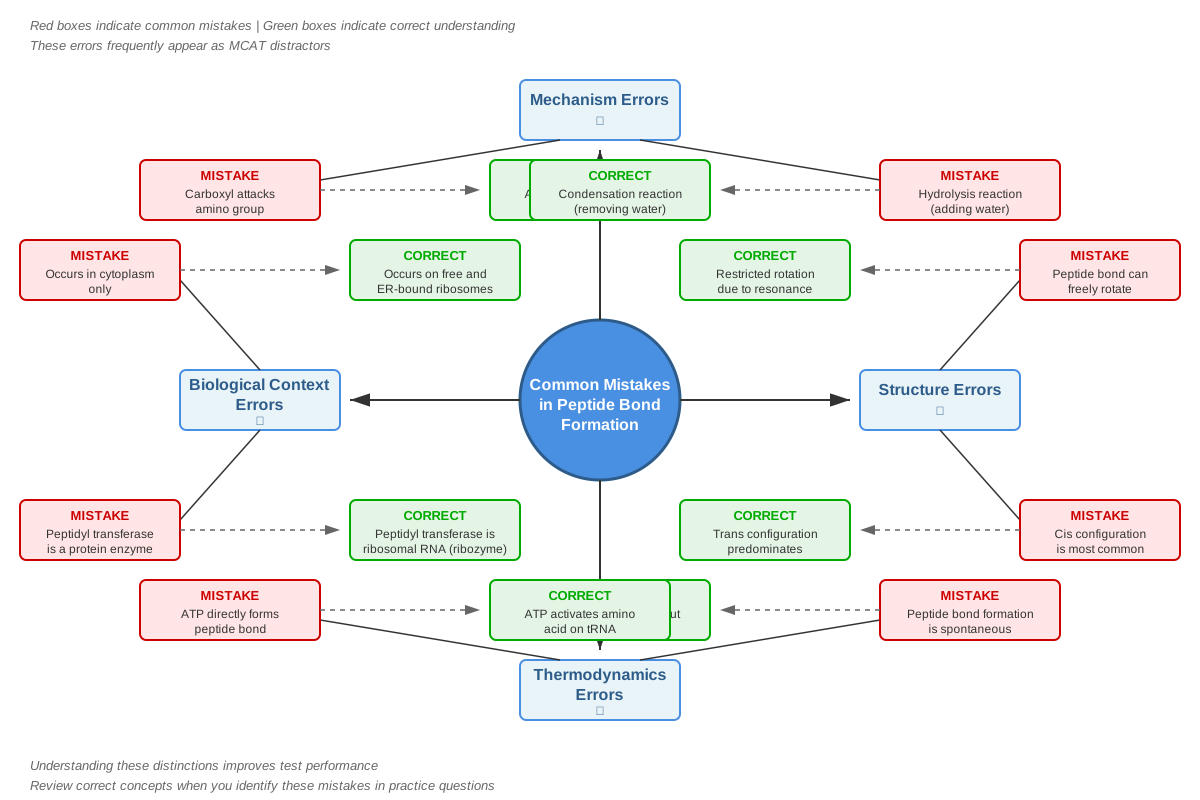
- [ ] Identify common mistakes related to peptide bond formation
- [ ] Connect peptide bond formation to related Biochemistry concepts
- [ ] Describe the mechanism of peptide bond formation at the molecular level, including the role of nucleophilic attack
- [ ] Explain the thermodynamic considerations and energy requirements for peptide bond synthesis in biological systems
- [ ] Analyze the structural consequences of peptide bond geometry on protein conformation
Prerequisites
- Amino acid structure: Understanding the basic structure of amino acids (amino group, carboxyl group, R-group, alpha carbon) is essential because these functional groups participate directly in peptide bond formation
- Acid-base chemistry: Knowledge of protonation states and pKa values helps predict which functional groups are reactive under physiological conditions
- Condensation reactions: Familiarity with dehydration synthesis reactions provides the mechanistic framework for understanding how peptide bonds form
- Basic organic chemistry mechanisms: Understanding nucleophilic attack and leaving groups enables comprehension of the peptide bond formation mechanism
- Thermodynamics fundamentals: Knowledge of Gibbs free energy, enthalpy, and entropy explains why peptide bond formation requires energy input in cells
Why This Topic Matters
Peptide bond formation represents one of the most clinically and biologically significant reactions in living systems. Every protein in the human body—from hemoglobin carrying oxygen to antibodies defending against pathogens—exists because of peptide bonds linking amino acids in specific sequences. Disruptions in peptide bond formation or hydrolysis contribute to numerous disease states, including cystic fibrosis (misfolded proteins), cancer (dysregulated protein synthesis), and neurodegenerative disorders (protein aggregation). Understanding this process illuminates how genetic information encoded in DNA ultimately manifests as functional proteins.
On the MCAT, peptide bond formation appears in approximately 8-12% of Biochemistry questions, making it a high-yield topic that warrants thorough preparation. Questions typically present in three formats: (1) discrete questions testing mechanism and nomenclature, (2) passage-based questions involving experimental manipulation of protein synthesis, and (3) integrated questions connecting translation, energetics, and protein structure. The topic frequently appears in passages discussing ribosomal function, antibiotic mechanisms (many antibiotics target peptide bond formation), protein engineering, or structural biology experiments.
Common exam scenarios include passages describing ribosomal crystallography studies, experiments measuring protein synthesis rates under various conditions, clinical vignettes involving protein misfolding diseases, and research passages on novel peptide-based therapeutics. The MCAT particularly favors questions that require students to integrate chemical mechanism knowledge with biological context, such as explaining why peptide bond formation is thermodynamically unfavorable yet proceeds rapidly in cells, or predicting how mutations affecting ribosomal components would impact protein synthesis.
Core Concepts
The Chemical Mechanism of Peptide Bond Formation
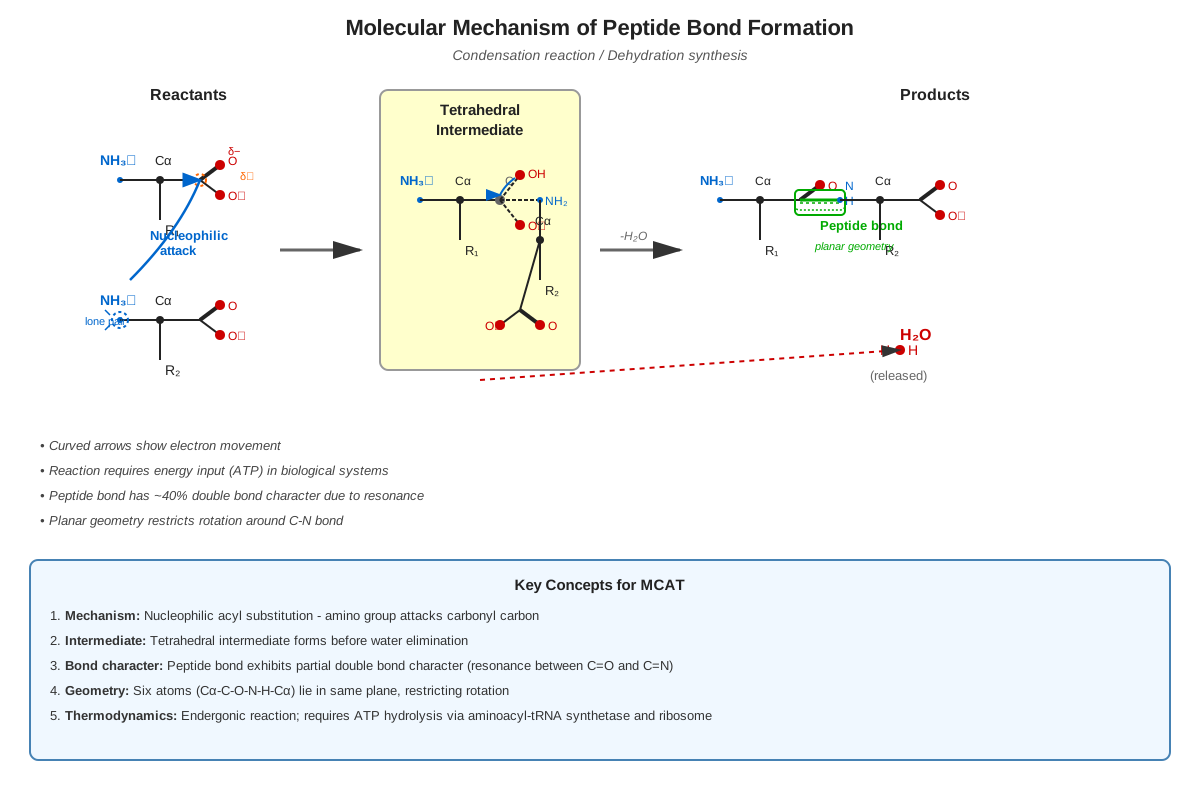
Peptide bond formation occurs through a nucleophilic acyl substitution reaction, specifically a condensation or dehydration synthesis. The mechanism involves the nucleophilic attack of the amino group (-NH₂) of one amino acid on the carbonyl carbon of the carboxyl group (-COOH) of another amino acid. The amino group, acting as a nucleophile, attacks the electrophilic carbonyl carbon, forming a tetrahedral intermediate. This intermediate then collapses, expelling a water molecule (H₂O) as the leaving group and forming the peptide bond (also called an amide bond or peptidyl bond).
The resulting peptide bond has the chemical structure -CO-NH-, linking the carbonyl carbon of one amino acid to the nitrogen of the next. This bond exhibits partial double-bond character due to resonance between the carbonyl oxygen and the nitrogen lone pair, which has profound structural consequences. The reaction can be represented as:
R₁-CH(NH₂)-COOH + H-NH-CH(R₂)-COOH → R₁-CH(NH₂)-CO-NH-CH(R₂)-COOH + H₂OIn this reaction, the amino acid contributing the carboxyl group is positioned at the N-terminus side of the bond, while the amino acid contributing the amino group is positioned at the C-terminus side. By convention, peptides and proteins are written from N-terminus to C-terminus, reflecting the directionality of synthesis.
Thermodynamics and Energy Requirements
A critical concept for the MCAT is that peptide bond formation is thermodynamically unfavorable under standard conditions, with a positive ΔG of approximately +3 to +4 kcal/mol. This means the reaction does not proceed spontaneously and requires energy input to drive it forward. The unfavorable thermodynamics arise because the reaction involves breaking stable O-H and N-H bonds in the reactants while forming a peptide bond and releasing water, which increases entropy but not enough to overcome the enthalpic cost.
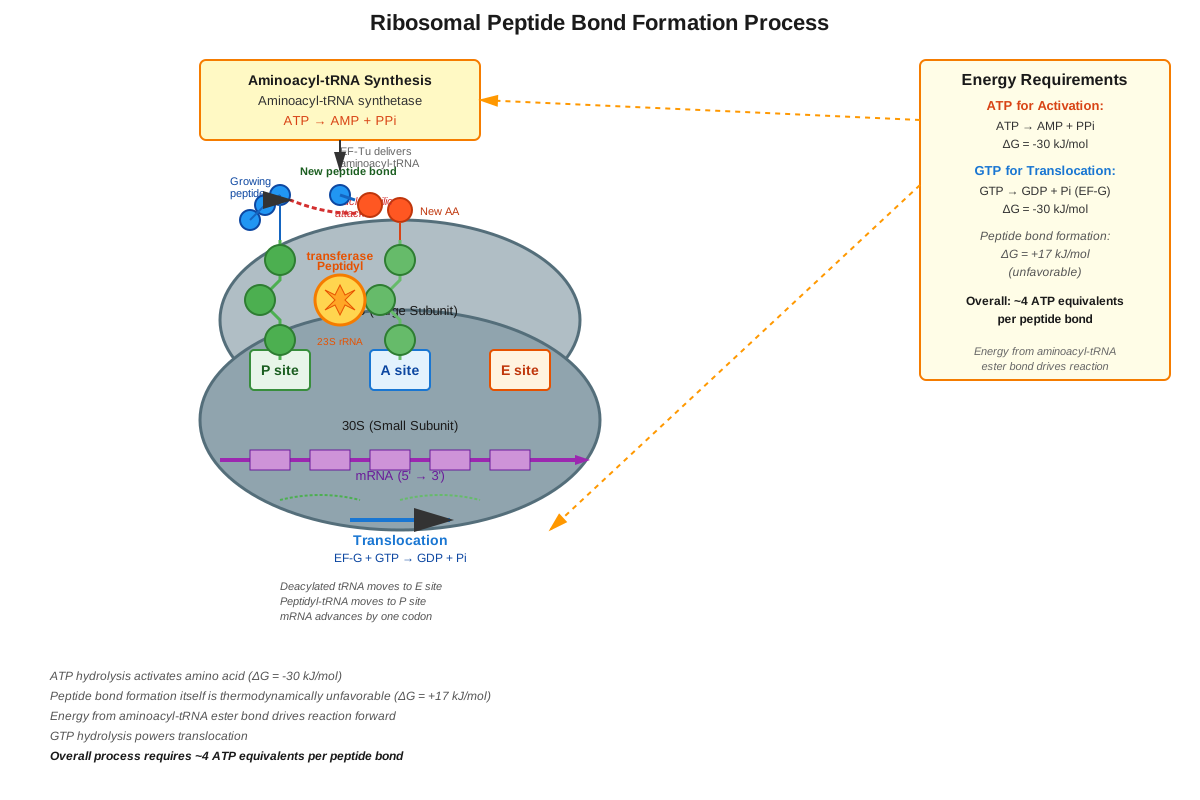
In biological systems, cells overcome this thermodynamic barrier through coupling peptide bond formation to the hydrolysis of high-energy molecules. During translation at the ribosome, each peptide bond formation is coupled to the hydrolysis of GTP (guanosine triphosphate) molecules, which provide the necessary energy. Specifically, aminoacyl-tRNA synthetases first activate amino acids by attaching them to tRNA molecules using ATP hydrolysis, and then elongation factors use GTP hydrolysis to facilitate peptide bond formation. This coupling makes the overall process thermodynamically favorable (negative ΔG).
Structural Properties of the Peptide Bond
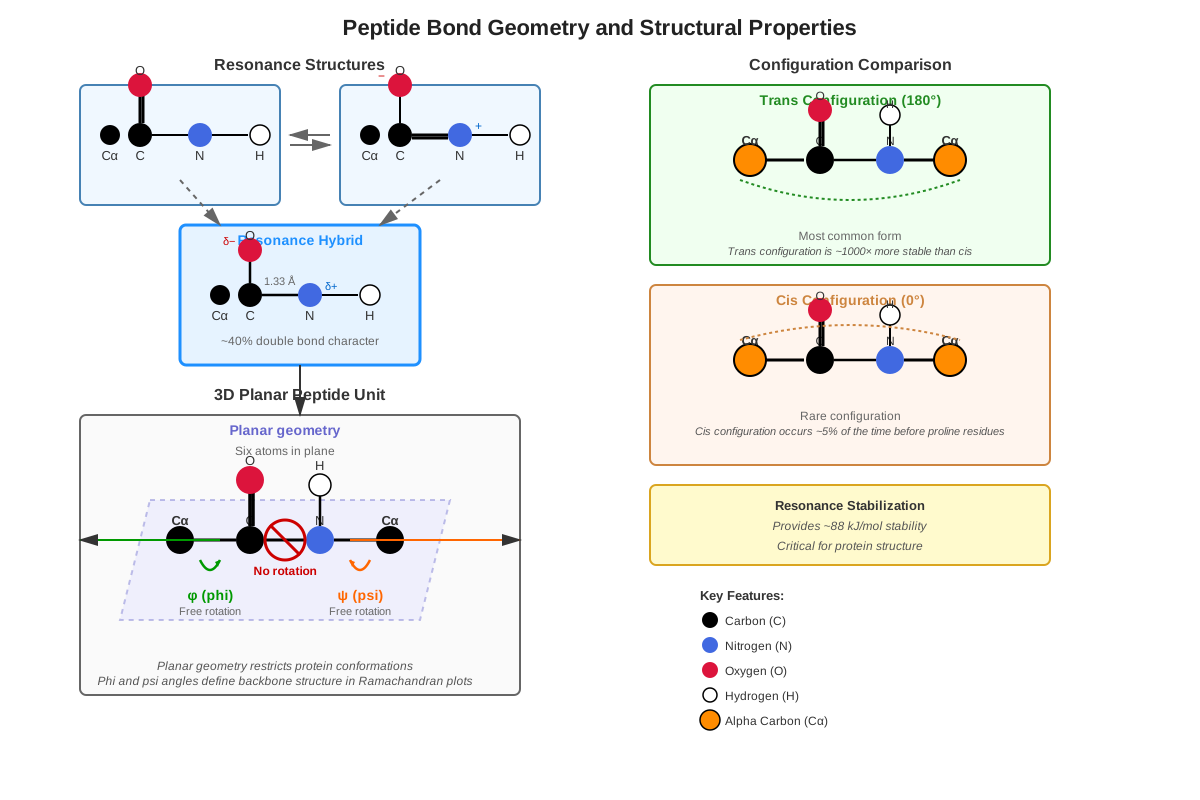
The peptide bond possesses unique structural characteristics that directly influence protein architecture. Due to resonance delocalization of the nitrogen lone pair into the carbonyl π system, the C-N bond has approximately 40% double-bond character. This partial double bond restricts rotation around the peptide bond, creating a planar or flat geometry where six atoms lie in the same plane: the alpha carbon of the first amino acid, the carbonyl carbon, the carbonyl oxygen, the nitrogen, the hydrogen attached to nitrogen, and the alpha carbon of the second amino acid.
This planarity constrains the peptide backbone to specific conformations, limiting the possible three-dimensional structures proteins can adopt. The peptide bond typically exists in the trans configuration, where the two alpha carbons are on opposite sides of the peptide bond, because this arrangement minimizes steric clashes between R-groups. The cis configuration, where alpha carbons are on the same side, is rare except before proline residues, where the cyclic structure of proline reduces the energy difference between cis and trans forms.
| Property | Description | Significance |
|---|---|---|
| Bond length | 1.33 Å (intermediate between C-N single bond 1.45 Å and C=N double bond 1.27 Å) | Indicates partial double-bond character |
| Rotation | Restricted; high energy barrier (~20 kcal/mol) | Creates planar geometry; limits conformational flexibility |
| Configuration | Predominantly trans (>99.9% except before proline) | Minimizes steric clashes; determines backbone geometry |
| Polarity | Polar due to C=O and N-H groups | Enables hydrogen bonding; stabilizes secondary structures |
| Resonance | Delocalization between C=O and N lone pair | Shortens C-N bond; increases rigidity |
Peptide Bond Formation in Biological Systems
In living cells, peptide bond formation occurs primarily during translation at the ribosome, the cellular machinery responsible for protein synthesis. The ribosome catalyzes peptide bond formation through its peptidyl transferase center, located in the large ribosomal subunit (60S in eukaryotes, 50S in prokaryotes). Remarkably, this catalytic center is composed of ribosomal RNA (rRNA), making the ribosome a ribozyme—an RNA molecule with catalytic activity.
The mechanism at the ribosome involves:
- Positioning: The ribosome positions two aminoacyl-tRNAs in adjacent sites—the peptidyl-tRNA (carrying the growing peptide chain) in the P site and the aminoacyl-tRNA (carrying the next amino acid) in the A site
- Activation: The ribosome stabilizes the transition state and activates the amino group of the aminoacyl-tRNA in the A site
- Nucleophilic attack: The activated amino group attacks the carbonyl carbon of the ester bond linking the peptide chain to the tRNA in the P site
- Bond formation: The peptide bond forms, simultaneously breaking the ester bond and transferring the growing peptide chain to the tRNA in the A site
- Translocation: The ribosome moves one codon along the mRNA, repositioning the tRNAs for the next cycle
This process occurs with remarkable speed (approximately 15-20 amino acids per second in eukaryotes) and accuracy (error rate less than 1 in 10,000), demonstrating the efficiency of biological catalysis.
Peptide Bond Hydrolysis
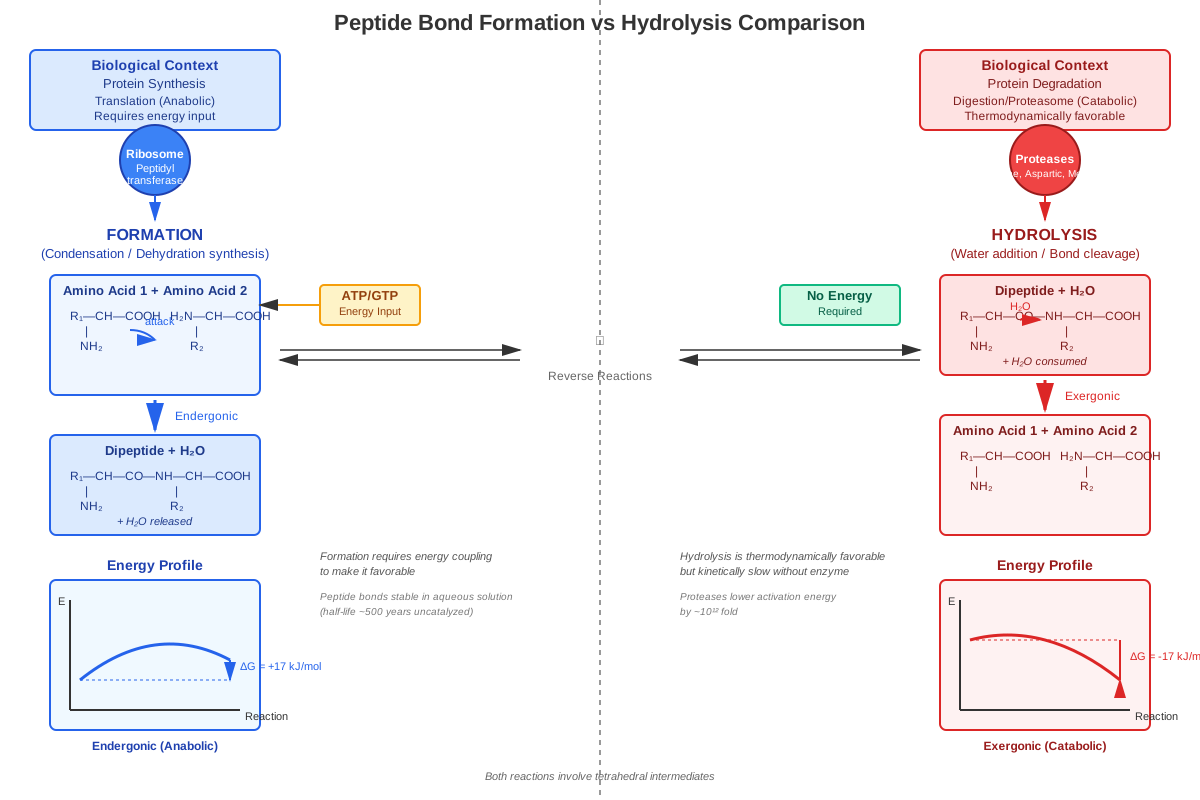
The reverse reaction—peptide bond hydrolysis—involves breaking the peptide bond by adding water, regenerating the free amino and carboxyl groups. Like formation, hydrolysis is thermodynamically favorable (negative ΔG) but kinetically slow without catalysis. The peptide bond has a half-life of approximately 500-1000 years in neutral aqueous solution at room temperature, making it remarkably stable.
In biological systems, specialized enzymes called proteases or peptidases catalyze peptide bond hydrolysis. These enzymes lower the activation energy through various mechanisms, including acid-base catalysis, covalent catalysis, and metal ion catalysis. Proteases play essential roles in protein digestion, protein turnover, signal transduction, and programmed cell death. The MCAT frequently tests understanding of protease specificity, mechanism, and regulation.
Concept Relationships
Peptide bond formation serves as the central connecting concept linking amino acid chemistry to protein structure and function. The relationship flows as follows:
Amino acid structure → determines the functional groups available for → Peptide bond formation → creates the primary structure (amino acid sequence) → which determines → Secondary structure (α-helices and β-sheets stabilized by hydrogen bonds between peptide bond C=O and N-H groups) → which organizes into → Tertiary structure (three-dimensional folding) → which may assemble into → Quaternary structure (multi-subunit proteins).
The partial double-bond character of peptide bonds directly influences the Ramachandran plot, which maps allowed backbone conformations based on phi (φ) and psi (ψ) angles. The planarity constraint eliminates many theoretically possible conformations, explaining why proteins adopt limited structural motifs.
Peptide bond formation connects to translation and the genetic code, as the sequence of peptide bonds reflects the sequence of codons in mRNA. This links biochemistry to molecular biology and genetics, creating integration opportunities the MCAT exploits. The energy requirements for peptide bond formation connect to metabolism and bioenergetics, particularly ATP and GTP hydrolysis.
The stability of peptide bonds relates to protein degradation pathways, including the ubiquitin-proteasome system and lysosomal proteolysis. Understanding both formation and hydrolysis enables comprehension of protein homeostasis (proteostasis), a concept increasingly important in medicine and frequently tested on the MCAT.
High-Yield Facts
⭐ Peptide bond formation is a condensation reaction that releases one water molecule per bond formed
⭐ The peptide bond has partial double-bond character (~40%) due to resonance, restricting rotation and creating planar geometry
⭐ Peptide bond formation is thermodynamically unfavorable (ΔG ≈ +3 to +4 kcal/mol) but is driven forward in cells by coupling to GTP hydrolysis
⭐ The trans configuration is strongly preferred over cis (>99.9% except before proline) due to reduced steric clashes
⭐ The ribosome's peptidyl transferase center is composed of rRNA, making it a ribozyme that catalyzes peptide bond formation
- Peptide bonds are written and synthesized in the N-terminus to C-terminus direction
- The peptide bond length (1.33 Å) is intermediate between C-N single bonds (1.45 Å) and C=N double bonds (1.27 Å)
- Six atoms lie in the plane of each peptide bond: Cα₁-C-O-N-H-Cα₂
- Peptide bonds are highly stable in aqueous solution with a half-life of 500-1000 years without enzymatic catalysis
- The carbonyl oxygen of peptide bonds serves as a hydrogen bond acceptor, while the N-H serves as a donor, enabling secondary structure formation
- Proline disrupts α-helices because its cyclic structure restricts backbone flexibility and lacks an N-H for hydrogen bonding
- Many clinically important antibiotics (e.g., chloramphenicol, erythromycin) inhibit bacterial protein synthesis by interfering with peptide bond formation
Quick check — test yourself on Peptide bond formation so far.
Try Flashcards →Common Misconceptions
Misconception: Peptide bond formation occurs spontaneously in cells because proteins are essential for life.
Correction: Peptide bond formation is thermodynamically unfavorable (positive ΔG) and requires energy input. Cells couple this reaction to GTP hydrolysis during translation to make the overall process favorable. The spontaneity of a reaction depends on thermodynamics, not biological necessity.
Misconception: The peptide bond is a pure single bond like other C-N bonds.
Correction: The peptide bond has approximately 40% double-bond character due to resonance delocalization of the nitrogen lone pair into the carbonyl π system. This partial double bond restricts rotation and creates planar geometry, which is critical for determining protein structure.
Misconception: Peptide bonds can freely rotate, allowing proteins to adopt any three-dimensional shape.
Correction: Peptide bonds have restricted rotation due to their partial double-bond character. Only the bonds involving the alpha carbon (phi and psi angles) can rotate relatively freely, and even these are constrained by steric clashes. This restriction limits proteins to specific conformational spaces.
Misconception: The amino acid contributing the amino group is at the N-terminus of the resulting dipeptide.
Correction: The amino acid contributing the amino group is at the C-terminus side of the peptide bond. The amino acid contributing the carboxyl group is at the N-terminus side. This can be confusing because the amino group attacks the carboxyl group, but the resulting orientation places the attacking amino acid on the C-terminal side.
Misconception: Peptide bonds are easily broken in aqueous solution, which is why proteins denature.
Correction: Peptide bonds are extremely stable in aqueous solution (half-life of 500-1000 years). Protein denaturation involves disruption of non-covalent interactions (hydrogen bonds, ionic interactions, hydrophobic effects) that maintain secondary, tertiary, and quaternary structure, not breaking of peptide bonds. Peptide bond hydrolysis requires enzymatic catalysis by proteases.
Misconception: All peptide bonds exist in the trans configuration.
Correction: While the trans configuration is strongly preferred (>99.9% of peptide bonds), cis peptide bonds do occur, particularly before proline residues. Proline's cyclic structure reduces the energy difference between cis and trans configurations, making cis bonds more common in X-Pro sequences (where X is any amino acid).
Misconception: The ribosome uses protein enzymes to catalyze peptide bond formation.
Correction: The ribosome's peptidyl transferase center is composed of ribosomal RNA (rRNA), not protein. This makes the ribosome a ribozyme—an RNA molecule with catalytic activity. This discovery was significant enough to earn the 2009 Nobel Prize in Chemistry and demonstrates that RNA can perform complex catalytic functions.
Worked Examples
Example 1: Thermodynamic Analysis of Peptide Bond Formation
Question: A researcher is studying peptide bond formation in vitro. Under standard conditions (298 K, 1 M concentrations), the formation of a dipeptide from two amino acids has ΔG° = +3.5 kcal/mol and ΔH° = +2.0 kcal/mol. (a) Is this reaction spontaneous under standard conditions? (b) Calculate ΔS° for this reaction. (c) Explain how cells overcome the thermodynamic barrier to peptide bond formation.
Solution:
(a) Spontaneity determination: A reaction is spontaneous when ΔG < 0. Since ΔG° = +3.5 kcal/mol (positive), the reaction is not spontaneous under standard conditions. The positive free energy change indicates that the reaction requires energy input to proceed.
(b) Calculating ΔS°: Using the Gibbs free energy equation:
ΔG° = ΔH° - TΔS°
3.5 kcal/mol = 2.0 kcal/mol - (298 K)(ΔS°)
ΔS° = (2.0 - 3.5) kcal/mol / 298 K
ΔS° = -1.5 kcal/mol / 298 K
ΔS° = -0.00503 kcal/(mol·K) = -5.03 cal/(mol·K)
The negative entropy change makes sense because two separate molecules (two amino acids) combine to form one molecule (a dipeptide), decreasing the disorder of the system.
(c) Cellular mechanism: Cells overcome the unfavorable thermodynamics through reaction coupling. During translation, peptide bond formation is coupled to the hydrolysis of high-energy phosphate bonds:
- Aminoacyl-tRNA synthetases activate amino acids using ATP hydrolysis (ΔG° ≈ -7.3 kcal/mol)
- Elongation factors use GTP hydrolysis (ΔG° ≈ -7.3 kcal/mol) during the elongation cycle
- The overall coupled reaction has a negative ΔG, making protein synthesis thermodynamically favorable
This example demonstrates the integration of thermodynamics with biochemistry, a common MCAT theme.
Example 2: Structural Analysis of a Peptide
Question: A tripeptide has the sequence Gly-Ala-Pro. (a) Draw the structure showing all peptide bonds. (b) Identify which peptide bond is most likely to exist in the cis configuration and explain why. (c) Explain how the peptide bond geometry affects the possible conformations of this tripeptide.
Solution:
(a) Structure: The tripeptide contains two peptide bonds:
- First peptide bond: between Gly (carboxyl) and Ala (amino)
- Second peptide bond: between Ala (carboxyl) and Pro (amino)
The structure (simplified) is:
H₂N-CH₂-CO-NH-CH(CH₃)-CO-N(ring)-CH(ring)-COOH
       Gly      Ala           Pro
Each peptide bond (-CO-NH-) connects adjacent amino acids, with the N-terminus (H₂N-) at glycine and the C-terminus (-COOH) at proline.
(b) Cis configuration: The Ala-Pro peptide bond is most likely to exist in cis configuration. Proline is unique because its side chain forms a five-membered ring that connects back to the backbone nitrogen. This cyclic structure has two important effects:
- It restricts the conformational flexibility of the backbone
- It reduces the energy difference between cis and trans configurations
For most peptide bonds, the trans configuration is favored by ~2-3 kcal/mol, but for X-Pro bonds (where X is any amino acid), this difference decreases to ~0.5-1 kcal/mol. Consequently, approximately 5-10% of X-Pro peptide bonds exist in the cis configuration, compared to <0.1% for other peptide bonds. Additionally, proline lacks an N-H group, eliminating steric clashes that normally disfavor the cis configuration.
(c) Conformational effects: The peptide bond geometry constrains the tripeptide's possible conformations in several ways:
- Planarity: Each peptide bond restricts six atoms to a plane, limiting rotation around the C-N bond
- Trans preference: The Gly-Ala bond will predominantly exist in trans, positioning the Gly and Ala alpha carbons on opposite sides
- Proline restriction: Proline's cyclic structure restricts the phi (φ) angle to approximately -60°, limiting backbone flexibility
- Allowed conformations: Only specific combinations of phi and psi angles are sterically allowed, as shown on a Ramachandran plot
The presence of glycine (smallest R-group = H) at the N-terminus provides maximum flexibility for that residue, while proline at the C-terminus introduces rigidity. This combination of flexibility and constraint is common in protein turns and loops.
This example integrates structure, nomenclature, and the relationship between chemical properties and biological function—all high-yield for the MCAT.
Exam Strategy
When approaching MCAT questions on peptide bond formation, employ these strategic approaches:
Trigger word recognition: Watch for terms like "condensation," "dehydration synthesis," "amide bond," "peptidyl transferase," "translation," "ribosome," "primary structure," and "planar geometry." These signal that peptide bond concepts are being tested. Questions mentioning "protein synthesis inhibitors" or "antibiotics" often test understanding of peptide bond formation mechanisms.
Mechanism questions: When asked about the mechanism, remember the sequence: nucleophilic attack by amino group → tetrahedral intermediate → water elimination → peptide bond formation. Draw the mechanism if time permits, as visualizing electron movement clarifies the process. Focus on identifying the nucleophile (amino group) and electrophile (carbonyl carbon).
Thermodynamics questions: If a question addresses energy or spontaneity, immediately recall that peptide bond formation is thermodynamically unfavorable (positive ΔG) but kinetically slow to reverse (high activation energy for hydrolysis). Questions often test whether students understand that biological necessity doesn't override thermodynamic principles—cells must couple unfavorable reactions to favorable ones.
Structure-function questions: When passages describe protein structure or folding, consider how peptide bond properties (planarity, trans configuration, partial double-bond character) constrain the structure. Questions may ask you to predict how mutations affecting peptide bond geometry would impact protein folding or stability.
Process of elimination: For questions about peptide bond properties, eliminate answers suggesting:
- Free rotation around the peptide bond (incorrect—rotation is restricted)
- Spontaneous formation without energy input (incorrect—requires coupling)
- Pure single-bond character (incorrect—has partial double-bond character)
- Easy hydrolysis in water (incorrect—extremely stable without enzymes)
Time allocation: Discrete questions on peptide bond formation should take 60-90 seconds. Passage-based questions may require 90-120 seconds, as you'll need to integrate passage information with foundational knowledge. Don't spend excessive time drawing detailed structures unless specifically asked—focus on conceptual understanding.
Integration opportunities: The MCAT loves questions that integrate multiple topics. Be prepared to connect peptide bond formation with:
- Translation and the genetic code
- Enzyme kinetics (proteases)
- Thermodynamics and bioenergetics
- Protein structure and folding
- Experimental techniques (mass spectrometry, Edman degradation)
Exam Tip: If a question asks about the "primary structure" of a protein, it's asking about the amino acid sequence held together by peptide bonds. If it asks about "secondary structure," it's asking about α-helices and β-sheets stabilized by hydrogen bonds between peptide bond C=O and N-H groups. Don't confuse the bonds that create structure (peptide bonds = primary) with the bonds that stabilize structure (hydrogen bonds = secondary).
Memory Techniques
Mnemonic for peptide bond properties - "PART":
- Partial double-bond character
- Amide linkage
- Restricted rotation
- Trans configuration preferred
Mnemonic for thermodynamics - "PUFF":
- Peptide bond formation
- Unfavorable thermodynamically
- Favorable when coupled
- Forward driven by GTP/ATP
Visualization strategy for mechanism:
Picture the amino group as a "nucleophilic attacker" with its lone pair of electrons reaching out to "grab" the carbonyl carbon. The carbonyl oxygen becomes negatively charged (like it's "angry" about being attacked), forming a tetrahedral intermediate that looks like a "tent." The tent collapses, "kicking out" water as a leaving group, and the peptide bond forms. This narrative helps remember the sequence: attack → tetrahedral intermediate → elimination → product.
Acronym for ribosomal peptide bond formation - "PANT":
- Positioning of tRNAs
- Activation of amino group
- Nucleophilic attack
- Transfer of peptide chain
Memory aid for planarity:
Remember "Six in a plane"—six atoms lie in the plane of each peptide bond (Cα₁-C-O-N-H-Cα₂). Visualize these six atoms as a flat hexagon to remember the planar geometry.
Mnemonic for cis vs. trans - "PRO-cis":
PROline promotes cis configuration. This reminds you that proline is the exception where cis peptide bonds are more common.
Summary
Peptide bond formation is the fundamental condensation reaction that links amino acids through covalent amide bonds, creating the primary structure of proteins. This reaction involves nucleophilic attack by an amino group on a carboxyl group, releasing water and forming a bond with partial double-bond character that restricts rotation and creates planar geometry. While thermodynamically unfavorable under standard conditions, cells drive peptide bond formation forward by coupling it to GTP and ATP hydrolysis during ribosomal translation. The peptide bond's unique structural properties—including its planarity, trans configuration preference, and resonance stabilization—directly constrain protein conformations and enable the formation of secondary structures through hydrogen bonding. Understanding both the chemical mechanism and biological context of peptide bond formation is essential for MCAT success, as this topic integrates organic chemistry, thermodynamics, molecular biology, and structural biochemistry. Mastery requires knowing the mechanism, thermodynamics, structural consequences, and cellular machinery involved in this critical biochemical process.
Key Takeaways
- Peptide bond formation is a condensation reaction that releases water and creates an amide linkage between amino acids, forming the primary structure of proteins
- The peptide bond has ~40% double-bond character due to resonance, restricting rotation and creating planar geometry with six atoms in the same plane
- Peptide bond formation is thermodynamically unfavorable (ΔG° ≈ +3 to +4 kcal/mol) but is driven forward in cells by coupling to GTP/ATP hydrolysis during translation
- The trans configuration is strongly preferred (>99.9%) except before proline, where cis bonds are more common due to proline's cyclic structure
- The ribosome's peptidyl transferase center (composed of rRNA) catalyzes peptide bond formation, making it a ribozyme
- Peptide bonds are extremely stable in aqueous solution (half-life 500-1000 years) but can be rapidly hydrolyzed by protease enzymes
- The planar geometry and restricted rotation of peptide bonds constrain protein conformations and enable hydrogen bonding patterns that stabilize secondary structures
Related Topics
Protein Structure Hierarchy: Understanding peptide bonds enables progression to studying secondary structures (α-helices, β-sheets), tertiary structure (three-dimensional folding), and quaternary structure (multi-subunit assembly). The peptide bond serves as the foundation for all higher-order protein structures.
Translation and Protein Synthesis: Mastering peptide bond formation provides the chemical foundation for understanding the complete translation process, including initiation, elongation, termination, and the roles of mRNA, tRNA, and ribosomal subunits.
Enzyme Mechanisms: Knowledge of peptide bond formation and hydrolysis enables understanding of protease mechanisms, including serine proteases (chymotrypsin, trypsin), cysteine proteases, and metalloproteases, which are frequently tested on the MCAT.
Post-Translational Modifications: After peptide bonds form the primary structure, proteins undergo modifications like phosphorylation, glycosylation, and ubiquitination. Understanding the peptide backbone is essential for comprehending how these modifications affect protein function.
Protein Folding and Misfolding Diseases: The constraints imposed by peptide bond geometry directly influence how proteins fold. This connects to diseases like Alzheimer's, Parkinson's, and prion diseases, where protein misfolding plays a central role.
Practice CTA
Now that you've mastered the core concepts of peptide bond formation, it's time to reinforce your understanding through active practice. Challenge yourself with MCAT-style practice questions that test your ability to apply these concepts under exam conditions. Use flashcards to drill high-yield facts until you can recall them instantly. Focus particularly on questions that integrate peptide bond formation with thermodynamics, protein structure, and translation—these integration points are where the MCAT separates high scorers from average performers. Remember, understanding the mechanism is just the beginning; true mastery comes from applying this knowledge to novel scenarios and complex passages. You've built a strong foundation—now strengthen it through deliberate practice!
Sign up free to keep reading
Create a free AnvayaPrep account to finish this MCAT guide on Peptide bond formation — plus flashcards and practice questions.