Overview
Glycosidic bonds represent one of the most fundamental linkages in biochemistry, serving as the molecular "glue" that connects monosaccharide units to form the complex carbohydrates essential for life. These covalent bonds form through dehydration synthesis reactions between the anomeric carbon of one sugar molecule and a hydroxyl group of another molecule (which may be another sugar, a protein, or a lipid). Understanding glycosidic bonds is crucial for comprehending the structure and function of disaccharides like sucrose and lactose, polysaccharides such as starch and glycogen, and glycoconjugates including glycoproteins and glycolipids that play vital roles in cellular recognition and signaling.
For the MCAT, glycosidic bonds appear frequently in both discrete questions and passage-based items within the Biochemistry section. Test-makers favor this topic because it integrates multiple concepts: stereochemistry (α versus β configurations), organic chemistry reaction mechanisms (nucleophilic substitution), polymer chemistry, and biological function. Questions may ask students to identify bond types in polysaccharide structures, predict hydrolysis products, explain why certain enzymes can cleave specific glycosidic linkages, or analyze experimental data involving carbohydrate metabolism.
The significance of glycosidic bonds extends beyond carbohydrate chemistry into broader biochemical themes. These bonds connect to enzyme specificity (why amylase digests starch but not cellulose), energy storage mechanisms (glycogen structure), structural biology (cellulose in plant cell walls), and molecular recognition (blood group antigens). Mastering glycosidic bonds provides the foundation for understanding oligosaccharide diversity, polysaccharide properties, and the biochemical basis of lactose intolerance, glycogen storage diseases, and other clinically relevant conditions that frequently appear in MCAT passages.
Learning Objectives
- [ ] Define glycosidic bonds using accurate biochemistry terminology, including the distinction between O-glycosidic, N-glycosidic, and S-glycosidic linkages
- [ ] Explain why glycosidic bonds matter for the MCAT, including their appearance in passage-based and discrete questions
- [ ] Apply glycosidic bond concepts to exam-style questions involving carbohydrate structure, enzyme specificity, and metabolism
- [ ] Identify common mistakes related to glycosidic bonds, particularly regarding α/β configuration and linkage position nomenclature
- [ ] Connect glycosidic bonds to related biochemistry concepts including monosaccharide structure, polysaccharide function, and enzyme mechanisms
- [ ] Distinguish between different types of glycosidic linkages (α-1,4 vs. α-1,6 vs. β-1,4) and predict their structural and functional consequences
- [ ] Analyze the relationship between glycosidic bond configuration and digestibility by human enzymes
- [ ] Evaluate experimental scenarios involving glycosidic bond formation and hydrolysis, including the role of specific enzymes
Prerequisites
- Monosaccharide structure and nomenclature: Understanding D/L configuration, aldoses versus ketoses, and pyranose/furanose ring forms is essential because glycosidic bonds form between specific carbons on these sugar rings
- Anomeric carbon and mutarotation: The anomeric carbon (C1 in aldoses, C2 in ketoses) is where glycosidic bonds form, and recognizing α versus β configurations determines bond type
- Dehydration synthesis and hydrolysis reactions: Glycosidic bonds form through condensation reactions (removing water) and break through hydrolysis (adding water), fundamental reaction types in organic chemistry
- Basic stereochemistry: Understanding spatial arrangements and the significance of stereoisomers helps explain why α and β glycosidic bonds have different properties
- Hydroxyl group reactivity: Recognizing -OH groups as nucleophiles explains the mechanism of glycosidic bond formation
Why This Topic Matters
Clinical and Real-World Significance
Glycosidic bonds underpin numerous physiologically and clinically important phenomena. Lactose intolerance, affecting approximately 65% of the global population, results from insufficient lactase enzyme to hydrolyze the β-1,4-glycosidic bond in lactose. Glycogen storage diseases involve defects in enzymes that cleave specific glycosidic linkages in glycogen, leading to abnormal accumulation or structure of this crucial energy storage molecule. The inability of humans to digest cellulose stems from our lack of enzymes capable of hydrolyzing β-1,4-glycosidic bonds, despite having enzymes that readily cleave α-1,4 bonds in starch—a striking example of how subtle stereochemical differences create profound biological consequences.
Glycosidic bonds also feature prominently in drug design and medical diagnostics. Many antibiotics target bacterial cell wall synthesis, which involves glycosidic bonds in peptidoglycan. Blood typing relies on detecting specific oligosaccharides attached to proteins and lipids via glycosidic linkages. Understanding these bonds is essential for comprehending how glycoproteins function in cell-cell recognition, immune responses, and hormone activity.
MCAT Exam Statistics and Question Types
Glycosidic bonds appear in approximately 3-5% of Biochemistry questions on the MCAT, with higher frequency when considering questions that indirectly test this knowledge through polysaccharide structure or carbohydrate metabolism. The topic appears in three primary formats:
- Discrete questions asking students to identify bond types in structural diagrams or predict hydrolysis products
- Passage-based questions embedded in experimental scenarios involving enzyme kinetics, carbohydrate analysis, or metabolic pathways
- Pseudo-discrete questions within passages that test fundamental knowledge about carbohydrate structure independent of the passage content
Common question stems include: "Which enzyme could cleave the bond shown in the structure?" "What products result from complete hydrolysis?" "Why can humans digest starch but not cellulose?" and "Which structural feature explains the branching in glycogen?"
Core Concepts
Definition and Formation of Glycosidic Bonds
A glycosidic bond is a covalent linkage formed between the anomeric carbon of one carbohydrate molecule and a hydroxyl group of another molecule through a dehydration synthesis reaction. The term "glycosidic" derives from "glycoside," referring to any molecule containing a sugar bound to another group. When both components are sugars, the resulting structure is a disaccharide or, with additional linkages, an oligosaccharide or polysaccharide.
The formation mechanism involves the anomeric carbon (C1 in aldoses like glucose, C2 in ketoses like fructose) acting as an electrophile. In the hemiacetal or hemiketal form of the cyclic sugar, this carbon bears both a hydroxyl group and an ether oxygen. During glycosidic bond formation, the anomeric hydroxyl group is replaced by an alkoxy group (-OR) from the attacking nucleophile (typically another sugar's hydroxyl group), releasing water. This converts the hemiacetal/hemiketal to an acetal/ketal, which is more stable and does not undergo mutarotation.
The configuration at the anomeric carbon determines whether the bond is α or β. In α-glycosidic bonds, the new bond to the oxygen is on the opposite side of the ring from the CH₂OH group at C6 (in D-sugars, this means the bond points downward in standard Haworth projections). In β-glycosidic bonds, the oxygen bond is on the same side as the CH₂OH group (pointing upward in D-sugars). This stereochemical distinction has profound biological implications.
Nomenclature and Types of Glycosidic Linkages
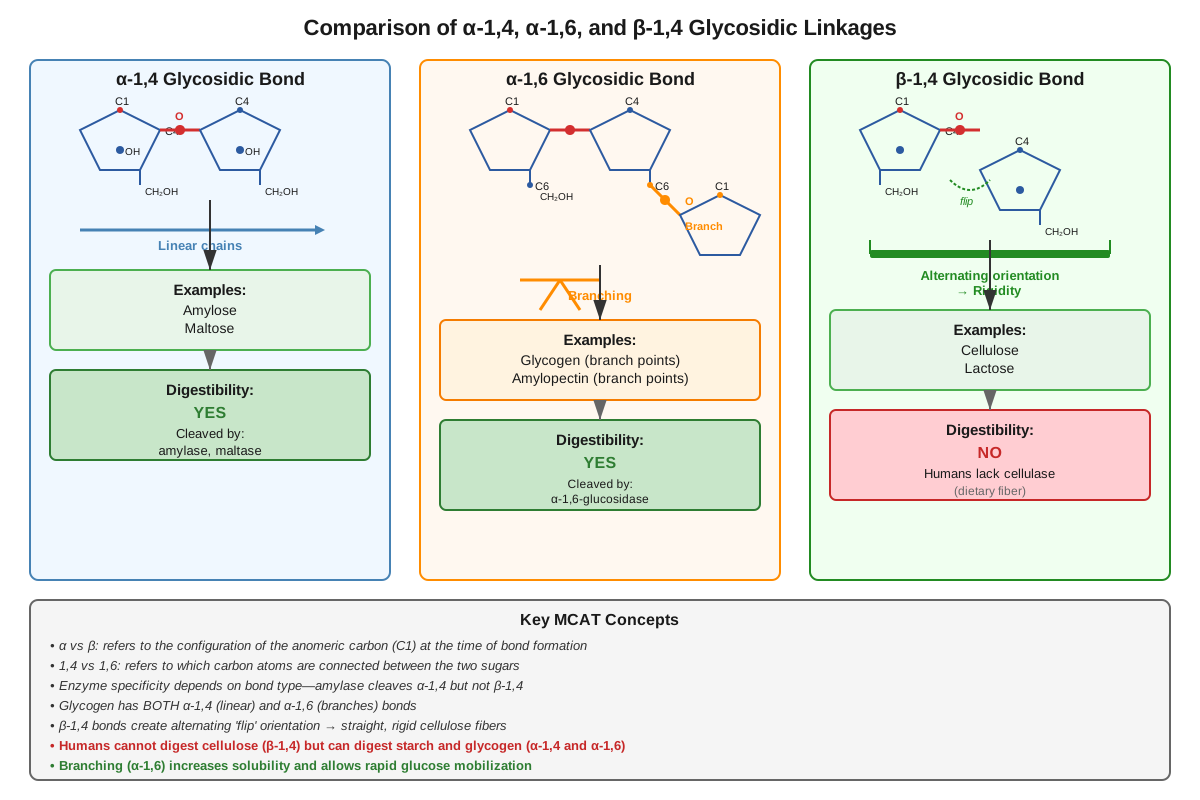
Glycosidic bonds are named according to three key features: the configuration (α or β), the carbon number of the anomeric carbon, and the carbon number of the hydroxyl group being linked. For example, α-1,4-glycosidic bond indicates an α-configuration linkage between C1 of one sugar and C4 of another sugar.
| Linkage Type | Found In | Configuration | Digestible by Humans? |
|---|---|---|---|
| α-1,4 | Maltose, amylose, starch | α | Yes (amylase) |
| α-1,6 | Amylopectin, glycogen (branches) | α | Yes (debranching enzyme) |
| β-1,4 | Cellobiose, cellulose, lactose | β | No (cellulose), Yes (lactose with lactase) |
| α-1,2 | Sucrose (glucose-fructose) | α | Yes (sucrase) |
| β-2,1 | Inulin | β | No |
O-glycosidic bonds are the most common type, involving oxygen as the linking atom. N-glycosidic bonds occur in nucleosides and nucleotides, connecting a sugar (ribose or deoxyribose) to a nitrogenous base through a nitrogen atom. S-glycosidic bonds, though rare, involve sulfur linkages. For MCAT purposes, O-glycosidic bonds in carbohydrates receive the most emphasis.
Structural Consequences of Different Glycosidic Bonds
The type of glycosidic bond profoundly affects the three-dimensional structure and properties of polysaccharides. α-1,4-glycosidic bonds create a helical structure, as seen in amylose, because the bond angle causes the polymer chain to coil. This helical structure can trap iodine molecules, producing the characteristic blue-black color in the iodine test for starch. The helix also makes the molecule more compact and suitable for energy storage.
β-1,4-glycosidic bonds produce extended, linear chains because the alternating orientation of glucose units creates a straight polymer. In cellulose, these linear chains align parallel to each other, forming extensive hydrogen bonding networks between chains. This creates crystalline regions with exceptional tensile strength, making cellulose ideal for structural support in plant cell walls but completely indigestible by organisms lacking cellulase enzymes.
α-1,6-glycosidic bonds create branch points in polysaccharides. In glycogen and amylopectin, these branches occur approximately every 8-12 glucose residues along α-1,4-linked chains. Branching increases the number of terminal glucose residues available for rapid mobilization during glycogenolysis, making highly branched glycogen more efficient for quick energy release than linear amylose. The branches also increase solubility by preventing extensive inter-chain hydrogen bonding.
Enzyme Specificity and Glycosidic Bonds
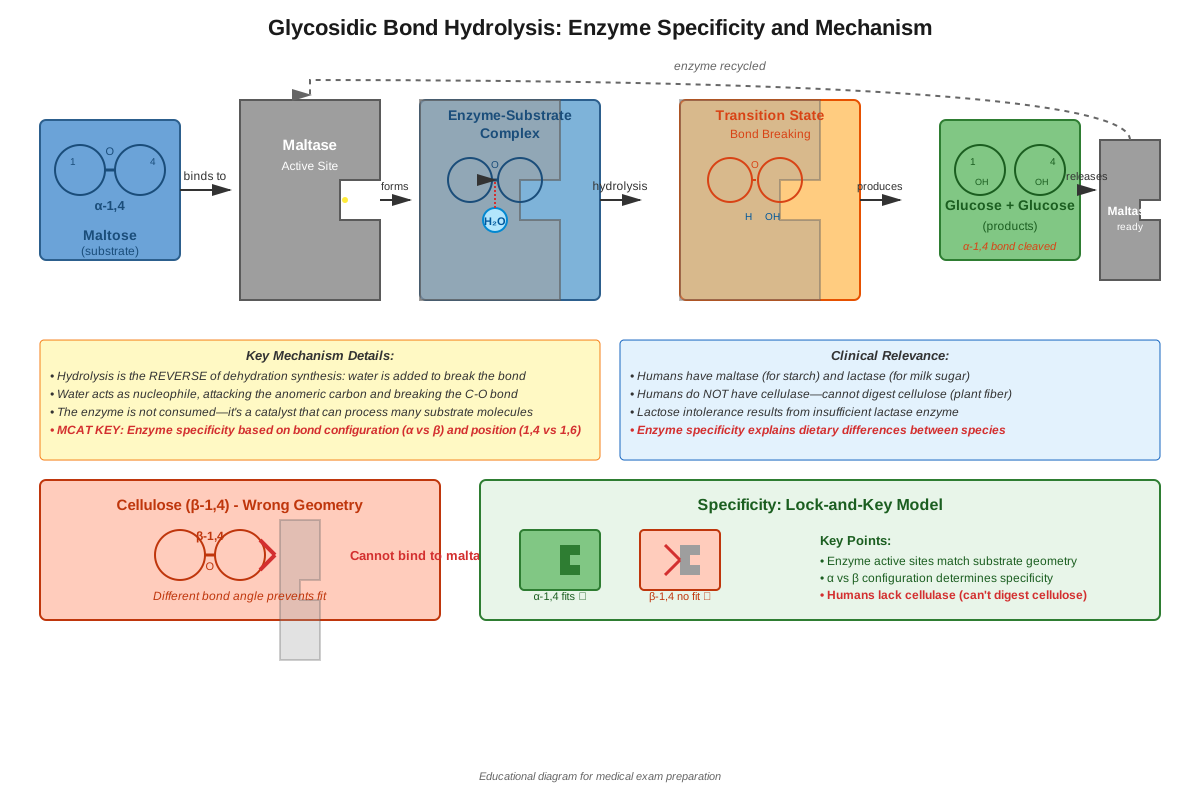
Enzyme specificity for glycosidic bonds exemplifies the lock-and-key model of enzyme action. Amylase cleaves α-1,4-glycosidic bonds in starch but cannot hydrolyze β-1,4 bonds in cellulose, despite both substrates being glucose polymers. This specificity arises from the enzyme's active site geometry, which accommodates only the spatial arrangement of α-linked glucose units.
Human digestive enzymes include:
- Salivary and pancreatic amylase: cleave internal α-1,4 bonds in starch (endoglycosidase activity)
- Maltase: cleaves α-1,4 bonds in maltose (disaccharidase)
- Sucrase: cleaves α-1,2 bonds in sucrose
- Lactase: cleaves β-1,4 bonds in lactose
- Isomaltase (debranching enzyme): cleaves α-1,6 bonds at branch points
The absence of enzymes to cleave β-1,4 bonds in cellulose explains why dietary fiber passes through the human digestive system undigested. Ruminant animals and termites harbor symbiotic microorganisms that produce cellulase, enabling them to derive nutrition from cellulose.
Glycosidic Bonds in Biologically Important Molecules
Disaccharides demonstrate the diversity of glycosidic linkages:
- Maltose (glucose-α-1,4-glucose): reducing sugar, product of starch digestion
- Lactose (galactose-β-1,4-glucose): reducing sugar, milk sugar
- Sucrose (glucose-α-1,2-fructose): non-reducing sugar because both anomeric carbons participate in the bond
- Cellobiose (glucose-β-1,4-glucose): reducing sugar, repeating unit of cellulose
Polysaccharides serve storage or structural functions:
- Starch (amylose and amylopectin): plant energy storage, α-1,4 and α-1,6 bonds
- Glycogen: animal energy storage, similar to amylopectin but more highly branched
- Cellulose: plant structural support, β-1,4 bonds creating linear chains
- Chitin: arthropod exoskeletons and fungal cell walls, β-1,4 bonds between N-acetylglucosamine units
Glycoconjugates involve glycosidic bonds between sugars and non-carbohydrate molecules:
- Glycoproteins: proteins with oligosaccharide chains attached via N-glycosidic bonds (to asparagine) or O-glycosidic bonds (to serine/threonine)
- Glycolipids: lipids with sugar residues, important in cell membranes for recognition
- Proteoglycans: proteins heavily glycosylated with glycosaminoglycan chains
Concept Relationships
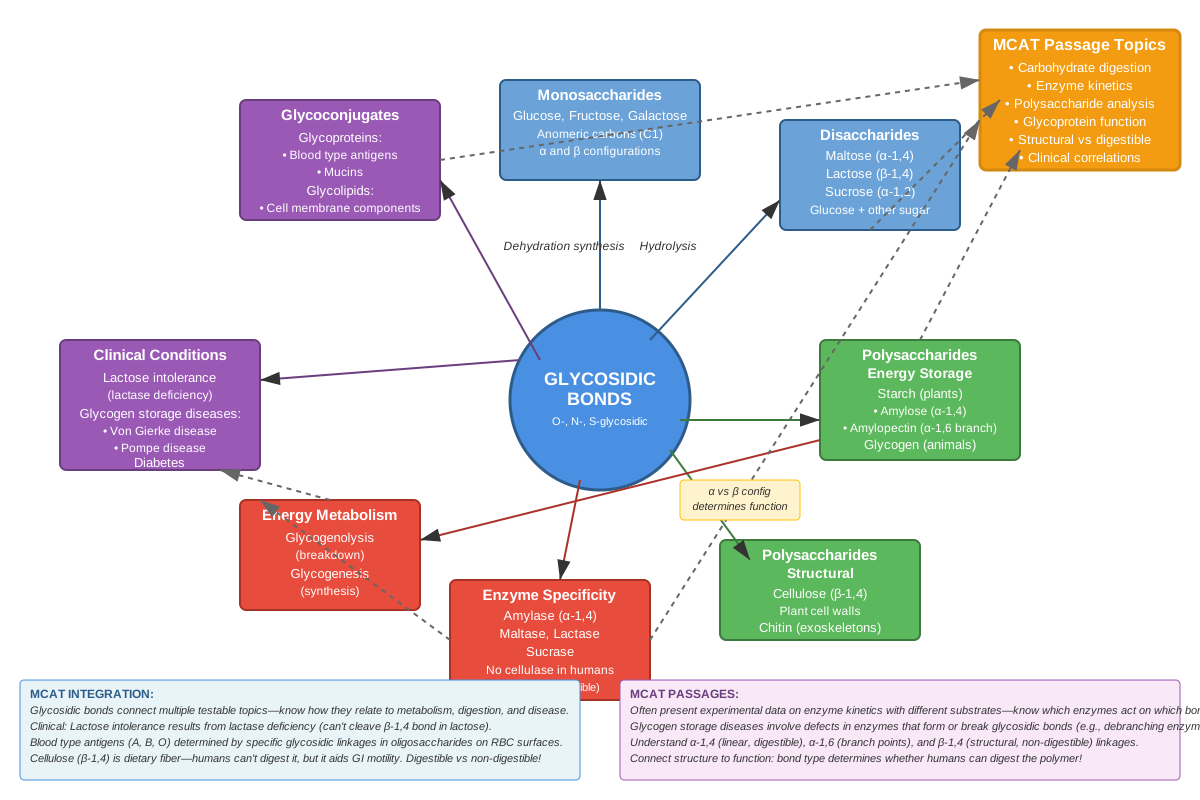
Glycosidic bonds serve as the central connecting concept linking monosaccharide chemistry to polysaccharide structure and function. The relationship map flows as follows:
Monosaccharide structure (including anomeric carbon configuration) → Glycosidic bond formation (α or β, specific carbon positions) → Disaccharide/oligosaccharide properties (reducing vs. non-reducing, specific functions) → Polysaccharide architecture (helical vs. linear, branched vs. unbranched) → Biological function (energy storage vs. structural support, digestibility)
The stereochemistry of the anomeric carbon directly determines whether an α or β glycosidic bond forms, which in turn dictates the three-dimensional structure of the resulting polymer. This structure determines physical properties like solubility, crystallinity, and mechanical strength, which ultimately define biological function. For example: β-anomeric carbon → β-1,4-glycosidic bonds → linear cellulose chains → extensive hydrogen bonding → high tensile strength → structural function in plant cell walls.
Glycosidic bonds also connect to enzyme kinetics and specificity. The precise geometry of the bond determines which enzymes can catalyze its hydrolysis: enzyme active site shape → substrate specificity → ability to cleave specific glycosidic bonds → digestibility and metabolic fate. This relationship explains clinical conditions like lactose intolerance (lactase deficiency → inability to cleave β-1,4 bond in lactose → undigested lactose in colon → osmotic diarrhea).
The concept extends to glycobiology, where glycosidic bonds in glycoproteins and glycolipids enable cell-surface recognition: specific oligosaccharide sequence → unique three-dimensional structure → recognition by lectins or antibodies → biological outcomes like blood typing, immune responses, and cell adhesion.
High-Yield Facts
⭐ α-glycosidic bonds have the oxygen linkage on the opposite side of the ring from the CH₂OH group (pointing down in D-sugars), while β-glycosidic bonds have it on the same side (pointing up)
⭐ Humans can digest α-1,4 and α-1,6 glycosidic bonds (in starch and glycogen) but cannot digest β-1,4 bonds in cellulose due to lack of cellulase enzyme
⭐ Glycogen has more frequent α-1,6 branch points than amylopectin, making it more rapidly mobilizable for energy
⭐ Sucrose is a non-reducing sugar because both anomeric carbons (C1 of glucose and C2 of fructose) participate in the α-1,2 glycosidic bond
⭐ Lactose contains a β-1,4 glycosidic bond between galactose and glucose; lactase deficiency causes lactose intolerance
- Glycosidic bond formation is a dehydration synthesis reaction that converts a hemiacetal/hemiketal to an acetal/ketal
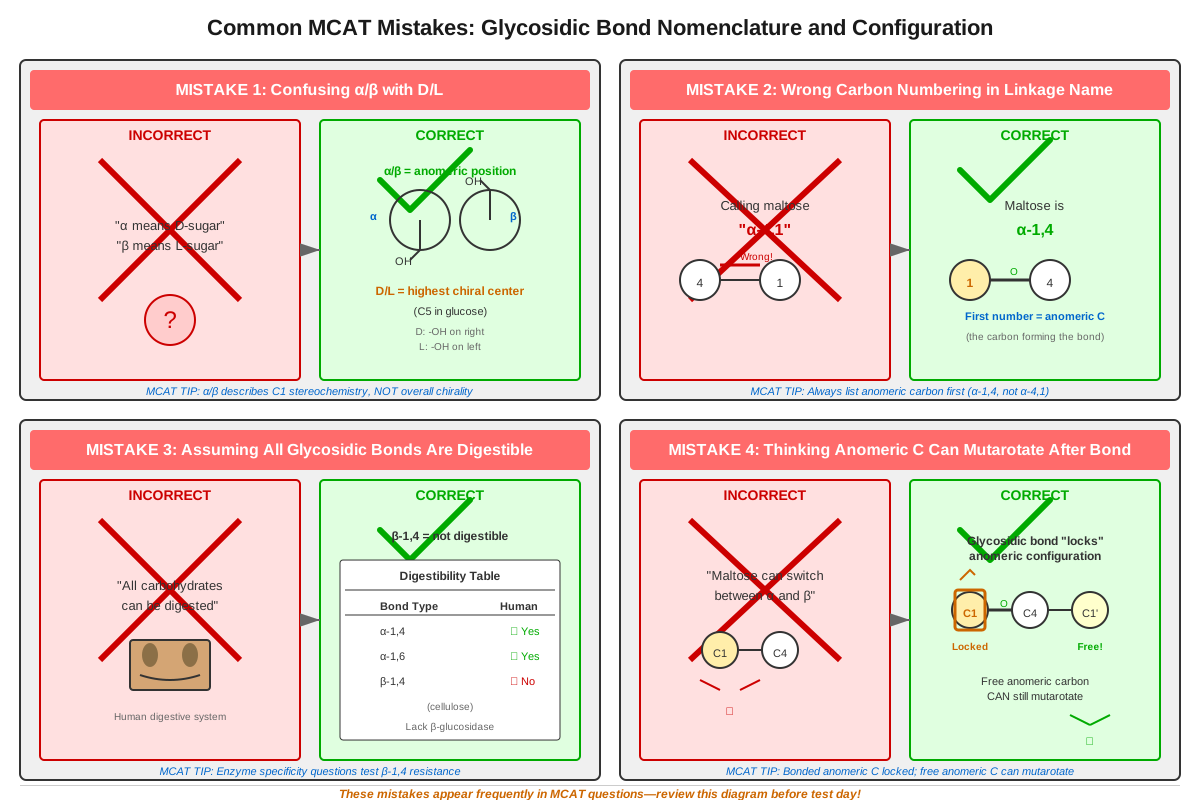
- The anomeric carbon becomes "locked" after glycosidic bond formation and can no longer undergo mutarotation
- Maltose (two glucose units with α-1,4 bond) is the repeating unit of amylose and a product of starch digestion
- Cellobiose (two glucose units with β-1,4 bond) is the repeating unit of cellulose
- Amylase is an endoglycosidase that cleaves internal α-1,4 bonds, while maltase is an exoglycosidase that removes glucose from chain ends
- The iodine test for starch works because amylose's helical structure (from α-1,4 bonds) traps iodine molecules, producing a blue-black color
- N-glycosidic bonds connect sugars to proteins at asparagine residues (N-linked glycosylation) or to nitrogenous bases in nucleotides
Quick check — test yourself on Glycosidic bonds so far.
Try Flashcards →Common Misconceptions
Misconception: All glycosidic bonds between glucose molecules are the same.
Correction: Glycosidic bonds vary by configuration (α vs. β), carbon positions involved (1,4 vs. 1,6 vs. others), and these differences create dramatically different structures and properties. α-1,4 bonds in starch create digestible, helical polymers, while β-1,4 bonds in cellulose create indigestible, linear fibers.
Misconception: The terms "α" and "β" in glycosidic bonds refer to the same concept as α and β in protein secondary structure.
Correction: In carbohydrate chemistry, α and β refer specifically to the stereochemical configuration at the anomeric carbon—the spatial orientation of the glycosidic bond relative to the CH₂OH group. This is completely unrelated to protein structure terminology.
Misconception: Glycosidic bonds are weak and easily broken without enzymes.
Correction: Glycosidic bonds are covalent bonds with significant bond energy. While they can be hydrolyzed by heating in acid or base, under physiological conditions (neutral pH, body temperature), they are stable and require specific enzymes for cleavage. This stability is essential for polysaccharides to serve structural and storage functions.
Misconception: All disaccharides are reducing sugars.
Correction: Only disaccharides with a free anomeric carbon are reducing sugars. Sucrose is non-reducing because both anomeric carbons participate in the glycosidic bond (α-1,2 linkage between glucose C1 and fructose C2), leaving no free anomeric carbon to undergo oxidation-reduction reactions.
Misconception: Humans cannot digest any β-glycosidic bonds.
Correction: While humans lack cellulase and cannot digest β-1,4 bonds in cellulose, we do produce lactase, which cleaves the β-1,4 bond in lactose. The key is that enzyme specificity depends on the complete substrate structure, not just the bond configuration. Lactase recognizes the galactose-glucose structure of lactose specifically.
Misconception: Branching in polysaccharides is random.
Correction: Branch points in glycogen and amylopectin occur at specific intervals (approximately every 8-12 residues in glycogen, every 24-30 in amylopectin) and are created by specific branching enzymes. The degree and pattern of branching is genetically controlled and functionally important.
Misconception: The glycosidic bond nomenclature "1,4" means the bond is between carbon 1 of one sugar and carbon 4 of the same sugar.
Correction: The nomenclature indicates the bond connects carbon 1 of one sugar molecule to carbon 4 of a different sugar molecule. The two numbers refer to carbons on two separate monosaccharide units being joined.
Worked Examples
Example 1: Identifying Glycosidic Bond Types and Predicting Digestibility
Question: A researcher isolates three disaccharides from different sources. Disaccharide A contains two glucose molecules linked by a bond between C1 of the first glucose (in α-configuration) and C4 of the second glucose. Disaccharide B contains glucose and galactose linked by a bond between C1 of galactose (in β-configuration) and C4 of glucose. Disaccharide C contains glucose and fructose linked between C1 of glucose (in α-configuration) and C2 of fructose. Which of these disaccharides would be digestible by typical human enzymes, and which would give a positive result in a Benedict's test?
Solution:
Step 1: Identify each disaccharide based on the linkage description.
- Disaccharide A: glucose-α-1,4-glucose = maltose
- Disaccharide B: galactose-β-1,4-glucose = lactose
- Disaccharide C: glucose-α-1,2-fructose = sucrose
Step 2: Determine digestibility based on human enzyme availability.
- Maltose: Humans produce maltase, which cleaves α-1,4 bonds → digestible
- Lactose: Humans produce lactase (though many adults are deficient), which cleaves this specific β-1,4 bond → digestible (in lactase-sufficient individuals)
- Sucrose: Humans produce sucrase, which cleaves α-1,2 bonds → digestible
All three are digestible by humans with normal enzyme expression.
Step 3: Determine which are reducing sugars (positive Benedict's test).
- Maltose: The second glucose has a free anomeric carbon (C1 not involved in the bond) → reducing sugar → positive Benedict's test
- Lactose: The glucose unit has a free anomeric carbon → reducing sugar → positive Benedict's test
- Sucrose: Both anomeric carbons participate in the bond (C1 of glucose and C2 of fructose) → non-reducing sugar → negative Benedict's test
Answer: All three disaccharides are digestible by humans. Maltose and lactose would give positive Benedict's tests (reducing sugars), while sucrose would not (non-reducing sugar).
Key Concept Connection: This example demonstrates how glycosidic bond position and configuration determine both enzyme specificity and chemical reactivity. The involvement of both anomeric carbons in sucrose's glycosidic bond eliminates its reducing properties, distinguishing it from other common disaccharides.
Example 2: Analyzing Polysaccharide Structure and Function
Question: An experiment compares two glucose polymers: Polymer X contains only α-1,4-glycosidic bonds, while Polymer Y contains α-1,4-glycosidic bonds with α-1,6-glycosidic bonds occurring approximately every 10 glucose residues. When treated with excess amylase (which cleaves internal α-1,4 bonds but not α-1,6 bonds), Polymer X is completely hydrolyzed to maltose, while Polymer Y yields maltose plus larger oligosaccharide fragments. When both polymers are treated with a debranching enzyme (which cleaves α-1,6 bonds) followed by amylase, both are completely converted to maltose. Explain these results and identify the likely biological sources of these polymers.
Solution:
Step 1: Analyze Polymer X structure and results.
- Contains only α-1,4 bonds → linear polymer
- Complete hydrolysis by amylase alone → no branch points to resist cleavage
- Identity: amylose (linear component of starch)
Step 2: Analyze Polymer Y structure and results.
- Contains α-1,4 bonds with α-1,6 branch points every ~10 residues → branched polymer
- Amylase cleaves α-1,4 bonds but stops at α-1,6 branch points → produces maltose from linear segments plus larger fragments containing branch points
- Debranching enzyme removes α-1,6 bonds → converts branched structure to linear chains
- Subsequent amylase treatment → complete hydrolysis to maltose
- Identity: glycogen or amylopectin (glycogen has more frequent branching, ~every 8-12 residues)
Step 3: Explain the functional significance.
The branched structure of Polymer Y creates multiple chain ends, allowing simultaneous action of many enzyme molecules during mobilization. This makes glycogen ideal for rapid energy release in animals. The linear structure of amylose is more compact and suitable for long-term storage in plants.
Step 4: Predict additional properties.
- Polymer X (amylose) would form a helical structure and give a strong blue-black color with iodine
- Polymer Y (glycogen/amylopectin) would be more soluble due to branching preventing extensive inter-chain interactions
- Polymer Y would be more rapidly degraded by glycogen phosphorylase in vivo due to multiple non-reducing ends
Answer: Polymer X is amylose (linear starch component), and Polymer Y is glycogen or amylopectin (branched glucose polymer). The α-1,6 branch points in Polymer Y resist amylase cleavage, requiring debranching enzyme for complete hydrolysis. This branched architecture enables rapid glucose mobilization, explaining why animals use highly branched glycogen for energy storage.
Key Concept Connection: This example illustrates how different types of glycosidic bonds (α-1,4 vs. α-1,6) create distinct polymer architectures with different functional properties and enzyme susceptibilities. It also demonstrates the principle of enzyme specificity—amylase and debranching enzyme have complementary specificities that together enable complete polysaccharide degradation.
Exam Strategy
Approaching MCAT Questions on Glycosidic Bonds
When encountering glycosidic bond questions, follow this systematic approach:
- Identify the question type: Is it asking about structure (identify the bond), function (explain digestibility), or mechanism (predict products)?
- Look for structural diagrams: If a carbohydrate structure is shown, immediately identify:
- The anomeric carbon(s) and their configuration (α or β)
- Which carbons are involved in the linkage
- Whether any anomeric carbons remain free (reducing vs. non-reducing)
- Apply the α/β rule: Remember that in standard Haworth projections of D-sugars, α bonds point down (opposite from CH₂OH) and β bonds point up (same side as CH₂OH)
- Consider enzyme specificity: If the question involves digestion or metabolism, match the bond type to the appropriate enzyme
Trigger Words and Phrases
Watch for these high-yield terms that signal glycosidic bond concepts:
- "Reducing sugar" → Check if an anomeric carbon is free (not involved in glycosidic bond)
- "Digestible by humans" → Look for α-1,4, α-1,6, or specific β-1,4 in lactose; eliminate β-1,4 in cellulose
- "Branching" → Indicates α-1,6 glycosidic bonds
- "Helical structure" → Suggests α-1,4 bonds (amylose)
- "Linear, extended chains" → Suggests β-1,4 bonds (cellulose)
- "Lactose intolerance" → Focus on β-1,4 bond and lactase deficiency
- "Iodine test" → Testing for starch (amylose helix traps iodine)
- "Rapid energy mobilization" → Points to highly branched glycogen with many α-1,6 bonds
Process-of-Elimination Tips
When evaluating answer choices:
- Eliminate answers that confuse α and β: If a question asks about starch digestibility, eliminate any answer suggesting β-glycosidic bonds
- Eliminate answers that ignore enzyme specificity: If asked why humans can't digest cellulose, eliminate answers that don't mention the β-1,4 bond configuration or lack of cellulase
- Check for stereochemical accuracy: Eliminate answers that incorrectly describe the spatial orientation of glycosidic bonds
- Verify carbon numbering: Eliminate answers with impossible carbon positions (e.g., "1,7-glycosidic bond" in a six-carbon sugar)
Time Allocation Advice
- Discrete questions on glycosidic bonds: 60-90 seconds. These typically test straightforward recognition or application of bond types.
- Passage-based questions: 90-120 seconds. Take time to understand the experimental context, but don't get lost in details. Focus on how the passage information relates to fundamental glycosidic bond principles.
- Structure interpretation: If given a complex oligosaccharide structure, spend 30 seconds orienting yourself to the anomeric carbons and bond configurations before reading the question stem.
Exam Tip: If a question seems to require detailed memorization of obscure oligosaccharide structures, step back and look for the underlying principle being tested. MCAT questions on glycosidic bonds almost always test fundamental concepts (α vs. β, enzyme specificity, reducing vs. non-reducing) rather than requiring memorization of rare structures.
Memory Techniques
Mnemonics for Glycosidic Bond Types
"Alpha Down, Beta Up" (for D-sugars in Haworth projections)
- α-glycosidic bonds: oxygen points DOWN (away from CH₂OH)
- β-glycosidic bonds: oxygen points UP (toward CH₂OH)
"ABCD" for Common Disaccharides
- Alpha-1,4 = Amylose and Maltose
- Beta-1,4 = Cellulose and Lactose (think "Baby Lactose")
- Alpha-1,6 = Branches in glycogen
- Alpha-1,2 = Sucrose (Special bond, both anomeric carbons)
Visualization Strategy for Enzyme Specificity
Create a mental image of enzymes as "lock-and-key" shapes:
- Amylase = a "curved" active site that fits the helical bend of α-1,4 bonds
- Lactase = a "flat" active site that accommodates the extended β-1,4 configuration
- Debranching enzyme = a "Y-shaped" active site that recognizes branch points (α-1,6)
This visualization helps remember why enzymes are specific: the three-dimensional shape of the glycosidic bond must match the enzyme's active site geometry.
Acronym for Polysaccharide Properties
"BAGS" for remembering polysaccharide characteristics:
- Branching: glycogen > amylopectin > amylose (none) > cellulose (none)
- Alpha bonds: starch and glycogen (digestible)
- Glucose polymer: all four are made of glucose
- Structure: cellulose (structural), others (storage)
Memory Palace Technique
Imagine walking through a kitchen:
- Pantry (storage): Contains starch (amylose and amylopectin with α bonds) and a jar of sugar (sucrose with α-1,2 bond)
- Refrigerator (quick access): Contains glycogen (highly branched for rapid mobilization)
- Wooden cutting board (structural): Made of cellulose (β-1,4 bonds, indigestible)
- Milk carton: Contains lactose (β-1,4 bond, needs lactase)
This spatial organization helps recall the function and bond types of major carbohydrates.
Summary
Glycosidic bonds are covalent linkages formed between the anomeric carbon of one carbohydrate and a hydroxyl group of another molecule through dehydration synthesis. These bonds are classified by their stereochemical configuration (α or β) and the carbon positions involved (e.g., 1,4 or 1,6), with each type producing distinct structural and functional consequences. α-glycosidic bonds, found in starch and glycogen, create helical or branched structures that are digestible by human enzymes, making them ideal for energy storage. β-glycosidic bonds, exemplified by cellulose, produce linear, crystalline structures that resist human digestion due to lack of appropriate enzymes. The specificity of enzymes for particular glycosidic bond configurations explains phenomena ranging from lactose intolerance to the nutritional value of dietary fiber. Understanding glycosidic bonds requires integrating knowledge of monosaccharide stereochemistry, organic reaction mechanisms, polymer architecture, and enzyme specificity—making this topic a high-yield integration point for MCAT biochemistry questions.
Key Takeaways
- Glycosidic bonds form between the anomeric carbon of one sugar and a hydroxyl group of another through dehydration synthesis, creating acetal/ketal linkages that lock the anomeric carbon configuration
- α-glycosidic bonds (oxygen pointing down in D-sugars) create digestible polymers like starch and glycogen, while β-glycosidic bonds (oxygen pointing up) create indigestible cellulose
- α-1,4 linkages produce helical structures (amylose), α-1,6 linkages create branch points (glycogen), and β-1,4 linkages form linear chains (cellulose)
- Enzyme specificity for glycosidic bonds explains digestibility: humans have amylase (α-1,4), lactase (β-1,4 in lactose), and debranching enzyme (α-1,6) but lack cellulase (β-1,4 in cellulose)
- Sucrose is unique as a non-reducing disaccharide because both anomeric carbons participate in its α-1,2 glycosidic bond
- Branching in glycogen (frequent α-1,6 bonds) enables rapid glucose mobilization by creating multiple chain ends for simultaneous enzyme action
- Glycosidic bond configuration determines polysaccharide properties: storage function (starch, glycogen) versus structural function (cellulose, chitin)
Related Topics
Carbohydrate Metabolism: Understanding glycosidic bonds is essential for comprehending glycogenolysis (breaking glycogen's α-1,4 and α-1,6 bonds), glycogenesis (forming these bonds), and the digestion of dietary carbohydrates. Mastering glycosidic bonds enables deeper understanding of metabolic pathways.
Enzyme Kinetics and Specificity: The exquisite specificity of glycosidases for particular bond configurations exemplifies enzyme-substrate complementarity and provides concrete examples for understanding Michaelis-Menten kinetics and competitive inhibition.
Stereochemistry in Biochemistry: Glycosidic bonds demonstrate how subtle stereochemical differences (α vs. β configuration) create profound functional consequences, reinforcing broader principles of molecular recognition and biological specificity.
Glycobiology and Cell Recognition: Glycosidic bonds in glycoproteins and glycolipids enable cell-surface recognition phenomena including blood typing, immune responses, and cell adhesion—topics that frequently appear in MCAT passages.
Nucleotide Structure: N-glycosidic bonds connecting ribose/deoxyribose to nitrogenous bases in nucleotides represent a parallel application of glycosidic bond principles in nucleic acid chemistry.
Practice CTA
Now that you've mastered the fundamentals of glycosidic bonds, it's time to solidify your understanding through active practice. Work through the practice questions to test your ability to identify bond types, predict digestibility, and analyze polysaccharide structures. Use the flashcards to reinforce high-yield facts and ensure rapid recall of key concepts like α versus β configurations and enzyme specificities. Remember: understanding glycosidic bonds isn't just about memorizing structures—it's about recognizing patterns and applying principles to novel scenarios, exactly what the MCAT demands. Your investment in mastering this topic will pay dividends across multiple biochemistry questions on test day!
Sign up free to keep reading
Create a free AnvayaPrep account to finish this MCAT guide on Glycosidic bonds — plus flashcards and practice questions.