Overview
The active site is one of the most fundamental concepts in enzyme biochemistry and represents a cornerstone topic for MCAT success. This specialized region of an enzyme molecule is where substrate binding occurs and where the catalytic magic of biochemical reactions takes place. Understanding the active site requires integrating knowledge of protein structure, molecular interactions, and reaction kinetics—making it a high-yield topic that appears across multiple question types on the MCAT.
The active site is not merely a passive binding pocket; it is a precisely engineered microenvironment that has evolved to perform specific chemical transformations with remarkable efficiency and selectivity. The three-dimensional architecture of the active site, formed by specific amino acid residues brought together through protein folding, creates a unique chemical environment that stabilizes transition states, positions reactive groups, and excludes water when necessary. This exquisite molecular choreography reduces activation energy and accelerates reaction rates by factors of 10⁶ to 10¹⁷ compared to uncatalyzed reactions.
For the MCAT, active site concepts integrate seamlessly with broader biochemistry themes including enzyme kinetics (Michaelis-Menten), enzyme regulation (competitive and non-competitive inhibition), protein structure-function relationships, and metabolic pathway control. Questions frequently test the ability to predict how changes to the active site—through mutations, pH alterations, or inhibitor binding—will affect enzyme function. Additionally, understanding active sites provides the mechanistic foundation for comprehending drug design, metabolic diseases, and therapeutic interventions, making this topic relevant across the Biological and Biochemical Foundations section of the exam.
Learning Objectives
- [ ] Define active site using accurate Biochemistry terminology
- [ ] Explain why active site matters for the MCAT
- [ ] Apply active site concepts to exam-style questions
- [ ] Identify common mistakes related to active site
- [ ] Connect active site to related Biochemistry concepts
- [ ] Predict how specific amino acid substitutions in the active site would affect enzyme function
- [ ] Distinguish between active site and allosteric site in terms of structure and function
- [ ] Analyze experimental data to identify active site residues from mutagenesis studies
- [ ] Explain the relationship between active site geometry and substrate specificity
Prerequisites
- Protein structure (primary, secondary, tertiary, quaternary): The active site is formed by the three-dimensional arrangement of amino acids, requiring understanding of how proteins fold
- Amino acid properties (polar, nonpolar, charged, aromatic): Active site function depends on the chemical properties of constituent amino acids
- Chemical bonding and intermolecular forces: Substrate binding involves hydrogen bonds, ionic interactions, van der Waals forces, and sometimes covalent bonds
- Basic thermodynamics and kinetics: Understanding how active sites lower activation energy requires knowledge of energy diagrams and reaction coordinates
- Acid-base chemistry: Many active sites contain acidic or basic residues that participate in catalysis through proton transfer
Why This Topic Matters
Clinical and Real-World Significance
Active site knowledge underpins modern pharmacology and drug design. Most therapeutic drugs function either as enzyme inhibitors that block active sites or as molecules that modulate enzyme activity. For example, aspirin irreversibly acetylates a serine residue in the active site of cyclooxygenase (COX), preventing prostaglandin synthesis and reducing inflammation. HIV protease inhibitors are designed to fit precisely into the active site of the viral protease, preventing viral replication. Understanding active site architecture enables rational drug design, where medications are engineered to complement the three-dimensional structure of disease-related enzymes.
Genetic diseases frequently result from mutations affecting active site residues. Phenylketonuria (PKU) often results from mutations in phenylalanine hydroxylase that disrupt active site structure, preventing proper substrate binding or catalysis. Similarly, certain forms of hemophilia result from mutations affecting the active sites of clotting cascade enzymes. Medical diagnostics also rely on active site principles—enzyme assays measure activity by monitoring substrate conversion, and abnormal enzyme levels can indicate tissue damage or disease states.
MCAT Exam Statistics
Active site questions appear with high frequency on the MCAT, typically in 3-5 questions per exam across both passage-based and discrete questions. The topic appears in approximately 15-20% of enzyme-related questions and integrates with kinetics, inhibition, and regulation concepts. Common question formats include:
- Passage-based questions: Experimental passages describing enzyme characterization, mutagenesis studies, or inhibitor screening
- Data interpretation: Analyzing graphs showing enzyme activity versus pH, temperature, or inhibitor concentration
- Mechanism questions: Predicting reaction outcomes based on active site residues
- Structure-function relationships: Connecting amino acid properties to catalytic mechanisms
Exam Tip: Active site questions often appear in passages about drug development, metabolic disorders, or enzyme engineering—contexts that require applying fundamental concepts to novel scenarios.
Core Concepts
Definition and Structural Features
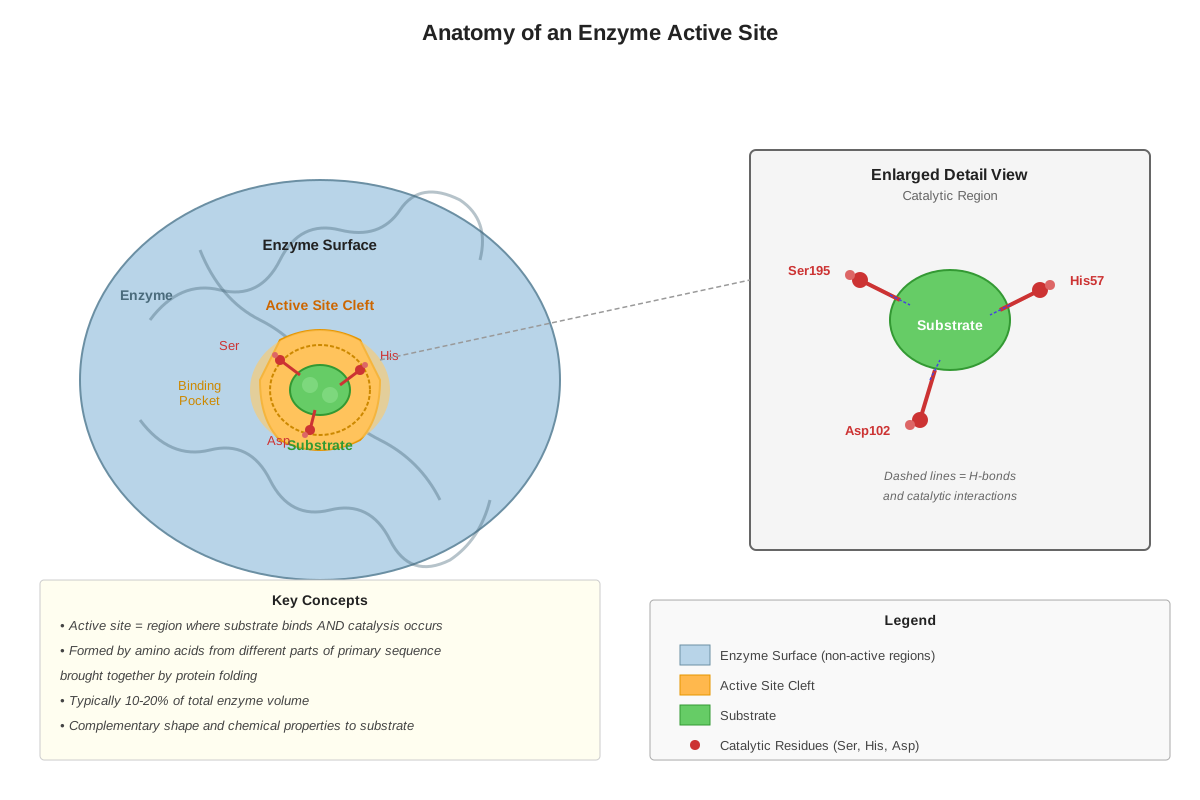
The active site is a three-dimensional cleft or crevice on an enzyme's surface, typically comprising 10-20 amino acid residues that are brought into proximity through protein folding. These residues may be distant in the primary sequence but converge spatially in the tertiary structure. The active site performs two essential functions: substrate binding (through the binding site) and catalysis (through the catalytic site), though these regions often overlap.
The active site represents only a small fraction of the total enzyme volume—typically 10-20% of the protein surface—yet it determines the enzyme's specificity and catalytic power. The remaining protein structure serves as a scaffold that maintains active site geometry, provides regulatory sites, and may facilitate substrate channeling in multi-enzyme complexes.
Key Structural Characteristics
The active site exhibits several defining features:
- Complementarity: The active site shape is complementary to the transition state structure (not the substrate ground state), as described by the induced fit model
- Microenvironment: Creates a unique chemical environment distinct from bulk solution, often excluding water or maintaining specific pH conditions
- Precise geometry: Amino acid side chains are positioned with angstrom-level precision to facilitate catalysis
- Flexibility: Many active sites undergo conformational changes upon substrate binding (induced fit)
Substrate Binding and Recognition
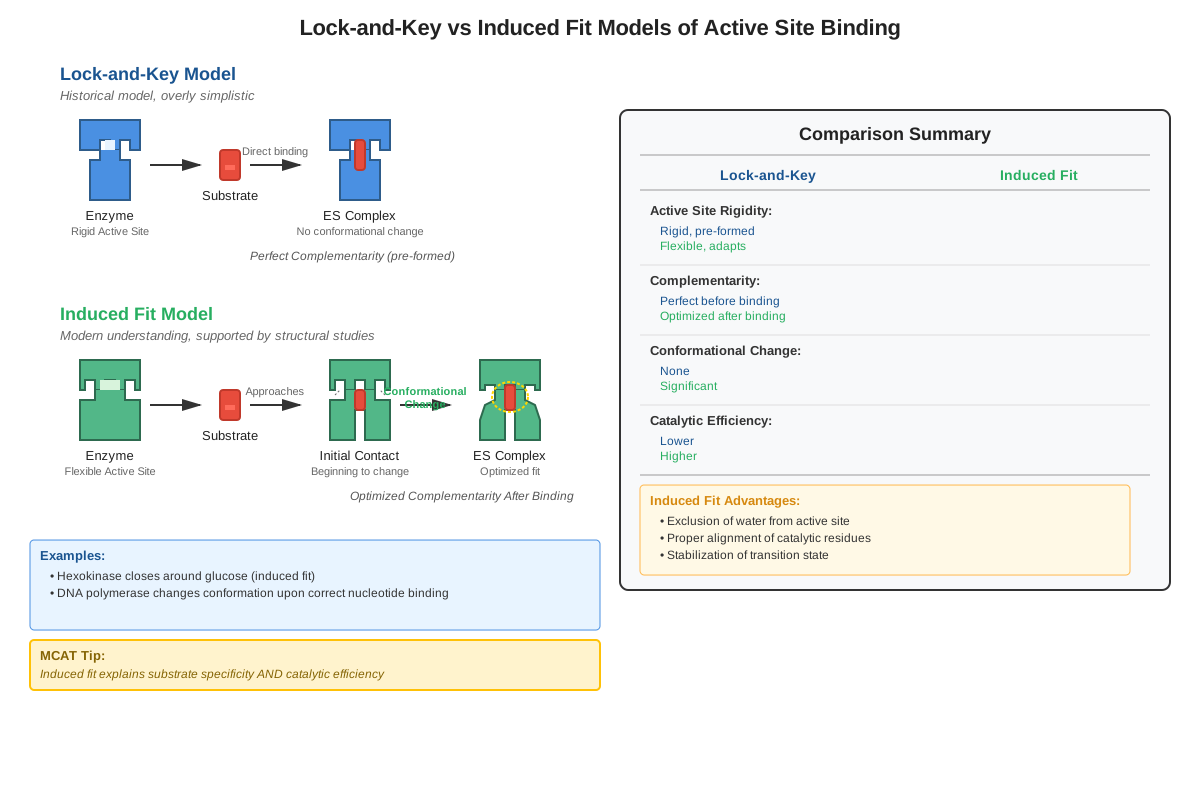
Substrate specificity arises from the complementary relationship between substrate structure and active site architecture. The lock-and-key model, proposed by Emil Fischer in 1894, suggested rigid complementarity between enzyme and substrate. However, the more accurate induced fit model, proposed by Daniel Koshland in 1958, recognizes that substrate binding induces conformational changes that optimize the active site geometry for catalysis.
Substrate binding involves multiple weak interactions:
| Interaction Type | Typical Energy (kJ/mol) | Role in Binding |
|---|---|---|
| Hydrogen bonds | 10-40 | Specificity and orientation |
| Ionic interactions | 20-40 | Charge complementarity |
| Van der Waals forces | 2-4 | Shape complementarity |
| Hydrophobic effects | 4-12 | Exclusion of water |
The cumulative effect of multiple weak interactions provides both specificity (wrong substrates lack complementary interactions) and reversibility (products can dissociate after catalysis).
Catalytic Mechanisms
The active site accelerates reactions through several mechanisms:
- Proximity and orientation effects: Substrates are positioned precisely to favor productive collisions, increasing the effective concentration by factors of 10³-10⁸
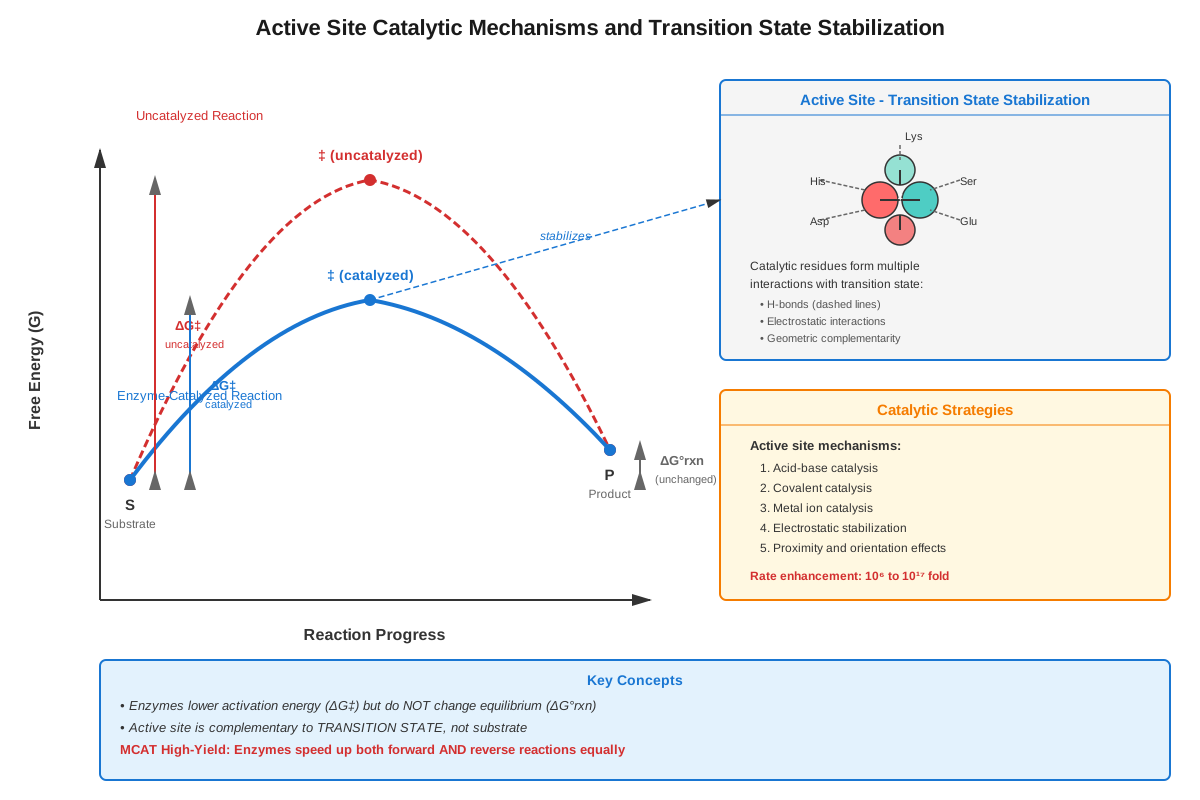
- Transition state stabilization: The active site is complementary to the transition state structure, lowering activation energy (ΔG‡)
- Acid-base catalysis: Active site residues (His, Asp, Glu, Lys) donate or accept protons at critical steps
- Covalent catalysis: Nucleophilic residues (Ser, Cys, His) form transient covalent intermediates
- Metal ion catalysis: Cofactors (Zn²⁺, Mg²⁺, Fe²⁺) stabilize negative charges or participate in redox reactions
- Strain and distortion: Substrate binding induces conformational strain that resembles the transition state
Active Site Residues: Functional Classification
Active site amino acids can be categorized by function:
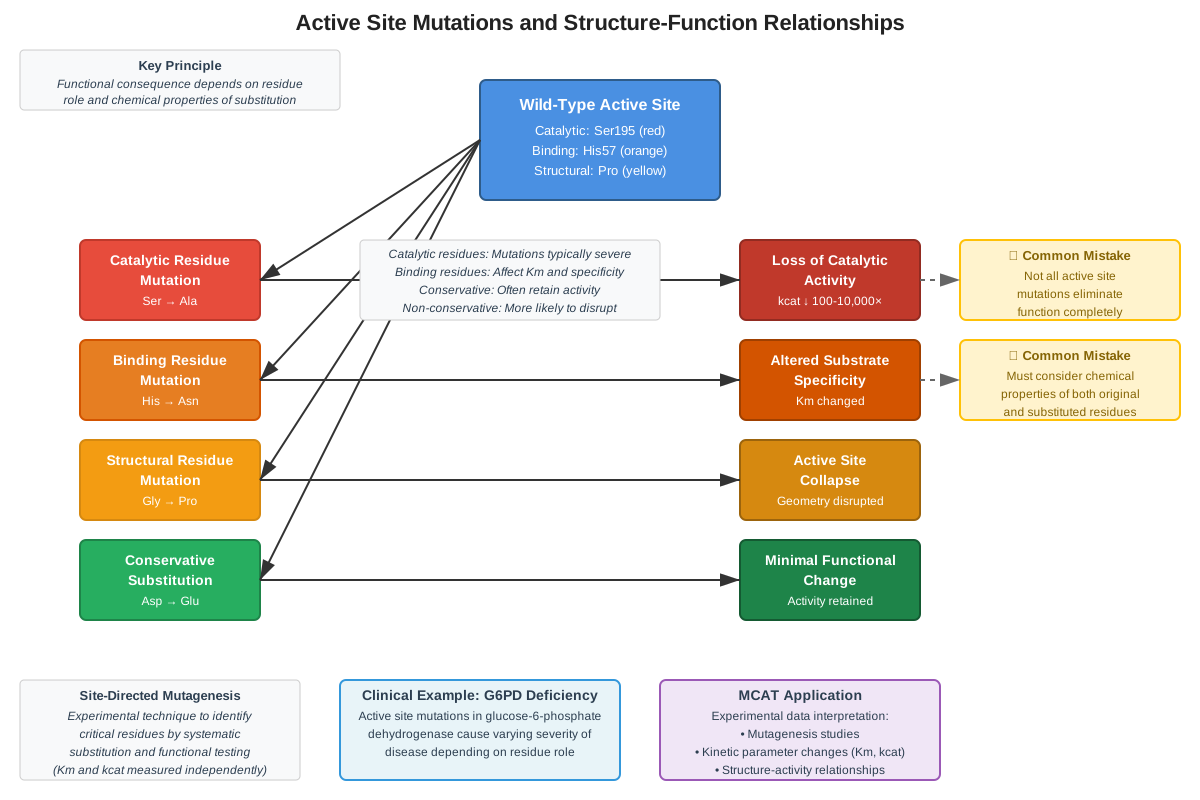
Catalytic residues: Directly participate in bond making/breaking
- Example: Ser195, His57, Asp102 in serine proteases (catalytic triad)
Binding residues: Provide substrate recognition and orientation
- Example: Hydrophobic pocket residues that recognize aromatic substrates
Stabilizing residues: Maintain active site architecture
- Example: Residues forming the oxyanion hole in serine proteases
Enzyme Specificity
Active site architecture determines four levels of specificity:
- Absolute specificity: Enzyme acts on only one substrate (e.g., urease acts only on urea)
- Group specificity: Enzyme acts on molecules with specific functional groups (e.g., alcohol dehydrogenase acts on various alcohols)
- Linkage specificity: Enzyme acts on specific types of bonds (e.g., peptidases cleave peptide bonds)
- Stereochemical specificity: Enzyme distinguishes between stereoisomers (e.g., L-amino acid oxidase acts only on L-amino acids)
Environmental Factors Affecting Active Site Function
The active site is sensitive to environmental conditions:
pH effects: Ionization states of active site residues change with pH, affecting catalysis. Each enzyme has an optimal pH where active site residues are properly ionized. For example, pepsin (stomach protease) has optimal pH ~2, while trypsin (intestinal protease) has optimal pH ~8.
Temperature effects: Increased temperature initially increases reaction rate (higher kinetic energy) but excessive heat denatures the protein, disrupting active site geometry. Most human enzymes have optimal temperatures near 37°C.
Ionic strength: Affects electrostatic interactions within the active site and between enzyme and substrate.
Active Site Versus Allosteric Site
Understanding the distinction between active and allosteric sites is crucial for MCAT success:
| Feature | Active Site | Allosteric Site |
|---|---|---|
| Location | Substrate binding region | Distant regulatory region |
| Function | Catalysis | Regulation |
| Binding | Substrate/product | Regulatory molecules |
| Effect of binding | Direct catalysis | Conformational change affecting active site |
| Inhibition type | Competitive inhibition | Non-competitive inhibition |
Concept Relationships
The active site concept serves as a central hub connecting multiple biochemistry topics. Understanding these relationships enhances both comprehension and exam performance.
Active site structure → Enzyme specificity: The three-dimensional arrangement of amino acids in the active site determines which substrates can bind, directly establishing substrate specificity. This relationship explains why enzymes are highly selective catalysts.
Active site geometry → Transition state stabilization → Catalytic efficiency: The precise positioning of catalytic residues enables stabilization of the transition state structure, which is the fundamental mechanism by which enzymes lower activation energy (ΔG‡). This connects to kinetics concepts and explains why enzymes are such powerful catalysts.
Active site accessibility → Enzyme regulation: Conformational changes that alter active site accessibility provide a mechanism for allosteric regulation. When regulatory molecules bind to allosteric sites, they induce conformational changes that either open (positive regulation) or close (negative regulation) the active site.
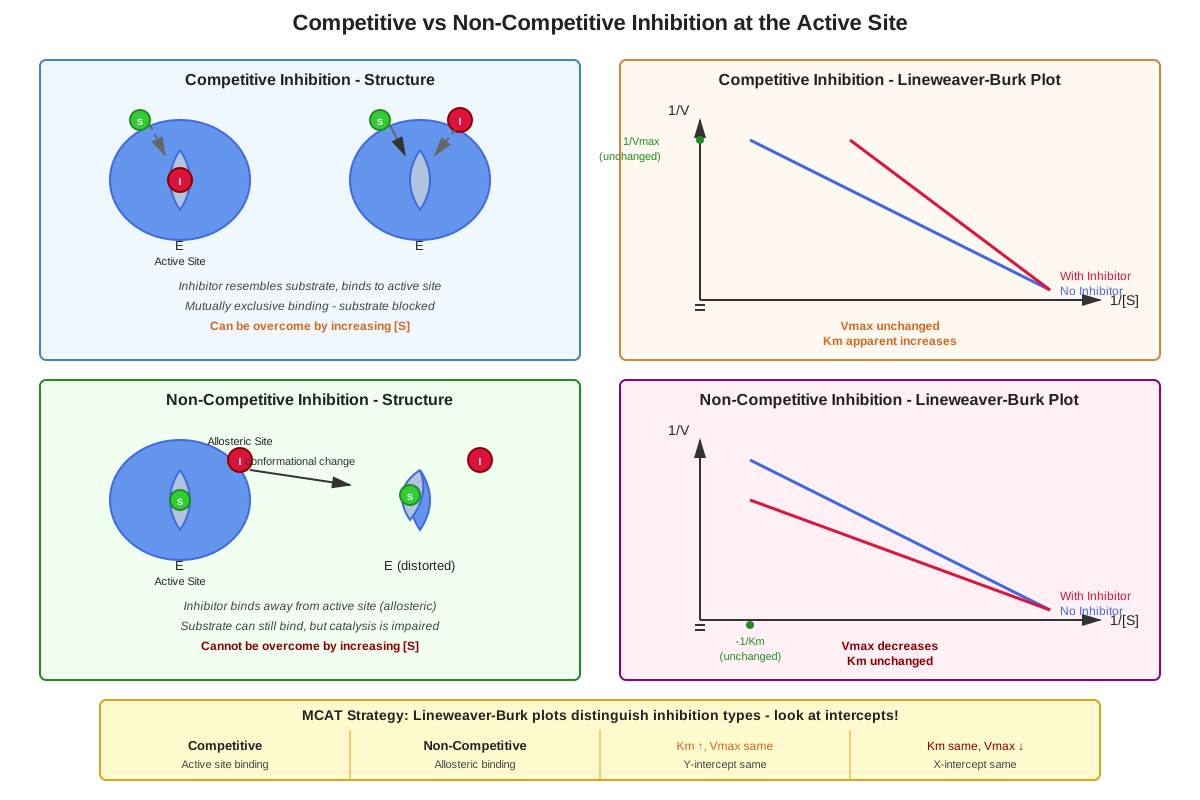
Active site residues → Competitive inhibition: Competitive inhibitors bind directly to the active site, preventing substrate binding. This relationship explains why competitive inhibition increases apparent Km without changing Vmax—the inhibitor competes for the same binding site but can be overcome by increasing substrate concentration.
Protein folding → Active site formation → Enzyme function: The active site only exists in properly folded proteins. Denaturation disrupts tertiary structure, destroying active site geometry and eliminating catalytic activity. This connects to protein structure topics and explains why maintaining proper folding is essential for enzyme function.
Active site microenvironment → pH optimum: The ionization states of active site residues determine optimal pH for catalysis. This relationship explains enzyme-specific pH optima and connects to acid-base chemistry.
High-Yield Facts
⭐ The active site is complementary to the transition state structure, not the substrate ground state—this is the fundamental principle of enzyme catalysis and explains how enzymes lower activation energy.
⭐ Competitive inhibitors bind to the active site and increase apparent Km while leaving Vmax unchanged—this is one of the most tested concepts in enzyme kinetics.
⭐ The induced fit model describes conformational changes upon substrate binding that optimize active site geometry for catalysis—this is more accurate than the rigid lock-and-key model.
⭐ Active site residues are brought together by tertiary structure, even if distant in primary sequence—mutations far from the active site can still affect catalysis by disrupting protein folding.
⭐ Most active sites represent only 10-20% of the total enzyme surface but determine substrate specificity and catalytic mechanism—the rest of the protein maintains structure and provides regulatory functions.
- Active sites create unique microenvironments with pH, polarity, or hydration states different from bulk solution
- Catalytic triads (Ser-His-Asp) are common in serine proteases and exemplify cooperative catalytic mechanisms
- Metal ions in active sites can stabilize negative charges, participate in redox reactions, or position substrates
- Substrate binding energy is used to stabilize the transition state rather than simply binding the substrate tightly
- Active site flexibility allows conformational selection and induced fit mechanisms
- Covalent modification of active site residues (phosphorylation, acetylation) can regulate enzyme activity
- Active site mutations are common causes of genetic enzyme deficiency diseases
- Irreversible inhibitors form covalent bonds with active site residues (e.g., aspirin and COX)
- The oxyanion hole in serine proteases stabilizes the tetrahedral intermediate through hydrogen bonding
- Active site geometry explains stereochemical specificity—enzymes distinguish between D and L isomers
Quick check — test yourself on Active site so far.
Try Flashcards →Common Misconceptions
Misconception: The active site is complementary to the substrate structure.
Correction: The active site is complementary to the transition state structure, not the substrate ground state. This transition state complementarity is what lowers activation energy and accelerates the reaction. If the active site were perfectly complementary to the substrate, binding would be too tight and the reaction would not proceed efficiently.
Misconception: Competitive inhibitors permanently block the active site.
Correction: Competitive inhibitors bind reversibly to the active site and can be displaced by increasing substrate concentration. This is why competitive inhibition increases apparent Km (more substrate needed to reach half-maximal velocity) but doesn't change Vmax (at infinite substrate concentration, the inhibitor is completely outcompeted).
Misconception: All amino acids in an enzyme are part of the active site.
Correction: The active site typically comprises only 10-20 amino acid residues out of hundreds in the complete protein. The remaining residues maintain protein structure, provide allosteric regulatory sites, facilitate protein-protein interactions, or serve other functions. However, mutations anywhere in the protein can affect active site function by disrupting overall protein folding.
Misconception: The lock-and-key model accurately describes enzyme-substrate interactions.
Correction: The induced fit model is more accurate. While the lock-and-key model suggests rigid complementarity, most enzymes undergo conformational changes upon substrate binding that optimize active site geometry for catalysis. This flexibility is essential for transition state stabilization and product release.
Misconception: Enzymes make thermodynamically unfavorable reactions favorable.
Correction: Enzymes accelerate the rate of reactions by lowering activation energy but do not change the equilibrium position (ΔG°). A reaction that is thermodynamically unfavorable (positive ΔG°) remains unfavorable in the presence of an enzyme. Cells couple unfavorable reactions to favorable ones (like ATP hydrolysis) to drive them forward, but the enzyme itself doesn't change thermodynamics.
Misconception: Active sites are always located in clefts or pockets within the enzyme.
Correction: While many active sites are indeed located in clefts that partially enclose the substrate, some active sites are located on relatively flat surfaces or at interfaces between subunits in multimeric enzymes. The key feature is the precise three-dimensional arrangement of catalytic residues, not necessarily a deep pocket structure.
Misconception: Stronger substrate binding always means better catalysis.
Correction: Excessively tight substrate binding can actually inhibit catalysis because the product may not be released efficiently. Optimal enzyme function requires a balance—tight enough binding for specificity and proper orientation, but not so tight that product release becomes rate-limiting. This is sometimes called the "Circe effect."
Worked Examples
Example 1: Predicting Effects of Active Site Mutations
Question: Researchers studying lysozyme identify a glutamic acid residue (Glu35) in the active site that is critical for catalysis. This residue has a pKa of approximately 6.0 in the active site microenvironment. When Glu35 is mutated to glutamine (Gln), the enzyme loses >99% of its catalytic activity, but substrate binding affinity remains nearly unchanged.
A) Explain why the mutation eliminates catalytic activity but not substrate binding.
B) Predict what would happen to enzyme activity if the pH were changed from 7.0 to 4.0 in the wild-type enzyme.
Solution:
Part A Analysis:
First, identify the chemical difference between glutamic acid and glutamine. Glutamic acid has a carboxylic acid side chain (-COOH) that can be deprotonated to -COO⁻, while glutamine has an amide side chain (-CONH₂) that cannot donate or accept protons in physiological pH ranges.
The key insight is that substrate binding and catalysis are separate functions of the active site. Binding residues provide shape complementarity and weak interactions (hydrogen bonds, van der Waals forces) that position the substrate, while catalytic residues participate directly in bond making/breaking.
Since substrate binding is preserved, Glu35 is not primarily a binding residue. The loss of catalytic activity indicates Glu35 is a catalytic residue. In lysozyme, Glu35 functions as an acid catalyst, donating a proton to cleave the glycosidic bond in bacterial cell walls. Glutamine cannot perform this acid catalysis because it lacks an ionizable proton, explaining the >99% activity loss.
Part B Analysis:
At pH 7.0, with a pKa of 6.0, we can use the Henderson-Hasselbalch equation to determine ionization:
- pH = pKa + log([A⁻]/[HA])
- 7.0 = 6.0 + log([COO⁻]/[COOH])
- log([COO⁻]/[COOH]) = 1.0
- [COO⁻]/[COOH] = 10:1
At pH 7.0, Glu35 is predominantly deprotonated (COO⁻ form).
At pH 4.0:
- 4.0 = 6.0 + log([COO⁻]/[COOH])
- log([COO⁻]/[COOH]) = -2.0
- [COO⁻]/[COOH] = 1:100
At pH 4.0, Glu35 is predominantly protonated (COOH form).
Since lysozyme requires Glu35 to act as an acid catalyst (proton donor), having the residue in the protonated COOH form would be favorable. However, lysozyme also has Asp52 in the active site that must be deprotonated (COO⁻) to stabilize the reaction intermediate. At pH 4.0, Asp52 (pKa ~4.0) would be predominantly protonated, losing its ability to stabilize the intermediate.
Prediction: Enzyme activity would decrease at pH 4.0 compared to pH 7.0 because, while Glu35 would be optimally protonated for acid catalysis, Asp52 would be improperly protonated and unable to stabilize the reaction intermediate. This demonstrates that optimal enzyme activity requires multiple active site residues to be in proper ionization states simultaneously, explaining why enzymes have specific pH optima.
Example 2: Analyzing Competitive Inhibition at the Active Site
Question: A pharmaceutical company is developing an inhibitor for the enzyme dihydrofolate reductase (DHFR), which is essential for bacterial DNA synthesis. They test compound X and obtain the following kinetic data:
| Condition | Km (μM) | Vmax (μmol/min) |
|---|---|---|
| No inhibitor | 5.0 | 100 |
| + Compound X (10 μM) | 15.0 | 100 |
| + Compound X (20 μM) | 25.0 | 100 |
A) What type of inhibition does compound X exhibit?
B) Calculate the inhibition constant (Ki) for compound X.
C) Explain the molecular mechanism by which this inhibitor affects enzyme function.
Solution:
Part A Analysis:
Examine how Km and Vmax change with inhibitor:
- Km increases with inhibitor concentration (5.0 → 15.0 → 25.0 μM)
- Vmax remains constant (100 μmol/min in all conditions)
This pattern is diagnostic of competitive inhibition. In competitive inhibition:
- Apparent Km increases (more substrate needed to reach half-maximal velocity)
- Vmax is unchanged (at infinite substrate concentration, inhibitor is completely outcompeted)
Part B Calculation:
For competitive inhibition, the relationship between apparent Km and inhibitor concentration is:
Km(app) = Km(1 + [I]/Ki)Where:
- Km(app) = apparent Km in presence of inhibitor
- Km = true Km without inhibitor
- [I] = inhibitor concentration
- Ki = inhibition constant (dissociation constant for enzyme-inhibitor complex)
Using the data with 10 μM compound X:
15.0 = 5.0(1 + 10/Ki)
3.0 = 1 + 10/Ki
2.0 = 10/Ki
Ki = 5.0 μM
Verify with 20 μM data:
25.0 = 5.0(1 + 20/5.0)
25.0 = 5.0(1 + 4)
25.0 = 25.0 ✓Answer: Ki = 5.0 μM
Part C Molecular Mechanism:
Compound X exhibits competitive inhibition, meaning it binds to the active site of DHFR, competing with the natural substrate (dihydrofolate) for the same binding location. The molecular mechanism involves:
- Reversible binding: Compound X binds to the free enzyme (E) to form an enzyme-inhibitor complex (EI), but this binding is reversible:
- E + I ⇌ EI (with dissociation constant Ki = 5.0 μM)
- Active site occupation: When compound X occupies the active site, the substrate cannot bind, preventing catalysis. This is why Km increases—more substrate is needed to compete with the inhibitor for active site access.
- Competitive displacement: At very high substrate concentrations, the substrate can outcompete the inhibitor because both compete for the same site. This is why Vmax remains unchanged—given enough substrate, all enzyme molecules can eventually bind substrate rather than inhibitor.
- Structure-based inhibition: Compound X likely has structural features similar to dihydrofolate (substrate mimicry) that allow it to fit into the active site. However, it lacks the chemical groups necessary for the catalytic reaction to proceed, making it a "dead-end" complex.
The relatively low Ki (5.0 μM) indicates that compound X binds quite tightly to the active site—comparable to the natural substrate's Km (5.0 μM). This makes it a promising lead compound for antibiotic development, as it effectively blocks bacterial DHFR at micromolar concentrations.
Exam Strategy
Approaching Active Site Questions
Step 1: Identify the question type
- Structure-function relationship: How does active site architecture relate to enzyme specificity or mechanism?
- Kinetics: How do changes to the active site affect Km, Vmax, or kcat?
- Inhibition: Does the compound bind to the active site (competitive) or elsewhere (non-competitive)?
- Mutation analysis: How will changing specific active site residues affect enzyme function?
Step 2: Extract key information
- Note specific amino acids mentioned and their properties (acidic, basic, polar, hydrophobic)
- Identify whether the question addresses binding, catalysis, or both
- Look for data showing how enzyme activity changes with pH, temperature, or inhibitor concentration
Step 3: Apply core principles
- Active site is complementary to transition state (not substrate)
- Competitive inhibitors bind active site; non-competitive bind elsewhere
- Catalytic residues participate in chemistry; binding residues provide specificity
- Changes to active site geometry affect both Km and kcat
Trigger Words and Phrases
Watch for these high-yield phrases that signal active site concepts:
- "Substrate specificity" → Think about active site shape complementarity and binding residues
- "Catalytic mechanism" → Focus on catalytic residues and their chemical roles (acid/base, nucleophile, etc.)
- "Competitive inhibitor" → Molecule binds to active site; increases Km, unchanged Vmax
- "Site-directed mutagenesis" → Changing specific active site residues to study their function
- "Transition state analog" → Molecule resembling transition state; binds very tightly to active site
- "pH optimum" → Relates to ionization states of active site residues
- "Induced fit" → Conformational change upon substrate binding
- "Catalytic triad" → Three cooperating residues in active site (common in serine proteases)
Process of Elimination Tips
For inhibition questions:
- If Vmax changes → eliminate competitive inhibition
- If Km unchanged → eliminate competitive inhibition
- If both Km and Vmax change → likely non-competitive (not active site binding)
For mutation questions:
- If mutation is far from active site but affects activity → think about protein folding/stability
- If mutation changes binding but not catalysis → likely a binding residue, not catalytic residue
- If mutation eliminates activity but preserves binding → likely a catalytic residue
For mechanism questions:
- If question mentions proton transfer → look for His, Asp, Glu, Lys in active site
- If question mentions nucleophilic attack → look for Ser, Cys, His
- If question mentions metal cofactor → consider charge stabilization or redox chemistry
Time Allocation
- Discrete questions (1-2 minutes): Quickly identify whether the question tests binding vs. catalysis, then apply the relevant principle
- Passage-based questions (1.5-2 minutes per question): Spend time understanding the experimental setup in the passage, then apply active site principles to interpret data
- Complex mechanism questions (2-3 minutes): Draw out the mechanism if needed, identifying which active site residues participate at each step
Exam Tip: If a passage describes an enzyme you've never heard of, don't panic. The MCAT tests general principles, not memorization of specific enzymes. Focus on applying active site concepts (binding, catalysis, specificity) to the novel enzyme described.
Memory Techniques
Mnemonics
"BITES" for Active Site Functions:
- Binding of substrate
- Induced fit conformational change
- Transition state stabilization
- Environment (unique microenvironment)
- Specificity determination
"CHOPS" for Catalytic Mechanisms:
- Covalent catalysis (Ser, Cys, His)
- Hydrogen bonding (stabilization)
- Orientation and proximity
- Proton transfer (acid-base catalysis)
- Strain and distortion
"The Three P's" of Enzyme Catalysis:
- Proximity (bringing substrates together)
- Positioning (proper orientation)
- Polarization (stabilizing charges in transition state)
Visualization Strategies
Mental Model for Induced Fit:
Visualize the active site as a baseball glove. When empty, it's partially open. When the ball (substrate) enters, the glove closes around it, creating the perfect fit. This conformational change optimizes the geometry for "catching" (catalysis).
Transition State Complementarity:
Picture the active site as a mold shaped like the transition state structure. The substrate must distort to fit this mold, and this distortion is exactly what's needed to reach the transition state. The enzyme "pulls" the substrate toward the transition state geometry through complementary interactions.
Competitive vs. Non-competitive Inhibition:
- Competitive: Two people (substrate and inhibitor) trying to sit in the same chair (active site). If one is sitting, the other can't. But if you have many people wanting to sit (high substrate concentration), the inhibitor will eventually be displaced.
- Non-competitive: Someone (inhibitor) breaks the chair (binds allosteric site, distorts active site). Now even if the substrate tries to sit, the chair doesn't work properly.
Acronyms
"SHAPE" for Active Site Characteristics:
- Specificity (determines which substrates bind)
- Hydrophobic/hydrophilic regions (microenvironment)
- Amino acids (10-20 residues)
- Precise geometry (angstrom-level positioning)
- Energy (lowers activation energy)
Summary
The active site represents the functional heart of enzyme catalysis, comprising a small number of precisely positioned amino acid residues that bind substrates and accelerate chemical reactions. Understanding active sites requires integrating protein structure, chemical mechanisms, and kinetics principles. The active site is complementary to the transition state structure—not the substrate ground state—which is the fundamental principle explaining how enzymes lower activation energy by factors of 10⁶ to 10¹⁷. The induced fit model accurately describes how substrate binding induces conformational changes that optimize active site geometry for catalysis. Active sites create unique microenvironments through specific arrangements of polar, nonpolar, acidic, and basic residues, enabling mechanisms including proximity effects, transition state stabilization, acid-base catalysis, covalent catalysis, and metal ion catalysis. Competitive inhibitors bind directly to the active site, increasing apparent Km while leaving Vmax unchanged, whereas non-competitive inhibitors bind elsewhere and affect both parameters. For MCAT success, students must be able to predict how mutations, pH changes, temperature variations, and inhibitors affect active site function, and apply these principles to interpret experimental data and solve mechanism-based problems.
Key Takeaways
- The active site is complementary to the transition state, not the substrate, which is how enzymes lower activation energy and accelerate reactions
- Induced fit describes conformational changes upon substrate binding that optimize active site geometry for catalysis
- Active sites comprise only 10-20 amino acid residues brought together by tertiary structure, creating a unique microenvironment for catalysis
- Competitive inhibitors bind to the active site, increasing Km without changing Vmax; they can be overcome by increasing substrate concentration
- Active site function depends on proper ionization states of catalytic residues, explaining pH optima and the effects of pH changes on enzyme activity
- Multiple weak interactions (hydrogen bonds, ionic interactions, van der Waals forces) provide both substrate specificity and reversible binding
- Understanding active site principles enables prediction of mutation effects, interpretation of kinetic data, and analysis of enzyme mechanisms—all high-yield MCAT skills
Related Topics
Enzyme Kinetics (Michaelis-Menten): Understanding how substrate concentration affects reaction velocity requires knowledge of substrate binding to the active site. The Km parameter reflects the affinity of the substrate for the active site, while kcat reflects the catalytic efficiency once substrate is bound.
Enzyme Inhibition: Competitive, non-competitive, uncompetitive, and mixed inhibition all relate to whether inhibitors bind to the active site or elsewhere. Mastering active site concepts is prerequisite for understanding inhibition mechanisms.
Enzyme Regulation: Allosteric regulation, covalent modification, and feedback inhibition all ultimately affect active site accessibility or geometry. Understanding how regulatory mechanisms alter active site function is essential for metabolic pathway analysis.
Protein Structure and Folding: The active site only exists in properly folded proteins. Understanding how primary sequence determines tertiary structure explains how active sites form and why denaturation eliminates enzyme activity.
Catalytic Strategies: Detailed mechanisms of specific enzyme classes (serine proteases, kinases, dehydrogenases) build on active site principles, showing how different arrangements of catalytic residues accomplish different chemical transformations.
Practice CTA
Now that you've mastered the fundamental concepts of enzyme active sites, it's time to solidify your understanding through active practice. Challenge yourself with MCAT-style practice questions that test your ability to apply these concepts to novel scenarios—exactly what you'll face on test day. Work through the flashcards to reinforce high-yield facts and ensure rapid recall of key principles. Remember, understanding active sites provides the foundation for enzyme kinetics, inhibition, and regulation—topics that appear throughout the Biochemistry section. The time invested in mastering this material will pay dividends across multiple question types. You've got this!
Sign up free to keep reading
Create a free AnvayaPrep account to finish this MCAT guide on Active site — plus flashcards and practice questions.