Overview
Enzyme catalysis is one of the most fundamental and high-yield topics in Biochemistry for the MCAT. Enzymes are biological catalysts—typically proteins—that accelerate chemical reactions in living organisms by lowering the activation energy required for reactions to proceed. Without enzymes, most biochemical reactions would occur too slowly to sustain life. Understanding enzyme catalysis is essential not only for answering direct questions about enzyme kinetics and mechanisms but also for interpreting experimental passages, metabolic pathways, and physiological processes that appear throughout the MCAT.
The MCAT tests enzyme catalysis extensively across multiple contexts. Students encounter enzyme-related questions in standalone items, passage-based questions involving experimental data, and integrated problems that connect enzymes to metabolism, regulation, and disease states. Mastery of enzyme catalysis requires understanding how enzymes bind substrates, stabilize transition states, and employ various catalytic strategies to achieve rate enhancements of up to 10^17-fold compared to uncatalyzed reactions. This topic bridges general chemistry concepts (reaction kinetics, thermodynamics, equilibrium) with biological applications, making it a critical integration point for MCAT preparation.
Within the broader Enzymes unit, enzyme catalysis serves as the mechanistic foundation for understanding enzyme kinetics (Michaelis-Menten), enzyme inhibition, regulation, and cofactor requirements. A solid grasp of catalytic mechanisms enables students to predict how changes in pH, temperature, or substrate concentration affect enzyme activity—concepts that appear repeatedly in MCAT passages. Furthermore, enzyme catalysis connects to protein structure (since most enzymes are proteins), thermodynamics (catalysts affect kinetics but not equilibrium), and cellular metabolism (where enzymes control pathway flux).
Learning Objectives
- [ ] Define enzyme catalysis using accurate Biochemistry terminology
- [ ] Explain why enzyme catalysis matters for the MCAT
- [ ] Apply enzyme catalysis to exam-style questions
- [ ] Identify common mistakes related to enzyme catalysis
- [ ] Connect enzyme catalysis to related Biochemistry concepts
- [ ] Describe the molecular mechanisms by which enzymes lower activation energy
- [ ] Analyze how active site structure relates to catalytic efficiency and specificity
- [ ] Predict the effects of environmental changes on enzyme catalytic activity
Prerequisites
- Chemical kinetics and reaction rates: Understanding reaction rates, rate constants, and factors affecting reaction speed provides the foundation for appreciating how enzymes accelerate reactions
- Thermodynamics and free energy: Knowledge of ΔG, activation energy (Ea), and equilibrium concepts is essential because enzymes affect kinetics but not thermodynamic favorability
- Protein structure: Familiarity with primary, secondary, tertiary, and quaternary structure is necessary since enzyme function depends on three-dimensional active site architecture
- Acid-base chemistry: Understanding protonation states and pH effects is critical because many catalytic mechanisms involve acid-base catalysis
- Intermolecular forces: Knowledge of hydrogen bonds, ionic interactions, and van der Waals forces explains substrate binding and transition state stabilization
Why This Topic Matters
Clinical and Real-World Significance
Enzyme catalysis is central to virtually every physiological process. Digestive enzymes break down macronutrients, metabolic enzymes generate ATP, and DNA polymerases replicate genetic material. Enzyme deficiencies cause diseases such as phenylketonuria (phenylalanine hydroxylase deficiency) and Tay-Sachs disease (hexosaminidase A deficiency). Pharmaceutical development heavily targets enzymes—aspirin inhibits cyclooxygenase, statins inhibit HMG-CoA reductase, and protease inhibitors treat HIV by blocking viral enzymes. Understanding catalytic mechanisms enables rational drug design and explains why certain medications work.
MCAT Exam Statistics
Enzyme catalysis appears in approximately 8-12% of Biochemistry questions on the MCAT, making it one of the highest-yield topics. Questions may be standalone or embedded in passages describing experimental enzyme studies, metabolic pathways, or disease mechanisms. The AAMC frequently tests:
- Interpretation of enzyme kinetics data and graphs
- Prediction of how environmental factors affect enzyme activity
- Analysis of catalytic mechanisms and active site interactions
- Application of enzyme principles to novel scenarios
Common Exam Presentations
MCAT passages often present research studies measuring enzyme activity under various conditions, requiring students to interpret data tables or graphs showing reaction velocity versus substrate concentration. Other passages describe enzyme mutations and ask students to predict functional consequences. Standalone questions may test conceptual understanding of how enzymes stabilize transition states or why catalysts don't affect equilibrium. Recognizing these patterns helps students quickly identify what the question is testing.
Core Concepts
Definition and Fundamental Principles of Enzyme Catalysis
Enzyme catalysis refers to the acceleration of chemical reactions by biological catalysts called enzymes. Enzymes are predominantly proteins (though some RNA molecules called ribozymes also have catalytic activity) that increase reaction rates by lowering the activation energy (Ea) required for substrate molecules to reach the transition state—the highest energy point along the reaction coordinate. Critically, enzymes do not alter the thermodynamic equilibrium of a reaction; they only accelerate the rate at which equilibrium is achieved. This means enzymes cannot make thermodynamically unfavorable reactions (positive ΔG) become favorable—they simply speed up reactions that are already thermodynamically possible.
The catalytic power of enzymes is extraordinary. While uncatalyzed reactions might take years or centuries to reach completion at physiological temperature and pH, enzyme-catalyzed reactions occur in milliseconds to seconds. This rate enhancement can reach factors of 10^8 to 10^17, representing some of the most efficient catalysts known. Enzymes achieve this through multiple mechanisms working in concert within the active site—a specialized three-dimensional pocket or cleft where substrate binding and catalysis occur.
The Active Site and Enzyme-Substrate Interactions
The active site is the region of an enzyme where substrate molecules bind and undergo chemical transformation. Active sites typically comprise only a small fraction of the total enzyme structure (often 10-20 amino acid residues) but are precisely arranged in three-dimensional space to accomplish catalysis. The active site exhibits two critical properties: specificity (recognizing and binding particular substrate molecules) and catalytic efficiency (converting bound substrates to products rapidly).
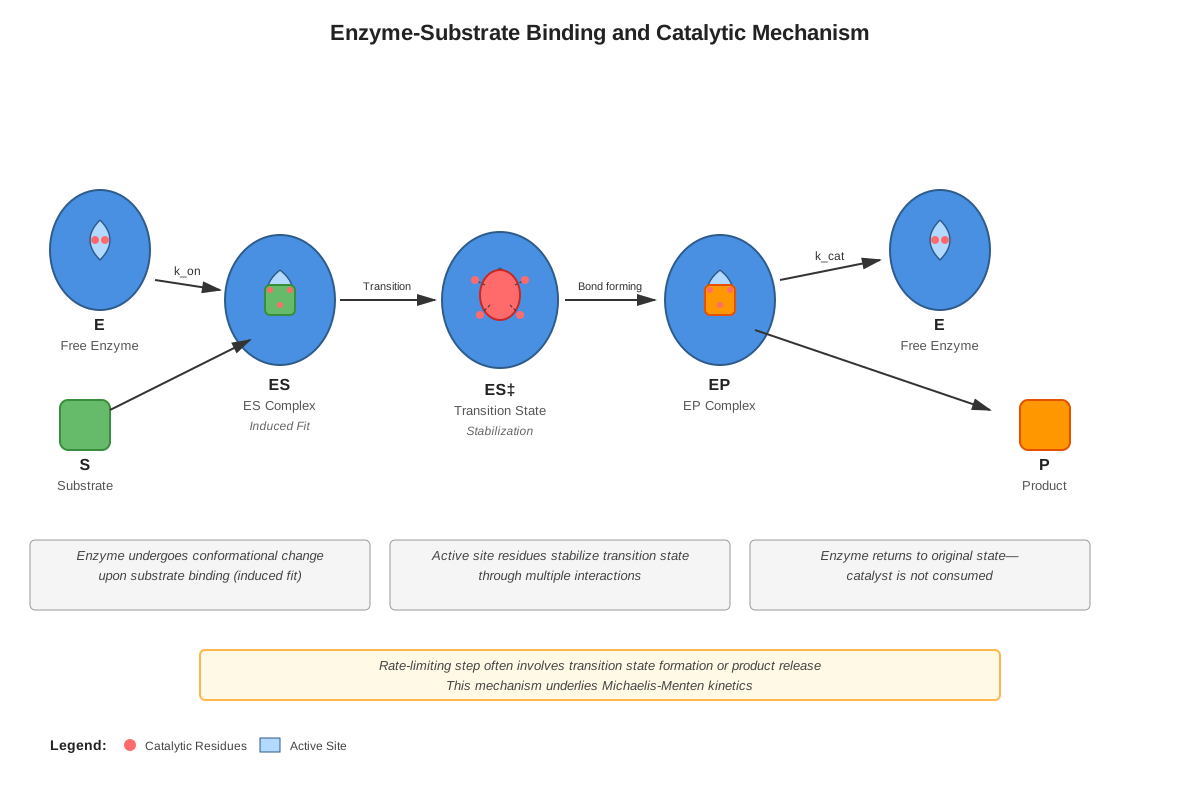
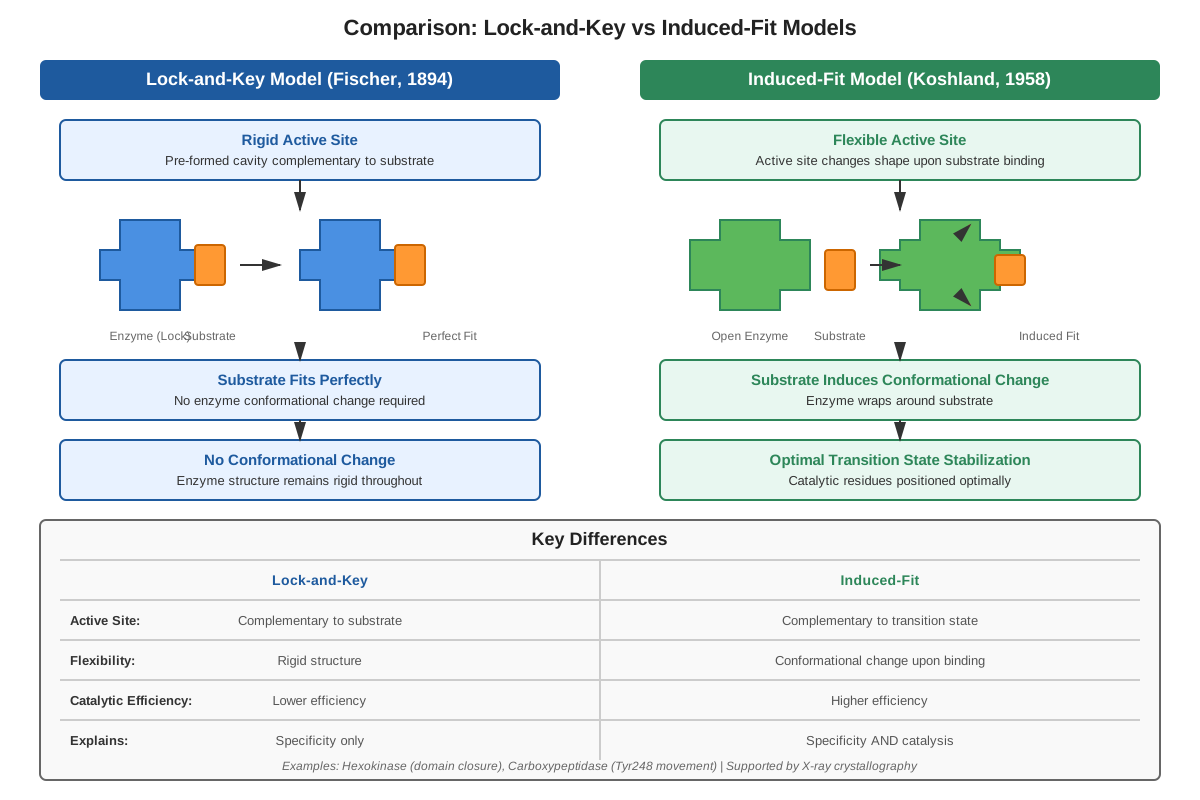
Substrate binding occurs through multiple weak interactions—hydrogen bonds, ionic interactions, van der Waals forces, and hydrophobic effects—between substrate functional groups and amino acid side chains lining the active site. The induced fit model describes how enzyme conformation changes upon substrate binding, with the active site molding around the substrate to optimize interactions. This conformational change positions catalytic residues optimally and excludes water molecules that might interfere with catalysis.
Two historical models describe enzyme-substrate interaction:
| Model | Description | Accuracy |
|---|---|---|
| Lock-and-Key | Enzyme active site is rigid and complementary to substrate shape | Oversimplified; doesn't account for conformational changes |
| Induced Fit | Enzyme undergoes conformational change upon substrate binding to optimize catalysis | More accurate; explains specificity and catalytic efficiency |
Mechanisms of Catalytic Rate Enhancement
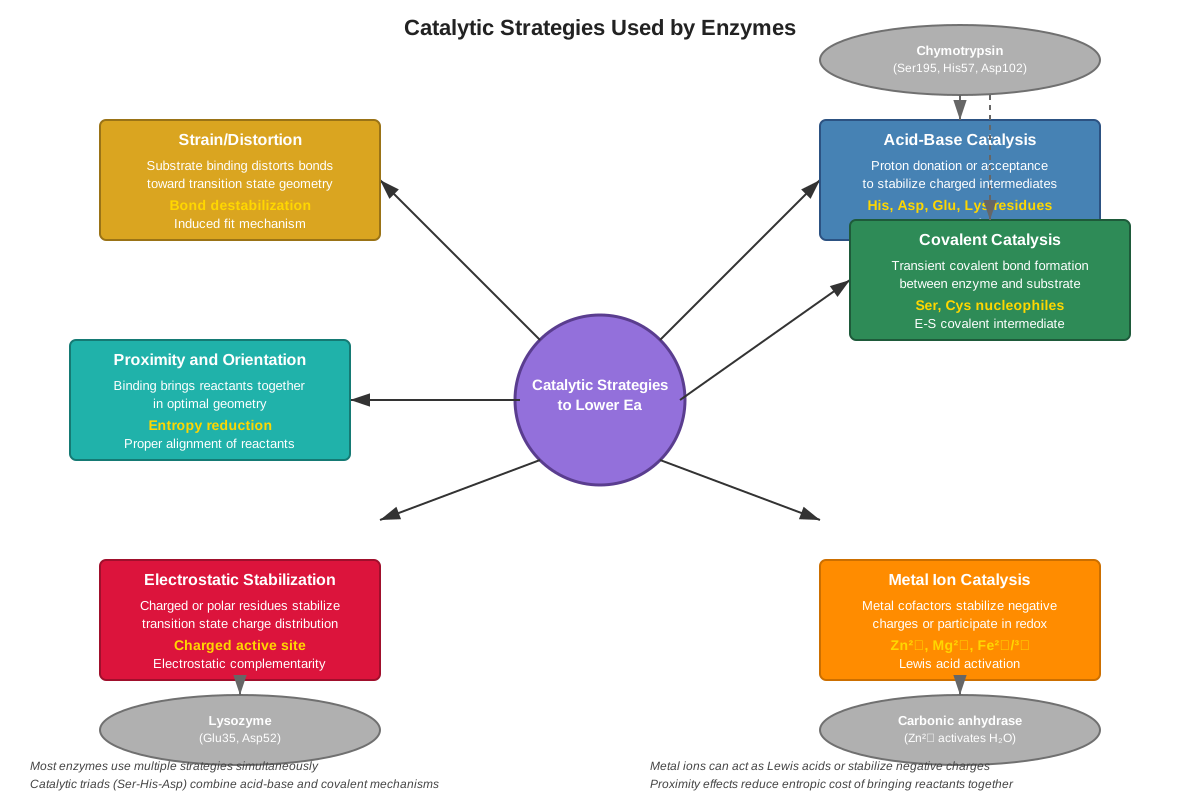
Enzymes employ several strategies to lower activation energy and accelerate reactions:
1. Transition State Stabilization
The most important catalytic strategy is transition state stabilization. Enzymes bind the transition state with much higher affinity than they bind substrates or products. By stabilizing the high-energy transition state through favorable interactions, enzymes effectively lower the activation energy barrier. The active site geometry is complementary to the transition state structure rather than the substrate ground state—this is why competitive inhibitors that mimic the transition state are often extremely potent.
2. Proximity and Orientation Effects
Enzymes bring substrate molecules into close proximity within the active site and orient them optimally for reaction. This dramatically increases the effective concentration of reactants and ensures proper alignment of reactive groups. In solution, substrates must randomly collide with correct orientation; enzymes eliminate this entropic barrier by pre-organizing reactants.
3. Acid-Base Catalysis
Many enzymes use amino acid side chains as acid-base catalysts. Acidic residues (Asp, Glu) can donate protons, while basic residues (His, Lys, Arg) can accept protons. Histidine is particularly versatile because its pKa (~6) is near physiological pH, allowing it to act as either acid or base. Acid-base catalysis facilitates bond breaking and formation by stabilizing charged intermediates.
4. Covalent Catalysis
Some enzymes form transient covalent bonds with substrates during catalysis. For example, serine proteases form a covalent acyl-enzyme intermediate when the serine hydroxyl group attacks the peptide bond. This covalent intermediate is more reactive than the original substrate, facilitating subsequent hydrolysis. After product release, the enzyme returns to its original state.
5. Metal Ion Catalysis
Many enzymes use metal ions (Zn²⁺, Mg²⁺, Fe²⁺, Cu²⁺) as cofactors to facilitate catalysis. Metal ions can:
- Stabilize negative charges on reaction intermediates
- Participate in oxidation-reduction reactions
- Activate water molecules for nucleophilic attack
- Bind and orient substrates properly
6. Strain and Distortion
Enzyme binding can distort substrate molecules toward the transition state geometry, a process called substrate strain. By forcing substrates into conformations that resemble the transition state, enzymes reduce the additional energy needed to reach the transition state.
Energy Diagrams and Reaction Coordinates
Understanding reaction coordinate diagrams is essential for MCAT success. These graphs plot free energy (y-axis) versus reaction progress (x-axis):
Free Energy
    |
    |     Ea(uncatalyzed)
    |        /\
    |       /  \
    |      /    \_____ Ea(catalyzed)
    |     /      /\
    |    /      /  \
    |___/______/____\________
    S          TS    P
         Reaction Progress
Key features:
- S (substrate) and P (product) energy levels remain unchanged—enzymes don't affect ΔG
- TS (transition state) represents the energy maximum
- Ea (activation energy) is the energy difference between substrate and transition state
- Enzymes lower Ea but don't change the relative energies of S and P
- Both forward and reverse reaction rates increase proportionally
Catalytic Efficiency and Turnover
Catalytic efficiency is quantified by the parameter kcat/KM, which represents how effectively an enzyme converts substrate to product. The turnover number (kcat) indicates how many substrate molecules one enzyme molecule converts to product per unit time when saturated with substrate. Values range from 1 s⁻¹ for slow enzymes to 10⁶ s⁻¹ for extremely fast enzymes like catalase.
Some enzymes achieve catalytic perfection, meaning every enzyme-substrate encounter results in catalysis. These enzymes operate at the diffusion limit—the reaction rate is limited only by how fast substrate molecules can diffuse to the active site (kcat/KM ≈ 10⁸ to 10⁹ M⁻¹s⁻¹).
Environmental Factors Affecting Enzyme Catalysis
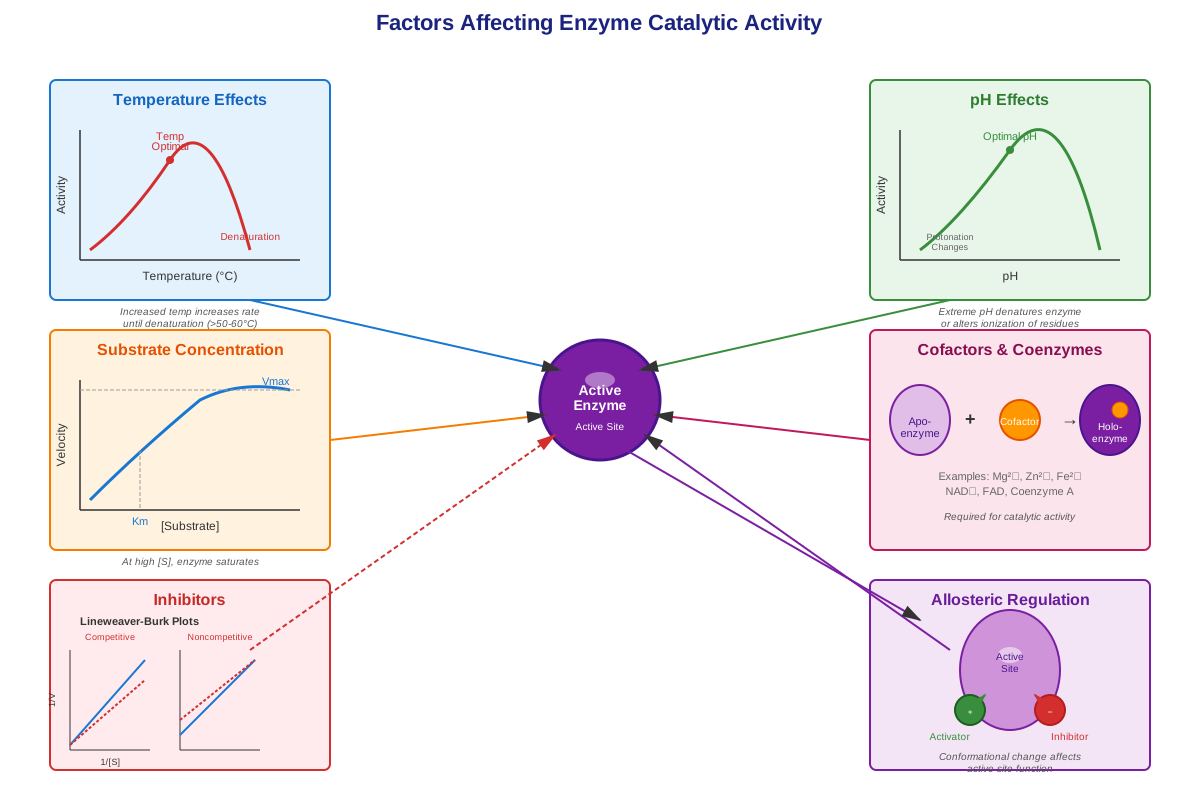
Temperature Effects
Increasing temperature generally increases reaction rates by providing more kinetic energy for molecules to overcome activation barriers. However, enzymes have an optimal temperature (typically 37°C for human enzymes) beyond which activity decreases due to denaturation—loss of three-dimensional structure. The relationship is biphasic: activity increases with temperature until the optimum, then decreases sharply as the enzyme unfolds.
pH Effects
Enzymes have an optimal pH where catalytic activity is maximal. pH affects:
- Protonation states of catalytic residues in the active site
- Substrate ionization and binding
- Overall enzyme structure and stability
For example, pepsin (stomach protease) has optimal pH ~2, while trypsin (intestinal protease) has optimal pH ~8. Deviation from optimal pH reduces activity by disrupting critical ionization states or causing denaturation.
Substrate Concentration
At low substrate concentrations, reaction velocity increases approximately linearly with [S]. At high [S], the enzyme becomes saturated and velocity approaches a maximum (Vmax). This relationship is described by Michaelis-Menten kinetics, which connects directly to enzyme catalysis mechanisms.
Concept Relationships
Enzyme catalysis serves as the mechanistic foundation for understanding enzyme kinetics. The catalytic mechanisms described here (transition state stabilization, proximity effects, acid-base catalysis) explain why enzymes follow Michaelis-Menten kinetics and why KM reflects substrate binding affinity. Understanding how enzymes lower activation energy enables prediction of how temperature and pH affect reaction rates.
The relationship flows as follows:
Protein Structure → determines → Active Site Architecture → enables → Substrate Binding → facilitates → Transition State Stabilization → results in → Lowered Activation Energy → produces → Increased Reaction Rate → measured by → Enzyme Kinetics
Enzyme catalysis connects to enzyme regulation because regulatory mechanisms (allosteric regulation, covalent modification) work by altering active site structure or catalytic efficiency. It connects to metabolism because metabolic pathways are series of enzyme-catalyzed reactions, and pathway flux depends on individual enzyme activities. Understanding catalytic mechanisms also explains enzyme inhibition—competitive inhibitors mimic substrates and bind the active site, while irreversible inhibitors form covalent bonds with catalytic residues.
The concept also bridges to thermodynamics: while enzymes dramatically affect reaction kinetics (how fast equilibrium is reached), they cannot change reaction thermodynamics (whether a reaction is favorable). This distinction is frequently tested on the MCAT.
Quick check — test yourself on Enzyme catalysis so far.
Try Flashcards →High-Yield Facts
⭐ Enzymes lower activation energy (Ea) but do NOT change the free energy difference (ΔG) between substrates and products
⭐ Enzymes stabilize the transition state more than they stabilize substrates or products
⭐ Enzymes increase both forward and reverse reaction rates equally, so they do not shift equilibrium position
⭐ The active site is complementary in shape to the transition state, not the substrate ground state
⭐ Induced fit model: enzymes undergo conformational changes upon substrate binding to optimize catalysis
- Catalytic rate enhancements by enzymes can reach factors of 10^8 to 10^17 compared to uncatalyzed reactions
- Enzymes exhibit specificity for particular substrates due to precise active site geometry and chemical complementarity
- Most enzymes are proteins, but some RNA molecules (ribozymes) also have catalytic activity
- Optimal temperature for human enzymes is typically 37°C; higher temperatures cause denaturation
- Optimal pH varies by enzyme and reflects the environment where the enzyme normally functions
- Cofactors (metal ions) and coenzymes (organic molecules) are often required for catalytic activity
- Proximity and orientation effects increase effective substrate concentration by factors of 10^3 to 10^8
- Covalent catalysis involves transient covalent bond formation between enzyme and substrate
- Acid-base catalysis uses amino acid side chains to donate or accept protons during reaction
- Catalytic perfection occurs when every enzyme-substrate collision results in product formation (diffusion-limited)
Common Misconceptions
Misconception: Enzymes make thermodynamically unfavorable reactions become favorable.
Correction: Enzymes only accelerate reactions that are already thermodynamically possible (negative or near-zero ΔG). They cannot make a reaction with positive ΔG proceed spontaneously. Enzymes affect kinetics, not thermodynamics.
Misconception: Enzymes are consumed during the reaction and must be replenished.
Correction: Enzymes are catalysts that emerge unchanged after each catalytic cycle. One enzyme molecule can catalyze thousands to millions of reactions. While enzymes may form transient covalent intermediates during catalysis, they return to their original state after product release.
Misconception: The active site is complementary to the substrate structure.
Correction: The active site is actually complementary to the transition state structure, not the substrate ground state. This transition state complementarity is what enables enzymes to stabilize the high-energy transition state and lower activation energy.
Misconception: Increasing temperature always increases enzyme activity.
Correction: Temperature has a biphasic effect. Initially, increasing temperature increases activity by providing more kinetic energy. However, beyond the optimal temperature, activity decreases sharply due to enzyme denaturation (loss of three-dimensional structure). The relationship is not linear.
Misconception: Enzymes shift the equilibrium position toward products.
Correction: Enzymes accelerate the rate at which equilibrium is reached but do not change the equilibrium position itself. At equilibrium, the ratio of products to reactants is the same whether enzyme is present or not. Enzymes increase both forward and reverse reaction rates proportionally.
Misconception: All enzymes work best at neutral pH (pH 7).
Correction: Optimal pH varies widely among enzymes and reflects their physiological environment. Pepsin (stomach) works best at pH 2, trypsin (small intestine) at pH 8, and cytoplasmic enzymes typically at pH 7. The optimal pH ensures proper ionization states of catalytic residues.
Worked Examples
Example 1: Interpreting an Energy Diagram
Question: An enzyme catalyzes the reaction A → B. The uncatalyzed reaction has an activation energy of 80 kJ/mol and a ΔG of -20 kJ/mol. The enzyme lowers the activation energy to 40 kJ/mol. Which statement is correct?
A) The enzyme makes the reaction more thermodynamically favorable
B) The enzyme increases the rate of the forward reaction but not the reverse reaction
C) The enzyme changes the ΔG to -40 kJ/mol
D) The enzyme increases both forward and reverse reaction rates
Solution:
Let's analyze each option systematically using our understanding of enzyme catalysis:
Option A: The enzyme makes the reaction more thermodynamically favorable.
- This is incorrect. Enzymes affect kinetics (reaction rate) but not thermodynamics (ΔG).
- The ΔG remains -20 kJ/mol whether enzyme is present or not.
- Thermodynamic favorability depends only on the relative energies of reactants and products.
Option B: The enzyme increases the rate of the forward reaction but not the reverse reaction.
- This is incorrect. Enzymes lower the activation energy barrier in both directions.
- If the enzyme only accelerated the forward reaction, it would shift equilibrium, which violates thermodynamic principles.
- Both forward and reverse rates increase proportionally.
Option C: The enzyme changes the ΔG to -40 kJ/mol.
- This is incorrect. The activation energy decreased from 80 to 40 kJ/mol, but this is Ea, not ΔG.
- ΔG (the free energy difference between reactants and products) remains unchanged at -20 kJ/mol.
- Students often confuse Ea with ΔG—this is a high-yield distinction.
Option D: The enzyme increases both forward and reverse reaction rates.
- This is correct! By lowering the activation energy barrier, the enzyme makes it easier for molecules to cross the barrier in both directions.
- The forward reaction (A → B) becomes faster, and the reverse reaction (B → A) also becomes faster.
- Equilibrium is reached more quickly, but the equilibrium position (ratio of [B]/[A]) remains the same.
Answer: D
Key Takeaway: This question tests the fundamental principle that enzymes affect kinetics but not thermodynamics. The activation energy (Ea) determines reaction rate, while ΔG determines equilibrium position. Enzymes lower Ea but don't change ΔG.
Example 2: Predicting Effects of pH Changes
Question: Chymotrypsin is a serine protease with a catalytic triad consisting of Ser195, His57, and Asp102. The enzyme has optimal activity at pH 8. A researcher measures enzyme activity at pH 6 and finds it is only 20% of maximal. Which explanation is most likely?
A) The substrate cannot bind at pH 6
B) Histidine 57 is predominantly protonated at pH 6, disrupting the catalytic mechanism
C) The enzyme is completely denatured at pH 6
D) Serine 195 cannot act as a nucleophile at pH 6
Solution:
This question requires understanding how pH affects ionization states of catalytic residues and how this impacts enzyme catalysis.
Background: Chymotrypsin's catalytic mechanism requires His57 to act as a general base, accepting a proton from Ser195 to activate it as a nucleophile. The histidine pKa is approximately 6, meaning:
- At pH > pKa: histidine is predominantly deprotonated (neutral), able to accept protons
- At pH < pKa: histidine is predominantly protonated (positively charged), unable to accept additional protons
Option A: The substrate cannot bind at pH 6.
- This is unlikely. Substrate binding depends primarily on shape complementarity and hydrophobic interactions, which are less pH-sensitive than catalytic residue ionization.
- The question states activity is 20% of maximal, indicating some binding and catalysis still occurs.
Option B: Histidine 57 is predominantly protonated at pH 6, disrupting the catalytic mechanism.
- This is correct! At pH 6 (equal to histidine's pKa), approximately 50% of histidine molecules are protonated.
- At pH values below 6, even more histidine molecules are protonated.
- Protonated histidine cannot accept a proton from serine, preventing activation of serine as a nucleophile.
- This explains reduced but not absent activity—some histidine molecules remain deprotonated and functional.
Option C: The enzyme is completely denatured at pH 6.
- This is incorrect. Complete denaturation would result in 0% activity, not 20%.
- Enzymes typically maintain structural integrity across a range of pH values (roughly pH 4-10 for most enzymes).
- pH 6 is only 2 units from optimal pH 8, unlikely to cause complete denaturation.
Option D: Serine 195 cannot act as a nucleophile at pH 6.
- This is incorrect. Serine's hydroxyl group (pKa ~13) remains deprotonated across physiological pH ranges.
- The problem is not serine itself but rather the inability of histidine to activate serine by accepting its proton.
Answer: B
Key Takeaway: pH affects enzyme activity primarily by altering the protonation states of catalytic residues. Histidine (pKa ~6) is particularly pH-sensitive and frequently appears in active sites. Understanding pKa values and how pH affects ionization is essential for predicting enzyme behavior under different conditions.
Exam Strategy
Approaching MCAT Questions on Enzyme Catalysis
Step 1: Identify what the question is testing
- Is it asking about mechanism (how enzymes work)?
- Is it asking about effects of environmental changes (temperature, pH)?
- Is it asking about thermodynamics versus kinetics?
- Is it presenting experimental data to interpret?
Step 2: Recall the fundamental principle
Most enzyme catalysis questions test one core concept: enzymes lower activation energy but don't change ΔG or equilibrium position. If you're uncertain, return to this principle.
Step 3: Watch for trigger words
- "Activation energy" → think about transition state stabilization
- "Equilibrium" → remember enzymes don't shift equilibrium
- "Rate" or "velocity" → enzymes increase reaction rates
- "Optimal pH/temperature" → consider ionization states and denaturation
- "Active site" → think about substrate binding and catalytic mechanisms
- "Transition state" → remember enzymes stabilize this more than substrate
Step 4: Eliminate wrong answers using common traps
- Eliminate any answer suggesting enzymes change ΔG or make unfavorable reactions favorable
- Eliminate answers suggesting enzymes are consumed in reactions
- Eliminate answers suggesting enzymes only affect forward or reverse reactions (they affect both)
- Eliminate answers confusing Ea with ΔG
Time Allocation
For standalone questions on enzyme catalysis: 60-90 seconds
- These are typically conceptual and can be answered quickly if you know the principles
- Don't overthink—the MCAT tests fundamental concepts, not obscure details
For passage-based questions with experimental data: 2-3 minutes per question
- Spend time understanding the experimental setup and what variables are being manipulated
- Identify which enzyme catalysis principle is being tested
- Use the passage data to eliminate wrong answers
Process of Elimination Tips
When stuck between two answers:
- Choose the answer that aligns with "enzymes affect kinetics, not thermodynamics"
- Choose the answer that explains mechanism at the molecular level (active site interactions, transition state stabilization)
- Avoid answers with absolute language ("always," "never," "only") unless you're certain
- Choose answers that acknowledge enzymes are catalysts (not consumed, increase both forward and reverse rates)
Memory Techniques
Mnemonic for Catalytic Strategies
"STAMP" - Five major catalytic mechanisms:
- Strain and distortion
- Transition state stabilization
- Acid-base catalysis
- Metal ion catalysis
- Proximity and orientation effects
Visualizing Activation Energy
Picture climbing a mountain (uncatalyzed reaction) versus taking a tunnel through the mountain (enzyme-catalyzed reaction). Both routes start at the same elevation (substrate) and end at the same elevation (product), but the tunnel (enzyme) provides a lower path (lower Ea). The elevation change (ΔG) is identical either way.
Remembering Induced Fit
Think of a glove (enzyme) and a hand (substrate). A rigid glove (lock-and-key) might not fit perfectly, but a flexible glove (induced fit) molds around the hand for optimal fit. The glove changes shape to accommodate the hand, just as enzymes change conformation upon substrate binding.
pH and Enzyme Activity
"Pepsin in the Pit" - Pepsin works in the acidic pit (stomach) at low pH (~2)
"Trypsin in the Tube" - Trypsin works in the tube (intestine) at higher pH (~8)
This helps remember that optimal pH varies by enzyme location.
Enzyme vs. Equilibrium
"Enzymes are Speed Demons, Not Destiny Changers"
- Speed demons: they make reactions faster (affect kinetics)
- Not destiny changers: they don't change where the reaction ends up (don't affect equilibrium)
Summary
Enzyme catalysis is the process by which biological catalysts accelerate chemical reactions by lowering activation energy through multiple mechanisms including transition state stabilization, proximity and orientation effects, acid-base catalysis, covalent catalysis, and metal ion catalysis. Enzymes are highly specific proteins (or occasionally RNA molecules) that bind substrates in a specialized active site, undergoing conformational changes (induced fit) to optimize catalysis. The fundamental principle—enzymes affect kinetics but not thermodynamics—means enzymes increase reaction rates without changing ΔG or equilibrium position. Environmental factors like temperature and pH affect enzyme activity by influencing protein structure and catalytic residue ionization states. Understanding these mechanisms enables prediction of enzyme behavior under various conditions and interpretation of experimental data, making enzyme catalysis one of the highest-yield topics for MCAT Biochemistry.
Key Takeaways
- Enzymes lower activation energy (Ea) by stabilizing the transition state, but they never change the free energy difference (ΔG) between reactants and products
- The active site is complementary to the transition state structure, not the substrate ground state, which explains catalytic efficiency
- Enzymes increase both forward and reverse reaction rates equally, accelerating equilibrium attainment without shifting equilibrium position
- Multiple catalytic mechanisms work together: transition state stabilization, proximity effects, acid-base catalysis, covalent catalysis, and metal ion catalysis
- Environmental factors (temperature, pH) affect enzyme activity by influencing protein structure and ionization states of catalytic residues
- The induced fit model accurately describes how enzymes undergo conformational changes upon substrate binding to optimize catalysis
- Enzymes are catalysts that emerge unchanged after each reaction cycle, enabling one enzyme molecule to catalyze thousands to millions of reactions
Related Topics
Enzyme Kinetics (Michaelis-Menten): Understanding catalytic mechanisms provides the foundation for interpreting kinetic parameters like KM, Vmax, and kcat. Mastering enzyme catalysis enables deeper comprehension of how substrate concentration affects reaction velocity.
Enzyme Inhibition: Knowledge of active site structure and catalytic mechanisms explains how competitive, noncompetitive, and irreversible inhibitors work. Transition state analogs are potent competitive inhibitors because the active site binds transition states with highest affinity.
Enzyme Regulation: Allosteric regulation and covalent modification work by altering active site structure or catalytic efficiency. Understanding catalytic mechanisms explains how regulatory changes affect enzyme activity.
Metabolic Pathways: Metabolism consists of enzyme-catalyzed reactions in sequence. Understanding individual enzyme catalysis enables comprehension of pathway regulation, flux control, and metabolic integration.
Protein Structure and Function: Since most enzymes are proteins, understanding how primary sequence determines three-dimensional structure explains active site formation and catalytic specificity.
Practice CTA
Now that you've mastered the core concepts of enzyme catalysis, it's time to reinforce your understanding through active practice. Attempt the practice questions to apply these principles to MCAT-style scenarios, and use the flashcards to memorize high-yield facts and mechanisms. Remember, enzyme catalysis appears in approximately 8-12% of Biochemistry questions—mastering this topic will directly improve your score. Focus especially on distinguishing between kinetic and thermodynamic effects, understanding how environmental factors affect activity, and interpreting experimental data. You've built a strong foundation; now solidify it through deliberate practice!
Sign up free to keep reading
Create a free AnvayaPrep account to finish this MCAT guide on Enzyme catalysis — plus flashcards and practice questions.