Overview
Sphingolipids represent a critical class of membrane lipids that distinguish themselves from glycerophospholipids through their unique sphingosine backbone structure. These complex lipids play essential roles in cellular membrane structure, cell signaling, and cell recognition processes. Unlike the more commonly discussed glycerophospholipids, sphingolipids contain a long-chain amino alcohol called sphingosine rather than glycerol as their structural foundation. This fundamental difference creates unique biochemical properties that make sphingolipids particularly important in nervous tissue, where they constitute a major component of myelin sheaths, and in cellular membranes where they form specialized microdomains called lipid rafts.
For the MCAT, understanding sphingolipids biochemistry is essential because these molecules frequently appear in passages related to membrane structure, lipid metabolism, genetic storage diseases, and cell signaling. The exam tests not only the structural features that distinguish sphingolipids from other lipid classes but also their biosynthetic pathways, degradation mechanisms, and clinical significance. Questions often integrate sphingolipid content with broader topics in biochemistry, including enzyme kinetics, genetic disorders, and membrane transport phenomena.
Within the broader context of lipids and membranes, sphingolipids represent one of the four major lipid categories alongside fatty acids, glycerophospholipids, and steroids. They connect conceptually to membrane fluidity, signal transduction cascades, and the pathophysiology of lysosomal storage diseases. Mastery of sphingolipid structure and function provides the foundation for understanding how membrane composition affects cellular processes and how enzymatic defects lead to devastating metabolic disorders that appear regularly in MCAT clinical vignettes.
Learning Objectives
- [ ] Define sphingolipids using accurate biochemistry terminology, including the sphingosine backbone structure
- [ ] Explain why sphingolipids matter for the MCAT, including their appearance in passages and question types
- [ ] Apply sphingolipids knowledge to exam-style questions involving membrane structure and metabolic disorders
- [ ] Identify common mistakes related to sphingolipids, particularly structural confusion with glycerophospholipids
- [ ] Connect sphingolipids to related biochemistry concepts including membrane biology and lipid metabolism
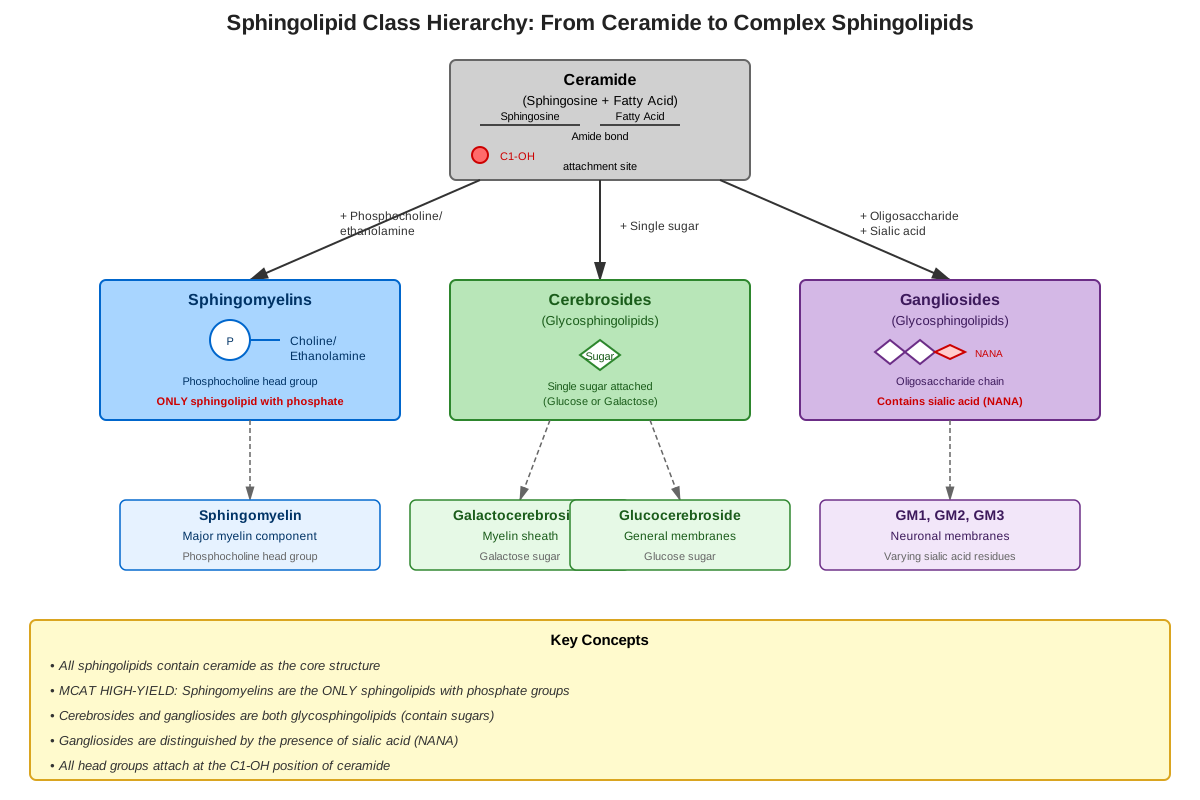
- [ ] Distinguish between the major classes of sphingolipids (ceramides, sphingomyelins, cerebrosides, and gangliosides) based on structural features
- [ ] Predict the consequences of specific enzyme deficiencies in sphingolipid degradation pathways
- [ ] Analyze the role of sphingolipids in lipid rafts and cell signaling mechanisms
Prerequisites
- Basic lipid structure: Understanding of hydrophobic and hydrophilic regions is essential for comprehending sphingolipid amphipathic properties and membrane integration
- Amino acid chemistry: Knowledge of amino groups and their reactivity helps explain the sphingosine backbone and ceramide formation
- Carbohydrate structure: Familiarity with monosaccharides and glycosidic bonds is necessary for understanding glycosphingolipids
- Membrane structure: Basic understanding of lipid bilayers provides context for sphingolipid function in cellular membranes
- Lysosomal function: Knowledge of lysosomal enzymes and their role in macromolecule degradation is critical for understanding sphingolipid storage diseases
- Enzyme nomenclature: Understanding how enzymes are named (especially hydrolases) aids in learning sphingolipid degradation pathways
Why This Topic Matters
Sphingolipids MCAT content appears with moderate frequency on the exam, typically in 1-2 questions per test, but often integrated into larger passages about membrane biology, genetic diseases, or cell signaling. The clinical significance of sphingolipids cannot be overstated—defects in sphingolipid metabolism cause a family of devastating lysosomal storage diseases including Tay-Sachs disease, Gaucher disease, Niemann-Pick disease, and Fabry disease. These conditions frequently appear in MCAT passages because they elegantly demonstrate principles of enzyme kinetics, genetic inheritance patterns, and the consequences of metabolic pathway disruption.
From a physiological perspective, sphingolipids are particularly abundant in nervous tissue, comprising up to 25% of myelin lipids. This makes them clinically relevant to neurological function and disease. Sphingomyelin, the most abundant sphingolipid in mammalian cell membranes, plays crucial roles in signal transduction when cleaved to produce ceramide, a potent second messenger involved in apoptosis and cell cycle regulation. The MCAT frequently tests the understanding that sphingolipids are not merely structural components but active participants in cellular communication.
On the exam, sphingolipid content typically appears in three contexts: (1) discrete questions asking about structural features or classification, (2) biochemistry passages describing metabolic pathways or enzyme deficiencies, and (3) biology passages discussing membrane structure or cell signaling. Questions may ask students to identify which lipid class a molecule belongs to based on structural diagrams, predict the substrate accumulation pattern in specific enzyme deficiencies, or explain how sphingolipid composition affects membrane properties. Understanding sphingolipids also enables students to tackle interdisciplinary questions that bridge biochemistry with genetics, cell biology, and physiology.
Core Concepts
Sphingosine Backbone Structure
The defining feature of all sphingolipids is the sphingosine backbone, an 18-carbon amino alcohol with a trans double bond between carbons 4 and 5. Unlike glycerophospholipids that use glycerol as their three-carbon backbone, sphingolipids build upon this long-chain base. The sphingosine molecule contains three key functional groups: an amino group at carbon 2, hydroxyl groups at carbons 1 and 3, and the characteristic double bond. This structure creates an amphipathic molecule even before additional modifications, with the long hydrocarbon chain providing hydrophobic character and the polar head region containing the amino and hydroxyl groups.
The stereochemistry of sphingosine is important—the naturally occurring form has specific configurations at carbons 2 and 3, though the MCAT typically does not test detailed stereochemical knowledge. What matters for exam purposes is recognizing that sphingosine provides two sites for modification: the amino group (which forms an amide bond with fatty acids) and the primary hydroxyl group at carbon 1 (which can be modified with various head groups).
Ceramide: The Core Sphingolipid
Ceramide represents the simplest sphingolipid and serves as the precursor for all other sphingolipid classes. Ceramide forms when a fatty acid attaches to the amino group of sphingosine through an amide linkage (also called an N-acyl linkage). This amide bond distinguishes sphingolipids from glycerophospholipids, which use ester bonds to attach fatty acids. The amide linkage is more stable than ester bonds and resistant to base hydrolysis, a property that has biochemical significance in lipid extraction and analysis procedures.
The fatty acid attached to ceramide is typically a long-chain saturated or monounsaturated fatty acid, often containing 16-24 carbons. This creates an extremely hydrophobic molecule with only the hydroxyl group at carbon 1 and the hydroxyl at carbon 3 providing any polar character. Ceramide itself functions as a bioactive lipid molecule, serving as a second messenger in signaling pathways related to cell growth, differentiation, and apoptosis. The MCAT may test the understanding that ceramide generation through sphingomyelin hydrolysis represents an important regulatory mechanism.
Sphingomyelin Structure and Function
Sphingomyelin is the most abundant sphingolipid in mammalian cells and the only sphingolipid that contains phosphorus. Structurally, sphingomyelin consists of ceramide with a phosphocholine or phosphoethanolamine head group attached to the carbon 1 hydroxyl. This makes sphingomyelin structurally analogous to phosphatidylcholine (a glycerophospholipid), and both molecules play similar roles in membrane structure. The key difference lies in the backbone and the type of linkage to fatty acids.
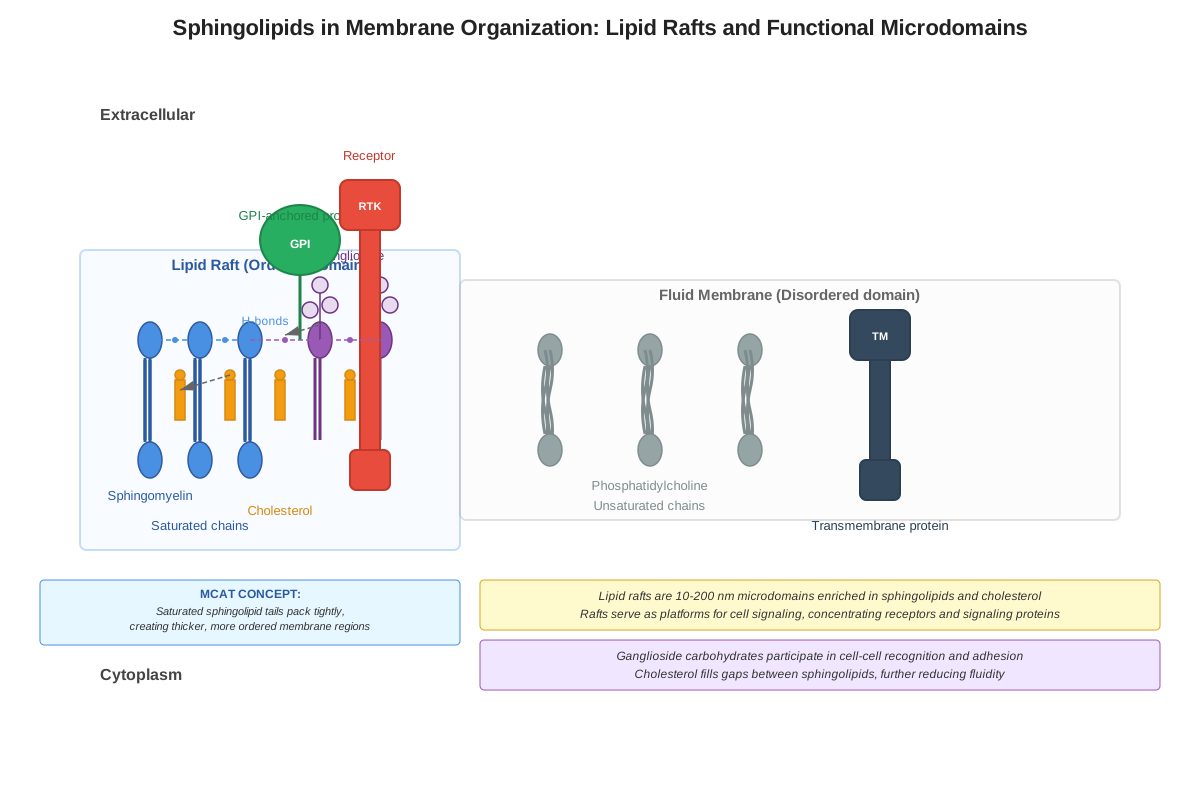
Sphingomyelin is particularly abundant in the myelin sheath that insulates nerve axons, where it contributes to the electrical insulation properties essential for rapid nerve impulse transmission. In cellular membranes, sphingomyelin tends to cluster with cholesterol in specialized membrane microdomains called lipid rafts. These rafts serve as organizing centers for signal transduction and protein sorting. The enzyme sphingomyelinase cleaves sphingomyelin to produce ceramide and phosphocholine, representing an important regulatory mechanism that the MCAT may test in the context of cell signaling or apoptosis.
Glycosphingolipids: Cerebrosides and Gangliosides
Glycosphingolipids are sphingolipids with carbohydrate groups attached to the carbon 1 hydroxyl of ceramide. These molecules are classified based on their carbohydrate composition. Cerebrosides (also called glycosylceramides) contain a single sugar residue—either glucose (glucocerebroside) or galactose (galactocerebroside)—attached via a β-glycosidic bond. Galactocerebrosides are particularly abundant in myelin and brain tissue, while glucocerebrosides are more common in other tissues.
Gangliosides represent more complex glycosphingolipids containing oligosaccharide chains with one or more sialic acid (N-acetylneuraminic acid, NANA) residues. The sialic acid residues carry negative charges at physiological pH, making gangliosides the most polar sphingolipids. Gangliosides are especially abundant in the gray matter of the brain and in nerve cell membranes, where they participate in cell recognition, cell-cell communication, and serve as receptors for certain toxins and viruses. The ganglioside GM2 is particularly important for MCAT purposes because its accumulation causes Tay-Sachs disease.
The nomenclature of gangliosides uses a system where "G" stands for ganglioside, followed by letters (M, D, T) indicating the number of sialic acid residues (mono-, di-, tri-), and numbers indicating the migration pattern on thin-layer chromatography. While detailed nomenclature is not high-yield for the MCAT, recognizing that gangliosides contain sialic acid and understanding their general structure is essential.
Sphingolipid Degradation and Storage Diseases
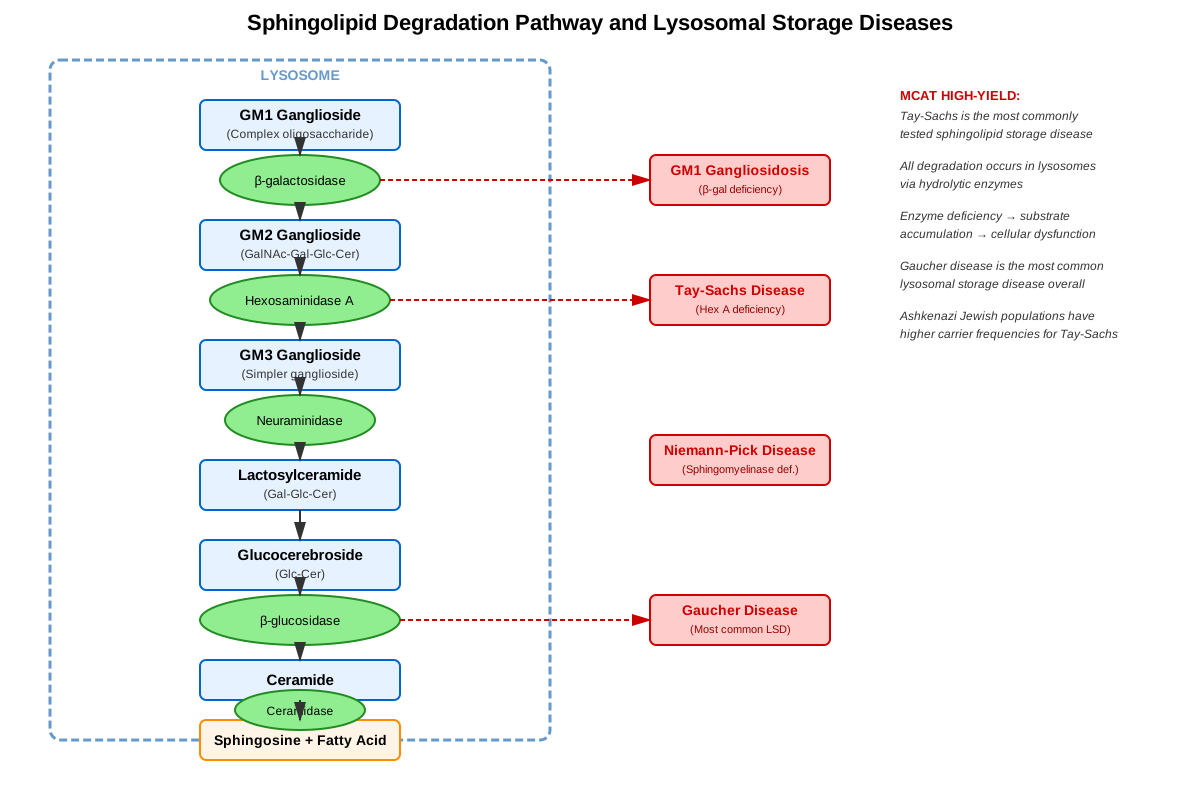
Sphingolipid degradation occurs in lysosomes through sequential removal of components by specific hydrolytic enzymes. This stepwise degradation pathway is clinically significant because genetic deficiencies in any of these enzymes lead to lysosomal storage diseases. The general pattern involves removing the most distal components first, working backward toward the ceramide core.
| Disease | Enzyme Deficiency | Accumulated Substrate | Primary Symptoms |
|---|---|---|---|
| Tay-Sachs | Hexosaminidase A | GM2 ganglioside | Neurodegeneration, cherry-red spot, death by age 4 |
| Gaucher | Glucocerebrosidase | Glucocerebroside | Hepatosplenomegaly, bone lesions, most common |
| Niemann-Pick | Sphingomyelinase | Sphingomyelin | Hepatosplenomegaly, neurodegeneration |
| Fabry | α-Galactosidase A | Globotriaosylceramide | Kidney failure, cardiovascular disease, X-linked |
| Krabbe | Galactocerebrosidase | Galactocerebroside | Demyelination, neurodegeneration |
These diseases follow autosomal recessive inheritance patterns (except Fabry disease, which is X-linked), and many show increased carrier frequency in specific populations (Tay-Sachs in Ashkenazi Jewish populations, Gaucher disease in the same population). The MCAT frequently tests the ability to predict which substrate accumulates given a specific enzyme deficiency, or conversely, to identify the deficient enzyme based on clinical presentation and accumulated substrate.
Sphingolipids in Membrane Structure
Sphingolipids contribute uniquely to membrane structure and function. Their saturated fatty acid chains and the trans double bond in sphingosine create relatively rigid, tightly packed structures compared to glycerophospholipids with unsaturated fatty acids. This property makes sphingolipids key components of lipid rafts—specialized membrane microdomains enriched in sphingolipids and cholesterol that are more ordered and less fluid than surrounding membrane regions.
Lipid rafts serve as platforms for organizing membrane proteins, particularly those involved in signal transduction. The glycosphingolipids, with their carbohydrate head groups extending into the extracellular space, participate in cell recognition and cell-cell interactions. They also serve as receptors for certain bacterial toxins (like cholera toxin, which binds to ganglioside GM1) and viruses, making them clinically relevant beyond their structural roles.
The asymmetric distribution of sphingolipids in membranes is also important—glycosphingolipids are found almost exclusively in the outer leaflet of the plasma membrane, with their carbohydrate groups facing the extracellular environment. This asymmetry contributes to membrane potential and cell surface properties that the MCAT may test in the context of membrane biology or cell signaling.
Concept Relationships
The relationships among sphingolipid concepts follow a hierarchical and biosynthetic logic. Sphingosine serves as the foundational structure → combines with a fatty acid via amide linkage to form ceramide → ceramide then branches into two major pathways: (1) addition of phosphocholine creates sphingomyelin, or (2) addition of carbohydrates creates glycosphingolipids (cerebrosides with single sugars, gangliosides with oligosaccharides including sialic acid).
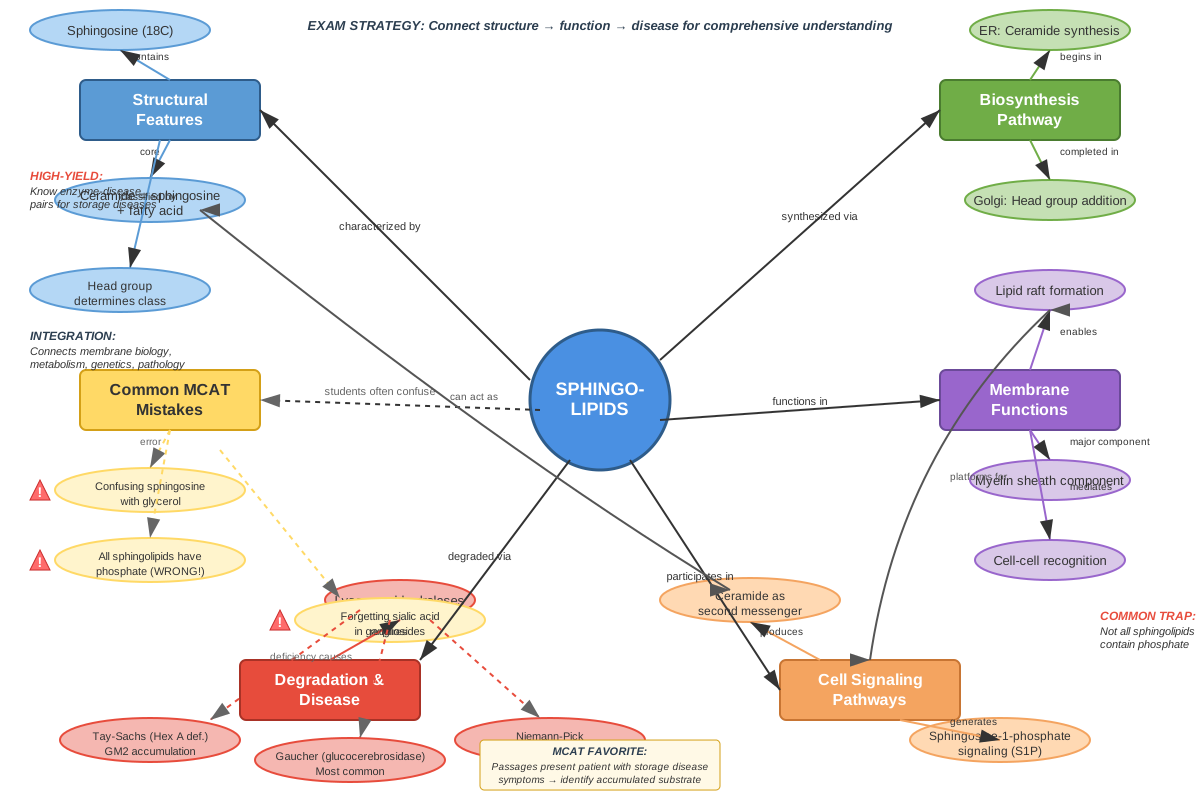
These structural relationships connect to functional concepts: sphingomyelin's structural similarity to phosphatidylcholine → both serve similar roles in membrane structure → but sphingomyelin's unique properties → enable lipid raft formation → which organizes signaling proteins. Similarly, ceramide's role as a common precursor → makes it a regulatory node → where sphingomyelinase activity → generates ceramide from sphingomyelin → triggering apoptotic signaling cascades.
The degradation pathway reverses the biosynthetic sequence: complex gangliosides → sequential removal of sugars and sialic acids → simpler cerebrosides → removal of the single sugar → ceramide → separation of fatty acid → sphingosine. Each step requires a specific lysosomal enzyme, and deficiency at any step → causes accumulation of the substrate → leading to storage disease → with clinical manifestations reflecting the tissue distribution of the accumulated lipid.
Connecting to prerequisite knowledge, sphingolipid structure builds on understanding of lipid amphipathic properties (hydrophobic tails, polar heads), carbohydrate chemistry (glycosidic bonds in glycosphingolipids), and membrane structure (lipid bilayer organization). The storage diseases connect to genetics (autosomal recessive inheritance, carrier screening), enzyme kinetics (substrate accumulation when enzyme activity is reduced), and cell biology (lysosomal function, organelle pathology).
Quick check — test yourself on Sphingolipids so far.
Try Flashcards →High-Yield Facts
⭐ Sphingolipids contain a sphingosine backbone (18-carbon amino alcohol) rather than glycerol, distinguishing them from glycerophospholipids
⭐ Ceramide consists of sphingosine with a fatty acid attached via an amide bond and serves as the precursor for all other sphingolipids
⭐ Sphingomyelin is the only phosphorus-containing sphingolipid and is abundant in myelin sheaths
⭐ Tay-Sachs disease results from hexosaminidase A deficiency, causing GM2 ganglioside accumulation and is most common in Ashkenazi Jewish populations
⭐ Gangliosides contain sialic acid residues, making them negatively charged and particularly abundant in nervous tissue
- Glycosphingolipids are found exclusively on the outer leaflet of the plasma membrane with carbohydrates facing the extracellular space
- Sphingomyelinase cleaves sphingomyelin to produce ceramide, an important second messenger in apoptosis signaling
- Gaucher disease is the most common lysosomal storage disease and results from glucocerebrosidase deficiency
- Lipid rafts are membrane microdomains enriched in sphingolipids and cholesterol that organize signaling proteins
- All sphingolipid storage diseases except Fabry disease follow autosomal recessive inheritance patterns
- Cerebrosides contain a single sugar (glucose or galactose) attached to ceramide via a β-glycosidic bond
- The amide linkage in sphingolipids is more stable than the ester linkages in glycerophospholipids and resistant to base hydrolysis
Common Misconceptions
Misconception: Sphingolipids and glycerophospholipids are interchangeable terms for membrane lipids.
Correction: These are distinct lipid classes with different backbone structures—sphingolipids use sphingosine (an 18-carbon amino alcohol) while glycerophospholipids use glycerol (a 3-carbon alcohol). They also differ in how fatty acids attach: amide bonds in sphingolipids versus ester bonds in glycerophospholipids.
Misconception: All sphingolipids contain phosphate groups.
Correction: Only sphingomyelin contains phosphate. Glycosphingolipids (cerebrosides and gangliosides) contain carbohydrate head groups instead of phosphate groups. Ceramide, the simplest sphingolipid, contains neither phosphate nor carbohydrates.
Misconception: In lysosomal storage diseases, the deficient enzyme accumulates in cells.
Correction: The enzyme is deficient (present in reduced amounts or absent), so the enzyme's substrate accumulates, not the enzyme itself. For example, in Tay-Sachs disease, hexosaminidase A is deficient, causing GM2 ganglioside (the substrate) to accumulate.
Misconception: Gangliosides and cerebrosides are the same thing.
Correction: Both are glycosphingolipids, but cerebrosides contain only a single sugar residue (glucose or galactose), while gangliosides contain complex oligosaccharide chains that include one or more sialic acid residues. Gangliosides are more complex and carry negative charges due to sialic acid.
Misconception: Sphingolipids are only structural components of membranes.
Correction: While sphingolipids do play important structural roles, they also function in cell signaling (ceramide as a second messenger), cell recognition (glycosphingolipids as cell surface markers), and organizing membrane domains (lipid rafts). They are active participants in cellular communication, not passive structural elements.
Misconception: The fatty acid in ceramide attaches via an ester bond like in glycerophospholipids.
Correction: The fatty acid in ceramide attaches to the amino group of sphingosine via an amide bond (N-acyl linkage), not an ester bond. This amide linkage is more chemically stable and resistant to base hydrolysis, which is an important biochemical property.
Worked Examples
Example 1: Identifying Sphingolipid Class from Structure
Question: A researcher isolates a lipid from brain tissue that contains sphingosine, a fatty acid attached via an amide bond, and a head group consisting of galactose. To which class of sphingolipids does this molecule belong, and where would it most likely be abundant?
Solution:
Step 1: Identify the components present
- Sphingosine backbone ✓
- Fatty acid via amide bond → this creates ceramide as the core structure
- Single sugar (galactose) attached → this is a carbohydrate modification
Step 2: Apply classification rules
- Ceramide + phosphocholine = sphingomyelin (not our molecule—no phosphate)
- Ceramide + single sugar = cerebroside ✓
- Specifically, ceramide + galactose = galactocerebroside
- Ceramide + oligosaccharide with sialic acid = ganglioside (not our molecule—only one sugar, no sialic acid)
Step 3: Determine tissue distribution
- Galactocerebrosides are particularly abundant in myelin sheaths
- Since the molecule was isolated from brain tissue and contains galactose, it's likely a major component of the myelin that insulates neurons
Answer: This molecule is a galactocerebroside (a type of cerebroside), and it would be most abundant in the myelin sheaths of the central nervous system. This connects to the clinical presentation of Krabbe disease, where deficiency of galactocerebrosidase causes galactocerebroside accumulation and demyelination.
Example 2: Predicting Consequences of Enzyme Deficiency
Question: A 6-month-old infant presents with progressive neurodegeneration, developmental regression, and an ophthalmologic examination reveals a cherry-red spot on the macula. Genetic testing reveals a mutation in the HEXA gene encoding hexosaminidase A. Which substrate will accumulate in this patient's neurons, and why does this cause neurological symptoms?
Solution:
Step 1: Identify the enzyme and its normal function
- Hexosaminidase A is a lysosomal enzyme that removes N-acetylgalactosamine residues from gangliosides
- Specifically, it cleaves the terminal N-acetylgalactosamine from GM2 ganglioside to produce GM3 ganglioside
Step 2: Predict the accumulation pattern
- If hexosaminidase A is deficient, the reaction GM2 → GM3 cannot proceed
- Therefore, GM2 ganglioside will accumulate in lysosomes
- This is Tay-Sachs disease
Step 3: Explain the pathophysiology
- GM2 ganglioside is particularly abundant in neurons
- Progressive accumulation in lysosomes disrupts normal neuronal function
- The lysosomal storage causes cellular swelling and eventual cell death
- The cherry-red spot occurs because ganglioside accumulation in retinal ganglion cells makes the surrounding tissue appear pale, while the fovea (which lacks ganglion cells) appears red by contrast
Step 4: Connect to inheritance pattern
- Tay-Sachs follows autosomal recessive inheritance
- Both parents are likely carriers
- The disease is more common in Ashkenazi Jewish populations due to founder effect
- Carrier screening is available and recommended for at-risk populations
Answer: GM2 ganglioside will accumulate in the patient's neurons. This accumulation causes progressive neurodegeneration because the lysosomes become engorged with substrate they cannot degrade, disrupting normal cellular function and eventually causing neuronal death. The clinical presentation (developmental regression, cherry-red spot) is pathognomonic for Tay-Sachs disease. This example demonstrates how understanding sphingolipid degradation pathways enables prediction of clinical consequences from specific enzyme deficiencies.
Exam Strategy
When approaching sphingolipids MCAT questions, first determine what type of question is being asked: structural identification, classification, metabolic pathway, or disease mechanism. For structural questions, immediately identify the backbone—if you see a long-chain amino alcohol with a double bond, you're dealing with a sphingolipid, not a glycerophospholipid. Look for the amide bond connecting the fatty acid, which is a key distinguishing feature.
Trigger words to watch for include: "myelin," "nerve tissue," "storage disease," "lysosomal accumulation," "ganglioside," "ceramide," and specific disease names (Tay-Sachs, Gaucher, Niemann-Pick). When you see these terms, immediately activate your sphingolipid knowledge framework. If a passage describes progressive neurodegeneration in an infant with hepatosplenomegaly, think sphingolipid storage disease and work through the degradation pathway to identify which enzyme might be deficient.
For process-of-elimination strategies, remember these key distinctions:
- If a lipid contains glycerol, eliminate sphingolipid options
- If the question asks about phospholipids in general, sphingomyelin is the only sphingolipid that qualifies
- If sialic acid is mentioned, the answer involves gangliosides, not simpler sphingolipids
- If the inheritance pattern is X-linked, only Fabry disease fits among sphingolipid disorders
Time allocation: Discrete sphingolipid questions should take 60-90 seconds—quickly identify the structural features or recall the specific disease mechanism. Passage-based questions may require 90-120 seconds if they involve analyzing experimental data or integrating multiple concepts. Don't get bogged down trying to remember every detail of ganglioside nomenclature; focus on the high-yield distinctions between major classes.
When facing a question about storage diseases, use this systematic approach: (1) identify the accumulated substrate from clinical presentation or experimental data, (2) determine which enzyme normally degrades that substrate, (3) predict the consequences of accumulation based on tissue distribution, (4) recall the inheritance pattern and population genetics if relevant. This structured approach prevents confusion between the various storage diseases.
Memory Techniques
Mnemonic for major sphingolipid classes (building complexity):
"Silly Cats Can't Sing Gracefully"
- Sphingosine (the backbone)
- Ceramide (sphingosine + fatty acid)
- Cerebroside (ceramide + single sugar)
- Sphingomyelin (ceramide + phosphocholine)
- Ganglioside (ceramide + oligosaccharide with sialic acid)
Mnemonic for storage diseases (enzyme → disease):
"Hex Tay, Gluco Gaucher, Sphingo Niemann"
- Hexosaminidase A deficiency → Tay-Sachs
- Glucocerebrosidase deficiency → Gaucher
- Sphingomyelinase deficiency → Niemann-Pick
Visualization strategy for sphingosine structure: Picture an 18-carbon chain as a "spine" (sphingosine sounds like spine), with the amino group as a "head" at carbon 2, and the double bond at carbons 4-5 creating a "kink" in the spine. The hydroxyl groups at carbons 1 and 3 are like "arms" reaching out for modifications.
Acronym for ganglioside features: SANG
- Sialic acid containing
- Abundant in nervous tissue
- Negatively charged
- Glycolipids (carbohydrate-containing)
Memory palace technique: Imagine walking through a neuron:
- At the cell body, you see gangliosides on the surface (cell recognition)
- Walking down the axon, you're surrounded by sphingomyelin in the myelin sheath (insulation)
- In the membrane, you notice lipid rafts floating like actual rafts (organizing signaling)
- In the lysosome, you see enzymes breaking down sphingolipids step by step (degradation pathway)
Summary
Sphingolipids represent a distinct class of membrane lipids built on a sphingosine backbone rather than glycerol, with fatty acids attached via amide bonds rather than ester linkages. The foundational molecule ceramide (sphingosine + fatty acid) serves as the precursor for all other sphingolipids, branching into two major pathways: addition of phosphocholine creates sphingomyelin (the only phosphorus-containing sphingolipid), while addition of carbohydrates creates glycosphingolipids including cerebrosides (single sugar) and gangliosides (oligosaccharides with sialic acid). These molecules are particularly abundant in nervous tissue, especially in myelin sheaths, and play critical roles beyond membrane structure, including cell signaling, cell recognition, and organizing membrane microdomains called lipid rafts. The clinical significance of sphingolipids is profound—genetic deficiencies in lysosomal enzymes that degrade sphingolipids cause devastating storage diseases including Tay-Sachs, Gaucher, and Niemann-Pick disease, each characterized by accumulation of specific substrates and distinctive clinical presentations. For MCAT success, students must be able to distinguish sphingolipids from glycerophospholipids structurally, classify sphingolipids based on their head groups, predict substrate accumulation patterns in enzyme deficiencies, and connect sphingolipid biology to membrane function and disease mechanisms.
Key Takeaways
- Sphingolipids contain a sphingosine backbone (18-carbon amino alcohol) with fatty acids attached via amide bonds, distinguishing them structurally from glycerophospholipids
- Ceramide (sphingosine + fatty acid) is the core structure from which all other sphingolipids are synthesized through addition of different head groups
- Sphingomyelin (ceramide + phosphocholine) is the only phosphorus-containing sphingolipid and is abundant in myelin; glycosphingolipids contain carbohydrate head groups instead
- Gangliosides contain sialic acid residues making them negatively charged and particularly important in nervous tissue for cell recognition and signaling
- Lysosomal storage diseases result from deficiencies in sphingolipid-degrading enzymes, causing substrate accumulation with clinical manifestations reflecting tissue distribution (Tay-Sachs: GM2 accumulation, neurodegeneration; Gaucher: glucocerebroside accumulation, hepatosplenomegaly)
- Sphingolipids function beyond structure—ceramide serves as a second messenger in apoptosis, glycosphingolipids mediate cell recognition, and sphingolipid-enriched lipid rafts organize signaling proteins
- Recognition of structural features (sphingosine backbone, amide linkage, head group composition) enables rapid classification and connects to functional and clinical concepts tested on the MCAT
Related Topics
Glycerophospholipids: Understanding the structural and functional differences between sphingolipids and glycerophospholipids is essential for comprehensive membrane biology knowledge. Both classes contribute to membrane structure but differ in backbone, fatty acid attachment, and specific functional roles.
Membrane Structure and Dynamics: Sphingolipids' role in lipid rafts and membrane asymmetry connects to broader concepts of membrane fluidity, protein organization, and cellular compartmentalization that appear frequently in MCAT passages.
Lysosomal Storage Diseases: Beyond sphingolipid disorders, other lysosomal storage diseases (mucopolysaccharidoses, glycogen storage diseases) follow similar principles of enzyme deficiency leading to substrate accumulation, making sphingolipid storage diseases a gateway to understanding this broader disease category.
Cell Signaling Pathways: Ceramide's role as a second messenger in apoptosis connects sphingolipid metabolism to signal transduction cascades, particularly those involving stress responses and programmed cell death.
Lipid Metabolism: Sphingolipid biosynthesis and degradation pathways integrate with broader lipid metabolism, including fatty acid synthesis, lipid transport, and metabolic regulation that are high-yield MCAT topics.
Practice CTA
Now that you've mastered the core concepts of sphingolipids, it's time to solidify your understanding through active practice. Work through the practice questions to test your ability to apply these concepts to MCAT-style scenarios, and use the flashcards to reinforce the high-yield facts and distinctions that appear most frequently on the exam. Remember, understanding sphingolipids not only prepares you for direct questions on this topic but also builds your foundation for tackling complex passages involving membrane biology, metabolic diseases, and cell signaling. Your ability to quickly recognize sphingolipid structures and predict the consequences of metabolic defects will serve you well across multiple sections of the MCAT. Keep pushing forward—you're building the comprehensive biochemistry knowledge that leads to top scores!
Sign up free to keep reading
Create a free AnvayaPrep account to finish this MCAT guide on Sphingolipids — plus flashcards and practice questions.