Overview
Epistasis is a fundamental genetic phenomenon in which the expression of one gene is modified or masked by the expression of one or more other genes. This concept extends beyond simple Mendelian inheritance patterns and represents a critical component of understanding gene interactions in Molecular Biology and Genetics. Unlike independent assortment where genes contribute additively to phenotypes, epistasis involves hierarchical relationships between genes where one gene's alleles can completely suppress or alter the phenotypic expression of alleles at a different genetic locus.
For the MCAT, epistasis represents an essential bridge between classical genetics and modern molecular biology. The exam frequently tests students' ability to analyze complex inheritance patterns, predict phenotypic ratios that deviate from expected Mendelian ratios, and understand how multiple genes interact to produce observable traits. Epistasis Biology questions often appear in passage-based formats where students must interpret experimental crosses, analyze pedigrees with unexpected ratios, or explain biochemical pathways where gene products interact sequentially.
Understanding epistasis is crucial for comprehending broader biological principles including metabolic pathway regulation, developmental biology, and the molecular basis of genetic diseases. This topic connects directly to concepts such as complementation analysis, biochemical pathways, gene regulation, and quantitative genetics. Mastery of Epistasis MCAT content enables students to tackle complex genetics problems that integrate multiple concepts, making it a high-yield topic for achieving competitive scores in the Biological and Biochemical Foundations section.
Learning Objectives
- [ ] Define Epistasis using accurate Biology terminology
- [ ] Explain why Epistasis matters for the MCAT
- [ ] Apply Epistasis to exam-style questions
- [ ] Identify common mistakes related to Epistasis
- [ ] Connect Epistasis to related Biology concepts
- [ ] Distinguish between different types of epistatic interactions (recessive, dominant, duplicate)
- [ ] Predict modified dihybrid ratios resulting from epistatic gene interactions
- [ ] Analyze biochemical pathways to identify potential epistatic relationships between genes
Prerequisites
- Mendelian Genetics: Understanding of dominant and recessive alleles, monohybrid and dihybrid crosses, and expected 9:3:3:1 ratios is essential because epistasis modifies these classical ratios
- Punnett Squares: Proficiency in constructing and interpreting Punnett squares for two-gene crosses provides the foundation for recognizing when epistasis alters expected outcomes
- Genotype vs. Phenotype: Clear distinction between genetic composition and observable traits is necessary to understand how one gene masks another's phenotypic expression
- Biochemical Pathways: Basic knowledge of enzymatic reactions and metabolic pathways helps explain the molecular mechanisms underlying epistatic interactions
- Probability and Ratios: Mathematical skills for calculating and comparing phenotypic ratios are required to identify epistatic modifications
Why This Topic Matters
Clinical and Real-World Significance
Epistasis plays a crucial role in understanding human genetic diseases and complex traits. Many genetic disorders result from interactions between multiple genes rather than single-gene defects. For example, the severity of cystic fibrosis can be modified by alleles at other genetic loci that affect mucus production or inflammatory responses. Cancer development typically requires mutations in multiple genes that interact epistatically—tumor suppressors, oncogenes, and DNA repair genes work in interconnected pathways where dysfunction in one gene can mask or enhance effects of mutations in others. Understanding epistasis is also fundamental to pharmacogenomics, where drug metabolism genes interact epistatically to determine individual responses to medications.
MCAT Exam Statistics and Question Types
Epistasis appears in approximately 2-4 questions per MCAT exam, typically in the Biological and Biochemical Foundations section. Questions most commonly appear in passage-based formats (60-70% of epistasis questions) where students must analyze experimental genetic crosses, interpret unexpected phenotypic ratios, or explain results from complementation tests. Discrete questions (30-40%) often test the ability to predict ratios or identify epistatic relationships from described scenarios. The MCAT particularly favors questions that integrate epistasis with biochemical pathways, requiring students to connect molecular mechanisms with genetic outcomes.
Common Exam Passage Contexts
Epistasis questions frequently appear in passages describing:
- Coat color genetics in model organisms (mice, dogs, horses)
- Flower color or plant morphology in botanical genetics experiments
- Biochemical pathway analysis where gene products function sequentially
- Suppressor mutations that restore wild-type phenotypes
- Complementation analysis in microbial genetics
- Modifier genes affecting disease penetrance or expressivity
Core Concepts
Definition and Fundamental Principles
Epistasis (from Greek "standing upon") occurs when alleles at one genetic locus (the epistatic gene) mask, suppress, or modify the phenotypic expression of alleles at a second genetic locus (the hypostatic gene). This interaction is fundamentally different from dominance, which describes allelic relationships within a single gene. In epistasis, the genes involved are at different chromosomal locations and typically encode products that function in related biological processes or sequential biochemical pathways.
The key principle underlying epistasis is that genes do not function in isolation—their products interact within cells to produce phenotypes. When gene products work in a pathway where one enzyme's product serves as substrate for another enzyme, or where one protein regulates another's activity, the potential for epistatic interactions exists. The epistatic gene essentially controls whether the hypostatic gene's effects can be observed in the phenotype.
Types of Epistatic Interactions
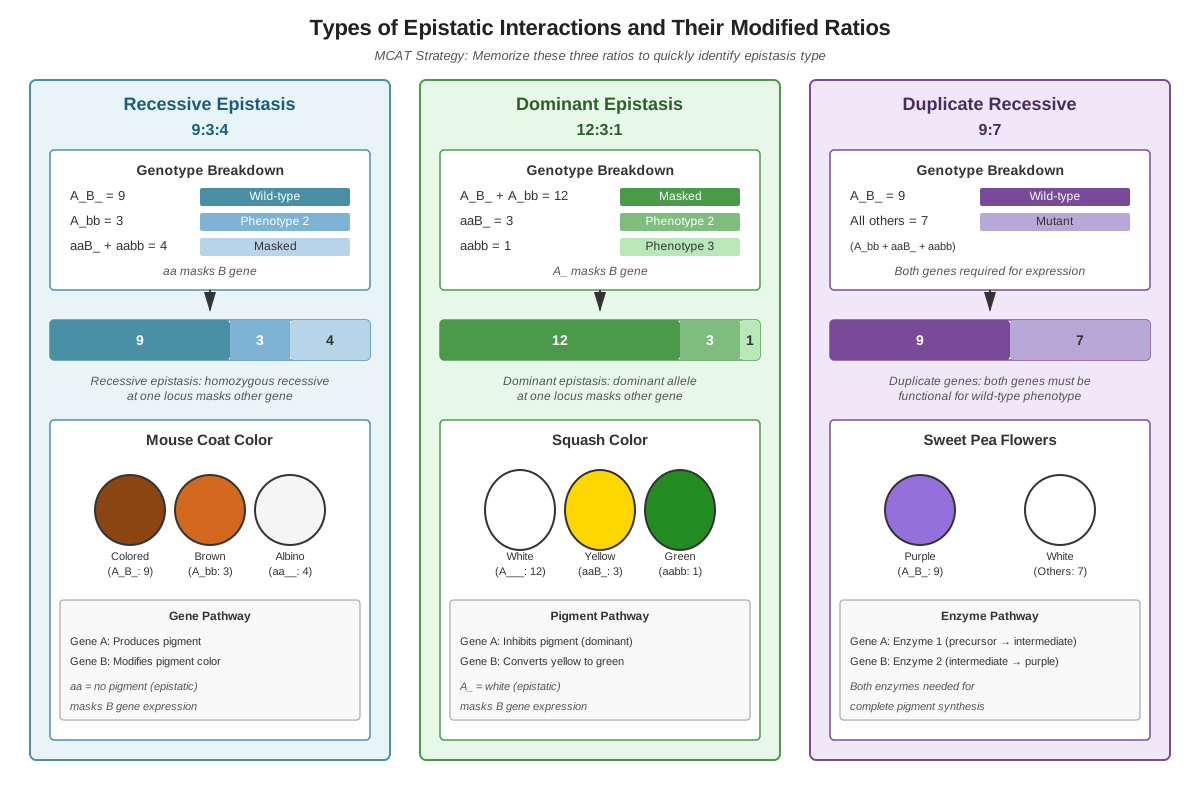
Recessive Epistasis (9:3:4 Ratio)
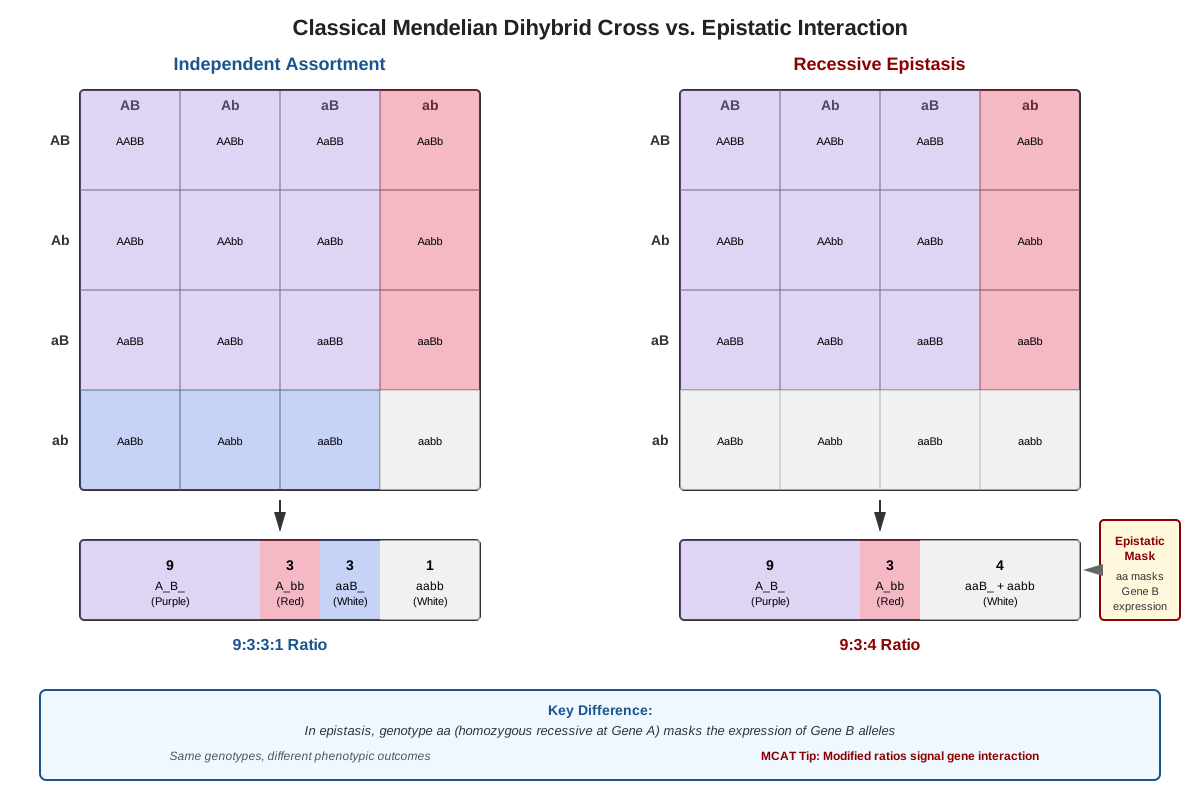
Recessive epistasis occurs when the homozygous recessive genotype at one locus masks the expression of alleles at a second locus. This is the most common type of epistasis tested on the MCAT. The classic example involves coat color in Labrador retrievers, where two genes interact:
- Gene E (Extension): Controls pigment deposition (E_ allows pigment, ee prevents pigment)
- Gene B (Brown): Controls pigment color (B_ produces black, bb produces brown)
In this system, the ee genotype is epistatic to the B gene. Dogs with ee genotype are yellow regardless of their B genotype because no pigment is deposited in hair follicles. The resulting phenotypic ratio from an EeBb × EeBb cross is:
- 9 E_B_ : Black dogs
- 3 E_bb : Brown (chocolate) dogs
- 4 eeB_ + eebb : Yellow dogs (grouped together)
This produces a 9:3:4 ratio instead of the expected 9:3:3:1 Mendelian ratio. The molecular mechanism involves the E gene encoding a protein required for melanin deposition—without functional E protein, the B gene's product (which determines melanin type) cannot produce a visible effect.
Dominant Epistasis (12:3:1 Ratio)
Dominant epistasis occurs when a dominant allele at one locus masks the expression of alleles at another locus. A single copy of the epistatic allele is sufficient to produce the masking effect. The classic example involves fruit color in summer squash:
- Gene W (White): W_ produces white fruit, ww allows color
- Gene Y (Yellow): Y_ produces yellow fruit, yy produces green fruit
The W allele is epistatically dominant over the Y gene. Any squash with at least one W allele will be white regardless of Y genotype. The WwYy × WwYy cross produces:
- 12 W_Y_ + W_yy : White squash
- 3 wwY_ : Yellow squash
- 1 wwyy : Green squash
This 12:3:1 ratio results because the W_ genotypes (9 + 3 from the standard ratio) are grouped together as white.
Duplicate Recessive Epistasis (9:7 Ratio)
Duplicate recessive epistasis (also called complementary gene interaction) occurs when recessive homozygosity at either of two loci produces the same phenotype. Both genes must have at least one dominant allele to produce the wild-type phenotype. This pattern is common when two genes encode enzymes that function in the same biochemical pathway, and both functional enzymes are required for the final product.
The classic example involves flower color in sweet peas:
- Gene C: Encodes enzyme 1 (C_ functional, cc nonfunctional)
- Gene P: Encodes enzyme 2 (P_ functional, pp nonfunctional)
Both enzymes are required in sequence to produce purple pigment. If either gene is homozygous recessive, no purple pigment forms and flowers are white. The CcPp × CcPp cross yields:
- 9 C_P_ : Purple flowers (both enzymes functional)
- 7 C_pp + ccP_ + ccpp : White flowers (at least one enzyme nonfunctional)
This 9:7 ratio demonstrates that both genes must contribute functional products for the dominant phenotype to appear.
Duplicate Dominant Epistasis (15:1 Ratio)
Duplicate dominant epistasis occurs when a dominant allele at either of two genes produces the same phenotype. Only the double homozygous recessive genotype produces the alternative phenotype. This pattern appears when two genes encode proteins with redundant functions—either one can accomplish the necessary biological function.
Example in seed capsule shape:
- Gene A: A_ produces triangular capsules
- Gene B: B_ produces triangular capsules
- Only aabb produces ovoid capsules
The AaBb × AaBb cross produces a 15:1 ratio:
- 15 A_B_ + A_bb + aaB_ : Triangular
- 1 aabb : Ovoid
Molecular Mechanisms of Epistasis
Understanding the biochemical basis of epistasis is crucial for MCAT success. Epistatic interactions typically arise from several molecular scenarios:
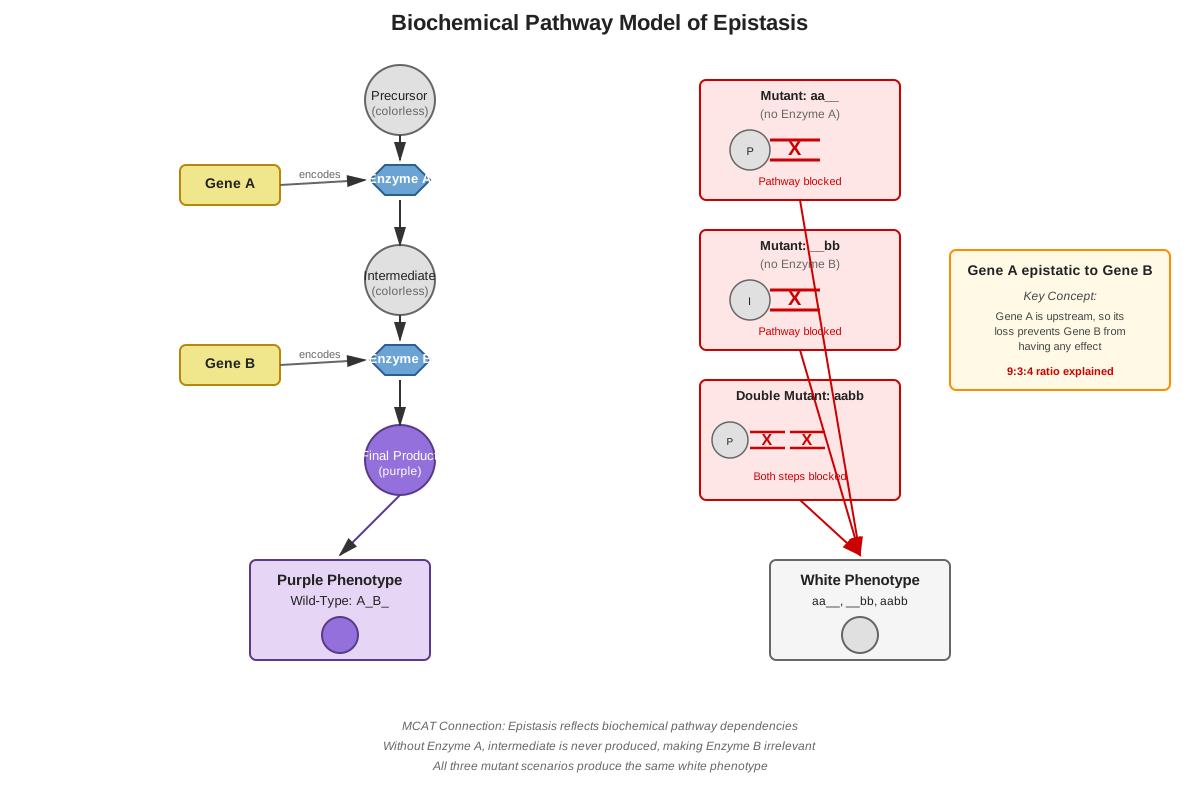
Sequential Pathway Epistasis: When gene products function in a linear biochemical pathway, upstream genes are often epistatic to downstream genes. If an early enzyme is nonfunctional, substrates never reach later enzymes, making those genes' effects invisible. Example pathway:
Precursor --[Enzyme A]--> Intermediate --[Enzyme B]--> Final Product
   (colorless)                (colorless)              (colored)
If Gene A is nonfunctional (aa genotype), no intermediate is produced, so Gene B's activity is irrelevant—the organism remains colorless regardless of B genotype.
Regulatory Epistasis: One gene product may regulate the expression or activity of another gene. Transcription factors, signaling molecules, and post-translational modifiers can create epistatic relationships by controlling whether target genes are expressed or their products are active.
Structural Epistasis: Gene products may physically interact, such as subunits of a multi-protein complex. If one subunit is nonfunctional, the entire complex fails regardless of other subunits' genotypes.
Epistasis vs. Other Gene Interactions
| Interaction Type | Definition | Ratio Example | Key Feature |
|---|---|---|---|
| Epistasis | One gene masks another gene's expression | 9:3:4, 12:3:1, 9:7 | Genes at different loci; hierarchical relationship |
| Dominance | One allele masks another allele | 3:1 | Alleles at same locus |
| Codominance | Both alleles fully expressed | 1:2:1 phenotypic | Both alleles visible simultaneously |
| Incomplete Dominance | Heterozygote intermediate | 1:2:1 phenotypic | Blending appearance |
| Pleiotropy | One gene affects multiple traits | Variable | Single gene, multiple phenotypes |
| Polygenic Inheritance | Multiple genes contribute additively | Continuous distribution | No masking; additive effects |
Identifying Epistasis in Genetic Crosses
To recognize epistasis on the MCAT, look for these indicators:
- Modified dihybrid ratios: Any deviation from 9:3:3:1 in a two-gene cross suggests gene interaction
- Grouped phenotypic classes: When expected separate phenotypes appear identical (e.g., 9:3:4 groups two classes)
- Biochemical pathway context: Passages describing sequential enzymatic reactions often involve epistasis
- Fewer phenotypic classes than expected: Four genotypic classes producing only two or three phenotypes
- Complementation test results: When crosses between mutants fail to produce wild-type offspring
Concept Relationships
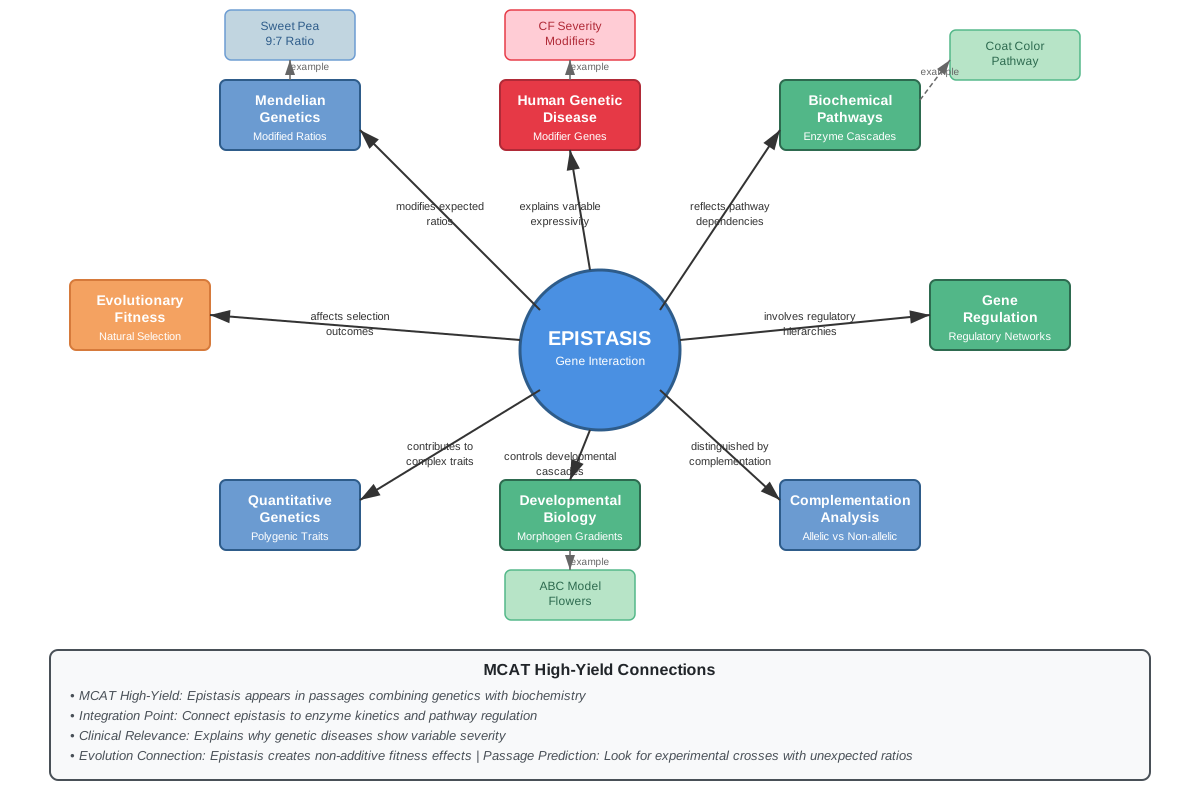
Epistasis connects to numerous genetics and molecular biology concepts in an integrated network. At its foundation, epistasis builds upon Mendelian genetics by explaining deviations from expected ratios, demonstrating that Mendel's laws describe idealized situations where genes act independently. The concept directly extends dihybrid crosses by adding complexity through gene interactions.
Epistasis relates intimately to biochemical pathways—the molecular mechanism underlying most epistatic interactions involves sequential or parallel enzymatic reactions. Understanding that genes encode enzymes (the one gene-one enzyme hypothesis) provides the mechanistic link between genotype and phenotype in epistatic systems. This connection makes epistasis relevant to metabolism, biosynthesis, and signal transduction topics.
The relationship flows as: Gene → Enzyme → Pathway Step → Phenotype. When multiple genes affect the same pathway, epistatic interactions emerge. This framework connects epistasis to gene expression, protein function, and phenotypic variation.
Epistasis also relates to complementation analysis, a technique used to determine whether mutations causing similar phenotypes are in the same gene or different genes. Complementation tests can reveal epistatic relationships when mutations in different genes fail to complement due to pathway interactions.
Furthermore, epistasis connects to quantitative genetics and complex traits. While simple epistasis involves two genes with discrete phenotypes, epistatic interactions among many genes contribute to continuous trait variation in polygenic inheritance. This relationship is crucial for understanding heritability, genetic architecture of disease, and evolutionary genetics.
The concept also bridges to population genetics—epistatic interactions affect how selection acts on allele combinations rather than individual alleles, influencing linkage disequilibrium and evolutionary trajectories.
Quick check — test yourself on Epistasis so far.
Try Flashcards →High-Yield Facts
⭐ Epistasis involves genes at different loci, where one gene masks or modifies the phenotypic expression of another gene; this differs from dominance, which involves alleles at the same locus.
⭐ Recessive epistasis produces a 9:3:4 ratio in dihybrid crosses, where the homozygous recessive genotype at the epistatic locus masks both alleles at the hypostatic locus.
⭐ Dominant epistasis produces a 12:3:1 ratio, where a single dominant allele at the epistatic locus is sufficient to mask the hypostatic gene's expression.
⭐ Duplicate recessive epistasis (9:7 ratio) occurs when both genes must have at least one dominant allele to produce the wild-type phenotype, common in sequential biochemical pathways.
⭐ The epistatic gene is the masking gene; the hypostatic gene is the masked gene—this terminology is essential for clear communication about gene interactions.
- Epistasis commonly arises from genes encoding enzymes in the same biochemical pathway, where upstream genes are epistatic to downstream genes.
- Modified dihybrid ratios (any deviation from 9:3:3:1) indicate gene interaction, with specific ratios pointing to specific epistatic relationships.
- Labrador retriever coat color (E and B genes) is the classic MCAT example of recessive epistasis, producing black, brown, and yellow phenotypes in a 9:3:4 ratio.
- Complementation analysis can identify epistatic relationships when mutations in different genes affecting the same pathway fail to restore wild-type phenotype.
- Epistasis affects evolutionary dynamics because selection acts on gene combinations rather than individual alleles, influencing adaptation rates and genetic architecture.
- Suppressor mutations represent a special case of epistasis where a mutation in one gene restores wild-type phenotype despite mutation in another gene.
- Epistatic interactions contribute to genetic variance in complex traits and can explain "missing heritability" in genome-wide association studies.
Common Misconceptions
Misconception: Epistasis and dominance are the same phenomenon.
Correction: Dominance describes the relationship between alleles at the same genetic locus (one allele masks another allele), while epistasis describes the relationship between genes at different loci (one gene masks another gene). Dominance is intragenic; epistasis is intergenic.
Misconception: In epistasis, the epistatic gene is always dominant and the hypostatic gene is always recessive.
Correction: The terms "epistatic" and "hypostatic" refer to which gene does the masking (epistatic) versus which is masked (hypostatic), not to dominance relationships. Both recessive and dominant epistasis exist—in recessive epistasis, the homozygous recessive genotype is epistatic; in dominant epistasis, the dominant allele is epistatic.
Misconception: A 9:3:4 ratio always indicates the same type of epistasis regardless of which phenotypic classes are grouped.
Correction: The specific phenotypic classes that are grouped together matter for determining the type of epistasis. In recessive epistasis producing 9:3:4, the last two classes (3:1) from the standard ratio are grouped because they share the epistatic homozygous recessive genotype. The biological meaning depends on which phenotypes are combined.
Misconception: Epistasis only occurs in artificial genetic crosses and has no relevance to human genetics or medicine.
Correction: Epistasis is widespread in human genetics and clinically significant. Modifier genes that affect disease severity, drug metabolism gene interactions, cancer progression requiring multiple mutations, and complex trait architecture all involve epistatic interactions. Understanding epistasis is essential for personalized medicine and genetic counseling.
Misconception: If two genes affect the same trait, they must be epistatic.
Correction: Multiple genes can affect the same trait through different mechanisms without epistasis. In polygenic inheritance, genes contribute additively to a trait without masking each other. Epistasis specifically requires that one gene masks or modifies another's expression, not merely that both influence the same phenotype. The key distinction is whether gene effects are independent (additive) or interactive (epistatic).
Worked Examples
Example 1: Labrador Retriever Coat Color
Problem: In Labrador retrievers, coat color is determined by two genes. The E gene controls pigment deposition (E_ allows deposition, ee prevents deposition), and the B gene controls pigment color (B_ produces black pigment, bb produces brown pigment). A breeder crosses two dogs that are both heterozygous at both loci (EeBb × EeBb). What phenotypic ratio is expected in the offspring, and what are the phenotypes?
Solution:
Step 1: Recognize this as a recessive epistasis problem. The ee genotype prevents pigment deposition, making it epistatic to the B gene.
Step 2: Set up the dihybrid cross. Each parent (EeBb) produces four gamete types: EB, Eb, eB, eb, each with 1/4 probability.
Step 3: Construct a Punnett square or use the forked-line method to determine genotypic frequencies:
- 9/16 E_B_ (at least one E and one B)
- 3/16 E_bb (at least one E, homozygous recessive b)
- 3/16 eeB_ (homozygous recessive e, at least one B)
- 1/16 eebb (homozygous recessive at both loci)
Step 4: Determine phenotypes based on epistatic relationship:
- 9/16 E_B_: Black coat (pigment deposited, black type)
- 3/16 E_bb: Brown/chocolate coat (pigment deposited, brown type)
- 3/16 eeB_: Yellow coat (no pigment deposited, B gene irrelevant)
- 1/16 eebb: Yellow coat (no pigment deposited, B gene irrelevant)
Step 5: Group phenotypes with the same appearance:
- 9/16 Black
- 3/16 Brown
- 4/16 Yellow (3/16 + 1/16 combined)
Answer: The expected phenotypic ratio is 9:3:4 (black:brown:yellow). This modified ratio results from recessive epistasis where the ee genotype masks the B gene's expression.
MCAT Connection: This example demonstrates how to recognize recessive epistasis from the biological context (one gene controlling whether another gene's product can function) and how to predict the modified ratio. The key insight is that the last two classes of the standard 9:3:3:1 ratio are grouped because they share the epistatic genotype (ee).
Example 2: Flower Color Pathway Analysis
Problem: In a plant species, purple flower color requires two functional enzymes working in sequence. Gene C encodes the first enzyme (converting colorless precursor to colorless intermediate), and Gene P encodes the second enzyme (converting colorless intermediate to purple pigment). Plants homozygous recessive at either locus have white flowers. A researcher crosses two white-flowered plants and obtains all purple-flowered F₁ offspring. When F₁ plants are self-crossed, the F₂ generation shows 315 purple-flowered and 285 white-flowered plants.
(a) What are the genotypes of the original white-flowered parents?
(b) What type of epistasis is this?
(c) Does the observed F₂ ratio match expectations?
Solution:
Step 1: Analyze the F₁ results. Two white-flowered parents producing all purple F₁ offspring indicates complementation—each parent must be homozygous recessive at a different locus. One parent is CCpp (white because no functional P enzyme), and the other is ccPP (white because no functional C enzyme). The F₁ are CcPp (purple because both enzymes are functional).
Step 2: Identify the epistasis type. Since both genes must have at least one dominant allele for purple color, and homozygous recessive at either locus produces white, this is duplicate recessive epistasis (complementary gene interaction).
Step 3: Predict the expected F₂ ratio. From CcPp × CcPp:
- 9/16 C_P_: Purple (both enzymes functional)
- 3/16 C_pp: White (no functional P enzyme)
- 3/16 ccP_: White (no functional C enzyme)
- 1/16 ccpp: White (neither enzyme functional)
- Expected ratio: 9:7 (purple:white)
Step 4: Test observed data against expectations. Total F₂ = 315 + 285 = 600 plants
- Expected purple: 600 × 9/16 = 337.5
- Expected white: 600 × 7/16 = 262.5
- Observed purple: 315
- Observed white: 285
Step 5: Evaluate fit. The observed ratio (315:285 ≈ 1.11:1) is close to the expected 9:7 ratio (1.29:1). Minor deviations are expected due to random sampling. A chi-square test would confirm whether the deviation is statistically significant, but for MCAT purposes, this is consistent with 9:7 expectations.
Answers:
(a) The original parents were CCpp and ccPP (or vice versa)
(b) This is duplicate recessive epistasis (complementary gene interaction)
(c) Yes, the observed ratio approximates the expected 9:7 ratio for duplicate recessive epistasis
MCAT Connection: This example integrates biochemical pathway analysis with genetic predictions. The key skills are recognizing complementation from the F₁ results, understanding that sequential pathway enzymes create duplicate recessive epistasis, and connecting molecular mechanisms to phenotypic ratios. MCAT passages often present pathway diagrams and ask students to predict genetic outcomes or explain unexpected ratios.
Exam Strategy
Approaching Epistasis Questions
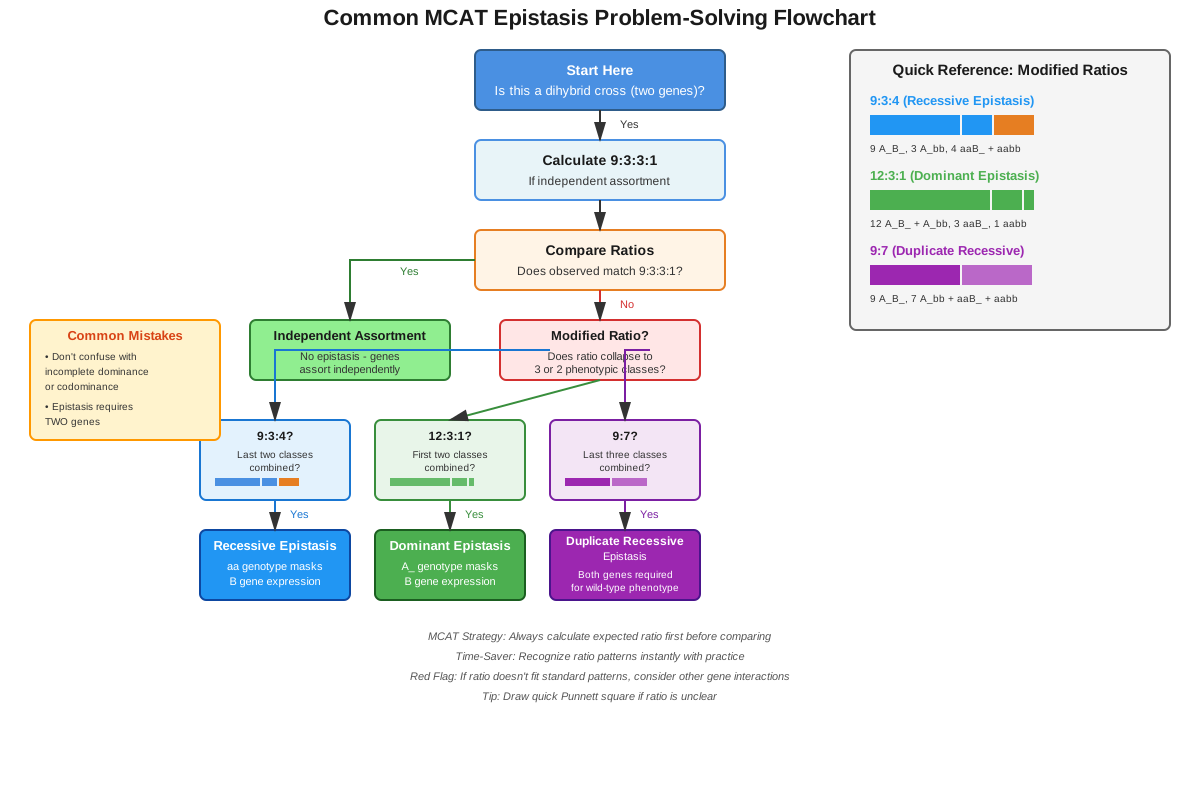
When encountering epistasis questions on the MCAT, follow this systematic approach:
- Identify the question type: Determine whether you need to predict ratios from given genotypes, explain observed ratios, identify gene relationships, or analyze a biochemical pathway.
- Look for ratio clues: Any deviation from 9:3:3:1 in a dihybrid cross signals gene interaction. Specific ratios point to specific epistasis types:
- 9:3:4 → Recessive epistasis
- 12:3:1 → Dominant epistasis
- 9:7 → Duplicate recessive epistasis
- 15:1 → Duplicate dominant epistasis
- Analyze pathway information: If the passage describes a biochemical pathway, identify the sequence of gene products. Upstream genes are typically epistatic to downstream genes in linear pathways.
- Check for masking language: Words like "masks," "suppresses," "prevents expression of," or "regardless of" indicate epistatic relationships.
Trigger Words and Phrases
Watch for these high-yield phrases that signal epistasis:
- "Modified ratio" or "unexpected ratio"
- "Gene X masks the expression of Gene Y"
- "Regardless of the genotype at locus B"
- "Sequential pathway" or "enzyme cascade"
- "Complementation test" or "complementation analysis"
- "Suppressor mutation"
- "Phenotype depends on both genes"
- "Homozygous recessive at either locus"
Process of Elimination Tips
When evaluating answer choices:
- Eliminate answers confusing dominance with epistasis: If an answer describes allelic relationships at one locus, it's not epistasis
- Check ratio arithmetic: Calculate expected numbers for each phenotypic class and eliminate answers with incorrect math
- Verify pathway logic: Eliminate answers that place downstream genes as epistatic to upstream genes in linear pathways
- Test extreme genotypes: Check whether the proposed epistatic relationship correctly predicts phenotypes for homozygous genotypes (e.g., does ee mask B_ in the proposed model?)
Time Allocation
For discrete epistasis questions (1-2 minutes):
- Quickly identify the epistasis type from the ratio or description
- Apply the standard ratio pattern
- Select the answer
For passage-based epistasis questions (8-10 minutes for passage + questions):
- Spend 3-4 minutes understanding the pathway or genetic system described
- Create a quick reference table of genotypes and phenotypes
- Work through each question systematically, referring back to your table
- Don't recalculate ratios for each question—do it once comprehensively
Exam Tip: If a passage provides experimental cross data, immediately calculate the phenotypic ratio and identify the epistasis type. This single step often unlocks multiple questions in the set.
Memory Techniques
Mnemonic for Epistasis Types and Ratios
"Really Dramatic Duplicates Duplicate" for the four main epistasis types:
- Recessive epistasis → 9:3:4 (Remember: "9-3-4" sounds like "nine-three-FOUR")
- Dominant epistasis → 12:3:1 (Remember: "12" is the largest first number, like "dominant")
- Duplicate recessive → 9:7 (Remember: "7" combines three classes: 3+3+1)
- Duplicate dominant → 15:1 (Remember: "15" combines almost everything)
Visualization Strategy: The Pathway Principle
Visualize epistasis as a production line:
[Gene A] → [Gene B] → [Final Product/Phenotype]
 Worker 1   Worker 2    Completed Item
If Worker 1 (Gene A) doesn't function, Worker 2 (Gene B) has nothing to work with—Gene A is epistatic to Gene B. This mental model works for most epistatic relationships involving sequential processes.
Acronym for Identifying Epistasis: MASK
Modified ratios (not 9:3:3:1)
Affects different loci (not same gene)
Sequential or related pathways
Key genotype masks others
If all four MASK criteria are present, you're dealing with epistasis.
Memory Palace Technique
Associate each epistasis type with a familiar location:
- Kitchen (Recessive epistasis, 9:3:4): Imagine 9 black labs, 3 brown labs, and 4 yellow labs waiting for food
- Living room (Dominant epistasis, 12:3:1): Picture 12 white squashes on the couch, 3 yellow ones on a chair, 1 green one on the floor
- Garden (Duplicate recessive, 9:7): Visualize 9 purple flowers in one bed, 7 white flowers scattered around
- Garage (Duplicate dominant, 15:1): See 15 triangular seed pods on a shelf, 1 oval pod on the ground
Summary
Epistasis represents a fundamental gene interaction where alleles at one locus mask or modify the phenotypic expression of alleles at a different locus, creating modified dihybrid ratios that deviate from the expected 9:3:3:1 Mendelian pattern. This phenomenon arises from the molecular reality that genes do not function in isolation—their products interact in biochemical pathways, regulatory networks, and structural complexes. The four main types of epistasis produce characteristic ratios: recessive epistasis (9:3:4), dominant epistasis (12:3:1), duplicate recessive epistasis (9:7), and duplicate dominant epistasis (15:1). Understanding the molecular mechanisms underlying these patterns, particularly sequential enzymatic pathways where upstream genes are epistatic to downstream genes, enables prediction of phenotypic outcomes and interpretation of experimental crosses. For MCAT success, students must distinguish epistasis from dominance (intergenic versus intragenic relationships), recognize modified ratios as indicators of gene interaction, and connect genetic patterns to biochemical mechanisms. Epistasis bridges classical Mendelian genetics with modern molecular biology, appearing frequently in passage-based questions that integrate pathway analysis with genetic predictions.
Key Takeaways
- Epistasis involves genes at different loci where one gene (epistatic) masks another gene's (hypostatic) phenotypic expression, fundamentally different from dominance between alleles at the same locus
- Modified dihybrid ratios signal epistasis: 9:3:4 (recessive epistasis), 12:3:1 (dominant epistasis), 9:7 (duplicate recessive), and 15:1 (duplicate dominant) are high-yield patterns for the MCAT
- Biochemical pathways provide the molecular mechanism for most epistatic interactions, with upstream genes typically epistatic to downstream genes in sequential enzymatic reactions
- Labrador coat color (E and B genes) exemplifies recessive epistasis, producing the classic 9:3:4 ratio of black:brown:yellow phenotypes that frequently appears on the MCAT
- Complementation analysis reveals epistatic relationships when mutations in different genes fail to restore wild-type phenotype, indicating the genes function in the same pathway
- Epistasis has clinical relevance in modifier genes, drug interactions, cancer genetics, and complex trait architecture, making it essential for understanding human genetic variation and disease
- Recognition strategy: Look for pathway descriptions, modified ratios, masking language, and questions asking about gene interactions to identify epistasis questions quickly
Related Topics
Complementation Analysis: A genetic technique used to determine whether mutations causing similar phenotypes are in the same gene or different genes; directly reveals epistatic relationships when genes function in the same pathway. Mastering epistasis provides the foundation for understanding complementation patterns.
Biochemical Pathways and Metabolism: The molecular basis of most epistatic interactions involves sequential enzymatic reactions; understanding metabolic pathways enhances ability to predict epistatic relationships and explain modified ratios mechanistically.
Quantitative Genetics and Polygenic Inheritance: While simple epistasis involves discrete phenotypes, epistatic interactions among many genes contribute to continuous trait variation; this topic extends epistasis concepts to complex traits and heritability.
Gene Regulation and Expression: Regulatory epistasis occurs when one gene controls another's expression through transcription factors or signaling pathways; understanding gene regulation mechanisms deepens comprehension of epistatic interactions beyond enzymatic pathways.
Population Genetics and Evolution: Epistasis affects how selection acts on allele combinations rather than individual alleles, influencing linkage disequilibrium, genetic architecture, and evolutionary trajectories; this advanced topic builds on epistasis fundamentals.
Genetic Mapping and Linkage Analysis: Epistatic interactions can complicate genetic mapping by creating apparent linkage between unlinked genes; understanding epistasis is essential for interpreting mapping data and genome-wide association studies.
Practice CTA
Now that you've mastered the core concepts of epistasis, it's time to solidify your understanding through active practice. Work through the practice questions and flashcards to test your ability to recognize epistatic patterns, predict modified ratios, and analyze biochemical pathways. Focus particularly on distinguishing between different epistasis types and connecting molecular mechanisms to phenotypic outcomes—these skills are essential for MCAT success. Remember, genetics questions often integrate multiple concepts, so practicing epistasis problems will strengthen your overall genetics proficiency. You've built a strong foundation; now apply it to achieve mastery!
Sign up free to keep reading
Create a free AnvayaPrep account to finish this MCAT guide on Epistasis — plus flashcards and practice questions.