Overview
The kidney anatomy is a cornerstone topic in the Physiology and Organ Systems unit of Biology for the MCAT. Understanding the structural organization of the kidney is essential because form follows function—the intricate anatomical arrangement of nephrons, blood vessels, and collecting systems directly enables the kidney's critical roles in maintaining homeostasis, regulating blood pressure, controlling electrolyte balance, and eliminating metabolic waste. The MCAT frequently tests kidney anatomy through passage-based questions that integrate structure with function, requiring students to predict physiological outcomes based on anatomical disruptions or to trace the path of filtrate through the nephron.
Mastery of kidney anatomy provides the foundation for understanding renal physiology, acid-base balance, and fluid-electrolyte homeostasis—all high-yield MCAT topics. Questions may present clinical scenarios involving kidney disease, pharmacological interventions affecting specific nephron segments, or experimental manipulations of renal blood flow. Without a solid grasp of the anatomical relationships between the cortex, medulla, nephron components, and vascular supply, students cannot effectively analyze these complex scenarios or predict the consequences of pathological changes.
This topic connects intimately with cardiovascular physiology (blood pressure regulation via the renin-angiotensin-aldosterone system), endocrine function (hormone production and response), and acid-base chemistry. The kidney serves as a prime example of how macroscopic organ structure, microscopic cellular organization, and molecular transport mechanisms integrate to maintain whole-organism homeostasis—a recurring theme throughout the MCAT biological sciences sections.
Learning Objectives
- [ ] Define kidney anatomy using accurate Biology terminology
- [ ] Explain why kidney anatomy matters for the MCAT
- [ ] Apply kidney anatomy to exam-style questions
- [ ] Identify common mistakes related to kidney anatomy
- [ ] Connect kidney anatomy to related Biology concepts
- [ ] Trace the path of blood flow through the renal vasculature from renal artery to renal vein
- [ ] Distinguish between cortical and juxtamedullary nephrons and explain their functional significance
- [ ] Diagram the complete structure of a nephron including all tubular segments and associated vasculature
Prerequisites
- Basic cell membrane transport mechanisms (active transport, passive diffusion, osmosis): Essential for understanding how the nephron segments selectively reabsorb and secrete substances
- Cardiovascular system anatomy: Necessary to comprehend renal blood flow and the kidney's role in blood pressure regulation
- Basic understanding of osmolarity and concentration gradients: Required to grasp how the kidney concentrates urine and maintains fluid balance
- Epithelial tissue structure: Important for understanding the cellular organization of tubular segments and their transport capabilities
Why This Topic Matters
Clinical Significance
Kidney disease affects millions worldwide, and understanding renal anatomy is fundamental to comprehending conditions like chronic kidney disease, acute kidney injury, nephrotic syndrome, and diabetic nephropathy. The anatomical location of damage determines clinical presentation—glomerular diseases present differently than tubular disorders. Physicians use anatomical knowledge to interpret urinalysis results, understand drug nephrotoxicity (many medications damage specific nephron segments), and predict complications of renal failure.
MCAT Exam Statistics
Kidney anatomy appears in approximately 3-5% of Biology questions on the MCAT, often integrated with physiology questions. The topic most commonly appears in:
- Passage-based questions (70% of kidney-related questions) presenting experimental data about nephron function or clinical vignettes about renal disease
- Discrete questions (30%) testing direct anatomical knowledge or structure-function relationships
- Biological and Biochemical Foundations of Living Systems section, particularly in questions integrating multiple organ systems
Common Exam Presentations
The MCAT presents kidney anatomy through several recurring formats:
- Diagrams requiring identification of nephron segments or blood vessels
- Experimental passages manipulating specific tubular segments and asking students to predict outcomes
- Clinical vignettes describing symptoms and asking students to identify the affected anatomical region
- Questions linking anatomical location to specific transport processes or hormone actions
- Comparative physiology passages contrasting cortical and juxtamedullary nephrons
Core Concepts
Gross Kidney Anatomy
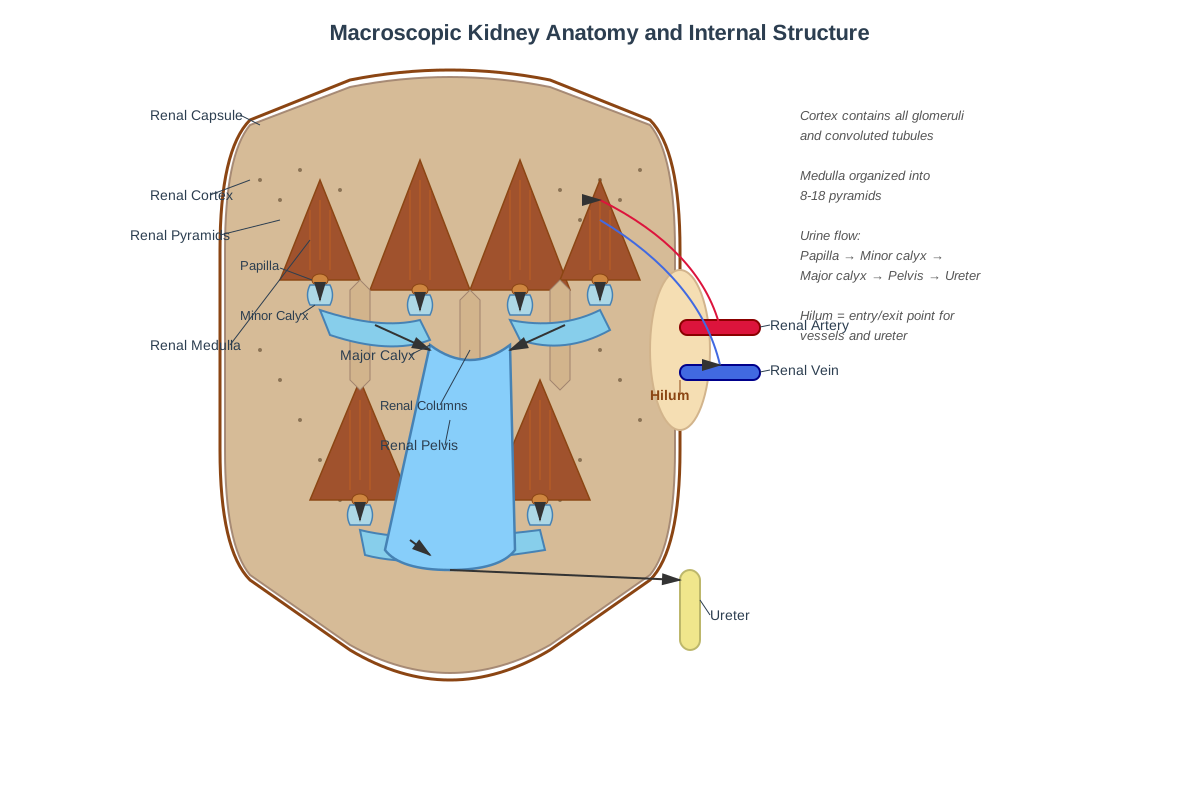
The kidney is a bean-shaped, retroperitoneal organ approximately 10-12 cm long. Each kidney contains three major regions visible on cross-section: the outer renal cortex, the inner renal medulla, and the renal pelvis. The renal cortex appears granular and contains all renal corpuscles (glomeruli with Bowman's capsules), proximal and distal convoluted tubules, and cortical collecting ducts. The renal medulla consists of 8-18 cone-shaped renal pyramids, which contain the loops of Henle, vasa recta, and medullary collecting ducts. The apex of each pyramid, called a renal papilla, projects into a minor calyx.
The renal pelvis is the funnel-shaped structure that collects urine from the calyces. Minor calyces merge to form major calyces, which drain into the renal pelvis, which continues as the ureter. The renal hilum is the medial indentation where the renal artery enters, the renal vein exits, and the ureter emerges. Understanding this gross anatomy helps students visualize the path of urine formation and drainage.
The Nephron: Functional Unit of the Kidney
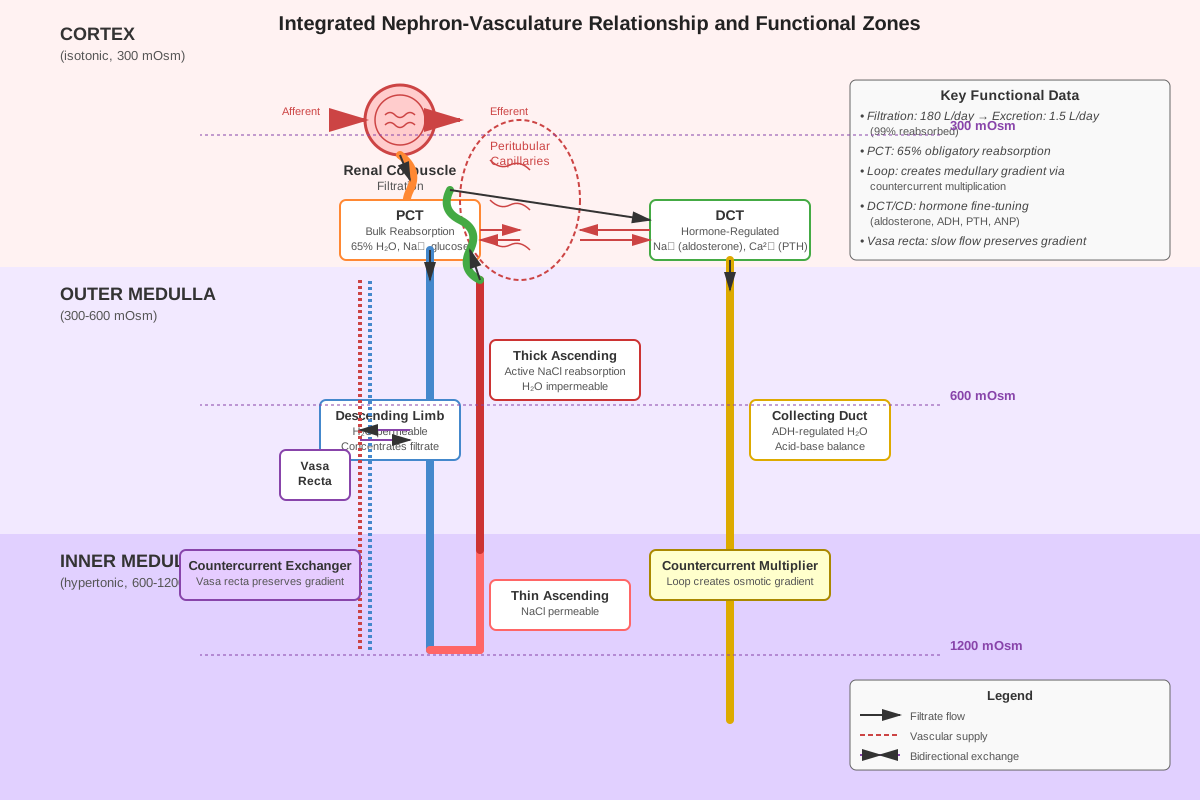
The nephron is the microscopic functional unit of the kidney, with approximately 1 million nephrons per kidney. Each nephron consists of two main components: the renal corpuscle (where filtration occurs) and the renal tubule (where reabsorption and secretion occur). The nephron works in concert with associated blood vessels to filter blood, reabsorb needed substances, secrete wastes, and produce urine.
Renal Corpuscle
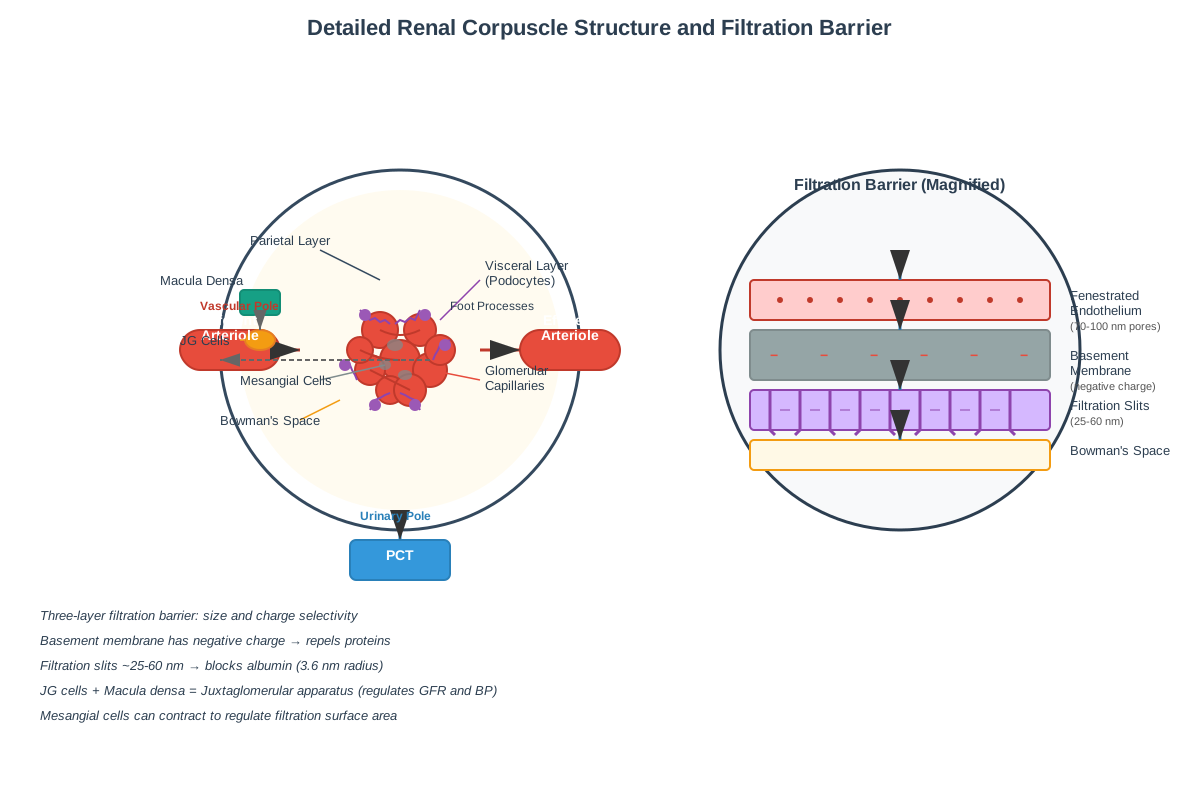
The renal corpuscle comprises the glomerulus and Bowman's capsule. The glomerulus is a specialized capillary network with fenestrated endothelium that allows high filtration rates. Blood enters via the afferent arteriole and exits via the efferent arteriole—this arrangement creates high hydrostatic pressure favoring filtration. The Bowman's capsule is a double-walled epithelial cup surrounding the glomerulus. The inner visceral layer consists of specialized cells called podocytes with foot processes (pedicels) that create filtration slits. The outer parietal layer is simple squamous epithelium. Between these layers is Bowman's space (urinary space), where filtrate collects before entering the tubule.
The filtration barrier consists of three layers: fenestrated capillary endothelium, basement membrane (basal lamina), and podocyte filtration slits with slit diaphragms. This barrier is size-selective (excludes cells and large proteins) and charge-selective (negatively charged basement membrane repels negatively charged proteins like albumin).
Proximal Convoluted Tubule (PCT)
The proximal convoluted tubule is the longest and most metabolically active nephron segment. Its epithelial cells feature an extensive brush border (microvilli) on the apical surface, increasing surface area for reabsorption. The PCT reabsorbs approximately 65-70% of filtered water, sodium, chloride, and virtually all filtered glucose and amino acids. The cells contain abundant mitochondria to power active transport. The PCT is located entirely in the cortex and appears highly convoluted.
Loop of Henle
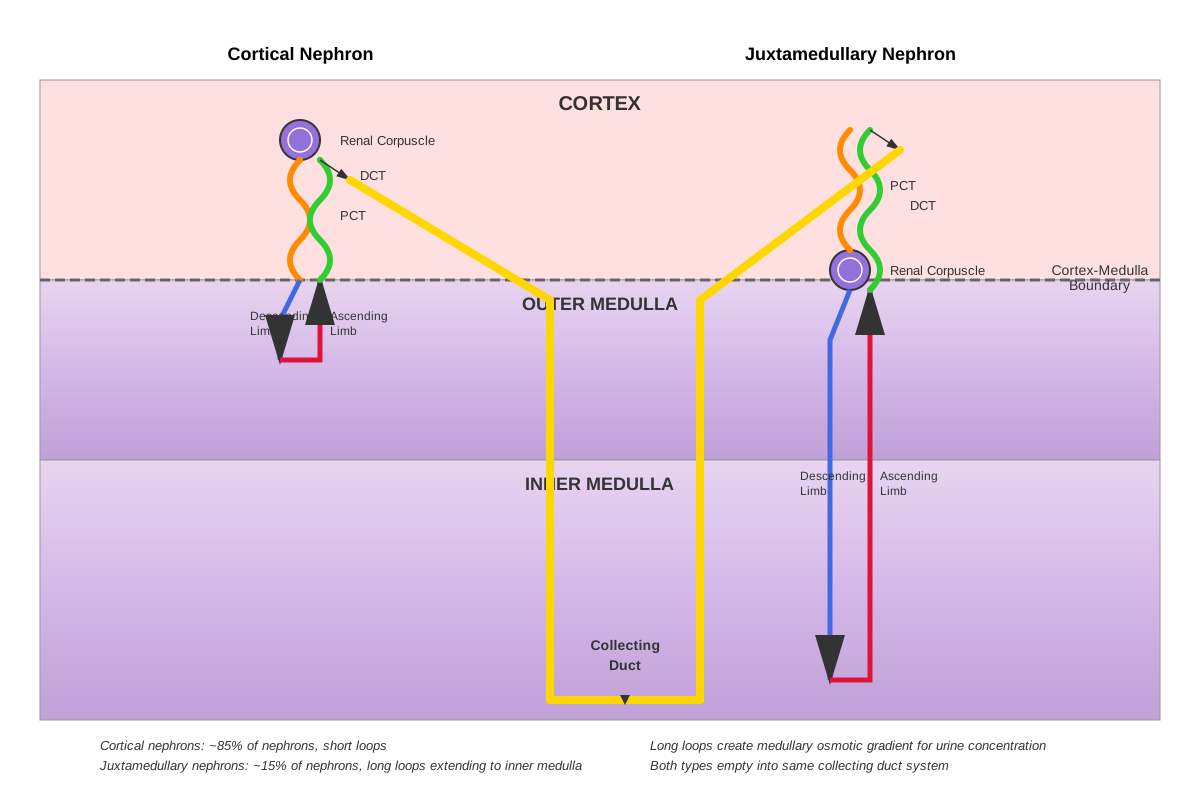
The loop of Henle is a hairpin-shaped structure consisting of the descending limb, thin ascending limb, and thick ascending limb. This structure is critical for establishing the medullary osmotic gradient that enables urine concentration. The descending limb is permeable to water but relatively impermeable to solutes—water exits via aquaporins as the tubule descends into the increasingly hypertonic medulla. The thin ascending limb is impermeable to water but permeable to solutes, allowing passive sodium and chloride reabsorption. The thick ascending limb actively transports sodium, potassium, and chloride via the Na-K-2Cl cotransporter (NKCC2), diluting the tubular fluid while contributing to medullary hypertonicity. This segment is impermeable to water, earning it the name "diluting segment."
Distal Convoluted Tubule (DCT)
The distal convoluted tubule is shorter than the PCT and located in the cortex. Its cells lack a brush border but contain numerous mitochondria. The DCT continues active sodium reabsorption via the Na-Cl cotransporter (NCC) and is the primary site of action for thiazide diuretics. The early DCT is impermeable to water, while the late DCT becomes water-permeable under ADH influence. The DCT is also the site where parathyroid hormone (PTH) stimulates calcium reabsorption.
Collecting Duct
The collecting duct receives filtrate from multiple nephrons and travels from cortex through medulla to the renal papilla. Principal cells in the collecting duct respond to antidiuretic hormone (ADH) by inserting aquaporin-2 water channels, allowing water reabsorption and urine concentration. Intercalated cells regulate acid-base balance by secreting hydrogen ions (type A) or bicarbonate (type B). The collecting duct is also the site of aldosterone action, which stimulates sodium reabsorption and potassium secretion in principal cells.
Nephron Types
| Feature | Cortical Nephrons | Juxtamedullary Nephrons |
|---|---|---|
| Percentage | 85% of nephrons | 15% of nephrons |
| Corpuscle location | Outer cortex | Near cortex-medulla junction |
| Loop of Henle length | Short, barely enters medulla | Long, extends deep into medulla |
| Primary function | Filtration and reabsorption | Urine concentration |
| Vasa recta | Minimal or absent | Extensive, long vasa recta |
| Urine concentration ability | Limited | High capacity |
Juxtamedullary nephrons are essential for producing concentrated urine because their long loops of Henle establish and maintain the medullary osmotic gradient. Cortical nephrons handle the bulk of filtration and reabsorption but contribute less to urine concentration.
Renal Vasculature
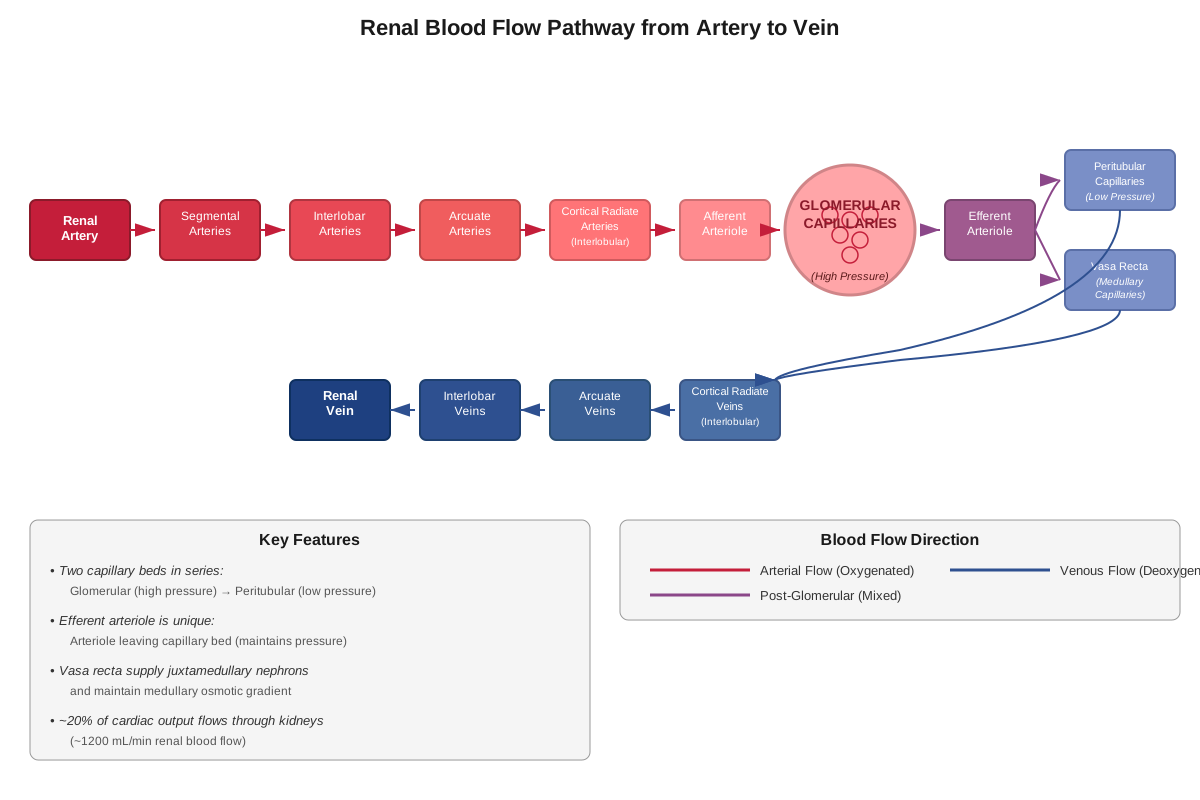
Understanding renal blood flow is crucial for MCAT success. The pathway follows this sequence:
- Renal artery (branches from abdominal aorta)
- Segmental arteries (divide within renal sinus)
- Interlobar arteries (travel between pyramids)
- Arcuate arteries (arch over base of pyramids at cortex-medulla junction)
- Cortical radial arteries (formerly called interlobular arteries; project into cortex)
- Afferent arterioles (supply individual glomeruli)
- Glomerular capillaries (filtration site)
- Efferent arterioles (exit glomeruli)
- Peritubular capillaries (surround cortical tubules) OR vasa recta (surround juxtamedullary loops)
- Cortical radial veins
- Arcuate veins
- Interlobar veins
- Renal vein (drains to inferior vena cava)
The unique two-capillary-bed arrangement (glomerular capillaries → efferent arteriole → peritubular capillaries/vasa recta) allows precise regulation of filtration and reabsorption. The vasa recta are specialized straight vessels that parallel the loops of Henle in juxtamedullary nephrons, functioning as countercurrent exchangers that preserve the medullary osmotic gradient while supplying blood to the medulla.
Juxtaglomerular Apparatus
The juxtaglomerular apparatus (JGA) is a specialized structure where the distal convoluted tubule contacts its own glomerulus. It consists of three cell types:
- Juxtaglomerular (JG) cells: Modified smooth muscle cells in the afferent arteriole wall that secrete renin in response to decreased blood pressure, sympathetic stimulation, or signals from macula densa cells
- Macula densa cells: Specialized epithelial cells in the distal tubule that sense sodium chloride concentration in tubular fluid and signal JG cells
- Extraglomerular mesangial cells: Provide structural support and may transmit signals between macula densa and JG cells
The JGA is critical for the renin-angiotensin-aldosterone system (RAAS) and tubuloglomerular feedback, linking kidney anatomy to blood pressure regulation and fluid balance—frequent MCAT topics.
Concept Relationships
The anatomical components of the kidney form an integrated system where structure determines function. The renal corpuscle (glomerulus + Bowman's capsule) → performs filtration → producing filtrate that enters the proximal convoluted tubule → which performs bulk reabsorption → filtrate then flows to the loop of Henle → which establishes the osmotic gradient necessary for concentration → filtrate continues to the distal convoluted tubule → which performs fine-tuning of electrolytes → finally reaching the collecting duct → which determines final urine concentration based on hormonal signals.
The vascular anatomy parallels and supports tubular function: afferent arteriole → controls blood flow into glomerular capillaries → where high pressure drives filtration → blood exits via efferent arteriole → which has smaller diameter, maintaining glomerular pressure → blood then flows to peritubular capillaries or vasa recta → which reabsorb substances from interstitium and supply oxygen to tubular cells.
The distinction between cortical and juxtamedullary nephrons connects to the kidney's dual role: cortical nephrons handle most filtration and reabsorption (maintaining normal homeostasis), while juxtamedullary nephrons enable urine concentration (responding to dehydration). This anatomical specialization allows the kidney to adapt to varying hydration states.
The juxtaglomerular apparatus anatomically links tubular function to vascular control, connecting kidney anatomy to cardiovascular physiology through the RAAS. This relationship frequently appears in MCAT passages integrating multiple organ systems.
Quick check — test yourself on Kidney anatomy so far.
Try Flashcards →High-Yield Facts
⭐ The nephron consists of the renal corpuscle (glomerulus + Bowman's capsule), proximal convoluted tubule, loop of Henle, distal convoluted tubule, and collecting duct.
⭐ Blood flows through two capillary beds in series: glomerular capillaries (filtration) then peritubular capillaries or vasa recta (reabsorption).
⭐ The thick ascending limb of the loop of Henle actively transports NaCl but is impermeable to water, creating dilute urine and a hypertonic medullary interstitium.
⭐ Juxtamedullary nephrons (15%) have long loops of Henle extending deep into the medulla and are essential for producing concentrated urine.
⭐ The juxtaglomerular apparatus consists of juxtaglomerular cells (secrete renin), macula densa cells (sense NaCl), and extraglomerular mesangial cells.
- The renal cortex contains all renal corpuscles, proximal and distal convoluted tubules, and cortical collecting ducts.
- The renal medulla contains loops of Henle, vasa recta, and medullary collecting ducts arranged in pyramids.
- The filtration barrier consists of fenestrated endothelium, basement membrane, and podocyte filtration slits with slit diaphragms.
- The proximal convoluted tubule reabsorbs 65-70% of filtered water and sodium, plus virtually all glucose and amino acids.
- The afferent arteriole brings blood to the glomerulus; the efferent arteriole carries blood away—their relative diameters regulate glomerular filtration pressure.
- Cortical radial arteries (interlobular arteries) branch from arcuate arteries and give rise to afferent arterioles.
- The collecting duct is the site of ADH action (water reabsorption via aquaporin-2) and aldosterone action (sodium reabsorption, potassium secretion).
- The descending limb of the loop of Henle is permeable to water but not solutes; the ascending limb is permeable to solutes but not water.
Common Misconceptions
Misconception: The loop of Henle is uniformly impermeable to water throughout its length.
Correction: Only the ascending limb (thin and thick portions) is impermeable to water. The descending limb is highly permeable to water via aquaporin-1 channels, allowing water to exit as the tubule descends into the hypertonic medulla. This differential permeability is essential for the countercurrent multiplication mechanism.
Misconception: All nephrons are identical in structure and function.
Correction: Cortical nephrons (85%) have short loops of Henle that barely penetrate the medulla and limited vasa recta, while juxtamedullary nephrons (15%) have long loops extending deep into the medulla with extensive vasa recta. Juxtamedullary nephrons are specifically adapted for urine concentration, while cortical nephrons primarily handle filtration and reabsorption.
Misconception: The efferent arteriole is larger in diameter than the afferent arteriole.
Correction: The efferent arteriole is typically smaller in diameter than the afferent arteriole. This size difference maintains high hydrostatic pressure in the glomerular capillaries, promoting filtration. If the efferent arteriole were larger, glomerular pressure would drop and filtration would decrease.
Misconception: The collecting duct is part of the nephron.
Correction: Technically, the nephron ends at the distal convoluted tubule. The collecting duct is a separate structure that receives filtrate from multiple nephrons. However, functionally, the collecting duct is often discussed with the nephron because it performs critical reabsorption and secretion. This distinction matters for understanding embryological development and certain disease processes.
Misconception: The juxtaglomerular apparatus is located at the distal end of the nephron near the collecting duct.
Correction: The juxtaglomerular apparatus is located where the distal convoluted tubule of a nephron contacts its own glomerulus—essentially at the beginning of the nephron, not the end. This anatomical arrangement allows the distal tubule to provide feedback about tubular fluid composition to regulate filtration at the glomerulus (tubuloglomerular feedback).
Misconception: Peritubular capillaries and vasa recta are the same structures.
Correction: Peritubular capillaries are the branching capillary networks surrounding cortical nephron tubules, while vasa recta are the long, straight vessels that parallel the loops of Henle in juxtamedullary nephrons. Vasa recta function as countercurrent exchangers to preserve the medullary osmotic gradient, while peritubular capillaries primarily reabsorb substances from the cortical interstitium.
Worked Examples
Example 1: Tracing Filtrate Flow
Question: A researcher injects a fluorescent dye that is freely filtered at the glomerulus but neither reabsorbed nor secreted by any tubular segment. Trace the complete path this dye takes from entering the kidney to leaving in the urine, naming all anatomical structures in order.
Solution:
Step 1: Identify the starting point. The dye enters the kidney via the renal artery.
Step 2: Trace vascular path to filtration site. Renal artery → segmental arteries → interlobar arteries → arcuate arteries → cortical radial arteries → afferent arteriole → glomerular capillaries.
Step 3: Filtration occurs. At the glomerular capillaries, the dye passes through the filtration barrier (fenestrated endothelium, basement membrane, podocyte filtration slits) into Bowman's space.
Step 4: Trace tubular path. From Bowman's space, the dye flows through:
- Proximal convoluted tubule (in cortex)
- Descending limb of loop of Henle (descends into medulla)
- Thin ascending limb of loop of Henle (ascends from medulla)
- Thick ascending limb of loop of Henle (continues ascending to cortex)
- Distal convoluted tubule (in cortex)
- Collecting duct (descends through cortex and medulla)
Step 5: Trace drainage path. The collecting duct empties at the renal papilla into a minor calyx → major calyx → renal pelvis → ureter → bladder → urethra → exits body.
Key concept: This question tests comprehensive understanding of both vascular and tubular anatomy. The dye's properties (freely filtered, not reabsorbed or secreted) mean it follows the standard filtrate path without modification, allowing us to trace the complete anatomical route.
Example 2: Clinical Vignette Analysis
Question: A patient presents with severe dehydration after several days of vomiting. Blood tests show elevated plasma osmolarity and increased ADH levels. Which specific anatomical structures are most affected by the elevated ADH, and what structural features enable their response?
Solution:
Step 1: Identify ADH's primary site of action. ADH (antidiuretic hormone, also called vasopressin) acts primarily on the collecting duct, specifically on principal cells.
Step 2: Explain the anatomical location. The collecting duct extends from the cortex through the medulla to the renal papilla. The medullary portion is most critical for ADH's effect because it passes through the hypertonic medullary interstitium.
Step 3: Describe structural features enabling ADH response. Principal cells in the collecting duct contain:
- Aquaporin-2 water channels stored in cytoplasmic vesicles
- ADH receptors (V2 receptors) on the basolateral membrane
- Cellular machinery for vesicle trafficking and membrane insertion
Step 4: Explain the mechanism linking structure to function. When ADH binds V2 receptors, it triggers insertion of aquaporin-2 channels into the apical (luminal) membrane. Water can then flow from the tubular lumen through aquaporin-2, across the cell, through constitutive aquaporin-3 and aquaporin-4 channels on the basolateral membrane, and into the hypertonic medullary interstitium.
Step 5: Connect to the clinical scenario. In dehydration, elevated ADH increases collecting duct water permeability. As the collecting duct descends through the increasingly hypertonic medulla (created by juxtamedullary nephrons' loops of Henle), water is reabsorbed, concentrating the urine and conserving body water.
Key concept: This question integrates kidney anatomy (collecting duct location and structure), cellular anatomy (aquaporin channels), and physiology (ADH mechanism). MCAT questions frequently require this multi-level integration.
Exam Strategy
Approaching Kidney Anatomy Questions
When encountering kidney anatomy questions on the MCAT, follow this systematic approach:
- Identify the anatomical level: Is the question asking about gross anatomy (cortex vs. medulla), nephron segments, cellular structure, or molecular components? This determines which knowledge to activate.
- Trace the path: For questions involving substance movement, trace either the vascular path (artery → capillaries → vein) or tubular path (Bowman's space → collecting duct → ureter). Drawing a quick sketch can prevent errors.
- Connect structure to function: The MCAT rarely asks pure anatomy questions. Always consider "Why is this structure here?" or "What does this anatomical feature enable functionally?"
Trigger Words and Phrases
Watch for these high-yield terms that signal specific anatomical concepts:
- "Filtration barrier" → Think glomerulus, Bowman's capsule, podocytes, fenestrated endothelium
- "Concentrated urine" → Think juxtamedullary nephrons, long loops of Henle, vasa recta, collecting duct, ADH
- "Bulk reabsorption" → Think proximal convoluted tubule, brush border, 65-70% of filtrate
- "Diluting segment" → Think thick ascending limb, impermeable to water, NKCC2 transporter
- "Countercurrent" → Think loop of Henle (countercurrent multiplier) or vasa recta (countercurrent exchanger)
- "Macula densa" → Think juxtaglomerular apparatus, distal tubule, tubuloglomerular feedback
- "Afferent vs. efferent" → Think glomerular pressure regulation, filtration rate control
Process of Elimination Tips
When unsure between answer choices:
- Eliminate options that violate the filtrate flow sequence: Filtrate cannot flow backward from distal tubule to proximal tubule, for example.
- Eliminate options that place structures in the wrong anatomical region: All glomeruli are in the cortex, never in the medulla.
- Eliminate options that confuse cortical and juxtamedullary nephrons: If a question asks about urine concentration, cortical nephrons are unlikely to be the answer.
- Eliminate options that reverse vascular flow: Blood always flows afferent arteriole → glomerulus → efferent arteriole, never the reverse.
Time Allocation
For discrete kidney anatomy questions, spend 45-60 seconds. For passage-based questions, allocate 1-1.5 minutes per question, using the passage to confirm anatomical details rather than relying solely on memory. If a question requires tracing a complex path, invest 15-20 seconds drawing a quick diagram—this prevents costly errors and actually saves time.
Memory Techniques
Nephron Segment Sequence Mnemonic
"Please Go Loop Down, Then Collect"
- Proximal convoluted tubule
- Glomerulus (technically before PCT, but helps remember the corpuscle)
- Loop of Henle
- Distal convoluted tubule
- Collecting duct
Renal Artery Branching Mnemonic
"Really Smart Individuals Are Always Accurate"
- Renal artery
- Segmental arteries
- Interlobar arteries
- Arcuate arteries
- Afferent arterioles (via cortical radial arteries)
Juxtaglomerular Apparatus Components
"JG Makes Excellent Juice"
- Juxtaglomerular cells (secrete renin)
- Macula densa cells (sense NaCl)
- Extraglomerular mesangial cells
Filtration Barrier Layers
"Every Basement Protects"
- Endothelium (fenestrated)
- Basement membrane (basal lamina)
- Podocytes (with filtration slits)
Visualization Strategy
Create a mental image of the nephron as a "processing factory":
- Entrance (renal corpuscle): Security checkpoint that filters out large items (cells, proteins)
- Main warehouse (PCT): Bulk retrieval of valuable items (65-70% of everything useful)
- Basement level (loop of Henle): Creates the storage environment (osmotic gradient)
- Quality control (DCT): Fine-tunes what's kept and what's discarded
- Shipping department (collecting duct): Final packaging decisions based on company needs (hormonal signals)
This factory metaphor helps remember both the sequence and the function of each segment.
Summary
Kidney anatomy encompasses the structural organization from gross anatomical features (cortex, medulla, pelvis) through microscopic functional units (nephrons) to cellular specializations (podocytes, principal cells). The nephron—consisting of the renal corpuscle, proximal convoluted tubule, loop of Henle, distal convoluted tubule, and collecting duct—is the fundamental unit where blood filtration, selective reabsorption, and secretion occur. The unique two-capillary-bed vascular arrangement (glomerular capillaries followed by peritubular capillaries or vasa recta) enables precise control of filtration and reabsorption. Cortical and juxtamedullary nephrons differ in loop length and function, with juxtamedullary nephrons essential for urine concentration. The juxtaglomerular apparatus links tubular function to vascular control through the renin-angiotensin-aldosterone system. Understanding these anatomical relationships is essential for MCAT success because questions consistently require integration of structure with physiological function, clinical scenarios, and experimental manipulations.
Key Takeaways
- The nephron consists of five main segments in sequence: renal corpuscle → proximal convoluted tubule → loop of Henle → distal convoluted tubule → collecting duct
- Blood flows through two capillary beds: glomerular capillaries (filtration) then peritubular capillaries or vasa recta (reabsorption and oxygen delivery)
- Juxtamedullary nephrons (15%) have long loops of Henle extending deep into the medulla and are essential for producing concentrated urine
- The thick ascending limb of the loop of Henle is impermeable to water but actively transports NaCl, creating the medullary osmotic gradient
- The juxtaglomerular apparatus (JG cells, macula densa, extraglomerular mesangial cells) regulates blood pressure through renin secretion
- The filtration barrier (fenestrated endothelium, basement membrane, podocyte slits) is both size-selective and charge-selective
- The collecting duct is the primary site of ADH action (water reabsorption) and aldosterone action (sodium reabsorption, potassium secretion)
Related Topics
Renal Physiology: Building on kidney anatomy, this topic covers the mechanisms of filtration, reabsorption, secretion, and urine concentration. Mastering anatomy enables understanding how each nephron segment contributes to overall kidney function.
Acid-Base Balance: The kidney's role in maintaining blood pH depends on anatomical structures like intercalated cells in the collecting duct. Understanding where these cells are located and how they're organized helps predict acid-base compensation.
Fluid and Electrolyte Balance: The anatomical organization of the nephron directly determines how the kidney regulates sodium, potassium, calcium, and water balance. Each tubular segment's location and cellular structure enables specific transport processes.
Renin-Angiotensin-Aldosterone System (RAAS): The juxtaglomerular apparatus anatomy provides the foundation for understanding this critical blood pressure regulation system, connecting kidney anatomy to cardiovascular physiology.
Endocrine System: The kidney functions as an endocrine organ (producing renin, erythropoietin, and active vitamin D) and responds to hormones (ADH, aldosterone, PTH, ANP). Understanding the anatomical sites of hormone production and action is essential.
Practice CTA
Now that you've mastered the anatomical foundation of kidney structure, test your knowledge with practice questions and flashcards. Focus on questions that require you to integrate anatomical knowledge with physiological function—this mirrors how the MCAT tests this material. Challenge yourself to draw the nephron from memory, label all segments, and trace both blood flow and filtrate flow. The more you actively engage with this material through practice, the more automatic this knowledge becomes during the exam. You've built a solid foundation—now reinforce it through application!
Sign up free to keep reading
Create a free AnvayaPrep account to finish this MCAT guide on Kidney anatomy — plus flashcards and practice questions.