Overview
The menstrual cycle is a complex, hormonally regulated physiological process that prepares the female reproductive system for potential pregnancy on a monthly basis. This cyclical process involves coordinated interactions between the hypothalamus, anterior pituitary gland, ovaries, and uterus, making it a prime example of endocrine feedback mechanisms and organ system integration. Understanding the menstrual cycle Biology requires mastery of hormone cascades, negative and positive feedback loops, and the structural changes that occur in reproductive tissues throughout approximately 28 days.
For the MCAT, the menstrual cycle represents a high-yield integration point that connects endocrinology, reproductive physiology, and feedback regulation. Questions frequently test the ability to trace hormone pathways, predict the effects of hormonal disruptions, and understand the temporal relationships between ovarian and uterine events. The menstrual cycle MCAT content appears in both passage-based and discrete questions, often requiring students to interpret graphs of hormone levels, analyze experimental manipulations of the reproductive axis, or apply knowledge to clinical scenarios involving fertility, contraception, or endocrine disorders.
Within the broader context of Physiology and Organ Systems, the menstrual cycle exemplifies how multiple organ systems communicate through chemical messengers to achieve a coordinated physiological outcome. This topic connects directly to the hypothalamic-pituitary axis, steroid hormone synthesis and mechanism of action, and the principles of homeostatic regulation that govern all endocrine systems. Mastery of this material provides a foundation for understanding pregnancy, lactation, and various reproductive pathologies that may appear on the exam.
Learning Objectives
- [ ] Define menstrual cycle using accurate Biology terminology
- [ ] Explain why menstrual cycle matters for the MCAT
- [ ] Apply menstrual cycle to exam-style questions
- [ ] Identify common mistakes related to menstrual cycle
- [ ] Connect menstrual cycle to related Biology concepts
- [ ] Diagram the hormonal feedback loops that regulate the menstrual cycle phases
- [ ] Predict the physiological consequences of disrupting specific hormones at different cycle phases
- [ ] Distinguish between ovarian cycle events and corresponding uterine cycle changes
Prerequisites
- Endocrine system fundamentals: Understanding hormone classification (peptide vs. steroid), receptor types, and signal transduction mechanisms is essential for comprehending how reproductive hormones exert their effects
- Hypothalamic-pituitary axis: Knowledge of how the hypothalamus regulates pituitary hormone secretion provides the foundation for understanding the hormonal cascade that initiates the menstrual cycle
- Negative and positive feedback: The menstrual cycle uniquely demonstrates both types of feedback regulation, making prior understanding of these concepts critical
- Basic reproductive anatomy: Familiarity with ovarian structure (follicles, corpus luteum) and uterine layers (endometrium, myometrium) enables understanding of the structural changes during the cycle
- Steroid hormone synthesis: Knowing the cholesterol-to-steroid pathway helps explain how the same tissue can produce different hormones at different times
Why This Topic Matters
The menstrual cycle holds significant clinical and real-world relevance beyond its exam importance. Disorders of the menstrual cycle affect millions of women and include conditions such as polycystic ovary syndrome (PCOS), amenorrhea, endometriosis, and infertility. Understanding normal cycle physiology is essential for comprehending how hormonal contraceptives work, how fertility treatments manipulate the reproductive axis, and how pregnancy naturally suppresses menstruation. Medical professionals must understand this cycle to evaluate reproductive health, counsel patients on family planning, and diagnose endocrine disorders that manifest as menstrual irregularities.
From an MCAT perspective, menstrual cycle questions appear with moderate frequency across both the Biological and Biochemical Foundations of Living Systems section. Exam statistics suggest that 2-4 questions per exam directly or indirectly test this content. Questions typically fall into several categories: hormone level interpretation (often presented as graphs showing hormone concentrations across the cycle), feedback mechanism analysis (requiring students to predict what happens when a hormone is added or blocked), and clinical vignette application (presenting a patient with symptoms and asking students to identify the cycle phase or hormonal abnormality).
Common exam passage contexts include experimental studies manipulating reproductive hormones in animal models, clinical trials of contraceptive methods, epidemiological studies of reproductive health, and basic science passages exploring hormone receptor mechanisms. Discrete questions often test the ability to identify which hormone is responsible for a specific event (ovulation, endometrial proliferation, etc.) or to sequence the events of the cycle correctly. The integration of multiple organ systems and feedback mechanisms makes this topic ideal for testing higher-order thinking skills that the MCAT emphasizes.
Core Concepts
The Menstrual Cycle Definition and Overview
The menstrual cycle is defined as the recurring series of physiological changes in the female reproductive system that occurs under hormonal control, typically lasting 28 days (with normal variation from 21-35 days). The cycle prepares the body for pregnancy each month and, in the absence of fertilization, culminates in menstruation—the shedding of the uterine lining. The cycle is traditionally divided into phases based on either ovarian events (follicular phase, ovulation, luteal phase) or uterine events (menstrual phase, proliferative phase, secretory phase), which occur simultaneously but are regulated by different hormonal signals.
Hormonal Regulation: The Hypothalamic-Pituitary-Ovarian Axis
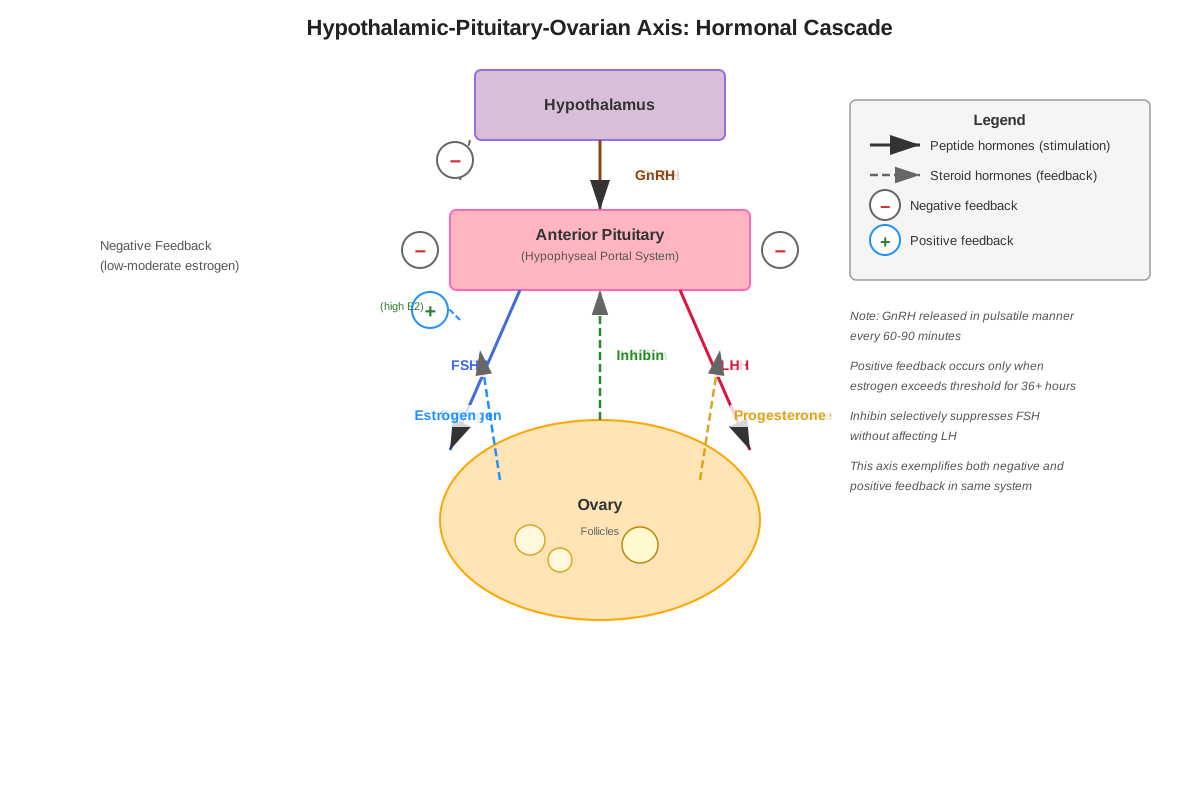
The menstrual cycle is orchestrated by a hormonal cascade beginning in the hypothalamus. Gonadotropin-releasing hormone (GnRH) is secreted in pulsatile fashion from hypothalamic neurons and travels through the hypothalamic-hypophyseal portal system to the anterior pituitary. GnRH stimulates specialized cells in the anterior pituitary to secrete two gonadotropins: follicle-stimulating hormone (FSH) and luteinizing hormone (LH). These peptide hormones enter systemic circulation and act on the ovaries to regulate follicle development and steroid hormone production.
The ovaries respond to FSH and LH by producing steroid hormones, primarily estrogen (estradiol) and progesterone. These hormones exert effects on target tissues including the uterus, but also provide feedback to the hypothalamus and pituitary. This three-tier system (hypothalamus → pituitary → ovary) with feedback loops exemplifies the hierarchical organization of endocrine control that appears throughout human physiology.
The Ovarian Cycle: Follicular Phase
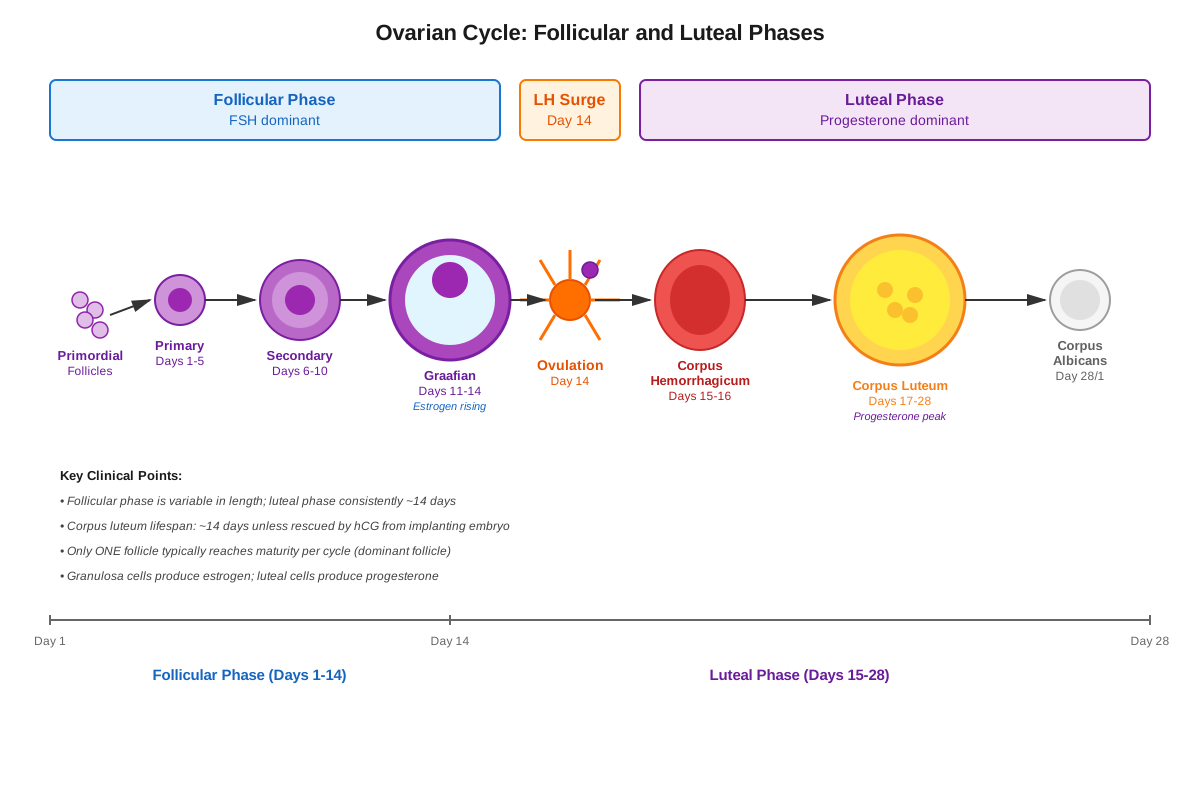
The ovarian cycle describes changes occurring in the ovary and is divided into the follicular phase and luteal phase, separated by ovulation. The follicular phase begins on day 1 of menstruation and lasts approximately 14 days (though this phase shows the most variability between individuals). During this phase, FSH stimulates the development of multiple ovarian follicles, each containing an immature oocyte surrounded by granulosa cells and theca cells.
As follicles develop, granulosa cells proliferate and begin producing estrogen. The synthesis requires cooperation between cell types: LH stimulates theca cells to produce androgens from cholesterol, and these androgens diffuse to granulosa cells where FSH-stimulated aromatase converts them to estrogen. This "two-cell, two-gonadotropin" model is a high-yield concept for the MCAT. Rising estrogen levels exert negative feedback on the hypothalamus and pituitary, suppressing FSH secretion. This creates a selection process where only the most developed follicle (the dominant follicle) survives, while others undergo atresia.
Ovulation: The LH Surge
Ovulation represents the transition between follicular and luteal phases and occurs around day 14 of a typical 28-day cycle. As the dominant follicle matures, it produces increasingly high levels of estrogen. When estrogen reaches a critical threshold and remains elevated for approximately 48 hours, it triggers a unique positive feedback effect on the anterior pituitary, causing a dramatic surge in LH secretion (and to a lesser extent, FSH). This LH surge is the trigger for ovulation.
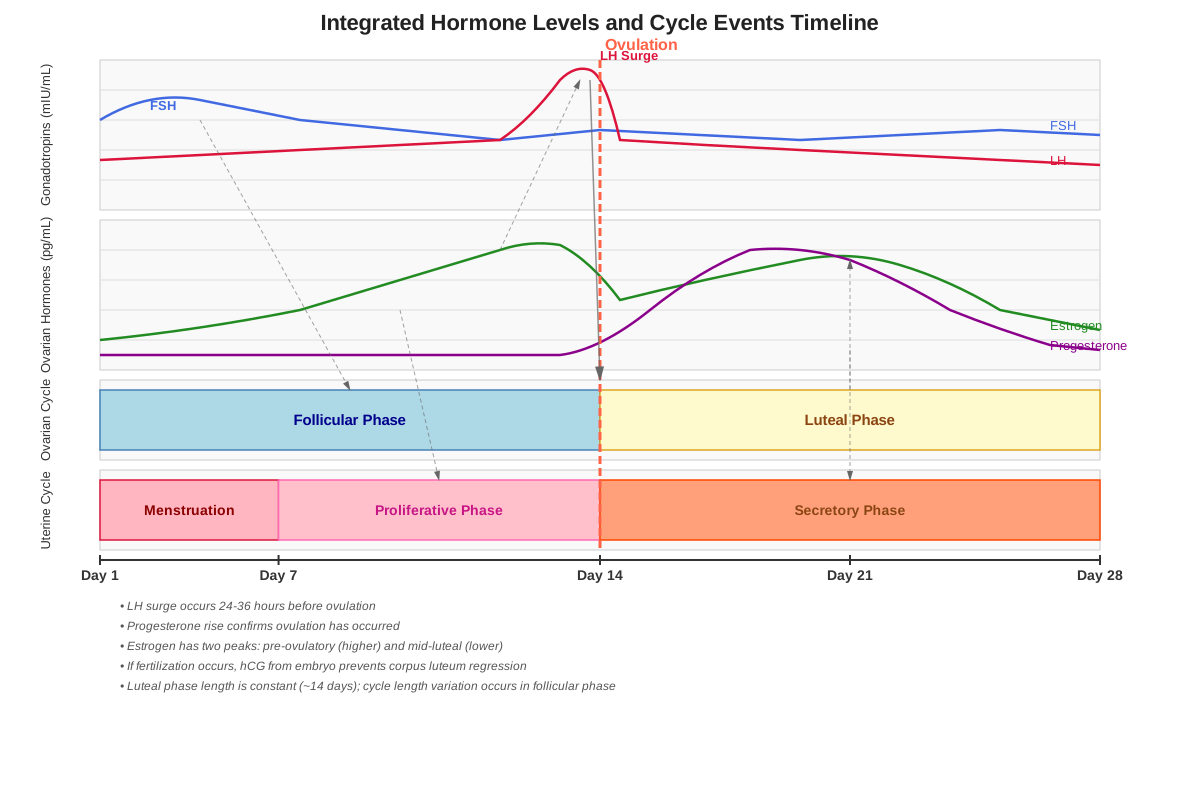
The LH surge initiates a cascade of events in the dominant follicle: resumption of meiosis I in the oocyte (which had been arrested in prophase I since fetal development), weakening of the follicle wall through enzymatic breakdown, and eventual rupture of the follicle to release the secondary oocyte into the fallopian tube. The LH surge occurs approximately 24-36 hours before ovulation, making LH detection the basis for ovulation predictor tests. This positive feedback mechanism is one of the few examples in human physiology where rising hormone levels stimulate further hormone release rather than suppressing it.
The Ovarian Cycle: Luteal Phase
Following ovulation, the luteal phase begins and lasts approximately 14 days (this phase shows much less variability than the follicular phase). The remnant of the ruptured follicle, under continued LH stimulation, transforms into the corpus luteum ("yellow body"), a temporary endocrine structure that secretes large amounts of progesterone and moderate amounts of estrogen. Progesterone is the dominant hormone of the luteal phase and serves to prepare the uterus for potential embryo implantation.
The corpus luteum has a finite lifespan of about 14 days unless "rescued" by human chorionic gonadotropin (hCG) from an implanting embryo. If pregnancy does not occur, the corpus luteum degenerates into the corpus albicans ("white body"), causing progesterone and estrogen levels to plummet. This hormonal withdrawal removes negative feedback on the hypothalamus and pituitary, allowing FSH to rise again and initiate a new cycle. The relatively fixed 14-day luteal phase explains why cycle length variation occurs primarily in the follicular phase.
The Uterine Cycle: Menstrual Phase
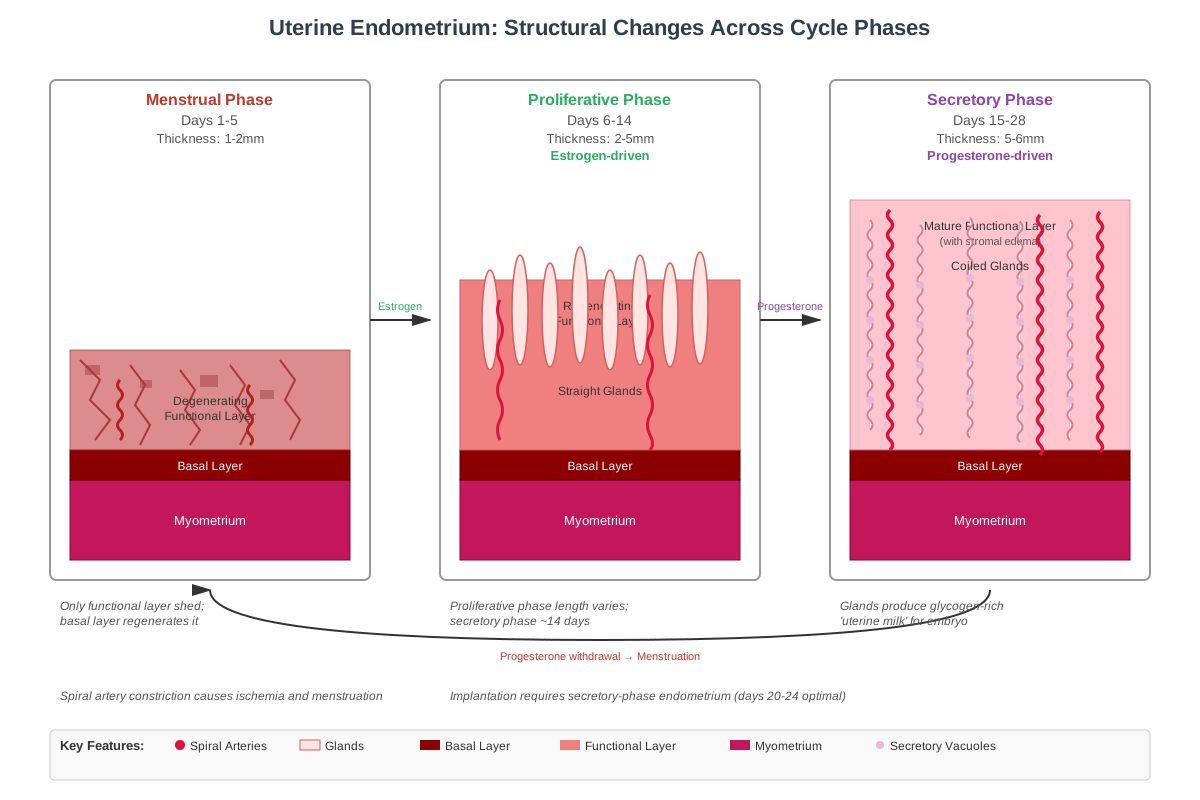
The uterine cycle describes changes in the endometrium (uterine lining) and consists of the menstrual, proliferative, and secretory phases. The menstrual phase (days 1-5) occurs when progesterone and estrogen levels drop due to corpus luteum degeneration. Without hormonal support, the functional layer of the endometrium (stratum functionalis) undergoes ischemia, necrosis, and sloughing. This tissue, along with blood from damaged spiral arteries, is expelled as menstrual flow. The basal layer (stratum basalis) remains intact and serves as the source for endometrial regeneration. Menstruation marks both the end of one cycle and the beginning of the next.
The Uterine Cycle: Proliferative Phase
The proliferative phase (days 6-14) corresponds temporally with the follicular phase of the ovarian cycle and is driven by rising estrogen levels from developing follicles. Estrogen stimulates rapid proliferation of endometrial cells, causing the functional layer to thicken from approximately 1-2 mm to 3-5 mm. Glands elongate, spiral arteries develop, and the tissue becomes increasingly vascularized. This phase prepares the uterus for potential embryo implantation by creating a thick, receptive endometrium. The proliferative phase ends at ovulation.
The Uterine Cycle: Secretory Phase
The secretory phase (days 15-28) corresponds with the luteal phase and is dominated by progesterone from the corpus luteum. Progesterone converts the proliferative endometrium into a secretory one optimized for embryo implantation. Endometrial glands become coiled and begin secreting glycogen-rich fluid that would nourish an early embryo. The endometrium reaches maximum thickness (7-10 mm) and becomes edematous. Spiral arteries continue to develop. If implantation does not occur, progesterone withdrawal causes these spiral arteries to constrict, leading to ischemia and the onset of menstruation.
Hormone Summary Table
| Hormone | Source | Primary Target | Main Functions | Cycle Phase |
|---|---|---|---|---|
| GnRH | Hypothalamus | Anterior pituitary | Stimulates FSH and LH release | Throughout cycle (pulsatile) |
| FSH | Anterior pituitary | Ovarian follicles | Stimulates follicle development, estrogen production | Highest in early follicular phase |
| LH | Anterior pituitary | Ovarian follicles, corpus luteum | Triggers ovulation, maintains corpus luteum | Surge at mid-cycle; elevated in luteal phase |
| Estrogen | Ovarian follicles, corpus luteum | Uterus, hypothalamus, pituitary | Endometrial proliferation, feedback regulation | Rises during follicular phase; peaks before ovulation; moderate in luteal phase |
| Progesterone | Corpus luteum | Uterus, hypothalamus, pituitary | Endometrial secretory changes, maintains pregnancy | Dominant in luteal phase |
Feedback Mechanisms
The menstrual cycle demonstrates both negative and positive feedback, making it an excellent model for understanding endocrine regulation. Negative feedback predominates throughout most of the cycle: rising estrogen and progesterone inhibit GnRH, FSH, and LH secretion. This prevents excessive follicle development and maintains hormonal balance. However, the unique positive feedback mechanism occurs at mid-cycle when high estrogen levels (above approximately 200 pg/mL for 48+ hours) switch from inhibiting to stimulating LH release, generating the LH surge that triggers ovulation. Understanding when each feedback type operates is crucial for predicting the effects of hormonal manipulations.
Concept Relationships
The menstrual cycle concepts form an integrated network of cause-and-effect relationships. The cycle begins with GnRH pulsatility → FSH/LH secretion → follicle development → estrogen production. Rising estrogen creates a negative feedback loop that suppresses FSH → allows dominant follicle selection. Continued estrogen rise eventually triggers positive feedback → LH surge → ovulation. Post-ovulation, LH maintains corpus luteum → progesterone secretion → endometrial secretory changes. Without pregnancy, corpus luteum degeneration → progesterone/estrogen withdrawal → menstruation → FSH rise → new cycle initiation.
The ovarian and uterine cycles are temporally synchronized but mechanistically distinct: ovarian events (follicular phase, ovulation, luteal phase) produce hormones that drive uterine events (menstrual, proliferative, secretory phases). Specifically, follicular phase estrogen → proliferative phase endometrium, and luteal phase progesterone → secretory phase endometrium. This relationship demonstrates how endocrine signals coordinate distant organ systems.
Connections to prerequisite topics include the hypothalamic-pituitary axis (the menstrual cycle is one specific application of this general organizational principle), steroid hormone mechanisms (estrogen and progesterone act through nuclear receptors to alter gene transcription), and feedback regulation (both types appear in this single system). Related topics that build on menstrual cycle knowledge include pregnancy (where hCG rescues the corpus luteum), lactation (where prolactin suppresses GnRH), menopause (where follicle depletion eliminates estrogen production), and hormonal contraception (which manipulates the cycle's feedback mechanisms).
Quick check — test yourself on Menstrual cycle so far.
Try Flashcards →High-Yield Facts
⭐ The LH surge occurs approximately 24-36 hours before ovulation and is triggered by sustained high estrogen levels through positive feedback
⭐ The luteal phase is consistently 14 days, while the follicular phase varies in length, explaining differences in cycle length between individuals
⭐ Progesterone is the dominant hormone of the luteal phase and is responsible for converting proliferative endometrium to secretory endometrium
⭐ FSH stimulates follicle development and aromatase activity in granulosa cells, while LH stimulates androgen production in theca cells and maintains the corpus luteum
⭐ Menstruation occurs due to progesterone and estrogen withdrawal when the corpus luteum degenerates in the absence of pregnancy
- Estrogen levels rise during the follicular phase, peak just before ovulation, drop briefly, then rise again moderately during the luteal phase
- The corpus luteum is maintained by LH in non-pregnant cycles and by hCG (which mimics LH) if pregnancy occurs
- Ovulation releases a secondary oocyte arrested in metaphase II; meiosis II completes only if fertilization occurs
- The two-cell, two-gonadotropin model explains estrogen synthesis: theca cells produce androgens (LH-stimulated) → granulosa cells convert to estrogen (FSH-stimulated)
- GnRH must be secreted in pulsatile fashion; continuous GnRH exposure paradoxically suppresses FSH and LH (the basis for some contraceptives and fertility treatments)
- The endometrial functional layer (stratum functionalis) is shed during menstruation, while the basal layer (stratum basalis) regenerates it
- Negative feedback by estrogen and progesterone on the hypothalamus and pituitary predominates except during the late follicular phase when positive feedback occurs
Common Misconceptions
Misconception: Ovulation occurs exactly at day 14 of every menstrual cycle.
Correction: While day 14 is typical for a 28-day cycle, ovulation timing varies because the follicular phase length varies between individuals and cycles. The luteal phase is consistently 14 days, so in a 35-day cycle, ovulation occurs around day 21, not day 14. Always count backward 14 days from expected menstruation to estimate ovulation.
Misconception: Estrogen and progesterone always inhibit FSH and LH through negative feedback.
Correction: While negative feedback predominates, high sustained estrogen levels (above threshold for 48+ hours) in the late follicular phase trigger positive feedback, causing the LH surge. This is a unique exception to the typical negative feedback pattern and is essential for ovulation to occur.
Misconception: The corpus luteum forms from the released oocyte after ovulation.
Correction: The corpus luteum forms from the remnant follicle cells (granulosa and theca cells) that remain in the ovary after the oocyte is released. The oocyte itself travels into the fallopian tube and has no role in corpus luteum formation.
Misconception: Progesterone levels are highest during the follicular phase because it prepares for ovulation.
Correction: Progesterone levels are very low during the follicular phase. Progesterone is the dominant hormone of the luteal phase, secreted by the corpus luteum after ovulation has already occurred. It prepares the endometrium for implantation, not for ovulation.
Misconception: Menstruation occurs because the uterus is "shedding toxins" or "cleansing itself."
Correction: Menstruation is a physiological consequence of progesterone and estrogen withdrawal causing endometrial ischemia and tissue breakdown. It represents the shedding of an endometrium that was prepared for pregnancy but is no longer needed because implantation did not occur.
Misconception: FSH and LH are always secreted in equal amounts throughout the cycle.
Correction: FSH and LH have distinct secretion patterns. FSH is highest in the early follicular phase, while LH shows a dramatic mid-cycle surge and remains moderately elevated during the luteal phase. Their different patterns reflect their different roles in follicle development versus ovulation and corpus luteum maintenance.
Worked Examples
Example 1: Hormone Graph Interpretation
Question: A researcher measures hormone levels throughout a normal menstrual cycle and presents the data as a graph. At day 13, estrogen levels are at their peak, LH shows a sharp spike, FSH shows a moderate increase, and progesterone remains low. At day 21, progesterone is at its highest level, estrogen is moderately elevated, and both LH and FSH are suppressed. What physiological events are occurring at these two time points, and what feedback mechanisms explain the hormone patterns?
Solution:
Day 13 Analysis: The high estrogen with LH surge indicates this is immediately before ovulation (which typically occurs day 14). The dominant follicle has matured and is producing peak estrogen levels. This sustained high estrogen has triggered positive feedback on the anterior pituitary, causing the LH surge (and smaller FSH surge). The LH surge will trigger ovulation within 24-36 hours. Progesterone remains low because the corpus luteum has not yet formed—it only forms after ovulation from the remnant follicle. The physiological event is the transition from follicular phase to ovulation.
Day 21 Analysis: This is mid-luteal phase (approximately 7 days post-ovulation). The corpus luteum is fully functional and secreting large amounts of progesterone (the dominant hormone of this phase) and moderate estrogen. These elevated steroid hormones exert negative feedback on the hypothalamus and anterior pituitary, suppressing GnRH, FSH, and LH secretion. This suppression prevents new follicles from developing while the body "waits" to see if pregnancy occurs. The physiological event is endometrial secretory transformation in preparation for potential implantation.
Feedback Mechanism Summary: Day 13 demonstrates positive feedback (high estrogen stimulating LH surge), while day 21 demonstrates negative feedback (high progesterone and estrogen suppressing gonadotropins). This example illustrates how the same hormone (estrogen) can exert opposite feedback effects depending on concentration, duration, and cycle phase.
Example 2: Clinical Application
Question: A 28-year-old woman presents with irregular menstrual cycles and difficulty conceiving. Laboratory tests reveal elevated LH, elevated androgens, and multiple small follicles visible on ovarian ultrasound. Her FSH levels are normal to low-normal. Based on menstrual cycle physiology, explain the likely hormonal disruption and why ovulation is not occurring.
Solution:
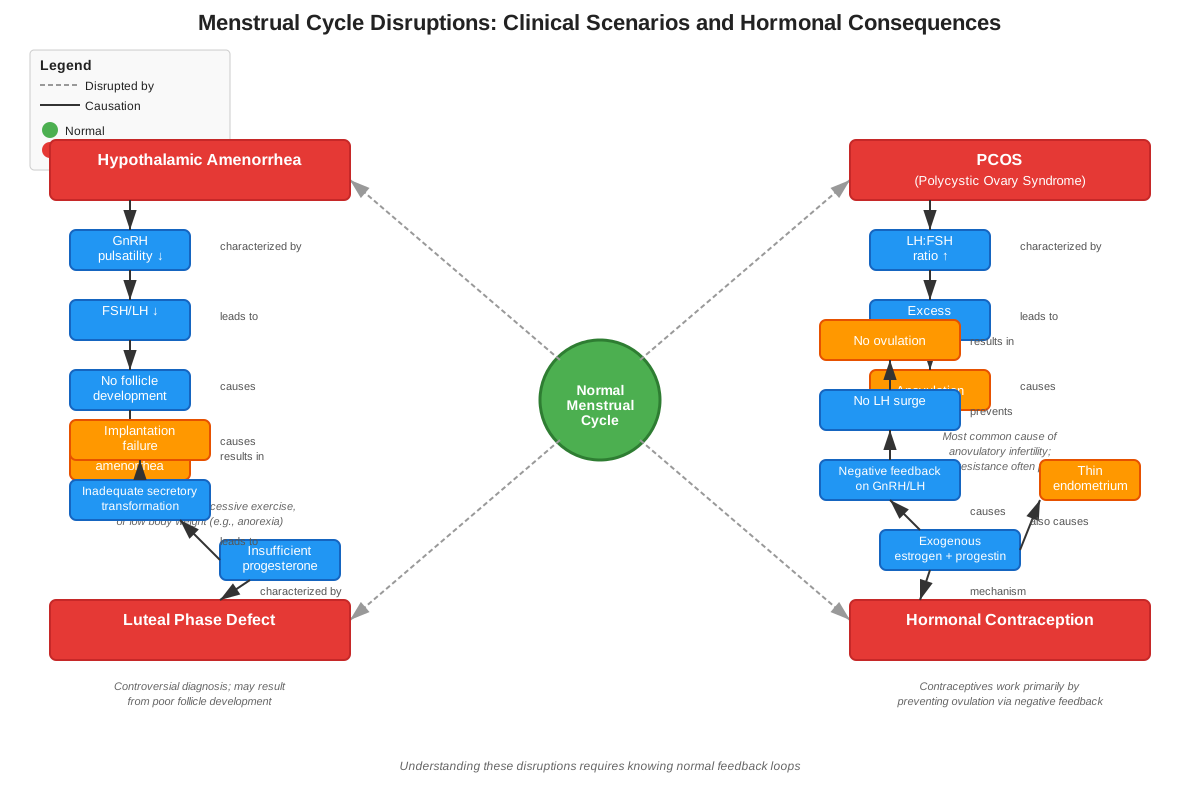
This clinical presentation suggests polycystic ovary syndrome (PCOS), which can be understood through menstrual cycle physiology. The key abnormality is the elevated LH relative to FSH (often described as an increased LH:FSH ratio).
Hormonal Disruption: In normal cycles, FSH stimulates follicle development during the follicular phase. However, this patient has relatively low FSH, which means follicles receive inadequate stimulation to develop fully. Meanwhile, elevated LH excessively stimulates theca cells to produce androgens. Without sufficient FSH-stimulated aromatase activity in granulosa cells, these androgens are not efficiently converted to estrogen. The result is hyperandrogenism (elevated male hormones).
Why Ovulation Fails: Multiple follicles begin development but none receives adequate FSH stimulation to become a dominant follicle. Without a dominant follicle, estrogen levels never reach the threshold needed to trigger positive feedback and generate an LH surge. Without an LH surge, ovulation cannot occur. The multiple small follicles remain arrested in development, creating the "polycystic" appearance on ultrasound (though these are actually follicles, not true cysts).
Connection to Cycle Physiology: This demonstrates how disrupting the normal FSH-driven follicular phase prevents the entire cascade of events (dominant follicle selection → high estrogen → LH surge → ovulation → corpus luteum formation → progesterone secretion). The menstrual cycle's dependence on precise hormonal timing and thresholds means that disrupting early events prevents all subsequent events from occurring properly.
Exam Strategy
When approaching MCAT questions on the menstrual cycle, first identify which phase of the cycle is being described or asked about. Look for temporal clues (day of cycle), hormone level clues (which hormones are high or low), or structural clues (follicle development, endometrial appearance). Once you identify the phase, you can predict which hormones should be elevated and which events should be occurring.
Trigger words and phrases to watch for include:
- "LH surge" or "LH peak" → indicates ovulation is imminent (24-36 hours away)
- "Corpus luteum" → indicates luteal phase; expect high progesterone
- "Dominant follicle" → indicates late follicular phase; expect rising estrogen
- "Secretory endometrium" → indicates luteal phase under progesterone influence
- "Proliferative endometrium" → indicates follicular phase under estrogen influence
- "Positive feedback" → refers specifically to the estrogen-LH surge relationship
- "Day 1 of cycle" → defined as the first day of menstruation
For process-of-elimination strategies, remember these rules:
- If progesterone is high, you must be in the luteal phase (it's only high after ovulation)
- If the question mentions ovulation occurring, LH must have surged (it's the only trigger)
- If FSH is being suppressed, estrogen and/or progesterone must be elevated (negative feedback)
- If the corpus luteum is mentioned, ovulation has already occurred
- If menstruation is occurring, both estrogen and progesterone must be low
Time allocation: Most menstrual cycle questions can be answered in 60-90 seconds if you've mastered the hormone patterns and phase characteristics. Don't get bogged down trying to remember exact hormone concentrations—focus on relative levels (high, low, rising, falling) and temporal relationships. If a passage presents hormone graphs, spend 30-45 seconds orienting yourself to which line represents which hormone before attempting questions.
For questions involving experimental manipulations (e.g., "What would happen if progesterone were administered during the follicular phase?"), trace through the feedback loops systematically: identify the direct effect of the manipulation, then the feedback consequences, then the downstream effects on other hormones and structures.
Memory Techniques
Mnemonic for hormone sequence: "Folks Eventually Love Pizza" represents the dominant hormones in cycle order:
- FSH (early follicular phase)
- Estrogen (late follicular phase)
- LH surge (ovulation)
- Progesterone (luteal phase)
Mnemonic for LH surge trigger: "Positive Estrogen Elevation Produces Surge" (PEEPS) reminds you that Positive feedback from Estrogen Elevation Produces the LH Surge.
Visualization strategy for phases: Picture the cycle as a mountain hike:
- Ascent (follicular phase): You're climbing up, working hard (follicles developing), getting warmer (estrogen rising)
- Peak (ovulation): You reach the summit with a burst of energy (LH surge), then release a flag (oocyte release)
- Descent (luteal phase): You're coming down a different path (corpus luteum), it's cooler but you're well-supplied (progesterone providing resources)
- Base camp (menstruation): You return to start, rest, and prepare for the next climb
Acronym for endometrial phases: "Men Prefer Sports" = Menstrual → Proliferative → Secretory (the order of uterine cycle phases)
Memory aid for luteal phase length: "Luteal Lasts 14" (the two L's look like 14 sideways) reminds you that the luteal phase is consistently 14 days.
Conceptual anchor: Remember that the menstrual cycle is fundamentally about "preparing a room for a guest": the follicular/proliferative phase is building and decorating the room (estrogen-driven), ovulation is sending the invitation (LH surge), the luteal/secretory phase is stocking the room with supplies (progesterone-driven), and menstruation is clearing everything out when the guest doesn't arrive (hormone withdrawal).
Summary
The menstrual cycle is a hormonally orchestrated, approximately 28-day process that prepares the female reproductive system for pregnancy. It involves coordinated changes in the ovaries (follicular phase, ovulation, luteal phase) and uterus (menstrual, proliferative, secretory phases) regulated by the hypothalamic-pituitary-ovarian axis. GnRH from the hypothalamus stimulates FSH and LH from the anterior pituitary, which drive follicle development and steroid hormone production in the ovaries. Rising estrogen during the follicular phase promotes endometrial proliferation and, when sustained at high levels, triggers positive feedback causing the LH surge that induces ovulation. After ovulation, the corpus luteum secretes progesterone, which converts the endometrium to a secretory state optimal for implantation. Without pregnancy, corpus luteum degeneration causes hormone withdrawal, menstruation, and cycle reinitiation. Understanding the temporal relationships between hormones, the switch from negative to positive feedback at mid-cycle, and the cause-and-effect connections between ovarian and uterine events is essential for MCAT success on this topic.
Key Takeaways
- The menstrual cycle integrates hypothalamic, pituitary, ovarian, and uterine function through hormonal signaling and feedback loops
- FSH drives follicular phase events (follicle development, estrogen production), while LH triggers ovulation and maintains the corpus luteum
- The LH surge, triggered by sustained high estrogen through positive feedback, is the obligate signal for ovulation
- Progesterone from the corpus luteum dominates the luteal phase and prepares the endometrium for implantation
- The luteal phase is consistently 14 days; cycle length variation occurs in the follicular phase
- Menstruation results from estrogen and progesterone withdrawal when the corpus luteum degenerates without pregnancy
- Both negative feedback (predominant) and positive feedback (mid-cycle only) regulate the cycle, making it an ideal model for understanding endocrine control mechanisms
Related Topics
Pregnancy and Implantation: Understanding how hCG from the implanting embryo rescues the corpus luteum and maintains progesterone production builds directly on menstrual cycle knowledge. This topic explains what happens when the cycle is interrupted by successful fertilization.
Hormonal Contraception: Birth control pills, patches, and injections work by manipulating the feedback mechanisms of the menstrual cycle. Mastering normal cycle physiology enables understanding of how synthetic hormones prevent ovulation, alter cervical mucus, and thin the endometrium.
Menopause and Reproductive Aging: The cessation of menstrual cycles due to ovarian follicle depletion demonstrates what happens when the ovarian component of the cycle fails. This topic connects to aging, hormone replacement therapy, and long-term health consequences of estrogen deficiency.
Male Reproductive Physiology: The hypothalamic-pituitary-gonadal axis in males parallels the female system, with GnRH, FSH, and LH playing analogous roles. Comparing and contrasting male and female reproductive endocrinology deepens understanding of both systems.
Steroid Hormone Synthesis and Mechanism: The menstrual cycle provides a physiological context for understanding how cholesterol-derived hormones are synthesized, how they circulate bound to proteins, and how they act through nuclear receptors to alter gene transcription.
Practice CTA
Now that you've mastered the core concepts of the menstrual cycle, it's time to solidify your understanding through active practice. Attempt the practice questions to test your ability to apply this knowledge to MCAT-style scenarios, and use the flashcards to reinforce the high-yield facts and hormone relationships. Remember, understanding the menstrual cycle isn't just about memorizing hormone names—it's about tracing cause-and-effect relationships and predicting physiological outcomes. You've built a strong foundation; now prove to yourself that you can use it under exam conditions. Your ability to integrate endocrine principles, feedback mechanisms, and temporal relationships will serve you well not just on menstrual cycle questions, but across all of reproductive and endocrine physiology. Keep pushing forward!
Sign up free to keep reading
Create a free AnvayaPrep account to finish this MCAT guide on Menstrual cycle — plus flashcards and practice questions.