Overview
Humanities passages represent one of the two major passage types encountered in the Critical Analysis and Reasoning Skills (CARS) section of the MCAT, alongside social sciences passages. These passages draw from disciplines including philosophy, ethics, art history, literature, cultural studies, linguistics, archaeology, and religious studies. Unlike the science sections of the MCAT, CARS Skills require test-takers to analyze complex arguments, evaluate reasoning, and synthesize information without relying on prior content knowledge. Humanities passages specifically challenge students to engage with abstract concepts, normative claims, and interpretive frameworks that may be unfamiliar or counterintuitive.
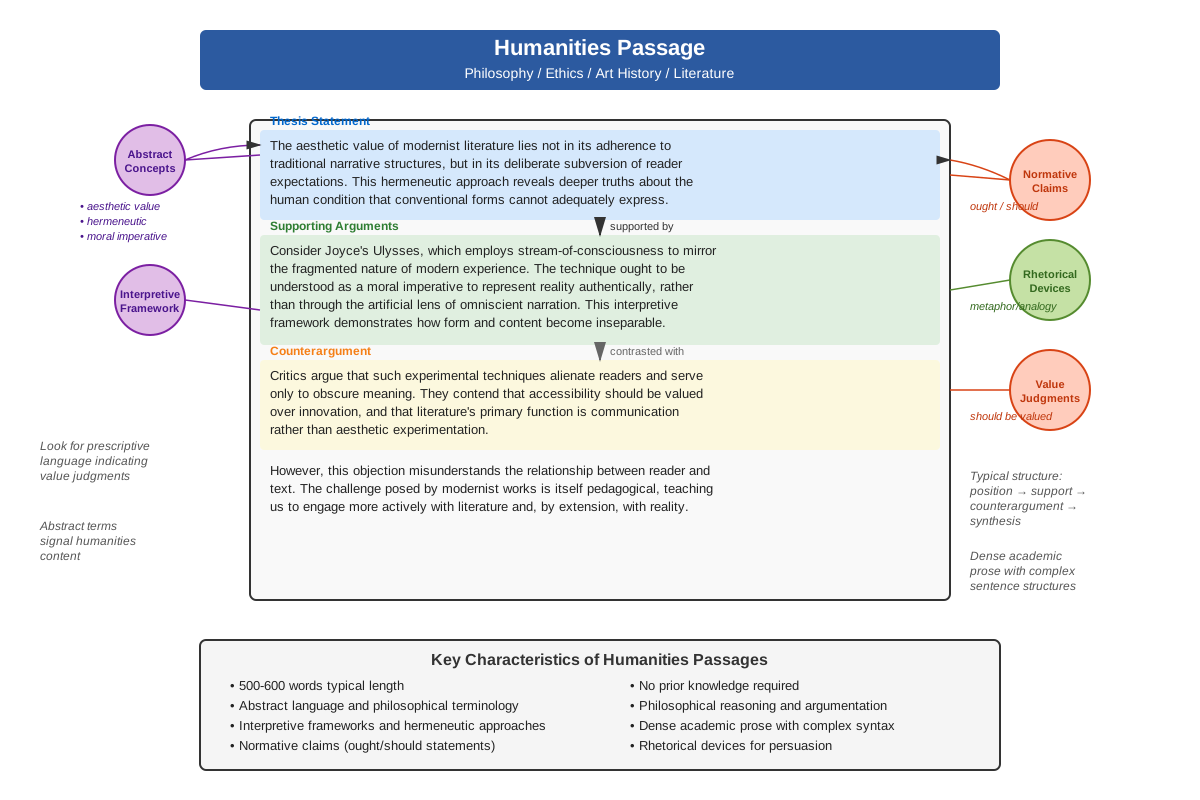
The Humanities passages MCAT presents are deliberately dense and sophisticated, often featuring academic prose that explores theoretical debates, aesthetic judgments, or philosophical positions. These passages typically contain 500-600 words and are followed by 5-7 questions that assess comprehension, analysis, and reasoning abilities. Success with humanities content requires developing comfort with ambiguity, recognizing authorial perspective and tone, and distinguishing between descriptive claims (what is) and prescriptive claims (what ought to be). The ability to navigate these passages efficiently while maintaining accuracy separates high-scoring test-takers from those who struggle with the CARS section.
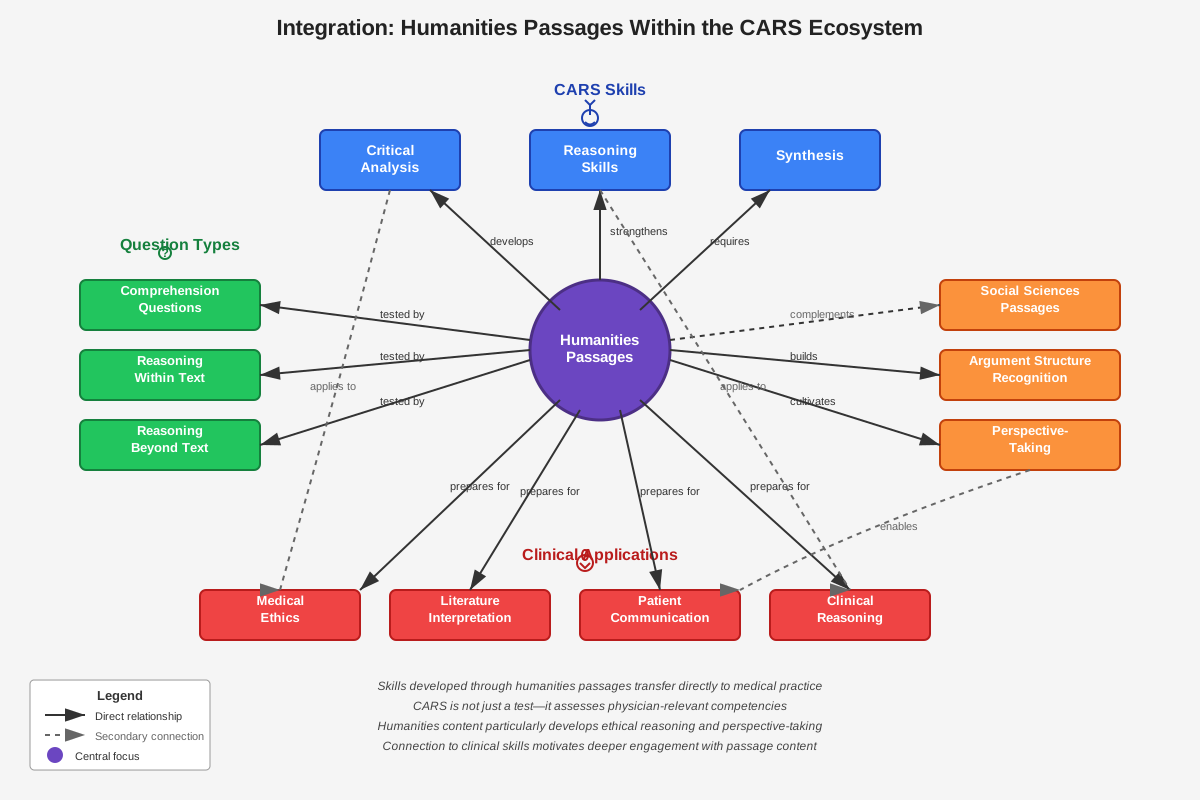
Understanding Humanities passages Critical Analysis and Reasoning Skills is essential because approximately 50% of CARS passages fall into this category, making them unavoidable on test day. Moreover, humanities passages often prove more challenging for STEM-focused pre-medical students who may have limited exposure to philosophical reasoning or literary analysis. Mastering this passage type requires specific strategies for handling abstract language, tracking complex arguments, and managing the interpretive nature of humanities discourse. This topic connects directly to broader Critical Analysis and Reasoning Skills competencies including argument analysis, inference-making, and critical evaluation—skills that physicians use daily when interpreting clinical literature, considering ethical dilemmas, and communicating with diverse patient populations.
Learning Objectives
- [ ] Define Humanities passages using accurate Critical Analysis and Reasoning Skills terminology
- [ ] Explain why Humanities passages matter for the MCAT
- [ ] Apply Humanities passages strategies to exam-style questions
- [ ] Identify common mistakes related to Humanities passages
- [ ] Connect Humanities passages to related Critical Analysis and Reasoning Skills concepts
- [ ] Distinguish between humanities and social sciences passage characteristics
- [ ] Analyze the structure and argumentative patterns typical of humanities discourse
- [ ] Evaluate authorial purpose and rhetorical strategies in humanities texts
- [ ] Synthesize information from multiple viewpoints presented in philosophical or aesthetic arguments
Prerequisites
- Basic reading comprehension: Ability to understand college-level prose is essential for processing the sophisticated vocabulary and sentence structures in humanities passages
- Familiarity with argument structure: Understanding premises, conclusions, and supporting evidence enables identification of logical relationships within passages
- General CARS question types: Knowledge of question categories (comprehension, reasoning within text, reasoning beyond text) allows efficient question approach
- Time management fundamentals: Basic pacing strategies ensure adequate time allocation across all CARS passages
Why This Topic Matters
Humanities passages assess critical thinking skills that extend far beyond test day. Physicians regularly encounter situations requiring philosophical reasoning—weighing competing ethical principles in end-of-life care, interpreting ambiguous clinical guidelines, or understanding how cultural beliefs shape patient decision-making. The analytical skills developed through humanities passage practice translate directly to evaluating medical literature, where distinguishing between correlation and causation, identifying unstated assumptions, and recognizing logical fallacies prove essential.
From an exam perspective, humanities passages appear in approximately 4-5 of the 9 CARS passages on any given MCAT administration. Statistical analysis of released MCAT materials reveals that humanities passages generate slightly lower average accuracy rates compared to social sciences passages, particularly among students with exclusively STEM backgrounds. Questions stemming from humanities passages frequently test inference-making (30-35% of questions), application of passage concepts to new scenarios (25-30%), and evaluation of authorial claims (20-25%). The remaining questions assess direct comprehension and retrieval of passage details.
Common manifestations of humanities content include: passages defending or critiquing aesthetic theories (what makes art valuable?), philosophical arguments about knowledge, consciousness, or ethics, historical analyses of cultural movements or intellectual traditions, examinations of linguistic theory or language evolution, and explorations of religious or spiritual concepts from academic perspectives. Recognizing these patterns helps students activate appropriate reading strategies and anticipate question types.
Core Concepts
Defining Humanities Passages
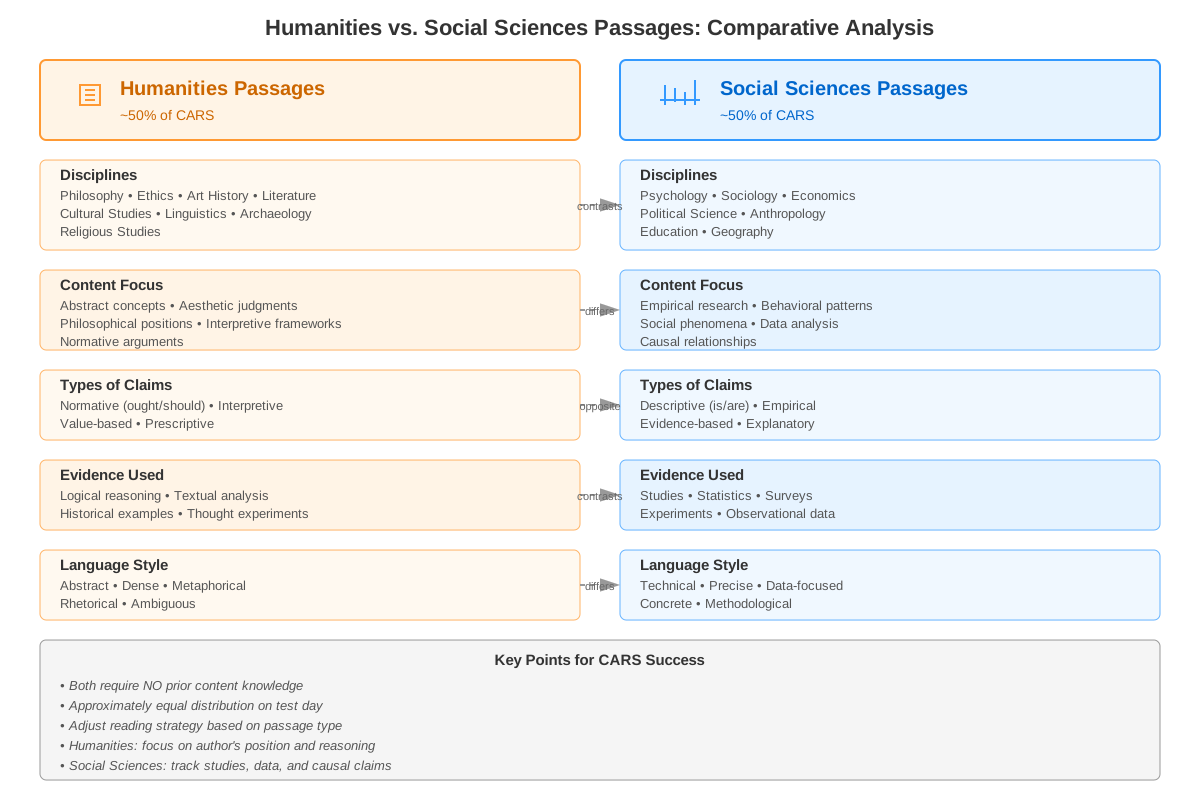
Humanities passages are CARS passages drawn from disciplines that study human culture, thought, and expression through interpretive and analytical frameworks rather than empirical methods. These passages explore questions of meaning, value, interpretation, and human experience. Unlike social sciences passages that typically present research findings or data-driven arguments, humanities passages engage with theoretical debates, normative claims, and subjective judgments that resist simple verification.
The defining characteristics include: abstract conceptual vocabulary (epistemology, aesthetics, hermeneutics), normative language expressing what should or ought to be, interpretive claims about meaning or significance, engagement with philosophical positions or schools of thought, and arguments that rely on logical reasoning and conceptual analysis rather than empirical evidence.
Disciplinary Sources
Humanities passages originate from several core disciplines:
| Discipline | Typical Content | Key Features |
|---|---|---|
| Philosophy | Arguments about knowledge, reality, ethics, mind | Heavy use of logical reasoning, thought experiments, conceptual distinctions |
| Art History/Aesthetics | Theories of beauty, artistic value, interpretation | Subjective judgments, historical context, critical frameworks |
| Literary Criticism | Analysis of texts, narrative theory, authorial intent | Close reading, interpretive methods, theoretical lenses |
| Cultural Studies | Examination of cultural practices, meanings, power | Interdisciplinary approaches, social critique, representation |
| Linguistics | Language structure, meaning, evolution | Technical terminology, theoretical models, descriptive analysis |
| Religious Studies | Academic study of belief systems, practices, texts | Comparative approaches, historical analysis, theological concepts |
Argument Patterns in Humanities Passages
Humanities passages employ distinctive argumentative structures. Dialectical arguments present a thesis, consider objections or alternative views, then defend or modify the original position. This pattern appears frequently in philosophical passages where authors engage with opposing schools of thought. Interpretive arguments propose a particular reading or understanding of a text, artwork, or cultural phenomenon, supporting this interpretation with textual evidence and logical reasoning.
Normative arguments make claims about what should be valued, how things ought to be understood, or what constitutes proper practice. These arguments often begin with general principles and apply them to specific cases, or conversely, build from particular examples toward broader conclusions. Recognizing these patterns helps predict passage organization and anticipate the author's rhetorical moves.
Authorial Voice and Perspective
Humanities passages frequently feature strong authorial presence. Unlike scientific writing that strives for objectivity, humanities authors often explicitly advocate for particular positions, critique opposing views, and use rhetorical devices to persuade readers. Identifying the author's purpose—whether to defend a theory, critique a tradition, propose a new interpretation, or synthesize competing views—proves crucial for answering questions about main ideas and authorial attitude.
The tone of humanities passages ranges from neutral and explanatory to passionate and polemical. Authors may employ irony, rhetorical questions, or vivid examples to advance their arguments. Recognizing tonal shifts helps distinguish the author's own views from positions being described or critiqued.
Abstract Concepts and Technical Vocabulary
Humanities passages introduce specialized terminology that may be unfamiliar: phenomenology (the study of conscious experience), semiotics (the study of signs and symbols), ontology (the study of being and existence), hermeneutics (the theory of interpretation). Rather than memorizing definitions, successful test-takers use context clues to understand how these terms function within the passage's argument.
Abstract concepts in humanities passages often lack concrete referents. A passage might discuss "the nature of aesthetic experience" or "the relationship between language and thought" without providing tangible examples. Developing comfort with abstraction requires practice translating complex ideas into simpler language and creating mental models of relationships between concepts.
Question Types and Humanities Content
Certain question types appear more frequently with humanities passages. Inference questions ask what the author would likely agree with based on passage reasoning. Application questions require extending passage concepts to new scenarios—for example, applying an aesthetic theory to a novel artwork. Strengthen/Weaken questions present new information and ask how it affects the passage argument.
Tone and attitude questions appear regularly with humanities content because authorial perspective is often central to the passage. These questions require careful attention to word choice, rhetorical strategies, and the author's treatment of different viewpoints. Meaning-in-context questions test understanding of how specific terms or phrases function within the passage's argumentative structure.
Handling Counterarguments and Multiple Perspectives
Humanities passages frequently present multiple viewpoints. An author might describe a traditional theory, explain criticisms of that theory, then propose a synthesis or alternative. Tracking these shifts requires careful attention to transition words and phrases: "however," "critics argue," "on the other hand," "by contrast," "proponents claim."
Creating a mental map of positions helps maintain clarity: Position A holds X, Position B objects that Y, the author argues Z. Many wrong answer choices exploit confusion about whose view is being described, making this tracking essential for accuracy.
Concept Relationships
The core concepts within humanities passages form an interconnected system. Disciplinary sources determine the typical argument patterns employed—philosophical passages favor dialectical structures while literary criticism uses interpretive frameworks. These argument patterns shape how authorial voice manifests, with polemical pieces featuring stronger advocacy than explanatory surveys. The abstract concepts and technical vocabulary serve as building blocks for arguments, requiring readers to track how terms are defined and deployed throughout the passage.
Understanding these relationships enables efficient reading. Recognizing a passage as philosophical immediately activates expectations about dialectical structure and normative claims. Identifying strong authorial voice signals the importance of tracking the author's position versus described alternatives. This topic connects to prerequisite knowledge of argument structure by applying those general principles to the specific context of humanities discourse. The ability to distinguish humanities from social sciences passages builds on understanding these distinctive features—social sciences passages emphasize empirical evidence and research findings, while humanities passages prioritize conceptual analysis and interpretive reasoning.
The relationship map flows as follows: Disciplinary source → determines typical argument patterns → shapes authorial voice and rhetorical strategies → employs abstract concepts and technical vocabulary → generates specific question types → requires targeted reading and analysis strategies. Mastering this progression enables students to approach any humanities passage with appropriate expectations and tools.
High-Yield Facts
⭐ Approximately 50% of CARS passages are humanities-based, making them unavoidable on test day
⭐ Humanities passages feature normative claims (what should be) more frequently than descriptive claims (what is), unlike social sciences passages
⭐ The author's perspective is typically more prominent in humanities passages, requiring careful tracking of whose view is being presented
⭐ Abstract vocabulary should be understood through context rather than memorized definitions; passages provide sufficient information to answer questions
⭐ Dialectical structure (thesis → objection → response) is the most common organizational pattern in philosophical humanities passages
- Humanities passages average 500-600 words and generate 5-7 questions, identical to social sciences passages in format
- Inference questions constitute approximately 30-35% of humanities passage questions, the highest proportion of any question type
- Wrong answers frequently misattribute views—confusing what the author believes with positions merely described in the passage
- Tone questions appear more often with humanities content because authorial attitude is central to passage meaning
- Passages never require outside knowledge of humanities disciplines; all necessary information appears within the passage text
Quick check — test yourself on Humanities passages so far.
Try Flashcards →Common Misconceptions
Misconception: Humanities passages require prior knowledge of philosophy, art history, or literary theory to answer questions correctly.
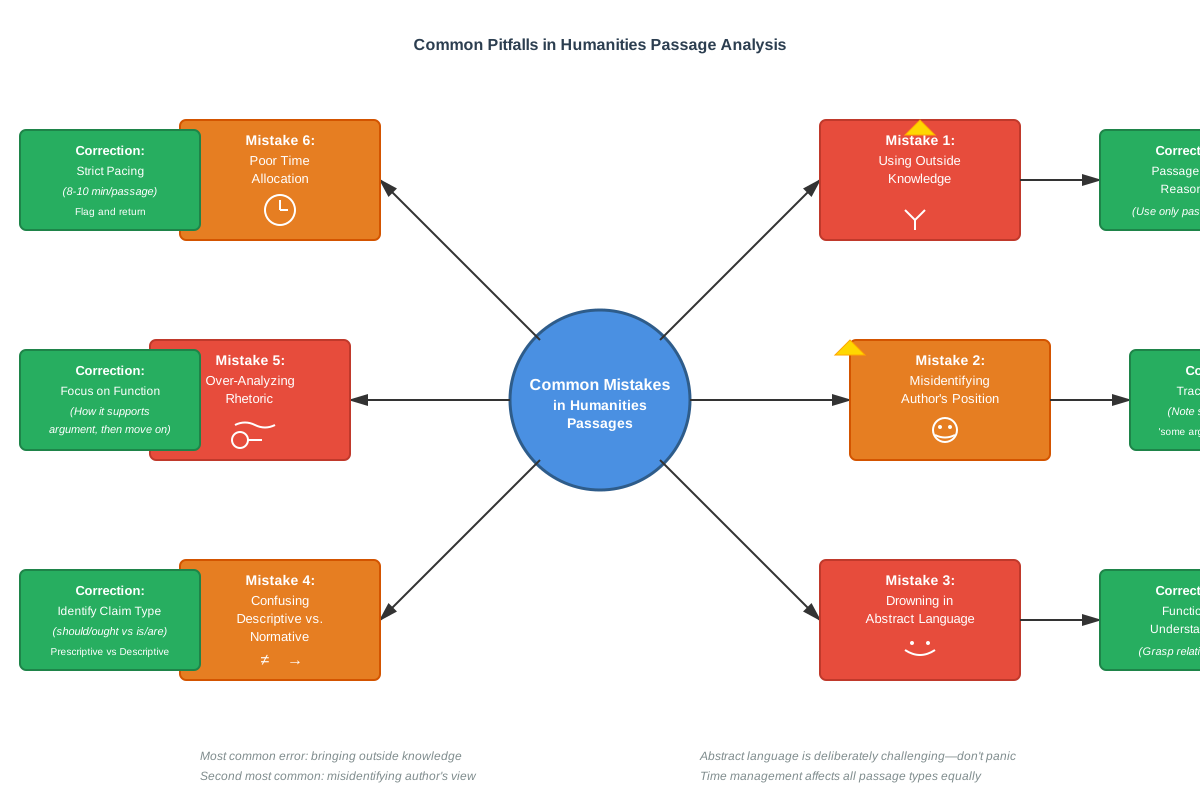
Correction: The MCAT explicitly tests reasoning skills, not content knowledge. Every humanities passage provides all information needed to answer its questions. Students should resist the temptation to apply outside knowledge, which often leads to incorrect answers that seem plausible but aren't supported by passage text.
Misconception: Abstract or unfamiliar vocabulary makes humanities passages impossible to understand fully.
Correction: While humanities passages contain sophisticated terminology, questions never hinge on precise definitions of technical terms. Context clues and the passage's overall argument provide sufficient understanding. Students should focus on how concepts relate to each other and function within the argument rather than memorizing definitions.
Misconception: The subjective nature of humanities topics means multiple answer choices could be correct.
Correction: Despite dealing with interpretive content, CARS questions have definitively correct answers supported by passage evidence. The key is distinguishing between what seems reasonable based on general knowledge versus what the passage specifically states or implies. Correct answers always have direct textual support.
Misconception: Reading humanities passages requires a completely different approach than social sciences passages.
Correction: While humanities passages have distinctive features, the fundamental CARS skills remain constant: identify the main idea, track the argument structure, note the author's perspective, and support answers with passage evidence. The core reading strategy adapts rather than transforms for humanities content.
Misconception: Spending extra time fully understanding every abstract concept ensures higher accuracy.
Correction: Perfectionist reading often backfires by consuming excessive time without improving accuracy. Many abstract concepts serve as supporting details rather than central ideas. Efficient readers identify the passage's main argument and purpose, then return to specific details only when questions require them.
Worked Examples
Example 1: Philosophical Argument Analysis
Passage Excerpt: "Traditional aesthetic theory holds that beauty is an objective property of objects, existing independently of observers. Critics of this view argue that aesthetic judgments vary dramatically across cultures and individuals, suggesting that beauty is subjective—a projection of the observer rather than a feature of the observed. However, this criticism conflates disagreement with subjectivity. People disagree about many objective matters, from scientific theories to historical facts, without this disagreement undermining objectivity. The aesthetic objectivist can acknowledge cultural variation while maintaining that some judgments are more accurate than others, just as disagreement about the age of the Earth doesn't make geological facts subjective."
Question: The author's primary purpose in this passage is to:
A) Demonstrate that aesthetic judgments are entirely subjective
B) Defend aesthetic objectivism against a common criticism
C) Prove that beauty exists independently of all observers
D) Show that cultural variation undermines aesthetic theory
Worked Solution:
Step 1: Identify the passage structure. This follows a classic dialectical pattern: traditional view → criticism → author's response to criticism.
Step 2: Determine the author's position. The author defends aesthetic objectivism (the traditional view) by arguing that the criticism based on cultural variation is flawed.
Step 3: Evaluate each answer choice against the passage:
- Choice A contradicts the author's position; the author argues against subjectivity
- Choice B accurately captures the author's purpose—defending objectivism by refuting the criticism
- Choice C overstates the author's claim; the author acknowledges variation while defending objectivity, not proving absolute independence
- Choice D contradicts the passage; the author argues cultural variation doesn't undermine the theory
Correct Answer: B
This question tests understanding of authorial purpose in a philosophical argument. The key is recognizing the dialectical structure and identifying which position the author ultimately supports. Many students incorrectly choose C because it represents the traditional view described, but the author's specific purpose is responding to criticism, not proving the theory from scratch.
Example 2: Application of Aesthetic Theory
Passage Excerpt: "Formalist art criticism maintains that aesthetic value resides entirely in an artwork's formal properties—line, color, composition, shape—rather than in representational content or social context. A painting's beauty derives from the relationships among visual elements, not from what it depicts or the circumstances of its creation. This approach enables objective aesthetic judgment by focusing on directly perceivable qualities rather than external associations that vary by viewer."
Question: Based on the passage, a formalist critic would most likely evaluate a political protest poster primarily by considering:
A) The historical circumstances that motivated its creation
B) The effectiveness of its message in promoting social change
C) The arrangement of text, imagery, and color within the design
D) The artist's intentions in creating the work
Worked Solution:
Step 1: Identify the key principle of formalism from the passage: aesthetic value comes from formal properties (line, color, composition, shape), not content, context, or external associations.
Step 2: Apply this principle to the new scenario (political protest poster):
- A formalist would ignore historical circumstances (external context)
- A formalist would ignore the message's effectiveness (representational content/social function)
- A formalist would focus on visual elements and their relationships (formal properties)
- A formalist would ignore artist's intentions (external associations)
Step 3: Match the principle to answer choices:
Choice C directly describes formal properties—arrangement of text, imagery, and color—making it the correct application of formalist principles.
Correct Answer: C
This application question requires extending passage concepts to a new situation. The key is identifying the core principle (focus on formal properties, exclude context and content) and consistently applying it. Wrong answers tempt students by presenting plausible ways to evaluate art that contradict formalist principles.
Exam Strategy
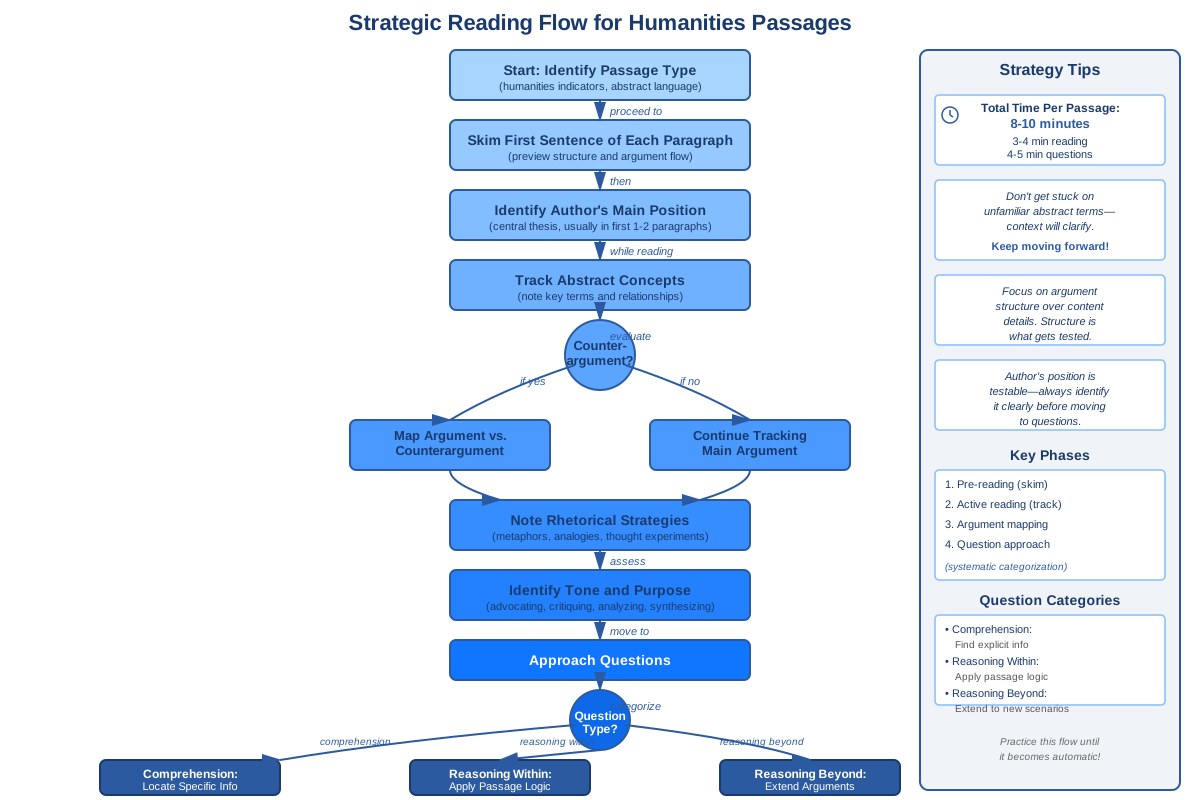
When approaching humanities passages on the MCAT, begin by quickly identifying the disciplinary source and passage type. The first paragraph typically signals whether the passage will present a philosophical argument, analyze an aesthetic theory, or explore a cultural phenomenon. This identification activates appropriate expectations about structure and content.
Trigger words indicating humanities content include: "aesthetic," "normative," "ought," "should," "interpretation," "meaning," "consciousness," "epistemology," "ontology," "hermeneutics," "critique," and "theory." These words signal abstract, interpretive content requiring careful attention to authorial perspective.
For dialectical passages (thesis → objection → response), create a mental map of positions: What does the traditional view hold? What criticism is raised? How does the author respond? Many questions test whether students can distinguish these positions, so tracking them prevents confusion.
When encountering unfamiliar vocabulary, resist the urge to panic or reread obsessively. Instead, note the term's function in the argument and continue reading. Often, subsequent sentences clarify meaning through examples or restatement. If a question specifically asks about the term, return to its context with the question stem in mind.
Process-of-elimination proves especially powerful with humanities passages. Wrong answers often:
- Misattribute views (confusing the author's position with described alternatives)
- Use extreme language unsupported by the passage ("always," "never," "impossible")
- Introduce outside knowledge not mentioned in the passage
- Distort the author's tone (making neutral descriptions seem critical or vice versa)
Eliminate these systematically before selecting an answer.
Time allocation for humanities passages should mirror other CARS passages: approximately 10 minutes per passage including questions (5-6 minutes reading, 4-5 minutes answering questions). If a passage feels particularly abstract or difficult, don't allocate extra time hoping for perfect comprehension. Instead, identify the main argument and author's purpose, then use questions to guide focused rereading of relevant sections.
Exam Tip: When stuck between two answer choices on a humanities question, return to the passage and find specific textual evidence for each option. The correct answer will always have direct support, while the wrong answer will require assumptions or outside knowledge.
Memory Techniques
HUMANITIES mnemonic for key passage features:
- High abstraction level
- Unfamiliar vocabulary (use context)
- Multiple perspectives presented
- Author's view is central
- Normative claims (should/ought)
- Interpretive arguments
- Theoretical frameworks
- Inference questions common
- Explicit advocacy frequent
- Subjective topics, objective answers
TRACK acronym for reading strategy:
- Thesis: What's the main argument?
- Reasoning: How is it supported?
- Alternatives: What other views are presented?
- Critique: What objections are raised?
- Key terms: What concepts are central?
Visualization strategy: Imagine humanities passages as a debate or conversation. Picture different speakers representing different positions (traditional view, critics, author). This mental model helps track whose view is being presented and prevents confusion between positions.
The "So What?" technique: After reading each paragraph, mentally summarize its function: "This paragraph introduces the traditional theory," "This paragraph presents criticisms," "This paragraph defends the theory against criticism." Understanding functional roles aids retention and question-answering.
Summary
Humanities passages constitute approximately half of MCAT CARS content, drawing from philosophy, aesthetics, literary criticism, cultural studies, and related disciplines. These passages feature abstract concepts, normative claims, and interpretive arguments that differ from the empirical focus of social sciences passages. Success requires recognizing common argument patterns (especially dialectical structures), tracking authorial perspective versus described alternatives, and managing unfamiliar vocabulary through context rather than memorization. Questions emphasize inference-making, application of concepts, and evaluation of arguments, with wrong answers frequently misattributing views or introducing unsupported claims. Despite dealing with subjective topics, humanities questions have definitively correct answers supported by passage evidence. Efficient reading focuses on identifying main arguments and authorial purpose rather than achieving perfect comprehension of every abstract detail, with strategic rereading guided by question demands.
Key Takeaways
- Humanities passages appear in approximately 50% of CARS content and cannot be avoided on test day
- Dialectical structure (thesis → objection → response) is the most common organizational pattern in philosophical passages
- Track whose view is being presented—author's position versus described alternatives—to avoid misattribution errors
- Abstract vocabulary should be understood through context; passages provide sufficient information without requiring outside knowledge
- Inference and application questions dominate humanities passages, requiring extension of passage reasoning to new scenarios
- Despite subjective content, correct answers always have specific textual support; eliminate choices requiring assumptions
- Efficient reading prioritizes main argument and authorial purpose over perfect comprehension of every detail
Related Topics
Social Sciences Passages: Understanding the distinction between humanities and social sciences passages enables appropriate strategy selection. Social sciences passages emphasize empirical research, data, and descriptive claims, while humanities passages focus on conceptual analysis and normative arguments. Mastering both passage types ensures comprehensive CARS preparation.
Argument Structure and Logic: Deeper study of formal logic, logical fallacies, and argument evaluation enhances humanities passage analysis. Recognizing common reasoning patterns and flaws improves accuracy on questions testing argument strength and validity.
Rhetorical Analysis: Advanced understanding of rhetorical devices, persuasive strategies, and authorial techniques refines the ability to analyze tone, purpose, and perspective in humanities passages. This skill proves especially valuable for questions about authorial attitude and rhetorical function.
Reading Comprehension Strategies: Broader study of active reading techniques, annotation methods, and comprehension monitoring applies across all CARS passages. Developing flexible reading strategies that adapt to passage difficulty and type maximizes efficiency and accuracy.
Practice CTA
Now that you've mastered the core concepts of humanities passages, it's time to apply this knowledge through deliberate practice. Attempt the accompanying practice questions, focusing on identifying passage structure, tracking authorial perspective, and supporting answers with specific textual evidence. Use the flashcards to reinforce key concepts and common question patterns. Remember: CARS skills improve through consistent, reflective practice. Each passage you analyze builds the pattern recognition and reasoning abilities that translate directly to test-day success. Approach practice with the same strategic mindset you'll use on the MCAT, and review both correct and incorrect answers to understand the reasoning behind each choice. Your investment in mastering humanities passages will pay dividends across the entire CARS section.
Sign up free to keep reading
Create a free AnvayaPrep account to finish this MCAT guide on Humanities passages — plus flashcards and practice questions.