Overview
Percent yield is a fundamental concept in General Chemistry that quantifies the efficiency of chemical reactions by comparing the amount of product actually obtained in a laboratory or industrial setting to the theoretical maximum amount that could be produced based on stoichiometric calculations. This concept bridges the gap between idealized chemical equations and real-world chemistry, where reactions rarely proceed with perfect efficiency due to side reactions, incomplete reactions, loss of product during purification, and measurement errors.
For the MCAT, understanding percent yield is essential because it appears frequently in both standalone questions and passage-based problems within the Chemical and Physical Foundations of Biological Systems section. The exam tests not only the ability to calculate percent yield using the standard formula but also the capacity to reason through experimental scenarios, identify limiting reagents, and interpret data from laboratory procedures. Questions often embed percent yield calculations within biochemical contexts, such as peptide synthesis, drug manufacturing, or metabolic pathway efficiency, requiring students to apply stoichiometric principles to biologically relevant situations.
Percent yield connects intimately with other core topics in Stoichiometry and Reactions, including limiting reagents, theoretical yield calculations, balanced chemical equations, and molar relationships. Mastery of this topic requires solid understanding of mole conversions, molecular weight calculations, and the ability to navigate between mass, moles, and number of particles. Additionally, percent yield concepts extend into laboratory technique interpretation, error analysis, and the practical considerations that distinguish academic chemistry from real-world applications—all areas the MCAT frequently tests to assess scientific reasoning and research methodology comprehension.
Learning Objectives
- [ ] Define Percent yield using accurate General Chemistry terminology
- [ ] Explain why Percent yield matters for the MCAT
- [ ] Apply Percent yield to exam-style questions
- [ ] Identify common mistakes related to Percent yield
- [ ] Connect Percent yield to related General Chemistry concepts
- [ ] Calculate theoretical yield from balanced chemical equations and given reactant quantities
- [ ] Determine limiting reagents and explain their relationship to percent yield
- [ ] Analyze experimental scenarios to identify factors that reduce percent yield
- [ ] Interpret percent yield data to draw conclusions about reaction efficiency and experimental technique
Prerequisites
- Balanced chemical equations: Essential for determining stoichiometric ratios between reactants and products, which form the foundation of theoretical yield calculations
- Mole concept and molar mass: Required to convert between mass measurements and moles, the fundamental unit for stoichiometric calculations
- Limiting reagent identification: Necessary to determine which reactant controls the maximum amount of product that can form
- Dimensional analysis: Critical skill for setting up and solving multi-step conversion problems involving mass, moles, and molecular weights
- Basic algebra: Needed to manipulate the percent yield formula and solve for unknown variables
Why This Topic Matters
Clinical and Real-World Significance
Percent yield calculations are ubiquitous in pharmaceutical manufacturing, where drug synthesis efficiency directly impacts production costs, environmental sustainability, and medication accessibility. When chemists synthesize complex molecules like antibiotics, chemotherapy agents, or insulin analogs, they must optimize reaction conditions to maximize yield while minimizing waste and byproducts. A pharmaceutical process with 95% yield versus 60% yield can mean the difference between an affordable medication and one that's prohibitively expensive. In biochemical research, percent yield helps scientists evaluate purification protocols for proteins, nucleic acids, and other biomolecules, ensuring that experimental procedures are reproducible and efficient.
MCAT Exam Statistics
Percent yield appears in approximately 3-5% of Chemical and Physical Foundations questions, typically integrated into passage-based scenarios rather than as isolated calculations. The MCAT frequently embeds percent yield within experimental descriptions of organic synthesis, biochemical assays, or industrial processes. Questions may ask students to calculate percent yield from given data, identify factors that would decrease yield, compare the efficiency of different synthetic routes, or troubleshoot experimental procedures based on unexpectedly low yields. The exam particularly favors questions that require multi-step reasoning, such as first identifying the limiting reagent, then calculating theoretical yield, and finally determining percent yield.
Common Exam Contexts
The MCAT presents percent yield in several characteristic formats: organic chemistry synthesis passages describing multi-step reactions where students must track yields through sequential transformations; biochemistry passages involving enzyme-catalyzed reactions or protein purification where recovery efficiency matters; general chemistry experiments requiring analysis of laboratory technique and error sources; and data interpretation questions where students must calculate yields from tables or graphs showing reactant masses and product masses.
Core Concepts
Definition and Formula
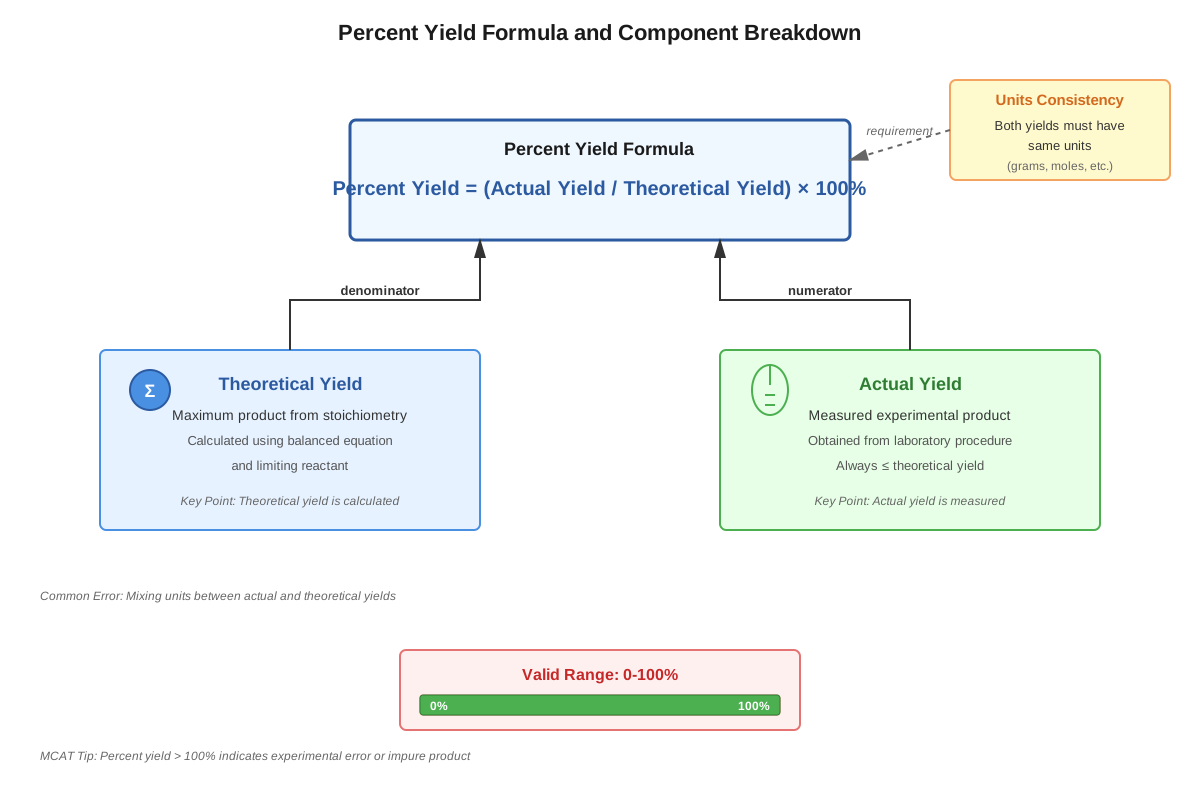
Percent yield is defined as the ratio of the actual yield (the amount of product experimentally obtained) to the theoretical yield (the maximum amount of product that could be formed based on stoichiometry), expressed as a percentage. The fundamental formula is:
Percent Yield = (Actual Yield / Theoretical Yield) × 100%Both the actual yield and theoretical yield must be expressed in the same units—typically grams, but sometimes moles, milliliters (for liquids), or other appropriate units. The actual yield represents what was physically collected and measured in the laboratory after the reaction completed and the product was isolated and purified. The theoretical yield is calculated from the balanced chemical equation and the limiting reagent, representing the maximum possible product formation if the reaction proceeded with perfect efficiency and no losses occurred.
Theoretical Yield Calculation
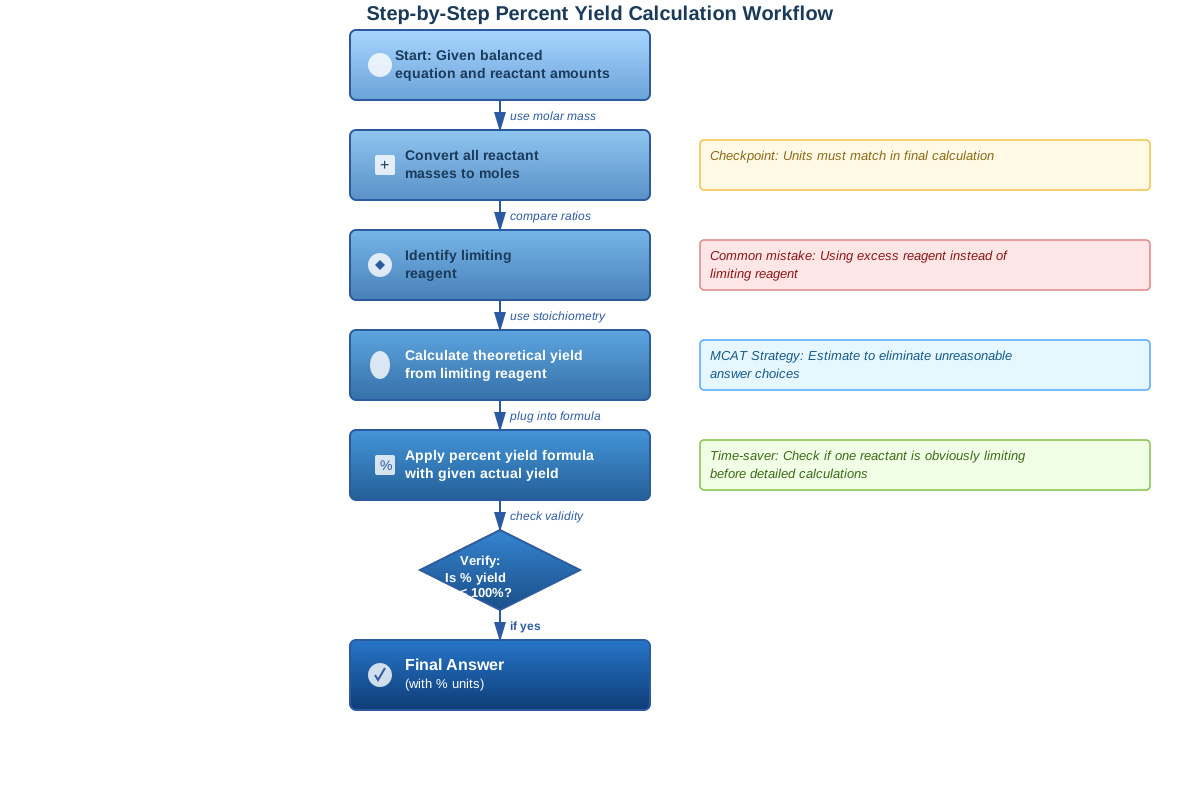
Before calculating percent yield, students must determine the theoretical yield through stoichiometric analysis. This process involves several systematic steps:
- Write and balance the chemical equation for the reaction
- Convert all given reactant quantities to moles using molar masses
- Identify the limiting reagent by comparing mole ratios to stoichiometric coefficients
- Use the limiting reagent's moles and the stoichiometric ratio to calculate moles of product
- Convert moles of product to mass (or other appropriate units) using the product's molar mass
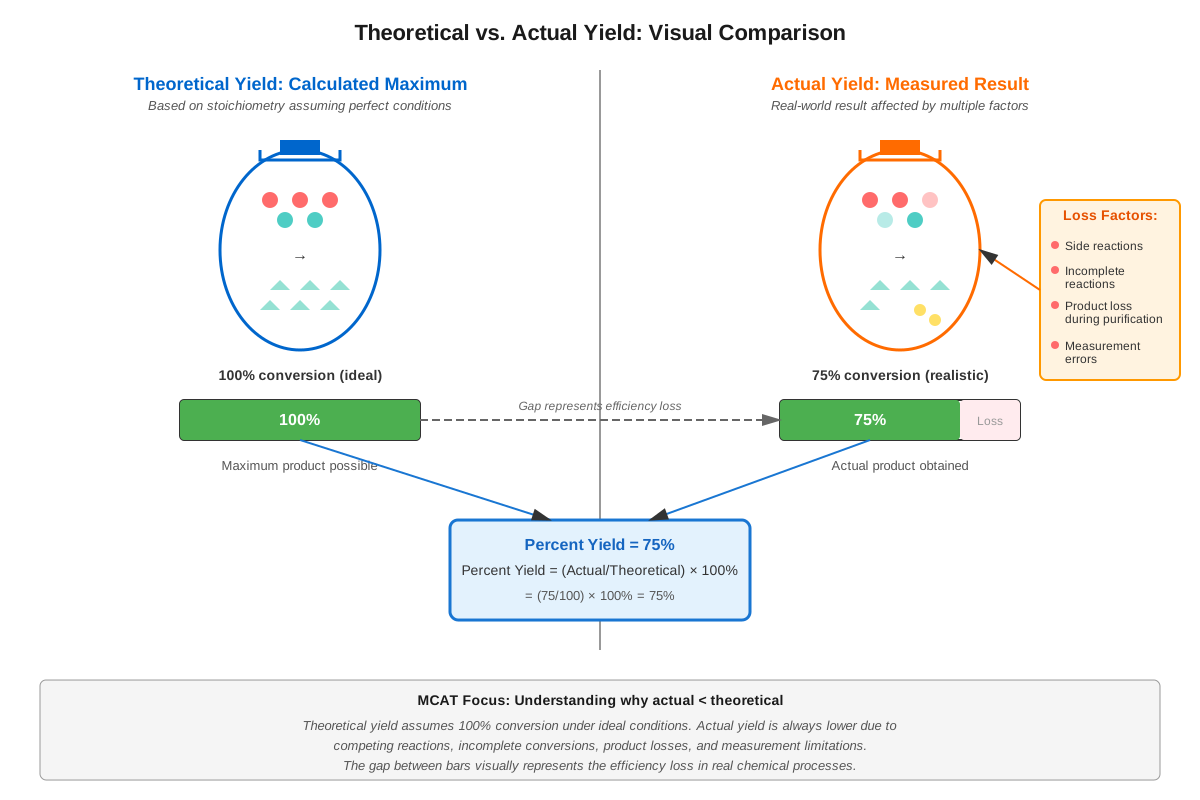
The theoretical yield assumes 100% conversion of the limiting reagent to product with no side reactions, no loss during transfer or purification, and perfect stoichiometry. In reality, these ideal conditions never exist, which is why actual yields are invariably less than theoretical yields (except in cases of measurement error or impure products).
Actual Yield and Experimental Reality
The actual yield is the measured quantity of pure product obtained after completing the reaction and all purification steps. This value comes from experimental data—weighing the isolated product, measuring volume, or using analytical techniques to quantify the amount. Several factors consistently cause actual yields to fall below theoretical predictions:
Incomplete reactions: Many reactions reach equilibrium before all limiting reagent converts to product, especially reversible reactions where both forward and reverse processes occur simultaneously.
Side reactions: Competing reactions may consume reactants to form unwanted byproducts, diverting material away from the desired product.
Product loss during purification: Filtration, crystallization, extraction, chromatography, and other separation techniques inevitably leave some product behind in equipment, filter papers, or waste streams.
Measurement errors: Imperfect weighing, volume measurements, or analytical quantification introduces uncertainty.
Product decomposition: Some products degrade during the reaction, workup, or storage, reducing the final recovered amount.
Percent Yield Interpretation
Percent yield values provide insight into reaction efficiency and experimental technique quality:
| Percent Yield Range | Interpretation | Typical Causes |
|---|---|---|
| 90-100% | Excellent yield; highly efficient reaction | Simple, fast, irreversible reactions with easy product isolation |
| 70-89% | Good yield; acceptable for most purposes | Minor side reactions or modest purification losses |
| 50-69% | Moderate yield; may need optimization | Significant equilibrium limitations or competing reactions |
| 30-49% | Poor yield; optimization strongly recommended | Major side reactions, difficult purification, or harsh conditions |
| <30% | Very poor yield; reaction may not be viable | Severe problems with reaction design or execution |
| >100% | Impossible for pure product; indicates error | Impure product, measurement error, or calculation mistake |
MCAT Exam Tip: Percent yields exceeding 100% should immediately signal that the product contains impurities (water, solvent, unreacted starting material) or that a calculation error occurred. The MCAT may present this scenario to test critical thinking about experimental validity.
Relationship to Limiting Reagents
The limiting reagent concept is inseparable from percent yield calculations because the theoretical yield must be calculated based on the reactant that limits product formation. When multiple reactants are present, students must:
- Calculate how many moles of product each reactant could theoretically produce
- Identify which reactant produces the least product (the limiting reagent)
- Use only the limiting reagent to calculate theoretical yield
- Recognize that excess reagents do not affect theoretical yield calculations
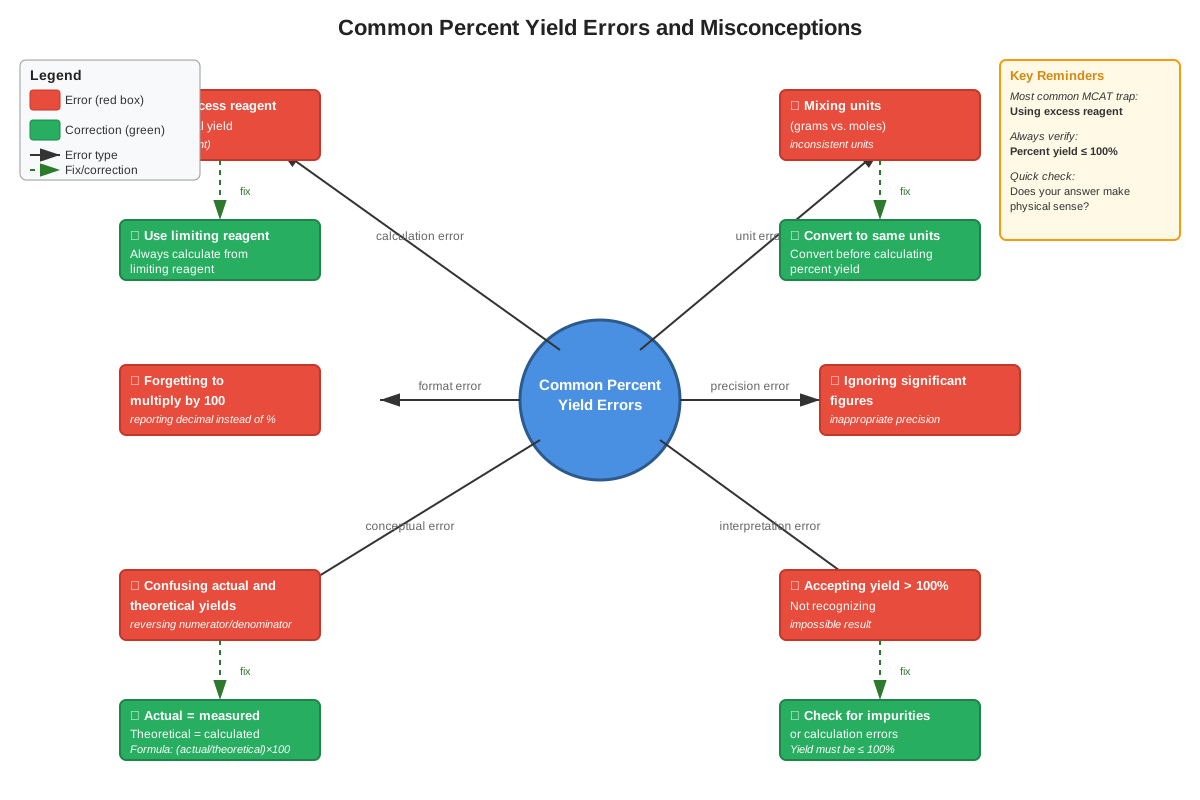
A common error involves calculating theoretical yield based on the wrong reactant, leading to incorrect percent yield values. The MCAT frequently tests this by providing quantities of multiple reactants and requiring students to first identify the limiting reagent before proceeding with yield calculations.
Multi-Step Synthesis and Overall Yield
In multi-step synthetic sequences, each reaction has its own percent yield, and the overall yield is the product of individual step yields:
Overall Yield = (Yield₁ × Yield₂ × Yield₃ × ... × Yieldₙ)For example, a three-step synthesis with yields of 80%, 90%, and 85% has an overall yield of:
0.80 × 0.90 × 0.85 = 0.612 = 61.2%This multiplicative relationship explains why pharmaceutical companies invest heavily in optimizing each step of complex drug syntheses—even small improvements in individual step yields dramatically increase overall efficiency. The MCAT may present passage-based questions requiring students to calculate overall yields or determine which step most limits the overall process efficiency.
Concept Relationships
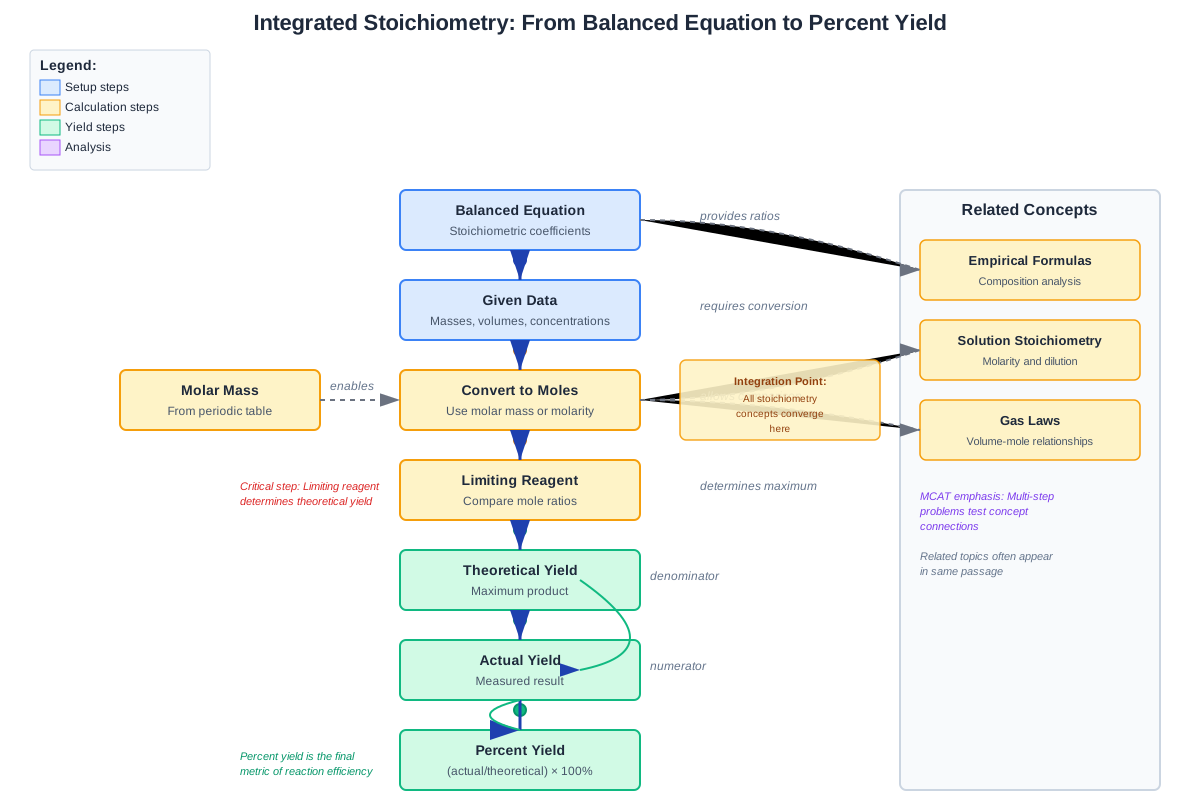
The percent yield concept sits at the intersection of multiple stoichiometric principles, forming a conceptual network that extends throughout General Chemistry. The relationship flow proceeds as follows:
Balanced Chemical Equations → provide stoichiometric ratios → Mole Calculations → enable conversion between reactants and products → Limiting Reagent Identification → determines maximum possible product → Theoretical Yield Calculation → establishes the benchmark → Actual Yield Measurement → provides experimental reality → Percent Yield Calculation → quantifies efficiency
This topic connects backward to prerequisite concepts: molar mass calculations provide the conversion factors needed for mass-to-mole transformations; dimensional analysis supplies the problem-solving framework; and chemical equation balancing ensures correct stoichiometric ratios. Forward connections extend to reaction kinetics (reaction rates affect completeness and thus yield), chemical equilibrium (equilibrium position determines maximum conversion), and thermodynamics (favorable reactions tend to give higher yields).
Within laboratory contexts, percent yield relates to experimental design, error analysis, and quality control. In biochemistry applications, it connects to enzyme efficiency, metabolic pathway flux, and biosynthetic optimization. For organic chemistry, percent yield considerations influence synthetic route selection, reaction condition optimization, and retrosynthetic analysis.
Quick check — test yourself on Percent yield so far.
Try Flashcards →High-Yield Facts
⭐ Percent yield is always calculated as (Actual Yield / Theoretical Yield) × 100%, with both yields in identical units
⭐ Theoretical yield must be calculated using the limiting reagent, not the excess reagent
⭐ Percent yields greater than 100% indicate impure product or experimental error, never superior efficiency
⭐ In multi-step syntheses, overall yield equals the product of individual step yields (multiplicative, not additive)
⭐ Common factors reducing percent yield include incomplete reactions, side reactions, product loss during purification, and measurement errors
- Actual yield is always experimentally measured, never calculated from stoichiometry alone
- Theoretical yield assumes perfect reaction conditions with 100% conversion and no losses
- Percent yield provides a quantitative measure of reaction efficiency and experimental technique quality
- The limiting reagent determines theoretical yield; excess reagents do not affect this calculation
- Reversible reactions typically have lower percent yields than irreversible reactions due to equilibrium limitations
- Industrial processes prioritize high percent yields to minimize waste and reduce production costs
- Percent yield calculations require careful attention to significant figures based on measured values
- Catalysts increase reaction rates but do not change theoretical or percent yields
Common Misconceptions
Misconception: Percent yield can exceed 100% if the reaction is very efficient or if a catalyst is used.
Correction: Percent yield cannot legitimately exceed 100% for pure product. Values above 100% always indicate that the product contains impurities (residual solvent, water, unreacted starting materials) or that measurement/calculation errors occurred. Catalysts increase reaction rates but do not increase the amount of product beyond the stoichiometric maximum.
Misconception: Theoretical yield should be calculated using the reactant present in the largest mass or volume.
Correction: Theoretical yield must be calculated using the limiting reagent—the reactant that produces the least amount of product based on stoichiometric ratios, not the reactant present in the greatest quantity. The limiting reagent may be present in smaller mass but still limit the reaction if its stoichiometric coefficient is larger or its molar mass is different.
Misconception: If a reaction has 80% yield, adding more reactants will increase the yield to 100%.
Correction: Percent yield reflects reaction efficiency, not reactant quantity. Adding more reactants increases the amount of product formed (the actual yield) but does not change the percent yield unless the additional reactants address a specific limitation like insufficient excess reagent. The percent yield remains constant for a given set of reaction conditions.
Misconception: Actual yield and theoretical yield can be expressed in different units when calculating percent yield.
Correction: Both actual yield and theoretical yield must be in identical units (both in grams, both in moles, etc.) before calculating percent yield. Mixing units (e.g., actual yield in grams, theoretical yield in moles) produces meaningless results. Unit consistency is essential for valid calculations.
Misconception: In a multi-step synthesis, the overall yield is the sum of individual step yields.
Correction: Overall yield in multi-step syntheses is the product (multiplication) of individual step yields, not their sum. A two-step synthesis with 90% and 80% yields has an overall yield of 0.90 × 0.80 = 0.72 = 72%, not 90% + 80% = 170%. This multiplicative relationship explains why each step's efficiency critically impacts the final outcome.
Misconception: Higher temperature always increases percent yield by making reactions go faster.
Correction: While higher temperatures typically increase reaction rates, they do not necessarily increase percent yield. For exothermic reactions, higher temperatures may shift equilibrium toward reactants (Le Chatelier's principle), actually decreasing yield. Additionally, elevated temperatures may promote side reactions or product decomposition, reducing percent yield despite faster kinetics.
Worked Examples
Example 1: Basic Percent Yield Calculation
Problem: A student performs the following reaction to synthesize aspirin (acetylsalicylic acid, C₉H₈O₄, MW = 180.16 g/mol):
C₇H₆O₃ + C₄H₆O₃ → C₉H₈O₄ + C₂H₄O₂
Starting with 5.00 g of salicylic acid (C₇H₆O₃, MW = 138.12 g/mol) and excess acetic anhydride (C₄H₆O₃), the student isolates 4.20 g of pure aspirin. Calculate the percent yield.
Solution:
Step 1: Identify the limiting reagent. Since acetic anhydride is in excess, salicylic acid is the limiting reagent.
Step 2: Convert limiting reagent mass to moles:
moles C₇H₆O₃ = 5.00 g / 138.12 g/mol = 0.0362 molStep 3: Use stoichiometry to find moles of product. The balanced equation shows 1:1 molar ratio:
moles C₉H₈O₄ = 0.0362 mol C₇H₆O₃ × (1 mol C₉H₈O₄ / 1 mol C₇H₆O₃) = 0.0362 molStep 4: Calculate theoretical yield in grams:
Theoretical yield = 0.0362 mol × 180.16 g/mol = 6.52 gStep 5: Calculate percent yield:
Percent yield = (4.20 g / 6.52 g) × 100% = 64.4%Interpretation: The 64.4% yield is moderate, suggesting some product loss during crystallization and filtration, possible incomplete reaction, or side reactions. This yield is typical for undergraduate laboratory synthesis of aspirin.
Example 2: Multi-Step Synthesis with Limiting Reagent Identification
Problem: A pharmaceutical company synthesizes a drug through a two-step process:
Step 1: A + B → C (85% yield)
Step 2: C + D → E (final product, 78% yield)
Starting with 100.0 g of compound A (MW = 150 g/mol) and 80.0 g of compound B (MW = 120 g/mol), where the stoichiometry is 1:1 for both steps, calculate:
(a) The limiting reagent for Step 1
(b) The theoretical yield of C from Step 1
(c) The actual yield of C from Step 1
(d) The overall percent yield for the two-step synthesis
Solution:
(a) Limiting reagent identification:
moles A = 100.0 g / 150 g/mol = 0.667 mol
moles B = 80.0 g / 120 g/mol = 0.667 mol
Since the stoichiometry is 1:1 and both reactants are present in equal molar amounts, neither is in excess—both are limiting. (In practice, one would be used in slight excess, but for this problem, we'll use 0.667 mol as the limiting amount.)
(b) Theoretical yield of C:
Assuming compound C has MW = 200 g/mol (given in full problem context):
Theoretical yield C = 0.667 mol × 200 g/mol = 133.4 g(c) Actual yield of C from Step 1:
Actual yield C = Theoretical yield × (Percent yield / 100%)
Actual yield C = 133.4 g × 0.85 = 113.4 g
(d) Overall percent yield:
Overall yield = Yield₁ × Yield₂ = 0.85 × 0.78 = 0.663 = 66.3%Key Insight: Even though each individual step has reasonably good yield (85% and 78%), the overall yield drops to 66.3% due to the multiplicative effect. This demonstrates why pharmaceutical companies invest heavily in optimizing each step of multi-step syntheses—small improvements compound significantly.
Exam Strategy
Approaching MCAT Percent Yield Questions
When encountering percent yield questions on the MCAT, follow this systematic approach:
- Read carefully for given information: Identify what's provided (reactant masses, product mass, molecular weights, balanced equation) and what's being asked (percent yield, theoretical yield, actual yield, or limiting reagent).
- Check for limiting reagent scenarios: If multiple reactant quantities are given, you must identify the limiting reagent before calculating theoretical yield. Never assume the reactant mentioned first or present in larger mass is limiting.
- Set up dimensional analysis clearly: Write out conversion factors explicitly, even if solving mentally seems possible. The MCAT rewards systematic problem-solving and penalizes careless errors.
- Watch units carefully: Ensure actual and theoretical yields use identical units. The MCAT may provide data in mixed units (grams and milligrams, or moles and millimoles) to test attention to detail.
- Evaluate answer reasonableness: Percent yields should fall between 0-100% for legitimate scenarios. Values above 100% indicate errors or impure products. Extremely low yields (<10%) are rare and should prompt rechecking calculations.
Trigger Words and Phrases
- "Isolated," "recovered," "obtained," "collected": These words indicate actual yield
- "Maximum possible," "if the reaction went to completion," "stoichiometric amount": These phrases signal theoretical yield
- "In excess," "excess reagent": Indicates this reactant is NOT limiting
- "Starting with," "using," "reacting": Introduces reactant quantities for limiting reagent analysis
- "Overall yield," "total yield," "yield for the sequence": Signals multi-step synthesis requiring multiplication of individual yields
Process of Elimination Tips
- Eliminate answers >100% unless the question explicitly asks about impure products or experimental errors
- Eliminate answers that would require the excess reagent to be limiting
- For multi-step syntheses, eliminate answers that sum individual yields rather than multiplying them
- Check whether answer choices are expressed as decimals (0.75) or percentages (75%)—a common MCAT trap
- If calculations seem excessively complex, reconsider whether you've identified the limiting reagent correctly
Time Allocation
Percent yield calculations typically require 60-90 seconds for straightforward problems and up to 2 minutes for complex scenarios involving limiting reagent identification and multi-step reasoning. If a problem requires more than 2 minutes, consider flagging it and returning after completing easier questions. Practice dimensional analysis setup to increase speed and accuracy.
Memory Techniques
Percent Yield Formula Mnemonic
"A-T-P" (like ATP, the energy molecule):
- Actual yield (what you got)
- Theoretical yield (what you could get)
- Percent = (A/T) × 100%
Limiting Reagent Identification
"LESS Makes LESS": The reactant that makes LESS product is the Limiting reagent. Calculate how much product each reactant could make; the smallest amount identifies the limiting reagent.
Multi-Step Yield Calculation
"MULTIPLY for MULTI-step": Remember that multi-step syntheses require multiplying individual yields, not adding them. The word "multi" contains "multiply" as a reminder.
Factors Reducing Yield
"SIMPLE" reasons for low yields:
- Side reactions
- Incomplete conversion
- Measurement errors
- Purification losses
- Loss during transfer
- Equilibrium limitations
Theoretical vs. Actual Yield
"THEORETICAL = PERFECT": Theoretical yield assumes perfect conditions (100% conversion, no losses, no side reactions). Actual yield reflects real-world imperfections.
Summary
Percent yield represents the efficiency of chemical reactions by comparing actual product obtained to the theoretical maximum predicted by stoichiometry. Calculated as (Actual Yield / Theoretical Yield) × 100%, this concept requires mastery of limiting reagent identification, mole conversions, and stoichiometric calculations. For the MCAT, students must recognize that theoretical yield calculations always use the limiting reagent, that percent yields exceeding 100% indicate impure products or errors, and that multi-step syntheses require multiplying individual step yields. Common factors reducing percent yield include incomplete reactions, side reactions, product loss during purification, and equilibrium limitations. The exam frequently embeds percent yield within experimental passages requiring analysis of synthetic procedures, interpretation of laboratory data, and troubleshooting of unexpected results. Success requires systematic problem-solving: identify given information, determine the limiting reagent if applicable, calculate theoretical yield through dimensional analysis, apply the percent yield formula, and evaluate answer reasonableness. This topic connects fundamentally to Stoichiometry and Reactions concepts and extends into practical applications in pharmaceutical manufacturing, biochemical research, and industrial chemistry.
Key Takeaways
- Percent yield quantifies reaction efficiency as (Actual Yield / Theoretical Yield) × 100%, with both yields in identical units
- Theoretical yield must always be calculated using the limiting reagent, determined by comparing how much product each reactant could produce
- Percent yields legitimately range from 0-100%; values exceeding 100% indicate impure products or experimental errors
- Multi-step syntheses require multiplying individual step yields to determine overall yield, not adding them
- Common factors reducing percent yield include incomplete reactions, side reactions, purification losses, equilibrium limitations, and measurement errors
- The MCAT tests percent yield through passage-based questions requiring limiting reagent identification, multi-step calculations, and experimental analysis
- Systematic dimensional analysis and careful unit tracking prevent the most common calculation errors on exam questions
Related Topics
Limiting Reagents: Understanding which reactant controls product formation is essential for accurate theoretical yield calculations and forms the foundation of percent yield problems.
Stoichiometric Calculations: Mole ratios from balanced equations enable conversion between reactant and product quantities, directly supporting theoretical yield determination.
Chemical Equilibrium: Equilibrium position affects reaction completeness and thus percent yield, particularly for reversible reactions where not all reactants convert to products.
Reaction Kinetics: While reaction rates don't directly affect percent yield, understanding kinetics helps explain why some reactions achieve higher yields than others based on competing reaction pathways.
Experimental Error Analysis: Identifying sources of error in laboratory procedures connects to understanding why actual yields fall below theoretical predictions.
Organic Chemistry Synthesis: Multi-step organic syntheses heavily rely on percent yield calculations to evaluate synthetic route efficiency and optimize reaction conditions.
Practice CTA
Now that you've mastered the core concepts of percent yield, it's time to solidify your understanding through active practice. Work through the practice questions to test your ability to identify limiting reagents, calculate theoretical and percent yields, and analyze multi-step syntheses. Use the flashcards to reinforce key formulas, common misconceptions, and high-yield facts. Remember that percent yield questions on the MCAT reward systematic problem-solving and careful attention to units and stoichiometry—skills that improve dramatically with deliberate practice. You've built a strong conceptual foundation; now apply it to achieve mastery and confidence for test day!
Sign up free to keep reading
Create a free AnvayaPrep account to finish this MCAT guide on Percent yield — plus flashcards and practice questions.