Overview
Alkyne reactions represent a critical component of Organic Chemistry tested on the MCAT, particularly within the broader category of Addition Reactions. Alkynes are hydrocarbons containing at least one carbon-carbon triple bond, and their unique electronic structure makes them highly reactive toward electrophilic addition reactions. Understanding alkyne reactivity requires mastery of both the mechanistic principles governing these transformations and the regiochemical and stereochemical outcomes that distinguish them from alkene reactions.
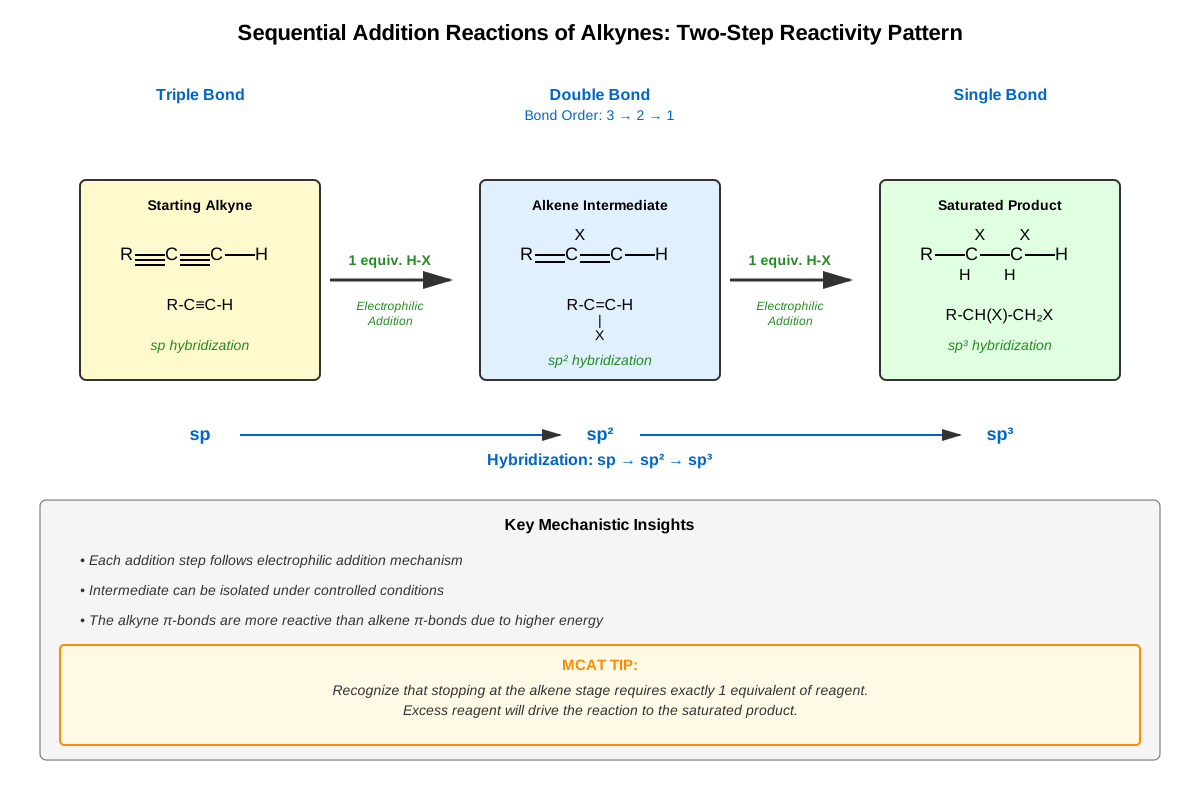
The MCAT frequently tests alkyne reactions in both discrete questions and passage-based formats, often embedding them within biochemical contexts or synthetic pathways. Students must recognize that alkynes undergo sequential addition reactions—the first addition converts the triple bond to a double bond, and a second addition can convert the double bond to a single bond. This two-step reactivity pattern creates opportunities for selective synthesis and provides a foundation for understanding more complex transformations in biological systems, including fatty acid metabolism and prostaglandin synthesis.
Mastery of Alkyne reactions MCAT content connects directly to broader themes in Organic Chemistry, including carbocation stability, Markovnikov's rule, stereochemistry, and the interplay between kinetic and thermodynamic control. These reactions also bridge to biochemistry topics such as enzyme mechanisms and metabolic pathways, making them high-yield for integrated MCAT passages that span multiple disciplines.
Learning Objectives
- [ ] Define Alkyne reactions using accurate Organic Chemistry terminology
- [ ] Explain why Alkyne reactions matters for the MCAT
- [ ] Apply Alkyne reactions to exam-style questions
- [ ] Identify common mistakes related to Alkyne reactions
- [ ] Connect Alkyne reactions to related Organic Chemistry concepts
- [ ] Predict the regiochemical outcome of alkyne addition reactions using Markovnikov's rule
- [ ] Distinguish between syn and anti addition stereochemistry in alkyne transformations
- [ ] Compare and contrast the reactivity of terminal versus internal alkynes
- [ ] Analyze multi-step synthetic sequences involving alkyne intermediates
Prerequisites
- Alkene structure and reactivity: Alkynes follow similar addition reaction patterns but with two sequential steps; understanding alkene mechanisms provides the foundation
- Carbocation stability: Many alkyne reactions proceed through carbocation intermediates; knowing stability trends (3° > 2° > 1°) is essential for predicting products
- Markovnikov's rule: This regioselectivity principle applies to alkyne additions and determines which carbon receives the electrophile
- Stereochemistry fundamentals: Understanding syn versus anti addition and E/Z nomenclature is crucial for predicting three-dimensional product structures
- Acid-base chemistry: Terminal alkynes are weakly acidic (pKa ≈ 25), which enables unique reactions not possible with alkenes
- Resonance and hybridization: The sp-hybridized carbons in alkynes create unique electronic properties that govern reactivity
Why This Topic Matters
Alkyne reactions Organic Chemistry content appears regularly on the MCAT, with approximately 2-4 questions per exam directly or indirectly testing this material. The Chemical and Physical Foundations of Biological Systems section frequently incorporates alkyne chemistry into passages about drug synthesis, metabolic pathways, or laboratory techniques. Questions may ask students to predict products, identify reagents, explain mechanistic steps, or analyze stereochemical outcomes.
In clinical and research contexts, alkyne chemistry plays important roles. The alkyne functional group appears in several pharmaceutical compounds, including the contraceptive ethynylestradiol and the HIV medication efavirenz. Click chemistry, which utilizes alkyne-azide cycloadditions, has revolutionized bioconjugation techniques and drug delivery systems. Understanding alkyne reactivity also provides insight into acetylene metabolism and the biological processing of unsaturated fatty acids.
MCAT passages commonly present alkyne reactions in several formats: synthetic schemes requiring product prediction, mechanistic analyses asking students to identify intermediates, comparative questions contrasting alkyne versus alkene reactivity, and integrated scenarios connecting organic transformations to biological processes. The ability to quickly recognize reaction types, predict regiochemistry, and understand stereochemical outcomes separates high-scoring students from average performers.
Core Concepts
Structure and Bonding in Alkynes
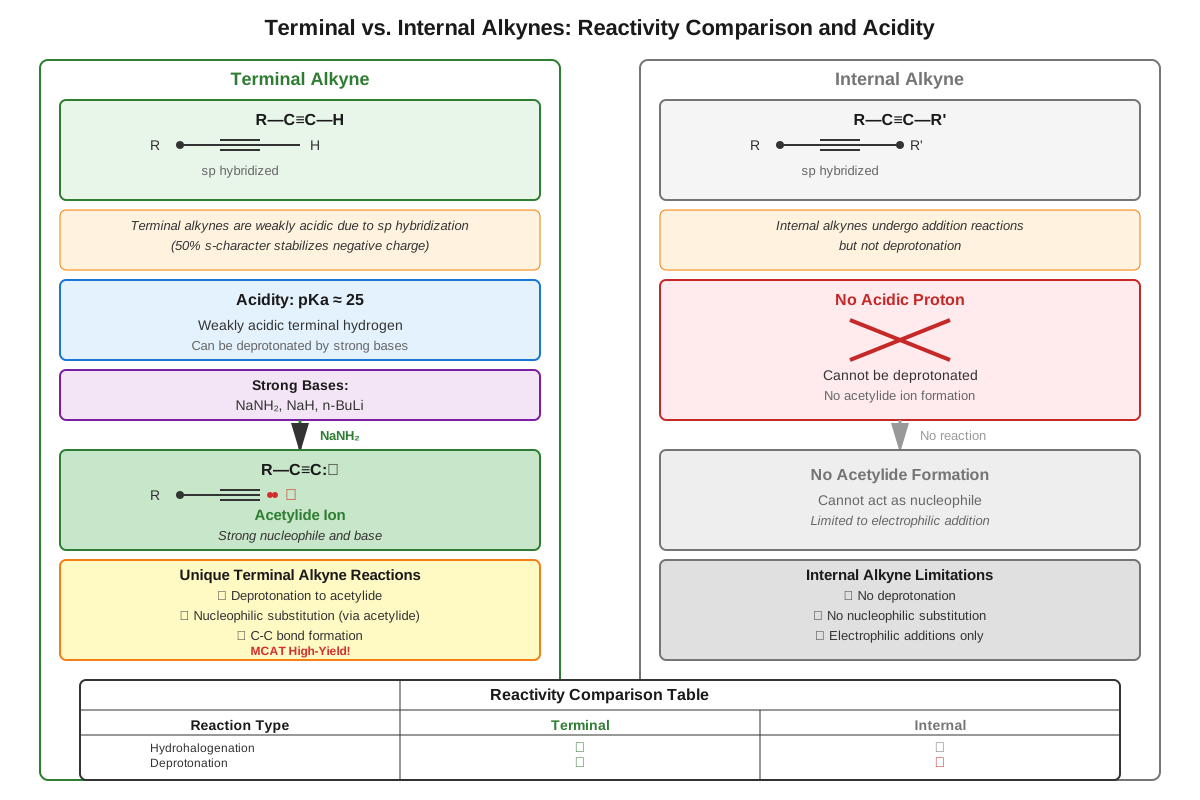
Alkynes are unsaturated hydrocarbons characterized by at least one carbon-carbon triple bond, with the general formula CₙH₂ₙ₋₂. The triple bond consists of one σ bond and two π bonds, formed by the overlap of sp-hybridized carbon orbitals. This sp hybridization creates a linear geometry with 180° bond angles, and the high s-character (50%) makes the C-H bonds in terminal alkynes unusually acidic (pKa ≈ 25) compared to alkenes (pKa ≈ 44) or alkanes (pKa ≈ 50).
Terminal alkynes have the triple bond at the end of the carbon chain (RC≡CH), while internal alkynes have the triple bond between two carbon atoms (RC≡CR'). This structural distinction profoundly affects reactivity—terminal alkynes can act as weak acids and undergo deprotonation with strong bases like sodium amide (NaNH₂), while internal alkynes cannot. The electron density in the π bonds makes alkynes nucleophilic and susceptible to electrophilic attack.
Hydrogenation of Alkynes
Catalytic hydrogenation of alkynes can proceed in two stages. Complete hydrogenation using excess H₂ with a metal catalyst (Pt, Pd, or Ni) converts alkynes to alkanes through sequential addition of two equivalents of hydrogen. However, partial hydrogenation to alkenes can be achieved using specific conditions.
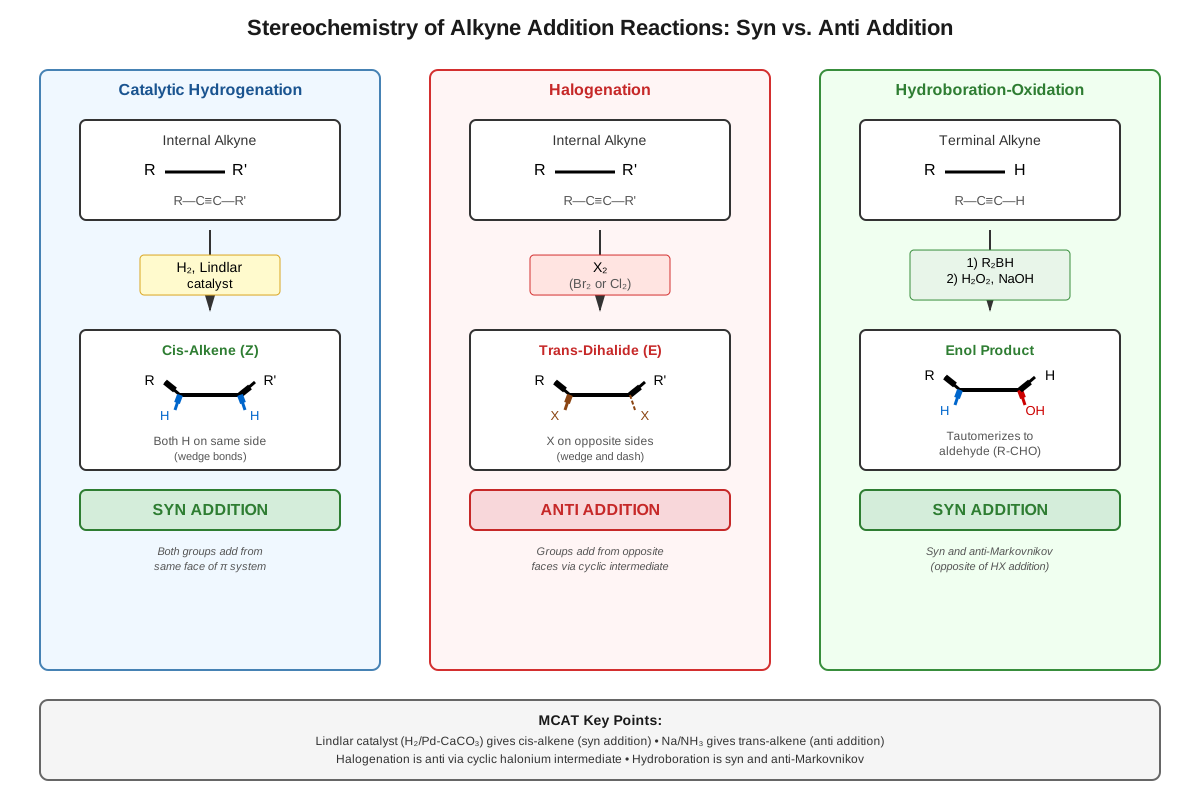
Lindlar's catalyst (Pd/CaCO₃/PbO, poisoned palladium) enables syn addition of hydrogen to produce cis-alkenes. The catalyst surface coordinates both hydrogen atoms, delivering them to the same face of the triple bond. This stereochemical control is crucial for synthesizing naturally occurring cis-unsaturated fatty acids.
Dissolving metal reduction using sodium or lithium in liquid ammonia produces trans-alkenes through anti addition. The mechanism involves single-electron transfers that generate radical anion intermediates, ultimately delivering hydrogen atoms to opposite faces of the original triple bond. This method provides complementary stereochemical control to Lindlar reduction.
Electrophilic Addition of Hydrogen Halides
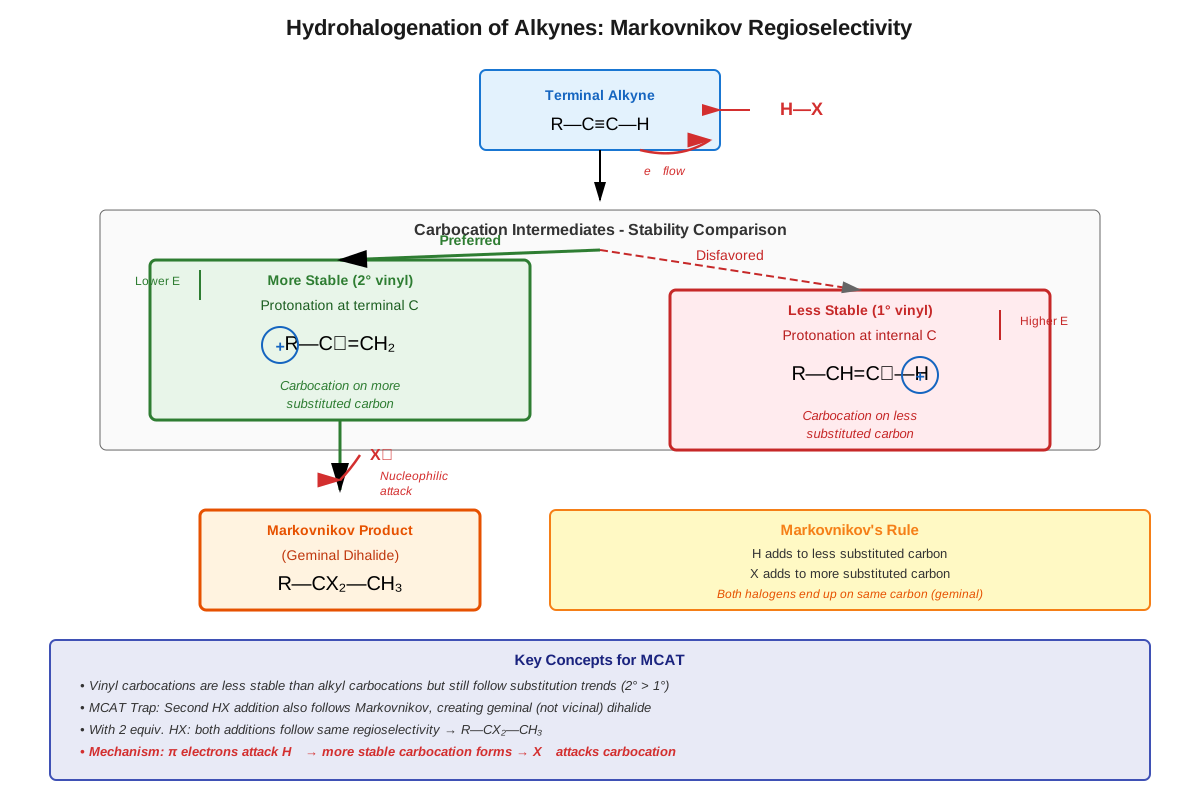
Hydrohalogenation of alkynes follows Markovnikov's rule: the hydrogen adds to the carbon with more hydrogen atoms (or the less substituted carbon), while the halogen adds to the more substituted carbon. The reaction proceeds through a vinyl carbocation intermediate, with the positive charge stabilized on the more substituted carbon.
The first addition converts the alkyne to a vinyl halide. A second equivalent of hydrogen halide can add to produce a geminal dihalide (both halogens on the same carbon). The second addition also follows Markovnikov's rule, with the halogen adding to the carbon already bearing the first halogen because the positive charge in the carbocation intermediate is stabilized by the electron-donating halogen.
For example, 1-butyne reacting with two equivalents of HBr produces 2,2-dibromobutane, not 1,2-dibromobutane. This regiochemical outcome is frequently tested on the MCAT.
Hydration of Alkynes
Acid-catalyzed hydration of alkynes produces carbonyl compounds through enol intermediates. When water adds across the triple bond in the presence of acid catalyst (H₂SO₄) and mercuric sulfate (HgSO₄), the initial product is an enol—a vinyl alcohol. Enols are unstable and rapidly tautomerize to the more stable carbonyl form through keto-enol tautomerization.
Terminal alkynes undergo hydration following Markovnikov's rule, producing methyl ketones. For example, 1-hexyne yields 2-hexanone. Internal alkynes can produce either ketone depending on which carbon receives the hydroxyl group, though symmetrical internal alkynes yield a single product.
Hydroboration-oxidation provides an alternative hydration pathway with anti-Markovnikov regioselectivity. Using disiamylborane (Sia₂BH) followed by oxidative workup (H₂O₂, NaOH) adds water with the hydroxyl group on the less substituted carbon. The resulting enol tautomerizes to an aldehyde from terminal alkynes. This method is less commonly emphasized on the MCAT but may appear in advanced passages.
Halogenation of Alkynes
Addition of halogens (Cl₂ or Br₂) to alkynes occurs in two stages. The first addition produces a dihaloalkene, and the second addition yields a tetrahaloalkane. Unlike alkene halogenation, which proceeds through a cyclic halonium ion intermediate, alkyne halogenation typically involves an open carbocation intermediate due to the linear geometry.
The stereochemistry of the first addition is typically anti, producing trans-dihaloalkenes. However, the stereochemical outcome can be influenced by solvent and reaction conditions. The second halogen addition also proceeds with anti stereochemistry, though the stereochemical relationships become more complex in the tetrahaloalkane product.
Acidity of Terminal Alkynes
The acidity of terminal alkynes (pKa ≈ 25) enables unique reactions not possible with alkenes or alkanes. Strong bases like sodium amide (NaNH₂), n-butyllithium (n-BuLi), or Grignard reagents can deprotonate terminal alkynes to form acetylide anions (RC≡C⁻). These anions are powerful nucleophiles and strong bases.
Acetylide anions participate in nucleophilic substitution reactions with primary alkyl halides or other electrophiles, enabling carbon-carbon bond formation. This reaction is crucial for building larger carbon frameworks in organic synthesis. For example, the acetylide anion from 1-propyne can react with ethyl bromide to produce 2-pentyne, extending the carbon chain.
The acidity difference between terminal and internal alkynes provides a method for distinguishing them: treatment with silver nitrate in ammonia (Tollens' reagent) or copper(I) chloride in ammonia produces insoluble metal acetylides with terminal alkynes but not with internal alkynes.
Comparison Table: Alkyne vs. Alkene Reactions
| Reaction Type | Alkyne Behavior | Alkene Behavior | Key Difference |
|---|---|---|---|
| Hydrogenation | Two equivalents H₂ needed for complete reduction | One equivalent H₂ produces alkane | Alkynes can be selectively reduced to alkenes |
| Hydrohalogenation | Two equivalents HX possible; forms geminal dihalides | One equivalent HX forms alkyl halide | Alkynes produce gem-dihalides, not vicinal |
| Hydration | Forms ketones (or aldehydes) via enol intermediate | Forms alcohols directly | Alkynes undergo tautomerization |
| Halogenation | Two equivalents X₂ possible; forms tetrahalides | One equivalent X₂ forms vicinal dihalide | Alkynes can add twice |
| Acidity | Terminal alkynes are acidic (pKa ≈ 25) | Not acidic (pKa ≈ 44) | Only alkynes form acetylide anions |
Concept Relationships
The reactivity of alkynes stems from their π bond electron density, which makes them nucleophilic and susceptible to electrophilic attack—this connects directly to alkene reactivity patterns. The two-step addition process distinguishes alkyne chemistry: the first addition converts the triple bond to a double bond (alkyne → alkene), and the second addition converts the double bond to a single bond (alkene → alkane). This sequential reactivity enables selective synthesis by controlling reaction conditions.
Markovnikov's rule governs regiochemistry in both alkyne and alkene additions, connecting to fundamental concepts of carbocation stability. The more stable carbocation intermediate (more substituted) forms preferentially, directing the electrophile to the more substituted carbon. This principle applies to hydrohalogenation, hydration, and other electrophilic additions.
Stereochemistry connects alkyne reactions to three-dimensional molecular structure. Syn additions (Lindlar reduction) versus anti additions (dissolving metal reduction, halogenation) produce different stereoisomers, linking to concepts of cis/trans isomerism and E/Z nomenclature. The keto-enol tautomerization following hydration connects alkyne chemistry to carbonyl chemistry and acid-base equilibria.
The acidity of terminal alkynes bridges to acid-base chemistry and nucleophilic substitution reactions. Acetylide anion formation connects to concepts of pKa, base strength, and nucleophilicity, while their reactions with alkyl halides link to SN2 mechanisms and carbon-carbon bond formation strategies.
Relationship Map:
Alkyne structure (sp hybridization) → High π electron density → Electrophilic addition reactions → Carbocation intermediates → Markovnikov regioselectivity → Product formation → Potential second addition → Final product. Parallel pathway: Terminal alkyne → Deprotonation (strong base) → Acetylide anion → Nucleophilic substitution → Chain extension.
Quick check — test yourself on Alkyne reactions so far.
Try Flashcards →High-Yield Facts
⭐ Alkynes undergo two sequential addition reactions: the first converts the triple bond to a double bond, the second converts the double bond to a single bond
⭐ Lindlar's catalyst produces cis-alkenes through syn addition of H₂, while dissolving metal reduction (Na/NH₃) produces trans-alkenes through anti addition
⭐ Hydrohalogenation of alkynes follows Markovnikov's rule and produces geminal dihalides (both halogens on the same carbon) with excess HX
⭐ Acid-catalyzed hydration of terminal alkynes produces methyl ketones via enol intermediates that undergo keto-enol tautomerization
⭐ Terminal alkynes are weakly acidic (pKa ≈ 25) and can be deprotonated by strong bases like NaNH₂ to form acetylide anions
- Internal alkynes cannot be deprotonated under normal conditions because they lack the terminal hydrogen
- Acetylide anions are strong nucleophiles that undergo SN2 reactions with primary alkyl halides to form longer-chain alkynes
- Complete hydrogenation of alkynes requires two equivalents of H₂ and produces alkanes
- Halogenation of alkynes can add two equivalents of X₂ to produce tetrahaloalkanes
- The enol intermediate formed during alkyne hydration is unstable and rapidly tautomerizes to the more stable keto form
- Hydroboration-oxidation of terminal alkynes produces aldehydes (anti-Markovnikov addition)
- Silver nitrate or copper(I) chloride in ammonia distinguishes terminal from internal alkynes by forming insoluble metal acetylides
Common Misconceptions
Misconception: Alkynes and alkenes undergo identical reactions with identical products.
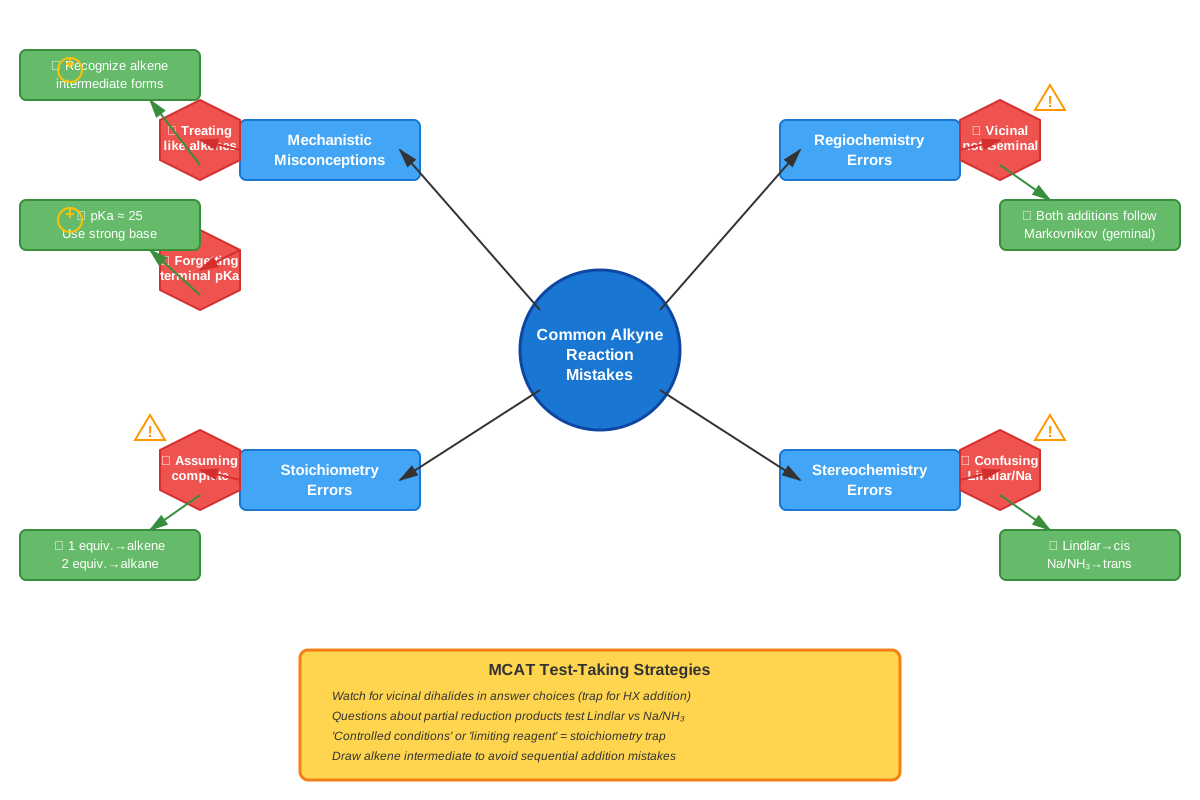
Correction: While both undergo electrophilic additions, alkynes can undergo two sequential additions and produce different product types. For example, alkyne hydration produces ketones/aldehydes (via enol intermediates), while alkene hydration produces alcohols directly.
Misconception: Hydrohalogenation of alkynes produces vicinal dihalides (halogens on adjacent carbons).
Correction: Alkyne hydrohalogenation produces geminal dihalides (both halogens on the same carbon) because the second addition also follows Markovnikov's rule, placing the second halogen on the more substituted carbon that already bears the first halogen.
Misconception: Lindlar's catalyst and dissolving metal reduction produce the same stereoisomer.
Correction: Lindlar's catalyst produces cis-alkenes through syn addition, while dissolving metal reduction produces trans-alkenes through anti addition. These methods provide complementary stereochemical control.
Misconception: All alkynes can be deprotonated to form acetylide anions.
Correction: Only terminal alkynes (RC≡CH) can be deprotonated because they have an acidic hydrogen on the sp-hybridized carbon. Internal alkynes (RC≡CR') lack this hydrogen and cannot form acetylide anions under normal conditions.
Misconception: The enol formed during alkyne hydration is the final product.
Correction: Enols are unstable intermediates that rapidly undergo keto-enol tautomerization to form the more stable carbonyl compound (ketone or aldehyde). The carbonyl form is the observed product.
Misconception: Markovnikov's rule doesn't apply to alkyne reactions.
Correction: Markovnikov's rule applies to alkyne electrophilic additions just as it does to alkenes. The electrophile adds to the more substituted carbon (where the carbocation intermediate is more stable), and this applies to both the first and second additions.
Worked Examples
Example 1: Predicting Products of Sequential Alkyne Reactions
Question: 1-Pentyne is treated with one equivalent of HBr, followed by treatment with excess Br₂. What is the final product?
Solution:
Step 1: Identify the starting material. 1-Pentyne is a terminal alkyne: CH₃CH₂CH₂C≡CH
Step 2: Analyze the first reaction. One equivalent of HBr adds across the triple bond following Markovnikov's rule. The hydrogen adds to the terminal carbon (more hydrogens), and the bromine adds to the internal carbon (more substituted):
CH₃CH₂CH₂C≡CH + HBr → CH₃CH₂CH₂CBr=CH₂
This produces 2-bromo-1-pentene (a vinyl bromide).
Step 3: Analyze the second reaction. Excess Br₂ adds to the double bond. The first Br₂ adds across the double bond with anti stereochemistry, producing a dibromide:
CH₃CH₂CH₂CBr=CH₂ + Br₂ → CH₃CH₂CH₂CBr₂-CHBr₂
Wait—let's reconsider. After the first HBr addition, we have a vinyl bromide with a C=C double bond. When Br₂ adds, it adds across this double bond. Since we have excess Br₂, we need to consider if more than one equivalent can add, but Br₂ only adds to double bonds, not single bonds.
The product is: CH₃CH₂CH₂CBr(Br)-CH₂Br = 1,2,2-tribromopentane
Step 4: Verify the logic. The first addition (HBr) follows Markovnikov's rule and converts the alkyne to an alkene. The second addition (Br₂) adds across the remaining double bond. The carbon that already had one bromine now has two (geminal relationship from the HBr addition), plus the adjacent carbon gains one bromine from the Br₂ addition.
Answer: 1,2,2-tribromopentane
Connection to Learning Objectives: This problem requires applying Markovnikov's rule to predict regiochemistry and understanding that alkynes undergo sequential additions, connecting alkyne reactivity to product prediction skills essential for MCAT success.
Example 2: Distinguishing Reaction Pathways
Question: A researcher wants to convert 2-hexyne to (Z)-2-hexene. Which reagent and conditions should be used?
Solution:
Step 1: Identify the transformation. 2-Hexyne (CH₃C≡CCH₂CH₂CH₃) is an internal alkyne that needs to be converted to (Z)-2-hexene, which is the cis-alkene (CH₃CH=CHCH₂CH₂CH₃ with both alkyl groups on the same side).
Step 2: Recall stereochemical outcomes of alkyne reduction methods:
- Lindlar's catalyst (Pd/CaCO₃/PbO) with H₂ produces cis-alkenes (syn addition)
- Dissolving metal reduction (Na or Li in NH₃) produces trans-alkenes (anti addition)
- Complete hydrogenation (Pt, Pd, or Ni with excess H₂) produces alkanes
Step 3: Match the desired product to the method. The (Z)-configuration indicates cis geometry, so Lindlar's catalyst is required.
Step 4: Write the complete answer with proper conditions.
Answer: Use Lindlar's catalyst (Pd/CaCO₃/PbO) with H₂ gas. This will deliver both hydrogen atoms to the same face of the triple bond through syn addition, producing the cis-alkene (Z)-2-hexene.
Alternative incorrect approaches:
- Using Na/NH₃ would produce (E)-2-hexene (trans) instead
- Using Pt/H₂ would produce hexane (complete reduction)
- Using HBr would produce a vinyl bromide, not an alkene
Connection to Learning Objectives: This problem tests the ability to distinguish between different alkyne reduction methods based on stereochemical outcomes, a high-yield skill for MCAT questions involving synthesis and product prediction.
Exam Strategy
When approaching Alkyne reactions MCAT questions, first identify whether the alkyne is terminal or internal—this immediately determines whether acid-base chemistry (acetylide formation) is possible. Look for trigger words like "excess" (indicating two additions may occur) or "one equivalent" (suggesting selective mono-addition).
For product prediction questions, apply this systematic approach:
- Identify the functional group (alkyne) and classify as terminal or internal
- Determine the reaction type from the reagents given
- Apply Markovnikov's rule if relevant (HX, H₂O/H⁺)
- Consider stereochemistry (syn vs. anti addition)
- Check if a second addition is possible or required
Trigger phrases to recognize:
- "Lindlar's catalyst" or "poisoned palladium" → cis-alkene product
- "Sodium in ammonia" or "dissolving metal" → trans-alkene product
- "Acid-catalyzed hydration" or "H₂O/H₂SO₄/HgSO₄" → ketone or aldehyde (via enol)
- "Strong base" with terminal alkyne → acetylide anion formation
- "Excess" reagent → expect two sequential additions
- "Geminal" → both substituents on same carbon (result of Markovnikov additions)
For process-of-elimination, remember:
- Eliminate answers showing vicinal dihalides from HX addition to alkynes (should be geminal)
- Eliminate alcohol products from alkyne hydration (should be carbonyl)
- Eliminate trans-alkenes when Lindlar's catalyst is used (should be cis)
- Eliminate products that violate Markovnikov's rule unless anti-Markovnikov conditions are specified
Time allocation: Spend 10-15 seconds identifying the reaction type, 20-30 seconds working through the mechanism mentally, and 10-15 seconds checking your answer against common mistakes. For passage-based questions, reference the passage for any non-standard conditions that might alter typical reactivity.
Memory Techniques
Mnemonic for Alkyne Reduction Stereochemistry: "Lindlar makes Low priority groups Line up" (Lindlar → cis/Z configuration with groups on same side)
Mnemonic for Hydration Products: "Water on Alkynes Kills Enols" (WAKE) - reminds you that water addition produces ketones/aldehydes after the enol tautomerizes
Acronym for Terminal Alkyne Acidity: "TABS" - Terminal Alkynes are Basic Sites (they can be deprotonated, even though we call them acidic)
Visualization Strategy: Picture the triple bond as a "double-decker" that can accept visitors on two floors. The first addition fills the top floor (triple → double), and the second addition fills the bottom floor (double → single). This helps remember that two sequential additions are possible.
Markovnikov Memory Aid: "The rich get richer" - the more substituted carbon (already "rich" in carbons) gets the additional substituent (becomes "richer"). This applies to both alkyne and alkene additions.
Geminal vs. Vicinal: "Gemini twins are identical and together" (geminal = same carbon), while "Vicinal sounds like vicinity" (vicinal = neighboring carbons)
Summary
Alkyne reactions represent essential Organic Chemistry content for the MCAT, focusing on electrophilic additions to carbon-carbon triple bonds. Alkynes undergo sequential two-step additions, with the first converting the triple bond to a double bond and the second potentially converting the double bond to a single bond. Key reactions include hydrogenation (complete with Pt/Pd/Ni, selective to cis-alkenes with Lindlar's catalyst, or selective to trans-alkenes with dissolving metal reduction), hydrohalogenation (following Markovnikov's rule to produce geminal dihalides), hydration (producing ketones or aldehydes via enol intermediates), and halogenation (producing tetrahalides with excess halogen). Terminal alkynes exhibit unique acidity (pKa ≈ 25), enabling deprotonation to form acetylide anions that serve as strong nucleophiles in carbon-carbon bond-forming reactions. Understanding regiochemistry (Markovnikov's rule), stereochemistry (syn vs. anti addition), and the distinction between terminal and internal alkynes is crucial for predicting products and mechanisms on MCAT questions.
Key Takeaways
- Alkynes undergo two sequential addition reactions: triple bond → double bond → single bond, with control possible at each stage
- Lindlar's catalyst produces cis-alkenes (syn addition), while dissolving metal reduction produces trans-alkenes (anti addition)
- Hydrohalogenation and hydration of alkynes follow Markovnikov's rule; HX produces geminal dihalides, while H₂O/H⁺ produces ketones/aldehydes
- Terminal alkynes (RC≡CH) are weakly acidic and form acetylide anions with strong bases; internal alkynes cannot be deprotonated
- Enol intermediates from alkyne hydration rapidly tautomerize to more stable carbonyl compounds
- Stereochemical control in alkyne reactions enables selective synthesis of cis or trans alkenes
- Acetylide anions are powerful nucleophiles that undergo SN2 reactions with primary alkyl halides for carbon chain extension
Related Topics
Alkene Reactions: Understanding alkene additions provides the foundation for alkyne chemistry, as the second addition in alkyne reactions follows alkene-like mechanisms. Mastering alkynes enables deeper comprehension of selectivity in multi-step synthesis.
Carbonyl Chemistry: Alkyne hydration produces carbonyl compounds through keto-enol tautomerization, connecting to aldehyde and ketone reactivity, nucleophilic addition mechanisms, and acid-base equilibria.
Nucleophilic Substitution (SN1/SN2): Acetylide anions undergo SN2 reactions with alkyl halides, linking alkyne chemistry to substitution mechanisms, nucleophilicity trends, and carbon-carbon bond formation strategies.
Stereochemistry and Isomerism: Alkyne reactions produce stereoisomers (cis/trans alkenes), connecting to E/Z nomenclature, conformational analysis, and three-dimensional molecular structure.
Spectroscopy: Alkynes show characteristic IR absorptions (C≡C stretch around 2100-2260 cm⁻¹, terminal C-H stretch around 3300 cm⁻¹) and NMR signals that enable structure determination.
Practice CTA
Now that you've mastered the core concepts of alkyne reactions, it's time to reinforce your understanding through active practice. Challenge yourself with the practice questions and flashcards designed specifically for this topic—they'll help you identify any remaining gaps and build the pattern recognition skills essential for MCAT success. Remember, the difference between knowing the material and scoring points lies in application. Each practice problem you work through strengthens your ability to quickly analyze reaction conditions, predict products, and eliminate wrong answers under time pressure. You've built a solid foundation—now make it automatic through deliberate practice!
Sign up free to keep reading
Create a free AnvayaPrep account to finish this MCAT guide on Alkyne reactions — plus flashcards and practice questions.