Overview
Halogenation is a fundamental class of addition reactions in organic chemistry that involves the incorporation of halogen atoms (fluorine, F; chlorine, Cl; bromine, Br; or iodine, I) into organic molecules. This process represents one of the most important transformations tested on the MCAT, as it exemplifies key principles of reactivity, stereochemistry, and mechanism that underpin much of organic chemistry. Halogenation reactions can occur through multiple pathways—including electrophilic addition to alkenes and alkynes, free radical substitution on alkanes, and nucleophilic substitution—each with distinct mechanisms, stereochemical outcomes, and selectivity patterns that students must differentiate.
For the MCAT, halogenation serves as a critical bridge between structural organic chemistry and biological applications. The addition of halogens to carbon-carbon double bonds demonstrates fundamental concepts of electrophilic addition mechanisms, carbocation stability, stereochemistry (particularly anti-addition), and the influence of molecular structure on reactivity. These principles extend beyond simple laboratory reactions to explain drug metabolism, environmental chemistry of halogenated compounds, and the synthesis of biologically active molecules. Understanding halogenation mechanisms enables students to predict products, explain selectivity, and apply mechanistic reasoning to novel scenarios—skills that are essential for success on MCAT passages that integrate organic chemistry with biochemistry and general chemistry.
The study of halogenation within addition reactions connects directly to broader themes in organic chemistry, including electrophile-nucleophile interactions, resonance stabilization, stereochemical control, and the relationship between structure and reactivity. Mastery of halogenation provides the foundation for understanding more complex transformations such as halohydrin formation, epoxidation, and other electrophilic additions that frequently appear in MCAT passages involving synthesis, reaction prediction, and mechanism analysis.
Learning Objectives
- [ ] Define halogenation using accurate organic chemistry terminology
- [ ] Explain why halogenation matters for the MCAT
- [ ] Apply halogenation to exam-style questions
- [ ] Identify common mistakes related to halogenation
- [ ] Connect halogenation to related organic chemistry concepts
- [ ] Predict the stereochemical outcome of halogenation reactions on alkenes
- [ ] Distinguish between electrophilic halogenation and free radical halogenation mechanisms
- [ ] Analyze the role of the halonium ion intermediate in determining regiochemistry and stereochemistry
- [ ] Evaluate the relative reactivity of different halogens in addition reactions
Prerequisites
- Alkene structure and nomenclature: Understanding π-bond geometry and electron density is essential for predicting sites of electrophilic attack
- Carbocation stability and rearrangements: Necessary for understanding alternative mechanistic pathways and predicting major products
- Stereochemistry fundamentals: Including R/S nomenclature, enantiomers, diastereomers, and meso compounds for analyzing halogenation products
- Electrophile and nucleophile concepts: Core to understanding the mechanistic steps in halogenation reactions
- Resonance structures: Critical for understanding halonium ion intermediates and their stability
- Basic thermodynamics and kinetics: Helps explain reaction selectivity and conditions
Why This Topic Matters
Halogenation reactions appear with moderate to high frequency on the MCAT, typically in passages that test mechanistic reasoning, product prediction, and stereochemical analysis. Questions may present novel halogenated compounds in biological contexts—such as thyroid hormones (which contain iodine), chlorinated environmental pollutants, or halogenated pharmaceutical intermediates—and ask students to apply mechanistic principles to predict reactivity or explain biological effects. The Chemical and Physical Foundations of Biological Systems section frequently includes discrete questions or passage-based items requiring students to identify products, explain stereochemical outcomes, or distinguish between competing reaction pathways.
In clinical and real-world contexts, halogenation has profound significance. Halogenated organic compounds include essential drugs (fluorinated pharmaceuticals have enhanced metabolic stability), anesthetics (halothane), thyroid hormones (thyroxine contains four iodine atoms), and environmental concerns (DDT, PCBs, and chlorofluorocarbons). Understanding how halogens are incorporated into organic molecules helps explain drug design strategies, environmental persistence of pollutants, and metabolic transformations. The MCAT may present passages discussing drug metabolism where halogenated compounds undergo oxidation or substitution reactions, requiring students to apply their knowledge of carbon-halogen bond properties.
Exam passages commonly integrate halogenation with other topics: a biochemistry passage might discuss haloperoxidase enzymes that catalyze biological halogenation; a general chemistry passage might explore the thermodynamics of halogen addition; or an organic chemistry passage might present a multi-step synthesis where halogenation serves as a key transformation. Students who master halogenation mechanisms can quickly identify reaction types, predict products, and eliminate incorrect answer choices based on stereochemical or mechanistic impossibilities.
Core Concepts
Definition and Types of Halogenation
Halogenation refers to any chemical reaction that results in the addition of one or more halogen atoms to a molecule. In the context of addition reactions for the MCAT, halogenation most commonly describes the electrophilic addition of molecular halogens (X₂, where X = Cl, Br, or I) across carbon-carbon double or triple bonds. This process converts unsaturated hydrocarbons (alkenes or alkynes) into saturated or partially saturated halogenated products.
The general reaction for alkene halogenation can be represented as:
R₂C=CR₂ + X₂ → R₂CX-CXR₂While fluorine (F₂) is theoretically capable of halogenation, its extreme reactivity makes it impractical for controlled addition reactions, and it rarely appears on the MCAT. Chlorine and bromine are the most commonly tested halogens, with bromine being particularly important due to its moderate reactivity and distinctive color change (from reddish-brown to colorless) that serves as a qualitative test for unsaturation.
Mechanism of Electrophilic Halogenation
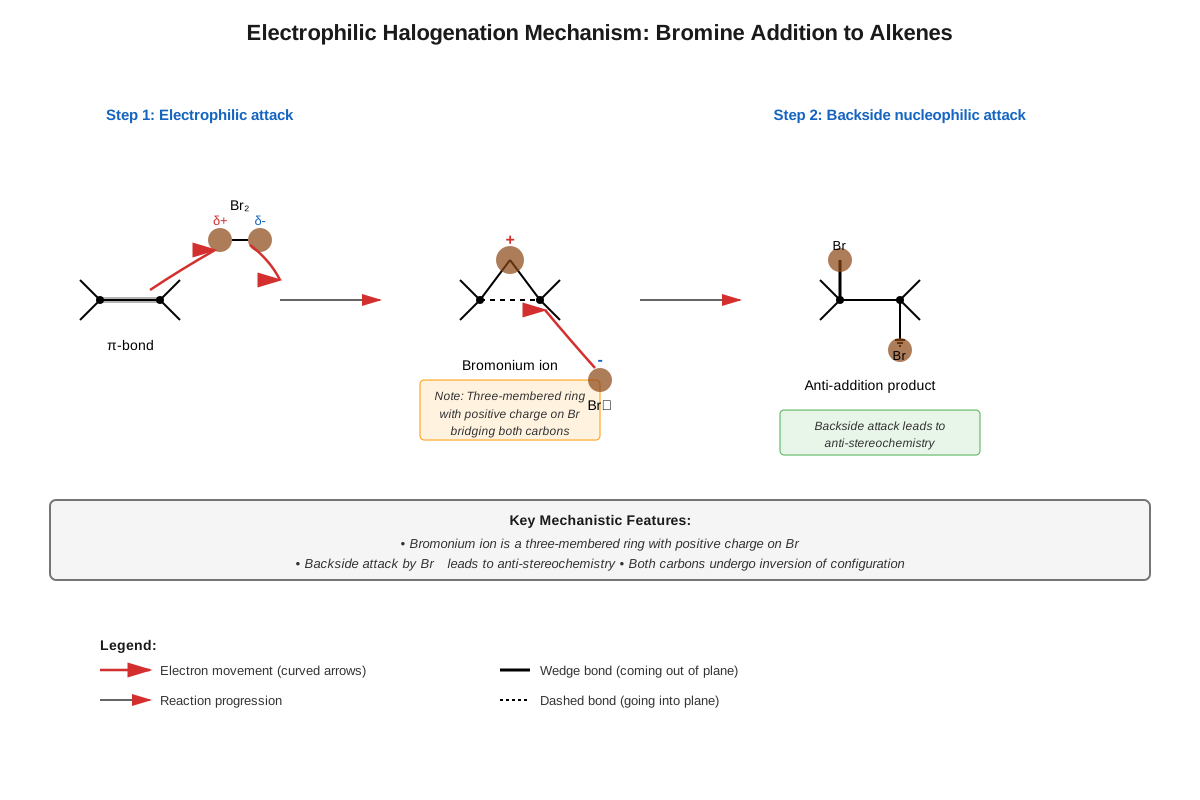
The mechanism of alkene halogenation proceeds through a three-membered cyclic halonium ion intermediate, which is the key feature distinguishing this reaction from simple carbocation-mediated additions. Understanding this mechanism is essential for predicting stereochemical outcomes.
Step 1: Formation of the Halonium Ion
The π-electrons of the alkene act as a nucleophile and attack one atom of the approaching halogen molecule (X₂). This interaction polarizes the X-X bond, with one halogen becoming partially positive. As the alkene electrons form a bond to one halogen atom, the X-X bond breaks heterolytically, releasing a halide ion (X⁻) and forming a halonium ion—a three-membered ring containing two carbon atoms and one positively charged halogen atom.
R₂C=CR₂ + X₂ → [R₂C-CR₂ with X⁺ bridging] + X⁻The halonium ion is stabilized by resonance, with the positive charge delocalized between the halogen and the two carbon atoms. This intermediate is more stable than a simple carbocation and prevents carbocation rearrangements that might otherwise occur.
Step 2: Nucleophilic Attack by Halide Ion
The halide ion (X⁻) generated in the first step acts as a nucleophile and attacks one of the carbon atoms in the halonium ion. Due to the geometry of the three-membered ring, the halide ion must approach from the side opposite to the bridging halogen atom. This backside attack opens the halonium ion ring and results in anti-addition—the two halogen atoms add to opposite faces of the original double bond.
[R₂C-CR₂ with X⁺ bridging] + X⁻ → R₂CX-CXR₂Stereochemistry of Halogenation: Anti-Addition
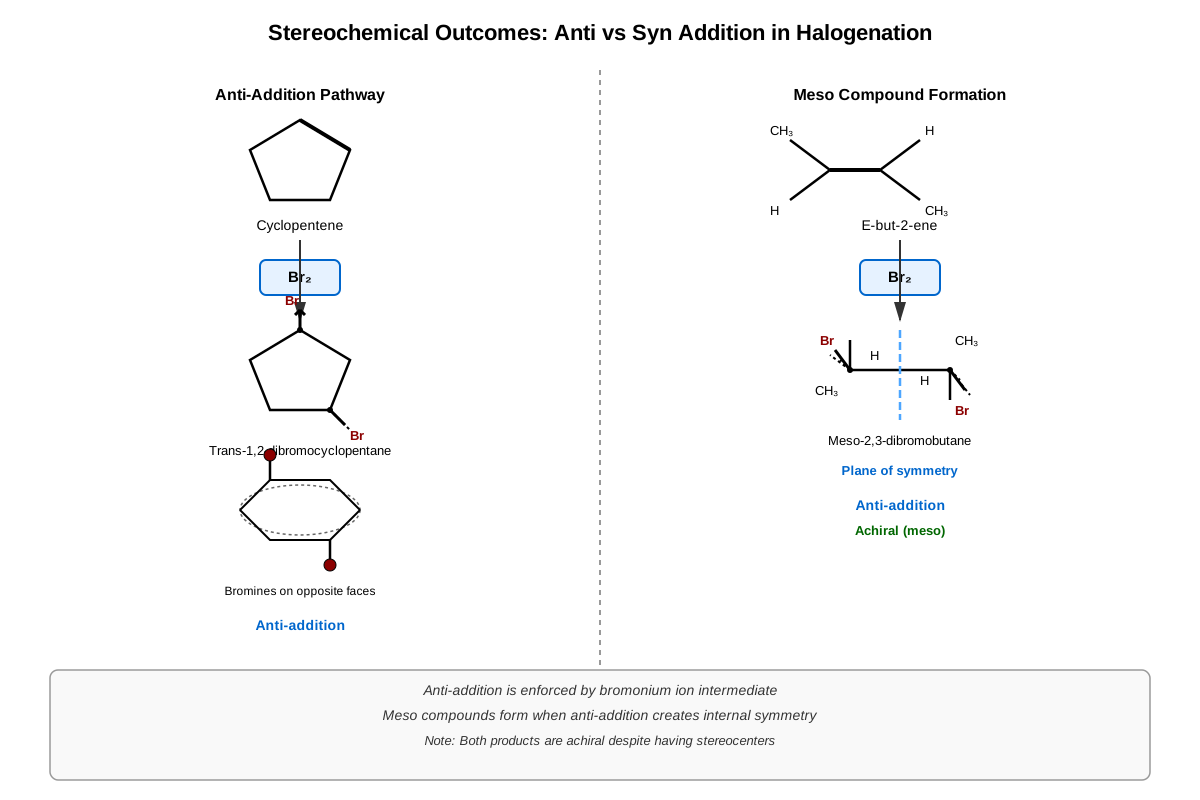
The most critical stereochemical feature of halogenation is anti-addition, which results directly from the halonium ion mechanism. Because the halide nucleophile must attack from the opposite face of the halonium ion, the two halogen atoms end up on opposite sides of the molecule.
For cyclic alkenes, anti-addition produces trans-dihalides (or anti-dihalides). For example, when cyclohexene reacts with bromine, the product is trans-1,2-dibromocyclohexane, where the two bromine atoms occupy axial and equatorial positions on opposite faces of the ring.
For acyclic alkenes, anti-addition has important consequences for stereoisomer formation:
| Starting Alkene | Halogenation Product | Stereochemical Outcome |
|---|---|---|
| Symmetrical (e.g., trans-2-butene) | Meso compound | Achiral due to internal plane of symmetry |
| Symmetrical (e.g., cis-2-butene) | Racemic mixture | Equal amounts of (R,R) and (S,S) enantiomers |
| Unsymmetrical | Racemic mixture | Equal amounts of enantiomers (if chiral centers formed) |
The formation of a racemic mixture from cis-2-butene occurs because the halonium ion can form on either face of the alkene with equal probability, and subsequent nucleophilic attack produces both possible enantiomers in equal amounts.
Regioselectivity in Halogenation
Unlike some other addition reactions (such as hydrohalogenation, which follows Markovnikov's rule), halogenation of simple alkenes shows no strong regioselectivity when both carbons of the double bond are similarly substituted. The halonium ion intermediate distributes positive charge relatively evenly between the two carbon atoms, so nucleophilic attack occurs at both positions with similar probability.
However, when the alkene is unsymmetrical and one carbon can better stabilize positive charge (due to alkyl substitution or resonance), the halonium ion may have more carbocation character at the more substituted position. In such cases, the halide nucleophile preferentially attacks the more substituted carbon, leading to products where the halogen atoms are distributed according to carbocation stability principles. This effect is generally minor for simple alkenes but becomes more significant with highly substituted or conjugated systems.
Reactivity of Different Halogens
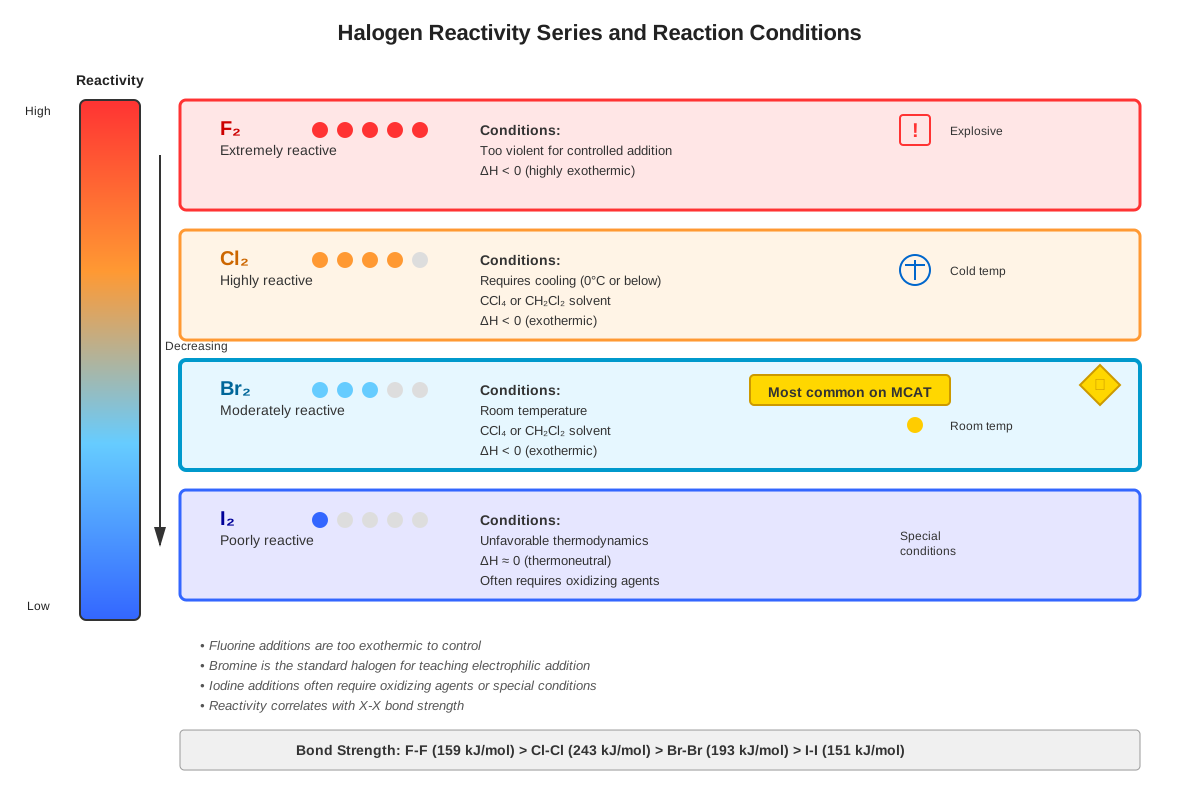
The reactivity of halogens in addition reactions follows the order: F₂ > Cl₂ > Br₂ > I₂
Fluorine is extremely reactive and difficult to control, often leading to multiple additions and side reactions. It is rarely used in synthetic organic chemistry and does not appear on the MCAT in the context of controlled addition reactions.
Chlorine reacts readily with alkenes but may produce side products through free radical pathways, especially in the presence of light or heat. Chlorination is less commonly featured on the MCAT than bromination.
Bromine is the most commonly tested halogen for MCAT purposes. Its moderate reactivity allows for controlled addition reactions, and the color change from reddish-brown Br₂ to colorless dibromide serves as a diagnostic test for unsaturation (the bromine test). Bromination typically proceeds cleanly through the halonium ion mechanism with excellent anti-stereoselectivity.
Iodine is the least reactive halogen and often requires activation or special conditions for addition to alkenes. Iodination is rarely tested on the MCAT.
Halogenation in Different Solvents
The solvent used in halogenation reactions can significantly affect the outcome:
Inert solvents (such as carbon tetrachloride, CCl₄, or dichloromethane, CH₂Cl₂) do not participate in the reaction and allow for clean dihalogenation through the halonium ion mechanism. These conditions favor anti-addition and produce vicinal dihalides.
Nucleophilic solvents (such as water or alcohols) can compete with the halide ion in attacking the halonium ion intermediate. This competition leads to halohydrin formation (when water is the solvent) or haloether formation (when alcohol is the solvent), which are distinct reactions covered separately in MCAT curricula. For the purposes of simple halogenation, students should recognize that inert solvents are required for clean dihalide formation.
Halogenation of Alkynes
Alkynes can undergo halogenation in a stepwise manner. The first equivalent of halogen adds across the triple bond to form a dihaloalkene, and a second equivalent can add to produce a tetrahaloalkane:
R-C≡C-R + X₂ → R-CX=CX-R (trans-dihaloalkene)
R-CX=CX-R + X₂ → R-CX₂-CX₂-R (tetrahaloalkane)
The first addition typically produces the trans-dihaloalkene due to anti-addition across the triple bond. The MCAT may test recognition of these products but rarely requires detailed mechanistic analysis of alkyne halogenation.
Free Radical Halogenation vs. Electrophilic Halogenation
Students must distinguish between electrophilic halogenation (addition to alkenes) and free radical halogenation (substitution on alkanes). These are fundamentally different processes:
| Feature | Electrophilic Halogenation | Free Radical Halogenation |
|---|---|---|
| Substrate | Alkenes (unsaturated) | Alkanes (saturated) |
| Mechanism | Electrophilic addition via halonium ion | Free radical substitution |
| Conditions | X₂ in inert solvent, room temperature | X₂ with heat or light (hν) |
| Product | Vicinal dihalide (two halogens on adjacent carbons) | Monohalide (one halogen replaces H) |
| Stereochemistry | Anti-addition | No stereochemical preference |
The MCAT may present scenarios where students must identify which type of halogenation occurs based on substrate structure and reaction conditions.
Quick check — test yourself on Halogenation so far.
Try Flashcards →Concept Relationships
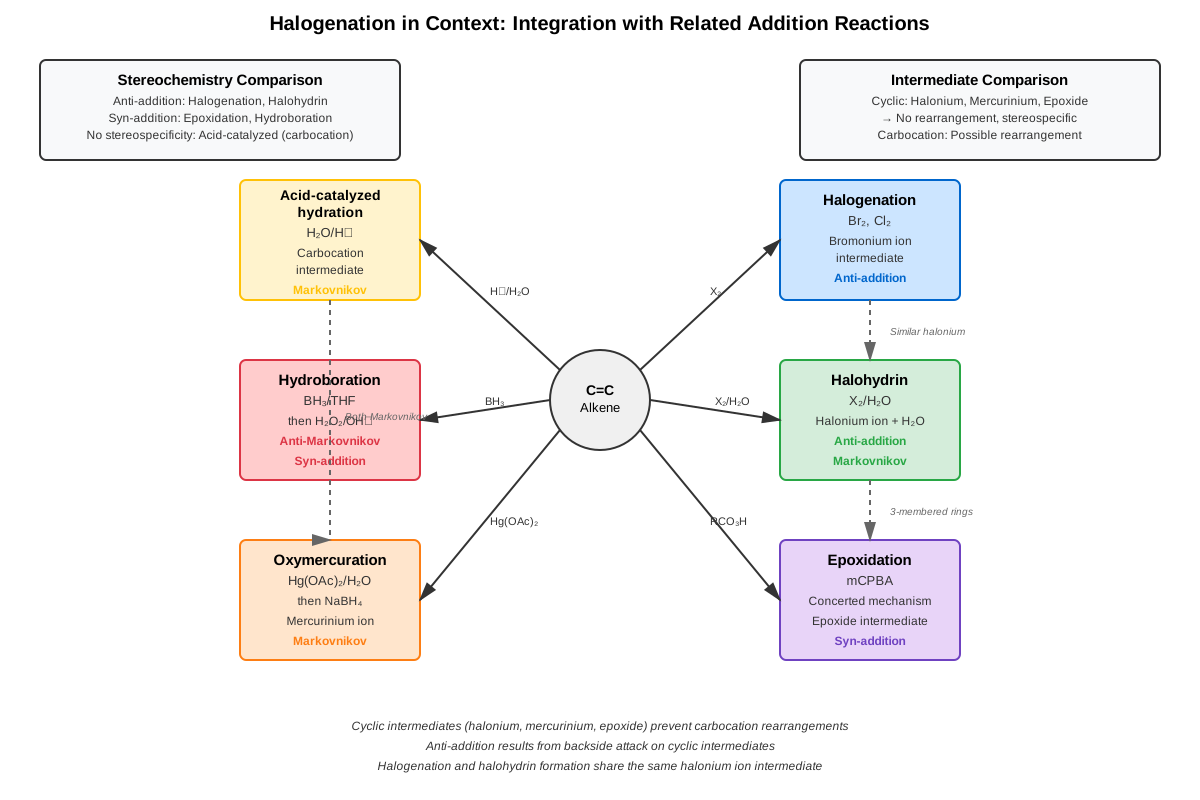
The concepts within halogenation are interconnected through a mechanistic framework. The electrophilic nature of molecular halogens drives the initial interaction with the nucleophilic π-bond of alkenes, leading to halonium ion formation. The structure of the halonium ion intermediate (a three-membered ring) directly determines the stereochemical outcome (anti-addition) through geometric constraints on nucleophilic attack. The relative stability of the halonium ion compared to carbocations explains the absence of rearrangements typically seen in other addition reactions.
Halogenation connects to prerequisite topics in multiple ways: Alkene structure → provides the π-electron density necessary for nucleophilic attack on X₂ → Electrophile-nucleophile theory → explains both the initial attack and the subsequent ring-opening → Stereochemistry → allows prediction and analysis of product configurations → Resonance → stabilizes the halonium ion intermediate.
Halogenation also serves as a foundation for related reactions: Halogenation → can be followed by elimination to regenerate alkenes → Halohydrin formation → occurs when water competes as nucleophile → Epoxidation → mechanistically similar through three-membered ring intermediates → Nucleophilic substitution → halogenated products can undergo SN1 or SN2 reactions.
Understanding halogenation enables progression to more complex topics: Multi-step synthesis requires halogenation as a key transformation → Biological halogenation by haloperoxidase enzymes follows similar principles → Drug metabolism often involves dehalogenation reactions → Environmental chemistry of persistent halogenated pollutants.
High-Yield Facts
⭐ Halogenation of alkenes proceeds through a three-membered cyclic halonium ion intermediate, not a carbocation.
⭐ Anti-addition is the stereochemical outcome of halogenation—the two halogen atoms add to opposite faces of the double bond.
⭐ Bromine (Br₂) is the most commonly tested halogen on the MCAT; the color change from brown to colorless indicates alkene presence.
⭐ Halogenation in inert solvents produces vicinal dihalides; nucleophilic solvents lead to halohydrin or haloether formation.
⭐ Carbocation rearrangements do NOT occur during halogenation because the halonium ion intermediate is more stable than a carbocation.
- Halogenation of cyclic alkenes produces trans-dihalides due to anti-addition geometry.
- Halogenation of symmetrical trans-alkenes produces meso compounds with internal planes of symmetry.
- Halogenation of symmetrical cis-alkenes produces racemic mixtures of enantiomers.
- Free radical halogenation (substitution on alkanes) requires heat or light and produces monohalides, not dihalides.
- The reactivity order of halogens is F₂ > Cl₂ > Br₂ > I₂, with bromine being optimal for controlled reactions.
- Alkynes can undergo two successive halogenation reactions, first forming trans-dihaloalkenes, then tetrahaloalkanes.
- The halonium ion intermediate is stabilized by resonance delocalization of the positive charge.
Common Misconceptions
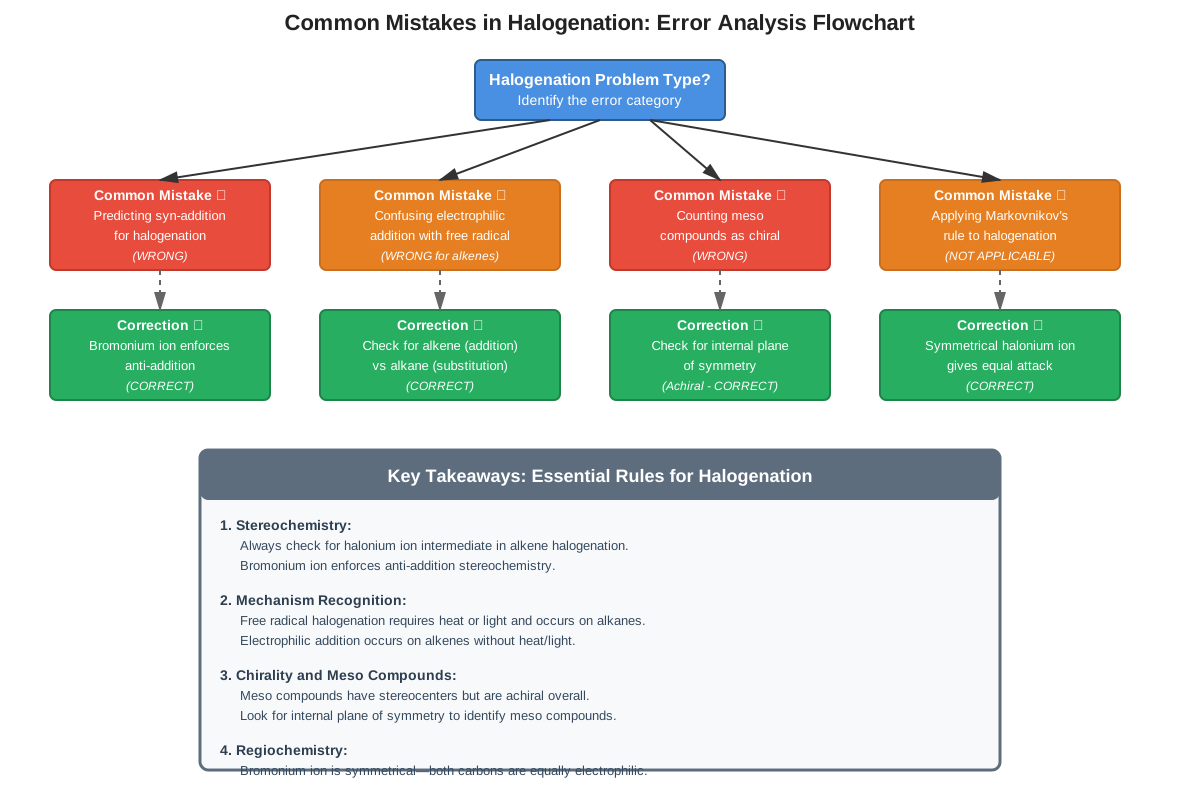
Misconception: Halogenation proceeds through a carbocation intermediate, similar to hydrohalogenation.
Correction: Halogenation proceeds through a halonium ion intermediate (three-membered ring with a positively charged halogen), which is more stable than a carbocation and prevents rearrangements. This mechanistic difference is crucial for predicting stereochemistry and the absence of rearrangements.
Misconception: Halogenation follows Markovnikov's rule, with halogens adding preferentially to the more substituted carbon.
Correction: Halogenation shows minimal regioselectivity for simple alkenes because the halonium ion distributes charge relatively evenly. Unlike hydrohalogenation (which follows Markovnikov's rule), halogenation does not strongly favor one regioisomer over another for symmetrical or near-symmetrical alkenes.
Misconception: Halogenation produces syn-addition products (both halogens on the same face).
Correction: Halogenation produces anti-addition products due to backside attack on the halonium ion. This is one of the most tested aspects of halogenation stereochemistry. Syn-addition occurs in other reactions (such as catalytic hydrogenation) but not in halogenation.
Misconception: Free radical halogenation and electrophilic halogenation are the same reaction.
Correction: These are completely different processes. Free radical halogenation is a substitution reaction on alkanes requiring heat or light, producing monohalides. Electrophilic halogenation is an addition reaction on alkenes occurring at room temperature in the dark, producing vicinal dihalides. Confusing these reactions leads to incorrect product predictions.
Misconception: All halogenation reactions produce racemic mixtures.
Correction: The stereochemical outcome depends on the starting alkene geometry. Symmetrical trans-alkenes produce meso compounds (achiral), while symmetrical cis-alkenes produce racemic mixtures. Unsymmetrical alkenes may produce racemic mixtures, single enantiomers, or achiral products depending on the specific structure and substitution pattern.
Misconception: Halogenation can occur with any halogen under the same conditions.
Correction: Different halogens have vastly different reactivities. Fluorine is too reactive for controlled addition, iodine is too unreactive, and chlorine may produce side products. Bromine is the optimal halogen for clean, controlled halogenation reactions and is the most commonly tested on the MCAT.
Worked Examples
Example 1: Stereochemical Analysis of Halogenation
Question: When (Z)-3-methyl-2-pentene reacts with Br₂ in CCl₄, what is the stereochemical relationship between the products formed?
Solution:
Step 1: Draw the starting alkene structure. (Z)-3-methyl-2-pentene has the higher priority groups (ethyl and isopropyl) on the same side of the double bond.
Step 2: Recognize that halogenation proceeds through anti-addition via a halonium ion intermediate.
Step 3: The halonium ion can form on either face of the alkene with equal probability (the alkene is planar and achiral).
Step 4: When the halonium ion forms on the top face, subsequent nucleophilic attack from the bottom produces one enantiomer. When the halonium ion forms on the bottom face, attack from the top produces the other enantiomer.
Step 5: Because both pathways occur with equal probability, the product is a racemic mixture of enantiomers (50:50 ratio of R,R and S,S configurations at the two newly formed chiral centers).
Step 6: The two products are enantiomers (non-superimposable mirror images), not diastereomers, because they differ in configuration at both chiral centers.
Answer: The products are enantiomers formed in equal amounts (a racemic mixture).
Connection to Learning Objectives: This example demonstrates application of halogenation stereochemistry to predict products (LO: Apply halogenation to exam-style questions) and illustrates the anti-addition mechanism (LO: Predict stereochemical outcome).
Example 2: Distinguishing Reaction Types
Question: A researcher has two bottles, one containing cyclohexane and one containing cyclohexene, but the labels have fallen off. Describe a simple chemical test to distinguish between them and explain the expected observations.
Solution:
Step 1: Recognize that the key difference is saturation—cyclohexane has no double bonds, while cyclohexene has one C=C double bond.
Step 2: Recall that bromine (Br₂) undergoes rapid addition to alkenes but does not react with alkanes under normal conditions (without heat or light).
Step 3: The bromine test involves adding a solution of Br₂ (reddish-brown color) to each sample.
Step 4: For cyclohexene (the alkene), Br₂ will add across the double bond through electrophilic halogenation:
Cyclohexene + Br₂ → 1,2-dibromocyclohexaneThe reddish-brown color of Br₂ will disappear rapidly as it is consumed in the reaction, producing colorless dibromocyclohexane.
Step 5: For cyclohexane (the alkane), no reaction occurs at room temperature in the absence of light or heat. The reddish-brown color of Br₂ persists.
Step 6: The observation of color change (brown to colorless) indicates the presence of the alkene (cyclohexene), while persistence of brown color indicates the alkane (cyclohexane).
Answer: Add Br₂ solution to each sample. The bottle that causes the brown color to disappear contains cyclohexene; the bottle where the color persists contains cyclohexane.
Connection to Learning Objectives: This example applies halogenation principles to a practical scenario (LO: Apply halogenation to exam-style questions), distinguishes between reaction types (LO: Identify common mistakes), and connects to the broader concept of alkene reactivity (LO: Connect halogenation to related concepts).
Exam Strategy
When approaching MCAT questions on halogenation, begin by identifying the substrate type (alkene vs. alkane) and reaction conditions (presence of heat/light vs. room temperature). This immediately distinguishes between electrophilic addition and free radical substitution pathways. Look for trigger words such as "Br₂ in CCl₄," "anti-addition," "vicinal dihalide," or "halonium ion"—these signal electrophilic halogenation of alkenes.
For stereochemistry questions, draw the starting alkene geometry carefully and remember that anti-addition is mandatory. If the question asks about product stereochemistry, consider whether the starting material is cis or trans, symmetrical or unsymmetrical, and whether the product will be a meso compound, racemic mixture, or single enantiomer. Eliminate answer choices that show syn-addition or carbocation rearrangements, as these do not occur in halogenation.
When passages present novel halogenated compounds or biological contexts, focus on the fundamental principles: halogens add to π-bonds through electrophilic mechanisms, anti-stereochemistry is preserved, and the halonium ion prevents rearrangements. Apply these principles to predict reactivity even in unfamiliar contexts.
For time management, recognize that halogenation questions often test stereochemistry, which requires careful spatial reasoning. If a question asks you to draw or identify stereoisomers, allocate 60-90 seconds to work through the mechanism mentally or sketch it quickly. For straightforward product identification questions, 30-45 seconds should suffice.
Process-of-elimination tips: Eliminate choices showing (1) syn-addition products, (2) carbocation rearrangements, (3) Markovnikov selectivity in simple halogenation, (4) monohalide products from alkenes (these come from free radical reactions on alkanes), or (5) fluorine as the halogen in controlled additions.
Memory Techniques
Mnemonic for Anti-Addition: "Halonium Always Negates Together Insertion" (HANTI) reminds you that the halonium ion mechanism ensures anti-addition, with halogens never adding to the same side (together).
Visualization Strategy: Picture the halonium ion as a "bridge" over the two carbons. The incoming nucleophile must attack from underneath the bridge (backside attack), ensuring the two halogens end up on opposite sides. This mental image reinforces anti-stereochemistry.
Acronym for Halogen Reactivity: "Fury Causes Big Issues" (F > Cl > Br > I) represents the reactivity order, with fluorine's "fury" being too extreme for controlled reactions.
Stereochemistry Memory Aid: "Cis gives Racemic, Trans gives Meso" (CRTM) helps remember that cis-alkenes produce racemic mixtures while trans-alkenes often produce meso compounds (when symmetrical).
Mechanism Sequence: Use the phrase "Pi Attacks, Halogen Bridges, Nucleophile Opens" (PAHBNO) to remember the sequence: Pi-electrons attack → Halogen bridges (halonium ion) → Nucleophile opens the ring.
Summary
Halogenation represents a fundamental addition reaction in organic chemistry where molecular halogens (typically Br₂ or Cl₂) add across carbon-carbon double bonds through a distinctive three-membered halonium ion intermediate. This mechanism ensures anti-addition stereochemistry, prevents carbocation rearrangements, and produces vicinal dihalides as products. For MCAT success, students must distinguish electrophilic halogenation of alkenes from free radical halogenation of alkanes, predict stereochemical outcomes based on starting alkene geometry (racemic mixtures from cis-alkenes, meso compounds from symmetrical trans-alkenes), and recognize that bromine serves as both a reagent and a diagnostic test for unsaturation. The halonium ion intermediate is stabilized by resonance and determines both the anti-stereochemistry and the absence of rearrangements. Understanding these principles enables students to predict products, analyze mechanisms, and apply halogenation concepts to biological and synthetic contexts commonly presented in MCAT passages.
Key Takeaways
- Halogenation of alkenes proceeds through a three-membered cyclic halonium ion intermediate, ensuring anti-addition stereochemistry
- Bromine (Br₂) is the most commonly tested halogen; its color change from brown to colorless serves as a diagnostic test for alkenes
- Anti-addition produces trans-dihalides in cyclic systems and determines whether acyclic products are racemic mixtures or meso compounds
- Carbocation rearrangements do NOT occur in halogenation because the halonium ion is more stable than a carbocation
- Electrophilic halogenation (addition to alkenes) must be distinguished from free radical halogenation (substitution on alkanes requiring heat/light)
- Inert solvents (CCl₄, CH₂Cl₂) are required for clean dihalide formation; nucleophilic solvents lead to halohydrin formation
- The stereochemical outcome depends on starting alkene geometry: cis-alkenes typically give racemic mixtures, while symmetrical trans-alkenes give meso compounds
Related Topics
Halohydrin Formation: When halogenation occurs in water or aqueous solutions, the solvent competes as a nucleophile, producing halohydrins (β-halo alcohols) instead of dihalides. This reaction demonstrates regioselectivity based on carbocation stability and connects halogenation to alcohol chemistry.
Epoxidation: Mechanistically similar to halogenation, epoxidation involves formation of a three-membered ring (epoxide) through electrophilic addition. Understanding halonium ions facilitates learning epoxide formation and ring-opening reactions.
Elimination Reactions: Vicinal dihalides produced by halogenation can undergo elimination reactions to regenerate alkenes or form alkynes, connecting addition and elimination as reverse processes.
Nucleophilic Substitution: Halogenated products serve as substrates for SN1 and SN2 reactions, making halogenation a key step in multi-step synthesis sequences.
Free Radical Reactions: Contrasting electrophilic halogenation with free radical halogenation deepens understanding of mechanism types, selectivity, and the role of reaction conditions.
Mastering halogenation provides the mechanistic foundation for understanding these related transformations and enables progression to more complex synthetic and biological applications of organic chemistry.
Practice CTA
Now that you have thoroughly reviewed halogenation mechanisms, stereochemistry, and exam strategies, challenge yourself with practice questions and flashcards to reinforce these concepts. Focus on predicting stereochemical outcomes, distinguishing reaction types, and applying anti-addition principles to novel scenarios. Active practice with exam-style questions will solidify your understanding and build the pattern recognition skills essential for MCAT success. Remember: mastery comes from application, not just reading. Test yourself, identify weak areas, and review the mechanisms until predicting halogenation products becomes second nature. You've built a strong foundation—now strengthen it through deliberate practice!
Sign up free to keep reading
Create a free AnvayaPrep account to finish this MCAT guide on Halogenation — plus flashcards and practice questions.