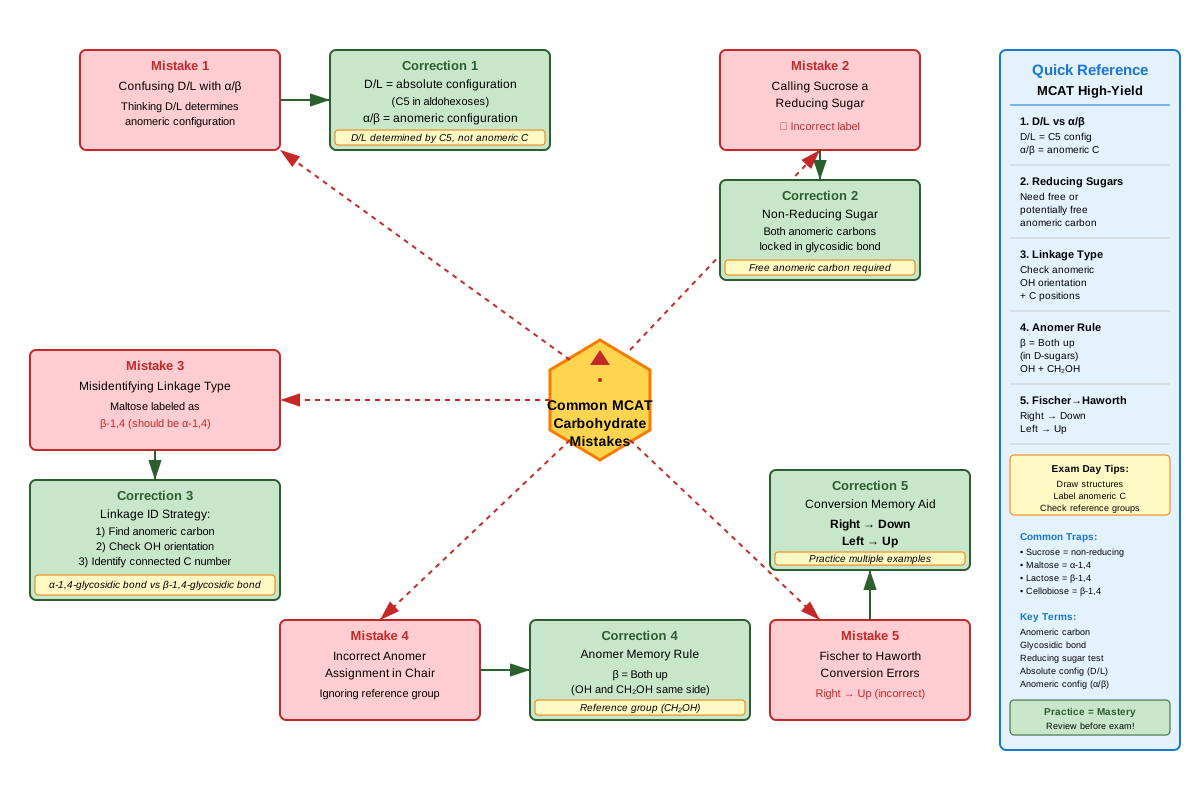
Overview
Carbohydrate chemistry represents one of the most clinically and biochemically relevant topics within Organic Chemistry for the MCAT. Carbohydrates are polyhydroxy aldehydes or ketones (or compounds that can be hydrolyzed to them) that serve as the primary energy source for living organisms, structural components of cells, and critical recognition molecules in biological systems. Understanding carbohydrate structure, nomenclature, stereochemistry, and reactivity is essential for success on the MCAT, as these molecules bridge organic chemistry principles with biochemistry and metabolism.
The MCAT tests carbohydrate chemistry through both discrete questions and passage-based scenarios that integrate structural analysis, reaction mechanisms, and biological function. Students must be comfortable identifying different classes of carbohydrates (monosaccharides, disaccharides, polysaccharides), understanding their three-dimensional structures, recognizing common reactions (glycosidic bond formation, mutarotation, oxidation-reduction), and connecting these chemical properties to their biological roles. This topic appears frequently in the Chemical and Physical Foundations of Biological Systems section and often connects to passages in the Biological and Biochemical Foundations of Living Systems section.
Within Biologically Relevant Organic Chemistry, carbohydrate chemistry serves as a cornerstone that connects fundamental organic chemistry principles—stereochemistry, functional group reactivity, and conformational analysis—to the complex biochemical pathways tested on the MCAT. Mastery of this topic enables students to understand glycolysis, gluconeogenesis, glycogen metabolism, and the structural roles of carbohydrates in cell membranes and extracellular matrices. The stereochemical complexity of carbohydrates also reinforces critical MCAT skills in spatial reasoning and structure-function relationships.
Learning Objectives
- [ ] Define Carbohydrate chemistry using accurate Organic Chemistry terminology
- [ ] Explain why Carbohydrate chemistry matters for the MCAT
- [ ] Apply Carbohydrate chemistry to exam-style questions
- [ ] Identify common mistakes related to Carbohydrate chemistry
- [ ] Connect Carbohydrate chemistry to related Organic Chemistry concepts
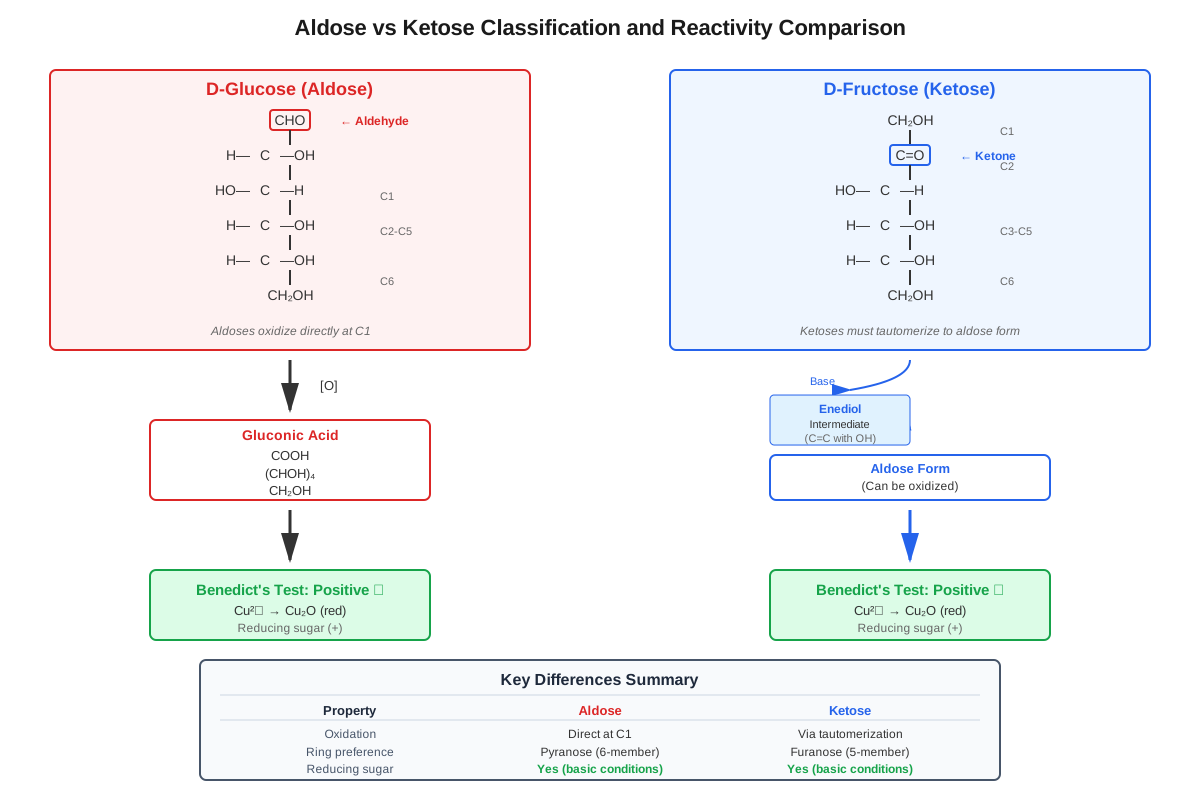
- [ ] Distinguish between aldoses and ketoses and predict their chemical reactivity
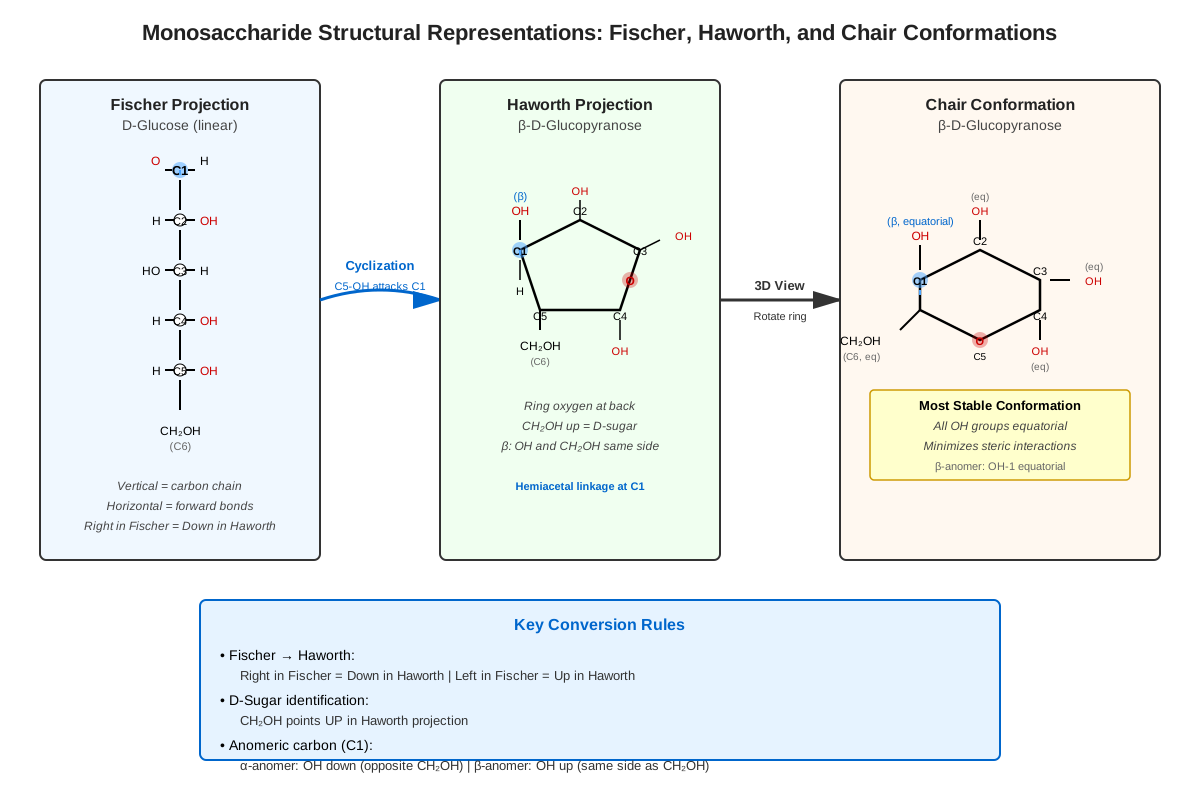
- [ ] Draw and interconvert Fischer projections, Haworth projections, and chair conformations of monosaccharides
- [ ] Predict the products of glycosidic bond formation and hydrolysis reactions
- [ ] Analyze the structural differences between reducing and non-reducing sugars
Prerequisites
- Stereochemistry and chirality: Essential for understanding the multiple chiral centers in carbohydrates and distinguishing between epimers, enantiomers, and diastereomers
- Functional group reactivity: Necessary to predict how aldehydes, ketones, and alcohols in carbohydrates undergo reactions
- Cyclic hemiacetal/hemiketal formation: Critical for understanding how linear carbohydrates cyclize to form ring structures
- Nomenclature conventions: Required to interpret D/L notation, α/β anomers, and systematic carbohydrate names
- Acid-base chemistry: Important for understanding glycosidic bond formation and hydrolysis mechanisms
Why This Topic Matters
Carbohydrates are ubiquitous in biological systems, making them a high-yield topic for MCAT success. Clinically, abnormalities in carbohydrate metabolism underlie conditions such as diabetes mellitus, glycogen storage diseases, and lactose intolerance. Understanding carbohydrate structure enables students to comprehend how enzymes recognize specific substrates, how drugs target carbohydrate-processing enzymes, and how blood typing relies on carbohydrate antigens on red blood cell surfaces.
On the MCAT, carbohydrate chemistry appears in approximately 3-5 questions per exam, representing roughly 2-3% of the Chemical and Physical Foundations section. Questions typically test structural identification (recognizing monosaccharides from their structures), reaction prediction (glycosidic bond formation or hydrolysis), and property analysis (reducing vs. non-reducing sugars, mutarotation). Passage-based questions often integrate carbohydrate chemistry with enzyme kinetics, metabolism, or experimental techniques like chromatography and spectroscopy.
Common exam scenarios include: passages describing glycosidase enzyme mechanisms, experimental procedures for synthesizing oligosaccharides, metabolic pathway disruptions affecting carbohydrate processing, and structural biology passages examining carbohydrate-protein interactions. The MCAT frequently tests the ability to interconvert between different structural representations (Fischer, Haworth, chair) and to predict how structural modifications affect biological function.
Core Concepts
Classification and Nomenclature
Carbohydrates are organic compounds with the general formula (CH₂O)ₙ, though this formula is not universal. They are classified based on the number of carbon atoms, the type of carbonyl group present, and the number of sugar units. Monosaccharides are the simplest carbohydrates that cannot be hydrolyzed into smaller carbohydrate units. They are further classified as aldoses (containing an aldehyde group) or ketoses (containing a ketone group), with the number of carbons indicated by prefixes: triose (3C), tetrose (4C), pentose (5C), hexose (6C), and heptose (7C).
The most important monosaccharides for the MCAT include glucose, fructose, galactose, ribose, and deoxyribose. Glucose is an aldohexose and the primary energy source for cells. Fructose is a ketohexose found in fruits and honey. Galactose is an aldohexose that differs from glucose only at C-4 (making them C-4 epimers). Ribose and deoxyribose are aldopentoses that form the backbone of RNA and DNA, respectively.
Stereochemistry and Fischer Projections
Carbohydrates contain multiple chiral centers, making stereochemistry crucial for understanding their structure and function. Fischer projections are the standard two-dimensional representation for linear carbohydrates, with the following conventions: the most oxidized carbon (aldehyde or ketone) is placed at or near the top, horizontal lines represent bonds projecting out of the page, and vertical lines represent bonds going into the page.
The D/L nomenclature is based on the configuration of the chiral center farthest from the carbonyl group. If the hydroxyl group on this carbon is on the right in a Fischer projection, the sugar is designated D; if on the left, it is L. Most naturally occurring sugars are D-sugars. This notation is distinct from (+)/(-) or d/l notation, which refers to the direction of optical rotation and must be determined experimentally.
Epimers are diastereomers that differ in configuration at only one chiral center. For example, glucose and galactose are C-4 epimers, while glucose and mannose are C-2 epimers. Recognizing epimeric relationships is essential for MCAT questions about enzyme specificity and metabolic interconversions.
Cyclic Structures and Anomers
In aqueous solution, monosaccharides with five or more carbons exist predominantly in cyclic forms rather than open-chain structures. This cyclization occurs through intramolecular hemiacetal (for aldoses) or hemiketal (for ketoses) formation. For hexoses, the C-5 hydroxyl group typically attacks the carbonyl carbon, forming a six-membered ring called a pyranose. Alternatively, the C-4 hydroxyl can attack to form a five-membered ring called a furanose.
The cyclization process creates a new chiral center at the carbonyl carbon, now called the anomeric carbon. This generates two stereoisomers called anomers: the α-anomer has the hydroxyl group on the anomeric carbon trans to the CH₂OH group (down in a Haworth projection for D-sugars), while the β-anomer has it cis to the CH₂OH group (up in a Haworth projection for D-sugars).
Haworth projections represent cyclic sugars as planar rings viewed edge-on. For D-sugars in pyranose form, groups on the right in Fischer projections point down in Haworth projections, and groups on the left point up. The ring oxygen is typically placed at the back right. Chair conformations provide a more accurate three-dimensional representation, showing the actual non-planar geometry of six-membered rings. For β-D-glucopyranose, all hydroxyl groups and the CH₂OH group occupy equatorial positions, making it the most stable hexose.
Mutarotation
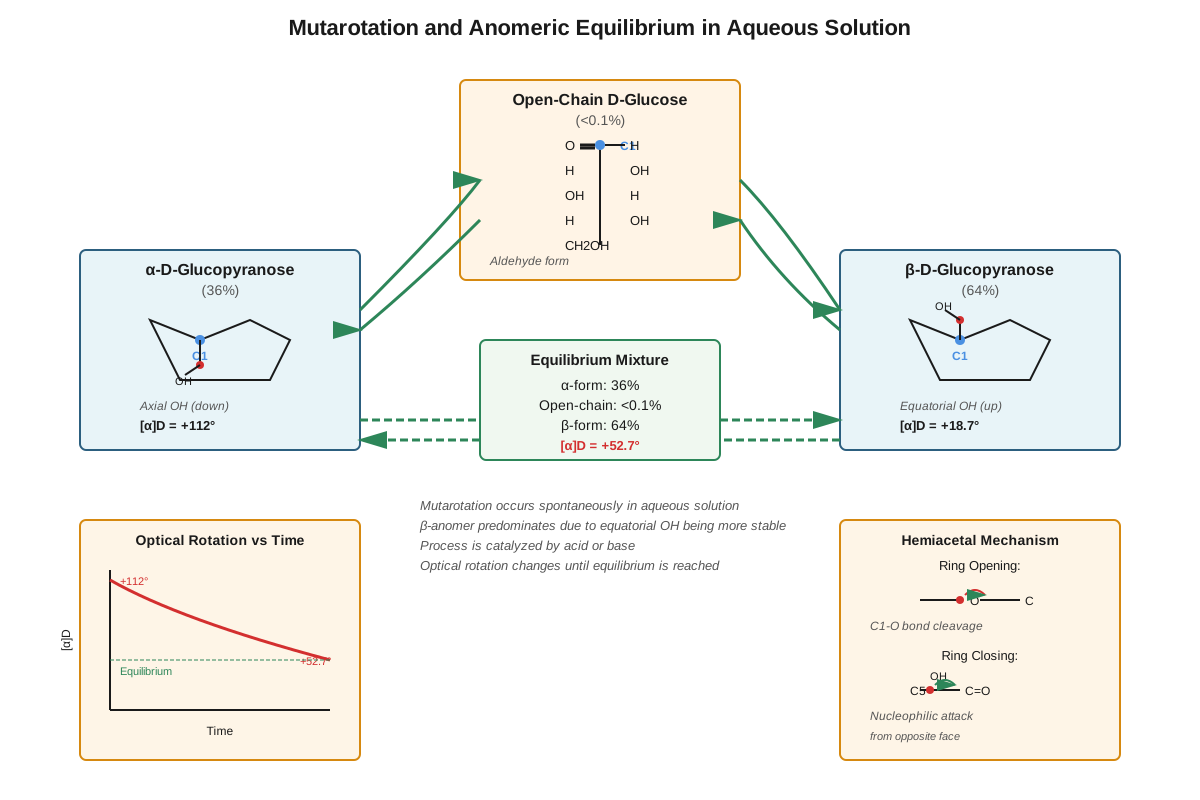
Mutarotation is the spontaneous interconversion between α and β anomers through the open-chain form in aqueous solution. This process changes the specific rotation of the solution until an equilibrium mixture is reached. For glucose, the equilibrium mixture contains approximately 36% α-anomer, 64% β-anomer, and less than 0.01% open-chain form. Mutarotation is catalyzed by acids or bases and is important for understanding why carbohydrate solutions change optical rotation over time.
The ability to undergo mutarotation is characteristic of reducing sugars—those with a free or potentially free anomeric carbon. The open-chain form, though present in minute quantities, is responsible for the reducing properties of these sugars.
Glycosidic Bonds and Disaccharides
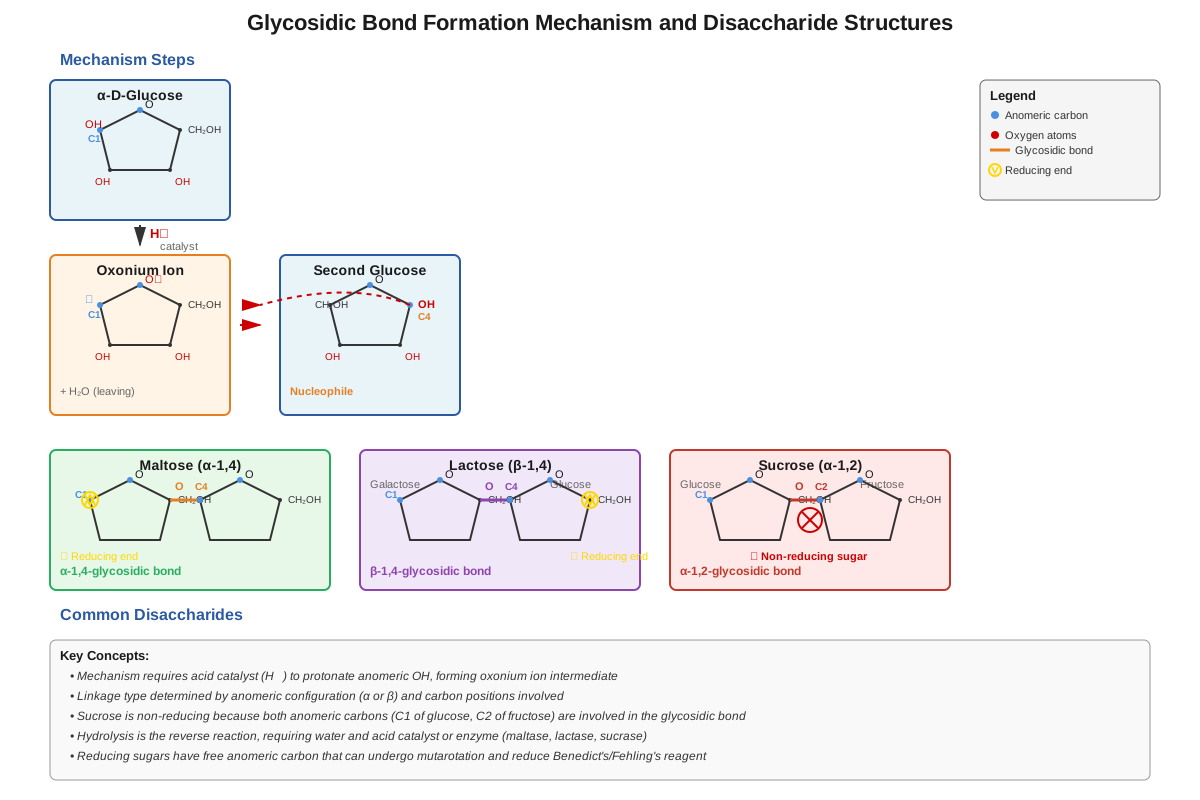
Glycosidic bonds are acetal or ketal linkages formed between the anomeric carbon of one sugar and a hydroxyl group of another molecule (which may be another sugar, a protein, or a lipid). Formation of a glycosidic bond requires acid catalysis or enzymatic catalysis and releases water. The bond is named according to the anomeric configuration (α or β) and the carbons involved. For example, maltose contains an α(1→4) glycosidic bond between two glucose units.
Important disaccharides for the MCAT include:
| Disaccharide | Monosaccharide Units | Glycosidic Bond | Reducing? |
|---|---|---|---|
| Maltose | Glucose + Glucose | α(1→4) | Yes |
| Lactose | Galactose + Glucose | β(1→4) | Yes |
| Sucrose | Glucose + Fructose | α(1→2) | No |
| Cellobiose | Glucose + Glucose | β(1→4) | Yes |
Sucrose is unique among common disaccharides because it is a non-reducing sugar. Both anomeric carbons participate in the glycosidic bond (α-glucose C-1 to β-fructose C-2), preventing mutarotation and eliminating reducing properties.
Polysaccharides
Polysaccharides are polymers of monosaccharides connected by glycosidic bonds. They serve structural or storage functions in biological systems. Starch is the primary glucose storage polymer in plants, consisting of amylose (unbranched α(1→4) chains) and amylopectin (α(1→4) chains with α(1→6) branches every 24-30 residues). Glycogen is the animal equivalent, with more frequent branching (every 8-12 residues), allowing faster glucose mobilization.
Cellulose is a structural polysaccharide in plant cell walls, consisting of β(1→4)-linked glucose units. The β-linkage creates extended, linear chains that form strong fibers through hydrogen bonding. Humans cannot digest cellulose because they lack enzymes to hydrolyze β(1→4) glycosidic bonds, making it dietary fiber. Chitin, found in arthropod exoskeletons and fungal cell walls, is similar to cellulose but contains N-acetylglucosamine units instead of glucose.
Reactions of Carbohydrates
Oxidation reactions are diagnostically important for carbohydrates. Reducing sugars (those with free anomeric carbons) can be oxidized by mild oxidizing agents like Benedict's or Fehling's reagent, reducing Cu²⁺ to Cu⁺ (visible as a red precipitate). Stronger oxidizing agents like nitric acid oxidize both the aldehyde and the primary alcohol to form aldaric acids. Oxidation of only the aldehyde produces aldonic acids, while oxidation of only the primary alcohol yields uronic acids (important in glycosaminoglycans).
Reduction of the carbonyl group in monosaccharides produces alditols (sugar alcohols). For example, reduction of glucose yields sorbitol, and reduction of galactose yields dulcitol. These sugar alcohols are used as sweeteners and in medical applications.
Glycosidic bond hydrolysis breaks disaccharides and polysaccharides into monosaccharides. This reaction requires acid catalysis or specific enzymes (glycosidases). The mechanism involves protonation of the glycosidic oxygen, cleavage of the C-O bond, and formation of a carbocation intermediate at the anomeric carbon, followed by water attack. Enzyme-catalyzed hydrolysis is stereospecific—α-glycosidases cleave only α-glycosidic bonds, and β-glycosidases cleave only β-bonds.
Biological Roles
Carbohydrates serve diverse biological functions beyond energy storage. Glycoproteins and glycolipids contain carbohydrate chains attached to proteins or lipids, functioning in cell recognition, immune response, and cell adhesion. Blood group antigens (A, B, O) are determined by specific carbohydrate structures on red blood cell surfaces. Glycosaminoglycans (GAGs) are long, unbranched polysaccharides containing repeating disaccharide units with amino sugars and uronic acids, providing structural support in connective tissues and regulating protein function.
Concept Relationships
The core concepts in carbohydrate chemistry form an interconnected network. Stereochemistry (Fischer projections, D/L notation, epimers) provides the foundation for understanding cyclic structures (Haworth projections, anomers, pyranose/furanose forms). The formation of cyclic structures through hemiacetal/hemiketal chemistry directly enables mutarotation and determines whether a sugar is reducing or non-reducing.
Glycosidic bond formation builds upon cyclic structure knowledge, converting hemiacetals to acetals and connecting monosaccharides into disaccharides and polysaccharides. The type of glycosidic bond (α vs. β, which carbons are connected) determines the three-dimensional structure and biological function of the resulting polymer. For example: α(1→4) linkages → amylose (helical, digestible) vs. β(1→4) linkages → cellulose (linear, indigestible).
Oxidation-reduction reactions connect to the open-chain form of carbohydrates, explaining why reducing sugars must be able to undergo mutarotation. This relationship explains why sucrose (both anomeric carbons locked in glycosidic bond) is non-reducing, while maltose (one free anomeric carbon) is reducing.
These concepts connect to prerequisite knowledge: stereochemistry builds on general chirality principles; cyclic structure formation applies hemiacetal chemistry from carbonyl compounds; glycosidic bonds extend acetal formation mechanisms. Looking forward, carbohydrate chemistry enables understanding of glycolysis (glucose metabolism), glycogen metabolism (storage and mobilization), and pentose phosphate pathway (ribose synthesis).
Quick check — test yourself on Carbohydrate chemistry so far.
Try Flashcards →High-Yield Facts
⭐ D-glucose exists predominantly as β-D-glucopyranose in solution (64%) because all substituents occupy equatorial positions in the chair conformation, maximizing stability.
⭐ Reducing sugars have a free or potentially free anomeric carbon that can undergo mutarotation and reduce mild oxidizing agents like Benedict's reagent.
⭐ Sucrose is a non-reducing disaccharide because both anomeric carbons (α-glucose C-1 and β-fructose C-2) participate in the glycosidic bond.
⭐ Glycogen has more frequent branching (every 8-12 residues) than amylopectin (every 24-30 residues), allowing faster glucose mobilization during energy demands.
⭐ Humans cannot digest cellulose because they lack enzymes to hydrolyze β(1→4) glycosidic bonds, unlike the α(1→4) bonds in starch.
- Epimers differ in configuration at only one chiral center; glucose and galactose are C-4 epimers, while glucose and mannose are C-2 epimers.
- The D/L designation is based on the configuration of the chiral center farthest from the carbonyl group, not on the direction of optical rotation.
- Mutarotation is the interconversion between α and β anomers through the open-chain form, changing the specific rotation until equilibrium is reached.
- Haworth projections show groups on the right in Fischer projections pointing down, and groups on the left pointing up (for D-sugars).
- Glycosidic bond hydrolysis is catalyzed by acids or specific glycosidase enzymes and is the reverse of glycosidic bond formation.
- Aldonic acids result from oxidation of the aldehyde group only, while aldaric acids result from oxidation of both the aldehyde and primary alcohol.
- Fructose is a ketohexose that forms predominantly five-membered furanose rings in solution, unlike glucose which forms six-membered pyranose rings.
Common Misconceptions
Misconception: All carbohydrates have the formula (CH₂O)ₙ.
Correction: While many carbohydrates fit this formula, deoxy sugars (like deoxyribose) and amino sugars (like glucosamine) do not. The functional definition—polyhydroxy aldehydes/ketones or compounds that hydrolyze to them—is more accurate.
Misconception: D/L notation indicates the direction of optical rotation.
Correction: D/L notation refers only to the configuration at the chiral center farthest from the carbonyl group (right = D, left = L in Fischer projection). The direction of optical rotation (+/- or d/l) must be determined experimentally and does not correlate predictably with D/L designation.
Misconception: The α-anomer always has the anomeric hydroxyl group pointing down in Haworth projections.
Correction: For D-sugars, the α-anomer has the anomeric hydroxyl trans to the CH₂OH group (down in pyranose form). For L-sugars, the relationship is reversed. Always reference the CH₂OH position, not an absolute direction.
Misconception: Non-reducing sugars cannot undergo any oxidation reactions.
Correction: Non-reducing sugars cannot reduce mild oxidizing agents like Benedict's reagent because they lack a free anomeric carbon. However, strong oxidizing agents can still oxidize other functional groups (like primary alcohols) in non-reducing sugars.
Misconception: Glycosidic bonds are the same as peptide bonds or ester bonds.
Correction: Glycosidic bonds are acetal or ketal linkages (C-O-C) formed between a hemiacetal/hemiketal and an alcohol. They are hydrolyzed by acids or specific glycosidases, not by proteases or esterases. The mechanism and stability differ significantly from peptide or ester bonds.
Misconception: All polysaccharides serve energy storage functions.
Correction: Polysaccharides have diverse functions. Starch and glycogen store energy, but cellulose and chitin provide structural support, and glycosaminoglycans regulate protein function and provide tissue hydration. Structure (α vs. β linkages, branching pattern) determines function.
Worked Examples
Example 1: Identifying Reducing Sugars
Question: A researcher tests four carbohydrates with Benedict's reagent: maltose, sucrose, lactose, and cellulose. Which will produce a positive test (red precipitate)?
Solution:
Step 1: Recall that Benedict's reagent tests for reducing sugars—those with a free or potentially free anomeric carbon that can exist in the open-chain aldehyde form.
Step 2: Analyze each carbohydrate:
- Maltose: α(1→4) linkage between two glucose units. The second glucose has a free anomeric carbon → reducing sugar
- Sucrose: α(1→2) linkage between glucose and fructose. Both anomeric carbons are involved in the bond → non-reducing sugar
- Lactose: β(1→4) linkage between galactose and glucose. The glucose has a free anomeric carbon → reducing sugar
- Cellulose: Polymer of glucose with β(1→4) linkages. The terminal glucose has a free anomeric carbon, but the ratio of reducing ends to total residues is negligible → effectively non-reducing in practical tests
Step 3: Maltose and lactose will produce positive Benedict's tests (red precipitate). Sucrose will not react. Cellulose, despite technically having reducing ends, has such a high molecular weight that the concentration of reducing ends is too low to produce a visible positive test.
Answer: Maltose and lactose will test positive; sucrose will test negative; cellulose will show no significant reaction.
Connection to learning objectives: This example applies carbohydrate chemistry to predict reaction outcomes based on structural analysis, demonstrating understanding of glycosidic bonds, anomeric carbons, and reducing sugar properties.
Example 2: Interconverting Structural Representations
Question: Draw the β-D-glucopyranose structure in both Haworth projection and chair conformation. Explain why this is the predominant form of glucose in solution.
Solution:
Step 1: Start with the Fischer projection of D-glucose. The hydroxyl groups are on the right at C-2, C-3, C-4, and C-5 (except C-3 is on the left).
Step 2: For cyclization to pyranose form, the C-5 hydroxyl attacks the C-1 aldehyde. In the β-anomer, the resulting C-1 hydroxyl is cis to the C-6 CH₂OH group.
Step 3: Draw the Haworth projection:
- Place the ring oxygen at the back right
- Groups on the right in Fischer (C-2, C-4, C-5 OH groups) point down
- Groups on the left in Fischer (C-3 OH) point up
- The CH₂OH group (C-6) points up
- The β-anomeric OH at C-1 points up (cis to CH₂OH)
Step 4: Convert to chair conformation:
- The most stable chair has the ring oxygen at the back right
- All substituents (OH groups at C-1, C-2, C-3, C-4, and CH₂OH at C-5) occupy equatorial positions
- Only hydrogen atoms occupy axial positions
Step 5: Explain predominance: β-D-glucopyranose is the predominant form (64% at equilibrium) because the all-equatorial arrangement minimizes steric interactions (1,3-diaxial strain). This is the most stable configuration possible for any aldohexose.
Connection to learning objectives: This example demonstrates mastery of structural interconversion, understanding of anomeric configuration, and application of conformational analysis to explain biological prevalence—all high-yield MCAT skills.
Exam Strategy
When approaching MCAT questions on carbohydrate chemistry, first identify what type of question is being asked: structural identification, reaction prediction, or property analysis. For structural questions, quickly determine whether the sugar is an aldose or ketose, count the carbons, and identify the anomeric configuration. Draw Fischer or Haworth projections if needed—the MCAT provides notepaper for this purpose.
Trigger words to watch for include: "reducing sugar" (look for free anomeric carbon), "mutarotation" (interconversion of anomers), "glycosidic bond" (acetal linkage between sugars), "epimer" (differs at one chiral center), and "D-configuration" (OH on the right at the bottom chiral center in Fischer projection). When a passage mentions enzyme specificity (α-glycosidase vs. β-glycosidase), immediately consider the stereochemistry of the glycosidic bond.
For process-of-elimination, remember these principles: (1) If a disaccharide has both anomeric carbons in the glycosidic bond, it must be non-reducing (eliminate reducing sugar options). (2) If humans can digest it, it must have α-glycosidic bonds (eliminate β-linked polymers like cellulose). (3) If it's the most stable hexose configuration, all groups must be equatorial in the chair form (eliminate structures with axial substituents for β-D-glucose). (4) If oxidation produces a compound with two carboxylic acids, the starting material must have been an aldose (eliminate ketoses).
Time allocation: Discrete carbohydrate questions should take 60-90 seconds. Spend 20-30 seconds analyzing the structure, 20-30 seconds applying the relevant concept, and 20-30 seconds eliminating wrong answers. For passage-based questions, budget 1.5-2 minutes per question, spending extra time understanding any novel carbohydrate structures or reactions presented in the passage before attempting questions.
Exam Tip: When comparing two carbohydrate structures, systematically check each chiral center from top to bottom in Fischer projections. If they differ at only one position, they're epimers. If they differ at all positions, they're enantiomers. If they differ at some but not all positions (and not all), they're diastereomers.
Memory Techniques
"All Altruists Gladly Make Gum In Galoshes" - Mnemonic for D-aldohexoses in order of increasing C-2, C-3, C-4 configurations: Allose, Altrose, Glucose, Mannose, Gulose, Idose, Galactose, Talose (replace T with second G for memory purposes).
"Right = D, Down = α" - For D-sugars in Fischer projections, the bottom OH is on the right. For α-anomers in Haworth projections of D-sugars, the anomeric OH points down (trans to CH₂OH).
"BARF" - For identifying reducing sugars: Both anomeric carbons involved = Acetal = Reducing ability Failed. If both anomeric carbons participate in the glycosidic bond (like sucrose), the sugar cannot reduce Benedict's reagent.
Visualization strategy: Picture glucose as a "happy molecule" in its β-pyranose form—all the OH groups are equatorial, like arms spread wide in celebration. This is why it's the most stable and predominant form. In contrast, visualize axial groups as "uncomfortable," crowding each other.
"Storage = α, Structure = β" - α-glycosidic bonds (starch, glycogen) create helical structures suitable for compact storage. β-glycosidic bonds (cellulose, chitin) create extended linear structures suitable for structural support.
Acronym for polysaccharides: "SCAG" - Starch (plant storage), Cellulose (plant structure), Amylopectin (branched starch), Glycogen (animal storage). The two storage forms (S and G) have α-linkages; the structural form (C) has β-linkages.
Summary
Carbohydrate chemistry encompasses the structure, stereochemistry, reactions, and biological functions of polyhydroxy aldehydes and ketones. Monosaccharides are classified as aldoses or ketoses based on their carbonyl group, with glucose (aldohexose) being the most important for MCAT. These sugars exist predominantly in cyclic forms (pyranose or furanose) created through hemiacetal/hemiketal formation, generating α and β anomers that interconvert through mutarotation. Glycosidic bonds connect monosaccharides into disaccharides and polysaccharides, with the bond type (α vs. β) determining digestibility and function. Reducing sugars possess free anomeric carbons and can reduce mild oxidizing agents, while non-reducing sugars have both anomeric carbons locked in glycosidic bonds. The stereochemistry of carbohydrates, represented through Fischer projections, Haworth projections, and chair conformations, determines their biological recognition and function. Understanding these concepts enables prediction of carbohydrate reactivity, metabolism, and biological roles—essential skills for MCAT success in both organic chemistry and biochemistry contexts.
Key Takeaways
- Carbohydrates are polyhydroxy aldehydes (aldoses) or ketones (ketoses) that exist predominantly in cyclic hemiacetal/hemiketal forms with α and β anomers
- D/L notation refers to the configuration at the bottom chiral center in Fischer projections (right = D), not to optical rotation direction
- Reducing sugars have free anomeric carbons enabling mutarotation and oxidation by Benedict's reagent; non-reducing sugars have both anomeric carbons in glycosidic bonds
- β-D-glucopyranose predominates in solution because all substituents occupy equatorial positions in the chair conformation, minimizing steric strain
- Glycosidic bond type determines biological function: α-linkages create digestible storage polymers (starch, glycogen), while β-linkages create indigestible structural polymers (cellulose)
- Epimers differ at only one chiral center (glucose and galactose are C-4 epimers), while enantiomers differ at all chiral centers
- Structural representation interconversion (Fischer ↔ Haworth ↔ chair) is a high-yield MCAT skill requiring systematic analysis of each chiral center
Related Topics
Amino Acids and Proteins: Carbohydrate chemistry connects to glycoproteins, where oligosaccharide chains attach to proteins via N-glycosidic or O-glycosidic bonds, affecting protein folding, stability, and recognition. Understanding carbohydrate structure enables comprehension of blood group antigens and immune system recognition.
Lipids and Membranes: Glycolipids contain carbohydrate head groups that function in cell recognition and signaling. The stereochemistry principles learned in carbohydrate chemistry apply to understanding how these molecules orient in membranes and interact with other cells.
Metabolism and Bioenergetics: Mastery of carbohydrate structure is essential for understanding glycolysis, gluconeogenesis, glycogen metabolism, and the pentose phosphate pathway. The reactions learned here (oxidation, reduction, glycosidic bond cleavage) appear repeatedly in metabolic pathways.
Enzyme Kinetics and Catalysis: Glycosidases and glycosyltransferases demonstrate enzyme specificity based on substrate stereochemistry. Understanding α vs. β anomers and glycosidic bond types enables prediction of which enzymes can act on which substrates.
Spectroscopy and Structure Determination: Carbohydrate analysis often involves NMR spectroscopy, mass spectrometry, and chromatography. The structural principles learned here enable interpretation of spectroscopic data to identify unknown carbohydrates.
Practice CTA
Now that you've mastered the core concepts of carbohydrate chemistry, it's time to reinforce your understanding through active practice. Attempt the practice questions to test your ability to apply these concepts to MCAT-style scenarios, and use the flashcards to drill high-yield facts until they become automatic. Remember: understanding carbohydrate structure and reactivity is not just about memorizing structures—it's about developing the spatial reasoning and mechanistic thinking that will serve you throughout the MCAT and in your future medical career. Each practice question you work through strengthens the neural pathways that will help you quickly and accurately analyze carbohydrates under exam pressure. You've got this!
Sign up free to keep reading
Create a free AnvayaPrep account to finish this MCAT guide on Carbohydrate chemistry — plus flashcards and practice questions.