Overview
Catalytic hydrogenation is a fundamental reduction reaction in Organic Chemistry that involves the addition of molecular hydrogen (H₂) across multiple bonds—most commonly carbon-carbon double bonds (alkenes) and triple bonds (alkynes)—in the presence of a metal catalyst. This process represents one of the most important synthetic transformations in organic chemistry, converting unsaturated compounds into saturated ones by breaking π bonds and forming new σ bonds with hydrogen atoms. The reaction typically employs transition metal catalysts such as platinum (Pt), palladium (Pd), nickel (Ni), or rhodium (Rh) to facilitate the addition of hydrogen to organic substrates.
For the MCAT, catalytic hydrogenation serves as a cornerstone concept within the broader framework of Oxidation and Reduction reactions. Understanding this reaction mechanism is essential because it frequently appears in both discrete questions and passage-based problems, particularly those involving biochemical pathways, pharmaceutical synthesis, and the interconversion of functional groups. The MCAT tests not only the ability to recognize when catalytic hydrogenation occurs but also the capacity to predict products, understand stereochemical outcomes, and distinguish between different types of hydrogenation reactions based on catalyst choice and reaction conditions.
Within the landscape of organic chemistry reactions, catalytic hydrogenation connects intimately with concepts of bond energy, thermodynamics, reaction kinetics, and stereochemistry. It exemplifies how reduction reactions decrease the oxidation state of carbon atoms while simultaneously demonstrating the practical application of heterogeneous catalysis. Mastery of this topic enables students to understand related reduction reactions (such as dissolving metal reductions), recognize patterns in functional group transformations, and apply mechanistic reasoning to predict reaction outcomes—all critical skills for success on the MCAT's Chemical and Physical Foundations section.
Learning Objectives
- [ ] Define catalytic hydrogenation using accurate Organic Chemistry terminology
- [ ] Explain why catalytic hydrogenation matters for the MCAT
- [ ] Apply catalytic hydrogenation to exam-style questions
- [ ] Identify common mistakes related to catalytic hydrogenation
- [ ] Connect catalytic hydrogenation to related Organic Chemistry concepts
- [ ] Predict the products of catalytic hydrogenation reactions for various substrates including alkenes, alkynes, and aromatic compounds
- [ ] Distinguish between different catalytic hydrogenation conditions and their stereochemical outcomes
- [ ] Calculate oxidation state changes during catalytic hydrogenation reactions
- [ ] Analyze the thermodynamic favorability of hydrogenation reactions using heat of hydrogenation data
Prerequisites
- Alkene and alkyne structure and nomenclature: Essential for identifying which bonds will undergo hydrogenation and predicting product structures
- Basic understanding of oxidation and reduction: Necessary to classify catalytic hydrogenation as a reduction process and track electron flow
- Functional group recognition: Required to identify reactive sites and predict selectivity when multiple functional groups are present
- Stereochemistry fundamentals (cis/trans isomerism): Critical for understanding stereochemical outcomes, particularly syn addition patterns
- Basic thermodynamics and enthalpy concepts: Needed to interpret heat of hydrogenation values and understand reaction favorability
- Transition metal chemistry basics: Helpful for understanding catalyst function and the role of metal surfaces in the reaction mechanism
Why This Topic Matters
Catalytic hydrogenation holds significant real-world importance in pharmaceutical manufacturing, food processing, and industrial chemistry. The hydrogenation of vegetable oils to produce margarine and shortening represents one of the largest-scale applications of this reaction, converting liquid unsaturated fats into semi-solid saturated or partially saturated fats. In pharmaceutical synthesis, catalytic hydrogenation serves as a key step in producing numerous medications, including antibiotics, anti-inflammatory drugs, and cardiovascular medications. The ability to selectively reduce specific functional groups while leaving others intact makes this reaction invaluable in complex molecule synthesis.
On the MCAT, catalytic hydrogenation appears with moderate frequency, typically in 2-4 questions per exam administration. Questions may appear as discrete items testing fundamental knowledge of the reaction or embedded within passages discussing lipid biochemistry, drug synthesis, or metabolic pathways. The exam commonly presents catalytic hydrogenation in the context of Organic Chemistry passages that require students to predict products, identify appropriate reagents, or explain stereochemical outcomes. Understanding this reaction is particularly high-yield because it connects to multiple testable concepts: reduction reactions, stereochemistry, reaction mechanisms, and functional group transformations.
Common MCAT question formats include: (1) predicting the product of hydrogenation given a starting material and catalyst, (2) selecting appropriate conditions to achieve selective reduction, (3) comparing heat of hydrogenation values to assess relative stability of isomers, (4) identifying the role of the catalyst in the reaction mechanism, and (5) analyzing stereochemical outcomes of hydrogenation reactions. Passages may present experimental data comparing different catalysts or reaction conditions, requiring students to interpret results and draw mechanistic conclusions.
Core Concepts
Definition and Basic Mechanism
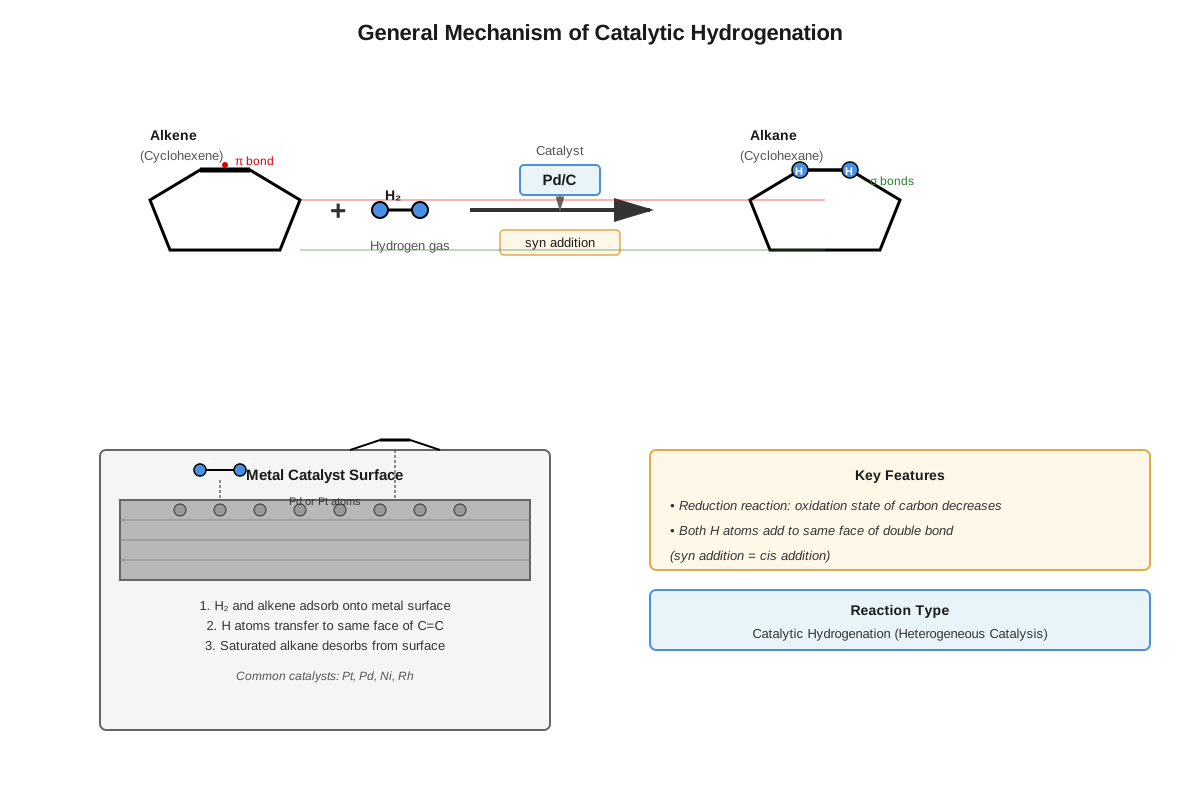
Catalytic hydrogenation is a reduction reaction in which molecular hydrogen (H₂) adds across a π bond in the presence of a heterogeneous metal catalyst. The reaction converts unsaturated organic compounds (containing C=C, C≡C, or C=O bonds) into more saturated products by replacing π bonds with σ bonds to hydrogen atoms. This process represents a reduction because carbon atoms gain hydrogen (or lose bonds to more electronegative atoms), resulting in a decrease in oxidation state.
The general reaction for alkene hydrogenation follows this pattern:
R-CH=CH-R' + H₂ → R-CH₂-CH₂-R'
         [catalyst]
The mechanism proceeds through adsorption of both the organic substrate and hydrogen molecules onto the metal catalyst surface. Hydrogen molecules dissociate into individual hydrogen atoms on the metal surface, creating a reactive species. The alkene then coordinates to the metal surface through its π electrons, positioning itself for hydrogen addition. Both hydrogen atoms add to the same face of the double bond (syn addition) because both the substrate and hydrogen atoms are bound to the catalyst surface simultaneously. This stereochemical requirement distinguishes catalytic hydrogenation from other addition reactions that may proceed through different mechanisms.
Common Catalysts and Their Properties
Several transition metals serve as effective catalysts for hydrogenation reactions, each with distinct properties and applications:
| Catalyst | Activity Level | Common Applications | Special Features |
|---|---|---|---|
| Platinum (Pt) | High | General hydrogenations | Very active; expensive |
| Palladium (Pd) | High | Selective reductions | Most commonly used; can be "poisoned" for selectivity |
| Nickel (Ni) | Moderate | Industrial processes | Less expensive; requires higher temperatures |
| Rhodium (Rh) | High | Asymmetric synthesis | Used in specialized applications |
| Ruthenium (Ru) | Moderate | Aromatic hydrogenation | Can reduce aromatic rings under forcing conditions |
Lindlar's catalyst deserves special mention as a "poisoned" palladium catalyst (Pd/CaCO₃ with lead acetate and quinoline) that selectively reduces alkynes to cis-alkenes without further reduction to alkanes. This selectivity makes Lindlar's catalyst invaluable for partial hydrogenation reactions.
Substrate Scope and Selectivity
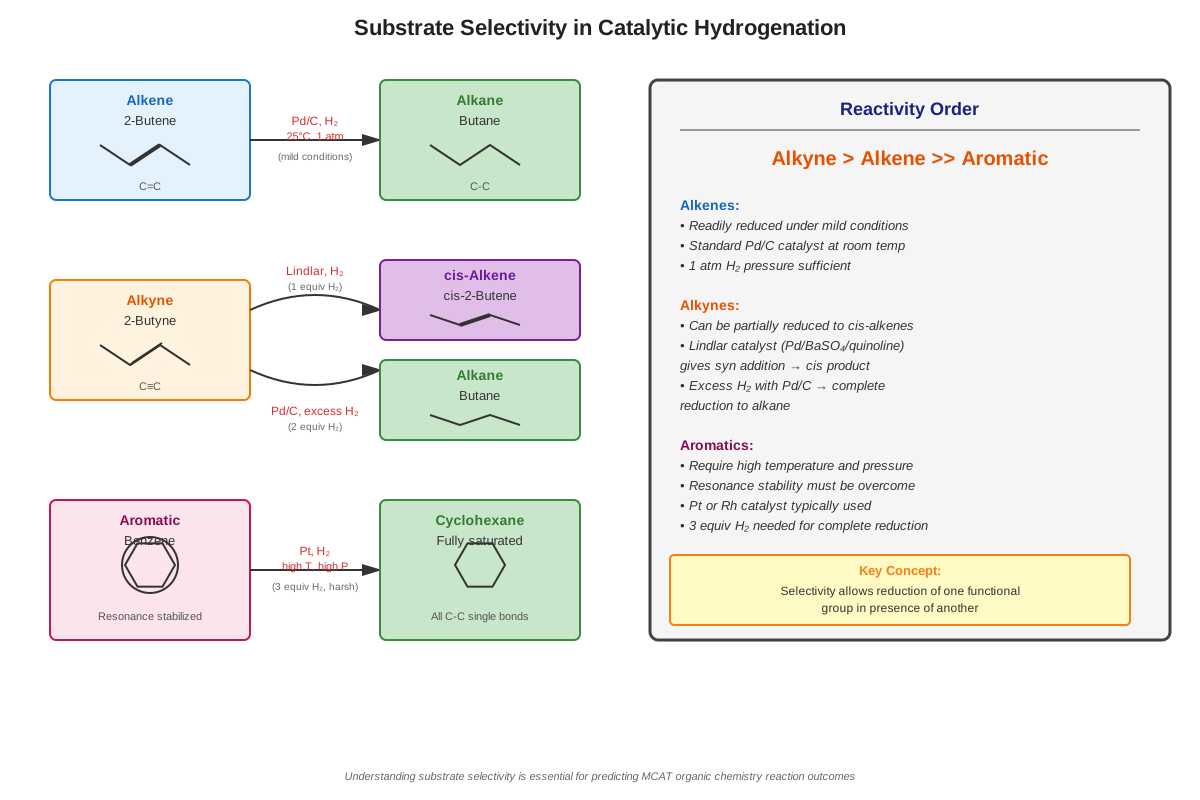
Catalytic hydrogenation exhibits predictable selectivity patterns based on substrate structure:
- Alkenes (C=C): Readily undergo hydrogenation to form alkanes under standard conditions
- Alkynes (C≡C): Can be fully reduced to alkanes or partially reduced to alkenes depending on catalyst and conditions
- Aromatic rings: Generally resistant to hydrogenation under mild conditions; require forcing conditions (high pressure, temperature, or specialized catalysts)
- Carbonyl groups (C=O): Aldehydes and ketones can be reduced to alcohols, though this requires specific conditions
- Nitriles (C≡N): Can be reduced to primary amines
- Nitro groups (NO₂): Reduced to amino groups (NH₂)
The relative reactivity order for common functional groups is: alkyne > alkene > carbonyl > aromatic ring. This selectivity allows chemists to reduce specific functional groups in molecules containing multiple reducible sites.
Stereochemistry of Catalytic Hydrogenation
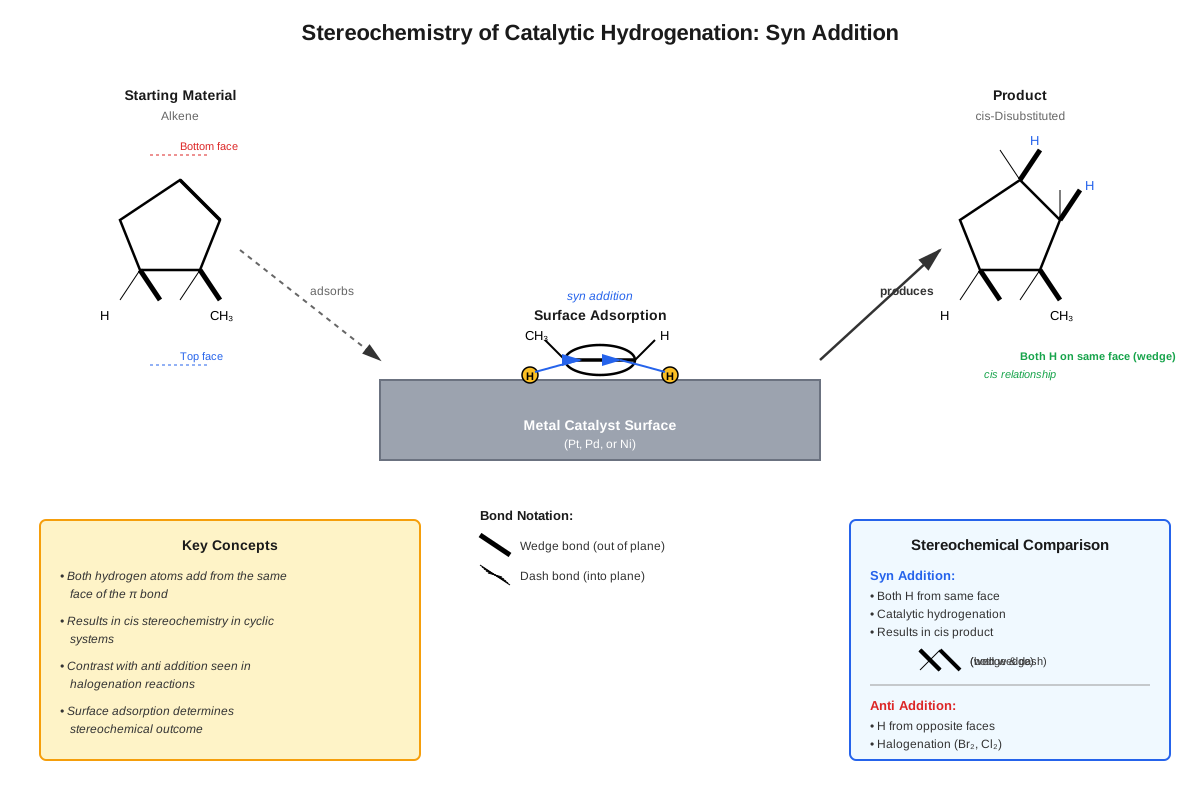
The stereochemical outcome of catalytic hydrogenation is highly predictable due to the mechanism of hydrogen delivery. Since both hydrogen atoms add from the same face of the π bond (the face that contacts the catalyst surface), the reaction proceeds via syn addition. This stereochemical requirement has important consequences:
- For simple alkenes, syn addition may not create stereoisomers if the product lacks stereocenters
- For cyclic alkenes, syn addition produces cis-disubstituted products
- For alkynes reduced with Lindlar's catalyst, syn addition produces cis-alkenes
- The catalyst surface approach is typically from the less hindered face of the molecule
Thermodynamics and Heat of Hydrogenation
The heat of hydrogenation (ΔH°ₕ) represents the enthalpy change when one mole of an unsaturated compound undergoes complete hydrogenation. This value provides important information about the relative stability of different unsaturated compounds:
- More stable alkenes release less heat upon hydrogenation (smaller ΔH°ₕ)
- Less stable alkenes release more heat upon hydrogenation (larger ΔH°ₕ)
- Comparing heats of hydrogenation allows assessment of relative stability
For example, trans-2-butene is more stable than cis-2-butene, which is more stable than 1-butene. This stability order is reflected in their heats of hydrogenation: 1-butene releases the most heat, cis-2-butene releases an intermediate amount, and trans-2-butene releases the least heat upon hydrogenation—all producing the same product (butane).
Reaction Conditions and Practical Considerations
Standard catalytic hydrogenation reactions typically require:
- Pressure: Atmospheric to several atmospheres of H₂ gas
- Temperature: Room temperature to 100°C, depending on substrate and catalyst
- Solvent: Ethanol, methanol, ethyl acetate, or acetic acid (polar protic solvents)
- Catalyst loading: 5-10% by weight of substrate
The reaction rate depends on several factors:
- Hydrogen pressure (higher pressure increases rate)
- Catalyst surface area (finely divided catalysts are more active)
- Temperature (higher temperature increases rate but may reduce selectivity)
- Substrate structure (more substituted alkenes react more slowly due to steric hindrance)
Concept Relationships
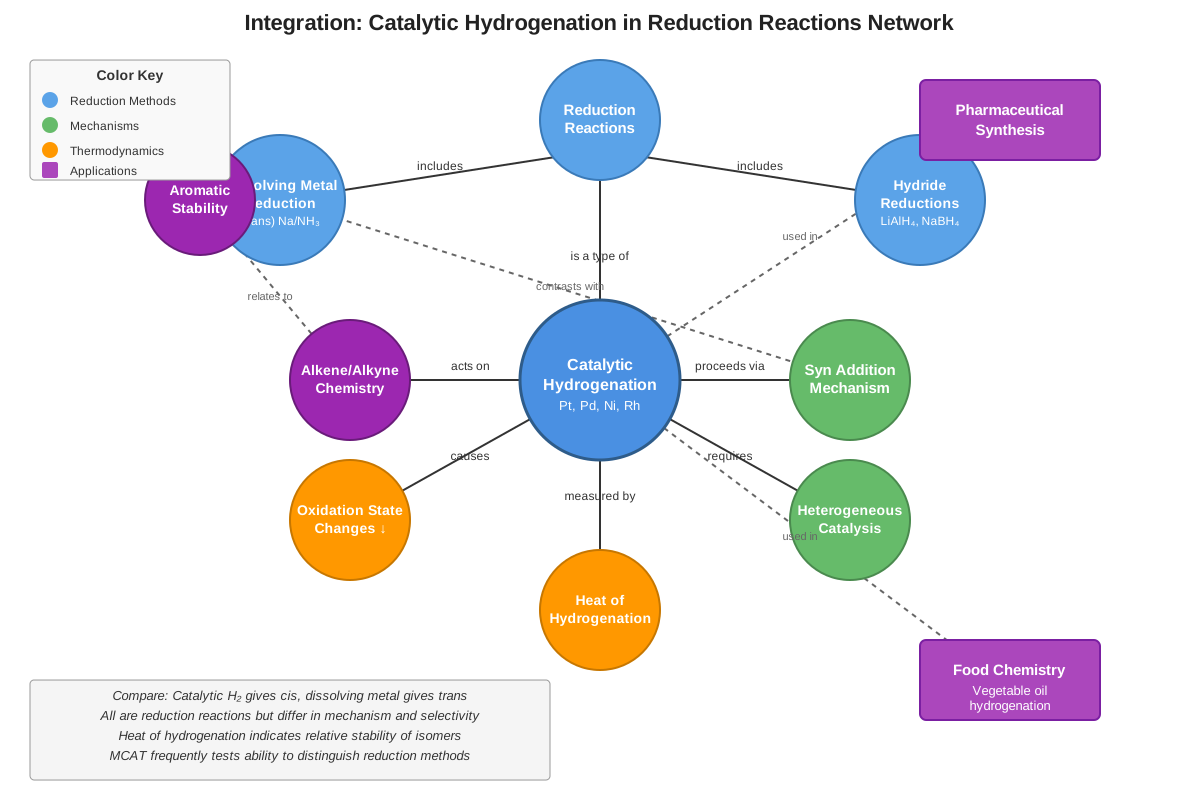
Catalytic hydrogenation sits at the intersection of multiple fundamental organic chemistry concepts, creating a web of interconnected ideas essential for MCAT success. The reaction fundamentally represents a reduction process, directly connecting to the broader topic of Oxidation and Reduction reactions. Understanding that reduction involves gaining hydrogen atoms or losing bonds to electronegative atoms allows students to classify catalytic hydrogenation correctly and predict oxidation state changes.
The stereochemical outcome (syn addition) connects catalytic hydrogenation to stereochemistry concepts, particularly the distinction between syn and anti addition reactions. This relationship becomes critical when comparing catalytic hydrogenation to other addition reactions like halogenation (anti addition) or hydroboration-oxidation (syn addition with different regiochemistry).
Within reaction mechanisms, catalytic hydrogenation exemplifies heterogeneous catalysis, where the catalyst exists in a different phase (solid) than the reactants (liquid or gas). This connects to broader concepts of catalysis, reaction kinetics, and activation energy reduction. The catalyst provides an alternative reaction pathway with lower activation energy without being consumed in the process.
The selectivity patterns in catalytic hydrogenation relate directly to functional group reactivity and molecular stability concepts. Understanding why alkynes are more reactive than alkenes, or why aromatic rings resist hydrogenation, requires knowledge of bond strengths, resonance stabilization, and thermodynamic stability—all prerequisite concepts that catalytic hydrogenation reinforces and applies.
Heat of hydrogenation data connects to thermodynamics, allowing comparison of isomer stability and reinforcing concepts of enthalpy, exothermic reactions, and relative energy states. This relationship enables students to use experimental data to draw conclusions about molecular structure and stability.
Conceptual flow: Unsaturated compounds (alkenes/alkynes) → Catalyst surface adsorption → H₂ dissociation → Syn addition mechanism → Saturated products → Thermodynamic analysis via heat of hydrogenation → Stability comparisons → Application to synthesis planning
Quick check — test yourself on Catalytic hydrogenation so far.
Try Flashcards →High-Yield Facts
⭐ Catalytic hydrogenation is a reduction reaction that adds H₂ across π bonds using metal catalysts (Pt, Pd, Ni)
⭐ The reaction proceeds via syn addition—both hydrogens add to the same face of the double bond
⭐ Lindlar's catalyst (poisoned Pd) selectively reduces alkynes to cis-alkenes without further reduction to alkanes
⭐ Heat of hydrogenation values indicate relative stability: more stable compounds release less heat
⭐ Aromatic rings are resistant to hydrogenation under normal conditions due to resonance stabilization
- Catalytic hydrogenation decreases the oxidation state of carbon atoms by adding C-H bonds
- The catalyst provides a surface for both H₂ and substrate adsorption, lowering activation energy
- More substituted alkenes react more slowly than less substituted alkenes due to steric hindrance
- Catalytic hydrogenation is irreversible under normal conditions (highly exothermic, ΔG << 0)
- Palladium on carbon (Pd/C) is the most commonly used catalyst in laboratory settings
- Hydrogenation can reduce multiple bonds sequentially: alkyne → alkene → alkane
- The reaction requires direct contact between substrate and catalyst surface (heterogeneous catalysis)
- Catalyst "poisons" (like quinoline in Lindlar's catalyst) reduce activity to achieve selective partial reduction
Common Misconceptions
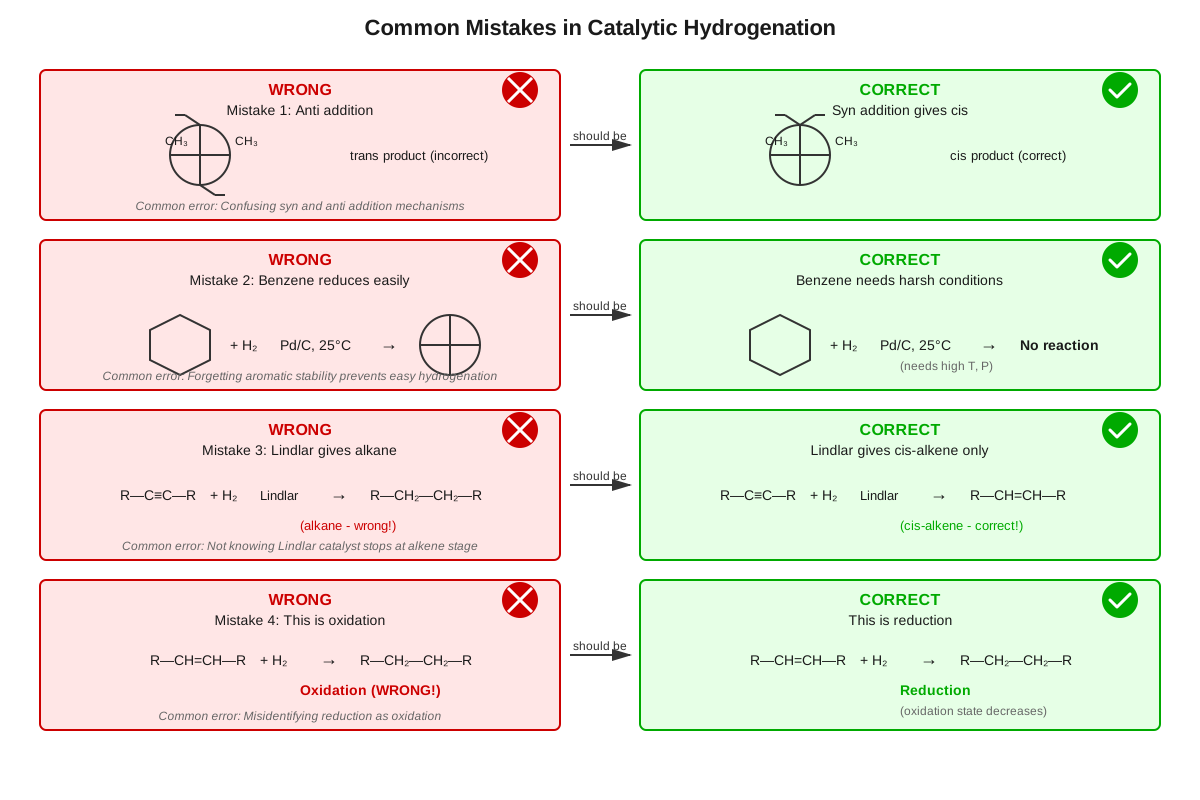
Misconception: Catalytic hydrogenation can add hydrogens to opposite faces of a double bond (anti addition)
Correction: Catalytic hydrogenation exclusively proceeds via syn addition because both the substrate and hydrogen atoms are bound to the catalyst surface simultaneously, forcing both hydrogens to add from the same face. Anti addition would require a different mechanism entirely.
Misconception: All double and triple bonds in a molecule will be reduced simultaneously at the same rate
Correction: Catalytic hydrogenation exhibits selectivity based on bond type and steric accessibility. Alkynes are more reactive than alkenes, and less hindered bonds react faster than sterically crowded ones. Aromatic rings are particularly resistant to reduction.
Misconception: The metal catalyst is consumed during the reaction and must be present in stoichiometric amounts
Correction: The catalyst is not consumed in the reaction—it provides a surface for the reaction to occur and is regenerated after product release. Only catalytic amounts (typically 5-10% by weight) are needed, and the catalyst can facilitate multiple reaction cycles.
Misconception: A higher heat of hydrogenation indicates a more stable starting alkene
Correction: The opposite is true. A higher (more negative) heat of hydrogenation indicates that more energy is released, meaning the starting material was less stable (higher energy). More stable alkenes release less heat upon hydrogenation.
Misconception: Lindlar's catalyst and regular Pd/C catalyst produce the same products from alkynes
Correction: Lindlar's catalyst is specifically designed to stop reduction at the alkene stage, producing cis-alkenes from alkynes. Regular Pd/C catalyst will continue reduction all the way to the alkane unless carefully controlled. This selectivity difference is crucial for synthesis planning.
Misconception: Catalytic hydrogenation is an oxidation reaction because hydrogen gas is involved
Correction: Despite involving H₂ gas, catalytic hydrogenation is definitively a reduction reaction. The carbon atoms gain C-H bonds and decrease in oxidation state. The confusion may arise from thinking about hydrogen gas itself, but the key is to focus on what happens to the organic substrate.
Worked Examples
Example 1: Product Prediction and Stereochemistry
Question: Predict the major product when (E)-3-methylpent-2-ene undergoes catalytic hydrogenation with Pd/C catalyst and H₂ gas. Explain the stereochemical outcome.
Solution:
Step 1: Identify the reactive functional group
- The substrate contains a C=C double bond (alkene), which is the site of hydrogenation
- The (E) designation indicates trans geometry in the starting material
Step 2: Recognize the reaction type
- Catalytic hydrogenation with Pd/C will add H₂ across the double bond
- This is a reduction reaction that converts the alkene to an alkane
Step 3: Apply the mechanism
- Both hydrogen atoms add via syn addition (same face)
- The π bond breaks and two new C-H σ bonds form
Step 4: Draw the product
- Starting material: CH₃-CH=C(CH₃)-CH₂-CH₃ (E configuration)
- Product: CH₃-CH₂-CH(CH₃)-CH₂-CH₃ (3-methylpentane)
Step 5: Consider stereochemistry
- The product has no stereocenters (the carbon that was part of the double bond now has two hydrogen atoms)
- Therefore, stereochemistry is not relevant in the final product
- If the product had created stereocenters, syn addition would have determined their relative configuration
Answer: The product is 3-methylpentane, a saturated alkane. No stereoisomers are possible in this product because no stereocenters are created.
Connection to learning objectives: This example demonstrates application of catalytic hydrogenation to predict products (LO 3) and illustrates the stereochemical principle of syn addition (LO 7).
Example 2: Catalyst Selection and Selectivity
Question: A chemist needs to convert hex-3-yne to (Z)-hex-3-ene without further reduction to hexane. Which catalyst and conditions should be used? Explain why other common hydrogenation catalysts would not achieve this goal.
Solution:
Step 1: Analyze the transformation required
- Starting material: hex-3-yne (internal alkyne, C≡C)
- Desired product: (Z)-hex-3-ene (cis-alkene, C=C)
- Must avoid: hexane (fully saturated alkane)
Step 2: Recognize the selectivity challenge
- Standard catalytic hydrogenation with Pt, Pd/C, or Ni would reduce the alkyne all the way to the alkane
- Need selective partial reduction that stops at the alkene stage
- The (Z) or cis configuration indicates syn addition is acceptable
Step 3: Select appropriate catalyst
- Lindlar's catalyst (Pd/CaCO₃ with Pb(OAc)₂ and quinoline) is specifically designed for this transformation
- The "poisoned" catalyst has reduced activity, allowing selective reduction of alkyne to alkene
- Syn addition mechanism produces the cis (Z) alkene
Step 4: Explain why alternatives fail
- Pd/C: Too active; would continue reduction to hexane
- Pt: Very active; would produce hexane
- Ni: Would produce hexane, especially at elevated temperatures
- Na/NH₃ (dissolving metal reduction): Would produce trans (E) alkene, not cis
Step 5: State complete answer
- Use Lindlar's catalyst with H₂ gas at atmospheric pressure
- The reaction proceeds via syn addition, delivering both hydrogens to the same face
- This produces (Z)-hex-3-ene selectively
Answer: Use Lindlar's catalyst (poisoned Pd) with H₂. This catalyst selectively reduces alkynes to cis-alkenes without further reduction. Standard catalysts (Pd/C, Pt, Ni) are too active and would produce the fully saturated hexane.
Connection to learning objectives: This example demonstrates distinguishing between different catalytic conditions (LO 7), applying knowledge to synthesis problems (LO 3), and connecting to related reduction concepts (LO 5).
Exam Strategy
When approaching MCAT questions on catalytic hydrogenation, employ a systematic strategy to maximize accuracy and efficiency:
Step 1: Identify trigger words and phrases
- "Hydrogenation," "H₂ with catalyst," "Pd/C," "Lindlar's catalyst," "reduction of alkene/alkyne"
- "Syn addition," "heat of hydrogenation," "catalytic reduction"
- These phrases signal that catalytic hydrogenation concepts are being tested
Step 2: Classify the question type
- Product prediction: Identify the reactive bond and apply hydrogenation rules
- Catalyst selection: Match the desired transformation to the appropriate catalyst
- Stereochemistry: Remember syn addition and predict relative stereochemistry
- Thermodynamics: Use heat of hydrogenation to compare stability
- Mechanism: Understand surface adsorption and hydrogen delivery
Step 3: Apply systematic analysis
- Locate all π bonds in the substrate (C=C, C≡C, C=O, aromatic)
- Assess relative reactivity (alkyne > alkene > carbonyl > aromatic)
- Consider steric factors (less hindered bonds react faster)
- Determine stereochemical requirements (syn addition)
- Select appropriate catalyst based on desired selectivity
Step 4: Use process of elimination effectively
- Eliminate answers showing anti addition (impossible for catalytic hydrogenation)
- Eliminate answers with wrong oxidation state changes (must be reduction)
- Eliminate answers showing trans products from Lindlar's catalyst (produces cis)
- Eliminate answers suggesting aromatic ring reduction under mild conditions
Step 5: Time management
- Catalytic hydrogenation questions typically require 60-90 seconds
- Spend 20 seconds identifying the question type and reactive sites
- Spend 30-40 seconds applying mechanistic principles
- Spend 20-30 seconds checking stereochemistry and eliminating wrong answers
- If stuck, remember: catalytic hydrogenation always reduces, always syn addition, always requires catalyst
High-yield exam triggers to recognize immediately:
- "Lindlar's catalyst" → partial reduction of alkyne to cis-alkene
- "Heat of hydrogenation" → stability comparison question
- "Pd/C, H₂" → complete reduction to saturated compound
- "Syn addition" → both groups add to same face
- "Aromatic compound + H₂/catalyst" → likely no reaction under normal conditions
Exam Tip: If a passage presents experimental data comparing heats of hydrogenation, the question will likely ask about relative stability. Remember: lower heat of hydrogenation = more stable starting material.
Memory Techniques
Mnemonic for common catalysts: "Please Pay Nick's Rent"
- Platinum (Pt) - very active, expensive
- Palladium (Pd) - most common, versatile
- Nickel (Ni) - industrial, requires heat
- Rhodium (Rh) - specialized applications
Mnemonic for syn addition: "SAME SIDE"
- Surface adsorption
- Adds to
- Molecule from
- Exactly the
- Same
- Identical
- Direction
- Every time
Visualization strategy for Lindlar's catalyst:
Picture a "speed bump" (the poison) on a highway (the catalyst surface). The reaction can still proceed but must slow down, stopping at the alkene "exit" before reaching the alkane "destination." The speed bump prevents going too far.
Acronym for selectivity: REACT
- Reactivity: alkynes > alkenes > carbonyls > aromatics
- Electron-rich bonds react faster
- Accessibility: less hindered bonds react first
- Catalyst choice determines selectivity
- Thermodynamics: more unstable compounds release more heat
Memory aid for heat of hydrogenation:
"Stable compounds are STINGY with heat" - more stable alkenes release less (smaller) heat of hydrogenation because they're already in a lower energy state.
Stereochemistry reminder:
Think of the catalyst surface as a "landing pad" - both the substrate and H₂ land on the same pad, so both hydrogens must add from the same side. There's no way for them to approach from opposite sides.
Summary
Catalytic hydrogenation represents a fundamental reduction reaction in organic chemistry where molecular hydrogen adds across π bonds in the presence of transition metal catalysts such as platinum, palladium, or nickel. The reaction proceeds through a heterogeneous catalysis mechanism involving surface adsorption of both substrate and hydrogen, followed by syn addition of both hydrogen atoms to the same face of the double or triple bond. This stereochemical requirement distinguishes catalytic hydrogenation from other addition reactions and determines product configuration. The reaction exhibits predictable selectivity patterns, with alkynes being more reactive than alkenes, and aromatic rings showing resistance to reduction under normal conditions. Special catalysts like Lindlar's catalyst enable selective partial reduction of alkynes to cis-alkenes. Heat of hydrogenation values provide thermodynamic information about relative stability, with more stable compounds releasing less heat upon reduction. For MCAT success, students must recognize catalytic hydrogenation as a reduction process, predict products including stereochemistry, distinguish between different catalyst systems, and apply thermodynamic reasoning to stability comparisons.
Key Takeaways
- Catalytic hydrogenation is a reduction reaction adding H₂ across π bonds using metal catalysts (Pt, Pd, Ni), always proceeding via syn addition from the catalyst surface
- The reaction decreases carbon oxidation state by forming new C-H bonds and breaking π bonds, converting unsaturated compounds to saturated products
- Lindlar's catalyst selectively reduces alkynes to cis-alkenes without further reduction, while standard catalysts (Pd/C, Pt) produce fully saturated alkanes
- Heat of hydrogenation indicates relative stability: more stable alkenes release less heat (smaller ΔH°ₕ), while less stable isomers release more heat
- Selectivity follows the pattern alkyne > alkene > carbonyl > aromatic ring, with aromatic compounds resisting hydrogenation under mild conditions
- Stereochemical outcomes are predictable due to syn addition: both hydrogens add from the same face, producing cis products in cyclic systems
- The catalyst functions through heterogeneous catalysis, providing a surface for adsorption and lowering activation energy without being consumed
Related Topics
Dissolving Metal Reduction (Birch Reduction): An alternative reduction method using alkali metals in liquid ammonia that produces trans-alkenes from alkynes (opposite stereochemistry to Lindlar's catalyst) and partially reduces aromatic rings. Mastering catalytic hydrogenation provides the foundation for understanding this complementary reduction strategy.
Hydroboration-Oxidation: Another syn addition reaction to alkenes that produces alcohols with anti-Markovnikov regiochemistry. Understanding the syn addition mechanism in catalytic hydrogenation helps comprehend the stereochemical outcome of hydroboration.
Oxidation Reactions of Alkenes: The conceptual opposite of catalytic hydrogenation, including epoxidation, dihydroxylation, and ozonolysis. Understanding reduction through hydrogenation strengthens comprehension of oxidation processes.
Catalysis and Reaction Kinetics: Deeper exploration of how catalysts lower activation energy and provide alternative reaction pathways. Catalytic hydrogenation serves as an excellent example of heterogeneous catalysis principles.
Fatty Acid Chemistry and Lipid Metabolism: Biological applications of hydrogenation concepts, including the industrial hydrogenation of vegetable oils and the biochemical reduction of fatty acids during metabolism.
Practice CTA
Now that you've mastered the core concepts of catalytic hydrogenation, it's time to solidify your understanding through active practice. Challenge yourself with the practice questions and flashcards designed specifically for this topic. Focus on predicting products, selecting appropriate catalysts, and analyzing stereochemical outcomes—these are the skills that will translate directly to MCAT success. Remember, understanding the "why" behind each answer is more valuable than memorizing isolated facts. Each practice problem you work through strengthens your ability to think like an organic chemist and approach exam questions with confidence. You've built a strong foundation—now apply it!
Sign up free to keep reading
Create a free AnvayaPrep account to finish this MCAT guide on Catalytic hydrogenation — plus flashcards and practice questions.