Overview
Lithium aluminum hydride (LiAlH₄), commonly abbreviated as LAH, stands as one of the most powerful and versatile reducing agents in Organic Chemistry. This reagent plays a critical role in Oxidation and Reduction reactions, particularly in the reduction of carbonyl-containing compounds and other functional groups. For the MCAT, understanding LiAlH₄ is essential because it represents a fundamental tool for interconverting functional groups—a skill tested repeatedly in both discrete questions and passage-based scenarios.
LiAlH₄ functions as a strong nucleophilic hydride donor, capable of reducing carboxylic acids, esters, amides, aldehydes, and ketones to their corresponding alcohols or amines. Unlike milder reducing agents such as sodium borohydride (NaBH₄), LiAlH₄ possesses sufficient reactivity to cleave carbon-heteroatom bonds in carboxylic acid derivatives, making it indispensable for synthetic transformations. The MCAT frequently tests students' ability to predict reaction products, distinguish between reducing agents based on selectivity, and recognize the conditions under which LiAlH₄ operates.
Within the broader context of Organic Chemistry, LiAlH₄ connects directly to concepts of nucleophilicity, electrophilicity, reaction mechanisms, and functional group interconversions. Mastery of this reagent requires understanding not only what it reduces but also why certain functional groups are more susceptible to reduction than others. This knowledge integrates with carbonyl chemistry, acid-base chemistry, and stereochemistry—all high-yield topics for the MCAT. Students who thoroughly understand LiAlH₄ will be better equipped to tackle complex synthesis problems and predict reaction outcomes under various conditions.
Learning Objectives
- [ ] Define LiAlH₄ using accurate Organic Chemistry terminology
- [ ] Explain why LiAlH₄ matters for the MCAT
- [ ] Apply LiAlH₄ to exam-style questions
- [ ] Identify common mistakes related to LiAlH₄
- [ ] Connect LiAlH₄ to related Organic Chemistry concepts
- [ ] Predict the products of LiAlH₄ reductions for all major functional groups
- [ ] Compare and contrast LiAlH₄ with other reducing agents (NaBH₄, catalytic hydrogenation)
- [ ] Explain the mechanism of hydride transfer from LiAlH₄ to carbonyl compounds
- [ ] Recognize reaction conditions and workup procedures for LiAlH₄ reactions
Prerequisites
- Carbonyl chemistry fundamentals: Understanding aldehydes, ketones, carboxylic acids, esters, and amides is essential because these are the primary substrates for LiAlH₄ reduction
- Nucleophiles and electrophiles: LiAlH₄ acts as a nucleophilic hydride donor attacking electrophilic carbonyl carbons
- Oxidation states of carbon: Recognizing reduction as a decrease in oxidation state helps predict reaction outcomes
- Acid-base chemistry: The aqueous workup following LiAlH₄ reactions involves protonation steps that complete the reduction
- Reaction mechanisms: Familiarity with arrow-pushing notation and electron flow is necessary to understand how LiAlH₄ transfers hydride ions
Why This Topic Matters
LiAlH₄ appears regularly on the MCAT in multiple contexts. Statistical analysis of recent exams shows that reducing agents feature in approximately 8-12% of Organic Chemistry questions, with LiAlH₄ specifically appearing in 3-5% of all chemistry passages. Questions typically assess whether students can predict reaction products, distinguish between selective and non-selective reducing agents, or identify appropriate reagents for multi-step synthesis problems.
From a practical standpoint, reduction reactions using LiAlH₄ are fundamental to pharmaceutical synthesis and biochemical pathways. Many drug molecules require precise functional group manipulations during their synthesis, and LiAlH₄ serves as a workhorse reagent for converting carboxylic acids and their derivatives into alcohols. Understanding this chemistry provides insight into how complex molecules are constructed in medicinal chemistry laboratories.
On the MCAT, LiAlH₄ commonly appears in:
- Discrete questions asking students to predict products of reduction reactions
- Passage-based questions involving multi-step synthesis schemes where students must identify appropriate reagents
- Comparison questions requiring differentiation between LiAlH₄ and NaBH₄ based on selectivity
- Mechanism questions testing understanding of hydride transfer and subsequent protonation steps
- Laboratory technique passages discussing reaction conditions, safety considerations, or workup procedures
The ability to quickly recognize when LiAlH₄ is the appropriate reagent—and when it is not—can save valuable time during the exam and prevent careless errors.
Core Concepts
Structure and Properties of LiAlH₄
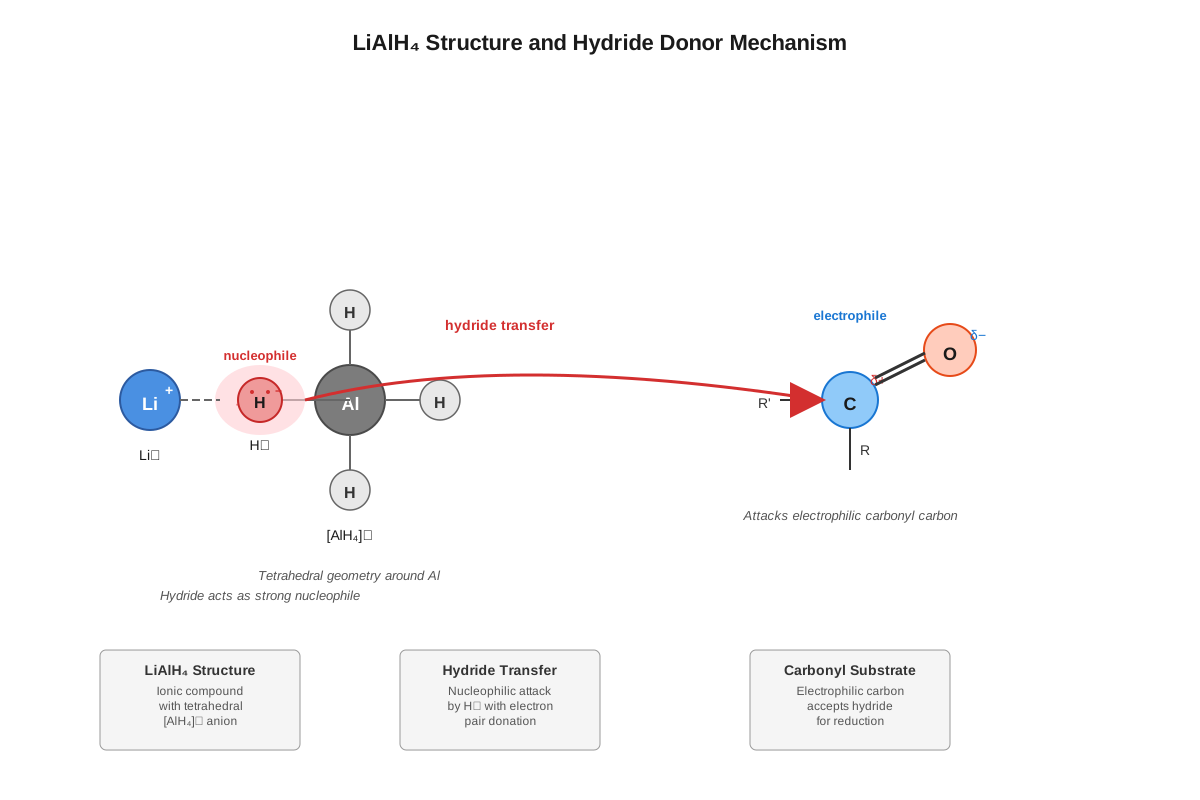
Lithium aluminum hydride (LiAlH₄) consists of a lithium cation (Li⁺) and an aluminum hydride anion (AlH₄⁻). The aluminum center is surrounded by four hydride ions (H⁻), creating a tetrahedral geometry. These hydride ions serve as the source of nucleophilic hydrogen in reduction reactions. The compound is highly reactive, reacting violently with water and protic solvents, which necessitates the use of aprotic solvents such as diethyl ether or tetrahydrofuran (THF).
The extreme reactivity of LiAlH₄ stems from the highly polarized Al-H bonds, where hydrogen carries a partial negative charge. This makes the hydride an excellent nucleophile capable of attacking electrophilic carbon centers. The reagent must be handled under anhydrous conditions because even trace amounts of water will decompose it, releasing hydrogen gas and forming aluminum hydroxide.
Mechanism of Reduction
The reduction mechanism with LiAlH₄ proceeds through nucleophilic addition of hydride to an electrophilic carbon, typically a carbonyl carbon. The general mechanism involves:
- Nucleophilic attack: The hydride ion (H⁻) from AlH₄⁻ attacks the electrophilic carbonyl carbon
- Tetrahedral intermediate formation: The carbonyl oxygen becomes negatively charged as the π bond breaks
- Subsequent hydride additions: For carboxylic acid derivatives, multiple hydride additions may occur
- Aqueous workup: Addition of water or dilute acid protonates the alkoxide intermediate to form the alcohol product
For aldehydes and ketones, a single hydride addition followed by protonation yields primary and secondary alcohols, respectively. For carboxylic acids and their derivatives (esters, amides), the mechanism is more complex, involving initial hydride attack, collapse of the tetrahedral intermediate, and subsequent reduction of the resulting aldehyde intermediate.
Functional Group Reactivity with LiAlH₄
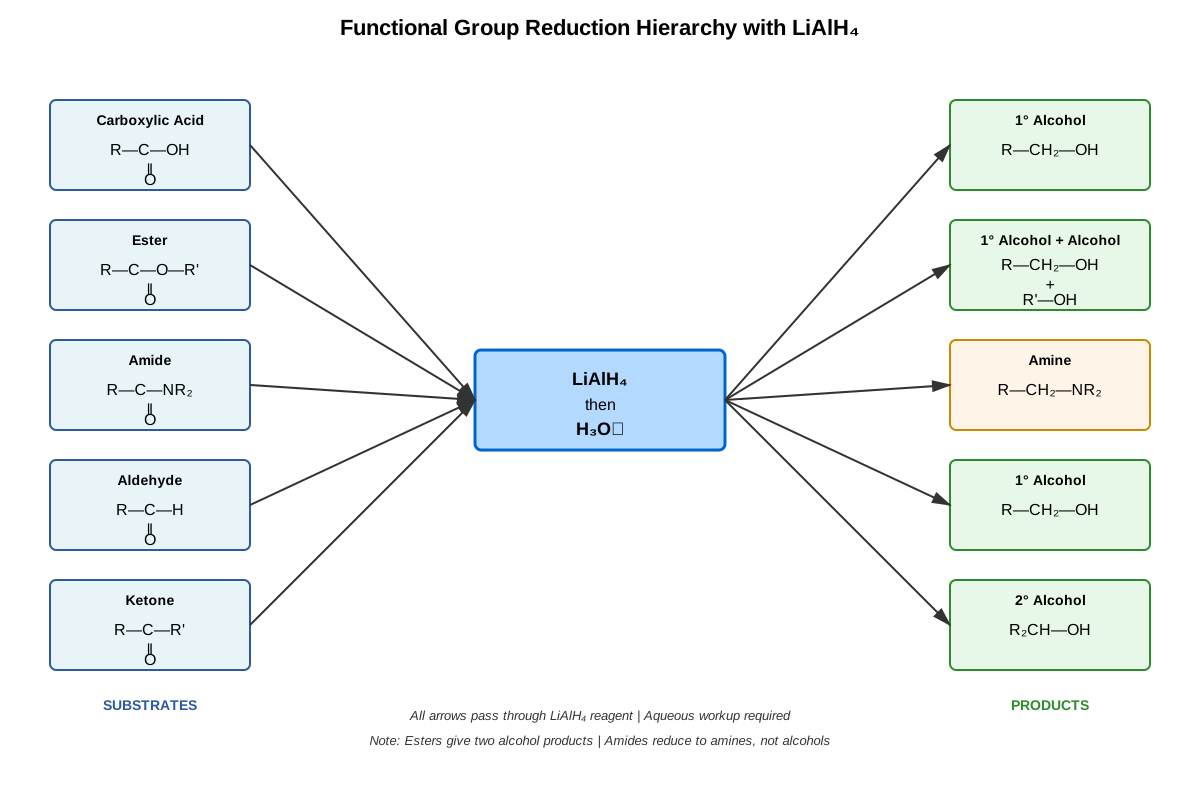
LiAlH₄ exhibits broad reactivity across multiple functional groups, making it a powerful but non-selective reducing agent:
| Functional Group | Starting Oxidation Level | Product | Product Oxidation Level |
|---|---|---|---|
| Carboxylic acid (RCOOH) | Highest | Primary alcohol (RCH₂OH) | Lowest |
| Ester (RCOOR') | High | Two alcohols (RCH₂OH + R'OH) | Lowest |
| Amide (RCONH₂) | High | Amine (RCH₂NH₂) | Lowest |
| Aldehyde (RCHO) | Medium | Primary alcohol (RCH₂OH) | Lowest |
| Ketone (RCOR') | Medium | Secondary alcohol (RCHOHR') | Low |
| Acyl chloride (RCOCl) | High | Primary alcohol (RCH₂OH) | Lowest |
Key observations:
- Carboxylic acids are reduced to primary alcohols through an aldehyde intermediate
- Esters yield two alcohol molecules: one from the acyl portion and one from the alkoxy portion
- Amides are reduced to amines, with the carbonyl oxygen being completely removed
- Aldehydes and ketones are reduced to primary and secondary alcohols, respectively
- Acyl chlorides react rapidly, often requiring cooling to control the reaction
Selectivity and Limitations
While LiAlH₄ is a powerful reducing agent, it has important limitations:
What LiAlH₄ reduces:
- All carbonyl-containing compounds (aldehydes, ketones, carboxylic acids, esters, amides, acyl chlorides)
- Epoxides (ring-opening reduction)
- Imines and nitriles (to amines)
- Some alkyl halides (though this is not the primary use)
What LiAlH₄ does NOT reduce:
- Isolated carbon-carbon double bonds (alkenes)
- Isolated carbon-carbon triple bonds (alkynes)
- Aromatic rings
- Ethers (except epoxides)
- Most alkyl halides (chlorides, bromides, iodides are generally unreactive)
This selectivity pattern is crucial for the MCAT. Students must recognize that LiAlH₄ targets polar π bonds (C=O, C=N) but leaves non-polar π bonds (C=C, C≡C) intact. This allows for selective reduction in molecules containing multiple functional groups.
Comparison with Sodium Borohydride (NaBH₄)
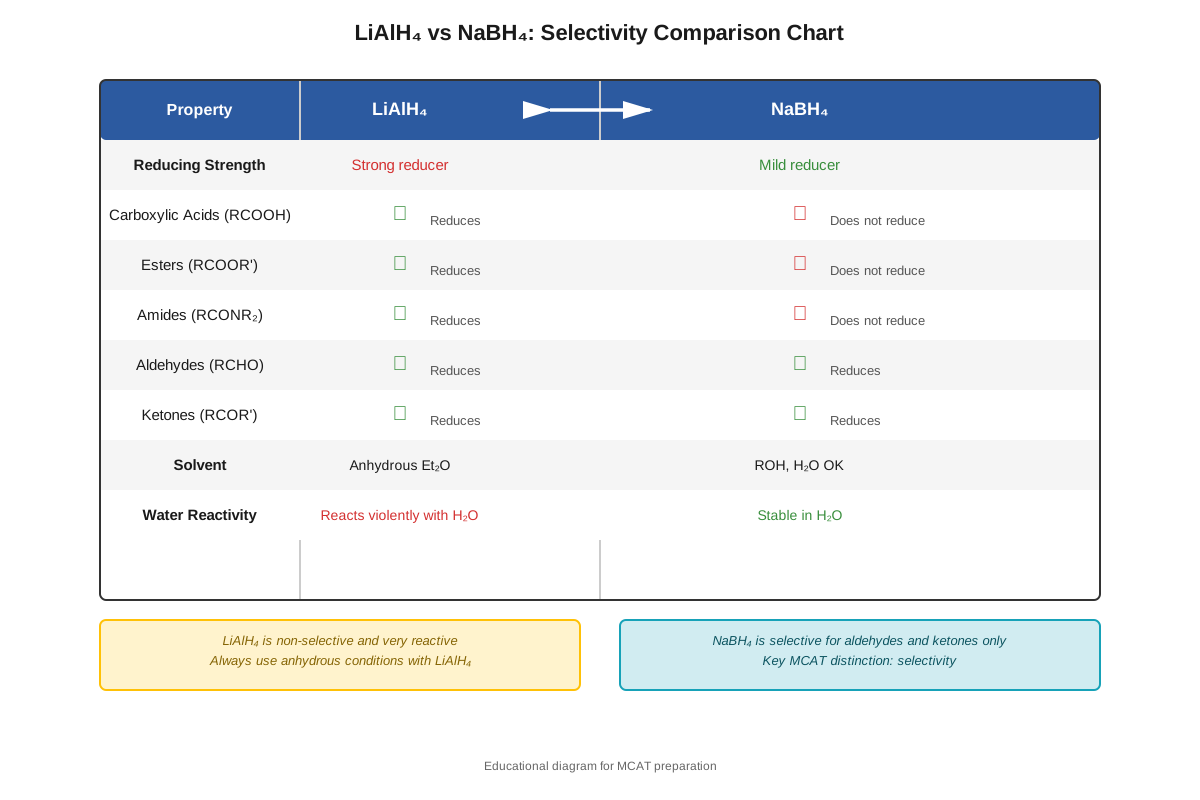
Understanding the differences between LiAlH₄ and NaBH₄ is high-yield for the MCAT:
| Property | LiAlH₄ | NaBH₄ |
|---|---|---|
| Strength | Very strong reducing agent | Mild reducing agent |
| Solvent | Aprotic (ether, THF) | Protic or aprotic (alcohols, water) |
| Aldehydes | Reduces to 1° alcohols | Reduces to 1° alcohols |
| Ketones | Reduces to 2° alcohols | Reduces to 2° alcohols |
| Carboxylic acids | Reduces to 1° alcohols | No reaction |
| Esters | Reduces to alcohols | No reaction (very slow) |
| Amides | Reduces to amines | No reaction |
| Safety | Reacts violently with water | Stable in water |
The key distinction is that NaBH₄ selectively reduces aldehydes and ketones while leaving carboxylic acids and their derivatives unreacted. This makes NaBH₄ the reagent of choice when selective reduction is required.
Reaction Conditions and Workup
LiAlH₄ reactions require specific conditions:
Reaction conditions:
- Anhydrous aprotic solvent (diethyl ether or THF)
- Inert atmosphere (nitrogen or argon) to prevent moisture exposure
- Temperature control (often 0°C to room temperature)
- Slow addition of substrate to LiAlH₄ solution to control exothermic reaction
Workup procedure:
- Careful quenching of excess LiAlH₄ with water, dilute acid, or saturated aqueous sodium sulfate
- Addition of dilute acid (H₃O⁺) to protonate alkoxide intermediates
- Extraction of organic products
- Purification by standard techniques
The workup is critical because unreacted LiAlH₄ will react violently with water. The aqueous acid workup serves two purposes: safely destroying excess reagent and protonating the alkoxide intermediates to form the final alcohol products.
Concept Relationships
The chemistry of LiAlH₄ connects to numerous other concepts in Organic Chemistry. Understanding these relationships strengthens overall comprehension and helps predict reaction outcomes.
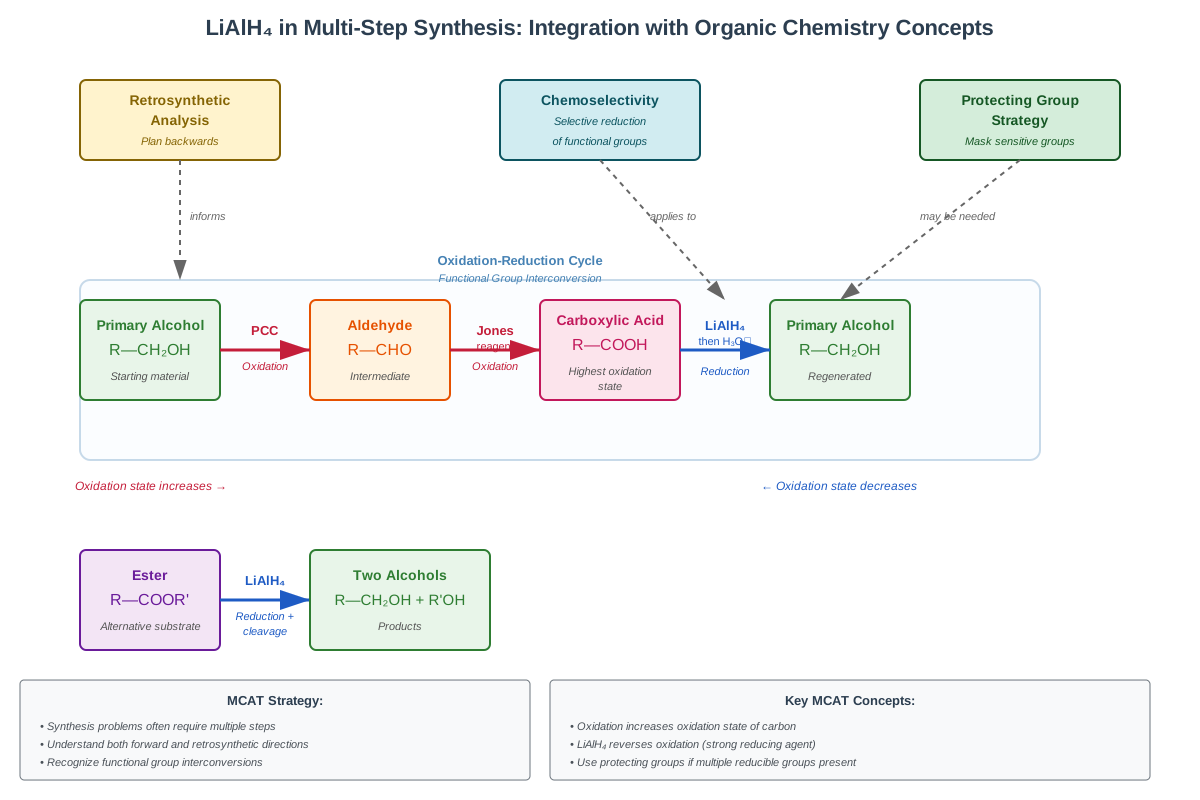
Within Oxidation and Reduction: LiAlH₄ represents the reduction direction of functional group interconversions. It pairs conceptually with oxidizing agents like PCC, Jones reagent, and KMnO₄, which move functional groups in the opposite direction (toward higher oxidation states). The relationship can be visualized as: Carboxylic acid ← (oxidation) Aldehyde → (reduction with LiAlH₄) Primary alcohol.
Connection to Carbonyl Chemistry: LiAlH₄ reactions are fundamentally nucleophilic additions to carbonyl groups. This connects to other nucleophilic addition reactions such as Grignard additions, cyanohydrin formation, and imine formation. The common thread is the electrophilic carbonyl carbon being attacked by a nucleophile.
Relationship to Stereochemistry: When LiAlH₄ reduces ketones to secondary alcohols, a new stereocenter may be created. If the ketone is prochiral, the reduction typically produces a racemic mixture of enantiomers because hydride can attack from either face of the planar carbonyl. This connects to broader concepts of stereochemical outcomes in reactions.
Integration with Synthesis Strategy: In multi-step synthesis problems, LiAlH₄ often appears as a key step for functional group interconversion. For example: Carboxylic acid → (LiAlH₄) → Primary alcohol → (PBr₃) → Alkyl bromide → (Grignard formation) → Further transformations. Understanding where LiAlH₄ fits in synthetic sequences is essential for MCAT passage-based questions.
Textual relationship map:
Electrophilic carbonyl carbon → attacked by → Nucleophilic hydride from LiAlH₄ → forms → Alkoxide intermediate → protonated during workup → yields → Alcohol product. This reduction → decreases → Oxidation state of carbon → opposite of → Oxidation reactions with PCC or Jones reagent.
Quick check — test yourself on LiAlH4 so far.
Try Flashcards →High-Yield Facts
⭐ LiAlH₄ is a strong, non-selective reducing agent that reduces aldehydes, ketones, carboxylic acids, esters, and amides
⭐ LiAlH₄ must be used in aprotic solvents (ether, THF) because it reacts violently with water and protic solvents
⭐ Carboxylic acids are reduced by LiAlH₄ to primary alcohols, while NaBH₄ does not reduce carboxylic acids
⭐ Esters treated with LiAlH₄ yield two alcohol molecules: one from the acyl group and one from the alkoxy group
⭐ LiAlH₄ reduces amides to amines, completely removing the carbonyl oxygen
- LiAlH₄ does not reduce isolated carbon-carbon double or triple bonds (alkenes and alkynes remain intact)
- The mechanism involves nucleophilic attack of hydride (H⁻) on the electrophilic carbonyl carbon
- Aldehydes are reduced to primary alcohols; ketones are reduced to secondary alcohols
- Aqueous acid workup is required to protonate alkoxide intermediates and form the final alcohol products
- LiAlH₄ is more reactive than NaBH₄ but less selective, making reagent choice important in synthesis problems
- Acyl chlorides react very rapidly with LiAlH₄, often requiring low temperatures to control the reaction
- The reduction of ketones with LiAlH₄ can create new stereocenters, typically yielding racemic mixtures
Common Misconceptions
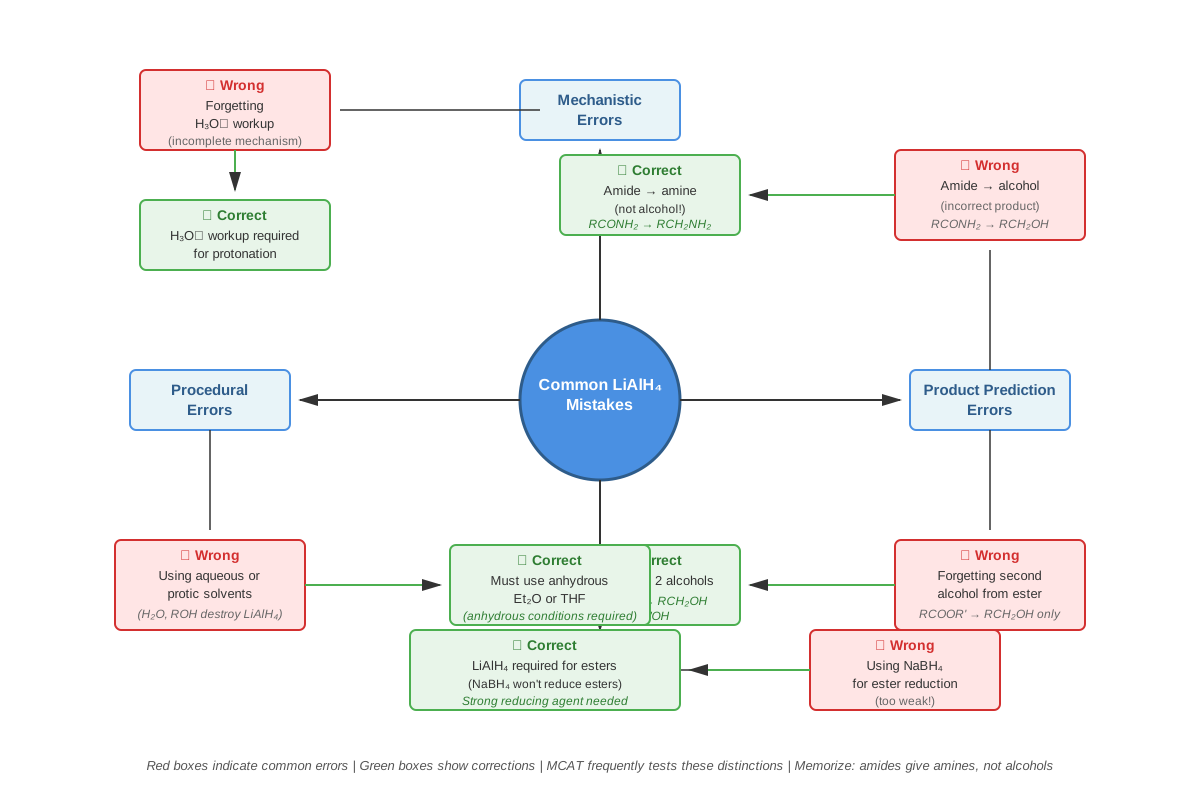
Misconception: LiAlH₄ can be used in aqueous solutions like NaBH₄
Correction: LiAlH₄ reacts violently with water, releasing hydrogen gas and forming aluminum hydroxide. It must be used in anhydrous aprotic solvents such as diethyl ether or THF. Only NaBH₄ is stable enough to use in protic solvents.
Misconception: LiAlH₄ and NaBH₄ have identical reactivity and can be used interchangeably
Correction: While both reduce aldehydes and ketones, LiAlH₄ is much stronger and also reduces carboxylic acids, esters, and amides—functional groups that NaBH₄ leaves unreacted. The choice between these reagents depends on the desired selectivity.
Misconception: LiAlH₄ reduces all functional groups in a molecule, including alkenes and alkynes
Correction: LiAlH₄ selectively reduces polar π bonds (C=O, C=N) but does not reduce non-polar π bonds (C=C, C≡C). Aromatic rings also remain intact. This selectivity allows reduction of carbonyl groups in molecules containing alkenes.
Misconception: The product of LiAlH₄ reduction is formed directly without any workup
Correction: LiAlH₄ reduction produces alkoxide intermediates (RO⁻) that must be protonated during aqueous acid workup to form the final alcohol products (ROH). The workup step is essential and is often explicitly tested on the MCAT.
Misconception: Esters treated with LiAlH₄ yield only one alcohol product
Correction: Ester reduction with LiAlH₄ cleaves the C-O bond and produces two separate alcohol molecules: a primary alcohol from the acyl portion (RCH₂OH) and an alcohol from the alkoxy portion (R'OH). This is different from ester hydrolysis, which produces a carboxylic acid and an alcohol.
Misconception: LiAlH₄ reduction of amides produces alcohols like other carbonyl compounds
Correction: Amides are reduced by LiAlH₄ to amines, not alcohols. The carbonyl oxygen is completely removed, and the nitrogen remains attached to the carbon chain. For example, RCONH₂ becomes RCH₂NH₂.
Worked Examples
Example 1: Predicting Products of LiAlH₄ Reduction
Question: What are the products when ethyl butanoate (CH₃CH₂CH₂COOCH₂CH₃) is treated with LiAlH₄ followed by aqueous acid workup?
Solution:
Step 1: Identify the functional group. Ethyl butanoate is an ester with the structure CH₃CH₂CH₂CO-OCH₂CH₃.
Step 2: Recall that LiAlH₄ reduces esters by cleaving the C-O single bond between the carbonyl carbon and the alkoxy oxygen, producing two separate alcohols.
Step 3: Identify the two portions:
- Acyl portion: CH₃CH₂CH₂CO- (this will become CH₃CH₂CH₂CH₂OH, 1-butanol)
- Alkoxy portion: -OCH₂CH₃ (this will become CH₃CH₂OH, ethanol)
Step 4: Write the mechanism:
- First hydride addition to the carbonyl carbon forms a tetrahedral intermediate
- The C-O bond breaks, releasing an alkoxide (CH₃CH₂O⁻) and forming an aldehyde intermediate
- Second hydride addition reduces the aldehyde to an alkoxide (CH₃CH₂CH₂CH₂O⁻)
- Aqueous acid workup protonates both alkoxides to form alcohols
Answer: The products are 1-butanol (CH₃CH₂CH₂CH₂OH) and ethanol (CH₃CH₂OH).
Connection to learning objectives: This example demonstrates application of LiAlH₄ to exam-style questions and reinforces the concept that ester reduction produces two alcohol products.
Example 2: Choosing Between Reducing Agents
Question: A chemist wants to reduce only the ketone group in the following molecule while leaving the ester group intact: CH₃COCH₂CH₂COOCH₃. Which reducing agent should be used: LiAlH₄ or NaBH₄? Explain your reasoning.
Solution:
Step 1: Analyze the substrate. The molecule contains both a ketone (CH₃CO-) and an ester (-COOCH₃).
Step 2: Consider the reactivity of LiAlH₄:
- LiAlH₄ is a strong, non-selective reducing agent
- It would reduce both the ketone and the ester
- Products would be: CH₃CH(OH)CH₂CH₂CH₂OH + CH₃OH (three alcohols total)
Step 3: Consider the reactivity of NaBH₄:
- NaBH₄ is a mild, selective reducing agent
- It reduces aldehydes and ketones but not esters
- Product would be: CH₃CH(OH)CH₂CH₂COOCH₃ (ketone reduced, ester intact)
Step 4: Make the choice based on desired selectivity.
Answer: NaBH₄ should be used because it will selectively reduce the ketone while leaving the ester unreacted. LiAlH₄ would reduce both functional groups, which is not the desired outcome.
Connection to learning objectives: This example illustrates the importance of understanding selectivity differences between reducing agents and demonstrates how to apply this knowledge to solve synthesis problems—a common MCAT question type.
Exam Strategy
When approaching MCAT questions involving LiAlH₄, employ these strategic approaches:
Trigger words to watch for:
- "Strong reducing agent" or "powerful reducing conditions" → likely LiAlH₄
- "Selective reduction" or "mild reducing agent" → likely NaBH₄, not LiAlH₄
- "Aprotic solvent" or "anhydrous conditions" → consistent with LiAlH₄
- "Aqueous workup" or "acidic workup" → the protonation step after LiAlH₄ reduction
- "Reduction of carboxylic acid/ester/amide" → requires LiAlH₄, not NaBH₄
Question approach strategy:
- Identify the functional group(s) in the starting material
- Determine what LiAlH₄ will reduce (carbonyl-containing groups)
- Count the number of hydride additions needed (1 for aldehydes/ketones, 2 for carboxylic acids/esters)
- Remember the workup step produces the final protonated product
- Check for selectivity requirements that might make NaBH₄ a better choice
Process of elimination tips:
- If an answer choice shows an alkene or alkyne being reduced, eliminate it (LiAlH₄ doesn't reduce these)
- If an answer choice shows an ester remaining unreacted after LiAlH₄ treatment, eliminate it (LiAlH₄ reduces esters)
- If a question asks about reduction in water or methanol, eliminate LiAlH₄ as an option (it requires aprotic solvents)
- If an answer shows an amide being reduced to an alcohol, eliminate it (amides → amines, not alcohols)
Time allocation:
- Discrete questions on LiAlH₄ should take 45-60 seconds
- Passage-based questions involving synthesis schemes may take 90-120 seconds
- If a question requires drawing out the mechanism, budget an extra 30 seconds
- Don't spend excessive time on stereochemistry unless explicitly asked—LiAlH₄ reductions typically give racemic mixtures
Exam Tip: When you see a carboxylic acid derivative (ester, amide, acyl chloride) that needs to be reduced, immediately think LiAlH₄. If you see an aldehyde or ketone that needs selective reduction in the presence of other functional groups, think NaBH₄.
Memory Techniques
Mnemonic for LiAlH₄ reactivity - "LAH CAKES":
- Carboxylic acids
- Aldehydes
- Ketones
- Esters
- Special (amides, acyl chlorides, nitriles)
Mnemonic for what LiAlH₄ does NOT reduce - "AAA":
- Alkenes (C=C)
- Alkynes (C≡C)
- Aromatics
Visualization strategy: Picture LiAlH₄ as a "hydride cannon" that blasts carbonyl groups with H⁻ ions. The cannon is so powerful it needs to be kept away from water (aprotic solvent) or it explodes. This mental image helps remember both the strength and the solvent requirements.
Acronym for solvent requirements - "DEATH":
- Dry (anhydrous)
- Ether or THF
- Aprotic
- Totally necessary
- Hydride source protected
Memory aid for ester reduction: "Esters split into TWO alcohols" - emphasize the word "two" to remember that ester reduction produces two separate alcohol molecules, not one.
Comparison memory device:
- LiAlH₄ = "Large Appetite Hydride" (reduces everything)
- NaBH₄ = "Nice But Helpful" (selective, only aldehydes and ketones)
Summary
Lithium aluminum hydride (LiAlH₄) is a powerful, non-selective reducing agent essential for MCAT Organic Chemistry. It functions by donating nucleophilic hydride ions (H⁻) to electrophilic carbonyl carbons, reducing aldehydes and ketones to alcohols, and carboxylic acids and their derivatives (esters, amides) to alcohols or amines. Unlike the milder NaBH₄, LiAlH₄ possesses sufficient reactivity to reduce carboxylic acids and esters, making it indispensable for functional group interconversions in synthesis. The reagent requires anhydrous aprotic solvents (ether or THF) because it reacts violently with water. Following reduction, aqueous acid workup protonates alkoxide intermediates to yield final alcohol products. LiAlH₄ selectively targets polar π bonds (C=O, C=N) while leaving non-polar π bonds (C=C, C≡C) and aromatic rings intact. Understanding when to use LiAlH₄ versus NaBH₄ based on selectivity requirements is crucial for MCAT success, as is recognizing the products of reduction for each functional group class.
Key Takeaways
- LiAlH₄ is a strong, non-selective reducing agent that reduces aldehydes, ketones, carboxylic acids, esters, and amides to alcohols or amines
- Aprotic solvents (ether, THF) are required because LiAlH₄ reacts violently with water and protic solvents
- Carboxylic acids and esters require LiAlH₄ for reduction; the milder NaBH₄ will not reduce these functional groups
- Ester reduction produces two alcohols by cleaving the C-O bond between the carbonyl and alkoxy groups
- Amides are reduced to amines, not alcohols, with complete removal of the carbonyl oxygen
- LiAlH₄ does not reduce alkenes, alkynes, or aromatic rings, providing selectivity for carbonyl-containing compounds
- Aqueous acid workup is essential to protonate alkoxide intermediates and form the final alcohol products
Related Topics
Sodium Borohydride (NaBH₄): A milder, more selective reducing agent that reduces only aldehydes and ketones. Understanding the differences between NaBH₄ and LiAlH₄ is essential for choosing appropriate reagents in synthesis problems.
Oxidation Reactions: The reverse of reduction, including reagents like PCC, Jones reagent, and KMnO₄. Mastering both reduction and oxidation allows prediction of functional group interconversions in both directions.
Grignard Reagents: Another class of strong nucleophiles that add to carbonyl compounds. While Grignards add carbon nucleophiles (R⁻), LiAlH₄ adds hydride (H⁻), making them complementary tools in synthesis.
Carbonyl Chemistry: The broader context for LiAlH₄ reactions, including nucleophilic addition mechanisms, acyl substitution, and the reactivity patterns of different carbonyl-containing functional groups.
Stereochemistry of Reduction: When LiAlH₄ reduces prochiral ketones, new stereocenters are created. Understanding stereochemical outcomes connects to broader concepts of chirality and enantiomeric excess.
Practice CTA
Now that you've mastered the core concepts of LiAlH₄ and its role in Oxidation and Reduction, it's time to solidify your understanding through active practice. Attempt the practice questions and flashcards associated with this topic to test your ability to predict products, choose appropriate reagents, and avoid common pitfalls. Remember, the MCAT rewards not just knowledge but the ability to apply that knowledge quickly and accurately under time pressure. Each practice question you complete strengthens your pattern recognition and builds the confidence you need to excel on test day. You've got this!
Sign up free to keep reading
Create a free AnvayaPrep account to finish this MCAT guide on LiAlH4 — plus flashcards and practice questions.