Overview
Reductive amination is a fundamental synthetic transformation in Organic Chemistry that combines a carbonyl compound (aldehyde or ketone) with an amine to form a new carbon-nitrogen bond, producing either a primary, secondary, or tertiary amine. This two-step process first involves the formation of an imine or iminium ion intermediate, followed by reduction to yield the final amine product. The reaction is particularly valuable because it allows chemists to construct complex nitrogen-containing molecules from simpler starting materials, making it a cornerstone technique in pharmaceutical synthesis and biochemical pathways.
For the MCAT, reductive amination represents a critical intersection of multiple high-yield concepts within Oxidation and Reduction chemistry. This reaction requires students to understand nucleophilic addition mechanisms, imine formation, and selective reduction chemistry—all topics that appear frequently across both the Chemical and Physical Foundations of Biological Systems and the Biological and Biochemical Foundations of Living Systems sections. The MCAT commonly tests reductive amination in the context of amino acid synthesis, neurotransmitter biosynthesis, and pharmaceutical drug design, making it essential for both passage-based and discrete questions.
Understanding reductive amination also strengthens comprehension of broader organic chemistry principles, including the reactivity patterns of carbonyl compounds, the role of reducing agents in synthetic transformations, and the strategic use of protecting groups in multi-step synthesis. This topic bridges fundamental reaction mechanisms with practical applications in biological systems, exemplifying the integrative nature of MCAT content. Mastery of reductive amination enables students to predict reaction outcomes, propose synthetic routes, and analyze complex biochemical pathways—skills that directly translate to higher scores on exam day.
Learning Objectives
- [ ] Define reductive amination using accurate Organic Chemistry terminology
- [ ] Explain why reductive amination matters for the MCAT
- [ ] Apply reductive amination to exam-style questions
- [ ] Identify common mistakes related to reductive amination
- [ ] Connect reductive amination to related Organic Chemistry concepts
- [ ] Predict the products of reductive amination reactions given various carbonyl and amine starting materials
- [ ] Distinguish between direct and indirect reductive amination mechanisms and select appropriate reducing agents for each
- [ ] Analyze the stereochemical outcomes of reductive amination reactions and explain factors affecting selectivity
Prerequisites
- Carbonyl chemistry fundamentals: Understanding aldehyde and ketone structure and reactivity is essential because these compounds serve as the electrophilic partners in reductive amination
- Nucleophilic addition mechanisms: The initial step of reductive amination involves nucleophilic attack by an amine on a carbonyl carbon
- Imine and enamine formation: Reductive amination proceeds through imine intermediates, requiring knowledge of their formation and stability
- Basic redox chemistry: Recognizing oxidation states and understanding reduction processes is necessary to comprehend the reducing step
- Amine structure and basicity: Knowledge of primary, secondary, and tertiary amines helps predict reaction outcomes and product structures
- Acid-base chemistry: The mechanism involves proton transfers that are pH-dependent and affect reaction efficiency
Why This Topic Matters
Reductive amination holds profound significance in both biological systems and pharmaceutical chemistry, making it a high-yield topic for MCAT success. In living organisms, this reaction is central to amino acid metabolism, particularly in the biosynthesis of non-essential amino acids through transamination reactions. The enzyme glutamate dehydrogenase catalyzes a reductive amination that converts α-ketoglutarate to glutamate, a reaction that appears in MCAT passages about nitrogen metabolism and the urea cycle. Additionally, the biosynthesis of neurotransmitters such as dopamine, serotonin, and GABA involves reductive amination steps, connecting this organic chemistry concept directly to neurophysiology and pharmacology.
From an exam statistics perspective, reductive amination appears in approximately 3-5% of MCAT chemistry questions, typically integrated into passages about drug synthesis, metabolic pathways, or laboratory techniques. Questions may present experimental data from synthetic procedures and ask students to identify intermediates, predict products, or explain why certain conditions were chosen. The topic frequently appears alongside other carbonyl chemistry reactions, requiring students to distinguish between competing mechanisms such as nucleophilic addition, aldol condensation, and Wittig reactions.
Common MCAT passage contexts include pharmaceutical research scenarios where reductive amination is used to synthesize amine-containing drugs, biochemical pathway analysis requiring students to identify reductive amination steps in metabolism, and laboratory technique passages describing the use of sodium cyanoborohydride or sodium triacetoxyborohydride as selective reducing agents. Discrete questions often test the ability to predict products from given starting materials or to identify appropriate reagents for specific transformations. Understanding reductive amination also enables students to tackle interdisciplinary questions that bridge organic chemistry with biochemistry, particularly those involving enzyme mechanisms or metabolic regulation.
Core Concepts
Definition and General Mechanism
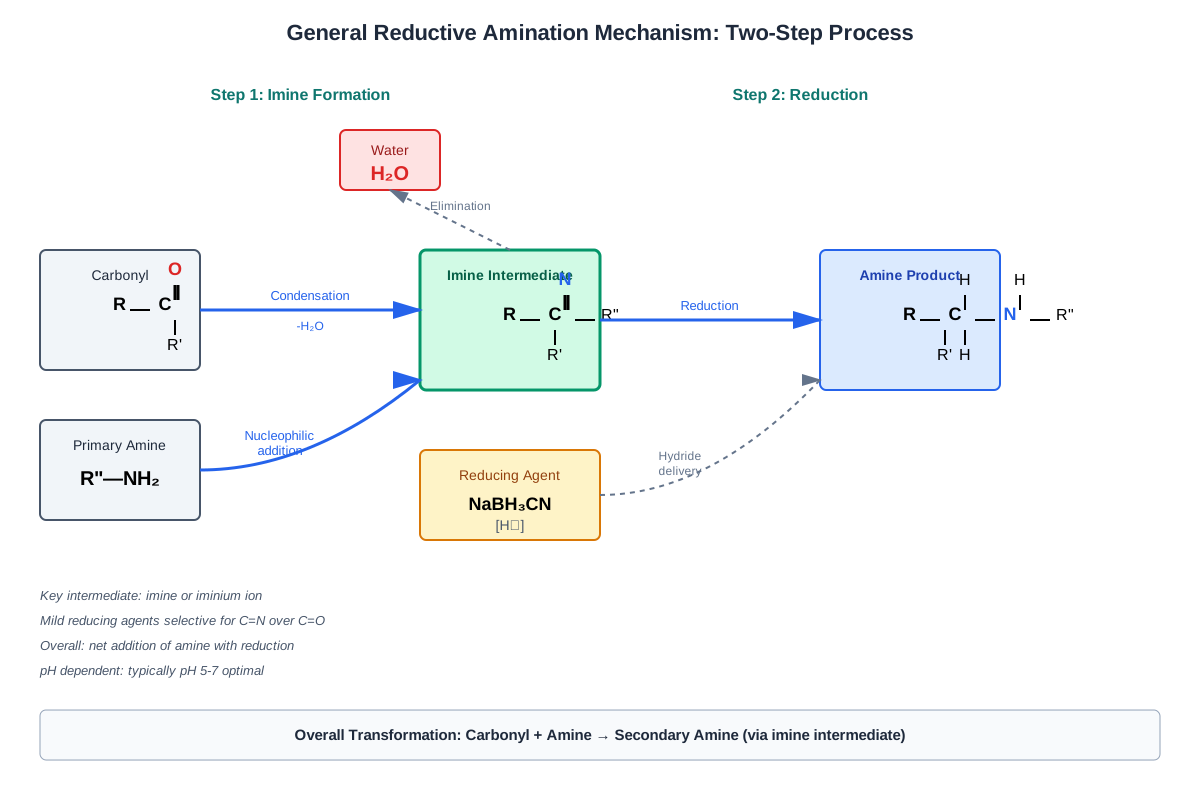
Reductive amination is a two-step synthetic process that converts a carbonyl compound (aldehyde or ketone) into an amine through the formation and subsequent reduction of an imine or iminium ion intermediate. The reaction begins when an amine nucleophile attacks the electrophilic carbonyl carbon, forming a carbinolamine intermediate. This tetrahedral intermediate then loses water through dehydration to generate an imine (if using a primary amine) or an iminium ion (if using a secondary amine). The second step involves reduction of the carbon-nitrogen double bond using a suitable reducing agent, yielding the final amine product with one additional carbon-carbon bond compared to the starting amine.
The general transformation can be represented as:
R₁-CO-R₂ + R₃-NH₂ → R₁-CH(NHR₃)-R₂
(carbonyl)  (amine)     (amine product)
This reaction is classified as "reductive" because the overall process reduces the oxidation state of the carbonyl carbon, and "amination" because it introduces an amino group into the molecule. The beauty of this transformation lies in its ability to form carbon-nitrogen bonds under relatively mild conditions, making it invaluable for synthesizing complex molecules that might decompose under harsher conditions.
Mechanistic Pathway
The detailed mechanism of reductive amination proceeds through several distinct stages:
- Nucleophilic addition: The lone pair of electrons on the amine nitrogen attacks the electrophilic carbonyl carbon, forming a tetrahedral carbinolamine intermediate. This step is reversible and typically requires slightly acidic conditions (pH 4-6) to protonate the carbonyl oxygen and enhance electrophilicity while maintaining the amine in its nucleophilic free base form.
- Dehydration: The carbinolamine intermediate loses water to form an imine (C=N double bond). This step requires acid catalysis—a proton is transferred to the hydroxyl group, making it a better leaving group (water). The nitrogen lone pair then forms a π bond with carbon as water departs, generating the imine intermediate.
- Reduction: The imine or iminium ion is reduced by a hydride source, converting the C=N double bond to a C-N single bond. The hydride attacks the electrophilic carbon of the imine, and subsequent protonation of the nitrogen yields the final amine product.
The rate-determining step varies depending on conditions, but typically the dehydration step (imine formation) is rate-limiting under neutral to slightly basic conditions, while the reduction step becomes rate-limiting when using mild reducing agents.
Types of Reductive Amination
Reductive amination can be classified into two main approaches based on whether the imine intermediate is isolated or reduced in situ:
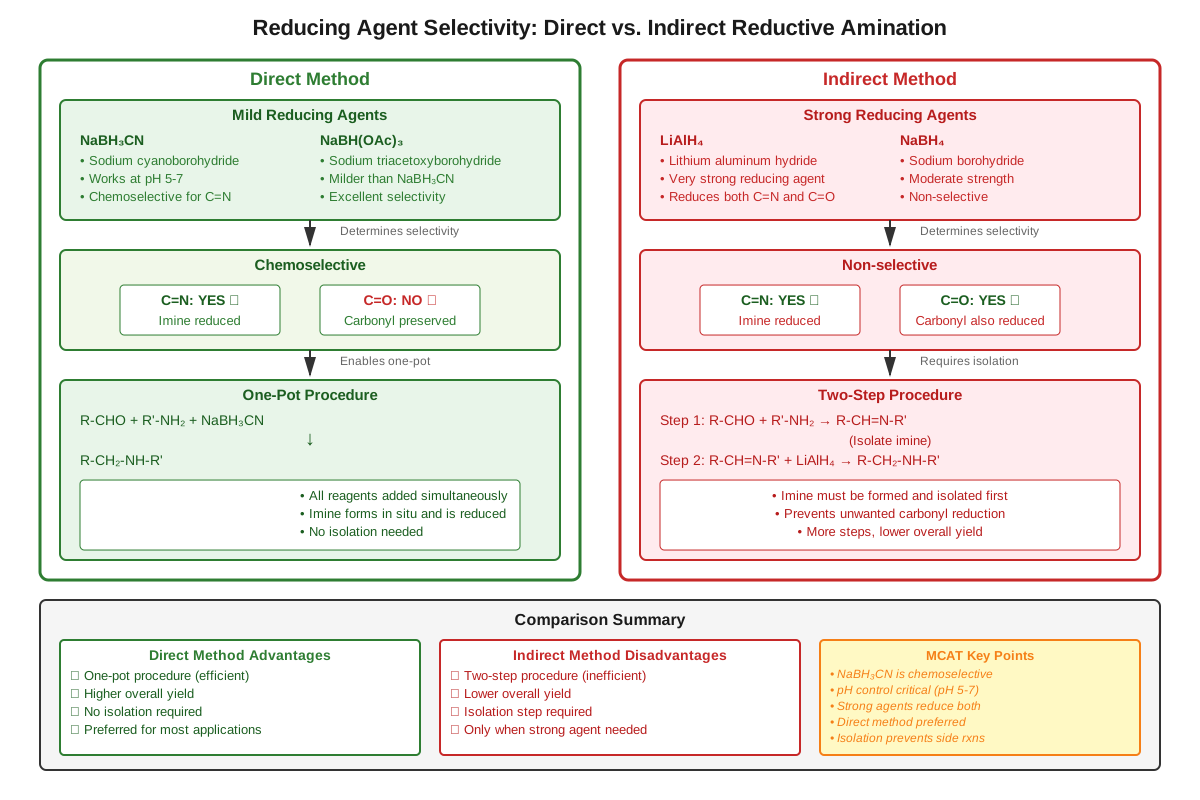
Direct (one-pot) reductive amination: The carbonyl compound and amine are combined with a reducing agent that selectively reduces the imine/iminium ion without reducing the starting carbonyl compound. This approach is more convenient and commonly used in modern synthesis. Suitable reducing agents include sodium cyanoborohydride (NaBH₃CN), sodium triacetoxyborohydride (NaBH(OAc)₃), and catalytic hydrogenation with transition metal catalysts.
Indirect (two-step) reductive amination: The imine is first formed and isolated, then reduced in a separate step using a stronger reducing agent such as lithium aluminum hydride (LiAlH₄) or sodium borohydride (NaBH₄). This approach offers more control but is less practical for complex molecules or when the imine is unstable.
| Approach | Advantages | Disadvantages | Typical Reducing Agents |
|---|---|---|---|
| Direct (one-pot) | Convenient, no isolation needed, mild conditions | Requires selective reducing agents | NaBH₃CN, NaBH(OAc)₃, H₂/Pd-C |
| Indirect (two-step) | Greater control, can characterize intermediate | More steps, imine may be unstable | LiAlH₄, NaBH₄ |
Reducing Agent Selection
The choice of reducing agent in reductive amination is critical for reaction success and selectivity. Different reducing agents exhibit varying reactivity toward carbonyl compounds versus imines/iminium ions:
Sodium cyanoborohydride (NaBH₃CN): This is the most commonly used reducing agent for direct reductive amination. It selectively reduces iminium ions and imines at mildly acidic pH (3-6) while leaving aldehydes and ketones unreacted. The electron-withdrawing cyano group decreases the hydride-donating ability, making it selective for the more electrophilic imine carbon.
Sodium triacetoxyborohydride (NaBH(OAc)₃): This reagent is even milder than sodium cyanoborohydride and works well for reductive amination of ketones, which form less reactive imines. It functions effectively at neutral to slightly acidic pH and shows excellent selectivity.
Catalytic hydrogenation (H₂ with Pd/C, Pt, or Ni): This method uses hydrogen gas with a metal catalyst to reduce the imine. It's particularly useful for large-scale synthesis and can be highly selective under appropriate conditions. The reaction typically requires slightly acidic conditions to protonate the imine and facilitate reduction.
Sodium borohydride (NaBH₄): While NaBH₄ reduces both carbonyl compounds and imines, it can be used in indirect reductive amination after the imine has been isolated. It's less selective than NaBH₃CN for direct reductive amination.
Lithium aluminum hydride (LiAlH₄): This powerful reducing agent reduces virtually all carbonyl compounds and imines. It's too reactive for direct reductive amination but can be used in the indirect approach after imine isolation.
Product Determination and Amine Classification
The structure of the amine product depends on both the starting carbonyl compound and the amine nucleophile:
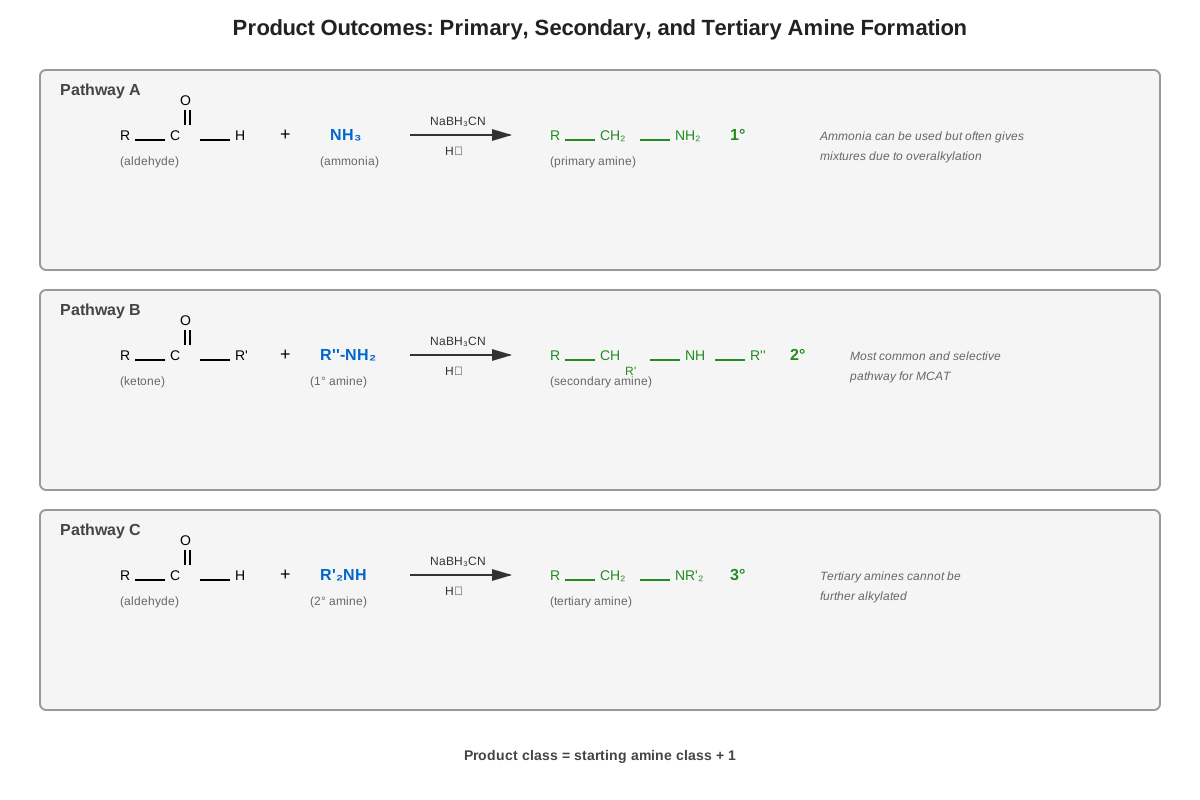
- Primary amine formation: Ammonia (NH₃) or a primary amine (RNH₂) reacting with an aldehyde or ketone produces a primary or secondary amine, respectively
- Secondary amine formation: A primary amine reacting with an aldehyde or ketone produces a secondary amine
- Tertiary amine formation: A secondary amine (R₂NH) reacting with an aldehyde or ketone produces a tertiary amine
The degree of substitution on the final amine product equals the degree of substitution on the starting amine plus one. This relationship is crucial for predicting products on MCAT questions.
Stereochemical Considerations
When reductive amination creates a new stereocenter at the former carbonyl carbon, the reaction typically produces a racemic mixture because the hydride can attack from either face of the planar imine intermediate with equal probability. However, if the molecule contains existing stereocenters or if chiral catalysts are employed, diastereoselectivity or enantioselectivity can be achieved. For MCAT purposes, students should recognize that simple reductive amination of prochiral ketones produces racemic products unless additional chiral information is present in the substrate or catalyst.
pH Dependence and Optimization
The efficiency of reductive amination is highly pH-dependent, with optimal conditions typically falling in the pH 4-6 range. At pH values that are too low (< 3), the amine becomes fully protonated and loses its nucleophilicity, preventing imine formation. At pH values that are too high (> 7), the carbonyl compound is less electrophilic, and the equilibrium favors the carbinolamine intermediate rather than the imine. The "sweet spot" maintains sufficient amine nucleophilicity while promoting imine formation through acid-catalyzed dehydration. This pH sensitivity is frequently tested on the MCAT through experimental design questions.
Concept Relationships
Reductive amination integrates multiple fundamental concepts in Organic Chemistry, creating a web of interconnected knowledge essential for MCAT mastery. The reaction begins with principles of carbonyl chemistry, specifically the electrophilicity of aldehydes and ketones, which determines their reactivity toward nucleophilic attack. This electrophilicity concept connects directly to nucleophilic addition mechanisms, where the amine's lone pair attacks the carbonyl carbon—the same mechanistic pattern seen in hemiacetal formation, cyanohydrin synthesis, and Grignard reactions.
The formation of the imine intermediate links reductive amination to imine and enamine chemistry, requiring understanding of condensation reactions and the role of acid catalysis in dehydration steps. This imine formation process mirrors the mechanism of Schiff base formation in biological systems, connecting organic chemistry to biochemistry topics like the visual cycle (retinal binding to opsin) and enzyme mechanisms involving lysine residues.
The reduction step connects to broader oxidation and reduction principles, particularly the concept of hydride transfer and the selectivity of different reducing agents. This knowledge extends to understanding why certain reducing agents (like NaBH₃CN) selectively reduce imines over carbonyls, relating to the relative electrophilicity of different functional groups—a concept that appears across multiple MCAT chemistry topics.
The relationship map flows as follows:
Carbonyl electrophilicity → enables → Nucleophilic addition by amine → produces → Carbinolamine intermediate → undergoes → Acid-catalyzed dehydration → forms → Imine/iminium ion → undergoes → Selective reduction → yields → Amine product
This sequence also connects to amino acid metabolism through transamination reactions, where pyridoxal phosphate (PLP) facilitates similar imine-forming chemistry. Understanding reductive amination thus enables comprehension of how cells synthesize amino acids from α-keto acids, linking to the urea cycle and nitrogen metabolism—high-yield biochemistry topics for the MCAT.
Quick check — test yourself on Reductive amination so far.
Try Flashcards →High-Yield Facts
⭐ Reductive amination converts carbonyl compounds (aldehydes or ketones) into amines through imine formation followed by reduction, increasing the degree of amine substitution by one.
⭐ Sodium cyanoborohydride (NaBH₃CN) is the preferred reducing agent for direct reductive amination because it selectively reduces imines/iminium ions at mildly acidic pH without reducing the starting carbonyl compound.
⭐ The optimal pH range for reductive amination is 4-6, balancing amine nucleophilicity with sufficient acid catalysis for imine formation.
⭐ Reductive amination of a prochiral ketone with an achiral amine produces a racemic mixture of enantiomers because hydride can attack either face of the planar imine intermediate.
⭐ The reaction proceeds through a carbinolamine intermediate that must undergo dehydration to form the imine before reduction can occur.
- Primary amines react with carbonyl compounds to form imines (R-CH=N-R'), while secondary amines form iminium ions (R-CH=N⁺R₂).
- Glutamate dehydrogenase catalyzes the reductive amination of α-ketoglutarate to glutamate, representing a key biological example of this reaction.
- The degree of substitution on the product amine equals the degree of substitution on the starting amine plus one (e.g., primary amine + aldehyde → secondary amine).
- Sodium triacetoxyborohydride (NaBH(OAc)₃) is even milder than NaBH₃CN and particularly effective for reductive amination of ketones.
- Catalytic hydrogenation (H₂/Pd-C) can be used for reductive amination and is preferred for large-scale industrial synthesis.
- Reductive amination is the reverse process of oxidative deamination, which converts amines to carbonyl compounds.
- The reaction is widely used in pharmaceutical synthesis to create amine-containing drugs, including many antidepressants and antihistamines.
Common Misconceptions
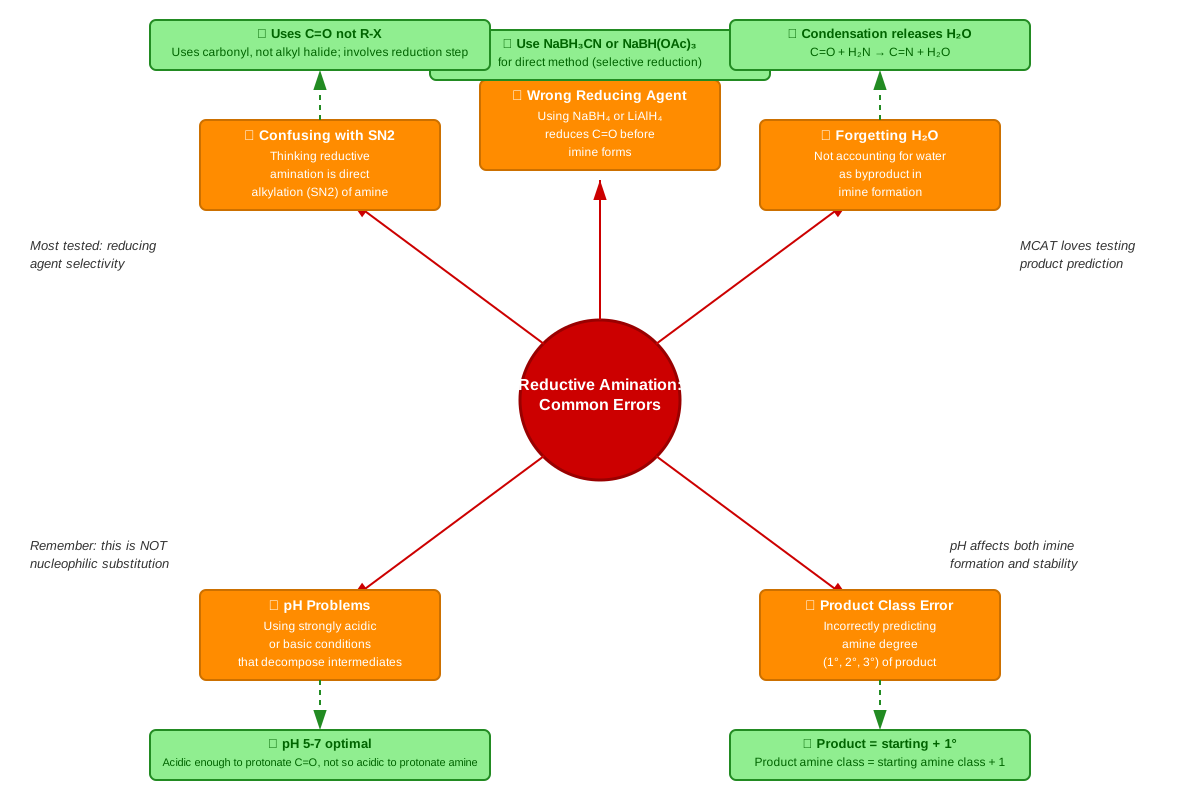
Misconception: Sodium borohydride (NaBH₄) is the best reducing agent for direct reductive amination.
Correction: NaBH₄ reduces both carbonyl compounds and imines with similar rates, making it unsuitable for direct reductive amination where the carbonyl starting material must remain unreacted until imine formation is complete. Sodium cyanoborohydride (NaBH₃CN) is preferred because it selectively reduces the more electrophilic imine/iminium ion while leaving aldehydes and ketones intact.
Misconception: Reductive amination always produces a single stereoisomer when a new stereocenter is formed.
Correction: Unless chiral catalysts or chiral auxiliaries are employed, reductive amination of prochiral carbonyl compounds produces racemic mixtures. The planar imine intermediate allows hydride attack from either face with equal probability, generating both enantiomers in equal amounts.
Misconception: The reaction works equally well at any pH as long as both reactants are present.
Correction: Reductive amination is highly pH-dependent. At low pH (< 3), the amine is protonated and non-nucleophilic, preventing imine formation. At high pH (> 7), imine formation is disfavored because dehydration requires acid catalysis. The optimal pH range of 4-6 represents a compromise that maintains amine nucleophilicity while promoting imine formation.
Misconception: Reductive amination can only produce secondary amines.
Correction: The product amine classification depends on the starting materials. Ammonia produces primary amines, primary amines produce secondary amines, and secondary amines produce tertiary amines. The reaction increases the degree of substitution on nitrogen by one compared to the starting amine.
Misconception: The imine intermediate must always be isolated before reduction can occur.
Correction: While indirect reductive amination involves isolating the imine, direct (one-pot) reductive amination is more common and practical. Using selective reducing agents like NaBH₃CN allows the imine to form and be reduced in situ without isolation, simplifying the procedure and improving yields for unstable imines.
Misconception: All reducing agents work equally well for reductive amination.
Correction: Reducing agent selection is critical for reaction success. Strong reducing agents like LiAlH₄ reduce the starting carbonyl before imine formation can occur, while very weak reducing agents may not reduce the imine at all. The reducing agent must be matched to the reaction conditions and substrate structure for optimal results.
Worked Examples
Example 1: Product Prediction and Mechanism Analysis
Question: Benzaldehyde is treated with methylamine (CH₃NH₂) in the presence of sodium cyanoborohydride (NaBH₃CN) at pH 5. Draw the product and explain why these specific conditions were chosen.
Solution:
Step 1 - Identify the reaction type: This is a direct reductive amination because a carbonyl compound (benzaldehyde, an aldehyde) is combined with a primary amine (methylamine) in the presence of a selective reducing agent.
Step 2 - Predict the product structure:
- Starting amine: methylamine (primary amine, CH₃NH₂)
- Product will be a secondary amine (one degree higher)
- The product is N-methylbenzylamine: C₆H₅-CH₂-NH-CH₃
Step 3 - Explain the mechanism:
- Methylamine attacks the carbonyl carbon of benzaldehyde, forming a carbinolamine intermediate
- Acid-catalyzed dehydration (facilitated by pH 5) removes water, forming an imine: C₆H₅-CH=N-CH₃
- NaBH₃CN selectively reduces the imine by hydride transfer to the carbon, followed by protonation of nitrogen
- Final product: C₆H₅-CH₂-NH-CH₃
Step 4 - Justify the conditions:
- pH 5: This mildly acidic pH maintains methylamine in its nucleophilic free base form while providing sufficient acid catalysis for imine formation through dehydration
- NaBH₃CN: This reducing agent selectively reduces the imine without reducing the benzaldehyde starting material, allowing the reaction to proceed in one pot. At pH 5, NaBH₃CN is stable and selective for the more electrophilic imine carbon
- Alternative reducing agents would fail: NaBH₄ would reduce benzaldehyde to benzyl alcohol before imine formation; LiAlH₄ is too reactive and requires anhydrous conditions
Key learning objective addressed: This example demonstrates product prediction, mechanism understanding, and the critical importance of reagent selection in reductive amination.
Example 2: Biological Application and Metabolic Context
Question: In amino acid metabolism, α-ketoglutarate undergoes reductive amination to form glutamate. The enzyme glutamate dehydrogenase catalyzes this reaction using NADH or NADPH as the reducing agent. A researcher observes that the reaction rate decreases significantly when the pH is raised from 7.0 to 9.0. Explain this observation using your knowledge of reductive amination mechanisms.
Solution:
Step 1 - Identify the biochemical reaction:
- Substrate: α-ketoglutarate (a ketone at the α-carbon position)
- Nitrogen source: Ammonia (NH₃) or ammonium ion (NH₄⁺)
- Product: Glutamate (an amino acid with an α-amino group)
- This is a reductive amination where ammonia adds to the ketone, followed by reduction
Step 2 - Analyze the pH effect on mechanism:
At pH 7.0:
- Equilibrium between NH₃ (nucleophilic) and NH₄⁺ (non-nucleophilic) favors some free ammonia
- The enzyme active site likely provides optimal protonation states for both nucleophilic attack and subsequent imine formation
- NADH/NADPH can effectively reduce the imine intermediate
At pH 9.0:
- More ammonia exists in the free base form (good for nucleophilicity)
- However, the lack of sufficient protons impairs the dehydration step needed to form the imine intermediate from the carbinolamine
- The carbinolamine intermediate accumulates but cannot efficiently dehydrate to the imine
- Without imine formation, reduction cannot proceed, slowing the overall reaction
Step 3 - Connect to general reductive amination principles:
This observation mirrors the pH dependence of chemical reductive amination. While high pH increases amine nucleophilicity, it decreases the efficiency of the acid-catalyzed dehydration step that forms the imine. The enzyme glutamate dehydrogenase has evolved to function optimally at physiological pH (~7.0-7.4), where both nucleophilic attack and imine formation can proceed efficiently.
Step 4 - Broader metabolic significance:
This reaction is crucial for nitrogen assimilation in cells. When ammonia levels are high, glutamate dehydrogenase "fixes" nitrogen into organic molecules by converting α-ketoglutarate (from the citric acid cycle) into glutamate. This glutamate then serves as a nitrogen donor for synthesizing other amino acids through transamination reactions. The pH sensitivity ensures the reaction operates efficiently under physiological conditions but can be regulated when pH shifts occur in disease states.
Key learning objectives addressed: This example connects reductive amination to biochemistry, demonstrates understanding of pH effects on mechanism, and shows how fundamental organic chemistry principles apply to biological systems—a common MCAT integration point.
Exam Strategy
When approaching reductive amination questions on the MCAT, employ a systematic strategy that maximizes accuracy while managing time effectively. First, quickly identify whether the question involves forward prediction (given reactants, predict products) or retrosynthetic analysis (given product, identify starting materials). For forward prediction questions, immediately classify the starting amine (primary, secondary, or tertiary) to determine the product amine classification—this takes 5 seconds and eliminates wrong answers.
Trigger words and phrases to watch for:
- "Sodium cyanoborohydride" or "NaBH₃CN" → signals direct reductive amination with selective reduction
- "Imine intermediate" → indicates the question focuses on the mechanistic pathway
- "pH optimization" or "buffer conditions" → expect questions about the pH dependence of the reaction
- "Amino acid synthesis" or "transamination" → biological context for reductive amination
- "Racemic mixture" → stereochemistry question about achiral reduction of prochiral ketones
- "One-pot synthesis" → direct reductive amination without imine isolation
Process-of-elimination strategies:
- Eliminate answers with incorrect amine classification: If the starting material is a primary amine, the product must be a secondary amine—immediately eliminate any answer showing primary or tertiary amines
- Check for impossible reducing agents: If an answer choice suggests using LiAlH₄ in a one-pot reductive amination, eliminate it—this reagent would reduce the starting carbonyl
- Verify stereochemistry: For questions about stereochemical outcomes, eliminate any answer suggesting a single enantiomer forms from achiral reagents and substrates without chiral catalysts
- pH reasonableness: Eliminate extreme pH values (< 3 or > 8) as optimal conditions for reductive amination
Time allocation advice: Discrete questions on reductive amination should take 45-60 seconds. Spend 15 seconds identifying the reaction type and starting materials, 20 seconds predicting the product or analyzing the mechanism, and 10-15 seconds eliminating wrong answers and confirming your choice. For passage-based questions, allocate 60-90 seconds, spending extra time connecting the specific experimental details in the passage to general reductive amination principles.
Exam Tip: If a question presents multiple reaction conditions and asks which is optimal for reductive amination, immediately look for NaBH₃CN at pH 4-6. This combination appears frequently as the correct answer because it represents the most selective and practical conditions.
Common question formats:
- Product identification: Given starting materials and conditions, select the correct product structure
- Reagent selection: Given starting materials and desired product, choose appropriate reagents
- Mechanism analysis: Identify intermediates or explain why certain conditions are necessary
- Experimental design: Evaluate or propose conditions for a reductive amination in a research context
- Biological application: Connect reductive amination to amino acid metabolism or neurotransmitter synthesis
Memory Techniques
Mnemonic for reducing agent selectivity - "Cyano Can't Cut Carbonyls": Remember that sodium cyanoborohydride (NaBH₃CN) can't reduce carbonyls efficiently, making it selective for imines. The alliteration helps recall that the cyano group makes the reagent less reactive toward the less electrophilic carbonyl compounds.
pH optimization mnemonic - "Four to Six Fixes": The optimal pH range of 4-6 fixes nitrogen to carbon through reductive amination. This range is easy to remember because it's close to the pH of many biological buffers and represents the compromise between amine nucleophilicity and acid catalysis.
Product prediction rule - "Plus One Degree": The product amine has one degree higher substitution than the starting amine. Primary amine + carbonyl = secondary amine product. Secondary amine + carbonyl = tertiary amine product. This simple rule prevents classification errors.
Mechanism sequence acronym - "NADI":
- Nucleophilic attack (amine attacks carbonyl)
- Addition product forms (carbinolamine intermediate)
- Dehydration occurs (water leaves, imine forms)
- Imine reduction (hydride transfer completes the reaction)
Visualization strategy for stereochemistry: Picture the imine intermediate as a flat, planar molecule (like a sheet of paper). The reducing agent (hydride source) can approach from above or below with equal probability, like throwing a dart at the paper from either side. This mental image reinforces why racemic mixtures form from achiral reagents.
Biological connection mnemonic - "Glutamate Gets Nitrogen": Remember that glutamate gets nitrogen through reductive amination of α-ketoglutarate. This connects the chemical reaction to the key biological example most likely to appear on the MCAT.
Summary
Reductive amination represents a cornerstone synthetic transformation in organic chemistry that converts carbonyl compounds into amines through a two-step process involving imine formation and subsequent reduction. The reaction begins with nucleophilic attack of an amine on an aldehyde or ketone, forming a carbinolamine intermediate that undergoes acid-catalyzed dehydration to generate an imine or iminium ion. Selective reduction of this intermediate using reagents such as sodium cyanoborohydride yields the final amine product with one additional degree of substitution compared to the starting amine. The reaction's success depends critically on pH optimization (typically 4-6) and appropriate reducing agent selection to ensure selective reduction of the imine without affecting the starting carbonyl compound. For MCAT purposes, students must understand the mechanistic pathway, predict products based on starting material structure, recognize biological applications in amino acid metabolism, and apply strategic problem-solving approaches to exam questions. Mastery of reductive amination enables comprehension of related topics including carbonyl chemistry, nitrogen metabolism, and pharmaceutical synthesis, making it an essential component of high-yield MCAT preparation.
Key Takeaways
- Reductive amination converts carbonyl compounds (aldehydes/ketones) to amines via imine formation followed by selective reduction, increasing amine substitution by one degree
- Sodium cyanoborohydride (NaBH₃CN) is the preferred reducing agent for direct reductive amination because it selectively reduces imines at pH 4-6 without reducing carbonyl starting materials
- The reaction proceeds through a carbinolamine intermediate that must undergo acid-catalyzed dehydration to form the imine before reduction can occur
- Optimal pH range is 4-6, balancing amine nucleophilicity with sufficient acid catalysis for efficient imine formation
- Biological applications include glutamate synthesis from α-ketoglutarate (via glutamate dehydrogenase) and neurotransmitter biosynthesis, making this reaction relevant to both chemistry and biochemistry MCAT sections
- Reductive amination of prochiral ketones with achiral reagents produces racemic mixtures because hydride can attack either face of the planar imine intermediate
- Understanding reagent selectivity, pH dependence, and product prediction enables rapid elimination of incorrect answers on MCAT questions
Related Topics
Transamination reactions: These biochemical processes transfer amino groups between amino acids and α-keto acids using pyridoxal phosphate (PLP) as a cofactor. Mastering reductive amination provides the mechanistic foundation for understanding how PLP facilitates imine formation in transamination, connecting organic chemistry to amino acid metabolism.
Oxidative deamination: The reverse process of reductive amination, where amines are converted to carbonyl compounds with release of ammonia. Understanding both directions of this transformation enables comprehension of nitrogen metabolism and the urea cycle.
Imine and enamine chemistry: Deeper exploration of these nitrogen-containing functional groups, including their formation, reactivity, and role in biological systems. Reductive amination serves as an introduction to the broader chemistry of C=N double bonds.
Carbonyl reduction reactions: Comprehensive study of various methods for reducing aldehydes and ketones, including Wolff-Kishner reduction, Clemmensen reduction, and catalytic hydrogenation. Understanding reductive amination's selective reduction step facilitates learning these related transformations.
Protecting group strategies: Advanced synthetic planning that uses protecting groups to control reactivity in multi-step synthesis. Reductive amination often requires protecting groups when multiple functional groups are present, making this a natural progression topic.
Practice CTA
Now that you've mastered the core concepts of reductive amination, it's time to solidify your understanding through active practice. Challenge yourself with the accompanying practice questions that simulate real MCAT scenarios, including both discrete questions and passage-based problems. Work through the flashcards to reinforce high-yield facts and test your ability to rapidly recall key concepts under time pressure. Remember, understanding the mechanism is just the first step—true MCAT mastery comes from applying this knowledge to diverse question formats and recognizing how reductive amination connects to broader themes in organic chemistry and biochemistry. Your investment in practice now will translate directly to confidence and points on test day. You've got this!
Sign up free to keep reading
Create a free AnvayaPrep account to finish this MCAT guide on Reductive amination — plus flashcards and practice questions.