Overview
Viscosity is a fundamental property of fluids that describes their resistance to flow and internal friction between adjacent layers of fluid in motion. On the MCAT, viscosity appears frequently in both standalone questions and passage-based problems, particularly in contexts involving blood flow through vessels, fluid dynamics in physiological systems, and laboratory techniques such as centrifugation and chromatography. Understanding viscosity is essential for mastering the Fluids unit in Physics, as it bridges static fluid concepts (pressure, buoyancy) with dynamic fluid behavior (flow rates, turbulence).
The MCAT tests viscosity through quantitative problem-solving, conceptual reasoning about fluid behavior, and application to biological systems. Students must be comfortable with Poiseuille's Law, which governs laminar flow through cylindrical tubes—a direct model for blood flow through vessels. Questions often integrate viscosity with circulatory physiology, requiring students to predict how changes in blood viscosity (due to dehydration, polycythemia, or temperature) affect flow rate and vascular resistance. Additionally, viscosity concepts appear in passages discussing medical devices, drug delivery systems, and diagnostic procedures.
Mastering Viscosity Physics provides the foundation for understanding more complex topics in fluid dynamics, including the Reynolds number (which predicts turbulent versus laminar flow), Bernoulli's equation applications, and the relationship between pressure gradients and flow rates. This topic directly connects to cardiovascular physiology, renal function, and respiratory mechanics—making it one of the highest-yield physics topics for the MCAT.
Learning Objectives
- [ ] Define Viscosity using accurate Physics terminology
- [ ] Explain why Viscosity matters for the MCAT
- [ ] Apply Viscosity to exam-style questions
- [ ] Identify common mistakes related to Viscosity
- [ ] Connect Viscosity to related Physics concepts
- [ ] Derive and apply Poiseuille's Law to calculate flow rates in cylindrical tubes
- [ ] Distinguish between Newtonian and non-Newtonian fluids and identify biological examples
- [ ] Analyze how temperature, molecular structure, and intermolecular forces affect viscosity
- [ ] Calculate the coefficient of viscosity using dimensional analysis and experimental data
Prerequisites
- Fluid pressure and density: Viscosity problems often involve pressure gradients driving flow; understanding P = ρgh and gauge pressure is essential
- Laminar versus turbulent flow: Viscosity is most relevant in laminar flow conditions; recognizing flow regimes helps determine when viscosity equations apply
- Basic calculus concepts: While not required for MCAT calculations, understanding that flow rate involves derivatives helps conceptualize the velocity gradient in viscous fluids
- Circulatory system anatomy: Blood vessel structure (arteries, arterioles, capillaries, veins) provides the biological context for most MCAT viscosity questions
- Units and dimensional analysis: Viscosity has complex units (Pa·s or poise); facility with unit conversion is necessary for problem-solving
Why This Topic Matters
Clinical and Real-World Significance
Viscosity governs blood flow through the cardiovascular system, making it directly relevant to understanding hypertension, atherosclerosis, stroke risk, and shock states. Blood viscosity increases with hematocrit (red blood cell concentration), plasma protein levels, and decreased temperature. Conditions like polycythemia vera (excess red blood cells) or dehydration increase blood viscosity, raising vascular resistance and cardiac workload. Conversely, anemia reduces viscosity, potentially compromising oxygen delivery despite easier flow. Pharmaceutical scientists must consider viscosity when designing injectable medications, intravenous solutions, and drug delivery systems. Synovial fluid viscosity affects joint lubrication and is altered in arthritis. Respiratory mucus viscosity impacts clearance mechanisms and is abnormal in cystic fibrosis.
MCAT Exam Statistics
Viscosity appears in approximately 3-5% of MCAT Physics questions, with higher representation in passage-based questions that integrate physiology. The topic most commonly appears in:
- Cardiovascular physiology passages: Questions about blood flow, vascular resistance, and blood pressure regulation
- Fluid dynamics passages: Laboratory techniques, microfluidics, or industrial processes
- Standalone questions: Direct application of Poiseuille's Law or conceptual questions about factors affecting flow
Questions typically test: (1) application of Poiseuille's Law to calculate flow rates or compare flow in different vessels, (2) conceptual understanding of how viscosity changes with temperature or composition, (3) integration with circulatory physiology to predict physiological consequences of viscosity changes, and (4) interpretation of experimental data involving viscous fluids.
Common Exam Contexts
MCAT passages present viscosity through blood flow in vessels of varying diameter, IV fluid administration rates, centrifugation of biological samples, chromatography column flow rates, and microfluidic diagnostic devices. Discrete questions often ask students to compare flow rates when vessel radius, length, or fluid viscosity changes, or to identify factors that would increase or decrease blood viscosity in clinical scenarios.
Core Concepts
Definition and Physical Meaning of Viscosity
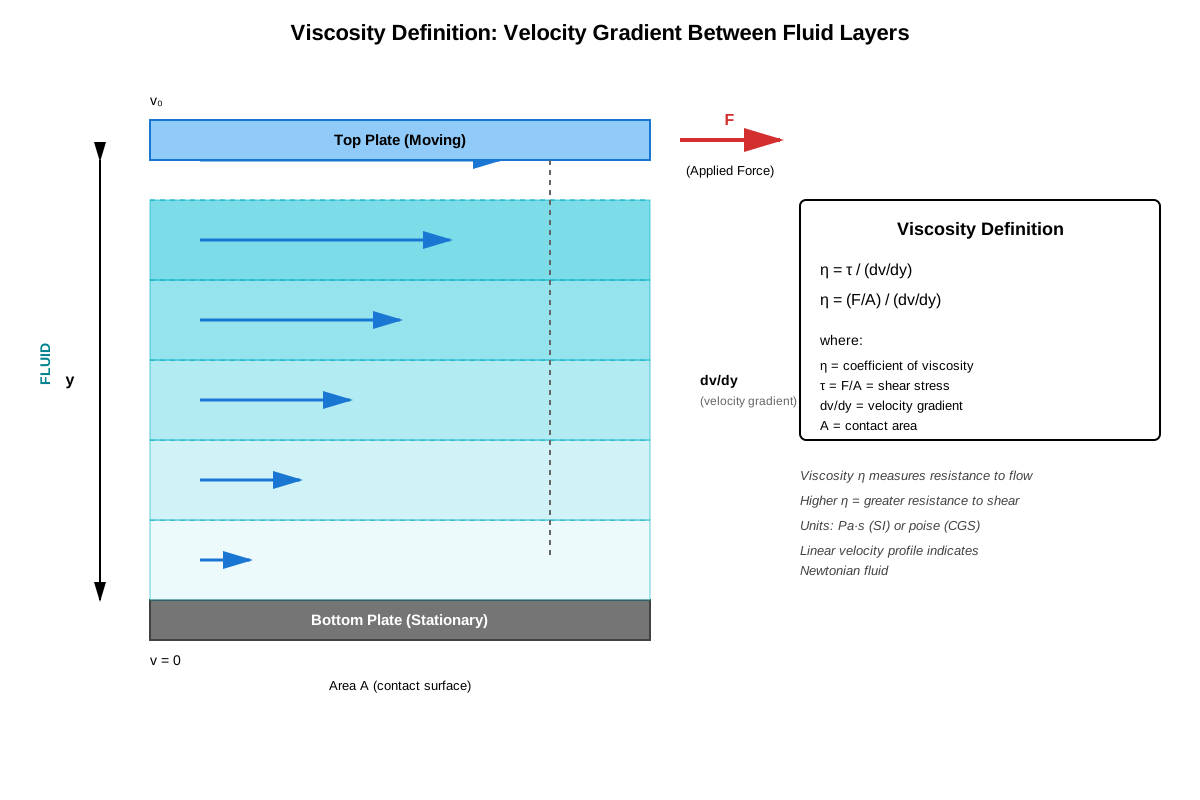
Viscosity (symbol: η, Greek letter eta) is a measure of a fluid's resistance to flow and deformation. More precisely, it quantifies the internal friction between adjacent layers of fluid moving at different velocities. When a fluid flows, layers closer to a stationary boundary move more slowly than layers farther away, creating a velocity gradient. Viscosity describes the relationship between the shear stress (force per unit area) required to maintain this velocity gradient and the rate of shear (velocity gradient itself).
The formal definition comes from Newton's law of viscosity:
τ = η(dv/dy)Where:
- τ (tau) = shear stress (force per unit area, Pa)
- η (eta) = coefficient of viscosity (Pa·s or N·s/m²)
- dv/dy = velocity gradient perpendicular to flow direction (s⁻¹)
Fluids with high viscosity (like honey or glycerol) resist flow and require substantial force to move; fluids with low viscosity (like water or alcohol) flow easily. The SI unit for viscosity is the pascal-second (Pa·s), though the CGS unit poise (P) is also common (1 Pa·s = 10 P). For reference, water at 20°C has a viscosity of approximately 1.0 × 10⁻³ Pa·s (1 centipoise), while blood at 37°C has a viscosity of approximately 3-4 × 10⁻³ Pa·s.
Newtonian versus Non-Newtonian Fluids
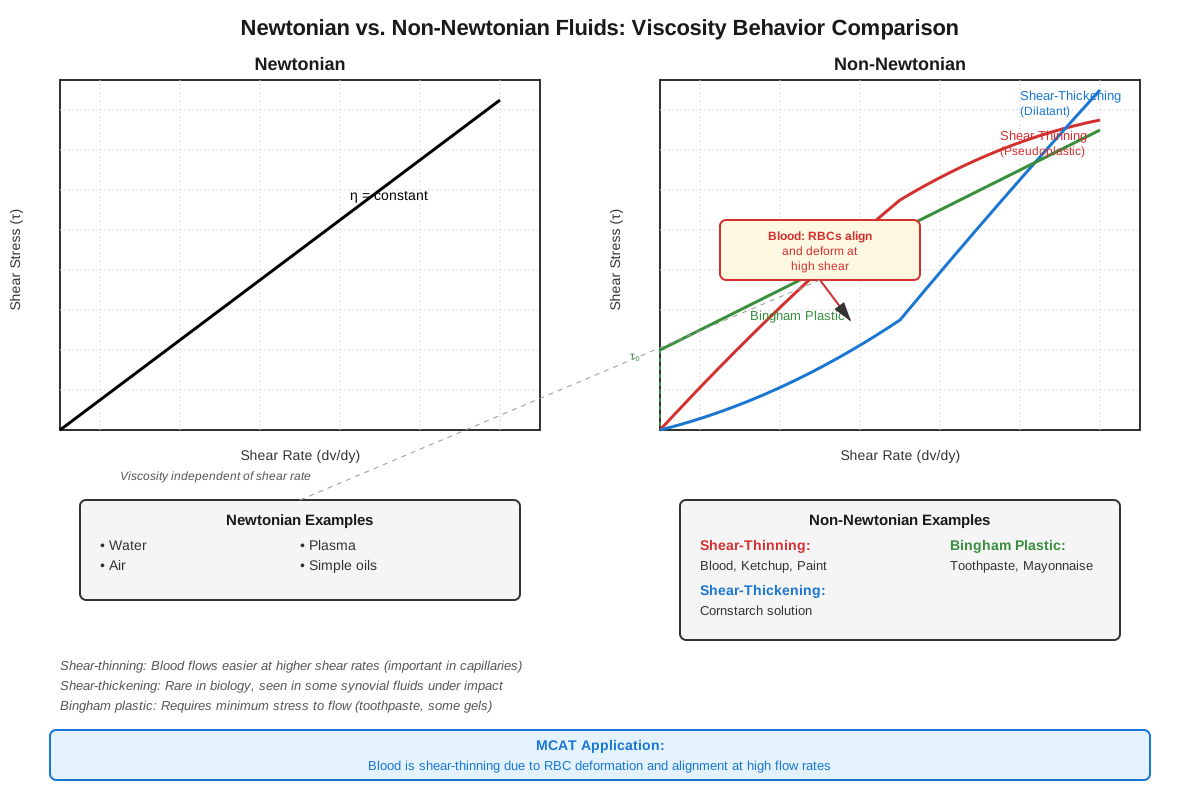
Newtonian fluids maintain constant viscosity regardless of the applied shear rate. Water, air, simple organic liquids, and mineral oils are Newtonian. For these fluids, doubling the shear stress exactly doubles the shear rate, maintaining a linear relationship.
Non-Newtonian fluids exhibit viscosity that changes with shear rate or applied stress. Blood is the most important non-Newtonian fluid for the MCAT. At low shear rates (slow flow), red blood cells aggregate, increasing apparent viscosity. At high shear rates (fast flow), cells align and deform, decreasing viscosity. This shear-thinning behavior means blood flows more easily through vessels during vigorous exercise when flow velocity is high. Other biological non-Newtonian fluids include mucus, synovial fluid, and saliva.
| Fluid Type | Viscosity Behavior | MCAT Examples |
|---|---|---|
| Newtonian | Constant with shear rate | Water, saline, plasma, cerebrospinal fluid |
| Non-Newtonian (shear-thinning) | Decreases with increasing shear rate | Blood, mucus, ketchup |
| Non-Newtonian (shear-thickening) | Increases with increasing shear rate | Cornstarch suspension (rare in biology) |
For MCAT purposes, blood is often approximated as Newtonian in calculations, though passages may discuss its non-Newtonian properties conceptually.
Factors Affecting Viscosity
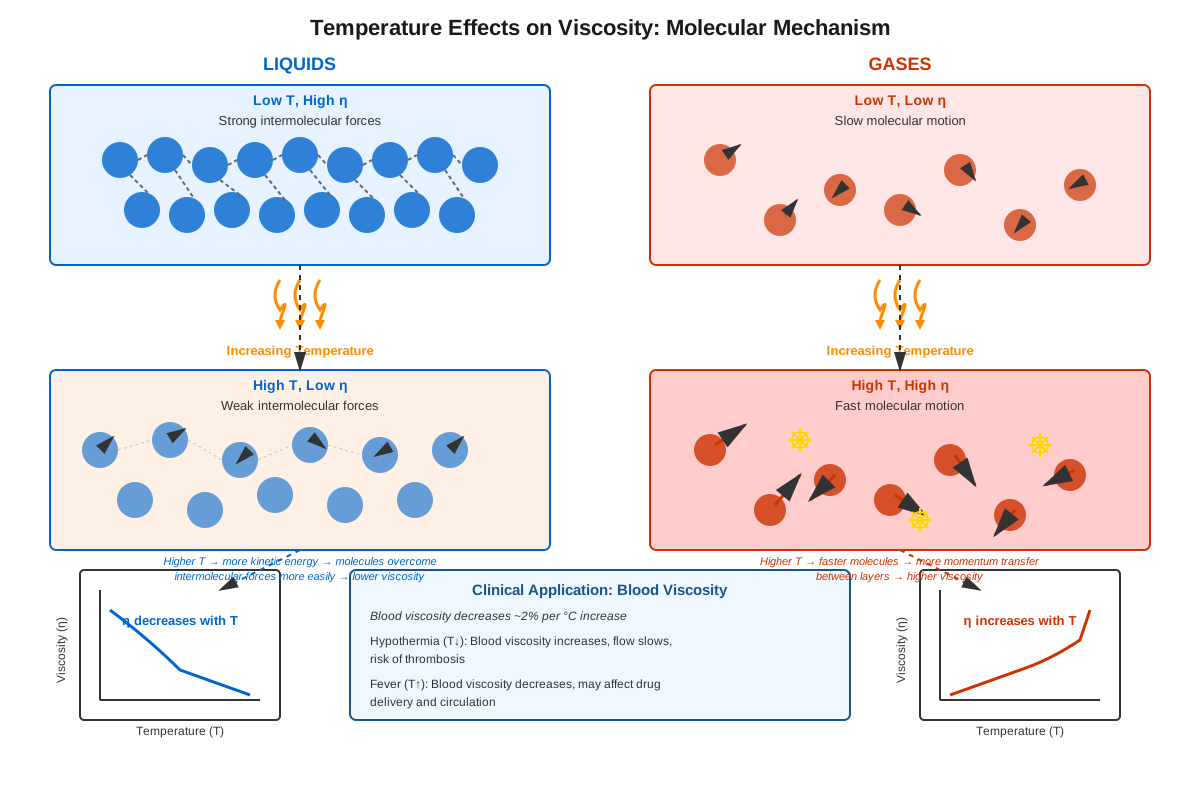
Temperature is the most important factor affecting viscosity. For liquids, viscosity decreases as temperature increases because higher kinetic energy allows molecules to overcome intermolecular forces more easily, reducing internal friction. This relationship is exponential, not linear. For gases, viscosity increases with temperature because faster-moving molecules collide more frequently, increasing momentum transfer between layers.
Molecular structure and intermolecular forces determine baseline viscosity. Fluids with strong hydrogen bonding (like glycerol) or large, complex molecules (like polymers) have higher viscosity. Long-chain molecules can entangle, dramatically increasing resistance to flow.
Concentration affects viscosity in solutions and suspensions. Blood viscosity increases with hematocrit (percentage of blood volume occupied by red blood cells). Normal hematocrit is approximately 40-45% for women and 42-50% for men. Dehydration concentrates blood cells, increasing viscosity. Plasma protein concentration also affects viscosity; conditions like multiple myeloma (excess immunoglobulins) increase blood viscosity.
Pressure has minimal effect on liquid viscosity under normal conditions but can affect gas viscosity. For MCAT purposes, pressure effects on viscosity are negligible.
Poiseuille's Law
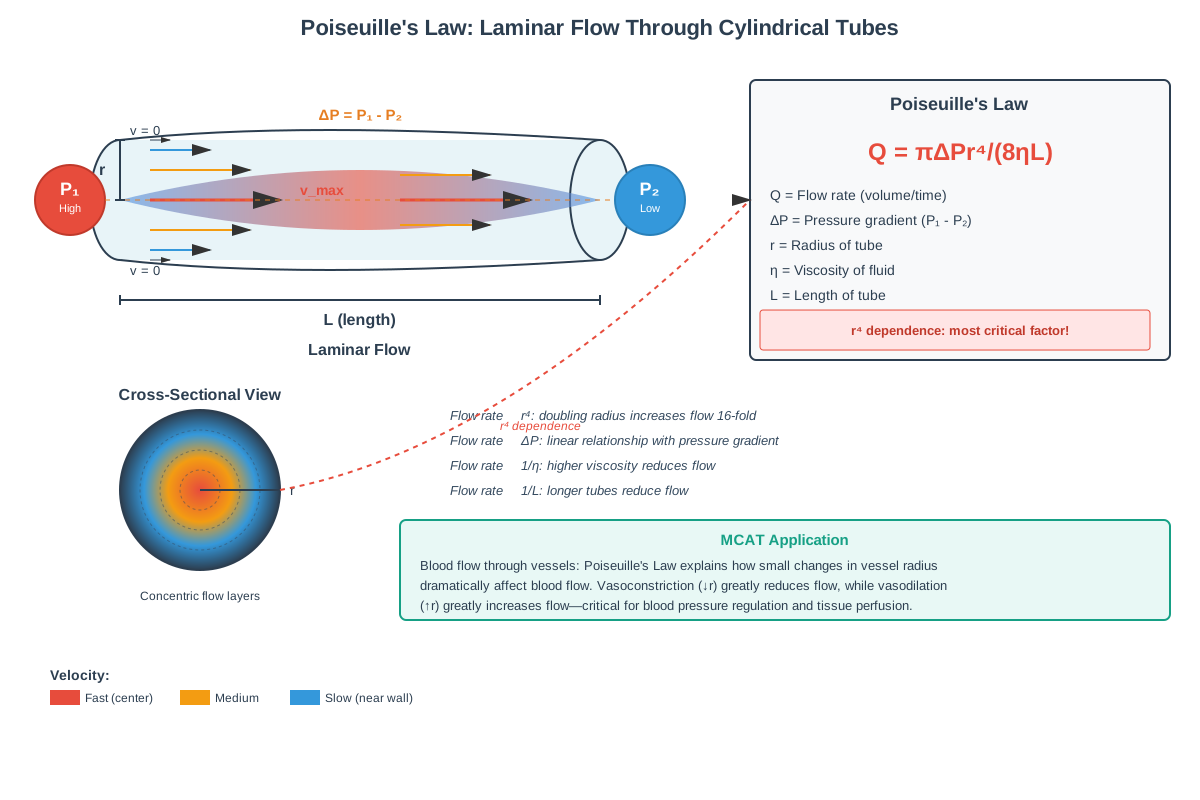
Poiseuille's Law (also called the Hagen-Poiseuille equation) describes the volumetric flow rate of a viscous, incompressible fluid through a cylindrical tube under laminar flow conditions:
Q = (πΔPr⁴)/(8ηL)Where:
- Q = volumetric flow rate (m³/s or L/min)
- ΔP = pressure difference between tube ends (Pa)
- r = tube radius (m)
- η = fluid viscosity (Pa·s)
- L = tube length (m)
This equation is critical for the MCAT because it models blood flow through vessels. Key insights:
- Flow is proportional to r⁴: Doubling vessel radius increases flow 16-fold (2⁴ = 16). This explains why small changes in vessel diameter (via vasoconstriction or vasodilation) dramatically affect blood flow and why atherosclerotic plaques that narrow vessels severely reduce flow.
- Flow is inversely proportional to viscosity: Doubling viscosity halves flow rate. Polycythemia or dehydration increases blood viscosity, reducing flow and increasing cardiac workload.
- Flow is inversely proportional to length: Longer tubes provide more resistance. This is why peripheral resistance is higher in longer vascular pathways.
- Flow is proportional to pressure gradient: Greater pressure differences drive faster flow. The heart generates this pressure gradient.
Vascular Resistance
Poiseuille's Law can be rearranged to define vascular resistance (R):
R = (8ηL)/(πr⁴) = ΔP/QThis shows resistance is directly proportional to viscosity and length, and inversely proportional to the fourth power of radius. This relationship parallels Ohm's Law in electricity (V = IR), where pressure difference is analogous to voltage, flow rate to current, and resistance to electrical resistance.
Total peripheral resistance in the circulatory system is the sum of resistances in all vascular beds. Arterioles provide the greatest resistance because they have small radii and can constrict or dilate to regulate blood flow. Mean arterial pressure (MAP) relates to cardiac output (CO) and total peripheral resistance (TPR):
MAP = CO × TPRSince cardiac output equals heart rate times stroke volume, and flow rate depends on viscosity, these relationships integrate viscosity into cardiovascular physiology.
Laminar Flow and the Reynolds Number
Poiseuille's Law applies only to laminar flow, where fluid moves in smooth, parallel layers without mixing. In laminar flow, velocity is highest at the tube center and zero at the walls (the no-slip condition). The velocity profile is parabolic.
Turbulent flow occurs when fluid velocity exceeds a critical threshold, causing chaotic mixing and eddies. Turbulent flow is less efficient, requiring greater pressure to maintain the same flow rate. The Reynolds number (Re) predicts flow regime:
Re = (ρvD)/ηWhere:
- ρ = fluid density (kg/m³)
- v = average flow velocity (m/s)
- D = tube diameter (m)
- η = viscosity (Pa·s)
- Re < 2000: Laminar flow (Poiseuille's Law applies)
- 2000 < Re < 4000: Transitional flow
- Re > 4000: Turbulent flow
Higher viscosity decreases Reynolds number, favoring laminar flow. Blood flow is normally laminar except in the heart and aorta, where high velocities create turbulence. Heart murmurs result from turbulent flow through abnormal valves or septal defects.
Viscosity in Biological Systems
Blood viscosity depends primarily on hematocrit, plasma protein concentration, and temperature. Conditions that increase viscosity (polycythemia, dehydration, hypothermia, multiple myeloma) increase vascular resistance, elevate blood pressure, and force the heart to work harder. Conditions that decrease viscosity (anemia, hyperthermia) reduce oxygen-carrying capacity despite easier flow.
Synovial fluid in joints has high viscosity due to hyaluronic acid, providing lubrication and shock absorption. Inflammatory arthritis reduces viscosity, compromising joint protection.
Respiratory mucus viscosity affects clearance by ciliary action. Cystic fibrosis causes abnormally thick, viscous mucus that obstructs airways and traps bacteria.
Cerebrospinal fluid (CSF) has low viscosity similar to water, allowing easy circulation through ventricles and around the brain and spinal cord.
Concept Relationships
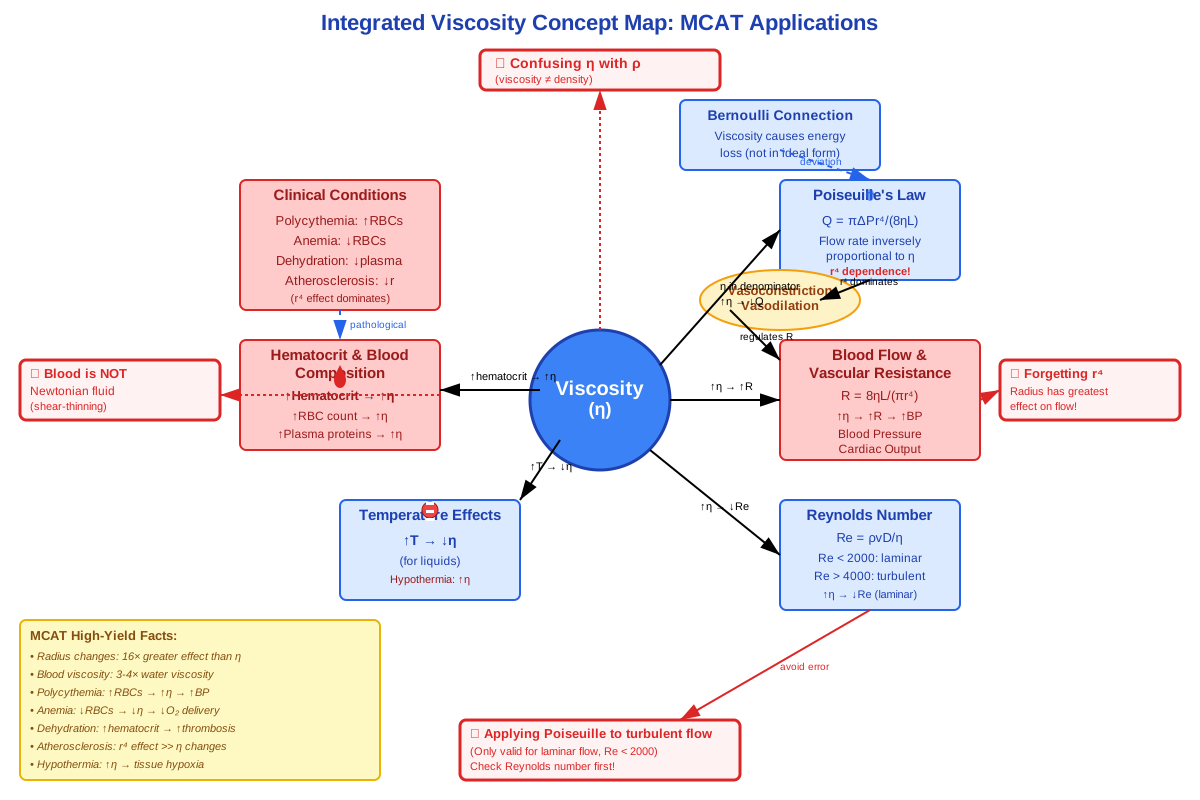
Viscosity connects to multiple physics and physiology concepts in an integrated network:
Viscosity → Poiseuille's Law → Vascular Resistance: The coefficient of viscosity directly determines resistance to flow through vessels, which combines with vessel geometry (radius and length) to establish vascular resistance.
Vascular Resistance → Blood Pressure → Cardiovascular Physiology: Increased viscosity raises total peripheral resistance, elevating mean arterial pressure and increasing cardiac workload (afterload).
Viscosity → Reynolds Number → Flow Regime: Viscosity helps determine whether flow is laminar or turbulent, affecting the applicability of Poiseuille's Law and the efficiency of flow.
Temperature → Viscosity → Flow Rate: Temperature changes alter viscosity, which affects flow rate through vessels or tubes. Hypothermia increases blood viscosity, potentially impairing circulation.
Molecular Structure → Intermolecular Forces → Viscosity: The chemical nature of a fluid determines its baseline viscosity through hydrogen bonding, van der Waals forces, and molecular size.
Hematocrit → Blood Viscosity → Oxygen Delivery: Red blood cell concentration affects both oxygen-carrying capacity and viscosity, creating a trade-off in oxygen delivery efficiency.
Pressure Gradient → Flow Rate: Via Poiseuille's Law, the driving pressure difference and viscosity together determine volumetric flow rate.
These relationships form a conceptual map: Fluid Properties (viscosity, density) → Flow Dynamics (laminar/turbulent, velocity profile) → Physiological Consequences (blood pressure, tissue perfusion, cardiac workload) → Clinical Manifestations (hypertension, stroke risk, heart failure).
Quick check — test yourself on Viscosity so far.
Try Flashcards →High-Yield Facts
⭐ Poiseuille's Law shows flow rate is proportional to r⁴: Halving vessel radius decreases flow 16-fold, explaining why vasoconstriction dramatically reduces blood flow.
⭐ Blood viscosity is approximately 3-4 times that of water at body temperature (37°C).
⭐ Viscosity is inversely proportional to temperature for liquids: Heating blood or IV fluids decreases viscosity and increases flow rate.
⭐ Vascular resistance is directly proportional to viscosity: Doubling blood viscosity doubles resistance and halves flow rate (if pressure remains constant).
⭐ Hematocrit is the primary determinant of blood viscosity: Polycythemia (high hematocrit) increases viscosity; anemia (low hematocrit) decreases viscosity.
- The SI unit of viscosity is Pa·s (pascal-second); the CGS unit is poise (P), where 1 Pa·s = 10 P.
- Blood is a non-Newtonian fluid that exhibits shear-thinning behavior, though it's often approximated as Newtonian for calculations.
- Laminar flow (Re < 2000) is required for Poiseuille's Law to apply; turbulent flow requires different equations.
- Arterioles provide the greatest vascular resistance due to their small radius, despite being shorter than arteries.
- Dehydration increases blood viscosity by concentrating cellular and protein components, increasing vascular resistance and blood pressure.
- Viscosity of gases increases with temperature (opposite of liquids) due to increased molecular collisions.
- The no-slip condition means fluid velocity is zero at vessel walls, creating a parabolic velocity profile in laminar flow.
Common Misconceptions
Misconception: Viscosity and density are the same property.
Correction: Viscosity measures resistance to flow (internal friction), while density measures mass per unit volume. Water and mercury have similar viscosities but vastly different densities. Viscosity depends on intermolecular forces; density depends on molecular mass and packing.
Misconception: Increasing pressure always increases flow rate proportionally.
Correction: While Poiseuille's Law shows flow is proportional to pressure gradient, this assumes viscosity and vessel dimensions remain constant. In biological systems, increased pressure can trigger vasoconstriction (reducing radius) or alter blood viscosity, creating non-linear relationships.
Misconception: Viscosity affects flow rate but not pressure.
Correction: Increased viscosity increases vascular resistance, which elevates blood pressure if cardiac output remains constant (MAP = CO × TPR). Viscosity changes affect both flow and pressure in interconnected ways.
Misconception: Blood viscosity is constant in all vessels and conditions.
Correction: Blood is non-Newtonian; its apparent viscosity decreases at high shear rates (fast flow) and increases at low shear rates. Additionally, the Fåhraeus-Lindqvist effect causes apparent viscosity to decrease in very small vessels (< 0.3 mm diameter) as red blood cells migrate toward the center.
Misconception: Doubling vessel radius doubles flow rate.
Correction: Flow rate is proportional to r⁴, not r. Doubling radius increases flow 16-fold (2⁴ = 16). This fourth-power relationship is one of the most commonly tested concepts.
Misconception: Longer vessels always have higher flow rates because there's more space for fluid.
Correction: Flow rate is inversely proportional to vessel length (Q ∝ 1/L). Longer vessels provide more resistance, reducing flow rate for a given pressure gradient.
Misconception: Turbulent flow is always faster than laminar flow.
Correction: Turbulent flow is less efficient than laminar flow, requiring greater pressure to achieve the same flow rate due to energy dissipation in chaotic mixing. Turbulence indicates high velocity but also high resistance.
Worked Examples
Example 1: Comparing Blood Flow in Vessels
Question: An arteriole with radius 0.5 mm carries blood at a certain flow rate. If the arteriole constricts to radius 0.4 mm while pressure gradient and blood viscosity remain constant, by what factor does the flow rate change?
Solution:
Step 1: Identify the relevant equation. Since we're dealing with flow through cylindrical vessels, use Poiseuille's Law:
Q = (πΔPr⁴)/(8ηL)Step 2: Recognize that ΔP, η, and L remain constant. Therefore, flow rate depends only on radius:
Q ∝ r⁴Step 3: Set up a ratio comparing initial (Q₁, r₁) and final (Q₂, r₂) conditions:
Q₂/Q₁ = (r₂/r₁)⁴Step 4: Substitute values:
Q₂/Q₁ = (0.4 mm / 0.5 mm)⁴ = (0.8)⁴ = 0.4096Step 5: Interpret the result. The flow rate decreases to approximately 41% of the original value, or decreases by about 59%.
Key Insight: A 20% reduction in radius (from 0.5 to 0.4 mm) causes a 59% reduction in flow rate due to the fourth-power relationship. This demonstrates why vasoconstriction is such a powerful mechanism for regulating blood flow and why atherosclerotic narrowing severely compromises perfusion.
Connection to Learning Objectives: This problem applies Poiseuille's Law to a physiologically relevant scenario, demonstrating how vessel radius changes affect flow—a common MCAT question type.
Example 2: Effect of Dehydration on Blood Flow
Question: A patient becomes dehydrated, increasing blood viscosity from 3.0 × 10⁻³ Pa·s to 4.5 × 10⁻³ Pa·s. Assuming vessel dimensions and pressure gradient remain constant, what happens to blood flow rate? If the body compensates by increasing mean arterial pressure to maintain the original flow rate, by what factor must pressure increase?
Solution:
Part A: Effect on flow rate with constant pressure
Step 1: From Poiseuille's Law, flow rate is inversely proportional to viscosity:
Q ∝ 1/ηStep 2: Set up a ratio:
Q₂/Q₁ = η₁/η₂Step 3: Substitute values:
Q₂/Q₁ = (3.0 × 10⁻³)/(4.5 × 10⁻³) = 0.667Step 4: Interpret. Flow rate decreases to 66.7% of original, or decreases by 33.3%.
Part B: Pressure increase needed to maintain flow
Step 1: If flow rate must return to Q₁, and viscosity is now η₂, determine the required pressure change. From Poiseuille's Law:
Q ∝ ΔP/ηStep 2: For constant Q:
ΔP₂/η₂ = ΔP₁/η₁Step 3: Solve for pressure ratio:
ΔP₂/ΔP₁ = η₂/η₁ = (4.5 × 10⁻³)/(3.0 × 10⁻³) = 1.5Step 4: Interpret. Pressure must increase by 50% to maintain the original flow rate.
Key Insight: Dehydration increases blood viscosity, which reduces flow rate and increases vascular resistance. The cardiovascular system compensates by increasing blood pressure (through increased cardiac output or vasoconstriction), but this increases cardiac workload. Chronic dehydration or polycythemia can contribute to hypertension and heart failure.
Connection to Learning Objectives: This problem integrates viscosity with cardiovascular physiology, demonstrating how changes in blood composition affect hemodynamics—a high-yield MCAT integration point.
Exam Strategy
Approaching MCAT Viscosity Questions
Step 1: Identify the question type
- Quantitative calculation (usually Poiseuille's Law application)
- Conceptual reasoning (factors affecting viscosity or flow)
- Physiological integration (blood flow, vascular resistance, blood pressure)
- Experimental interpretation (viscometer data, flow rate measurements)
Step 2: Determine what remains constant
MCAT questions often change one variable while holding others constant. Explicitly identify which parameters (ΔP, r, L, η) are fixed and which vary. This allows you to simplify Poiseuille's Law to a proportionality.
Step 3: Apply the fourth-power rule for radius
Most calculation errors involve the r⁴ relationship. When radius changes, always raise the ratio to the fourth power. Double-check this step.
Step 4: Consider physiological compensation
In biological contexts, the body rarely allows one parameter to change in isolation. If viscosity increases, the body may increase pressure or dilate vessels. Look for answer choices that reflect compensatory mechanisms.
Trigger Words and Phrases
- "Vasoconstriction" or "vasodilation" → radius change → r⁴ effect on flow
- "Dehydration" or "polycythemia" → increased viscosity → decreased flow or increased resistance
- "Anemia" → decreased viscosity → increased flow (but decreased oxygen delivery)
- "Hypothermia" or "fever" → temperature effect on viscosity
- "Laminar flow" → Poiseuille's Law applies
- "Turbulent flow" or "heart murmur" → Reynolds number, Poiseuille's Law does not apply
- "Atherosclerosis" or "plaque" → reduced radius → dramatically reduced flow
- "Blood pressure regulation" → consider viscosity's effect on resistance and MAP
Process of Elimination Tips
For quantitative questions:
- Eliminate answers that don't respect the r⁴ relationship (e.g., if radius doubles, flow should increase 16-fold, not 2-fold)
- Check units: flow rate should be volume/time (L/min, mL/s), not just volume
- Verify inverse relationships: if viscosity increases, flow should decrease (if pressure is constant)
For conceptual questions:
- Eliminate answers that confuse viscosity with density
- Eliminate answers suggesting viscosity increases with temperature for liquids
- Eliminate answers that ignore the dominant effect of radius changes
- Watch for answers that incorrectly apply Poiseuille's Law to turbulent flow
Time Allocation
- Standalone viscosity questions: 60-90 seconds (straightforward application of Poiseuille's Law or conceptual reasoning)
- Passage-based questions: 90-120 seconds (require integrating passage information with viscosity principles)
- Complex calculations: Set up the equation first, then check if the question asks for an exact value or just a comparison/trend. Many MCAT questions can be answered with proportional reasoning without full calculation.
Memory Techniques
Mnemonics
"PRIL" for Poiseuille's Law factors:
- Pressure (ΔP) - directly proportional to flow
- Radius (r⁴) - most important factor, fourth power
- Inverse viscosity (1/η) - higher viscosity reduces flow
- Length (inverse, 1/L) - longer vessels reduce flow
"HOTT Blood" for factors increasing blood viscosity:
- Hematocrit (increased)
- Old temperature (hypothermia)
- Thick proteins (multiple myeloma, hyperglobulinemia)
- Thirsty (dehydration)
Visualization Strategy
Imagine honey versus water flowing through a straw:
- Honey (high viscosity) flows slowly, requires strong suction (high pressure gradient)
- Water (low viscosity) flows easily, requires minimal suction
- Using a wider straw (larger radius) helps honey flow much more than it helps water (r⁴ effect is more dramatic for viscous fluids)
- A longer straw makes it harder to drink either fluid (length effect)
For the r⁴ relationship:
Visualize a vessel radius doubling: the cross-sectional area increases 4-fold (πr²), but flow increases 16-fold because the velocity profile also changes—fluid in the center moves much faster in wider vessels.
Acronym for Non-Newtonian Fluids
"BMS" for biological non-Newtonian fluids:
- Blood (shear-thinning)
- Mucus (shear-thinning)
- Synovial fluid (shear-thinning)
Summary
Viscosity is a fluid's resistance to flow, quantified by the coefficient of viscosity (η) and defined through the relationship between shear stress and velocity gradient. For the MCAT, viscosity is most important in the context of blood flow through vessels, modeled by Poiseuille's Law: Q = (πΔPr⁴)/(8ηL). This equation reveals that flow rate is proportional to the fourth power of vessel radius and inversely proportional to viscosity and vessel length. Blood viscosity depends primarily on hematocrit, plasma protein concentration, and temperature; increases in viscosity raise vascular resistance and blood pressure. Blood is technically a non-Newtonian fluid exhibiting shear-thinning behavior, though it's often approximated as Newtonian for calculations. The Reynolds number predicts whether flow is laminar (Re < 2000, Poiseuille's Law applies) or turbulent (Re > 4000, Poiseuille's Law does not apply). Understanding viscosity enables prediction of how physiological changes (dehydration, polycythemia, temperature changes) or pathological conditions (atherosclerosis, anemia) affect hemodynamics, making it essential for integrating physics with cardiovascular physiology on the MCAT.
Key Takeaways
- Viscosity (η) measures a fluid's resistance to flow, determined by intermolecular forces, molecular structure, temperature, and concentration
- Poiseuille's Law (Q = πΔPr⁴/8ηL) governs laminar flow through cylindrical tubes and models blood flow through vessels
- Flow rate is proportional to r⁴, making vessel radius the most powerful determinant of flow; small radius changes cause dramatic flow changes
- Blood viscosity increases with hematocrit, plasma proteins, and decreased temperature, raising vascular resistance and blood pressure
- Vascular resistance is directly proportional to viscosity (R = 8ηL/πr⁴), linking fluid properties to cardiovascular physiology
- Blood is non-Newtonian (shear-thinning), but often approximated as Newtonian for MCAT calculations
- Temperature decreases viscosity in liquids (including blood), increasing flow rate and decreasing resistance
Related Topics
Bernoulli's Equation: Describes energy conservation in flowing fluids, relating pressure, velocity, and height. Viscosity represents energy loss not accounted for in ideal Bernoulli applications. Understanding viscosity helps explain deviations from Bernoulli predictions in real fluids.
Continuity Equation: States that flow rate is constant throughout a closed system (A₁v₁ = A₂v₂). Combined with Poiseuille's Law, this explains how velocity changes in vessels of different diameters affect pressure and flow patterns.
Cardiovascular Physiology: Blood pressure regulation, cardiac output, and vascular resistance all depend on blood viscosity. Mastering viscosity enables deeper understanding of hypertension, shock, and heart failure.
Turbulence and Reynolds Number: Predicts flow regime transitions. Understanding when Poiseuille's Law applies (laminar flow) versus when turbulence dominates (heart murmurs, aneurysms) requires integrating viscosity with flow velocity and vessel geometry.
Centrifugation: Separates substances by density, but viscosity affects sedimentation rate. Understanding viscosity helps predict how long centrifugation takes and why temperature control matters.
Practice CTA
Now that you've mastered the core concepts of viscosity, it's time to solidify your understanding through active practice. Attempt the practice questions and flashcards to test your ability to apply Poiseuille's Law, predict how physiological changes affect blood flow, and integrate viscosity with cardiovascular physiology. Focus especially on problems involving radius changes (remember the r⁴ relationship!) and scenarios requiring you to predict compensatory mechanisms. Each practice question you work through strengthens your pattern recognition for MCAT-style viscosity problems and builds the confidence you need to tackle this high-yield topic efficiently on test day. You've got this!
Sign up free to keep reading
Create a free AnvayaPrep account to finish this MCAT guide on Viscosity — plus flashcards and practice questions.