Overview
Procedural memory represents one of the most fascinating and clinically significant components of the human memory system. As a form of long-term memory, procedural memory enables individuals to perform learned skills and actions automatically, without conscious awareness or deliberate recall. This type of memory encompasses everything from riding a bicycle and typing on a keyboard to playing a musical instrument and driving a car. Unlike declarative memory systems that require conscious retrieval of facts and events, procedural memory operates implicitly, allowing skilled behaviors to unfold smoothly and efficiently once learned.
For the MCAT, understanding procedural memory is essential because it appears frequently in both Psychology/Sociology and Biological and Biochemical Foundations sections. The exam tests not only the definition and characteristics of procedural memory but also its neural substrates, its distinction from other memory systems, and its role in learning and skill acquisition. Questions often present clinical vignettes involving patients with specific brain lesions, amnesia cases, or scenarios requiring students to differentiate between memory types based on behavioral observations.
Within the broader landscape of Psychology and Learning and Memory, procedural memory serves as a critical bridge between cognitive neuroscience and behavioral psychology. It connects to concepts including classical and operant conditioning, brain structure and function (particularly the basal ganglia and cerebellum), implicit versus explicit memory systems, and various neurological disorders such as Parkinson's disease and Huntington's disease. Mastering procedural memory provides foundational knowledge for understanding how the brain encodes, stores, and retrieves different types of information—a theme that permeates multiple MCAT passages.
Learning Objectives
- [ ] Define Procedural memory using accurate Psychology terminology
- [ ] Explain why Procedural memory matters for the MCAT
- [ ] Apply Procedural memory to exam-style questions
- [ ] Identify common mistakes related to Procedural memory
- [ ] Connect Procedural memory to related Psychology concepts
- [ ] Distinguish procedural memory from declarative memory systems based on characteristics and neural substrates
- [ ] Analyze clinical cases involving procedural memory deficits and preservation
- [ ] Predict the effects of specific brain lesions on procedural memory function
Prerequisites
- Basic brain anatomy: Understanding of major brain structures (cerebral cortex, basal ganglia, cerebellum, hippocampus) is necessary to comprehend the neural basis of different memory systems
- Memory classification systems: Familiarity with the distinction between short-term and long-term memory provides the framework for understanding where procedural memory fits within the memory hierarchy
- Implicit versus explicit processing: Knowledge of conscious versus unconscious cognitive processes helps differentiate procedural memory from declarative memory systems
- Basic learning principles: Understanding of how behaviors are acquired through practice and repetition forms the foundation for procedural memory formation
Why This Topic Matters
Clinical and Real-World Significance
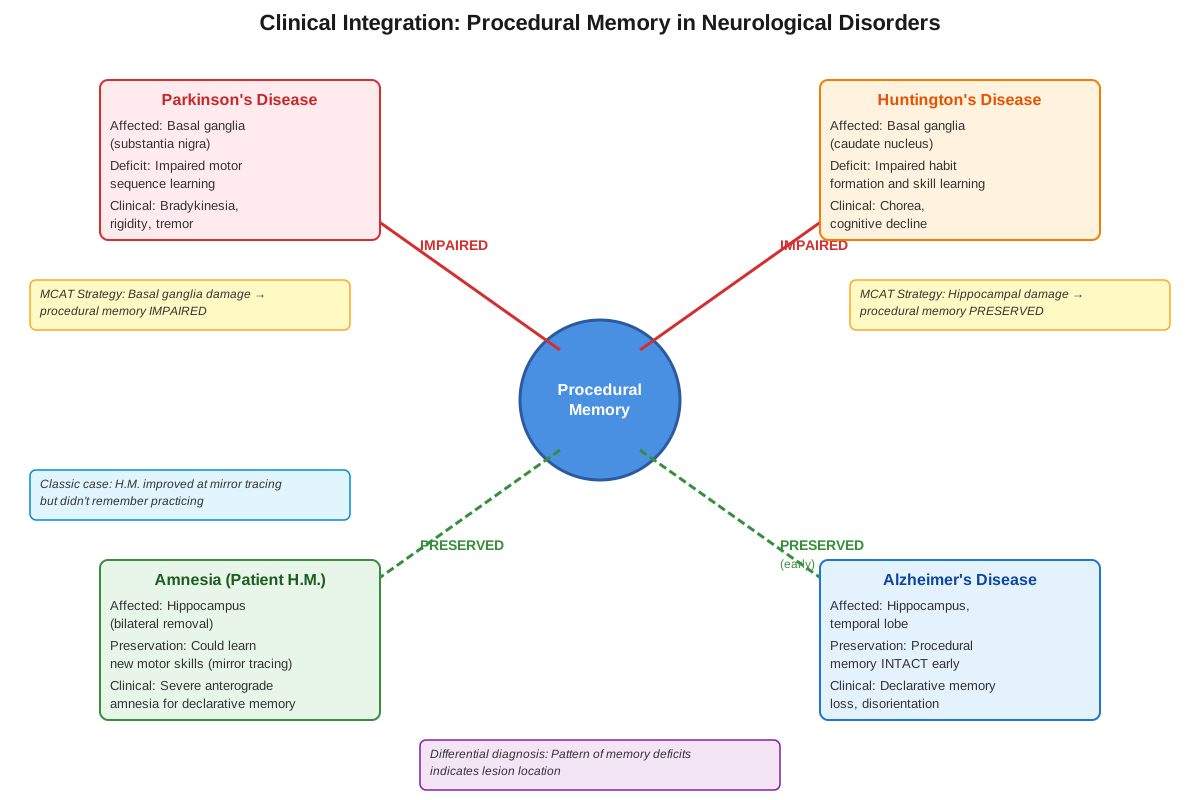
Procedural memory plays a vital role in daily functioning and quality of life. Patients with Alzheimer's disease often retain procedural memories (such as how to brush teeth or use utensils) long after losing declarative memories for recent events and personal information. This preservation allows individuals to maintain independence in basic activities despite cognitive decline. Conversely, patients with Parkinson's disease or Huntington's disease experience procedural memory deficits due to basal ganglia dysfunction, leading to difficulties with motor skills and automatic movements. Understanding procedural memory helps clinicians develop appropriate rehabilitation strategies, such as errorless learning techniques that capitalize on preserved implicit memory systems even when explicit memory is impaired.
MCAT Exam Statistics and Question Types
Procedural memory appears in approximately 15-20% of Psychology/Sociology passages and discrete questions related to memory systems. The MCAT frequently tests this concept through:
- Clinical vignettes describing patients with specific neurological conditions and asking students to predict which memory functions remain intact
- Research study passages presenting experiments that manipulate learning conditions and require identification of memory types being tested
- Comparison questions asking students to distinguish between procedural and declarative memory based on characteristics
- Application scenarios requiring students to classify everyday examples as procedural or declarative memory
The topic commonly appears integrated with questions about brain structure, neurodegenerative diseases, learning theories, and cognitive development. High-yield connections include the relationship between procedural memory and the basal ganglia, the dissociation between implicit and explicit memory systems in amnesia patients, and the role of practice and repetition in skill acquisition.
Core Concepts
Definition and Characteristics of Procedural Memory
Procedural memory is a type of implicit long-term memory that enables individuals to perform learned skills and actions without conscious awareness or intentional recollection. This memory system stores information about "how" to do things rather than "what" things are or "when" events occurred. The defining characteristics of procedural memory include:
- Implicit nature: Retrieval occurs automatically without conscious effort or awareness
- Gradual acquisition: Skills develop slowly through repeated practice and experience
- Difficult to verbalize: Individuals often cannot explicitly describe the steps involved in procedural tasks
- Resistant to forgetting: Once consolidated, procedural memories remain stable over long periods
- Performance-based expression: Demonstrated through behavior rather than verbal recall
For example, an experienced pianist can play complex pieces without consciously thinking about finger placement, while a skilled driver navigates traffic automatically while conversing with passengers. These behaviors exemplify procedural memory in action.
Neural Substrates and Brain Regions
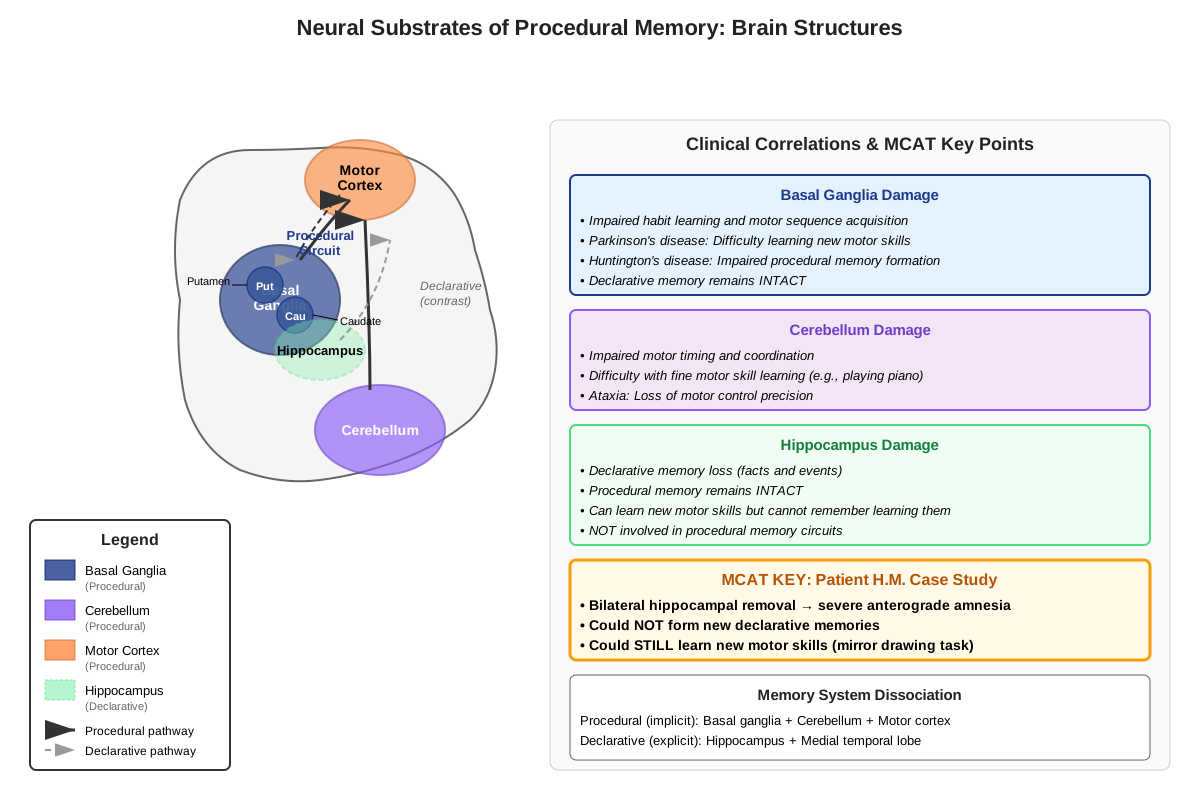
The neural architecture supporting procedural memory differs fundamentally from that underlying declarative memory systems. Key brain structures include:
Basal ganglia: This subcortical structure plays the primary role in procedural memory, particularly for motor skills and habit formation. The basal ganglia includes the caudate nucleus, putamen, and globus pallidus, which work together to automate learned sequences of movements. Damage to the basal ganglia, as seen in Parkinson's disease and Huntington's disease, impairs procedural memory formation and retrieval.
Cerebellum: Critical for motor learning, timing, and coordination, the cerebellum refines procedural memories through error correction and practice. It enables smooth, precise execution of learned motor skills and adapts movements based on sensory feedback.
Motor cortex: The primary motor cortex and premotor areas store representations of learned motor sequences and coordinate their execution.
Prefrontal cortex: While not the primary storage site, the prefrontal cortex contributes to the early stages of skill learning when conscious attention and working memory are required.
Importantly, the hippocampus—essential for declarative memory—is not required for procedural memory formation or retrieval. This dissociation explains why patients with hippocampal damage and severe amnesia can still learn new motor skills despite being unable to remember the learning episodes.
Procedural Memory versus Declarative Memory
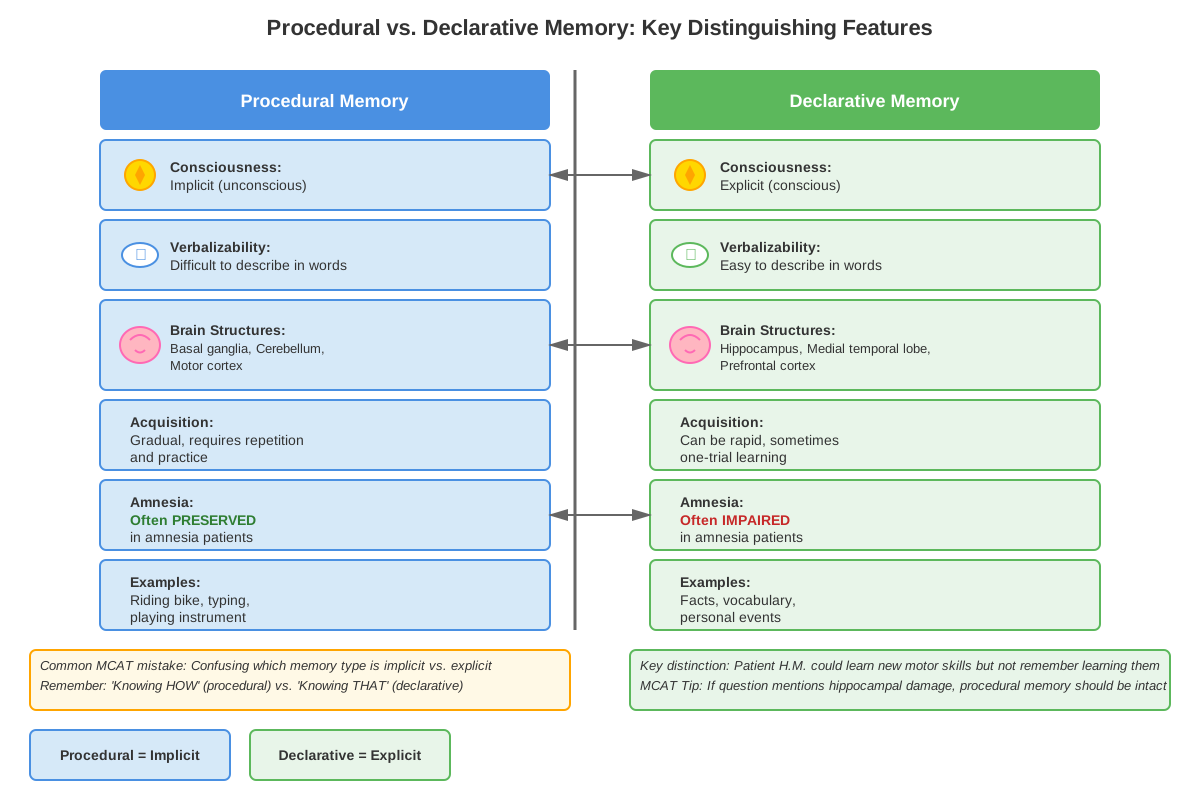
Understanding the distinction between procedural and declarative memory systems is crucial for MCAT success. The following table highlights key differences:
| Feature | Procedural Memory | Declarative Memory |
|---|---|---|
| Consciousness | Implicit (unconscious) | Explicit (conscious) |
| Content | Skills, habits, procedures | Facts, events, experiences |
| Acquisition | Gradual, through practice | Can be rapid, even one-trial |
| Expression | Performance-based | Verbal report possible |
| Brain structures | Basal ganglia, cerebellum | Hippocampus, medial temporal lobe |
| Verbalization | Difficult to describe | Easy to articulate |
| Affected by amnesia | Typically preserved | Impaired |
| Examples | Riding a bike, typing | Remembering your birthday, Paris is in France |
This distinction has profound clinical implications. Patient H.M., who underwent bilateral medial temporal lobe resection, could learn new motor skills (procedural memory intact) but could not remember learning them (declarative memory impaired). This dissociation demonstrates that these memory systems operate independently with distinct neural substrates.
Types of Procedural Memory
Procedural memory encompasses several subcategories:
Motor skills: Physical actions requiring coordination and practice, such as swimming, playing sports, or playing musical instruments. These skills involve precise timing and sequencing of muscle movements.
Cognitive skills: Mental procedures that become automatic with practice, including reading, mental arithmetic, and problem-solving strategies. Though cognitive rather than motor, these skills share the implicit, gradual-acquisition characteristics of procedural memory.
Habits: Automatic behavioral responses triggered by specific cues or contexts, such as buckling a seatbelt when entering a car or checking your phone upon hearing a notification sound.
Priming: A form of implicit memory where prior exposure to a stimulus influences subsequent processing, though some researchers classify priming separately from procedural memory.
Stages of Procedural Memory Formation
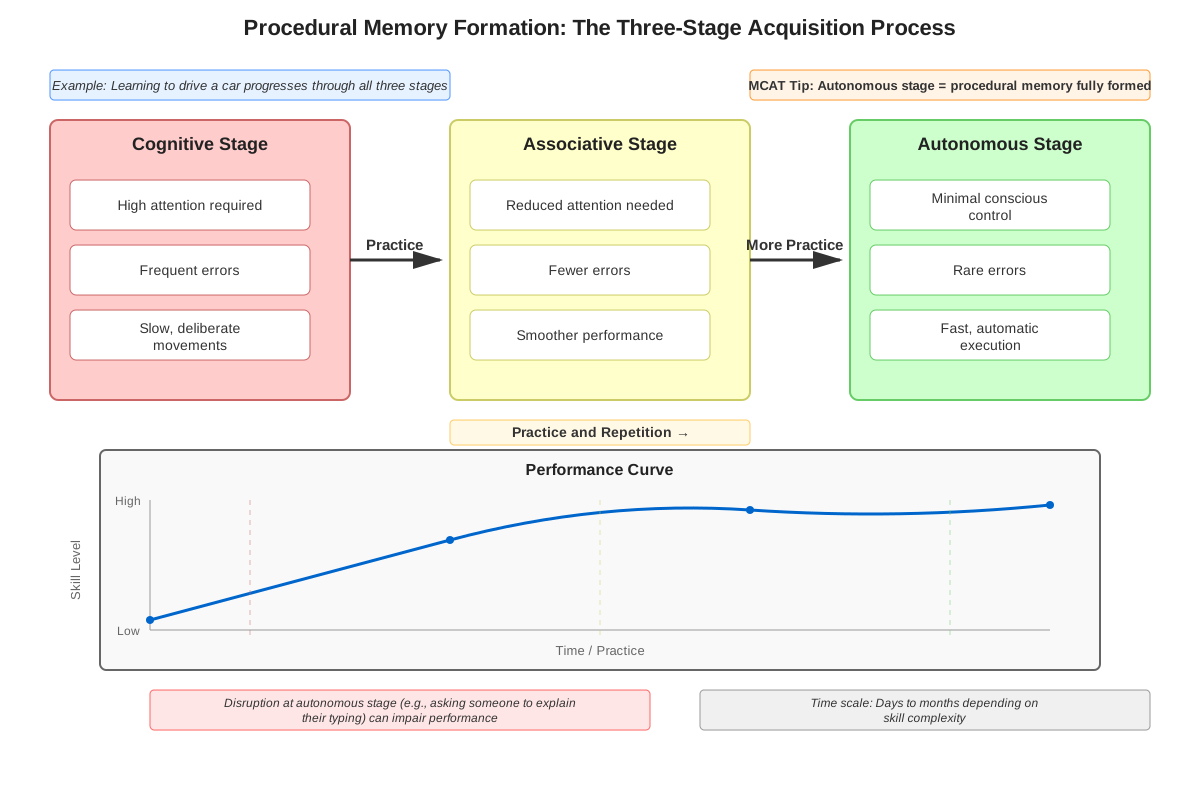
Procedural memory develops through distinct phases:
- Cognitive stage: Initial learning requires conscious attention, working memory, and explicit instruction. Performance is slow, effortful, and error-prone. The learner must think deliberately about each step.
- Associative stage: With practice, movements become more fluid and coordinated. Errors decrease, and performance speed increases. The learner begins to detect and correct mistakes automatically.
- Autonomous stage: The skill becomes automatic and requires minimal conscious attention. Performance is fast, smooth, and efficient. The learner can perform the skill while simultaneously engaging in other tasks.
This progression from controlled to automatic processing reflects the gradual transfer of control from cortical areas (requiring conscious attention) to subcortical structures (enabling automatic execution).
Consolidation and Retention
Procedural memory consolidation occurs through:
Synaptic consolidation: Strengthening of neural connections in motor circuits through repeated activation, occurring over hours to days.
Systems consolidation: Gradual reorganization of neural representations, with procedural memories becoming increasingly independent of cortical control and more dependent on basal ganglia circuits.
Sleep-dependent consolidation: Research demonstrates that sleep, particularly REM sleep, enhances procedural memory consolidation. Motor skill improvements often appear after sleep even without additional practice.
Once consolidated, procedural memories exhibit remarkable stability. Skills learned in childhood (like riding a bicycle) can be retained for decades without practice, though some performance degradation may occur.
Concept Relationships
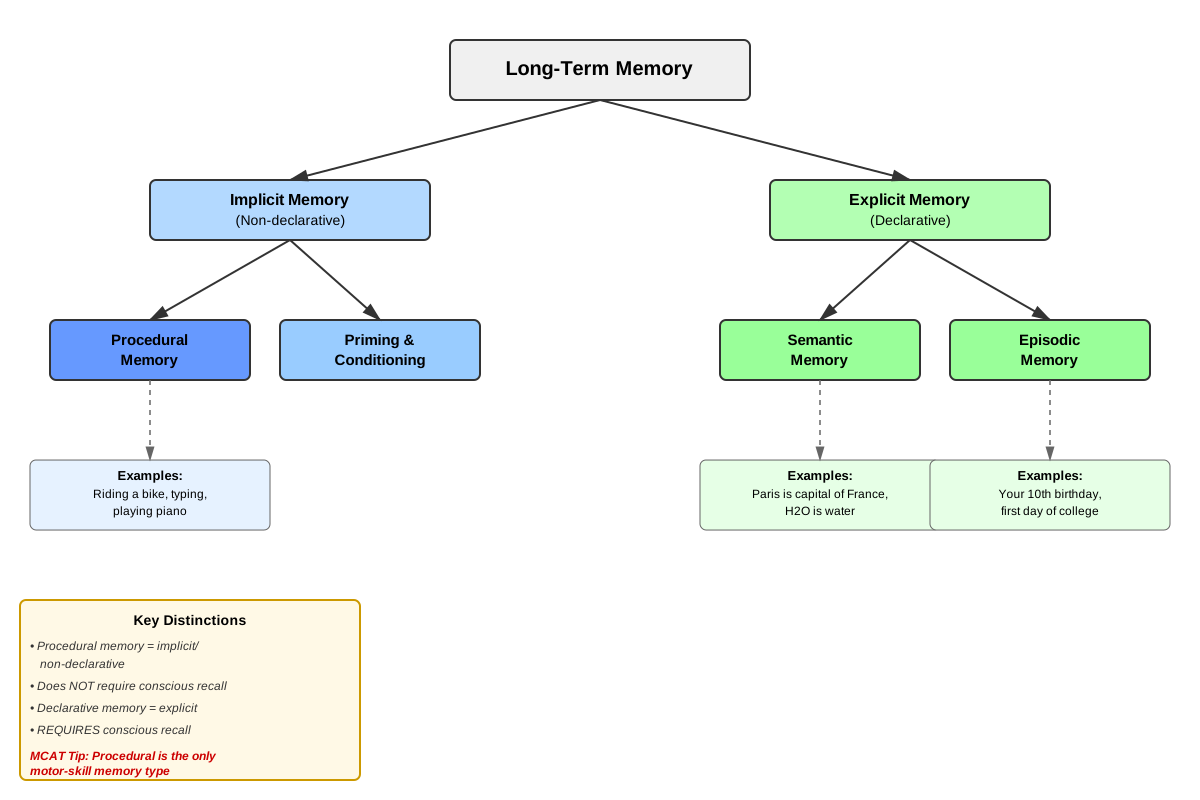
Procedural memory exists within a hierarchical memory system. At the broadest level, memory divides into short-term (working) memory and long-term memory. Procedural memory represents one major subdivision of long-term memory, contrasting with declarative (explicit) memory, which further divides into semantic memory (facts and concepts) and episodic memory (personal experiences and events).
The relationship flows: Memory → Long-term memory → Implicit memory → Procedural memory
Procedural memory connects intimately with learning theories. Classical conditioning and operant conditioning both contribute to procedural memory formation. For example, a tennis player develops procedural memories for serving through operant conditioning (reinforcement of successful serves) while simultaneously forming classically conditioned associations between environmental cues and motor responses.
The neural substrates of procedural memory (basal ganglia, cerebellum) contrast with those supporting declarative memory (hippocampus, medial temporal lobe), creating a double dissociation: damage to one system impairs its associated memory type while sparing the other. This relationship appears frequently in MCAT questions about brain lesions and amnesia.
Procedural memory also relates to cognitive development. Infants and young children demonstrate procedural learning before developing mature declarative memory systems, explaining why adults typically cannot recall (declarative memory) events from early childhood despite having learned numerous motor skills (procedural memory) during that period.
Quick check — test yourself on Procedural memory so far.
Try Flashcards →High-Yield Facts
⭐ Procedural memory is implicit (unconscious) and involves learning skills and habits through gradual practice and repetition
⭐ The basal ganglia and cerebellum are the primary neural substrates for procedural memory, NOT the hippocampus
⭐ Patients with hippocampal damage and amnesia can form new procedural memories but cannot remember the learning episodes
⭐ Procedural memory is preserved in Alzheimer's disease but impaired in Parkinson's disease and Huntington's disease
⭐ Procedural memories are difficult to verbalize and are expressed through performance rather than conscious recall
- Procedural memory develops through three stages: cognitive (conscious), associative (transitional), and autonomous (automatic)
- Sleep, particularly REM sleep, enhances procedural memory consolidation
- Once consolidated, procedural memories are highly resistant to forgetting and can persist for decades
- Procedural memory acquisition is gradual and requires repeated practice, unlike declarative memory which can form after a single exposure
- Motor skills, cognitive skills, and habits all represent types of procedural memory
- The dissociation between procedural and declarative memory demonstrates that multiple independent memory systems exist in the brain
- Priming effects demonstrate implicit memory influences on behavior without conscious awareness
Common Misconceptions
Misconception: Procedural memory only involves motor skills and physical movements.
Correction: While motor skills are a major component, procedural memory also includes cognitive skills (like reading and mental arithmetic) and habits that may not involve complex motor sequences. The defining feature is implicit, gradual learning through practice, not specifically motor content.
Misconception: The hippocampus is involved in all types of long-term memory formation, including procedural memory.
Correction: The hippocampus is essential for declarative memory but is NOT required for procedural memory. This is why amnesic patients with hippocampal damage can learn new motor skills despite being unable to form new declarative memories. Procedural memory depends on the basal ganglia and cerebellum.
Misconception: If someone can describe the steps of a procedure verbally, they are using procedural memory.
Correction: Verbal description of steps involves declarative (semantic) memory, not procedural memory. Procedural memory is demonstrated through performance and is typically difficult to articulate. A person might know how to ride a bike (procedural) without being able to explain the physics and muscle movements involved (declarative).
Misconception: Procedural memories form quickly, just like declarative memories can form after a single experience.
Correction: Procedural memory formation is characteristically gradual and requires repeated practice over time. Unlike declarative memory, which can form after one exposure (like remembering a single dramatic event), procedural memories develop slowly through the cognitive, associative, and autonomous stages.
Misconception: All patients with dementia lose procedural memory abilities early in the disease process.
Correction: In Alzheimer's disease, procedural memory is often preserved until late stages, even as declarative memory severely deteriorates. However, diseases affecting the basal ganglia (Parkinson's, Huntington's) do impair procedural memory. The pattern of memory loss depends on which brain structures are affected.
Misconception: Procedural memory and implicit memory are completely different systems.
Correction: Procedural memory is actually a type of implicit memory. Implicit memory is the broader category that includes procedural memory (skills and habits) as well as other forms like priming and classical conditioning effects. All procedural memories are implicit, but not all implicit memories are procedural.
Worked Examples
Example 1: Clinical Vignette Analysis
Question: A 68-year-old patient with early-stage Alzheimer's disease is evaluated by a neuropsychologist. The patient cannot remember what he ate for breakfast (tested 30 minutes after the meal) and does not recognize the neuropsychologist despite having met her three times previously. However, when asked to demonstrate how to tie his shoes, he performs the task quickly and accurately. Over several sessions, the patient learns to solve a complex puzzle more quickly, though he denies ever having seen the puzzle before. Which memory system is most likely preserved in this patient?
Analysis:
Step 1: Identify the memory deficits. The patient cannot remember recent events (breakfast) or people (the neuropsychologist), indicating impaired declarative memory, specifically episodic memory for personal experiences.
Step 2: Identify preserved abilities. The patient can tie his shoes (a motor skill) and shows improvement on the puzzle task despite not remembering previous exposure. Both abilities involve performing learned procedures.
Step 3: Connect to neural substrates. Alzheimer's disease primarily affects the hippocampus and medial temporal lobe structures early in the disease course. These structures are essential for declarative memory but not for procedural memory.
Step 4: Determine the answer. The preserved memory system is procedural memory. The patient demonstrates intact motor skills (shoe-tying) and can acquire new procedural knowledge (puzzle-solving) despite severe declarative memory impairment.
Key takeaway: This example illustrates the classic dissociation between declarative and procedural memory systems in Alzheimer's disease, a high-yield concept for the MCAT. The hippocampal damage impairs declarative memory while basal ganglia-dependent procedural memory remains functional.
Example 2: Experimental Design Application
Question: Researchers design a study to investigate different memory systems. Participants are divided into two groups. Group A learns a list of 20 word pairs and is tested on their ability to recall the second word when shown the first. Group B practices a mirror-tracing task (tracing a star while viewing their hand only in a mirror) and is tested on completion time and errors. Both groups are tested immediately after learning and again one week later. Which group is primarily using procedural memory, and what results would you predict?
Analysis:
Step 1: Classify the tasks by memory type. Group A's word-pair task requires conscious memorization and verbal recall of specific information—this tests declarative (semantic) memory. Group B's mirror-tracing task requires learning a motor skill through practice—this tests procedural memory.
Step 2: Apply characteristics of procedural memory. Procedural memory develops gradually through practice, improves with repetition, and shows good retention over time. Performance rather than verbal recall demonstrates learning.
Step 3: Predict results. Group B (procedural memory) would show:
- Gradual improvement in completion time and error reduction during initial practice
- Continued improvement or maintenance of skill at one-week retest
- Participants might not consciously remember practicing the task but would demonstrate retained skill
- Performance would be relatively stable or even show additional improvement after sleep-dependent consolidation
Step 4: Contrast with declarative memory. Group A would likely show some forgetting of word pairs over the one-week interval, as declarative memories are more susceptible to decay without rehearsal.
Answer: Group B primarily uses procedural memory. Predicted results include gradual skill acquisition, good retention at one-week follow-up, and performance-based (rather than verbal) demonstration of learning.
Key takeaway: This example demonstrates how to identify procedural memory in experimental contexts and apply knowledge of its characteristics to predict outcomes—a common MCAT question format.
Exam Strategy
Approaching MCAT Questions on Procedural Memory
When encountering questions about procedural memory, follow this systematic approach:
Step 1: Identify trigger words and phrases
- "Motor skills," "habits," "automatic," "implicit," "without conscious awareness"
- "Gradual learning," "practice," "performance-based"
- "Basal ganglia," "cerebellum" (neural substrates)
- Patient descriptions mentioning Parkinson's, Huntington's, or preserved abilities in amnesia
Step 2: Distinguish from declarative memory
Ask yourself: Is the task described something you DO (procedural) or something you KNOW (declarative)? Can it be easily verbalized (declarative) or is it better demonstrated (procedural)?
Step 3: Consider neural substrates
If the question involves brain lesions or neurological conditions, immediately connect:
- Hippocampal/medial temporal lobe damage → declarative memory impaired, procedural preserved
- Basal ganglia damage → procedural memory impaired, declarative may be preserved
Step 4: Apply the implicit/explicit distinction
Procedural memory is always implicit. If the question describes conscious, intentional recall, it's not procedural memory.
Process-of-Elimination Tips
When answer choices include different memory types:
- Eliminate declarative memory options if the scenario describes skill learning, automatic behavior, or preserved abilities in amnesia patients
- Eliminate procedural memory options if the scenario involves conscious recall of facts, events, or information that can be easily verbalized
- Watch for hybrid scenarios: Some tasks involve both memory systems (e.g., learning to drive involves procedural memory for motor skills AND declarative memory for traffic rules)
Time Allocation
Procedural memory questions typically require 60-90 seconds. Spend:
- 20-30 seconds reading and identifying the memory type being tested
- 20-30 seconds connecting to neural substrates or clinical implications
- 20-30 seconds evaluating answer choices and eliminating incorrect options
Exam Tip: If a passage describes a patient with amnesia who can still learn new skills, immediately think "procedural memory preserved, declarative memory impaired"—this is one of the highest-yield concepts for the MCAT.
Memory Techniques
Mnemonics
"BASAL = Behaviors Acquired Slowly, Automatic Learning"
Reminds you that the basal ganglia supports procedural memory, which involves gradual skill acquisition and automatic performance.
"HIPPO remembers WHAT and WHEN, not HOW"
The hippocampus (HIPPO) is for declarative memory (what happened, when it happened) but NOT for procedural memory (how to do things).
"The 3 A's of Procedural Memory: Automatic, Acquired gradually, Articulated with difficulty"
Captures three key characteristics that distinguish procedural from declarative memory.
Visualization Strategy
Picture a skilled pianist performing a complex piece:
- Their fingers move automatically (implicit/unconscious) → procedural memory characteristic
- They practiced for years (gradual acquisition) → procedural memory characteristic
- They can't easily explain exactly how they coordinate each finger movement (difficult to verbalize) → procedural memory characteristic
- The skill involves their basal ganglia and cerebellum (neural substrates) → procedural memory brain regions
This single vivid image encapsulates multiple key features of procedural memory.
Acronym for Memory System Classification
"PESH" for types of long-term memory:
- Procedural (implicit)
- Episodic (explicit/declarative)
- Semantic (explicit/declarative)
- Habit formation (related to procedural)
Summary
Procedural memory represents a fundamental implicit long-term memory system that enables skill learning and automatic behavior performance without conscious awareness. Distinguished from declarative memory by its gradual acquisition through practice, difficulty of verbalization, and expression through performance rather than recall, procedural memory depends on distinct neural substrates—primarily the basal ganglia and cerebellum rather than the hippocampus. This neuroanatomical dissociation explains why procedural memory remains intact in amnesic patients with hippocampal damage and in early-stage Alzheimer's disease, while being impaired in conditions affecting the basal ganglia such as Parkinson's and Huntington's disease. For MCAT success, students must recognize procedural memory in clinical vignettes, distinguish it from declarative memory systems, connect it to appropriate brain structures, and understand its role in skill acquisition and habit formation. The implicit nature, gradual development through practice, and remarkable resistance to forgetting make procedural memory essential for daily functioning and a high-yield topic for standardized examinations.
Key Takeaways
- Procedural memory is an implicit long-term memory system for skills, habits, and procedures that operates without conscious awareness
- The basal ganglia and cerebellum are the primary neural substrates; the hippocampus is NOT involved in procedural memory
- Procedural memory is preserved in hippocampal amnesia and Alzheimer's disease but impaired in Parkinson's and Huntington's disease
- Acquisition is gradual through repeated practice, progressing from conscious/effortful to automatic/unconscious performance
- Procedural memories are expressed through performance and are difficult to verbalize, unlike declarative memories
- The dissociation between procedural and declarative memory systems demonstrates multiple independent memory networks in the brain
- Understanding procedural memory is essential for analyzing clinical cases, experimental designs, and neurological conditions on the MCAT
Related Topics
Declarative Memory Systems: Understanding episodic and semantic memory provides the essential contrast to procedural memory and completes the picture of long-term memory organization. Mastering procedural memory makes learning declarative memory systems more efficient through comparison.
Brain Structure and Function: Detailed knowledge of the basal ganglia, cerebellum, hippocampus, and cortical areas deepens understanding of how different memory systems map onto neural architecture—a frequent MCAT integration point.
Neurodegenerative Diseases: Alzheimer's disease, Parkinson's disease, and Huntington's disease provide clinical contexts for applying procedural memory concepts and understanding selective memory impairments.
Learning Theories: Classical conditioning, operant conditioning, and observational learning all contribute to procedural memory formation, creating important connections between behavioral psychology and cognitive neuroscience.
Memory Consolidation and Sleep: The role of sleep in strengthening procedural memories connects to broader topics in neuroscience and cognitive psychology, including synaptic plasticity and systems consolidation.
Practice CTA
Now that you've mastered the core concepts of procedural memory, it's time to solidify your understanding through active practice. Challenge yourself with MCAT-style practice questions that test your ability to apply these concepts in clinical vignettes and experimental scenarios. Use flashcards to reinforce the distinctions between memory systems, neural substrates, and clinical presentations. Remember: procedural memory itself develops through practice and repetition—the same principle applies to your exam preparation. Each practice question strengthens your ability to recognize and analyze procedural memory concepts quickly and accurately under test conditions. You've built a strong foundation; now transform that knowledge into test-day performance through deliberate practice!
Sign up free to keep reading
Create a free AnvayaPrep account to finish this MCAT guide on Procedural memory — plus flashcards and practice questions.