Overview
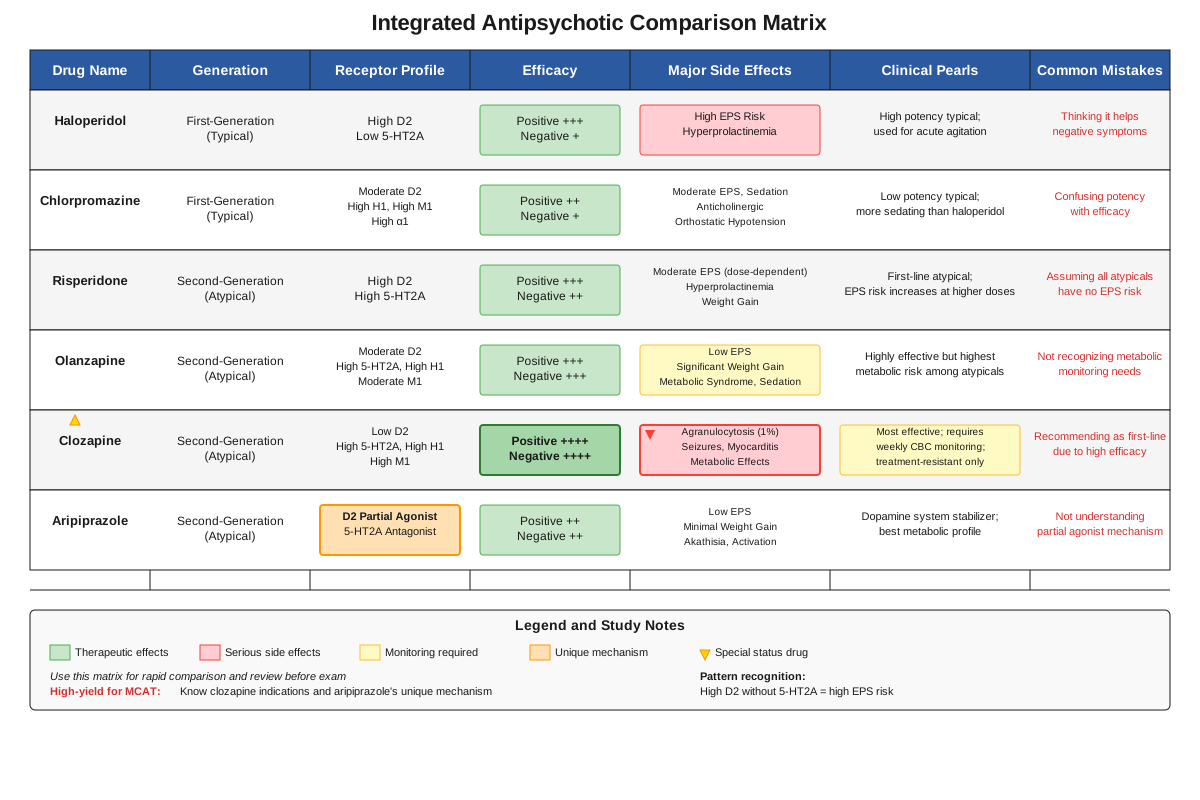
Antipsychotics represent a cornerstone class of psychopharmacological agents used primarily to treat psychotic disorders, particularly schizophrenia and bipolar disorder. These medications work by modulating neurotransmitter systems in the brain, most notably the dopamine pathways, to reduce positive symptoms (hallucinations, delusions) and, in some cases, negative symptoms (flat affect, social withdrawal) of psychosis. For the MCAT, understanding antipsychotics extends beyond simple memorization of drug names—it requires comprehension of their mechanisms of action, side effect profiles, and the neurobiological basis of their therapeutic effects. This knowledge integrates seamlessly with broader Psychology concepts including neurotransmitter function, brain structure, and the biopsychosocial model of mental illness.
The study of Antipsychotics Psychology is essential for MCAT success because it bridges multiple testable domains: biological psychology, clinical psychology, and pharmacology. Questions may present clinical vignettes requiring students to identify appropriate treatments, predict side effects based on mechanism of action, or explain why certain medications are preferred for specific patient populations. The MCAT frequently tests the ability to apply pharmacological knowledge to real-world scenarios, making antipsychotics a medium-yield but highly integrative topic within Psychological Disorders and Treatment.
Understanding antipsychotics also provides a framework for comprehending how biological interventions can modify behavior and cognition—a fundamental principle in behavioral neuroscience. This topic connects directly to the dopamine hypothesis of schizophrenia, the structure and function of the basal ganglia, and the concept of receptor antagonism. Mastery of this material enables students to approach MCAT passages involving treatment efficacy, medication compliance, and the neurobiological underpinnings of psychiatric disorders with confidence and precision.
Learning Objectives
- [ ] Define Antipsychotics using accurate Psychology terminology
- [ ] Explain why Antipsychotics matters for the MCAT
- [ ] Apply Antipsychotics to exam-style questions
- [ ] Identify common mistakes related to Antipsychotics
- [ ] Connect Antipsychotics to related Psychology concepts
- [ ] Distinguish between typical (first-generation) and atypical (second-generation) antipsychotics based on mechanism and side effect profile
- [ ] Explain the dopamine hypothesis of schizophrenia and how it relates to antipsychotic efficacy
- [ ] Predict side effects of antipsychotics based on their receptor binding profiles
Prerequisites
- Neurotransmitter systems: Understanding dopamine, serotonin, acetylcholine, and histamine function is essential because antipsychotics exert their effects by modulating these systems
- Brain anatomy: Knowledge of the basal ganglia, limbic system, and prefrontal cortex helps explain both therapeutic effects and side effects of antipsychotics
- Schizophrenia symptoms: Familiarity with positive and negative symptoms provides context for understanding which symptoms antipsychotics target
- Receptor pharmacology: Basic understanding of agonists versus antagonists is necessary to comprehend how antipsychotics work at the molecular level
- Extrapyramidal system: Knowledge of motor control pathways explains the movement-related side effects of typical antipsychotics
Why This Topic Matters
Antipsychotics MCAT questions appear regularly in the Psychological, Social, and Biological Foundations of Behavior section, typically within passages discussing treatment approaches for psychiatric disorders or as discrete questions testing pharmacological knowledge. The MCAT may present clinical vignettes describing patients with schizophrenia, bipolar disorder with psychotic features, or severe depression with psychotic symptoms, requiring students to identify appropriate pharmacological interventions or predict treatment outcomes.
From a clinical perspective, antipsychotics have revolutionized the treatment of severe mental illness. Before their introduction in the 1950s, patients with schizophrenia often faced lifelong institutionalization. Modern antipsychotics enable many individuals to manage symptoms and maintain functional lives in the community. Understanding these medications illuminates the biological basis of mental illness and demonstrates how pharmacological interventions can profoundly impact quality of life—a key concept in the biopsychosocial model that the MCAT emphasizes.
On the exam, antipsychotics commonly appear in several contexts: passages comparing treatment efficacy between medication classes, questions about medication compliance and side effects, scenarios involving treatment-resistant schizophrenia, and questions linking neurobiological mechanisms to symptom reduction. The MCAT particularly favors questions that require students to integrate knowledge—for example, explaining why a patient experiencing tardive dyskinesia might be switched from a typical to an atypical antipsychotic, or predicting which neurotransmitter systems are affected when a patient develops metabolic syndrome on an atypical antipsychotic.
Core Concepts
Classification of Antipsychotics
Antipsychotics are divided into two major categories: typical (first-generation) and atypical (second-generation) antipsychotics. This classification reflects both the chronological development of these medications and their distinct pharmacological profiles.
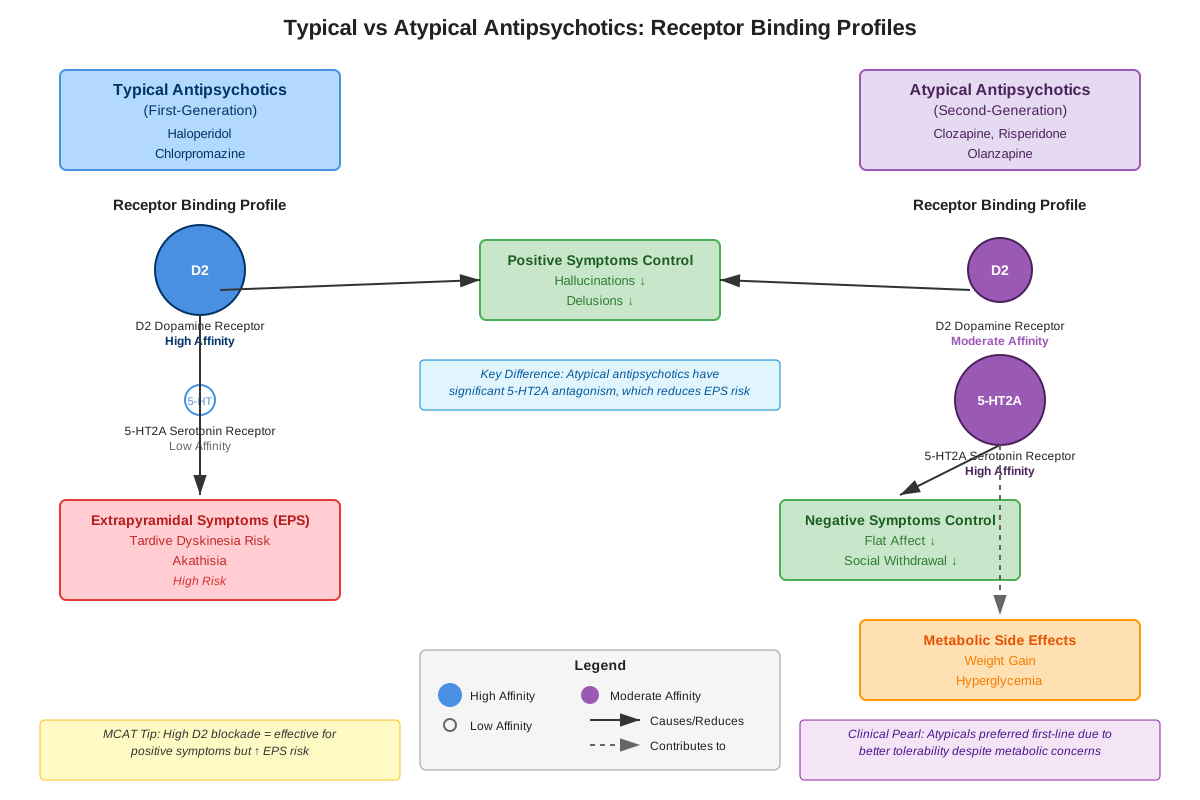
Typical antipsychotics, also called first-generation antipsychotics or conventional antipsychotics, were developed in the 1950s and primarily work through strong dopamine D2 receptor antagonism. Examples include haloperidol, chlorpromazine, and fluphenazine. These medications are highly effective at reducing positive symptoms of schizophrenia (hallucinations, delusions, disorganized thinking) but have limited efficacy for negative symptoms (flat affect, avolition, alogia, anhedonia). The therapeutic window for typical antipsychotics is relatively narrow, and they are associated with significant motor side effects.
Atypical antipsychotics, or second-generation antipsychotics, were introduced beginning in the 1990s and include medications such as clozapine, risperidone, olanzapine, quetiapine, and aripiprazole. These agents have a more complex receptor binding profile, typically involving both dopamine D2 antagonism and serotonin 5-HT2A receptor antagonism. This dual action is thought to contribute to their improved side effect profile regarding motor symptoms and their enhanced efficacy for negative symptoms. However, atypical antipsychotics carry their own distinct side effect risks, particularly metabolic disturbances.
Mechanism of Action and the Dopamine Hypothesis
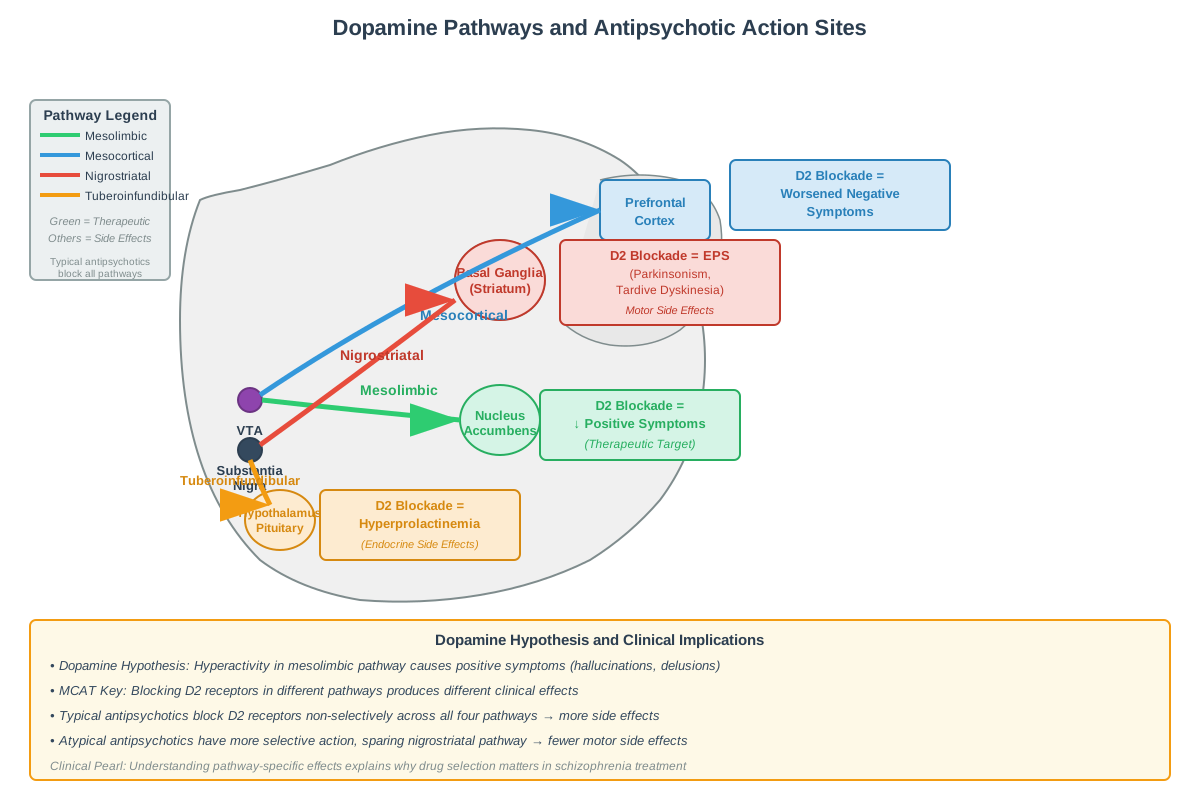
The dopamine hypothesis of schizophrenia posits that psychotic symptoms result from excessive dopaminergic activity, particularly in the mesolimbic pathway. This theory emerged from observations that drugs increasing dopamine activity (like amphetamines) can induce psychotic symptoms, while drugs blocking dopamine receptors (antipsychotics) reduce these symptoms.
The brain contains four major dopamine pathways relevant to antipsychotic action:
- Mesolimbic pathway: Projects from the ventral tegmental area (VTA) to the nucleus accumbens and limbic structures. Hyperactivity in this pathway is associated with positive symptoms of schizophrenia. Blocking D2 receptors here produces therapeutic effects.
- Mesocortical pathway: Projects from the VTA to the prefrontal cortex. Hypoactivity in this pathway may contribute to negative symptoms and cognitive deficits. Excessive D2 blockade here can worsen negative symptoms.
- Nigrostriatal pathway: Projects from the substantia nigra to the striatum (part of the basal ganglia). This pathway regulates voluntary movement. Blocking D2 receptors here causes extrapyramidal symptoms (EPS), including parkinsonism, akathisia, and dystonia.
- Tuberoinfundibular pathway: Projects from the hypothalamus to the pituitary gland and regulates prolactin secretion. Dopamine normally inhibits prolactin release, so D2 blockade causes hyperprolactinemia, leading to galactorrhea, amenorrhea, and sexual dysfunction.
Typical antipsychotics block D2 receptors relatively indiscriminately across all four pathways, explaining both their therapeutic effects and their side effect profile. Atypical antipsychotics achieve more selective dopamine blockade through various mechanisms, including looser D2 binding, faster dissociation from D2 receptors, or preferential binding to serotonin receptors that modulate dopamine release.
Side Effect Profiles
Understanding side effects is crucial for the MCAT because questions often require predicting adverse effects based on mechanism of action or identifying which medication class caused a particular side effect.
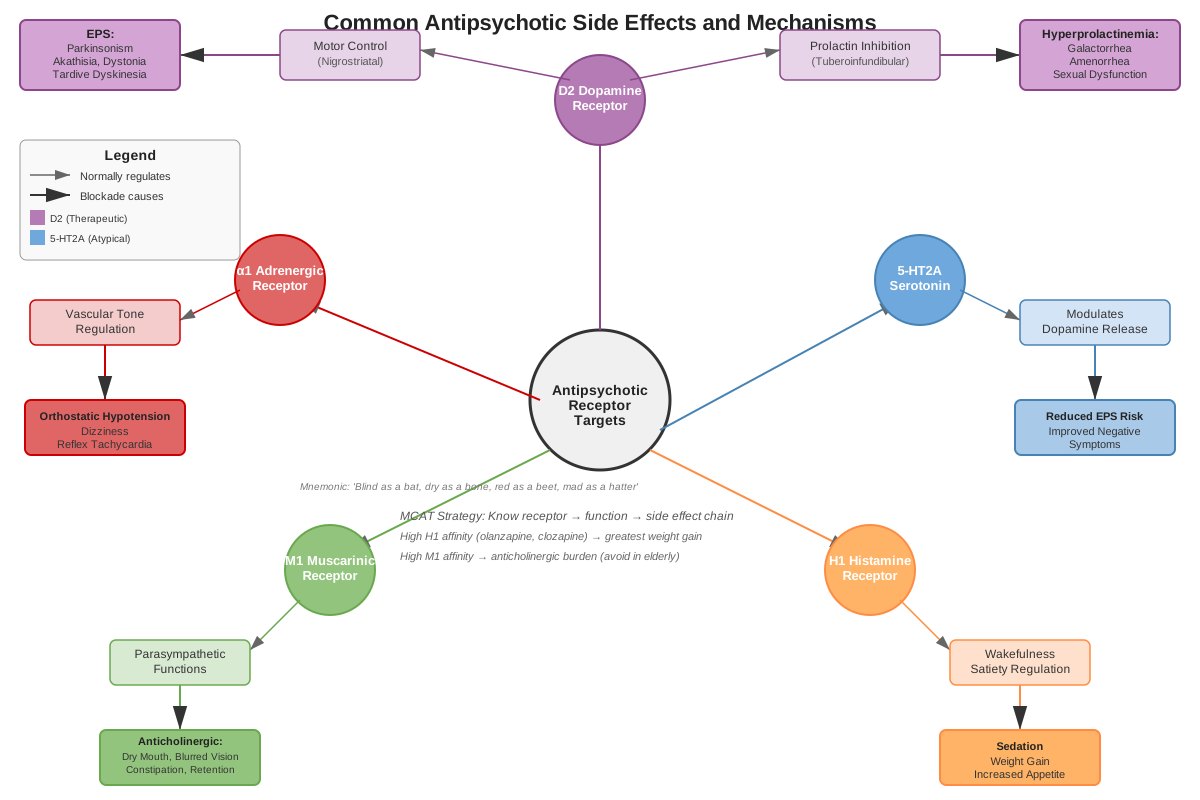
Extrapyramidal symptoms (EPS) are the hallmark side effects of typical antipsychotics and result from D2 blockade in the nigrostriatal pathway:
- Parkinsonism: Tremor, rigidity, bradykinesia, and shuffling gait—mimics Parkinson's disease
- Akathisia: Subjective restlessness and inability to sit still
- Acute dystonia: Sustained muscle contractions causing abnormal postures, particularly of the neck, jaw, and eyes
- Tardive dyskinesia: Late-onset, potentially irreversible involuntary movements, especially of the face, tongue, and lips. This develops after months to years of treatment and may result from dopamine receptor upregulation
Neuroleptic malignant syndrome (NMS) is a rare but life-threatening reaction characterized by fever, muscle rigidity, altered mental status, and autonomic instability. It requires immediate medical intervention.
Atypical antipsychotics have lower EPS risk but carry significant metabolic side effects:
- Weight gain: Particularly pronounced with olanzapine and clozapine
- Metabolic syndrome: Increased risk of diabetes, dyslipidemia, and cardiovascular disease
- Sedation: Related to histamine H1 receptor antagonism
- Orthostatic hypotension: Related to alpha-1 adrenergic receptor antagonism
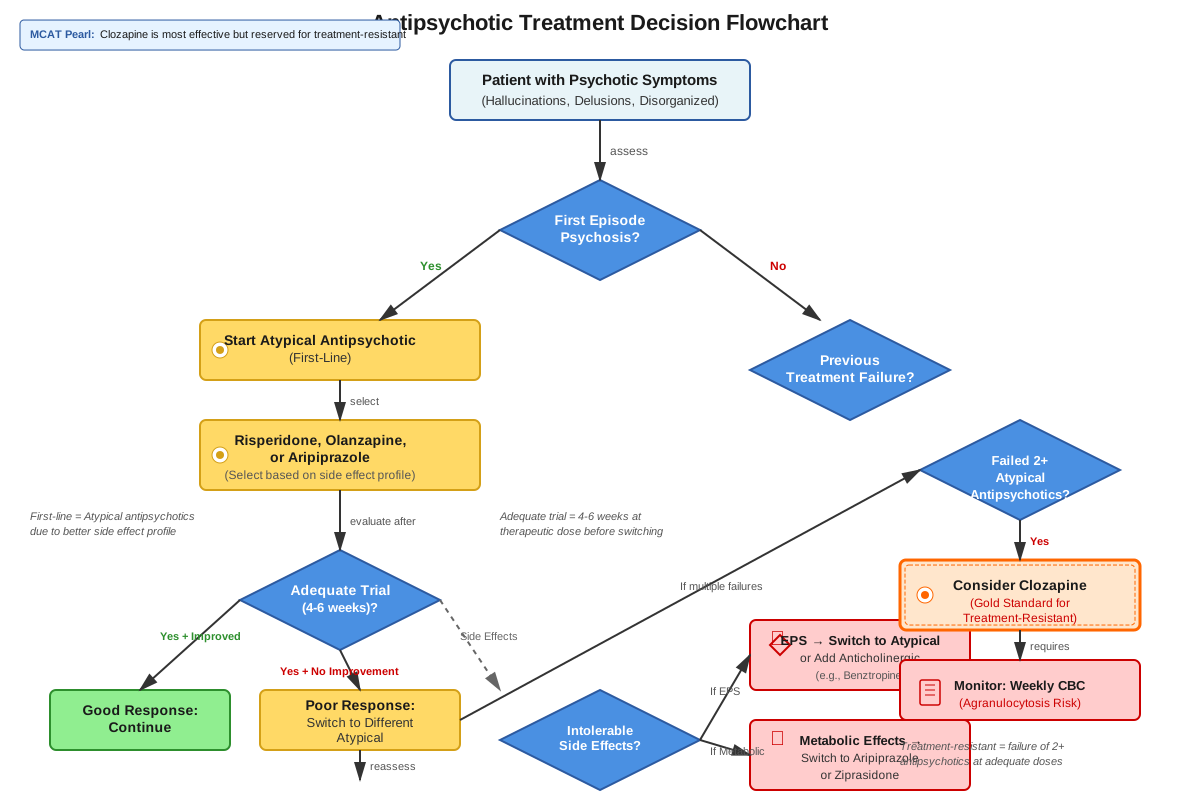
Clozapine deserves special mention as the most effective antipsychotic for treatment-resistant schizophrenia, but it carries unique risks including agranulocytosis (dangerous reduction in white blood cells) requiring regular blood monitoring, and increased seizure risk.
Receptor Binding Profiles
| Receptor Type | Typical Antipsychotics | Atypical Antipsychotics | Associated Effects |
|---|---|---|---|
| Dopamine D2 | High affinity, tight binding | Variable affinity, looser binding | Therapeutic effect (positive symptoms), EPS, hyperprolactinemia |
| Serotonin 5-HT2A | Minimal | Significant antagonism | Reduced EPS risk, improved negative symptoms |
| Histamine H1 | Variable | Often significant | Sedation, weight gain |
| Muscarinic (ACh) | Variable (high in some) | Variable | Anticholinergic effects: dry mouth, constipation, blurred vision, urinary retention |
| Alpha-1 adrenergic | Variable | Often significant | Orthostatic hypotension, dizziness |
Clinical Applications
Antipsychotics are primarily indicated for:
- Schizophrenia: First-line treatment for both acute psychotic episodes and maintenance therapy
- Bipolar disorder: Particularly for manic episodes with psychotic features; some atypicals are mood stabilizers
- Severe depression with psychotic features: Used adjunctively with antidepressants
- Acute agitation: Short-term management in various psychiatric emergencies
- Tourette syndrome: Haloperidol specifically for severe tics
- Delusional disorder and brief psychotic disorder
The choice between typical and atypical antipsychotics involves weighing efficacy, side effect profiles, cost, and patient-specific factors. Atypical antipsychotics are generally preferred as first-line agents due to lower EPS risk and potential benefits for negative symptoms, though their metabolic side effects require monitoring.
Concept Relationships
The concepts within antipsychotic pharmacology form an interconnected network centered on the dopamine hypothesis. Dopamine D2 receptor antagonism → produces therapeutic effects on positive symptoms while simultaneously causing extrapyramidal symptoms and hyperprolactinemia. The distinction between typical and atypical antipsychotics emerges from differences in receptor binding profiles, with atypicals' serotonin 5-HT2A antagonism → modulating dopamine release → reducing EPS risk while maintaining therapeutic efficacy.
This topic connects to prerequisite knowledge of neurotransmitter systems by demonstrating how receptor antagonism translates to clinical effects. Understanding brain anatomy, particularly the basal ganglia and limbic system, explains the anatomical basis for both therapeutic effects and side effects. The mesolimbic pathway dysfunction relates to the pathophysiology of schizophrenia, while nigrostriatal pathway blockade connects to movement disorders.
Antipsychotics also relate to broader psychological concepts including the biopsychosocial model (demonstrating biological interventions for mental illness), treatment compliance (side effects significantly impact adherence), and quality of life considerations in chronic mental illness management. The topic bridges to neuroscience through receptor pharmacology and to clinical psychology through treatment selection and monitoring.
High-Yield Facts
⭐ Typical antipsychotics primarily work through dopamine D2 receptor antagonism and are highly effective for positive symptoms but cause significant extrapyramidal symptoms
⭐ Atypical antipsychotics have combined dopamine D2 and serotonin 5-HT2A antagonism, resulting in lower EPS risk but higher metabolic side effects
⭐ The four dopamine pathways affected by antipsychotics are mesolimbic (therapeutic target), mesocortical (negative symptoms), nigrostriatal (EPS), and tuberoinfundibular (prolactin)
⭐ Tardive dyskinesia is a late-onset, potentially irreversible side effect characterized by involuntary movements, particularly of the face and tongue
⭐ Clozapine is the most effective antipsychotic for treatment-resistant schizophrenia but requires regular blood monitoring due to agranulocytosis risk
- Neuroleptic malignant syndrome presents with fever, rigidity, altered mental status, and autonomic instability—a medical emergency
- Hyperprolactinemia from D2 blockade in the tuberoinfundibular pathway causes galactorrhea, amenorrhea, and sexual dysfunction
- Atypical antipsychotics' metabolic side effects include weight gain, diabetes risk, and dyslipidemia, particularly with olanzapine and clozapine
- Anticholinergic side effects (dry mouth, constipation, urinary retention, blurred vision) occur with antipsychotics having muscarinic receptor antagonism
- The dopamine hypothesis suggests that positive symptoms result from excessive mesolimbic dopamine activity, while negative symptoms may relate to mesocortical hypoactivity
- Akathisia (subjective restlessness) is often the most distressing EPS for patients and significantly impacts medication compliance
- Aripiprazole is unique as a partial dopamine agonist, providing dopamine system stabilization rather than pure antagonism
Quick check — test yourself on Antipsychotics so far.
Try Flashcards →Common Misconceptions
Misconception: All antipsychotics work exactly the same way—they just block dopamine receptors.
Correction: While dopamine D2 antagonism is common to most antipsychotics, medications differ significantly in their receptor binding profiles. Atypical antipsychotics have substantial serotonin 5-HT2A antagonism, and some (like aripiprazole) are partial dopamine agonists rather than pure antagonists. These differences produce distinct therapeutic and side effect profiles.
Misconception: Atypical antipsychotics are always superior to typical antipsychotics.
Correction: While atypical antipsychotics have advantages (lower EPS risk, potential efficacy for negative symptoms), they carry their own significant risks, particularly metabolic side effects. For some patients, typical antipsychotics may be appropriate, especially when cost is a concern or when metabolic risks outweigh EPS risks. Treatment selection must be individualized.
Misconception: Tardive dyskinesia only occurs with typical antipsychotics.
Correction: Although tardive dyskinesia is more common with typical antipsychotics due to their stronger D2 blockade, it can occur with any antipsychotic, including atypical agents. The risk increases with duration of treatment and cumulative dose regardless of medication class.
Misconception: Antipsychotics cure schizophrenia.
Correction: Antipsychotics are symptomatic treatments that reduce the severity of psychotic symptoms but do not cure the underlying disorder. Schizophrenia is a chronic condition requiring ongoing management, and symptoms often return if medication is discontinued. Comprehensive treatment includes psychosocial interventions alongside pharmacotherapy.
Misconception: The extrapyramidal side effects of antipsychotics are purely a nuisance and not medically significant.
Correction: EPS can be severely distressing and functionally impairing, significantly impacting quality of life and medication adherence. Acute dystonia can be painful and frightening. Tardive dyskinesia may be irreversible and socially stigmatizing. Neuroleptic malignant syndrome is life-threatening. These side effects require serious clinical attention and often necessitate medication adjustment.
Misconception: Higher doses of antipsychotics always produce better therapeutic effects.
Correction: Antipsychotics have a therapeutic window, and doses above this range increase side effects without improving efficacy. In fact, excessive D2 blockade can worsen negative symptoms by affecting the mesocortical pathway. Optimal dosing balances therapeutic benefit against side effect burden.
Worked Examples
Example 1: Clinical Vignette Analysis
Question: A 28-year-old man with schizophrenia has been treated with haloperidol for six months. He presents to the clinic with complaints of restlessness, an inability to sit still, and constant pacing. His psychotic symptoms are well-controlled. Physical examination reveals no tremor or rigidity. Which of the following best explains his current symptoms?
A) Tardive dyskinesia from chronic dopamine blockade
B) Akathisia from nigrostriatal dopamine antagonism
C) Worsening of underlying psychotic symptoms
D) Neuroleptic malignant syndrome
Analysis:
Step 1: Identify the medication class and duration. Haloperidol is a typical antipsychotic with strong D2 antagonism, used for six months.
Step 2: Analyze the presenting symptoms. The patient describes subjective restlessness and motor restlessness (pacing, inability to sit still) but has no tremor or rigidity. His psychotic symptoms are controlled, suggesting the medication is therapeutically effective.
Step 3: Consider the timeline. Six months is sufficient for various side effects but relatively short for tardive dyskinesia, which typically develops after years of treatment.
Step 4: Match symptoms to side effect profiles:
- Tardive dyskinesia (A) presents with involuntary movements, particularly of the face, tongue, and lips—not subjective restlessness
- Akathisia (B) is characterized by subjective restlessness and motor restlessness, matching this presentation
- Worsening psychosis (C) is unlikely given that psychotic symptoms are well-controlled
- NMS (D) would present with fever, rigidity, and altered mental status—not present here
Step 5: Connect to mechanism. Akathisia results from D2 blockade in the nigrostriatal pathway, a predictable side effect of typical antipsychotics like haloperidol.
Answer: B) Akathisia from nigrostriatal dopamine antagonism
Key Learning Point: Distinguishing between different extrapyramidal symptoms requires attention to specific symptom patterns. Akathisia's hallmark is subjective restlessness, while parkinsonism involves tremor and rigidity, and tardive dyskinesia involves involuntary choreiform movements.
Example 2: Mechanism-Based Prediction
Question: A psychiatrist is considering switching a patient from haloperidol to risperidone due to troublesome extrapyramidal symptoms. Risperidone has significant antagonism at both dopamine D2 receptors and serotonin 5-HT2A receptors. Which of the following best explains why this medication change might reduce extrapyramidal symptoms while maintaining antipsychotic efficacy?
A) Serotonin antagonism increases dopamine release in the nigrostriatal pathway
B) Risperidone has no effect on dopamine receptors in the basal ganglia
C) Serotonin antagonism decreases dopamine release in the mesolimbic pathway
D) Risperidone increases acetylcholine activity to counteract dopamine blockade
Analysis:
Step 1: Identify the core question. We need to explain how serotonin 5-HT2A antagonism reduces EPS while maintaining therapeutic effects.
Step 2: Review relevant pathways. EPS result from D2 blockade in the nigrostriatal pathway (motor control), while therapeutic effects come from D2 blockade in the mesolimbic pathway (positive symptoms).
Step 3: Consider serotonin-dopamine interactions. Serotonin normally inhibits dopamine release in various brain regions. Blocking 5-HT2A receptors removes this inhibition, increasing dopamine availability.
Step 4: Apply regional specificity. In the nigrostriatal pathway, increased dopamine availability from 5-HT2A antagonism partially compensates for D2 blockade, reducing motor side effects. In the mesolimbic pathway, sufficient D2 blockade is maintained for therapeutic effect.
Step 5: Evaluate answer choices:
- (A) correctly describes the mechanism—5-HT2A antagonism increases dopamine in the nigrostriatal pathway
- (B) is incorrect—risperidone does block D2 receptors in the basal ganglia
- (C) is backwards—we want maintained (not decreased) mesolimbic blockade for therapeutic effect
- (D) is incorrect—the mechanism involves dopamine, not acetylcholine enhancement
Answer: A) Serotonin antagonism increases dopamine release in the nigrostriatal pathway
Key Learning Point: Atypical antipsychotics' improved side effect profile results from their multi-receptor action. The 5-HT2A antagonism modulates dopamine release in a regionally specific manner, providing a more nuanced pharmacological effect than pure D2 antagonism.
Exam Strategy
When approaching Antipsychotics MCAT questions, begin by identifying whether the question asks about mechanism of action, side effects, or clinical application. Questions about mechanism typically require understanding the dopamine hypothesis and receptor pharmacology. Side effect questions demand knowledge of which pathways are affected and the resulting clinical manifestations. Clinical application questions test treatment selection based on patient characteristics and symptom profiles.
Trigger words to watch for include:
- "First-generation" or "typical" → think strong D2 antagonism, high EPS risk
- "Second-generation" or "atypical" → think dual 5-HT2A/D2 antagonism, metabolic side effects
- "Involuntary movements" → consider tardive dyskinesia or acute dystonia depending on timeline
- "Restlessness" → likely akathisia
- "Treatment-resistant" → clozapine is the gold standard
- "Metabolic syndrome" → atypical antipsychotics, especially olanzapine and clozapine
For process-of-elimination, remember that extreme answer choices are often incorrect. If a choice suggests antipsychotics "cure" schizophrenia or have "no side effects," eliminate it immediately. Similarly, answers suggesting all antipsychotics work identically are likely wrong given the significant differences between typical and atypical agents.
When timing is tight, prioritize understanding the dopamine pathways and their associated effects—this single concept enables answering multiple question types. If you can quickly recall that mesolimbic = therapeutic target, nigrostriatal = EPS, tuberoinfundibular = prolactin, and mesocortical = negative symptoms, you can reason through most antipsychotic questions even if you don't remember specific drug names.
Exam Tip: MCAT passages often present data comparing treatment outcomes between medication classes. Focus on identifying the independent variable (medication type), dependent variable (symptom measure or side effect), and any confounding variables. Questions may ask you to interpret graphs showing symptom reduction over time or side effect frequency across groups.
Memory Techniques
Mnemonic for dopamine pathways: "My Mom Never Tells"
- Mesolimbic = positive symptoms (therapeutic target)
- Mesocortical = negative symptoms
- Nigrostriatal = motor (EPS)
- Tuberoinfundibular = prolactin
Mnemonic for EPS types: "PAD" for the three main reversible EPS
- Parkinsonism (tremor, rigidity, bradykinesia)
- Akathisia (restlessness)
- Dystonia (sustained muscle contractions)
- Plus Tardive dyskinesia (late-onset, potentially irreversible)
Visualization for typical vs. atypical: Picture typical antipsychotics as a "sledgehammer" hitting dopamine receptors hard everywhere (effective but causes collateral damage = EPS). Picture atypical antipsychotics as a "smart bomb" with guidance systems (serotonin receptors) allowing more targeted effects with less motor collateral damage but different side effects (metabolic).
Acronym for anticholinergic side effects: "Dry as a bone, blind as a bat, red as a beet, hot as a hare, mad as a hatter"
- Dry = dry mouth, constipation, urinary retention
- Blind = blurred vision
- Red = flushing
- Hot = hyperthermia
- Mad = confusion/delirium
Memory hook for clozapine: "Clozapine requires close monitoring" (for agranulocytosis)
Summary
Antipsychotics are essential psychopharmacological agents divided into typical (first-generation) and atypical (second-generation) classes based on their receptor binding profiles and side effect patterns. Typical antipsychotics work primarily through strong dopamine D2 receptor antagonism, effectively treating positive symptoms of schizophrenia but causing significant extrapyramidal symptoms due to nigrostriatal pathway blockade. Atypical antipsychotics combine D2 antagonism with serotonin 5-HT2A antagonism, providing improved side effect profiles regarding motor symptoms while introducing metabolic risks. Understanding the four dopamine pathways—mesolimbic (therapeutic target), mesocortical (negative symptoms), nigrostriatal (motor control), and tuberoinfundibular (prolactin regulation)—enables prediction of both therapeutic effects and adverse reactions. For MCAT success, students must connect receptor pharmacology to clinical outcomes, distinguish between medication classes based on mechanism and side effects, and apply this knowledge to clinical vignettes requiring treatment selection or side effect identification. Mastery of antipsychotics demonstrates understanding of how biological interventions modify behavior and cognition, a core principle in the biopsychosocial approach to mental illness.
Key Takeaways
- Typical antipsychotics cause high rates of extrapyramidal symptoms through strong D2 blockade in the nigrostriatal pathway, while atypical antipsychotics have lower EPS risk but significant metabolic side effects
- The four dopamine pathways (mesolimbic, mesocortical, nigrostriatal, tuberoinfundibular) explain both therapeutic effects and side effects of antipsychotic medications
- Tardive dyskinesia is a late-onset, potentially irreversible movement disorder that can occur with any antipsychotic but is more common with typical agents
- Atypical antipsychotics' combined 5-HT2A and D2 antagonism provides more selective dopamine modulation, reducing motor side effects while maintaining efficacy for positive symptoms
- Clozapine is the most effective antipsychotic for treatment-resistant schizophrenia but requires regular blood monitoring due to agranulocytosis risk
- Understanding receptor binding profiles enables prediction of side effects: D2 blockade causes EPS and hyperprolactinemia, H1 antagonism causes sedation and weight gain, and alpha-1 antagonism causes orthostatic hypotension
- The dopamine hypothesis of schizophrenia—that positive symptoms result from excessive mesolimbic dopamine activity—provides the theoretical foundation for antipsychotic efficacy
Related Topics
Schizophrenia and Psychotic Disorders: Understanding the full clinical presentation, diagnostic criteria, and course of schizophrenia provides essential context for antipsychotic treatment. Mastering antipsychotics enables deeper comprehension of how biological interventions address specific symptom clusters.
Neurotransmitter Systems: Detailed study of dopamine, serotonin, and other neurotransmitter systems builds on the receptor pharmacology introduced in antipsychotic mechanisms. This knowledge is foundational for understanding all psychopharmacology.
Basal Ganglia and Motor Control: The neuroanatomy underlying extrapyramidal symptoms connects antipsychotic side effects to broader concepts in motor system function and movement disorders like Parkinson's disease.
Mood Disorders and Mood Stabilizers: Many atypical antipsychotics are also used as mood stabilizers in bipolar disorder, creating connections between antipsychotic pharmacology and the treatment of mood disorders.
Treatment Compliance and Health Behavior: The significant side effect burden of antipsychotics makes them an excellent case study for understanding factors affecting medication adherence and the importance of shared decision-making in treatment planning.
Practice CTA
Now that you've mastered the core concepts of antipsychotics, it's time to solidify your knowledge through active practice. Challenge yourself with MCAT-style practice questions that require you to apply these concepts to clinical vignettes and experimental scenarios. Use flashcards to drill the high-yield facts, particularly the dopamine pathways and their associated effects, side effect profiles, and distinctions between typical and atypical agents. Remember, understanding antipsychotics isn't just about memorizing drug names—it's about grasping the underlying principles of receptor pharmacology and applying them to predict clinical outcomes. Your ability to reason through these mechanisms will serve you well not only on test day but throughout your medical career. You've got this!
Sign up free to keep reading
Create a free AnvayaPrep account to finish this MCAT guide on Antipsychotics — plus flashcards and practice questions.