Overview
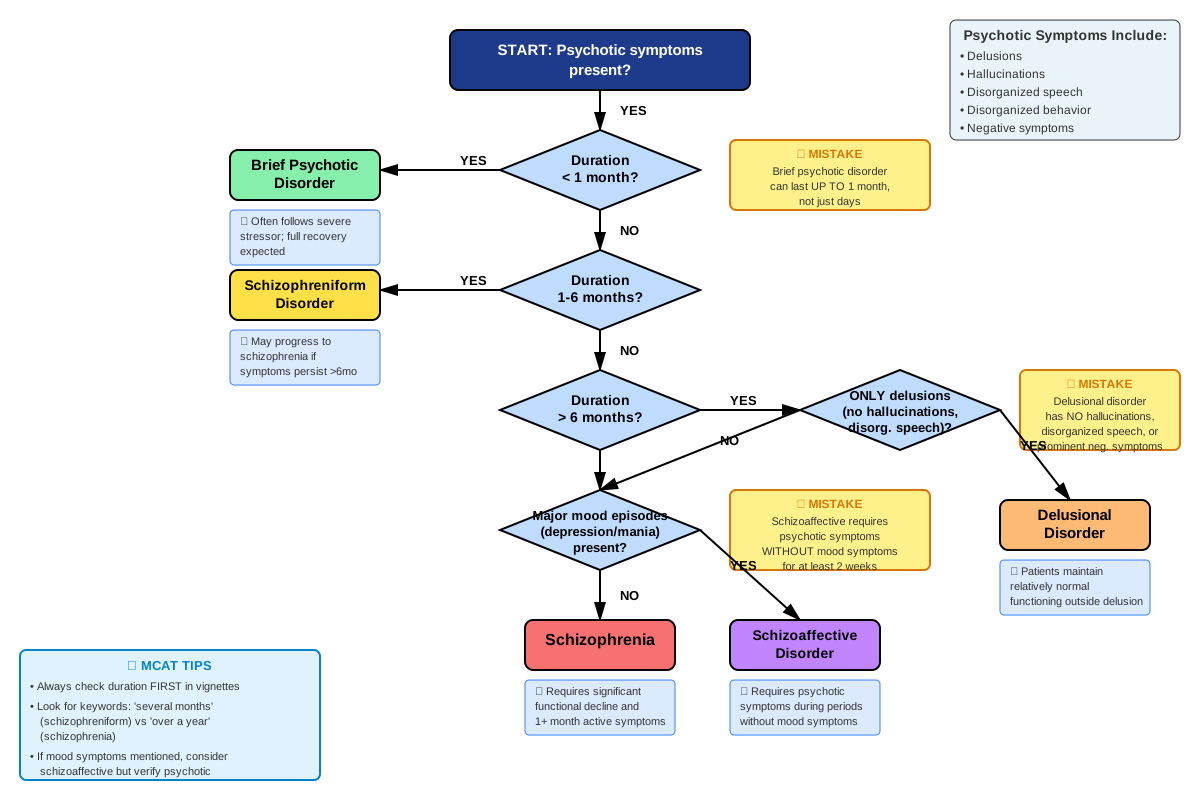
The Schizophrenia spectrum represents a continuum of psychotic disorders characterized by disturbances in thought processes, perception, emotional responsiveness, and social behavior. For the MCAT, understanding this spectrum is crucial because it exemplifies how psychological disorders manifest across varying degrees of severity and duration, from brief psychotic episodes to chronic, debilitating conditions. The spectrum includes schizophrenia itself, schizophreniform disorder, schizoaffective disorder, delusional disorder, and brief psychotic disorder, each distinguished by specific diagnostic criteria related to symptom duration, functional impairment, and the presence of mood symptoms.
This topic is essential for the MCAT Psychology section because it integrates multiple domains tested on the exam: biological bases of behavior (neurotransmitter dysfunction, particularly dopamine), social processes (stigma, social support), and individual differences in psychological disorders. Questions frequently present clinical vignettes requiring students to differentiate between disorders on the spectrum based on timeline, symptom clusters, and functional outcomes. Understanding the schizophrenia spectrum also provides a foundation for comprehending how the DSM-5 categorizes mental illness and how biological, psychological, and social factors interact in the biopsychosocial model.
The schizophrenia spectrum connects to broader Psychological Disorders and Treatment concepts including the stress-diathesis model, which explains how genetic vulnerability combined with environmental stressors precipitates psychotic episodes. It also relates to neuroscience topics such as brain structure abnormalities (enlarged ventricles, reduced hippocampal volume), neurotransmitter systems (dopamine hypothesis), and treatment approaches including antipsychotic medications and psychosocial interventions. Mastering this topic enables students to tackle complex passage-based questions that integrate biological mechanisms with behavioral manifestations and treatment outcomes.
Learning Objectives
- [ ] Define Schizophrenia spectrum using accurate Psychology terminology
- [ ] Explain why Schizophrenia spectrum matters for the MCAT
- [ ] Apply Schizophrenia spectrum to exam-style questions
- [ ] Identify common mistakes related to Schizophrenia spectrum
- [ ] Connect Schizophrenia spectrum to related Psychology concepts
- [ ] Distinguish between disorders within the schizophrenia spectrum based on DSM-5 diagnostic criteria
- [ ] Analyze the neurobiological underpinnings of schizophrenia spectrum disorders, particularly dopamine dysregulation
- [ ] Evaluate the impact of positive versus negative symptoms on diagnosis and prognosis
Prerequisites
- Basic neurotransmitter function: Understanding dopamine, serotonin, and glutamate pathways is essential for comprehending the neurochemical basis of psychotic symptoms
- DSM-5 diagnostic framework: Familiarity with how mental disorders are classified helps distinguish between spectrum disorders based on specific criteria
- Biopsychosocial model: This framework is necessary to understand how biological vulnerabilities, psychological factors, and social stressors interact to produce schizophrenia spectrum disorders
- Brain anatomy: Knowledge of limbic system structures, prefrontal cortex, and basal ganglia provides context for understanding structural abnormalities in schizophrenia
Why This Topic Matters
Clinical and Real-World Significance: Schizophrenia spectrum disorders affect approximately 1% of the global population, representing a major public health concern with profound impacts on individuals, families, and healthcare systems. These disorders typically emerge in late adolescence or early adulthood, disrupting education, employment, and social relationships during critical developmental periods. Understanding the spectrum helps healthcare providers recognize early warning signs, implement timely interventions, and reduce the duration of untreated psychosis, which correlates with better long-term outcomes. The stigma surrounding these disorders also makes them important for understanding social determinants of health and barriers to treatment access.
MCAT Exam Statistics: Schizophrenia spectrum disorders appear in approximately 3-5% of MCAT Psychology/Sociology section questions, making them medium-yield content. Questions typically appear in two formats: discrete questions testing diagnostic criteria and symptom classification, and passage-based questions integrating neurobiological research findings with clinical presentations. The AAMC frequently tests students' ability to distinguish between spectrum disorders based on duration criteria and to identify positive versus negative symptoms.
Common Exam Presentations: MCAT passages often present research studies investigating dopamine receptor density, antipsychotic medication mechanisms, or neuroimaging findings showing structural brain abnormalities. Clinical vignettes describe patients with various symptom combinations, requiring students to apply DSM-5 criteria to determine the most appropriate diagnosis. Questions may also address treatment approaches, asking students to predict medication side effects or explain why certain psychosocial interventions improve outcomes. The exam frequently tests understanding of the prodromal phase, relapse prevention, and the relationship between substance use and psychotic symptoms.
Core Concepts
Definition and Overview of the Schizophrenia Spectrum
The schizophrenia spectrum encompasses a group of related disorders characterized by psychotic symptoms—disturbances in reality testing that include hallucinations, delusions, and disorganized thinking. The spectrum concept recognizes that psychotic disorders exist along a continuum of severity, duration, and functional impairment rather than as discrete, unrelated conditions. This dimensional approach, emphasized in the DSM-5, acknowledges that individuals may experience varying combinations and intensities of symptoms while sharing core features of psychosis.
Psychosis itself refers to a mental state in which an individual loses contact with reality, experiencing perceptions and beliefs that are not grounded in external reality. The spectrum includes schizophrenia (the most severe and chronic form), schizophreniform disorder, schizoaffective disorder, delusional disorder, brief psychotic disorder, and schizotypal personality disorder. Each disorder is distinguished by specific diagnostic criteria related to symptom duration, the presence or absence of mood symptoms, and the degree of functional impairment.
Positive Symptoms
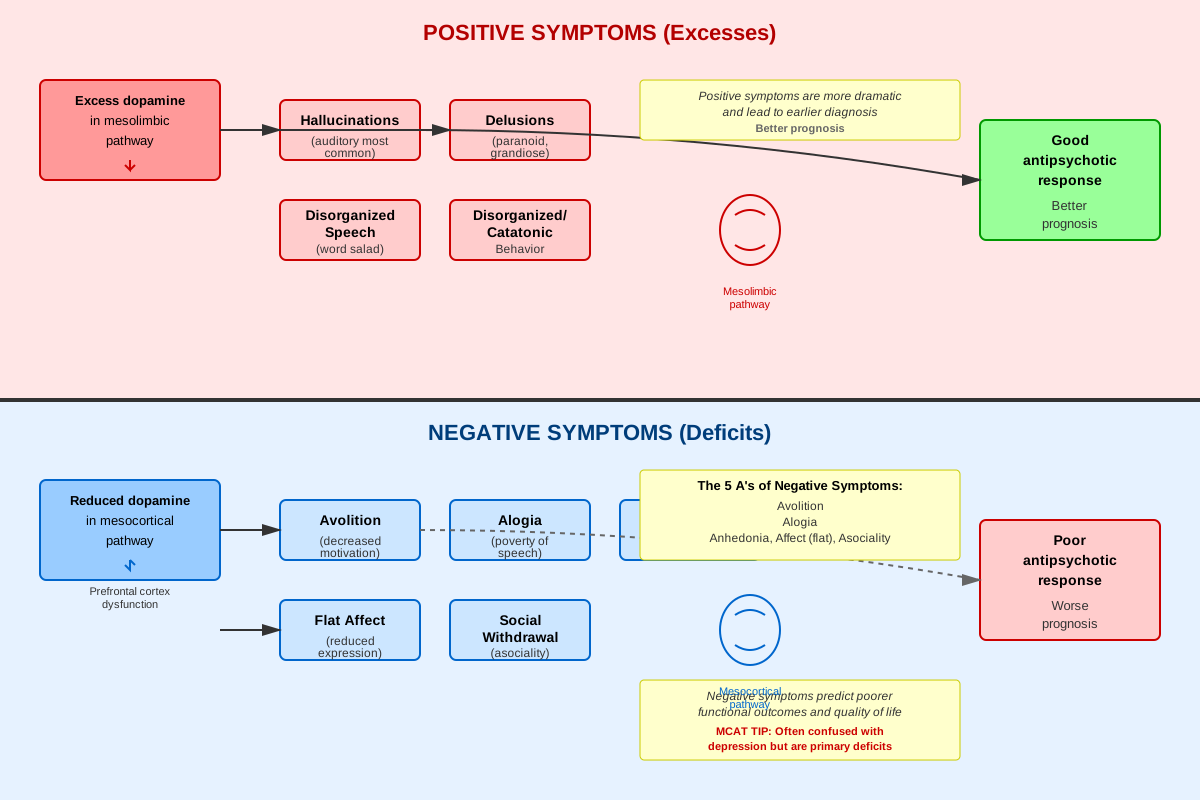
Positive symptoms represent an excess or distortion of normal functions—experiences or behaviors that are added to normal psychological functioning. These symptoms are typically more responsive to antipsychotic medication and include:
Hallucinations: Sensory perceptions occurring without external stimuli. Auditory hallucinations (hearing voices) are most common in schizophrenia, often taking the form of running commentary on the person's behavior or multiple voices conversing with each other. Visual, tactile, olfactory, and gustatory hallucinations can also occur but are less frequent and may suggest medical causes when prominent.
Delusions: Fixed, false beliefs that persist despite contradictory evidence and are not consistent with the individual's cultural or religious background. Common types include:
- Persecutory delusions (belief that one is being harmed or harassed)
- Referential delusions (belief that environmental cues are directed at oneself)
- Grandiose delusions (inflated sense of importance or special abilities)
- Delusions of control (belief that external forces control one's thoughts or actions)
Disorganized thinking: Manifested through disorganized speech patterns including loose associations (tangential connections between ideas), word salad (incomprehensible mixture of words), neologisms (invented words), and clang associations (words connected by sound rather than meaning).
Grossly disorganized or abnormal motor behavior: Ranging from childlike silliness to unpredictable agitation, including catatonia (marked decrease in reactivity to the environment).
Negative Symptoms
Negative symptoms represent a diminution or absence of normal functions—the loss of typical behaviors, emotions, or cognitive processes. These symptoms are generally less responsive to traditional antipsychotic medications and often cause greater long-term disability:
Affective flattening: Reduced expression of emotions through facial expressions, voice tone, and gestures. The individual appears emotionally unresponsive even when discussing emotionally charged topics.
Alogia: Poverty of speech characterized by brief, empty replies. The individual provides minimal verbal responses and shows reduced fluency and productivity of thought.
Avolition: Decreased motivation to initiate and sustain purposeful activities. This manifests as poor hygiene, lack of persistence in work or school, and physical inertia.
Anhedonia: Inability to experience pleasure from activities that were previously enjoyable, including social interactions (social anhedonia) and physical activities (physical anhedonia).
Social withdrawal: Reduced engagement in social relationships and activities, often resulting from a combination of other negative symptoms and contributing to progressive functional decline.
Disorders Within the Schizophrenia Spectrum
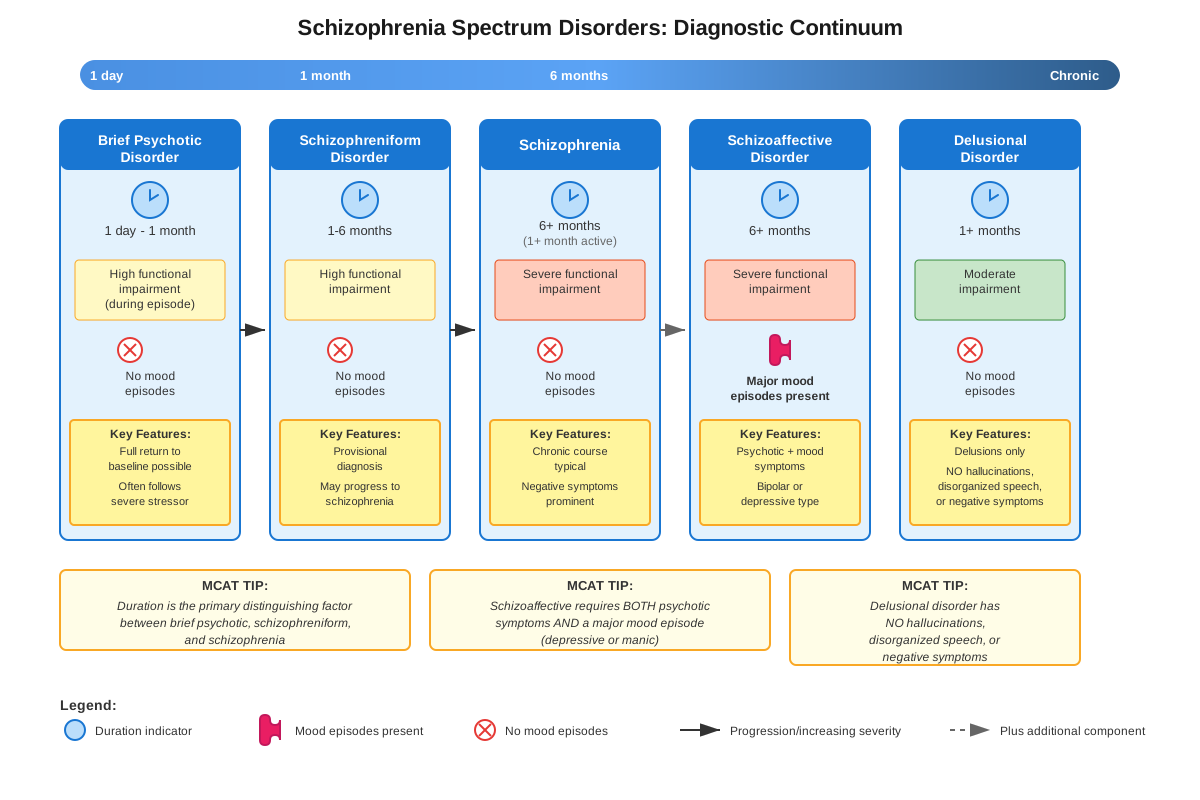
| Disorder | Duration Criteria | Key Distinguishing Features | Prognosis |
|---|---|---|---|
| Schizophrenia | ≥6 months (including prodromal/residual phases) | Two or more positive/negative symptoms; significant functional decline | Chronic; 20-30% achieve good functional recovery |
| Schizophreniform Disorder | 1-6 months | Identical symptoms to schizophrenia but shorter duration | Better than schizophrenia; 1/3 recover, 2/3 progress to schizophrenia |
| Brief Psychotic Disorder | 1 day to 1 month | Sudden onset, often following stressor; full return to baseline | Excellent; most recover completely |
| Schizoaffective Disorder | Variable | Major mood episode concurrent with schizophrenia symptoms; psychosis present without mood symptoms for ≥2 weeks | Intermediate between schizophrenia and mood disorders |
| Delusional Disorder | ≥1 month | Non-bizarre delusions without other prominent psychotic symptoms; functioning relatively preserved | Variable; often chronic but less impairing |
Neurobiological Basis: The Dopamine Hypothesis
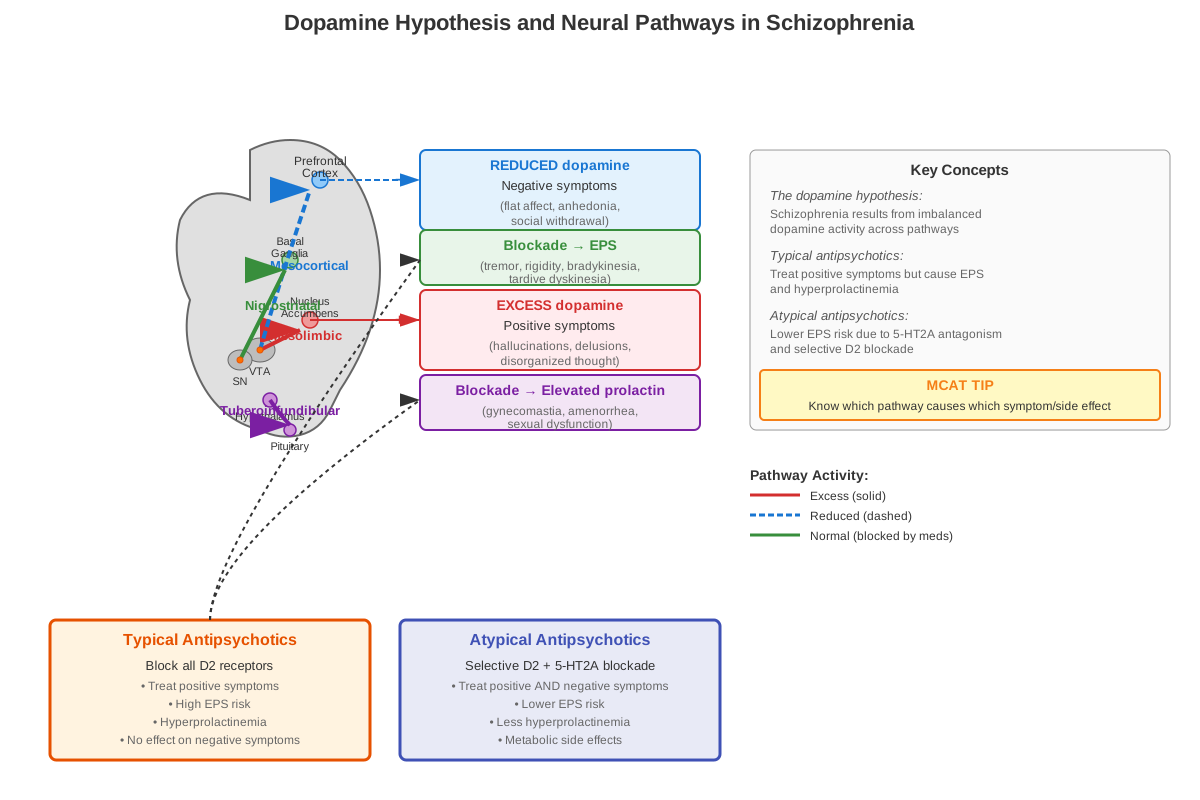
The dopamine hypothesis remains the predominant neurobiological explanation for schizophrenia spectrum disorders, though it has evolved significantly since its initial formulation. The revised hypothesis proposes:
Hyperactivity in mesolimbic pathway: Excessive dopamine activity in the mesolimbic pathway (projecting from the ventral tegmental area to the nucleus accumbens and limbic structures) produces positive symptoms. This explains why dopamine antagonists (antipsychotic medications) effectively reduce hallucinations and delusions.
Hypoactivity in mesocortical pathway: Reduced dopamine activity in the mesocortical pathway (projecting to the prefrontal cortex) contributes to negative symptoms and cognitive deficits. This explains why blocking dopamine receptors may worsen negative symptoms and why these symptoms are less medication-responsive.
Additional neurotransmitter systems implicated include glutamate (NMDA receptor hypofunction hypothesis), serotonin (explaining the efficacy of atypical antipsychotics), and GABA (involved in cortical inhibition). The integration of these systems suggests schizophrenia results from complex neurotransmitter imbalances rather than simple dopamine excess.
Structural and Functional Brain Abnormalities
Neuroimaging studies consistently demonstrate several brain abnormalities in schizophrenia spectrum disorders:
- Enlarged ventricles: Particularly lateral and third ventricles, suggesting loss of brain tissue
- Reduced hippocampal volume: Associated with memory deficits and psychotic symptoms
- Decreased prefrontal cortex volume and activity: Correlates with negative symptoms and executive function deficits
- Reduced gray matter: Progressive loss in multiple brain regions, particularly in first-episode psychosis
- Abnormal connectivity: Disrupted communication between brain regions, particularly frontal-temporal connections
These structural changes likely result from a combination of genetic factors, neurodevelopmental disruptions, and progressive neurodegenerative processes following illness onset.
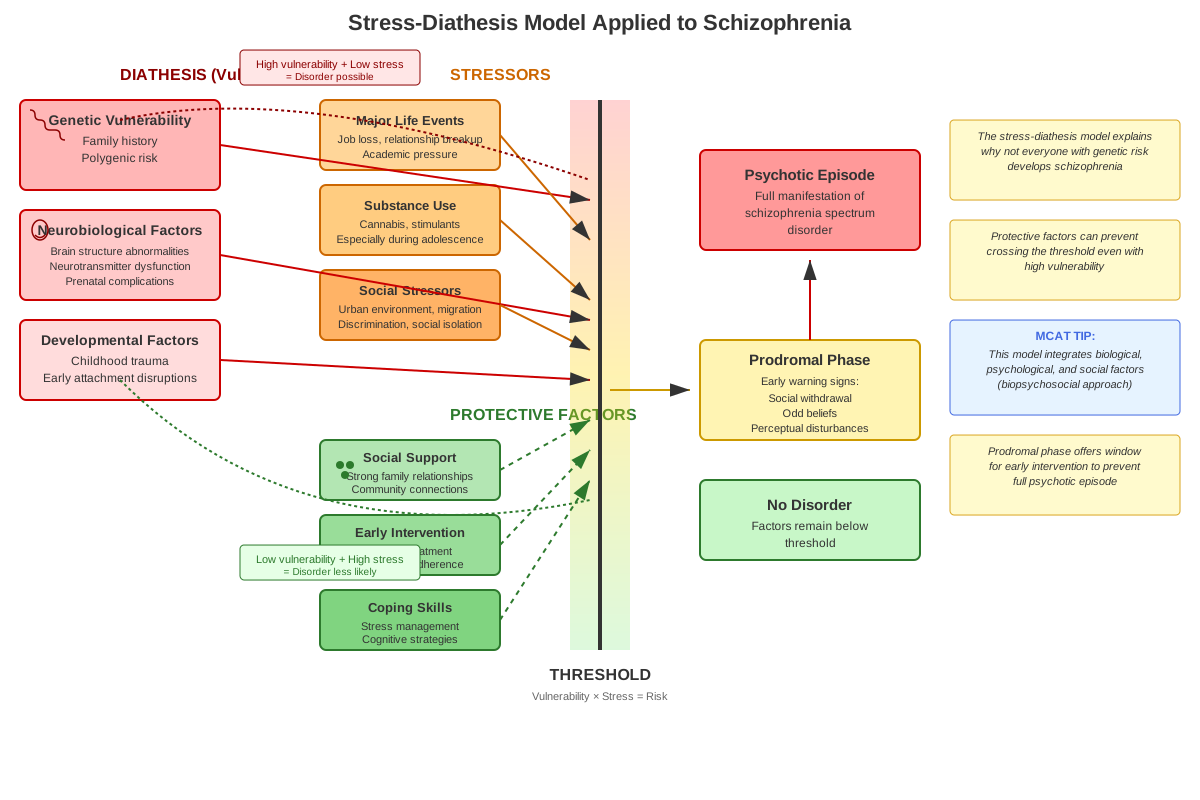
Etiology: Diathesis-Stress Model
The diathesis-stress model best explains the development of schizophrenia spectrum disorders, integrating genetic vulnerability with environmental triggers:
Genetic diathesis: Heritability estimates range from 60-80%, with risk increasing based on genetic relatedness to affected individuals (1% general population, 10% first-degree relative, 50% identical twin). Multiple genes of small effect contribute to vulnerability, including those involved in dopamine regulation, neurodevelopment, and synaptic function.
Environmental stressors: Prenatal factors (maternal infection, malnutrition, stress), obstetric complications, childhood trauma, urban upbringing, migration, and cannabis use (particularly high-potency products during adolescence) increase risk in genetically vulnerable individuals.
Neurodevelopmental hypothesis: Schizophrenia may result from early brain development disruptions that remain latent until adolescence/early adulthood when brain maturation processes (synaptic pruning, myelination) unmask vulnerabilities.
Course and Prognosis
The typical course of schizophrenia follows three phases:
- Prodromal phase: Gradual emergence of subtle symptoms including social withdrawal, unusual perceptual experiences, odd beliefs, and functional decline. Duration varies from weeks to years before first psychotic episode.
- Active phase: Prominent positive symptoms (hallucinations, delusions, disorganized thinking) requiring intervention. First episode typically occurs in late teens to early 30s (earlier in males).
- Residual phase: Following active psychosis, negative symptoms and cognitive deficits often persist even when positive symptoms are controlled. Some individuals experience multiple relapses with progressive functional decline.
Prognostic factors: Better outcomes associate with acute onset, later age of onset, female gender, good premorbial functioning, presence of mood symptoms, strong social support, and shorter duration of untreated psychosis. Approximately 20-30% achieve good functional recovery, 30-40% experience moderate impairment, and 30-40% remain severely impaired.
Concept Relationships
The concepts within the schizophrenia spectrum are hierarchically organized and interconnected. Psychosis serves as the foundational concept, representing the core feature shared across all spectrum disorders. From this base, disorders are differentiated primarily by duration criteria: brief psychotic disorder (shortest) → schizophreniform disorder (intermediate) → schizophrenia (longest). This temporal dimension reflects the DSM-5's recognition that symptom persistence indicates greater severity and chronicity.
Positive and negative symptoms represent two distinct but related symptom dimensions that cut across all spectrum disorders. The balance between these symptom types influences diagnosis (delusional disorder features primarily positive symptoms with preserved functioning), treatment response (positive symptoms respond better to medication), and prognosis (negative symptoms predict poorer functional outcomes). These symptom dimensions connect directly to the neurobiological substrate: positive symptoms link to mesolimbic dopamine hyperactivity, while negative symptoms associate with mesocortical dopamine hypoactivity and prefrontal cortex dysfunction.
The diathesis-stress model integrates biological vulnerability (genetic factors, brain abnormalities) with environmental triggers (stress, trauma, substance use) to explain disorder onset. This model connects to the neurodevelopmental hypothesis, which proposes that early brain development disruptions create latent vulnerability that environmental stressors later activate during adolescence. Both models emphasize that schizophrenia spectrum disorders result from complex gene-environment interactions rather than single causes.
Schizoaffective disorder represents a conceptual bridge between schizophrenia spectrum disorders and mood disorders, demonstrating how diagnostic categories exist along continua rather than as discrete entities. Understanding this disorder requires integrating knowledge of both psychotic symptoms and mood episodes, illustrating how the MCAT tests synthesis of multiple psychological disorder categories.
Treatment approaches connect mechanistically to neurobiological understanding: antipsychotic medications work by blocking dopamine D2 receptors (explaining efficacy for positive symptoms and side effects like extrapyramidal symptoms), while psychosocial interventions address functional impairments resulting from negative symptoms and cognitive deficits. This treatment framework demonstrates the biopsychosocial model in action, requiring both biological and psychosocial interventions for optimal outcomes.
High-Yield Facts
⭐ Schizophrenia requires at least 6 months of symptoms (including prodromal/residual phases) with at least 1 month of active-phase symptoms; schizophreniform disorder lasts 1-6 months; brief psychotic disorder lasts 1 day to 1 month.
⭐ Positive symptoms (hallucinations, delusions, disorganized speech/behavior) represent excesses of normal function and respond better to antipsychotic medication than negative symptoms (affective flattening, alogia, avolition, anhedonia).
⭐ The dopamine hypothesis proposes that mesolimbic dopamine hyperactivity causes positive symptoms while mesocortical dopamine hypoactivity contributes to negative symptoms and cognitive deficits.
⭐ Auditory hallucinations are the most common type in schizophrenia, often consisting of voices commenting on behavior or conversing with each other; prominent visual hallucinations should raise suspicion for medical causes.
⭐ Schizoaffective disorder requires a major mood episode (depression or mania) concurrent with schizophrenia symptoms, plus at least 2 weeks of psychotic symptoms without prominent mood symptoms.
- Genetic risk for schizophrenia increases with genetic relatedness: 1% general population, 10% first-degree relative, 50% identical twin, demonstrating strong heritability but not complete genetic determination.
- Enlarged ventricles and reduced hippocampal volume are the most consistent structural brain abnormalities found in neuroimaging studies of schizophrenia patients.
- Negative symptoms and cognitive deficits are better predictors of long-term functional outcomes than positive symptoms, which are more responsive to treatment.
- Duration of untreated psychosis (DUP) correlates with poorer outcomes; early intervention improves prognosis, emphasizing the importance of recognizing prodromal symptoms.
- Delusional disorder features non-bizarre delusions (situations that could occur in real life) for at least 1 month without other prominent psychotic symptoms, and functioning is relatively preserved outside the delusional system.
- Cannabis use, particularly high-potency products during adolescence, increases risk of developing schizophrenia spectrum disorders in genetically vulnerable individuals and worsens outcomes in those already diagnosed.
- Typical (first-generation) antipsychotics primarily block D2 dopamine receptors and effectively treat positive symptoms but cause extrapyramidal side effects; atypical (second-generation) antipsychotics also affect serotonin receptors, have fewer motor side effects, and may better address negative symptoms.
Quick check — test yourself on Schizophrenia spectrum so far.
Try Flashcards →Common Misconceptions
Misconception: Schizophrenia means "split personality" or multiple personality disorder.
Correction: Schizophrenia involves a split from reality (psychosis), not multiple personalities. The confusion arises from the literal meaning of "schizophrenia" (split mind), but this refers to fragmentation of thought processes, emotions, and perceptions, not distinct personality states. Multiple personality disorder is now called dissociative identity disorder and is completely unrelated to schizophrenia spectrum disorders.
Misconception: All hallucinations in schizophrenia are visual.
Correction: Auditory hallucinations are by far the most common type in schizophrenia, occurring in approximately 70% of patients. Visual hallucinations occur less frequently, and when prominent, should raise suspicion for medical causes (delirium, substance intoxication, neurological conditions). The MCAT frequently tests this distinction, as students often assume hallucinations are primarily visual based on media portrayals.
Misconception: Positive symptoms are "good" and negative symptoms are "bad."
Correction: The terms "positive" and "negative" refer to the presence (positive) or absence (negative) of normal functions, not to their desirability or severity. Positive symptoms represent additions to normal experience (hallucinations, delusions), while negative symptoms represent losses of normal functioning (motivation, emotional expression, speech). Both types cause significant impairment, but negative symptoms often cause greater long-term disability and are less responsive to medication.
Misconception: Schizophrenia is caused solely by excessive dopamine throughout the brain.
Correction: The revised dopamine hypothesis proposes region-specific dopamine dysregulation: hyperactivity in mesolimbic pathways (causing positive symptoms) and hypoactivity in mesocortical pathways (contributing to negative symptoms and cognitive deficits). Additionally, other neurotransmitter systems (glutamate, serotonin, GABA) play important roles. This nuanced understanding explains why simply blocking dopamine receptors doesn't fully treat schizophrenia and may worsen some symptoms.
Misconception: Schizophreniform disorder is a less severe form of schizophrenia.
Correction: Schizophreniform disorder has identical symptom criteria to schizophrenia but differs only in duration (1-6 months versus ≥6 months). The symptoms can be equally severe during the active phase. The distinction is prognostic: approximately one-third of individuals with schizophreniform disorder recover completely, while two-thirds progress to schizophrenia or schizoaffective disorder. Duration, not severity, is the distinguishing feature.
Misconception: People with schizophrenia are violent and dangerous.
Correction: The vast majority of individuals with schizophrenia are not violent and are actually more likely to be victims of violence than perpetrators. The association between schizophrenia and violence is largely mediated by comorbid substance use disorders. This misconception contributes to stigma and discrimination, creating barriers to treatment and social integration. The MCAT may test understanding of how stigma affects help-seeking behavior and treatment adherence.
Misconception: Antipsychotic medications cure schizophrenia.
Correction: Antipsychotic medications manage symptoms but do not cure schizophrenia. They are most effective for positive symptoms (reducing hallucinations and delusions) but less effective for negative symptoms and cognitive deficits. Most individuals require long-term medication maintenance to prevent relapse, and comprehensive treatment includes psychosocial interventions (cognitive behavioral therapy, social skills training, supported employment) to address functional impairments.
Worked Examples
Example 1: Differential Diagnosis Based on Duration
Clinical Vignette: A 22-year-old college student is brought to the emergency department by friends who report that for the past 3 weeks, he has been claiming that the CIA is monitoring him through his computer and that he can hear agents discussing his activities. He has stopped attending classes, rarely leaves his dorm room, and has become increasingly disheveled. His friends report he was functioning normally until about a month ago when he experienced significant stress from final exams. He has no history of substance use or medical illness. Mental status examination reveals auditory hallucinations and persecutory delusions but no mood symptoms. What is the most appropriate diagnosis?
Analysis:
Step 1: Identify the psychotic symptoms present:
- Auditory hallucinations (hearing agents discussing him)
- Persecutory delusions (CIA monitoring)
- Disorganized behavior (poor self-care, social withdrawal)
Step 2: Determine symptom duration:
- Active symptoms present for 3 weeks (less than 1 month)
- Prodromal period appears minimal (rapid onset following stressor)
Step 3: Apply DSM-5 duration criteria:
- Brief psychotic disorder: 1 day to 1 month
- Schizophreniform disorder: 1-6 months
- Schizophrenia: ≥6 months (including prodromal/residual phases)
Step 4: Consider additional features:
- Clear precipitating stressor (final exams)
- No mood symptoms (ruling out schizoaffective disorder)
- Acute onset rather than gradual deterioration
Answer: Brief psychotic disorder is most appropriate because symptoms have been present for less than 1 month. The presence of an identifiable stressor supports this diagnosis (can be specified as "with marked stressor"). The prognosis is generally good, with most individuals returning to baseline functioning. If symptoms persist beyond 1 month but less than 6 months, the diagnosis would be revised to schizophreniform disorder; if they persist beyond 6 months, schizophrenia would be diagnosed.
Key Learning Point: Duration is the primary distinguishing feature among schizophrenia spectrum disorders when symptom profiles are similar. Always establish a timeline when approaching differential diagnosis questions.
Example 2: Distinguishing Symptom Types and Treatment Implications
Research Passage Summary: A study investigates the effectiveness of a new antipsychotic medication by measuring symptom changes in 100 patients with schizophrenia over 12 weeks. Researchers assess positive symptoms (hallucinations, delusions, disorganized thinking) and negative symptoms (affective flattening, alogia, avolition) using standardized rating scales. Results show a 60% reduction in positive symptom scores but only a 15% reduction in negative symptom scores. Functional outcomes (employment, independent living, social relationships) show modest improvement.
Question: Based on the dopamine hypothesis of schizophrenia, which finding best explains the differential treatment response?
A) The medication blocks dopamine receptors in the mesolimbic pathway but has minimal effect on mesocortical dopamine activity
B) The medication increases dopamine activity in both mesolimbic and mesocortical pathways
C) Positive symptoms are caused by serotonin excess while negative symptoms result from dopamine deficiency
D) Negative symptoms are more severe than positive symptoms and therefore require higher medication doses
Analysis:
Step 1: Recall the dopamine hypothesis:
- Mesolimbic dopamine hyperactivity → positive symptoms
- Mesocortical dopamine hypoactivity → negative symptoms and cognitive deficits
Step 2: Understand typical antipsychotic mechanism:
- Most antipsychotics work by blocking D2 dopamine receptors
- Blocking mesolimbic dopamine reduces positive symptoms
- Blocking mesocortical dopamine may worsen negative symptoms (already hypoactive)
Step 3: Analyze the results:
- Large reduction in positive symptoms (60%) indicates effective dopamine blockade in mesolimbic pathway
- Minimal reduction in negative symptoms (15%) suggests medication doesn't address mesocortical hypoactivity
- Modest functional improvement reflects persistent negative symptoms
Step 4: Evaluate answer choices:
- Choice A correctly describes the mechanism: blocking mesolimbic dopamine (reducing positive symptoms) without addressing mesocortical hypoactivity (explaining persistent negative symptoms)
- Choice B is incorrect: increasing dopamine would worsen positive symptoms
- Choice C is incorrect: while serotonin is involved, the primary mechanism involves dopamine pathways
- Choice D confuses severity with treatment responsiveness
Answer: A is correct. This example illustrates why negative symptoms are more challenging to treat and why they better predict long-term functional outcomes. It also demonstrates how understanding neurobiological mechanisms helps predict treatment responses.
Key Learning Point: The differential response of positive versus negative symptoms to dopamine-blocking medications directly reflects the underlying pathophysiology: mesolimbic hyperactivity (treatable with antagonists) versus mesocortical hypoactivity (not addressed by simple dopamine blockade).
Exam Strategy
Approaching Schizophrenia Spectrum Questions:
When encountering schizophrenia spectrum questions, immediately establish a systematic approach:
- Create a timeline: Note when symptoms began, how long they've persisted, and whether there are prodromal or residual phases. Duration is the primary distinguishing feature among spectrum disorders.
- Categorize symptoms: Mentally separate positive symptoms (hallucinations, delusions, disorganized speech/behavior) from negative symptoms (affective flattening, alogia, avolition, anhedonia). This categorization helps with diagnosis, treatment prediction, and prognosis questions.
- Check for mood symptoms: Determine whether major depressive or manic episodes are present and their temporal relationship to psychotic symptoms. This distinguishes schizoaffective disorder from schizophrenia.
- Assess functional impairment: Note the degree of disruption to work, school, relationships, and self-care. Delusional disorder typically shows preserved functioning outside the delusional system.
Trigger Words and Phrases:
Watch for these high-yield terms that signal specific concepts:
- "Hearing voices commenting" or "voices conversing" → auditory hallucinations (positive symptom)
- "Flat affect," "monotone voice," "reduced facial expression" → affective flattening (negative symptom)
- "Lack of motivation," "poor hygiene," "stopped going to work" → avolition (negative symptom)
- "No longer enjoys activities" → anhedonia (negative symptom)
- "Brief, empty replies" → alogia (negative symptom)
- "For the past [time period]" → critical for differential diagnosis
- "Major depressive episode" or "manic episode" → consider schizoaffective disorder
- "Non-bizarre delusions" → suggests delusional disorder
- "Enlarged ventricles" or "reduced hippocampal volume" → structural brain abnormalities
- "First-degree relative with schizophrenia" → genetic risk factor
Process-of-Elimination Tips:
For differential diagnosis questions:
- Eliminate options that don't match the duration criteria first (this often eliminates 2-3 choices immediately)
- If mood symptoms are prominent throughout, eliminate schizophrenia and consider schizoaffective disorder or mood disorder with psychotic features
- If functioning is relatively preserved with isolated delusions, favor delusional disorder over schizophrenia
- If visual hallucinations are the primary symptom without auditory hallucinations, consider medical causes rather than primary psychotic disorders
For mechanism/treatment questions:
- Eliminate choices suggesting dopamine increase for treating positive symptoms (opposite of correct mechanism)
- Eliminate choices claiming negative symptoms respond better to medication than positive symptoms (opposite of reality)
- Favor answers acknowledging the complexity of neurotransmitter systems over single-neurotransmitter explanations
Time Allocation:
Discrete questions on schizophrenia spectrum typically require 60-90 seconds:
- 20-30 seconds: Read and identify key information (symptoms, duration, functional status)
- 20-30 seconds: Apply diagnostic criteria or neurobiological principles
- 20-30 seconds: Evaluate answer choices and select best option
Passage-based questions require 90-120 seconds:
- 30-40 seconds: Integrate passage information with clinical vignette
- 30-40 seconds: Apply relevant concepts (dopamine hypothesis, treatment mechanisms, prognosis factors)
- 30-40 seconds: Eliminate incorrect options and confirm correct answer
Exam Tip: If a question asks about prognosis, remember that negative symptoms, longer duration of untreated psychosis, poor premorbid functioning, and male gender predict worse outcomes. Acute onset, later age of onset, and presence of mood symptoms predict better outcomes.
Memory Techniques
Mnemonic for Positive Symptoms - "The 4 D's":
- Delusions
- Disorganized speech
- Disorganized or abnormal motor behavior
- Disturbances of perception (hallucinations)
Mnemonic for Negative Symptoms - "The 5 A's":
- Affective flattening (blunted emotional expression)
- Alogia (poverty of speech)
- Avolition (lack of motivation)
- Anhedonia (inability to experience pleasure)
- Attention deficits (sometimes included as fifth A)
Duration Criteria Visualization:
Picture a timeline with three zones:
- Brief zone (1 day - 1 month): Brief psychotic disorder - imagine a brief storm that passes quickly
- Medium zone (1-6 months): Schizophreniform disorder - imagine a "form" or shadow of schizophrenia that might solidify or disappear
- Long zone (≥6 months): Schizophrenia - imagine a chronic, persistent condition that has "settled in"
Dopamine Pathway Memory Aid - "MESO-LIMB-IC = MORE, MESO-CORT-IC = LESS":
- MESO-LIMB-IC pathway has MORE dopamine → positive symptoms (more experiences added)
- MESO-CORT-IC pathway has LESS dopamine → negative symptoms (less normal functioning)
Schizoaffective Disorder Rule:
Remember "SCHIZO + AFFECTIVE = BOTH, BUT SCHIZO ALONE TOO"
- Must have BOTH schizophrenia symptoms AND major mood episode
- BUT must also have psychotic symptoms for ≥2 weeks WITHOUT prominent mood symptoms
- This distinguishes it from mood disorder with psychotic features (where psychosis only occurs during mood episodes)
Prognosis Factors - "GLASS HALF FULL":
Good prognosis factors spell optimism:
- Good premorbid functioning
- Later age of onset
- Acute onset (rather than gradual)
- Strong social support
- Shorter duration of untreated psychosis
- Female gender
- Understandable precipitant (clear stressor)
- Limited negative symptoms
- Less family history
Summary
The schizophrenia spectrum encompasses a continuum of psychotic disorders distinguished primarily by symptom duration, ranging from brief psychotic disorder (1 day to 1 month) through schizophreniform disorder (1-6 months) to schizophrenia (≥6 months). All spectrum disorders share core features of psychosis—disturbances in reality testing manifesting as hallucinations, delusions, and disorganized thinking—but differ in chronicity, severity, and functional impact. Understanding the distinction between positive symptoms (excesses of normal function like hallucinations and delusions) and negative symptoms (deficits in normal function like affective flattening and avolition) is crucial for diagnosis, treatment planning, and prognosis prediction. The neurobiological basis centers on the dopamine hypothesis, which proposes that mesolimbic dopamine hyperactivity produces positive symptoms while mesocortical dopamine hypoactivity contributes to negative symptoms and cognitive deficits. This explains why antipsychotic medications effectively treat positive symptoms through dopamine receptor blockade but show limited efficacy for negative symptoms. The diathesis-stress model best explains etiology, integrating genetic vulnerability (heritability 60-80%) with environmental stressors (prenatal complications, trauma, substance use) to produce disorder onset. For the MCAT, students must be able to apply DSM-5 diagnostic criteria to clinical vignettes, distinguish between spectrum disorders based on duration and symptom profiles, understand neurobiological mechanisms underlying symptoms and treatments, and recognize prognostic factors affecting long-term outcomes.
Key Takeaways
- Duration criteria are the primary distinguishing feature among schizophrenia spectrum disorders: brief psychotic disorder (<1 month), schizophreniform disorder (1-6 months), and schizophrenia (≥6 months including prodromal/residual phases)
- Positive symptoms (hallucinations, delusions, disorganized speech/behavior) represent excesses of normal function and respond well to dopamine-blocking antipsychotics, while negative symptoms (affective flattening, alogia, avolition, anhedonia) represent deficits in normal function and are less medication-responsive but better predict long-term functional outcomes
- The dopamine hypothesis proposes region-specific dysregulation: mesolimbic hyperactivity causes positive symptoms, while mesocortical hypoactivity contributes to negative symptoms and cognitive deficits
- Auditory hallucinations are the most common type in schizophrenia; prominent visual hallucinations should raise suspicion for medical causes rather than primary psychotic disorders
- Schizoaffective disorder requires both a major mood episode concurrent with schizophrenia symptoms AND at least 2 weeks of psychotic symptoms without prominent mood symptoms, distinguishing it from both schizophrenia and mood disorders with psychotic features
- The diathesis-stress model explains schizophrenia etiology through interaction of genetic vulnerability (60-80% heritability) with environmental stressors (prenatal complications, trauma, cannabis use, urban environment)
- Better prognosis associates with acute onset, later age of onset, female gender, good premorbid functioning, strong social support, shorter duration of untreated psychosis, and presence of mood symptoms
Related Topics
Mood Disorders with Psychotic Features: Understanding how major depressive disorder and bipolar disorder can present with psychotic symptoms helps distinguish these conditions from schizoaffective disorder and schizophrenia. The key difference is that in mood disorders with psychotic features, psychosis occurs exclusively during mood episodes.
Substance-Induced Psychotic Disorder: Many substances (amphetamines, cocaine, cannabis, hallucinogens, alcohol) can produce psychotic symptoms. Distinguishing substance-induced psychosis from primary psychotic disorders requires understanding temporal relationships between substance use and symptom onset/resolution.
Neurotransmitter Systems: Deeper knowledge of dopamine, serotonin, glutamate, and GABA systems enhances understanding of schizophrenia pathophysiology and treatment mechanisms. This connects to broader neuroscience topics including reward pathways, motor control, and cognitive function.
Antipsychotic Medications: Detailed understanding of typical versus atypical antipsychotics, including mechanisms of action, side effect profiles (extrapyramidal symptoms, metabolic syndrome, tardive dyskinesia), and clinical applications, builds directly on schizophrenia spectrum knowledge.
Cognitive Deficits in Schizophrenia: Executive function impairments, working memory deficits, and attention problems represent a third symptom dimension beyond positive and negative symptoms, significantly impacting functional outcomes and treatment approaches.
Practice CTA
Now that you've mastered the core concepts of schizophrenia spectrum disorders, it's time to solidify your understanding through active practice. Challenge yourself with MCAT-style practice questions that test your ability to apply diagnostic criteria, distinguish between spectrum disorders, and integrate neurobiological mechanisms with clinical presentations. Use flashcards to reinforce high-yield facts like duration criteria, symptom classifications, and prognostic factors. Remember, the difference between recognizing concepts and applying them under exam pressure comes from deliberate practice. Your investment in understanding this medium-yield topic will pay dividends not only on discrete questions but also in passage-based questions that integrate psychological disorders with research methodology and treatment outcomes. You've built a strong foundation—now strengthen it through application!
Sign up free to keep reading
Create a free AnvayaPrep account to finish this MCAT guide on Schizophrenia spectrum — plus flashcards and practice questions.