Overview
Cross-sectional studies represent one of the fundamental observational research designs in epidemiology and social science research, making them a critical concept for the MCAT's Psychological, Social, and Biological Foundations of Behavior section. These studies examine the relationship between variables at a single point in time across a defined population, providing a "snapshot" of health outcomes, behaviors, or social phenomena. Unlike longitudinal studies that follow subjects over time, cross-sectional studies collect all data simultaneously, making them efficient and cost-effective tools for identifying associations and generating hypotheses. Understanding cross-sectional methodology is essential for interpreting research findings, evaluating study limitations, and distinguishing between correlation and causation—skills that the MCAT tests extensively.
The significance of cross-sectional studies extends beyond pure research methodology into practical applications in public health, sociology, and clinical medicine. These studies frequently inform health policy decisions, identify disease prevalence, and reveal social patterns that affect population health. For MCAT test-takers, cross-sectional studies appear regularly in passage-based questions where students must analyze research designs, interpret data, identify confounding variables, and recognize the limitations inherent in observational research. Mastery of this topic enables students to critically evaluate scientific claims and understand the hierarchy of evidence in medical research.
Within the broader context of Research Methods and Statistics in Sociology, cross-sectional studies serve as a bridge between descriptive and analytical epidemiology. They connect to fundamental concepts such as prevalence versus incidence, sampling methods, bias, confounding variables, and statistical associations. Understanding cross-sectional studies provides the foundation for appreciating more complex longitudinal designs (cohort and case-control studies) and recognizing when causal inferences can and cannot be drawn from observational data—a distinction the MCAT frequently tests through subtle question stems and answer choices.
Learning Objectives
- [ ] Define cross-sectional studies using accurate Sociology terminology
- [ ] Explain why cross-sectional studies matter for the MCAT
- [ ] Apply cross-sectional studies to exam-style questions
- [ ] Identify common mistakes related to cross-sectional studies
- [ ] Connect cross-sectional studies to related Sociology concepts
- [ ] Distinguish cross-sectional studies from other observational study designs (cohort, case-control)
- [ ] Analyze the strengths and limitations of cross-sectional methodology in research contexts
- [ ] Evaluate whether causal relationships can be inferred from cross-sectional data
- [ ] Interpret prevalence data and odds ratios derived from cross-sectional studies
Prerequisites
- Basic statistical concepts: Understanding measures of central tendency, variability, and association is necessary to interpret cross-sectional study results and statistical significance
- Sampling methods: Knowledge of random sampling, stratified sampling, and selection bias helps evaluate the validity and generalizability of cross-sectional findings
- Correlation versus causation: Distinguishing between association and causation is fundamental to recognizing the limitations of cross-sectional designs
- Prevalence and incidence: Understanding these epidemiological measures is essential since cross-sectional studies measure prevalence, not incidence
- Confounding variables: Recognizing factors that may create spurious associations is critical for evaluating cross-sectional study validity
Why This Topic Matters
Cross-sectional studies represent one of the most commonly encountered research designs in medical literature and public health research. In clinical practice, physicians regularly encounter cross-sectional data when reviewing prevalence statistics, screening program results, and population health surveys. These studies inform clinical guidelines, resource allocation decisions, and public health interventions. For example, cross-sectional studies have identified associations between socioeconomic status and health outcomes, dietary patterns and chronic disease, and social determinants of health—all topics highly relevant to the MCAT's emphasis on population health and health disparities.
On the MCAT, cross-sectional studies appear with moderate to high frequency, particularly in the Psychological, Social, and Biological Foundations of Behavior section. Approximately 15-20% of research methodology questions involve identifying study designs or analyzing their limitations. Cross-sectional studies typically appear in passage-based questions where students must: (1) identify the study design from a description, (2) recognize what conclusions can and cannot be drawn, (3) identify potential sources of bias, or (4) distinguish cross-sectional from longitudinal designs. The MCAT favors questions that test critical thinking about research limitations rather than simple memorization of definitions.
Common exam presentations include passages describing health surveys, prevalence studies of disease risk factors, or social research examining relationships between demographic variables and outcomes. Questions often present answer choices that incorrectly claim causal relationships from cross-sectional data or confuse cross-sectional designs with cohort studies. The ability to quickly identify temporal ambiguity—the inability to determine which variable came first—is a high-yield skill that distinguishes strong test-takers from average performers on research methodology questions.
Core Concepts
Definition and Fundamental Characteristics
Cross-sectional studies are observational research designs that analyze data collected from a population or representative subset at a specific point in time. The defining feature is simultaneous measurement of exposure and outcome variables, creating a temporal "snapshot" of the population. Unlike experimental designs, researchers do not manipulate variables or assign interventions; they simply observe and measure existing conditions. This observational nature makes cross-sectional studies particularly useful for studying naturally occurring phenomena, social patterns, and disease prevalence in populations.
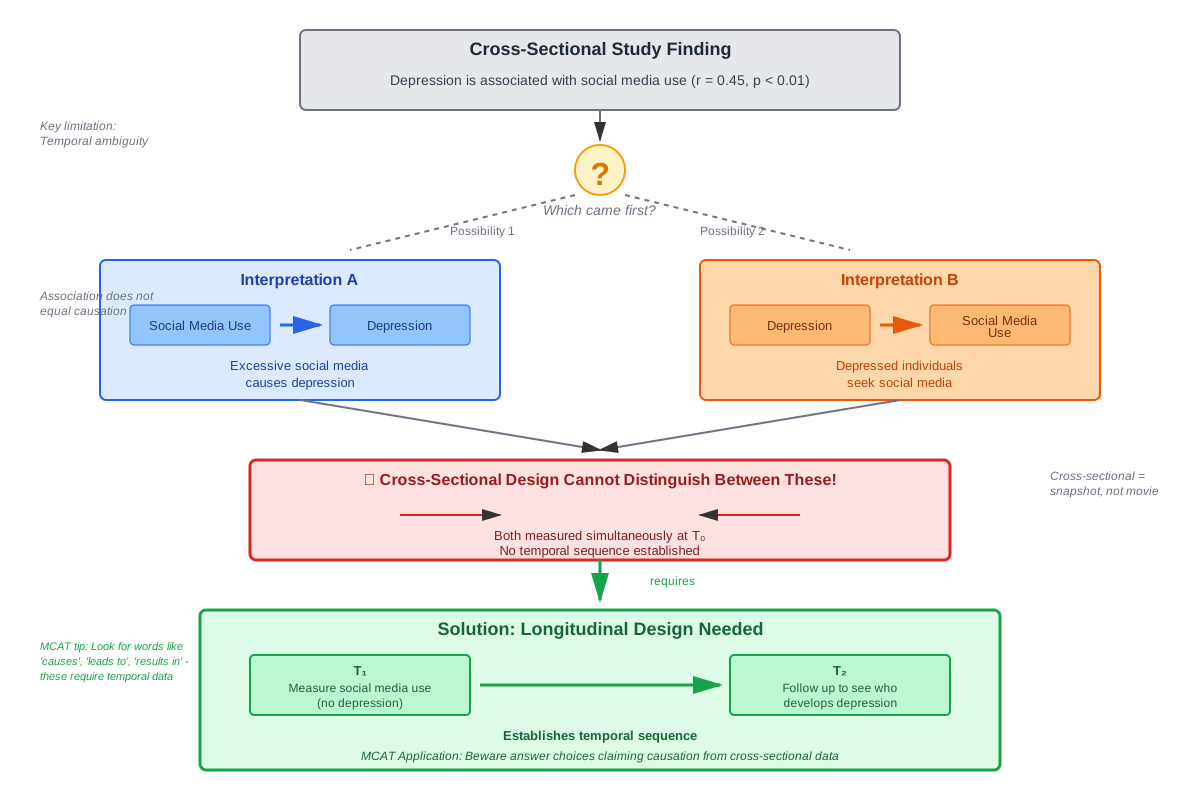
The temporal aspect distinguishes cross-sectional studies from other designs. Because all measurements occur simultaneously, researchers cannot establish temporal sequence—a critical requirement for inferring causation. For example, a cross-sectional study might find an association between depression and social isolation, but cannot determine whether depression leads to isolation or isolation leads to depression. This temporal ambiguity represents the most significant limitation of cross-sectional methodology and is frequently tested on the MCAT.
Study Design and Implementation
Cross-sectional studies typically follow a structured approach: (1) define the target population, (2) select a representative sample using appropriate sampling methods, (3) measure exposure and outcome variables simultaneously, (4) analyze associations between variables, and (5) report findings as prevalence estimates or measures of association. The sampling strategy critically affects study validity and generalizability. Random sampling enhances representativeness, while convenience sampling may introduce selection bias.
Data collection methods vary widely, including surveys, questionnaires, physical examinations, laboratory tests, and medical record reviews. Large-scale examples include the National Health and Nutrition Examination Survey (NHANES) and the Behavioral Risk Factor Surveillance System (BRFSS), which provide cross-sectional data on health behaviors and outcomes across the United States population. These studies inform public health policy and provide benchmark data for tracking population health trends.
Measures and Statistical Analysis
Cross-sectional studies primarily measure prevalence—the proportion of a population with a particular characteristic or disease at a specific time. This differs from incidence, which measures new cases over time and requires longitudinal follow-up. The prevalence-incidence relationship follows the formula: Prevalence ≈ Incidence × Duration (for stable populations). Understanding this distinction is essential for MCAT questions that ask about appropriate study designs for different research questions.
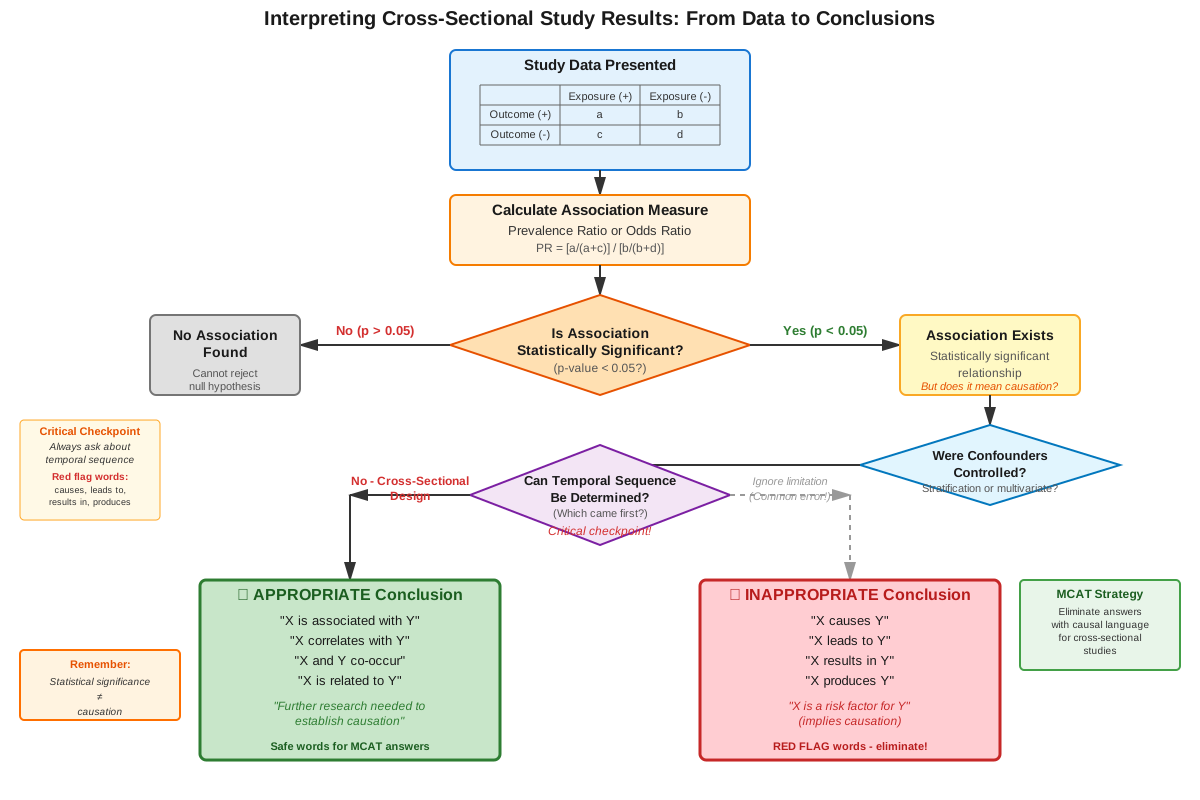
Statistical analysis in cross-sectional studies typically involves calculating odds ratios (OR) or prevalence ratios to quantify associations between exposures and outcomes. An odds ratio compares the odds of an outcome in exposed versus unexposed groups. For example, an OR of 2.5 for the association between smoking and respiratory symptoms indicates that smokers have 2.5 times the odds of respiratory symptoms compared to non-smokers. However, this association does not prove causation—a critical point for MCAT test-takers to remember.
Strengths of Cross-Sectional Studies
| Strength | Explanation | MCAT Relevance |
|---|---|---|
| Cost-effective | Single time point reduces expenses compared to longitudinal studies | Recognize when cross-sectional design is most practical |
| Time-efficient | Data collection occurs quickly without extended follow-up | Understand trade-offs between efficiency and causal inference |
| Multiple outcomes | Can examine many outcomes and exposures simultaneously | Identify exploratory versus hypothesis-testing studies |
| Prevalence estimation | Ideal for determining disease burden in populations | Know when prevalence data is most useful |
| Hypothesis generation | Identifies associations for future investigation | Distinguish hypothesis-generating from hypothesis-testing research |
| Large sample sizes | Feasible to study large populations | Understand relationship between sample size and statistical power |
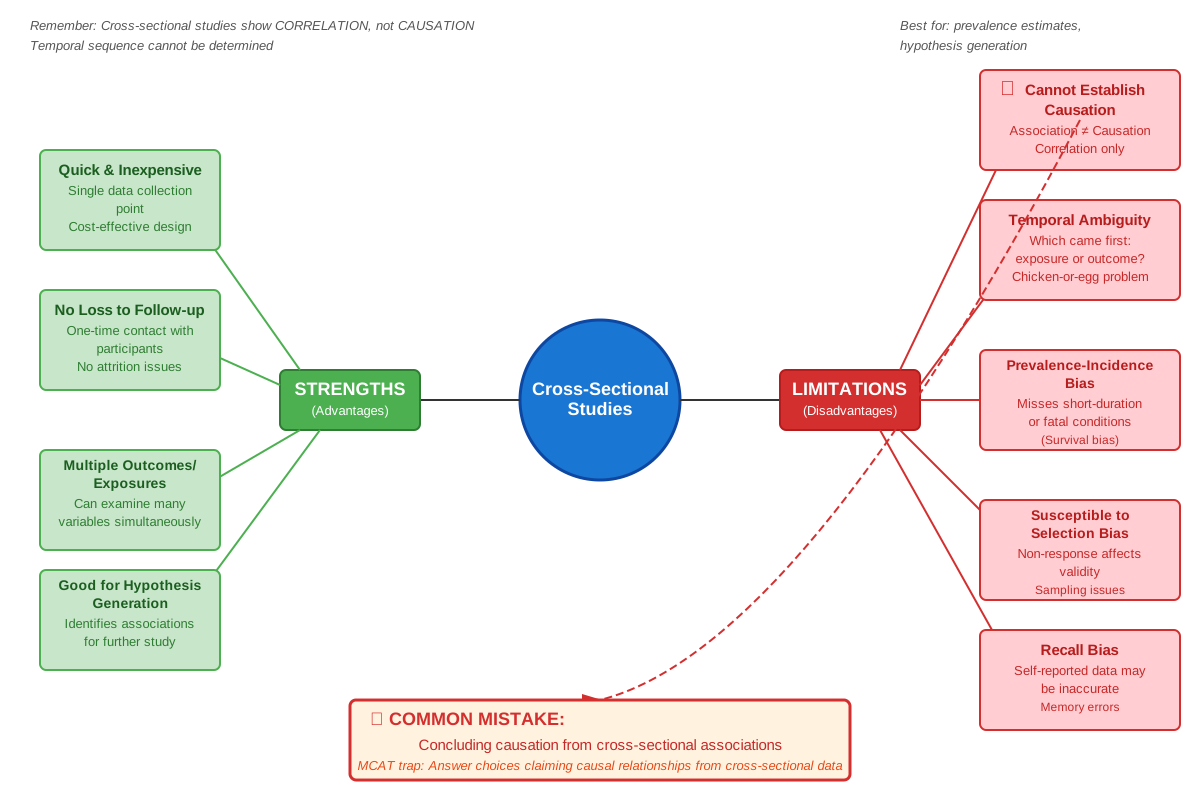
The efficiency of cross-sectional studies makes them particularly valuable for initial investigations, public health surveillance, and resource-limited settings. They provide essential baseline data that can inform more resource-intensive longitudinal studies. For the MCAT, recognizing when a cross-sectional design is appropriate versus when a longitudinal design is necessary demonstrates sophisticated understanding of research methodology.
Limitations of Cross-Sectional Studies
The most critical limitation is inability to establish causation due to temporal ambiguity. The MCAT frequently tests this concept by presenting answer choices that incorrectly claim causal relationships from cross-sectional data. Students must recognize that association does not equal causation and that cross-sectional studies can only identify correlations, not causal pathways.
Survival bias represents another important limitation. Cross-sectional studies only capture individuals alive and available at the time of data collection, potentially missing those who died or recovered before the study. For example, a cross-sectional study of cancer survival might overestimate survival rates by excluding patients who died before enrollment. This bias particularly affects studies of acute or rapidly fatal conditions.
Reverse causality occurs when the presumed outcome actually causes the exposure rather than vice versa. For instance, a cross-sectional study finding an association between unemployment and depression cannot determine whether unemployment caused depression or depression led to job loss. The MCAT tests this concept by asking students to identify alternative explanations for observed associations.
Prevalence-incidence bias (also called Neyman bias) occurs when factors affecting disease duration influence the observed association between exposure and outcome. Diseases with short duration (either rapid recovery or death) are underrepresented in cross-sectional studies, potentially distorting associations. This bias is particularly relevant for studying chronic versus acute conditions.
Comparison with Other Study Designs
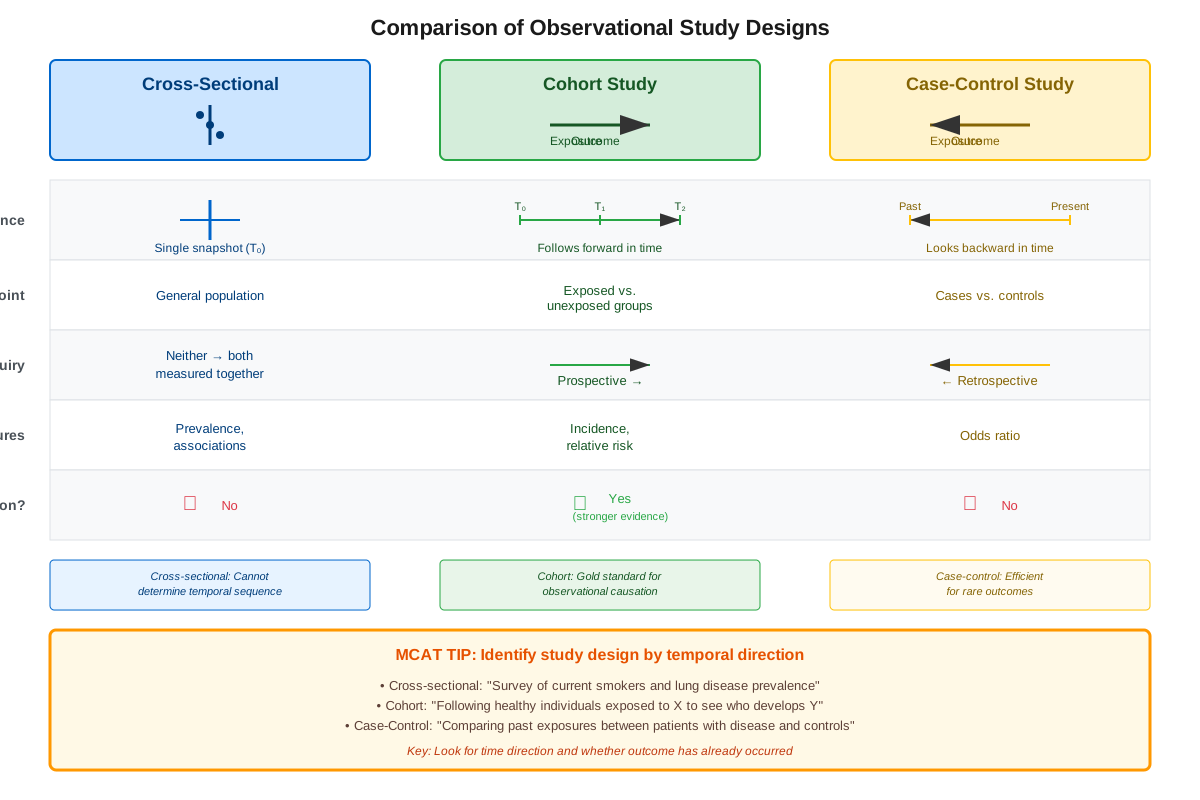
Understanding how cross-sectional studies differ from cohort and case-control studies is essential for MCAT success. Cohort studies follow participants forward in time from exposure to outcome, establishing temporal sequence and enabling incidence calculation. Case-control studies start with outcome status (cases and controls) and look backward to assess past exposures. Cross-sectional studies measure everything simultaneously, making them distinct from both longitudinal designs.
| Feature | Cross-Sectional | Cohort | Case-Control |
|---|---|---|---|
| Temporal direction | Single time point | Forward (prospective) | Backward (retrospective) |
| Measure | Prevalence | Incidence | Odds ratio |
| Causation | Cannot establish | Can establish | Cannot establish |
| Time required | Short | Long | Moderate |
| Cost | Low | High | Moderate |
| Rare diseases | Inefficient | Inefficient | Efficient |
| Multiple outcomes | Yes | Yes | No |
The MCAT often presents study descriptions and asks students to identify the design type. Key distinguishing features include whether participants are followed over time (cohort), selected based on outcome status (case-control), or measured once (cross-sectional). Recognizing these patterns quickly improves accuracy and saves time on exam day.
Concept Relationships
Cross-sectional studies connect to broader research methodology concepts through multiple pathways. The foundation begins with sampling methods → which determine sample representativeness → which affects generalizability of findings. Poor sampling introduces selection bias → which threatens internal validity → limiting confidence in observed associations.
The temporal structure of cross-sectional studies directly relates to epidemiological measures: cross-sectional design → measures prevalence (not incidence) → which depends on both disease incidence and duration → connecting to the prevalence-incidence-duration relationship. This relationship explains why cross-sectional studies work well for chronic conditions (long duration, high prevalence) but poorly for acute conditions (short duration, low prevalence at any given time).
The inability to establish temporal sequence connects cross-sectional studies to fundamental principles of causal inference. The Bradford Hill criteria for causation require temporal precedence (cause before effect), which cross-sectional studies cannot demonstrate → leading to temporal ambiguity → preventing causal conclusions → necessitating longitudinal follow-up studies to establish causation. This pathway explains why cross-sectional studies are hypothesis-generating rather than hypothesis-confirming.
Cross-sectional studies also relate to confounding variables and statistical control. Observed associations may reflect true relationships, confounding, or reverse causality → requiring statistical adjustment for potential confounders → using techniques like stratification or multivariable regression → which can reduce but not eliminate confounding → highlighting the importance of study design in addition to statistical analysis.
Within the hierarchy of evidence for medical decision-making, cross-sectional studies occupy a middle position: stronger than case reports but weaker than cohort studies, randomized controlled trials, and systematic reviews. Understanding this hierarchy helps students evaluate the strength of evidence supporting clinical recommendations and public health interventions—skills the MCAT tests through passage analysis and critical reasoning questions.
High-Yield Facts
⭐ Cross-sectional studies measure exposure and outcome simultaneously at a single point in time, creating a temporal "snapshot" of the population
⭐ Cross-sectional studies measure prevalence, not incidence, making them ideal for chronic conditions but poor for rare or acute diseases
⭐ Temporal ambiguity prevents establishing causation in cross-sectional studies—association does not equal causation
⭐ Cross-sectional studies are cost-effective and time-efficient compared to longitudinal designs, making them useful for hypothesis generation
⭐ Survival bias occurs in cross-sectional studies because only individuals alive and available at the time of data collection are included
- Cross-sectional studies can examine multiple exposures and outcomes simultaneously, making them efficient for exploratory research
- Reverse causality is a major concern when the presumed outcome may actually cause the exposure rather than vice versa
- Odds ratios are the primary measure of association in cross-sectional studies, quantifying the relationship between exposure and outcome
- Selection bias threatens validity when the sample is not representative of the target population
- Prevalence-incidence bias (Neyman bias) occurs when factors affecting disease duration distort observed associations
- Cross-sectional studies are observational, not experimental, meaning researchers do not manipulate variables or assign interventions
- Large-scale cross-sectional surveys like NHANES provide essential public health surveillance data
- Cross-sectional studies cannot determine which variable came first, making temporal sequence impossible to establish
- Confounding variables can create spurious associations in cross-sectional studies, requiring statistical adjustment
- Cross-sectional studies are particularly useful for studying social determinants of health and health disparities
Quick check — test yourself on Cross sectional studies so far.
Try Flashcards →Common Misconceptions
Misconception: Cross-sectional studies can prove that one variable causes another if the association is statistically significant.
Correction: Statistical significance only indicates that an association is unlikely due to chance; it does not establish causation. Cross-sectional studies cannot determine temporal sequence, which is essential for causal inference. Even strong associations may reflect confounding, reverse causality, or other explanations.
Misconception: Cross-sectional studies and cohort studies are the same because both can examine multiple exposures and outcomes.
Correction: Cross-sectional studies measure everything at one time point, while cohort studies follow participants forward in time from exposure to outcome. This temporal dimension allows cohort studies to establish temporal sequence and calculate incidence, neither of which is possible in cross-sectional designs.
Misconception: If a cross-sectional study finds that depressed individuals are more likely to be socially isolated, depression must cause social isolation.
Correction: This association could reflect reverse causality (social isolation causing depression), confounding (a third variable causing both), or bidirectional relationships. Cross-sectional data cannot distinguish between these possibilities because temporal sequence is unknown.
Misconception: Cross-sectional studies are always inferior to longitudinal studies and should be avoided.
Correction: Cross-sectional studies are appropriate and valuable for specific research questions, particularly estimating disease prevalence, identifying associations for future investigation, and conducting public health surveillance. They are more efficient and cost-effective than longitudinal designs when temporal sequence is not the primary concern.
Misconception: Prevalence and incidence are interchangeable terms that both describe disease frequency.
Correction: Prevalence measures the proportion of a population with a disease at a specific time (cross-sectional), while incidence measures the rate of new cases over time (longitudinal). Cross-sectional studies can only measure prevalence because they lack the temporal follow-up necessary to identify new cases.
Misconception: A large sample size in a cross-sectional study eliminates all bias and ensures valid results.
Correction: While large samples increase statistical power and precision, they do not eliminate systematic biases such as selection bias, survival bias, or confounding. A large biased sample simply provides precise estimates of biased associations. Study design quality matters more than sample size alone.
Misconception: Cross-sectional studies can measure disease incidence if they ask participants about past diagnoses.
Correction: Asking about past diagnoses introduces recall bias and still does not provide true incidence data because the study lacks prospective follow-up. True incidence requires identifying disease-free individuals and following them forward to detect new cases—the hallmark of cohort studies, not cross-sectional studies.
Worked Examples
Example 1: Identifying Study Design and Limitations
Scenario: Researchers surveyed 2,000 adults in a metropolitan area, measuring current smoking status and current diagnosis of chronic obstructive pulmonary disease (COPD). They found that 35% of current smokers had COPD compared to 8% of non-smokers (OR = 6.2, p < 0.001). The researchers concluded that smoking causes COPD.
Question: What type of study design is this, and what is the primary limitation of the researchers' conclusion?
Step 1: Identify the study design by examining temporal characteristics. The study measured smoking status and COPD diagnosis simultaneously at a single time point across a population sample. This defines a cross-sectional study.
Step 2: Evaluate the researchers' causal conclusion. They claim smoking causes COPD based on an observed association. However, cross-sectional studies cannot establish temporal sequence—we don't know whether smoking preceded COPD diagnosis or whether individuals developed COPD first and then continued or started smoking.
Step 3: Identify additional limitations. Survival bias is particularly relevant here because COPD can be fatal. The study only includes individuals alive at the time of data collection, potentially missing those who died from severe COPD. This could underestimate the true association between smoking and COPD. Additionally, the study measures prevalence, not incidence, so it cannot determine the rate at which smokers develop new COPD cases.
Step 4: Consider alternative explanations. While the association is strong and biologically plausible, cross-sectional data alone cannot rule out confounding variables (e.g., occupational exposures, air pollution) that might contribute to both smoking behavior and COPD risk.
Answer: This is a cross-sectional study. The primary limitation is temporal ambiguity—the inability to establish that smoking preceded COPD diagnosis. While the association is strong and consistent with biological knowledge, the cross-sectional design cannot prove causation. A cohort study following smokers and non-smokers forward in time would be necessary to establish temporal sequence and calculate COPD incidence rates.
Learning Objective Connection: This example demonstrates how to identify cross-sectional studies from descriptions (LO 1), recognize their limitations regarding causal inference (LO 4), and distinguish them from longitudinal designs (LO 6).
Example 2: Analyzing Prevalence Data and Potential Biases
Scenario: A cross-sectional study examined the relationship between exercise habits and depression in 5,000 community-dwelling adults. Participants completed questionnaires about current exercise frequency and current depressive symptoms. Results showed that individuals exercising ≥3 times per week had significantly lower depression prevalence (12%) compared to those exercising <1 time per week (28%). The researchers suggested that increasing exercise could reduce depression in the population.
Question: Identify potential biases and alternative explanations for these findings.
Step 1: Recognize the reverse causality problem. The study cannot determine whether exercise reduces depression or depression reduces exercise motivation. Depressed individuals often experience fatigue, anhedonia, and reduced motivation—symptoms that could decrease exercise participation. The temporal sequence is unknown.
Step 2: Consider confounding variables. Multiple factors could influence both exercise habits and depression risk:
- Socioeconomic status: Higher income enables gym memberships and leisure time for exercise while also providing resources that protect against depression
- Physical health: Chronic illness or disability may limit exercise capacity and independently increase depression risk
- Social support: Individuals with strong social networks may exercise in groups and also have protective factors against depression
- Personality traits: Conscientiousness or self-efficacy may promote both regular exercise and resilience against depression
Step 3: Evaluate selection bias. The study included "community-dwelling adults," which may exclude institutionalized individuals with severe depression or those too ill to participate. This healthy participant bias could underestimate true depression prevalence and overestimate the exercise-depression association.
Step 4: Assess measurement issues. Self-reported exercise and depression symptoms may introduce recall bias or social desirability bias. Participants might overreport exercise or underreport depression symptoms, affecting the observed association.
Step 5: Consider the researchers' recommendation. While the association suggests a potential benefit of exercise, the cross-sectional design cannot support causal claims. Randomized controlled trials would be necessary to determine whether exercise interventions actually reduce depression. Observational cohort studies could establish temporal sequence but still face confounding challenges.
Answer: The primary concern is reverse causality—depression may reduce exercise rather than exercise preventing depression. Multiple confounding variables (socioeconomic status, physical health, social support) could create spurious associations. Selection bias from excluding severely depressed or institutionalized individuals may affect generalizability. While the association is interesting and hypothesis-generating, the cross-sectional design cannot support causal recommendations for exercise interventions. Longitudinal studies and randomized trials are needed to establish causation.
Learning Objective Connection: This example illustrates how to identify common mistakes in interpreting cross-sectional data (LO 4), apply critical thinking to exam-style scenarios (LO 3), and connect cross-sectional studies to concepts like confounding and bias (LO 5).
Exam Strategy
When approaching MCAT questions about cross-sectional studies, begin by identifying the study design from temporal clues. Look for phrases indicating simultaneous measurement: "at a single time point," "survey conducted in [year]," "participants were assessed for both exposure and outcome," or "prevalence of disease was measured." These trigger words signal cross-sectional methodology and immediately limit what conclusions can be drawn.
The most common trap in cross-sectional study questions involves answer choices that claim causal relationships. Eliminate any answer stating that one variable "causes," "leads to," "results in," or "produces" another based solely on cross-sectional data. The correct answer will typically use more cautious language: "is associated with," "is correlated with," "is related to," or "suggests a relationship between." This linguistic distinction is crucial for avoiding the causation trap.
When questions ask about study limitations, prioritize temporal ambiguity and the inability to establish causation. If this appears as an answer choice, it is often correct for cross-sectional studies. Secondary limitations include survival bias (for disease studies), reverse causality, and confounding. If multiple limitations are listed, choose the most fundamental one—usually the temporal issue.
For questions comparing study designs, create a quick mental checklist:
- Cross-sectional: One time point, measures prevalence, cannot establish causation
- Cohort: Follows forward in time, measures incidence, can establish causation
- Case-control: Starts with outcome, looks backward, efficient for rare diseases
- Experimental: Researcher manipulates variables, randomization, strongest causal evidence
Time allocation for research methodology questions should be approximately 1-1.5 minutes per discrete question and 8-10 minutes per passage with associated questions. Cross-sectional study questions are typically straightforward if you recognize the design and remember the causation limitation. Don't overthink—if the study measured everything at once, it's cross-sectional, and causal claims are invalid.
Process of elimination is particularly effective for cross-sectional study questions. Eliminate answers claiming causation, answers confusing prevalence with incidence, and answers suggesting the study can determine temporal sequence. Often, only one or two answer choices remain after applying these filters. Trust your knowledge of fundamental limitations rather than getting distracted by complex statistical details or unfamiliar terminology.
Memory Techniques
Mnemonic for Cross-Sectional Study Characteristics: "SNAP SHOT"
- Simultaneous measurement
- No temporal sequence
- Association (not causation)
- Prevalence (not incidence)
- Single time point
- Hypothesis-generating
- Observational design
- Temporal ambiguity
Visualization Strategy: Picture a photograph (cross-section) of a crowd. You can see who is tall, who is wearing glasses, and who is smiling, but you cannot tell from the photo whether being tall caused someone to smile or whether smiling made someone appear taller. The snapshot captures associations at one moment but reveals nothing about what came first or what caused what. This image reinforces the temporal limitation of cross-sectional studies.
Acronym for Study Design Comparison: "CROSS vs. COHORT"
- Cannot establish causation (CROSS) vs. Can establish causation (COHORT)
- Reverse causality problem (CROSS) vs. Right temporal direction (COHORT)
- One time point (CROSS) vs. Over time follow-up (COHORT)
- Snapshot approach (CROSS) vs. Sequential measurements (COHORT)
- Simultaneous measurement (CROSS) vs. Starts before outcome (COHORT)
Memory Aid for Limitations: Think "CROSS = CAN'T"
- Causation cannot be established
- Ambiguous temporal sequence
- No incidence measurement
- 'T (apostrophe T) = Temporal precedence unknown
Prevalence vs. Incidence Reminder: "PREV-alence = PRES-ent now" (both start with PRE-). Cross-sectional studies measure what is present now (prevalence), not new cases over time (incidence). Incidence requires following people forward, which cross-sectional studies don't do.
Summary
Cross-sectional studies represent essential observational research designs that measure exposure and outcome variables simultaneously at a single point in time, providing a temporal "snapshot" of populations. These studies excel at measuring disease prevalence, identifying associations between variables, and generating hypotheses for future investigation, making them cost-effective and time-efficient tools for public health surveillance and exploratory research. However, their fundamental limitation—temporal ambiguity—prevents establishing causal relationships because researchers cannot determine which variable preceded the other. This inability to establish temporal sequence means cross-sectional studies can only identify correlations, not causation, regardless of statistical significance or association strength. Additional limitations include survival bias, reverse causality, and susceptibility to confounding variables. For MCAT success, students must recognize cross-sectional designs from study descriptions, understand that these studies measure prevalence rather than incidence, and avoid the common trap of inferring causation from cross-sectional associations. Distinguishing cross-sectional studies from cohort and case-control designs based on temporal characteristics and recognizing appropriate applications for each design demonstrates the sophisticated understanding of research methodology that the MCAT rewards.
Key Takeaways
- Cross-sectional studies measure exposure and outcome simultaneously at one time point, creating temporal ambiguity that prevents establishing causation
- These studies measure prevalence (proportion with disease now) rather than incidence (rate of new cases over time), making them ideal for chronic conditions
- The inability to determine temporal sequence is the most critical limitation—association does not equal causation in cross-sectional data
- Cross-sectional studies are cost-effective, time-efficient, and useful for hypothesis generation, but require longitudinal follow-up to establish causal relationships
- Common biases include survival bias (missing deceased individuals), reverse causality (outcome causing exposure), and confounding variables
- On the MCAT, eliminate answer choices claiming causal relationships from cross-sectional data and recognize trigger words indicating simultaneous measurement
- Understanding how cross-sectional studies differ from cohort and case-control designs based on temporal direction is essential for correctly identifying study types
Related Topics
Cohort Studies: Longitudinal observational designs that follow participants forward in time from exposure to outcome, enabling incidence calculation and causal inference. Mastering cross-sectional studies provides the foundation for understanding how temporal sequence strengthens causal conclusions in cohort designs.
Case-Control Studies: Retrospective designs that start with outcome status and look backward to assess past exposures, particularly efficient for rare diseases. Understanding cross-sectional methodology helps distinguish between different observational approaches and their appropriate applications.
Confounding Variables and Statistical Control: Factors that create spurious associations between exposures and outcomes, requiring adjustment through stratification or multivariable analysis. Cross-sectional studies are particularly vulnerable to confounding, making this connection essential for evaluating study validity.
Prevalence and Incidence: Fundamental epidemiological measures distinguishing the proportion of existing cases (prevalence) from the rate of new cases (incidence). Cross-sectional studies measure prevalence, while cohort studies measure incidence—a critical distinction for research design selection.
Bias in Research: Systematic errors that distort study findings, including selection bias, survival bias, and recall bias. Understanding how these biases specifically affect cross-sectional studies enhances critical evaluation of research methodology.
Causal Inference and Bradford Hill Criteria: Principles for establishing causation from observational data, including temporal precedence, strength of association, and biological plausibility. Cross-sectional studies fail the temporal precedence criterion, explaining their limitation in causal inference.
Practice CTA
Now that you have mastered the fundamentals of cross-sectional studies, challenge yourself with practice questions and flashcards to reinforce these concepts. Focus on identifying study designs from descriptions, recognizing temporal limitations, and distinguishing between association and causation. The ability to quickly analyze research methodology questions will significantly boost your MCAT score in the Psychological, Social, and Biological Foundations of Behavior section. Remember: understanding why cross-sectional studies cannot establish causation is more valuable than memorizing definitions. Apply this knowledge actively, and you will confidently navigate even the most challenging research methodology passages on exam day. Your investment in mastering this topic will pay dividends across multiple MCAT questions—keep practicing!
Sign up free to keep reading
Create a free AnvayaPrep account to finish this MCAT guide on Cross sectional studies — plus flashcards and practice questions.