Overview
Determining unstated assumptions is a critical reasoning skill tested extensively on the SAT Reading and Writing section. This skill requires students to identify the implicit logical connections that an author relies upon but does not explicitly state in a passage. When writers construct arguments or present information, they often build upon foundational beliefs, premises, or logical bridges that remain unspoken—these are the assumptions that hold the argument together. On the SAT, questions about determining unstated assumptions challenge test-takers to recognize what must be true for an argument to work, even when the author never directly mentions these underlying premises.
This topic represents a sophisticated level of reading comprehension that goes beyond surface-level understanding. Rather than simply identifying what an author explicitly states, students must engage in analytical thinking to uncover the hidden logical framework supporting the text. This skill is particularly important because it appears across multiple question types in the RW (Reading and Writing) section, including questions about argument structure, logical reasoning, and inference. Mastering this concept enables students to approach complex passages with confidence and precision.
Understanding unstated assumptions connects directly to broader Reading and Writing concepts such as identifying central ideas, analyzing evidence, making inferences, and evaluating argument strength. When students can determine what an author assumes to be true, they gain deeper insight into the passage's logic, can better evaluate the validity of claims, and can more effectively answer questions about the author's reasoning process. This foundational skill underpins success across the entire SAT Reading and Writing section.
Learning Objectives
- [ ] Identify key features of determining unstated assumptions
- [ ] Explain how determining unstated assumptions appears on the SAT
- [ ] Apply determining unstated assumptions to answer SAT-style questions
- [ ] Distinguish between explicitly stated information and implicit assumptions in arguments
- [ ] Evaluate whether an identified assumption is necessary for an argument's logical validity
- [ ] Recognize common patterns of unstated assumptions across different passage types
- [ ] Connect unstated assumptions to evidence gaps in argumentative texts
Prerequisites
- Basic reading comprehension: Understanding literal meaning is essential before identifying what remains unstated
- Argument structure recognition: Students must identify claims and evidence to spot the logical gaps between them
- Inference skills: Drawing conclusions from stated information provides the foundation for recognizing unstated premises
- Cause-and-effect reasoning: Understanding logical relationships helps identify the assumptions connecting causes to effects
- Critical thinking fundamentals: The ability to question and analyze text rather than passively accept information
Why This Topic Matters
In real-world contexts, identifying unstated assumptions is crucial for evaluating advertisements, political arguments, scientific claims, and everyday decision-making. When someone presents an argument, the unstated assumptions often reveal potential weaknesses, biases, or areas requiring further evidence. This skill empowers students to become critical consumers of information in an age of persuasive media and complex discourse.
On the SAT, questions involving determining unstated assumptions appear with significant frequency—typically 2-4 questions per test administration. These questions often appear in the "Craft and Structure" and "Expression of Ideas" categories, though they can also emerge in "Information and Ideas" questions. The College Board considers this a high-value skill because it demonstrates college-readiness in analytical thinking.
Common manifestations on the exam include passages where an author argues for a particular position, presents a scientific hypothesis, describes a historical interpretation, or explains a social phenomenon. The test will ask students to identify what the author must believe to be true, what logical connection bridges two ideas, or what premise underlies a conclusion. These questions frequently use phrases like "assumes that," "presupposes," "takes for granted," or "depends on the idea that."
Core Concepts
What Are Unstated Assumptions?
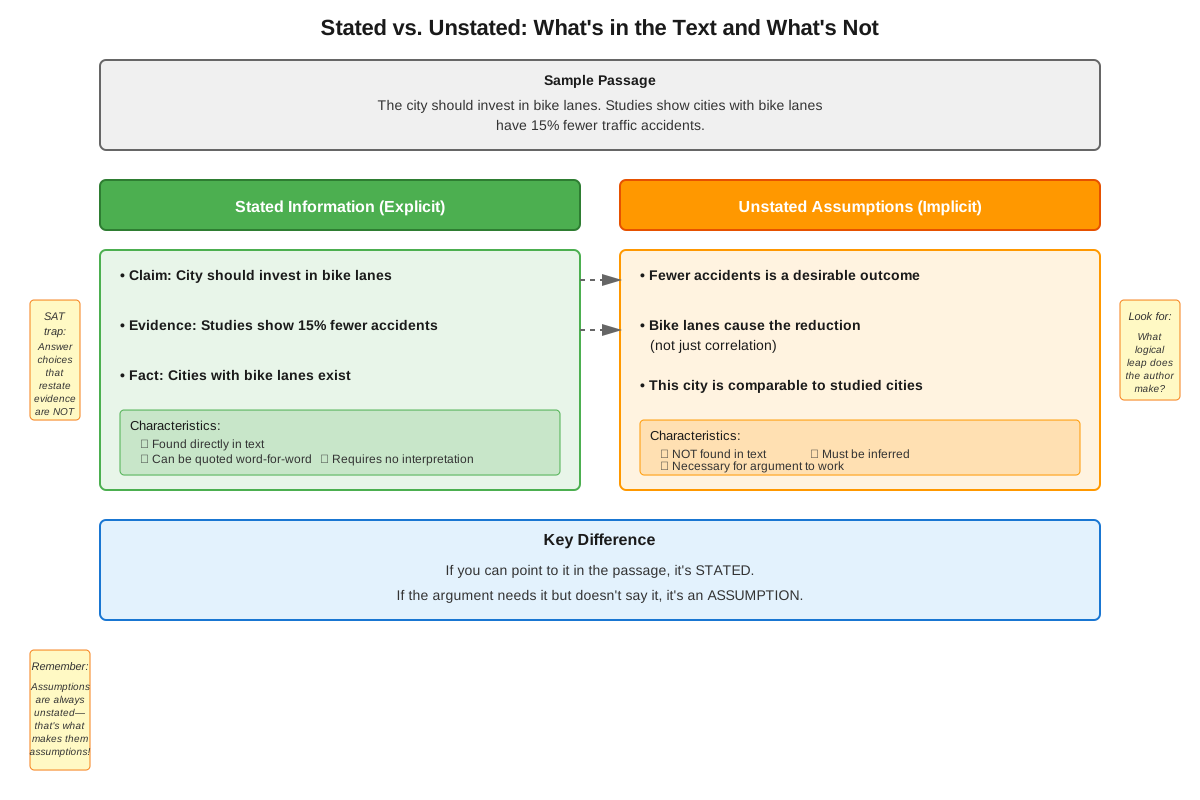
An unstated assumption is an implicit premise or belief that an argument relies upon for its logical validity but that the author does not explicitly articulate. These assumptions function as invisible bridges connecting the evidence an author presents to the conclusion they draw. Every argument contains both stated elements (explicit claims and evidence) and unstated elements (assumptions that must be true for the argument to work).
Consider this simple argument: "The library closes at 8 PM, so we should leave now if we want to return these books today." The unstated assumption here is that it is currently close enough to 8 PM that leaving now is necessary, and that the library is far enough away to require travel time. The author doesn't state these facts explicitly, but the argument depends on them being true.
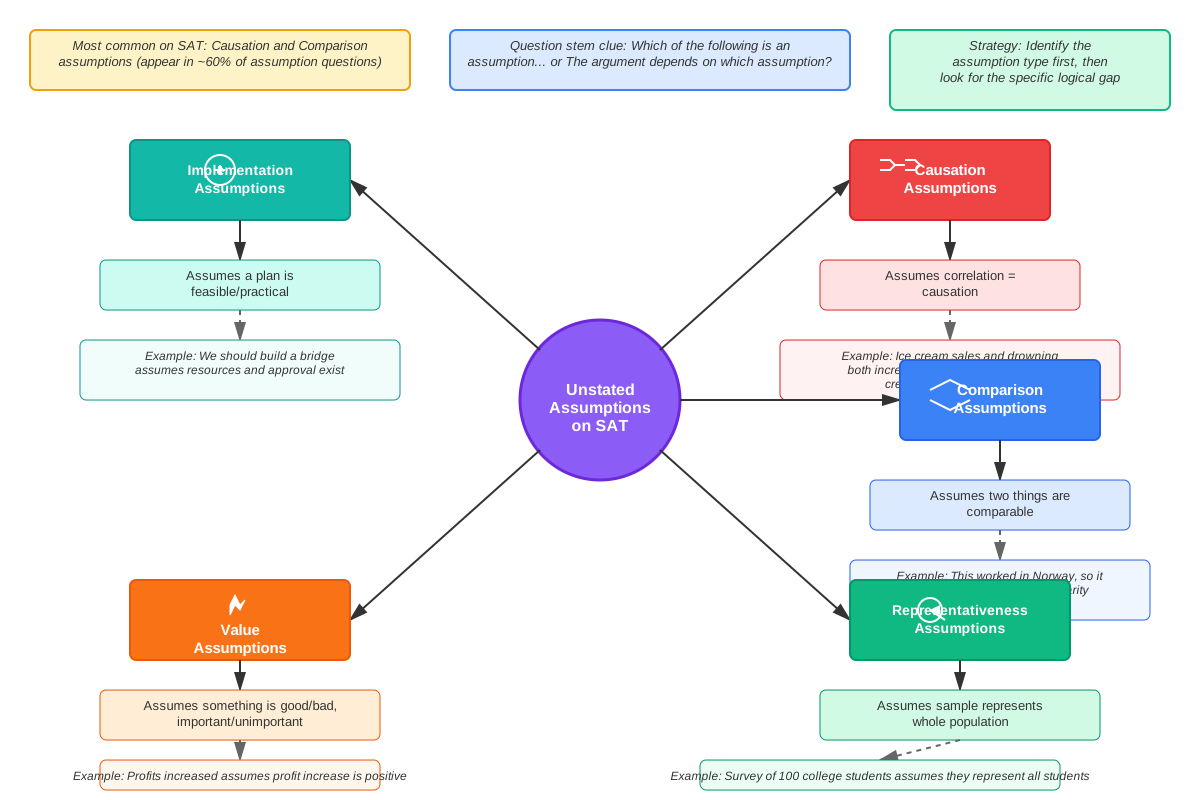
Types of Unstated Assumptions
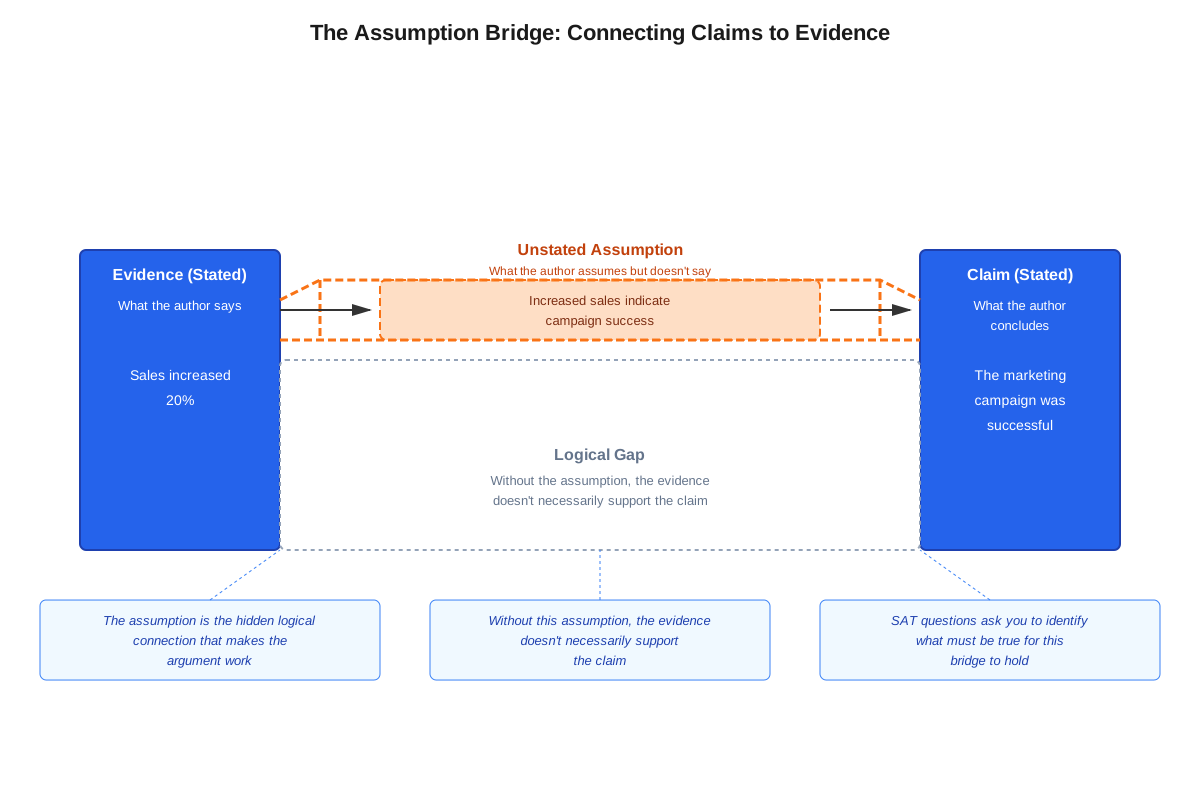
Causal Assumptions occur when an author assumes a cause-and-effect relationship without proving it. For example: "Sales increased after we launched the new advertising campaign, so the campaign was effective." This assumes no other factors could have caused the sales increase—an unstated assumption that might not hold true.
Comparative Assumptions involve unstated beliefs about similarities or differences. When an author argues, "This policy worked in Country A, so it will work in Country B," they assume the countries are similar enough in relevant ways for the comparison to be valid—an assumption that requires examination.
Definitional Assumptions relate to how terms are understood. If someone argues, "This is art, therefore it deserves public funding," they assume a definition of art that includes the work in question and that art inherently merits public support—both unstated premises.
Value Assumptions involve unstated beliefs about what is important, good, or desirable. An argument like "We should prioritize economic growth" assumes that economic growth is more valuable than other potential priorities—an assumption reflecting particular values.
The Logical Structure of Arguments with Assumptions
Arguments follow a basic structure: Evidence → [Assumption] → Conclusion. The assumption fills the logical gap between what is stated and what is concluded. Understanding this structure helps identify where assumptions hide.
| Argument Component | Explicitly Stated | Unstated (Assumption) |
|---|---|---|
| Evidence | "Students who sleep 8+ hours score higher on tests" | Sleep directly causes better performance (not just correlation) |
| Logical Bridge | Often absent | Other factors (study habits, stress) don't account for the difference |
| Conclusion | "Schools should start later to improve test scores" | Later start times would result in more sleep for students |
Identifying Assumptions: The Gap Analysis Method
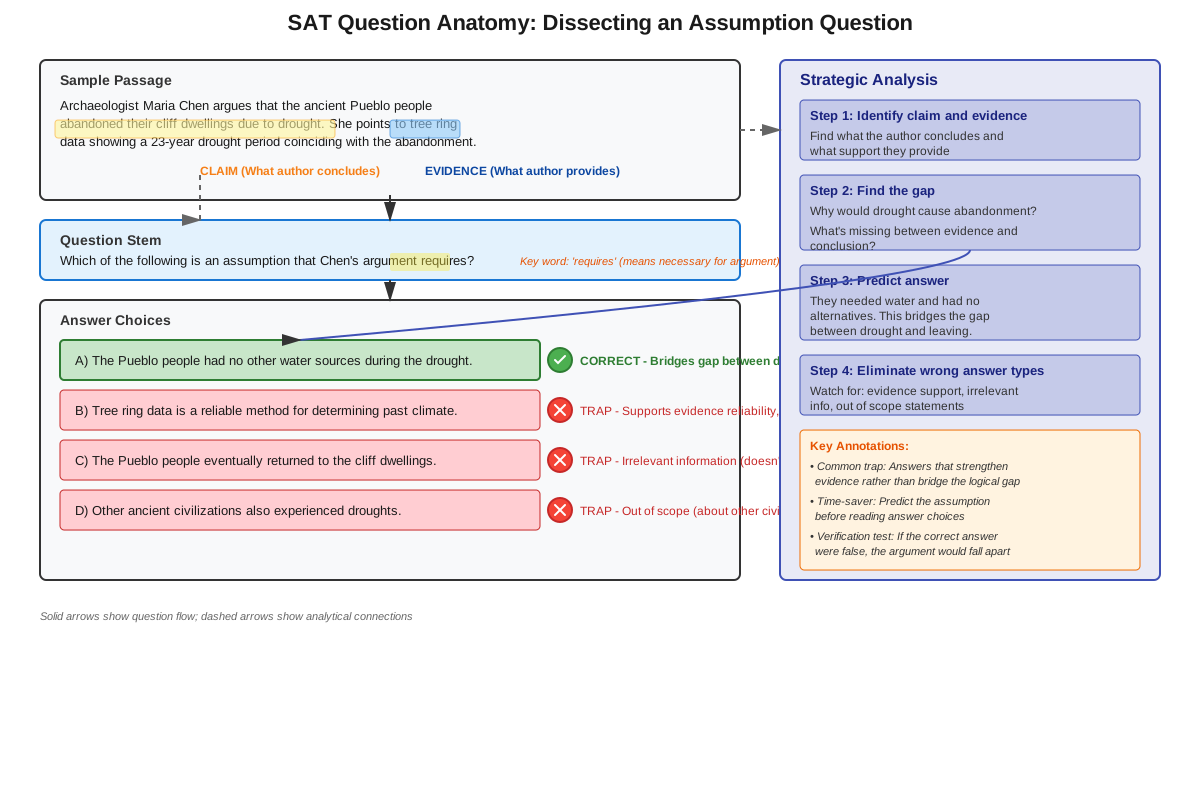
To identify unstated assumptions, students should practice gap analysis—looking for logical leaps between evidence and conclusion. Ask: "What must be true for this conclusion to follow from this evidence?" The answer reveals the assumption.
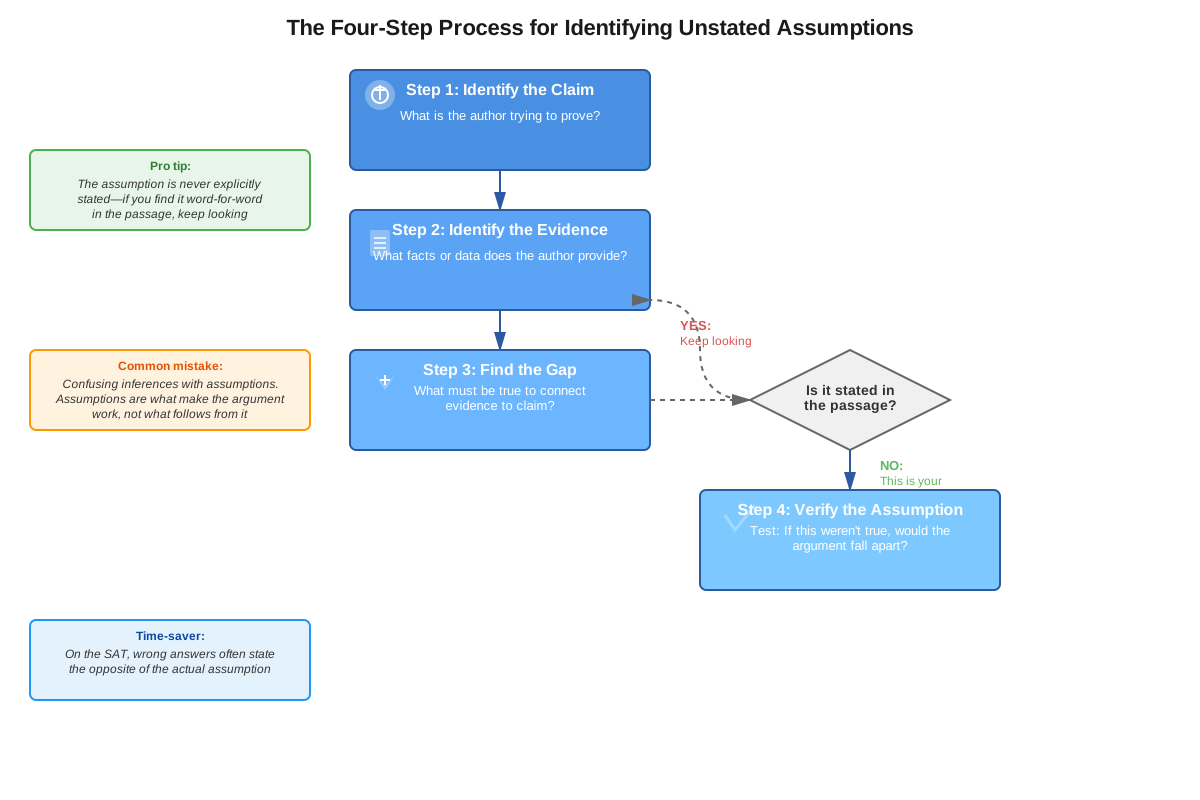
The process involves four steps:
- Identify the conclusion: What is the author trying to prove or argue?
- Identify the evidence: What facts or information does the author provide?
- Spot the gap: What logical connection is missing between evidence and conclusion?
- Articulate the assumption: What must the author believe to bridge this gap?
Necessary vs. Sufficient Assumptions
A necessary assumption is one that must be true for the argument to work—without it, the argument completely fails. A sufficient assumption is one that, if true, would guarantee the conclusion, but the argument might work without it.
For SAT purposes, questions typically focus on necessary assumptions. If negating an assumption destroys the argument, it's necessary. This "negation test" is a powerful tool: flip the assumption to its opposite and see if the argument still makes sense. If it doesn't, you've found a necessary assumption.
Context-Dependent Assumptions
Assumptions vary based on the passage's subject matter and purpose. Scientific passages often contain assumptions about experimental validity, control of variables, or generalizability of results. Historical passages may assume the reliability of sources or the representativeness of evidence. Literary analysis passages might assume particular interpretive frameworks or the author's intentions.
Concept Relationships
The skill of determining unstated assumptions builds directly upon inference-making abilities. While inferences involve drawing conclusions from stated information, identifying assumptions requires recognizing what unstated information the author's own conclusions depend upon. This represents a more sophisticated analytical move—examining the author's reasoning process rather than just comprehending content.
This topic connects intimately with argument analysis and evaluation. Once students identify unstated assumptions, they can assess argument strength by questioning whether those assumptions are reasonable, well-supported, or potentially flawed. This creates a pathway: Identify Assumptions → Evaluate Assumptions → Judge Argument Quality.
The relationship to evidence analysis is also crucial. Gaps in evidence often signal unstated assumptions. When an author jumps from limited evidence to a broad conclusion, the assumption bridges that gap. Therefore: Evidence Analysis → Gap Recognition → Assumption Identification.
Within the broader "Central Ideas and Details" unit, determining unstated assumptions helps students understand how authors construct and support central claims. The central idea often rests on foundational assumptions about the topic, audience, or context. Understanding these assumptions provides deeper insight into the passage's meaning and purpose.
Quick check — test yourself on Determining unstated assumptions so far.
Try Flashcards →High-Yield Facts
- ⭐ Unstated assumptions are logical bridges between evidence and conclusions that authors don't explicitly state
- ⭐ SAT questions about assumptions frequently use trigger phrases like "assumes that," "presupposes," "takes for granted," or "depends on"
- ⭐ The negation test helps verify assumptions: if negating the assumption destroys the argument, it's necessary
- ⭐ Assumptions often hide in causal claims—when an author says X caused Y, they assume no other factors were responsible
- ⭐ Comparative arguments assume relevant similarity between the things being compared
- Arguments can have multiple unstated assumptions, but SAT questions typically focus on one key assumption
- Assumptions are not the same as inferences—inferences are conclusions readers draw; assumptions are premises authors rely on
- Stronger arguments make fewer or more reasonable assumptions; weaker arguments depend on questionable assumptions
- Scientific passages often contain assumptions about experimental design, sample representativeness, or variable control
- Historical and social science passages frequently assume the reliability of sources or the typicality of examples
Common Misconceptions
Misconception: Assumptions are the same as inferences or conclusions. → Correction: Assumptions are unstated premises that support an argument, while inferences are conclusions readers draw from stated information. Assumptions come before the conclusion in logical structure; inferences come after reading the evidence.
Misconception: Any unstated information in a passage is an assumption. → Correction: Only unstated information that the argument logically depends upon qualifies as an assumption. Background information or tangential details that don't affect the argument's validity are not assumptions in the logical sense.
Misconception: Assumptions are always wrong or problematic. → Correction: Assumptions are a normal, necessary part of argumentation. Some assumptions are reasonable and well-founded; others are questionable. The goal is to identify them, not automatically reject them.
Misconception: The longest or most complex answer choice must be the assumption. → Correction: On the SAT, the correct answer identifying an assumption is often straightforward and directly addresses the logical gap. Complexity doesn't indicate correctness.
Misconception: Assumptions must be completely proven by the passage. → Correction: By definition, assumptions are not proven or stated in the passage—they're what the argument takes for granted. If something is explicitly stated and supported, it's not an assumption.
Misconception: Every sentence in a passage contains assumptions to identify. → Correction: Assumptions are most relevant in argumentative or explanatory passages where the author draws conclusions. Purely descriptive passages may contain fewer identifiable assumptions.
Worked Examples
Example 1: Scientific Argument
Passage: "Researchers found that plants exposed to classical music grew 20% faster than plants in silent conditions. This demonstrates that sound waves directly stimulate plant growth mechanisms."
Question: Which of the following is an assumption the researchers' conclusion depends on?
Step 1 - Identify the conclusion: Sound waves directly stimulate plant growth mechanisms.
Step 2 - Identify the evidence: Plants exposed to classical music grew 20% faster than plants in silent conditions.
Step 3 - Spot the gap: The evidence shows correlation (music present = faster growth), but the conclusion claims causation (sound waves directly cause growth). What's missing? The assumption that no other factors associated with playing music could account for the growth difference.
Step 4 - Articulate the assumption: The researchers assume that factors other than the sound waves themselves (such as vibrations from speakers, temperature changes from equipment, or increased attention from researchers) did not cause the increased growth.
Step 5 - Apply the negation test: If other factors DID cause the growth, then the conclusion that sound waves directly stimulate growth would be invalid. This confirms it's a necessary assumption.
Answer: The assumption is that no factors other than the sound waves themselves accounted for the difference in plant growth.
Example 2: Historical Argument
Passage: "Historians have long debated why the Roman Empire fell. Recent archaeological evidence shows that lead poisoning was widespread among Roman elites due to lead pipes in their water systems. Since the ruling class made critical decisions for the empire, this lead poisoning likely contributed significantly to Rome's decline."
Question: The argument assumes which of the following?
Step 1 - Identify the conclusion: Lead poisoning likely contributed significantly to Rome's decline.
Step 2 - Identify the evidence: Lead poisoning was widespread among Roman elites who made critical decisions.
Step 3 - Spot the gap: The evidence establishes that elites had lead poisoning, but the conclusion requires that this poisoning actually impaired their decision-making ability in ways that affected the empire. The logical bridge is missing.
Step 4 - Articulate the assumption: The argument assumes that lead poisoning impaired the cognitive abilities or judgment of Roman elites in ways that negatively affected their governance decisions.
Step 5 - Verify with negation: If lead poisoning did NOT impair their decision-making abilities, then it couldn't have contributed to Rome's decline through this mechanism. The argument fails without this assumption.
Answer: The assumption is that lead poisoning negatively affected the decision-making capabilities of Roman elites in ways relevant to governing the empire.
Exam Strategy
When approaching SAT questions about determining unstated assumptions, follow this systematic process:
First, identify the question type by looking for trigger words: "assumes," "presupposes," "takes for granted," "depends on the idea that," "relies on which assumption," or "based on which of the following." These phrases signal an assumption question.
Second, locate the argument structure in the passage. Find the conclusion (what the author is trying to prove) and the evidence (what facts support it). Often, the question will point you to a specific sentence or claim to analyze.
Third, identify the logical gap. Ask yourself: "What's the leap here? What connects the evidence to the conclusion?" The assumption fills this gap. Look especially for causal claims, comparisons, or generalizations—these frequently contain assumptions.
Fourth, predict the assumption before looking at answer choices. Even a rough prediction helps you recognize the correct answer and avoid distractors.
Fifth, evaluate each answer choice using the negation test. The correct assumption, when negated, should make the argument fall apart. If negating an answer choice doesn't affect the argument, it's not a necessary assumption.
Exam Tip: Wrong answer choices often include statements that are true, relevant, or even helpful to the argument, but not necessary assumptions. The correct answer must be something the argument cannot work without.
Time allocation: Spend 45-60 seconds on assumption questions. They require careful analysis but shouldn't consume excessive time. If stuck, eliminate obviously wrong answers and make an educated guess rather than spending 2+ minutes.
Process of elimination strategies:
- Eliminate answers that restate evidence already in the passage (not assumptions)
- Eliminate answers that are irrelevant to the logical connection between evidence and conclusion
- Eliminate answers that are too extreme or absolute unless the argument itself is extreme
- Eliminate answers that, when negated, still allow the argument to work
Memory Techniques
The BRIDGE Acronym for identifying assumptions:
- Between evidence and conclusion
- Required for logic to work
- Implicit, not stated
- Depends on context
- Gap in reasoning
- Examine by negation
Visualization Strategy: Picture an argument as a bridge spanning a river. The evidence is one riverbank, the conclusion is the other. The assumption is the invisible support beam holding up the bridge. Without it, the bridge (argument) collapses into the river.
The "Must Be True" Mantra: When analyzing arguments, repeatedly ask yourself: "What MUST be true for this to make sense?" This question naturally leads to assumptions.
Assumption Categories Mnemonic - CCVD:
- Causal (cause-effect relationships)
- Comparative (similarities/differences)
- Value (what matters/priorities)
- Definitional (meaning of terms)
Summary
Determining unstated assumptions is a high-yield SAT skill requiring students to identify the implicit logical premises that arguments depend upon but don't explicitly state. These assumptions function as invisible bridges connecting evidence to conclusions, and recognizing them demonstrates sophisticated analytical reading. The core process involves identifying the argument's conclusion and evidence, spotting the logical gap between them, and articulating what must be true to bridge that gap. The negation test—checking whether negating the assumption destroys the argument—helps verify necessary assumptions. On the SAT, assumption questions appear frequently in the Reading and Writing section, using trigger phrases like "assumes that" or "depends on." Success requires systematic analysis: locate the argument structure, identify the gap, predict the assumption, and use elimination strategies to select the answer that represents a necessary logical bridge. Mastering this skill not only improves SAT performance but also develops critical thinking abilities essential for college-level analysis and real-world evaluation of arguments.
Key Takeaways
- Unstated assumptions are implicit premises that arguments logically depend on but don't explicitly state
- Identify assumptions by finding the gap between evidence and conclusion, then asking "What must be true?"
- Use the negation test: if negating a statement destroys the argument, it's a necessary assumption
- SAT assumption questions use trigger words like "assumes," "presupposes," "takes for granted," and "depends on"
- Common assumption types include causal, comparative, value-based, and definitional assumptions
- Wrong answers often include true or relevant statements that aren't necessary for the argument's logic
- Systematic analysis beats intuition: identify conclusion, find evidence, spot the gap, articulate the assumption
Related Topics
Argument Evaluation and Reasoning: After identifying unstated assumptions, the next step is evaluating whether those assumptions are reasonable, well-supported, or potentially flawed. This skill builds directly on assumption identification.
Evidence and Support Analysis: Understanding how authors use evidence connects to assumption identification because gaps in evidence often signal unstated assumptions. Stronger evidence reduces the need for questionable assumptions.
Inference and Conclusion Questions: While assumptions are premises authors rely on, inferences are conclusions readers draw. These complementary skills both require reading between the lines but in opposite logical directions.
Rhetorical Analysis: Identifying assumptions helps students understand an author's rhetorical strategies, as assumptions often reveal underlying biases, values, or persuasive techniques.
Logical Fallacies: Many logical fallacies involve problematic unstated assumptions. Recognizing assumptions enables students to identify when arguments rest on faulty logical foundations.
Practice CTA
Now that you've mastered the core concepts of determining unstated assumptions, it's time to put your knowledge into action! Work through the practice questions to apply these strategies to authentic SAT-style passages. Each question you practice strengthens your ability to spot logical gaps and identify the assumptions that bridge them. Review the flashcards to reinforce key concepts and terminology. Remember: this skill improves dramatically with deliberate practice. The more arguments you analyze, the faster you'll recognize assumption patterns on test day. You've built a strong foundation—now build your confidence through practice!
Sign up free to keep reading
Create a free AnvayaPrep account to finish this SAT guide on Determining unstated assumptions — plus flashcards and practice questions.