Overview
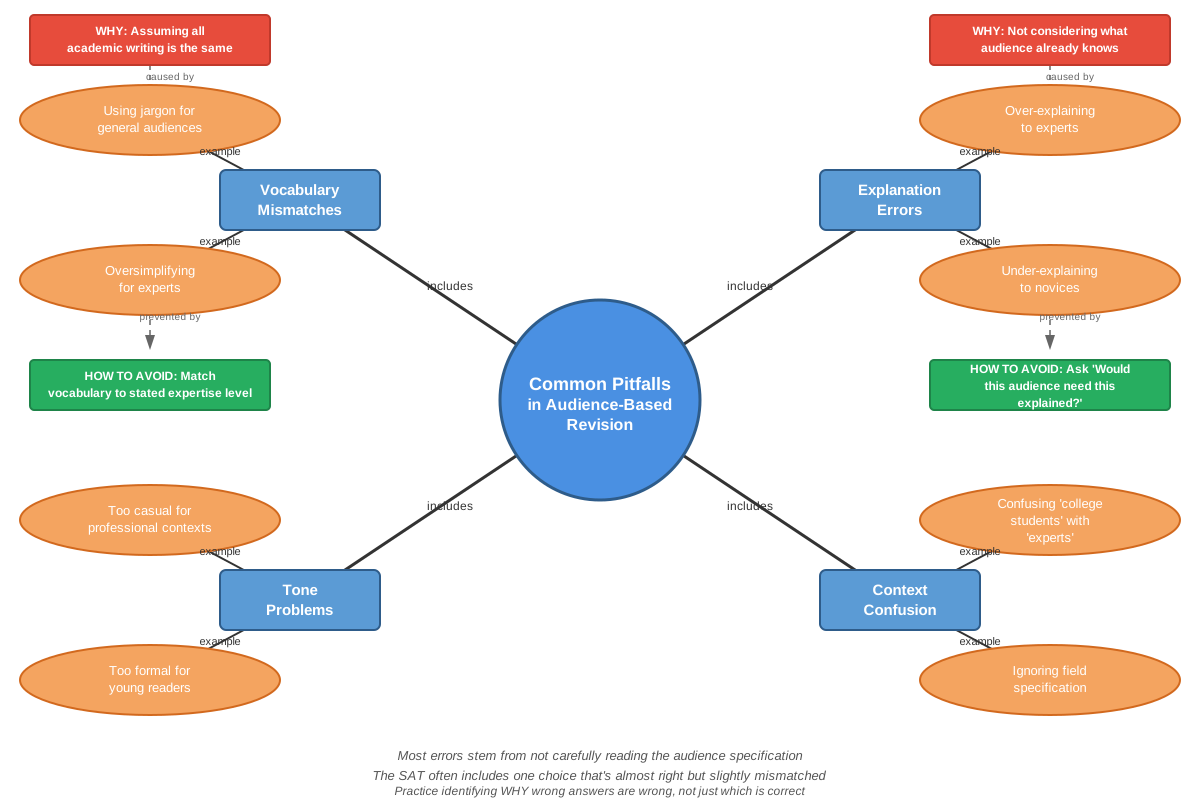
Audience-based revision is a critical skill tested in the SAT Reading and Writing (RW) section that requires students to evaluate and modify written text to match the needs, expectations, and knowledge level of a specific target audience. This concept recognizes that effective communication depends not only on what is said, but also on how it is tailored to the people who will read or hear it. On the SAT, students encounter questions that present a draft passage followed by a revision task where they must select the version that best suits a particular audience—whether that audience consists of experts in a field, general readers, young students, or professionals in a specific industry.
Understanding sat audience-based revision is essential because it tests a student's ability to think critically about language choices, tone, vocabulary complexity, level of technical detail, and explanatory depth. The SAT recognizes that strong writers don't just communicate clearly—they communicate appropriately for their intended readers. A scientific explanation written for elementary school students should differ dramatically from one written for research scientists, even if both passages discuss the same phenomenon. This skill extends beyond the exam into college writing, professional communication, and any context where adapting one's message to the audience determines success or failure.
Within the broader rw curriculum, audience-based revision connects to multiple rhetorical synthesis skills including tone analysis, word choice evaluation, and structural organization. It builds upon foundational reading comprehension skills while requiring students to move beyond simple understanding into the realm of strategic communication. Mastering this topic strengthens a student's ability to recognize rhetorical purpose, evaluate stylistic choices, and understand how context shapes meaning—all high-value skills that appear throughout the SAT Reading and Writing section.
Learning Objectives
- [ ] Identify key features of audience-based revision
- [ ] Explain how audience-based revision appears on the SAT
- [ ] Apply audience-based revision to answer SAT-style questions
- [ ] Distinguish between appropriate and inappropriate vocabulary levels for different audiences
- [ ] Evaluate the effectiveness of explanatory detail based on audience expertise
- [ ] Analyze tone and formality adjustments required for specific reader groups
- [ ] Compare multiple revision options to select the most audience-appropriate choice
Prerequisites
- Basic reading comprehension: Understanding main ideas and supporting details is necessary to evaluate how well a passage communicates to its intended audience
- Vocabulary knowledge: Recognizing the difference between technical, academic, and everyday language helps identify audience-appropriate word choices
- Understanding of tone: Distinguishing formal from informal language provides the foundation for matching tone to audience expectations
- Sentence structure awareness: Recognizing sentence complexity helps determine whether syntax matches audience reading level
Why This Topic Matters
Audience-based revision appears with high frequency on the SAT, typically manifesting in 2-4 questions per test administration. These questions carry significant weight because they assess multiple skills simultaneously: reading comprehension, rhetorical awareness, and critical thinking about communication effectiveness. The College Board emphasizes this skill because it directly predicts college readiness—successful college students must constantly adjust their writing and communication style for different professors, disciplines, and academic contexts.
In real-world applications, audience awareness determines professional success across virtually every career. Scientists must explain research to both peer reviewers and public audiences. Business professionals adapt presentations for executives, clients, and technical teams. Educators modify explanations for different grade levels. Healthcare providers communicate the same medical information differently to colleagues versus patients. The ability to recognize and implement audience-appropriate revisions is not merely an academic exercise but a fundamental communication competency.
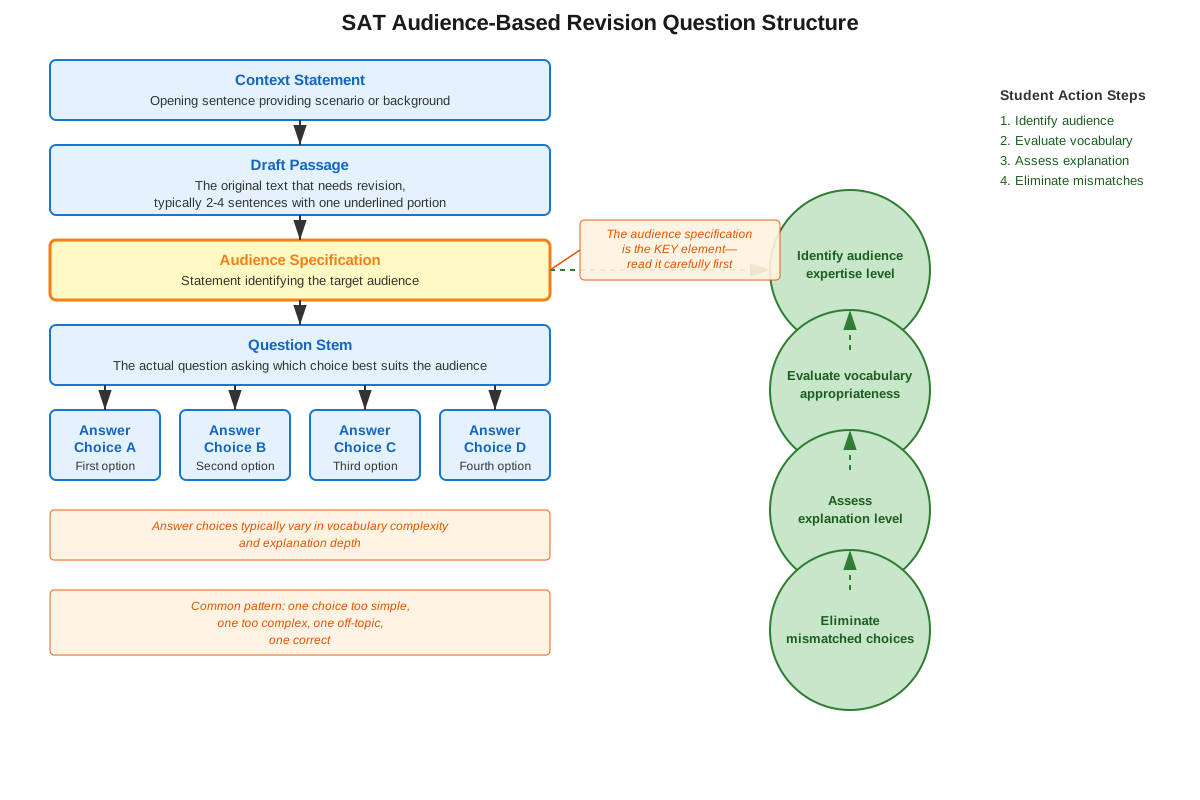
On the SAT, audience-based revision questions typically appear in the Rhetorical Synthesis portion of the Reading and Writing section. Students encounter a brief passage (usually 2-4 sentences) followed by a prompt that specifies a particular audience and asks which revision best serves that audience. Common audience types include: general public readers, subject-matter experts, young students, professionals in a specific field, or readers unfamiliar with technical concepts. The questions test whether students can identify when vocabulary is too technical or too simplistic, when explanations are too detailed or insufficient, and when tone is appropriately formal or informal for the context.
Core Concepts
Understanding Audience Characteristics
The foundation of audience-based revision lies in recognizing that different audiences possess distinct characteristics that shape how they receive information. These characteristics include prior knowledge (what the audience already knows about the topic), expertise level (whether they are novices, intermediates, or experts), expectations (what they anticipate from the text), and needs (what information will be most useful to them).
When evaluating prior knowledge, writers must consider whether their audience requires background information or can engage directly with advanced concepts. A passage about quantum mechanics written for physics professors can assume familiarity with fundamental principles, while the same topic for high school students requires establishing basic concepts first. The SAT tests this by presenting revision options that either include or omit explanatory context, asking students to determine which approach matches the specified audience.
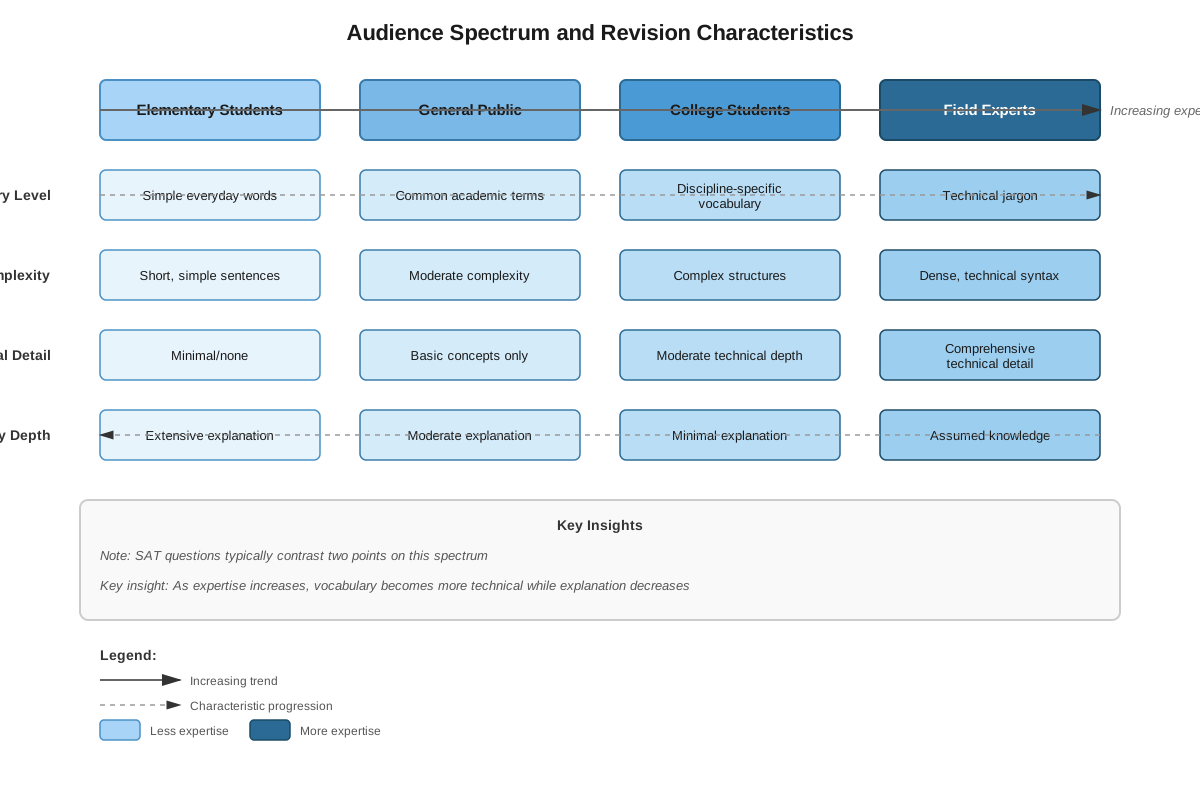
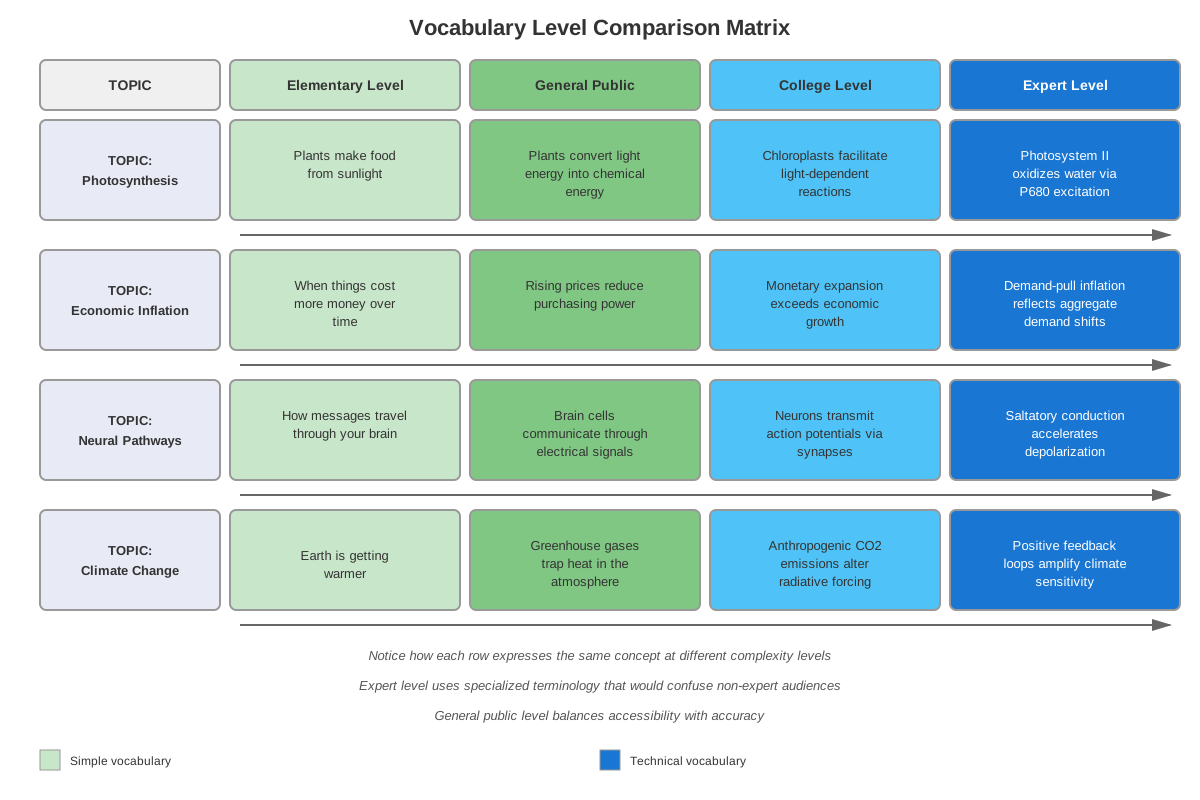
Expertise level directly influences vocabulary choices and the depth of technical detail. Expert audiences expect and appreciate precise technical terminology, while general audiences benefit from plain language and analogies. The SAT frequently presents questions where one option uses specialized jargon appropriate for experts, while another uses accessible language suitable for non-specialists.
Vocabulary and Diction Adjustment
Vocabulary selection represents one of the most visible aspects of audience-based revision. Technical terms, academic language, colloquialisms, and everyday vocabulary each serve different audiences effectively. The key principle is matching word choice to audience familiarity without oversimplifying for knowledgeable readers or overwhelming novice readers.
For expert audiences, precise technical vocabulary demonstrates credibility and allows efficient communication. Terms like "photosynthesis," "mitochondria," or "oxidation" need no explanation for biology professionals. However, these same terms might require definition or replacement with descriptive phrases for elementary students. The SAT tests this distinction by offering revision choices that range from highly technical to broadly accessible.
Diction also encompasses the level of formality. Academic and professional audiences typically expect formal language, while general public audiences often respond better to conversational tone. Consider the difference between "The experiment yielded statistically significant results" (formal, academic) and "The experiment showed clear, meaningful results" (accessible, general). Both convey similar information, but each suits different readers.
Explanatory Detail and Context
The amount of explanatory detail must scale with audience needs. Expert readers find excessive explanation tedious and condescending, while novice readers struggle without sufficient context. This balance represents a frequent testing point on the SAT.
When writing for specialists, authors can reference concepts, methods, or background information without elaboration. A passage for economists might mention "supply and demand equilibrium" without defining these terms. The same passage for general readers would need to explain what supply, demand, and equilibrium mean and why their intersection matters.
The SAT presents this through revision options that vary in explanatory depth. One choice might state a fact directly, assuming reader familiarity. Another might include a brief clarifying phrase. A third might provide an extended explanation with examples. Students must evaluate which level of detail matches the specified audience's knowledge base.
Tone and Formality Calibration
Tone encompasses the writer's attitude toward the subject and audience, expressed through word choice, sentence structure, and overall approach. Formal tone uses complete sentences, avoids contractions, employs sophisticated vocabulary, and maintains professional distance. Informal tone allows contractions, conversational language, shorter sentences, and a more personal connection with readers.
Professional and academic audiences generally expect formal tone, while younger audiences or casual contexts permit informality. However, formality exists on a spectrum rather than as a binary choice. The SAT tests students' ability to recognize appropriate tone levels by presenting options that range from highly formal to casual, asking which best serves the specified audience.
Sentence structure contributes to tone perception. Complex, multi-clause sentences signal formality and suit educated adult audiences. Shorter, simpler sentences feel more accessible and work better for younger readers or when explaining complex topics to non-experts. The SAT may present identical information in different sentence structures, requiring students to identify which structure matches audience expectations.
Assumption Management
Effective audience-based revision requires managing assumptions about what readers know, believe, or need. Writers must avoid assuming too much knowledge (leaving readers confused) or too little (insulting readers' intelligence). This balance shifts dramatically based on audience characteristics.
For expert audiences, writers can assume familiarity with field-specific concepts, standard methodologies, and current debates. For general audiences, writers must assume limited background knowledge and provide necessary context. The SAT tests this by presenting scenarios where revision options either include or exclude background information, and students must determine which approach respects the audience's likely knowledge level.
Cultural and contextual assumptions also matter. An audience of American readers might understand references to U.S. historical events without explanation, while international readers might need context. Professional audiences within a specific industry understand insider terminology, while outsiders require translation into common language.
Concept Relationships
The core concepts of audience-based revision interconnect in a hierarchical relationship where understanding audience characteristics serves as the foundation for all other decisions. Once a writer identifies the audience's knowledge level, expertise, and expectations, this understanding drives vocabulary selection, explanatory detail, tone calibration, and assumption management.
Audience Characteristics → Vocabulary Selection: Knowledge of audience expertise directly determines whether technical terms are appropriate or whether plain language is necessary. An expert audience's high prior knowledge permits specialized vocabulary, while a novice audience's limited background requires accessible word choices.
Audience Characteristics → Explanatory Detail: The audience's familiarity with the topic determines how much context and explanation the writer must provide. Expert readers need minimal explanation, while general readers require substantial background information.
Vocabulary Selection ↔ Tone: Word choice and tone influence each other bidirectionally. Formal vocabulary contributes to formal tone, while conversational language creates informal tone. Simultaneously, the desired tone level constrains vocabulary options.
Explanatory Detail ↔ Assumption Management: The amount of explanation provided reflects assumptions about audience knowledge. More explanation indicates assumptions of limited prior knowledge; less explanation assumes substantial background understanding.
Tone + Vocabulary + Detail → Overall Appropriateness: These three elements combine to create text that either matches or mismatches audience needs. The SAT tests students' ability to evaluate this combined effect and select revisions where all elements align with the specified audience.
This topic connects to prerequisite knowledge of vocabulary and tone by applying those foundational concepts to strategic communication decisions. It also relates to other rhetorical synthesis skills like purpose-driven revision and structural organization, as audience considerations influence not only word choice but also how information is sequenced and emphasized.
Quick check — test yourself on Audience-based revision so far.
Try Flashcards →High-Yield Facts
⭐ Audience-based revision questions always specify the target audience explicitly in the prompt—students must read this specification carefully before evaluating options.
⭐ Technical vocabulary is appropriate for expert audiences but should be avoided or explained for general audiences—this distinction appears in approximately 60% of audience-based revision questions.
⭐ The correct answer matches the audience's knowledge level without being condescending or confusing—options that oversimplify for experts or overwhelm novices are incorrect.
⭐ Formal tone suits academic and professional audiences; conversational tone suits general public and younger readers—tone mismatch is a common wrong answer trap.
⭐ Explanatory detail should increase as audience expertise decreases—experts need minimal context while novices require substantial background information.
- Audience-based revision questions typically present 3-4 options that vary in vocabulary level, explanatory detail, or tone.
- The SAT never requires students to have specialized subject knowledge—all necessary information to evaluate audience appropriateness appears in the passage and options.
- Contractions and colloquial expressions signal informal tone, which is inappropriate for most academic and professional audiences.
- Analogies and comparisons to familiar concepts help make complex topics accessible to general audiences.
- The phrase "readers unfamiliar with" in a prompt signals that explanatory detail and accessible vocabulary are necessary.
- When the prompt specifies "experts in [field]," the correct answer typically uses technical terminology without definition.
- Parenthetical explanations and appositives (phrases that define or clarify) often appear in revisions for general audiences.
Common Misconceptions
Misconception: Longer, more detailed explanations are always better because they provide more information.
Correction: Explanation length must match audience needs. Expert audiences find excessive detail tedious and unnecessary, while novice audiences need substantial context. The best revision provides appropriate detail for the specified audience, not maximum detail.
Misconception: Formal language is always more correct or sophisticated, so formal options are usually right.
Correction: Formality must match audience expectations and context. While academic and professional audiences expect formal tone, general public audiences often respond better to accessible, conversational language. The correct answer matches tone to audience, not to an absolute standard of formality.
Misconception: If a word is accurate and precise, it's appropriate for any audience.
Correction: Accuracy alone doesn't ensure appropriateness. Technical terms may be perfectly accurate but incomprehensible to non-expert readers. Audience-appropriate revision requires balancing precision with accessibility based on reader expertise.
Misconception: The shortest, simplest option is best for general audiences.
Correction: General audiences need accessible language but also require sufficient explanation to understand the topic. Oversimplification can omit necessary context. The correct answer for general audiences uses clear language with adequate explanatory detail, which may not be the shortest option.
Misconception: Audience-based revision is about dumbing down content for less educated readers.
Correction: Audience-based revision is about strategic communication that respects readers' current knowledge while effectively conveying information. Writing for general audiences requires skill in making complex ideas accessible without condescension or oversimplification. It's about clarity and appropriateness, not intelligence level.
Misconception: Personal pronouns and contractions are always wrong in SAT passages.
Correction: While formal academic writing typically avoids these elements, audience-based revision questions may present scenarios where informal tone is appropriate for the specified audience. Students must evaluate tone based on audience needs rather than applying rigid rules.
Worked Examples
Example 1: Scientific Concept for Different Audiences
Passage: A researcher is writing about photosynthesis. Which revision is most appropriate for an audience of elementary school students?
A) Photosynthesis is the process by which chloroplast-containing organisms convert electromagnetic radiation into chemical energy through light-dependent and light-independent reactions.
B) Photosynthesis is how plants make food using sunlight, water, and air, turning these ingredients into sugar that helps them grow.
C) Photosynthesis involves the photolysis of water molecules and the subsequent reduction of carbon dioxide through the Calvin cycle.
D) Photosynthesis represents a critical autotrophic mechanism enabling primary production in terrestrial and aquatic ecosystems.
Analysis:
The prompt specifies "elementary school students" as the audience, which signals several requirements: accessible vocabulary, minimal technical terminology, concrete rather than abstract concepts, and sufficient explanation for readers with limited background knowledge.
Option A uses highly technical language ("chloroplast-containing organisms," "electromagnetic radiation," "light-dependent and light-independent reactions") appropriate for biology students or professionals but far too complex for elementary students. This vocabulary would confuse rather than inform the target audience.
Option B uses simple, everyday language ("make food," "sunlight, water, and air," "sugar," "grow") that elementary students can understand. It provides a concrete, accessible explanation without technical jargon. The analogy to "making food" connects to students' existing knowledge. This matches the audience's knowledge level perfectly.
Option C employs advanced technical terminology ("photolysis," "reduction," "Calvin cycle") suitable for advanced biology students or researchers but incomprehensible to elementary students without extensive explanation.
Option D uses sophisticated academic vocabulary ("autotrophic mechanism," "primary production," "terrestrial and aquatic ecosystems") appropriate for college-level or professional audiences but inaccessible to young students.
Correct Answer: B
This example demonstrates how vocabulary selection must align with audience expertise. The correct answer uses concrete, familiar terms and provides a simple explanation that respects elementary students' current knowledge level while conveying the essential concept.
Example 2: Business Concept for Expert vs. General Audience
Passage: An economist is explaining market dynamics. Which revision is most appropriate for an audience of professional economists?
A) When supply goes up and demand stays the same, prices usually go down because there's more stuff available than people want to buy.
B) Market equilibrium shifts occur when supply curves translate rightward while demand remains constant, resulting in decreased equilibrium price points.
C) Supply and demand work together like a seesaw—when one side goes up, the other side goes down, and this affects how much things cost.
D) If companies make more products but customers don't want to buy more, the companies have to lower their prices to sell everything.
Analysis:
The prompt specifies "professional economists" as the audience, indicating readers with advanced expertise in economic theory, familiarity with technical terminology, and expectations for precise, formal language.
Option A uses casual, conversational language ("goes up," "stuff," "want to buy") and oversimplifies the concept. While accurate, this tone and vocabulary level would seem inappropriate and unprofessional to expert economists.
Option B employs precise economic terminology ("market equilibrium," "supply curves," "translate rightward," "equilibrium price points") that professional economists use and expect. The formal tone and technical precision match expert audience expectations. This demonstrates appropriate command of field-specific language.
Option C uses an analogy ("like a seesaw") that helps general audiences visualize the concept but would seem condescending to professional economists who understand the underlying mechanisms without such simplified comparisons.
Option D provides a clear explanation suitable for general audiences but lacks the technical precision and formal vocabulary that professional economists expect. It explains rather than assumes knowledge, which is unnecessary for experts.
Correct Answer: B
This example illustrates how expert audiences require and expect technical terminology, formal tone, and minimal explanation. The correct answer demonstrates expertise through precise vocabulary while avoiding the oversimplification or casual tone that would be appropriate for general audiences but inappropriate for professionals.
Exam Strategy
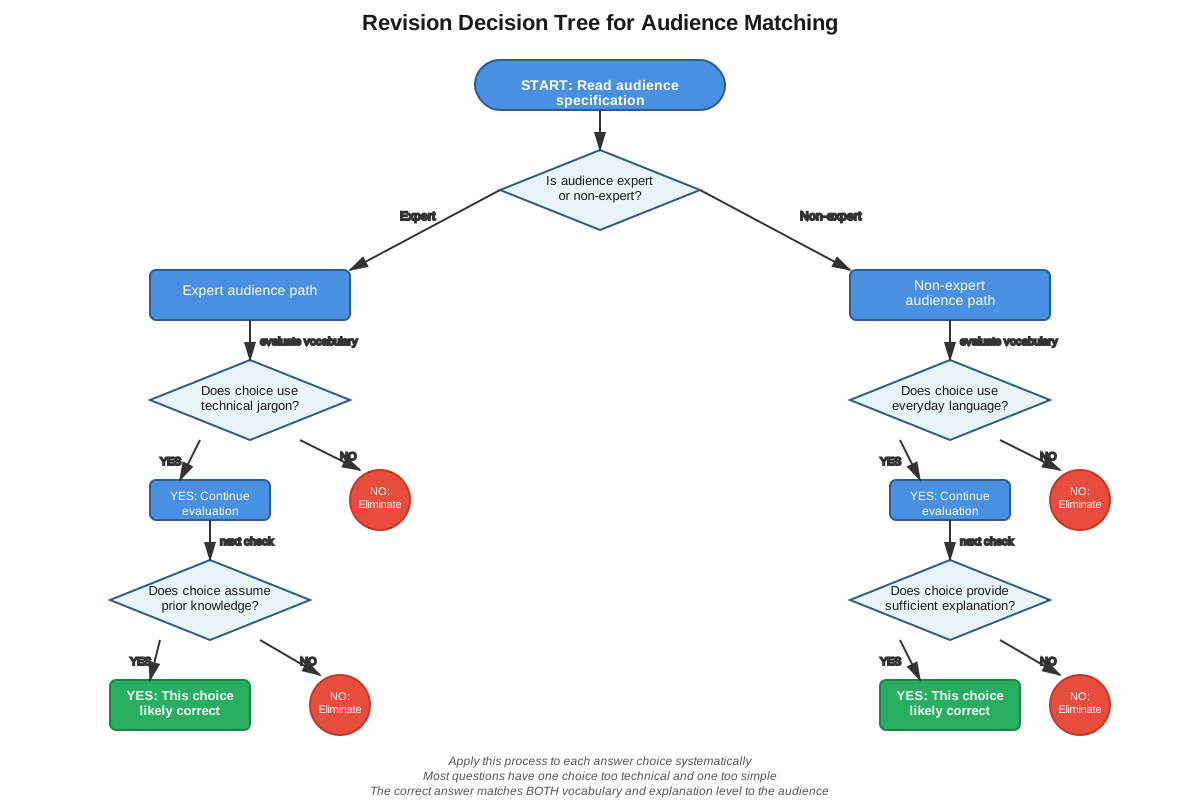
When approaching audience-based revision questions on the SAT, begin by carefully reading the prompt to identify the specified audience. Look for key phrases like "readers unfamiliar with," "experts in," "general public," "young students," or "professionals in [field]." These specifications directly determine which revision characteristics are appropriate.
Trigger words and phrases that indicate audience type include:
- "Experts," "specialists," "professionals," "researchers" → expect technical vocabulary, minimal explanation, formal tone
- "General audience," "general public," "readers unfamiliar with" → expect accessible vocabulary, substantial explanation, clear language
- "Young students," "elementary," "children" → expect simple vocabulary, concrete examples, engaging tone
- "Academic audience," "scholarly" → expect formal tone, precise terminology, sophisticated structure
After identifying the audience, evaluate each option systematically using this framework:
- Vocabulary check: Does the word choice match the audience's likely familiarity with the topic? Technical terms suit experts; plain language suits general readers.
- Explanation assessment: Does the option provide appropriate context? Experts need minimal explanation; novices need substantial background.
- Tone evaluation: Is the formality level appropriate? Academic and professional audiences expect formal tone; general and young audiences accept conversational tone.
- Assumption analysis: Does the revision assume appropriate prior knowledge? Expert audiences possess extensive background; general audiences have limited familiarity.
Process-of-elimination strategy: First, eliminate options with obvious vocabulary mismatches—technical jargon for general audiences or oversimplified language for experts. Next, eliminate options with inappropriate tone—casual language for professional contexts or overly formal language for young readers. Finally, compare remaining options for explanatory detail, selecting the one that provides appropriate context for the specified audience.
Time allocation: Audience-based revision questions typically require 45-60 seconds. Spend 10 seconds identifying the audience, 30 seconds evaluating options, and 10 seconds confirming your choice. If you're uncertain between two options, ask: "Which one respects this audience's knowledge level without being condescending or confusing?"
Exam Tip: The correct answer will feel "just right" for the specified audience—not too simple, not too complex, not too casual, not too formal. Trust your instinct about what would communicate effectively to the described readers.
Memory Techniques
EXPERT Acronym for evaluating expert audience revisions:
- Expect technical terms
- X-out excessive explanation
- Precision in vocabulary
- Elevated formal tone
- Reduced background context
- Terminology without definition
GENERAL Mnemonic for general audience revisions:
- General vocabulary (avoid jargon)
- Explanations included
- No assumptions of prior knowledge
- Everyday language
- Readable, clear sentences
- Analogies and examples
- Less formal tone acceptable
Visualization Strategy: Picture the actual audience reading the passage. For "elementary students," visualize a classroom of young children—would they understand the vocabulary? For "professional economists," imagine experts at a conference—would they find the language appropriately sophisticated? This mental image helps evaluate appropriateness intuitively.
The Goldilocks Principle: Remember that the correct answer is "just right" for the audience—not too technical (confusing) or too simple (condescending), not too formal (stiff) or too casual (unprofessional), not too detailed (tedious) or too brief (unclear). This principle helps eliminate extreme options.
Summary
Audience-based revision is a high-yield SAT skill that tests students' ability to evaluate and select text revisions that appropriately match a specified audience's knowledge level, expertise, and expectations. Success requires identifying audience characteristics from the prompt, then systematically evaluating vocabulary choices, explanatory detail, tone, and assumptions in each option. Expert audiences require technical terminology, minimal explanation, and formal tone, while general audiences need accessible language, substantial context, and clear communication. The SAT tests this skill through questions presenting multiple revision options that vary in these dimensions, requiring students to select the version that best serves the specified readers. Mastering audience-based revision involves recognizing that effective communication depends not only on accuracy but on strategic adaptation to reader needs—a fundamental skill for college success and professional communication.
Key Takeaways
- Audience-based revision questions always specify the target audience explicitly—read this specification carefully before evaluating options
- Technical vocabulary and minimal explanation suit expert audiences; accessible language and substantial context suit general audiences
- Tone formality must match audience expectations: formal for academic/professional contexts, conversational for general/young readers
- The correct answer provides appropriate detail for the audience—neither oversimplifying for experts nor overwhelming novices
- Eliminate options with obvious vocabulary mismatches first, then evaluate remaining choices for tone and explanatory detail
- Visualize the actual audience reading the text to intuitively assess appropriateness
- Audience-based revision connects to broader rhetorical synthesis skills and predicts college readiness in communication
Related Topics
Purpose-driven revision: While audience-based revision focuses on who will read the text, purpose-driven revision emphasizes what the text aims to accomplish (inform, persuade, entertain). Mastering audience awareness provides the foundation for understanding how purpose and audience interact to shape effective communication.
Tone and style analysis: This topic deepens understanding of how word choice, sentence structure, and rhetorical devices create tone. Audience-based revision applies tone analysis skills to strategic communication decisions.
Vocabulary in context: Understanding how word choice affects meaning and appropriateness in specific contexts directly supports audience-based revision skills, as both require evaluating whether vocabulary suits the situation.
Rhetorical synthesis: Audience-based revision is one component of the broader rhetorical synthesis skill set, which includes integrating information from multiple sources, organizing ideas effectively, and crafting coherent arguments—all while considering audience needs.
Practice CTA
Now that you've mastered the core concepts of audience-based revision, it's time to apply this knowledge to authentic SAT-style questions. The practice questions and flashcards will reinforce your ability to quickly identify audience characteristics, evaluate revision options, and select the most appropriate choice. Remember: consistent practice with immediate feedback is the most effective way to build the pattern recognition and strategic thinking that lead to confident, accurate performance on test day. You've built a strong foundation—now strengthen it through deliberate practice!
Sign up free to keep reading
Create a free AnvayaPrep account to finish this SAT guide on Audience-based revision — plus flashcards and practice questions.