Overview
Introducing a topic is a critical rhetorical skill tested in the SAT Reading and Writing section, specifically within the Rhetorical Synthesis domain. This skill assesses a student's ability to identify and select the most effective opening sentence or introductory statement for a passage, paragraph, or argument. The SAT evaluates whether students can recognize how writers establish context, engage readers, and set up the discussion that follows. Questions testing this skill require students to analyze multiple sentence options and determine which one best prepares the audience for the information that comes next.
On the SAT, introducing a topic questions appear regularly in the RW (Reading and Writing) section and carry significant weight in determining overall scores. These questions test more than simple comprehension—they assess rhetorical awareness, logical flow, and the ability to recognize effective communication strategies. Students must understand how introductory sentences function to orient readers, establish relevance, provide necessary background information, and create smooth transitions into more detailed content. The ability to identify effective topic introductions demonstrates sophisticated reading comprehension and an understanding of how skilled writers structure their arguments.
Mastering this topic connects directly to broader Reading and Writing concepts including main idea identification, paragraph structure, coherence and cohesion, and rhetorical purpose. Students who excel at recognizing effective topic introductions also develop stronger skills in analyzing argument structure, understanding authorial intent, and evaluating the logical progression of ideas. This foundational skill supports success across multiple question types in the SAT Reading and Writing section, making it a high-priority area for focused study and practice.
Learning Objectives
- [ ] Identify key features of introducing a topic
- [ ] Explain how introducing a topic appears on the SAT
- [ ] Apply introducing a topic to answer SAT-style questions
- [ ] Evaluate multiple introductory sentences to determine which best establishes context for a passage
- [ ] Analyze the relationship between an introductory sentence and the content that follows
- [ ] Distinguish between effective and ineffective topic introductions based on relevance, specificity, and logical flow
Prerequisites
- Basic paragraph structure: Understanding topic sentences, supporting details, and concluding sentences is essential because introducing a topic questions test how well an opening sentence sets up the paragraph's content
- Main idea identification: The ability to determine a passage's central point helps students recognize which introductory sentence best aligns with the overall message
- Context clues and inference: Students must use information from the passage to infer what type of introduction would be most appropriate and effective
- Logical transitions: Familiarity with how ideas connect helps students evaluate whether an introductory sentence creates smooth flow into subsequent content
Why This Topic Matters
In real-world communication, effective topic introductions are fundamental to clear writing across all professional and academic contexts. Whether composing research papers, business proposals, news articles, or persuasive essays, writers must engage readers immediately and establish a clear framework for the discussion ahead. The ability to craft and recognize strong introductions distinguishes competent writers from exceptional ones and directly impacts how audiences receive and understand information.
On the SAT, sat introducing a topic questions appear with high frequency, typically comprising 2-4 questions per test administration. These questions fall within the Rhetorical Synthesis category and account for approximately 8-13% of the total Reading and Writing score. The College Board consistently includes these questions because they assess critical thinking skills that predict college readiness—specifically, the ability to evaluate rhetorical effectiveness and understand how writers structure arguments.
These questions commonly appear in passages covering diverse subjects including science, history, literature, and social studies. Students encounter them in various formats: sometimes they must choose an introductory sentence for an entire passage, other times for a single paragraph within a longer text. The passages may discuss research findings, historical events, biographical information, or argumentative positions. Regardless of content, the underlying skill remains constant: identifying which sentence most effectively prepares readers for the information that follows while maintaining logical coherence and appropriate scope.
Core Concepts
What Makes an Effective Topic Introduction
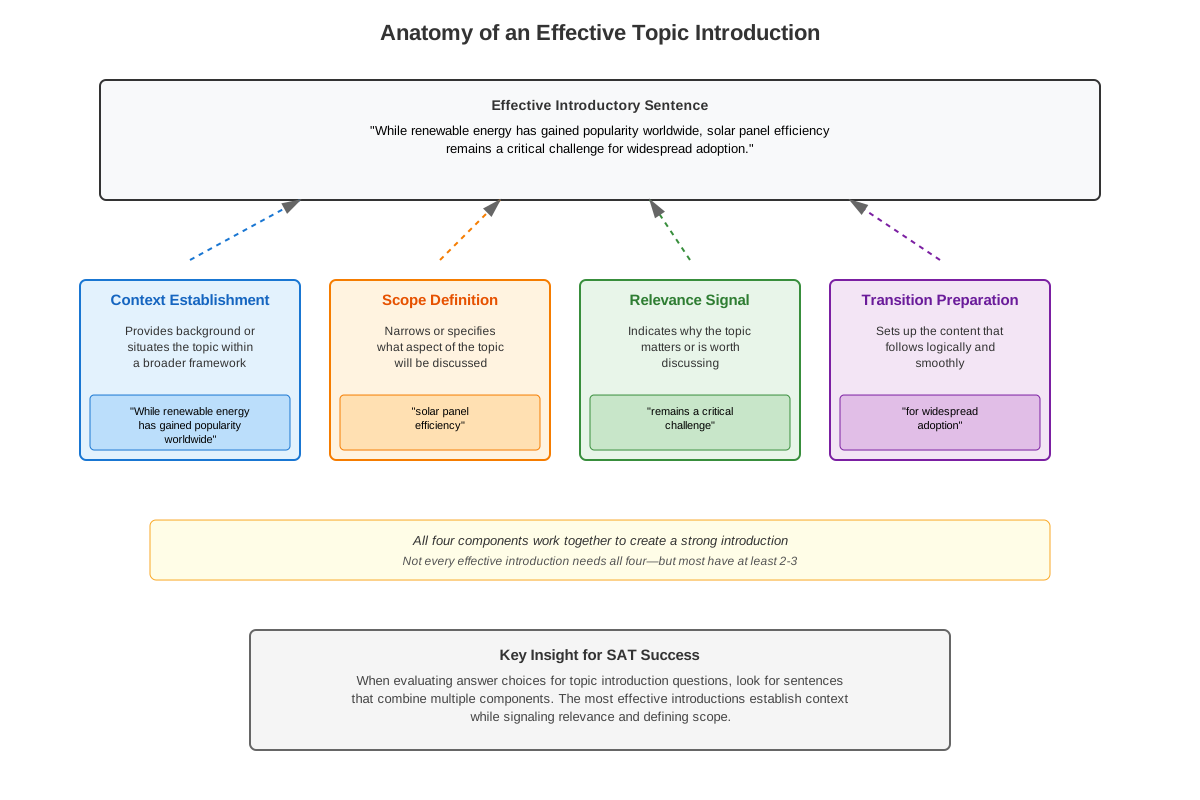
An effective topic introduction serves multiple simultaneous functions. First, it establishes context by providing readers with essential background information they need to understand the discussion. This context might include defining key terms, identifying the subject matter, or explaining why the topic matters. Second, it engages reader interest by presenting the topic in a compelling way that motivates continued reading. Third, it sets appropriate scope by indicating the breadth and depth of coverage readers should expect. Finally, it creates logical flow by connecting smoothly to the sentences that follow.
The most effective introductions balance specificity with accessibility. They provide enough detail to orient readers without overwhelming them with information better suited for body paragraphs. They avoid being so broad that they could apply to dozens of different topics, yet they don't dive so deeply into specifics that readers lack necessary context. This balance represents one of the key challenges students face when evaluating introduction options on the SAT.
The Relationship Between Introduction and Content
Understanding the relationship between an introductory sentence and subsequent content is crucial for SAT success. An effective introduction must accurately forecast what follows without contradicting or misrepresenting the passage's actual focus. Students should analyze the main points, examples, and evidence presented in the passage, then work backward to determine which introduction best prepares readers for that specific content.
Consider this principle: if an introduction mentions "three major factors," the passage should discuss exactly three factors. If an introduction emphasizes controversy or debate, the passage should present multiple perspectives. If an introduction highlights a specific time period, location, or individual, that element should remain central throughout the passage. This alignment between introduction and content represents a primary evaluation criterion on the SAT.
Types of Effective Introductions
Different passages require different introduction strategies. Contextual introductions provide background information that readers need before engaging with the main discussion. These work well for technical or specialized topics where readers may lack familiarity. Question-based introductions pose a problem or inquiry that the passage will address, creating natural reader engagement. Narrative introductions begin with a specific example or anecdote that illustrates the broader topic. Definitional introductions clarify key terms or concepts central to the discussion. Comparative introductions establish relationships between the current topic and something readers already understand.
On the SAT, students must recognize which introduction type best matches the passage's purpose and structure. A scientific research passage might benefit from a contextual introduction explaining the research question, while a biographical passage might work better with a narrative introduction highlighting a significant moment in the subject's life.
Common Features of SAT Introduction Questions
SAT introduction questions follow predictable patterns that students can learn to recognize. The question stem typically asks which choice "most effectively introduces the topic" or "best establishes the main idea of the passage." Four answer choices present different possible introductory sentences, each with distinct characteristics that make it more or less effective.
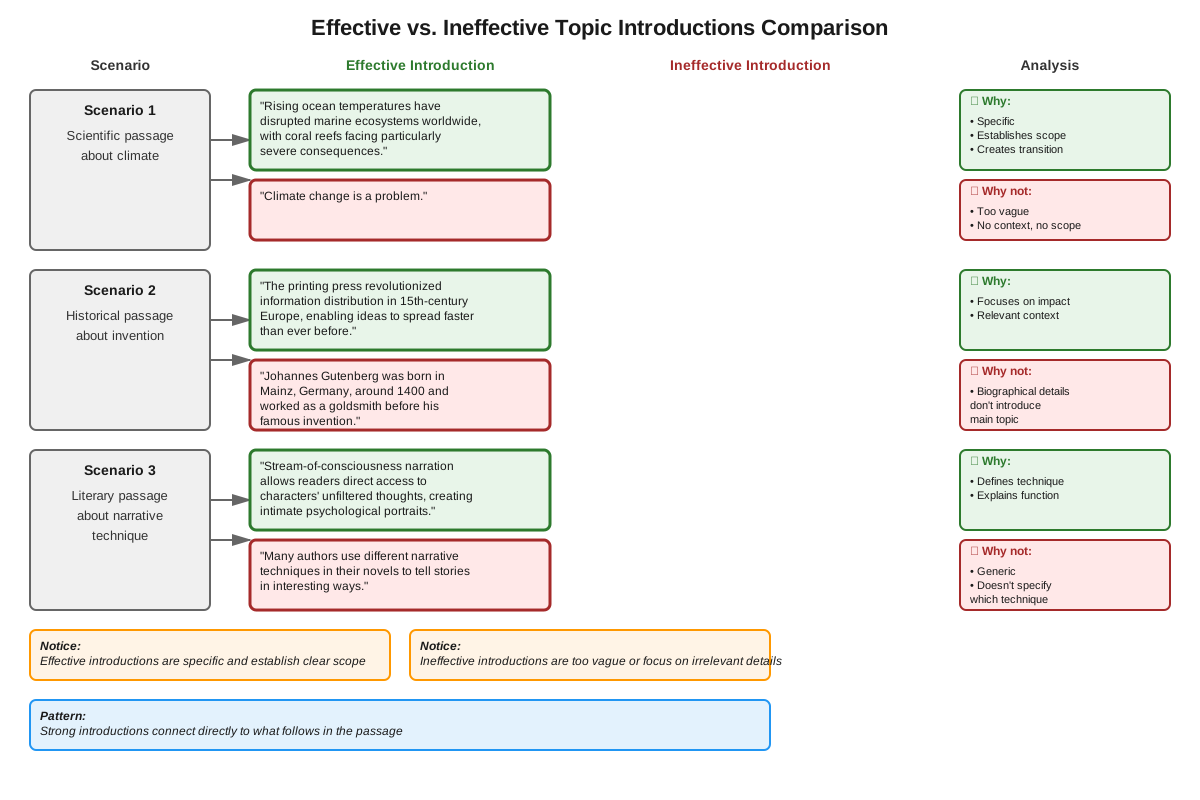
Incorrect answer choices often share common flaws: they may be too broad (so general they could introduce almost any topic), too narrow (focusing on a minor detail rather than the main topic), off-topic (introducing information not discussed in the passage), or contradictory (suggesting a focus different from the passage's actual content). Recognizing these patterns helps students eliminate wrong answers efficiently.
Correct answer choices demonstrate specific qualities: appropriate scope matching the passage's breadth, accurate representation of the passage's main focus, logical connection to the opening sentences of the passage, and establishment of necessary context without excessive detail. The correct answer feels like a natural gateway into the passage, preparing readers for exactly what they're about to encounter.
Analyzing Scope and Specificity
Scope refers to the breadth of coverage an introduction suggests. An introduction with appropriate scope accurately reflects whether the passage will discuss a broad topic generally or a narrow topic in depth. Students must evaluate whether each answer choice promises too much coverage (suggesting a comprehensive discussion when the passage actually focuses narrowly) or too little (suggesting a narrow focus when the passage actually covers multiple aspects).
Specificity relates to the level of detail provided in the introduction. Effective introductions include enough specific information to orient readers but reserve detailed evidence and examples for body paragraphs. On the SAT, answer choices that are too vague fail to give readers adequate preparation, while choices that are too specific often include information that appears later in the passage rather than at the beginning.
| Feature | Too Broad | Appropriate | Too Narrow |
|---|---|---|---|
| Scope | Could apply to many topics | Matches passage focus exactly | Focuses on minor detail |
| Specificity | Vague, general statements | Balanced detail level | Excessive specific information |
| Reader preparation | Insufficient context | Adequate orientation | Overwhelming or premature detail |
| Example | "Many things exist in nature" | "Coral reefs support diverse ecosystems" | "The parrotfish Scarus guacamaia measures 1.2 meters" |
Concept Relationships
The concepts within introducing a topic form an interconnected system where each element supports and reinforces the others. Understanding what makes an effective topic introduction → enables students to analyze the relationship between introduction and content → which helps them recognize different types of effective introductions → leading to the ability to evaluate scope and specificity → ultimately allowing them to identify common features of SAT introduction questions and select correct answers.
This topic connects directly to prerequisite knowledge of paragraph structure, as introductions function as specialized topic sentences that establish the framework for everything that follows. The skill of identifying main ideas feeds into evaluating introductions because students must recognize whether an introduction accurately represents the passage's central focus. Context clues and inference skills enable students to work backward from passage content to determine what introduction would be most appropriate.
Introducing a topic also relates to other Rhetorical Synthesis skills tested on the SAT, including transitions between ideas, concluding statements, and overall passage organization. Students who master topic introductions develop stronger abilities in these related areas because they all require understanding how individual sentences function within larger rhetorical structures. This skill also supports success with Command of Evidence questions, as both require analyzing how different parts of a text work together to communicate meaning effectively.
Quick check — test yourself on Introducing a topic so far.
Try Flashcards →High-Yield Facts
- ⭐ The correct introduction must accurately reflect the passage's actual content and scope, not what seems generally interesting about the topic
- ⭐ Effective introductions establish context without including specific evidence or examples that belong in body paragraphs
- ⭐ Answer choices that are too broad could introduce dozens of different passages and therefore lack the specificity needed for effective introductions
- ⭐ The introduction should connect logically to the first few sentences of the passage, creating smooth flow rather than abrupt transitions
- ⭐ If an introduction mentions specific elements (like "three factors" or "two competing theories"), those exact elements must appear in the passage
- Answer choices that introduce topics not discussed in the passage are always incorrect, regardless of how well-written they seem
- The most effective introduction balances engaging readers with providing necessary orientation and context
- Introductions that focus on minor details rather than main ideas fail to prepare readers adequately for the passage
- The correct answer often includes key terms or concepts that appear throughout the passage, not just in one section
- Effective introductions match the passage's tone and level of formality, whether academic, journalistic, or conversational
- Answer choices that contradict information in the passage are always incorrect, even if the contradiction is subtle
- The introduction should establish why the topic matters or why readers should care, either explicitly or implicitly
- Overly technical or jargon-heavy introductions are usually incorrect unless the entire passage maintains that specialized vocabulary
- The correct introduction typically appears more specific than the broadest answer choice but less detailed than the narrowest choice
Common Misconceptions
Misconception: The most interesting or engaging answer choice is always correct → Correction: While engagement matters, the correct introduction must first and foremost accurately represent the passage's content and scope. An exciting introduction that misrepresents the passage is always wrong.
Misconception: Longer, more detailed introductions are more effective than shorter ones → Correction: Effective introductions provide necessary context without excessive detail. The best introduction includes just enough information to orient readers, reserving specific evidence and examples for body paragraphs.
Misconception: The introduction should mention every topic discussed in the passage → Correction: Effective introductions establish the main focus without cataloging every subtopic. Trying to mention everything often results in a cluttered, unfocused introduction that fails to establish clear direction.
Misconception: If an answer choice contains accurate information from the passage, it must be correct → Correction: An answer choice can contain true information but still be incorrect if that information appears later in the passage rather than serving as an effective introduction, or if it focuses on a minor detail rather than the main topic.
Misconception: The introduction should always define technical terms before using them → Correction: Whether to define terms depends on the passage's audience and purpose. Some passages assume reader familiarity with technical vocabulary, while others provide definitions. The introduction should match the passage's approach.
Misconception: A good introduction must explicitly state "This passage will discuss..." → Correction: Effective introductions can establish focus implicitly through content and structure rather than through explicit meta-commentary about the passage itself. Natural, engaging introductions often work better than formulaic announcements.
Worked Examples
Example 1: Scientific Research Passage
Passage: [Following sentences discuss how researchers studied butterfly migration patterns using GPS tracking, discovered that monarchs use magnetic fields for navigation, and identified specific brain structures responsible for this ability]
Question: Which choice most effectively introduces the topic of the passage?
A) Butterflies are insects that undergo complete metamorphosis and play important roles in pollination.
B) Scientists have long wondered how monarch butterflies navigate thousands of miles during their annual migration.
C) Many animal species, including birds, sea turtles, and insects, use Earth's magnetic field for navigation.
D) The monarch butterfly population has declined significantly due to habitat loss and climate change.
Analysis:
Choice A is too broad and off-topic. While factually accurate, this introduction could apply to any passage about butterflies. It doesn't establish the specific focus on migration and navigation that the passage actually addresses. The information about metamorphosis and pollination doesn't appear in the passage at all.
Choice B is correct. This introduction establishes the specific topic (monarch butterfly navigation during migration) and frames it as a scientific question, which aligns perfectly with the passage's discussion of research findings about navigation mechanisms. It provides appropriate context without diving into specific findings that belong in body paragraphs.
Choice C is too broad. While the passage does discuss magnetic field navigation, this introduction suggests a comparative discussion of multiple species. The passage actually focuses specifically on monarch butterflies, making this introduction misleading about scope.
Choice D is off-topic. Although this statement about monarch butterflies is true and important, the passage doesn't discuss population decline, habitat loss, or climate change. This introduction would prepare readers for an entirely different passage.
Key Takeaway: The correct introduction (B) matches the passage's specific focus, establishes appropriate scope, and frames the topic in a way that leads naturally into the research discussion that follows.
Example 2: Historical Biography Passage
Passage: [Following sentences describe how Ada Lovelace collaborated with Charles Babbage on the Analytical Engine, wrote the first computer algorithm, and envisioned computers' potential beyond pure calculation]
Question: Which choice most effectively introduces the topic of the passage?
A) Ada Lovelace, born in 1815, was the daughter of the famous poet Lord Byron and mathematician Annabella Milbanke.
B) The history of computing extends back much further than most people realize, with important developments occurring in the 19th century.
C) Ada Lovelace's work on Charles Babbage's Analytical Engine established her as a pioneer in computer programming.
D) Charles Babbage designed the Analytical Engine in the 1830s as a general-purpose mechanical computer.
Analysis:
Choice A is too narrow and focuses on the wrong details. While this biographical information is accurate, it emphasizes Lovelace's parentage rather than her computational work. The passage focuses on her contributions to computing, not her family background. This introduction would better suit a general biography than a passage specifically about her computing achievements.
Choice B is too broad. This introduction suggests a comprehensive overview of 19th-century computing history, potentially covering multiple figures and developments. The passage actually focuses specifically on Lovelace's individual contributions, making this scope too wide.
Choice C is correct. This introduction identifies the specific person (Ada Lovelace), mentions the relevant context (work on the Analytical Engine with Babbage), and establishes her significance (pioneer in computer programming). It accurately reflects the passage's focus and scope while providing necessary orientation for readers.
Choice D is off-topic regarding focus. While Babbage and the Analytical Engine appear in the passage, they serve as context for discussing Lovelace's contributions. This introduction centers Babbage rather than Lovelace, misrepresenting the passage's actual focus.
Key Takeaway: The correct introduction (C) identifies the passage's central figure, establishes relevant context, and accurately represents the specific focus on Lovelace's computing contributions rather than broader topics or supporting details.
Exam Strategy
When approaching sat introducing a topic questions, follow a systematic process to maximize accuracy and efficiency. First, read the passage carefully before looking at answer choices. Identify the main topic, key points, and overall scope. Ask yourself: "What is this passage really about? What specific aspects does it cover?" This understanding provides the foundation for evaluating introductions.
Next, predict what an effective introduction might include before reading the choices. Consider what context readers would need, what scope would be appropriate, and what would create logical flow into the passage's opening sentences. This prediction helps you recognize the correct answer when you see it rather than being swayed by attractive but incorrect options.
Trigger words and phrases to watch for include:
- Scope indicators: "many," "all," "some," "specifically," "particularly," "primarily"
- Framing language: "researchers have discovered," "debate continues about," "recent studies show"
- Context-establishing phrases: "throughout history," "in recent years," "since the 1990s"
- Focus indicators: "focuses on," "examines," "explores," "investigates"
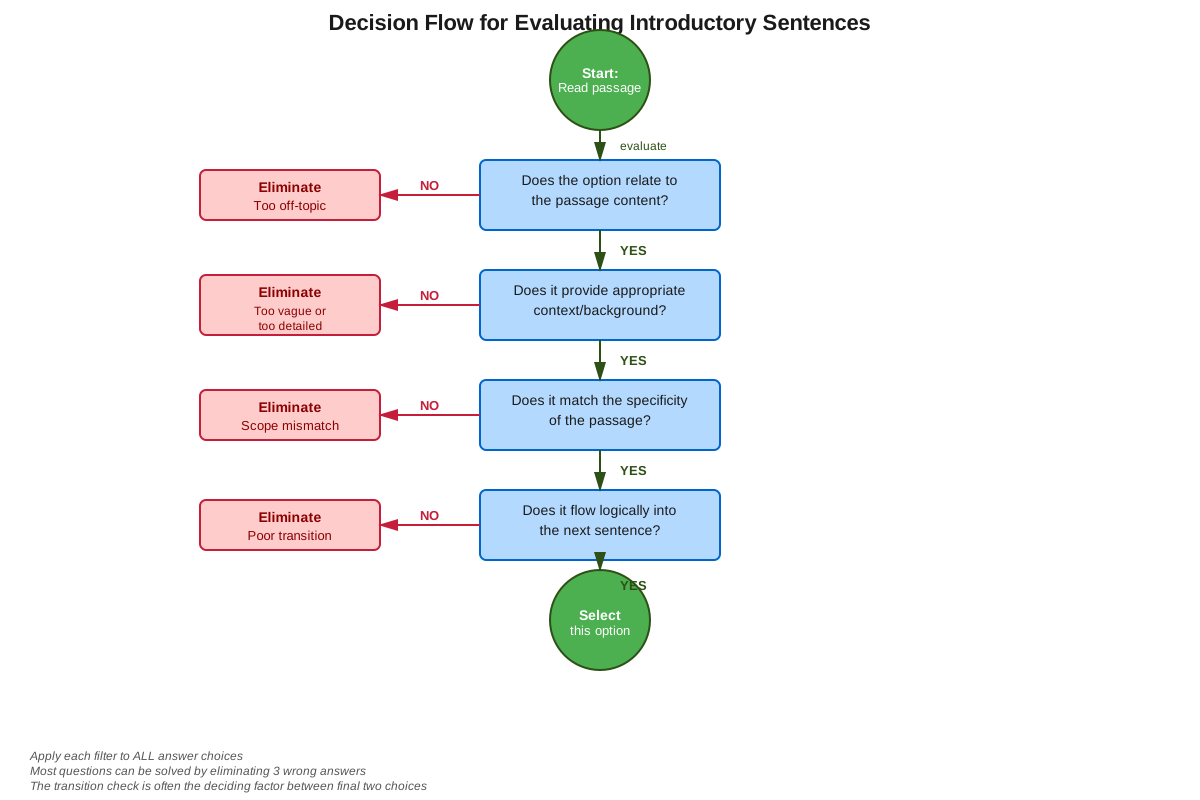
When evaluating answer choices, use process of elimination strategically:
- Eliminate choices that are clearly too broad (could introduce many different passages)
- Eliminate choices that focus on topics not discussed in the passage
- Eliminate choices that emphasize minor details rather than main ideas
- Compare remaining choices to determine which best matches the passage's actual scope and focus
Time allocation: Spend approximately 45-60 seconds on introduction questions. These questions require careful reading of both the passage and answer choices, but they shouldn't consume excessive time. If you're uncertain between two choices, select the one that more specifically matches the passage's content and move forward. You can mark the question for review if time permits.
Pay special attention to the first two or three sentences of the passage after the introduction. The correct introduction should flow naturally into these sentences, creating logical progression rather than abrupt shifts in topic or focus. If an answer choice creates awkward transitions or seems disconnected from what follows, it's likely incorrect.
Memory Techniques
Use the acronym SCARF to remember key features of effective introductions:
- Scope: Does it match the passage's breadth of coverage?
- Context: Does it provide necessary background without excessive detail?
- Accuracy: Does it correctly represent the passage's actual content?
- Relevance: Does it focus on the main topic rather than minor details?
- Flow: Does it connect smoothly to the sentences that follow?
Visualize an introduction as a doorway into a building. The doorway should be the right size (not so narrow you can't enter, not so wide it could lead anywhere), clearly marked with the building's purpose (not misleading about what's inside), and positioned to lead naturally into the entrance hall (creating smooth flow). This metaphor helps you remember that introductions must be appropriately sized, accurately representative, and logically connected to what follows.
Remember the Goldilocks Principle: The correct introduction is not too broad, not too narrow, but just right. When evaluating scope, think of the three bears' porridge—you're looking for the option that's perfectly balanced for the specific passage.
Create a mental checklist using "The Three Matches":
- Does it match the passage's topic?
- Does it match the passage's scope?
- Does it match the passage's tone?
If an answer choice fails any of these three matches, eliminate it.
Summary
Introducing a topic is a high-yield SAT skill that tests students' ability to identify effective opening sentences that establish context, engage readers, and prepare them for the content that follows. Success requires understanding the relationship between introductions and passage content, recognizing appropriate scope and specificity, and distinguishing between effective and ineffective topic introductions. The correct answer must accurately represent the passage's actual focus, provide necessary context without excessive detail, and create logical flow into subsequent sentences. Students should systematically evaluate answer choices by eliminating options that are too broad, too narrow, off-topic, or contradictory to the passage. Mastering this skill requires practice analyzing how introductions function rhetorically and developing the ability to work backward from passage content to determine what introduction would be most appropriate. This foundational skill supports broader success in Reading and Writing by strengthening understanding of paragraph structure, main idea identification, and rhetorical effectiveness.
Key Takeaways
- Effective introductions balance specificity with accessibility, providing enough detail to orient readers without overwhelming them with information better suited for body paragraphs
- The correct introduction must accurately reflect the passage's actual content and scope, not what seems generally interesting about the topic
- Answer choices that are too broad could introduce dozens of different passages and lack the necessary specificity for effective introductions
- The introduction should connect logically to the first few sentences of the passage, creating smooth flow rather than abrupt transitions
- If an introduction mentions specific elements (like "three factors" or "two competing theories"), those exact elements must appear in the passage
- Use the SCARF acronym (Scope, Context, Accuracy, Relevance, Flow) to systematically evaluate introduction effectiveness
- Process of elimination is highly effective for these questions: first eliminate clearly wrong answers, then compare remaining choices for best match
Related Topics
Transitions and Logical Flow: After mastering topic introductions, students should study how writers create smooth transitions between ideas within and between paragraphs. This builds on introduction skills by extending the focus from opening sentences to connections throughout entire passages.
Concluding Statements: Understanding effective conclusions complements introduction skills, as both involve framing content appropriately. Students who recognize good introductions can more easily identify effective conclusions that synthesize main points without introducing new information.
Main Idea and Purpose Questions: These question types require similar analytical skills to introduction questions, as students must identify central focuses and distinguish main ideas from supporting details. Mastery of introductions strengthens performance on these related question types.
Rhetorical Purpose Analysis: This advanced skill builds on introduction analysis by requiring students to evaluate why writers make specific rhetorical choices. Understanding how introductions function prepares students for deeper analysis of authorial intent and rhetorical strategies.
Practice CTA
Now that you've mastered the core concepts of introducing a topic, it's time to apply your knowledge! Complete the practice questions to test your ability to identify effective introductions under timed conditions. Use the flashcards to reinforce key concepts and ensure you can quickly recall the features of effective topic introductions. Remember: consistent practice with these question types builds the pattern recognition skills that lead to confident, accurate performance on test day. Each practice question you complete strengthens your ability to analyze rhetorical effectiveness and select the best answer efficiently. You've built a strong foundation—now put it into action!
Sign up free to keep reading
Create a free AnvayaPrep account to finish this SAT guide on Introducing a topic — plus flashcards and practice questions.