Overview
Meanwhile is a critical transition word that appears frequently in SAT Reading and Writing (RW) questions, particularly in the Transitions subsection. This word serves as a temporal and contrastive connector, signaling that two events or ideas are occurring simultaneously but often in different contexts or with different characteristics. Understanding how to properly identify and use "meanwhile" is essential for achieving a high score on the SAT, as transition questions constitute a significant portion of the Reading and Writing section.
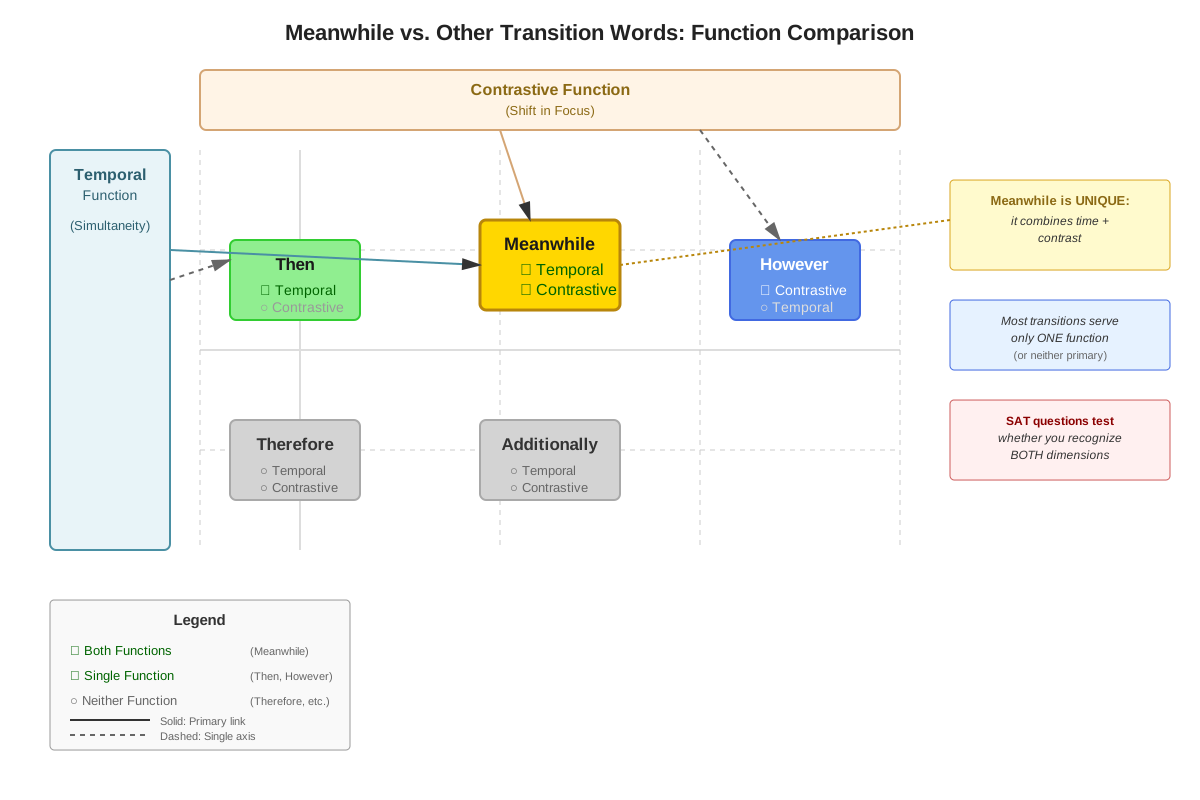
The SAT tests students' ability to recognize logical relationships between sentences and paragraphs. Among transition words, meanwhile occupies a unique position because it combines two distinct functions: it indicates simultaneity (things happening at the same time) while also suggesting a shift in focus or perspective. This dual nature makes it more nuanced than simple time markers like "then" or "next," and more specific than general contrast words like "however." Students who master the proper application of meanwhile demonstrate sophisticated understanding of textual coherence and logical flow.
Within the broader landscape of SAT Reading and Writing concepts, meanwhile connects to fundamental skills in comprehension, logical reasoning, and rhetorical analysis. It requires students to track multiple narrative threads or argumentative lines simultaneously, understand temporal relationships, and recognize when authors shift attention between parallel developments. This topic builds upon basic understanding of sentence structure and prepares students for more complex analytical tasks throughout the exam.
Learning Objectives
- [ ] Identify key features of Meanwhile
- [ ] Explain how Meanwhile appears on the SAT
- [ ] Apply Meanwhile to answer SAT-style questions
- [ ] Distinguish between meanwhile and other transition words (however, therefore, additionally)
- [ ] Recognize the dual temporal and contrastive functions of meanwhile
- [ ] Evaluate whether meanwhile is the most appropriate transition in a given context
- [ ] Analyze passage structure to determine when simultaneous but distinct events require meanwhile
Prerequisites
- Basic sentence structure: Understanding subjects, predicates, and independent clauses is necessary to recognize how meanwhile connects complete thoughts.
- Fundamental transition word knowledge: Familiarity with categories of transitions (contrast, cause-effect, addition, time) provides the framework for understanding meanwhile's specific role.
- Reading comprehension skills: The ability to track multiple ideas across sentences and paragraphs is essential for recognizing when meanwhile is appropriate.
- Logical reasoning: Understanding relationships between ideas helps students determine whether events are truly simultaneous and warrant the use of meanwhile.
Why This Topic Matters
In real-world writing, meanwhile serves as an essential tool for sophisticated communication. Journalists use it to connect parallel storylines in news articles, historians employ it to describe concurrent historical developments, and scientists utilize it to explain simultaneous processes. The ability to recognize and use meanwhile correctly demonstrates advanced literacy and critical thinking skills that extend far beyond standardized testing.
On the SAT, transition questions appear in approximately 10-15% of Reading and Writing questions, making them one of the highest-yield question types. Within this category, sat meanwhile questions specifically test students' ability to recognize temporal relationships and shifts in focus. These questions typically appear 2-4 times per exam, and they are considered medium difficulty because they require students to understand both the content of surrounding sentences and the logical relationship between them.
Meanwhile appears in SAT passages in several common patterns: comparing simultaneous developments in different locations, contrasting what different groups or individuals were doing at the same time, describing parallel scientific or historical processes, and shifting between different aspects of a single topic that are developing concurrently. The SAT particularly favors contexts where two related but distinct situations unfold simultaneously, requiring students to recognize that meanwhile is more appropriate than simple contrast words (however) or sequential time markers (then, next).
Core Concepts
Definition and Primary Function
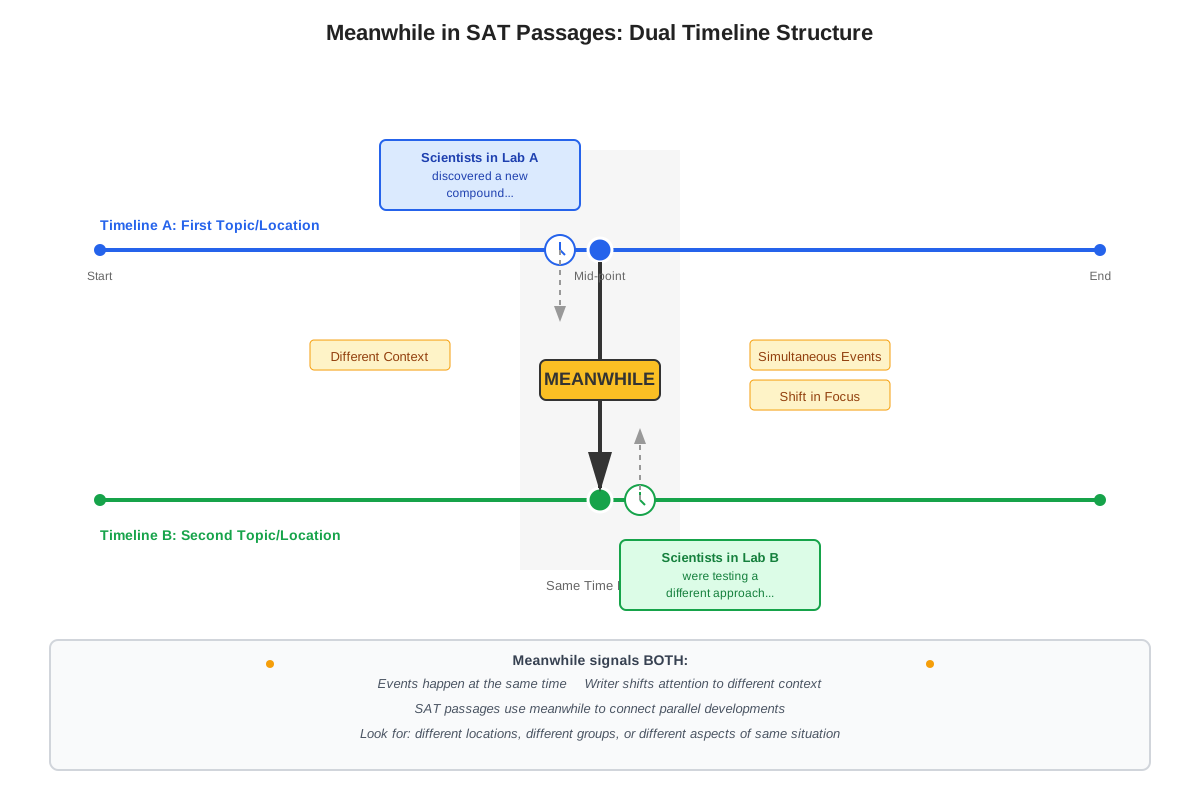
Meanwhile is a transitional adverb that serves two simultaneous functions in writing. First, it indicates temporal simultaneity—that two or more events, situations, or developments are occurring at the same time. Second, it signals a shift in focus or perspective, directing the reader's attention from one concurrent situation to another. This combination makes meanwhile particularly valuable for writers who need to manage multiple narrative or argumentative threads without suggesting that one causes or follows the other.
The word derives from "mean" (middle) and "while" (time), literally meaning "in the middle time" or "during the intervening period." This etymology reveals its core function: connecting what happens in parallel rather than in sequence. Unlike "then" or "next," which indicate chronological progression, meanwhile keeps readers in the same temporal moment while redirecting their attention.
Temporal Simultaneity
The temporal function of meanwhile indicates that events occur during the same time period. This simultaneity is crucial for SAT questions because it distinguishes meanwhile from other transition words. When two sentences describe events happening at the same time but in different contexts, meanwhile is often the correct choice.
Consider this structure: "Scientists in California were developing new solar technology. Meanwhile, researchers in Germany were making breakthroughs in wind energy." Both developments occur during the same period, but they involve different people, places, and specific technologies. The temporal overlap is what makes meanwhile appropriate.
Contrastive or Comparative Shift
Beyond mere simultaneity, meanwhile signals a shift in focus that often carries contrastive or comparative implications. The word tells readers: "While that was happening, pay attention to this other thing." This shift can highlight differences (contrasting situations) or similarities (parallel developments) between the concurrent events.
The contrastive element distinguishes meanwhile from "at the same time" or "simultaneously," which indicate temporal overlap without necessarily shifting focus. Meanwhile actively redirects attention, making it more dynamic and purposeful in constructing complex narratives or arguments.
Structural Position and Punctuation
Meanwhile typically appears at the beginning of a sentence, followed by a comma, though it can occasionally appear mid-sentence between commas. On the SAT, the most common pattern is: "[Sentence about situation A]. Meanwhile, [sentence about situation B]." This structure clearly separates the two concurrent situations while establishing their temporal relationship.
Understanding this structural pattern helps students quickly identify when meanwhile might be the correct answer in transition questions. If the sentence following the blank describes something happening at the same time as the previous sentence but with a different focus, meanwhile is likely appropriate.
Distinguishing Meanwhile from Similar Transitions
| Transition Word | Primary Function | Temporal Relationship | Focus Shift |
|---|---|---|---|
| Meanwhile | Simultaneity + shift | Same time | Yes |
| However | Contrast | Any time | Yes |
| Therefore | Cause-effect | After | No |
| Additionally | Addition | Any time | No |
| Then | Sequence | After | Maybe |
| At the same time | Simultaneity | Same time | Minimal |
This table illustrates why meanwhile is distinct from other transitions. "However" contrasts but doesn't require simultaneity. "Therefore" indicates causation rather than parallel development. "Additionally" adds information without temporal specification. "Then" indicates sequence rather than simultaneity. "At the same time" indicates simultaneity but lacks the strong focus shift that meanwhile provides.
Context Clues for Meanwhile
Several context clues signal that meanwhile is the appropriate transition:
- Different subjects or actors: The sentences describe what different people, groups, or entities are doing
- Different locations: Events occur in separate places during the same period
- Parallel developments: Multiple related processes or situations unfold concurrently
- Temporal markers: Words like "during this period," "at that time," or specific dates that overlap
- Absence of causation: The second event doesn't result from the first; they're independent but concurrent
Common SAT Patterns
The SAT employs several recurring patterns when testing meanwhile:
Pattern 1: Geographic Contrast
"In the northern regions, temperatures dropped significantly. [Transition], southern areas experienced record heat."
Pattern 2: Multiple Perspectives
"Supporters of the policy celebrated its passage. [Transition], critics organized protests."
Pattern 3: Parallel Scientific Processes
"The chemical reaction in beaker A produced hydrogen gas. [Transition], beaker B's mixture generated oxygen."
Pattern 4: Historical Simultaneity
"European explorers were mapping the Americas. [Transition], Asian empires were expanding trade routes."
Recognizing these patterns helps students quickly identify when meanwhile is likely the correct answer.
Concept Relationships
The concept of meanwhile connects directly to broader transition word categories. It belongs to the temporal transition family (along with then, next, previously, subsequently) but adds a contrastive or comparative dimension that links it to contrast transitions (however, nevertheless, conversely). This dual nature makes meanwhile a bridge concept between pure time markers and pure contrast markers.
Meanwhile relates to prerequisite knowledge of sentence structure because it connects independent clauses that could stand alone but gain meaning through their relationship. Understanding this connection helps students recognize that meanwhile requires complete thoughts on both sides—it cannot connect a fragment to a sentence.
The relationship map for meanwhile looks like this:
Temporal Transitions → meanwhile (subset with special properties) → Contrastive Elements
↓
Simultaneity + Focus Shift = Meanwhile's Unique Function
↓
SAT Application: Recognizing when both conditions (same time + different focus) are present
This concept also connects forward to more advanced rhetorical analysis skills. Students who master meanwhile develop better ability to track multiple argumentative threads, understand complex narrative structures, and recognize how writers manage reader attention across parallel developments.
High-Yield Facts
⭐ Meanwhile indicates that two events occur at the same time while shifting focus between them.
⭐ Meanwhile appears at the beginning of a sentence followed by a comma in most SAT questions.
⭐ Meanwhile is correct when events are simultaneous but involve different subjects, locations, or aspects.
⭐ Meanwhile differs from "however" because it requires temporal overlap, not just contrast.
⭐ Meanwhile differs from "then" because it indicates simultaneity, not sequence.
- Meanwhile combines temporal and contrastive functions in a single transition word.
- SAT passages use meanwhile most frequently when describing parallel developments in different locations or by different groups.
- Meanwhile cannot connect a cause to its effect; it connects independent concurrent situations.
- The presence of different subjects in consecutive sentences is a strong clue that meanwhile might be appropriate.
- Meanwhile is more formal than "in the meantime" and more common in academic and journalistic writing.
- When meanwhile appears mid-sentence, it requires commas on both sides: "The experiment, meanwhile, continued in the laboratory."
- Meanwhile questions on the SAT typically require students to read both the preceding and following sentences carefully.
- Eliminating meanwhile as an answer choice requires confirming that events are NOT simultaneous or that there's no focus shift.
- Meanwhile is often tested alongside "however," "therefore," and "additionally" as answer choices.
- Understanding meanwhile improves overall transition word mastery because it requires recognizing multiple logical relationships simultaneously.
Quick check — test yourself on Meanwhile so far.
Try Flashcards →Common Misconceptions
Misconception: Meanwhile and however are interchangeable because both show contrast.
Correction: Meanwhile requires temporal simultaneity in addition to any contrast, while however only requires contrast or opposition between ideas regardless of timing. "The experiment failed. However, the team learned valuable lessons" works because there's contrast, but meanwhile would be incorrect because the learning happens after the failure, not simultaneously.
Misconception: Meanwhile can only be used when describing completely unrelated events.
Correction: Meanwhile is most effective when connecting related events that occur simultaneously but with different focuses. The events should be thematically connected (both about the same general topic or time period) but involve different specific subjects or locations. "Scientists studied climate change. Meanwhile, they also analyzed weather patterns" works because both relate to atmospheric science.
Misconception: If two things happen at the same time, meanwhile is always correct.
Correction: Simultaneity is necessary but not sufficient for meanwhile. The transition also requires a shift in focus or perspective. "The temperature rose. Meanwhile, it got hotter" is incorrect because there's no real shift in focus—both sentences describe the same phenomenon. "The temperature rose. Meanwhile, humidity levels dropped" works because it shifts focus to a different meteorological variable.
Misconception: Meanwhile is too informal for SAT passages.
Correction: Meanwhile is appropriately formal for academic and journalistic writing, which dominate SAT passages. It appears regularly in scientific articles, historical accounts, and analytical essays. The SAT tests standard written English, and meanwhile is a standard transition in formal writing.
Misconception: Meanwhile always indicates contrast or opposition.
Correction: While meanwhile often accompanies contrast, it can also connect parallel or similar developments. "Researchers in Boston made progress on the vaccine. Meanwhile, teams in London achieved similar breakthroughs" shows simultaneity and focus shift without opposition. The key is the temporal overlap and attention shift, not necessarily contrast.
Worked Examples
Example 1: Scientific Research Context
Passage: "Dr. Chen's laboratory focused on developing synthetic antibodies to combat viral infections. The research required precise temperature control and sterile conditions. _____ Dr. Patel's team across campus was investigating natural immune responses in recovered patients."
Answer Choices:
A) Therefore,
B) Meanwhile,
C) For example,
D) Consequently,
Step 1: Analyze the relationship between sentences
The sentence before the blank discusses Dr. Chen's synthetic antibody research. The sentence after the blank discusses Dr. Patel's natural immune response research. These are different research projects by different people in different locations.
Step 2: Determine temporal relationship
Nothing in the passage suggests one research project happened before or after the other. The present tense ("focused," "was investigating") and the phrase "across campus" suggest these projects are happening at the same time at the same institution.
Step 3: Check for causation
Dr. Patel's research doesn't result from Dr. Chen's work. They're independent projects, so "therefore" and "consequently" (which indicate cause-effect) are incorrect.
Step 4: Check for exemplification
Dr. Patel's research isn't an example of Dr. Chen's research—they're studying different approaches. "For example" is incorrect.
Step 5: Confirm simultaneity and focus shift
Both conditions for meanwhile are met: (1) the research projects occur simultaneously, and (2) the sentence shifts focus from one researcher and approach to another researcher and approach.
Answer: B) Meanwhile
This example demonstrates the classic SAT pattern of parallel developments by different actors in different locations during the same time period.
Example 2: Historical Context
Passage: "In the 1920s, American cities experienced rapid industrial growth and urban expansion. Factories multiplied, and skyscrapers transformed city skylines. _____ rural communities faced economic challenges as agricultural prices declined and young people migrated to urban centers."
Answer Choices:
A) Similarly,
B) Subsequently,
C) Meanwhile,
D) Thus,
Step 1: Identify the subjects and their situations
First part: American cities experiencing growth and prosperity
Second part: Rural communities facing economic challenges
Step 2: Determine temporal relationship
The phrase "In the 1920s" applies to both situations. The passage describes what was happening in cities and what was happening in rural areas during the same decade. This is simultaneity, not sequence.
Step 3: Evaluate "Similarly"
While both describe 1920s America, the situations are opposite (growth vs. decline), so "similarly" is incorrect.
Step 4: Evaluate "Subsequently" and "Thus"
"Subsequently" means "afterward," but rural decline wasn't happening after urban growth—both occurred simultaneously. "Thus" indicates causation, but the passage doesn't establish that urban growth caused rural decline (though historically related, the passage doesn't make this causal claim explicit).
Step 5: Confirm meanwhile
The transition needs to: (1) maintain the same time period (1920s), (2) shift focus from cities to rural areas, and (3) accommodate the contrasting situations. Meanwhile accomplishes all three functions.
Answer: C) Meanwhile
This example shows how meanwhile can connect contrasting situations that occur simultaneously, demonstrating its dual temporal and contrastive functions.
Exam Strategy
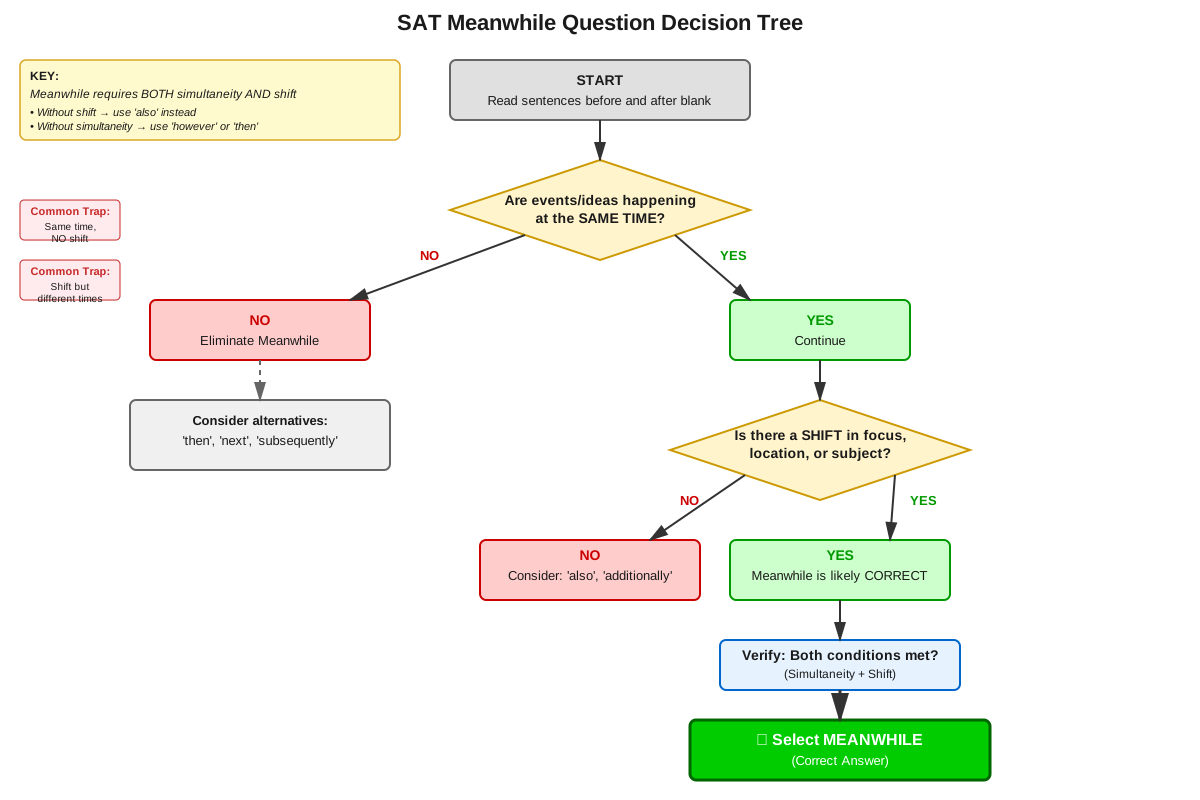
When approaching SAT transition questions involving meanwhile, follow this systematic process:
Step 1: Read the complete sentence before and after the blank
Never try to answer transition questions by reading only one sentence. Meanwhile requires understanding both what came before and what comes after to determine if simultaneity and focus shift are present.
Step 2: Identify the subjects and timeframes
Ask: Who or what is the first sentence about? Who or what is the second sentence about? When does each occur? If the subjects differ and the timeframes overlap, meanwhile becomes more likely.
Step 3: Check for temporal markers
Look for phrases like "during this period," "at that time," "in the same year," or consistent verb tenses that indicate simultaneity. Also watch for phrases indicating sequence ("later," "afterward," "then"), which would eliminate meanwhile.
Step 4: Eliminate based on logical relationships
- If there's causation (second event results from first), eliminate meanwhile and look for "therefore" or "consequently"
- If there's pure addition without time specification, eliminate meanwhile and consider "additionally" or "furthermore"
- If there's sequence (second event follows first), eliminate meanwhile and consider "then" or "subsequently"
Step 5: Confirm both conditions for meanwhile
Before selecting meanwhile, verify: (1) events are truly simultaneous, and (2) there's a genuine shift in focus (different subject, location, or aspect). Both must be present.
Exam Tip: The SAT often pairs meanwhile with "however" as answer choices. Remember: meanwhile = same time + focus shift; however = contrast only (any time). If events aren't simultaneous, choose however. If they're simultaneous with focus shift, choose meanwhile.
Trigger phrases that suggest meanwhile:
- Different locations mentioned ("in the north... in the south")
- Different actors ("Team A... Team B")
- Parallel structures ("while X was happening... Y was occurring")
- Consistent timeframes ("during the 1800s... also in that century")
Time allocation: Spend 30-45 seconds on transition questions. They require careful reading but shouldn't consume excessive time. If you're uncertain between two choices, reread the sentences focusing specifically on timing and subject changes.
Memory Techniques
Mnemonic for Meanwhile's Two Functions: "SAME TIME, SWITCH FOCUS"
- Simultaneity
- And
- Moving
- Elsewhere
Temporal overlap
Indicates
Multiple
Events
Shift
Where you're looking
In the
Text
Changing
Head to different subject
Focus moves
On to
Concurrent
Unrelated or
Separate situation
Visual Memory Strategy: Picture a split screen in a movie. On the left side, one scene plays out. On the right side, a different scene plays simultaneously. The word "MEANWHILE" appears across the middle, connecting but separating the two scenes. This visual reinforces that meanwhile connects simultaneous but distinct situations.
Contrast Comparison Memory Aid: Create a mental table:
- HOWEVER = Different ideas, any time → Think "H" for "Huh? That's different!"
- MEANWHILE = Different focus, same time → Think "M" for "Multiple things at once"
- THEREFORE = Effect follows cause → Think "T" for "Then this happened"
The "Two Clocks" Technique: When you see a potential meanwhile question, imagine two clocks. If both clocks show the same time but are in different locations or tracking different events, meanwhile is likely correct. If one clock is ahead of the other (sequence), meanwhile is wrong.
Summary
Meanwhile is a sophisticated transition word that combines temporal and contrastive functions, indicating that two events occur simultaneously while shifting the reader's focus from one to the other. On the SAT Reading and Writing section, meanwhile appears in medium-difficulty transition questions that test students' ability to recognize both temporal relationships and logical connections between sentences. The key to mastering meanwhile lies in understanding its dual requirements: events must occur at the same time (simultaneity) and involve different subjects, locations, or aspects (focus shift). Meanwhile differs from "however" because it requires temporal overlap, from "then" because it indicates simultaneity rather than sequence, and from "therefore" because it connects independent concurrent situations rather than causes and effects. Students who successfully identify meanwhile questions recognize patterns involving different actors in different locations, parallel developments, or multiple perspectives on simultaneous events. The most common SAT contexts include geographic contrasts, parallel scientific or historical processes, and multiple perspectives on the same time period. Mastering meanwhile requires careful reading of both sentences surrounding the transition, attention to temporal markers and subject changes, and systematic elimination of alternatives based on logical relationships.
Key Takeaways
- Meanwhile requires both simultaneity (same time) and focus shift (different subject/location/aspect) to be correct
- The most common SAT pattern for meanwhile involves different actors doing different things during the same time period
- Meanwhile differs from "however" by requiring temporal overlap, not just contrast
- Look for trigger phrases like different locations, different subjects, or parallel structures when identifying meanwhile questions
- Always read both the sentence before and after the blank to determine temporal relationships
- Meanwhile appears 2-4 times per SAT exam and represents a high-yield question type worth mastering
- Systematic elimination based on causation, sequence, and addition helps narrow choices to meanwhile when appropriate
Related Topics
Other Temporal Transitions: After mastering meanwhile, students should explore other time-based transitions like "subsequently," "previously," "eventually," and "initially" to build comprehensive understanding of how writers indicate temporal relationships. These transitions work together to create chronological coherence in passages.
Contrast Transitions: Understanding "however," "nevertheless," "conversely," and "on the other hand" complements meanwhile knowledge because these transitions share the contrastive element without the temporal requirement. Distinguishing between pure contrast and temporal contrast is essential for SAT success.
Cause-Effect Transitions: Mastering "therefore," "consequently," "thus," and "as a result" helps students recognize when events are causally related rather than merely simultaneous, preventing confusion between meanwhile and causation markers.
Addition Transitions: Understanding "additionally," "furthermore," "moreover," and "also" rounds out transition word knowledge by covering situations where information is added without temporal or contrastive implications.
Paragraph Structure and Coherence: Meanwhile mastery enables deeper study of how writers organize complex passages with multiple threads, preparing students for rhetorical analysis questions and improving overall reading comprehension.
Practice CTA
Now that you've mastered the concept of meanwhile and its application to SAT Reading and Writing questions, it's time to reinforce your learning through active practice. Complete the practice questions to test your ability to identify when meanwhile is appropriate and distinguish it from other transition words in various contexts. Use the flashcards to memorize key distinctions between meanwhile and similar transitions, ensuring quick recognition during the actual exam. Remember: transition questions are high-yield and highly learnable—consistent practice with meanwhile will directly improve your SAT score. Every question you practice builds the pattern recognition and logical reasoning skills that make these questions feel automatic on test day. You've invested the time to understand the concept deeply; now cement that knowledge through application!
Sign up free to keep reading
Create a free AnvayaPrep account to finish this SAT guide on Meanwhile — plus flashcards and practice questions.