Overview
Revision for emphasis is a critical rhetorical skill tested extensively on the ACT English section. This concept involves selecting the most effective way to express an idea by placing the most important information in positions where it receives maximum attention and impact. On the ACT, students must evaluate multiple versions of a sentence or phrase and determine which arrangement best emphasizes the writer's intended meaning or creates the strongest rhetorical effect.
The ACT English test assesses not just grammatical correctness but also rhetorical effectiveness—the ability to communicate ideas clearly, concisely, and persuasively. Questions testing ACT revision for emphasis typically present a sentence with an underlined portion and ask students to choose the alternative that best accomplishes a specific goal, such as emphasizing a particular detail, creating a dramatic effect, or highlighting the significance of information. These questions require understanding how sentence structure, word placement, and punctuation choices affect meaning and reader perception.
Mastering revision for emphasis connects directly to broader rhetorical skills including organization, style, and strategy. This topic builds upon foundational grammar knowledge while requiring students to think critically about authorial intent and audience impact. Strong performance on emphasis questions demonstrates sophisticated reading comprehension and writing awareness—skills that distinguish high-scoring students from average performers. Since rhetorical skills questions constitute approximately one-third of the ACT English section, and emphasis questions appear regularly throughout each test, this topic represents a high-yield area for score improvement.
Learning Objectives
- [ ] Identify when Revision for emphasis is being tested in ACT questions
- [ ] Explain the core rule or strategy behind Revision for emphasis
- [ ] Apply Revision for emphasis to ACT-style questions accurately
- [ ] Distinguish between emphasis techniques including word order, sentence structure, and punctuation
- [ ] Evaluate multiple sentence versions to determine which creates the strongest rhetorical impact
- [ ] Recognize how sentence position (beginning, middle, end) affects emphasis
- [ ] Analyze how subordination and coordination affect emphasis in complex sentences
Prerequisites
- Basic sentence structure: Understanding subjects, predicates, clauses, and phrases is essential because emphasis questions require manipulating these elements to achieve different effects
- Punctuation rules: Knowledge of commas, dashes, colons, and semicolons is necessary since punctuation choices significantly impact emphasis
- Reading comprehension: The ability to understand passage context and authorial intent enables students to select the most appropriate emphasis strategy
- Clause types: Distinguishing between independent and dependent clauses helps students understand how subordination affects emphasis
Why This Topic Matters
In professional and academic writing, the ability to emphasize key information determines whether readers grasp the intended message. Writers use emphasis techniques to guide reader attention, create memorable statements, and ensure important ideas stand out. Whether crafting a persuasive essay, scientific report, or business proposal, strategic emphasis makes writing more effective and engaging.
On the ACT English section, emphasis questions appear in approximately 4-6 questions per test, representing roughly 5-8% of the total English score. These questions typically appear as "Rhetorical Skills" questions with specific goals stated in the question stem, such as "Which choice most effectively emphasizes the scientist's groundbreaking achievement?" or "Given that all choices are true, which provides the most dramatic introduction to the paragraph?" Understanding emphasis is particularly valuable because these questions often have clear right answers once students learn to recognize emphasis patterns.
Emphasis questions commonly appear in narrative passages describing events, argumentative passages making claims, and informative passages presenting discoveries or achievements. The ACT frequently tests emphasis in contexts where writers need to highlight contrasts, introduce surprising information, conclude with impact, or draw attention to significant details. Students who master emphasis techniques can quickly identify the most effective option, saving time for more challenging questions.
Core Concepts
Sentence Position and Natural Emphasis
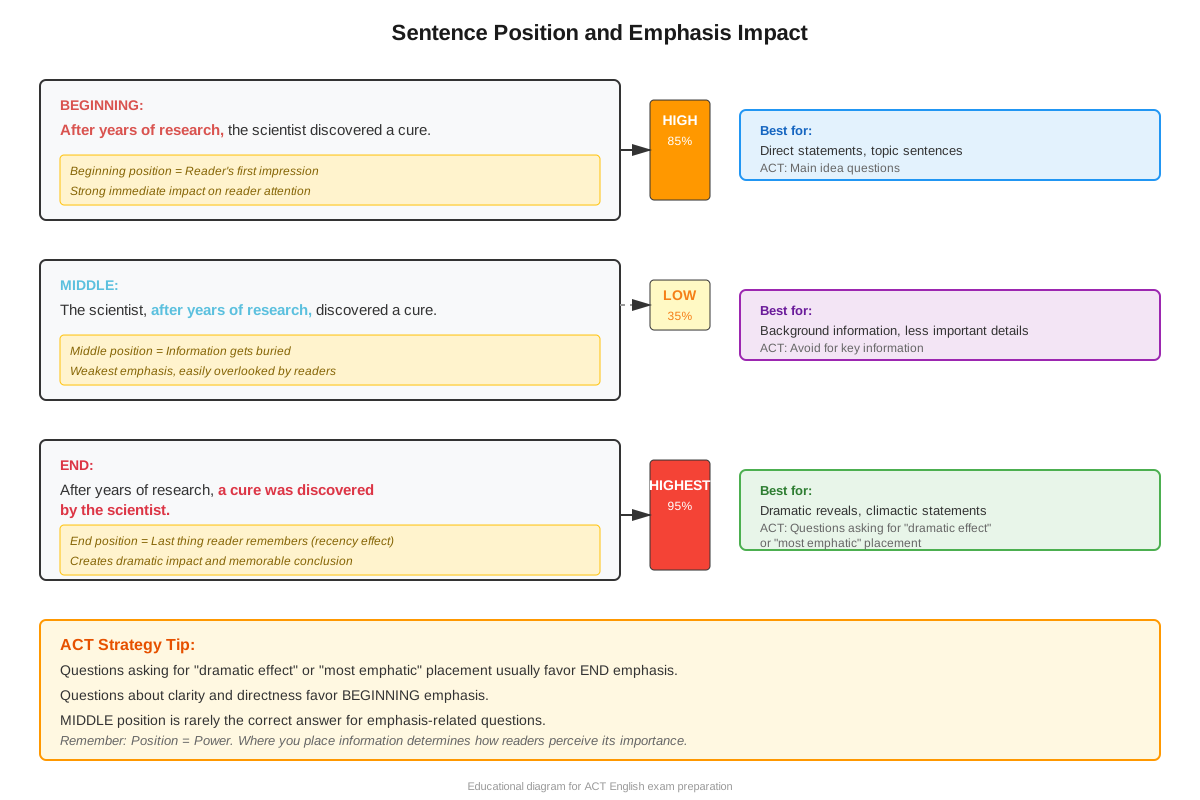
The position of information within a sentence fundamentally affects its emphasis. English sentences naturally emphasize information placed at the beginning and end, with the end position typically receiving the strongest emphasis. The middle of a sentence receives the least attention from readers.
End emphasis (also called the "stress position") is the most powerful placement for important information. Readers naturally pause at sentence endings, making this position ideal for key points, surprising revelations, or impactful conclusions. Consider these examples:
- Weak: "The discovery was revolutionary, according to scientists."
- Strong: "According to scientists, the discovery was revolutionary."
The second version places "revolutionary" at the end, giving it maximum impact.
Beginning emphasis works well for introducing topics, establishing context, or creating transitions. The sentence-initial position captures reader attention and sets expectations for what follows:
- "Revolutionary in scope, the discovery changed everything."
Middle position should contain less critical information, transitional phrases, or supporting details that connect more important elements.
Subordination and Emphasis
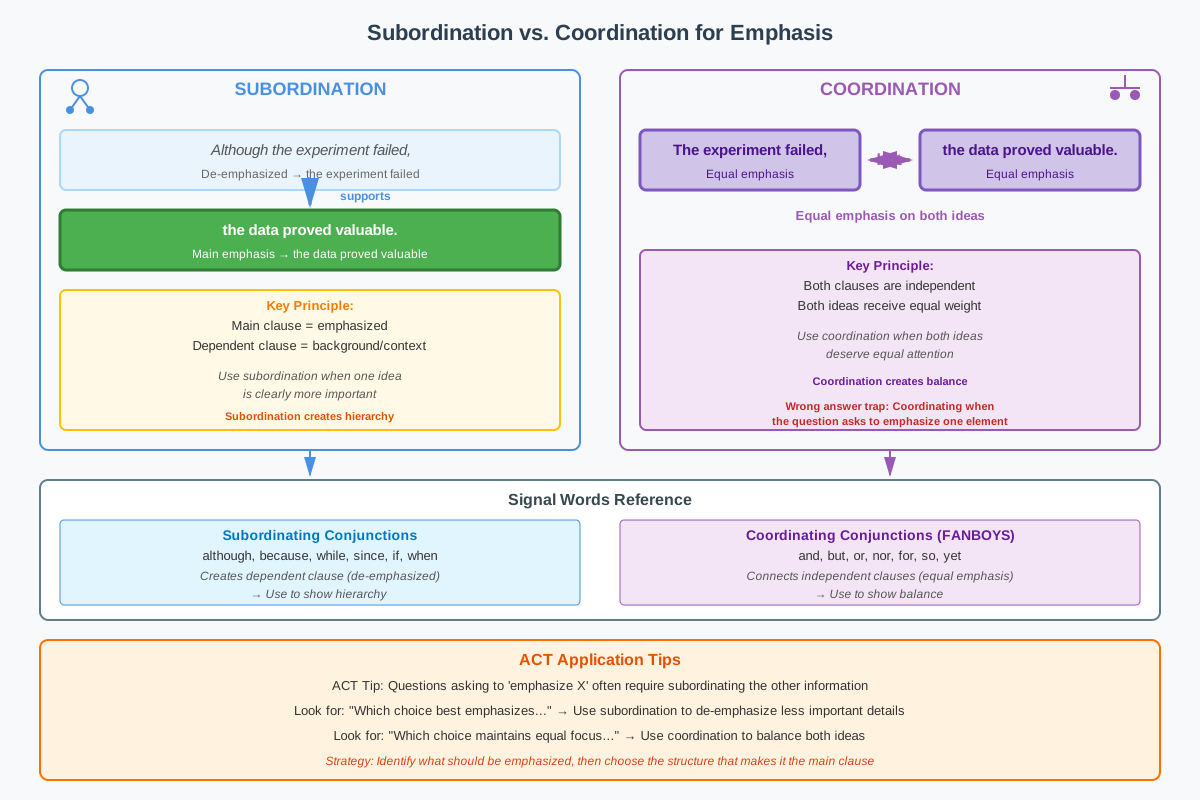
Subordination involves placing less important information in dependent clauses while keeping crucial information in independent clauses. This technique directly controls emphasis by signaling to readers which ideas deserve primary attention.
Independent clauses receive more emphasis than dependent clauses because they can stand alone and carry the main assertion. When revising for emphasis, place the most important idea in the independent clause:
- Less emphatic: "Although the experiment succeeded, the funding was limited."
- More emphatic: "Although the funding was limited, the experiment succeeded."
The first version emphasizes the funding limitation; the second emphasizes the success. The choice depends on the writer's intended focus.
Common subordinating conjunctions that reduce emphasis include: although, because, since, while, when, if, unless, and whereas. Information following these words receives less emphasis than the main clause.
Coordination and Equal Emphasis
Coordination joins ideas of equal grammatical rank using coordinating conjunctions (for, and, nor, but, or, yet, so). Unlike subordination, coordination suggests equal importance:
- "The team worked tirelessly, and they achieved remarkable results."
However, even in coordinated structures, the second element often receives slightly more emphasis due to end position. When revising for emphasis, consider whether ideas truly deserve equal weight or whether subordination would better serve the writer's purpose.
Punctuation for Emphasis
Punctuation choices significantly affect emphasis by controlling pacing and drawing attention to specific elements.
Dashes create strong emphasis by setting off information dramatically:
- "The results—completely unexpected—changed the field forever."
Colons emphasize what follows by creating anticipation:
- "The experiment revealed one crucial finding: the hypothesis was correct."
Commas provide mild separation with minimal emphasis:
- "The experiment, which lasted three years, finally concluded."
Periods (creating separate sentences) provide maximum emphasis by giving ideas independent status:
- "The experiment concluded. The results were revolutionary."
Active vs. Passive Voice
Active voice emphasizes the actor/subject performing the action, while passive voice emphasizes the action or recipient. Choose voice based on what deserves emphasis:
- Active (emphasizes researcher): "Dr. Chen discovered the new element."
- Passive (emphasizes element): "The new element was discovered in 2023."
The ACT generally prefers active voice for clarity and directness, but passive voice serves specific emphasis purposes when the action or recipient matters more than the actor.
Repetition and Parallelism
Strategic repetition emphasizes key terms and concepts by reinforcing them in readers' minds. However, unnecessary repetition weakens emphasis by diluting impact.
Parallelism (similar grammatical structures) emphasizes relationships and creates rhythm that highlights important ideas:
- "The method was simple, effective, and revolutionary."
Sentence Length and Emphasis
Sentence length variation affects emphasis. Short sentences following longer ones create emphasis through contrast:
- "The researchers spent decades analyzing data, consulting experts, and refining their methodology. They succeeded."
The brief final sentence gains impact from its brevity after the longer preceding sentence.
Concept Relationships
The concepts within revision for emphasis work together systematically. Sentence position serves as the foundation—understanding that end and beginning positions naturally emphasize information guides all other decisions. Subordination builds on position by allowing writers to control which ideas occupy the emphasized independent clause versus de-emphasized dependent clauses. Coordination offers an alternative when ideas deserve equal weight, though end position still provides slight emphasis to the second element.
Punctuation choices interact with all structural decisions, either reinforcing or modifying the emphasis created by position and clause structure. Dashes and colons intensify emphasis, while commas provide neutral separation. Voice selection (active vs. passive) determines whether the actor or action receives emphasis, connecting to the broader question of what information the writer wants readers to focus on.
These emphasis techniques connect to prerequisite knowledge of sentence structure (which provides the framework for manipulation) and punctuation rules (which govern how emphasis markers function). They also relate to broader rhetorical skills including organization (paragraph-level emphasis), style (word choice for emphasis), and strategy (overall passage goals).
The relationship map flows: Understanding natural emphasis positions → Choosing subordination vs. coordination → Selecting appropriate punctuation → Determining active vs. passive voice → Creating final emphasized version.
High-Yield Facts
⭐ The end of a sentence receives the strongest natural emphasis—place the most important information in the stress position for maximum impact.
⭐ Independent clauses emphasize information more than dependent clauses—put crucial ideas in independent clauses and supporting details in dependent clauses.
⭐ ACT emphasis questions typically include a specific goal in the question stem—read the goal carefully to determine what should be emphasized.
⭐ Dashes create stronger emphasis than commas—use dashes when the ACT asks for dramatic effect or strong emphasis.
⭐ Active voice emphasizes the actor; passive voice emphasizes the action or recipient—choose based on what the passage context suggests should be emphasized.
- Subordinating conjunctions (although, because, since, while) reduce emphasis on the clauses they introduce
- The beginning of a sentence provides secondary emphasis, useful for transitions and topic introduction
- Short sentences following long sentences gain emphasis through contrast
- Colons create anticipation and emphasize what follows them
- Repetition emphasizes key terms but becomes ineffective when overused
- Coordination suggests equal importance between joined elements
- Middle sentence position receives the least emphasis and should contain less critical information
- Parallel structure emphasizes relationships between ideas and creates memorable rhythm
- Question stems containing "emphasize," "highlight," "stress," or "dramatic" signal emphasis questions
- Context determines appropriate emphasis—always consider the passage's overall purpose and tone
Quick check — test yourself on Revision for emphasis so far.
Try Flashcards →Common Misconceptions
Misconception: Longer, more complex sentences always create more emphasis than shorter sentences.
Correction: Sentence length affects emphasis through contrast and pacing. Short sentences often create stronger emphasis, especially when following longer sentences, because their brevity makes them stand out and easier to remember.
Misconception: The most important information should always appear at the beginning of a sentence.
Correction: While sentence-initial position provides emphasis, the end position (stress position) typically creates stronger emphasis. The beginning works well for transitions and context, but save the most crucial information for the end when maximum impact is needed.
Misconception: Passive voice is always wrong and should never be used.
Correction: While active voice is generally preferred for clarity, passive voice serves legitimate emphasis purposes when the action or recipient deserves more attention than the actor. The ACT accepts passive voice when it better achieves the stated rhetorical goal.
Misconception: Adding more adjectives and adverbs increases emphasis.
Correction: Excessive modifiers often dilute emphasis by cluttering sentences and reducing clarity. Strategic word choice and sentence structure create more effective emphasis than piling on descriptive words.
Misconception: All emphasis questions have subjective answers based on personal preference.
Correction: ACT emphasis questions have definitive correct answers based on the stated goal and passage context. The question stem provides specific criteria (e.g., "most dramatic," "emphasize the achievement"), and one option will objectively best meet that criterion within the passage context.
Misconception: Emphasis techniques work the same way in all types of writing and passages.
Correction: Appropriate emphasis strategies depend on passage type, tone, and purpose. What creates effective emphasis in a dramatic narrative differs from what works in a scientific explanation. Always consider the passage context when selecting emphasis techniques.
Worked Examples
Example 1: Sentence Position and Subordination
Passage Context: A paragraph describes a scientist's decades-long research culminating in a major discovery.
Question: Which choice most effectively emphasizes the significance of the discovery?
A. The discovery was significant, though it took thirty years of research.
B. Though it took thirty years of research, the discovery was significant.
C. Taking thirty years of research, the significant discovery was made.
D. After thirty years of research, the discovery transformed the entire field.
Solution Process:
Step 1: Identify what should be emphasized. The question asks us to emphasize "the significance of the discovery," not the time required.
Step 2: Analyze each option's emphasis structure.
Option A places "significant" in the independent clause but ends with "thirty years of research," giving end emphasis to the time rather than significance.
Option B subordinates the time element ("Though it took thirty years") and places "significant" at the end of the independent clause, but "significant" is a relatively weak descriptor.
Option C uses a participial phrase that de-emphasizes the time but ends with the passive "was made," which lacks impact.
Option D subordinates the time element in an introductory phrase and places the most powerful language ("transformed the entire field") at the end, in the stress position.
Step 3: Evaluate emphasis effectiveness. Option D creates the strongest emphasis on significance by (1) subordinating the less important time element, (2) using powerful, specific language ("transformed the entire field" vs. generic "significant"), and (3) placing this impactful phrase in the end position.
Answer: D
Connection to Learning Objectives: This example demonstrates identifying emphasis questions (specific goal in question stem), applying subordination strategy (less important information in dependent elements), and using sentence position (end emphasis) to achieve the stated rhetorical goal.
Example 2: Punctuation and Dramatic Effect
Passage Context: A narrative describes a mountain climber reaching a summit after a dangerous ascent.
Question: Given that all choices are grammatically correct, which provides the most dramatic conclusion to the sentence describing the climber's arrival at the summit?
F. When she reached the summit, she saw the view, which was breathtaking.
G. She reached the summit, and the view was breathtaking.
H. She reached the summit: the view was breathtaking.
J. She reached the summit. The view was breathtaking.
Solution Process:
Step 1: Identify the goal. "Most dramatic" indicates we need maximum emphasis and impact.
Step 2: Analyze punctuation and structure effects.
Option F uses subordination ("which was breathtaking") that reduces emphasis on the view. The relative clause de-emphasizes the dramatic moment.
Option G uses coordination with "and," suggesting equal importance between reaching the summit and seeing the view. This creates moderate emphasis but lacks dramatic punch.
Option H uses a colon, which creates anticipation and emphasizes what follows. The colon signals "here's the payoff," making the view revelation more dramatic.
Option J uses separate sentences (periods), giving each action independent status. This creates strong emphasis through separation and allows the final sentence to stand alone dramatically.
Step 3: Compare dramatic effect. Both H and J create strong emphasis, but J provides maximum drama by isolating "The view was breathtaking" as a complete, standalone statement. The period creates a pause that builds suspense, and the short final sentence gains impact through its brevity and independence.
Answer: J
Connection to Learning Objectives: This example shows how punctuation choices affect emphasis, demonstrates comparing multiple emphasis techniques (coordination, colons, periods), and illustrates applying emphasis strategies to achieve specific rhetorical effects (dramatic impact).
Exam Strategy
Identifying Emphasis Questions
ACT emphasis questions contain specific trigger language in the question stem. Watch for phrases like:
- "most effectively emphasizes"
- "best highlights"
- "most dramatic"
- "draws attention to"
- "stresses the importance of"
- "Given that all choices are true, which..."
When you see these phrases, you're dealing with an emphasis question, not a grammar question. All options may be grammatically correct; your job is selecting the most rhetorically effective choice.
Step-by-Step Approach
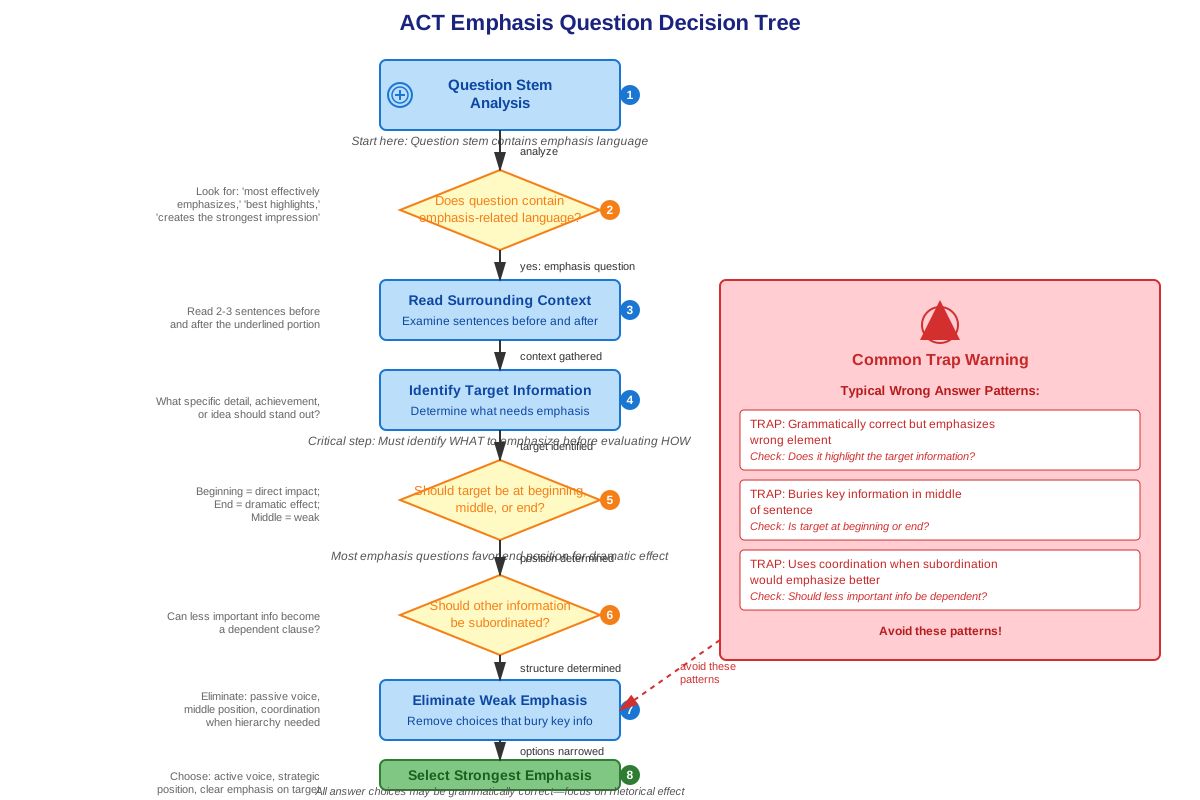
- Read the question stem carefully to identify exactly what should be emphasized
- Check the passage context (usually 2-3 sentences before and after) to understand the writer's purpose
- Identify what each option emphasizes by noting sentence position, clause structure, and punctuation
- Eliminate options that emphasize the wrong element or contradict the stated goal
- Compare remaining options for strength of emphasis using the hierarchy: end position > beginning position > middle position
Process of Elimination Tips
Eliminate options that:
- Place the target information in the middle of the sentence (weakest emphasis)
- Bury important information in dependent clauses when it should be emphasized
- Use weak, generic language when strong, specific language is available
- Create emphasis on the wrong element (e.g., emphasizing time when the question asks for emphasis on achievement)
- Contradict the passage's tone (e.g., overly dramatic language in a formal scientific passage)
Time Management
Emphasis questions typically require 30-45 seconds—slightly longer than pure grammar questions because you must consider context and rhetorical effect. However, once you identify the emphasis pattern, these questions become quick points. Don't overthink: the correct answer usually creates noticeably stronger emphasis than alternatives.
Exam Tip: If two options seem equally emphatic, reread the question stem. The ACT often includes subtle distinctions in what should be emphasized (e.g., "the difficulty of the task" vs. "the success despite difficulty"). The correct answer will precisely match the stated goal.
Common Trap Patterns
The ACT frequently includes distractors that:
- Sound sophisticated but bury the key information
- Use dramatic punctuation (dashes, colons) inappropriately, creating false emphasis
- Place important information at the beginning when end position would be stronger
- Add unnecessary words that dilute emphasis
Memory Techniques
The "END WINS" Mnemonic
End position
Natural emphasis
Dominates
Weak middle
Independent clauses
Need for
Stress position
Remember: When emphasizing information, the END WINS—place crucial details at sentence endings for maximum impact.
The Emphasis Hierarchy Visualization
Visualize a sentence as a spotlight stage:
- Beginning: Spotlight turns on (moderate attention)
- Middle: Dimmed lighting (minimal attention)
- End: Spotlight intensifies (maximum attention)
Place your "star information" where the spotlight is brightest—at the end.
The "DASH for DRAMA" Rule
Dashes
Add
Strong
Highlight
Dramatic
Rhetorical
Attention
Markers
Always
When the ACT asks for "dramatic" or "strong emphasis," look for options using dashes or creating separate sentences.
Subordination Memory Aid
"BOSS" Principle:
Big idea in
Open (independent) clause
Supporting details
Subordinated
The "boss" (main idea) gets the independent clause; supporting details work in subordinate positions.
Summary
Revision for emphasis is a high-yield ACT English topic that tests students' ability to select the most rhetorically effective way to express ideas. Success requires understanding that sentence position, clause structure, and punctuation choices control where readers focus attention. The end of a sentence provides the strongest natural emphasis (stress position), followed by the beginning, with the middle receiving minimal attention. Independent clauses emphasize information more than dependent clauses, making subordination a powerful tool for controlling emphasis. Punctuation choices—particularly dashes, colons, and periods—can intensify or modify emphasis created by sentence structure. ACT emphasis questions include specific goals in their question stems, and the correct answer objectively best achieves that stated goal within the passage context. Students should identify what needs emphasis, analyze how each option's structure affects emphasis, and select the choice that places the most important information in the most emphatic position using the strongest available language.
Key Takeaways
- The end of a sentence (stress position) receives the strongest emphasis; place crucial information there for maximum impact
- Independent clauses emphasize information more than dependent clauses; subordinate less important details
- ACT emphasis questions state specific goals in question stems—read carefully to identify what should be emphasized
- Punctuation affects emphasis: dashes and separate sentences create strong emphasis, colons build anticipation, commas provide neutral separation
- Context determines appropriate emphasis strategies; consider passage type, tone, and purpose when selecting options
- Active voice emphasizes the actor; passive voice emphasizes the action or recipient—choose based on what deserves attention
- Emphasis questions have objective correct answers based on stated goals and passage context, not personal preference
Related Topics
Organization and Transitions: Understanding how emphasis works at the sentence level enables mastery of paragraph-level organization, where topic sentences and concluding sentences use emphasis principles to guide readers through arguments.
Style and Tone: Emphasis techniques directly affect a passage's style and tone. Mastering emphasis allows students to recognize how writers create formal, dramatic, or understated effects through structural choices.
Concision and Redundancy: Effective emphasis requires eliminating unnecessary words that dilute impact. These topics work together to create clear, powerful writing.
Sentence Structure and Variety: Advanced emphasis techniques build on understanding how different sentence structures (simple, compound, complex, compound-complex) create different emphasis effects.
Rhetorical Strategy: Emphasis serves broader rhetorical goals. Understanding emphasis enables students to analyze how writers achieve persuasive, informative, or narrative purposes through strategic information placement.
Practice CTA
Now that you understand the principles of revision for emphasis, you're ready to apply these strategies to ACT-style questions. The practice questions and flashcards will reinforce your ability to identify emphasis questions quickly, analyze how different options create emphasis, and select the most effective choice confidently. Remember: emphasis questions offer excellent scoring opportunities because they follow predictable patterns. With practice, you'll recognize these patterns instantly and gain valuable points. Start practicing now to transform this knowledge into test-day success!
Sign up free to keep reading
Create a free AnvayaPrep account to finish this ACT guide on Revision for emphasis — plus flashcards and practice questions.