Overview
Tone is one of the most frequently tested elements in the ACT Reading section, appearing in approximately 15-20% of all Craft and Structure questions. Understanding tone requires students to move beyond literal comprehension and analyze how an author communicates ideas, not just what they communicate. The ACT tone questions assess a student's ability to identify the author's attitude, emotional quality, or perspective toward the subject matter, characters, or audience within a passage.
Mastering tone analysis is essential because it serves as a gateway to deeper textual understanding. When students accurately identify tone, they unlock insights into authorial purpose, rhetorical strategies, and the subtle nuances that distinguish between similar answer choices. The ACT deliberately crafts wrong answer choices that represent plausible but incorrect tonal interpretations, making this skill critical for achieving scores in the 30+ range. Unlike vocabulary-based questions that test isolated knowledge, tone questions require synthesizing evidence from word choice, sentence structure, figurative language, and contextual clues throughout the passage.
Tone analysis connects intimately with other Reading concepts including author's purpose, point of view, and rhetorical devices. While point of view identifies who is speaking, tone reveals how they feel about what they're saying. Similarly, understanding rhetorical devices provides the textual evidence needed to support tone identification. Students who master tone develop a sophisticated reading skill that extends beyond standardized testing into academic writing analysis, professional communication evaluation, and critical media literacy.
Learning Objectives
- [ ] Identify when Tone is being tested in ACT Reading questions
- [ ] Explain the core rule or strategy behind determining Tone accurately
- [ ] Apply Tone analysis to ACT-style questions accurately
- [ ] Distinguish between similar tones using precise textual evidence
- [ ] Recognize how diction, syntax, and figurative language contribute to tone
- [ ] Eliminate incorrect tone answer choices by identifying mismatches with passage evidence
- [ ] Synthesize multiple textual clues to determine overall or shifting tone
Prerequisites
- Basic vocabulary knowledge: Understanding connotation versus denotation is essential because tone relies heavily on the emotional associations of word choices rather than just dictionary definitions
- Reading comprehension fundamentals: Students must be able to identify main ideas and supporting details, as tone questions require understanding what the passage discusses before analyzing how it discusses it
- Familiarity with literary devices: Recognition of metaphor, simile, irony, and other figurative language helps identify the techniques authors use to convey tone
- Understanding of passage types: Different ACT passage genres (prose fiction, social science, humanities, natural science) typically employ different tonal ranges
Why This Topic Matters
Tone questions appear with remarkable consistency on every ACT Reading test, typically comprising 2-4 questions per exam. These questions carry the same point value as other question types, but they often separate high-scoring students from those in the mid-range because they require interpretive rather than purely factual skills. The ACT specifically tests tone in several formats: identifying the overall tone of a passage, determining the tone of a specific paragraph or section, recognizing shifts in tone, and analyzing the author's attitude toward a particular subject or character.
In real-world applications, tone analysis is fundamental to effective communication across all professional and academic contexts. Medical professionals must interpret patient communication tone to provide appropriate care; business leaders analyze stakeholder sentiment; lawyers evaluate witness credibility; and academics assess scholarly arguments. The ability to accurately read tone prevents miscommunication, enables persuasive writing, and develops emotional intelligence.
On the ACT, tone questions commonly appear as: "The author's tone in this passage can best be described as..." or "The narrator's attitude toward [subject] is primarily one of..." or "Which of the following best describes the tone of the third paragraph?" These questions appear across all passage types, though prose fiction passages tend to feature more nuanced emotional tones, while informational passages often test the ability to distinguish between objective, enthusiastic, critical, or analytical tones.
Core Concepts
Defining Tone
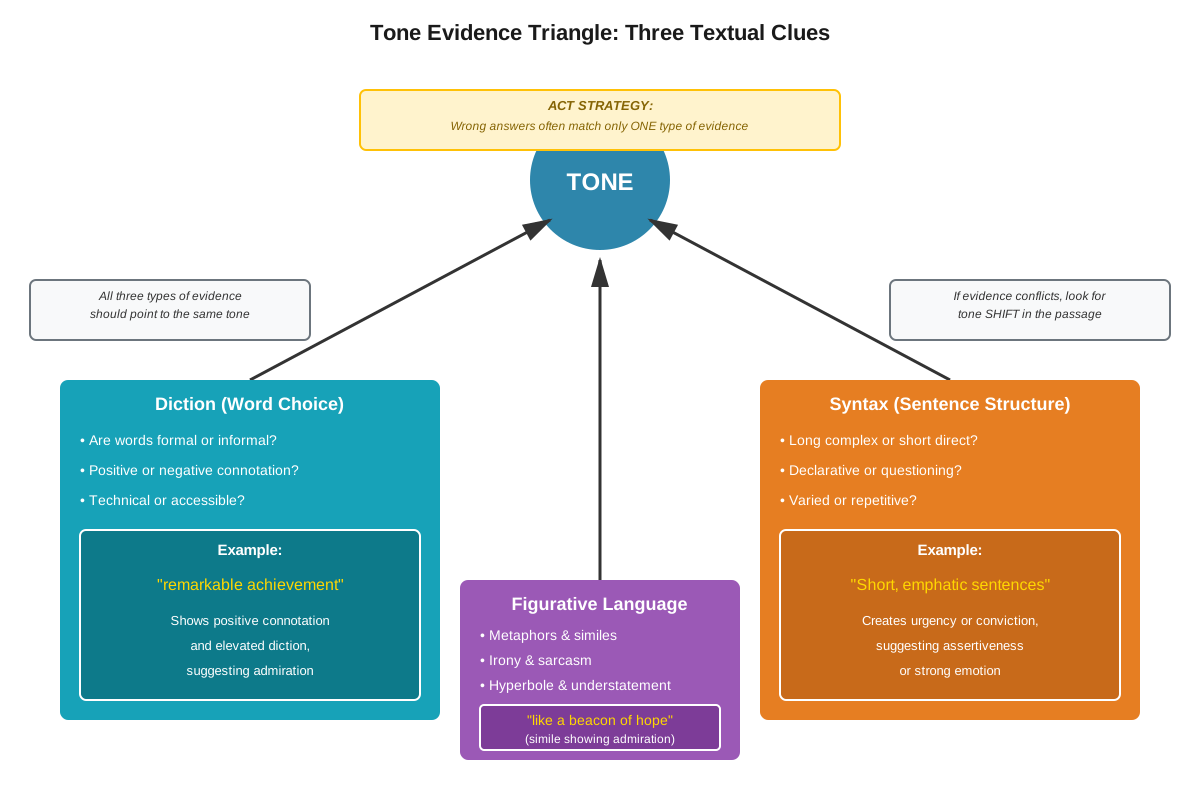
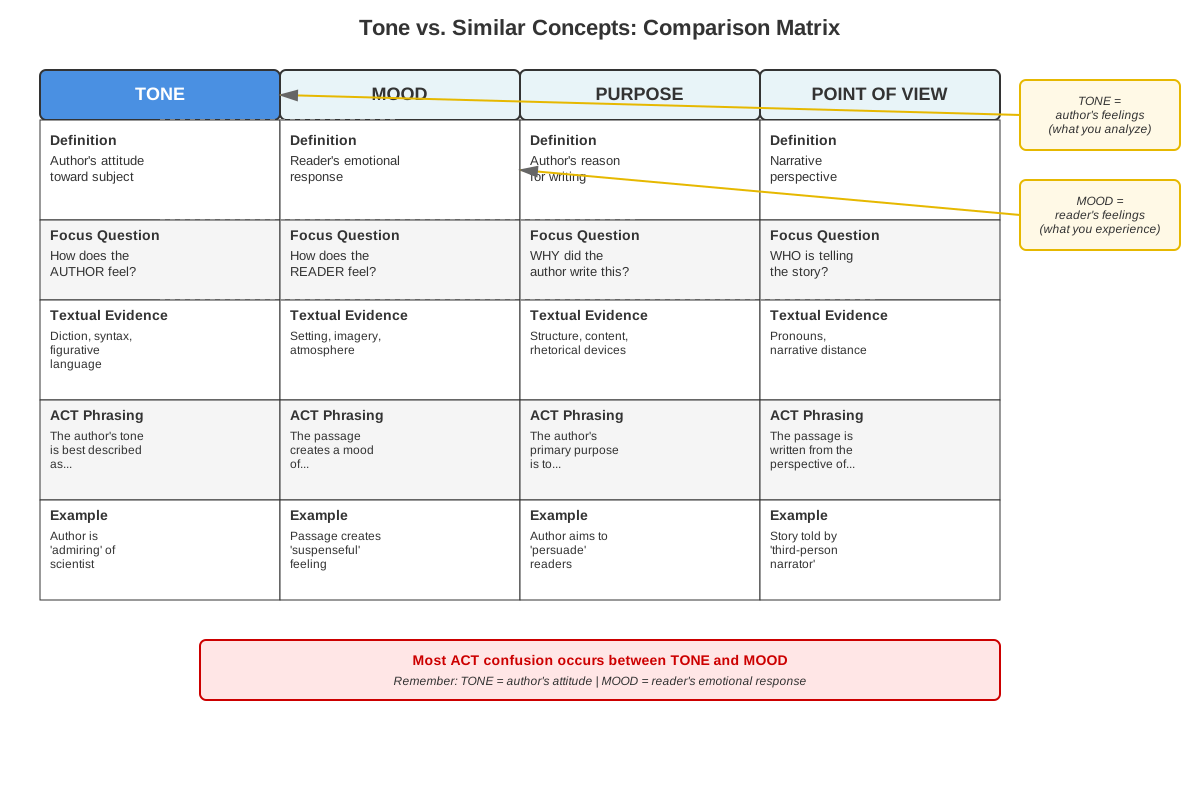
Tone refers to the author's or narrator's attitude toward the subject matter, characters, events, or audience as expressed through language choices. Unlike mood (which describes the emotional atmosphere experienced by the reader), tone reflects the writer's perspective and feelings. On the ACT, tone is conveyed through multiple textual elements working in concert: diction (word choice), syntax (sentence structure), imagery, figurative language, punctuation, and selection of details.
The ACT tests tone at varying levels of specificity. Some questions ask about the overall tone of an entire passage, requiring students to synthesize evidence from multiple paragraphs. Others focus on a specific section, demanding careful attention to how tone might shift between different parts of a text. Understanding that tone can be complex—even containing multiple simultaneous attitudes—is crucial for ACT success.
Categories of Tone
ACT passages typically employ tones that fall into several broad categories, though specific tones within these categories vary considerably:
| Tone Category | Common Examples | Typical Passage Types |
|---|---|---|
| Positive/Favorable | Enthusiastic, admiring, optimistic, appreciative, reverent | Humanities (biographical), Natural Science (discoveries) |
| Negative/Critical | Skeptical, disapproving, cynical, pessimistic, indignant | Social Science (critiques), Prose Fiction (conflict) |
| Neutral/Objective | Informative, analytical, detached, matter-of-fact, clinical | Natural Science, Social Science (research-based) |
| Complex/Mixed | Ambivalent, nostalgic, ironic, bittersweet, resigned | Prose Fiction, Literary Nonfiction |
Textual Evidence for Tone
Identifying tone accurately requires analyzing specific textual features:
Diction: The connotative meanings of words provide the strongest tone indicators. Compare "The politician's plan was ambitious" (neutral to positive) versus "The politician's plan was reckless" (negative). The ACT frequently tests whether students recognize these subtle distinctions. Strong adjectives, adverbs, and verbs carry particularly heavy tonal weight.
Syntax: Sentence structure reveals tone through rhythm and emphasis. Short, declarative sentences often convey directness or urgency. Long, flowing sentences with multiple clauses may suggest contemplation or complexity. Rhetorical questions indicate engagement or skepticism. Exclamatory sentences show strong emotion.
Figurative Language: Metaphors, similes, personification, and other devices add layers of meaning that contribute to tone. A passage describing scientific research as "unlocking nature's secrets" conveys enthusiasm and wonder, while describing it as "invasive probing" suggests criticism or concern.
Selection of Details: What an author chooses to include or emphasize reveals attitude. A passage about a historical figure that focuses exclusively on achievements suggests admiration, while one emphasizing flaws and failures indicates a more critical tone.
Tone Intensity and Nuance
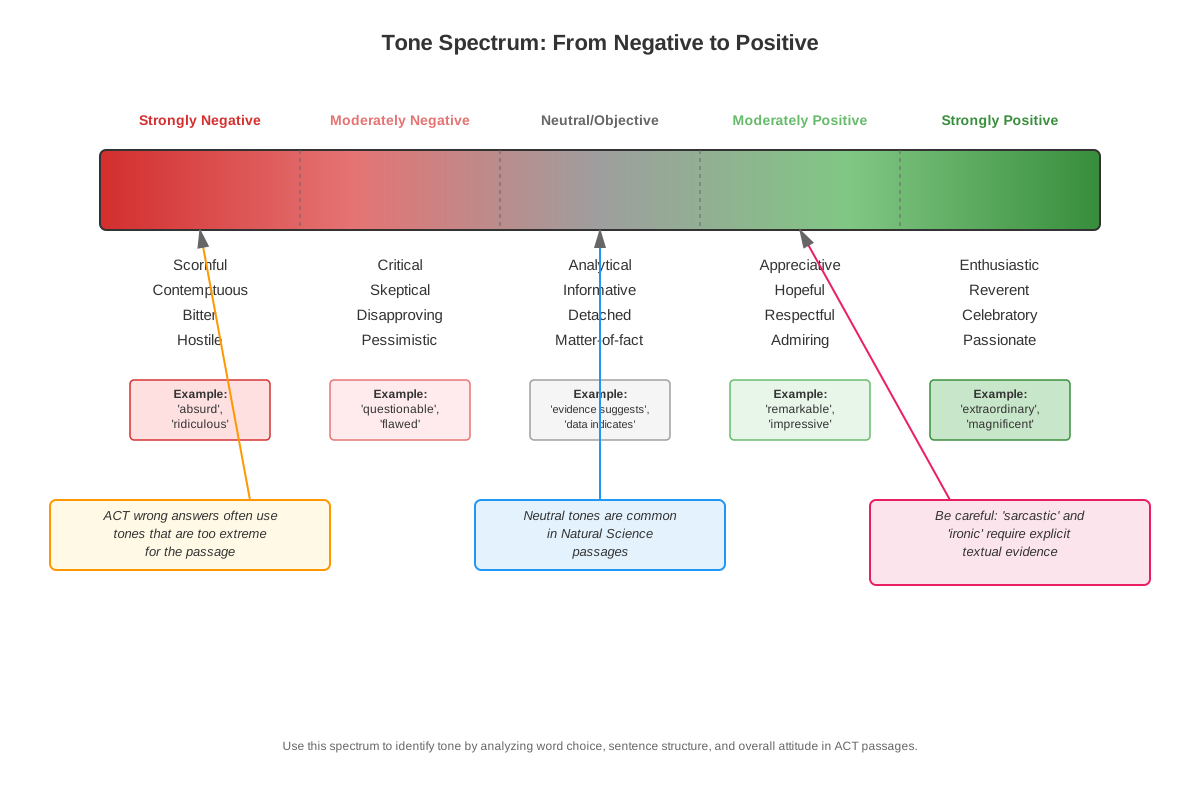
The ACT tests not just tone identification but also the ability to gauge intensity. Answer choices often present tones that are directionally correct but inappropriately extreme or mild. For example, a passage might be "appreciative" rather than "reverential," or "questioning" rather than "hostile." Students must calibrate their tone assessment to match the actual strength of language in the passage.
Understanding tone nuance means recognizing that:
- "Critical" is stronger than "skeptical"
- "Enthusiastic" is stronger than "interested"
- "Nostalgic" combines positive feelings with sadness about the past
- "Ironic" involves a deliberate contrast between literal meaning and intended meaning
- "Ambivalent" indicates simultaneous conflicting attitudes
Tone Shifts
Some ACT passages contain deliberate tone shifts that serve rhetorical purposes. An author might begin with an objective, informative tone when presenting background information, then shift to a more critical or enthusiastic tone when presenting their own perspective. Prose fiction passages frequently shift tone as plot developments occur or as different characters' perspectives are presented.
Recognizing tone shifts requires:
- Identifying transitional markers (however, but, yet, on the other hand)
- Noting changes in diction intensity or type
- Observing structural divisions (paragraph breaks, section changes)
- Understanding the rhetorical purpose of the shift
Concept Relationships
Tone analysis sits at the intersection of multiple reading comprehension skills. Diction analysis → provides evidence for → Tone identification → supports understanding of → Author's purpose. This chain demonstrates how tone serves as both a conclusion drawn from textual evidence and a tool for deeper interpretation.
The relationship between tone and point of view is particularly important: Point of view (who is speaking) → influences → Tone (how they speak about the subject). A first-person narrator in prose fiction will have a subjective tone reflecting their personality and biases, while a third-person omniscient narrator might maintain a more detached tone.
Tone also connects to rhetorical strategies: Author's purpose → determines → Rhetorical strategies employed → create → Specific tone. An author whose purpose is to persuade might adopt an urgent or passionate tone, while one whose purpose is to inform typically maintains a more neutral, objective tone.
Understanding these relationships helps students approach tone questions strategically. Rather than guessing based on gut feeling, they can trace the logical chain: identify the speaker/narrator → analyze word choices and devices → determine attitude → match to appropriate tone descriptor → verify against passage evidence.
High-Yield Facts
⭐ Tone describes the author's or narrator's attitude, not the reader's emotional response (which is mood)
⭐ The ACT never uses extremely negative tones like "hateful," "enraged," or "contemptuous" as correct answers—even critical passages maintain some restraint
⭐ Neutral, objective tones are most common in Natural Science passages, while Prose Fiction passages typically feature more emotional, subjective tones
⭐ When two answer choices seem similar, the correct answer is usually the more moderate, nuanced option rather than the extreme one
⭐ Tone questions can be answered by finding 2-3 specific words or phrases that support the tone; if you cannot find textual evidence, the answer is likely wrong
- Tone can shift within a passage, particularly at paragraph breaks or when transitioning from background information to analysis
- Ironic tone involves saying one thing but meaning another; the ACT signals irony through quotation marks, exaggeration, or contextual contradiction
- Nostalgic tone always involves looking back at the past with a mixture of fondness and loss
- Ambivalent tone indicates the author holds two conflicting attitudes simultaneously
- Descriptive passages about scientific processes typically maintain an informative or analytical tone rather than enthusiastic or critical
- First-person narrators in Prose Fiction passages often have more distinctive, personality-driven tones than third-person narrators
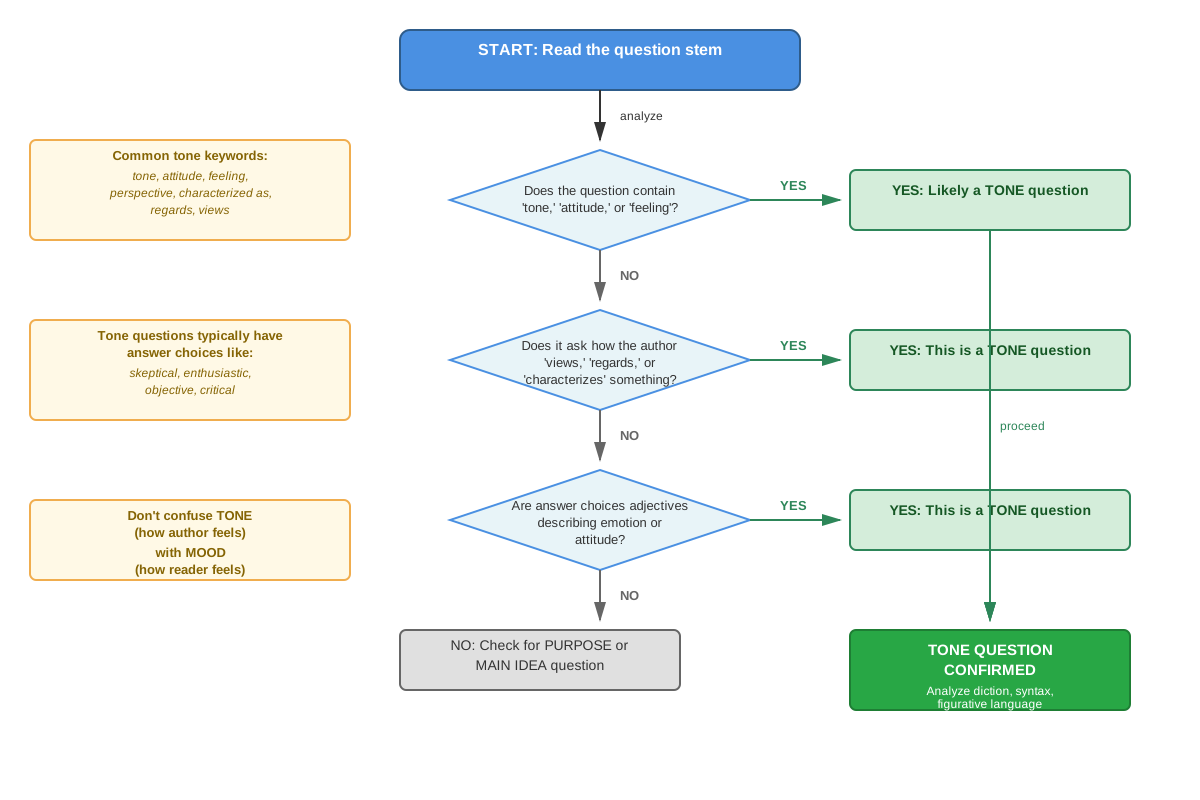
- The word "tone" itself may not appear in the question stem; look for "attitude," "perspective," or "the author regards [subject] as"
Quick check — test yourself on Tone so far.
Try Flashcards →Common Misconceptions
Misconception: Tone and mood are the same thing → Correction: Tone is the author's attitude toward the subject, while mood is the emotional atmosphere created for the reader. A passage might have a somber tone (author's serious attitude) that creates a melancholic mood (reader's emotional response).
Misconception: If a passage discusses negative events, the tone must be negative → Correction: An author can discuss tragic or problematic subjects with various tones. A passage about a natural disaster might maintain an objective, informative tone despite the negative subject matter, or it might adopt an admiring tone when discussing rescue efforts.
Misconception: Strong vocabulary words always indicate a strong tone → Correction: The connotation of words matters more than their complexity. Simple words like "merely" or "just" can indicate dismissiveness, while sophisticated vocabulary might be used in a neutral, academic tone.
Misconception: The correct tone answer will match how I feel about the passage → Correction: Tone questions test the author's attitude, not the reader's reaction. Students must set aside their personal responses and focus on textual evidence of the author's perspective.
Misconception: Objective tone means the author has no opinion → Correction: Objective tone means the author presents information without obvious emotional language or bias, but they may still have a perspective revealed through selection of details, organization, or subtle word choices. Complete neutrality is rare even in scientific writing.
Misconception: Tone remains constant throughout a passage → Correction: Many ACT passages, especially in Prose Fiction and Literary Nonfiction, contain deliberate tone shifts that serve rhetorical purposes. Always check whether the question asks about overall tone or the tone of a specific section.
Worked Examples
Example 1: Natural Science Passage
Passage Excerpt: "The discovery of extremophiles—organisms thriving in conditions once thought incompatible with life—has revolutionized our understanding of biology's boundaries. These remarkable creatures inhabit boiling hot springs, frozen Antarctic lakes, and highly acidic environments. Their existence challenges long-held assumptions and opens exciting possibilities for astrobiology. Scientists now recognize that life's tenacity far exceeds previous estimates, suggesting that extraterrestrial life might exist in environments we once dismissed as uninhabitable."
Question: The author's tone in discussing extremophiles can best be described as:
A) Skeptical and questioning
B) Enthusiastic and appreciative
C) Objective and detached
D) Concerned and cautionary
Analysis:
- Identify key diction: "revolutionized," "remarkable," "exciting possibilities," "tenacity"—all carry positive connotations
- Examine sentence structure: The passage uses active, declarative sentences that emphasize the significance of discoveries
- Consider the subject matter: The author focuses on what extremophiles reveal and enable rather than limitations or concerns
- Evaluate intensity: The language shows clear appreciation but isn't overly emotional or reverential
Answer: B) Enthusiastic and appreciative
Reasoning: The author uses consistently positive language ("revolutionized," "remarkable," "exciting") that goes beyond mere objective reporting (eliminating C). There's no evidence of skepticism—the author accepts and celebrates the discoveries (eliminating A). No concerns or warnings appear in the passage (eliminating D). The tone reflects genuine enthusiasm for scientific discovery while maintaining appropriate academic restraint.
Example 2: Prose Fiction Passage
Passage Excerpt: "Margaret stood in the doorway of her childhood home, now emptied of furniture and family. The wallpaper, once cheerful yellow, had faded to a tired cream. She remembered summer afternoons reading in the corner, her mother's voice calling from the kitchen, her brother's footsteps thundering down the stairs. Those sounds had vanished into silence. The house was just a structure now, walls and floors stripped of the life that had made it home. She pulled the door closed, not looking back."
Question: The narrator's tone in this passage is primarily:
A) Bitter and resentful
B) Nostalgic and melancholic
C) Indifferent and detached
D) Anxious and uncertain
Analysis:
- Identify emotional content: The passage contrasts past happiness with present emptiness
- Examine specific details: "childhood home," "cheerful yellow," "remembered summer afternoons"—all point to fondness for the past
- Note negative elements: "emptied," "faded," "vanished into silence," "stripped"—indicate loss and sadness
- Consider the overall effect: The combination of fond memories and present loss creates a specific emotional quality
Answer: B) Nostalgic and melancholic
Reasoning: Nostalgia involves looking back at the past with fondness mixed with sadness about its loss—exactly what this passage conveys. Margaret remembers happy times but faces their absence. There's no bitterness or resentment toward anyone (eliminating A). She's clearly emotionally engaged, not indifferent (eliminating C). While there's sadness, there's no anxiety about the future or uncertainty (eliminating D). The tone perfectly captures the bittersweet quality of leaving behind a cherished past.
Exam Strategy
Approaching Tone Questions Systematically:
- Read the question stem carefully to determine whether it asks about overall passage tone or a specific section's tone
- Before looking at answer choices, identify 2-3 specific words or phrases that reveal the author's attitude
- Eliminate answers that contradict any textual evidence—even one word that doesn't fit means the answer is wrong
- Distinguish between similar options by assessing intensity and nuance
- Verify your answer by finding at least two pieces of supporting evidence in the passage
Trigger Words and Phrases:
Watch for questions containing: "tone," "attitude," "regards," "views," "perspective," "the author's feelings toward," "can best be described as," "the narrator's stance." These signal tone questions requiring analysis of authorial attitude rather than factual recall.
Process of Elimination Tips:
- Eliminate extreme tones first (hostile, adoring, contemptuous) unless overwhelming textual evidence supports them
- Cross out any tone that contradicts even one sentence in the relevant passage section
- When stuck between two similar options, choose the more moderate, nuanced answer
- If you cannot find specific words supporting a tone, eliminate it
- For "overall tone" questions, eliminate any answer that only fits part of the passage
Time Allocation:
Tone questions typically require 45-60 seconds. Spend 15-20 seconds identifying textual evidence before looking at choices, then 20-30 seconds evaluating options, and 10-15 seconds verifying your answer. Don't rush—these questions reward careful analysis, and the time invested prevents careless errors.
Common Trap Patterns:
- The "too extreme" trap: Answer choices that are directionally correct but too intense (e.g., "reverent" when "appreciative" is correct)
- The "reader response" trap: Answers describing how the passage makes you feel rather than the author's attitude
- The "subject confusion" trap: Answers describing the tone of quoted material or characters rather than the author's tone
- The "partial fit" trap: Answers that match one paragraph but not the overall passage when the question asks about general tone
Memory Techniques
TONE Acronym for Analysis Process:
- Textual evidence first (find specific words)
- Overall or specific (check question scope)
- Nuance matters (moderate over extreme)
- Eliminate contradictions (one mismatch = wrong)
Tone Intensity Spectrum Visualization:
Picture a volume dial for emotions:
- Level 1 (Quiet): interested, informative, questioning
- Level 3 (Medium): appreciative, critical, concerned
- Level 5 (Loud): enthusiastic, indignant, reverent
The ACT rarely tests Level 5 tones. When in doubt, choose Level 2-3 intensity.
The "Evidence Rule of Two":
Remember: Two pieces of textual evidence = confident answer. If you can point to two specific words, phrases, or sentences supporting a tone, you've likely found the correct answer. If you can only find one or none, keep looking or reconsider your choice.
Positive-Neutral-Negative Quick Sort:
When first approaching answer choices, quickly categorize them as positive, neutral, or negative. Then determine which category matches the passage's overall direction. This eliminates 50-75% of wrong answers immediately.
Summary
Tone represents the author's or narrator's attitude toward the subject matter, revealed through diction, syntax, figurative language, and selection of details. Mastering tone analysis for the ACT requires moving beyond surface-level reading to examine how language choices create meaning and convey perspective. Successful students approach tone questions systematically: identifying specific textual evidence before evaluating answer choices, distinguishing between similar tones through careful attention to intensity and nuance, and eliminating options that contradict any passage evidence. The ACT tests tone across all passage types, with questions asking about overall tone, specific section tone, or tone shifts. Understanding that tone differs from mood, that it can be complex or mixed, and that correct answers typically avoid extremes enables students to navigate even challenging tone questions confidently. The ability to accurately identify tone not only improves ACT Reading scores but also develops critical analytical skills applicable to all forms of textual interpretation.
Key Takeaways
- Tone questions test the author's attitude toward the subject, not the reader's emotional response or the passage's factual content
- Always identify 2-3 specific pieces of textual evidence (words, phrases, or sentences) before selecting an answer
- The correct tone answer is usually moderate rather than extreme; eliminate options like "hostile," "adoring," or "contemptuous" unless overwhelming evidence exists
- Tone can shift within a passage, so carefully note whether questions ask about overall tone or specific sections
- Natural Science passages typically feature objective or analytical tones, while Prose Fiction passages often contain more emotional, subjective tones
- When two answers seem similar, choose the more nuanced option and verify it matches the intensity of language in the passage
- Diction (word choice) provides the strongest evidence for tone; focus on connotations of adjectives, verbs, and adverbs
Related Topics
Author's Purpose: Understanding why an author writes a passage connects directly to tone analysis, as purpose influences the attitude an author adopts. Mastering tone enables more sophisticated analysis of persuasive, informative, and entertainment purposes.
Point of View: The narrative perspective (first-person, third-person limited, third-person omniscient) significantly affects tone possibilities. Understanding point of view helps predict the range of tones likely to appear.
Rhetorical Devices: Techniques like irony, hyperbole, understatement, and rhetorical questions serve as tools for creating tone. Deeper study of these devices enhances tone identification accuracy.
Diction and Connotation: Advanced analysis of word choice, including understanding subtle differences between synonyms and recognizing connotative meanings, strengthens tone analysis skills.
Mood and Atmosphere: While distinct from tone, understanding how authors create emotional atmospheres for readers complements tone analysis and prevents confusion between these related concepts.
Practice CTA
Now that you've mastered the fundamentals of tone analysis, it's time to apply these strategies to authentic ACT-style passages. The practice questions and flashcards will reinforce your ability to identify textual evidence, distinguish between similar tones, and eliminate trap answers confidently. Remember: tone questions separate good readers from great test-takers, and with systematic practice, you'll develop the analytical precision needed to answer every tone question correctly. Each practice question you complete strengthens your pattern recognition and builds the confidence essential for test day success. Start practicing now—your improved Reading score awaits!
Sign up free to keep reading
Create a free AnvayaPrep account to finish this ACT guide on Tone — plus flashcards and practice questions.