Overview
Introductory phrases are modifying elements that appear at the beginning of a sentence, providing context, background, or additional information before the main clause. On the ACT English test, these phrases represent one of the most frequently tested punctuation and sentence structure concepts. Understanding how to properly punctuate and construct sentences with introductory elements is crucial for achieving a high score, as questions involving these phrases appear in virtually every ACT English section. These questions test whether students can recognize when a comma is needed to separate an introductory phrase from the main clause, and whether the phrase itself is grammatically correct and logically connected to what follows.
The importance of mastering ACT introductory phrases extends beyond simple comma placement. These questions often combine multiple grammar concepts, testing students' understanding of modification, logical relationships, and sentence clarity simultaneously. A sentence might begin with a participial phrase, prepositional phrase, or dependent clause, and students must determine not only whether the punctuation is correct but also whether the introductory element logically modifies the subject of the main clause. Misplaced or dangling modifiers frequently appear in ACT questions involving introductory phrases, making this topic a gateway to understanding broader modification principles.
Within the larger framework of ACT sentence structure, introductory phrases connect directly to concepts like comma usage, modification, parallelism, and sentence boundaries. Students who master introductory phrases develop a stronger intuition for sentence rhythm and structure, which helps them identify run-on sentences, fragments, and other structural errors more efficiently. This topic serves as a foundation for understanding how sentences are built and how different elements relate to one another, making it essential preparation not just for the English section but for clear, effective writing in general.
Learning Objectives
- [ ] Identify when Introductory phrases is being tested on the ACT
- [ ] Explain the core rule or strategy behind Introductory phrases
- [ ] Apply Introductory phrases to ACT-style questions accurately
- [ ] Distinguish between different types of introductory phrases and their punctuation requirements
- [ ] Recognize and correct dangling or misplaced modifiers in introductory phrases
- [ ] Evaluate whether an introductory phrase logically connects to the main clause
- [ ] Determine when an introductory phrase is too long or short to require a comma
Prerequisites
- Basic comma rules: Understanding fundamental comma usage is essential because introductory phrases primarily test comma placement after opening elements
- Independent and dependent clauses: Recognizing the difference between these clause types helps identify when an introductory element is a phrase versus a clause
- Subject and predicate identification: Students must quickly locate the subject of the main clause to check whether introductory modifiers are properly attached
- Modification concepts: Basic understanding of how modifiers work ensures students can spot logical errors in how introductory phrases relate to main clauses
Why This Topic Matters
In real-world writing, introductory phrases add sophistication, variety, and clarity to prose. They allow writers to establish context, show relationships between ideas, and create more engaging sentence rhythms. Professional writing across all fields—from journalism to academic research to business communication—relies heavily on well-constructed introductory elements to guide readers through complex information. Mastering this skill translates directly to improved writing quality in college essays, professional correspondence, and any situation requiring clear communication.
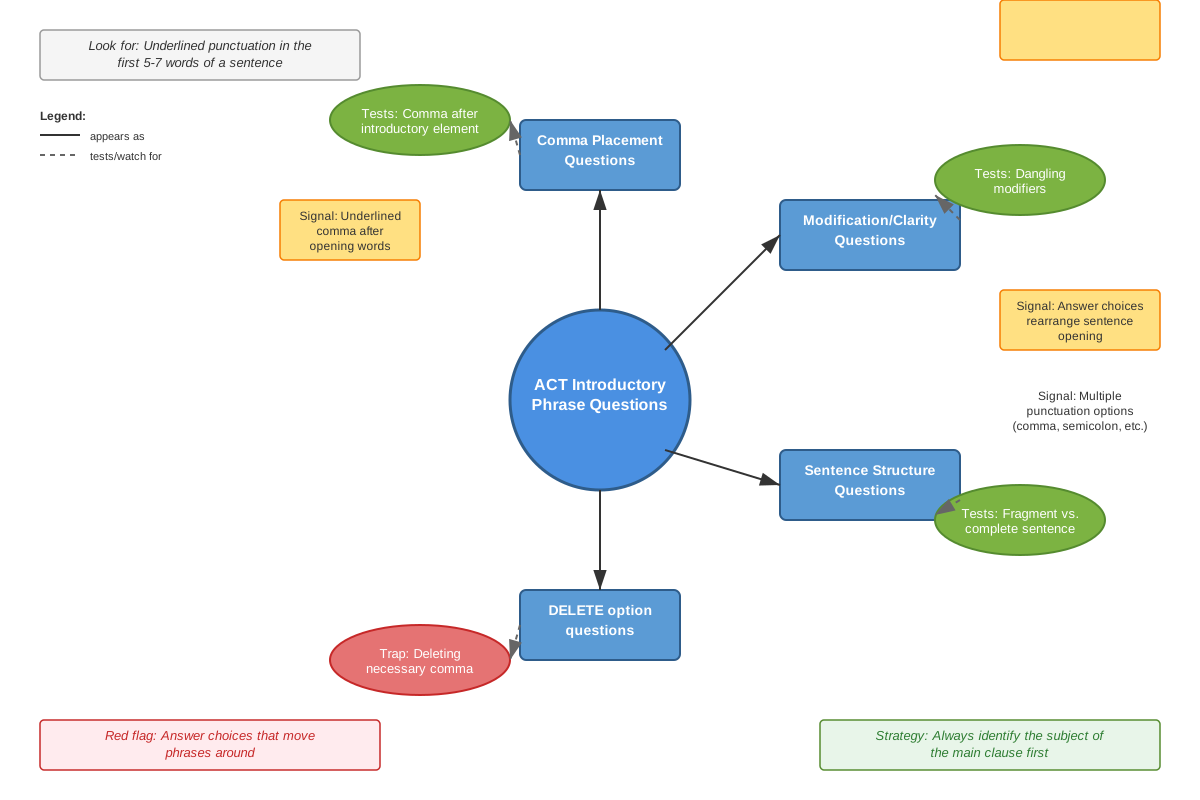
On the ACT English test, introductory phrases appear with remarkable frequency. Students can expect to encounter 3-5 questions per test that directly assess understanding of introductory phrases, and many additional questions where this knowledge plays a supporting role. These questions typically appear in two formats: punctuation questions asking whether a comma is needed after an introductory element, and modification questions testing whether the introductory phrase logically connects to the sentence's subject. The ACT particularly favors questions involving participial phrases (phrases beginning with -ing or -ed verbs) and prepositional phrases at sentence openings.
Common question patterns include sentences where the introductory phrase is underlined along with the comma that follows it, with answer choices offering variations like "phrase, main clause" versus "phrase main clause" versus restructured versions. Another frequent pattern presents a sentence with a potential dangling modifier, where the introductory phrase doesn't logically modify the subject that follows. The ACT also tests students' ability to recognize when very short introductory phrases (typically three words or fewer) don't require commas, creating exceptions to the general rule.
Core Concepts
Definition and Function of Introductory Phrases
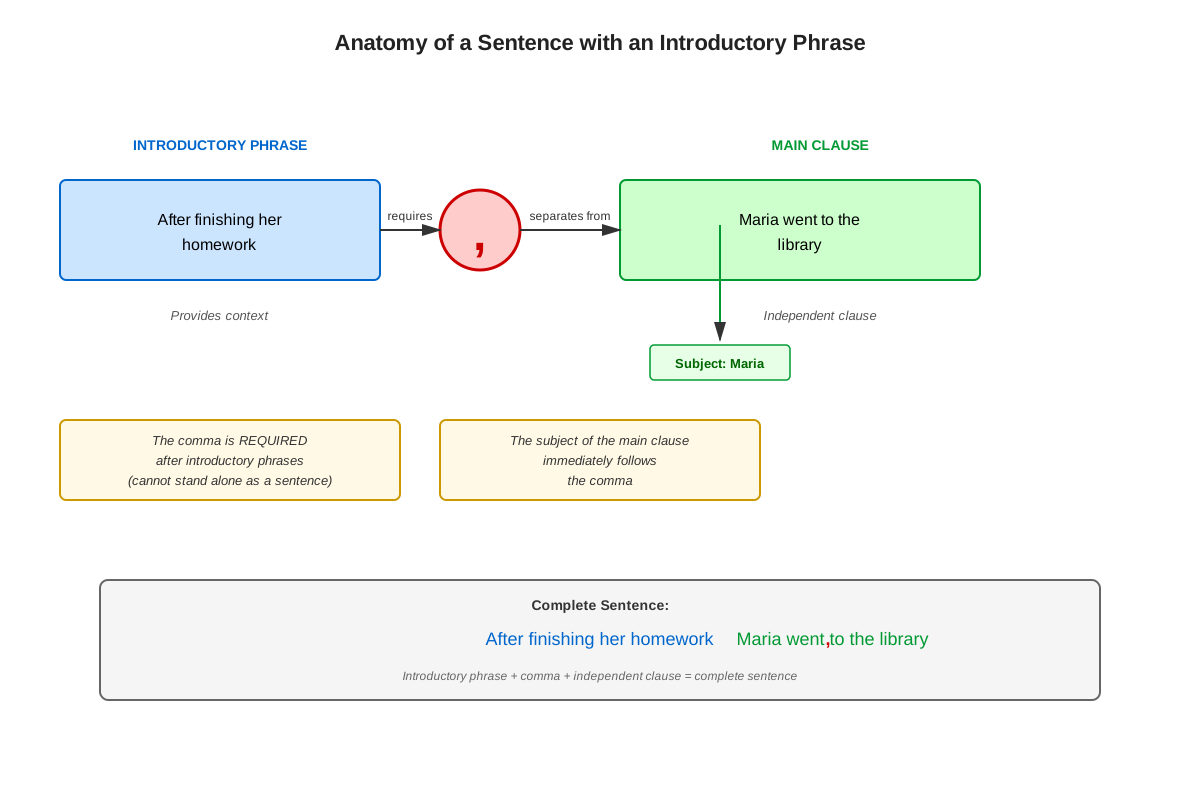
An introductory phrase is a group of related words that appears at the beginning of a sentence, before the main clause, and provides additional information about the action, subject, or circumstances described in that main clause. Unlike a complete clause, an introductory phrase lacks either a subject or a predicate (or both), making it a dependent element that cannot stand alone as a sentence. These phrases serve multiple functions: they can establish time, place, manner, condition, or reason; they can modify the subject or action of the main clause; or they can provide transitional connections between ideas.
The fundamental rule governing introductory phrases is straightforward: when a phrase of four or more words introduces a sentence, it should be followed by a comma. This comma signals to readers that the introductory material has ended and the main clause is beginning. The comma creates a natural pause that helps readers process the sentence structure and understand the relationship between the introductory element and the main statement.
Types of Introductory Phrases
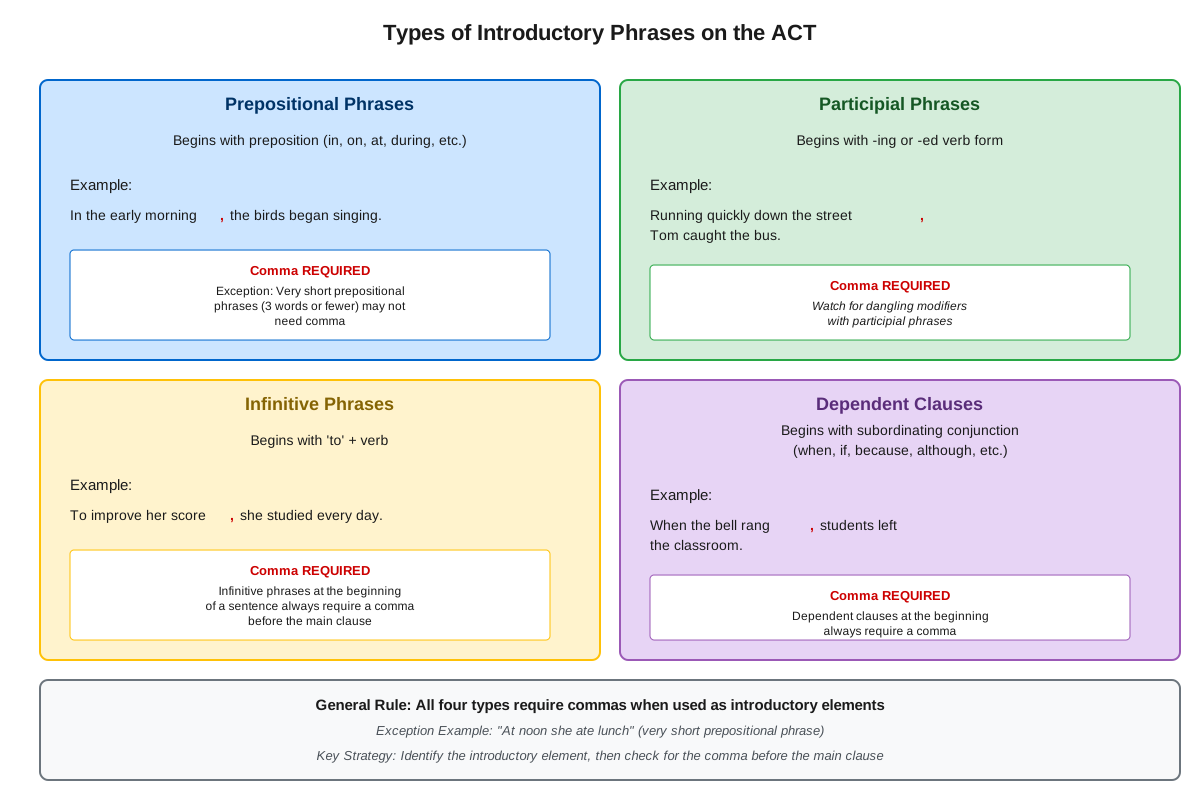
Prepositional phrases begin with a preposition (in, on, at, by, with, from, during, etc.) and include the object of that preposition along with any modifiers. Examples include "In the early morning," "After the concert," or "With great enthusiasm." When these phrases are four words or longer, they require a comma: "In the early morning hours, the city awakens slowly." Shorter prepositional phrases (three words or fewer) typically don't require commas unless needed for clarity: "In May we traveled to Spain" versus "In the winter, temperatures drop significantly."
Participial phrases begin with a present participle (verb + -ing) or past participle (often verb + -ed). These phrases always function as adjectives, modifying the subject of the main clause. Examples include "Running through the park" or "Exhausted by the journey." These phrases always require a comma: "Running through the park, Sarah noticed the autumn leaves." The critical rule for participial phrases is that they must logically modify the subject that immediately follows the comma—this is where dangling modifier errors frequently occur.
Infinitive phrases begin with "to" plus a verb and can function as nouns, adjectives, or adverbs. When used as introductory elements, they typically express purpose or intention: "To improve her skills, Maria practiced daily." These phrases require commas when they introduce sentences.
Absolute phrases consist of a noun plus a participle and modify the entire main clause rather than just the subject. Example: "The game having ended, the crowd dispersed quickly." These always require commas and are less common on the ACT but do appear occasionally.
The Comma Rule and Its Exceptions
The standard rule states that introductory phrases of four or more words should be followed by a comma. However, several important exceptions and nuances exist:
| Situation | Comma Required? | Example |
|---|---|---|
| Long introductory phrase (4+ words) | Yes | "After the long and exhausting meeting, we went home." |
| Short introductory phrase (1-3 words) | Usually no | "In May we traveled." |
| Short phrase causing confusion | Yes | "Inside, the house was warm." |
| Participial phrase (any length) | Yes | "Running quickly, Tom caught the bus." |
| Introductory dependent clause | Yes | "When the bell rang, students left." |
| Single transitional word | Sometimes | "However, the results were surprising." |
The exception for short phrases exists because brief introductory elements don't typically cause confusion or require a pause for comprehension. However, if omitting the comma creates ambiguity or a misreading, the comma should be included even with short phrases.
Dangling and Misplaced Modifiers
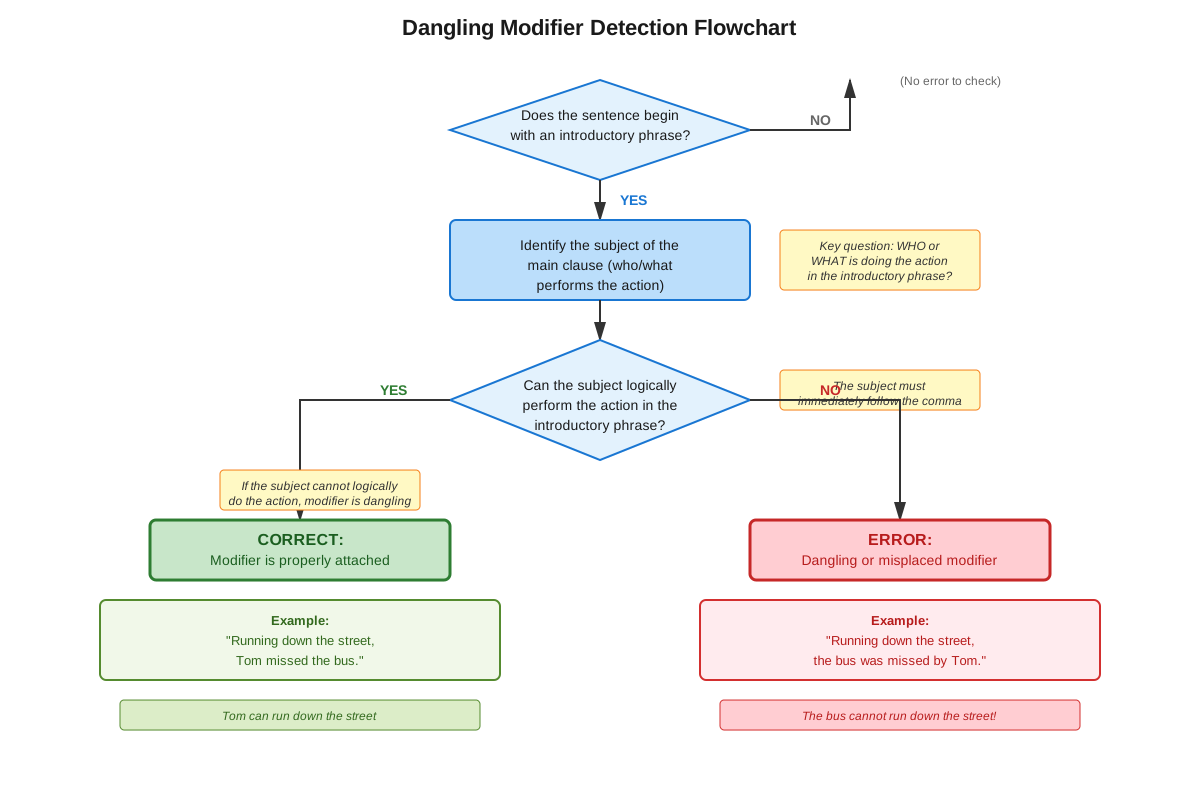
A dangling modifier occurs when an introductory phrase doesn't logically connect to the subject of the main clause. This is one of the most tested concepts involving introductory phrases on the ACT. The rule is absolute: an introductory modifying phrase must logically modify the subject that immediately follows the comma.
Consider this incorrect example: "Walking through the museum, the paintings were beautiful." The introductory phrase "Walking through the museum" is a participial phrase that should modify whoever is doing the walking. However, the subject of the main clause is "paintings," which cannot walk through a museum. This creates a dangling modifier.
The correction requires making the person doing the walking the subject: "Walking through the museum, I found the paintings beautiful" or "Walking through the museum, the visitors admired the beautiful paintings."
The ACT frequently tests this concept by presenting sentences where the introductory phrase could logically modify the subject but doesn't, or where the subject is implied but not stated. Students must quickly identify the subject of the main clause and verify that the introductory phrase can logically describe or relate to that subject.
Logical Relationships and Meaning
Beyond grammatical correctness, introductory phrases must create logical relationships with the main clause. The ACT tests whether students can recognize when an introductory phrase makes sense in context. For example, "To improve her Spanish, the book was helpful" is grammatically incorrect (dangling modifier), but "To improve her Spanish, Maria read extensively" is both grammatically correct and logically sound.
Time-based introductory phrases must align with verb tenses in the main clause. Cause-and-effect relationships established by introductory phrases must be logical. The ACT may present answer choices where the grammar is technically correct but the meaning is illogical or awkward, testing students' ability to evaluate both structure and sense simultaneously.
Concept Relationships
The concepts within introductory phrases form an interconnected system where understanding one element strengthens comprehension of others. The comma rule serves as the foundation, establishing the basic punctuation principle. This rule connects directly to phrase identification, as students must recognize what type of phrase they're dealing with to apply the correct punctuation. Phrase identification then leads to modifier logic, where students verify that the introductory element appropriately modifies the main clause's subject.
The relationship flows as follows: Phrase identification → Comma placement → Modifier verification → Logical meaning check. Each step depends on the previous one, creating a systematic approach to evaluating sentences with introductory elements.
These concepts connect to prerequisite knowledge of independent clauses because students must distinguish between introductory phrases (which don't contain both subject and predicate) and introductory dependent clauses (which do). Understanding subject identification is crucial because the subject of the main clause determines whether a modifying introductory phrase is correctly attached.
Introductory phrases also relate forward to more advanced topics like parallel structure (when multiple introductory phrases appear in a series) and sentence variety (using different types of introductory elements to create more sophisticated prose). Mastering introductory phrases provides the foundation for understanding how sentences can be restructured and how different elements can be moved to create emphasis or clarity.
Quick check — test yourself on Introductory phrases so far.
Try Flashcards →High-Yield Facts
⭐ Introductory phrases of four or more words require a comma before the main clause
⭐ Participial phrases (beginning with -ing or -ed verbs) always require a comma, regardless of length
⭐ An introductory modifying phrase must logically modify the subject that immediately follows the comma
⭐ Short introductory prepositional phrases (three words or fewer) typically don't require commas
⭐ Dangling modifiers occur when the subject of the main clause cannot logically perform the action described in the introductory phrase
- Introductory dependent clauses (containing subject and predicate) always require a comma
- Absolute phrases always require commas and modify the entire main clause
- Transitional words and phrases at sentence beginnings typically require commas
- If omitting a comma after a short introductory phrase causes confusion, include the comma
- Multiple introductory phrases in sequence should all appear before the comma that separates them from the main clause
- The ACT will never test obscure exceptions; focus on the standard rules
- Introductory phrases cannot stand alone as complete sentences
- When an introductory phrase is underlined with its comma, check both punctuation and logical modification
- Restructuring a sentence to eliminate a dangling modifier is often the correct answer choice
- Context matters: read the full sentence and surrounding sentences to verify logical relationships
Common Misconceptions
Misconception: All introductory phrases require commas regardless of length.
Correction: Short introductory prepositional phrases (typically three words or fewer) don't require commas unless omitting the comma causes confusion. "In May we traveled" is correct without a comma, while "In the early morning, we departed" requires one.
Misconception: If the grammar is correct, the sentence is correct.
Correction: The ACT tests both grammatical correctness and logical meaning. A sentence can be grammatically structured correctly but still contain a dangling modifier or illogical relationship. Always verify that the introductory phrase makes sense with what follows.
Misconception: The subject of the introductory phrase must match the subject of the main clause.
Correction: Introductory phrases don't have subjects (that's what makes them phrases rather than clauses). The introductory phrase must logically modify or relate to the subject of the main clause, but they don't need matching subjects because the phrase doesn't have one.
Misconception: Longer introductory phrases are always wrong and should be shortened.
Correction: Length alone doesn't make an introductory phrase incorrect. The ACT tests whether the phrase is properly punctuated and logically connected, not whether it's concise. Sometimes longer introductory phrases are the most effective choice.
Misconception: Any word or phrase at the beginning of a sentence is an introductory phrase.
Correction: The subject of the sentence can appear at the beginning without being an introductory phrase. "The students in the library studied quietly" doesn't have an introductory phrase—"The students in the library" is the complete subject. An introductory phrase comes before the subject and main clause.
Misconception: Introductory phrases and introductory clauses follow the same rules.
Correction: While both require commas, they're structurally different. Introductory clauses contain both a subject and a verb (dependent clauses), while introductory phrases lack one or both. This distinction matters for identifying sentence fragments and understanding sentence structure.
Worked Examples
Example 1: Identifying and Correcting Dangling Modifiers
Question: Which of the following is correct?
A) Walking through the forest, the trees seemed to whisper secrets.
B) Walking through the forest, the secrets of the trees seemed to whisper.
C) Walking through the forest, I heard the trees whispering secrets.
D) Walking through the forest, secrets were whispered by the trees.
Solution Process:
Step 1: Identify the introductory phrase. "Walking through the forest" is a participial phrase beginning with the present participle "walking."
Step 2: Determine what the phrase should modify. The phrase describes someone performing the action of walking. Therefore, the subject of the main clause must be whoever is walking.
Step 3: Examine each answer choice's subject:
- Choice A: Subject is "trees" — trees cannot walk through the forest (dangling modifier)
- Choice B: Subject is "secrets" — secrets cannot walk through the forest (dangling modifier)
- Choice C: Subject is "I" — a person can walk through the forest (correct modification)
- Choice D: Subject is "secrets" — secrets cannot walk through the forest (dangling modifier)
Step 4: Verify punctuation. Choice C correctly places a comma after the introductory participial phrase.
Step 5: Check logical meaning. Choice C creates a logical sentence where the person walking hears the trees whispering.
Answer: C is correct. This example demonstrates the critical importance of ensuring that introductory modifying phrases logically connect to the subject that follows. The ACT frequently tests this concept by making the grammar appear correct while the logic is flawed.
Example 2: Comma Placement with Varying Phrase Lengths
Question: Which sentence is correctly punctuated?
A) In the morning, we will discuss the proposal.
B) In the morning we will discuss the proposal.
C) After the long and contentious meeting we will discuss the proposal.
D) After the long and contentious meeting, we will discuss the proposal.
Solution Process:
Step 1: Identify the introductory phrases in each choice.
- Choices A and B: "In the morning" (three words)
- Choices C and D: "After the long and contentious meeting" (six words)
Step 2: Apply the length rule. Introductory phrases of four or more words require commas. Shorter phrases typically don't require commas unless needed for clarity.
Step 3: Evaluate choices A and B. "In the morning" is only three words, so the comma is optional. Both A and B could be considered acceptable in general writing, but we need to check if there's a clarity issue. Reading "In the morning we will discuss" flows clearly without confusion, so the comma is truly optional here.
Step 4: Evaluate choices C and D. "After the long and contentious meeting" contains six words, well over the four-word threshold. This phrase requires a comma. Choice C is incorrect; Choice D is correct.
Step 5: Determine the best answer. Since the question asks which sentence is correctly punctuated (implying one right answer), and both A and B are technically acceptable for short phrases, we need to consider that D represents a clear rule application (long phrase = comma required), while A represents an optional comma. However, if both A and D appear as options, D is the stronger choice because it follows the definitive rule.
Answer: D is correct. This example illustrates how the ACT tests understanding of the four-word guideline and the difference between required and optional commas. When in doubt on the ACT, longer introductory phrases always need commas, making those questions more straightforward than short-phrase questions.
Exam Strategy
When approaching ACT questions involving introductory phrases, follow this systematic process:
Step 1: Identify the question type. Look for underlined portions at the beginning of sentences, especially when the underlining includes or immediately precedes a comma. Trigger phrases include "NO CHANGE" as an option with a comma present, or answer choices that vary only in comma placement or sentence structure.
Step 2: Locate the main clause. Quickly identify where the main clause begins by finding the subject and main verb. Everything before the subject is potentially an introductory element. Draw a mental line or use your pencil to mark where the introductory phrase ends and the main clause begins.
Step 3: Count and classify. Determine the length of the introductory phrase (is it four or more words?) and identify its type (prepositional, participial, infinitive, etc.). Participial phrases always need commas regardless of length, which makes them easier to evaluate.
Step 4: Check for logical modification. If the introductory phrase is a modifier (especially participial phrases), verify that it logically modifies the subject of the main clause. Ask yourself: "Can the subject perform the action or have the quality described in the introductory phrase?" If not, eliminate that answer choice immediately.
Step 5: Apply the comma rule. Based on phrase length and type, determine whether a comma is required, optional, or incorrect. Remember that the ACT typically tests clear-cut cases rather than ambiguous situations.
Process of elimination tips specific to introductory phrases:
- Eliminate any choice where a participial phrase doesn't have a comma
- Eliminate any choice where the subject cannot logically perform the action in the introductory phrase
- Eliminate choices that create sentence fragments by separating the introductory phrase as its own sentence
- When answer choices restructure the sentence, verify that the new structure maintains the original meaning
Time allocation: These questions should take 20-30 seconds each. If you can quickly identify the subject and verify logical modification, you can answer confidently. Don't overthink short prepositional phrases—if it's three words or fewer and reads clearly without a comma, it's likely correct either way.
Trigger words and phrases to watch for:
- Sentences beginning with -ing words (participial phrases requiring commas)
- Sentences beginning with "To [verb]" (infinitive phrases requiring commas)
- Sentences beginning with "After," "Before," "During," "In," "On," "With" (prepositional phrases—check length)
- Any underlined comma immediately after an opening phrase
- Answer choices that move phrases around or restructure sentences
Memory Techniques
The "Four-or-More" Rule: Remember "Four or more, comma for sure" to recall that introductory phrases of four or more words require commas. For participial phrases, remember "Participles pause" (they always need commas).
The Subject-Check Method: Create a mental acronym SLIM for evaluating introductory phrases:
- Spot the introductory phrase
- Locate the main clause subject
- Investigate logical connection
- Mark with comma if needed
The Dangling Modifier Test: Use the question "Who or what is doing the action?" immediately after reading an introductory phrase. The answer must be the subject of the main clause. Visualize the action described in the introductory phrase and picture the subject performing it—if you can't picture it, it's probably a dangling modifier.
The Three-Word Threshold: Hold up three fingers to remember that three words or fewer typically don't need commas. Four fingers means comma required. This physical memory technique helps during the test when you're counting words quickly.
The Participial Phrase Alert: Remember "P-P-C" (Participial Phrase = Comma). Any time you see an -ing or -ed word starting a sentence, immediately look for the comma and check the subject.
Summary
Introductory phrases are modifying or contextual elements that appear before the main clause of a sentence, and they represent a high-frequency test topic on the ACT English section. The fundamental rule is straightforward: introductory phrases of four or more words require a comma before the main clause, while shorter phrases typically don't unless needed for clarity. Participial phrases always require commas regardless of length. Beyond punctuation, the ACT heavily tests logical modification, requiring that introductory modifying phrases connect sensibly to the subject that follows them. Dangling modifiers—where the introductory phrase cannot logically modify the subject—are among the most common errors tested. Success with these questions requires a systematic approach: identify the phrase type and length, locate the main clause subject, verify logical connection, and apply the appropriate comma rule. Students who master introductory phrases gain not only the ability to answer these specific questions correctly but also develop stronger overall sentence structure awareness that benefits performance across the entire English section.
Key Takeaways
- Introductory phrases of four or more words require commas; shorter phrases typically don't unless clarity demands it
- Participial phrases (beginning with -ing or -ed verbs) always require commas and must logically modify the subject that follows
- The subject of the main clause must be able to logically perform the action or possess the quality described in the introductory modifying phrase
- Dangling modifiers occur when introductory phrases don't connect logically to the subject—these are frequently tested on the ACT
- Systematic evaluation (identify phrase → locate subject → check logic → apply comma rule) ensures accuracy and speed
- Short prepositional phrases (three words or fewer) are the main exception to the comma rule
- Both grammatical correctness and logical meaning matter—don't assume a grammatically structured sentence is automatically correct
Related Topics
Comma Usage and Rules: Mastering introductory phrases provides a foundation for understanding other comma rules, including commas with coordinating conjunctions, nonessential elements, and items in a series. The principles of separating sentence elements and signaling pauses apply across all comma contexts.
Modification and Modifiers: Introductory phrases are just one type of modifier. Understanding how they work prepares students for questions about adjective placement, adverb usage, and relative clauses. The logical connection principle extends to all modification questions.
Sentence Structure and Variety: Once students master introductory phrases, they can explore more complex sentence structures, including compound-complex sentences, inverted sentence order, and sophisticated rhetorical techniques that use varied sentence openings for effect.
Parallelism: When multiple introductory phrases appear in a series or when sentences in a paragraph use parallel introductory structures, understanding both introductory phrase rules and parallelism becomes essential.
Practice CTA
Now that you've mastered the core concepts of introductory phrases, it's time to put your knowledge into action! Work through the practice questions to reinforce these principles and build the speed and confidence you need for test day. Each practice question is designed to mirror actual ACT patterns, giving you authentic preparation. Don't forget to review the flashcards to cement the high-yield facts and rules in your memory. Remember: understanding the concept is just the first step—applying it accurately under timed conditions is what leads to score improvements. You've got this!
Sign up free to keep reading
Create a free AnvayaPrep account to finish this ACT guide on Introductory phrases — plus flashcards and practice questions.