Overview
In the ACT Writing test, constructing a compelling argument requires more than simply presenting your own perspective—it demands that you acknowledge and respond to opposing viewpoints. A rebuttal is the critical component of argumentative writing where you address counterarguments, demonstrate why alternative perspectives fall short, and strengthen your own position by showing you've considered multiple angles. This skill separates mediocre essays from high-scoring ones because it demonstrates intellectual maturity, critical thinking, and the ability to engage with complexity rather than ignore it.
The ACT Writing test explicitly evaluates your ability to analyze multiple perspectives on an issue and develop your own perspective while addressing the relationship between your ideas and at least one other viewpoint. Without an effective ACT rebuttal strategy, essays often appear one-sided, simplistic, or defensive. Examiners look for students who can fairly represent opposing views, identify their limitations or flaws, and explain why their own argument remains more compelling despite legitimate concerns from other perspectives. This balanced approach to argumentation is what transforms a basic essay into one that earns scores in the upper ranges.
Understanding rebuttal connects directly to broader Writing concepts including thesis development, evidence evaluation, logical reasoning, and organizational structure. A strong rebuttal doesn't exist in isolation—it must be integrated seamlessly into your essay's argumentative framework, supported by relevant examples, and positioned strategically to maximize persuasive impact. Mastering this skill will elevate every aspect of your ACT Writing performance.
Learning Objectives
- [ ] Identify when Rebuttal is being tested in ACT Writing prompts and scoring criteria
- [ ] Explain the core rule or strategy behind Rebuttal in argumentative essays
- [ ] Apply Rebuttal to ACT-style questions accurately and effectively
- [ ] Distinguish between weak acknowledgment and strong rebuttal of counterarguments
- [ ] Construct rebuttals that maintain respectful tone while demonstrating logical superiority
- [ ] Integrate rebuttal seamlessly into essay organization without disrupting flow
- [ ] Evaluate the strength of potential counterarguments to prioritize which to address
Prerequisites
- Basic argumentative essay structure: Understanding thesis statements, body paragraphs, and conclusions is essential because rebuttal must fit coherently within this framework
- Claim and evidence relationship: Recognizing how evidence supports claims enables you to identify weaknesses in opposing arguments
- Logical reasoning fundamentals: Familiarity with cause-and-effect relationships and logical fallacies helps you construct effective rebuttals
- Perspective analysis: The ability to understand viewpoints different from your own is necessary before you can address them fairly and critically
Why This Topic Matters
In professional and academic contexts, the ability to anticipate objections and respond to criticism is fundamental to persuasive communication. Scientists address potential flaws in their research methodology, lawyers counter opposing counsel's arguments, and business leaders respond to stakeholder concerns. The rebuttal skill you develop for the ACT transfers directly to college writing, debate, negotiation, and any situation requiring you to defend a position while acknowledging complexity.
On the ACT Writing test, rebuttal appears in approximately 100% of high-scoring essays. The scoring rubric explicitly evaluates "Analysis of other perspectives" as one of four domains, accounting for 25% of your Writing score. Essays that score 5-6 (the highest range) consistently "analyze the implications, complexities, and underlying assumptions of different viewpoints" and "situate their analysis within a broader context." Without addressing counterarguments, essays typically max out at a 3-4 range regardless of other strengths.
The ACT Writing prompt always presents three distinct perspectives on a complex issue. While you're not required to address all three perspectives, the highest-scoring essays typically engage with at least one or two perspectives that differ from the writer's own position. This engagement appears most commonly in dedicated rebuttal paragraphs, though sophisticated writers may integrate brief rebuttals throughout their essays. Examiners specifically look for evidence that you understand why intelligent people might disagree with you and can explain why your position remains superior despite legitimate alternative viewpoints.
Core Concepts
What Constitutes an Effective Rebuttal
A rebuttal is not simply disagreeing with an opposing viewpoint—it's a structured response that acknowledges the counterargument, identifies its limitations or flaws, and explains why your position remains more compelling. Effective rebuttals contain three essential components: fair representation of the opposing view, critical analysis of its weaknesses, and reconnection to your thesis. The fair representation demonstrates intellectual honesty and prevents straw man fallacies where you mischaracterize opponents' positions to make them easier to attack. The critical analysis reveals specific logical gaps, questionable assumptions, overlooked consequences, or limited applicability. The reconnection reinforces why your argument better addresses the issue's complexity.
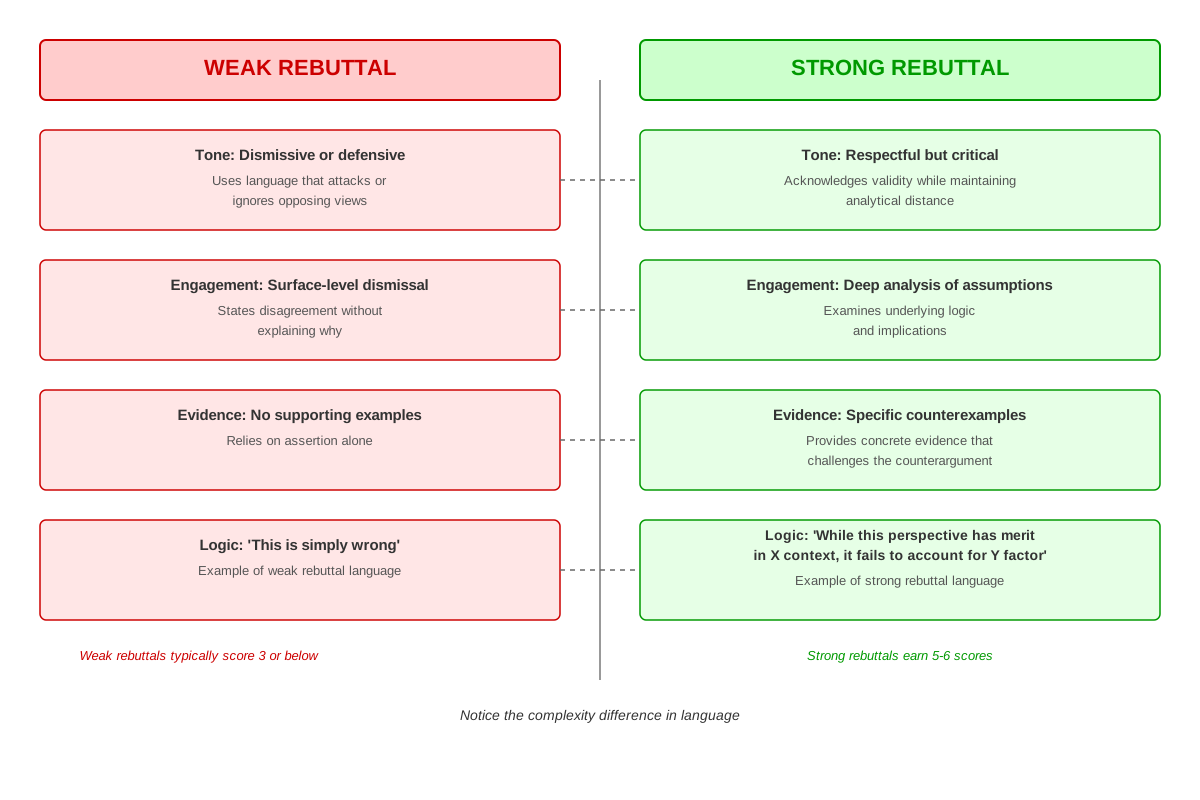
Consider the distinction between weak and strong rebuttals. A weak rebuttal might state: "Some people think technology in classrooms is bad, but they're wrong because technology is helpful." This fails to represent the opposing view fairly, provides no specific analysis, and offers no substantive reasoning. A strong rebuttal would state: "Critics argue that classroom technology distracts students from deep learning and creates dependence on devices. While these concerns have merit in cases of unstructured technology use, they overlook how carefully integrated digital tools can enhance engagement and provide personalized learning experiences that traditional methods cannot match. The solution lies not in rejecting technology but in implementing it thoughtfully with clear pedagogical goals."
The Concession-Refutation Structure
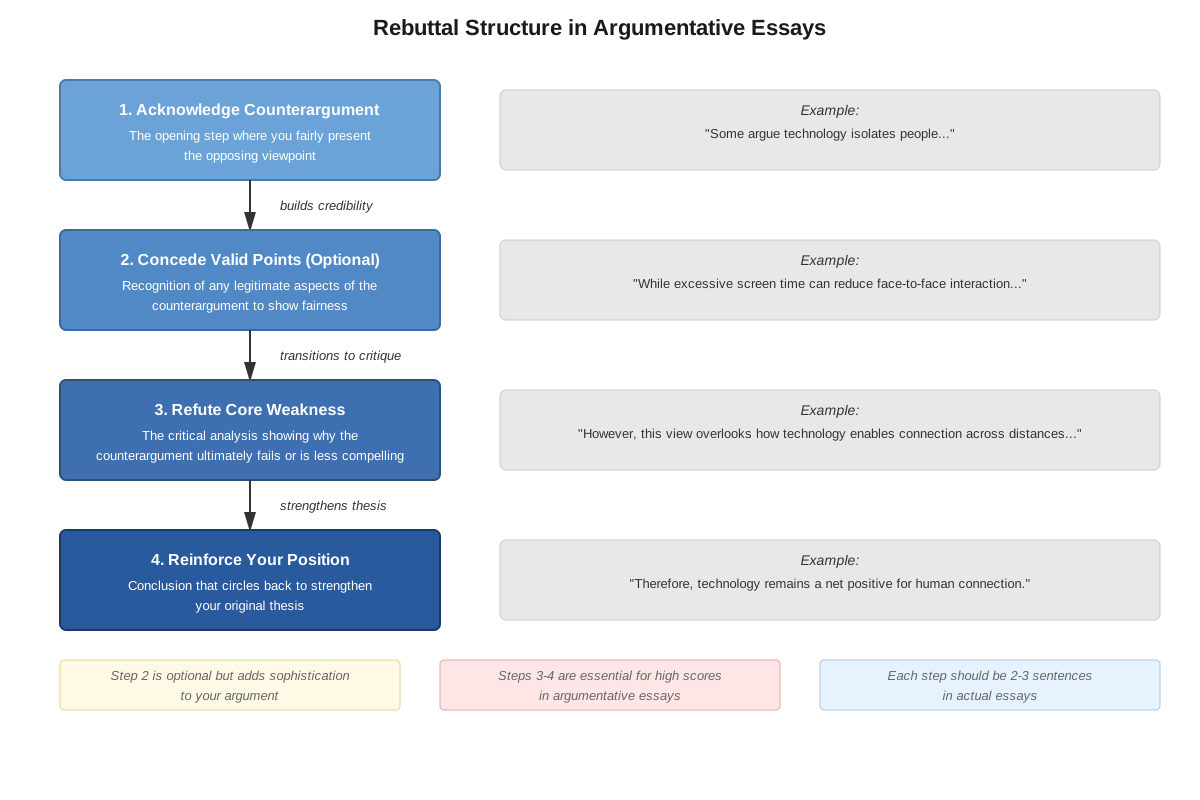
The most reliable framework for ACT rebuttals follows a concession-refutation structure. The concession acknowledges what's valid or understandable about the opposing viewpoint, demonstrating that you've considered it seriously rather than dismissing it outright. The refutation then explains why, despite these valid elements, the opposing view is ultimately insufficient, flawed, or less compelling than your position. This structure is particularly effective because it builds credibility—readers trust writers who demonstrate fairness and nuance rather than rigid thinking.
Concession phrases include: "While it's true that...", "Admittedly...", "Proponents of this view correctly observe that...", "This perspective raises valid concerns about...", and "One cannot deny that...". These phrases signal intellectual generosity and prevent your essay from appearing dogmatic. Refutation transitions include: "However...", "Nevertheless...", "Yet this overlooks...", "This reasoning fails to account for...", "Despite these points...", and "A closer examination reveals...". These transitions signal the shift from acknowledgment to critical analysis.
The balance between concession and refutation matters significantly. Excessive concession without strong refutation weakens your argument and may confuse readers about your actual position. Insufficient concession before aggressive refutation makes you appear close-minded or unaware of legitimate complexity. The ideal ratio dedicates approximately one-third of the rebuttal to concession and two-thirds to refutation, though this varies based on the specific argument.
Types of Rebuttal Strategies
Different counterarguments require different rebuttal approaches. Logical rebuttals identify flaws in reasoning, such as false dichotomies, hasty generalizations, or faulty cause-and-effect claims. For example, if an opposing perspective claims "Either we ban all social media for teenagers or we accept the mental health crisis," you might rebut: "This presents a false choice between two extremes while ignoring moderate approaches like age-appropriate usage guidelines, digital literacy education, and platform design reforms that address specific harms without complete prohibition."
Evidence-based rebuttals challenge the factual foundation of opposing arguments by questioning the quality, relevance, or interpretation of supporting evidence. If a counterargument relies on a single study or outdated data, you might note: "While this perspective cites research from 2010, subsequent longitudinal studies with larger sample sizes have revealed more nuanced patterns that contradict these earlier findings." This approach works particularly well when you can reference more comprehensive, recent, or methodologically superior evidence.
Practical rebuttals focus on real-world implementation challenges or unintended consequences of opposing positions. Even if a counterargument is logically sound in theory, you might demonstrate why it fails in practice: "Though this approach appears reasonable in principle, implementation would require resources and infrastructure that most schools lack, making it an impractical solution for the majority of students who would benefit from reform." This strategy is especially effective for ACT prompts about policy, education, or social issues.
Values-based rebuttals address underlying assumptions or priorities that differ between perspectives. You might argue that an opposing view prioritizes one value (like efficiency) while neglecting another equally important value (like equity): "This perspective privileges economic efficiency but fails to consider whether the most efficient solution serves all stakeholders fairly, particularly those already disadvantaged by existing systems."
Strategic Placement of Rebuttals
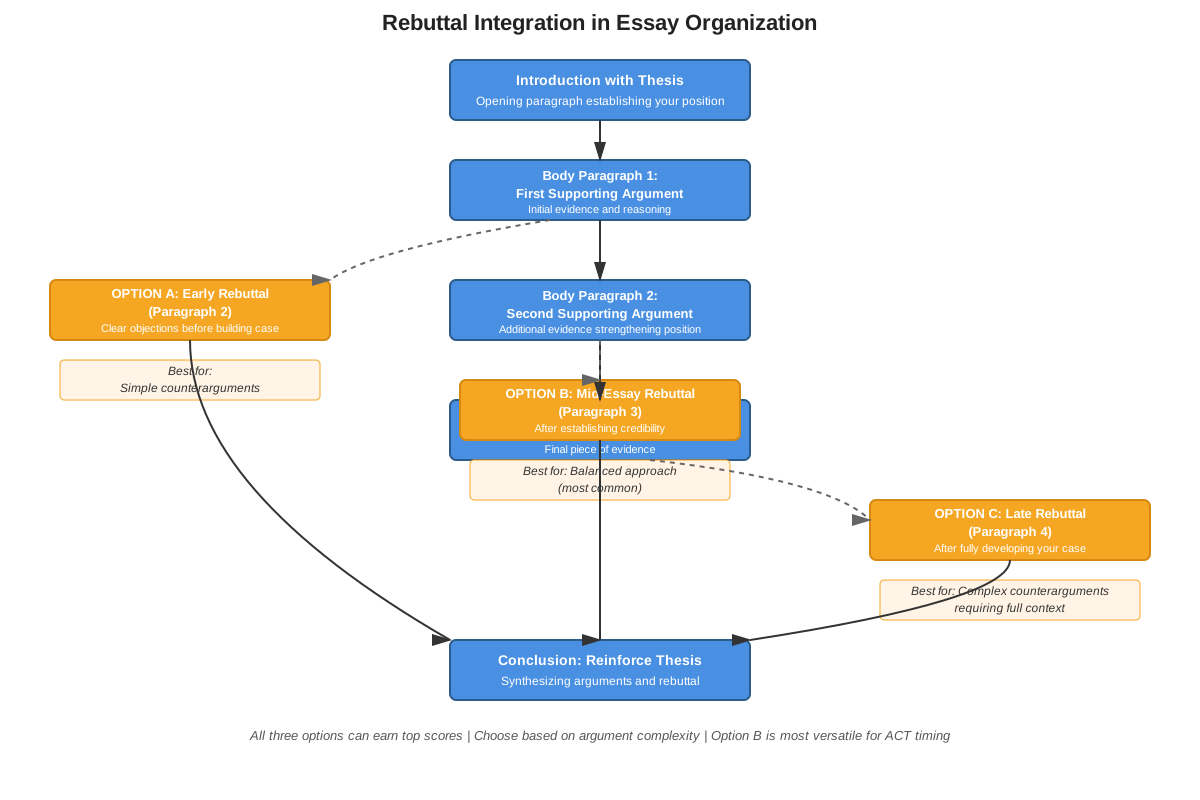
Where you position your rebuttal within your essay significantly affects its impact. The most common and effective placement is a dedicated rebuttal paragraph positioned after you've established your own argument but before your conclusion. This placement allows you to build your case first, then demonstrate why alternatives fall short, and finally conclude with your position reinforced. The structure typically follows: Introduction with thesis → Body paragraph(s) supporting your position → Rebuttal paragraph addressing counterarguments → Conclusion.
Some sophisticated writers integrate brief rebuttals throughout their essays, addressing potential objections immediately after making related claims. This approach can be highly effective but requires careful execution to avoid disrupting flow. For example, after arguing that "renewable energy investment creates long-term economic benefits," you might immediately address the counterargument: "Though critics point to high initial costs, this short-term expense must be weighed against decades of reduced operational costs and avoided environmental damage expenses."
Avoid placing rebuttals in your introduction before establishing your own position—this gives undue prominence to opposing views and may confuse readers about your stance. Similarly, avoid ending with rebuttal in your conclusion, as this leaves readers focused on counterarguments rather than your strongest points. The conclusion should reinforce your thesis, not introduce new opposing perspectives.
Maintaining Appropriate Tone
Effective rebuttals maintain a respectful, analytical tone rather than becoming dismissive, sarcastic, or emotionally charged. The ACT values intellectual maturity, and examiners penalize essays that mock opposing viewpoints or use inflammatory language. Phrases to avoid include: "Obviously wrong," "Anyone with common sense knows," "Ridiculous," "Absurd," or "Completely ignorant." These phrases signal closed-mindedness and undermine your credibility.
Instead, use measured language that critiques ideas rather than people: "This perspective overlooks," "This reasoning contains a gap," "This approach faces significant challenges," or "This view rests on questionable assumptions." Even when you strongly disagree, frame your rebuttal as intellectual analysis rather than personal attack. Remember that the ACT prompt perspectives represent legitimate viewpoints that reasonable people hold—your task is to explain why your position is more compelling, not to prove that alternative views are stupid or malicious.
Concept Relationships
The rebuttal concept connects directly to thesis development because your thesis must be defensible against counterarguments. A thesis that cannot withstand rebuttal is too weak or one-sided for a high-scoring ACT essay. When developing your thesis, anticipate potential objections and ensure your position can address them effectively. This forward-thinking approach strengthens your entire argumentative framework.
Rebuttal relies heavily on evidence evaluation skills. To identify weaknesses in opposing arguments, you must assess the quality, relevance, and sufficiency of their supporting evidence. This same analytical lens applies to your own evidence—strong writers recognize that evidence supporting their position might also support counterarguments and address this complexity explicitly. The relationship flows: Evidence evaluation → Identification of argument weaknesses → Construction of effective rebuttal.
Logical reasoning serves as the foundation for all rebuttal strategies. Understanding common logical fallacies (false dichotomy, slippery slope, hasty generalization, etc.) enables you to identify these flaws in opposing arguments and avoid them in your own writing. The relationship is bidirectional: studying rebuttal improves your logical reasoning skills, and strong logical reasoning improves your rebuttal effectiveness.
The connection to essay organization is structural. Rebuttal paragraphs must integrate seamlessly into your essay's flow using appropriate transitions, topic sentences that signal the shift to counterargument analysis, and concluding sentences that reconnect to your thesis. Poor organization can make even strong rebuttals feel disjointed or confusing. The relationship map: Thesis → Supporting arguments → Rebuttal (addressing counterarguments) → Reinforced conclusion.
Quick check — test yourself on Rebuttal so far.
Try Flashcards →High-Yield Facts
- ⭐ The ACT Writing rubric explicitly evaluates "Analysis of other perspectives" as 25% of your score
- ⭐ Essays scoring 5-6 consistently address at least one counterargument with substantive analysis
- ⭐ The concession-refutation structure (acknowledge then critique) is the most reliable rebuttal framework
- ⭐ Effective rebuttals identify specific weaknesses rather than making general dismissive statements
- ⭐ Rebuttal paragraphs typically appear after establishing your own argument but before the conclusion
- Fair representation of opposing views prevents straw man fallacies and builds credibility
- Concession phrases like "While it's true that..." signal intellectual generosity
- Refutation transitions like "However..." or "Nevertheless..." signal the shift to critical analysis
- Respectful, analytical tone is essential—avoid dismissive language like "obviously wrong"
- Different counterarguments require different strategies: logical, evidence-based, practical, or values-based rebuttals
- Integration of brief rebuttals throughout the essay demonstrates sophistication but requires careful execution
- The ideal concession-to-refutation ratio is approximately 1:2 (one-third concession, two-thirds refutation)
- Addressing counterarguments demonstrates intellectual maturity and awareness of complexity
- Rebuttals should reconnect to your thesis to reinforce rather than undermine your position
- Avoiding rebuttal entirely typically limits essays to scores of 3-4 regardless of other strengths
Common Misconceptions
Misconception: Addressing counterarguments weakens your position by giving attention to opposing views.
Correction: Addressing counterarguments actually strengthens your position by demonstrating that you've considered alternatives and can explain why your view remains superior. Ignoring counterarguments makes your essay appear one-sided and intellectually immature.
Misconception: A rebuttal means completely destroying the opposing argument and proving it has no merit whatsoever.
Correction: Effective rebuttals often acknowledge valid elements of opposing views (concession) before explaining why those views are ultimately insufficient or less compelling than your position. This nuanced approach demonstrates sophistication rather than rigid thinking.
Misconception: You must address all three perspectives provided in the ACT prompt.
Correction: While you should engage with perspectives beyond your own, you're not required to address all three. High-scoring essays typically engage substantively with one or two alternative perspectives rather than superficially mentioning all three.
Misconception: Rebuttal paragraphs should come at the beginning of the essay to get objections out of the way.
Correction: Placing rebuttals before establishing your own argument gives undue prominence to opposing views and may confuse readers about your position. The most effective placement is after you've built your case but before your conclusion.
Misconception: Using strong, emotional language in rebuttals shows passion and conviction about your position.
Correction: Dismissive, sarcastic, or emotionally charged language undermines your credibility and signals intellectual immaturity. The ACT values measured, analytical tone that critiques ideas respectfully rather than attacking people or using inflammatory rhetoric.
Misconception: A good rebuttal simply states that the opposing view is wrong and your view is right.
Correction: Effective rebuttals explain specifically why the opposing view is insufficient—identifying logical gaps, questionable assumptions, overlooked consequences, or limited applicability. Simply asserting disagreement without analysis provides no persuasive value.
Worked Examples
Example 1: Technology in Education Prompt
Prompt Context: The ACT prompt presents three perspectives on classroom technology. Perspective One argues that technology distracts from deep learning. Your thesis supports thoughtful technology integration.
Weak Rebuttal Attempt:
"Some people think technology is bad for classrooms, but they're wrong. Technology helps students learn better and prepares them for the future. We should use more technology in schools."
Analysis of Weakness: This rebuttal fails to represent the opposing view fairly or specifically. It provides no analysis of why the opposing view is insufficient, offers no evidence, and uses dismissive language ("they're wrong"). It doesn't acknowledge any valid concerns about technology's potential drawbacks.
Strong Rebuttal:
"Critics of classroom technology raise legitimate concerns about digital distraction and superficial engagement with content. Indeed, studies show that students who multitask on devices during lectures retain less information than those who take handwritten notes. However, this critique conflates poorly implemented technology with technology itself. The problem lies not in digital tools but in their unstructured use without clear pedagogical goals. When teachers integrate technology purposefully—using interactive simulations to visualize complex scientific processes, adaptive software to provide personalized practice, or collaborative platforms to facilitate peer feedback—these tools enhance rather than diminish deep learning. The solution requires thoughtful implementation guidelines rather than wholesale rejection of tools that, when used strategically, expand educational possibilities beyond what traditional methods alone can achieve."
Analysis of Strength: This rebuttal fairly represents the opposing view and even concedes a valid point about multitasking research. It then identifies the specific flaw in the opposing argument (conflating poor implementation with the technology itself), provides concrete examples of effective technology use, and reconnects to the thesis about thoughtful integration. The tone remains respectful and analytical throughout.
Example 2: Automation and Employment Prompt
Prompt Context: The ACT prompt addresses workplace automation. Perspective Two argues that automation will create mass unemployment and economic hardship. Your thesis argues that automation will transform rather than eliminate employment opportunities.
Rebuttal Construction Process:
Step 1 - Fair Representation: "Perspective Two warns that automation will displace millions of workers, particularly in manufacturing and service industries, creating widespread unemployment and economic instability. This concern reflects historical precedents where technological shifts temporarily disrupted labor markets and caused genuine hardship for displaced workers."
Step 2 - Concession: "These fears are not unfounded. Automation has already eliminated certain categories of jobs, and workers without opportunities for retraining face real economic challenges. The transition period can indeed be painful for individuals and communities dependent on industries undergoing rapid automation."
Step 3 - Refutation: "However, this perspective assumes a static economy where eliminated jobs are never replaced by new opportunities—an assumption contradicted by historical patterns of technological change. The Industrial Revolution, computerization, and internet economy all initially displaced workers but ultimately created more jobs than they eliminated, often in entirely new sectors that didn't previously exist. Current automation trends follow similar patterns: while routine tasks become automated, demand grows for workers who can design, maintain, and improve automated systems, as well as for roles requiring uniquely human skills like creative problem-solving, emotional intelligence, and complex communication. Rather than mass permanent unemployment, evidence suggests automation will shift the types of skills valued in the labor market."
Step 4 - Reconnection to Thesis: "The challenge lies not in preventing automation but in ensuring workers have access to education and retraining programs that prepare them for transformed employment landscapes. This proactive approach addresses legitimate concerns about displacement while embracing automation's potential to eliminate dangerous or tedious work and create new opportunities."
Complete Rebuttal Paragraph: When combined, these elements create a comprehensive rebuttal that acknowledges valid concerns, provides specific analysis of the opposing view's limitations, supports the refutation with historical evidence and logical reasoning, and reinforces the essay's thesis about transformation rather than elimination of employment.
Exam Strategy
When approaching ACT Writing prompts, immediately identify the three perspectives and determine which aligns most closely with your position and which presents the strongest counterargument to address. Don't feel obligated to address all three perspectives—focus on developing one or two substantive rebuttals rather than superficially mentioning all alternatives. Quality of analysis matters far more than quantity of perspectives addressed.
Trigger phrases in high-scoring sample essays that signal effective rebuttal include: "While proponents of this view correctly note...", "This perspective overlooks...", "Though this concern has merit...", "A closer examination reveals...", "This reasoning fails to account for...", and "Despite these valid points...". When you see these phrases in sample essays, pay attention to how the writer structures the complete rebuttal paragraph.
Process-of-elimination for rebuttal quality: If your rebuttal paragraph could apply equally well to any opposing view (too general), lacks specific analysis of weaknesses (too vague), uses dismissive language (too aggressive), or fails to reconnect to your thesis (too disconnected), revise it. Strong rebuttals are specific to the particular counterargument, analytical rather than dismissive, and clearly support your overall argument.
Time allocation: In the 40-minute ACT Writing test, dedicate approximately 5-7 minutes to planning, including identifying which counterargument to address and outlining your rebuttal strategy. Allocate 8-10 minutes to writing your rebuttal paragraph, ensuring you include concession, refutation, and reconnection elements. Don't sacrifice rebuttal development to add more supporting paragraphs for your own position—a well-developed rebuttal is more valuable than a third supporting paragraph.
Exam Tip: If you're running short on time, a single well-developed rebuttal paragraph is more valuable than multiple superficial mentions of different perspectives. Depth of analysis matters more than breadth of coverage.
Memory Techniques
CRR Acronym for Rebuttal Structure:
- Concede: Acknowledge what's valid or understandable about the opposing view
- Refute: Identify specific weaknesses, gaps, or limitations in the opposing argument
- Reconnect: Explain how your position better addresses the issue despite the counterargument
FAIR Mnemonic for Rebuttal Quality:
- Fair representation (no straw man fallacies)
- Analytical tone (respectful, not dismissive)
- Identify specific weaknesses (not vague disagreement)
- Reconnect to thesis (reinforce your position)
Visualization Strategy: Picture a courtroom where you're presenting your case. A strong lawyer doesn't ignore the opposing counsel's arguments—they acknowledge them, identify their flaws, and explain why their case remains stronger. This mental image helps you remember that rebuttal demonstrates strength, not weakness.
The "Yes, But" Framework: Train yourself to think "Yes, [concession], but [refutation]" when encountering counterarguments. This simple framework ensures you include both acknowledgment and critique. For example: "Yes, automation may displace some workers, but historical patterns show technology creates more jobs than it eliminates."
Summary
Rebuttal is the critical skill of acknowledging and responding to counterarguments in a way that strengthens rather than weakens your position. On the ACT Writing test, effective rebuttal accounts for 25% of your score through the "Analysis of other perspectives" domain and distinguishes essays scoring 5-6 from those scoring 3-4. The most reliable approach follows a concession-refutation structure: fairly represent the opposing view, acknowledge its valid elements, identify specific weaknesses or limitations, and reconnect to your thesis. Different counterarguments require different strategies—logical rebuttals address reasoning flaws, evidence-based rebuttals challenge factual foundations, practical rebuttals focus on implementation challenges, and values-based rebuttals address underlying assumptions. Strategic placement typically positions rebuttal after establishing your own argument but before the conclusion, and maintaining a respectful, analytical tone throughout is essential for demonstrating intellectual maturity. Mastering rebuttal requires understanding that addressing counterarguments demonstrates sophistication and awareness of complexity rather than weakness or uncertainty about your position.
Key Takeaways
- Rebuttal is essential for ACT Writing scores of 5-6 and accounts for 25% of your total Writing score
- The concession-refutation structure (acknowledge valid points, then explain limitations) is the most effective framework
- Fair representation of opposing views builds credibility and prevents straw man fallacies
- Specific analysis of weaknesses (logical gaps, questionable assumptions, overlooked consequences) is more persuasive than general disagreement
- Strategic placement after your supporting arguments but before your conclusion maximizes rebuttal impact
- Respectful, analytical tone demonstrates intellectual maturity while dismissive language undermines credibility
- Quality matters more than quantity—one well-developed rebuttal is more valuable than superficial mentions of multiple perspectives
Related Topics
Thesis Development: Mastering rebuttal improves your ability to craft defensible thesis statements that can withstand counterarguments. A strong thesis anticipates objections and positions your argument to address them effectively.
Evidence Evaluation: The analytical skills used to identify weaknesses in opposing arguments transfer directly to evaluating the quality and relevance of evidence supporting any claim, including your own.
Logical Reasoning and Fallacies: Understanding common logical fallacies enables you to identify them in counterarguments and avoid them in your own writing, strengthening both your rebuttals and your primary arguments.
Essay Organization and Transitions: Integrating rebuttal seamlessly into your essay structure requires sophisticated organizational skills and effective transitional phrases that guide readers through your argumentative progression.
Perspective Analysis: The ability to understand and fairly represent viewpoints different from your own is foundational to rebuttal and transfers to all analytical writing tasks.
Practice CTA
Now that you understand the principles and strategies of effective rebuttal, it's time to apply these concepts to actual ACT-style prompts. Complete the practice questions to test your ability to identify strong versus weak rebuttals, construct concession-refutation structures, and integrate counterargument analysis into complete essays. Use the flashcards to reinforce key terminology and strategies until they become automatic. Remember: every high-scoring ACT essay demonstrates the intellectual maturity to acknowledge complexity and address opposing views thoughtfully. With focused practice, you'll develop the confidence to tackle any counterargument the test presents. Your ability to engage with multiple perspectives while defending your position is what will set your essay apart and earn you top scores.
Sign up free to keep reading
Create a free AnvayaPrep account to finish this ACT guide on Rebuttal — plus flashcards and practice questions.