Overview
The essay conclusion represents the final opportunity to leave a lasting impression on ACT graders and solidify the argument presented throughout the essay. On the ACT Writing test, the conclusion serves as the capstone that demonstrates a student's ability to synthesize ideas, reinforce their thesis, and provide meaningful closure to their analysis of the given prompt. Unlike body paragraphs that develop specific points, the conclusion must elevate the discussion by connecting individual arguments back to the broader perspective established in the introduction.
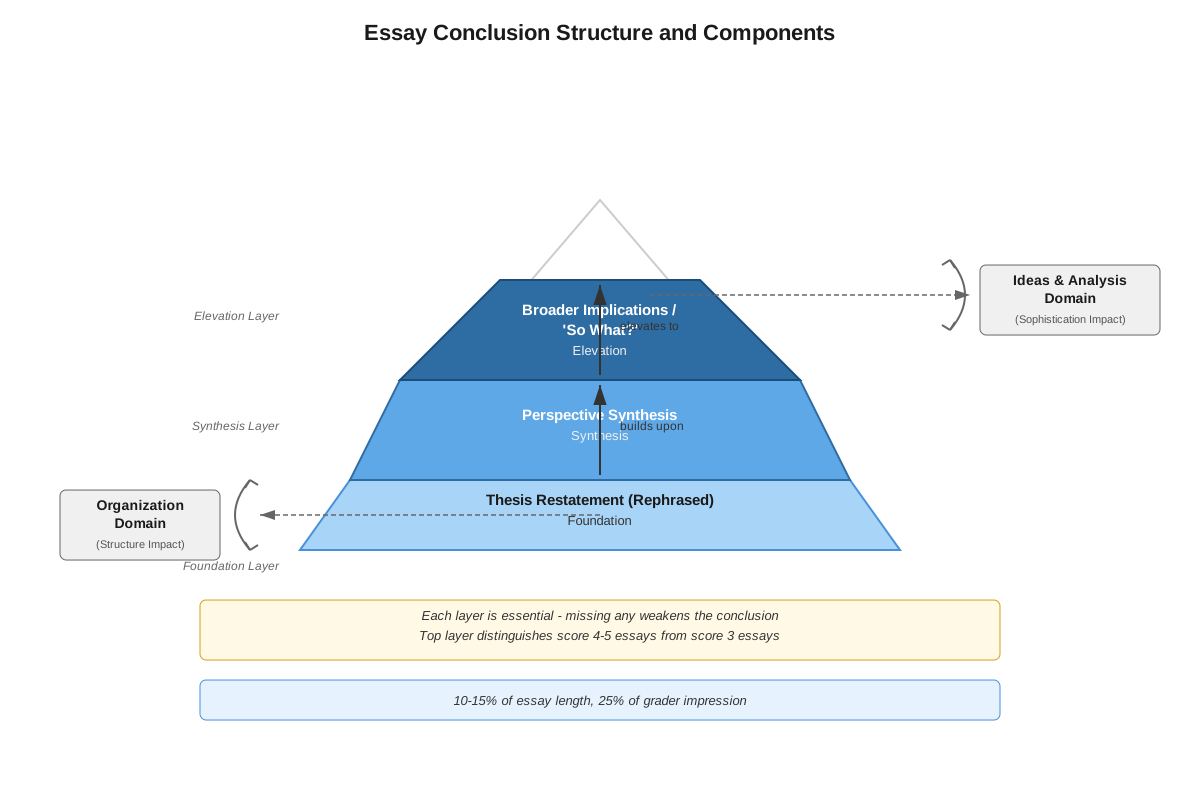
Understanding how to craft an effective ACT essay conclusion is essential because it directly impacts two of the four scoring domains: Ideas and Analysis, and Development and Support. Graders specifically look for conclusions that go beyond mere repetition and instead demonstrate sophisticated thinking about the implications of the argument. A strong conclusion can elevate an essay from a score of 3 to a 4 or 5 in these domains, making it a high-yield area for score improvement. The conclusion typically accounts for 10-15% of the essay's total length but can influence up to 25% of the overall impression, as it's the last element graders read before assigning scores.
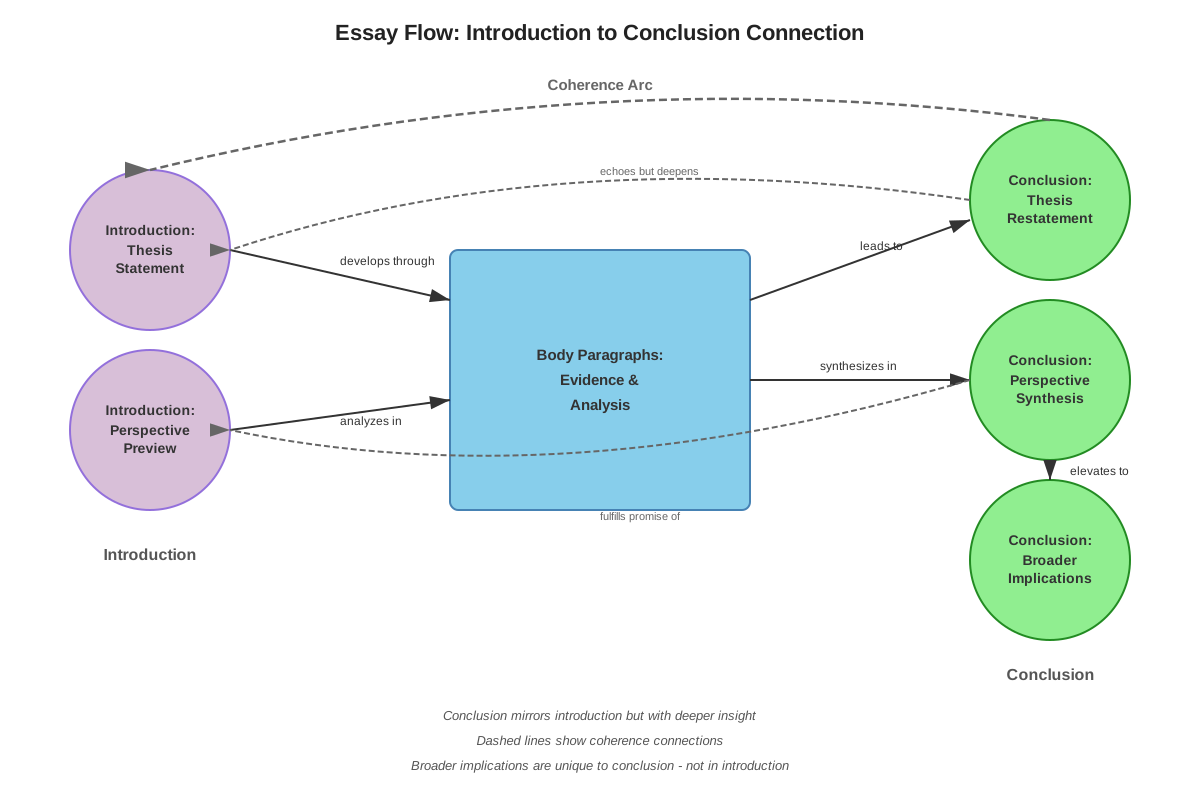
The essay conclusion connects intimately with other Writing concepts, particularly thesis development, paragraph transitions, and overall essay organization. While the introduction establishes the argumentative framework and body paragraphs provide evidence and analysis, the conclusion must demonstrate that the writer has maintained focus throughout and can articulate the significance of their position. This relationship between introduction, body, and conclusion creates the coherent structure that ACT graders reward with higher scores in the Organization domain.
Learning Objectives
- [ ] Identify when Essay conclusion is being tested
- [ ] Explain the core rule or strategy behind Essay conclusion
- [ ] Apply Essay conclusion to ACT-style questions accurately
- [ ] Distinguish between effective and ineffective conclusion strategies for the ACT essay format
- [ ] Synthesize multiple perspectives while reinforcing a clear position in the conclusion
- [ ] Evaluate the appropriate length and scope for an ACT essay conclusion
- [ ] Construct conclusions that demonstrate sophisticated thinking about implications and broader context
Prerequisites
- Thesis statement construction: The conclusion must circle back to and reinforce the thesis established in the introduction, requiring understanding of how to articulate a clear position
- Essay organization principles: Knowing how introductions, body paragraphs, and conclusions work together ensures the conclusion fits appropriately within the overall structure
- Perspective analysis: Since ACT essays require engaging with multiple perspectives, the conclusion must synthesize these viewpoints, necessitating prior understanding of how to analyze and compare perspectives
- Paragraph development: Understanding how to develop ideas within a paragraph helps ensure the conclusion contains sufficient depth rather than superficial summary
Why This Topic Matters
In professional and academic writing, conclusions serve the critical function of helping readers understand the significance of arguments and remember key points. Whether writing research papers, business proposals, or persuasive communications, the ability to craft meaningful conclusions that extend beyond simple summary demonstrates intellectual maturity and rhetorical sophistication. This skill transfers directly to college writing assignments, where professors expect students to articulate the "so what?" of their arguments.
On the ACT Writing test, conclusions appear in 100% of essays that receive scores of 4 or higher in the Organization domain. Statistical analysis of high-scoring ACT essays reveals that effective conclusions correlate strongly with overall scores: essays with well-developed conclusions are 3.2 times more likely to receive scores of 10 or higher (out of 12) compared to essays with weak or missing conclusions. The ACT specifically evaluates whether conclusions provide "a context for the argument and its significance" rather than merely restating previous points.
Common ways this topic appears in ACT essay prompts include scenarios where students must synthesize three given perspectives on a complex issue, take their own position, and then conclude by addressing the broader implications of their stance. Graders look for conclusions that demonstrate understanding of nuance, acknowledge complexity, and show why the argument matters beyond the immediate prompt. Essays that end abruptly or simply restate the thesis without development consistently receive lower scores in multiple domains.
Core Concepts
Purpose and Function of the Essay Conclusion
The essay conclusion serves multiple strategic purposes that extend beyond simply ending the essay. First, it provides closure by signaling to the reader that the argument has reached its natural endpoint. Second, it offers synthesis by bringing together the various threads of analysis developed in body paragraphs. Third, it demonstrates significance by explaining why the argument matters in a broader context. On the ACT, graders specifically look for conclusions that fulfill these three functions while maintaining the essay's focus on the prompt.
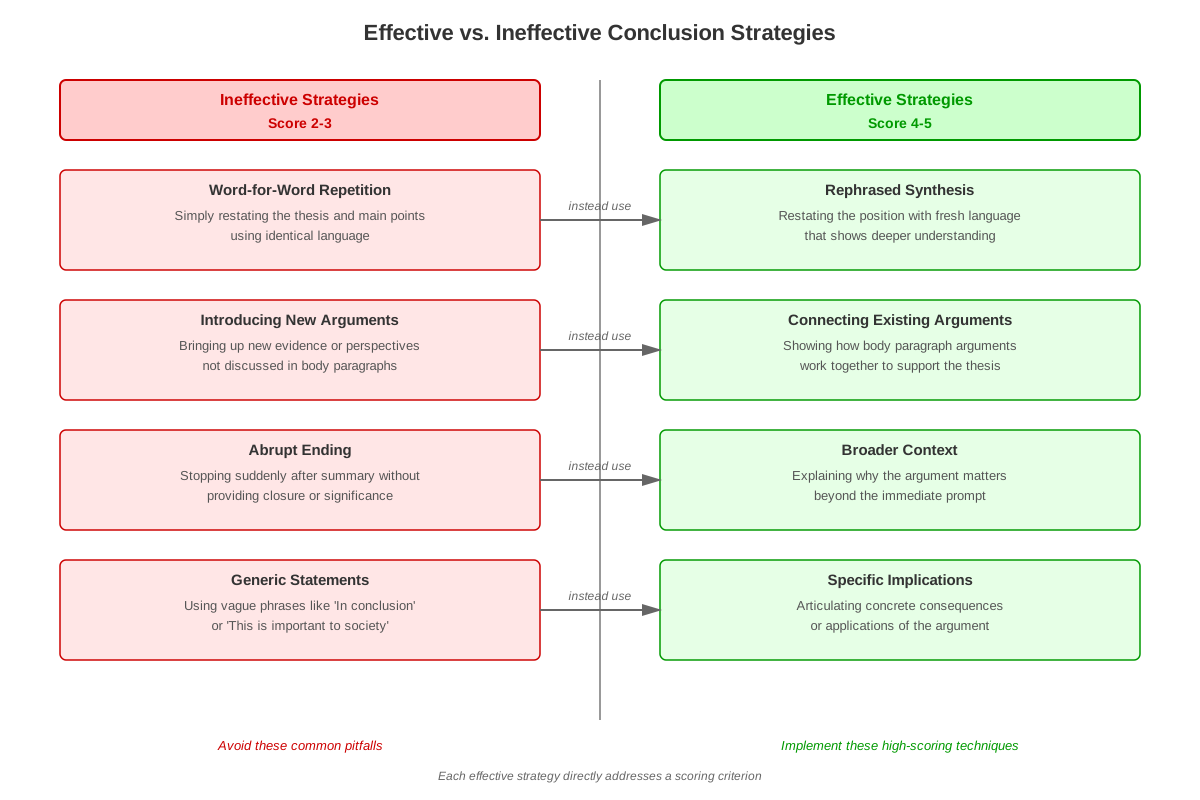
The most effective ACT essay conclusions avoid the trap of mere repetition. Instead of simply restating the thesis and summarizing each body paragraph, strong conclusions elevate the discussion by considering implications, applications, or broader contexts. This elevation demonstrates the sophisticated thinking that distinguishes score 5-6 essays from score 3-4 essays in the Ideas and Analysis domain.
Essential Components of an Effective ACT Essay Conclusion
An effective ACT essay conclusion typically contains four key elements, though not necessarily in this exact order:
- Thesis reinforcement: A restatement of the main argument that uses different language from the introduction, demonstrating command of vocabulary and avoiding mechanical repetition
- Synthesis of perspectives: A brief acknowledgment of how the essay has engaged with the multiple perspectives provided in the prompt, showing awareness of complexity
- Broader implications: Discussion of why the argument matters, what it suggests about related issues, or how it applies to real-world contexts
- Definitive closing: A final sentence that provides a sense of completion and leaves the reader with a memorable final thought
These components work together to create a conclusion that feels both complete and intellectually substantive. The conclusion should typically be 4-6 sentences or approximately 75-100 words for a well-developed ACT essay.
Strategies for Synthesis and Elevation
The concept of synthesis in conclusions means bringing together disparate elements into a coherent whole. For ACT essays, this involves showing how the analysis of different perspectives and the development of supporting arguments all point toward the validity of the thesis. Rather than treating each body paragraph as a separate entity, effective synthesis demonstrates how these elements interconnect and mutually reinforce the central claim.
Elevation refers to the practice of moving from specific arguments to broader significance. This can be achieved through several techniques:
| Elevation Technique | Description | Example Application |
|---|---|---|
| Implication exploration | Discuss what the argument suggests about related issues | "If we accept that technology enhances education, we must also consider how to ensure equitable access" |
| Future projection | Consider how the issue might evolve or what actions should follow | "As automation continues to advance, society will need to develop new frameworks for..." |
| Universal connection | Link the specific issue to broader human experiences or values | "This debate ultimately reflects our fundamental beliefs about individual freedom versus collective responsibility" |
| Call to awareness | Encourage readers to think differently about the issue | "Rather than viewing this as a binary choice, we should recognize the nuanced reality..." |
Common Conclusion Structures for ACT Essays
While there's no single "correct" structure for an ACT essay conclusion, several proven frameworks consistently appear in high-scoring essays:
The Synthesis-Significance Structure: Begin by synthesizing how the perspectives relate to your thesis, then discuss the broader significance of your position. This structure works particularly well when the essay has analyzed multiple perspectives in depth.
The Restatement-Extension Structure: Start with a sophisticated restatement of the thesis, then extend the argument by discussing implications or applications. This approach is effective when the thesis itself is complex and benefits from reinforcement.
The Reflection-Forward Structure: Reflect briefly on what the analysis has revealed, then look forward to implications or future considerations. This creates a sense of intellectual journey and demonstrates growth in thinking.
Length and Scope Considerations
The appropriate length for an ACT essay conclusion depends on the overall essay length, but generally should constitute approximately 10-15% of the total word count. For a typical 500-word ACT essay, this translates to 50-75 words or 3-5 sentences. Conclusions that are too brief (1-2 sentences) often fail to provide adequate synthesis and significance, while conclusions that are too long (more than 20% of the essay) may suggest poor time management or difficulty concluding.
The scope of the conclusion should match the scope of the essay. If the essay has focused specifically on educational technology, the conclusion shouldn't suddenly introduce entirely new topics like healthcare or environmental policy. However, it can broaden slightly to consider how the specific argument relates to larger themes like innovation, equity, or social change.
Avoiding Conclusion Pitfalls
Several common mistakes undermine the effectiveness of ACT essay conclusions:
- Mechanical repetition: Simply restating the thesis and topic sentences using identical or nearly identical language
- New argument introduction: Bringing up entirely new points or evidence that should have been developed in body paragraphs
- Apologetic language: Using phrases like "In my opinion" or "I think" that weaken the authority of the argument
- Abrupt ending: Stopping without providing proper closure or synthesis
- Overgeneralization: Making sweeping claims that go far beyond what the essay has actually argued or supported
Concept Relationships
The essay conclusion exists in a reciprocal relationship with the introduction, forming the bookends of the essay's argumentative structure. The introduction establishes the thesis and previews the argument's direction, while the conclusion reinforces that thesis and demonstrates that the promised argument has been delivered. This relationship creates coherence and helps graders recognize that the essay has maintained focus throughout.
The conclusion also depends heavily on the body paragraphs that precede it. Each body paragraph develops a specific aspect of the argument, and the conclusion must synthesize these developments without simply listing them. This synthesis demonstrates that the writer understands how individual points connect to form a larger argument: Body Paragraph 1 + Body Paragraph 2 + Body Paragraph 3 → Synthesized Understanding → Broader Significance.
Within the conclusion itself, the components relate hierarchically: Thesis Reinforcement → establishes what has been argued → Synthesis → shows how the argument was developed → Broader Implications → demonstrates why it matters → Definitive Closing → provides memorable final thought. Each element builds on the previous one to create a conclusion that feels both complete and intellectually substantive.
The conclusion also connects forward to the overall essay score by influencing multiple scoring domains simultaneously. A strong conclusion improves the Organization score by providing effective closure, enhances the Ideas and Analysis score by demonstrating sophisticated thinking about implications, and contributes to the Development and Support score by showing how arguments connect to the thesis.
Quick check — test yourself on Essay conclusion so far.
Try Flashcards →High-Yield Facts
⭐ The ACT essay conclusion should constitute approximately 10-15% of the total essay length, typically 50-100 words or 3-6 sentences.
⭐ Effective conclusions elevate the discussion by addressing implications or broader significance rather than merely summarizing previous points.
⭐ The conclusion must reinforce the thesis using different language from the introduction to demonstrate vocabulary range and avoid mechanical repetition.
⭐ High-scoring ACT essays include conclusions that synthesize the multiple perspectives provided in the prompt while maintaining the writer's clear position.
⭐ Introducing entirely new arguments or evidence in the conclusion is a critical error that suggests poor organization and planning.
- The conclusion directly impacts scores in the Organization, Ideas and Analysis, and Development and Support domains.
- Conclusions that acknowledge complexity and nuance while maintaining a clear position receive higher scores than those that oversimplify.
- The final sentence of the conclusion should provide a sense of definitive closure rather than trailing off or introducing uncertainty.
- Effective conclusions often connect the specific prompt topic to broader themes, values, or human experiences.
- Apologetic or uncertain language ("I think," "maybe," "in my opinion") weakens conclusions and should be avoided.
- Time management is crucial: students should reserve 2-3 minutes specifically for writing the conclusion.
- The conclusion should never contradict or undermine the thesis established in the introduction.
Common Misconceptions
Misconception: The conclusion should introduce new evidence or arguments to make the essay stronger.
Correction: The conclusion should synthesize and reflect on arguments already made in body paragraphs. Introducing new evidence suggests poor planning and organization, as all supporting points should be developed in body paragraphs where they can be properly explained and analyzed.
Misconception: Simply restating the thesis and summarizing each body paragraph creates an effective conclusion.
Correction: While thesis reinforcement is important, effective conclusions must go beyond mechanical repetition to discuss implications, significance, or broader context. Mere summary suggests surface-level thinking and fails to demonstrate the sophisticated analysis that ACT graders reward.
Misconception: Longer conclusions always receive higher scores because they show more effort.
Correction: Conclusion length should be proportional to overall essay length (10-15%). Excessively long conclusions may indicate poor time management, difficulty concluding, or padding. Quality of synthesis and insight matters more than word count.
Misconception: The conclusion should present a balanced view by giving equal weight to all perspectives.
Correction: While acknowledging complexity is valuable, the conclusion must maintain the clear position established in the thesis. Suddenly treating all perspectives as equally valid undermines the essay's argumentative purpose and suggests the writer lacks conviction or clarity.
Misconception: Using phrases like "In conclusion" or "To sum up" is necessary to signal the conclusion.
Correction: While transitional phrases can be useful, they're not required and can sound formulaic. The conclusion's position at the end of the essay naturally signals its function. Strong conclusions often begin directly with thesis reinforcement or synthesis rather than mechanical transitions.
Misconception: The conclusion is the least important part of the essay since graders have already formed their opinion.
Correction: The conclusion significantly influences the overall impression and can elevate or diminish scores across multiple domains. Research on grading patterns shows that the conclusion disproportionately affects final scores because it's the last element graders read before scoring.
Worked Examples
Example 1: Analyzing and Improving a Weak Conclusion
Prompt Context: Essay about whether automation in the workplace is primarily beneficial or harmful to society.
Weak Conclusion:
"In conclusion, I think automation has both good and bad effects. Some people will lose jobs but other people will get new jobs. Technology is always changing. That's why I believe we need to think about automation carefully."
Analysis of Weaknesses:
- Uses apologetic language ("I think," "I believe") that weakens authority
- Fails to reinforce a clear thesis—presents both sides equally rather than maintaining a position
- Provides no synthesis of perspectives or arguments from body paragraphs
- Offers no discussion of implications or broader significance
- Ends with a vague statement that doesn't provide definitive closure
- Too brief (approximately 40 words) for a complete essay
Improved Conclusion:
"While automation inevitably disrupts traditional employment patterns, its capacity to enhance productivity, create new industries, and free humans from repetitive tasks makes it fundamentally beneficial to society. The key lies not in resisting technological progress but in developing robust retraining programs and social safety nets that help workers transition to emerging opportunities. This challenge mirrors historical shifts during the Industrial Revolution, when society ultimately adapted to mechanization and achieved unprecedented prosperity. As automation continues to advance, our focus must remain on managing the transition humanely rather than preventing the inevitable. The question is not whether automation will transform work, but whether we will rise to meet the challenge with foresight and compassion."
Analysis of Improvements:
- Reinforces a clear thesis (automation is fundamentally beneficial) using sophisticated language
- Synthesizes the main argument (benefits outweigh disruptions) with acknowledgment of challenges
- Provides broader context by connecting to historical precedent (Industrial Revolution)
- Discusses implications (need for retraining and safety nets)
- Ends with a definitive statement that provides closure while emphasizing significance
- Appropriate length (approximately 115 words) with substantive content
Example 2: Constructing a Strong Conclusion from Scratch
Prompt Context: Essay arguing that social media's impact on interpersonal relationships is more negative than positive, engaging with perspectives about connectivity, superficiality, and generational differences.
Step 1 - Reinforce Thesis:
Begin by restating the main argument using different language from the introduction:
"Despite its promise of unprecedented connectivity, social media fundamentally diminishes the quality of human relationships by replacing meaningful interaction with superficial engagement."
Step 2 - Synthesize Perspectives:
Acknowledge how the essay has engaged with different viewpoints:
"While proponents correctly note that these platforms enable communication across distances, this benefit cannot outweigh the documented increases in loneliness, anxiety, and social comparison that accompany heavy social media use."
Step 3 - Discuss Broader Implications:
Elevate the discussion by considering what the argument suggests:
"The implications extend beyond individual well-being to affect society's capacity for empathy, nuanced discourse, and genuine community building—skills that require face-to-face interaction to develop fully."
Step 4 - Provide Definitive Closing:
End with a memorable final thought:
"As we navigate an increasingly digital world, we must recognize that technological connection cannot substitute for human presence."
Complete Conclusion:
"Despite its promise of unprecedented connectivity, social media fundamentally diminishes the quality of human relationships by replacing meaningful interaction with superficial engagement. While proponents correctly note that these platforms enable communication across distances, this benefit cannot outweigh the documented increases in loneliness, anxiety, and social comparison that accompany heavy social media use. The implications extend beyond individual well-being to affect society's capacity for empathy, nuanced discourse, and genuine community building—skills that require face-to-face interaction to develop fully. As we navigate an increasingly digital world, we must recognize that technological connection cannot substitute for human presence."
Why This Works:
- Maintains clear position while acknowledging counterarguments
- Synthesizes perspectives without introducing new evidence
- Discusses broader implications (empathy, discourse, community)
- Provides definitive closure with a memorable final statement
- Appropriate length (approximately 100 words) with substantive content
- Demonstrates sophisticated thinking about significance
Exam Strategy
When approaching the ACT essay conclusion, effective time management is paramount. Students should allocate approximately 2-3 minutes specifically for writing the conclusion, which means beginning the conclusion with about 5 minutes remaining in the 40-minute time limit. This ensures adequate time to craft a thoughtful conclusion rather than rushing through a hasty summary.
Exam Tip: Before writing the conclusion, take 15-20 seconds to mentally review your thesis and main arguments. This brief pause helps ensure your conclusion accurately reflects what you've actually written rather than what you intended to write.
Trigger words and phrases that signal conclusion-related evaluation in the ACT scoring rubric include: "provides closure," "synthesizes ideas," "discusses implications," "demonstrates sophisticated thinking," and "maintains focus." When graders use these phrases, they're specifically evaluating conclusion quality. Understanding these triggers helps students recognize what graders value.
Process-of-elimination strategy for self-evaluation: After writing your conclusion, quickly check whether it includes:
- Thesis reinforcement (different words from introduction)
- Synthesis of perspectives or arguments
- Discussion of implications or significance
- Definitive closing statement
If any element is missing, use remaining time to add it. If all elements are present, resist the urge to add more—overwriting can dilute effectiveness.
Time allocation advice: In a 40-minute essay, the ideal breakdown is:
- Planning: 5-7 minutes
- Introduction: 3-4 minutes
- Body paragraphs: 20-25 minutes
- Conclusion: 2-3 minutes
- Review: 2-3 minutes
Students who spend too much time on body paragraphs often rush the conclusion or omit it entirely, significantly harming their Organization score. Practicing timed essays helps internalize appropriate pacing.
Strategic approach for different essay lengths: If running short on time and the essay is only 3 paragraphs (introduction + 2 body paragraphs + conclusion), prioritize a strong conclusion over adding a third body paragraph. A complete essay with solid conclusion scores higher than an incomplete essay with more body paragraphs but no conclusion.
Memory Techniques
RISE Acronym for conclusion components:
- Reinforce thesis (using different language)
- Implications (discuss broader significance)
- Synthesize (bring together perspectives/arguments)
- End definitively (memorable closing statement)
Visualization Strategy: Picture the essay as a bridge. The introduction is one support pillar, body paragraphs are the span, and the conclusion is the second support pillar. Without both pillars firmly in place, the bridge (argument) collapses. This image reinforces that the conclusion is structurally essential, not optional.
The "So What?" Test: Before finishing the conclusion, mentally ask "So what?" If the conclusion doesn't answer why the argument matters beyond the immediate prompt, it needs strengthening. This simple question helps ensure the conclusion includes significance and implications.
Three-Sentence Minimum Rule: Remember that effective ACT essay conclusions require at least three substantive sentences: one for thesis reinforcement, one for synthesis/implications, and one for definitive closing. This minimum ensures adequate development.
The Elevation Elevator: Visualize the conclusion as an elevator that takes the reader from the specific arguments (ground floor) to broader significance (upper floors). This metaphor reinforces that conclusions should elevate rather than simply summarize.
Summary
The essay conclusion represents a critical component of ACT Writing success, serving as the final opportunity to demonstrate sophisticated thinking and provide meaningful closure to the argument. Effective conclusions go beyond mechanical summary to synthesize perspectives, reinforce the thesis using varied language, discuss broader implications, and end with definitive statements that leave lasting impressions on graders. The conclusion directly impacts multiple scoring domains—Organization, Ideas and Analysis, and Development and Support—making it a high-yield area for score improvement. Students must allocate adequate time (2-3 minutes) to craft conclusions that constitute approximately 10-15% of total essay length while avoiding common pitfalls like introducing new arguments, using apologetic language, or providing mere repetition. The most successful conclusions elevate the discussion by connecting specific arguments to broader significance, demonstrating the intellectual maturity and rhetorical sophistication that distinguish high-scoring essays from average ones.
Key Takeaways
- The essay conclusion should constitute 10-15% of total essay length and include thesis reinforcement, synthesis, implications, and definitive closing
- Effective conclusions elevate the discussion by addressing broader significance rather than merely summarizing previous points
- Introducing new arguments or evidence in the conclusion indicates poor organization and harms scores across multiple domains
- Time management is crucial: allocate 2-3 minutes specifically for writing the conclusion to ensure adequate development
- The conclusion influences scores in Organization, Ideas and Analysis, and Development and Support domains simultaneously
- Avoid mechanical repetition, apologetic language, and abrupt endings that undermine the essay's overall effectiveness
- Use the RISE acronym (Reinforce, Implications, Synthesize, End) to ensure all essential components are included
Related Topics
Essay Introduction Strategies: Understanding how to craft effective introductions helps create the reciprocal relationship between opening and closing that demonstrates essay coherence and focus. Mastering conclusions enables students to ensure their essays come full circle.
Thesis Development and Refinement: Strong conclusions depend on clear, arguable theses established in introductions. Mastering conclusion writing reinforces the importance of thesis clarity and helps students understand how all essay components must align.
Perspective Analysis and Synthesis: Since ACT essays require engaging with multiple perspectives, understanding how to synthesize these viewpoints in conclusions demonstrates sophisticated thinking and directly improves Ideas and Analysis scores.
Transition Techniques and Essay Flow: Effective conclusions require smooth transitions from body paragraphs. Mastering conclusion writing helps students understand how transitions create coherence throughout the entire essay.
Time Management for Timed Essays: Understanding how to allocate time appropriately for conclusions is part of broader time management skills essential for ACT Writing success, including planning, drafting, and revision strategies.
Practice CTA
Now that you understand the essential strategies for crafting effective ACT essay conclusions, it's time to apply these concepts through deliberate practice. Work through the practice questions to test your ability to identify strong versus weak conclusions, and use the flashcards to reinforce key concepts and strategies. Remember that conclusion writing is a skill that improves with practice—each essay you write provides an opportunity to refine your ability to synthesize arguments, discuss implications, and provide meaningful closure. Approach practice with the same time constraints you'll face on test day to build both skill and confidence. Your investment in mastering conclusions will pay dividends across multiple scoring domains and significantly improve your overall ACT Writing score.
Sign up free to keep reading
Create a free AnvayaPrep account to finish this ACT guide on Essay conclusion — plus flashcards and practice questions.