Overview
The essay introduction is the critical opening section of the ACT Writing test essay that establishes the writer's position, engages the reader, and provides a roadmap for the argument to follow. On the ACT, students have 40 minutes to read a prompt about a contemporary issue, analyze multiple perspectives, and craft a well-organized essay that presents and supports their own viewpoint. The introduction serves as the first impression evaluators receive and plays a decisive role in determining the essay's overall effectiveness score across all four domains: Ideas and Analysis, Development and Support, Organization, and Language Use and Conventions.
An effective ACT essay introduction accomplishes multiple objectives simultaneously: it demonstrates understanding of the issue at hand, acknowledges the complexity of the topic, clearly states a thesis that takes a position, and previews the organizational structure of the essay. Unlike introductions in other writing contexts, the ACT essay introduction must be crafted quickly yet strategically, balancing sophistication with clarity. Students who master the art of writing strong introductions consistently score higher because they immediately signal to graders that they understand both the prompt and the conventions of argumentative writing.
The essay introduction connects fundamentally to every other aspect of essay organization and style. A well-constructed introduction sets up the body paragraphs by establishing the framework for analysis, creates coherence by introducing key terms and concepts that will recur throughout the essay, and provides the foundation upon which the conclusion will build. Without a strong introduction, even well-developed body paragraphs may seem disconnected or unfocused. Conversely, a powerful introduction can elevate an entire essay by demonstrating critical thinking from the very first sentence.
Learning Objectives
- [ ] Identify when Essay introduction is being tested
- [ ] Explain the core rule or strategy behind Essay introduction
- [ ] Apply Essay introduction to ACT-style questions accurately
- [ ] Construct an introduction that includes all essential components within 5-7 minutes
- [ ] Evaluate sample introductions and identify strengths and weaknesses
- [ ] Adapt introduction strategies to different types of ACT Writing prompts
- [ ] Revise weak introductions to improve clarity, engagement, and thesis strength
Prerequisites
- Basic essay structure: Understanding the five-paragraph essay format (introduction, body paragraphs, conclusion) provides the framework within which the introduction functions as the opening component
- Thesis statement construction: Knowing how to formulate a clear, arguable claim is essential because the thesis forms the centerpiece of any effective introduction
- Reading comprehension: The ability to quickly analyze the ACT prompt and the three perspectives provided is necessary before crafting an introduction that responds appropriately to the task
- Argumentative writing fundamentals: Familiarity with taking and defending a position helps students understand that the introduction must establish their stance from the outset
Why This Topic Matters
In real-world contexts, strong introductions are essential for academic papers, professional communications, grant proposals, and persuasive documents of all kinds. The ability to quickly orient readers, establish credibility, and preview an argument is a transferable skill that extends far beyond standardized testing. College professors consistently cite weak introductions as a primary weakness in first-year student writing, making ACT essay introduction practice directly applicable to future academic success.
On the ACT Writing test, the introduction directly impacts scoring in multiple domains. In the Organization domain, graders specifically evaluate whether the essay has a clear introduction that establishes the writer's position. In the Ideas and Analysis domain, the introduction demonstrates the writer's understanding of the issue's complexity and their analytical approach. Approximately 25-30% of the overall essay score can be attributed to how well the introduction establishes the essay's direction and quality. Essays scoring in the top range (scores of 10-12) consistently feature introductions that are engaging, sophisticated, and clearly structured.
The ACT Writing test appears as the optional fifth section of the ACT, and while not all colleges require it, many selective institutions do consider the Writing score in admissions decisions. The essay introduction is tested implicitly through the holistic scoring rubric—there are no multiple-choice questions about introductions, but graders evaluate the introduction as part of the overall essay assessment. Common ways this topic manifests include: prompts requiring students to contextualize contemporary issues, tasks demanding acknowledgment of multiple perspectives before stating a position, and expectations that writers will preview their argumentative approach within the opening paragraph.
Core Concepts
Essential Components of an ACT Essay Introduction
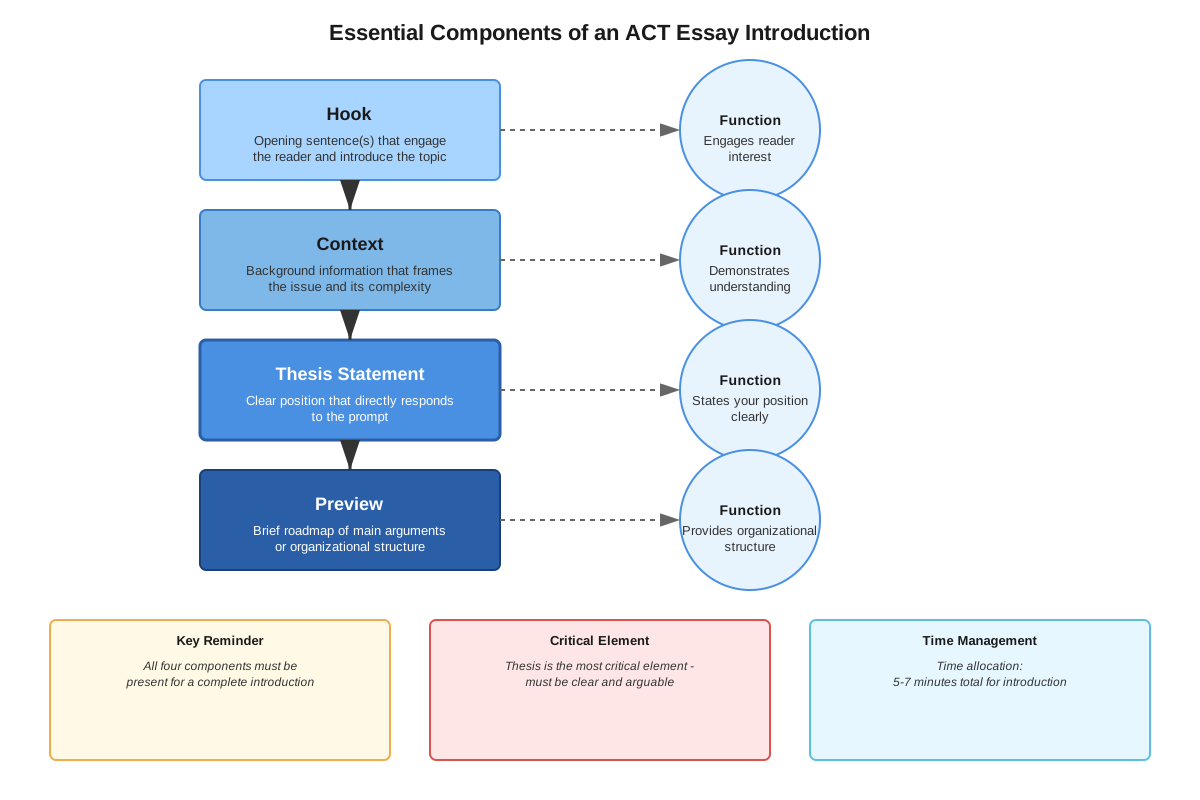
Every effective essay introduction for the ACT must include four fundamental elements that work together to create a strong opening. First, the hook or opening sentence captures reader attention and introduces the general topic without being overly broad or clichéd. Second, the context or background information narrows from the general topic to the specific issue presented in the prompt, demonstrating understanding of the complexity involved. Third, the thesis statement clearly articulates the writer's position on the issue, directly responding to the prompt's question. Fourth, the preview or roadmap briefly indicates how the essay will develop the argument, often by mentioning the main supporting points or analytical approach.
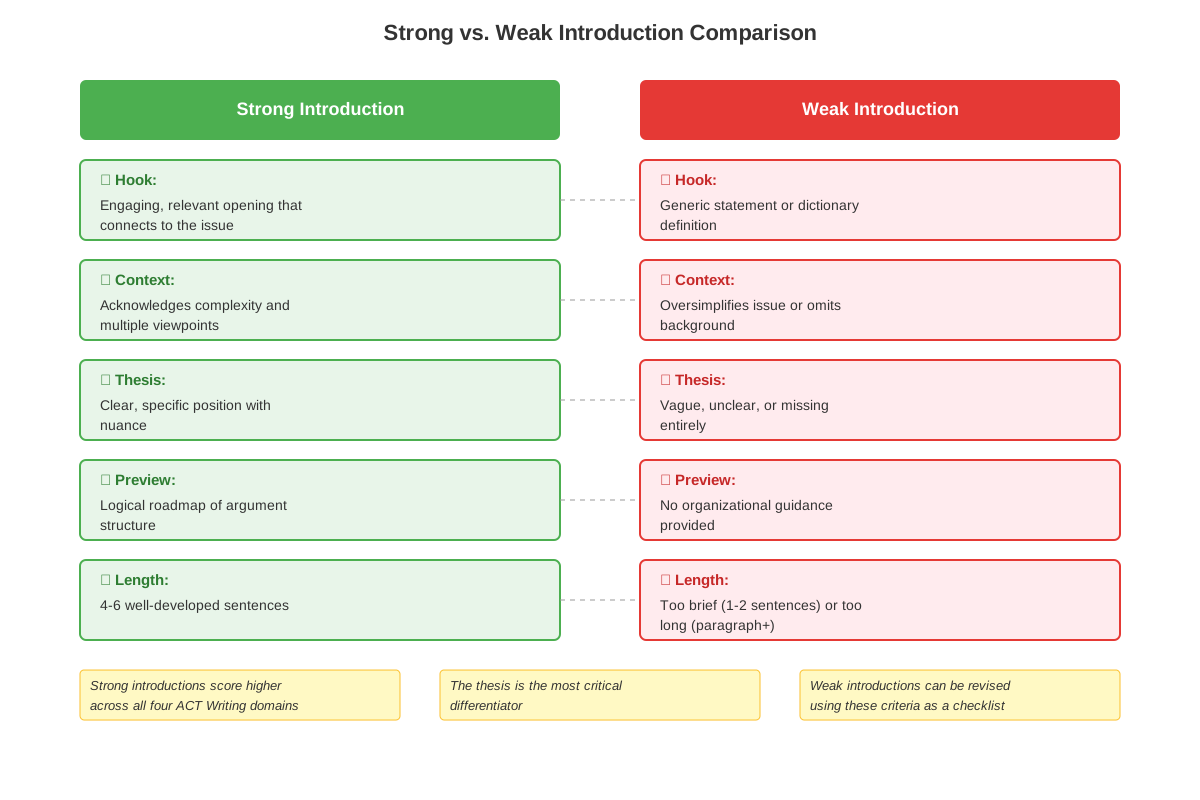
The hook should be specific and relevant rather than generic. Instead of "Throughout history, people have debated many issues," an effective hook might read: "As automation transforms the modern workplace, communities face difficult decisions about balancing technological progress with economic stability." This immediately grounds the reader in the specific issue while demonstrating sophistication.
Context-building in an ACT essay introduction requires acknowledging the perspectives provided in the prompt without simply summarizing them. The goal is to show awareness that the issue is multifaceted: "While some emphasize the economic benefits of innovation, others worry about displaced workers, and still others focus on retraining opportunities." This demonstrates analytical thinking before the thesis even appears.
Thesis Statement Positioning and Strength
The thesis statement represents the most critical sentence in the entire introduction. For the ACT, the thesis should appear at or near the end of the introductory paragraph, following the hook and context. This positioning creates a logical flow from general to specific and ensures the thesis receives emphasis. A strong ACT thesis must be arguable (not a statement of fact), specific (not vague or overly broad), relevant (directly addressing the prompt), and defensible (supportable with reasoning and examples).
Consider the difference between weak and strong thesis statements:
| Weak Thesis | Strong Thesis |
|---|---|
| "Technology has both good and bad effects." | "While technological advancement inevitably disrupts traditional employment, communities should embrace automation while simultaneously investing in comprehensive retraining programs that prepare workers for emerging industries." |
| "I agree with Perspective Two." | "Perspective Two correctly identifies retraining as essential, but underestimates the timeline required, making immediate economic support measures equally necessary." |
| "This is a complicated issue with many sides." | "The most effective approach balances innovation incentives with social safety nets, recognizing that short-term disruption can lead to long-term prosperity when properly managed." |
The strong thesis examples demonstrate nuance by acknowledging complexity while still taking a clear position. They avoid false balance (simply agreeing with all perspectives) and instead show sophisticated thinking by qualifying claims, identifying priorities, or proposing synthesis.
Introduction Length and Time Management
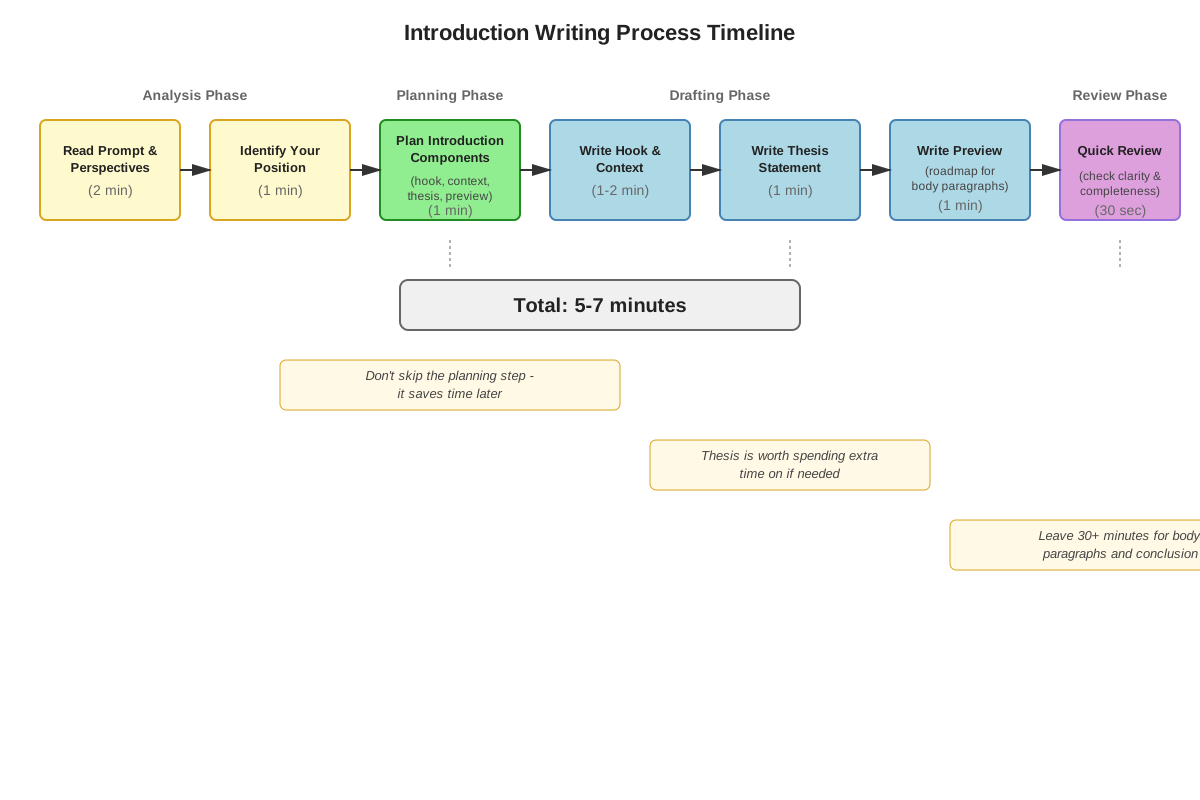
On the ACT Writing test, time management is crucial. With only 40 minutes total, students should allocate approximately 5-7 minutes to crafting the introduction. This includes 2-3 minutes for reading and analyzing the prompt and perspectives, and 3-4 minutes for actually writing the introductory paragraph. The introduction should typically be 4-7 sentences or roughly 75-125 words—substantial enough to accomplish all necessary functions but concise enough to leave adequate time for body paragraph development.
A practical approach involves following a sentence-by-sentence formula during timed practice:
- Sentence 1: Hook that introduces the general topic
- Sentences 2-3: Context that acknowledges the issue's complexity and references the perspectives
- Sentence 4: Clear thesis statement
- Sentence 5 (optional): Brief preview of the essay's structure or main supporting points
This formula provides structure without being formulaic, allowing for flexibility based on the specific prompt while ensuring all essential components appear.
Engagement Strategies and Sophistication
Higher-scoring ACT essays demonstrate sophistication in their introductions through several techniques. Rhetorical questions can engage readers when used sparingly: "How can communities preserve economic stability while embracing inevitable technological change?" However, the question must be immediately answered by the thesis, not left hanging.
Relevant examples or scenarios can provide concrete grounding: "When manufacturing automation eliminated thousands of jobs in the Midwest during the 1980s, communities that invested in retraining programs recovered more quickly than those that resisted change." This approach demonstrates real-world awareness and sets up evidence-based argumentation.
Acknowledging counterarguments early signals analytical maturity: "Although critics worry that automation will create permanent unemployment, historical patterns suggest that technological revolutions ultimately generate more jobs than they eliminate, provided communities adapt proactively." This shows the writer has considered multiple angles before reaching their conclusion.
Precise language elevates introduction quality. Instead of "people," use "workers," "policymakers," or "community members." Instead of "things," specify "economic factors," "social consequences," or "technological innovations." This precision demonstrates command of academic vocabulary and careful thinking.
Common Introduction Pitfalls to Avoid
Several approaches consistently weaken ACT essay introductions. Dictionary definitions ("Webster's Dictionary defines technology as...") waste valuable words and signal unsophisticated thinking. Overly broad generalizations ("Since the beginning of time...") fail to engage with the specific issue. Personal anecdotes ("When I was in middle school...") shift focus away from the argumentative task unless directly relevant and briefly stated. Restating the prompt verbatim shows lack of original thinking and wastes the opportunity to demonstrate analytical skills.
Additionally, fence-sitting or refusing to take a clear position undermines the entire essay. The ACT explicitly asks students to "develop and support [their] own perspective," so introductions that simply agree with all perspectives or claim "everyone has valid points" fail to meet the task requirements. The goal is not neutrality but rather a well-reasoned position that acknowledges complexity while still making a clear argument.
Concept Relationships
The essay introduction functions as the foundation upon which all other essay components build. The thesis statement within the introduction directly determines the content and organization of body paragraphs—each body paragraph should develop one aspect of the thesis claim. The context and perspective acknowledgment in the introduction sets up the counterargument analysis that often appears in body paragraphs, creating coherence between sections.
The introduction's preview or roadmap creates expectations that the essay organization must fulfill. If the introduction promises to discuss economic, social, and educational dimensions of an issue, the body paragraphs must address these dimensions in a logical order. This connection between introduction and organization directly impacts the Organization domain score.
The sophistication and engagement strategies used in the introduction establish the tone and style maintained throughout the essay. An introduction that uses precise academic vocabulary and complex sentence structures signals that the entire essay will demonstrate language sophistication, affecting the Language Use and Conventions domain score.
The relationship flows as follows: Prompt Analysis → Introduction (with thesis) → Body Paragraph Development → Conclusion (that echoes introduction). The introduction serves as the bridge between understanding the task and executing the response, making it the pivotal element that determines whether the essay will be coherent and focused or scattered and unclear.
High-Yield Facts
⭐ The introduction should be written after briefly outlining the essay structure but before drafting body paragraphs to ensure focus and direction.
⭐ A strong ACT essay introduction must include a clear thesis statement that takes a specific position, not merely summarize perspectives.
⭐ The optimal introduction length is 4-7 sentences or approximately 75-125 words, taking 5-7 minutes to compose.
⭐ Acknowledging the complexity of the issue while still taking a clear stance demonstrates the analytical sophistication that earns top scores.
⭐ The thesis should appear at or near the end of the introductory paragraph for maximum emphasis and logical flow.
- Hooks should be specific to the prompt topic rather than generic statements about "society" or "throughout history."
- Effective introductions reference the perspectives provided in the prompt without simply listing or summarizing them.
- Dictionary definitions, overly broad generalizations, and personal anecdotes typically weaken rather than strengthen ACT essay introductions.
- The introduction establishes the organizational framework that body paragraphs must follow for coherence.
- Precise academic vocabulary in the introduction signals sophistication and sets the tone for the entire essay.
- Introductions that take a nuanced position (acknowledging valid points in multiple perspectives while prioritizing one approach) score higher than those that completely dismiss alternative viewpoints.
- The introduction directly impacts scoring in at least three of the four domains: Ideas and Analysis, Development and Support, and Organization.
Quick check — test yourself on Essay introduction so far.
Try Flashcards →Common Misconceptions
Misconception: The introduction should be as long as possible to demonstrate writing ability. → Correction: Quality matters more than quantity; a concise, focused introduction of 4-7 sentences is more effective than a lengthy, rambling opening that wastes valuable time needed for body paragraph development.
Misconception: Starting with a dictionary definition makes the essay sound more academic and sophisticated. → Correction: Dictionary definitions are considered clichéd and unsophisticated in academic writing; they waste words without adding meaningful content or demonstrating original thinking about the issue.
Misconception: The thesis should simply state agreement with one of the three provided perspectives. → Correction: While the thesis may align with one perspective, it should demonstrate original thinking by extending, qualifying, or synthesizing ideas rather than merely restating a provided viewpoint.
Misconception: The introduction should remain neutral and present all sides equally without taking a position. → Correction: The ACT explicitly requires students to develop and support their own perspective, so the introduction must take a clear stance while acknowledging complexity—neutrality fails to meet the task requirements.
Misconception: Personal anecdotes and stories make introductions more engaging and relatable. → Correction: Unless directly relevant and briefly stated, personal anecdotes shift focus away from the analytical task and can make the essay seem informal or off-topic; the ACT values argumentation over personal narrative.
Misconception: The introduction should be written first, before reading the perspectives or planning the essay. → Correction: Effective introductions require understanding the full scope of the issue and planning the essay's direction; attempting to write the introduction before analysis often results in unfocused or irrelevant openings.
Misconception: Using complex vocabulary and long sentences in the introduction always improves the score. → Correction: Clarity is paramount; unnecessarily complex language that obscures meaning or contains errors actually lowers scores, while precise, appropriate academic vocabulary used correctly demonstrates sophistication.
Worked Examples
Example 1: Technology and Education Prompt
Prompt Summary: Should schools prioritize technology integration in classrooms? Perspective One argues technology enhances learning; Perspective Two warns of distraction and inequality; Perspective Three emphasizes teacher training as the key factor.
Weak Introduction:
"Technology is everywhere in today's world. Schools use computers and tablets. Some people think this is good and some think it is bad. I agree with Perspective One because technology is important. This essay will discuss why technology in schools is good."
Analysis of Weaknesses: This introduction lacks a hook, uses overly simplistic language, fails to acknowledge complexity, presents a vague thesis without nuance, and provides no meaningful context. The thesis merely states agreement without demonstrating original thinking.
Strong Introduction:
"As digital literacy becomes as fundamental as traditional reading and writing, schools face mounting pressure to integrate technology into every aspect of instruction. While critics rightfully point to concerns about equitable access and potential distractions, and others emphasize that technology alone cannot improve education without proper teacher training, these perspectives miss a crucial synthesis. Schools should pursue strategic technology integration that prioritizes teacher professional development and addresses equity gaps simultaneously, recognizing that the question is not whether to adopt technology but how to implement it effectively. This approach acknowledges that technology serves as a powerful tool only when wielded by well-trained educators who can guide students toward productive use while mitigating potential drawbacks."
Analysis of Strengths: This introduction opens with a specific, relevant hook about digital literacy. It acknowledges all three perspectives concisely while showing understanding of their key points. The thesis takes a clear position that synthesizes ideas rather than simply choosing one perspective. The language is sophisticated but clear, using precise terms like "strategic integration" and "equity gaps." The final sentence provides a preview of the argumentative approach, setting up body paragraphs that will discuss implementation strategies.
Example 2: Community Service Requirement Prompt
Prompt Summary: Should high schools require community service for graduation? Perspective One argues it builds character; Perspective Two claims mandatory service contradicts the spirit of volunteerism; Perspective Three focuses on practical benefits for communities.
Developing the Introduction Step-by-Step:
Step 1 - Hook: Begin with a specific, engaging opening that introduces the topic.
"Community service requirements have become increasingly common in American high schools, with over 40% of districts now mandating volunteer hours for graduation."
Step 2 - Context: Acknowledge the perspectives and the issue's complexity.
"Proponents argue that required service builds civic responsibility and character, while critics contend that mandating volunteerism creates a contradiction that undermines genuine altruism, and pragmatists focus on the tangible benefits communities receive regardless of student motivation."
Step 3 - Thesis: State a clear, nuanced position.
"While the philosophical tension between requirement and volunteerism is real, high schools should implement community service requirements because the demonstrated benefits—increased civic engagement, exposure to diverse experiences, and community impact—outweigh concerns about motivation, particularly when programs offer choice in service activities."
Step 4 - Preview (optional but helpful): Briefly indicate the essay's direction.
"By examining both the long-term effects on student development and the practical outcomes for communities, the value of structured service requirements becomes clear."
Complete Strong Introduction:
"Community service requirements have become increasingly common in American high schools, with over 40% of districts now mandating volunteer hours for graduation. Proponents argue that required service builds civic responsibility and character, while critics contend that mandating volunteerism creates a contradiction that undermines genuine altruism, and pragmatists focus on the tangible benefits communities receive regardless of student motivation. While the philosophical tension between requirement and volunteerism is real, high schools should implement community service requirements because the demonstrated benefits—increased civic engagement, exposure to diverse experiences, and community impact—outweigh concerns about motivation, particularly when programs offer choice in service activities. By examining both the long-term effects on student development and the practical outcomes for communities, the value of structured service requirements becomes clear."
Why This Works: This introduction demonstrates sophistication through its acknowledgment of the "philosophical tension" while still taking a clear stance. It uses specific evidence (the 40% statistic) to ground the discussion in reality. The thesis includes qualification ("particularly when programs offer choice") that shows nuanced thinking. The preview sets up a clear organizational structure for body paragraphs.
Exam Strategy
When approaching the ACT Writing test, implement a systematic process for crafting the introduction. First (2-3 minutes), carefully read the prompt and all three perspectives, underlining key terms and noting initial reactions. Second (1-2 minutes), decide on your position and jot down 2-3 main supporting points. Third (3-4 minutes), write the introduction following the hook-context-thesis-preview structure. Fourth (30 seconds), quickly reread the introduction to ensure the thesis is clear and all components are present before moving to body paragraphs.
Trigger words in prompts that signal the need for particular introduction approaches include:
- "Should" or "ought" → Requires a clear prescriptive thesis taking a position
- "Most important" or "priority" → Demands ranking or evaluation in the thesis
- "Balance" or "tension" → Suggests acknowledging trade-offs while still taking a stance
- "Consequences" or "implications" → Calls for forward-looking analysis in the context
Process-of-elimination doesn't apply directly to essay writing, but during the planning phase, eliminate thesis approaches that:
- Simply restate one perspective without adding original thinking
- Try to agree with all perspectives equally (fence-sitting)
- Take an extreme position that ignores valid counterarguments
- Address a different issue than the prompt asks about
Time allocation is critical: if you find yourself spending more than 7 minutes on the introduction, move on even if it's not perfect. A good introduction with well-developed body paragraphs scores higher than a perfect introduction with weak or incomplete body paragraphs. Set a mental timer: by minute 7 of the 40-minute test, you should be starting your first body paragraph.
Exam Tip: If you're struggling with the hook, skip it temporarily and write the thesis first. You can always add an engaging opening sentence after drafting the rest of the introduction, ensuring you don't waste time on the least essential component.
Common question patterns that affect introduction strategy:
- Prompts about education, technology, or social policy typically require acknowledging practical constraints (cost, implementation challenges)
- Prompts about values or ethics often benefit from introductions that establish shared goals before discussing means
- Prompts presenting three very different perspectives may require a synthesis thesis rather than alignment with one view
Memory Techniques
HCTP Acronym for introduction components:
- Hook: Engaging opening sentence
- Context: Background and perspective acknowledgment
- Thesis: Clear position statement
- Preview: Roadmap of essay structure
The "Funnel" Visualization: Picture the introduction as a funnel that starts wide (general topic) and narrows to a specific point (your thesis). This mental image helps maintain logical flow from hook to thesis.
"4-7-75-125" Rule: 4-7 sentences, taking 5-7 minutes, totaling 75-125 words. This numerical pattern helps with time management and length calibration.
STAR Thesis Checklist:
- Specific: Not vague or overly broad
- Testable/Arguable: Not a fact everyone accepts
- Answers the prompt: Directly addresses what's asked
- Reasoned: Defensible with logic and evidence
The "Yes, But, So" Formula for sophisticated thesis statements:
- Yes: Acknowledge a valid point from a perspective you partially agree with
- But: Introduce a qualification, limitation, or counterpoint
- So: State your ultimate position that synthesizes or prioritizes
Example: "Yes, technology can distract students, but with proper teacher training and structured implementation, so schools should integrate technology strategically rather than avoid it entirely."
Summary
The essay introduction for the ACT Writing test serves as the foundation for a successful essay by establishing the writer's position, demonstrating understanding of the issue's complexity, and providing a roadmap for the argument to follow. An effective ACT essay introduction must include four essential components: a specific hook that engages the reader, context that acknowledges the perspectives and issue complexity, a clear thesis statement that takes a defensible position, and a preview that indicates the essay's organizational structure. Students should allocate 5-7 minutes to crafting a 4-7 sentence introduction of approximately 75-125 words, ensuring the thesis appears at or near the end of the paragraph for maximum emphasis. The most successful introductions demonstrate sophistication through nuanced positions that acknowledge complexity while still taking a clear stance, use precise academic vocabulary, and avoid common pitfalls like dictionary definitions, overly broad generalizations, and fence-sitting. The introduction directly impacts scoring across multiple domains—Ideas and Analysis, Development and Support, Organization, and Language Use—making it one of the highest-yield components of the entire essay. Mastering introduction strategies requires understanding that the goal is not neutrality but rather a well-reasoned argument that shows analytical thinking from the very first sentence.
Key Takeaways
- The ACT essay introduction must include a hook, context, thesis statement, and preview to effectively establish the essay's direction and demonstrate analytical sophistication
- Allocate 5-7 minutes to write a 4-7 sentence introduction (75-125 words), positioning the thesis at or near the end of the paragraph
- Strong thesis statements take clear, nuanced positions that acknowledge complexity while still making a specific, defensible argument rather than fence-sitting or simply restating provided perspectives
- Avoid common weaknesses including dictionary definitions, overly broad generalizations, personal anecdotes, and restating the prompt verbatim
- The introduction establishes the organizational framework and tone for the entire essay, directly impacting scores in multiple domains
- Sophistication comes from acknowledging counterarguments, using precise academic vocabulary, and demonstrating original thinking that extends beyond the provided perspectives
- Practice the systematic approach: read and analyze (2-3 min), plan position (1-2 min), write introduction (3-4 min), quick review (30 sec)
Related Topics
Essay Body Paragraphs: After mastering introductions, students must learn to develop body paragraphs that fulfill the promises made in the introduction, using topic sentences that connect back to the thesis and providing specific evidence and analysis.
Thesis Statement Development: A deeper dive into crafting sophisticated, nuanced thesis statements that demonstrate critical thinking and set up complex arguments, building on the introduction skills.
Counterargument and Refutation: Learning to acknowledge and respond to opposing viewpoints strengthens essays and connects to the perspective acknowledgment begun in the introduction.
Essay Conclusions: Understanding how to craft conclusions that echo and extend the introduction without merely repeating it, creating a sense of completeness and sophistication.
Transitions and Coherence: Developing the connective tissue between introduction, body paragraphs, and conclusion to create a unified, flowing argument.
Time Management for Timed Essays: Expanding on the introduction time allocation to develop a complete 40-minute strategy for the entire ACT Writing test.
Practice CTA
Now that you understand the essential components and strategies for crafting effective ACT essay introductions, it's time to apply this knowledge through deliberate practice. Work through the practice questions to identify strong and weak introductions, then attempt to write your own introductions for various prompts. Use the flashcards to reinforce the key concepts, formulas, and strategies until they become automatic. Remember that introduction writing is a skill that improves dramatically with focused practice—each introduction you write strengthens your ability to quickly analyze prompts, formulate sophisticated thesis statements, and establish the foundation for high-scoring essays. Your investment in mastering this high-yield topic will pay dividends not only on test day but throughout your academic career. Start practicing now, and watch your confidence and competence grow with each attempt!
Sign up free to keep reading
Create a free AnvayaPrep account to finish this ACT guide on Essay introduction — plus flashcards and practice questions.