Overview
Hybrid game recognition is a critical skill within the Analytical Reasoning Legacy section of the LSAT, representing one of the most challenging yet frequently tested game types. Unlike pure sequencing games or pure grouping games, hybrid games legacy combine multiple organizational tasks within a single problem set, requiring test-takers to simultaneously manage different types of constraints and relationships. These games might ask you to both order elements chronologically AND assign them to specific categories, or to group items into teams WHILE also determining their relative rankings.
Mastering hybrid game recognition is essential because these games appear with significant frequency on the LSAT and often serve as the most difficult game in a given Analytical Reasoning section. The ability to quickly identify when you're facing a hybrid game—rather than a pure game type—fundamentally changes your setup strategy, rule representation, and inference-making approach. Students who fail to recognize hybrid structures often waste valuable time attempting to force the game into a single-dimension framework, missing crucial deductions that only emerge when both organizational dimensions are properly mapped.
Within the broader landscape of analytical reasoning legacy, hybrid game recognition serves as an integrative skill that builds upon foundational knowledge of basic game types. Once you can identify sequencing games, grouping games, and matching games in isolation, hybrid game recognition challenges you to see how these structures combine and interact. This topic represents a bridge between basic game type identification and advanced game-solving strategies, making it a pivotal skill for achieving top scores in the Analytical Reasoning section.
Learning Objectives
- [ ] Identify how Hybrid game recognition appears in LSAT questions
- [ ] Explain the reasoning pattern behind Hybrid game recognition
- [ ] Apply Hybrid game recognition to solve LSAT-style problems accurately
- [ ] Distinguish between pure game types and hybrid combinations within the first 30 seconds of reading a game scenario
- [ ] Determine which organizational dimension should serve as the primary framework in a hybrid game setup
- [ ] Recognize the specific hybrid combinations that appear most frequently on the LSAT (sequencing-grouping, grouping-matching, sequencing-matching)
Prerequisites
- Basic game type identification: Understanding pure sequencing, grouping, and matching games is essential because hybrid games combine these fundamental structures
- Rule representation techniques: Familiarity with standard notation systems allows for efficient translation of hybrid constraints that span multiple dimensions
- Inference-making fundamentals: Recognizing how rules interact is critical because hybrid games generate deductions across multiple organizational frameworks
- Setup construction principles: Knowledge of how to build game boards is necessary because hybrid games require integrated visual representations
Why This Topic Matters
Hybrid games represent approximately 25-35% of all Analytical Reasoning games on modern LSAT administrations, making them one of the most frequently tested advanced game types. Unlike straightforward sequencing or grouping games, hybrid games consistently appear as the third or fourth game in a section—the positions typically reserved for the most challenging problems. Test-takers who cannot quickly recognize hybrid structures often lose 5-8 minutes attempting inappropriate setup strategies, severely compromising their ability to complete the section.
In practical terms, lsat hybrid game recognition directly impacts your score because these games generate the widest performance gap between high-scoring and average test-takers. While most students can eventually solve pure game types, hybrid games require simultaneous multi-dimensional thinking that separates LSAT scores in the 160s from scores in the 170s. The LSAC (Law School Admission Council) deliberately includes hybrid games to test higher-order analytical reasoning—the exact cognitive skills required for legal analysis involving multiple competing frameworks.
On the exam, hybrid games typically appear in scenarios involving: scheduling tasks across multiple days with team assignments; organizing presentations in a specific order while matching presenters to topics; distributing items into categories while maintaining sequential relationships; or assigning people to positions while respecting hierarchical constraints. The scenario language often contains multiple action verbs ("assign," "schedule," "order," "match") that signal the hybrid nature, and the rules will explicitly reference both organizational dimensions.
Core Concepts
Defining Hybrid Games
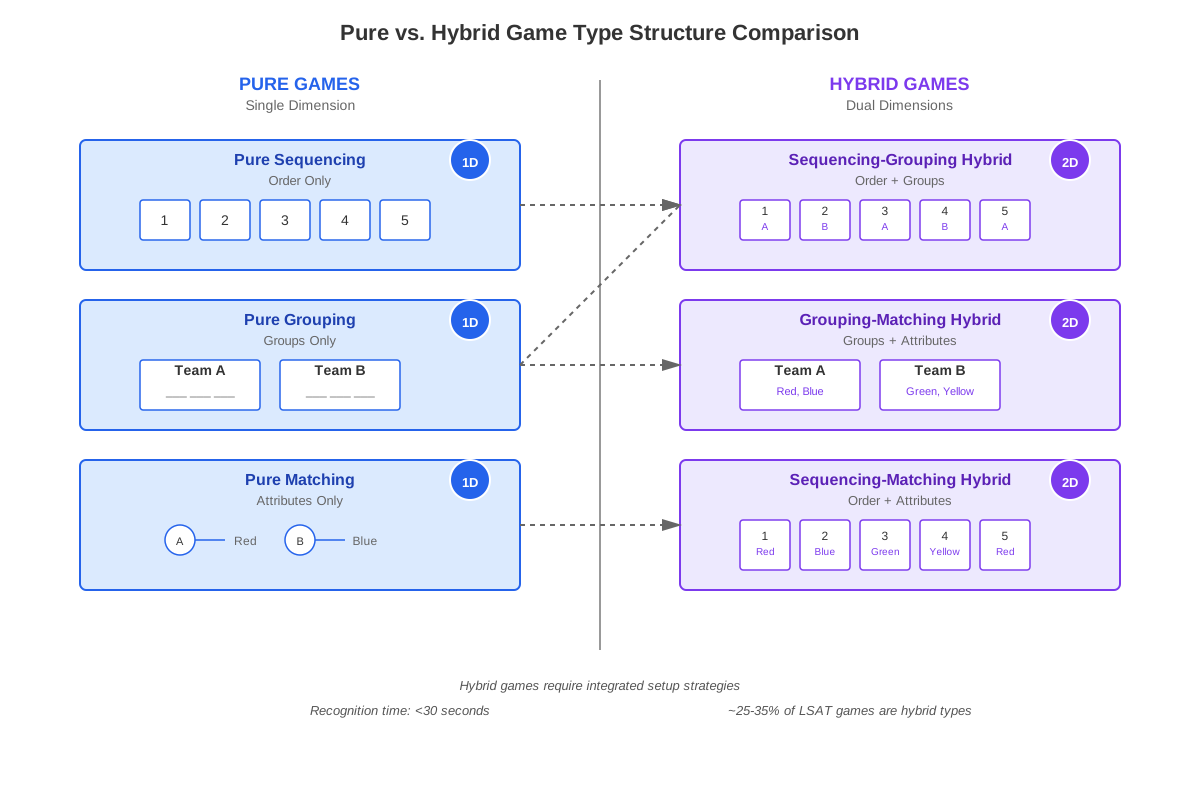
A hybrid game combines two or more distinct organizational tasks within a single problem framework. Rather than asking you to perform only one type of operation (such as pure ordering or pure grouping), hybrid games require simultaneous management of multiple structural dimensions. The key distinguishing feature is that the rules and questions explicitly reference BOTH organizational tasks, and solving the game requires tracking how constraints in one dimension affect possibilities in the other dimension.
The three primary dimensions that combine in hybrid games are:
- Sequencing/Ordering: Arranging elements in a linear sequence (first to last, earliest to latest)
- Grouping/Distribution: Assigning elements to distinct categories, teams, or groups
- Matching/Assignment: Pairing elements with attributes, characteristics, or secondary elements
The Four Most Common Hybrid Combinations
| Hybrid Type | Primary Dimension | Secondary Dimension | Typical Scenario | Recognition Trigger |
|---|---|---|---|---|
| Sequencing-Grouping | Order/Sequence | Group Assignment | Seven presentations over three days | "...in order...assigned to..." |
| Grouping-Matching | Group Assignment | Attribute Matching | Students in three classes, each taking two subjects | "...divided into...each with..." |
| Sequencing-Matching | Order/Sequence | Attribute Matching | Six appointments, each with a different specialist | "...scheduled...each meeting with..." |
| Triple Hybrid | All three dimensions | N/A | Rare; extreme complexity | Multiple organizational verbs |
Recognition Markers in Game Scenarios
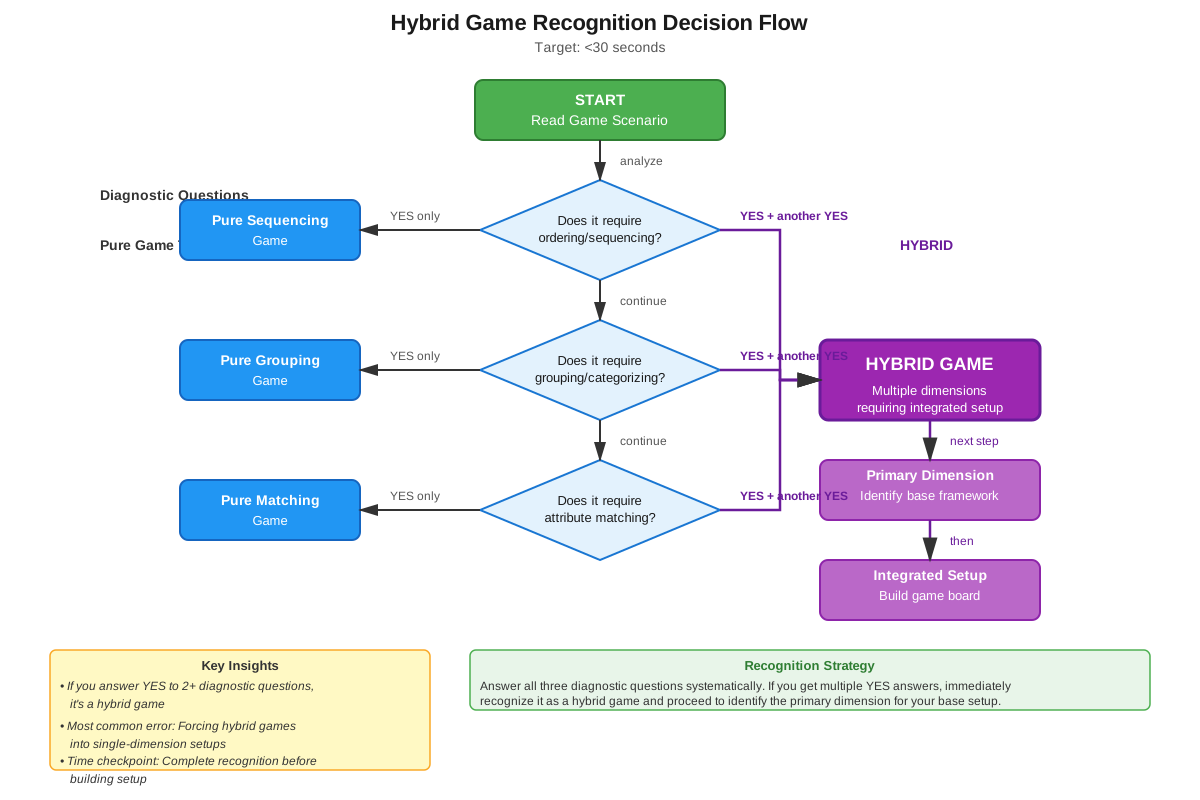
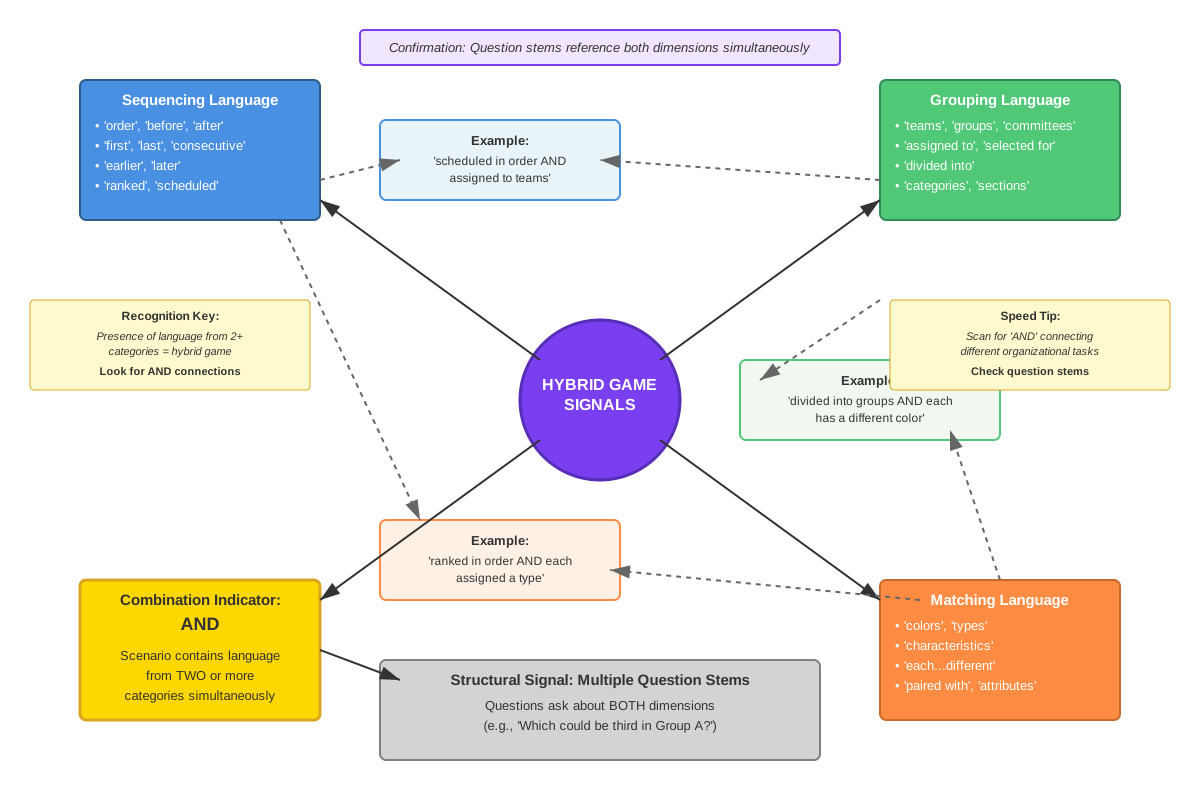
The initial paragraph of a hybrid game contains specific linguistic markers that signal its multi-dimensional nature. Effective hybrid game recognition depends on identifying these triggers within the first reading:
Dual Action Verbs: When the scenario uses two different organizational verbs, suspect a hybrid structure. For example: "Eight employees will be assigned to three departments and ranked within each department" clearly indicates both grouping (assignment) and sequencing (ranking).
Compound Task Statements: Phrases like "both...and," "while also," or "in addition to" often introduce the secondary organizational dimension. Example: "Six songs will be played in order, while also determining which of three singers performs each song."
Multiple Constraint Categories: When the rules section contains some rules about order/sequence AND other rules about group membership or attribute assignment, you're dealing with a hybrid game.
The Primary-Secondary Framework
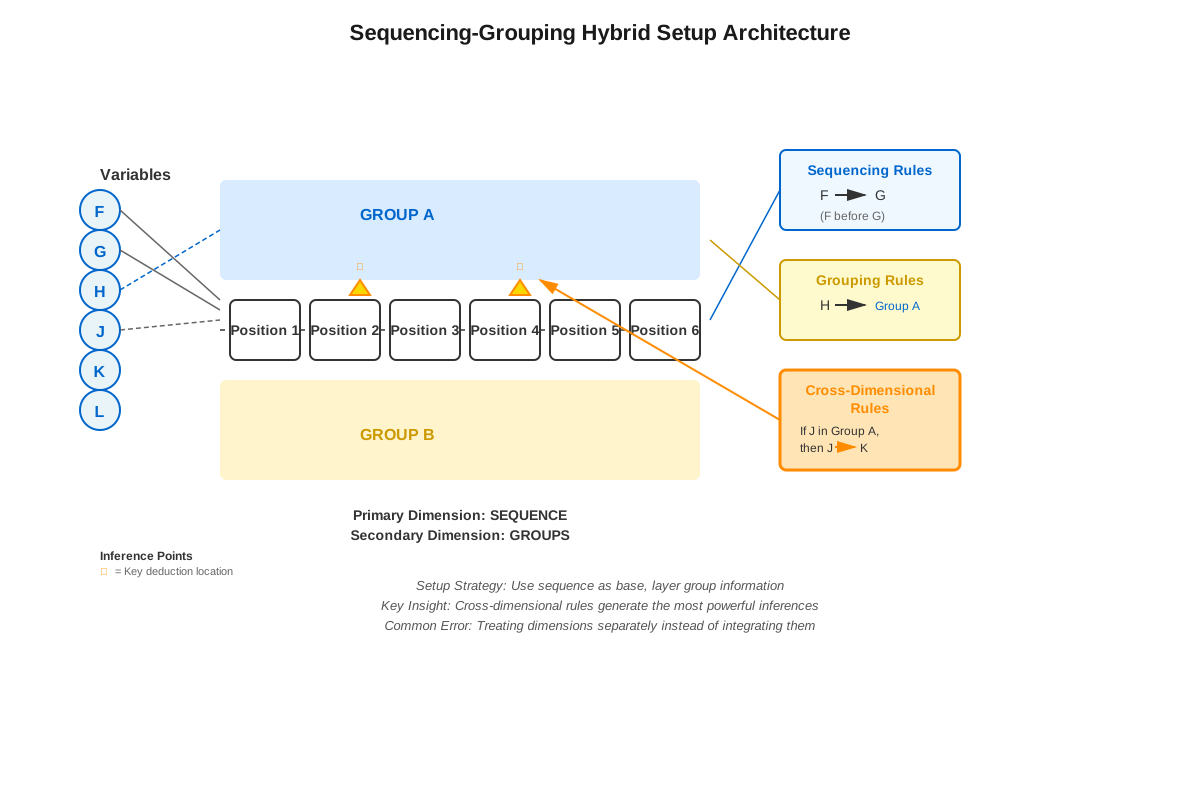
Once you've identified a hybrid game, the next critical decision is determining which dimension should serve as your primary framework—the main structure of your game board—and which should be the secondary dimension—the additional layer of information tracked within or alongside the primary structure.
Primary Framework Selection Criteria:
- Choose the dimension with more explicit constraints in the rules
- Select the dimension that appears in more questions
- Prefer the dimension that creates discrete, countable positions (sequencing and fixed grouping work well as primary frameworks)
- Consider which dimension, when mapped first, makes the secondary dimension easier to track
For example, in a game about "seven presentations scheduled across Monday, Tuesday, and Wednesday, with each presentation given by either a junior or senior employee," the primary framework should be the three-day sequence (creating seven ordered positions), with employee status as the secondary dimension tracked above or below each position.
Integrated Setup Construction
Hybrid games require integrated visual representations that capture both dimensions simultaneously. The most effective approach creates a primary game board structure and incorporates the secondary dimension through:
Stacked Rows: Place the secondary dimension in a row above or below the primary framework. For sequencing-matching hybrids, this might show positions 1-7 in the main row with attribute options in a row above.
Subdivided Spaces: For grouping-sequencing hybrids, create groups as the primary structure, then number positions within each group to track the sequential dimension.
Notation Systems: Develop consistent symbols to represent how elements satisfy both dimensional requirements simultaneously (e.g., "J₃" might represent "Junior employee in position 3").
Cross-Dimensional Inference Recognition
The most powerful deductions in hybrid games emerge from rules that bridge both dimensions. These cross-dimensional constraints create cascading inferences that pure game types cannot generate:
- A sequencing rule combined with a grouping rule: "F must present before G, and F must be a senior employee" limits both when F can appear AND which positions can contain senior employees
- A grouping rule combined with a matching rule: "Each team must have exactly one expert in biology" creates both distribution constraints and attribute requirements
- Conditional rules spanning dimensions: "If X is in Group 1, then X must be scheduled third" directly links the two organizational tasks
Recognizing these cross-dimensional rules during your initial rule inventory is crucial because they often unlock the game's key deductions.
Concept Relationships
The concepts within hybrid game recognition form a hierarchical relationship: Recognition markers (linguistic triggers in the scenario) lead to game type identification (determining which two dimensions are combined), which informs primary-secondary framework selection (deciding how to structure your setup), which enables integrated setup construction (building a visual representation), which finally allows for cross-dimensional inference recognition (finding the powerful deductions that solve the game).
This topic connects directly to prerequisite knowledge of pure game types—you cannot recognize a sequencing-grouping hybrid without first understanding what pure sequencing and pure grouping games look like in isolation. The relationship is: Pure Game Type Mastery → Hybrid Game Recognition → Advanced Setup Strategies → Efficient Game Solving.
Hybrid game recognition also relates to rule representation techniques because hybrid games require notation systems that can capture constraints spanning multiple dimensions. The relationship flows: Basic Rule Notation → Hybrid Game Recognition → Multi-Dimensional Rule Representation → Cross-Dimensional Deductions.
Finally, this topic serves as a foundation for advanced game-solving strategies, particularly for handling the most difficult games in each LSAT section. The progression is: Hybrid Game Recognition → Appropriate Setup Selection → Efficient Question Approach → Time Management Success.
High-Yield Facts
⭐ Hybrid games appear in approximately 25-35% of all Analytical Reasoning sections, typically as the most difficult game
⭐ The three most common hybrid combinations are sequencing-grouping, grouping-matching, and sequencing-matching
⭐ Recognition markers include dual action verbs, compound task statements, and rules that reference multiple organizational dimensions
⭐ The primary framework should be the dimension with more explicit constraints or the one that creates discrete, countable positions
⭐ Cross-dimensional inferences—rules that bridge both organizational dimensions—generate the most powerful deductions in hybrid games
- Hybrid games consistently generate wider performance gaps between high-scoring and average test-takers than pure game types
- The initial scenario paragraph in a hybrid game typically contains 2-3 sentences, with the second sentence introducing the secondary dimension
- Questions in hybrid games often require checking both dimensions before eliminating answer choices
- Stacked row setups work best for sequencing-matching hybrids, while subdivided group structures work best for grouping-sequencing hybrids
- Triple hybrids (combining all three dimensions) appear rarely but have occurred on past LSATs, typically in experimental sections
Quick check — test yourself on Hybrid game recognition so far.
Try Flashcards →Common Misconceptions
Misconception: Every game with multiple types of rules is a hybrid game → Correction: A true hybrid game requires that BOTH organizational dimensions are essential to solving the game and appear in multiple questions. Some pure games have one or two rules that reference a secondary characteristic, but if that characteristic doesn't create a full organizational dimension, it's not a hybrid game.
Misconception: The primary framework should always be the dimension mentioned first in the scenario → Correction: The order of mention in the scenario doesn't determine which dimension should be primary. Choose the primary framework based on which dimension has more constraints, appears in more questions, or creates a more stable structure for tracking information.
Misconception: Hybrid games are always harder than pure games → Correction: While hybrid games often appear as the most difficult game in a section, a well-constructed setup for a hybrid game can actually make questions easier than a poorly approached pure game. The key is recognition and appropriate setup strategy.
Misconception: You need to create two separate game boards for hybrid games → Correction: Effective hybrid game solving requires an integrated setup that captures both dimensions simultaneously. Creating separate boards for each dimension typically leads to errors and wastes time.
Misconception: If you can't immediately identify the hybrid type, you should skip the game → Correction: Even if you're uncertain about the exact hybrid combination, recognizing that multiple organizational dimensions exist allows you to build a flexible setup. You can refine your understanding as you work through the rules.
Worked Examples
Example 1: Sequencing-Grouping Hybrid Recognition
Scenario: "A company will schedule exactly seven training sessions—F, G, H, J, K, L, and M—over the course of three days: Monday, Tuesday, and Wednesday. Each session occurs on exactly one day, and each day includes at least one session. The sessions are conducted in a specific order from first to last across the three days."
Recognition Process:
Step 1 - Identify Action Verbs: The scenario uses "schedule" (suggesting sequencing) and "over the course of three days" (suggesting grouping/distribution).
Step 2 - Analyze Task Requirements: The phrase "conducted in a specific order from first to last" explicitly requires sequencing. The phrase "each day includes at least one session" explicitly requires distribution into groups (days).
Step 3 - Confirm Hybrid Structure: This is a sequencing-grouping hybrid because we must both (a) determine the order of all seven sessions from first to last, AND (b) determine which sessions occur on which day.
Step 4 - Select Primary Framework: The sequencing dimension should be primary because it creates seven discrete, numbered positions (1st through 7th). The grouping dimension (which day) becomes secondary information tracked below or above each position.
Step 5 - Setup Construction: Create a linear board with positions 1-7, and add a row indicating day boundaries:
Position:  1    2    3  |  4    5  |  6    7
Session:   _    _    _  |  _    _  |  _    _
Day:       Monday       | Tuesday  | Wednesday
This integrated setup allows tracking both which session is in each position AND which day contains each position.
Example 2: Grouping-Matching Hybrid Recognition
Scenario: "Exactly six students—R, S, T, U, V, and W—will be assigned to three study groups: Group 1, Group 2, and Group 3. Each group contains exactly two students. Each student will study exactly one of three subjects: biology, chemistry, or physics. Each subject is studied by exactly two students."
Recognition Process:
Step 1 - Identify Action Verbs: "Assigned to three study groups" indicates grouping. "Will study exactly one of three subjects" indicates matching/attribute assignment.
Step 2 - Analyze Task Requirements: We must determine (a) which two students are in each group, AND (b) which subject each student studies.
Step 3 - Confirm Hybrid Structure: This is a grouping-matching hybrid because both the group assignments and the subject assignments are essential, and rules will likely connect these dimensions (e.g., "Both students in Group 1 study the same subject" or "No group contains two students studying biology").
Step 4 - Select Primary Framework: The grouping dimension should be primary because it creates three discrete groups with defined membership. The matching dimension (subjects) can be tracked within each group.
Step 5 - Setup Construction:
Group 1:  _____ (subject: ___)    _____ (subject: ___)
Group 2:  _____ (subject: ___)    _____ (subject: ___)
Group 3:  _____ (subject: ___)    _____ (subject: ___)

Students: R, S, T, U, V, W
Subjects: B, C, P (each used exactly twice)
This setup tracks both which students are grouped together AND which subject each student studies, allowing for cross-dimensional deductions.
Exam Strategy
Initial Recognition Phase (30-45 seconds)
When you first encounter a game, invest the first 30-45 seconds in careful scenario analysis before writing anything. Read specifically for:
- Multiple organizational verbs: Circle or mentally note words like "schedule," "assign," "match," "order," "group"
- Compound requirements: Look for "and," "while," "also," "in addition to"
- Two distinct sets of elements or attributes: If the scenario mentions both "positions" and "teams," or "order" and "characteristics," suspect a hybrid
Exam Tip: If you find yourself thinking "this game asks me to do two different things," you've likely identified a hybrid game. Trust that instinct.
Setup Decision Framework (45-60 seconds)
Once you've recognized a hybrid game, quickly scan the rules before committing to a setup structure:
- Count rules by dimension: How many rules reference sequencing? How many reference grouping or matching?
- Identify bridging rules: Which rules connect both dimensions? These are your highest-value constraints.
- Choose primary framework: Select the dimension with more rules or the one that creates more concrete structure
Question Approach Modifications
Hybrid game questions require checking both dimensions before eliminating answer choices:
- For "could be true" questions: An answer choice must satisfy constraints in BOTH dimensions to be correct
- For "must be false" questions: An answer choice violates constraints if it fails in EITHER dimension
- For "complete and accurate list" questions: Verify that each option satisfies all cross-dimensional constraints
Time Allocation
Hybrid games typically require 9-11 minutes to complete fully, compared to 7-9 minutes for pure games. Budget accordingly:
- Setup and rule representation: 2.5-3 minutes
- Initial deductions: 1.5-2 minutes
- Questions: 5-6 minutes
Exam Tip: If you're struggling to make progress after 3 minutes on setup, move to the questions. Sometimes the question stems clarify which dimension should be primary.
Trigger Phrases to Watch For
In questions, these phrases signal that both dimensions matter:
- "...and is also..." (requires checking both dimensions)
- "...while..." (simultaneous constraints)
- "...both...and..." (explicit dual requirements)
- "...in addition to..." (layered constraints)
Memory Techniques
The "HYBRID" Acronym for Recognition
How many organizational tasks? (Count the distinct operations required)
Yield to the dimension with more rules (Choose your primary framework)
Bridge rules are golden (Identify cross-dimensional constraints first)
Represent both dimensions in one setup (Integrated visual representation)
Inferences emerge from interaction (Look for deductions spanning dimensions)
Double-check both dimensions in questions (Verify answers satisfy all constraints)
The "Two-Verb Test"
Visualize the scenario as a sentence with two action verbs. If you can accurately describe the game as "We must [VERB 1] the elements AND [VERB 2] them," you have a hybrid game. For example: "We must order the presentations AND assign them to speakers."
The "Stacked vs. Subdivided" Decision Rule
Sequencing primary? → Stack the secondary dimension in rows
Grouping primary? → Subdivide Groups to show secondary dimension
This alliterative pairing helps you quickly decide on setup structure.
Summary
Hybrid game recognition is the essential skill of identifying when an LSAT Analytical Reasoning game combines multiple organizational dimensions—typically sequencing, grouping, and matching—within a single problem framework. Successful recognition depends on spotting linguistic markers in the scenario (dual action verbs, compound task statements) and confirming that both dimensions appear substantively in the rules and questions. Once identified, hybrid games require integrated setup strategies that capture both dimensions simultaneously, with one dimension serving as the primary framework and the other tracked as secondary information. The most powerful deductions in hybrid games emerge from cross-dimensional rules that bridge both organizational tasks. Mastering hybrid game recognition is critical for LSAT success because these games appear frequently, typically as the most challenging game in a section, and create significant performance gaps between high-scoring and average test-takers. The key to efficient hybrid game solving is rapid recognition, appropriate primary framework selection, and systematic attention to how constraints in one dimension affect possibilities in the other.
Key Takeaways
- Hybrid games combine two or more organizational dimensions (sequencing, grouping, matching) and appear in 25-35% of LSAT Analytical Reasoning sections
- Recognition markers include dual action verbs, compound task statements, and rules referencing multiple dimensions—identify these within the first 30 seconds
- The three most common hybrid types are sequencing-grouping, grouping-matching, and sequencing-matching, each requiring different setup approaches
- Select your primary framework based on which dimension has more constraints or creates more discrete positions, not based on which is mentioned first
- Cross-dimensional inferences—rules that bridge both organizational tasks—generate the most powerful deductions and should be identified during initial rule analysis
- Integrated setups that capture both dimensions simultaneously are more efficient than separate boards for each dimension
- Question approach must verify that answer choices satisfy constraints in both dimensions before elimination or selection
Related Topics
Advanced Hybrid Game Setups: Once you can recognize hybrid games, the next step is mastering sophisticated setup techniques for each hybrid combination type, including optimal notation systems and inference-tracking methods.
Cross-Dimensional Inference Patterns: A deeper dive into the specific types of deductions that emerge when rules bridge multiple organizational dimensions, including conditional chains that span dimensions.
Game Type Flexibility and Adaptation: Learning to adjust your initial setup when early questions reveal that your primary-secondary framework choice was suboptimal, a crucial skill for maximizing efficiency.
Pure Game Type Mastery: Strengthening your recognition and solving skills for sequencing, grouping, and matching games in isolation provides the foundation for hybrid game success.
Practice CTA
Now that you understand the principles of hybrid game recognition, it's time to put this knowledge into action. Attempt the practice questions associated with this topic to test your ability to identify hybrid structures quickly and accurately. Use the flashcards to reinforce recognition markers and common hybrid combinations until identification becomes automatic. Remember: hybrid game recognition is a skill that improves dramatically with deliberate practice. Each game you analyze strengthens your pattern recognition and reduces the time needed for accurate identification. Your investment in mastering this topic will pay dividends across multiple LSAT administrations, as hybrid games remain a consistent feature of the Analytical Reasoning section. Approach each practice problem as an opportunity to refine your recognition speed and setup decision-making—these are the skills that separate good LSAT scores from exceptional ones.
Sign up free to keep reading
Create a free AnvayaPrep account to finish this LSAT guide on Hybrid game recognition — plus flashcards and practice questions.