Overview
The ad hominem fallacy represents one of the most frequently tested reasoning flaws on the LSAT Logical Reasoning section. This Latin term, meaning "to the person," describes arguments that attack the character, circumstances, or personal attributes of an individual making a claim rather than addressing the substance of the claim itself. Understanding this fallacy is crucial for LSAT success because it appears across multiple question types, including flaw questions, Method of Reasoning questions, and Parallel Reasoning questions.
On the LSAT, recognizing ad hominem reasoning requires distinguishing between legitimate challenges to credibility and illegitimate personal attacks that sidestep the actual argument. The test writers craft sophisticated variations of this fallacy, often embedding them in contexts where the personal attack seems superficially relevant. Students who master ad hominem identification gain a significant advantage, as this flaw appears in approximately 8-12% of all Logical Reasoning questions across both LR sections.
The ad hominem fallacy connects to broader LSAT concepts including source arguments, credibility assessment, and the distinction between premises and conclusions. It also relates to other common flaws such as appeals to authority and genetic fallacies. Mastering ad hominem reasoning strengthens overall critical thinking skills essential for the entire LSAT, particularly in distinguishing between attacks on arguments versus attacks on arguers—a subtle but crucial distinction that separates high scorers from average performers.
Learning Objectives
- [ ] Identify how Ad hominem appears in LSAT questions
- [ ] Explain the reasoning pattern behind Ad hominem
- [ ] Apply Ad hominem to solve LSAT-style problems accurately
- [ ] Distinguish between legitimate credibility challenges and ad hominem attacks
- [ ] Recognize the various forms ad hominem takes in LSAT stimuli (circumstantial, abusive, tu quoque)
- [ ] Predict answer choice language that correctly describes ad hominem flaws
- [ ] Evaluate when personal characteristics are relevant versus irrelevant to argument strength
Prerequisites
- Basic argument structure: Understanding premises, conclusions, and how they connect is essential because ad hominem attacks target the arguer rather than the argument's logical structure
- Distinction between form and content: Recognizing that an argument's validity depends on its logical structure, not the person presenting it, underlies why ad hominem constitutes a flaw
- Credibility concepts: Familiarity with when source credibility matters helps distinguish legitimate credibility challenges from fallacious personal attacks
- Flaw question format: Knowledge of how LSAT flaw questions are structured and what they ask enables efficient application of ad hominem recognition skills
Why This Topic Matters
Ad hominem reasoning pervades real-world discourse, from political debates to courtroom arguments to everyday disagreements. Recognizing when someone deflects from substantive issues by attacking character equips students with critical thinking skills applicable far beyond the LSAT. In professional contexts, lawyers must distinguish between legitimate impeachment of witness credibility and improper character attacks—a skill directly tested through ad hominem questions.
On the LSAT specifically, ad hominem appears in approximately 3-5 questions per test administration, making it a high-yield topic for focused study. These questions typically appear as flaw questions (most common), but also surface in Method of Reasoning, Parallel Flaw, and occasionally Strengthen/Weaken questions. The LSAT tests ad hominem in three primary contexts: scientific debates where a researcher's funding sources are attacked, policy arguments where a politician's past actions are used to dismiss current proposals, and expert testimony scenarios where personal characteristics substitute for substantive rebuttal.
The frequency and point value of ad hominem questions make this topic essential for score optimization. Students who confidently identify ad hominem flaws save valuable time and avoid trap answers that present the personal attack as legitimate criticism. Additionally, understanding ad hominem strengthens performance on related question types involving source credibility, expert testimony, and argument evaluation.
Core Concepts
Definition and Structure of Ad Hominem
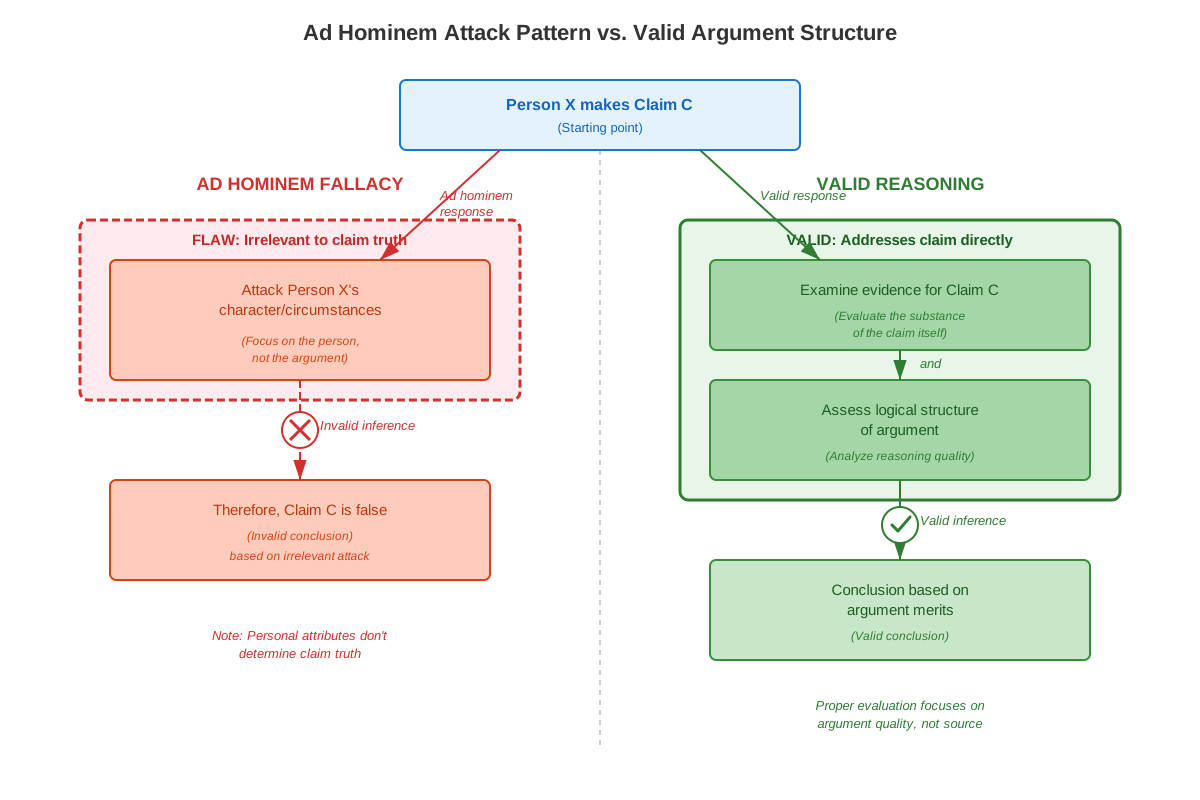
An ad hominem fallacy occurs when an argument rejects or dismisses a claim by attacking the person making the claim rather than addressing the claim's merits. The fundamental error lies in assuming that personal characteristics, motivations, or circumstances of the arguer automatically undermine the truth or validity of their argument. This represents a logical disconnect: even if the personal attack is factually accurate, it does not establish that the argument itself is flawed.
The basic structure follows this pattern:
- Person X makes claim C
- Person X has negative characteristic N (or circumstance, motivation, etc.)
- Therefore, claim C is false or should be rejected
The logical gap emerges because characteristic N, even when true, provides no evidence about whether claim C is actually true or false. Arguments must be evaluated on their own logical merit—the quality of evidence, the validity of reasoning, and the strength of support for conclusions.
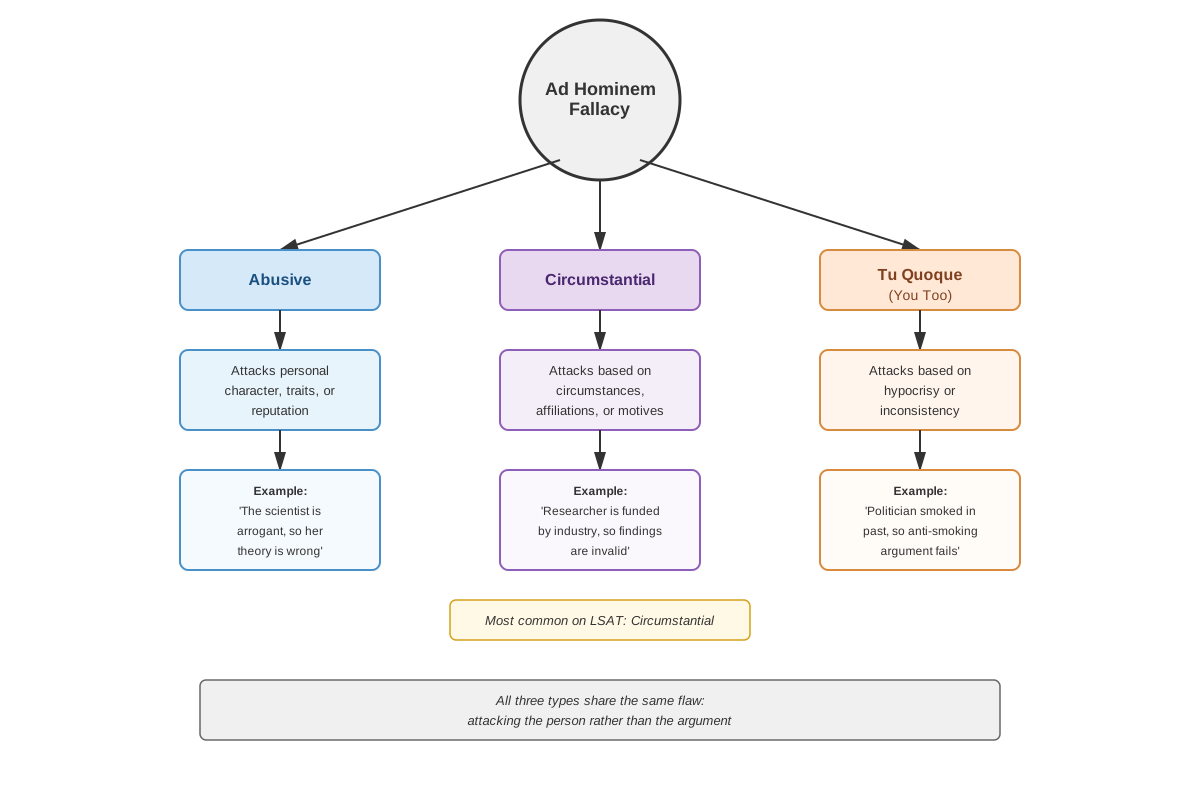
Three Primary Forms of Ad Hominem
Abusive ad hominem attacks the character, personality, or general attributes of the person making an argument. This form directly insults or disparages the arguer, suggesting their negative qualities invalidate their claims. On the LSAT, this might appear as: "Senator Johnson argues for education reform, but Johnson is known for being dishonest, so we should reject the education proposal." The senator's honesty, while potentially relevant to general trustworthiness, does not address whether the specific education reform proposal has merit.
Circumstantial ad hominem attacks the arguer's circumstances, affiliations, or potential biases rather than their character. This form suggests that someone's position, employment, or situation automatically invalidates their arguments. LSAT examples include: "The scientist claims the drug is safe, but she works for the pharmaceutical company producing it, so her conclusion must be wrong." While the employment creates potential bias worth noting, it does not prove the safety claims are false—the evidence and methodology should be evaluated independently.
Tu quoque (meaning "you too") attacks the arguer for hypocrisy or inconsistency between their claims and their actions. This form argues that because someone doesn't practice what they preach, their argument is invalid. An LSAT example: "Dr. Smith recommends exercise for health, but Dr. Smith doesn't exercise regularly, so the recommendation is flawed." The doctor's personal habits, while hypocritical, don't affect whether exercise actually promotes health.
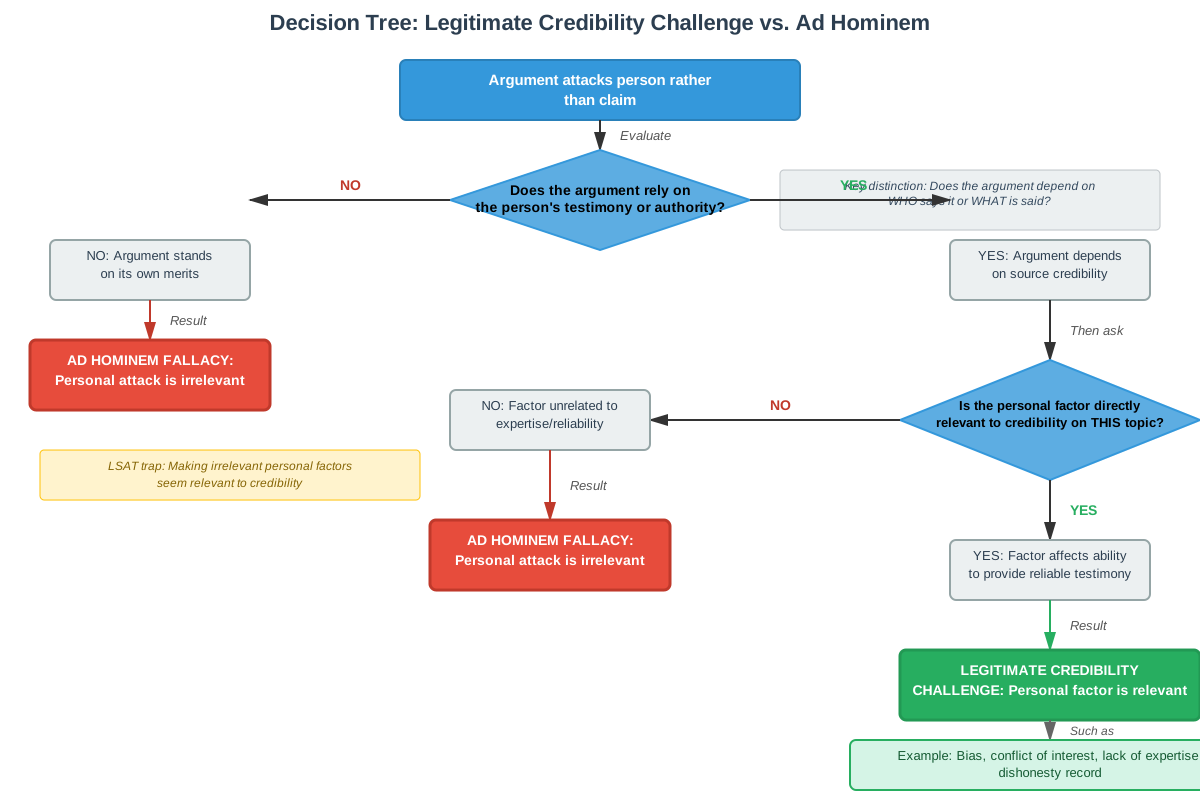
When Personal Characteristics ARE Relevant
Understanding ad hominem requires recognizing when personal factors legitimately affect argument evaluation. The LSAT tests this distinction carefully. Personal characteristics become relevant when:
- Expertise is claimed: If someone argues "As a cardiologist, I can tell you this treatment works," their medical credentials are relevant to their authority on the subject
- Personal experience is evidence: When someone's direct observation or experience constitutes a premise, their ability to observe accurately matters
- Credibility affects probability: In testimony or eyewitness scenarios, track record of honesty affects how much weight to give claims
- Bias affects methodology: When bias might have influenced data collection, experimental design, or analysis, noting potential bias is legitimate
The key distinction: legitimate credibility challenges question whether the person is a reliable source of information or whether bias affected their evidence-gathering. Ad hominem attacks dismiss the argument without engaging its substance, assuming personal factors automatically invalidate conclusions.
Ad Hominem vs. Legitimate Criticism
| Ad Hominem (Fallacious) | Legitimate Criticism |
|---|---|
| Attacks person's character generally | Questions specific expertise or qualifications |
| Assumes personal flaw invalidates argument | Shows how bias affected evidence or methodology |
| Ignores argument's substance entirely | Addresses argument's logical structure or evidence |
| Uses irrelevant personal characteristics | Identifies relevant credibility concerns |
| Concludes claim is false because of source | Notes source issues while evaluating claim independently |
Recognition Patterns on the LSAT
LSAT ad hominem questions typically present arguments where the respondent:
- Shifts focus from the claim to the claimant
- Uses personal characteristics as the sole basis for rejection
- Fails to address any substantive aspect of the original argument
- Treats personal attack as sufficient refutation
Common LSAT language patterns include:
- "...but [person] is [negative characteristic], so..."
- "...given that [person] has [circumstance], we should reject..."
- "...[person's] argument fails because [person] is..."
- "...since [person] doesn't [practice what they preach]..."
The correct answer choice in flaw questions often uses language like:
- "rejects a claim by attacking the person making it"
- "dismisses a position based on the source rather than its merits"
- "confuses an attack on the arguer with an attack on the argument"
- "treats a personal characteristic as sufficient to undermine a claim"
Concept Relationships
Ad hominem connects fundamentally to the broader concept of argument evaluation, which requires separating the quality of reasoning from the identity of the reasoner. This principle underlies all LSAT Logical Reasoning, making ad hominem recognition essential for overall LR success.
The relationship flows as follows: Argument Structure (premises + conclusion) → Evaluation Criteria (logical validity, evidence quality) → Common Flaws (ways arguments fail) → Ad Hominem (specific flaw type attacking arguer not argument) → Source Arguments (when source credibility legitimately matters).
Ad hominem relates closely to appeals to authority (accepting claims based solely on who makes them) as mirror concepts—one illegitimately rejects based on source, the other illegitimately accepts based on source. Both confuse the arguer with the argument.
The concept also connects to genetic fallacy (rejecting claims based on their origin) and bias recognition. Understanding when bias constitutes legitimate concern versus ad hominem attack requires distinguishing between bias that affects evidence-gathering (legitimate) and bias used to dismiss conclusions without examining evidence (ad hominem).
Within flaw questions specifically, ad hominem represents one category in the broader taxonomy of reasoning errors. It shares characteristics with other "relevance flaws" where premises fail to support conclusions because they address the wrong thing entirely. Mastering ad hominem strengthens recognition of all relevance-based flaws.
High-Yield Facts
⭐ Ad hominem attacks the person making an argument rather than addressing the argument's substance or merits
⭐ Personal characteristics of an arguer, even when negative or true, do not automatically invalidate the logical merit of their argument
⭐ The three main forms are abusive (character attack), circumstantial (attacking situation/bias), and tu quoque (hypocrisy)
⭐ Ad hominem appears in 3-5 questions per LSAT, most commonly in flaw questions but also in Method of Reasoning and Parallel Flaw
⭐ Legitimate credibility challenges differ from ad hominem by showing how personal factors affected evidence-gathering or methodology rather than dismissing arguments outright
- Correct answer choices often use phrases like "rejects based on source" or "attacks the arguer rather than the argument"
- Ad hominem can appear subtle on the LSAT, embedded in contexts where the personal attack seems initially relevant
- The fallacy remains present even when the personal attack is factually accurate—truth of the attack doesn't eliminate the logical flaw
- LSAT wrong answers often describe the personal information as "relevant context" or "important background" to make the ad hominem seem legitimate
- Recognizing ad hominem requires identifying what the argument concludes and whether the premises actually support that conclusion
- Arguments can legitimately note bias or credibility concerns while still committing ad hominem if they treat those concerns as sufficient to reject claims
Quick check — test yourself on Ad hominem so far.
Try Flashcards →Common Misconceptions
Misconception: Any mention of personal characteristics in an argument constitutes ad hominem → Correction: Ad hominem only occurs when personal characteristics are used as the sole or primary basis for rejecting an argument's conclusion. Mentioning relevant expertise, noting potential bias for consideration, or providing context about a source does not automatically create ad hominem. The fallacy requires that the personal attack substitute for substantive engagement with the argument.
Misconception: If someone has a clear bias or conflict of interest, dismissing their argument based on that bias is not ad hominem → Correction: Even when bias is real and significant, concluding that the argument must be wrong solely because of the bias commits ad hominem. Legitimate criticism would explain how the bias affected the evidence or methodology, not simply assume bias invalidates conclusions. The argument's evidence and reasoning must still be evaluated independently.
Misconception: Tu quoque (hypocrisy) is not really ad hominem because the inconsistency is relevant → Correction: Hypocrisy between someone's actions and their claims does not affect whether their claims are true. A doctor who smokes can still correctly argue that smoking causes cancer. The inconsistency might raise questions about credibility or sincerity, but it provides no evidence about the truth of the claim itself. This remains ad hominem because it attacks the person rather than evaluating the argument's merit.
Misconception: Ad hominem only involves insults or rude attacks → Correction: Ad hominem can be presented politely or neutrally. The fallacy lies in the logical structure (using personal characteristics to reject arguments), not the tone. An argument that calmly notes someone's employment and concludes their claims must be false commits ad hominem just as much as one using harsh insults.
Misconception: Pointing out that an expert lacks credentials in a relevant field is ad hominem → Correction: When someone claims authority based on expertise, questioning whether they actually possess relevant expertise is legitimate. This addresses whether their claimed basis for authority is valid. Ad hominem occurs when irrelevant personal characteristics are used to dismiss arguments, not when relevant qualifications are questioned in contexts where expertise is claimed as support.
Worked Examples
Example 1: Classic Circumstantial Ad Hominem
Stimulus: "Environmental advocate Maria Chen argues that the new industrial plant will significantly increase local air pollution and should not be approved. However, Chen lives in the neighborhood where the plant would be built and would personally experience any pollution increase. Therefore, her argument against the plant should be rejected."
Question: The reasoning in the argument is flawed because it...
Analysis:
- Identify the conclusion: Chen's argument against the plant should be rejected
- Identify the premise: Chen lives in the affected neighborhood and would personally experience pollution
- Evaluate the connection: Does Chen's personal stake in the outcome prove her argument is wrong? No—her proximity might give her direct knowledge of local conditions, but more importantly, whether the plant will increase pollution depends on evidence about emissions, not on who makes the argument
- Recognize the pattern: The argument dismisses Chen's position based on her circumstances (living nearby) rather than addressing whether her claims about pollution are supported by evidence
- Classify the flaw: This is circumstantial ad hominem—attacking the arguer's situation rather than the argument's substance
Correct Answer: "rejects a position on the grounds that the person advocating it would personally benefit from its acceptance, without addressing the merits of the position itself"
Connection to Learning Objectives: This example demonstrates how ad hominem appears in LSAT questions (Objective 1), illustrates the reasoning pattern of attacking circumstances rather than arguments (Objective 2), and shows how to systematically identify and classify the flaw (Objective 3).
Example 2: Distinguishing Ad Hominem from Legitimate Criticism
Stimulus: "Dr. Roberts, a nutritionist, claims that the new diet supplement is safe and effective based on a study she conducted. However, Dr. Roberts received funding for her research from the company that manufactures the supplement. Furthermore, her study methodology has been criticized by independent researchers for using inadequate sample sizes and failing to control for confounding variables. Therefore, we should be skeptical of Dr. Roberts' conclusions about the supplement's safety and effectiveness."
Question: Is this ad hominem?
Analysis:
- Identify what's being attacked: The argument mentions Dr. Roberts' funding source (circumstantial factor) AND specific methodological flaws in her study
- Determine what supports the conclusion: The conclusion to be skeptical is supported by two types of reasons: (a) potential bias from funding, and (b) actual problems with study design
- Evaluate relevance: The funding source alone would be ad hominem if used as sole basis for rejection. However, the argument goes further by identifying specific methodological problems—inadequate sample size and lack of controls
- Apply the distinction: This is NOT pure ad hominem because the argument addresses substantive problems with the evidence (methodology), not just the source. The funding mention provides context for why methodological problems might have occurred, but the rejection is based on actual flaws in the study
- Recognize the key difference: Legitimate criticism shows HOW personal factors affected the argument's substance; ad hominem simply assumes personal factors invalidate conclusions
Conclusion: This is legitimate criticism, not ad hominem, because it identifies specific substantive problems with the research methodology rather than dismissing the claims solely based on funding source.
Connection to Learning Objectives: This example helps distinguish between legitimate credibility challenges and ad hominem attacks (Objective 4), demonstrates sophisticated reasoning pattern recognition (Objective 2), and shows how to evaluate when personal characteristics are relevant versus irrelevant (Objective 7).
Exam Strategy
When approaching flaw questions that might involve ad hominem, follow this systematic process:
Step 1: Identify the conclusion - Determine exactly what the argument is trying to prove. Ad hominem arguments conclude that a claim should be rejected or is false.
Step 2: Identify the premises - What reasons does the argument give? Look specifically for whether the premises discuss personal characteristics, circumstances, motivations, or actions of the person making the original claim.
Step 3: Check for substantive engagement - Does the argument address ANY aspect of the original claim's evidence, logic, or reasoning? If the argument focuses exclusively on personal factors without engaging the substance, ad hominem is likely present.
Step 4: Apply the relevance test - Ask: "Even if everything said about the person is true, does that prove their argument is wrong?" If the answer is no, you've identified ad hominem.
Exam Tip: Watch for trigger phrases like "but [person] is," "given that [person] has," "since [person] doesn't," and "[person's] argument fails because [person]..." These often signal ad hominem reasoning.
Time-saving recognition patterns:
- Arguments that spend more time discussing the arguer than the argument likely commit ad hominem
- If you can summarize the reasoning as "Person X is bad/biased/hypocritical, therefore Person X's claim is wrong," it's ad hominem
- Look for a gap between personal characteristics mentioned and the truth of the claim being rejected
Process of elimination for answer choices:
- Eliminate answers describing substantive logical flaws (circular reasoning, false dichotomy, etc.) if the argument doesn't engage substance at all
- Eliminate answers suggesting the personal information is "relevant evidence" or "important context"—these are trap answers that legitimize the ad hominem
- Keep answers using language about "source," "attacking the person," "dismissing based on characteristics," or "confusing the arguer with the argument"
- Be cautious of answers that are too broad (like "uses irrelevant evidence") when more specific ad hominem language is available
Time allocation: Ad hominem questions, once recognized, should take 60-75 seconds. The pattern is straightforward once identified. If you're spending more time, you may be overthinking the distinction between legitimate and illegitimate personal attacks—trust the systematic approach above.
Memory Techniques
Mnemonic for Ad Hominem: "ATTACK THE PERSON, NOT THE POINT" - This phrase captures the essence of the fallacy and is easy to recall during the exam.
Visual Memory Aid: Picture a courtroom where instead of addressing evidence on the table (the argument), the lawyer points at the witness and shouts about their character. The evidence remains unexamined—that's ad hominem.
The Three A's of Ad Hominem Forms:
- Abusive = Attacking character
- Affiliated = circumstantial (attacking Affiliations/circumstances)
- Actions inconsistent = tu quoque (attacking Actions vs. words)
Distinction Memory Device: "SOURCE vs. SUBSTANCE" - Ad hominem attacks the SOURCE; legitimate criticism addresses SUBSTANCE. When evaluating an argument, ask: "Is this about the source or the substance?"
Recognition Acronym - PACS: When you see personal attacks, check if the argument:
- Person-focused (discusses arguer more than argument)
- Avoids substance (doesn't engage with evidence or logic)
- Concludes rejection (says to dismiss or reject the claim)
- Substitutes attack for analysis (uses personal factors instead of logical evaluation)
If all four elements are present, you've identified ad hominem.
Summary
Ad hominem represents a critical reasoning flaw tested frequently on the LSAT, appearing in approximately 3-5 questions per test. The fallacy occurs when arguments attack the person making a claim rather than addressing the claim's merits, creating a logical gap between personal characteristics and argument validity. The three primary forms—abusive (character attacks), circumstantial (attacking situations or biases), and tu quoque (hypocrisy)—all share the fundamental error of assuming personal factors automatically invalidate arguments. Success on LSAT ad hominem questions requires distinguishing between illegitimate personal attacks and legitimate credibility challenges that show how personal factors affected evidence or methodology. The key distinction lies in whether the argument engages substantively with evidence and reasoning or simply dismisses claims based on source characteristics. Mastering ad hominem recognition involves identifying conclusions, examining whether premises address argument substance, and applying the relevance test: do personal characteristics actually prove the claim is false? This skill strengthens overall Logical Reasoning performance and connects to broader concepts of argument evaluation, source credibility, and logical validity essential for LSAT success.
Key Takeaways
- Ad hominem attacks the arguer rather than engaging with the argument's substance, logic, or evidence
- Personal characteristics, even when true and negative, do not automatically prove an argument is wrong
- The three forms (abusive, circumstantial, tu quoque) all share the core flaw of substituting personal attacks for logical analysis
- Legitimate credibility challenges differ by showing HOW personal factors affected evidence-gathering, not just noting they exist
- Recognition requires checking whether arguments address any substantive aspect of the original claim
- Common LSAT answer choice language includes "rejects based on source," "attacks the person," and "dismisses without addressing merits"
- The relevance test—"Does this personal information prove the claim is false?"—quickly identifies ad hominem reasoning
Related Topics
Appeals to Authority: The mirror image of ad hominem, where arguments accept claims solely because of who makes them rather than evaluating evidence. Mastering ad hominem strengthens recognition of when source characteristics are improperly used either to reject or accept arguments.
Genetic Fallacy: Rejecting arguments based on their origin or history rather than current merit. This shares ad hominem's focus on source rather than substance but applies to ideas' origins rather than people making arguments.
Bias and Objectivity: Understanding when bias legitimately affects argument evaluation versus when noting bias becomes ad hominem. This topic deepens the crucial distinction between legitimate and illegitimate uses of personal information.
Credibility Assessment: Examining when and how source credibility properly influences argument strength, particularly in testimony and expert opinion contexts. This builds on ad hominem mastery by exploring the positive side of source evaluation.
Straw Man Fallacy: Another common LSAT flaw involving misrepresentation, but of arguments rather than arguers. Understanding both fallacies strengthens overall flaw recognition and helps distinguish between different types of reasoning errors.
Practice CTA
Now that you understand ad hominem reasoning patterns and recognition strategies, apply this knowledge to practice questions and flashcards. Focus on distinguishing between legitimate credibility challenges and fallacious personal attacks—this subtle distinction separates high scorers from average performers. Each practice question strengthens your pattern recognition and builds the automatic identification skills essential for test-day success. Remember: mastering ad hominem isn't just about memorizing definitions; it's about developing the analytical instinct to spot when arguments shift from substance to source. Your investment in deliberate practice with this high-yield topic will pay dividends across multiple question types throughout both Logical Reasoning sections. Start practicing now to transform understanding into points!
Sign up free to keep reading
Create a free AnvayaPrep account to finish this LSAT guide on Ad hominem — plus flashcards and practice questions.