Overview
Should statements are prescriptive claims that appear frequently throughout LSAT Logical Reasoning sections, particularly in Principle Questions. These statements express normative judgments about what ought to be done, what actions are morally or practically required, or what policies should be implemented. Unlike descriptive statements that merely report facts about the world, should statements make evaluative claims about how things ought to be. On the LSAT, recognizing and properly analyzing should statements is crucial because they form the backbone of many argument structures, especially those involving moral reasoning, policy recommendations, and conditional obligations.
Understanding LSAT should statements requires mastery of both their logical structure and their practical application in argument analysis. These statements typically take forms such as "One should X if Y," "People ought to Z when W," or "It is necessary that A in order to achieve B." The LSAT tests whether students can identify the underlying principles that justify should statements, recognize when specific situations fall under general prescriptive rules, and determine what actions are recommended or required given certain conditions. This skill extends beyond simple pattern recognition to encompass sophisticated reasoning about the relationship between facts, values, and recommended actions.
The relationship between should statements and other Logical Reasoning concepts is fundamental to LSAT success. Should statements connect directly to conditional reasoning (if-then structures), sufficient and necessary conditions, and the distinction between descriptive and normative claims. They also intersect with assumption questions, strengthen/weaken questions, and parallel reasoning questions. Mastering should statements provides a foundation for understanding how arguments move from factual premises to prescriptive conclusions, a transition that appears in approximately 15-20% of all Logical Reasoning questions across various question types.
Learning Objectives
- [ ] Identify how Should statements appears in LSAT questions
- [ ] Explain the reasoning pattern behind Should statements
- [ ] Apply Should statements to solve LSAT-style problems accurately
- [ ] Distinguish between descriptive statements and prescriptive should statements in argument structures
- [ ] Recognize the conditional logic underlying should statements and their trigger conditions
- [ ] Evaluate whether specific situations satisfy the conditions that activate a should statement
- [ ] Identify gaps between factual premises and prescriptive conclusions in arguments containing should statements
Prerequisites
- Basic conditional logic (if-then statements): Should statements often contain or imply conditional structures that determine when prescriptive claims apply
- Understanding of sufficient and necessary conditions: Recognizing what triggers a should statement versus what the statement requires is essential for proper application
- Distinction between premises and conclusions: Should statements frequently appear as conclusions that must be justified by factual or value-based premises
- Familiarity with argument structure: Identifying how should statements function within arguments (as premises, conclusions, or principles) is necessary for question analysis
Why This Topic Matters
Should statements represent a critical junction between factual claims and value judgments, making them essential for legal reasoning and real-world decision-making. In legal contexts, attorneys must constantly argue about what should be done given certain facts and legal principles. Judges must determine what actions the law requires or prohibits. Policy makers must justify recommendations based on factual circumstances and normative principles. The ability to analyze should statements trains students in the type of practical reasoning that forms the foundation of legal practice.
On the LSAT, should statements appear with remarkable frequency across multiple question types. Principle Questions explicitly test the ability to match general should statements with specific situations or vice versa, appearing in approximately 3-5 questions per test. However, should statements also appear in Strengthen/Weaken questions (where adding or removing support for a prescriptive claim is tested), Assumption questions (where the gap between facts and recommendations must be identified), and Flaw questions (where improper moves from descriptive to prescriptive claims are criticized). Conservative estimates suggest that 15-20% of all Logical Reasoning questions involve should statements in some capacity, making this one of the highest-yield topics for score improvement.
Common manifestations in exam passages include: arguments recommending policy changes based on empirical evidence, ethical principles applied to specific cases, conditional obligations triggered by particular circumstances, critiques of actions as violating normative standards, and justifications for why certain behaviors are required or prohibited. The LSAT particularly favors questions that test whether students can recognize when a general principle applies to a specific case or when a specific situation exemplifies a broader normative rule.
Core Concepts
Structure of Should Statements
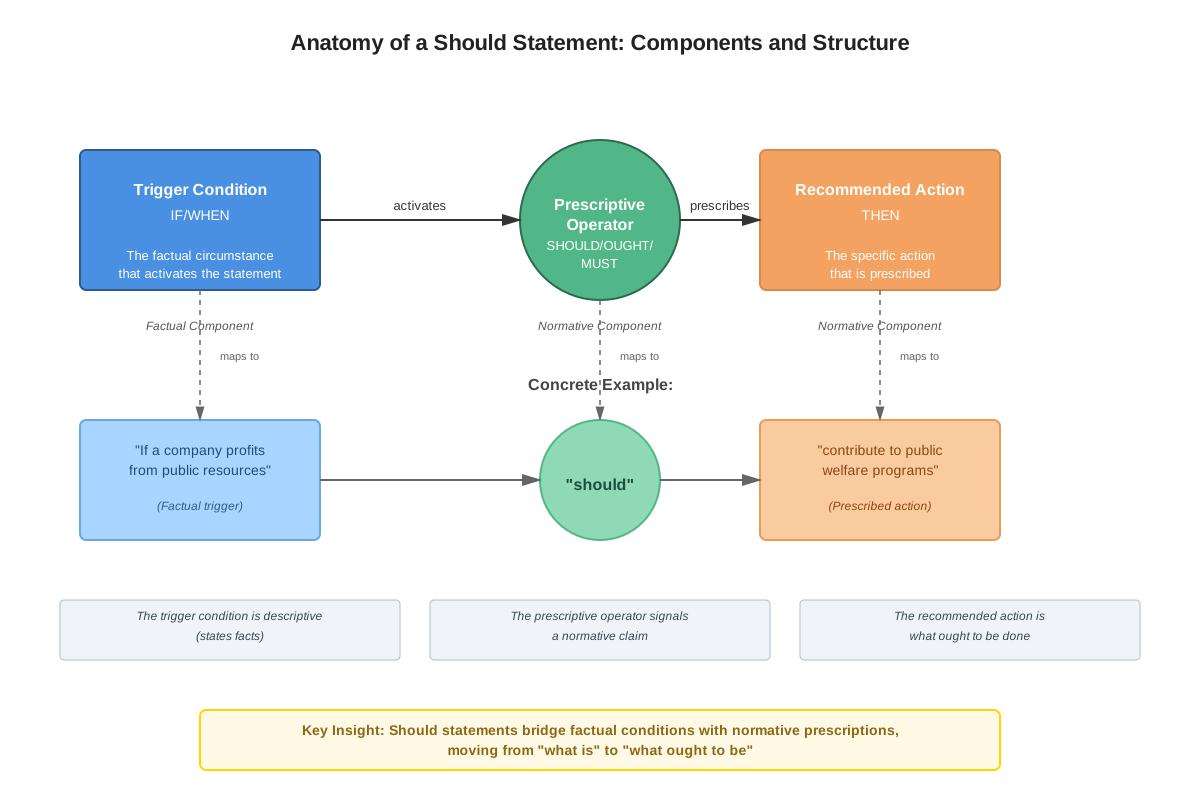
Should statements are prescriptive or normative claims that express what ought to be done, what is required, or what is recommended. The basic structure typically includes three components: (1) a subject (who should act), (2) an action (what should be done), and (3) often a condition or circumstance (when or why the action should be taken). For example: "Companies should disclose financial risks to investors when those risks could materially affect stock prices." Here, "companies" are the subject, "disclose financial risks" is the action, and "when those risks could materially affect stock prices" is the triggering condition.
The logical form of should statements often mirrors conditional statements: "If X, then one should Y." This structure is crucial because it means should statements can be analyzed using conditional logic tools. The antecedent (the "if" part) specifies the conditions under which the prescription applies, while the consequent (the "then" part) specifies what ought to be done. Understanding this structure allows test-takers to identify when a should statement is activated (when its conditions are met) and what it requires in those circumstances.
Descriptive vs. Prescriptive Claims
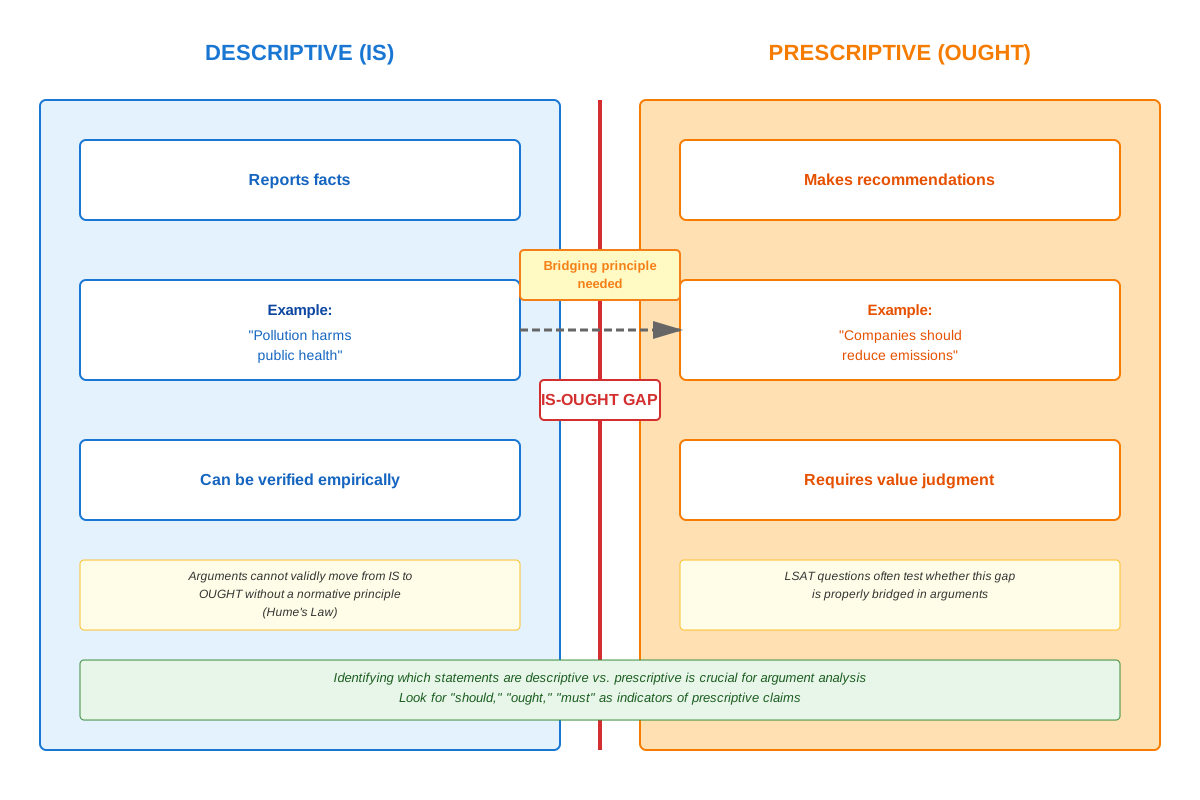
A fundamental distinction in analyzing should statements is recognizing the difference between descriptive statements (which report facts about what is) and prescriptive statements (which make claims about what ought to be). Descriptive: "Most people recycle when convenient bins are available." Prescriptive: "People should recycle when convenient bins are available." The LSAT frequently tests whether arguments properly bridge this gap or improperly leap from facts to values without justification.
| Descriptive Statements | Prescriptive Statements |
|---|---|
| Report observable facts | Express normative judgments |
| Can be verified empirically | Require value premises to justify |
| Use "is," "are," "does" | Use "should," "ought," "must" |
| Example: "The policy reduces costs" | Example: "The policy should be adopted" |
Conditional Triggers in Should Statements
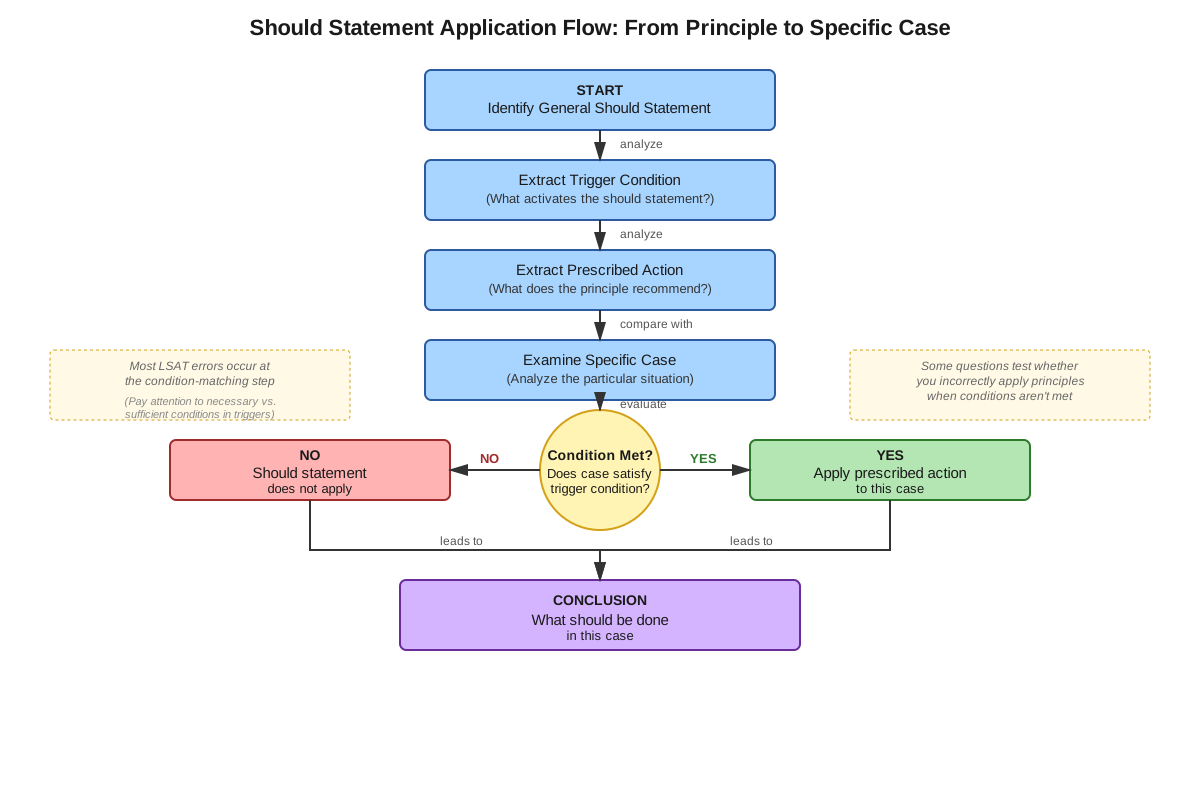
Many should statements contain explicit or implicit conditional triggers—circumstances that must be present for the prescription to apply. Identifying these triggers is essential for determining whether a should statement is relevant to a particular situation. Consider: "One should apologize when one has caused harm through negligence." The trigger here is "when one has caused harm through negligence." If this condition is not met, the should statement does not apply.
The LSAT tests this concept by presenting situations and asking whether a principle (should statement) applies. Success requires carefully matching the conditions specified in the principle with the facts of the situation. A common trap is assuming a should statement applies more broadly than its conditions warrant, or conversely, failing to recognize when conditions are satisfied even if described differently.
Justification Gaps
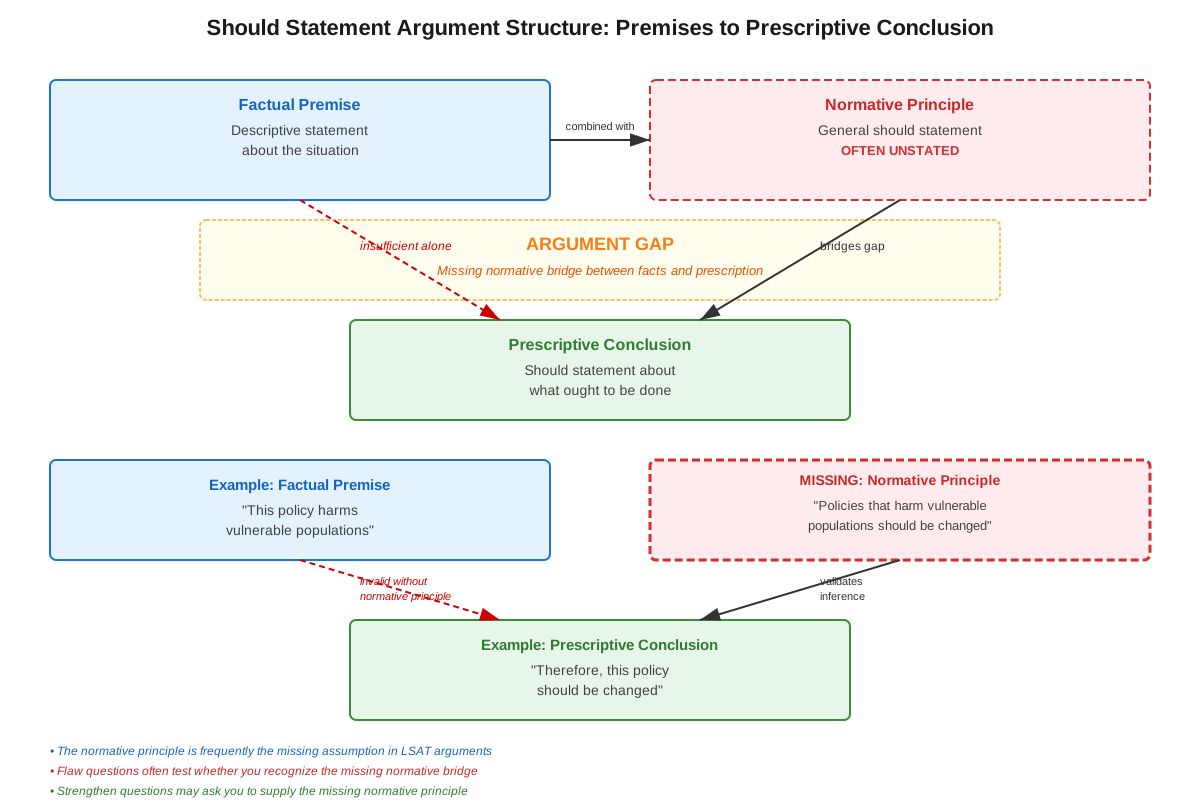
Arguments containing should statements as conclusions require both factual premises and normative premises (value judgments or principles). A justification gap exists when an argument moves from purely factual premises to a prescriptive conclusion without providing the necessary normative bridge. For example:
- Premise: "This medication reduces symptoms in 80% of patients."
- Conclusion: "Doctors should prescribe this medication."
The gap here is the missing normative premise about what makes a treatment worthy of prescription (effectiveness? safety? cost?). The LSAT frequently tests whether students can identify these gaps in Assumption questions or recognize when additional premises are needed to support should statements.
Principle Application
Principle Questions on the LSAT come in two main varieties involving should statements:
- Principle → Application: Given a general should statement (principle), identify which specific situation it applies to or justifies
- Application → Principle: Given a specific situation with a prescriptive conclusion, identify which general principle would justify that conclusion
Both require careful attention to the conditions under which the should statement applies and whether those conditions are satisfied in the specific case. The key skill is matching the logical structure of the principle with the logical structure of the situation, ensuring that all necessary conditions are present and no additional unsupported requirements are introduced.
Strength and Scope of Should Statements
Should statements vary in their strength (how strongly they prescribe) and scope (how broadly they apply). Strong prescriptions use terms like "must," "required," or "obligated," while weaker ones use "should," "ought," or "advisable." Scope refers to how many situations or people the statement covers. "Everyone should always tell the truth" has broader scope than "Doctors should disclose risks to patients when those risks are serious and likely."
The LSAT tests whether students recognize these distinctions, particularly in Parallel Reasoning questions where the strength and scope of should statements must match, or in Strengthen/Weaken questions where the scope determines how relevant evidence is to the claim.
Concept Relationships
The concepts within should statements form an interconnected logical framework. The structure of should statements provides the foundation for understanding all other aspects—recognizing subjects, actions, and conditions is prerequisite to any further analysis. This structure directly connects to conditional triggers, which specify when the prescriptive force of the statement is activated. Understanding triggers is essential for principle application, where matching conditions to situations determines whether a should statement is relevant.
The descriptive vs. prescriptive distinction relates to justification gaps because gaps arise precisely when arguments attempt to move from descriptive premises to prescriptive conclusions without adequate normative support. Both concepts are crucial for analyzing argument structure and identifying assumptions. The strength and scope of should statements affects all other concepts—stronger statements require more robust justification, and broader scope means more situations fall under the principle's application.
Relationship to prerequisite topics: Conditional logic provides the structural framework for analyzing should statements with triggers (If X, then should Y). Sufficient and necessary conditions help identify what must be present for a should statement to apply versus what the statement requires. Argument structure knowledge enables recognition of whether should statements function as premises, conclusions, or bridging principles.
Conceptual flow: Structure → Triggers → Application → Justification → Evaluation
Quick check — test yourself on Should statements so far.
Try Flashcards →High-Yield Facts
- ⭐ Should statements are prescriptive claims that express what ought to be done, distinct from descriptive claims about what is
- ⭐ Most should statements contain conditional triggers that specify when the prescription applies
- ⭐ Arguments concluding with should statements require both factual premises and normative premises to be valid
- ⭐ Principle Questions test the ability to match general should statements with specific situations in both directions
- ⭐ A common LSAT flaw is moving from purely descriptive premises to prescriptive conclusions without normative justification
- Should statements can be analyzed using conditional logic: If [conditions], then [should action]
- The scope of a should statement determines how broadly it applies across situations and subjects
- Strength modifiers (must, should, ought, advisable) indicate how forcefully an action is prescribed
- Matching principle to application requires ensuring all conditions in the principle are satisfied in the specific case
- Should statements in premises can support other should statements in conclusions, creating chains of normative reasoning
- The absence of a triggering condition means a should statement does not apply to that situation
- Implicit should statements may be present even when "should" is not explicitly stated (e.g., "It is necessary that," "One ought to")
Common Misconceptions
Misconception: All should statements apply universally to every situation.
Correction: Most should statements contain explicit or implicit conditions that limit when they apply. Always identify the triggering conditions before determining whether a principle is relevant to a specific case.
Misconception: If something is true (descriptive fact), then it should be true (prescriptive claim).
Correction: The "is-ought" gap means factual claims alone cannot justify prescriptive conclusions. A normative premise (value judgment or principle) is required to bridge from facts to recommendations.
Misconception: Should statements and conditional statements are completely different logical structures.
Correction: Many should statements have conditional structure (If X, then should Y) and can be analyzed using conditional logic tools, including identifying sufficient and necessary conditions.
Misconception: A should statement applies to a situation if any part of the situation matches any part of the principle.
Correction: For a principle to apply, all relevant conditions specified in the principle must be satisfied in the specific situation. Partial matches are insufficient for proper application.
Misconception: Stronger should statements (using "must") are always better supported than weaker ones (using "should").
Correction: Strength indicates the degree of prescription, not the quality of justification. A weak should statement might be well-justified while a strong must statement might be poorly supported. Evaluate the reasoning, not just the modal verb.
Misconception: If an action would have good consequences, then one should perform that action.
Correction: This assumes a consequentialist ethical framework that the LSAT does not presuppose. Arguments must explicitly provide the normative premise linking good consequences to obligation, not assume this connection.
Worked Examples
Example 1: Principle Application
Question: Which situation is most consistent with the following principle?
Principle: "Journalists should protect the confidentiality of their sources when those sources provide information about matters of public importance and when revealing the source's identity would expose the source to serious harm."
Answer Choices:
(A) A journalist protects a source who provided information about celebrity gossip, even though revealing the source would cause the source to lose their job.
(B) A journalist reveals a source's identity after the source provided information about government corruption, because the source consented to being identified.
(C) A journalist protects a source who revealed corporate fraud, knowing that identifying the source would result in the source being fired and blacklisted in their industry.
(D) A journalist protects a source who provided information about a minor traffic violation, even though revealing the source would cause no harm.
Analysis:
Step 1: Identify the conditions in the principle. The principle requires THREE conditions to be met:
- Sources provide information about matters of public importance
- Revealing identity would expose source to serious harm
- (Implicit: The journalist should then protect confidentiality)
Step 2: Evaluate each answer choice against ALL conditions:
(A) Fails condition 1: Celebrity gossip is not a matter of public importance. Even though condition 2 is met (job loss could be serious harm), not all conditions are satisfied.
(B) Fails condition 2: The principle is about when revealing identity "would expose the source to serious harm," but here the source consented, changing the ethical calculus. More importantly, the journalist does NOT protect confidentiality, which is what the principle prescribes.
(C) CORRECT: Meets condition 1 (corporate fraud is a matter of public importance), meets condition 2 (being fired and blacklisted constitutes serious harm), and the journalist takes the prescribed action (protects the source).
(D) Fails condition 1: A minor traffic violation is not a matter of public importance. Condition 2 is also not met (no harm would result).
Key Takeaway: This example demonstrates that principle application requires matching ALL specified conditions, not just some. The correct answer must satisfy every element of the principle's antecedent and demonstrate the prescribed action.
Example 2: Identifying Justification Gaps
Argument: "Studies show that students who eat breakfast perform better on standardized tests than students who skip breakfast. Additionally, providing free breakfast at schools costs relatively little. Therefore, schools should provide free breakfast to all students."
Question: Which assumption is required for the argument's conclusion to be properly drawn?
Analysis:
Step 1: Identify the premises (descriptive claims):
- Premise 1: Breakfast correlates with better test performance
- Premise 2: Providing breakfast costs relatively little
Step 2: Identify the conclusion (prescriptive claim):
- Conclusion: Schools should provide free breakfast
Step 3: Identify the gap between descriptive premises and prescriptive conclusion. The premises tell us what IS (facts about performance and cost), but the conclusion tells us what SHOULD BE (a recommendation). What normative principle bridges this gap?
Step 4: Determine what value judgment is needed. The argument assumes something like: "Schools should implement programs that improve student performance when those programs are cost-effective." This normative premise connects the factual observations to the prescriptive recommendation.
Step 5: Consider alternative assumptions that might be needed:
- That correlation implies causation (breakfast causes better performance, not just correlates)
- That improving test performance is a legitimate goal for schools
- That there are no significant negative consequences of providing free breakfast
- That cost-effectiveness is a relevant consideration for school policy decisions
Key Takeaway: Arguments moving from facts to should statements always require normative premises. Identifying these gaps is essential for Assumption questions and for evaluating whether arguments adequately support their prescriptive conclusions.
Exam Strategy
When approaching LSAT questions involving should statements, follow this systematic process:
Step 1: Identify the should statement and its role. Determine whether the should statement appears as a premise, conclusion, or principle to be applied. This determines what type of support or analysis is required.
Step 2: Extract the conditional structure. Rewrite the should statement in if-then form if possible: "If [conditions], then [should action]." This clarifies what must be true for the prescription to apply.
Step 3: List all conditions explicitly. Write out every condition that must be satisfied for the should statement to apply. The LSAT often includes answer choices that match some but not all conditions—these are traps.
Step 4: For Principle Questions, match systematically. Create a checklist of conditions and verify each one against the specific situation. Eliminate any answer choice that fails to satisfy even one condition.
Step 5: Watch for scope and strength mismatches. Ensure that the should statement's scope (who it applies to, when it applies) matches the situation, and that strength modifiers (must vs. should vs. may) are consistent.
Exam Tip: Trigger words for should statements include: "should," "ought," "must," "required," "obligated," "necessary that," "advisable," "recommended," "proper to," and "appropriate to." Also watch for implicit prescriptions like "the right thing to do" or "what one is supposed to do."
Process of Elimination Tips:
- Eliminate answers where conditions are partially but not fully met
- Eliminate answers that confuse descriptive and prescriptive claims
- Eliminate answers that apply should statements beyond their specified scope
- Eliminate answers that change the strength of the prescription without justification
Time Allocation: Principle Questions with should statements typically require 1:30-2:00 minutes. Spend 30-45 seconds carefully reading and analyzing the principle, identifying all conditions. Spend the remaining time systematically evaluating answer choices. Do not rush the initial analysis—misunderstanding the principle's conditions leads to incorrect answers even with careful evaluation.
Memory Techniques
SCRAP Mnemonic for analyzing should statements:
- Subject: Who should act?
- Conditions: When does this apply?
- Recommendation: What action is prescribed?
- Assumptions: What normative premises are needed?
- Power: How strong is the prescription (must vs. should)?
Visualization Strategy: Picture should statements as gates with multiple locks. Each condition is a lock that must be opened for the gate (prescription) to apply. If even one lock remains closed (condition unsatisfied), the gate stays shut (principle doesn't apply).
The "Is-Ought Bridge" Acronym - BRIDGE:
- Both descriptive and normative premises needed
- Requires value judgment, not just facts
- Identify the gap between facts and recommendations
- Distinguish what is from what should be
- General principles connect specific facts to prescriptions
- Evaluate whether the normative premise is stated or assumed
Conditional Should Formula: Remember "If-Then-Should" as a single unit. When you see a should statement, immediately ask "If what?" to identify the triggering conditions.
Summary
Should statements are prescriptive claims expressing what ought to be done, forming a critical component of LSAT Logical Reasoning questions, particularly Principle Questions. These statements typically contain conditional structures specifying when prescriptions apply, requiring careful analysis of triggering conditions. The fundamental challenge in reasoning with should statements is bridging the gap between descriptive premises (facts about what is) and prescriptive conclusions (claims about what should be), which requires normative premises or value judgments. Success on LSAT questions involving should statements demands systematic identification of all conditions in principles, careful matching of those conditions to specific situations, and recognition of when arguments fail to provide adequate normative justification for their prescriptive conclusions. Understanding the structure, scope, and strength of should statements, combined with the ability to apply conditional logic tools to their analysis, enables test-takers to navigate the 15-20% of Logical Reasoning questions that involve these prescriptive claims.
Key Takeaways
- Should statements are prescriptive claims distinct from descriptive facts, requiring normative premises to justify conclusions
- Most should statements contain conditional triggers that specify when the prescription applies—identify all conditions before applying principles
- Principle Questions test bidirectional matching: general principles to specific situations and specific situations to general principles
- Arguments moving from facts to should statements require both factual and normative premises; missing normative premises create justification gaps
- Systematic analysis using conditional logic (If X, then should Y) clarifies when and how should statements apply
- Scope and strength of should statements must match between principles and applications—partial matches are insufficient
- The SCRAP framework (Subject, Conditions, Recommendation, Assumptions, Power) provides a systematic approach to analyzing should statements
Related Topics
Sufficient and Necessary Conditions in Principles: Deepens understanding of what triggers should statements (sufficient conditions) versus what they require (necessary conditions), building on the conditional structure of prescriptive claims.
Flaw Questions - Is/Ought Violations: Explores how arguments improperly move from descriptive to prescriptive claims, applying should statement analysis to identify logical errors.
Strengthen/Weaken Questions with Normative Claims: Extends should statement reasoning to questions about what evidence supports or undermines prescriptive conclusions, requiring evaluation of both factual and normative premises.
Parallel Reasoning with Prescriptive Arguments: Applies should statement analysis to matching argument structures, requiring recognition of analogous conditional prescriptions across different contexts.
Role Questions - Function of Prescriptive Claims: Examines how should statements function within argument structures, building on the distinction between should statements as premises, conclusions, or bridging principles.
Practice CTA
Now that you understand the structure, application, and reasoning patterns behind should statements, it's time to cement your mastery through practice. Attempt the practice questions focusing on identifying conditions, matching principles to situations, and recognizing justification gaps. Use the flashcards to reinforce the distinction between descriptive and prescriptive claims and to memorize common trigger words. Remember: should statements appear in approximately 15-20% of Logical Reasoning questions—mastering this topic will directly improve your score. Each practice question you complete strengthens your ability to systematically analyze prescriptive reasoning, a skill that will serve you throughout the LSAT and in legal reasoning beyond.
Sign up free to keep reading
Create a free AnvayaPrep account to finish this LSAT guide on Should statements — plus flashcards and practice questions.