Overview
Dense abstract prose represents one of the most challenging passage types students encounter in LSAT Reading Comprehension sections. These passages feature complex philosophical, theoretical, or conceptual arguments that require careful parsing of abstract ideas, intricate logical relationships, and sophisticated vocabulary. Unlike concrete passages about historical events or scientific experiments with tangible examples, dense abstract prose demands that test-takers navigate through layers of theoretical reasoning without the aid of familiar, real-world anchors.
Mastering lsat dense abstract prose is essential because approximately 25-30% of Reading Comprehension passages fall into this category, particularly in passages addressing philosophy, literary criticism, legal theory, and theoretical social sciences. These passages consistently appear on every LSAT administration and often prove to be the differentiating factor between good and exceptional scores. Students who develop systematic strategies for handling abstract content gain a significant competitive advantage, as these passages typically generate the most skipped questions and wrong answers among test-takers.
Within the broader framework of passage subjects and strategies, dense abstract prose requires specialized reading comprehension techniques that differ from approaches used for narrative or descriptive passages. The skills developed here—tracking abstract arguments, identifying conceptual relationships, and maintaining focus through complex theoretical discussions—transfer directly to other challenging LSAT sections and to the analytical demands of law school itself. Understanding how to deconstruct abstract reasoning prepares students not only for test success but for the rigorous intellectual work required in legal education.
Learning Objectives
- [ ] Identify how Dense abstract prose appears in LSAT questions
- [ ] Explain the reasoning pattern behind Dense abstract prose
- [ ] Apply Dense abstract prose to solve LSAT-style problems accurately
- [ ] Distinguish between essential abstract concepts and supporting elaboration within passages
- [ ] Construct mental models that translate abstract ideas into concrete relationships
- [ ] Recognize structural markers that signal transitions between abstract concepts
- [ ] Evaluate answer choices by matching abstract language to passage concepts without being misled by superficial vocabulary matches
Prerequisites
- Basic logical reasoning skills: Understanding argument structure (premises, conclusions, assumptions) provides the foundation for tracking how abstract claims build upon one another in theoretical passages.
- Vocabulary at college reading level: Dense abstract prose employs sophisticated terminology; familiarity with academic language reduces cognitive load and allows focus on conceptual relationships.
- Ability to identify main ideas and supporting details: This fundamental reading skill becomes more critical when abstract content obscures the passage's organizational structure.
- Experience with LSAT passage structure: Understanding that LSAT passages follow predictable organizational patterns helps students navigate abstract content more efficiently.
Why This Topic Matters
Dense abstract prose appears in real-world legal practice constantly. Attorneys must interpret complex legal theories, parse philosophical arguments in judicial opinions, and understand abstract principles underlying statutory interpretation. The LSAT tests this skill because law school requires students to engage with theoretical frameworks in constitutional law, jurisprudence, and legal philosophy. Developing comfort with abstract reasoning directly predicts success in legal education and practice.
On the LSAT specifically, dense abstract prose passages appear in 1-2 passages per Reading Comprehension section, accounting for approximately 6-8 questions per test. These passages most commonly address:
- Philosophical arguments about epistemology, ethics, aesthetics, or metaphysics
- Literary theory and criticism discussing abstract interpretive frameworks
- Legal theory exploring concepts like justice, rights, or legal interpretation
- Theoretical social science presenting abstract models of human behavior or social structures
- Art theory and criticism analyzing abstract principles of artistic creation or evaluation
Question types associated with these passages include Main Point questions (which require synthesizing abstract arguments), Inference questions (demanding careful tracking of conceptual relationships), Function questions (asking why the author introduces specific abstract concepts), and Attitude questions (requiring nuanced understanding of the author's stance toward competing theoretical positions). Students who struggle with dense abstract prose typically see their performance drop 15-20 percentile points compared to their performance on concrete passages.
Core Concepts
Characteristics of Dense Abstract Prose
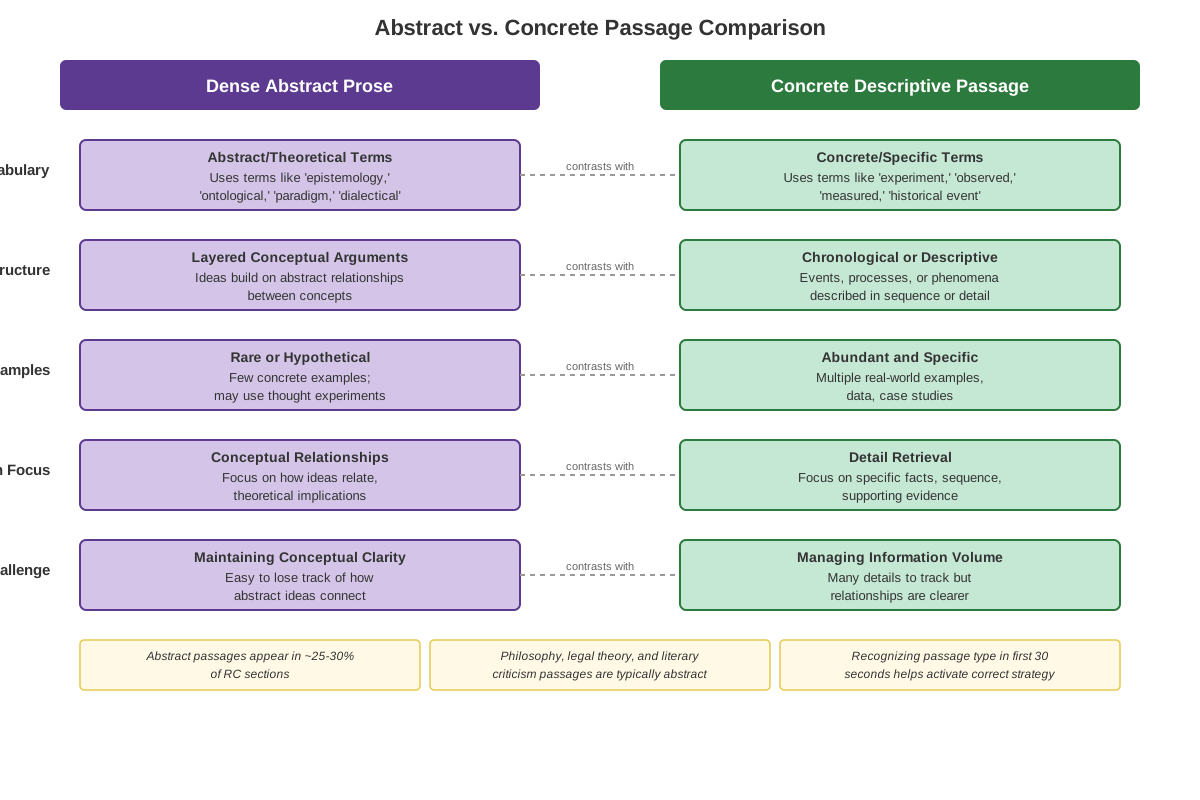
Dense abstract prose refers to passages that discuss theoretical concepts, philosophical positions, or intangible ideas without relying heavily on concrete examples, empirical data, or narrative elements. These passages exhibit several defining characteristics:
High conceptual density: Every sentence introduces or develops abstract ideas rather than providing illustrative examples. The passage moves from one theoretical point to another without pausing for concrete elaboration.
Specialized philosophical or theoretical vocabulary: Terms like "ontological," "epistemological," "hermeneutic," "dialectical," or "phenomenological" appear frequently, requiring readers to understand both denotative meanings and how these terms function within specific theoretical frameworks.
Complex logical relationships: Abstract passages build arguments through subtle logical connections—contrasts between theoretical positions, hierarchies of concepts, or conditional relationships between abstract principles.
Minimal concrete referents: Unlike passages about historical events or scientific experiments, abstract prose provides few tangible examples that readers can visualize or relate to personal experience.
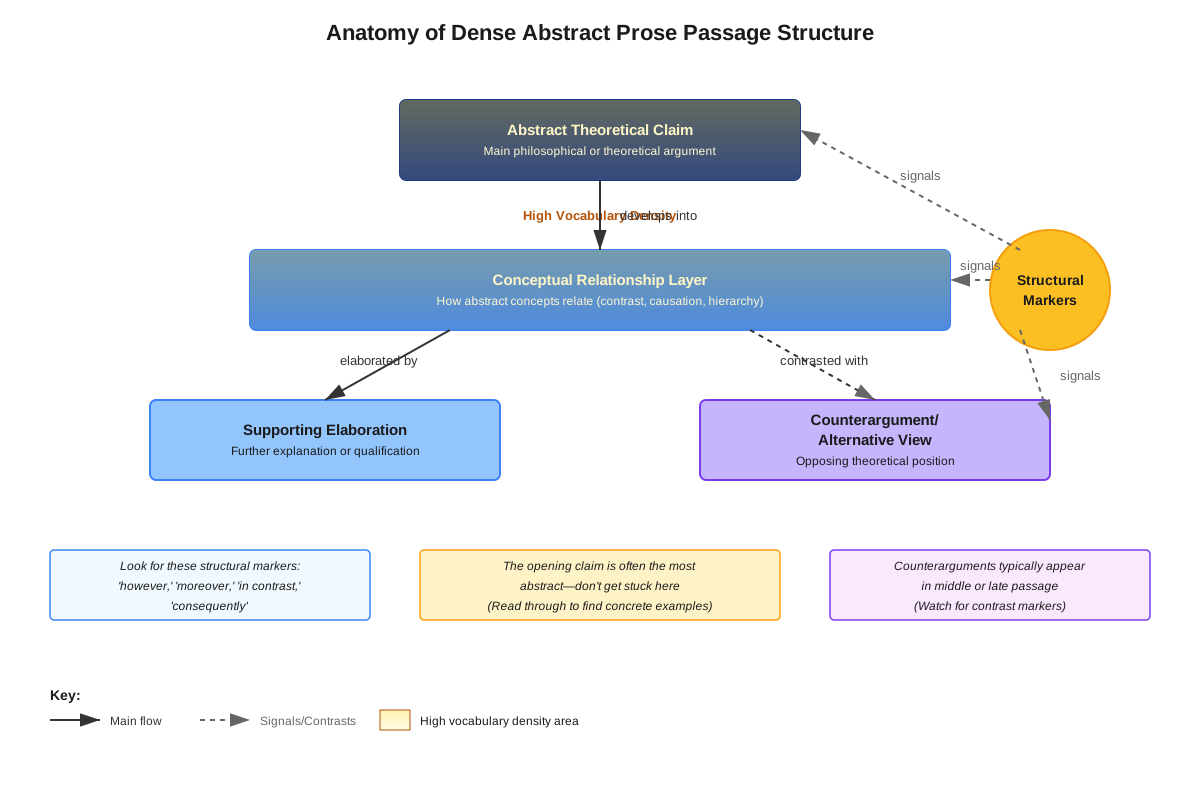
The Structure of Abstract Arguments
Abstract passages on the LSAT follow predictable organizational patterns that, once recognized, significantly improve comprehension:
- Introduction of a theoretical problem or question: The passage typically opens by establishing an abstract issue requiring resolution (e.g., "How can we reconcile individual autonomy with collective responsibility?")
- Presentation of existing theoretical positions: The author introduces one or more established views on the abstract question, often attributing these to schools of thought or theoretical traditions rather than individual thinkers
- Critical analysis or complication: The passage identifies limitations, contradictions, or inadequacies in existing theoretical approaches
- Proposed resolution or alternative framework: The author presents a new theoretical position, synthesis, or refined understanding that addresses the identified problems
- Implications or applications: The passage concludes by exploring what the theoretical resolution means for related abstract concepts or broader philosophical questions
Reading Strategies for Abstract Content
Successful navigation of lsat dense abstract prose requires specific cognitive strategies:
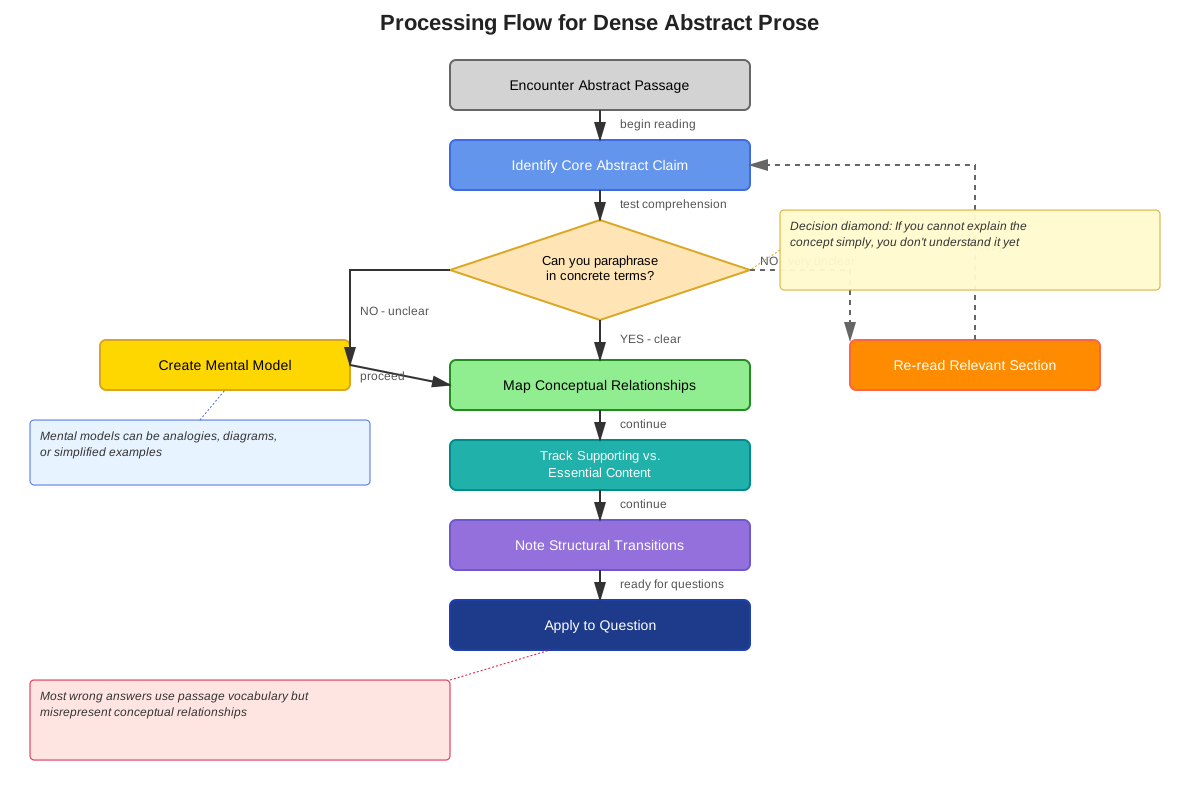
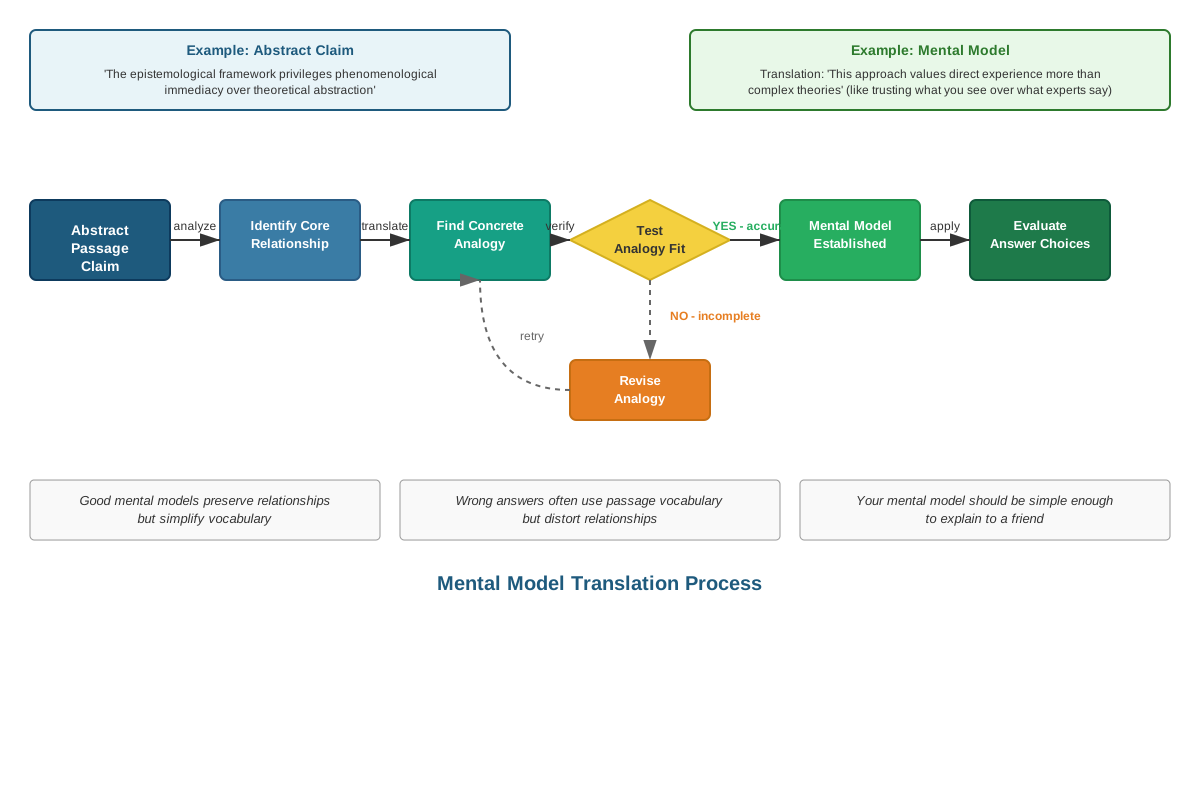
Active translation: Convert abstract concepts into simpler language or concrete analogies. When encountering "the dialectical relationship between subjective experience and objective reality," mentally translate to "how personal perception and actual facts interact and influence each other."
Relationship mapping: Focus less on defining every abstract term perfectly and more on understanding how concepts relate to each other. Track whether concepts are presented as opposing, complementary, hierarchical, or causally connected.
Structural anchoring: Use the passage's organizational structure as a comprehension scaffold. Identify where the passage introduces problems, presents existing views, offers critiques, and proposes solutions.
Tolerance for ambiguity: Accept that complete understanding of every abstract concept isn't necessary for answering questions correctly. The LSAT tests whether students can track the passage's argument and identify relationships, not whether they could write a philosophy dissertation on the topic.
Common Abstract Passage Topics
| Topic Category | Typical Content | Key Challenge |
|---|---|---|
| Epistemology | Nature of knowledge, justification of beliefs, limits of understanding | Distinguishing between different theories of how we know things |
| Ethics/Moral Philosophy | Foundations of moral judgments, nature of rights, theories of justice | Tracking competing moral frameworks without imposing personal values |
| Aesthetics | Nature of beauty, artistic meaning, criteria for artistic evaluation | Understanding abstract principles of art criticism |
| Legal Theory | Interpretation of law, nature of legal authority, relationship between law and morality | Separating theoretical positions from practical legal applications |
| Literary Theory | Meaning in texts, role of author vs. reader, nature of interpretation | Following meta-level arguments about how we understand literature |
| Social Theory | Abstract models of social structures, theoretical frameworks for understanding human behavior | Maintaining focus on theoretical models rather than concrete social phenomena |
The Role of Examples in Abstract Passages
When dense abstract prose does include examples, they function differently than in concrete passages. Rather than being the primary content, examples serve as brief illustrations of abstract principles. Students must:
- Recognize that questions will focus on the abstract principle, not the example itself
- Use examples as tools for understanding theoretical concepts, then return focus to the abstraction
- Avoid over-investing attention in examples at the expense of tracking the main theoretical argument
Vocabulary Management in Abstract Passages
Dense abstract prose challenges students with sophisticated vocabulary, but LSAT passages are designed so that understanding every term precisely isn't required. Effective strategies include:
Context-based inference: Use surrounding sentences to approximate a term's meaning within the passage's argument, even without knowing its formal definition
Functional understanding: Focus on how a term functions in the argument (is it a problem, a solution, a critique?) rather than its complete philosophical meaning
Root and prefix analysis: Many abstract terms derive from Latin or Greek roots that provide clues (e.g., "epistemology" contains "episteme" = knowledge)
Recognizing term relationships: Often, understanding that two terms are contrasted or aligned matters more than knowing their precise definitions
Concept Relationships
The concepts within dense abstract prose interconnect systematically. Characteristics of abstract prose (high conceptual density, specialized vocabulary, complex logical relationships) → create the need for → specialized reading strategies (active translation, relationship mapping, structural anchoring). These strategies enable students to navigate → the structure of abstract arguments (problem, existing positions, critique, resolution), which in turn helps students understand → how examples function in abstract passages (as illustrations of principles rather than primary content).
This topic connects to prerequisite knowledge of basic logical reasoning by applying argument analysis skills to more sophisticated theoretical contexts. The ability to identify premises and conclusions transfers directly to tracking how abstract claims support one another. Similarly, general passage structure knowledge provides the framework onto which students map abstract content.
Dense abstract prose strategies also connect forward to other passage subjects and strategies within Reading Comprehension. The relationship-mapping skills developed here apply to complex scientific passages, while the structural anchoring technique transfers to any challenging passage type. The tolerance for ambiguity cultivated through abstract prose proves valuable across all difficult LSAT content.
High-Yield Facts
⭐ Dense abstract prose passages appear 1-2 times per Reading Comprehension section, accounting for approximately 25-30% of passages
⭐ The primary challenge is tracking relationships between abstract concepts, not defining every term perfectly
⭐ Abstract passages follow predictable structures: problem → existing views → critique → proposed resolution
⭐ Questions focus on the abstract principles and argument structure, not on concrete examples when they appear
⭐ Active translation of abstract concepts into simpler language dramatically improves comprehension and retention
- Abstract passages most commonly address philosophy, literary theory, legal theory, and theoretical social sciences
- Specialized vocabulary in abstract passages can often be understood functionally through context without knowing formal definitions
- The LSAT designs abstract passages so that no specialized background knowledge is required; all necessary information appears in the passage
- Wrong answer choices in abstract passage questions often use passage vocabulary but misrepresent conceptual relationships
- Structural markers (however, moreover, thus, in contrast) are especially important in abstract passages for tracking argument flow
⭐ Students who struggle with abstract prose typically see performance drops of 15-20 percentile points compared to concrete passages
- Rereading key sentences in abstract passages is often more efficient than trying to understand everything on first pass
- The author's attitude toward competing theoretical positions is frequently tested in abstract passage questions
- Abstract passages reward slower, more careful initial reading rather than speed-reading followed by question review
- Maintaining focus through abstract content is a trainable skill that improves significantly with deliberate practice
Quick check — test yourself on Dense abstract prose so far.
Try Flashcards →Common Misconceptions
Misconception: Students must understand every abstract term's complete philosophical meaning to answer questions correctly. → Correction: The LSAT tests whether students can track the passage's argument and identify relationships between concepts. Functional understanding of how terms relate to each other suffices; formal philosophical definitions are unnecessary. Questions are answerable using only information provided in the passage.
Misconception: Abstract passages are inherently harder than concrete passages and should be saved for last. → Correction: While abstract prose presents unique challenges, students who develop appropriate strategies often find these passages more predictable than concrete passages because they follow consistent argumentative structures. Avoiding abstract passages entirely prevents skill development and guarantees continued difficulty.
Misconception: The key to abstract passages is reading very slowly and carefully understanding every sentence before proceeding. → Correction: Excessive focus on perfect comprehension of each sentence often causes students to lose sight of the overall argument structure. More effective is reading at moderate pace while actively mapping relationships, then rereading specific sentences as needed when answering questions.
Misconception: When abstract passages include concrete examples, those examples are likely to be the focus of questions. → Correction: In dense abstract prose, examples serve only to illustrate theoretical principles. Questions focus on the abstract concepts themselves, the relationships between theoretical positions, or the function of examples within the argument—not on details of the examples themselves.
Misconception: Students need philosophy or theory background to handle abstract passages effectively. → Correction: The LSAT is designed to be content-neutral; no specialized background knowledge provides an advantage. In fact, students with philosophy backgrounds sometimes struggle because they import outside knowledge rather than focusing exclusively on the passage's specific argument. All necessary information appears in the passage.
Misconception: Abstract passages are deliberately obscure and designed to confuse test-takers. → Correction: While challenging, abstract passages present genuine theoretical arguments that follow logical structures. The difficulty stems from unfamiliarity with abstract reasoning, not from intentional obfuscation. With appropriate strategies, these passages become navigable and predictable.
Worked Examples
Example 1: Philosophical Passage on Aesthetic Judgment
Passage excerpt: "Traditional aesthetic theory posits that beauty exists as an objective property of artworks, discoverable through proper analysis and appreciation. This objectivist position, however, faces a fundamental challenge: the persistent disagreement among qualified critics about which works possess genuine aesthetic merit. If beauty were truly objective, such disagreement would be inexplicable. Subjectivist theories, which locate aesthetic value entirely in individual responses, avoid this problem but create another—they cannot account for the apparent superiority of informed aesthetic judgments over naive reactions. A more nuanced position recognizes that aesthetic judgment involves both objective features of artworks and subjective capacities of perceivers, operating in dialectical relationship."
Question: The author's primary purpose in the passage is to:
Analysis process:
- Identify the structure: Problem (objectivist vs. subjectivist theories both have limitations) → Resolution (dialectical position combining both)
- Map the argument flow:
- Objectivist view presented
- Problem with objectivism identified (persistent disagreement)
- Subjectivist alternative introduced
- Problem with subjectivism identified (can't explain informed vs. naive judgments)
- Synthesis proposed (dialectical relationship)
- Determine the author's goal: The author isn't simply describing theories; they're presenting a problem with existing theories and proposing a resolution
- Predict answer: Something like "propose a theoretical position that resolves problems with existing approaches"
- Evaluate choices: The correct answer will capture both the critical analysis of existing views AND the proposal of an alternative. Wrong answers might focus only on describing theories, only on criticizing them, or misrepresent the dialectical synthesis.
Key insight: In abstract passages, the author's purpose almost always relates to the argument structure—presenting problems, offering critiques, proposing resolutions—rather than simply conveying information.
Example 2: Legal Theory Passage on Interpretation
Passage excerpt: "Originalist approaches to constitutional interpretation maintain that legal texts should be understood according to their meaning at the time of enactment. This position assumes that textual meaning is stable and recoverable through historical investigation. Critics argue, however, that this assumption is untenable: language is inherently indeterminate, and historical context underdetermines meaning in contested cases. Moreover, originalism faces a normative challenge—why should contemporary citizens be bound by the understanding of past generations? Living constitutionalism responds to these concerns by treating constitutional meaning as evolving with societal values. Yet this approach risks untethering law from any stable foundation, potentially allowing judges to impose personal preferences under the guise of interpretation."
Question: Based on the passage, critics of originalism would most likely agree with which of the following?
Analysis process:
- Locate the relevant section: The passage explicitly identifies critics' arguments in the middle portion
- Identify the specific criticisms:
- Language is inherently indeterminate
- Historical context underdetermines meaning
- Normative problem: why should past understanding bind present?
- Understand what these criticisms assume: Critics believe that meaning isn't fixed and recoverable; they question both the feasibility and legitimacy of originalism
- Predict answer characteristics: Correct answer will align with the view that textual meaning isn't stable or that past understanding shouldn't necessarily control present interpretation
- Eliminate wrong answers:
- Answers supporting originalism (contradicts critics' position)
- Answers about living constitutionalism's problems (passage attributes these to different critics)
- Answers making claims not supported by the critics' stated positions
Key insight: Abstract passages often present multiple theoretical positions. Questions require careful tracking of which claims belong to which position. The passage structure (originalism → criticisms → living constitutionalism → its problems) provides the roadmap for locating relevant information.
Exam Strategy
Approaching Abstract Passages
Exam Tip: When encountering dense abstract prose, invest 30-45 seconds before reading to preview the passage structure. Scan for structural markers (however, moreover, critics argue, in contrast) to identify where the argument shifts between positions.
Initial reading strategy:
- Read the first paragraph carefully to identify the abstract problem or question being addressed
- As you read subsequent paragraphs, actively note whether content presents a position, critiques a position, or proposes a resolution
- Don't pause to fully understand every abstract term; maintain forward momentum while tracking relationships
- Use margin notes or mental labels: "Position 1," "Critique," "Author's view," "Alternative"
- After reading, take 10 seconds to mentally summarize: "This passage discusses [abstract problem], presents [competing views], and argues [resolution]"
Trigger Words and Phrases
Watch for these signals in abstract passages:
Position introduction: "Traditional view," "According to," "One approach maintains," "Theorists argue"
Critique signals: "However," "Critics contend," "This position faces a challenge," "Yet this approach fails to account for"
Resolution markers: "A more nuanced position," "Instead," "Rather," "More accurately"
Relationship indicators: "In contrast to," "Similarly," "Moreover," "Nevertheless," "Consequently"
Qualification language: "To some extent," "Partially," "In certain respects," "Not entirely"
Process of Elimination for Abstract Passages
Wrong answers in abstract passage questions typically fall into these categories:
- Vocabulary traps: Use passage terminology but misrepresent conceptual relationships (e.g., reversing which position holds which view)
- Scope errors: Make claims too broad or too narrow relative to the passage's actual argument
- Position confusion: Attribute claims to the wrong theoretical position or to the author when they belong to a view the author critiques
- Unsupported inferences: Go beyond what the abstract argument actually establishes
- Opposite answers: State the reverse of what the passage argues, often appearing in questions about what critics or proponents would agree with
Elimination Strategy: For abstract passage questions, first eliminate answers that confuse which position holds which view. Then eliminate answers making claims unsupported by the passage's argument. Finally, choose between remaining answers based on which best matches the passage's conceptual relationships.
Time Allocation
Allocate slightly more time to abstract passages during initial reading (4-5 minutes instead of 3-4) because careful tracking of argument structure pays dividends when answering questions. However, don't exceed 5 minutes on initial reading. The investment in comprehension reduces time spent per question, typically allowing completion of question sets in 4-5 minutes rather than 5-6.
If severely pressed for time, abstract passages are NOT the best candidates for skipping entirely. Instead, read the passage focusing exclusively on structure (what is the problem, what positions are presented, what is the resolution), then answer Main Point and Function questions, which rely primarily on structural understanding rather than detailed comprehension.
Memory Techniques
SPACE Acronym for Abstract Passage Structure:
- State the problem (abstract question or theoretical issue)
- Present existing positions (traditional or established views)
- Analyze limitations (critiques of existing positions)
- Construct resolution (author's proposed solution or synthesis)
- Explore implications (consequences of the resolution)
Visualization Strategy: Imagine abstract concepts as physical objects in spatial relationships. If a passage discusses "the relationship between individual autonomy and collective responsibility," visualize two spheres that overlap, touch, or push against each other depending on how the passage characterizes their relationship. This spatial metaphor makes abstract relationships more concrete and memorable.
The Translation Technique: After reading each paragraph of abstract prose, pause for 3 seconds and mentally translate the paragraph into a simple sentence using everyday language. "This paragraph says that the old theory has a problem because it can't explain disagreement." This translation becomes your mental anchor for the paragraph's content.
Relationship Mapping Mnemonic: Remember "COCA" for the four primary relationships between abstract concepts:
- Contrast (opposing or conflicting concepts)
- Overlap (concepts that share features or partially align)
- Cause (one concept produces or explains another)
- Alternative (concepts presented as different options for addressing the same issue)
Summary
Dense abstract prose represents a high-frequency, high-difficulty passage type on LSAT Reading Comprehension, appearing in 25-30% of passages and testing students' ability to navigate theoretical arguments without concrete anchors. Success requires recognizing that these passages follow predictable structures—presenting abstract problems, introducing existing theoretical positions, analyzing limitations, and proposing resolutions. Rather than attempting to understand every abstract term perfectly, effective readers focus on tracking relationships between concepts and mapping the passage's argumentative structure. Active translation of abstract ideas into simpler language, tolerance for ambiguity, and strategic use of structural markers enable students to comprehend these passages efficiently. Questions focus on argument structure, conceptual relationships, and the function of various elements within the theoretical discussion rather than on detailed definitions or concrete examples. With deliberate practice using appropriate strategies, students can transform abstract passages from intimidating obstacles into predictable, manageable challenges that showcase analytical reasoning skills essential for law school success.
Key Takeaways
- Dense abstract prose passages appear 1-2 times per Reading Comprehension section and follow predictable argumentative structures (problem → positions → critique → resolution)
- Success depends on tracking relationships between abstract concepts rather than perfectly defining every theoretical term
- Active translation of abstract ideas into simpler language dramatically improves comprehension and retention
- Questions focus on argument structure and conceptual relationships; wrong answers often use passage vocabulary but misrepresent these relationships
- Invest slightly more time in careful initial reading of abstract passages (4-5 minutes) to map structure, which reduces time needed per question
- Structural markers (however, critics argue, in contrast, moreover) are critical navigation tools in abstract passages
- The LSAT designs abstract passages to be answerable without specialized background knowledge; all necessary information appears in the passage itself
Related Topics
Complex Scientific Passages: Many strategies for dense abstract prose transfer directly to challenging science passages, particularly those discussing theoretical models or competing scientific frameworks. Mastering abstract reasoning prepares students for scientific passages that emphasize theory over experimental details.
Comparative Reading Passages: When Comparative Reading passages present theoretical or philosophical content, the skills developed through abstract prose practice become essential for tracking how two authors' abstract positions relate to each other.
Logical Reasoning - Method of Reasoning Questions: The ability to analyze abstract argument structure developed through dense prose passages directly supports success on Method of Reasoning questions, which require identifying how arguments are constructed.
Logical Reasoning - Principle Questions: Abstract reasoning skills enable students to move fluidly between concrete scenarios and abstract principles, a core requirement for Principle questions in Logical Reasoning.
Practice CTA
Now that you've developed a comprehensive understanding of dense abstract prose strategies, it's time to apply these concepts to actual LSAT passages. Attempt the practice questions associated with this topic, focusing on actively implementing the SPACE structure, translation technique, and relationship mapping strategies. As you work through practice passages, notice how recognizing argumentative structure transforms abstract content from overwhelming to manageable. Each abstract passage you practice strengthens your analytical reasoning skills and builds the confidence needed to tackle any theoretical content the LSAT presents. Remember: dense abstract prose is not an insurmountable obstacle but a trainable skill that, once mastered, becomes a significant competitive advantage on test day.
Sign up free to keep reading
Create a free AnvayaPrep account to finish this LSAT guide on Dense abstract prose — plus flashcards and practice questions.