Overview
Legal interpretation passages represent one of the most frequently tested and strategically important passage types in the LSAT reading comprehension section. These passages explore how courts, judges, and legal scholars analyze statutes, constitutional provisions, regulations, and precedents to determine their meaning and application. Unlike passages that simply describe legal history or court decisions, legal interpretation passages focus specifically on the methodology and reasoning processes used to extract meaning from legal texts. Students will encounter discussions of textualism versus purposivism, debates about originalism versus living constitutionalism, the role of legislative intent, and the hierarchy of interpretive canons.
Mastering lsat legal interpretation passages is essential because they appear in approximately 20-30% of reading comprehension sections and consistently generate questions that test sophisticated analytical skills. These passages require students to track complex arguments about how legal meaning should be determined, distinguish between competing interpretive frameworks, and apply abstract principles to concrete scenarios. The LSAT uses these passages to assess whether test-takers can follow nuanced reasoning about textual analysis—a skill fundamental to legal practice and law school success.
Within the broader framework of passage subjects and strategies, legal interpretation passages occupy a unique position. They bridge pure legal content with philosophical reasoning about language, meaning, and authority. Understanding these passages requires not just comprehension of what courts do, but why they choose particular interpretive methods and how different approaches yield different outcomes. This topic connects directly to argument structure analysis, author's purpose identification, and comparative reasoning—all core competencies tested throughout the LSAT reading comprehension section.
Learning Objectives
- [ ] Identify how legal interpretation passages appears in LSAT questions
- [ ] Explain the reasoning pattern behind legal interpretation passages
- [ ] Apply legal interpretation passages to solve LSAT-style problems accurately
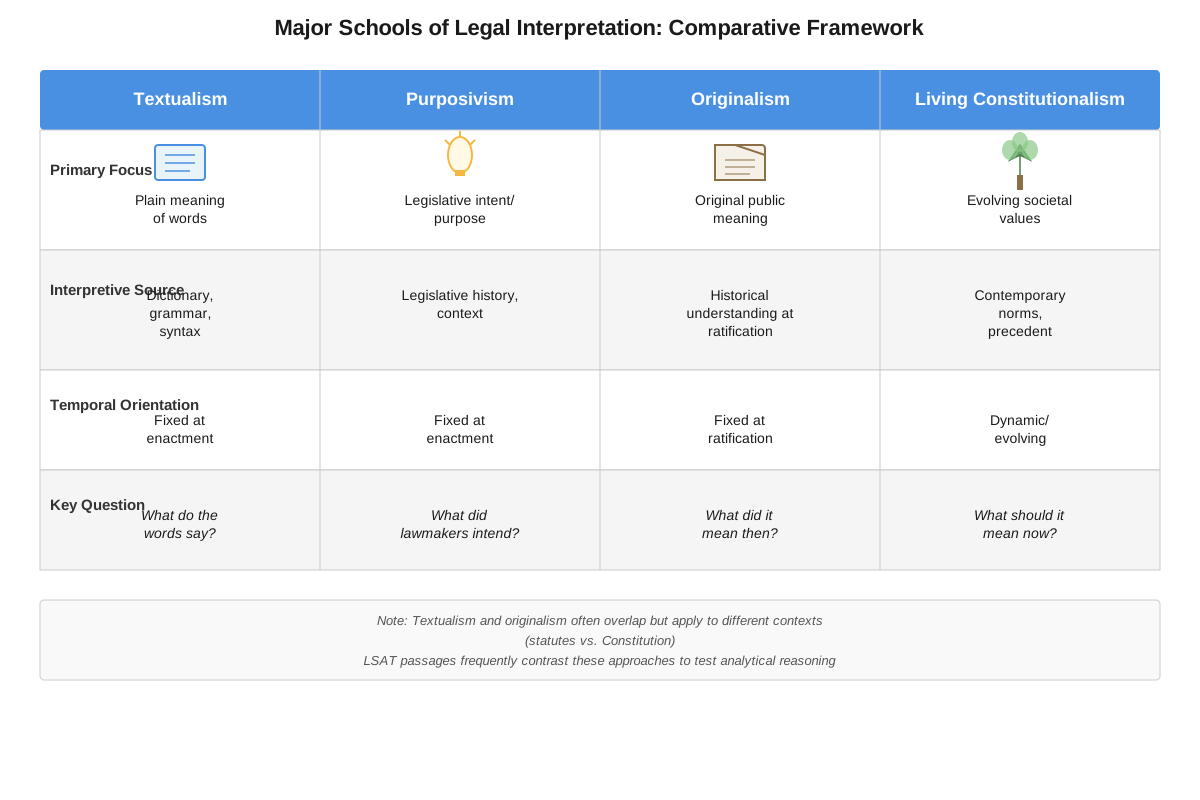
- [ ] Distinguish between major schools of legal interpretation (textualism, purposivism, originalism, living constitutionalism)
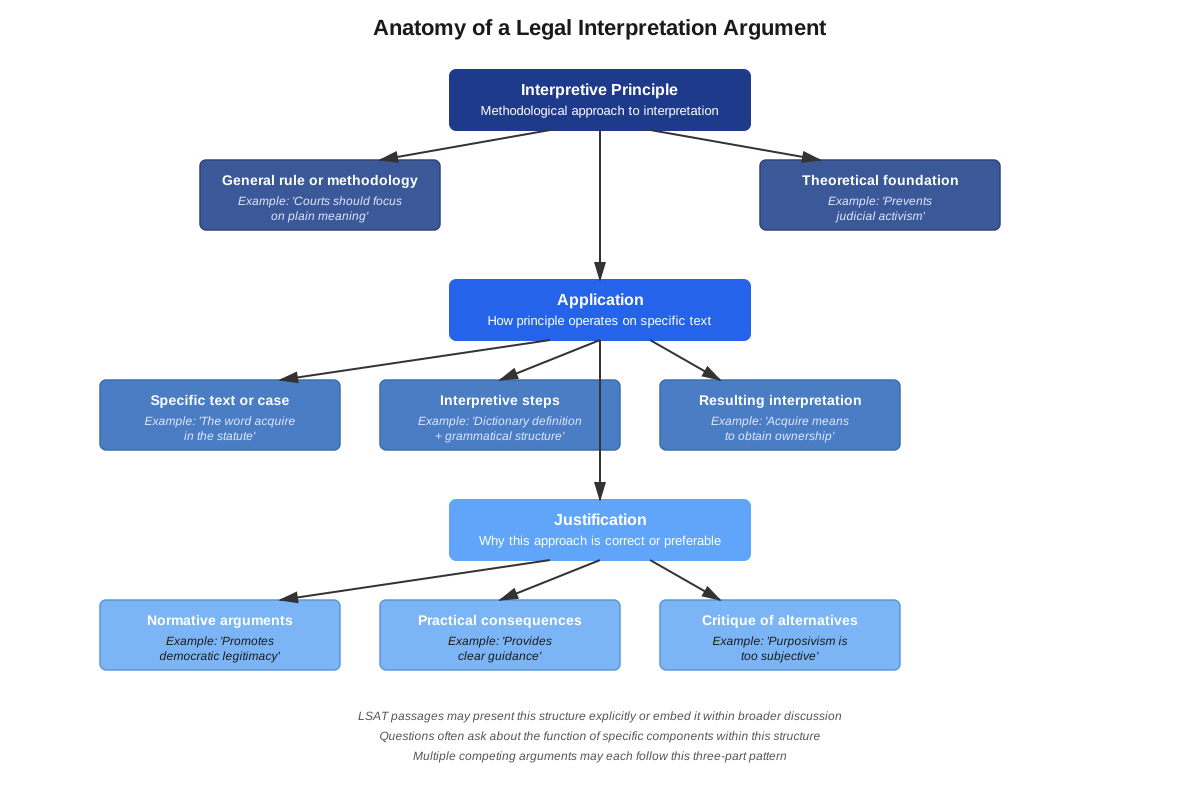
- [ ] Recognize the structural components of legal interpretation arguments (interpretive principle, application, justification)
- [ ] Evaluate the strengths and weaknesses of competing interpretive approaches as presented in passages
Prerequisites
- Basic reading comprehension skills: Ability to identify main ideas, supporting details, and author's tone in complex academic prose—essential for processing dense legal reasoning
- Understanding of argument structure: Recognition of premises, conclusions, and logical relationships—necessary because legal interpretation passages present layered arguments about methodology
- Familiarity with LSAT question types: Knowledge of inference, main point, function, and application questions—required to efficiently navigate the question set following these passages
- General awareness of legal system structure: Basic understanding that courts interpret laws and that different judges may disagree—provides context for why interpretive methodology matters
Why This Topic Matters
Legal interpretation passages matter profoundly because they test the analytical reasoning skills that define successful law students and attorneys. In legal practice, professionals constantly confront questions about what statutes mean, how precedents apply, and which interpretive approach should govern. The LSAT uses these passages to identify candidates who can navigate ambiguity, evaluate competing methodologies, and apply abstract principles systematically.
From an exam perspective, legal interpretation passages appear in approximately 1-2 passages per test, accounting for roughly 6-8 questions. These passages generate specific question types with high frequency: function questions asking why an author mentions a particular interpretive principle, application questions requiring students to extend an interpretive approach to new scenarios, inference questions about what different interpretive schools would conclude, and comparative questions contrasting two or more methodologies. The passages often include hypothetical examples or case studies that test whether students can track how different interpretive lenses produce different outcomes.
Common manifestations include: passages debating whether courts should prioritize statutory text over legislative history; discussions of how constitutional provisions should be interpreted in light of contemporary values versus original understanding; analyses of interpretive canons (rules of thumb for resolving textual ambiguities); and examinations of how judges balance competing interpretive principles when they conflict. These passages frequently present a primary interpretive approach, critique it, and propose alternatives—creating a dialectical structure that generates multiple question opportunities.
Core Concepts
The Nature of Legal Interpretation
Legal interpretation refers to the process by which courts and legal actors determine the meaning of legal texts—statutes, constitutional provisions, regulations, and contracts. Unlike ordinary reading, legal interpretation operates under constraints: courts must justify their interpretations through recognized methodologies, respect institutional boundaries, and produce outcomes that can be applied consistently. The central challenge is that legal language often proves ambiguous, vague, or incomplete, requiring judges to choose among plausible meanings.
LSAT passages on this topic emphasize that interpretation is not merely discovering pre-existing meaning but involves choices about which interpretive values to prioritize. Should courts focus exclusively on the text's plain meaning? Consider the drafters' intentions? Pursue the law's underlying purposes? These questions lack single correct answers, creating ongoing debates that passages explore in depth.
Textualism and Plain Meaning
Textualism represents an interpretive philosophy that prioritizes the ordinary meaning of statutory or constitutional language at the time of enactment. Textualists argue that courts should focus on what the text says, not what legislators intended or what outcomes seem desirable. This approach emphasizes linguistic analysis, dictionary definitions, and grammatical structure. Textualists contend that this method respects democratic legitimacy—the people's representatives chose specific words, and courts should honor those choices rather than substituting judicial preferences.
LSAT passages often present textualism as offering objectivity and constraint on judicial discretion. However, passages also explore textualism's limitations: words have multiple meanings, context affects interpretation, and purely textual analysis may produce absurd results. Students must recognize when passages describe textualist reasoning and understand both its theoretical justifications and practical challenges.
Purposivism and Legislative Intent
Purposivism directs interpreters to identify and advance the purpose or goal underlying a legal provision. Purposivists examine legislative history (committee reports, floor debates, sponsor statements) to discern what problem legislators sought to address and interpret ambiguous language to further that objective. This approach treats statutes as purposeful instruments designed to achieve specific policy goals rather than as isolated texts.
Passages presenting purposivism typically emphasize its flexibility and practical wisdom—it allows courts to adapt general language to unforeseen circumstances and avoid technical readings that undermine legislative goals. Critics argue purposivism grants excessive discretion, allows judges to impose their own policy preferences, and treats legislative intent as more coherent than it actually is (since legislators may have diverse, conflicting motivations). LSAT passages frequently contrast purposivism with textualism, requiring students to track how each approach would resolve specific interpretive problems differently.
Originalism and Living Constitutionalism
In constitutional interpretation, originalism holds that provisions should be understood according to their meaning at the time of ratification. Some originalists focus on original public meaning (how ordinary readers would have understood the text), while others emphasize original intent (what the framers specifically intended). Originalists argue this approach constrains judicial power and maintains constitutional stability—the Constitution's meaning doesn't change unless formally amended.
Living constitutionalism contends that constitutional provisions should be interpreted in light of contemporary values, social conditions, and evolving understandings of justice. Proponents argue that the framers used broad language precisely to allow adaptation, and that interpreting 18th-century text according to 18th-century understandings produces unjust outcomes in modern society. LSAT passages exploring this debate often present concrete examples—such as whether "cruel and unusual punishment" or "equal protection" should be understood according to 1791 or 2024 standards—and test whether students can apply each framework consistently.
Interpretive Canons and Presumptions
Interpretive canons are rules of thumb that guide courts when text proves ambiguous. These include linguistic canons (like ejusdem generis—general terms following specific ones are limited to things similar to the specific terms) and substantive canons (like the rule of lenity—ambiguous criminal statutes should be construed in favor of defendants). Passages discussing canons typically explore their justifications, limitations, and how they interact with other interpretive approaches.
LSAT passages may present scenarios where multiple canons point in different directions, testing whether students understand that canons are defeasible guidelines rather than rigid rules. The passages often critique over-reliance on canons as mechanical jurisprudence that avoids genuine engagement with statutory purpose or constitutional values.
The Role of Precedent in Interpretation
Legal interpretation occurs within a system of precedent (stare decisis), where prior judicial interpretations constrain future courts. Passages explore tensions between interpretive methodology and precedent: should courts overrule prior decisions that used flawed interpretive methods? How should textualists treat precedents based on purposivist reasoning? These passages test whether students can track multi-layered arguments about both how to interpret texts and how to treat prior interpretations.
Concept Relationships
The concepts within legal interpretation passages form an interconnected web of competing and complementary approaches. Textualism and purposivism represent the fundamental divide in statutory interpretation, with textualism prioritizing linguistic analysis → leading to emphasis on plain meaning and grammatical structure, while purposivism prioritizes policy goals → leading to reliance on legislative history and practical consequences. This core tension generates most statutory interpretation debates in LSAT passages.
Originalism and living constitutionalism mirror the textualism-purposivism divide in constitutional contexts, with originalism functioning as constitutional textualism (fixing meaning at ratification) and living constitutionalism resembling purposivism (adapting meaning to contemporary purposes). Both debates reflect deeper questions about judicial legitimacy, democratic authority, and the nature of legal language.
Interpretive canons serve as middle-ground tools that all interpretive schools use, though they disagree about canons' priority relative to other interpretive sources. Canons connect to textualism (linguistic canons aid textual analysis) and purposivism (substantive canons reflect policy judgments about interpretive defaults). Precedent operates as a meta-level constraint on all interpretive approaches, creating tensions when prior decisions conflict with an interpreter's preferred methodology.
Understanding these relationships enables students to predict passage structure: introductions typically present an interpretive problem, body paragraphs explore competing approaches (often textualism vs. purposivism or originalism vs. living constitutionalism), and conclusions frequently acknowledge that no single approach resolves all interpretive challenges. Questions then test whether students can apply each approach independently, compare their implications, and recognize their theoretical foundations.
Quick check — test yourself on Legal interpretation passages so far.
Try Flashcards →High-Yield Facts
- ⭐ Textualism focuses on ordinary meaning of statutory language at time of enactment, rejecting reliance on legislative history or policy consequences
- ⭐ Purposivism interprets ambiguous language to advance the statute's underlying purpose, often consulting legislative history to identify that purpose
- ⭐ Originalism holds constitutional provisions should be understood according to their meaning at ratification, not contemporary values
- ⭐ Living constitutionalism interprets constitutional provisions in light of evolving social conditions and contemporary understandings of justice
- ⭐ Legal interpretation passages typically present competing methodologies and test whether students can apply each consistently to new scenarios
- Interpretive canons are defeasible rules of thumb, not mandatory rules, and different canons may point toward different interpretations
- The rule of lenity requires ambiguous criminal statutes to be construed in favor of defendants
- Textualists argue their approach constrains judicial discretion and respects democratic choices embodied in statutory language
- Purposivists argue textualism produces absurd results when applied mechanically and fails to account for unforeseen circumstances
- Originalists contend their approach maintains constitutional stability and prevents judges from imposing personal values
- Living constitutionalists argue originalism produces unjust outcomes and ignores the framers' use of broad, adaptable language
- Legislative history includes committee reports, floor debates, and sponsor statements that purposivists use to discern statutory purpose
- Stare decisis (precedent) creates tension when prior interpretations conflict with an interpreter's preferred methodology
- Plain meaning refers to how ordinary readers would understand statutory language, which textualists prioritize
- Absurdity doctrine allows courts to depart from plain meaning when literal interpretation produces absurd results, creating exception to strict textualism
Common Misconceptions
Misconception: Legal interpretation passages simply describe what courts do, without presenting competing viewpoints → Correction: These passages almost always present debates between interpretive schools, requiring students to track multiple perspectives and understand how different approaches yield different outcomes. The passages test analytical skills, not just comprehension of a single viewpoint.
Misconception: Textualism means ignoring context and applying dictionary definitions mechanically → Correction: Sophisticated textualism considers linguistic context, grammatical structure, and how terms function within the broader statutory scheme. Textualists reject legislative history and policy arguments, but they engage in nuanced linguistic analysis, not mechanical dictionary application.
Misconception: Purposivism allows judges to ignore statutory text and impose their policy preferences → Correction: Purposivism begins with statutory text and uses purpose to resolve ambiguities, not to override clear language. Purposivists argue they're advancing legislative purposes, not judicial preferences, though critics dispute whether legislative purpose can be identified objectively.
Misconception: Originalism and textualism are identical approaches → Correction: While related, originalism applies specifically to constitutional interpretation and focuses on meaning at ratification, while textualism applies to statutes and focuses on ordinary meaning at enactment. Originalism raises unique questions about historical evidence and constitutional change that statutory textualism doesn't face.
Misconception: Legal interpretation passages require pre-existing knowledge of legal doctrine or case law → Correction: LSAT passages provide all necessary information within the passage itself. Students need to understand interpretive frameworks as presented in the passage, not bring outside legal knowledge. The test assesses reading comprehension and analytical reasoning, not legal expertise.
Misconception: The "correct" interpretive approach is always identified in the passage → Correction: Passages often present competing approaches without endorsing one as definitively correct. Questions test whether students can apply each approach consistently and understand their theoretical foundations, not whether students can identify a single "right" methodology.
Worked Examples
Example 1: Applying Textualism vs. Purposivism
Passage Excerpt: "The statute prohibits 'vehicles' in the park. Textualists would interpret 'vehicles' according to its ordinary meaning—motorized conveyances used for transportation. This interpretation would exclude bicycles but include ambulances. Purposivists, examining legislative history, note that the statute aimed to preserve park tranquility. They would interpret 'vehicles' to include any conveyance that disturbs peace, potentially including bicycles, while excluding emergency vehicles serving the park's safety."
Question: According to the passage, how would textualists and purposivists differ in their treatment of an electric wheelchair in the park?
Analysis Process:
- Identify the interpretive frameworks: Textualism focuses on ordinary meaning of "vehicles"; purposivism focuses on the statute's purpose (preserving tranquility)
- Apply textualism: Would an ordinary reader consider an electric wheelchair a "vehicle"? Possibly—it's motorized and used for transportation. Textualist analysis focuses on linguistic categorization
- Apply purposivism: Does an electric wheelchair disturb park tranquility? Likely not—it's quiet and serves mobility needs. Purposivist analysis focuses on whether it conflicts with the statute's goal
- Predict the difference: Textualists might include electric wheelchairs (they're motorized conveyances), while purposivists would likely exclude them (they don't disturb tranquility and serve important accessibility functions)
Answer: Textualists would more likely prohibit electric wheelchairs based on ordinary meaning of "vehicles," while purposivists would more likely permit them because they don't undermine the statute's tranquility purpose and serve accessibility goals.
Connection to Learning Objectives: This example demonstrates how to apply legal interpretation passages to solve LSAT-style problems accurately by systematically applying each interpretive framework to a new scenario not explicitly addressed in the passage.
Example 2: Identifying Reasoning Patterns
Passage Excerpt: "Justice Scalia's textualist approach rests on three premises: first, that democratic legitimacy requires courts to enforce the law as written, not as judges wish it were written; second, that focusing on text constrains judicial discretion and promotes predictability; and third, that legislative intent is often indeterminate because legislators have diverse motivations. Critics respond that textualism's purported objectivity is illusory—word meanings are contested, context matters, and textualists selectively invoke canons to reach preferred outcomes. Moreover, textualism may produce absurd results that no reasonable legislator intended."
Question: The passage suggests that critics of textualism would most likely agree with which of the following?
Analysis Process:
- Identify the reasoning pattern: The passage presents textualism's theoretical justifications (democratic legitimacy, constraint, avoiding indeterminate intent), then presents systematic critiques
- Analyze the critique structure: Critics challenge textualism's premises—they dispute that it's objective (word meanings are contested), that it constrains discretion (selective canon use), and that it respects legislative will (produces absurd results)
- Recognize the underlying reasoning: Critics argue textualism fails on its own terms—it claims objectivity but involves subjective choices; it claims to respect democracy but produces outcomes legislators wouldn't want
- Predict what critics would support: Critics would favor approaches that acknowledge interpretive discretion, consider practical consequences, and avoid mechanical application
Answer: Critics would likely agree that interpretive objectivity is impossible to achieve and that courts should consider whether interpretations produce reasonable outcomes consistent with legislative goals.
Connection to Learning Objectives: This example shows how to explain the reasoning pattern behind legal interpretation passages by identifying how arguments are structured (theoretical justifications followed by systematic critiques) and recognizing the logical relationships between claims.
Exam Strategy
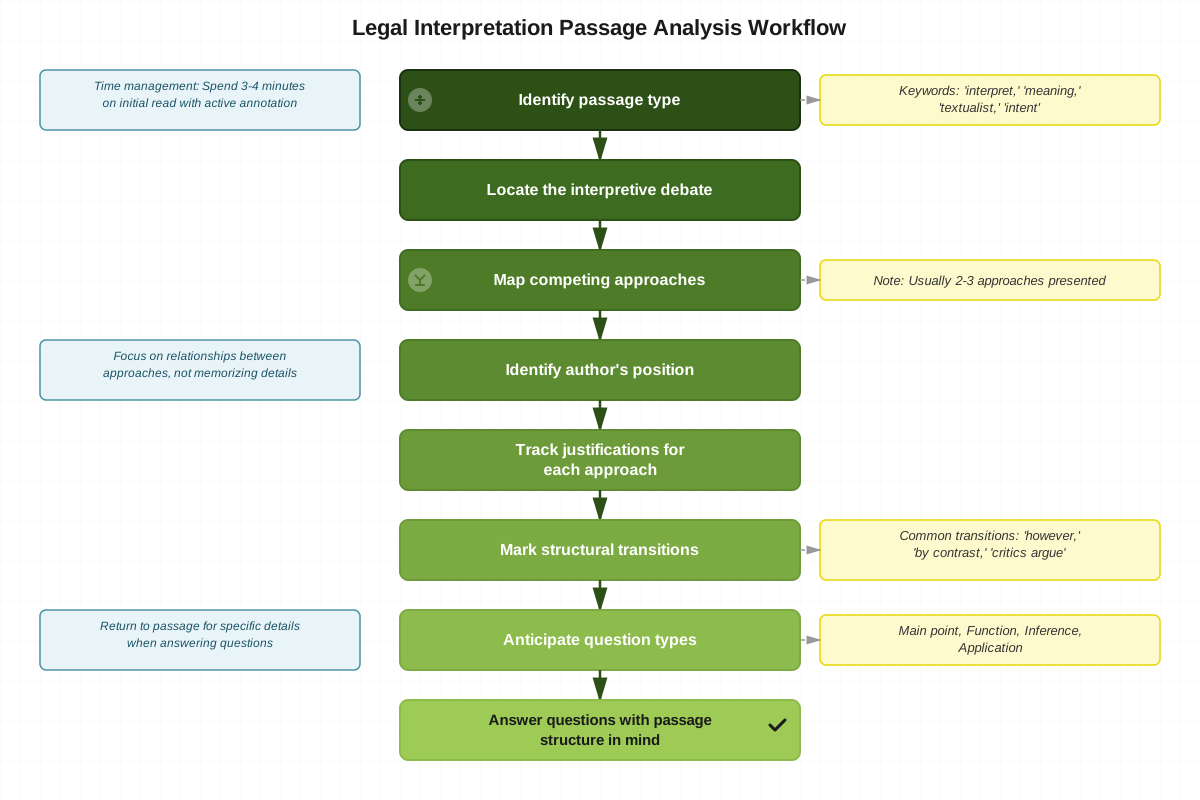
When approaching legal interpretation passages on the LSAT, begin by identifying which interpretive schools the passage discusses. Look for trigger words: "plain meaning," "ordinary understanding," and "textual analysis" signal textualism; "legislative purpose," "policy goals," and "legislative history" signal purposivism; "original understanding," "framers' intent," and "ratification" signal originalism; "evolving standards," "contemporary values," and "living document" signal living constitutionalism.
Map the passage structure quickly: most legal interpretation passages present an interpretive problem (paragraph 1), explain one approach (paragraph 2), present an alternative or critique (paragraph 3), and sometimes offer synthesis or acknowledge limitations (paragraph 4). Understanding this structure helps predict question types and locate relevant information efficiently.
For application questions asking how an interpretive approach would handle a new scenario, systematically apply the methodology as described in the passage. Don't rely on intuition about what seems "right"—follow the interpretive logic even if it produces counterintuitive results. Textualist questions require linguistic analysis of whether the scenario fits ordinary meaning; purposivist questions require assessing whether including/excluding the scenario advances the stated purpose.
For function questions asking why the author mentions a particular example or principle, recognize that legal interpretation passages use examples to illustrate how different approaches yield different outcomes. The function is typically to demonstrate a methodology's application, highlight its strengths/weaknesses, or show how it differs from alternatives.
Process-of-elimination strategy: Eliminate answers that confuse interpretive schools (attributing purposivist reasoning to textualists or vice versa), that import outside knowledge not stated in the passage, or that make absolute claims when the passage acknowledges nuance. Correct answers precisely track the passage's description of each interpretive approach.
Time allocation: Spend 3-4 minutes reading and mapping the passage structure, noting which paragraphs discuss which interpretive approaches. Spend 5-6 minutes on questions, returning to specific paragraphs as needed. Don't get bogged down in complex theoretical discussions—focus on understanding how each approach operates and what it prioritizes.
Exam Tip: When a question asks what "textualists would most likely conclude," ignore your own views about good interpretation. Apply only the textualist methodology as described in the passage, even if it seems to produce problematic results. The LSAT tests reading comprehension and analytical reasoning, not your normative views about legal interpretation.
Memory Techniques
TOPIC mnemonic for textualism's core commitments:
- Text is primary source
- Ordinary meaning controls
- Plain language focus
- Intent is irrelevant (legislative)
- Constraint on judicial discretion
PURPOSE mnemonic for purposivism's approach:
- Policy goals guide interpretation
- Underlying objectives matter
- Review legislative history
- Practical consequences considered
- Outcomes should advance statutory aims
- Statutory scheme examined holistically
- Evolution to unforeseen circumstances
Visualization strategy: Picture textualism as a magnifying glass focused tightly on statutory words, excluding everything outside the text. Picture purposivism as a wide-angle lens capturing the statute within its broader policy context, including legislative history and practical effects.
Contrast memory aid: Remember that originalism is to constitutional interpretation what textualism is to statutory interpretation—both fix meaning at a historical point and resist updating based on contemporary values. Living constitutionalism is to constitutional interpretation what purposivism is to statutory interpretation—both emphasize adaptation and practical consequences.
Summary
Legal interpretation passages test sophisticated analytical skills by presenting competing methodologies for determining legal meaning. Textualism prioritizes ordinary meaning of statutory language and rejects legislative history, emphasizing constraint on judicial discretion and democratic legitimacy. Purposivism interprets ambiguous language to advance statutory purposes, consulting legislative history and considering practical consequences. In constitutional contexts, originalism fixes meaning at ratification while living constitutionalism adapts interpretation to contemporary values. These passages typically present an interpretive problem, explain competing approaches, and test whether students can apply each methodology consistently to new scenarios. Success requires tracking multiple perspectives simultaneously, recognizing theoretical justifications for each approach, and systematically applying interpretive frameworks without imposing personal views. Questions frequently ask how different approaches would resolve specific cases, why authors mention particular examples, and what critics of each approach would likely conclude. Mastering these passages requires understanding not just what courts do, but why they choose particular interpretive methods and how methodological choices determine outcomes.
Key Takeaways
- Legal interpretation passages present competing methodologies (textualism vs. purposivism, originalism vs. living constitutionalism) and test systematic application to new scenarios
- Textualism focuses on ordinary meaning of statutory language at enactment, rejecting legislative history and policy arguments
- Purposivism interprets ambiguous language to advance statutory purposes, consulting legislative history and considering practical consequences
- Application questions require following the passage's description of each interpretive approach precisely, even when it produces counterintuitive results
- Passage structure typically presents an interpretive problem, explains one approach, presents alternatives or critiques, creating a dialectical framework
- Success depends on tracking multiple perspectives simultaneously without conflating different interpretive schools or imposing personal views
- Trigger words signal which interpretive approach is being discussed: "plain meaning" (textualism), "legislative purpose" (purposivism), "original understanding" (originalism), "evolving standards" (living constitutionalism)
Related Topics
Comparative Reading Passages: Legal interpretation passages often appear in comparative format, presenting two perspectives on interpretive methodology. Mastering single legal interpretation passages prepares students for tracking parallel arguments and identifying points of agreement and disagreement across paired passages.
Argument Structure and Reasoning: Legal interpretation passages exemplify complex argument structures with premises, intermediate conclusions, and systematic critiques. Skills developed here transfer to Logical Reasoning sections and strengthen overall analytical abilities.
Author's Purpose and Tone: Understanding whether a passage advocates for a particular interpretive approach, neutrally presents competing views, or critiques all approaches requires sophisticated analysis of authorial stance—a skill tested across all reading comprehension passages.
Application and Inference Questions: Legal interpretation passages generate high-frequency application questions requiring extension of principles to new scenarios. Mastering these passages builds skills applicable to scientific and humanities passages that also test principle application.
Practice CTA
Now that you understand the structure, reasoning patterns, and strategic approaches for legal interpretation passages, practice applying these concepts with LSAT-style questions. Work through passages systematically: identify the interpretive schools discussed, map the argument structure, and apply each methodology precisely as described. Review flashcards focusing on distinguishing textualism from purposivism and originalism from living constitutionalism. Remember that mastery comes through deliberate practice—each passage you analyze strengthens your ability to track complex arguments and apply abstract principles accurately. You're building skills that will serve you throughout the LSAT and in law school itself. Approach practice with confidence, knowing that legal interpretation passages follow predictable patterns once you understand their underlying logic.
Sign up free to keep reading
Create a free AnvayaPrep account to finish this LSAT guide on Legal interpretation passages — plus flashcards and practice questions.