Overview
Causal claims in passages represent one of the most frequently tested reasoning patterns in LSAT Reading Comprehension. These claims assert that one event, condition, or phenomenon brings about or influences another. On the LSAT, passages across all subject areas—from law and humanities to natural and social sciences—regularly present causal arguments that test-takers must identify, analyze, and evaluate. Understanding how authors construct, support, and sometimes challenge causal relationships is essential for answering questions about main points, author's purpose, logical structure, and inference.
The LSAT tests causal reasoning because legal thinking fundamentally involves establishing and evaluating cause-and-effect relationships. Attorneys must determine what caused a contract breach, what factors led to an injury, or what consequences will follow from a policy change. Similarly, LSAT passages require readers to distinguish between mere correlation and genuine causation, identify alternative explanations, recognize the strength or weakness of causal evidence, and understand how authors use causal claims to advance their arguments. This skill directly connects to viewpoints and argumentation because causal claims often form the backbone of an author's thesis or a critic's rebuttal.
Within reading comprehension, causal reasoning intersects with multiple analytical skills: identifying argument structure, evaluating evidence, understanding authorial intent, and making valid inferences. Recognizing causal claims helps readers map the logical architecture of complex passages, anticipate counterarguments, and predict which details the test will emphasize. Mastery of this topic provides a framework for approaching approximately 20-30% of Reading Comprehension questions, making it one of the highest-yield areas for focused study.
Learning Objectives
- [ ] Identify how causal claims in passages appears in LSAT questions
- [ ] Explain the reasoning pattern behind causal claims in passages
- [ ] Apply causal claims in passages to solve LSAT-style problems accurately
- [ ] Distinguish between correlation and causation in passage arguments
- [ ] Recognize common causal indicators and signal phrases in LSAT passages
- [ ] Evaluate the strength of evidence supporting causal claims
- [ ] Identify alternative explanations that weaken causal arguments
Prerequisites
- Basic argument structure: Understanding premises and conclusions is necessary because causal claims function as either evidence or conclusions within larger arguments
- Correlation vs. causation distinction: Fundamental awareness that two things occurring together doesn't prove one causes the other provides the foundation for analyzing causal reasoning
- Passage mapping skills: The ability to track main ideas and supporting details enables readers to identify where causal claims appear and what role they play
- Vocabulary of logical relationships: Familiarity with terms like "therefore," "because," "leads to," and "results in" helps recognize when authors are making causal assertions
Why This Topic Matters
Lsat causal claims in passages appear with remarkable consistency across all four Reading Comprehension passages in every test administration. Legal reasoning depends heavily on establishing causation—from tort law's requirement to prove that a defendant's actions caused harm, to constitutional analysis examining how policies affect rights, to contract law determining what breach caused damages. The LSAT mirrors this emphasis by incorporating causal reasoning into passages about judicial decisions, policy debates, scientific discoveries, and historical analyses.
Statistically, causal reasoning appears in approximately 25-35% of Reading Comprehension questions. These questions take multiple forms: some ask readers to identify the author's causal claim directly, others require recognizing evidence that supports or undermines a causal relationship, and still others test whether readers can distinguish the author's causal argument from alternative explanations mentioned in the passage. Question stems frequently include phrases like "according to the passage, what caused," "the author suggests that X resulted from," "which of the following would weaken the claim that," and "the passage indicates that the primary factor in."
Common manifestations in exam passages include: scientific passages explaining what causes natural phenomena, historical passages analyzing what factors led to social changes, legal passages examining what policy changes produced specific outcomes, and humanities passages exploring how artistic movements influenced later developments. The LSAT particularly favors passages where multiple causal explanations compete, where correlation might be mistaken for causation, or where the strength of causal evidence becomes debatable.
Core Concepts
Definition and Structure of Causal Claims
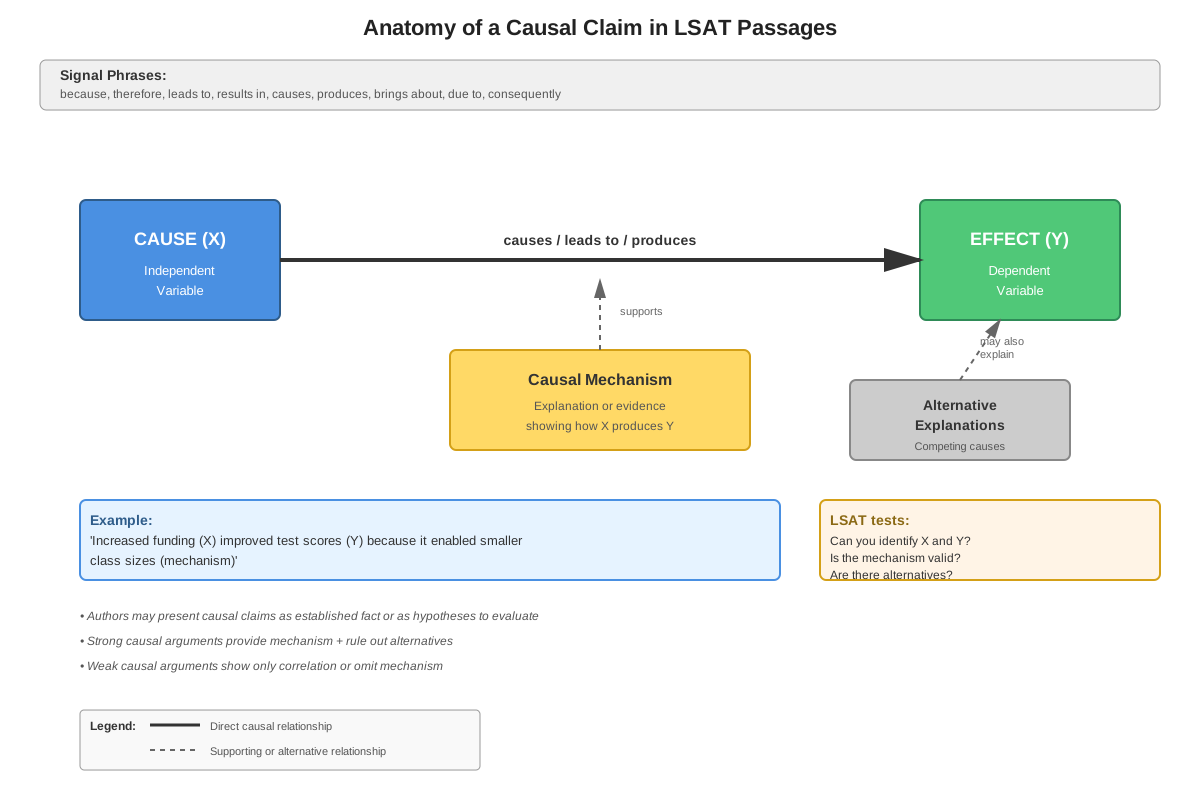
A causal claim asserts that one factor (the cause) brings about, produces, influences, or is responsible for another factor (the effect). In LSAT passages, causal claims can be explicit ("X caused Y") or implicit (suggesting causation through context without directly stating it). The basic structure involves identifying: (1) the alleged cause, (2) the alleged effect, and (3) the mechanism or evidence connecting them. Understanding this structure allows readers to map arguments systematically.
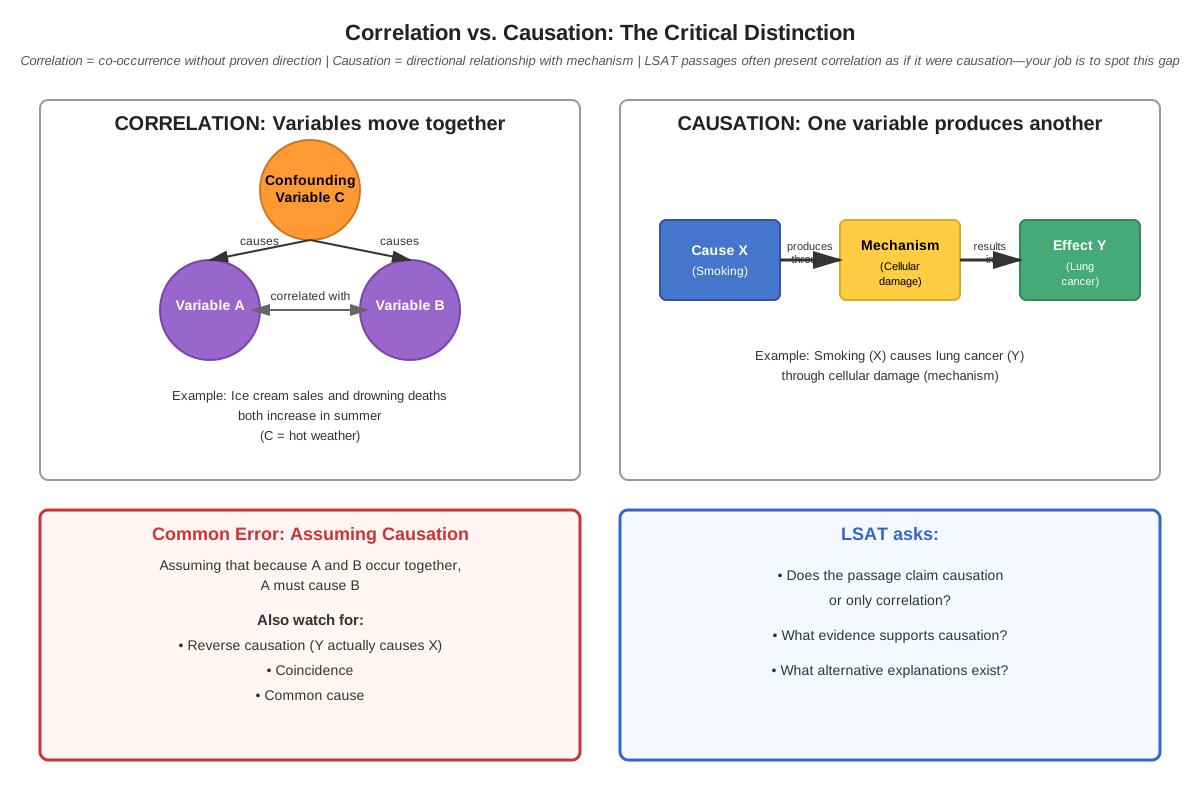
Causal claims differ from mere descriptions or correlations. A description states what happened without explaining why ("Sales declined in Q3"). A correlation notes that two things occurred together ("Sales declined when advertising decreased"). A causal claim asserts that one produced the other ("Decreased advertising caused sales to decline"). The LSAT frequently tests whether readers can distinguish these categories.
Types of Causal Relationships
LSAT passages present several distinct causal patterns:
Direct causation occurs when one factor immediately produces an effect without intermediary steps. Example: "The court's ruling directly caused the policy's implementation." These claims are relatively straightforward but still require evidence.
Indirect or chain causation involves multiple steps where A causes B, which causes C. Example: "Economic recession led to decreased tax revenue, which forced budget cuts, which reduced public services." LSAT questions often test whether readers can trace these causal chains accurately.
Contributory causation suggests that one factor among several contributes to an outcome without being solely responsible. Example: "While multiple factors influenced the movement's success, the leader's charisma was a significant contributor." These claims are more nuanced and frequently appear in complex passages.
Necessary vs. sufficient causes represent an important distinction. A necessary cause must be present for the effect to occur, but its presence alone doesn't guarantee the effect. A sufficient cause, when present, guarantees the effect but isn't required for it to occur. Example: "Oxygen is necessary for fire but not sufficient; fuel and heat are also required."
Causal Indicators and Signal Language
Recognizing causal indicators helps readers identify when authors make causal claims. Common signal phrases include:
- Direct causation: "caused," "produced," "brought about," "led to," "resulted in," "gave rise to," "generated," "created"
- Reason/explanation: "because," "since," "due to," "owing to," "on account of," "as a result of"
- Consequence: "therefore," "thus," "consequently," "accordingly," "hence," "so"
- Influence: "influenced," "affected," "shaped," "determined," "contributed to," "played a role in"
However, the LSAT also tests implicit causal claims where no signal word appears but the context suggests causation. Example: "After the regulation passed, compliance rates increased dramatically" implies the regulation caused increased compliance without explicitly stating causation.
Evidence for Causal Claims
The strength of a causal claim depends on its supporting evidence. LSAT passages present various types of causal evidence:
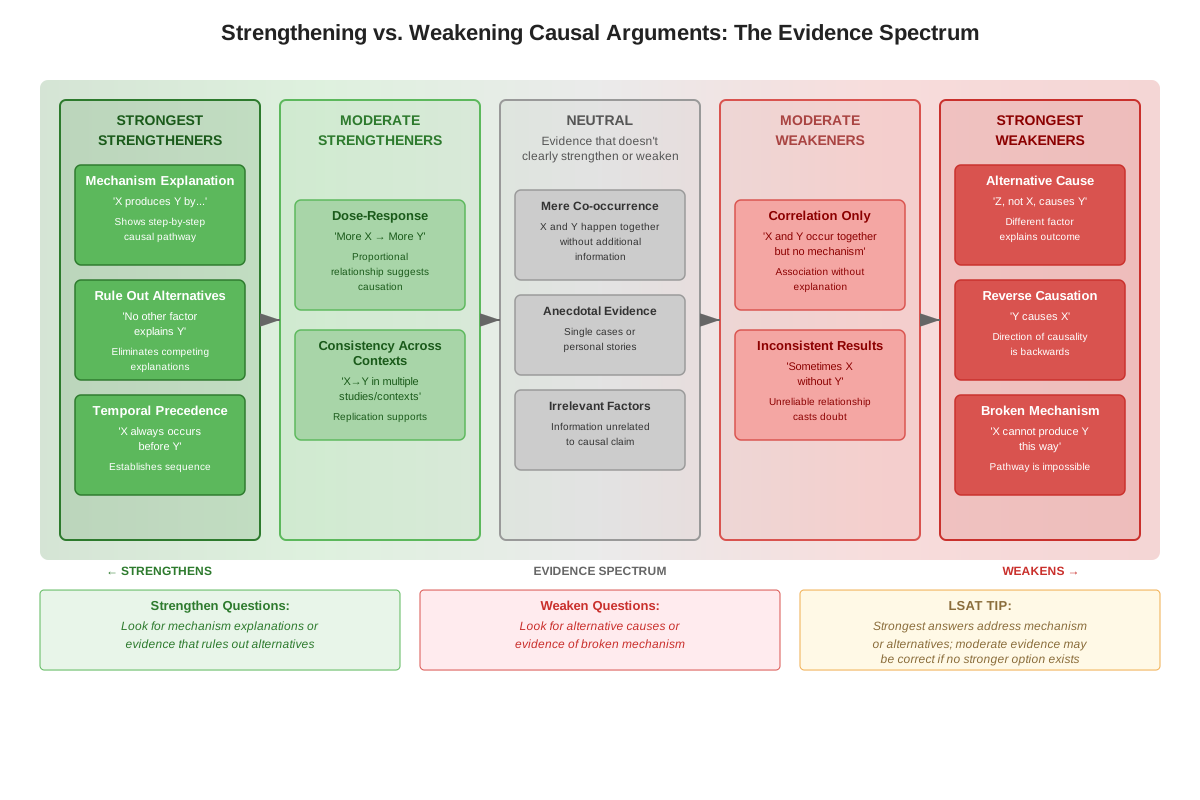
| Evidence Type | Description | Strength |
|---|---|---|
| Controlled experiments | Manipulating one variable while controlling others | Strongest |
| Temporal sequence | Cause precedes effect consistently | Moderate |
| Correlation data | Variables change together | Weakest alone |
| Mechanism explanation | Describing how cause produces effect | Strengthens other evidence |
| Elimination of alternatives | Ruling out other potential causes | Strengthens claim |
| Dose-response relationship | Greater cause produces greater effect | Moderate to strong |
LSAT passages often present causal claims with varying evidence quality, testing whether readers can evaluate argument strength. A passage might present a correlation and ask whether it supports a causal conclusion, or describe an experiment and ask what it demonstrates about causation.
Alternative Explanations and Confounding Factors
A critical aspect of causal reasoning involves recognizing alternative explanations—other potential causes that could explain the observed effect. The LSAT frequently includes passages where:
- Multiple factors could explain an outcome
- A third variable causes both the alleged cause and effect (confounding)
- The causal direction is reversed (effect actually causes what's claimed as cause)
- The relationship is coincidental rather than causal
For example, a passage might note that cities with more police officers have higher crime rates, then discuss whether police presence causes crime (unlikely) or crime causes cities to hire more police (reverse causation). Questions test whether readers recognize these alternative interpretations.
Strengthening and Weakening Causal Arguments
Understanding what strengthens or weakens causal claims is essential for many LSAT questions. Factors that strengthen causal arguments include:
- Demonstrating temporal priority (cause precedes effect)
- Showing consistent correlation across diverse contexts
- Eliminating alternative explanations
- Explaining the causal mechanism
- Demonstrating dose-response relationships
- Replicating findings in controlled conditions
Factors that weaken causal arguments include:
- Identifying alternative causes
- Showing the correlation is inconsistent or context-dependent
- Demonstrating reverse causation
- Revealing confounding variables
- Questioning the temporal sequence
- Challenging the proposed mechanism
LSAT questions frequently ask what would strengthen or weaken a causal claim presented in the passage, requiring readers to apply these principles.
Concept Relationships
The concepts within causal reasoning form an interconnected analytical framework. Causal indicators help readers identify when authors make causal claims, which must then be evaluated based on the evidence type provided. Understanding types of causal relationships (direct, indirect, contributory) helps readers accurately characterize the author's argument. Recognizing alternative explanations enables evaluation of whether the evidence truly supports the causal claim or whether other interpretations are possible. Finally, knowing what strengthens or weakens causal arguments allows readers to assess argument quality and predict answer choices.
This topic connects to prerequisite knowledge of argument structure because causal claims function as premises or conclusions within larger arguments. The distinction between correlation and causation underlies the entire topic—every causal claim must be evaluated for whether it truly establishes causation or merely notes correlation. Passage mapping skills enable readers to track where causal claims appear and how they relate to the passage's overall argument.
Causal reasoning also connects to other Reading Comprehension topics within viewpoints and argumentation. Authors use causal claims to support their viewpoints, while critics challenge causal claims to undermine opposing arguments. Understanding causal reasoning enhances the ability to identify main points (often causal claims), recognize author's purpose (frequently to establish or challenge causation), and make valid inferences (often about causal relationships not explicitly stated).
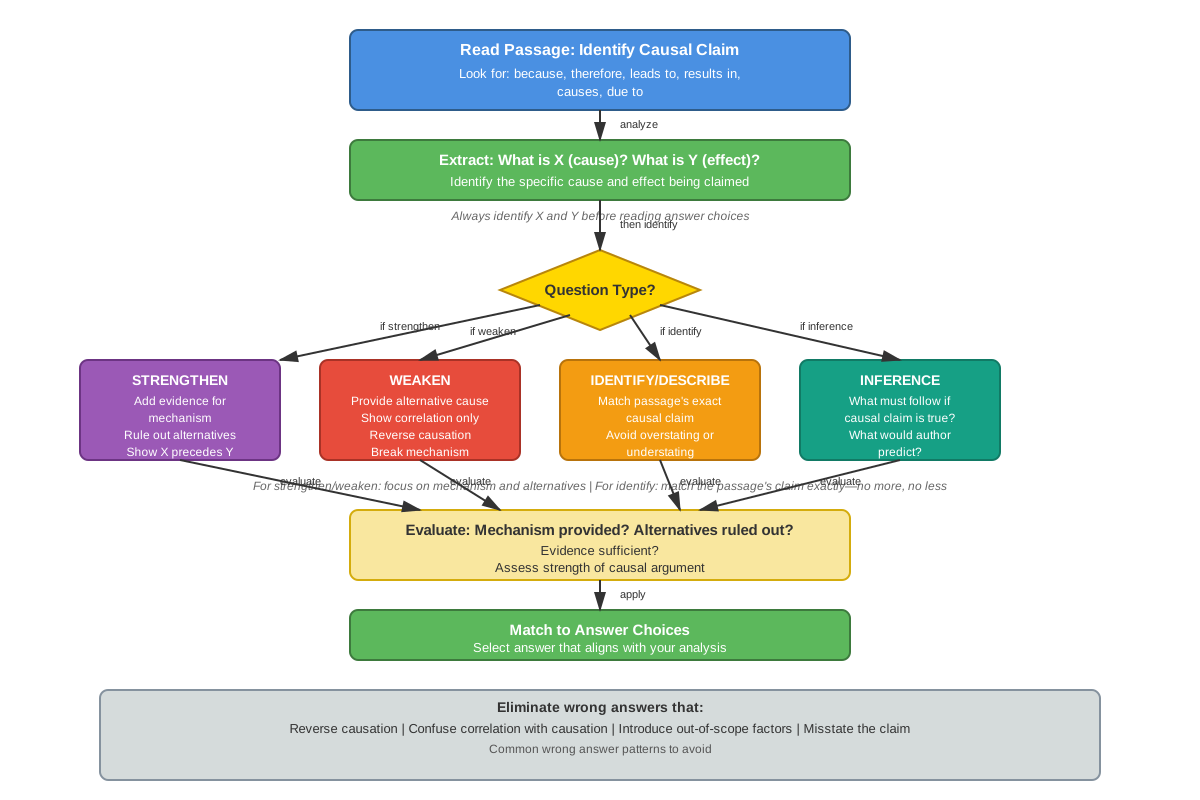
Relationship map: Causal indicators → Identify causal claims → Evaluate evidence type → Consider alternative explanations → Assess argument strength → Answer questions about causation, inference, and argument structure
High-Yield Facts
⭐ Causal claims assert that one factor produces, influences, or brings about another, going beyond mere correlation or temporal sequence.
⭐ Temporal priority (cause precedes effect) is necessary but not sufficient to establish causation; correlation alone never proves causation.
⭐ Alternative explanations—other potential causes for the observed effect—are the most common way to weaken causal arguments on the LSAT.
⭐ Signal phrases like "caused," "led to," "resulted in," "because," and "due to" indicate causal claims, but causation can also be implied without explicit indicators.
⭐ Controlled experiments provide the strongest evidence for causation because they isolate variables and eliminate confounding factors.
- Reverse causation occurs when what's claimed as the effect actually causes what's claimed as the cause, a common alternative explanation in LSAT passages.
- Confounding variables are third factors that cause both the alleged cause and effect, creating a correlation without direct causation between them.
- Necessary causes must be present for an effect to occur but don't guarantee it; sufficient causes guarantee the effect when present but aren't required.
- Mechanism explanations—describing how a cause produces an effect—strengthen causal arguments even when other evidence is limited.
- Dose-response relationships (greater cause produces greater effect) provide moderate to strong evidence for causation.
- Chain causation involves multiple steps where each factor causes the next, and LSAT questions often test whether readers can accurately trace these sequences.
- Contributory causes are factors that influence an outcome without being solely responsible, requiring careful reading to avoid overstating their role.
Quick check — test yourself on Causal claims in passages so far.
Try Flashcards →Common Misconceptions
Misconception: If two events occur together consistently, one must cause the other.
Correction: Correlation, even consistent correlation, doesn't establish causation. Both events might be caused by a third factor, the relationship might be coincidental, or the causal direction might be reversed. The LSAT specifically tests this distinction by presenting correlations and asking whether they support causal conclusions.
Misconception: If the cause precedes the effect in time, causation is established.
Correction: Temporal sequence is necessary for causation but not sufficient. Many events precede others without causing them. The LSAT includes passages where events occur in sequence but are unrelated or both caused by an earlier factor.
Misconception: When a passage mentions multiple potential causes, they're all equally valid.
Correction: LSAT passages often present competing causal explanations with different levels of support. Readers must evaluate which explanation the author endorses, which have stronger evidence, and which are mentioned only to be dismissed. Questions frequently test whether readers can distinguish the author's view from alternative explanations mentioned in the passage.
Misconception: Causal claims are always explicitly stated with signal words like "caused" or "because."
Correction: Many LSAT passages present causal claims implicitly through context, description of mechanisms, or discussion of factors that "influenced" or "shaped" outcomes. Readers must recognize causation even when not explicitly labeled.
Misconception: If a passage describes a mechanism explaining how X could cause Y, this proves X actually caused Y.
Correction: Mechanism explanations show how causation is possible but don't prove it occurred. The LSAT tests whether readers distinguish between plausible causal mechanisms and demonstrated causal relationships. A passage might explain how a policy could reduce crime without providing evidence that it actually did.
Misconception: Weakening a causal argument means proving the cause had no effect whatsoever.
Correction: To weaken a causal argument, one need only show that the evidence doesn't conclusively establish causation—by identifying alternative explanations, questioning the evidence quality, or noting confounding factors. Complete disproof isn't required.
Worked Examples
Example 1: Scientific Passage with Competing Causal Explanations
Passage excerpt: "Marine biologists have observed that coral reef degradation has accelerated dramatically over the past three decades, coinciding with rising ocean temperatures. Some researchers argue that increased water temperature directly causes coral bleaching by disrupting the symbiotic relationship between coral and algae. However, others note that pollution levels have also increased during this period and that agricultural runoff introduces nutrients that promote algae growth, which blocks sunlight necessary for coral health. A recent study found that reefs in areas with minimal pollution still experienced bleaching when water temperatures exceeded normal ranges by 2°C, suggesting temperature plays a primary causal role."
Question: According to the passage, which of the following most accurately describes the relationship between ocean temperature and coral reef degradation?
Analysis:
- Identify the causal claims: The passage presents two potential causes for coral degradation: (a) rising ocean temperatures causing bleaching, and (b) pollution/agricultural runoff blocking sunlight.
- Evaluate the evidence: The passage provides correlation (degradation coinciding with temperature rise), a mechanism explanation (temperature disrupts coral-algae symbiosis), and experimental-type evidence (reefs with minimal pollution still bleached at high temperatures).
- Recognize the author's position: The phrase "suggesting temperature plays a primary causal role" indicates the author views temperature as the main cause, though not dismissing pollution entirely.
- Consider alternative explanations: The passage acknowledges pollution as an alternative explanation but presents evidence that weakens it as the sole cause (bleaching occurs even with minimal pollution).
- Apply to answer choices: The correct answer would state that temperature is a primary or significant cause of degradation, supported by evidence that bleaching occurs even when pollution is minimal. Wrong answers might overstate the case (temperature is the only cause), understate it (temperature merely correlates with degradation), or misrepresent the evidence (pollution is the primary cause).
Key takeaway: This example demonstrates how LSAT passages present competing causal explanations and use evidence to support one over others. Questions test whether readers can identify which explanation the passage supports and why.
Example 2: Historical Passage with Chain Causation
Passage excerpt: "Historians debate what caused the rapid industrialization of Britain in the late 18th century. Traditional accounts emphasize technological innovations like the steam engine. However, recent scholarship argues that agricultural improvements were the primary catalyst. Increased crop yields freed rural workers from farming, creating an available labor force for factories. Simultaneously, greater food production supported larger urban populations. These demographic shifts created both the workforce and the consumer base necessary for industrial expansion. Without the agricultural revolution, technological innovations alone would have lacked the human resources to drive industrialization."
Question: The passage suggests that agricultural improvements contributed to industrialization primarily by:
Analysis:
- Identify the causal chain: Agricultural improvements → increased crop yields → freed rural workers + supported urban populations → available factory workforce + consumer base → industrial expansion
- Distinguish direct from indirect causation: Agricultural improvements didn't directly cause industrialization; they created conditions (labor force and consumers) that enabled it. This is chain causation with multiple steps.
- Recognize contributory vs. sole causation: The passage presents agricultural improvements as "the primary catalyst" but acknowledges technology's role, indicating contributory rather than sole causation.
- Note the counterfactual reasoning: "Without the agricultural revolution, technological innovations alone would have lacked the human resources" strengthens the causal claim by suggesting the cause was necessary.
- Apply to answer choices: The correct answer would describe the intermediate steps (creating available workforce and consumer base) rather than stating agricultural improvements directly caused industrialization. Wrong answers might skip the intermediate steps, reverse the causation, or misidentify which factor the passage emphasizes.
Key takeaway: This example illustrates chain causation and how LSAT passages use counterfactual reasoning ("without X, Y wouldn't have occurred") to strengthen causal claims. Questions test whether readers can accurately trace multi-step causal sequences.
Exam Strategy
When approaching reading comprehension questions involving causal claims, employ this systematic process:
Step 1: During initial passage reading, mark causal indicators and note causal claims in your passage map. Use symbols like "→" to track cause-effect relationships. Distinguish between the author's causal claims and those attributed to others.
Step 2: Identify the evidence type supporting each causal claim. Is it correlation, controlled experiment, mechanism explanation, or elimination of alternatives? This helps predict question types and evaluate argument strength.
Step 3: Watch for competing explanations. If a passage presents multiple potential causes, note which the author supports and what evidence distinguishes them. Questions frequently test this distinction.
Step 4: For questions asking what the passage claims caused something, return to the specific lines discussing that effect. Don't rely on memory—causal claims are often nuanced, and answer choices may contain subtle distortions.
Step 5: For inference questions about causation, apply the principles of what strengthens or weakens causal arguments. If the passage establishes correlation, you can infer the author might suggest causation but cannot infer causation is proven unless stronger evidence appears.
Exam Tip: Trigger phrases in question stems include "caused," "resulted in," "led to," "contributed to," "factor in," "explanation for," "account for," and "responsible for." These signal that causal reasoning is being tested.
Process of elimination strategies:
- Eliminate answers that confuse correlation with causation when the passage only establishes correlation
- Eliminate answers that reverse causal direction (claiming the effect caused the cause)
- Eliminate answers that overstate causation (claiming sole cause when passage indicates contributory cause)
- Eliminate answers that ignore alternative explanations the passage explicitly mentions
- Eliminate answers that claim causation is proven when the passage only suggests it's possible
Time allocation: Spend extra time during initial reading identifying causal claims and their evidence, as this investment pays off across multiple questions. For individual questions, if you're uncertain about a causal claim, return to the passage rather than relying on memory—causal relationships are frequently tested with subtle distortions that seem plausible but misrepresent the passage.
Memory Techniques
CITE mnemonic for evaluating causal evidence strength:
- Controlled experiments (strongest)
- Identify mechanism
- Temporal sequence
- Eliminate alternatives
RACE framework for analyzing causal claims:
- Recognize the causal claim and signal words
- Alternative explanations—consider what else could cause the effect
- Chain or direct—identify whether causation is direct or involves multiple steps
- Evidence type—evaluate what supports the claim
Visualization strategy: When reading passages with causal claims, mentally draw arrows from causes to effects. For chain causation, draw multiple arrows showing each step. This visual representation helps track complex causal arguments and prevents confusion about causal direction.
The "But What Else?" technique: Whenever you encounter a causal claim, mentally ask "But what else could have caused this?" This habit trains you to recognize alternative explanations, the most common way LSAT questions test causal reasoning.
Acronym for common causal indicators: BREDS
- Because, brought about
- Resulted in, responsible for
- Effect, explanation
- Due to, determined
- Since, so, shaped
Summary
Causal claims in passages represent assertions that one factor produces, influences, or brings about another, going beyond mere correlation or temporal sequence. The LSAT tests causal reasoning extensively because legal thinking fundamentally involves establishing and evaluating cause-effect relationships. Readers must identify causal claims through signal phrases or context, distinguish between types of causation (direct, chain, contributory, necessary vs. sufficient), evaluate the strength of supporting evidence, and recognize alternative explanations that might weaken causal arguments. Strong causal evidence includes controlled experiments, mechanism explanations, elimination of alternatives, and dose-response relationships, while weak evidence relies solely on correlation or temporal sequence. The most common way to challenge causal claims involves identifying alternative causes, reverse causation, or confounding variables. Success on LSAT causal reasoning questions requires systematically analyzing the evidence type, tracking whether the author endorses or merely mentions causal claims, and applying principles of what strengthens or weakens causal arguments to evaluate answer choices.
Key Takeaways
- Causal claims assert that one factor produces another, requiring evidence beyond correlation or temporal sequence to be convincing
- Recognize causal indicators like "caused," "led to," "because," and "resulted in," but also identify implicit causal claims through context
- Alternative explanations—other potential causes for an observed effect—are the primary way LSAT questions test and weaken causal arguments
- Distinguish between correlation (things occurring together), temporal sequence (one preceding another), and causation (one producing another)
- Evaluate evidence strength: controlled experiments are strongest, followed by mechanism explanations and elimination of alternatives, while correlation alone is weakest
- Track whether passages present direct causation, chain causation (multiple steps), or contributory causation (one factor among several)
- Apply systematic analysis: identify the causal claim, evaluate the evidence, consider alternatives, and assess whether the passage proves, suggests, or merely mentions causation
Related Topics
Argument Structure and Logical Reasoning: Understanding how premises support conclusions directly builds on causal reasoning, as causal claims often function as key premises. Mastering causal claims in Reading Comprehension prepares students for Logical Reasoning questions that test similar skills with shorter arguments.
Author's Purpose and Tone: Recognizing whether an author endorses, questions, or presents multiple views on causal claims connects to broader analysis of authorial intent. This skill enables more sophisticated understanding of passage structure.
Inference Questions: Many inference questions require applying causal reasoning principles to determine what must, might, or cannot be true based on causal claims in the passage. Strong causal reasoning skills directly improve inference question performance.
Comparative Reading: When passages present competing causal explanations, skills in evaluating causal evidence help readers identify points of agreement and disagreement between authors, a key skill for comparative passage questions.
Practice CTA
Now that you've mastered the core concepts of causal claims in passages, it's time to apply this knowledge to authentic LSAT questions. Work through the practice questions systematically, using the RACE framework and CITE mnemonic to analyze each causal claim you encounter. Review the flashcards to reinforce causal indicators and evidence types until recognizing them becomes automatic. Remember: causal reasoning appears in approximately one-quarter of Reading Comprehension questions, making this one of the highest-yield topics for your LSAT preparation. Each practice question you complete strengthens your ability to identify, analyze, and evaluate causal arguments under timed conditions—the exact skill you'll need on test day. Your investment in mastering this topic will pay dividends across multiple questions in every Reading Comprehension section.
Sign up free to keep reading
Create a free AnvayaPrep account to finish this LSAT guide on Causal claims in passages — plus flashcards and practice questions.