Overview
Alpha helices represent one of the most fundamental and ubiquitous secondary structures in protein architecture, serving as a cornerstone concept in Biochemistry and a high-yield topic for the MCAT. This right-handed helical structure, first proposed by Linus Pauling and Robert Corey in 1951, arises from the regular folding pattern of the polypeptide backbone stabilized by intramolecular hydrogen bonds. Understanding alpha helices is essential not only for grasping protein structure and function but also for predicting how mutations affect protein stability, how proteins interact with membranes, and how therapeutic agents target specific protein conformations.
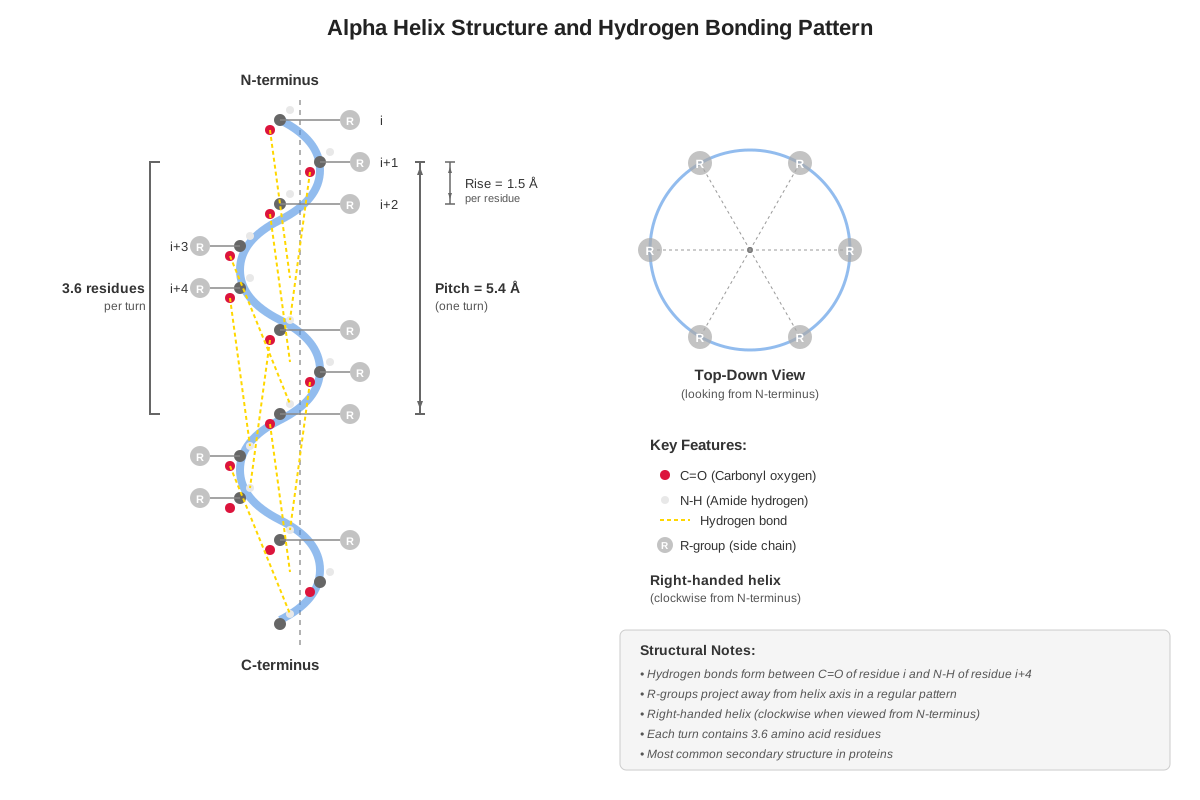
The alpha helix forms when the carbonyl oxygen of one amino acid residue forms a hydrogen bond with the amide hydrogen of an amino acid residue four positions ahead in the sequence (i+4 pattern). This regular, repeating structure creates a rod-like configuration with specific geometric parameters that the MCAT frequently tests. The helix exhibits 3.6 amino acid residues per turn, a pitch (rise per turn) of 5.4 Ångströms, and a rise per residue of 1.5 Ångströms. These precise measurements, combined with the helix's inherent stability and prevalence in biological systems, make it a favorite target for MCAT passage-based questions and discrete items alike.
Within the broader context of Amino Acids and Proteins, alpha helices bridge the gap between primary structure (amino acid sequence) and tertiary structure (overall three-dimensional fold). They exemplify how local interactions between backbone atoms can create stable, predictable structures independent of side chain chemistry—though side chain properties profoundly influence helix formation and stability. Mastery of alpha helix structure, stability determinants, and functional roles provides the foundation for understanding more complex topics including protein folding, membrane protein architecture, DNA-binding motifs, and the molecular basis of genetic diseases. For MCAT success, students must not only recognize alpha helices in diagrams but also predict their formation, analyze factors affecting their stability, and apply this knowledge to experimental scenarios and clinical contexts.
Learning Objectives
- [ ] Define alpha helices using accurate Biochemistry terminology, including geometric parameters and hydrogen bonding patterns
- [ ] Explain why alpha helices matter for the MCAT, including their frequency in exam questions and clinical relevance
- [ ] Apply alpha helices concepts to exam-style questions involving protein structure prediction and stability analysis
- [ ] Identify common mistakes related to alpha helices, particularly regarding hydrogen bonding patterns and helix-breaking residues
- [ ] Connect alpha helices to related Biochemistry concepts including beta sheets, protein folding, and membrane proteins
- [ ] Predict the likelihood of alpha helix formation based on amino acid sequence composition and properties
- [ ] Analyze experimental data (circular dichroism, X-ray crystallography) to identify and characterize alpha helical content in proteins
- [ ] Evaluate how mutations and environmental conditions affect alpha helix stability and protein function
Prerequisites
- Amino acid structure and properties: Understanding side chain chemistry (hydrophobic, hydrophilic, charged, polar) is essential for predicting helix propensity and stability
- Peptide bond formation and characteristics: Knowledge of the planar, rigid peptide bond and its partial double-bond character explains backbone constraints that favor helix formation
- Hydrogen bonding principles: Familiarity with hydrogen bond donors, acceptors, geometry, and relative strength is critical for understanding helix stabilization
- Primary protein structure: Recognition that amino acid sequence dictates secondary structure formation provides the foundation for structure prediction
- Basic thermodynamics: Understanding enthalpy, entropy, and free energy changes helps explain the driving forces behind helix formation and stability
Why This Topic Matters
Clinical and Real-World Significance
Alpha helices appear in approximately 30-35% of all protein structures, making them one of the most common structural motifs in biology. Transmembrane domains of membrane proteins—including ion channels, receptors, and transporters—predominantly adopt alpha helical conformations because the helix satisfies backbone hydrogen bonding requirements in the hydrophobic lipid bilayer environment. Diseases such as cystic fibrosis (CFTR protein misfolding), sickle cell anemia (hemoglobin structural changes), and various amyloidoses involve disruptions to normal alpha helical structure. Understanding alpha helices enables comprehension of how single amino acid substitutions can destabilize protein structure, leading to loss of function or toxic aggregation.
The leucine zipper motif, composed of two alpha helices that dimerize through hydrophobic interactions, represents a crucial DNA-binding domain in transcription factors. Collagen, while not a true alpha helix, demonstrates how helix-like structures can be modified for specialized functions. Keratin intermediate filaments in skin and hair consist of coiled-coil alpha helices that provide mechanical strength. These examples illustrate how alpha helices serve diverse biological roles from structural support to molecular recognition.
MCAT Exam Statistics and Question Types
Alpha helices appear in approximately 15-20% of Biochemistry passages on the MCAT, making them a high-yield topic that warrants thorough preparation. Questions typically fall into several categories:
- Structure identification and characterization: Passages present experimental data (circular dichroism spectra, X-ray diffraction patterns) and ask students to identify secondary structure content
- Stability analysis: Questions probe understanding of factors that stabilize or destabilize helices, including amino acid composition, pH changes, temperature effects, and mutations
- Functional prediction: Passages describe protein sequences or mutations and ask students to predict effects on protein function based on structural changes
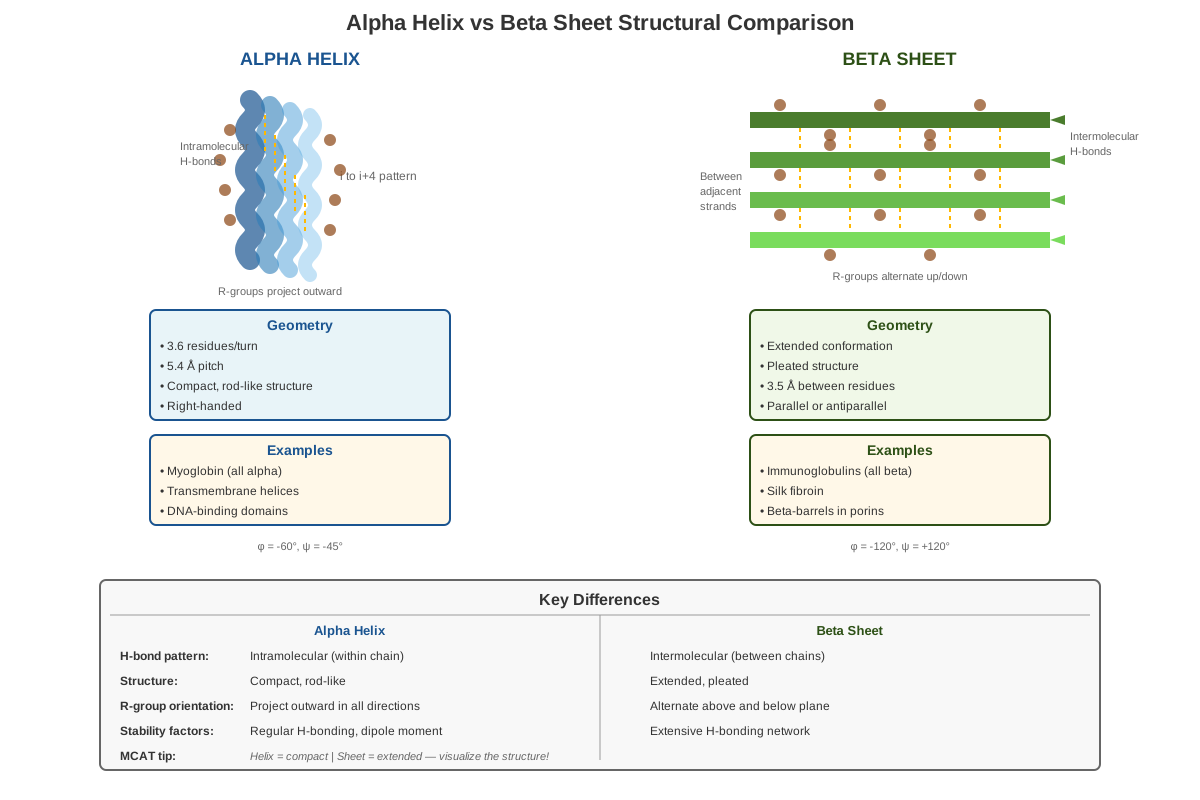
- Comparative analysis: Questions require comparison between alpha helices and beta sheets or other secondary structures
Common passage contexts include membrane protein function, enzyme active site architecture, protein engineering experiments, and disease-causing mutations. Discrete questions often test geometric parameters, hydrogen bonding patterns, and helix propensity of different amino acids.
Core Concepts
Structural Characteristics of Alpha Helices
The alpha helix represents a right-handed helical conformation of the polypeptide backbone characterized by specific geometric parameters that the MCAT frequently tests. The helix forms when the backbone adopts phi (φ) and psi (ψ) dihedral angles of approximately -60° and -45° respectively, values that fall within the energetically favorable region of the Ramachandran plot. This regular repeating structure creates a rod-like configuration with the following key parameters:
- 3.6 residues per turn: Each complete 360° rotation of the helix encompasses 3.6 amino acids
- Pitch of 5.4 Å: The helix rises 5.4 Ångströms per complete turn
- Rise per residue of 1.5 Å: Each amino acid contributes 1.5 Å to the helix length
- Diameter of approximately 5 Å: The helix width remains relatively constant
The backbone carbonyl oxygen (C=O) of residue n forms a hydrogen bond with the backbone amide hydrogen (N-H) of residue n+4, creating a regular pattern of intramolecular hydrogen bonds that run parallel to the helix axis. This i to i+4 hydrogen bonding pattern is diagnostic for alpha helices and distinguishes them from other helical structures like the 3₁₀ helix (i to i+3) or π helix (i to i+5). Each hydrogen bond contributes approximately 2-3 kcal/mol of stabilization energy, and the cumulative effect of multiple hydrogen bonds provides substantial stability.
Directionality and Dipole Moment
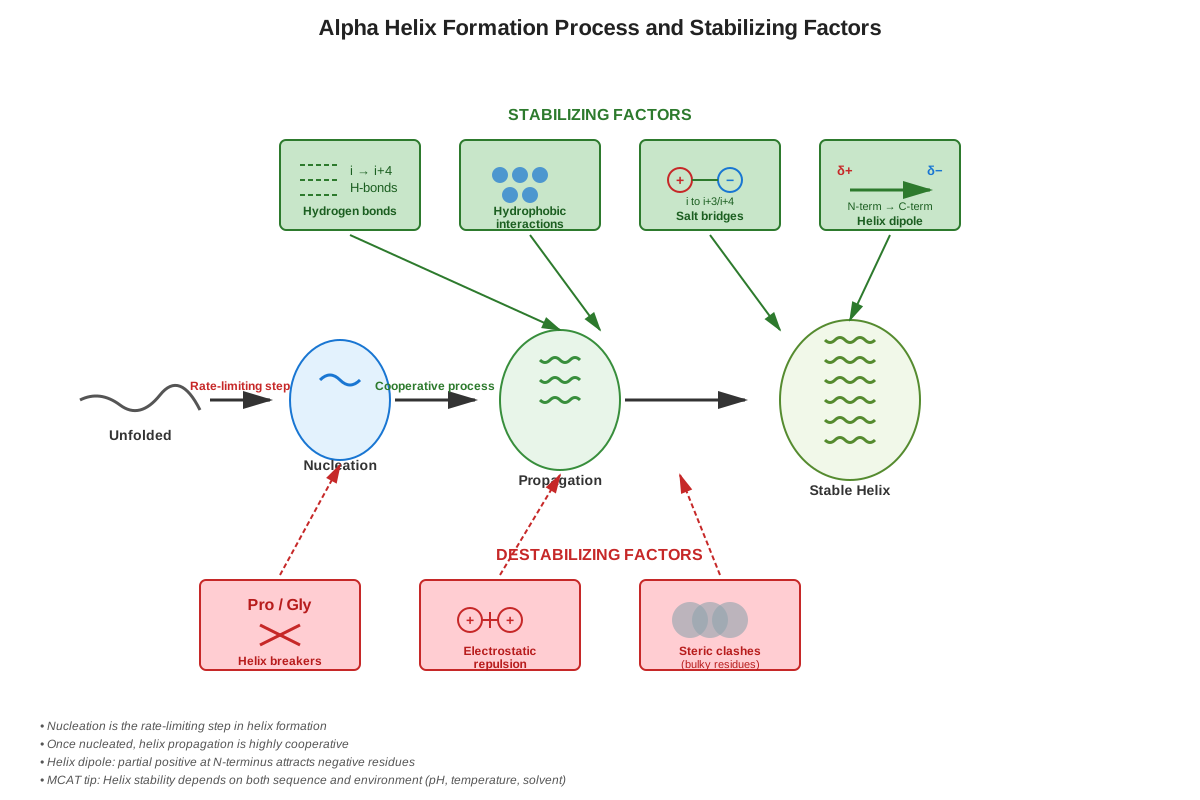
Alpha helices possess inherent directionality with distinct N-terminus and C-terminus ends that exhibit different chemical properties. The helix generates a macrodipole because all carbonyl groups point toward the C-terminus and all amide hydrogens point toward the N-terminus. This creates a partial positive charge at the N-terminus (due to unsatisfied amide hydrogens in the first turn) and a partial negative charge at the C-terminus (due to unsatisfied carbonyl oxygens in the last turn).
This dipole has functional significance: negatively charged residues (aspartate, glutamate) frequently appear near the N-terminus where they stabilize the positive dipole, while positively charged residues (lysine, arginine) often appear near the C-terminus. The helix dipole also influences substrate binding, with many enzyme active sites positioning the N-terminus of an alpha helix to stabilize negatively charged transition states or intermediates.
Amino Acid Helix Propensity
Not all amino acids favor alpha helix formation equally. Helix propensity refers to the intrinsic tendency of each amino acid to adopt helical conformation, determined by both backbone constraints and side chain properties:
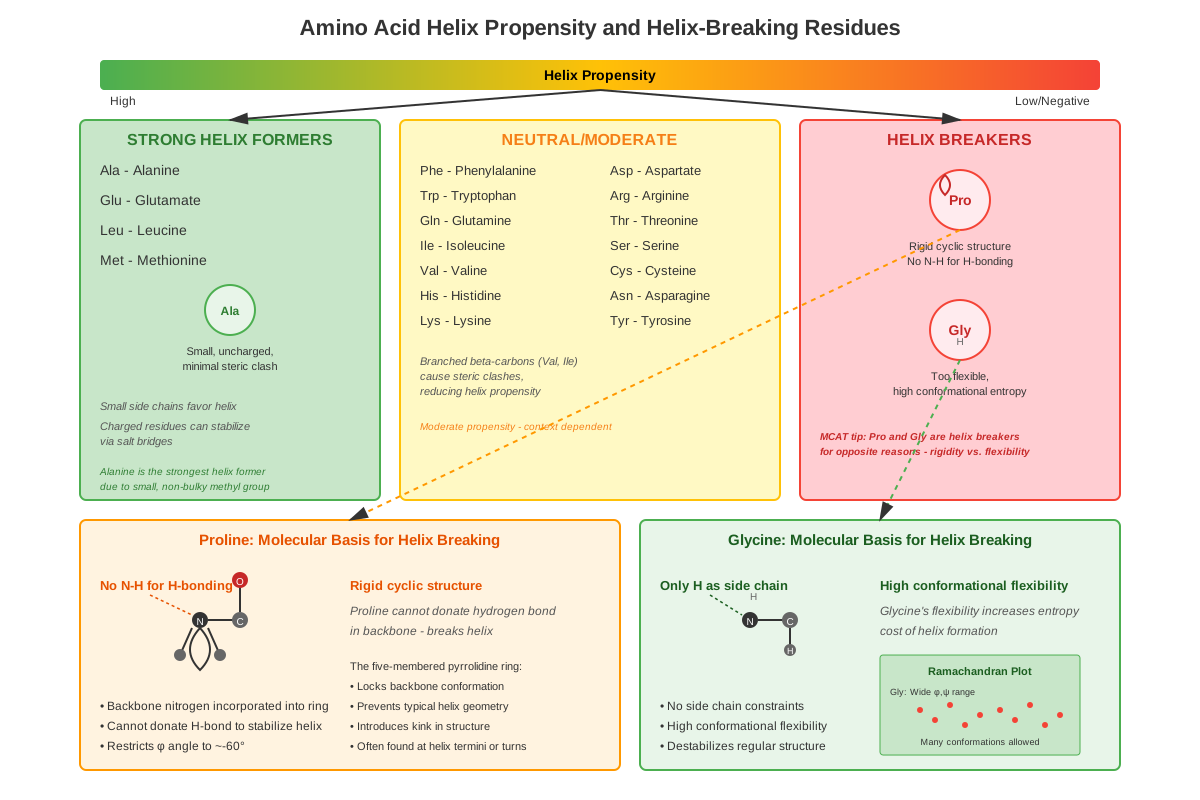
| Helix Propensity | Amino Acids | Reason |
|---|---|---|
| High | Alanine, Glutamate, Leucine, Methionine | Small or medium-sized hydrophobic side chains; no conformational restrictions |
| Medium | Phenylalanine, Tryptophan, Glutamine, Histidine | Bulky side chains but can accommodate helix geometry |
| Low | Serine, Aspartate, Asparagine | Small polar side chains can compete with backbone H-bonds |
| Helix Breakers | Proline, Glycine | Proline lacks amide H; Glycine too flexible |
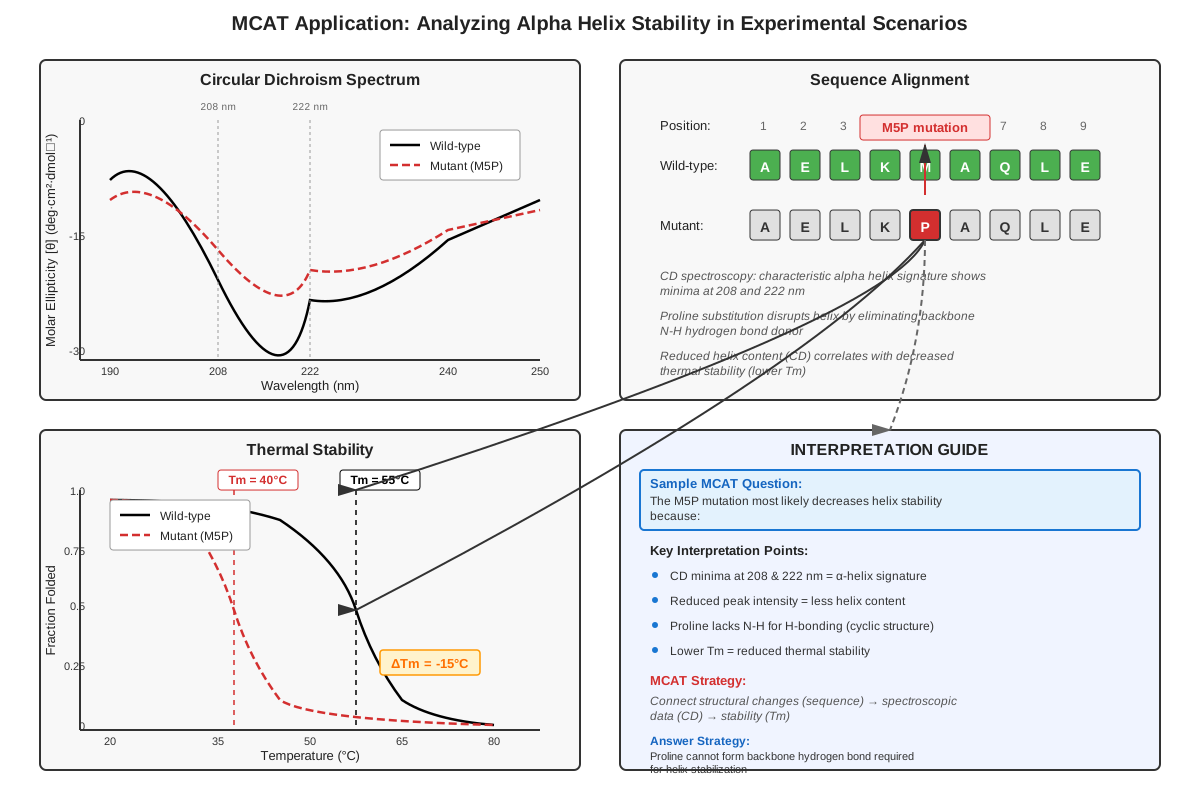
Proline acts as a strong helix breaker because its cyclic structure locks the phi angle and eliminates the backbone amide hydrogen needed for hydrogen bonding. Proline can appear at the first turn of a helix (where its nitrogen doesn't need to donate a hydrogen bond) but disrupts helix continuation. Glycine destabilizes helices due to excessive conformational flexibility—its lack of a side chain beyond hydrogen allows too many possible conformations, reducing the entropic cost of the unfolded state and thus disfavoring the ordered helical state.
Charged residues at positions i and i+3 or i and i+4 can create electrostatic interactions that either stabilize (opposite charges) or destabilize (like charges) the helix. These interactions add to or subtract from overall helix stability beyond the contribution of backbone hydrogen bonds.
Amphipathic Helices
Amphipathic helices contain distinct hydrophobic and hydrophilic faces, created when hydrophobic residues appear at regular intervals (typically every 3-4 residues) on one side of the helix while hydrophilic residues occupy the opposite face. Since the helix completes one turn every 3.6 residues, placing hydrophobic residues at positions i, i+3, i+4, i+7 creates a hydrophobic stripe along one face.
These structures play critical roles in:
- Membrane protein anchoring: The hydrophobic face interacts with lipid tails while the hydrophilic face may line an aqueous pore
- Protein-protein interactions: Leucine zipper motifs use amphipathic helices where hydrophobic faces mediate dimerization
- Lipid binding: Apolipoproteins contain amphipathic helices that bind lipid particles
- Membrane disruption: Antimicrobial peptides often form amphipathic helices that insert into bacterial membranes
Helix Capping and Termination
The first and last turns of an alpha helix present a structural challenge: backbone carbonyls and amide hydrogens lack hydrogen bonding partners. Helix capping refers to interactions that satisfy these unsatisfied hydrogen bond donors and acceptors, stabilizing helix termini.
N-terminal capping:
- Asparagine, aspartate, serine, and threonine frequently appear in N-cap positions
- Their side chains can donate hydrogen bonds to backbone carbonyls of the first helical turn
- Positively charged residues (lysine, arginine) stabilize the helix dipole
C-terminal capping:
- Glycine commonly appears immediately after the helix (C-cap position)
- Its flexibility allows the backbone to adopt conformations that satisfy terminal carbonyl groups
- Negatively charged residues stabilize the positive dipole
Proper capping significantly enhances helix stability, and mutations affecting cap residues can destabilize entire protein domains.
Transmembrane Helices
Transmembrane alpha helices span lipid bilayers and represent the predominant architecture for membrane protein domains. A single transmembrane helix requires approximately 20-25 hydrophobic amino acids to span the ~30 Å hydrophobic core of a typical membrane (20 residues × 1.5 Å/residue = 30 Å).
Key features include:
- Hydrophobic residues (leucine, isoleucine, valine, phenylalanine, alanine) dominate the membrane-spanning region
- Charged or polar residues flank the helix at membrane-water interfaces, providing "anchoring" points
- Tilt and rotation allow helices to adjust to membrane thickness variations
- Helix-helix packing through GxxxG motifs (glycine at i and i+4 positions) allows close approach of helices
G-protein coupled receptors (GPCRs), the largest family of membrane proteins and major drug targets, contain seven transmembrane helices arranged in a bundle. Ion channels like potassium channels use multiple transmembrane helices to create aqueous pores.
Coiled-Coil Structures
Coiled-coils form when two or more alpha helices wrap around each other in a superhelical arrangement, creating extremely stable structures. The heptad repeat pattern (designated a-b-c-d-e-f-g) characterizes coiled-coils, with hydrophobic residues typically at positions a and d. This creates a hydrophobic seam that drives helix association.
Since the heptad repeat (7 residues) doesn't match the helix periodicity (3.6 residues/turn), the helices must wind around each other to maintain hydrophobic contacts, creating the coiled-coil superhelix. Examples include:
- Leucine zippers: Transcription factor dimerization domains with leucine at d positions
- Keratin: Intermediate filaments providing mechanical strength to epithelial cells
- Myosin and tropomyosin: Muscle protein structural elements
- SNARE complexes: Membrane fusion machinery
Concept Relationships
Alpha helix structure emerges directly from primary structure (amino acid sequence), representing the first level of organization beyond the linear polypeptide chain. The specific sequence determines helix propensity through both local effects (individual amino acid preferences) and longer-range effects (electrostatic interactions between residues separated by 3-4 positions). This exemplifies the fundamental principle that sequence dictates structure.
Alpha helices combine with beta sheets and turns/loops to create tertiary structure—the overall three-dimensional fold of a protein. Multiple helices may pack against each other through hydrophobic interactions, creating stable domains. The relative arrangement of secondary structure elements defines protein architecture and creates functional sites like enzyme active sites or binding pockets.
The relationship flows: Amino acid sequence → Local backbone geometry (φ/ψ angles) → Hydrogen bonding pattern → Alpha helix formation → Helix packing and domain formation → Tertiary structure → Quaternary structure (if applicable) → Protein function.
Alpha helices connect to protein folding through the framework model, which proposes that secondary structures form early in the folding process and then assemble into the final tertiary structure. Helix formation represents a partially folded intermediate state with lower entropy than the unfolded state but higher entropy than the fully folded state.
Membrane protein structure depends heavily on transmembrane alpha helices, linking this topic to membrane biology, signal transduction, and transport processes. Understanding amphipathic helices connects to lipid metabolism (apolipoproteins), cell signaling (GPCRs), and immunology (antimicrobial peptides).
The helix dipole and capping interactions relate to electrostatics and acid-base chemistry, as pH changes can protonate or deprotonate capping residues, affecting helix stability. This connects alpha helix structure to enzyme function and protein regulation, where pH-dependent conformational changes modulate activity.
High-Yield Facts
⭐ Alpha helices exhibit an i to i+4 hydrogen bonding pattern, with the carbonyl oxygen of residue n bonding to the amide hydrogen of residue n+4
⭐ The helix contains 3.6 amino acid residues per turn with a pitch of 5.4 Å and rise per residue of 1.5 Å
⭐ Proline and glycine are helix breakers: proline lacks the amide hydrogen and restricts backbone geometry; glycine is too flexible
⭐ Alpha helices possess a macrodipole with partial positive charge at the N-terminus and partial negative charge at the C-terminus
⭐ Transmembrane helices require approximately 20-25 hydrophobic residues to span a typical lipid bilayer
- Alanine, glutamate, leucine, and methionine exhibit high helix propensity
- Amphipathic helices contain distinct hydrophobic and hydrophilic faces, important for membrane interactions and protein-protein associations
- The phi (φ) angle for alpha helices is approximately -60° and psi (ψ) is approximately -45°
- Electrostatic interactions between residues at i and i+3 or i+4 positions can stabilize (opposite charges) or destabilize (like charges) helices
- Helix capping residues (asparagine, aspartate, serine at N-cap; glycine at C-cap) stabilize helix termini by satisfying unsatisfied hydrogen bonds
- Coiled-coils form through heptad repeats (a-b-c-d-e-f-g) with hydrophobic residues at a and d positions
- The GxxxG motif allows close helix-helix packing in membrane proteins through glycine's small size
Quick check — test yourself on Alpha helices so far.
Try Flashcards →Common Misconceptions
Misconception: All hydrogen bonds in an alpha helix involve side chains
Correction: Alpha helix hydrogen bonds form exclusively between backbone carbonyl oxygens and amide hydrogens. Side chains project outward from the helix and do not participate in the regular hydrogen bonding pattern that defines the helix. Side chains can form additional stabilizing interactions (electrostatic, hydrophobic) but these are supplementary to backbone hydrogen bonds.
Misconception: Proline cannot appear anywhere in an alpha helix
Correction: While proline strongly disfavors helix continuation, it can appear at the N-terminal position (first turn) of a helix where its nitrogen atom doesn't need to donate a hydrogen bond. Proline at this position can actually stabilize the helix by reducing conformational entropy of the unfolded state. However, proline in the middle or at the C-terminus disrupts helix structure.
Misconception: Hydrophobic amino acids always stabilize alpha helices
Correction: While many hydrophobic amino acids (alanine, leucine, methionine) favor helix formation, helix propensity depends on multiple factors including side chain size, branching, and conformational restrictions. Valine and isoleucine, despite being hydrophobic, have lower helix propensity than alanine due to branching at the β-carbon that creates steric clashes. Context matters—hydrophobic residues stabilize transmembrane helices but may destabilize helices in aqueous environments if they cluster inappropriately.
Misconception: The alpha helix dipole is due to charged amino acids at the termini
Correction: The helix macrodipole arises from the alignment of backbone peptide bond dipoles, not from charged side chains. Each peptide bond has a dipole moment pointing from δ+ nitrogen to δ- oxygen. When these align in the helix, they create a cumulative macrodipole. Charged residues at termini can stabilize this dipole but don't create it.
Misconception: All alpha helices have the same stability
Correction: Helix stability varies dramatically based on amino acid composition, length, capping interactions, electrostatic interactions between side chains, and environmental conditions (pH, temperature, ionic strength). A helix rich in alanine with optimal capping and favorable electrostatic interactions will be far more stable than a helix containing multiple glycines and prolines with poor capping. Short helices (fewer than 4 turns) are generally less stable than longer helices because the entropic cost of helix formation isn't offset by sufficient hydrogen bonding.
Misconception: Beta sheets and alpha helices can't coexist in the same protein domain
Correction: Many proteins contain both alpha helices and beta sheets within the same domain, creating mixed α/β architectures. The TIM barrel, one of the most common protein folds, consists of eight parallel beta strands surrounded by eight alpha helices. Rossmann folds contain alternating beta strands and alpha helices. The presence of one secondary structure type doesn't preclude the other.
Worked Examples
Example 1: Predicting Helix Stability from Sequence
Question: A researcher designs a 20-residue peptide with the sequence: AEAAAKEAAAKEAAAKEAAA. Predict the likelihood of alpha helix formation and identify structural features that would stabilize or destabilize the helix.
Solution:
Step 1: Analyze amino acid composition
- The peptide contains primarily alanine (A), glutamate (E), and lysine (K)
- Alanine has the highest helix propensity of all amino acids
- Glutamate and lysine have medium-to-high helix propensity
- No proline or glycine present (helix breakers absent)
Step 2: Identify charge distribution
- Glutamate (E) is negatively charged at physiological pH
- Lysine (K) is positively charged at physiological pH
- Pattern shows E at positions 2, 7, 12, 17 and K at positions 5, 10, 15
Step 3: Analyze electrostatic interactions
- E at position 2 and K at position 5 are separated by 3 residues (i to i+3)
- E at position 7 and K at position 10 are separated by 3 residues
- This pattern repeats throughout the sequence
- Opposite charges at i and i+3 positions create favorable electrostatic interactions that stabilize the helix
Step 4: Consider helix dipole
- Glutamate residues appear near the N-terminus (position 2), which would stabilize the partial positive charge of the helix dipole
- The overall charge distribution is compatible with helix dipole stabilization
Step 5: Evaluate length
- 20 residues is sufficient for approximately 5.5 helical turns (20 ÷ 3.6)
- This length provides substantial hydrogen bonding stabilization
Conclusion: This peptide has very high likelihood of forming a stable alpha helix due to: (1) high proportion of alanine, (2) absence of helix breakers, (3) favorable electrostatic interactions between oppositely charged residues at i and i+3 positions, and (4) sufficient length. This represents an optimized helix-forming sequence.
MCAT Connection: This question type tests understanding of helix propensity, electrostatic stabilization, and the ability to integrate multiple factors affecting helix stability—all high-yield concepts for passage-based questions.
Example 2: Analyzing Experimental Data
Question: A biochemist studies a membrane protein and obtains the following data:
- Hydropathy plot shows five regions of 22-24 consecutive hydrophobic residues
- Circular dichroism spectrum shows minima at 208 nm and 222 nm
- The protein functions as an ion channel
- Mutation of Gly residues at positions 95, 99, 103, and 107 to leucine abolishes channel function
Analyze this data to determine the protein's structural organization and explain why the mutations affect function.
Solution:
Step 1: Interpret hydropathy plot
- Five regions of 22-24 consecutive hydrophobic residues suggest five transmembrane segments
- Each segment is sufficient length to span the membrane as an alpha helix (22 residues × 1.5 Å/residue = 33 Å, adequate for ~30 Å membrane core)
Step 2: Interpret circular dichroism data
- Minima at 208 nm and 222 nm are diagnostic for alpha helical structure
- The 222 nm minimum specifically indicates helix content
- This confirms the transmembrane segments adopt helical conformation
Step 3: Analyze glycine positions
- Glycines at positions 95, 99, 103, 107 show spacing of 4 residues (i, i+4, i+8, i+12)
- This represents every ~1.1 turns of the helix (4 ÷ 3.6 = 1.11)
- This pattern suggests a GxxxG motif that allows close helix-helix packing
Step 4: Connect structure to function
- Ion channels require multiple helices to assemble into a pore
- The GxxxG motif allows tight helix-helix association due to glycine's small size
- This packing is essential for creating the channel architecture
Step 5: Explain mutation effects
- Mutating glycine to leucine introduces bulky side chains
- Leucine side chains create steric clashes that prevent close helix approach
- Disrupted helix packing prevents proper channel assembly
- Loss of channel architecture abolishes ion conductance function
Conclusion: The protein contains five transmembrane alpha helices that assemble through GxxxG motifs to form an ion channel. The glycine residues are structurally essential for helix packing, and their mutation to bulky leucine prevents proper channel assembly, explaining the loss of function.
MCAT Connection: This integrates multiple experimental techniques (hydropathy analysis, circular dichroism), structural motifs (transmembrane helices, GxxxG packing), and structure-function relationships—exactly the type of complex analysis required for high-difficulty MCAT passages.
Exam Strategy
Approaching Alpha Helix Questions
Recognition triggers: Watch for these phrases that signal alpha helix content:
- "Regular secondary structure"
- "Transmembrane domain"
- "Hydrophobic stretch of 20-25 residues"
- "Circular dichroism minima at 208 and 222 nm"
- "Coiled-coil" or "leucine zipper"
- "Helix propensity" or "helix-breaking residue"
Question type identification:
- Structure questions: Ask about geometric parameters, hydrogen bonding patterns, or identification from experimental data → Recall specific values (3.6 residues/turn, i to i+4 bonding)
- Stability questions: Present sequences or mutations and ask about effects on helix formation → Systematically evaluate helix propensity, electrostatic interactions, and helix breakers
- Function questions: Connect helix structure to protein function → Consider amphipathic nature, transmembrane architecture, or coiled-coil formation
- Comparison questions: Contrast alpha helices with beta sheets or other structures → Focus on hydrogen bonding patterns and geometric differences
Process of Elimination Strategies
For stability prediction questions:
- Eliminate answers suggesting proline or glycine stabilize helices (they don't, except proline at N-terminus)
- Eliminate answers claiming side chains form the regular hydrogen bonding pattern (only backbone atoms participate)
- Eliminate answers suggesting very short sequences (<10 residues) form highly stable helices
- Keep answers mentioning alanine, leucine, or glutamate as helix-favoring
For transmembrane helix questions:
- Eliminate answers suggesting charged residues span the membrane core (they don't—too energetically unfavorable)
- Eliminate answers claiming fewer than 18-20 residues can span the membrane
- Keep answers mentioning hydrophobic residues in the membrane-spanning region
- Keep answers describing charged/polar residues at membrane-water interfaces
For experimental interpretation:
- Circular dichroism minima at 208 and 222 nm = alpha helix (not beta sheet)
- Hydropathy plots showing long hydrophobic stretches = likely transmembrane helices
- X-ray crystallography showing i to i+4 hydrogen bonds = alpha helix confirmation
Time Management
- Discrete questions (30-45 seconds): Quickly identify what's being tested (geometry, stability, propensity) and recall the relevant fact
- Passage-based questions (60-90 seconds): Locate relevant information in the passage, integrate with helix knowledge, eliminate wrong answers systematically
- Complex analysis questions (90-120 seconds): Break down into steps (identify structure → analyze interactions → predict effects → connect to function)
Exam Tip: If a question asks about a mutation's effect on helix stability, always consider multiple factors: Does it introduce a helix breaker? Does it change electrostatic interactions? Does it affect hydrophobic packing? Does it disrupt capping? The answer often requires integrating several concepts.
Memory Techniques
Mnemonics
"3.6 Turns, 5.4 Pitch, 1.5 Rise" - Rhythm mnemonic
- Repeat as a rhythmic phrase: "Three-point-six turns, five-point-four pitch, one-point-five rise"
- Associate with the image of a spiral staircase: 3.6 steps per rotation, 5.4 feet per floor, 1.5 feet per step
"PALM" for high helix propensity
- Proline is NOT included (it's a breaker)
- Alanine (highest propensity)
- Leucine
- Methionine
- (Also remember E-glutamate)
"Pro Gly Break My Helix"
- Proline and Glycine are the primary helix breakers
- Proline lacks amide H, Glycine is too flexible
"N-Negative, C-Positive... WAIT, FLIP IT!"
- Common mistake is reversed dipole
- N-terminus = partial positive (unsatisfied N-H groups)
- C-terminus = partial negative (unsatisfied C=O groups)
- The "FLIP IT" reminds you it's opposite of what seems intuitive
"Every FOUR-ward" for hydrogen bonding
- The carbonyl looks FOUR residues FORWARD (toward C-terminus) to find its hydrogen bonding partner
- i to i+4 pattern
Visualization Strategies
The Spiral Staircase Model:
- Visualize the helix as a spiral staircase viewed from above
- Each step represents one amino acid residue
- After 3.6 steps, you've completed one full rotation
- The handrail represents the backbone
- Side chains project outward like decorations on the staircase wall
The Dipole Arrow:
- Draw a large arrow from N-terminus (positive end) to C-terminus (negative end)
- Visualize all the tiny peptide bond dipoles aligned like compass needles pointing the same direction
- This creates the macrodipole
The Helix Wheel Projection:
- Imagine looking down the helix axis from N- to C-terminus
- Plot residues in a circle, advancing 100° per residue (360° ÷ 3.6 = 100°)
- This reveals which residues face the same direction (important for amphipathic helices)
- Residues at i, i+3, and i+4 cluster on the same face
Color-Coding for Amphipathic Helices:
- Mentally color hydrophobic residues blue and hydrophilic residues red
- A true amphipathic helix shows blue on one side, red on the other
- This visualization helps predict membrane interactions and protein-protein interfaces
Summary
Alpha helices represent a fundamental secondary structure in proteins, characterized by a right-handed helix with 3.6 residues per turn, a pitch of 5.4 Å, and stabilization through i to i+4 backbone hydrogen bonds between carbonyl oxygens and amide hydrogens. The structure exhibits specific phi and psi angles (-60° and -45°) and generates a macrodipole with partial positive charge at the N-terminus and partial negative charge at the C-terminus. Amino acids differ in helix propensity, with alanine, leucine, methionine, and glutamate favoring helix formation, while proline and glycine act as helix breakers. Amphipathic helices contain distinct hydrophobic and hydrophilic faces, enabling functions in membrane anchoring, protein-protein interactions, and lipid binding. Transmembrane helices require approximately 20-25 hydrophobic residues to span lipid bilayers and represent the predominant architecture for membrane proteins. Helix stability depends on amino acid composition, electrostatic interactions between residues at i+3 or i+4 positions, proper capping at termini, and environmental conditions. Understanding alpha helix structure, formation, and stability is essential for predicting protein behavior, analyzing experimental data, and connecting structure to function—all critical skills for MCAT success in biochemistry passages and discrete questions.
Key Takeaways
- Alpha helices form through regular i to i+4 hydrogen bonding between backbone atoms, creating a structure with 3.6 residues per turn and specific geometric parameters (5.4 Å pitch, 1.5 Å rise per residue)
- Proline and glycine are helix breakers due to proline's lack of amide hydrogen and conformational restrictions, and glycine's excessive flexibility
- The helix macrodipole (N-terminus positive, C-terminus negative) arises from aligned peptide bond dipoles and influences protein function and stability
- Transmembrane alpha helices require 20-25 hydrophobic residues to span lipid bilayers and represent the primary architecture for membrane proteins including GPCRs and ion channels
- Amphipathic helices with distinct hydrophobic and hydrophilic faces mediate membrane interactions, protein-protein associations, and lipid binding
- Helix stability depends on multiple factors: amino acid propensity, electrostatic interactions at i+3 or i+4 positions, capping interactions, and helix length
- Experimental techniques like circular dichroism (minima at 208 and 222 nm) and hydropathy analysis identify alpha helical content and predict transmembrane segments
Related Topics
Beta Sheets and Beta Turns: The other major secondary structure type, characterized by extended conformations and inter-strand hydrogen bonding. Understanding both alpha helices and beta sheets enables comprehensive analysis of protein architecture and comparison of structural motifs.
Protein Folding and Stability: Alpha helix formation represents an early step in protein folding pathways. Mastering helix stability principles provides foundation for understanding folding thermodynamics, kinetics, and diseases of protein misfolding.
Membrane Protein Structure and Function: Transmembrane helices form the structural basis for membrane protein architecture. This connects to signal transduction, transport mechanisms, and pharmacology of membrane protein targets.
Protein-Protein Interactions: Coiled-coils and leucine zippers exemplify how alpha helices mediate protein associations. This relates to transcription factor function, cytoskeletal organization, and cellular signaling networks.
Ramachandran Plots and Backbone Geometry: The phi and psi angles that define alpha helices represent specific regions of conformational space. Understanding these relationships deepens comprehension of protein structure constraints and prediction.
Circular Dichroism and Protein Characterization: Experimental techniques for identifying and quantifying secondary structure content. Mastery of alpha helix properties enables interpretation of spectroscopic data in research and clinical contexts.
Practice CTA
Now that you've mastered the structural principles, stability determinants, and functional roles of alpha helices, it's time to reinforce your understanding through active practice. Work through the practice questions to test your ability to apply these concepts to MCAT-style scenarios, and use the flashcards to solidify high-yield facts and relationships. Remember: understanding alpha helices isn't just about memorizing parameters—it's about developing the analytical skills to predict structure from sequence, interpret experimental data, and connect structure to function. These skills will serve you across biochemistry passages and discrete questions. You've built a strong foundation; now strengthen it through deliberate practice. Your investment in mastering this high-yield topic will pay dividends on test day!
Sign up free to keep reading
Create a free AnvayaPrep account to finish this MCAT guide on Alpha helices — plus flashcards and practice questions.