Overview
Beta sheets represent one of the two major types of regular secondary structure found in proteins, alongside alpha helices. These extended, pleated structures form when stretches of polypeptide chains align side-by-side, stabilized by hydrogen bonds between the backbone carbonyl oxygen of one strand and the amide hydrogen of an adjacent strand. Understanding beta sheets is fundamental to mastering protein structure and function, a cornerstone of Biochemistry tested extensively on the MCAT.
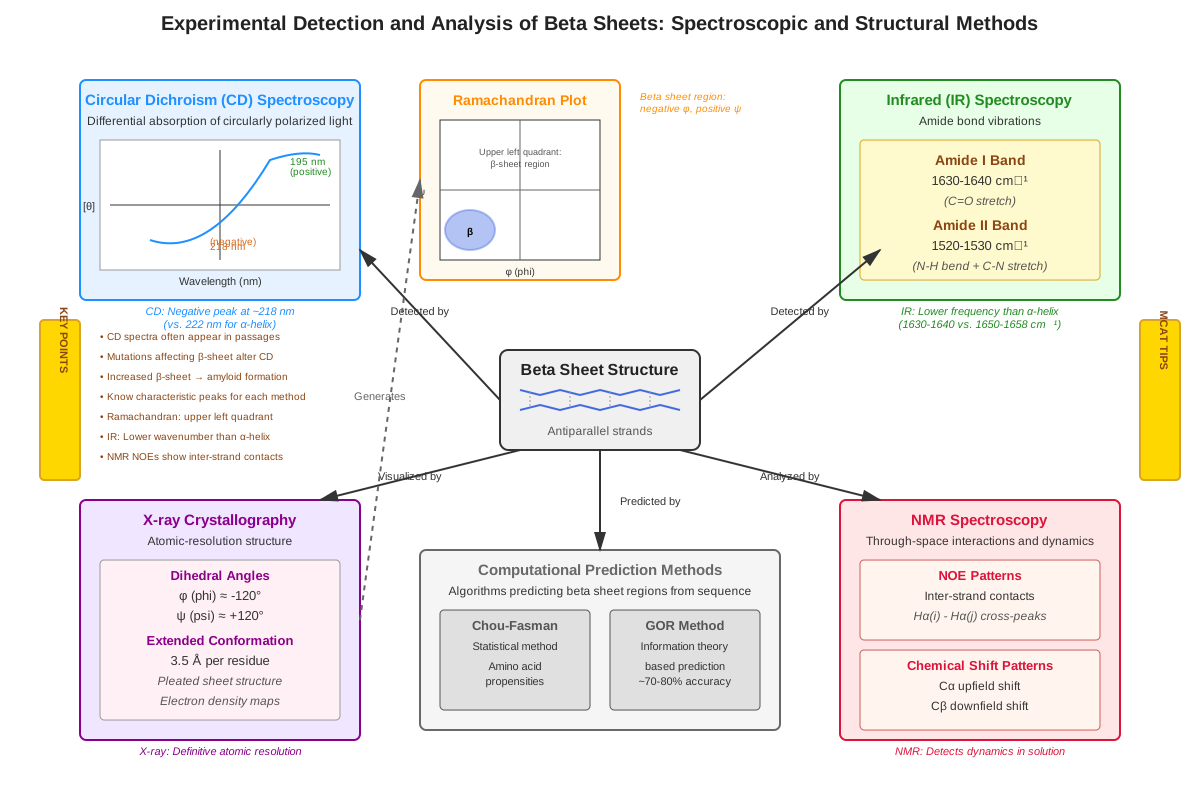
The MCAT frequently tests beta sheets through questions about protein folding, structural stability, denaturation, and disease states involving protein misfolding. Questions may present experimental data about protein structure determination, ask students to predict the effects of mutations on secondary structure, or require interpretation of spectroscopic data (such as circular dichroism) that distinguishes between different secondary structures. Beta sheets appear in approximately 15-20% of Biochemistry questions related to Amino Acids and Proteins, making this a high-yield topic that demands thorough understanding.
Within the broader context of protein structure, beta sheets exemplify how primary structure (amino acid sequence) dictates higher-order organization through non-covalent interactions. This topic bridges fundamental concepts of peptide bond geometry with more complex ideas about tertiary structure, protein stability, and biological function. Beta sheets also connect to critical MCAT topics including enzyme structure, antibody architecture, protein aggregation diseases (such as Alzheimer's and prion diseases), and the thermodynamics of protein folding.
Learning Objectives
- [ ] Define beta sheets using accurate Biochemistry terminology
- [ ] Explain why beta sheets matters for the MCAT
- [ ] Apply beta sheets to exam-style questions
- [ ] Identify common mistakes related to beta sheets
- [ ] Connect beta sheets to related Biochemistry concepts
- [ ] Distinguish between parallel and antiparallel beta sheet configurations and their relative stabilities
- [ ] Predict which amino acid sequences are most likely to form beta sheet structures
- [ ] Analyze how beta sheet formation contributes to overall protein stability and function
- [ ] Interpret experimental data that identifies beta sheet content in proteins
Prerequisites
- Amino acid structure and properties: Understanding side chain characteristics is essential for predicting which residues favor beta sheet formation and how they influence sheet stability
- Peptide bond formation and geometry: The planar, rigid nature of peptide bonds and the phi/psi angles determine the feasibility of extended conformations required for beta sheets
- Hydrogen bonding: Beta sheets are stabilized primarily through backbone hydrogen bonds, requiring knowledge of hydrogen bond donors, acceptors, and geometric requirements
- Primary protein structure: The amino acid sequence directly determines which regions can form beta sheets and influences their stability
- Non-covalent interactions: Understanding van der Waals forces, electrostatic interactions, and hydrophobic effects helps explain beta sheet stability and positioning within proteins
Why This Topic Matters
Clinical and Real-World Significance
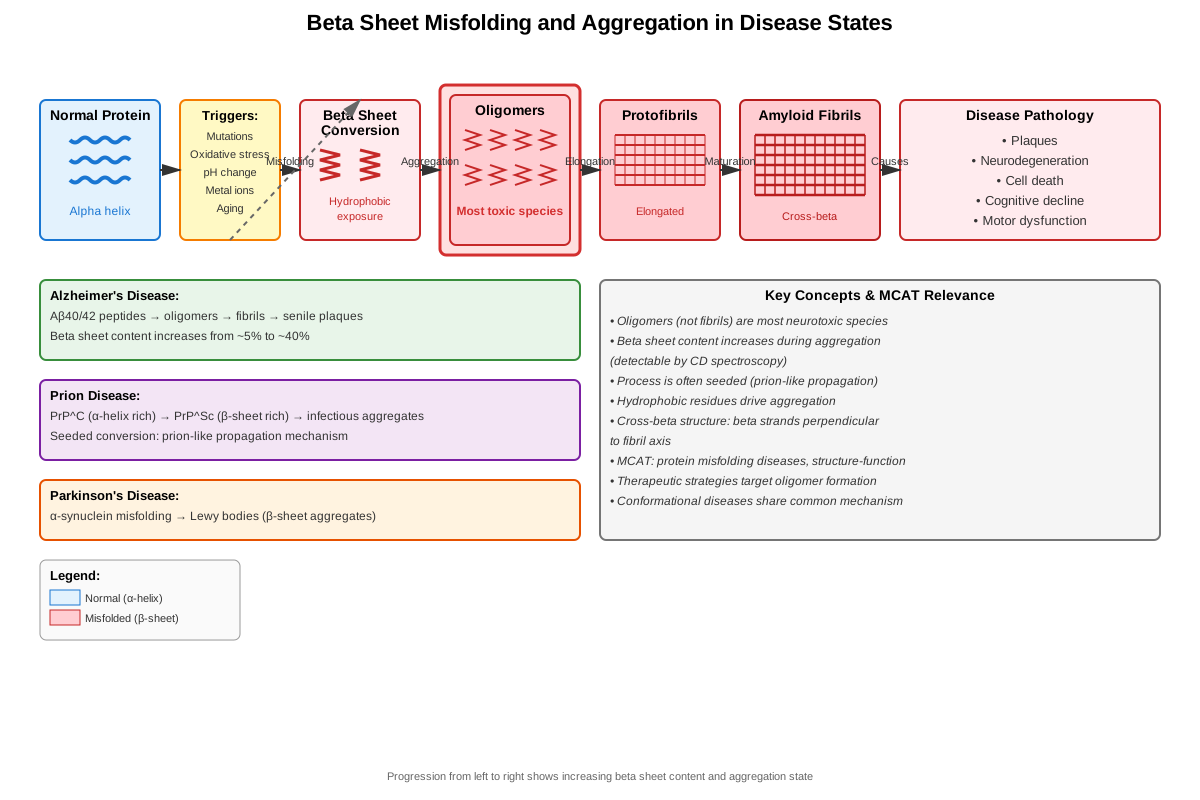
Beta sheet structures play critical roles in both normal physiology and disease pathology. Many structural proteins rely on beta sheets for mechanical strength—silk fibroin, for example, derives its remarkable tensile strength from extensive antiparallel beta sheets. Immunoglobulins (antibodies) contain beta-barrel domains that provide the structural framework for antigen recognition. Conversely, aberrant beta sheet formation underlies numerous devastating diseases. In Alzheimer's disease, amyloid-beta peptides aggregate into beta sheet-rich plaques. Prion diseases involve the conversion of normal alpha-helical prion protein into a pathological beta sheet-rich form that propagates through templated misfolding. Type 2 diabetes involves beta sheet aggregation of islet amyloid polypeptide in pancreatic beta cells.
MCAT Exam Statistics
Beta sheets appear in approximately 15-20% of protein structure questions on the MCAT, making them one of the highest-yield secondary structure topics. Questions typically fall into several categories: (1) structural identification and comparison (30% of beta sheet questions), (2) stability and hydrogen bonding patterns (25%), (3) disease mechanisms involving misfolding (20%), (4) experimental determination of secondary structure (15%), and (5) prediction of structure from sequence (10%). The MCAT particularly favors questions that integrate beta sheets with other concepts, such as comparing the stability of different secondary structures, interpreting circular dichroism spectra, or analyzing mutations that disrupt sheet formation.
Common Exam Presentation Formats
The MCAT presents beta sheet content through multiple question formats. Passage-based questions often describe research on protein structure determination, presenting data from X-ray crystallography, NMR spectroscopy, or circular dichroism that students must interpret. Discrete questions frequently test conceptual understanding of hydrogen bonding patterns, relative stability of parallel versus antiparallel sheets, or the effects of specific amino acids on sheet formation. Pseudo-discrete questions might present a short clinical vignette about amyloid diseases and ask students to identify the structural transition involved. The exam also tests beta sheets through questions about protein denaturation, asking students to predict which conditions would disrupt sheet structure or how chemical denaturants affect hydrogen bonding.
Core Concepts
Definition and Basic Structure
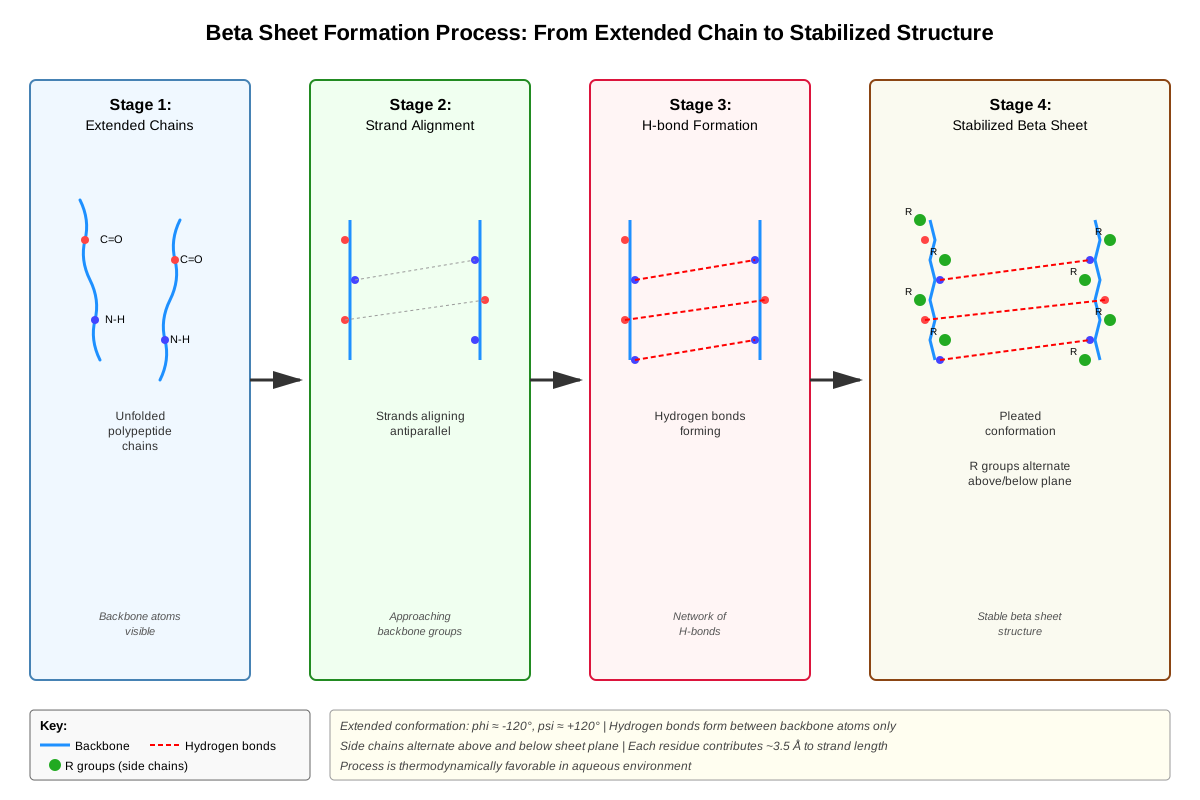
Beta sheets (also called β-pleated sheets) are a type of regular secondary structure in proteins characterized by extended polypeptide chains arranged side-by-side in a sheet-like array. Unlike the compact, helical structure of alpha helices, beta sheets adopt an extended conformation where the polypeptide backbone is nearly fully stretched. The term "pleated" refers to the characteristic zigzag pattern created by the alternating positions of alpha carbons above and below the plane of the sheet, with side chains projecting alternately from opposite faces of the sheet.
The fundamental building block of a beta sheet is the beta strand, a stretch of typically 5-10 amino acids in an extended conformation. Individual strands align laterally to form the sheet, with hydrogen bonds forming between the backbone carbonyl oxygen (C=O) of one strand and the backbone amide hydrogen (N-H) of an adjacent strand. These inter-strand hydrogen bonds are the primary stabilizing force for beta sheet structure, creating a regular, repeating pattern that extends across the entire sheet.
Parallel vs. Antiparallel Configuration
Beta sheets exist in two distinct configurations based on the relative orientation of adjacent strands: antiparallel and parallel arrangements, with important structural and stability differences between them.
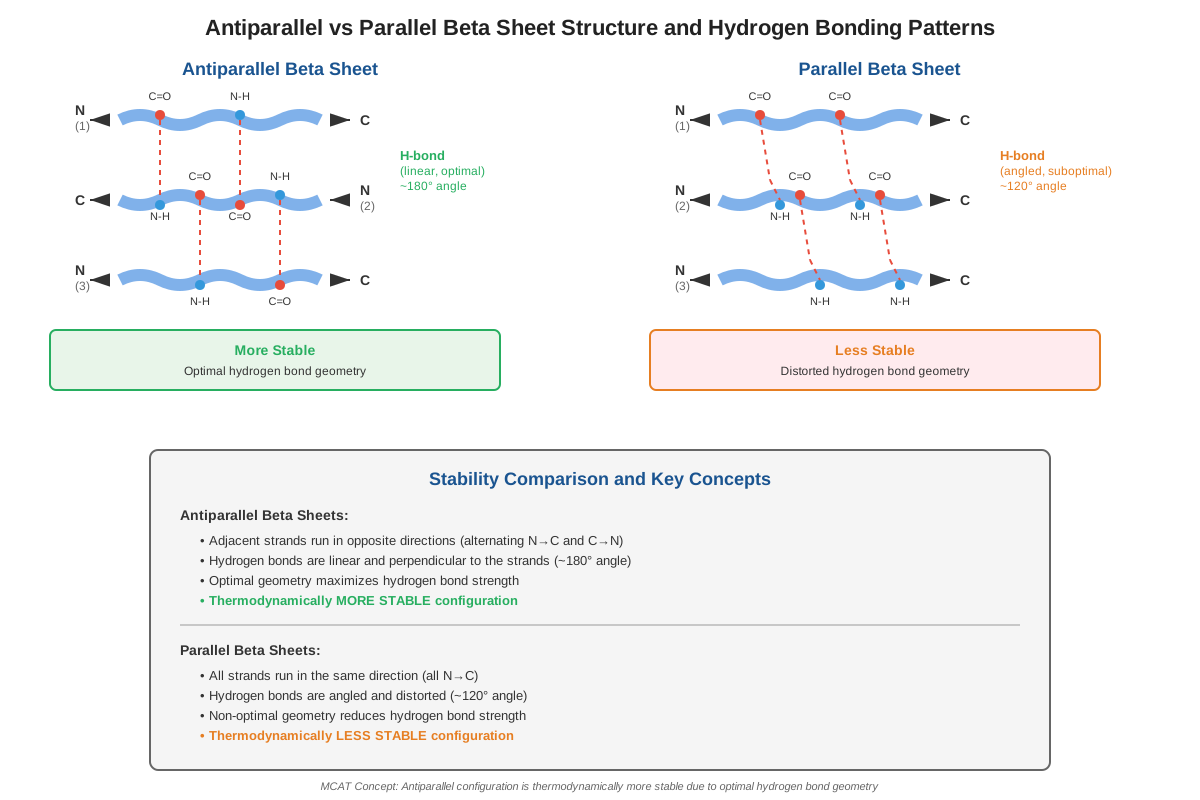
Antiparallel beta sheets form when adjacent strands run in opposite directions (N-terminus to C-terminus orientation is reversed between neighboring strands). This configuration allows hydrogen bonds to form in a linear, optimal geometry where the C=O and N-H groups are directly aligned. Each carbonyl oxygen forms a hydrogen bond with an amide hydrogen directly across from it, and vice versa, creating a regular pattern of strong, linear hydrogen bonds. The phi (φ) angle is approximately -139° and the psi (ψ) angle is approximately +135° in antiparallel sheets. Antiparallel beta sheets are generally more stable than parallel sheets due to this optimal hydrogen bonding geometry.
Parallel beta sheets form when adjacent strands run in the same direction (all N-termini point the same way). This configuration results in hydrogen bonds that are not linear but instead form at an angle, creating a less optimal geometry. The hydrogen bonding pattern is also less regular, with each carbonyl oxygen and amide hydrogen participating in hydrogen bonds that are slightly offset rather than directly aligned. The phi angle is approximately -119° and the psi angle is approximately +113° in parallel sheets. Parallel beta sheets are less stable than antiparallel sheets but are commonly found in proteins, often in the interior of protein structures where additional stabilizing interactions compensate for the weaker hydrogen bonding.
Mixed beta sheets contain both parallel and antiparallel strand arrangements within the same sheet structure. These are common in proteins and demonstrate the flexibility of beta sheet architecture.
| Feature | Antiparallel Beta Sheet | Parallel Beta Sheet |
|---|---|---|
| Strand direction | Opposite (↑↓↑↓) | Same (↑↑↑↑) |
| Hydrogen bond geometry | Linear, optimal | Angled, less optimal |
| Hydrogen bond strength | Stronger | Weaker |
| Relative stability | More stable | Less stable |
| Phi (φ) angle | ~-139° | ~-119° |
| Psi (ψ) angle | ~+135° | ~+113° |
| Common location | Surface or interior | Usually interior |
Hydrogen Bonding Patterns
The hydrogen bonding pattern in beta sheets creates the characteristic pleated structure and provides the primary stabilizing force. In antiparallel sheets, each internal residue (not at the edge of the sheet) participates in two hydrogen bonds: its carbonyl oxygen accepts a hydrogen bond from the N-H of the adjacent strand, and its amide hydrogen donates a hydrogen bond to the C=O of the same adjacent strand. This creates a regular, repeating pattern where hydrogen bonds alternate in direction along the length of each strand.
In parallel sheets, the hydrogen bonding pattern is more complex. The carbonyl oxygen of one residue forms a hydrogen bond with the amide hydrogen of a residue two positions away on the adjacent strand (not directly across). Similarly, the amide hydrogen forms a hydrogen bond with a carbonyl oxygen two positions away in the opposite direction. This creates a less regular pattern with angled hydrogen bonds that are individually weaker than those in antiparallel sheets.
Edge strands in beta sheets have one face exposed to solvent (or to the protein interior), with only one side participating in inter-strand hydrogen bonding. This creates potential instability, which proteins address through several mechanisms: capping by loops or turns, burial in the protein interior, or formation of beta barrels where the sheet curves back on itself to eliminate free edges.
Amino Acid Preferences and Propensities
Different amino acids show varying tendencies to participate in beta sheet formation, based on their side chain properties and steric considerations. Beta sheet propensity refers to the statistical likelihood that a given amino acid will be found in beta sheet structures.
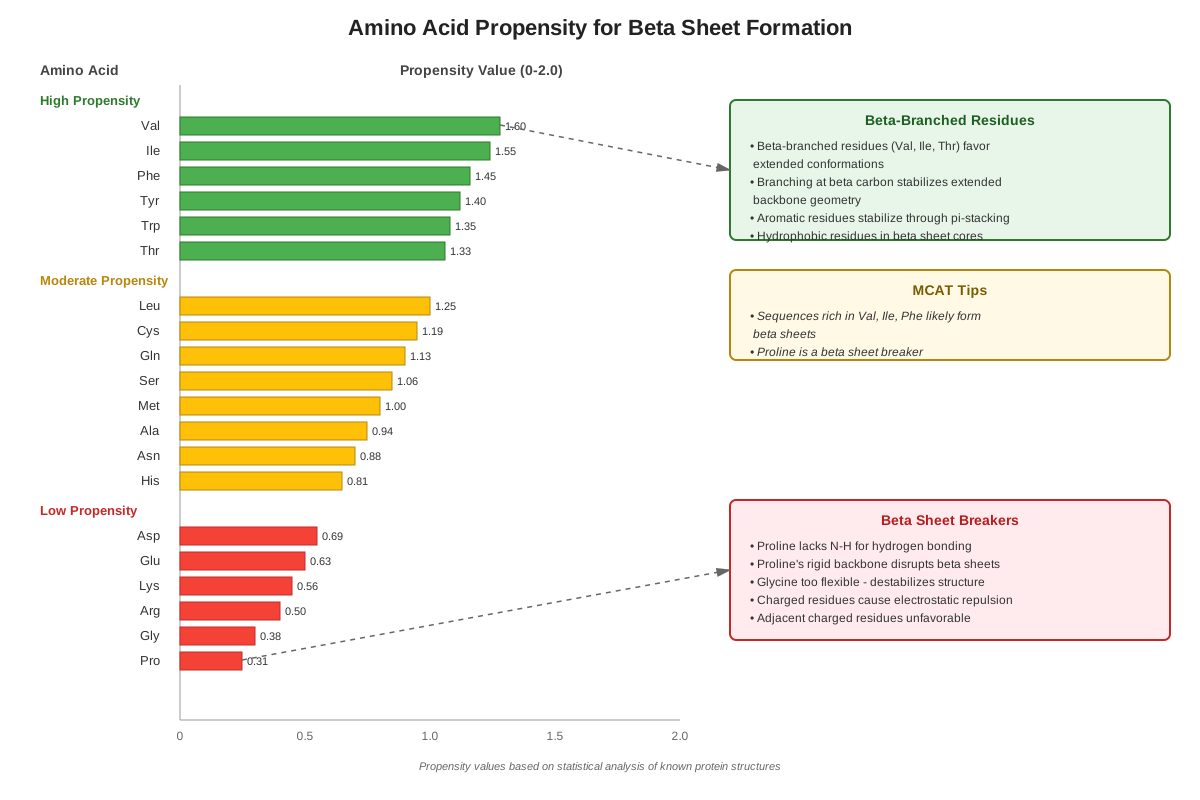
High beta sheet propensity amino acids include:
- Valine (Val): Branched beta-carbon creates favorable van der Waals interactions between sheets
- Isoleucine (Ile): Similar to valine, with extended hydrophobic side chain
- Phenylalanine (Phe): Large aromatic ring favors extended conformations
- Tyrosine (Tyr): Aromatic character similar to phenylalanine
- Tryptophan (Trp): Bulky indole ring favors extended structures
- Threonine (Thr): Beta-branched with hydroxyl group for additional interactions
Low beta sheet propensity amino acids include:
- Proline (Pro): Cyclic structure restricts backbone flexibility and lacks amide hydrogen for hydrogen bonding
- Glycine (Gly): High conformational flexibility makes extended structures entropically unfavorable
- Aspartate (Asp) and Glutamate (Glu): Charged side chains create electrostatic repulsion when adjacent in sheets
- Asparagine (Asn) and Glutamine (Gln): Polar side chains prefer other environments unless specifically positioned
The alternating pattern of side chains projecting from opposite faces of the sheet means that hydrophobic residues often cluster on one face while hydrophilic residues cluster on the other, creating an amphipathic structure that influences how the sheet is positioned within the overall protein fold.
Beta Turns and Sheet Connectivity
Beta turns (also called reverse turns or beta bends) are short loop structures that connect antiparallel beta strands, allowing the polypeptide chain to reverse direction. These tight turns typically involve four amino acid residues and are stabilized by a hydrogen bond between the carbonyl oxygen of residue i and the amide hydrogen of residue i+3. Beta turns are essential for creating antiparallel beta sheets from a continuous polypeptide chain.
Several types of beta turns exist, classified by the phi and psi angles of the central two residues:
- Type I turns: Most common, with specific angle requirements
- Type II turns: Glycine often at position i+2 due to positive phi angle requirement
- Type I' and II' turns: Mirror images of Type I and II
- Type III turns: Beginning of a 3₁₀ helix
Glycine and proline frequently appear in beta turns due to their unique conformational properties. Glycine's flexibility allows it to adopt the unusual angles required, while proline's rigidity can enforce the sharp turn geometry.
Beta Barrels and Beta Sheets in Protein Architecture
Beta barrels form when beta sheets curve around to close on themselves, creating a cylindrical structure with a hydrophobic interior. This architecture is common in membrane proteins (porins) and in the core of some soluble proteins. The barrel structure eliminates exposed edges, maximizing hydrogen bonding and creating a stable, enclosed structure. The number of strands in a beta barrel typically ranges from 8 to 22, with even numbers being most common.
Beta sandwiches consist of two beta sheets packed face-to-face, with hydrophobic residues between the sheets providing stability through van der Waals interactions. This architecture is found in immunoglobulin domains and many other proteins.
Beta propellers contain multiple beta sheets arranged radially around a central axis, creating a propeller-like structure. Each "blade" of the propeller is typically a four-stranded antiparallel beta sheet.
Stability Factors
Multiple factors contribute to beta sheet stability beyond the primary hydrogen bonding:
- Hydrophobic interactions: Hydrophobic side chains on one face of the sheet often pack against other hydrophobic regions of the protein or against another beta sheet, providing significant stabilization
- Van der Waals forces: Close packing between sheets or between the sheet and other structural elements contributes to stability
- Electrostatic interactions: Salt bridges can form between charged residues on the sheet surface
- Sheet size: Larger sheets with more strands are generally more stable due to cooperative hydrogen bonding effects
- Strand length: Longer strands provide more hydrogen bonds and greater stability
- Twist: Beta sheets naturally adopt a right-handed twist (when viewed along the strand direction), which optimizes hydrogen bonding geometry and side chain packing
Concept Relationships
Beta sheets exist within a hierarchical framework of protein structure concepts. At the most fundamental level, primary structure (amino acid sequence) determines which regions can form beta sheets through the intrinsic propensities of individual amino acids and the compatibility of adjacent residues. The peptide bond geometry, with its planar, rigid character and restricted rotation around phi and psi angles, constrains the possible conformations and makes the extended structure of beta strands energetically accessible.
Beta sheets represent one type of secondary structure, existing alongside alpha helices, beta turns, and random coils. The choice between these structures depends on the amino acid sequence, the local environment, and the overall protein fold. Beta sheets → combine with other secondary structures → to form tertiary structure, the complete three-dimensional arrangement of a single polypeptide chain. The positioning of beta sheets within the tertiary structure—whether buried in the hydrophobic core or exposed on the surface—depends on the amphipathic character of the sheet and the distribution of hydrophobic versus hydrophilic residues.
Multiple polypeptide chains containing beta sheets → can associate → to form quaternary structure, where beta sheets from different chains may interact through edge-to-edge hydrogen bonding or face-to-face hydrophobic packing. This concept extends to protein aggregation and amyloid formation, where beta sheets from different protein molecules associate inappropriately, leading to disease states.
The formation of beta sheets → is driven by → thermodynamic principles, specifically the balance between enthalpy (favorable hydrogen bonding and van der Waals interactions) and entropy (loss of conformational freedom). Protein folding proceeds through a complex energy landscape where beta sheet formation represents local or global energy minima. Protein denaturation → disrupts → beta sheet structure by breaking hydrogen bonds through heat, pH changes, or chemical denaturants.
Beta sheets → connect to → protein function in multiple ways: they provide structural scaffolds in antibodies, create binding sites in enzymes, form channels in membrane proteins, and contribute to mechanical strength in structural proteins. Understanding beta sheets → enables comprehension of → enzyme mechanisms, protein-protein interactions, and molecular recognition.
Quick check — test yourself on Beta sheets so far.
Try Flashcards →High-Yield Facts
⭐ Antiparallel beta sheets are more stable than parallel beta sheets due to optimal, linear hydrogen bonding geometry between backbone carbonyl and amide groups.
⭐ Beta sheets are stabilized primarily by hydrogen bonds between the backbone atoms of adjacent strands, not by side chain interactions.
⭐ In beta sheets, side chains project alternately above and below the plane of the sheet, creating two distinct faces that can have different chemical properties.
⭐ Proline is a beta sheet breaker because it lacks an amide hydrogen for hydrogen bonding and its cyclic structure restricts backbone conformational freedom.
⭐ Amyloid diseases involve the conversion of normally soluble proteins into insoluble beta sheet-rich aggregates that accumulate in tissues.
- Beta strands typically contain 5-10 amino acids in an extended conformation with phi angles around -120° to -140° and psi angles around +110° to +135°.
- Valine, isoleucine, and phenylalanine have high beta sheet propensity due to their branched or bulky hydrophobic side chains.
- Beta turns connect antiparallel beta strands and typically involve four amino acid residues with glycine or proline often present.
- Beta barrels form when beta sheets curve to close on themselves, eliminating exposed edges and creating a stable cylindrical structure common in membrane proteins.
- Circular dichroism spectroscopy shows a characteristic minimum at 218 nm for beta sheet structures, distinct from the double minimum at 208 and 222 nm for alpha helices.
- The natural right-handed twist of beta sheets optimizes hydrogen bonding geometry and side chain packing between adjacent strands.
- Mixed beta sheets containing both parallel and antiparallel arrangements are common in proteins and demonstrate structural flexibility.
Common Misconceptions
Misconception: Beta sheets are held together by covalent bonds between strands.
Correction: Beta sheets are stabilized by non-covalent hydrogen bonds between the backbone carbonyl oxygen of one strand and the amide hydrogen of an adjacent strand. No covalent bonds form between strands. This distinction is critical because it explains why beta sheets can be disrupted by conditions that break hydrogen bonds (heat, pH changes, denaturants) without breaking covalent bonds.
Misconception: All beta sheets are antiparallel because they are more stable.
Correction: While antiparallel beta sheets are indeed more stable due to optimal hydrogen bonding geometry, parallel beta sheets are common in proteins, particularly in the interior where additional stabilizing interactions (hydrophobic effects, van der Waals forces) compensate for weaker hydrogen bonding. Many proteins contain mixed sheets with both parallel and antiparallel arrangements.
Misconception: Side chain interactions are the primary stabilizing force for beta sheets.
Correction: The primary stabilizing force for beta sheets is hydrogen bonding between backbone atoms (carbonyl oxygens and amide hydrogens). Side chain interactions—hydrophobic packing, van der Waals forces, electrostatic interactions—provide additional stability and influence sheet positioning within the protein, but backbone hydrogen bonding is the fundamental organizing force.
Misconception: Beta sheets are flat, planar structures.
Correction: Beta sheets naturally adopt a right-handed twist when viewed along the strand direction. This twist optimizes hydrogen bonding geometry and side chain packing. Additionally, the "pleated" nature of beta sheets means that alpha carbons alternate above and below the average plane of the sheet, creating a zigzag pattern rather than a truly flat structure.
Misconception: Glycine promotes beta sheet formation because it is small and flexible.
Correction: Glycine actually has low beta sheet propensity. While its flexibility allows it to adopt many conformations, this same flexibility makes the extended, restricted conformation of beta sheets entropically unfavorable. Glycine is more commonly found in turns and loops where conformational flexibility is advantageous. Beta sheets favor amino acids with branched or bulky side chains (valine, isoleucine, phenylalanine) that stabilize the extended conformation.
Misconception: Beta sheets only occur in the interior of proteins because they are hydrophobic.
Correction: Beta sheets can be found on protein surfaces, in protein interiors, or spanning membranes, depending on the distribution of hydrophobic and hydrophilic residues. Because side chains project from both faces of the sheet, beta sheets can be amphipathic, with one hydrophobic face buried and one hydrophilic face exposed to solvent. The location of a beta sheet depends on its specific amino acid composition, not on an inherent hydrophobic character.
Misconception: All protein aggregation diseases involve beta sheet formation.
Correction: While many amyloid diseases (Alzheimer's, prion diseases, type 2 diabetes) involve conversion to beta sheet-rich aggregates, not all protein aggregation involves beta sheets. Some aggregates are amorphous without regular secondary structure. However, the cross-beta structure (beta strands perpendicular to the fibril axis) is characteristic of amyloid fibrils specifically.
Worked Examples
Example 1: Predicting Beta Sheet Formation from Sequence
Question: A researcher identifies a protein sequence segment: Val-Thr-Ile-Phe-Val-Thr-Ile-Phe. Based on this sequence, predict whether this segment is likely to form a beta sheet and explain the structural characteristics it would have if incorporated into a larger protein.
Solution:
Step 1: Analyze amino acid composition and beta sheet propensity.
The sequence contains:
- Valine (Val): High beta sheet propensity (branched beta-carbon, hydrophobic)
- Threonine (Thr): Moderate-to-high beta sheet propensity (beta-branched, polar hydroxyl)
- Isoleucine (Ile): High beta sheet propensity (branched, hydrophobic)
- Phenylalanine (Phe): High beta sheet propensity (bulky aromatic, hydrophobic)
All amino acids in this sequence have moderate-to-high beta sheet propensity, with no beta sheet breakers (proline) or highly unfavorable residues. This strongly suggests the segment could form a beta strand.
Step 2: Analyze the pattern of residues.
The sequence shows an alternating pattern: hydrophobic (Val, Ile, Phe) alternating with Thr (which has both hydrophobic and polar character). Since side chains project alternately from opposite faces of a beta sheet, this pattern would create:
- One face: Val, Ile, Val, Ile (highly hydrophobic)
- Other face: Thr, Phe, Thr, Phe (mixed hydrophobic/polar)
Step 3: Predict structural positioning.
The amphipathic character (one predominantly hydrophobic face, one mixed face) suggests this beta strand would likely be positioned at the interface between the protein interior and exterior, or between two structural domains. The hydrophobic face would pack against other hydrophobic regions, while the Thr-Phe face might be partially exposed or interact with other structural elements.
Step 4: Consider length.
At 8 residues, this segment is an appropriate length for a beta strand (typical range 5-10 residues), long enough to form stable hydrogen bonds with adjacent strands.
Conclusion: This sequence is highly likely to form a beta strand within a beta sheet structure. The amphipathic character suggests positioning at a structural interface, with the Val-Ile face buried and the Thr-Phe face more exposed or involved in specific interactions.
Example 2: Analyzing a Disease Mechanism Involving Beta Sheets
Question: Prion diseases involve the conversion of normal prion protein (PrP^C) with predominantly alpha-helical structure into a disease-causing form (PrP^Sc) with increased beta sheet content. A researcher treats cells with a compound that stabilizes hydrogen bonds. Predict and explain the effect of this treatment on prion disease progression.
Solution:
Step 1: Identify the structural transition.
The disease involves conversion from alpha helix → beta sheet structure. Both structures are stabilized by hydrogen bonds, but with different patterns:
- Alpha helix: intramolecular hydrogen bonds within a single chain (i to i+4 pattern)
- Beta sheet: intermolecular hydrogen bonds between adjacent chains or distant regions
Step 2: Analyze the effect of stabilizing hydrogen bonds.
A compound that stabilizes hydrogen bonds would affect both structures, but with different consequences:
- For PrP^C (alpha-helical): Stabilizing existing intramolecular hydrogen bonds would make the normal structure more stable and less likely to unfold, which is the first step in conversion to PrP^Sc.
- For PrP^Sc (beta sheet): Stabilizing intermolecular hydrogen bonds would make the disease-causing aggregates more stable once formed.
Step 3: Consider the kinetics of conversion.
The conversion process requires:
- Partial unfolding of PrP^C (breaking alpha-helical hydrogen bonds)
- Interaction with PrP^Sc template
- Refolding into beta sheet structure (forming new intermolecular hydrogen bonds)
Stabilizing hydrogen bonds would increase the energy barrier for step 1 (unfolding), making conversion less likely to occur.
Step 4: Predict the net effect.
The compound would likely slow disease progression because:
- The native alpha-helical structure would be more resistant to unfolding (higher activation energy for conversion)
- Even though the beta sheet aggregates would also be more stable once formed, preventing new conversions is more important than destabilizing existing aggregates
- The rate-limiting step in prion propagation is typically the initial conversion, not the stability of aggregates
Conclusion: The hydrogen bond-stabilizing compound would likely slow prion disease progression by stabilizing the native alpha-helical conformation of PrP^C, making it more resistant to conversion into the beta sheet-rich PrP^Sc form. This represents a potential therapeutic strategy targeting the structural transition underlying the disease.
MCAT Connection: This example integrates beta sheet structure with protein folding thermodynamics, disease mechanisms, and drug action—exactly the type of multi-concept integration the MCAT favors. The question requires understanding that both alpha helices and beta sheets involve hydrogen bonding, but that stabilizing the native structure prevents the pathological transition.
Exam Strategy
Approaching MCAT Questions on Beta Sheets
When encountering beta sheet questions on the MCAT, follow this systematic approach:
- Identify the question type: Is it asking about structure (hydrogen bonding pattern, geometry), stability (comparing parallel vs. antiparallel), amino acid propensity, disease mechanisms, or experimental determination?
- Recall the fundamental principle: Beta sheets are stabilized by backbone hydrogen bonds between adjacent strands. This single fact eliminates many wrong answer choices that invoke side chain interactions or covalent bonds as primary stabilizing forces.
- For comparison questions: Remember that antiparallel > parallel in stability due to hydrogen bonding geometry. This hierarchy appears frequently in MCAT questions.
- For sequence-based questions: Quickly scan for proline (beta sheet breaker) and count residues with high beta sheet propensity (Val, Ile, Phe, Tyr, Trp, Thr). High propensity amino acids suggest beta sheet formation.
Trigger Words and Phrases
Watch for these key phrases that signal beta sheet content:
- "Extended conformation" or "stretched polypeptide" → suggests beta strand structure
- "Intermolecular hydrogen bonds" or "between chains" → indicates beta sheet rather than alpha helix
- "Amyloid," "aggregation," or "fibril formation" → involves beta sheet structure
- "Antiparallel" or "parallel" → directly testing beta sheet configurations
- "Pleated" or "zigzag" → describes beta sheet geometry
- "Circular dichroism minimum at 218 nm" → indicates beta sheet content
- "Prion," "Alzheimer's," or "amyloid-beta" → disease mechanisms involving beta sheets
Process of Elimination Tips
Use these strategies to eliminate wrong answers:
- Eliminate answers invoking covalent bonds between strands as stabilizing forces (unless discussing disulfide bonds, which are separate from sheet structure itself).
- Eliminate answers claiming parallel sheets are more stable than antiparallel sheets without additional context.
- Eliminate answers suggesting proline promotes beta sheet formation—proline is a beta sheet breaker.
- Eliminate answers claiming beta sheets are always buried or always exposed—location depends on amino acid composition.
- For disease mechanism questions, eliminate answers that don't involve a structural transition to increased beta sheet content when discussing amyloid diseases.
Time Allocation Advice
Beta sheet questions typically require 60-90 seconds:
- Discrete questions: 60 seconds—quickly identify the concept being tested and apply the relevant principle
- Passage-based questions: 90 seconds—spend 30 seconds connecting the question to relevant passage information, then 60 seconds reasoning through the answer
- If a question requires comparing multiple structural features (parallel vs. antiparallel, different amino acid sequences, etc.), allocate the full 90 seconds to avoid careless errors
Exam Tip: If you're unsure between two answer choices, default to the answer that emphasizes backbone hydrogen bonding as the primary stabilizing force for beta sheets. This principle is correct in the vast majority of MCAT questions about beta sheet structure and stability.
Memory Techniques
Mnemonics for Beta Sheet Propensity
"Very Intense Fitness Training Yields Wins" for high beta sheet propensity amino acids:
- Valine
- Isoleucine
- Fhenylalanine
- Threonine
- Yrosine
- Wryptophan
Visualization Strategy for Parallel vs. Antiparallel
Visualize antiparallel sheets as two people shaking hands (facing each other, optimal alignment) → more stable, linear hydrogen bonds.
Visualize parallel sheets as two people walking side-by-side trying to hold hands (same direction, awkward angle) → less stable, angled hydrogen bonds.
Acronym for Beta Sheet Breakers
"Please Go Away" for amino acids that disrupt beta sheets:
- Proline (no amide H, restricted backbone)
- Glycine (too flexible, entropically unfavorable)
- Aspartate/glutamate (charged, repulsive when adjacent)
Memory Aid for Hydrogen Bonding Pattern
Remember: "Backbone Bonds Between Strands" (all B's) emphasizes that beta sheets involve backbone hydrogen bonds between different strands, distinguishing them from alpha helices (backbone bonds within one strand).
Visualization for Pleated Structure
Picture a paper fan or accordion: the folds represent the pleated nature of beta sheets, with alpha carbons alternating above and below the plane, and side chains projecting from the peaks and valleys of the pleats.
Summary
Beta sheets represent a fundamental type of protein secondary structure characterized by extended polypeptide chains arranged side-by-side and stabilized by hydrogen bonds between backbone carbonyl oxygens and amide hydrogens of adjacent strands. These structures exist in antiparallel configurations (opposite strand directions, more stable due to optimal linear hydrogen bonding) and parallel configurations (same strand direction, less stable due to angled hydrogen bonds). The pleated nature of beta sheets results from alternating positions of alpha carbons and side chains projecting from opposite faces of the sheet. Amino acids with branched or bulky hydrophobic side chains (valine, isoleucine, phenylalanine) show high beta sheet propensity, while proline acts as a beta sheet breaker. Beta sheets play critical roles in protein structure and function, forming the core of immunoglobulin domains, creating channels in membrane proteins, and providing mechanical strength in structural proteins. Pathologically, aberrant beta sheet formation underlies amyloid diseases including Alzheimer's disease and prion disorders. For the MCAT, students must understand the structural features distinguishing parallel from antiparallel sheets, recognize that backbone hydrogen bonding provides primary stabilization, predict which amino acid sequences favor beta sheet formation, and connect beta sheet structure to disease mechanisms and protein stability.
Key Takeaways
- Beta sheets are stabilized primarily by hydrogen bonds between backbone atoms of adjacent strands, with antiparallel sheets being more stable than parallel sheets due to optimal hydrogen bonding geometry
- Side chains project alternately from opposite faces of the sheet, creating potential for amphipathic structures with distinct hydrophobic and hydrophilic faces
- Amino acids with high beta sheet propensity include valine, isoleucine, phenylalanine, tyrosine, tryptophan, and threonine, while proline and glycine disrupt beta sheet formation
- Beta sheets adopt a naturally pleated structure with a right-handed twist, not a flat planar arrangement
- Amyloid diseases involve conversion of normally soluble proteins into beta sheet-rich aggregates, representing a critical connection between structure and pathology
- Beta turns connect antiparallel strands and typically contain glycine or proline due to their unique conformational properties
- Understanding beta sheets requires integrating concepts of hydrogen bonding, amino acid properties, protein folding thermodynamics, and structure-function relationships
Related Topics
Alpha Helices: The other major type of regular secondary structure, stabilized by intramolecular hydrogen bonds in an i to i+4 pattern. Mastering beta sheets enables direct comparison with alpha helices regarding stability, amino acid preferences, and structural roles.
Protein Folding and Stability: Beta sheet formation represents a key step in protein folding pathways. Understanding beta sheets provides foundation for studying folding kinetics, energy landscapes, and the thermodynamic principles governing protein structure.
Protein Denaturation: Conditions that disrupt hydrogen bonds (heat, pH extremes, chemical denaturants) unfold beta sheets. This topic builds directly on understanding beta sheet stabilization.
Ramachandran Plots: These plots show allowed phi and psi angles for amino acids, with distinct regions for beta sheet conformations. Beta sheet knowledge enables interpretation of these important structural diagrams.
Amyloid Diseases and Protein Misfolding: Alzheimer's disease, prion diseases, and type 2 diabetes involve pathological beta sheet formation. Understanding normal beta sheet structure is prerequisite for studying these disease mechanisms.
Protein Structure Determination: Techniques like X-ray crystallography, NMR spectroscopy, and circular dichroism identify beta sheet content. Mastering beta sheets enables interpretation of experimental data from these methods.
Practice CTA
Now that you've mastered the structural principles, hydrogen bonding patterns, and biological significance of beta sheets, it's time to reinforce your understanding through active practice. Attempt the practice questions and flashcards associated with this topic to test your ability to apply these concepts in MCAT-style scenarios. Focus particularly on questions that require you to distinguish between parallel and antiparallel configurations, predict beta sheet formation from amino acid sequences, and connect beta sheet structure to disease mechanisms. Remember: understanding beta sheets isn't just about memorizing facts—it's about developing the structural reasoning skills that will serve you throughout the Biochemistry section of the MCAT. You've built a strong foundation; now strengthen it through deliberate practice!
Sign up free to keep reading
Create a free AnvayaPrep account to finish this MCAT guide on Beta sheets — plus flashcards and practice questions.