Overview
Amino acid pKa values represent one of the most quantitatively important concepts in Biochemistry for the MCAT. Understanding these values is essential for predicting the ionization state of amino acids at different pH levels, which directly impacts protein structure, enzyme function, and biochemical reactions throughout the body. The pKa value of an ionizable group indicates the pH at which that group is 50% protonated and 50% deprotonated, serving as a critical parameter for understanding acid-base chemistry in biological systems.
For the MCAT, amino acid pKa values appear frequently in both discrete questions and passage-based problems within the Biochemistry and Biological and Biochemical Foundations of Living Systems section. Test-makers expect students to not only memorize key pKa values but also apply them to predict charge states, calculate isoelectric points, understand buffer systems, and explain protein behavior at various pH levels. This topic bridges fundamental acid-base chemistry with advanced concepts in Amino Acids and Proteins, making it a high-yield area that appears in approximately 15-20% of biochemistry questions.
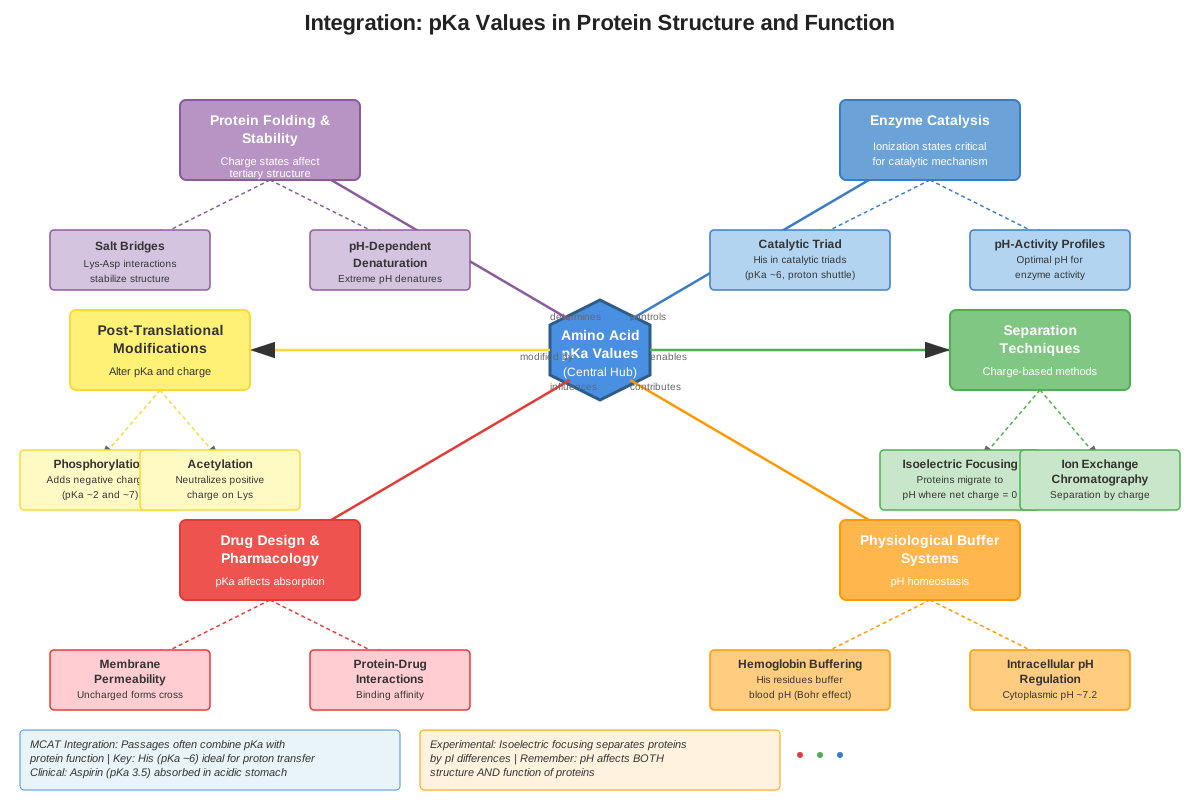
The mastery of amino acid pKa values connects directly to understanding protein structure and function, enzyme catalysis, chromatographic separation techniques, and physiological pH regulation. This knowledge forms the foundation for more advanced topics including protein folding, post-translational modifications, and drug-protein interactions. Students who thoroughly understand pKa values gain a significant advantage in tackling complex passage-based questions that integrate multiple biochemistry concepts.
Learning Objectives
- [ ] Define amino acid pKa values using accurate Biochemistry terminology
- [ ] Explain why amino acid pKa values matters for the MCAT
- [ ] Apply amino acid pKa values to exam-style questions
- [ ] Identify common mistakes related to amino acid pKa values
- [ ] Connect amino acid pKa values to related Biochemistry concepts
- [ ] Calculate the net charge of amino acids at any given pH using Henderson-Hasselbalch equation
- [ ] Determine the isoelectric point (pI) for amino acids with different ionizable groups
- [ ] Predict the predominant ionization state of each functional group based on pH relative to pKa
- [ ] Analyze how amino acid charge states affect protein structure and function
Prerequisites
- Acid-base chemistry fundamentals: Understanding pH, pKa, and the Henderson-Hasselbalch equation is essential for calculating ionization states and charge distributions
- Amino acid structure: Knowledge of the basic amino acid structure (amino group, carboxyl group, side chain) provides the framework for identifying ionizable groups
- Functional group chemistry: Recognizing carboxylic acids, amines, thiols, phenols, and other ionizable groups enables identification of pKa-relevant structures
- Buffer systems: Understanding how weak acids and their conjugate bases resist pH changes connects to amino acid behavior in solution
- Electrochemistry basics: Familiarity with charge, ions, and electrostatic interactions helps explain how pH affects amino acid properties
Why This Topic Matters
Clinical and Real-World Significance
Amino acid pKa values have profound clinical implications. The ionization state of amino acids affects drug absorption, distribution, and metabolism. Many pharmaceutical compounds are designed as amino acid derivatives, and their bioavailability depends critically on their charge state at physiological pH (~7.4). For example, the effectiveness of local anesthetics depends on their ability to cross nerve cell membranes in their uncharged form, then become charged in the slightly acidic intracellular environment to block sodium channels. Understanding pKa values also explains why certain genetic mutations that change amino acids can dramatically alter protein function—a charged residue replacing a nonpolar one can destabilize protein structure or disrupt active sites.
MCAT Exam Statistics
Amino acid pKa values appear in approximately 15-20% of biochemistry questions on the MCAT, making it one of the highest-yield topics in the Amino Acids and Proteins unit. Questions typically fall into three categories: (1) discrete questions asking students to predict charge states or calculate isoelectric points (30% of pKa questions), (2) passage-based questions involving protein purification techniques like ion-exchange chromatography or isoelectric focusing (50% of pKa questions), and (3) integrated questions connecting amino acid properties to enzyme mechanisms or protein structure (20% of pKa questions). The AAMC has consistently included at least 2-3 questions per exam that directly test pKa understanding, with additional questions where pKa knowledge provides a strategic advantage.
Common Exam Contexts
This topic frequently appears in passages describing: protein purification and characterization experiments, enzyme active site mechanisms involving proton transfer, pH-dependent protein conformational changes, electrophoresis and chromatography techniques, buffer preparation in biochemical assays, and structure-function relationships in proteins. Test-makers often present titration curves, ask students to interpret experimental results at different pH values, or require prediction of amino acid behavior in various biological compartments (stomach pH ~2, blood pH ~7.4, mitochondrial matrix pH ~8).
Core Concepts
Fundamental Definition of pKa
The pKa value represents the negative logarithm of the acid dissociation constant (Ka) for an ionizable group. Mathematically, pKa = -log(Ka). For amino acids, the pKa indicates the pH at which an ionizable group exists in equal proportions of its protonated and deprotonated forms. At pH values below the pKa, the group is predominantly protonated (acidic form); at pH values above the pKa, the group is predominantly deprotonated (basic form). This relationship follows from the Henderson-Hasselbalch equation:
pH = pKa + log([A-]/[HA])Where [A-] represents the deprotonated (conjugate base) form and [HA] represents the protonated (acid) form. When pH = pKa, the ratio [A-]/[HA] equals 1, meaning equal concentrations of both forms exist.
Ionizable Groups in Amino Acids
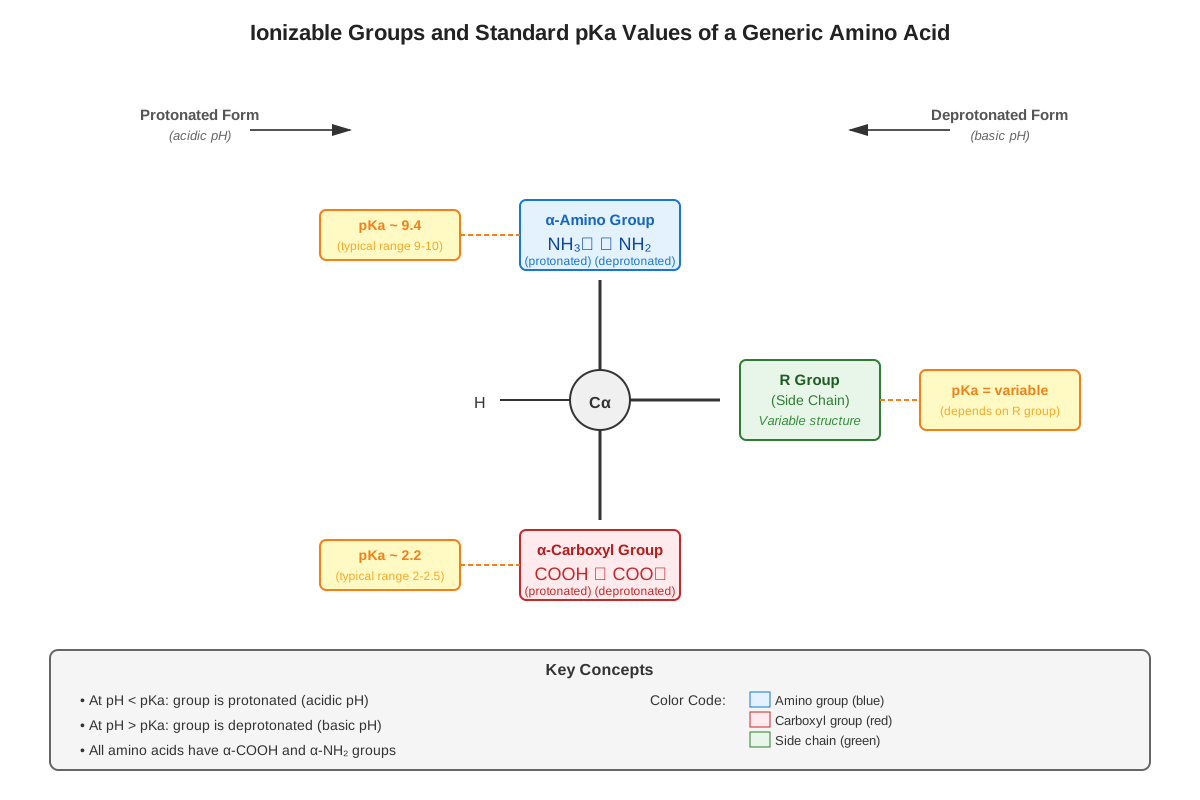
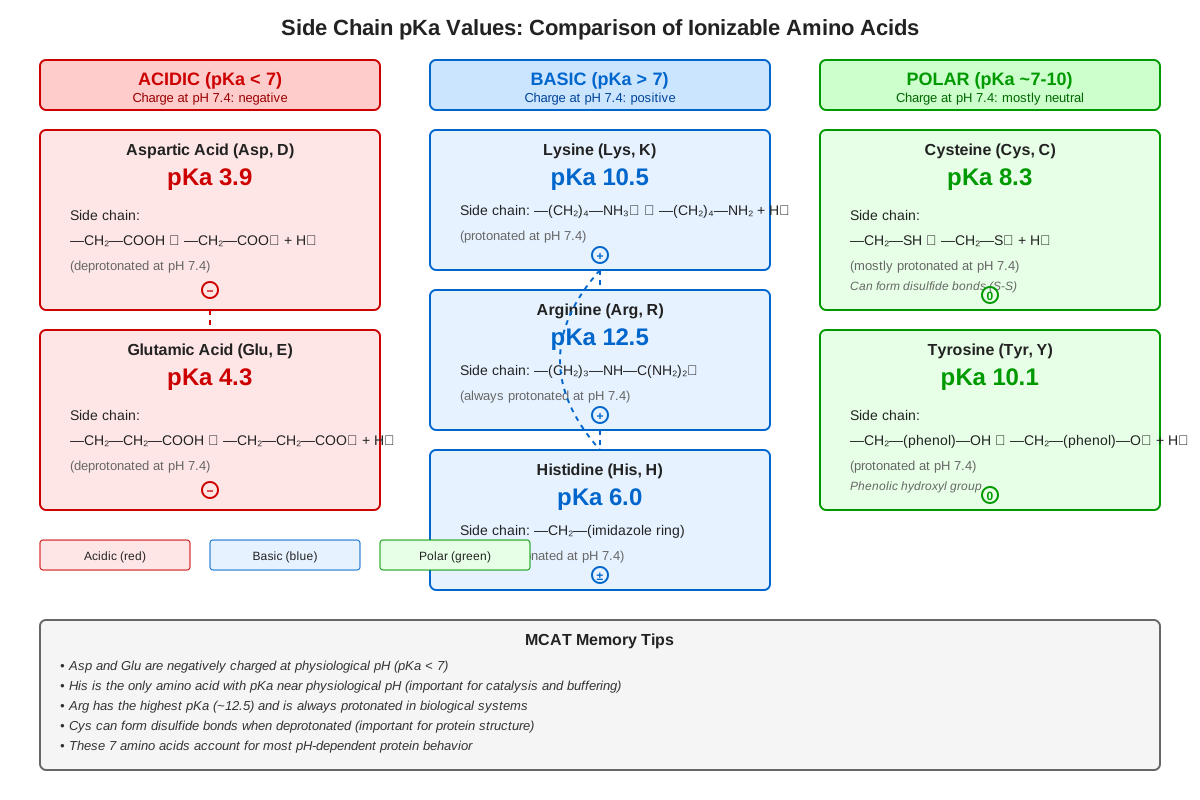
Every amino acid contains at least two ionizable groups: the α-carboxyl group (typical pKa ~2.2) and the α-amino group (typical pKa ~9.5). These values vary slightly among different amino acids but remain relatively consistent. Seven amino acids possess ionizable side chains (R groups) that contribute additional pKa values:
| Amino Acid | Side Chain Group | Approximate pKa | Ionization |
|---|---|---|---|
| Aspartic acid (Asp, D) | Carboxyl | 3.9 | -COOH ⇌ -COO- + H+ |
| Glutamic acid (Glu, E) | Carboxyl | 4.3 | -COOH ⇌ -COO- + H+ |
| Histidine (His, H) | Imidazole | 6.0 | -ImH+ ⇌ -Im + H+ |
| Cysteine (Cys, C) | Thiol | 8.3 | -SH ⇌ -S- + H+ |
| Tyrosine (Tyr, Y) | Phenol | 10.1 | -PhOH ⇌ -PhO- + H+ |
| Lysine (Lys, K) | Amino | 10.5 | -NH3+ ⇌ -NH2 + H+ |
| Arginine (Arg, R) | Guanidinium | 12.5 | -GuH+ ⇌ -Gu + H+ |
Charge State Prediction
To predict the net charge of an amino acid at any pH, compare the pH to each ionizable group's pKa:
- If pH < pKa - 2: The group is >99% protonated
- If pH > pKa + 2: The group is >99% deprotonated
- If pH ≈ pKa (within ±2 units): Use Henderson-Hasselbalch for precise calculation
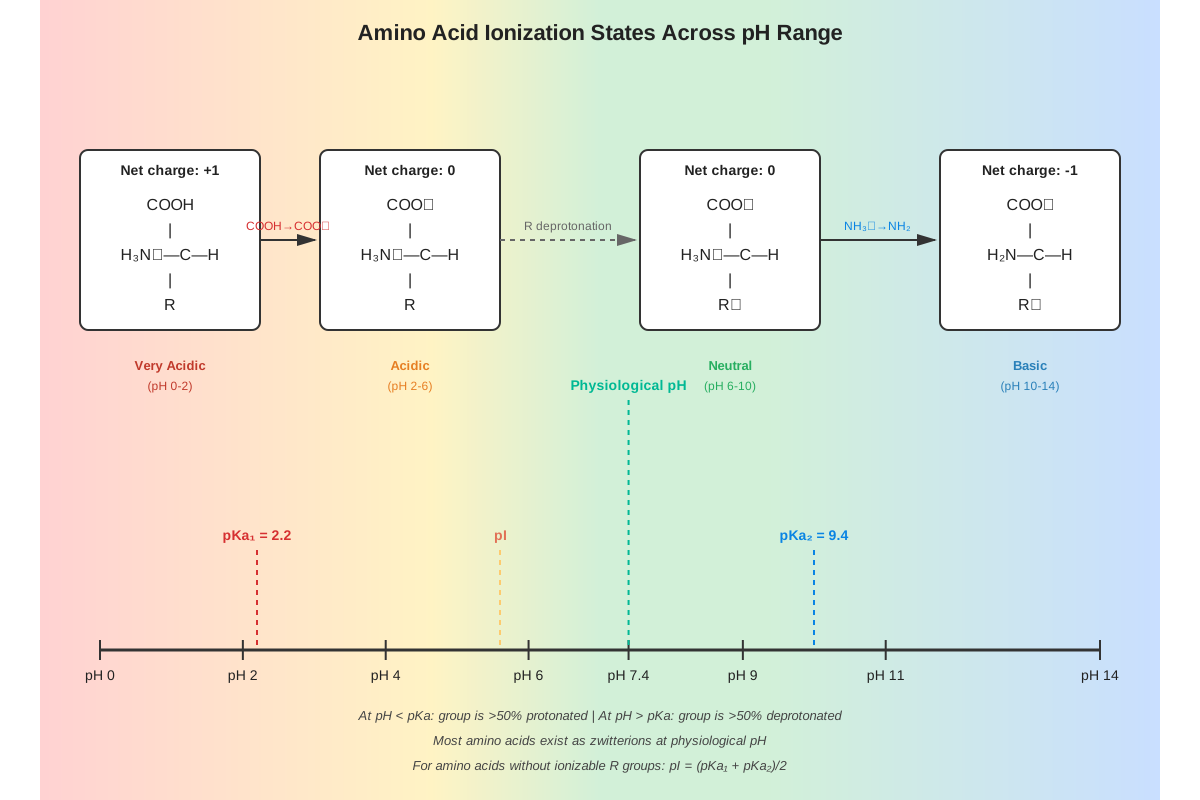
For carboxyl groups (pKa ~2-4), protonation means -COOH (neutral), deprotonation means -COO- (negative charge). For amino groups (pKa ~9-13), protonation means -NH3+ or similar (positive charge), deprotonation means -NH2 (neutral). This creates predictable charge patterns:
- At very low pH (pH 1): All groups protonated → amino acid has net positive charge
- At physiological pH (pH 7.4): Carboxyl groups deprotonated (negative), amino groups protonated (positive)
- At very high pH (pH 13): All groups deprotonated → amino acid has net negative charge
Isoelectric Point (pI)
The isoelectric point represents the pH at which an amino acid (or protein) carries no net electrical charge. At the pI, the molecule exists as a zwitterion with equal numbers of positive and negative charges. For amino acids with only two ionizable groups (non-ionizable side chains), the pI is calculated as:
pI = (pKa1 + pKa2) / 2For amino acids with three ionizable groups, the calculation depends on whether the side chain is acidic or basic:
- Acidic side chain (Asp, Glu): pI = (pKa of α-COOH + pKa of side chain COOH) / 2
- Basic side chain (Lys, Arg, His): pI = (pKa of α-NH3+ + pKa of side chain) / 2
The pI represents the average of the two pKa values surrounding the neutral (zwitterionic) form. This concept is crucial for understanding isoelectric focusing, a separation technique that exploits differences in pI values.
Titration Curves and Buffering Regions
When an amino acid is titrated with base, the titration curve displays characteristic plateaus at each pKa value. These plateaus represent buffering regions where the amino acid resists pH changes. The buffering capacity is maximal when pH = pKa (±1 pH unit), where the amino acid exists as a mixture of protonated and deprotonated forms. The titration curve shows:
- First equivalence point: Complete deprotonation of α-COOH (around pH 2.2)
- Second equivalence point: Complete deprotonation of α-NH3+ (around pH 9.5)
- Additional equivalence points: For amino acids with ionizable side chains
The inflection points on the titration curve correspond to pKa values, while the midpoints between inflection points represent regions of maximum buffering capacity.
pH-Dependent Amino Acid Properties
The ionization state profoundly affects amino acid properties:
- Solubility: Charged forms are more water-soluble than neutral forms; amino acids are least soluble at their pI
- Electrophoretic mobility: At pH < pI, amino acids migrate toward the cathode (negative electrode); at pH > pI, they migrate toward the anode (positive electrode)
- Reactivity: Deprotonated forms are typically more nucleophilic; protonated forms can act as electrophiles or leaving groups
- Protein interactions: Charge-charge interactions (salt bridges) stabilize or destabilize protein structures depending on pH
Physiological pH Considerations
At physiological pH (~7.4), the ionization states follow predictable patterns:
- α-Carboxyl groups (pKa ~2.2): Fully deprotonated (-COO-), contributing negative charge
- α-Amino groups (pKa ~9.5): Fully protonated (-NH3+), contributing positive charge
- Aspartate and glutamate side chains: Fully deprotonated (-COO-), contributing negative charge
- Lysine and arginine side chains: Fully protonated (-NH3+ or -GuH+), contributing positive charge
- Histidine side chain (pKa ~6.0): Approximately 10% protonated, making it an excellent biological buffer
- Cysteine and tyrosine: Predominantly protonated (neutral)
This distribution explains why histidine plays crucial roles in enzyme active sites—its pKa near physiological pH allows it to accept or donate protons during catalysis.
Concept Relationships
The understanding of amino acid pKa values builds directly on fundamental acid-base chemistry, particularly the Henderson-Hasselbalch equation and the relationship between pH and pKa. This foundational knowledge → enables prediction of ionization states → which determines net charge → which affects physical properties like solubility and electrophoretic mobility → which enables separation techniques like ion-exchange chromatography and isoelectric focusing.
Within the topic itself, the concepts form a hierarchical relationship: Basic pKa definition → identification of ionizable groups in amino acids → charge state prediction at various pH values → calculation of isoelectric point → understanding of titration behavior → application to protein structure and function. Each concept depends on mastery of the previous ones.
The topic connects forward to multiple advanced Biochemistry concepts: protein structure (salt bridges and electrostatic interactions depend on charge states), enzyme mechanisms (proton transfer steps require understanding of pKa values), protein purification (separation techniques exploit charge differences), and post-translational modifications (phosphorylation and acetylation alter pKa values and charge states). Understanding amino acid pKa values also connects to acid-base physiology, buffer systems in blood, and the pH-dependent activity of drugs and toxins.
High-Yield Facts
⭐ At physiological pH (7.4), amino acids exist predominantly as zwitterions with deprotonated carboxyl groups (-COO-) and protonated amino groups (-NH3+)
⭐ Histidine (pKa ~6.0) is the only amino acid with a side chain pKa near physiological pH, making it an excellent biological buffer and common participant in enzyme catalysis
⭐ The isoelectric point (pI) is calculated as the average of the two pKa values surrounding the neutral (zwitterionic) form
⭐ When pH < pKa, the ionizable group is predominantly protonated; when pH > pKa, the group is predominantly deprotonated
⭐ Amino acids are least soluble at their isoelectric point because they carry no net charge and cannot interact favorably with water through ion-dipole interactions
- The α-carboxyl group has a pKa around 2.2, while the α-amino group has a pKa around 9.5 in most amino acids
- Aspartate (pKa 3.9) and glutamate (pKa 4.3) are negatively charged at physiological pH, while lysine (pKa 10.5) and arginine (pKa 12.5) are positively charged
- Cysteine's thiol group (pKa 8.3) can be deprotonated under mildly basic conditions, enabling disulfide bond formation
- At pH values more than 2 units away from the pKa, ionizable groups are >99% in one form (protonated or deprotonated)
- Tyrosine's phenolic hydroxyl (pKa 10.1) remains protonated at physiological pH but can be deprotonated in enzyme active sites with specialized microenvironments
- The buffering capacity of an amino acid is maximal at pH = pKa ± 1 unit
- Amino acids with non-ionizable side chains have pI values around 5-6, calculated as the average of the α-carboxyl and α-amino pKa values
Quick check — test yourself on Amino acid pKa values so far.
Try Flashcards →Common Misconceptions
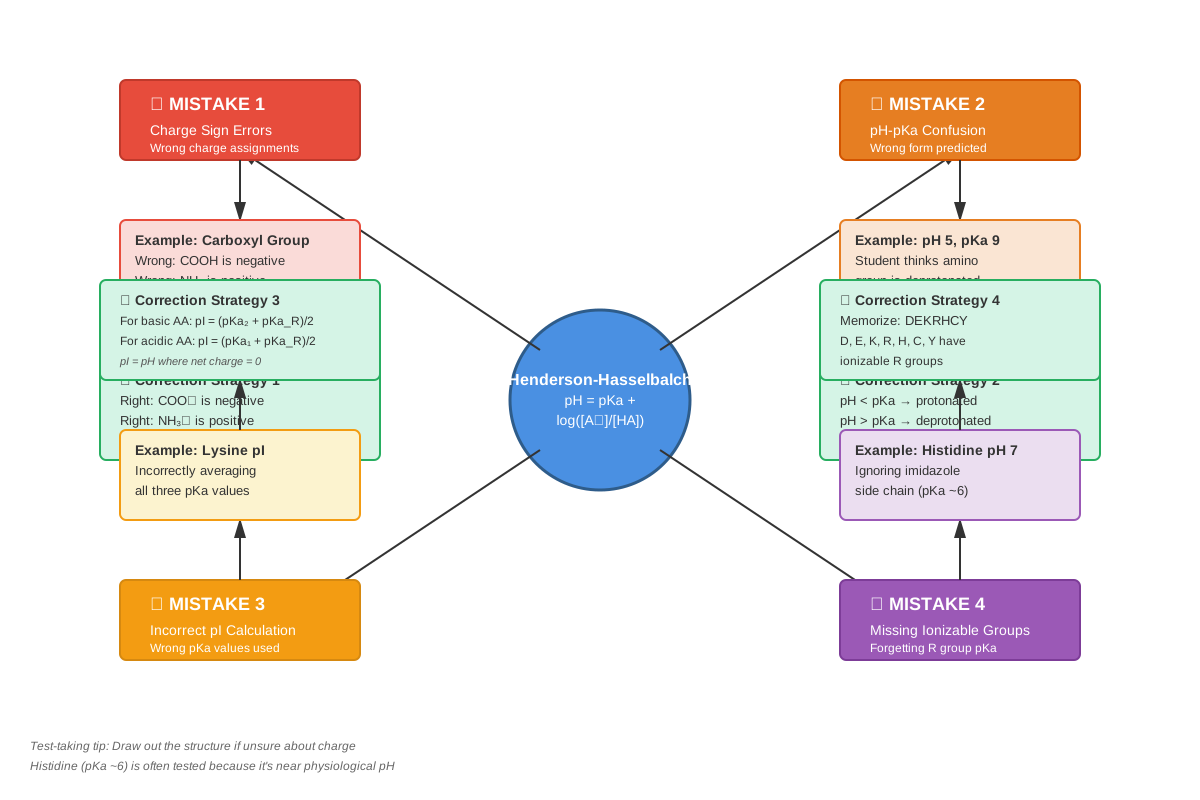
Misconception: The pKa value represents the pH at which a group is fully deprotonated.
Correction: The pKa represents the pH at which a group is 50% protonated and 50% deprotonated. Full deprotonation (>99%) occurs at pH values approximately 2 units above the pKa.
Misconception: All amino acids have the same pKa values for their α-carboxyl and α-amino groups.
Correction: While these values are similar across amino acids (α-COOH ~2.2, α-NH3+ ~9.5), they vary slightly depending on the side chain's electronic effects and local environment. The MCAT typically uses approximate values, but students should recognize that variation exists.
Misconception: At the isoelectric point, amino acids have no ionizable groups.
Correction: At the pI, amino acids still have ionized groups—they exist as zwitterions with equal numbers of positive and negative charges, resulting in zero net charge. The groups are ionized, but the charges balance.
Misconception: A higher pKa value means a stronger acid.
Correction: A higher pKa indicates a weaker acid (less willing to donate a proton). Strong acids have low pKa values (e.g., the α-carboxyl group with pKa ~2.2 is more acidic than the α-amino group with pKa ~9.5).
Misconception: Histidine is always positively charged at physiological pH.
Correction: Histidine's side chain (pKa ~6.0) exists as approximately 10% protonated (positive) and 90% deprotonated (neutral) at pH 7.4. This equilibrium makes histidine unique among amino acids and explains its catalytic versatility.
Misconception: The Henderson-Hasselbalch equation can only be used when pH equals pKa.
Correction: The Henderson-Hasselbalch equation applies at any pH value and is particularly useful when pH is within ±2 units of the pKa. When pH = pKa, it simplifies to a 1:1 ratio of deprotonated to protonated forms, but the equation works for all pH values.
Misconception: Amino acids with acidic side chains (Asp, Glu) have lower pI values than those with basic side chains because acids have lower pH.
Correction: This is actually correct, but students often confuse the reasoning. Acidic amino acids have lower pI values (~3) because they have an extra negative charge at intermediate pH values, requiring a lower pH to achieve neutrality. Basic amino acids have higher pI values (~10) because they have an extra positive charge, requiring a higher pH to achieve neutrality.
Worked Examples
Example 1: Calculating Net Charge of Glutamate at Different pH Values
Question: Glutamate has three ionizable groups: α-COOH (pKa = 2.2), α-NH3+ (pKa = 9.7), and side chain -COOH (pKa = 4.3). Calculate the net charge of glutamate at pH 1.0, pH 3.0, pH 7.4, and pH 11.0.
Solution:
At pH 1.0 (very acidic):
- Compare pH to each pKa:
- α-COOH: pH (1.0) < pKa (2.2) → protonated (-COOH, neutral)
- Side chain COOH: pH (1.0) < pKa (4.3) → protonated (-COOH, neutral)
- α-NH3+: pH (1.0) < pKa (9.7) → protonated (-NH3+, +1 charge)
- Net charge = 0 + 0 + 1 = +1
At pH 3.0:
- α-COOH: pH (3.0) > pKa (2.2) → deprotonated (-COO-, -1 charge)
- Side chain COOH: pH (3.0) < pKa (4.3) → protonated (-COOH, neutral)
- α-NH3+: pH (3.0) < pKa (9.7) → protonated (-NH3+, +1 charge)
- Net charge = -1 + 0 + 1 = 0 (this is near the pI)
At pH 7.4 (physiological):
- α-COOH: pH (7.4) >> pKa (2.2) → deprotonated (-COO-, -1 charge)
- Side chain COOH: pH (7.4) >> pKa (4.3) → deprotonated (-COO-, -1 charge)
- α-NH3+: pH (7.4) < pKa (9.7) → protonated (-NH3+, +1 charge)
- Net charge = -1 + -1 + 1 = -1
At pH 11.0 (very basic):
- α-COOH: pH (11.0) >> pKa (2.2) → deprotonated (-COO-, -1 charge)
- Side chain COOH: pH (11.0) >> pKa (4.3) → deprotonated (-COO-, -1 charge)
- α-NH3+: pH (11.0) > pKa (9.7) → deprotonated (-NH2, neutral)
- Net charge = -1 + -1 + 0 = -2
Key Insight: Glutamate transitions from positive at very low pH to increasingly negative as pH rises, with a net charge of -1 at physiological pH, making it an acidic amino acid.
Example 2: Determining Isoelectric Point and Separation Strategy
Question: A biochemist needs to separate a mixture of three peptides using isoelectric focusing. Peptide A contains mostly lysine and arginine residues, Peptide B contains equal amounts of acidic and basic residues, and Peptide C contains mostly aspartate and glutamate residues. The pH gradient ranges from pH 3 to pH 10. Predict the approximate pI for each peptide and describe where each will migrate in the pH gradient.
Solution:
Peptide A (rich in Lys and Arg):
- Lysine pKa ~10.5, Arginine pKa ~12.5
- Multiple basic residues mean the peptide will have many positive charges at neutral pH
- The pI will be in the basic range, approximately pH 9-10
- In the pH gradient, Peptide A will migrate toward the basic end and focus around pH 9-10
Peptide B (balanced acidic and basic residues):
- Equal numbers of negative (Asp, Glu) and positive (Lys, Arg) charges
- The pI will be near neutral, approximately pH 6-7
- Peptide B will focus in the middle of the pH gradient around pH 6-7
Peptide C (rich in Asp and Glu):
- Aspartate pKa ~3.9, Glutamate pKa ~4.3
- Multiple acidic residues mean the peptide will have many negative charges at neutral pH
- The pI will be in the acidic range, approximately pH 3-4
- Peptide C will migrate toward the acidic end and focus around pH 3-4
Separation Strategy:
In isoelectric focusing, each peptide migrates through the pH gradient until it reaches the pH equal to its pI, where it becomes neutral and stops moving. The three peptides will separate into distinct bands:
- Peptide C (acidic) → pH 3-4 region
- Peptide B (neutral) → pH 6-7 region
- Peptide A (basic) → pH 9-10 region
Key Insight: The amino acid composition determines the pI, which enables separation by isoelectric focusing. Acidic amino acids lower the pI, while basic amino acids raise it. This principle applies to both individual amino acids and complex proteins.
Exam Strategy
Question Approach Framework
When encountering amino acid pKa values questions on the MCAT, follow this systematic approach:
- Identify all ionizable groups in the amino acid or peptide
- Compare the given pH to each pKa value (is pH above, below, or equal to pKa?)
- Determine the protonation state of each group (protonated when pH < pKa, deprotonated when pH > pKa)
- Assign charges to each ionized group (remember: -COO- is negative, -NH3+ is positive)
- Sum the charges to find net charge or determine the pI
Trigger Words and Phrases
Watch for these high-yield terms that signal pKa-related questions:
- "At physiological pH" → immediately think pH 7.4 and predict standard ionization states
- "Isoelectric point" or "pI" → calculate the average of the two pKa values surrounding the neutral form
- "Buffering capacity" → look for amino acids with pKa values near the target pH (especially histidine at pH 7.4)
- "Electrophoretic migration" or "ion-exchange chromatography" → consider net charge at the given pH
- "Titration curve" → identify inflection points as pKa values and plateaus as buffering regions
- "Zwitterion" → think about the pI where net charge equals zero
- "Protonation state" → compare pH to pKa values
Process of Elimination Tips
- Eliminate answers that violate the pH-pKa relationship: If pH > pKa + 2, the group must be >99% deprotonated
- Check for charge conservation: The sum of individual charges must equal the net charge
- Verify pI calculations: For amino acids with non-ionizable side chains, pI should be around 5-6; for acidic amino acids, pI should be 3-4; for basic amino acids, pI should be 9-11
- Recognize impossible charge states: At physiological pH, lysine and arginine cannot be neutral, and aspartate and glutamate cannot be positive
- Use extreme pH values strategically: At pH 1, nearly all groups are protonated; at pH 13, nearly all groups are deprotonated
Time Allocation
For discrete questions on amino acid pKa values, allocate 60-90 seconds. These questions typically require straightforward application of the pH-pKa relationship. For passage-based questions involving titration curves, protein purification, or enzyme mechanisms, allocate 90-120 seconds per question, as these require integration of multiple concepts and careful analysis of experimental data. If a question requires detailed Henderson-Hasselbalch calculations, consider flagging it and returning if time permits—often, qualitative reasoning (pH above or below pKa) suffices for elimination.
Memory Techniques
Mnemonic for Ionizable Side Chain Amino Acids
"DECHKRTY" (pronounced "deck-her-ty") represents the seven amino acids with ionizable side chains in order of increasing pKa:
- D: Aspartate (Asp) - pKa ~3.9
- E: Glutamate (Glu) - pKa ~4.3
- C: Cysteine (Cys) - pKa ~8.3
- H: Histidine (His) - pKa ~6.0 (out of order, but remember "His is special")
- K: Lysine (Lys) - pKa ~10.5
- R: Arginine (Arg) - pKa ~12.5
- TY: Tyrosine (Tyr) - pKa ~10.1
Visualization Strategy: The pH Number Line
Visualize a number line from pH 0 to 14 with key landmarks:
0----2.2----4----6----7.4----9.5----10----12----14
     α-COOH  D/E   His  Phys  α-NH3+  K/Y   Arg
This mental image helps quickly determine whether groups are protonated or deprotonated at any given pH.
Acronym for Charge State Rules
"BELOW = BOTH" reminds you that when pH is below the pKa, both the proton and the group are together (protonated state).
"ABOVE = APART" reminds you that when pH is above the pKa, the proton and group are apart (deprotonated state).
Histidine Special Status
Remember: "His is the Catalyst" - Histidine's pKa (~6.0) near physiological pH makes it uniquely suited for enzyme catalysis, appearing in the active sites of many enzymes (e.g., serine proteases, carbonic anhydrase).
pI Calculation Memory Aid
"Average the Neighbors" - The pI is always the average of the two pKa values that bracket the neutral (zwitterionic) form. For acidic amino acids, these are the two lowest pKa values; for basic amino acids, these are the two highest pKa values.
Summary
Amino acid pKa values represent a cornerstone concept in Biochemistry for the MCAT, enabling prediction of ionization states, charge distributions, and chemical behavior of Amino Acids and Proteins across different pH environments. Every amino acid contains at least two ionizable groups (α-carboxyl with pKa ~2.2 and α-amino with pKa ~9.5), while seven amino acids possess ionizable side chains with characteristic pKa values ranging from 3.9 (aspartate) to 12.5 (arginine). The fundamental principle governing ionization is the pH-pKa relationship: groups are predominantly protonated when pH < pKa and predominantly deprotonated when pH > pKa. At physiological pH (7.4), amino acids exist as zwitterions with predictable charge patterns—acidic residues (Asp, Glu) carry negative charges, basic residues (Lys, Arg) carry positive charges, and histidine exists in equilibrium, making it an excellent biological buffer. The isoelectric point (pI) represents the pH at which an amino acid carries no net charge, calculated as the average of the two pKa values surrounding the neutral form. Mastery of these concepts enables students to tackle MCAT questions involving protein structure, enzyme mechanisms, separation techniques, and pH-dependent biochemical processes with confidence and accuracy.
Key Takeaways
- The pH-pKa relationship determines protonation state: When pH < pKa, groups are protonated; when pH > pKa, groups are deprotonated; when pH = pKa, groups are 50% protonated
- Seven amino acids have ionizable side chains (Asp, Glu, His, Cys, Tyr, Lys, Arg) with pKa values ranging from ~4 to ~12, while all amino acids have ionizable α-carboxyl (~2.2) and α-amino (~9.5) groups
- At physiological pH (7.4), amino acids exist as zwitterions with deprotonated carboxyl groups and protonated amino groups, creating predictable charge patterns
- Histidine is unique with a side chain pKa (~6.0) near physiological pH, making it an excellent buffer and common catalytic residue in enzyme active sites
- The isoelectric point (pI) is the pH at which net charge equals zero, calculated as the average of the two pKa values bracketing the neutral form
- Amino acid charge states affect protein properties including solubility, electrophoretic mobility, chromatographic behavior, and structural stability
- Quantitative predictions require the Henderson-Hasselbalch equation, but qualitative reasoning about pH relative to pKa suffices for most MCAT questions
Related Topics
Protein Structure and Folding: Understanding amino acid pKa values enables prediction of salt bridges, electrostatic interactions, and pH-dependent conformational changes that stabilize or destabilize protein structures. Mastery of charge states is essential for understanding how proteins fold and maintain their three-dimensional architecture.
Enzyme Mechanisms and Catalysis: Many enzymes utilize ionizable amino acid residues in their active sites to facilitate proton transfer, stabilize transition states, or activate substrates. Knowledge of pKa values explains how enzymes like serine proteases, carbonic anhydrase, and lysozyme achieve their catalytic efficiency.
Protein Purification Techniques: Ion-exchange chromatography, isoelectric focusing, and electrophoresis all exploit differences in amino acid charge states at various pH values. Understanding pKa values is essential for designing and interpreting protein separation experiments.
Buffer Systems in Biochemistry: Amino acids and proteins contribute to buffering capacity in biological systems. The bicarbonate buffer system, phosphate buffer system, and protein buffers all rely on the same pH-pKa principles that govern amino acid ionization.
Post-Translational Modifications: Phosphorylation, acetylation, methylation, and other modifications alter the pKa values and charge states of amino acid residues, affecting protein function, localization, and interactions. Understanding baseline pKa values provides the foundation for appreciating these regulatory mechanisms.
Practice CTA
Now that you have mastered the core concepts of amino acid pKa values, it's time to solidify your understanding through active practice. Challenge yourself with the practice questions and flashcards designed specifically for this topic. Focus on applying the pH-pKa relationship to diverse scenarios, calculating isoelectric points under time pressure, and integrating this knowledge with other Biochemistry concepts. Remember: understanding pKa values gives you a significant strategic advantage on the MCAT, as this knowledge applies to countless questions across multiple content areas. Your investment in mastering this topic will pay dividends throughout your exam preparation and beyond. Stay focused, practice deliberately, and watch your confidence soar!
Sign up free to keep reading
Create a free AnvayaPrep account to finish this MCAT guide on Amino acid pKa values — plus flashcards and practice questions.