Overview
Protein purification is a fundamental laboratory technique in Biochemistry that involves isolating a single type of protein from a complex mixture of cellular components. This process is essential for studying protein structure, function, and interactions, and represents a cornerstone methodology that bridges basic biochemistry principles with practical applications in research and medicine. For the MCAT, understanding protein purification techniques requires integrating knowledge of protein properties—including size, charge, polarity, and binding affinity—with the physical and chemical principles that enable their separation.
The MCAT frequently tests protein purification through experimental passage-based questions that require students to analyze research protocols, interpret data from purification experiments, and predict outcomes based on protein characteristics. Questions may present a novel purification scheme and ask students to identify which technique would be most appropriate for separating proteins with specific properties, or to troubleshoot a purification protocol that isn't working as expected. This topic appears regularly in both the Biological and Biochemical Foundations of Living Systems section and occasionally in passages that integrate biochemistry with experimental design.
Mastery of protein purification concepts directly connects to broader themes in Amino Acids and Proteins, including protein structure (which determines physical properties), post-translational modifications (which affect charge and binding), and enzyme kinetics (since purification is often necessary to study enzyme activity). Understanding these techniques also reinforces fundamental chemistry concepts such as polarity, ionic interactions, and molecular recognition—all high-yield topics that appear throughout the MCAT. The ability to predict how proteins behave under different conditions based on their amino acid composition represents a critical analytical skill that the MCAT assesses repeatedly.
Learning Objectives
- [ ] Define Protein purification using accurate Biochemistry terminology
- [ ] Explain why Protein purification matters for the MCAT
- [ ] Apply Protein purification to exam-style questions
- [ ] Identify common mistakes related to Protein purification
- [ ] Connect Protein purification to related Biochemistry concepts
- [ ] Compare and contrast different protein purification techniques based on the physical properties they exploit
- [ ] Predict the order of elution for proteins in chromatography based on their structural characteristics
- [ ] Analyze experimental data from protein purification protocols to determine purity and yield
Prerequisites
- Amino acid structure and properties: Understanding the 20 standard amino acids, their side chain characteristics (polar, nonpolar, charged), and pKa values is essential because protein purification exploits these chemical properties
- Protein structure levels: Knowledge of primary, secondary, tertiary, and quaternary structure helps predict how proteins will behave during purification based on their three-dimensional shape and surface properties
- Acid-base chemistry and pH: Buffer systems and the Henderson-Hasselbalch equation are critical for understanding how pH affects protein charge and behavior during purification
- Intermolecular forces: Familiarity with hydrogen bonding, ionic interactions, van der Waals forces, and hydrophobic effects explains the mechanisms underlying different separation techniques
- Basic laboratory techniques: General understanding of centrifugation, filtration, and solution preparation provides context for purification protocols
Why This Topic Matters
Protein purification has profound clinical and research significance. Therapeutic proteins such as insulin, monoclonal antibodies, and clotting factors must be purified to homogeneity before administration to patients. The biotechnology industry relies entirely on protein purification to produce pharmaceuticals, and diagnostic tests often require purified proteins as reagents. In research settings, understanding protein function, determining crystal structures for drug design, and studying protein-protein interactions all require highly purified protein samples.
On the MCAT, protein purification appears in approximately 3-5% of Biochemistry questions, making it a moderate-to-high yield topic. Questions typically appear in one of three formats: (1) experimental passage questions that describe a purification protocol and ask students to interpret results or predict outcomes; (2) discrete questions testing knowledge of specific techniques and the properties they exploit; and (3) data interpretation questions requiring analysis of chromatography traces, gel electrophoresis results, or enzyme activity assays during purification. The AAMC particularly favors questions that integrate multiple concepts, such as asking how a point mutation affecting a protein's isoelectric point would alter its behavior during ion-exchange chromatography.
Common passage scenarios include: a researcher attempting to purify a novel enzyme and encountering unexpected results; comparison of wild-type and mutant proteins during purification; optimization of purification protocols to improve yield or purity; and analysis of protein mixtures using various separation techniques. Understanding protein purification also enables students to critically evaluate experimental design, a skill the MCAT assesses through scientific reasoning questions.
Core Concepts
Principles of Protein Purification
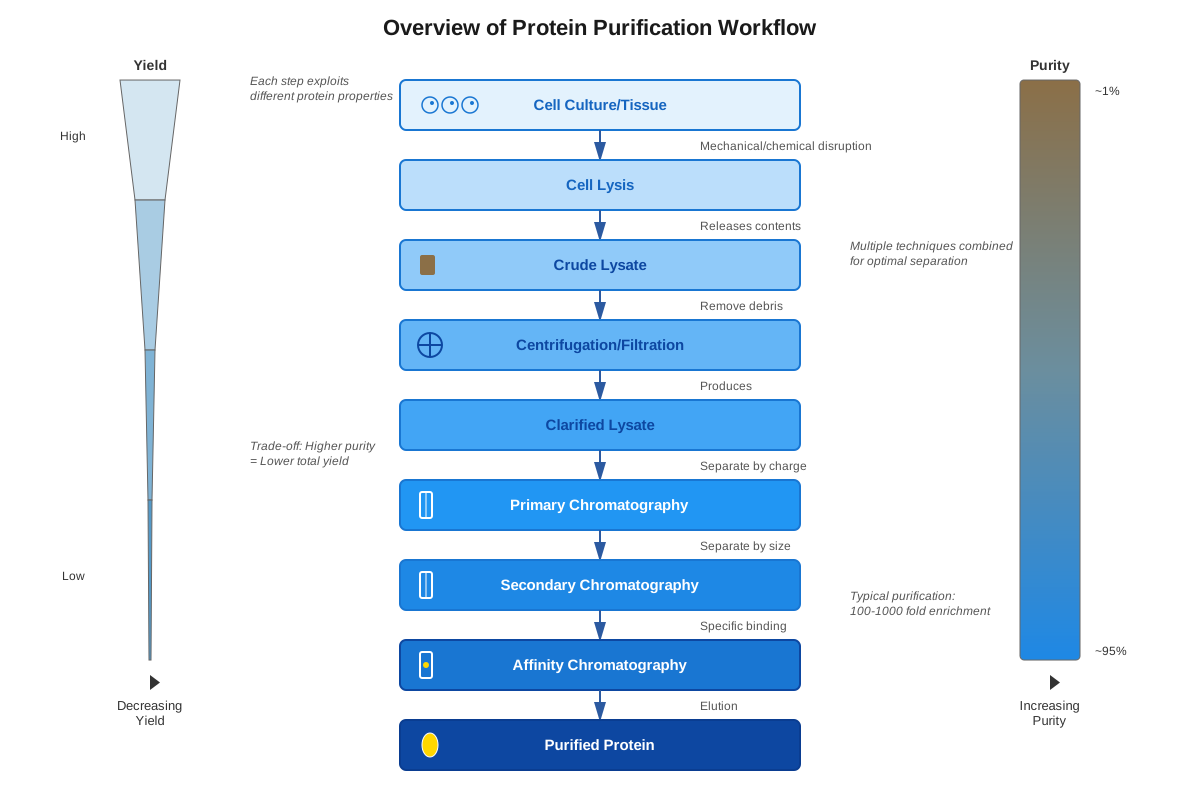
Protein purification refers to the series of processes used to isolate a single protein species from a complex mixture, typically starting from cell lysate containing thousands of different proteins. The fundamental principle underlying all purification techniques is that proteins differ in their physical and chemical properties based on their unique amino acid sequences. A successful purification strategy exploits one or more distinguishing characteristics—such as size, charge, hydrophobicity, or binding specificity—to separate the target protein from contaminants.
The purification process typically proceeds through multiple steps, each increasing the purity (the proportion of target protein relative to total protein) and affecting the yield (the amount of target protein recovered). An ideal purification maximizes both parameters, though in practice, each purification step results in some protein loss. The specific activity (enzyme activity per milligram of protein) serves as a key metric for tracking purification progress, increasing as contaminants are removed.
Cell Disruption and Crude Extract Preparation
Before purification can begin, proteins must be released from cells through cell lysis or homogenization. Methods include mechanical disruption (sonication, French press, bead beating), enzymatic digestion (lysozyme for bacterial cells), chemical lysis (detergents), or freeze-thaw cycles. The resulting crude extract or cell lysate contains all cellular proteins, nucleic acids, lipids, and small molecules. Initial clarification steps—typically centrifugation to remove cell debris and insoluble material—produce a soluble protein fraction ready for purification.
Salting Out and Precipitation
Salting out exploits protein solubility differences by adding high concentrations of salt (typically ammonium sulfate) to selectively precipitate proteins. At low salt concentrations, ionic compounds increase protein solubility through the salting-in effect by shielding charged groups. However, at high salt concentrations (typically 20-40% saturation for ammonium sulfate), salt ions compete for water molecules, reducing the hydration shell around proteins and causing them to aggregate and precipitate—the salting-out effect. Different proteins precipitate at different salt concentrations based on their surface hydrophobicity and charge distribution, allowing crude fractionation.
Dialysis and Desalting
Dialysis removes small molecules (salts, metabolites) from protein solutions using a semipermeable membrane that allows passage of molecules below a certain molecular weight cutoff (typically 3-10 kDa) while retaining larger proteins. The protein solution is placed in dialysis tubing and immersed in buffer, allowing small molecules to equilibrate across the membrane while proteins remain inside. This technique is essential for buffer exchange—changing the solution conditions without diluting or losing protein—and is often necessary between purification steps that require different buffer compositions.
Chromatography Principles
Chromatography encompasses a family of techniques that separate molecules based on their differential interactions with a stationary phase (solid support material) and a mobile phase (liquid buffer flowing through the column). Proteins with stronger interactions with the stationary phase move more slowly through the column and elute (emerge from the column) later, while proteins with weaker interactions elute earlier. The output is monitored continuously, producing a chromatogram showing protein concentration versus elution volume or time.
Size-Exclusion Chromatography
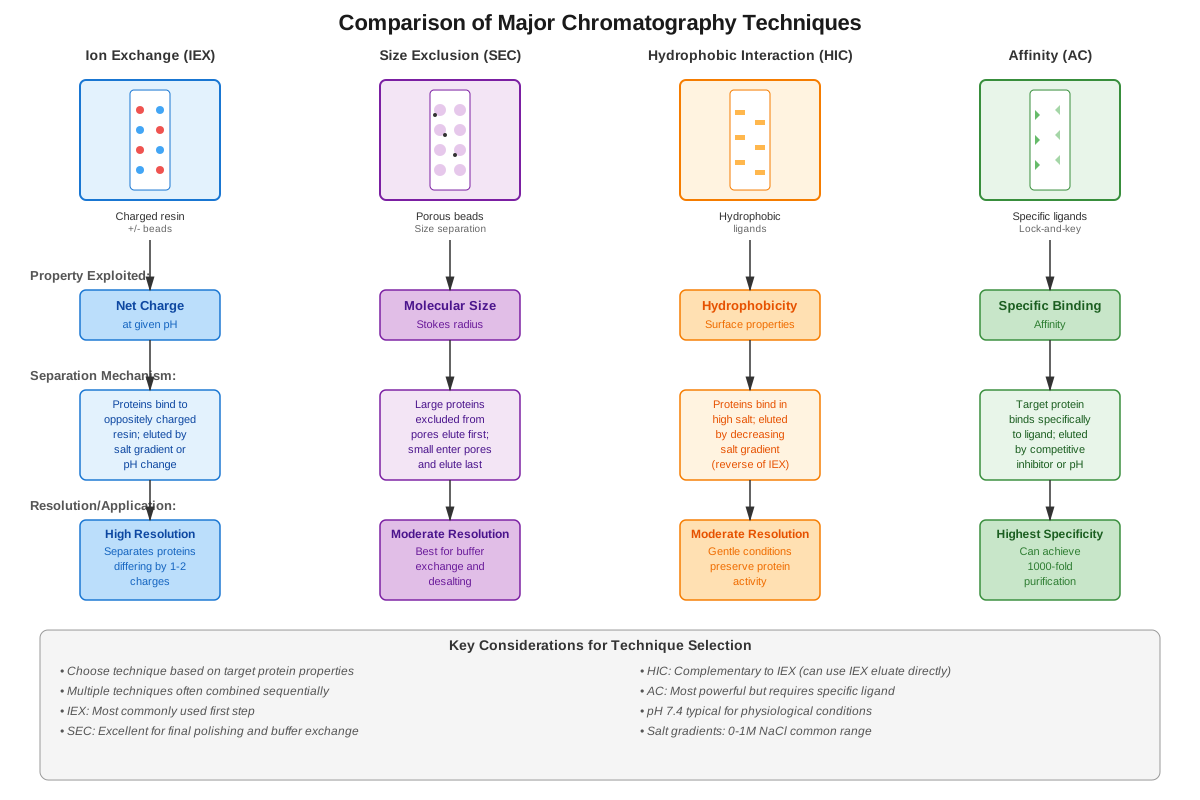
Size-exclusion chromatography (SEC), also called gel filtration, separates proteins based on molecular size and shape. The stationary phase consists of porous beads with defined pore sizes. Large proteins cannot enter the pores and travel through the void volume between beads, eluting first. Smaller proteins enter the pores, taking a longer path through the column and eluting later. Medium-sized proteins partially enter pores, eluting at intermediate times. This technique is particularly useful for determining native molecular weight, separating monomers from aggregates, and performing buffer exchange.
MCAT Exam Tip: In SEC, larger proteins elute FIRST—this is opposite to what many students initially expect. Remember: big proteins take the "highway" around the beads, while small proteins take the "scenic route" through the pores.
Ion-Exchange Chromatography
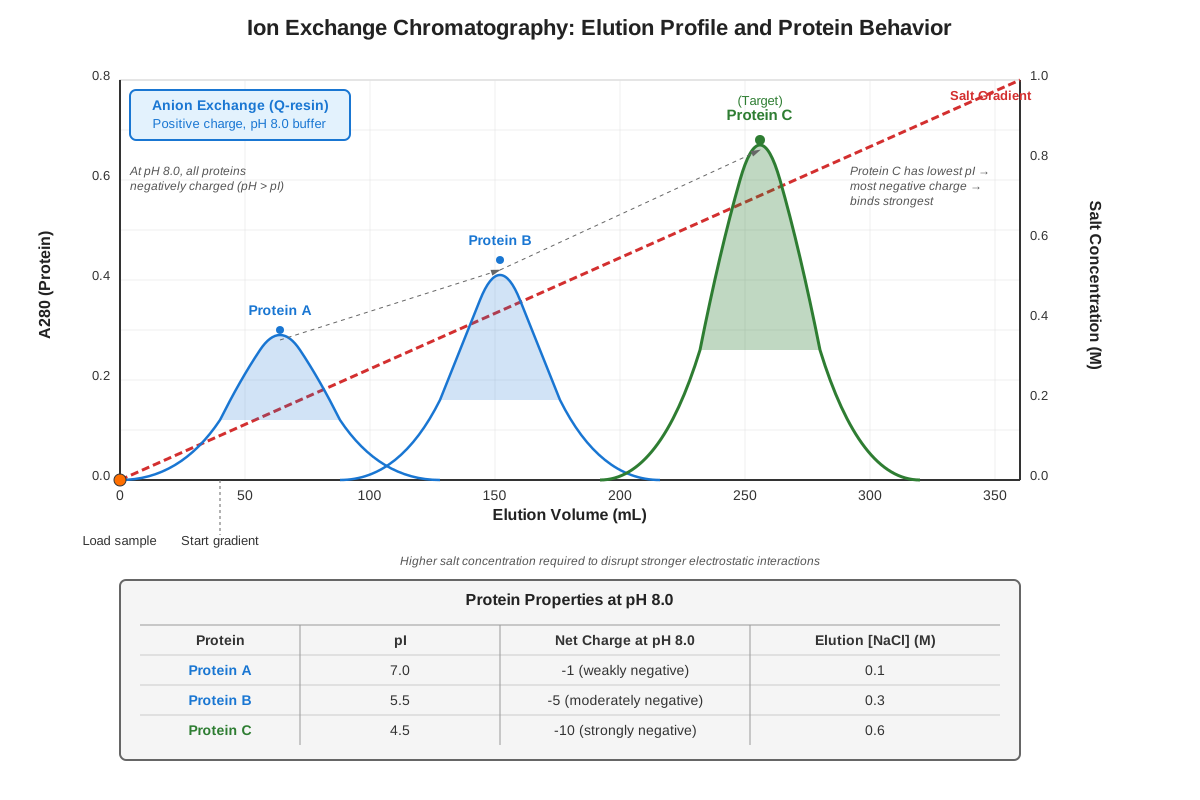
Ion-exchange chromatography (IEX) separates proteins based on their net surface charge at a given pH. The stationary phase contains charged groups: cation exchangers have negatively charged groups (like carboxylate or sulfonate) that bind positively charged proteins, while anion exchangers have positively charged groups (like diethylaminoethyl, DEAE) that bind negatively charged proteins. Proteins are loaded at a pH where they carry the appropriate charge, bind to the column, then are eluted by increasing salt concentration (which competes for binding sites) or by changing pH (which alters protein charge).
The isoelectric point (pI) is critical for predicting IEX behavior: at pH values below a protein's pI, the protein is positively charged and binds to cation exchangers; at pH values above the pI, the protein is negatively charged and binds to anion exchangers. Proteins with different pI values can be separated by choosing an appropriate buffer pH where they have different net charges.
| Chromatography Type | Separation Basis | Stationary Phase | Elution Method | Order of Elution |
|---|---|---|---|---|
| Size-Exclusion | Molecular size | Porous beads | Isocratic (constant buffer) | Large → Small |
| Ion-Exchange | Net charge | Charged resin | Salt gradient or pH change | Weakly bound → Strongly bound |
| Hydrophobic Interaction | Surface hydrophobicity | Hydrophobic ligands | Decreasing salt gradient | Hydrophilic → Hydrophobic |
| Affinity | Specific binding | Immobilized ligand | Competitive ligand or pH change | Non-binding → Specific binding |
Hydrophobic Interaction Chromatography
Hydrophobic interaction chromatography (HIC) separates proteins based on surface hydrophobicity. The stationary phase contains hydrophobic groups (phenyl, octyl, or butyl groups). Proteins are loaded in high-salt buffer, which promotes hydrophobic interactions by reducing the hydration shell around hydrophobic regions. Hydrophobic proteins bind strongly, while hydrophilic proteins bind weakly or not at all. Elution occurs by decreasing salt concentration, which weakens hydrophobic interactions and allows proteins to elute in order from most hydrophilic to most hydrophobic.
Affinity Chromatography
Affinity chromatography exploits specific biological recognition between a protein and a ligand. The stationary phase contains an immobilized ligand that specifically binds the target protein—examples include antibodies, enzyme substrates, receptor ligands, or metal ions. The target protein binds with high specificity while contaminants flow through. Elution occurs by disrupting the specific interaction, typically using a competitive ligand, pH change, or high salt concentration. This technique can achieve dramatic purification in a single step, often increasing purity 100-1000 fold.
Metal affinity chromatography uses immobilized metal ions (typically Ni²⁺, Co²⁺, or Zn²⁺) that bind proteins containing clusters of histidine residues. Recombinant proteins are often engineered with a polyhistidine tag (His-tag, typically 6 histidines) that binds tightly to metal ions, enabling simple one-step purification. Elution occurs by adding imidazole (which competes for metal binding) or by lowering pH (which protonates histidines, eliminating their metal-binding ability).
Electrophoresis
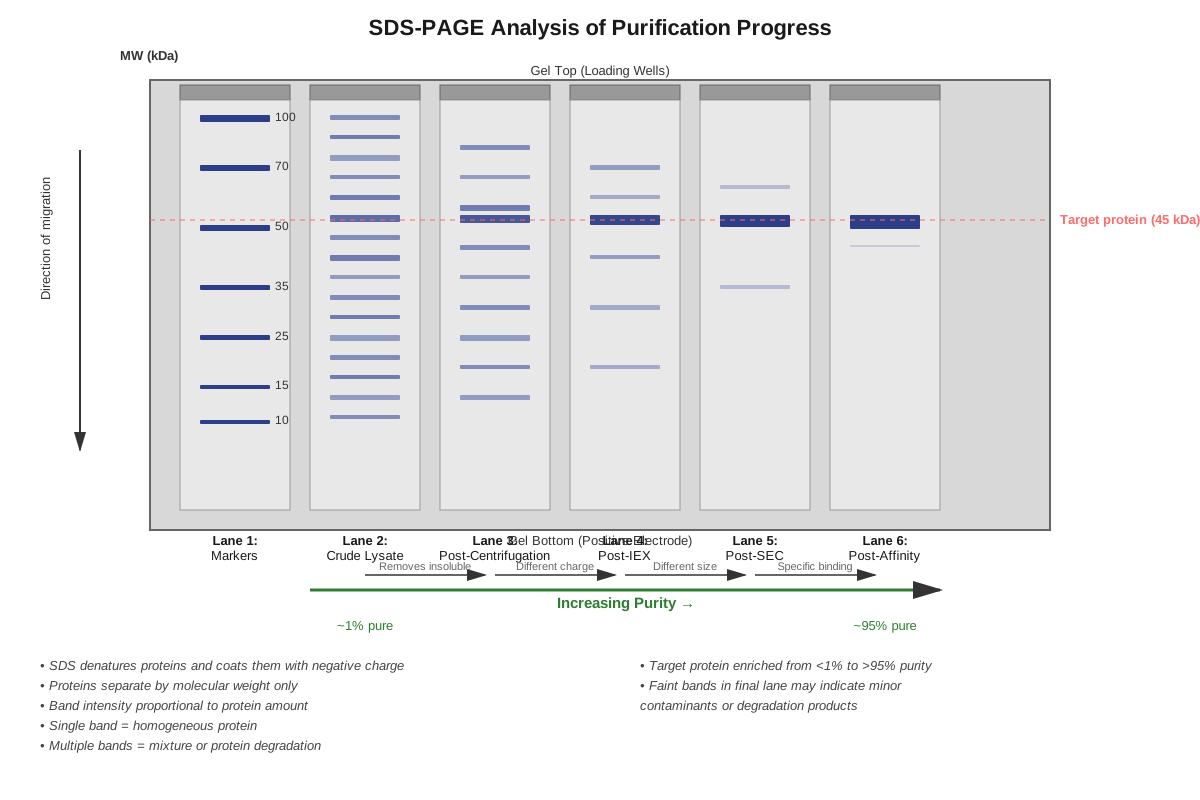
Electrophoresis separates proteins based on their migration through a gel matrix under an applied electric field. While primarily an analytical technique rather than a preparative purification method, electrophoresis is essential for assessing purification progress.
SDS-PAGE (sodium dodecyl sulfate polyacrylamide gel electrophoresis) denatures proteins and coats them with negatively charged SDS molecules, giving all proteins a uniform negative charge proportional to their mass. This eliminates charge differences, so separation occurs purely by size as proteins migrate through the polyacrylamide gel matrix. Smaller proteins migrate faster and farther toward the positive electrode. SDS-PAGE is the standard method for determining protein purity and molecular weight.
Native PAGE performs electrophoresis without denaturing agents, preserving protein structure and activity. Separation depends on both size and native charge, providing information about protein oligomerization state and charge properties.
Isoelectric focusing (IEF) separates proteins based on their isoelectric point by creating a pH gradient in the gel. Proteins migrate until they reach the pH equal to their pI, where they have zero net charge and stop moving. This technique has extremely high resolution and can separate proteins differing by as little as 0.01 pH units in their pI values.
Assessing Purification Success
Purification progress is monitored using several metrics:
- Total protein (measured by Bradford, Lowry, or BCA assays) decreases with each step as contaminants are removed
- Total activity (for enzymes) ideally remains constant but typically decreases due to protein loss and denaturation
- Specific activity (activity per mg protein) increases as purity increases
- Purification fold (specific activity at current step / specific activity in crude extract) indicates the degree of purification achieved
- Yield (percentage of initial activity recovered) tracks protein loss through the procedure
A purification table summarizes these parameters at each step, allowing assessment of which steps are most effective and where losses occur.
Concept Relationships
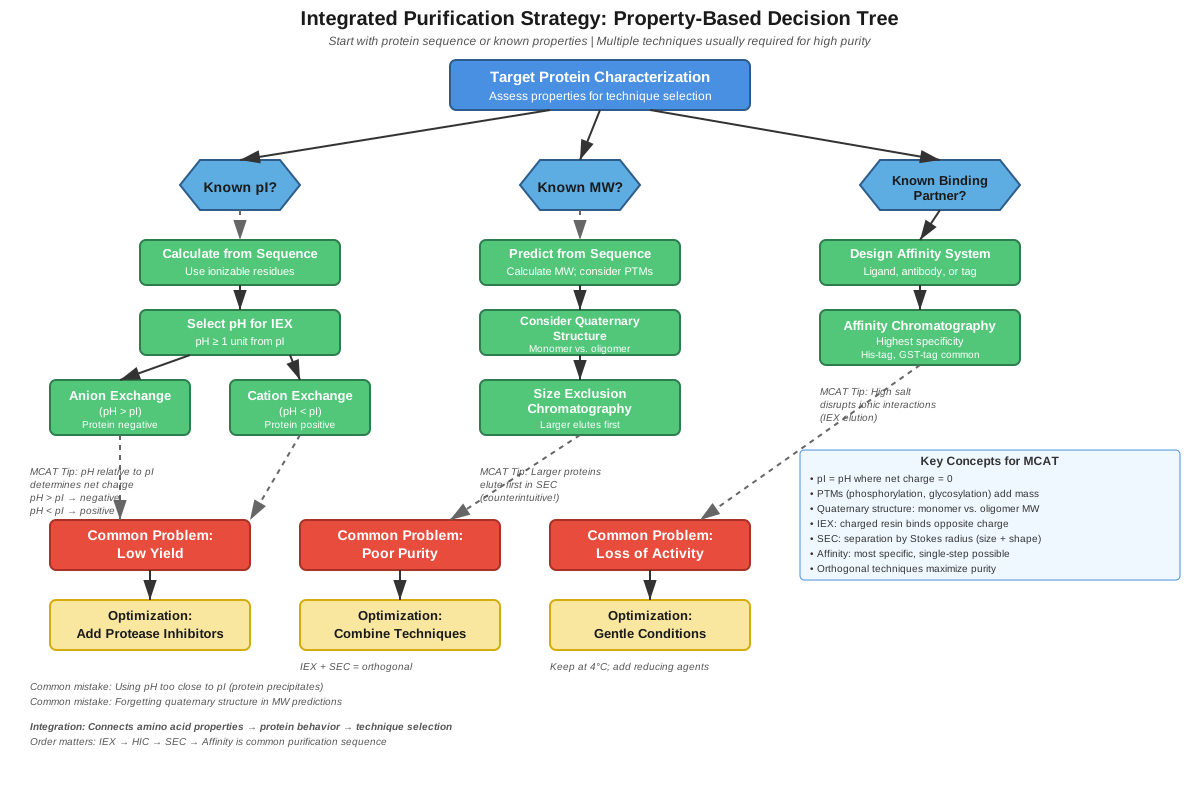
The various protein purification techniques form an interconnected system based on exploiting different protein properties. Amino acid composition (determined by primary structure) → dictates protein properties (charge, size, hydrophobicity) → which determine behavior in purification techniques (IEX, SEC, HIC).
Protein structure relationships: Primary structure (amino acid sequence) → determines pI and charge distribution → affects IEX behavior. Secondary and tertiary structure → determine overall size and shape → affect SEC separation. Surface-exposed residues → determine hydrophobicity → affect HIC retention. Specific structural features (binding sites) → enable affinity purification.
Sequential purification strategy: Cell lysis → crude extract → salting out (bulk fractionation) → dialysis (buffer exchange) → ion-exchange chromatography (charge-based separation) → hydrophobic interaction chromatography (hydrophobicity-based separation) → affinity chromatography (specific binding) → size-exclusion chromatography (final polishing and buffer exchange). Each step exploits a different property, maximizing overall separation.
pH relationships: Solution pH relative to protein pI → determines net charge → affects IEX binding and elution → influences protein stability and solubility. Buffer selection must maintain protein stability while optimizing separation.
Electrophoresis connections: SDS-PAGE analysis after each purification step → reveals remaining contaminants → guides optimization of subsequent steps. Native PAGE → confirms protein remains folded and active → validates that purification conditions preserve function.
Quick check — test yourself on Protein purification so far.
Try Flashcards →High-Yield Facts
⭐ In size-exclusion chromatography, larger proteins elute first because they cannot enter the porous beads and travel through the void volume
⭐ At pH < pI, a protein is positively charged and binds to cation exchangers; at pH > pI, a protein is negatively charged and binds to anion exchangers
⭐ SDS-PAGE separates proteins purely by molecular weight because SDS denatures proteins and gives them uniform negative charge
⭐ Affinity chromatography provides the highest specificity and can achieve 100-1000 fold purification in a single step
⭐ Specific activity (activity per mg protein) increases during successful purification as contaminants are removed
- Salting out with ammonium sulfate precipitates proteins at high salt concentrations (20-40% saturation) by competing for water molecules
- Dialysis removes small molecules through a semipermeable membrane while retaining proteins above the molecular weight cutoff
- Hydrophobic interaction chromatography requires high salt for binding and uses decreasing salt gradients for elution—opposite to ion-exchange chromatography
- Isoelectric focusing separates proteins based on pI with extremely high resolution by creating a pH gradient
- His-tagged recombinant proteins bind to nickel columns and are eluted with imidazole or low pH
- Native PAGE preserves protein structure and separates based on both size and charge, unlike SDS-PAGE which separates only by size
- The purification fold is calculated as (specific activity at current step) / (specific activity in crude extract)
Common Misconceptions
Misconception: In size-exclusion chromatography, small proteins elute first because they move through the column faster.
Correction: Large proteins actually elute first because they cannot enter the porous beads and take a shorter path through the void volume. Small proteins enter the pores, increasing their path length and elution time.
Misconception: Higher salt concentration always increases protein solubility.
Correction: At low salt concentrations (salting-in), salt increases solubility by shielding charges. At high salt concentrations (salting-out), salt decreases solubility by competing for water molecules, causing precipitation. This is the basis for ammonium sulfate precipitation.
Misconception: A protein with pI = 7.0 will bind to both cation and anion exchangers at pH 7.0.
Correction: At pH = pI, a protein has zero net charge and will not bind to either type of ion exchanger. The protein must be charged to bind: use pH < pI for cation exchange or pH > pI for anion exchange.
Misconception: Affinity chromatography can purify any protein if you just find the right conditions.
Correction: Affinity chromatography requires a specific ligand that binds the target protein with high affinity and specificity. Without such a ligand (or an engineered tag like His-tag), affinity purification is not possible. Not all proteins have known specific binding partners suitable for affinity purification.
Misconception: SDS-PAGE and native PAGE will give the same migration pattern for a protein.
Correction: SDS-PAGE denatures proteins and coats them with SDS, so migration depends only on molecular weight. Native PAGE preserves structure, so migration depends on both size and native charge. A protein may migrate differently in the two techniques, and oligomeric proteins will show different apparent molecular weights.
Misconception: Increasing the number of purification steps always improves final purity.
Correction: While additional steps can increase purity, each step causes some protein loss, reducing yield. There's a trade-off between purity and yield. Additionally, excessive handling and time can lead to protein degradation or denaturation. An optimal purification uses the minimum number of steps necessary to achieve required purity.
Misconception: Dialysis can be used to concentrate protein solutions.
Correction: Standard dialysis only exchanges buffer and removes small molecules; it does not change protein concentration. To concentrate proteins, use ultrafiltration/centrifugal concentrators, which force solvent through a membrane while retaining protein, or use precipitation methods.
Worked Examples
Example 1: Designing a Purification Strategy
Question: A researcher needs to purify a recombinant bacterial enzyme with the following properties: molecular weight 45 kDa, pI = 5.5, contains a His-tag, and is expressed as a soluble protein. The bacterial lysate contains thousands of contaminating proteins ranging from 10-200 kDa with various pI values. Design an efficient purification strategy and explain the rationale for each step.
Solution:
Step 1: Cell lysis and clarification
Lyse bacterial cells using lysozyme and sonication to release the recombinant protein. Centrifuge at high speed to remove cell debris and insoluble material, obtaining a clarified lysate containing soluble proteins.
Rationale: Must release protein from cells and remove particulates that would clog chromatography columns.
Step 2: Nickel affinity chromatography
Load clarified lysate onto a nickel-charged metal affinity column at neutral pH. The His-tagged target protein binds to Ni²⁺ ions while most bacterial proteins flow through. Wash with buffer containing low imidazole (10-20 mM) to remove weakly bound contaminants. Elute the target protein with high imidazole (250-500 mM) or low pH.
Rationale: This single step can achieve 100-1000 fold purification because the His-tag provides specific binding. This should be the first chromatography step because it dramatically reduces the protein load for subsequent steps. Most bacterial proteins lack histidine clusters and won't bind.
Step 3: Dialysis
Dialyze the eluted protein against buffer without imidazole to remove the elution agent and exchange into appropriate buffer for the next step.
Rationale: High imidazole concentration would interfere with subsequent purification steps and enzyme assays. Buffer exchange prepares the protein for ion-exchange chromatography.
Step 4: Ion-exchange chromatography (anion exchange)
At pH 7.0 (above the pI of 5.5), the target protein is negatively charged. Load onto an anion exchange column (DEAE or Q resin). Elute with an increasing salt gradient.
Rationale: Removes remaining contaminants with different charge properties. Even after affinity purification, some contaminating proteins may remain (other His-rich proteins, proteins that bound non-specifically). The target protein's specific pI determines its elution position in the salt gradient.
Step 5: Size-exclusion chromatography
Perform gel filtration as a final polishing step.
Rationale: Removes any aggregates (which would elute first), separates the 45 kDa target from any remaining contaminants of different sizes, and simultaneously exchanges buffer into the final storage buffer. This is often the final step because it's gentle and provides buffer exchange.
Expected outcome: This strategy should yield >90% pure protein with 30-50% recovery of initial activity. The affinity step provides the bulk of purification, while IEX and SEC remove remaining contaminants and ensure homogeneity.
Example 2: Interpreting Purification Data
Question: A purification table shows the following data:
| Step | Total Protein (mg) | Total Activity (units) | Specific Activity (units/mg) | Purification Fold | Yield (%) |
|---|---|---|---|---|---|
| Crude lysate | 10,000 | 50,000 | 5 | 1 | 100 |
| Ammonium sulfate | 2,000 | 45,000 | 22.5 | 4.5 | 90 |
| Ion exchange | 100 | 40,000 | 400 | 80 | 80 |
| Affinity | 5 | 35,000 | 7,000 | 1,400 | 70 |
Analyze this purification: (a) Which step was most effective? (b) Is there a problem with any step? (c) What does the specific activity tell you about purity?
Solution:
(a) Most effective step: The affinity chromatography step was most effective. Although it only increased the purification fold from 80 to 1,400 (a 17.5-fold increase), this represents the largest single-step increase in specific activity (from 400 to 7,000 units/mg). The ion-exchange step also performed well, increasing purification fold from 4.5 to 80 (a 17.8-fold increase). Both steps contributed substantially to the overall 1,400-fold purification.
(b) Potential problems: The ammonium sulfate precipitation step shows relatively modest purification (only 4.5-fold) with 10% activity loss. This is acceptable but not exceptional—precipitation typically achieves 2-5 fold purification. The 10% loss is reasonable. However, each subsequent step shows 10% activity loss, which is good (each chromatography step typically loses 10-20% of protein). No major problems are evident, though the researcher might consider whether the ammonium sulfate step is necessary given that it provides modest purification.
(c) Specific activity and purity: The specific activity increased from 5 to 7,000 units/mg, a 1,400-fold increase. If we assume the target protein is now 100% pure (a reasonable assumption after affinity chromatography with such high purification fold), then the crude lysate was approximately 1/1,400 = 0.07% pure (the target protein was 0.07% of total protein in the starting material). The final specific activity of 7,000 units/mg represents the intrinsic specific activity of the pure enzyme. Any sample with lower specific activity contains inactive protein or contaminants.
Additional insight: The progression of specific activity (5 → 22.5 → 400 → 7,000) shows that each step successfully removed inactive protein (contaminants). The large jump at the affinity step confirms that this technique provided the highest specificity. The final yield of 70% is excellent for a four-step purification—typically, 30-50% recovery is considered good, so this purification was quite successful.
Exam Strategy
Approaching MCAT questions on protein purification:
- Identify the protein property being exploited: When a question describes a purification technique, immediately identify which property it separates by (size, charge, hydrophobicity, or specific binding). This helps predict outcomes and troubleshoot problems.
- Use the pI as your anchor for charge questions: For any ion-exchange question, write down the protein's pI and the buffer pH. Determine if pH < pI (protein positive) or pH > pI (protein negative). This tells you which type of column the protein binds to and predicts elution order.
- Remember the SEC reversal: In size-exclusion chromatography, large proteins elute first—opposite to most students' intuition. If you find yourself confused, visualize large proteins taking the "highway" around beads while small proteins take the "scenic route" through pores.
- Look for trigger words:
- "Increasing salt gradient" → ion-exchange or affinity chromatography
- "Decreasing salt gradient" → hydrophobic interaction chromatography
- "Porous beads" or "molecular weight" → size-exclusion chromatography
- "Specific binding" or "ligand" → affinity chromatography
- "His-tag" or "polyhistidine" → metal affinity chromatography
- "Denatures protein" → SDS-PAGE (not native PAGE)
- Process of elimination for technique selection: If asked which technique would separate two proteins:
- If they differ significantly in size (>2-fold), SEC will work
- If they have different pI values and you can choose appropriate pH, IEX will work
- If one has a specific binding partner, affinity is best
- If they differ in surface hydrophobicity, HIC may work
- For data interpretation questions:
- Specific activity should always increase (or stay constant) during purification
- Total protein should always decrease
- Total activity typically decreases slightly with each step
- If specific activity decreases, something is wrong (protein is denaturing or inhibitor is present)
- Time allocation: Protein purification questions often appear in passages with data tables or chromatograms. Budget 1.5-2 minutes per question. Spend 30 seconds understanding the experimental setup, then tackle questions systematically.
- Common question types to expect:
- "Which technique would best separate proteins A and B?" → Compare their properties
- "At what pH should ion-exchange be performed?" → Use pI values
- "Why did the protein elute at this position?" → Connect property to technique
- "What would happen if [parameter] changed?" → Predict based on mechanism
Memory Techniques
Mnemonic for chromatography types - "SIAH":
- Size-exclusion: separates by Size
- Ion-exchange: separates by Ionic charge
- Affinity: separates by Affinity/specific binding
- Hydrophobic interaction: separates by Hydrophobicity
Mnemonic for SEC elution order - "Big Bullies Exit First":
Large proteins elute before small proteins in size-exclusion chromatography.
Mnemonic for ion-exchange binding - "Below Binds Cations, Above Attracts Anions":
- Below pI → protein is positive → Binds to Cation exchanger
- Above pI → protein is negative → Attracts to Anion exchanger
Visualization for HIC vs IEX salt gradients:
- IEX: "Salt Kicks Off" - increasing salt kicks proteins off the column (high salt elutes)
- HIC: "Salt Sticks On" - high salt makes proteins stick via hydrophobic effect (low salt elutes)
- They're OPPOSITE: IEX uses increasing salt, HIC uses decreasing salt
Acronym for purification metrics - "PATSY":
- Protein (total) - decreases
- Activity (total) - decreases slightly
- Total specific activity - increases
- Specific activity - increases
- Yield - decreases
Memory aid for SDS-PAGE: "SDS Makes Everyone Equal" - SDS denatures all proteins and coats them uniformly, so only size matters (everyone has equal charge-to-mass ratio).
Visualization for dialysis: Picture a tea bag in hot water - small molecules (tea) diffuse out through the bag (membrane) while large particles (tea leaves) stay inside. The tea bag is your protein sample, the water is your buffer.
Summary
Protein purification is the systematic isolation of a single protein from complex mixtures by exploiting unique physical and chemical properties. The MCAT tests understanding of how protein characteristics—size, charge (determined by pI and pH), hydrophobicity, and specific binding—dictate behavior in various separation techniques. Size-exclusion chromatography separates by molecular size with large proteins eluting first. Ion-exchange chromatography separates by charge, with binding determined by the relationship between solution pH and protein pI. Hydrophobic interaction chromatography separates by surface hydrophobicity using decreasing salt gradients. Affinity chromatography provides the highest specificity through biological recognition. SDS-PAGE denatures proteins for size-based analysis, while native PAGE preserves structure. Successful purification increases specific activity while maintaining reasonable yield, tracked through purification tables. MCAT questions typically present experimental scenarios requiring students to select appropriate techniques, predict outcomes based on protein properties, interpret purification data, or troubleshoot protocols. Mastery requires integrating amino acid properties, protein structure, and separation principles to analyze novel situations.
Key Takeaways
- Protein purification exploits differences in size, charge, hydrophobicity, or specific binding to separate target proteins from contaminants
- In size-exclusion chromatography, large proteins elute first because they cannot enter porous beads and travel through the void volume
- Ion-exchange binding depends on the relationship between pH and pI: at pH < pI, proteins are positive and bind cation exchangers; at pH > pI, proteins are negative and bind anion exchangers
- Specific activity (activity per mg protein) increases during successful purification as contaminants are removed, serving as the key metric for purification progress
- Affinity chromatography provides the highest specificity and can achieve 100-1000 fold purification in a single step through specific biological recognition
- SDS-PAGE separates proteins purely by molecular weight after denaturation, while native PAGE separates by both size and charge while preserving structure
- Hydrophobic interaction chromatography uses high salt for binding and decreasing salt for elution—opposite to ion-exchange chromatography which uses increasing salt for elution
Related Topics
Enzyme kinetics and assays: Purified enzymes are essential for determining kinetic parameters (Km, Vmax, kcat). Understanding how to measure enzyme activity during purification connects to Michaelis-Menten kinetics and enzyme inhibition studies.
Protein structure determination: Highly purified proteins are required for X-ray crystallography and NMR spectroscopy. Mastering purification enables understanding of how three-dimensional structures are determined experimentally.
Recombinant DNA technology: Expression of tagged proteins (His-tag, GST-tag) in bacteria or other systems requires purification techniques. This connects protein purification to molecular biology and biotechnology applications.
Post-translational modifications: Phosphorylation, glycosylation, and other modifications affect protein charge and binding properties, influencing purification behavior. Understanding these modifications deepens comprehension of why proteins behave differently during purification.
Immunology and antibody production: Monoclonal antibodies used in affinity chromatography and as therapeutic agents must themselves be purified. This connects protein purification to immunological techniques and pharmaceutical development.
Practice CTA
Now that you've mastered the core concepts of protein purification, it's time to reinforce your understanding through active practice. Work through the practice questions to apply these principles to MCAT-style scenarios, and use the flashcards to solidify high-yield facts and relationships. Remember: understanding how protein properties dictate purification behavior is a skill that develops through repeated application. Each practice question you complete strengthens your ability to analyze novel experimental scenarios—exactly what the MCAT demands. You've built a strong foundation; now transform that knowledge into test-day confidence through deliberate practice!
Sign up free to keep reading
Create a free AnvayaPrep account to finish this MCAT guide on Protein purification — plus flashcards and practice questions.