Overview
Chromatography is a fundamental separation technique in Biochemistry that enables scientists and clinicians to isolate, purify, and analyze complex mixtures of biological molecules, particularly Amino Acids and Proteins. This powerful analytical method exploits differences in physical and chemical properties—such as size, charge, polarity, and binding affinity—to separate components of a mixture as they move through a stationary phase under the influence of a mobile phase. For the MCAT, chromatography represents a high-yield topic that bridges theoretical biochemistry with practical laboratory applications, appearing frequently in both passage-based and discrete questions across the Chemical and Physical Foundations of Biological Systems and Biological and Biochemical Foundations of Living Systems sections.
Understanding Chromatography MCAT concepts is essential because the exam regularly tests students' ability to interpret experimental data, predict separation outcomes based on molecular properties, and troubleshoot separation protocols. Questions often present chromatography results as figures or data tables within research passages, requiring students to analyze elution patterns, identify unknown compounds, or explain why certain separation methods were chosen for specific experimental goals. Mastery of chromatography principles enables students to confidently approach these experimental design questions and demonstrate scientific reasoning skills that the MCAT heavily emphasizes.
Within the broader context of Amino Acids and Proteins biochemistry, chromatography serves as the primary tool for protein purification, characterization, and analysis. The technique connects directly to concepts of protein structure (primary through quaternary), post-translational modifications, enzyme kinetics, and molecular interactions. Understanding how different chromatographic methods exploit specific protein properties—such as the charged nature of amino acid side chains, the three-dimensional structure of folded proteins, or the specific binding between antigens and antibodies—reinforces fundamental biochemistry principles while providing practical context for how these molecules are studied in research and clinical settings.
Learning Objectives
- [ ] Define Chromatography using accurate Biochemistry terminology
- [ ] Explain why Chromatography matters for the MCAT
- [ ] Apply Chromatography to exam-style questions
- [ ] Identify common mistakes related to Chromatography
- [ ] Connect Chromatography to related Biochemistry concepts
- [ ] Compare and contrast at least four major types of chromatography based on their separation principles
- [ ] Predict the elution order of proteins or amino acids given their physical and chemical properties
- [ ] Interpret chromatography data presented in graphs, tables, or experimental passages
- [ ] Analyze experimental scenarios to select the most appropriate chromatographic technique for a given separation goal
Prerequisites
- Amino acid structure and properties: Understanding the 20 standard amino acids, their side chain characteristics (polar, nonpolar, charged), and pKa values is essential for predicting how proteins behave in different chromatographic systems
- Protein structure levels: Knowledge of primary, secondary, tertiary, and quaternary structure helps explain how proteins interact with chromatographic media and why certain separation methods preserve or disrupt protein function
- Acid-base chemistry and pH: Chromatographic separations often depend on protonation states of amino acids and proteins, making pH calculations and buffer systems critical background knowledge
- Intermolecular forces: Understanding hydrogen bonding, ionic interactions, van der Waals forces, and hydrophobic effects explains the molecular basis for chromatographic separations
- Basic laboratory techniques: Familiarity with solution preparation, concentration units, and experimental design provides context for chromatography applications
Why This Topic Matters
Chromatography represents one of the most clinically and experimentally relevant techniques in modern medicine and biochemical research. In clinical laboratories, chromatographic methods are used daily to measure drug levels in patient blood samples, detect metabolic disorders through amino acid analysis, purify therapeutic proteins like insulin and monoclonal antibodies, and diagnose diseases through protein biomarker identification. High-performance liquid chromatography (HPLC) has become the gold standard for pharmaceutical quality control, while affinity chromatography enables the production of life-saving biologics. Understanding these applications demonstrates the real-world impact of biochemical principles.
For the MCAT specifically, chromatography appears in approximately 3-5% of questions across both biochemistry-heavy sections, making it a high-yield topic that can significantly impact scores. The exam tests chromatography through multiple question formats: passage-based questions that present experimental data requiring interpretation, discrete questions testing conceptual understanding of separation principles, and pseudo-discrete questions embedded within research scenarios. Chromatography questions often serve as "medium difficulty" discriminators that separate high-scoring students who understand the underlying principles from those who have only memorized facts.
Common MCAT passage scenarios involving chromatography include: protein purification schemes where students must identify which technique was used at each step; amino acid analysis experiments requiring interpretation of elution profiles; enzyme purification passages presenting specific activity calculations across chromatographic fractions; and method development scenarios where students must select appropriate techniques based on target molecule properties. The exam particularly favors questions that integrate chromatography with other biochemistry concepts, such as using ion-exchange chromatography to separate proteins based on their isoelectric points, or employing size-exclusion chromatography to determine whether a protein exists as a monomer or multimer under physiological conditions.
Core Concepts
Definition and Fundamental Principles
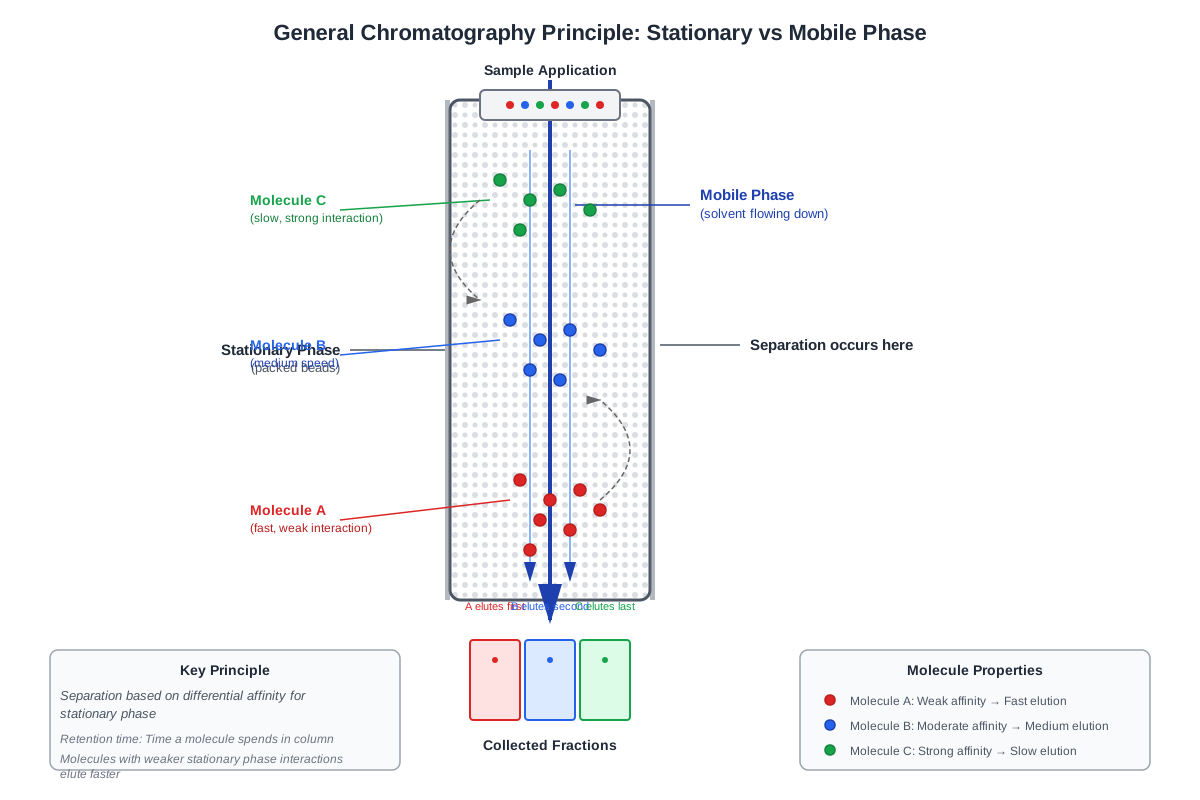
Chromatography is a separation technique that distributes components of a mixture between two phases: a stationary phase (which remains fixed) and a mobile phase (which moves through or across the stationary phase). The separation occurs because different molecules in the mixture interact differently with these two phases, causing them to move at different rates. Molecules with stronger affinity for the stationary phase move more slowly, while those with greater affinity for the mobile phase move more quickly. This differential migration results in physical separation of the mixture components, which can then be collected, identified, or quantified.
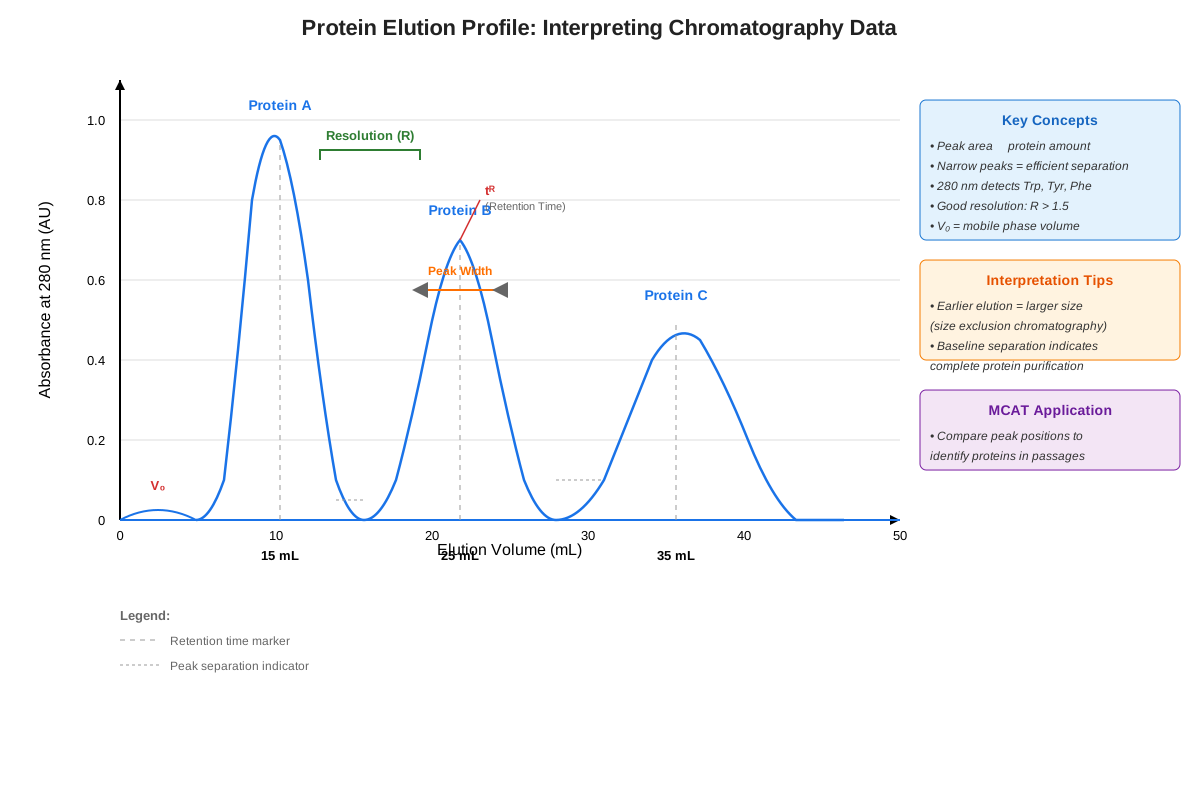
The term "chromatography" derives from the Greek words for "color" and "writing," reflecting its original use in separating colored plant pigments. However, modern chromatography applications extend far beyond colored compounds to include all types of biological molecules. The retention time or elution time—the time required for a specific compound to travel through the chromatographic system—serves as a characteristic property that aids in identification. The resolution of a chromatographic separation describes how well two adjacent peaks are separated, with higher resolution indicating better separation quality.
Column Chromatography Basics
In column chromatography, the stationary phase consists of solid particles packed into a cylindrical column, while the mobile phase (liquid or gas) flows through the column under gravity or pressure. The sample mixture is applied to the top of the column, and as mobile phase flows through, different components migrate at different rates based on their interactions with the stationary phase. Components exit the column (elute) at different times and can be collected in separate fractions. The eluent refers to the mobile phase solvent, while the eluate refers to the solution that exits the column containing separated components.
Ion-Exchange Chromatography
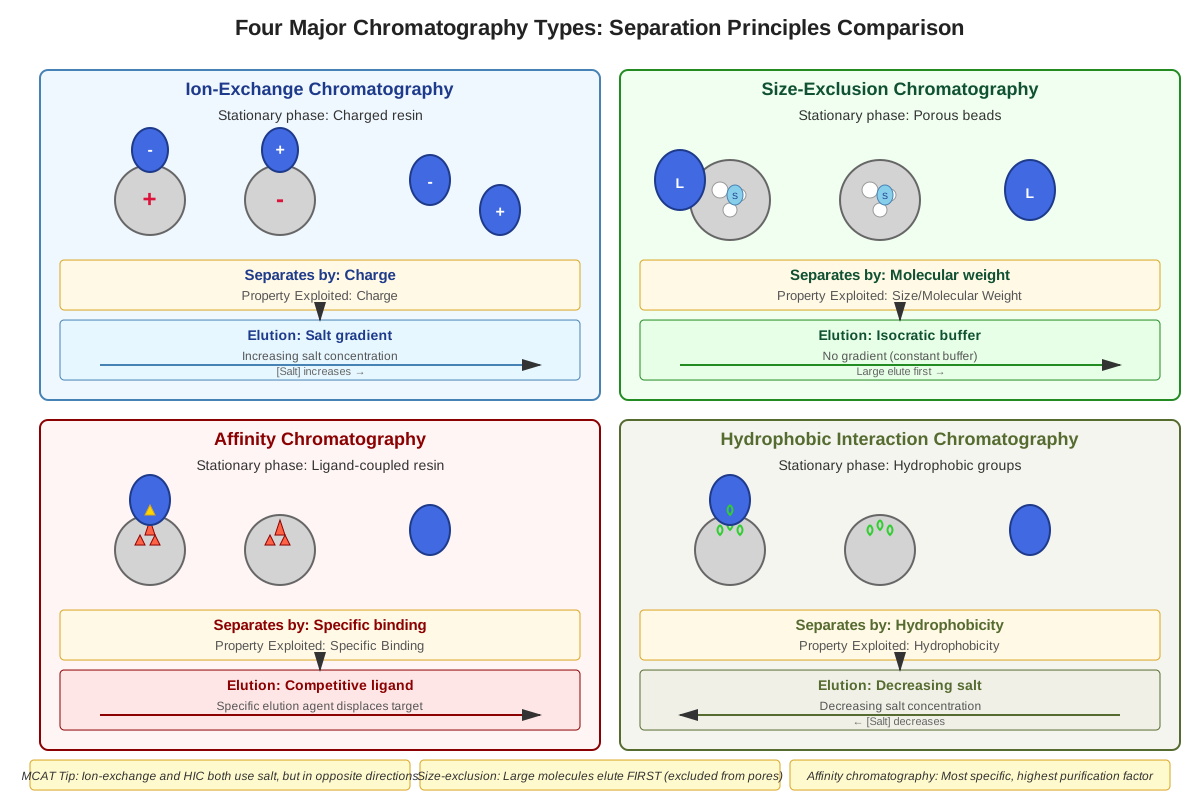
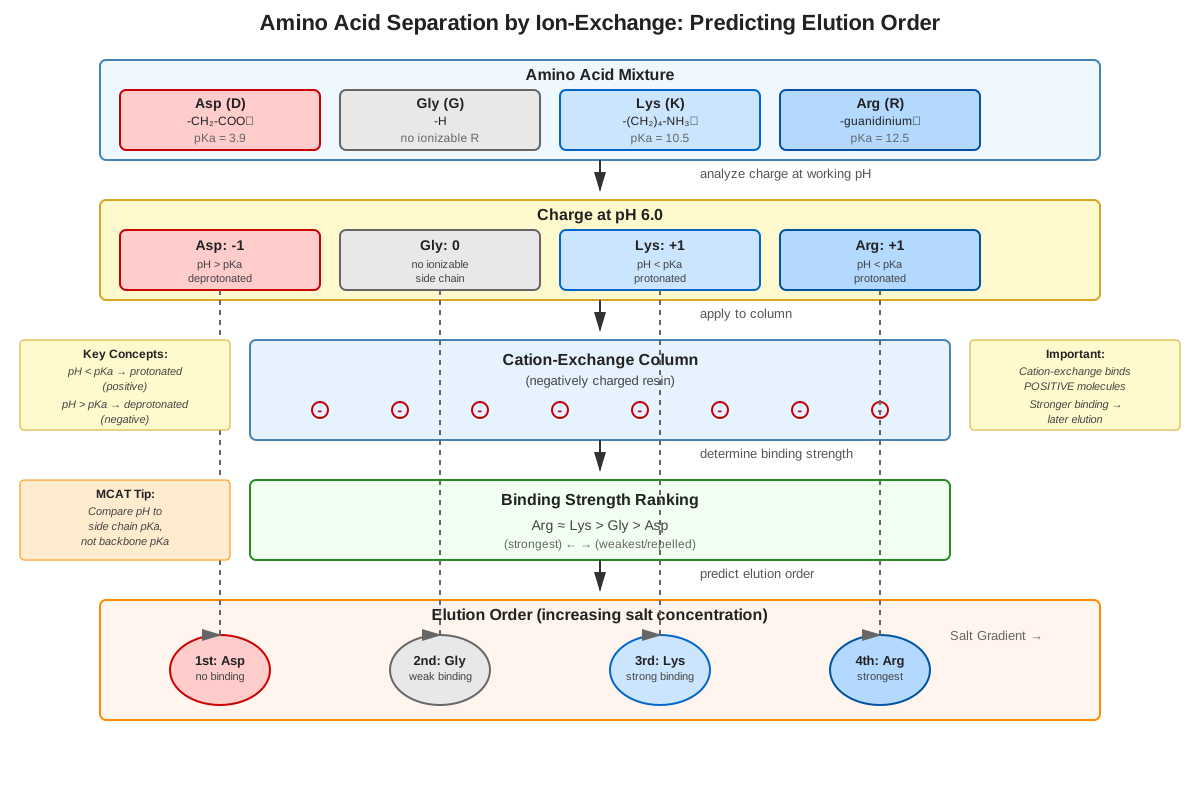
Ion-exchange chromatography separates molecules based on their net charge and charge density. The stationary phase consists of beads with charged functional groups covalently attached to an inert matrix. Cation-exchange resins contain negatively charged groups (such as sulfonate or carboxylate groups) that bind positively charged molecules, while anion-exchange resins contain positively charged groups (such as quaternary ammonium groups) that bind negatively charged molecules.
For protein separation, the choice between cation and anion exchange depends on the protein's isoelectric point (pI) relative to the buffer pH. At pH values below a protein's pI, the protein carries a net positive charge and binds to cation exchangers. At pH values above the pI, the protein carries a net negative charge and binds to anion exchangers. Bound proteins are eluted by increasing the ionic strength of the mobile phase (typically using a salt gradient) or by changing the pH to reduce the protein's net charge. Proteins with higher charge density bind more tightly and elute later in a salt gradient.
| Property | Cation Exchange | Anion Exchange |
|---|---|---|
| Stationary phase charge | Negative (COO⁻, SO₃⁻) | Positive (NH₃⁺, NR₃⁺) |
| Binds molecules with | Positive net charge | Negative net charge |
| Protein binding condition | pH < pI | pH > pI |
| Elution method | Increase salt or increase pH | Increase salt or decrease pH |
| Example application | Separating basic proteins | Separating acidic proteins |
Size-Exclusion Chromatography
Size-exclusion chromatography (SEC), also called gel-filtration chromatography or molecular sieve chromatography, separates molecules based solely on their size and shape. The stationary phase consists of porous beads with a defined pore size distribution. Large molecules that cannot enter the pores travel around the beads through the void volume between beads, eluting first. Smaller molecules can enter the pores, increasing their path length through the column and causing them to elute later. Medium-sized molecules partially enter the pores and elute at intermediate times.
The elution order in SEC is therefore: largest molecules elute first, smallest molecules elute last—the opposite of what many students initially expect. SEC is particularly valuable because it separates under gentle, native conditions that preserve protein structure and function. It's commonly used to determine protein molecular weight, assess protein aggregation, exchange buffers (desalting), and separate proteins from small molecules like salts or unreacted reagents. The technique has a limited resolution capacity and works best when the molecules being separated differ significantly in size (typically by at least 10% in molecular weight).
Affinity Chromatography
Affinity chromatography exploits specific biological recognition interactions to achieve highly selective separations. The stationary phase contains a ligand—a molecule that specifically binds the target protein—covalently attached to the matrix. Only proteins with affinity for that ligand bind to the column, while all other proteins wash through. The bound protein is then eluted by disrupting the specific interaction, typically by adding free ligand in solution (competitive elution), changing pH, or adding denaturants.
Common affinity chromatography applications include:
- Antibody purification: Using Protein A or Protein G columns that specifically bind antibody Fc regions
- Enzyme purification: Using immobilized substrate analogs or inhibitors
- Receptor purification: Using immobilized hormones or signaling molecules
- His-tag purification: Using nickel or cobalt columns that bind polyhistidine tags engineered onto recombinant proteins
- Lectin affinity: Using carbohydrate-binding proteins to purify glycoproteins
Affinity chromatography typically provides the highest selectivity and purification factor of any chromatographic method, often achieving 1000-fold or greater purification in a single step. However, it requires prior knowledge of the target protein's binding properties and may be expensive due to specialized ligands.
Hydrophobic Interaction Chromatography
Hydrophobic interaction chromatography (HIC) separates proteins based on their surface hydrophobicity. The stationary phase contains hydrophobic groups (such as phenyl or octyl groups) attached to a hydrophilic matrix. Proteins bind to the column under high salt conditions, which promote hydrophobic interactions by strengthening the hydrophobic effect. Bound proteins are eluted by decreasing the salt concentration, which weakens hydrophobic interactions and allows proteins to dissociate from the column.
HIC is particularly useful for separating proteins with similar charges but different hydrophobicities. Unlike reversed-phase chromatography (which uses organic solvents), HIC operates under conditions that generally preserve protein native structure and biological activity. The elution order follows surface hydrophobicity: more hydrophobic proteins bind more tightly and elute later in a decreasing salt gradient.
Reversed-Phase Chromatography
Reversed-phase chromatography (RPC) uses a nonpolar stationary phase (typically C18 or C8 hydrocarbon chains bonded to silica) and a polar mobile phase (water with increasing concentrations of organic solvent like acetonitrile or methanol). The term "reversed-phase" reflects the reversal of traditional chromatography, where the stationary phase was polar and the mobile phase nonpolar. In RPC, hydrophobic molecules bind strongly to the nonpolar stationary phase and are eluted by increasing the organic solvent concentration in the mobile phase.
RPC provides excellent resolution for peptides and small proteins but typically denatures larger proteins due to the organic solvents used. It's the most common method for peptide mapping, amino acid analysis, and small molecule separations in biochemistry. The elution order follows hydrophobicity: more hydrophobic molecules elute later in an increasing organic solvent gradient.
Thin-Layer and Paper Chromatography
Thin-layer chromatography (TLC) and paper chromatography are planar chromatographic techniques where the stationary phase is spread as a thin layer on a flat support (glass or plastic for TLC, cellulose paper for paper chromatography). The sample is spotted near one edge, and that edge is placed in a solvent reservoir. The mobile phase moves up the plate by capillary action, carrying sample components at different rates based on their partition between the stationary and mobile phases.
The retention factor (Rf) quantifies how far a compound travels relative to the solvent front:
Rf = (distance traveled by compound) / (distance traveled by solvent front)Rf values range from 0 (compound doesn't move) to 1 (compound moves with the solvent front) and are characteristic for a given compound under specific conditions. TLC is commonly used for amino acid analysis, where amino acids are separated based on their polarity and visualized using ninhydrin spray, which reacts with amino groups to produce colored products.
High-Performance Liquid Chromatography
High-performance liquid chromatography (HPLC) represents an advanced form of column chromatography that uses high pressure to force mobile phase through columns packed with very small, uniform particles. The small particle size dramatically increases resolution and speed compared to traditional column chromatography. HPLC can employ any of the separation principles described above (ion-exchange, size-exclusion, affinity, reversed-phase, etc.) but with superior performance.
HPLC systems include pumps to generate high pressure, injection systems for precise sample introduction, temperature-controlled columns, and sensitive detectors (UV-visible absorbance, fluorescence, mass spectrometry). The technique is quantitative, reproducible, and automated, making it ideal for clinical diagnostics, pharmaceutical analysis, and research applications. HPLC chromatograms display detector signal versus time, with peaks representing separated components.
Quick check — test yourself on Chromatography so far.
Try Flashcards →Concept Relationships
The various chromatographic techniques form an interconnected toolkit where method selection depends on the specific properties of molecules being separated. Ion-exchange chromatography connects directly to amino acid chemistry and protein structure because it exploits the charged nature of amino acid side chains (Asp, Glu, Lys, Arg, His) and the overall charge distribution on protein surfaces. The relationship between pH, pI, and net charge determines whether a protein binds to cation or anion exchangers, linking chromatography to acid-base equilibria and the Henderson-Hasselbalch equation.
Size-exclusion chromatography relates to protein quaternary structure and protein folding concepts. By separating based on hydrodynamic radius, SEC can distinguish between monomeric and oligomeric forms of proteins, detect protein aggregation, and assess whether proteins are properly folded (compact native structure) or unfolded (extended denatured structure). This connects chromatography to thermodynamics of protein stability and the factors that maintain protein structure.
Affinity chromatography builds upon concepts of enzyme-substrate interactions, antibody-antigen binding, and receptor-ligand recognition—all fundamental biochemistry topics. The specificity of affinity separations reflects the same molecular recognition principles that govern biological function, including complementary shape, hydrogen bonding networks, and induced fit. Understanding affinity chromatography reinforces concepts of binding equilibria, dissociation constants (Kd), and competitive inhibition.
Hydrophobic interaction chromatography and reversed-phase chromatography both exploit the hydrophobic effect, connecting to protein folding principles where hydrophobic amino acids (Val, Leu, Ile, Phe, Trp, Met) cluster in protein cores while hydrophilic residues populate surfaces. The salt dependence of HIC relates to the thermodynamics of hydrophobic interactions and how ionic strength affects water structure around nonpolar surfaces.
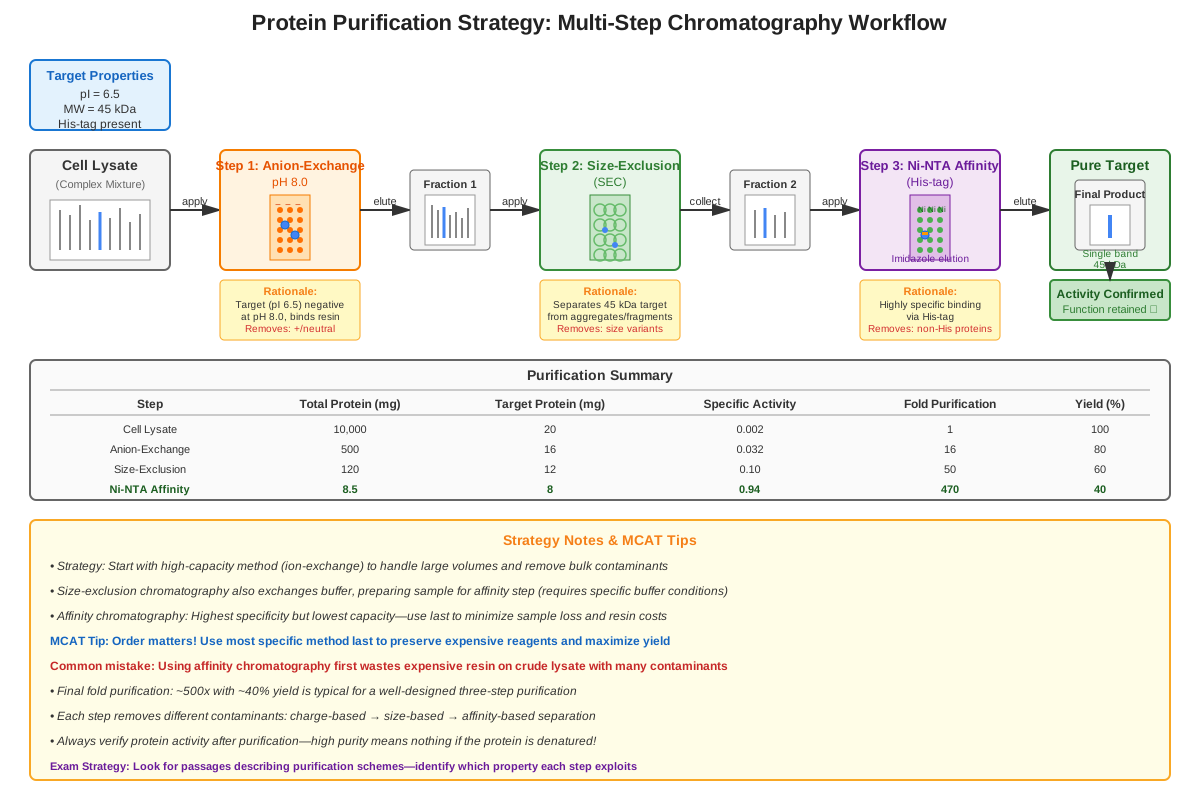
The progression from simple techniques (paper chromatography, TLC) to sophisticated methods (HPLC, affinity chromatography) mirrors the historical development of biochemistry and reflects increasing demands for resolution, speed, and sensitivity. In protein purification schemes, multiple chromatographic methods are often combined sequentially, with each step exploiting a different protein property: ion-exchange might separate based on charge, followed by HIC based on hydrophobicity, then SEC for final polishing and buffer exchange. This multi-step approach connects to concepts of purification fold, specific activity, and yield calculations.
High-Yield Facts
⭐ In size-exclusion chromatography, larger molecules elute first and smaller molecules elute last because large molecules cannot enter the porous beads and travel the shortest path through the column.
⭐ A protein binds to a cation exchanger when pH < pI (protein is positively charged) and binds to an anion exchanger when pH > pI (protein is negatively charged).
⭐ Affinity chromatography provides the highest selectivity of all chromatographic methods, often achieving >1000-fold purification in a single step.
⭐ In ion-exchange chromatography, proteins are eluted by increasing salt concentration (ionic strength), which competes with protein binding to the charged resin.
⭐ Reversed-phase chromatography elutes molecules in order of increasing hydrophobicity as organic solvent concentration increases in the mobile phase.
- Hydrophobic interaction chromatography requires high salt for binding and low salt for elution—opposite to the salt gradient direction in ion-exchange chromatography.
- The Rf value in thin-layer chromatography is always between 0 and 1, with more polar compounds having lower Rf values on polar stationary phases.
- Size-exclusion chromatography separates under native conditions and preserves protein activity, making it ideal for buffer exchange and determining native molecular weight.
- In affinity chromatography, specific elution uses free ligand to compete off the bound protein, while nonspecific elution uses pH change or denaturants.
- HPLC uses high pressure and small particle sizes to achieve superior resolution and speed compared to traditional column chromatography.
- Paper chromatography and TLC are planar techniques where the mobile phase moves by capillary action rather than being pumped through a column.
- Proteins with higher charge density bind more tightly to ion-exchange resins and require higher salt concentrations for elution.
Common Misconceptions
Misconception: In size-exclusion chromatography, small molecules elute first because they move faster through the column.
Correction: Small molecules actually elute last because they can enter the porous beads, increasing their path length through the column. Large molecules that cannot enter pores travel the shortest distance and elute first.
Misconception: Ion-exchange chromatography separates based on isoelectric point (pI) values.
Correction: Ion-exchange chromatography separates based on net charge at the working pH, not pI directly. The pI determines what charge a protein has at a given pH (positive if pH < pI, negative if pH > pI), but the actual separation depends on charge magnitude and distribution at the experimental pH.
Misconception: Increasing salt concentration in hydrophobic interaction chromatography causes proteins to elute.
Correction: In HIC, high salt promotes binding (by strengthening the hydrophobic effect), and decreasing salt causes elution. This is opposite to ion-exchange chromatography, where increasing salt causes elution by competing for binding sites.
Misconception: Affinity chromatography can only purify proteins for which natural ligands are known.
Correction: Modern affinity chromatography often uses engineered tags (His-tags, GST-tags, FLAG-tags) added to recombinant proteins, allowing affinity purification even when natural ligands are unknown or unavailable.
Misconception: All chromatographic methods denature proteins and destroy biological activity.
Correction: Size-exclusion chromatography, ion-exchange chromatography (under appropriate conditions), hydrophobic interaction chromatography, and affinity chromatography typically preserve protein native structure and activity. Only harsh methods like reversed-phase chromatography with organic solvents routinely denature proteins.
Misconception: The retention time in chromatography is an absolute value that identifies compounds.
Correction: Retention times are relative values that depend on specific experimental conditions (column type, mobile phase composition, temperature, flow rate). Compounds are identified by comparing retention times to standards run under identical conditions, not by absolute retention time values.
Misconception: In reversed-phase chromatography, the "reversed" refers to the direction of flow.
Correction: "Reversed-phase" refers to the reversal of phase polarities compared to traditional chromatography: the stationary phase is nonpolar (reversed from traditional polar stationary phases) and the mobile phase is polar (reversed from traditional nonpolar mobile phases).
Worked Examples
Example 1: Selecting Chromatography Methods for Protein Purification
Scenario: A researcher needs to purify a recombinant enzyme with the following properties: molecular weight 45 kDa, pI of 6.8, contains a His-tag, and must retain enzymatic activity. The starting material is a bacterial cell lysate containing thousands of different proteins. Design a three-step purification scheme using appropriate chromatographic methods.
Solution:
Step 1 - Affinity Chromatography (Ni-NTA column): Begin with affinity chromatography using a nickel-nitrilotriacetic acid (Ni-NTA) column that specifically binds the His-tag. This provides the highest selectivity and can achieve 100-1000 fold purification in a single step. The His-tagged target protein binds while most contaminating proteins wash through. Elute the target protein using imidazole, which competes for nickel binding. This step dramatically reduces the complexity of the mixture while preserving enzyme activity.
Step 2 - Ion-Exchange Chromatography: Use anion-exchange chromatography at pH 7.5 (above the pI of 6.8, so the protein is negatively charged). At this pH, the target protein binds to the positively charged anion exchanger while any remaining positively charged contaminants flow through. Elute with an increasing salt gradient. This step removes contaminants with different charge properties and further concentrates the sample.
Step 3 - Size-Exclusion Chromatography: Finish with SEC for final polishing and buffer exchange into the desired storage buffer. This step removes any remaining contaminants of significantly different size, eliminates aggregates, and ensures the enzyme is in the correct buffer for activity assays or storage. SEC operates under gentle, native conditions that preserve activity.
Reasoning: This scheme progresses from highest selectivity (affinity) to moderate selectivity (ion-exchange) to lowest selectivity but excellent polishing (SEC). Each step exploits a different protein property (specific binding, charge, size) to remove different classes of contaminants. All methods preserve native structure and enzymatic activity, meeting the requirement for an active enzyme product.
Example 2: Interpreting Size-Exclusion Chromatography Data
Scenario: A size-exclusion chromatography column is calibrated using protein standards with known molecular weights. The following data are obtained:
| Protein Standard | Molecular Weight (kDa) | Elution Volume (mL) |
|---|---|---|
| Thyroglobulin | 669 | 8.2 |
| Ferritin | 440 | 9.5 |
| Catalase | 232 | 11.8 |
| Aldolase | 158 | 13.2 |
| Albumin | 67 | 16.5 |
| Ovalbumin | 43 | 18.1 |
| Chymotrypsinogen | 25 | 20.3 |
An unknown protein elutes at 13.5 mL. Under denaturing conditions with reducing agent, the same protein analyzed by SDS-PAGE shows a single band at 75 kDa. What is the native structure of this protein?
Solution:
Step 1 - Estimate native molecular weight: The unknown protein elutes at 13.5 mL, which falls between Aldolase (158 kDa at 13.2 mL) and Albumin (67 kDa at 16.5 mL). By interpolation, the elution volume of 13.5 mL corresponds to an apparent molecular weight of approximately 150 kDa under native conditions.
Step 2 - Compare to denatured molecular weight: Under denaturing and reducing conditions (SDS-PAGE), the protein shows a single band at 75 kDa. This represents the molecular weight of individual polypeptide chains.
Step 3 - Determine quaternary structure: The native molecular weight (~150 kDa) is approximately twice the denatured subunit molecular weight (75 kDa). This indicates the protein exists as a dimer in its native state: 150 kDa ÷ 75 kDa = 2 subunits.
Conclusion: The unknown protein is a homodimer composed of two identical 75 kDa subunits held together by non-covalent interactions (since reducing agent was needed to separate them, disulfide bonds may also be present). Size-exclusion chromatography separated the protein based on its native dimeric form (150 kDa), while SDS-PAGE denatured the protein and separated individual subunits (75 kDa each).
Key Concept: This example illustrates how combining SEC (which preserves native structure) with SDS-PAGE (which denatures proteins) allows determination of quaternary structure—a common MCAT question type that integrates chromatography with protein structure concepts.
Exam Strategy
When approaching MCAT questions on chromatography, first identify which type of chromatography is being discussed or which would be most appropriate for the scenario. Look for trigger words: "charge" or "pI" suggests ion-exchange; "size" or "molecular weight" suggests size-exclusion; "specific binding" or "antibody" suggests affinity; "hydrophobicity" or "salt gradient" suggests HIC or reversed-phase.
For ion-exchange questions, immediately determine the relationship between pH and pI to predict protein charge. Draw a simple number line if needed: if pH < pI, the protein is positively charged (protonated); if pH > pI, the protein is negatively charged (deprotonated). Remember that cation exchangers are negatively charged and bind cations (positive proteins), while anion exchangers are positively charged and bind anions (negative proteins).
For size-exclusion questions, remember the counterintuitive elution order: BIG comes out FIRST. Visualize large molecules being excluded from pores and taking the shortest path. If a question asks about elution order, rank molecules from largest to smallest to predict the sequence.
For affinity chromatography questions, focus on the specific interaction being exploited. If the question mentions tags (His-tag, GST-tag), recognize this as affinity chromatography. Consider what conditions would disrupt the specific binding: competitive ligand, pH change, or denaturants.
When interpreting chromatography data presented as graphs, identify the x-axis (usually time or elution volume) and y-axis (usually absorbance at 280 nm for proteins). Peaks represent separated components. Earlier peaks (smaller x-values) eluted first; later peaks eluted last. Connect elution order to the separation principle: in SEC, early peaks are large molecules; in ion-exchange with increasing salt, early peaks are weakly charged molecules; in reversed-phase with increasing organic solvent, early peaks are hydrophilic molecules.
For process-of-elimination, eliminate answer choices that contradict fundamental principles: any choice suggesting small molecules elute first in SEC is wrong; any choice suggesting proteins bind to cation exchangers when pH > pI is wrong; any choice suggesting hydrophobic molecules elute early in reversed-phase is wrong.
Time allocation: Most chromatography questions can be answered in 60-90 seconds once you identify the technique and principle. Don't get bogged down in complex calculations—the MCAT rarely requires quantitative chromatography calculations beyond simple Rf values or relative comparisons. If a question seems to require extensive calculation, look for a conceptual shortcut or qualitative reasoning approach.
Memory Techniques
Ion-Exchange Mnemonic - "CAT-ion is PAW-sitive": Cation exchangers bind positively charged molecules. The "cat" in cation sounds like the animal, and you can visualize a cat's paw (positive) to remember cation = positive charge binding.
Size-Exclusion Mnemonic - "BIG FIRST": In size-exclusion chromatography, BIG molecules elute FIRST. Visualize large boulders rolling quickly down a hill while small pebbles get stuck in crevices.
pH vs pI Mnemonic - "Below pI, Be Positive": When pH is Below the pI, the protein is Positive (both start with B and P). Conversely, when pH is Above the pI, the protein is Acidic/negative (both start with A).
Affinity Chromatography Visualization: Picture a lock and key—only the specific protein (key) fits the immobilized ligand (lock). All other proteins flow past because they don't fit. This reinforces the high selectivity of affinity methods.
HIC vs Ion-Exchange Salt Gradients: For Hydrophobic Interaction Chromatography, remember "HIGH salt to HOLD, LOW salt to LET GO"—high salt promotes binding, low salt causes elution. This is opposite to ion-exchange where increasing salt causes elution.
Rf Value Memory: Rf stands for "Retention factor" or "Ratio of fronts." Remember it's always a fraction less than 1: the compound can never travel farther than the solvent front. Visualize a race where the compound (slower runner) can never beat the solvent (faster runner).
Chromatography Types Acronym - "I SAH-RP": Ion-exchange, Size-exclusion, Affinity, Hydrophobic interaction, Reversed-phase—the five major types for MCAT. Pronounce it "I sarp" to remember the sequence.
Summary
Chromatography represents a cornerstone analytical technique in biochemistry that separates complex mixtures based on differential interactions between molecules and two phases: a stationary phase and a mobile phase. For the MCAT, students must understand five major chromatographic methods and their underlying principles. Ion-exchange chromatography separates based on charge, with protein binding determined by the relationship between pH and pI; size-exclusion chromatography separates based on molecular size with larger molecules eluting first; affinity chromatography exploits specific biological recognition for highly selective separations; hydrophobic interaction chromatography separates based on surface hydrophobicity using salt gradients; and reversed-phase chromatography separates based on hydrophobicity using organic solvent gradients. Each method connects to fundamental biochemistry concepts including amino acid properties, protein structure, intermolecular forces, and binding equilibria. Success on MCAT chromatography questions requires understanding these principles, predicting elution orders based on molecular properties, interpreting experimental data, and selecting appropriate methods for specific separation goals. The technique bridges theoretical biochemistry with practical applications in protein purification, clinical diagnostics, and pharmaceutical analysis.
Key Takeaways
- Chromatography separates molecules based on differential interactions with stationary and mobile phases, with different techniques exploiting different molecular properties (charge, size, hydrophobicity, specific binding)
- In size-exclusion chromatography, larger molecules elute first because they cannot enter porous beads and travel the shortest path through the column
- Ion-exchange chromatography binding depends on protein net charge: proteins bind to cation exchangers when pH < pI (positive charge) and to anion exchangers when pH > pI (negative charge)
- Affinity chromatography provides the highest selectivity by exploiting specific biological recognition interactions, often achieving >1000-fold purification in a single step
- Different chromatographic methods are often combined sequentially in purification schemes, with each step exploiting a different molecular property to remove different classes of contaminants
- Understanding chromatography requires integrating concepts of amino acid properties, protein structure, acid-base chemistry, and intermolecular forces—making it a high-yield topic that connects multiple biochemistry domains
- MCAT questions frequently present chromatography data as graphs or tables requiring interpretation of elution patterns, prediction of separation outcomes, or selection of appropriate methods for experimental scenarios
Related Topics
- Protein Purification Strategies: Chromatography serves as the foundation for multi-step protein purification schemes; understanding how to combine techniques, calculate purification fold, and assess yield builds on chromatographic principles
- Electrophoresis (SDS-PAGE, Isoelectric Focusing): These separation techniques complement chromatography by separating proteins based on charge and size using electric fields rather than differential phase interactions
- Spectroscopy and Protein Quantification: Chromatography is often coupled with spectroscopic detection methods (UV-Vis, fluorescence, mass spectrometry) to identify and quantify separated components
- Enzyme Kinetics and Specific Activity: Chromatographic purification is assessed by measuring specific activity (activity per mg protein), connecting separation techniques to enzyme kinetics concepts
- Recombinant Protein Technology: Modern affinity chromatography using engineered tags (His-tag, GST-tag) connects to molecular biology techniques for producing recombinant proteins
Practice CTA
Now that you've mastered the core concepts of chromatography, it's time to reinforce your understanding through active practice. Work through the practice questions to apply these principles to MCAT-style scenarios, and use the flashcards to solidify high-yield facts and relationships. Remember, chromatography questions often integrate multiple biochemistry concepts, so practicing with realistic exam questions will build the pattern recognition and analytical skills needed for test day success. The investment you make in understanding these separation principles will pay dividends not only on chromatography questions but also on passages involving experimental design, protein structure, and analytical biochemistry. You've got this—now prove it with practice!
Sign up free to keep reading
Create a free AnvayaPrep account to finish this MCAT guide on Chromatography — plus flashcards and practice questions.