Overview
Nonpolar amino acids represent one of the fundamental classifications of the twenty standard amino acids that form the building blocks of all proteins in biological systems. These amino acids are characterized by side chains (R groups) that lack significant polarity, meaning they do not possess charged or highly electronegative atoms capable of forming hydrogen bonds with water molecules. This hydrophobic nature profoundly influences protein structure, function, and localization within cellular environments. Understanding nonpolar amino acids is essential for predicting protein folding patterns, membrane protein topology, enzyme active site characteristics, and protein-protein interactions—all high-yield topics for Biochemistry on the MCAT.
The MCAT extensively tests knowledge of amino acids and proteins, with nonpolar amino acids appearing in multiple question formats across both the Biological and Biochemical Foundations of Living Systems section and the Chemical and Physical Foundations of Biological Systems section. Questions may require students to identify which amino acids would be found in the hydrophobic core of a globular protein, predict the effects of mutations replacing polar residues with nonpolar ones, or analyze experimental data involving protein solubility and denaturation. The ability to rapidly classify amino acids by their chemical properties and predict their behavior in different environments is a critical skill that distinguishes high-scoring examinees.
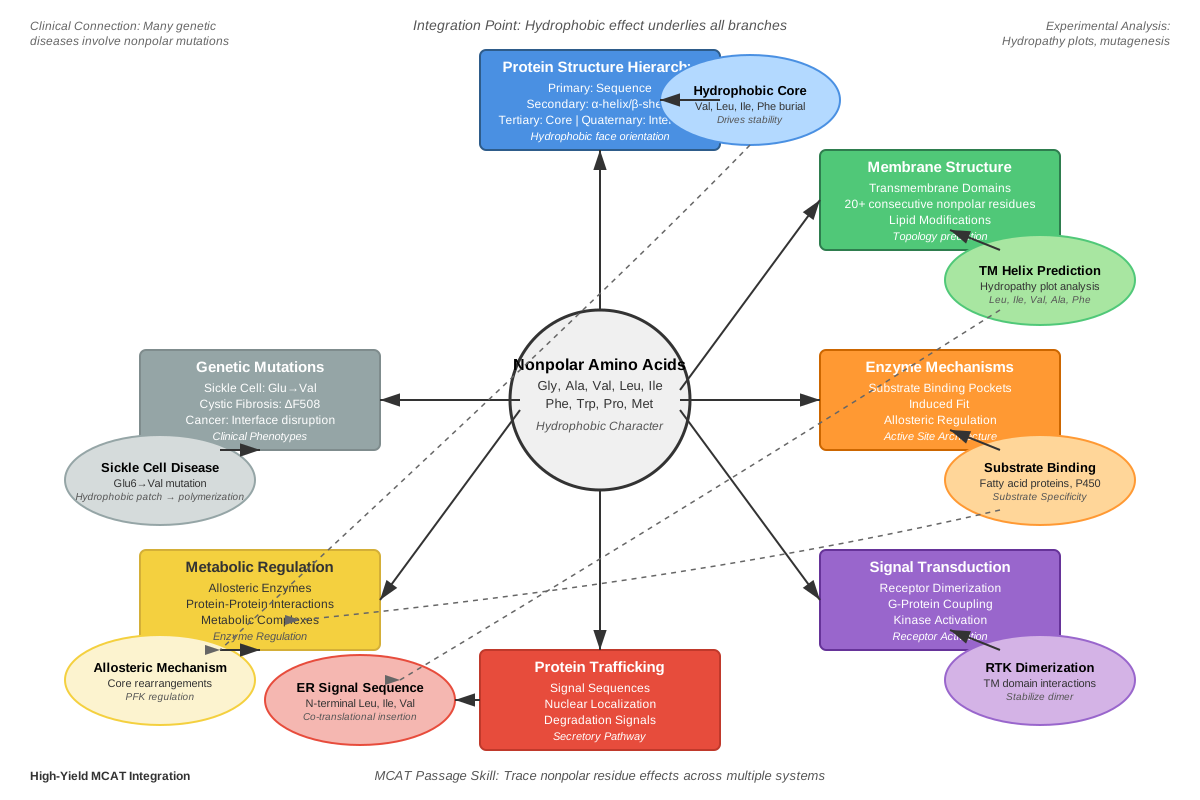
Within the broader context of Biochemistry MCAT content, nonpolar amino acids connect to numerous essential topics including protein structure (primary through quaternary), membrane biology, enzyme kinetics and mechanisms, signal transduction, and molecular genetics. The hydrophobic effect—driven largely by nonpolar amino acid residues—is one of the primary forces governing protein folding and stability, making this topic foundational for understanding virtually all protein-related phenomena tested on the exam.
Learning Objectives
- [ ] Define nonpolar amino acids using accurate Biochemistry terminology, including the chemical basis for their classification
- [ ] Explain why nonpolar amino acids matter for the MCAT, including their frequency and application in exam questions
- [ ] Apply knowledge of nonpolar amino acids to exam-style questions involving protein structure, function, and experimental analysis
- [ ] Identify common mistakes related to nonpolar amino acids, particularly regarding borderline cases and structural predictions
- [ ] Connect nonpolar amino acids to related Biochemistry concepts including the hydrophobic effect, protein folding, and membrane structure
- [ ] Predict the location of nonpolar amino acid residues within folded protein structures based on their chemical properties
- [ ] Analyze the functional consequences of mutations involving nonpolar amino acids in protein sequences
- [ ] Distinguish between different subcategories of nonpolar amino acids (aliphatic, aromatic, and sulfur-containing)
Prerequisites
- Basic organic chemistry functional groups: Essential for recognizing the chemical structures of amino acid side chains and understanding why certain groups are classified as nonpolar
- Polarity and electronegativity concepts: Necessary to understand why nonpolar amino acids lack significant dipole moments and do not interact favorably with water
- General amino acid structure: Students must know the common backbone structure (amino group, carboxyl group, alpha carbon, and R group) shared by all amino acids
- Hydrophobic effect fundamentals: Understanding that nonpolar molecules minimize contact with water by aggregating together is crucial for predicting protein behavior
- Protein structure hierarchy: Basic familiarity with primary, secondary, tertiary, and quaternary structure provides context for where nonpolar amino acids exert their influence
Why This Topic Matters
Clinical and Real-World Significance
Nonpolar amino acids play critical roles in human health and disease. Many genetic disorders result from mutations that replace nonpolar amino acids with polar or charged residues, disrupting protein folding and causing conditions such as cystic fibrosis (where misfolded CFTR protein fails to reach the cell membrane) or various forms of amyloidosis (where proteins aggregate abnormally). Pharmaceutical drug design heavily relies on understanding nonpolar amino acid distributions in protein binding sites—many drugs are designed with hydrophobic regions that interact specifically with nonpolar residues in target proteins. Additionally, membrane proteins, which constitute approximately 30% of the human proteome and serve as targets for over 50% of all drugs, depend on nonpolar amino acids to anchor them within lipid bilayers.
MCAT Exam Statistics and Question Types
Amino acid classification questions appear on virtually every MCAT administration, with nonpolar amino acids featured in approximately 15-20% of Biochemistry passages. The MCAT tests this topic through multiple question formats:
- Discrete questions asking students to identify which amino acids would be found in specific protein environments
- Passage-based questions presenting experimental data on protein mutations, solubility studies, or structural analyses
- Pseudo-discrete questions embedded in passages about unrelated topics that require amino acid classification as a prerequisite skill
- Data interpretation questions involving hydropathy plots, protein crystallography data, or membrane protein topology predictions
Common Exam Passage Contexts
Nonpolar amino acids frequently appear in MCAT passages discussing:
- Protein engineering and site-directed mutagenesis experiments
- Membrane protein structure and function, particularly ion channels and receptors
- Enzyme active sites and substrate specificity
- Protein purification techniques (hydrophobic interaction chromatography)
- Protein folding diseases and chaperone proteins
- Detergent effects on membrane proteins
- Hydrophobic drug-protein interactions
Core Concepts
Definition and Chemical Basis of Nonpolar Amino Acids
Nonpolar amino acids are defined as amino acids possessing side chains that are predominantly hydrocarbon in nature, lacking significant partial charges or highly electronegative atoms (such as oxygen or nitrogen) that would create substantial dipole moments. The nonpolar classification stems from the even distribution of electron density across the side chain, resulting in minimal or no permanent dipole moment. These amino acids exhibit hydrophobic (water-fearing) behavior, meaning they preferentially associate with other nonpolar molecules rather than with water.
The chemical basis for nonpolarity lies in the composition of the R group. Nonpolar side chains consist primarily of carbon and hydrogen atoms, which have similar electronegativities (C = 2.5, H = 2.1 on the Pauling scale). This similarity prevents significant charge separation within the molecule. Unlike polar amino acids that contain hydroxyl (-OH), thiol (-SH), amide (-CONH₂), or other functional groups capable of hydrogen bonding, nonpolar amino acids lack these features in their side chains.
The Nine Nonpolar Amino Acids
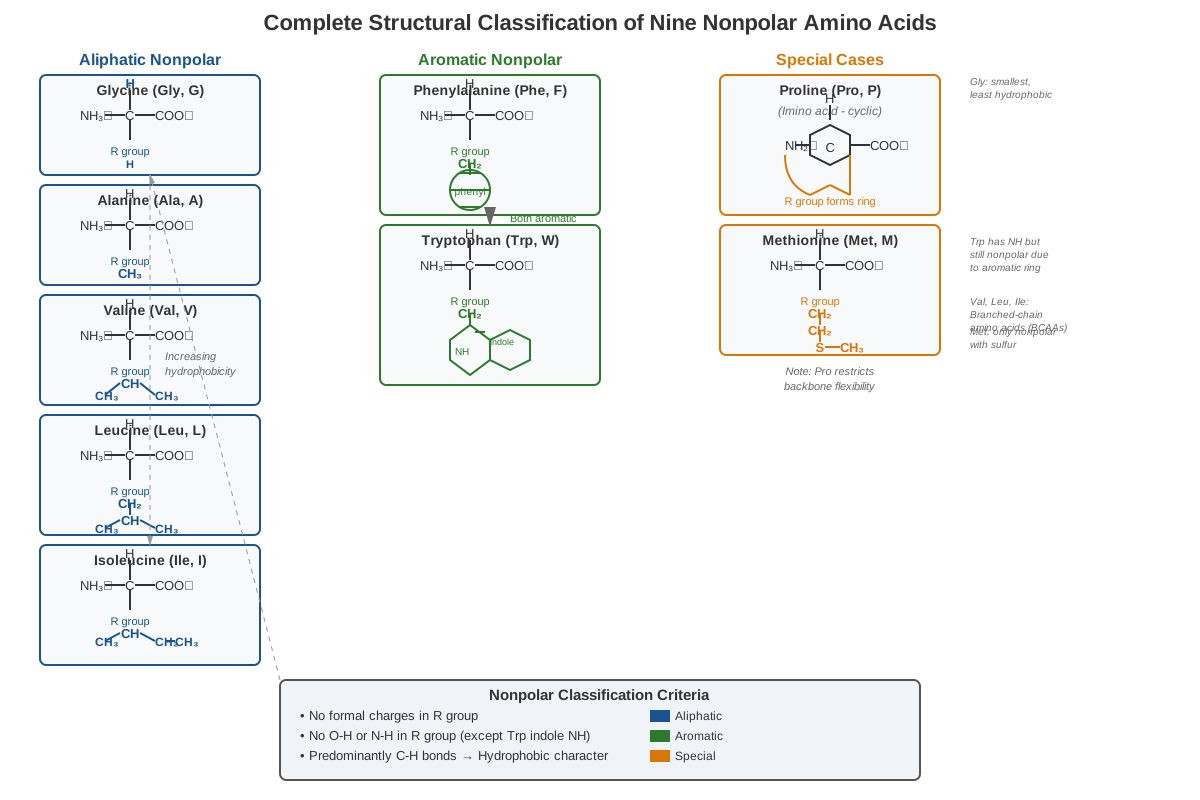
The standard classification includes nine nonpolar amino acids, which can be further subdivided into three categories:
Aliphatic Nonpolar Amino Acids
- Glycine (Gly, G): The simplest amino acid with a hydrogen atom as its R group. While technically having no side chain, glycine is classified as nonpolar due to its lack of polarity. Its small size provides unique conformational flexibility, allowing it to fit in tight turns and irregular structures.
- Alanine (Ala, A): Contains a methyl group (-CH₃) as its side chain. This simple hydrocarbon group is completely nonpolar and serves as the prototypical small nonpolar amino acid.
- Valine (Val, V): Features a branched aliphatic side chain (isopropyl group). The branching creates steric bulk that influences protein structure, particularly in beta-sheet formation.
- Leucine (Leu, L): Contains an isobutyl side chain, making it one of the most hydrophobic amino acids. Leucine is frequently found in the hydrophobic core of proteins and in leucine zipper motifs involved in protein dimerization.
- Isoleucine (Ile, I): Possesses a branched side chain similar to valine but with an additional carbon, creating a sec-butyl group. The branching at the beta carbon makes isoleucine particularly rigid and highly hydrophobic.
- Proline (Pro, P): Unique among amino acids because its side chain forms a cyclic structure by connecting back to the backbone nitrogen. This creates a rigid, constrained structure that introduces kinks in alpha helices and is common in turns. While the ring contains nitrogen, the overall structure is nonpolar.
Aromatic Nonpolar Amino Acids
- Phenylalanine (Phe, F): Contains a benzyl side chain (phenyl ring attached to a methylene group). The aromatic ring is highly hydrophobic and can participate in pi-stacking interactions with other aromatic residues.
- Tryptophan (Trp, W): Features an indole side chain (benzene ring fused to a pyrrole ring). Despite containing a nitrogen atom in the indole ring, tryptophan is classified as nonpolar because the nitrogen is part of the aromatic system and not available for hydrogen bonding as a donor (though it can serve as a weak acceptor). Tryptophan is the largest and most hydrophobic standard amino acid.
Sulfur-Containing Nonpolar Amino Acid
- Methionine (Met, M): Contains a thioether side chain (-CH₂-CH₂-S-CH₃). The sulfur atom is bonded to two carbon atoms, preventing it from acting as a hydrogen bond donor or acceptor, making the overall side chain nonpolar despite the presence of sulfur.
Comparison Table of Nonpolar Amino Acids
| Amino Acid | Three-Letter | One-Letter | Side Chain Structure | Relative Size | Hydrophobicity Index* |
|---|---|---|---|---|---|
| Glycine | Gly | G | -H | Smallest | -0.4 |
| Alanine | Ala | A | -CH₃ | Small | 1.8 |
| Valine | Val | V | -CH(CH₃)₂ | Medium | 4.2 |
| Leucine | Leu | L | -CH₂CH(CH₃)₂ | Medium-Large | 3.8 |
| Isoleucine | Ile | I | -CH(CH₃)CH₂CH₃ | Medium-Large | 4.5 |
| Proline | Pro | P | Cyclic (ring) | Small-Medium | -1.6 |
| Phenylalanine | Phe | F | -CH₂-C₆H₅ | Large | 2.8 |
| Tryptophan | Trp | W | -CH₂-indole | Largest | -0.9 |
| Methionine | Met | M | -CH₂CH₂SCH₃ | Medium-Large | 1.9 |
*Hydrophobicity index values from Kyte-Doolittle scale; higher values indicate greater hydrophobicity
The Hydrophobic Effect and Protein Folding
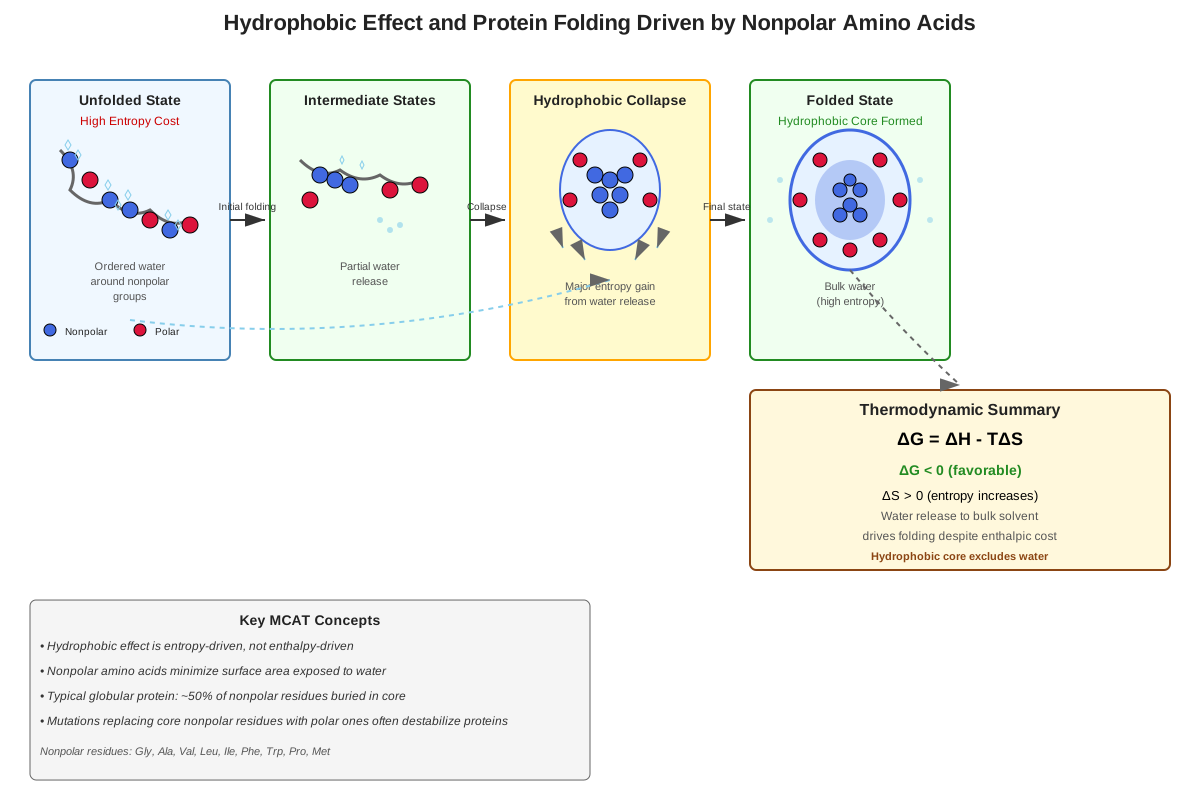
The hydrophobic effect is the primary thermodynamic driving force for protein folding and is directly mediated by nonpolar amino acids. When proteins fold in aqueous solution, nonpolar amino acid residues cluster together in the interior of the protein, away from water, while polar and charged residues tend to remain on the surface where they can interact with the aqueous environment. This arrangement is thermodynamically favorable not because of attractive forces between nonpolar residues, but because it maximizes the entropy of water molecules.
When nonpolar surfaces are exposed to water, water molecules must form ordered cage-like structures around them, decreasing entropy. By burying nonpolar residues in the protein core, these water molecules are released and can adopt more disordered, higher-entropy states. The free energy change (ΔG) for protein folding is thus driven by the increase in entropy of water molecules (TΔS term), despite the decrease in conformational entropy of the protein chain itself.
Structural Roles in Proteins
Nonpolar amino acids serve several critical structural functions:
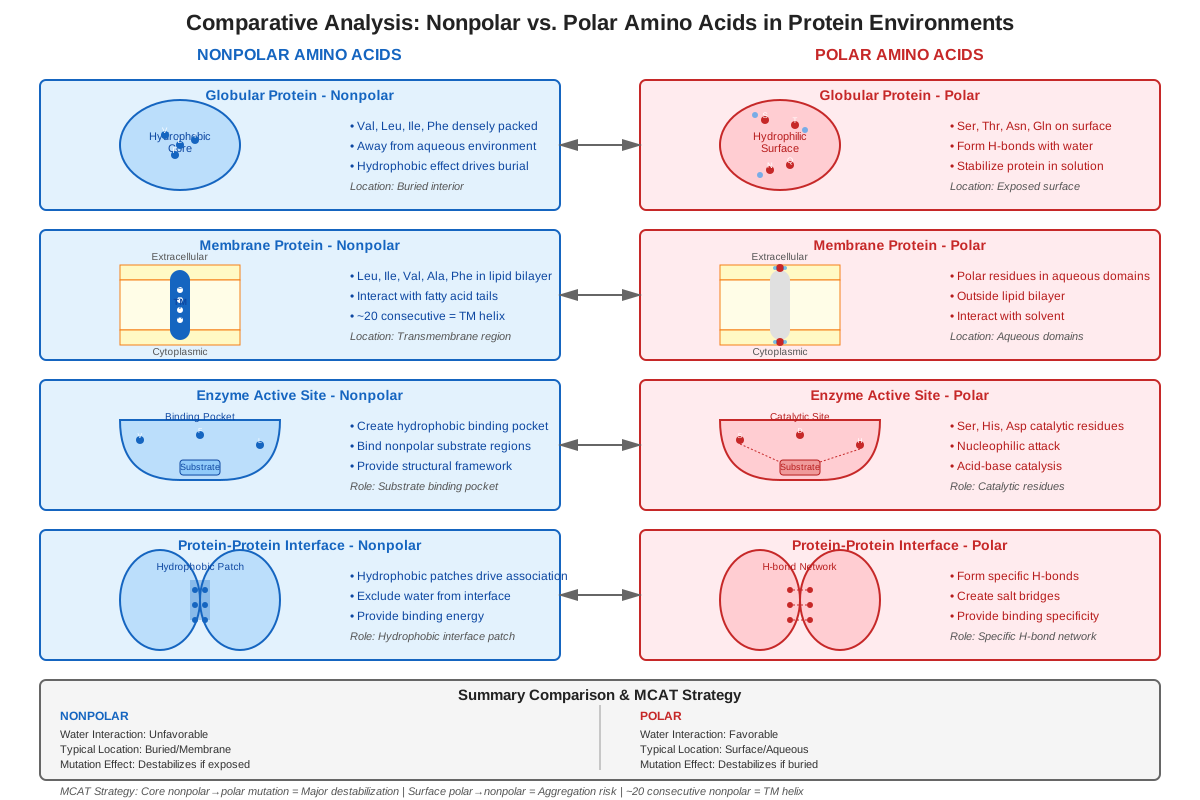
- Hydrophobic core formation: In globular proteins, nonpolar residues pack tightly in the interior, creating a stable, water-excluded environment that stabilizes the folded state.
- Membrane protein anchoring: Transmembrane domains of membrane proteins consist predominantly of nonpolar amino acids arranged in alpha-helices or beta-barrels that interact favorably with the hydrophobic lipid bilayer interior.
- Protein-protein interaction interfaces: Many protein-protein interactions involve hydrophobic patches on protein surfaces where nonpolar residues from both proteins come together, excluding water and stabilizing the complex.
- Secondary structure preferences: Different nonpolar amino acids show preferences for specific secondary structures. For example, valine and isoleucine favor beta-sheets due to their branched structures, while alanine and leucine are commonly found in alpha-helices.
Special Considerations
Glycine and proline deserve special attention due to their unique structural properties:
- Glycine's flexibility: With only a hydrogen as its R group, glycine lacks steric constraints and can adopt phi and psi angles forbidden to other amino acids. This makes it essential in tight turns and irregular structures but destabilizing in regular secondary structures like alpha-helices.
- Proline's rigidity: The cyclic structure of proline restricts rotation around the N-Cα bond, making it a "helix breaker" in alpha-helices. Proline is commonly found at the beginning of alpha-helices, in turns, and in collagen's unique triple helix structure.
Aromatic amino acids (phenylalanine and tryptophan) can participate in additional interactions beyond simple hydrophobic effects:
- Pi-stacking: Aromatic rings can stack parallel or perpendicular to each other, providing additional stabilization
- Cation-pi interactions: Aromatic rings can interact with positively charged residues (lysine, arginine)
- UV absorption: The aromatic rings absorb UV light at 280 nm, making these residues useful for protein quantification
Concept Relationships
The concepts within nonpolar amino acids are interconnected through multiple relationships. The chemical structure of each amino acid's side chain → determines its polarity classification → which predicts its location within folded proteins → which influences protein stability and function.
More specifically: Hydrocarbon-rich side chains → exhibit hydrophobic character → drive hydrophobic effect → leads to burial in protein cores → results in stable tertiary structure. Simultaneously, nonpolar residues in membrane proteins → interact favorably with lipid bilayer → enable membrane protein anchoring → facilitates cellular compartmentalization and signaling.
The relationship to prerequisite topics is equally important. Organic chemistry principles (electronegativity, functional groups) → enable classification of amino acids → which builds toward understanding protein structure. The hydrophobic effect (from general chemistry and thermodynamics) → explains why nonpolar amino acids cluster → which is essential for predicting protein folding patterns.
Connections to related Biochemistry topics include:
- Protein structure ← nonpolar amino acids form hydrophobic cores
- Membrane biology ← transmembrane domains rich in nonpolar residues
- Enzyme mechanisms ← hydrophobic substrate binding pockets
- Protein purification ← hydrophobic interaction chromatography exploits nonpolar residues
- Molecular genetics ← mutations affecting nonpolar residues can cause disease
- Thermodynamics ← hydrophobic effect drives spontaneous protein folding
High-Yield Facts
⭐ The nine nonpolar amino acids are: Glycine, Alanine, Valine, Leucine, Isoleucine, Proline, Phenylalanine, Tryptophan, and Methionine (use mnemonic: GAV LIP FTM or "Gave Lip From The Mouth")
⭐ Nonpolar amino acids are predominantly found in the interior of globular proteins and in transmembrane domains of membrane proteins, away from aqueous environments
⭐ The hydrophobic effect, driven by entropy increase of water molecules, is the primary force causing nonpolar amino acids to cluster together during protein folding
⭐ Glycine is the most flexible amino acid due to its lack of a side chain, allowing it to adopt conformations forbidden to other amino acids
⭐ Proline is a helix breaker due to its cyclic structure that restricts backbone rotation and lacks an amide hydrogen for hydrogen bonding
- Valine and isoleucine have branched side chains that favor beta-sheet structures over alpha-helices
- Tryptophan is classified as nonpolar despite containing nitrogen because the nitrogen is part of the aromatic system and not available for hydrogen bonding
- Leucine is one of the most hydrophobic amino acids and is frequently found in leucine zipper motifs for protein dimerization
- Phenylalanine and tryptophan can participate in pi-stacking interactions with other aromatic residues
- Methionine contains sulfur but is nonpolar because the sulfur is bonded to two carbons (thioether), preventing hydrogen bonding
- Mutations replacing nonpolar residues with polar or charged residues in protein cores typically destabilize protein structure
- Hydropathy plots (hydrophobicity vs. sequence position) can predict transmembrane domains by identifying stretches of consecutive nonpolar amino acids
Quick check — test yourself on Nonpolar amino acids so far.
Try Flashcards →Common Misconceptions
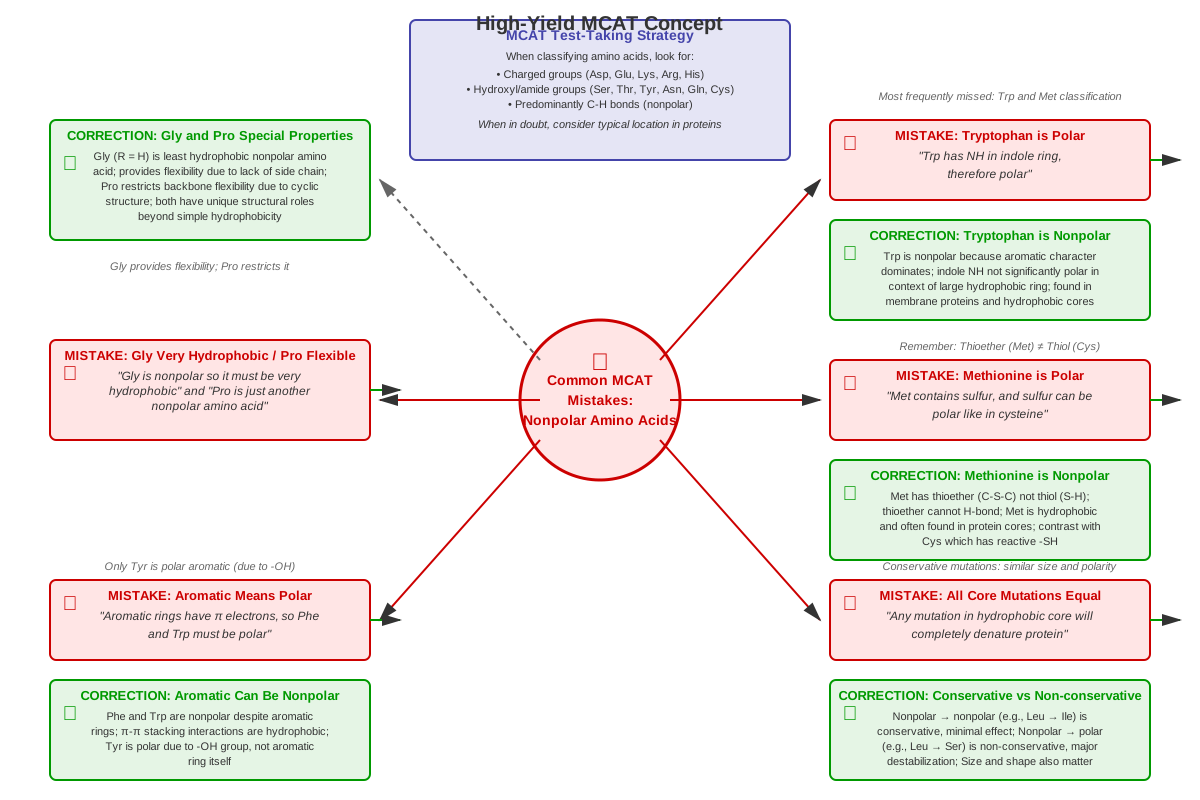
Misconception: All amino acids containing heteroatoms (N, O, S) are polar.
Correction: Tryptophan contains nitrogen and methionine contains sulfur, but both are classified as nonpolar. The key is whether the heteroatom can participate in hydrogen bonding. In tryptophan, the nitrogen is part of the aromatic system and not available as a hydrogen bond donor. In methionine, the sulfur is bonded to two carbons (thioether) and cannot donate or accept hydrogen bonds effectively.
Misconception: Glycine is polar because it has no side chain.
Correction: Glycine is classified as nonpolar. While it has only a hydrogen atom as its R group, this hydrogen is nonpolar. Glycine's unique property is its flexibility, not polarity. The absence of a side chain means there are no polar functional groups present.
Misconception: Proline can form alpha-helices just like other amino acids.
Correction: Proline is a "helix breaker" that disrupts alpha-helix formation. Its cyclic structure restricts the phi angle to approximately -60°, and it lacks an amide hydrogen necessary for the i to i+4 hydrogen bonding pattern that stabilizes alpha-helices. Proline is commonly found at the beginning of helices or in turns, but rarely within the middle of an alpha-helix.
Misconception: Nonpolar amino acids never appear on protein surfaces.
Correction: While nonpolar amino acids preferentially locate in protein interiors, they can appear on surfaces, particularly in hydrophobic patches that mediate protein-protein interactions, in binding sites for hydrophobic ligands, or in regions that interact with membrane lipids. Additionally, some proteins have evolved to have hydrophobic surface patches for specific functional reasons.
Misconception: All nonpolar amino acids have the same hydrophobicity.
Correction: Nonpolar amino acids vary significantly in their degree of hydrophobicity. Isoleucine, valine, and leucine are highly hydrophobic, while glycine and proline are only weakly hydrophobic (and sometimes classified as "special case" amino acids). Tryptophan, despite being large and aromatic, has intermediate hydrophobicity due to its indole nitrogen. These differences affect where specific residues are found within protein structures.
Misconception: The hydrophobic effect is due to attractive forces between nonpolar molecules.
Correction: The hydrophobic effect is primarily an entropy-driven phenomenon related to water molecules, not attractive forces between nonpolar molecules. When nonpolar surfaces are exposed to water, water molecules form ordered structures around them (decreasing entropy). When nonpolar molecules cluster together, water molecules are released and can adopt more disordered states (increasing entropy). The favorable free energy change comes from this entropy increase (TΔS), not from attractions between the nonpolar molecules themselves.
Worked Examples
Example 1: Predicting Mutation Effects on Protein Stability
Question: A researcher performs site-directed mutagenesis on a globular enzyme, replacing leucine-47, which is located in the hydrophobic core of the protein, with glutamic acid. Predict the effect of this mutation on protein stability and function, and explain your reasoning.
Solution:
Step 1: Identify the properties of the original and mutant amino acids.
- Leucine (Leu, L) is a nonpolar amino acid with a hydrophobic isobutyl side chain
- Glutamic acid (Glu, E) is a polar, negatively charged amino acid with a carboxyl group in its side chain
Step 2: Consider the location of the mutation.
- Position 47 is described as being in the hydrophobic core of the protein
- The hydrophobic core typically consists of tightly packed nonpolar amino acids that exclude water
Step 3: Analyze the thermodynamic consequences.
- Replacing a nonpolar residue (leucine) with a charged residue (glutamic acid) in the hydrophobic core is highly unfavorable
- The charged carboxyl group of glutamic acid will be unable to form favorable interactions with surrounding nonpolar residues
- The buried charged group will be unable to interact with water or form salt bridges with oppositely charged residues
- This creates a significant energetic penalty, destabilizing the folded state
Step 4: Predict the outcome.
- The mutation will likely destabilize the protein significantly, potentially causing misfolding or aggregation
- The protein may have reduced stability (lower melting temperature)
- The protein may show reduced expression levels if it misfolds in the cell and is degraded
- Enzymatic activity will likely be severely reduced or abolished due to structural disruption
Answer: The L47E mutation will significantly destabilize the protein structure. Introducing a charged, hydrophilic glutamic acid residue into the hydrophobic core creates an energetically unfavorable environment for the charged side chain, which cannot form appropriate interactions with surrounding nonpolar residues or with water. This will likely cause protein misfolding, reduced stability, and loss of enzymatic function.
Connection to Learning Objectives: This example demonstrates the application of nonpolar amino acid knowledge to predict mutation effects (LO 3) and connects to protein folding concepts (LO 5).
Example 2: Analyzing a Hydropathy Plot
Question: A hydropathy plot of an unknown protein shows three distinct regions with positive hydropathy values (indicating hydrophobicity) spanning approximately 20-25 amino acids each, separated by regions of negative or near-zero hydropathy values. Each hydrophobic region contains predominantly valine, leucine, isoleucine, and phenylalanine residues. What type of protein is this likely to be, and what is the structural significance of these hydrophobic regions?
Solution:
Step 1: Interpret the hydropathy plot data.
- Positive hydropathy values indicate hydrophobic (nonpolar) regions
- Three distinct hydrophobic stretches of 20-25 amino acids each
- These regions are rich in highly hydrophobic nonpolar amino acids (Val, Leu, Ile, Phe)
- Regions are separated by less hydrophobic or hydrophilic stretches
Step 2: Recall structural requirements for different protein types.
- Transmembrane alpha-helices typically require 20-25 amino acids to span a lipid bilayer (~30 Å thickness)
- Membrane proteins have hydrophobic transmembrane domains that interact with lipid tails
- Globular proteins typically have hydrophobic cores, but these wouldn't show as distinct separated regions in a linear sequence plot
Step 3: Identify the protein type.
- The presence of three distinct hydrophobic stretches of appropriate length strongly suggests this is a membrane protein with three transmembrane domains
- Each hydrophobic region likely forms an alpha-helix that spans the lipid bilayer
Step 4: Explain structural significance.
- The nonpolar amino acids in these regions interact favorably with the hydrophobic interior of the lipid bilayer
- The alpha-helical structure maximizes hydrogen bonding between backbone atoms, satisfying their polar character while presenting nonpolar side chains to the lipid environment
- The hydrophilic regions between transmembrane domains likely form loops on either the cytoplasmic or extracellular side of the membrane
- This protein might function as a receptor, channel, or transporter
Answer: This is most likely a membrane protein with three transmembrane domains. The three hydrophobic regions rich in nonpolar amino acids (Val, Leu, Ile, Phe) represent transmembrane alpha-helices that span the lipid bilayer. The nonpolar side chains interact favorably with the hydrophobic lipid tails, anchoring the protein in the membrane. The less hydrophobic regions between these domains form extramembrane loops exposed to the aqueous environment.
Connection to Learning Objectives: This example applies knowledge of nonpolar amino acids to interpret experimental data (LO 3), demonstrates their role in membrane protein structure (LO 5), and shows how to predict residue location based on chemical properties (LO 6).
Exam Strategy
Approaching MCAT Questions on Nonpolar Amino Acids
Strategy 1: Rapid Classification System
Develop a mental checklist for quickly classifying amino acids:
- Does the side chain contain O, N, or S that can hydrogen bond? → If yes, likely polar or charged
- Is it purely hydrocarbon or aromatic? → If yes, likely nonpolar
- Special cases: Check for Trp (aromatic N doesn't H-bond), Met (thioether S doesn't H-bond), Gly (just H), Pro (cyclic)
Strategy 2: Location Prediction
When questions ask about amino acid location in proteins:
- Nonpolar → interior of globular proteins OR transmembrane domains
- Polar uncharged → surface of globular proteins OR membrane protein loops
- Charged → surface of globular proteins, rarely buried unless in active sites
Strategy 3: Mutation Analysis
For questions about mutations:
- Classify both original and mutant amino acids
- Consider the location (core, surface, active site)
- Predict: nonpolar → polar/charged in core = destabilizing; polar → nonpolar on surface = may reduce solubility
Trigger Words and Phrases
Watch for these key phrases in MCAT questions:
- "Hydrophobic core" → expect nonpolar amino acids
- "Transmembrane domain" → expect stretches of nonpolar amino acids
- "Protein stability" → consider role of nonpolar residues in hydrophobic core
- "Membrane-spanning region" → look for nonpolar amino acids
- "Protein-protein interaction interface" → may involve hydrophobic patches
- "Aqueous environment" → expect polar/charged residues, not nonpolar
- "Lipid bilayer" → nonpolar amino acids interact with hydrophobic lipid tails
- "Helix breaker" → think proline
- "Conformational flexibility" → think glycine
Process of Elimination Tips
When eliminating answer choices:
- If a question asks which amino acid would be found in a hydrophobic core, eliminate any answer containing polar or charged amino acids first
- If a question asks about transmembrane domains, eliminate answers suggesting polar amino acids would predominate
- If a question involves protein stability and core mutations, eliminate answers that suggest nonpolar → charged mutations would be stabilizing
- For questions about helix formation, eliminate proline as a candidate for the middle of an alpha-helix
- For questions requiring conformational flexibility, eliminate large, bulky amino acids and favor glycine
Time Allocation Advice
- Amino acid classification questions: Should take 30-45 seconds maximum. If you've memorized the classifications, these are quick points.
- Mutation prediction questions: Allocate 60-90 seconds. Quickly classify amino acids, consider location, predict outcome.
- Passage-based questions with experimental data: May require 90-120 seconds. Read the data carefully, but apply the same classification principles.
- If you're unsure about a borderline case (like whether tryptophan is polar or nonpolar), use the 20-second rule: make your best guess based on the context and move on. Don't let one amino acid classification consume excessive time.
Memory Techniques
Mnemonic for the Nine Nonpolar Amino Acids
"GAV LIP FTM" (Gave Lip From The Mouth)
- Glycine
- Alanine
- Valine
- Leucine
- Isoleucine
- Proline
- Fhenylalanine (Phenylalanine)
- Tryptophan
- Methionine
Alternative mnemonic: "Farmers Grow Vegetables And Lettuce In Moist Warm Places"
- Fhenylalanine
- Glycine
- Valine
- Alanine
- Leucine
- Isoleucine
- Methionine
- Warm = Tryptophan
- Places = Proline
Visualization Strategy: The Protein Core
Visualize a protein as a ball with a dry, oily interior (the hydrophobic core) and a wet, water-loving exterior. Nonpolar amino acids are like oil droplets that naturally migrate to the interior, while polar and charged amino acids are like water-soluble molecules that stay on the surface. When you see a question about protein structure, immediately visualize this oil-and-water separation.
Aromatic Amino Acids: "FYW"
Remember the three aromatic amino acids as "FYW" (pronounced "few"):
- Fhenylalanine (nonpolar)
- Y (Tyrosine - polar, not nonpolar!)
- W (Tryptophan - nonpolar)
This helps you remember that two of the three aromatics are nonpolar, but tyrosine is polar due to its hydroxyl group.
Special Cases: "GP" (Glycine and Proline)
Remember "GP" as the "special" nonpolar amino acids:
- Glycine = most flexible (no side chain)
- Proline = most rigid (cyclic structure, helix breaker)
Branched-Chain Amino Acids: "VIL"
The three branched-chain amino acids are "VIL" (sounds like "vile"):
- Valine
- Isoleucine
- Leucine
These are all highly hydrophobic and favor beta-sheet structures.
Sulfur-Containing Amino Acids: "CM"
"CM" (centimeter) for the two sulfur-containing amino acids:
- Cysteine (polar - can form disulfide bonds)
- Methionine (nonpolar - thioether)
Remember: Methionine is the nonpolar one because its sulfur is "buried" between two carbons.
Summary
Nonpolar amino acids represent a fundamental classification of nine amino acids characterized by hydrocarbon-rich or aromatic side chains that lack significant polarity and exhibit hydrophobic behavior. These amino acids—glycine, alanine, valine, leucine, isoleucine, proline, phenylalanine, tryptophan, and methionine—play critical roles in protein structure and function by clustering in hydrophobic cores of globular proteins and forming transmembrane domains in membrane proteins. The hydrophobic effect, driven by the entropy increase of water molecules when nonpolar surfaces are removed from aqueous solution, is the primary thermodynamic force causing these residues to aggregate. Understanding nonpolar amino acids is essential for predicting protein folding patterns, analyzing mutation effects, interpreting experimental data, and answering MCAT questions about protein structure and function. Special attention should be paid to glycine's unique flexibility, proline's helix-breaking properties, and the classification of tryptophan and methionine as nonpolar despite containing heteroatoms. Mastery of this topic enables students to rapidly classify amino acids, predict their locations within proteins, and analyze the structural and functional consequences of amino acid substitutions—all high-yield skills for MCAT success.
Key Takeaways
- Nine nonpolar amino acids (Gly, Ala, Val, Leu, Ile, Pro, Phe, Trp, Met) are characterized by hydrocarbon-rich or aromatic side chains that lack significant polarity and exhibit hydrophobic behavior
- The hydrophobic effect drives nonpolar amino acids to cluster in protein interiors and transmembrane domains, maximizing water entropy by minimizing nonpolar surface area exposed to aqueous solution
- Glycine is uniquely flexible due to its lack of a side chain, while proline is uniquely rigid and acts as a helix breaker due to its cyclic structure
- Tryptophan and methionine are classified as nonpolar despite containing nitrogen and sulfur, respectively, because these heteroatoms cannot effectively participate in hydrogen bonding
- Nonpolar amino acids are predominantly found in hydrophobic cores of globular proteins and transmembrane domains of membrane proteins, while polar and charged residues typically occupy surface positions
- Mutations replacing nonpolar residues with polar or charged residues in protein cores typically destabilize protein structure and can lead to misfolding diseases
- Rapid amino acid classification and location prediction are essential MCAT skills that require memorization of the nine nonpolar amino acids and understanding of the hydrophobic effect
Related Topics
Polar Amino Acids: Understanding polar amino acids (Ser, Thr, Cys, Asn, Gln, Tyr) complements knowledge of nonpolar amino acids and is essential for complete amino acid classification. Mastering nonpolar amino acids provides the foundation for distinguishing them from polar residues.
Charged Amino Acids: The acidic (Asp, Glu) and basic (Lys, Arg, His) amino acids represent the third major classification. Understanding how charged residues differ from nonpolar residues in terms of location and function builds on the concepts learned here.
Protein Secondary Structure: Alpha-helices and beta-sheets have different preferences for specific amino acids. Nonpolar amino acids play distinct roles in these structures, with some (like Ala, Leu) favoring helices and others (like Val, Ile) favoring sheets.
Protein Tertiary and Quaternary Structure: The three-dimensional folding of proteins and assembly of multi-subunit complexes depend heavily on the hydrophobic effect and nonpolar amino acid interactions learned in this topic.
Membrane Protein Structure: Transmembrane domains, membrane protein topology, and lipid-protein interactions all build directly on understanding how nonpolar amino acids interact with hydrophobic environments.
Enzyme Mechanisms and Active Sites: Many enzyme active sites contain hydrophobic pockets lined with nonpolar amino acids that bind hydrophobic substrates or portions of substrates.
Practice CTA
Now that you've mastered the fundamentals of nonpolar amino acids, it's time to reinforce your knowledge through active practice. Challenge yourself with the practice questions and flashcards designed specifically for this topic. These resources will help you identify any remaining gaps in your understanding and build the rapid recall skills essential for MCAT success. Remember, the difference between knowing the material and scoring points on test day is active retrieval practice. Each practice question you work through strengthens the neural pathways that will allow you to quickly and accurately classify amino acids, predict protein behavior, and analyze experimental data under timed conditions. You've built a strong foundation—now cement it through deliberate practice!
Sign up free to keep reading
Create a free AnvayaPrep account to finish this MCAT guide on Nonpolar amino acids — plus flashcards and practice questions.