Overview
The peptide bond is the fundamental linkage that connects amino acids into polypeptide chains, forming the backbone of all proteins. Understanding peptide bond resonance is crucial for MCAT success because it explains the unique structural and chemical properties of proteins that appear repeatedly across Biochemistry, Organic Chemistry, and Biological Sciences passages. The resonance stabilization of the peptide bond creates a partial double-bond character that restricts rotation, enforces planarity, and determines the three-dimensional architecture of proteins—concepts that underpin protein folding, enzyme function, and molecular recognition.
Peptide bond resonance Biochemistry represents a high-yield intersection of organic chemistry principles and biological macromolecule structure. The MCAT frequently tests this concept through questions about protein secondary structure, conformational restrictions, and the physical properties that distinguish peptide bonds from typical single bonds. Students who master peptide bond resonance gain insight into why proteins adopt specific conformations, how mutations affect protein stability, and why certain amino acid sequences favor particular structural motifs like α-helices and β-sheets.
This topic serves as a bridge between small-molecule organic chemistry and macromolecular biochemistry. The resonance concept, familiar from aromatic compounds and carboxylic acid derivatives, applies directly to the amide linkage in proteins. Understanding peptide bond resonance MCAT questions requires integrating knowledge of electron delocalization, molecular geometry, bond energies, and the relationship between structure and function—all core competencies assessed throughout the exam. Mastery of this topic enhances comprehension of protein structure hierarchies, enzyme mechanisms, and the molecular basis of genetic diseases.
Learning Objectives
- [ ] Define peptide bond resonance using accurate Biochemistry terminology
- [ ] Explain why peptide bond resonance matters for the MCAT
- [ ] Apply peptide bond resonance to exam-style questions
- [ ] Identify common mistakes related to peptide bond resonance
- [ ] Connect peptide bond resonance to related Biochemistry concepts
- [ ] Predict the conformational constraints imposed by peptide bond resonance on polypeptide chains
- [ ] Analyze how resonance stabilization affects the chemical reactivity of peptide bonds
- [ ] Evaluate the energetic consequences of disrupting peptide bond planarity in protein structures
Prerequisites
- Resonance structures and electron delocalization: Essential for understanding how electron density distributes across the peptide bond, creating partial double-bond character
- Amino acid structure: Required to recognize the carboxyl and amino groups that form peptide bonds during condensation reactions
- Amide functional group chemistry: The peptide bond is an amide linkage; familiarity with amide properties provides the foundation for understanding peptide-specific characteristics
- Molecular orbital theory basics: Helps visualize the π-orbital overlap that enables resonance stabilization
- Bond rotation and conformational analysis: Necessary to appreciate how restricted rotation around the peptide bond constrains protein structure
Why This Topic Matters
Peptide bond resonance appears in approximately 15-20% of MCAT Biochemistry passages, making it one of the most frequently tested structural concepts in Amino Acids and Proteins. The MCAT tests this topic through direct questions about bond properties, passage-based questions requiring interpretation of protein structure data, and experimental scenarios involving protein denaturation or conformational analysis. Understanding resonance is essential for answering questions about Ramachandran plots, secondary structure prediction, and the effects of proline on protein folding.
Clinically, peptide bond properties underlie numerous pathological conditions. Prion diseases result from misfolded proteins with altered backbone conformations. Collagen disorders like Ehlers-Danlos syndrome involve mutations that disrupt the regular geometry required by peptide bond planarity. Protease inhibitors used in HIV treatment target the peptide bonds in viral proteins, exploiting their specific chemical properties. The pharmaceutical industry designs peptidomimetic drugs that mimic or resist peptide bond cleavage, requiring deep understanding of resonance-derived properties.
On the MCAT, this topic commonly appears in passages describing X-ray crystallography data showing planar peptide units, NMR studies revealing restricted rotation, or computational modeling of protein conformations. Questions may present experimental data about bond lengths, ask students to predict which bonds can rotate freely, or require analysis of how mutations affecting backbone geometry impact protein function. The topic integrates seamlessly with enzyme kinetics passages (protease mechanisms), structural biology passages (secondary structure formation), and genetic passages (missense mutations affecting backbone conformation).
Core Concepts
The Chemical Nature of the Peptide Bond
The peptide bond forms through a condensation reaction between the carboxyl group of one amino acid and the amino group of another, releasing water and creating an amide linkage. This C-N bond connects adjacent amino acids in the polypeptide backbone. In simple terms, the peptide bond would be expected to behave as a typical single bond with free rotation around the C-N axis. However, peptide bond resonance fundamentally alters this expectation.
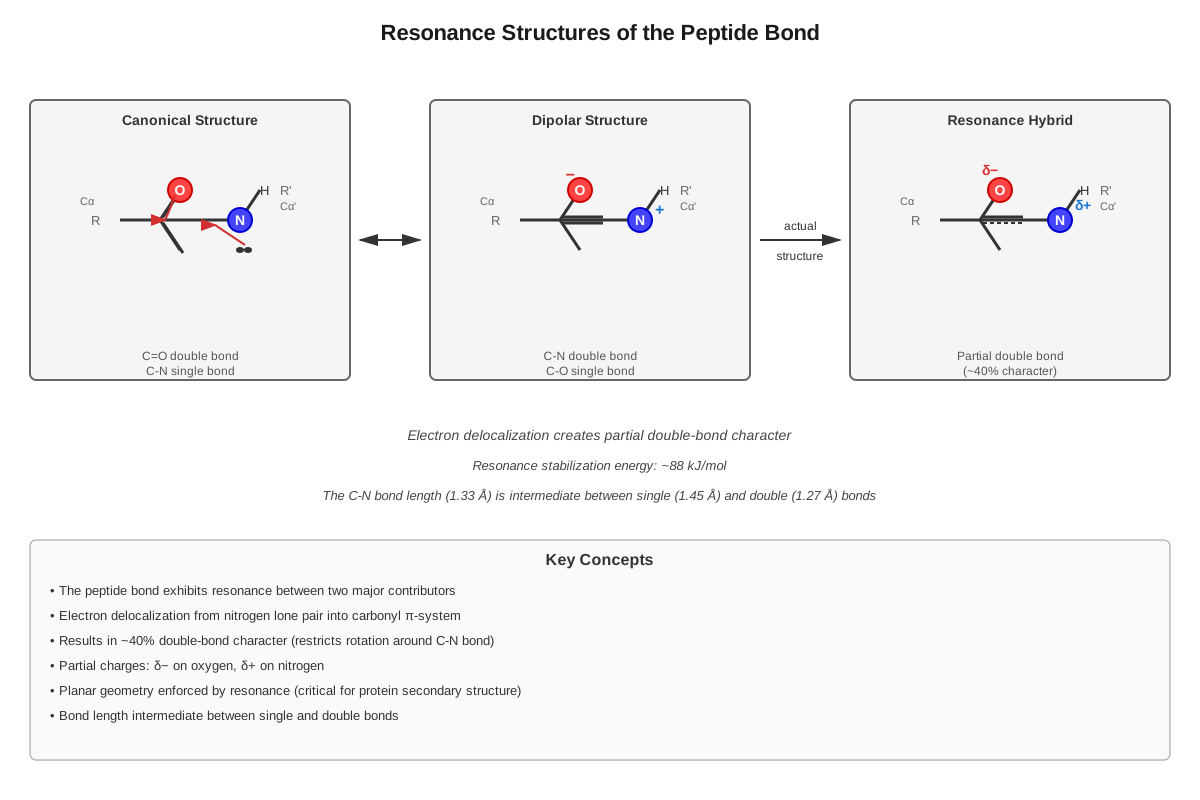
The amide nitrogen possesses a lone pair of electrons in a p-orbital that can overlap with the π-system of the adjacent carbonyl group (C=O). This orbital overlap allows electron delocalization across the O-C-N atoms, creating two major resonance contributors:
- The "normal" structure with a C=O double bond and C-N single bond
- A resonance contributor with C-O single bond character and C=N double bond character, placing a positive charge on nitrogen and negative charge on oxygen
Neither resonance structure alone accurately represents the true electronic structure. The actual peptide bond is a resonance hybrid with properties intermediate between the two extremes. This delocalization stabilizes the peptide bond by approximately 88 kJ/mol compared to a hypothetical non-resonant amide.
Structural Consequences of Resonance
The partial double-bond character of the peptide bond (approximately 40% double-bond character) imposes critical structural constraints:
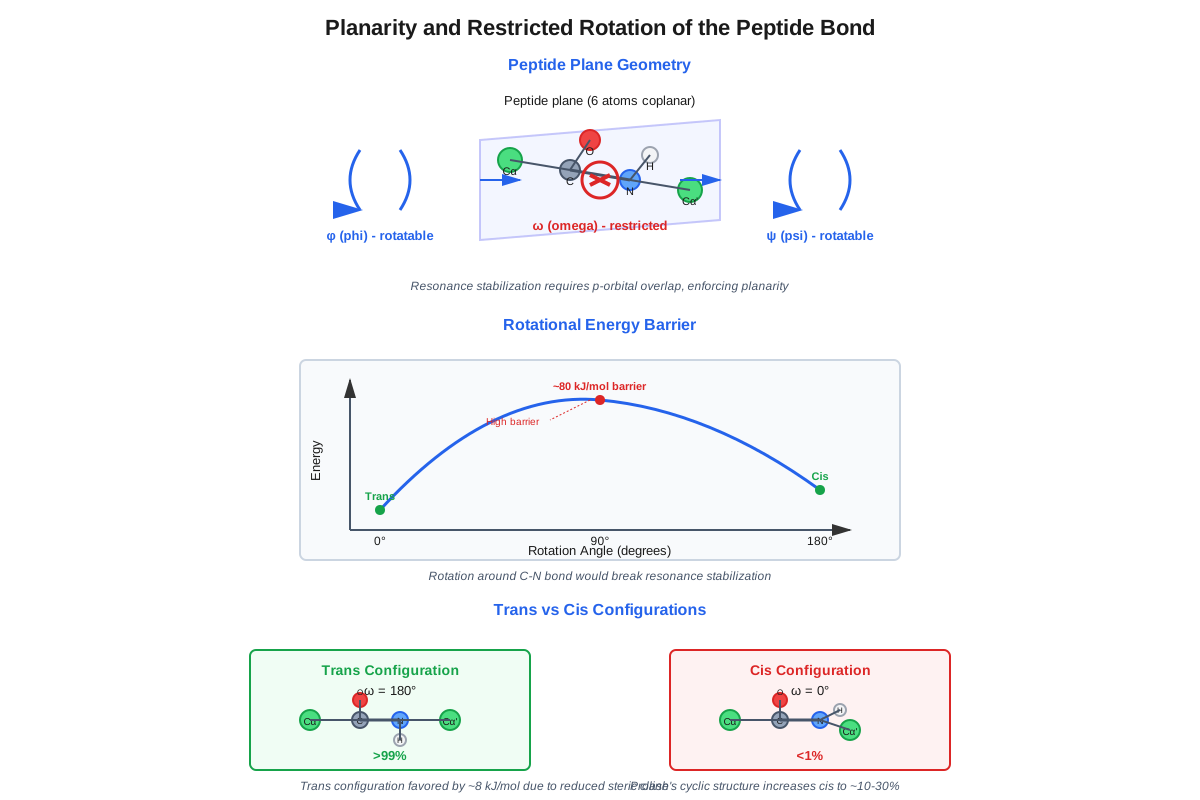
Restricted Rotation: Unlike C-C or C-N single bonds that rotate freely, the peptide bond exhibits a high rotational energy barrier (approximately 80 kJ/mol). This barrier is sufficient to prevent rotation at physiological temperatures, effectively "locking" the peptide bond in a fixed configuration. The six atoms involved in the peptide unit (Cα-C-O-N-H-Cα) lie in the same plane.
Bond Length Intermediate: The C-N bond length in a peptide bond measures approximately 1.33 Å, intermediate between a typical C-N single bond (1.49 Å) and C=N double bond (1.27 Å). This intermediate length provides direct experimental evidence for resonance. Similarly, the C=O bond is slightly longer than in typical ketones due to partial single-bond character.
Planar Geometry: The sp² hybridization of both the carbonyl carbon and the amide nitrogen enforces planarity. All six atoms of the peptide unit occupy the same plane, with bond angles near 120°. This planarity is observable in X-ray crystal structures of proteins and represents a fundamental constraint on protein architecture.
Trans vs. Cis Configurations
The planar peptide bond can exist in two configurations: trans and cis. In the trans configuration, the two α-carbons flanking the peptide bond lie on opposite sides of the C-N bond. In the cis configuration, they lie on the same side. The trans configuration is strongly favored (>99.9% of peptide bonds) because it minimizes steric clashes between the bulky side chains and α-carbons.
The energy difference between trans and cis configurations is approximately 8 kJ/mol, with trans being more stable. This preference is so strong that cis peptide bonds are rare and biologically significant when they occur. The major exception involves peptide bonds preceding proline residues, where approximately 10% adopt the cis configuration. Proline's cyclic structure reduces the steric penalty of the cis configuration, making both forms more energetically comparable.
| Property | Trans Configuration | Cis Configuration |
|---|---|---|
| Frequency | >99.9% of peptide bonds | <0.1% (except before proline: ~10%) |
| Cα-Cα distance | ~3.8 Å | ~2.8 Å |
| Steric strain | Minimal | Significant |
| Biological role | Standard backbone geometry | Structural switches, proline kinks |
Impact on Protein Structure
The restricted rotation around peptide bonds means that polypeptide backbone flexibility is limited to rotation around two bonds per residue: the phi (φ) angle around the N-Cα bond and the psi (ψ) angle around the Cα-C bond. The peptide bond itself (the omega angle, ω) remains fixed at approximately 180° (trans) or 0° (cis).
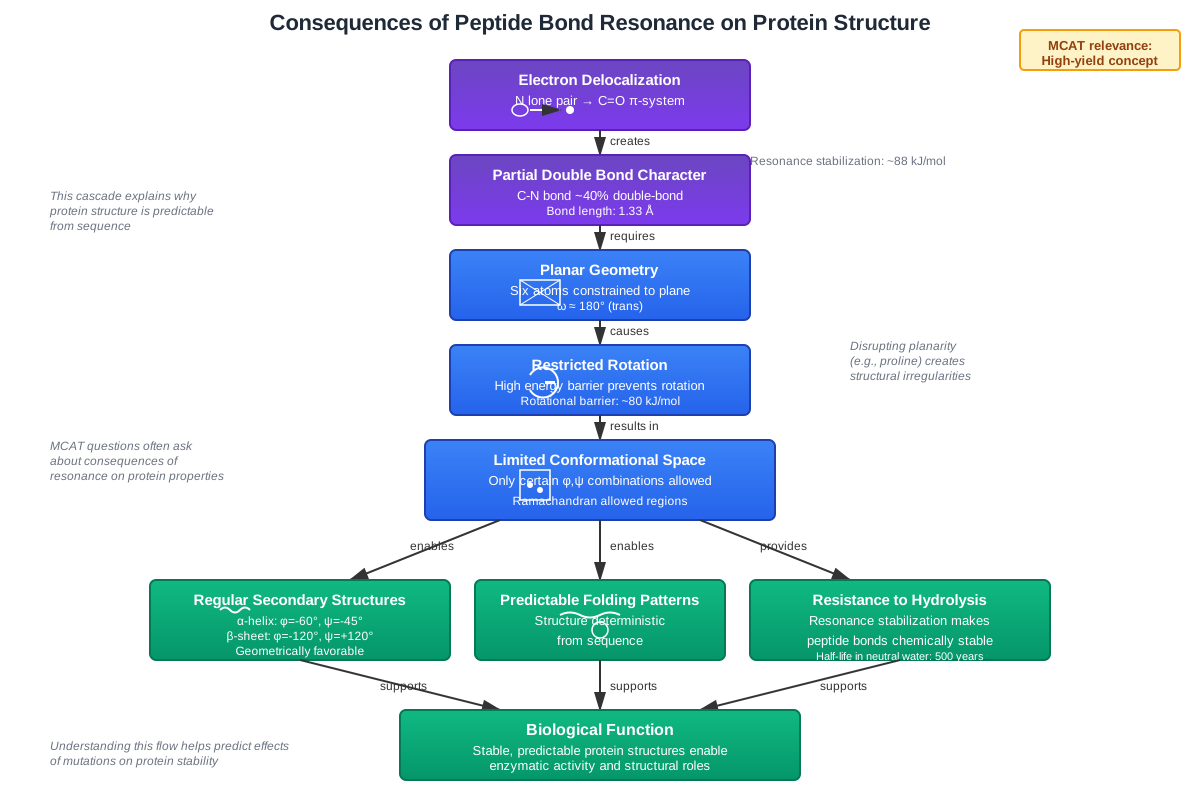
This constraint dramatically reduces the conformational space available to proteins. Instead of three freely rotating bonds per residue, only two can rotate, and even these are restricted by steric clashes between backbone and side-chain atoms. The Ramachandran plot maps the allowed φ and ψ angles, showing that only certain combinations are sterically permitted. The most favorable regions correspond to common secondary structures: α-helices cluster around φ = -60°, ψ = -45°, while β-sheets cluster around φ = -120°, ψ = +120°.
Chemical Reactivity Implications
Peptide bond resonance significantly affects chemical reactivity. The partial double-bond character makes peptide bonds more resistant to hydrolysis than typical esters or thioesters. The C=O carbon is less electrophilic due to electron donation from nitrogen, reducing susceptibility to nucleophilic attack. This stability is biologically essential—proteins must resist spontaneous hydrolysis in aqueous cellular environments.
However, this stability also means that breaking peptide bonds requires either harsh chemical conditions (6 M HCl at 110°C for complete hydrolysis) or highly specific enzymes (proteases). Proteases overcome the resonance stabilization through multiple mechanisms: stabilizing the transition state, activating water as a nucleophile, and destabilizing the ground state through substrate binding.
The nitrogen atom in a peptide bond is much less basic (pKa ≈ -1) than in typical amines (pKa ≈ 10) because the lone pair participates in resonance rather than being available for protonation. This reduced basicity affects protein behavior at different pH values and influences hydrogen bonding patterns in secondary structures.
Resonance and Hydrogen Bonding
The resonance structure with C=N double-bond character places partial positive charge on the nitrogen and partial negative charge on the oxygen. This charge distribution enhances the hydrogen bonding capability of peptide bonds. The partially positive N-H serves as an excellent hydrogen bond donor, while the partially negative C=O serves as an excellent hydrogen bond acceptor.
These hydrogen bonding properties are fundamental to secondary structure formation. In α-helices, the C=O of residue n forms a hydrogen bond with the N-H of residue n+4. In β-sheets, hydrogen bonds form between peptide bonds on adjacent strands. The strength and directionality of these hydrogen bonds depend directly on the electronic distribution created by resonance.
Concept Relationships
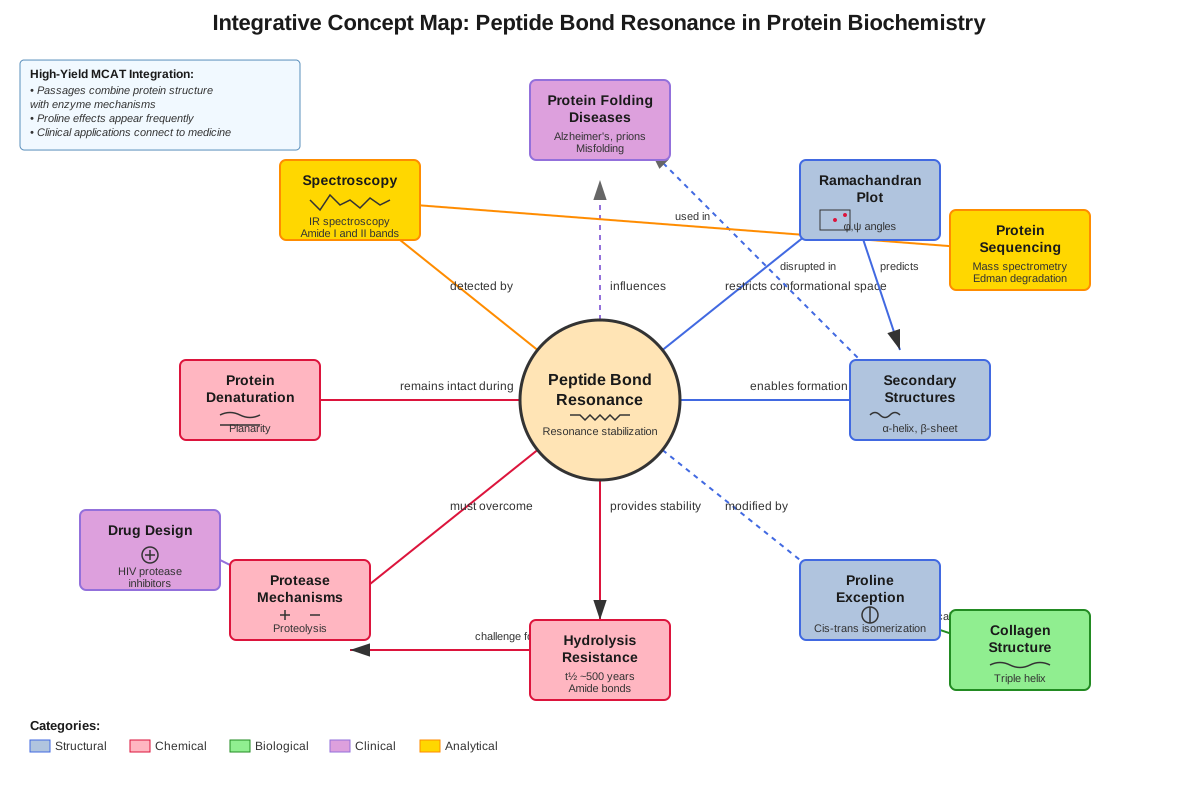
Peptide bond resonance serves as the molecular foundation for understanding protein structure hierarchy. The resonance phenomenon (electron delocalization) → creates partial double-bond character → which restricts rotation → enforcing planarity → limiting backbone conformational freedom → constraining φ and ψ angles → determining allowed regions in Ramachandran space → enabling formation of regular secondary structures (α-helices and β-sheets) → which pack together to form tertiary structure.
The concept connects backward to prerequisite organic chemistry topics: understanding resonance structures and electron delocalization from aromatic chemistry provides the framework for analyzing peptide bonds. The amide functional group chemistry learned in organic chemistry directly applies, with peptide bonds representing a special case of amides with biological significance.
Forward connections extend to virtually all protein biochemistry topics. Protein folding depends on the conformational constraints imposed by peptide bond planarity. Enzyme mechanisms involving proteases must overcome resonance stabilization. Protein denaturation involves disrupting the regular geometry maintained by planar peptide units. Genetic mutations that introduce proline residues disrupt secondary structures by introducing conformational flexibility and potential cis peptide bonds.
The relationship between peptide bond resonance and secondary structure is particularly important: α-helices and β-sheets represent the most energetically favorable ways to satisfy hydrogen bonding potential while respecting the geometric constraints of planar peptide bonds. The specific φ and ψ angles that define these structures are direct consequences of peptide bond planarity combined with steric restrictions.
Quick check — test yourself on Peptide bond resonance so far.
Try Flashcards →High-Yield Facts
⭐ The peptide bond has approximately 40% double-bond character due to resonance, with a C-N bond length of 1.33 Å (intermediate between single and double bonds)
⭐ The six atoms of the peptide unit (Cα-C-O-N-H-Cα) are coplanar due to sp² hybridization and resonance stabilization
⭐ The trans configuration is favored over cis by approximately 8 kJ/mol; >99.9% of peptide bonds are trans (except ~10% before proline)
⭐ Rotation around the peptide bond is restricted with an energy barrier of ~80 kJ/mol, preventing free rotation at physiological temperatures
⭐ The omega (ω) angle around the peptide bond is fixed at ~180° (trans) or ~0° (cis), while phi (φ) and psi (ψ) angles can vary
- Resonance stabilization contributes approximately 88 kJ/mol to peptide bond stability compared to non-resonant amides
- The peptide nitrogen is much less basic (pKa ≈ -1) than typical amines (pKa ≈ 10) because the lone pair participates in resonance
- Peptide bond hydrolysis requires harsh conditions (6 M HCl, 110°C) or specific proteases due to resonance stabilization
- The partial charges created by resonance (δ+ on N, δ- on O) enhance hydrogen bonding in secondary structures
- Proline residues disrupt regular secondary structures because the cyclic structure constrains φ angles and increases cis peptide bond frequency
- The Ramachandran plot shows allowed φ and ψ combinations; restricted regions result from peptide bond planarity and steric clashes
Common Misconceptions
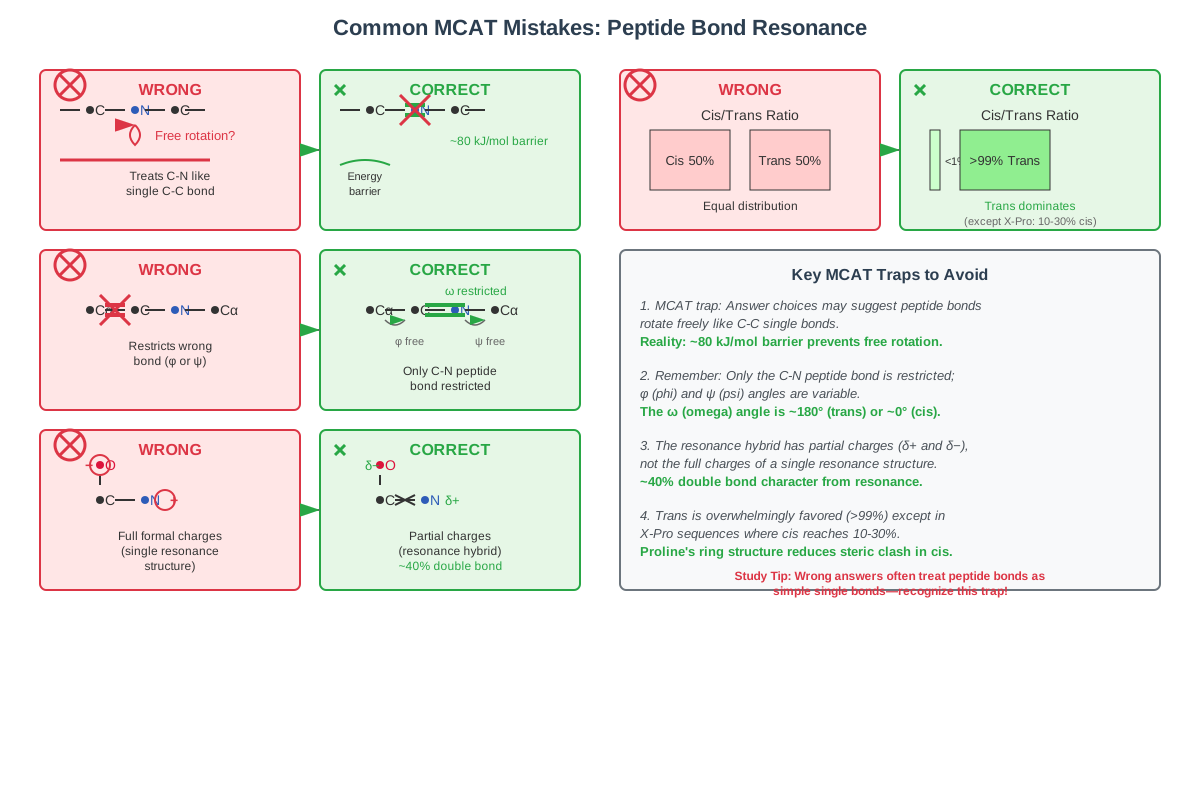
Misconception: The peptide bond is a pure single bond that can rotate freely like other C-N single bonds.
Correction: Resonance creates partial double-bond character (~40%), restricting rotation with an energy barrier of ~80 kJ/mol. The peptide bond is "locked" in a planar configuration at physiological temperatures.
Misconception: Resonance means the peptide bond rapidly alternates between single and double bond forms.
Correction: Resonance structures are not real, interconverting forms. The actual structure is a single hybrid with properties intermediate between the resonance contributors. The electrons are delocalized across O-C-N at all times.
Misconception: All peptide bonds are always in the trans configuration.
Correction: While >99.9% of peptide bonds are trans, cis peptide bonds do occur, especially before proline residues (~10% cis). Cis-trans isomerization can be biologically important in protein folding and signaling.
Misconception: The peptide bond is the only bond in the protein backbone that cannot rotate.
Correction: While the peptide bond has highly restricted rotation, the φ and ψ angles around N-Cα and Cα-C bonds also have restricted rotation due to steric clashes. However, these bonds can rotate more freely than the peptide bond itself.
Misconception: Resonance makes the peptide bond more reactive and easier to hydrolyze.
Correction: Resonance stabilization makes peptide bonds more resistant to hydrolysis. The delocalization reduces the electrophilicity of the carbonyl carbon, making it less susceptible to nucleophilic attack. This is why proteins are stable in aqueous environments.
Misconception: The partial double-bond character means the C-N bond length is exactly halfway between single and double bond lengths.
Correction: The 40% double-bond character means the bond length (1.33 Å) is closer to a single bond (1.49 Å) than to a double bond (1.27 Å). The percentage of double-bond character does not translate linearly to bond length.
Worked Examples
Example 1: Analyzing Bond Rotation in a Tripeptide
Question: A tripeptide Ala-Gly-Val is synthesized. How many bonds in the backbone can undergo free rotation at 37°C? Consider only the backbone atoms, not side chains.
Solution:
Step 1: Identify all backbone bonds in the tripeptide.
- For three amino acids, there are two peptide bonds connecting them
- Each amino acid contributes an N-Cα bond and a Cα-C bond
- Total backbone bonds: 2 peptide bonds (C-N) + 3 N-Cα bonds + 3 Cα-C bonds = 8 bonds
Step 2: Determine which bonds can rotate freely.
- The 2 peptide bonds (C-N) cannot rotate freely due to resonance stabilization (energy barrier ~80 kJ/mol)
- The N-Cα bonds (phi angles) can rotate, though with some steric restrictions
- The Cα-C bonds (psi angles) can rotate, though with some steric restrictions
- The terminal N-terminus and C-terminus have additional bonds to H and OH respectively
Step 3: Count rotatable bonds.
- 3 N-Cα bonds (φ angles) - rotatable
- 3 Cα-C bonds (ψ angles) - rotatable
- 2 peptide bonds - NOT freely rotatable
- Total freely rotatable backbone bonds: 6
Answer: Six backbone bonds can undergo rotation (the three φ angles and three ψ angles). The two peptide bonds are locked in planar configurations due to resonance.
Connection to Learning Objectives: This example applies peptide bond resonance concepts to predict conformational flexibility, demonstrating how resonance restricts rotation and determines which bonds contribute to protein flexibility.
Example 2: Interpreting Experimental Data
Question: X-ray crystallography data for a protein shows that a particular C-N bond in the backbone has a length of 1.47 Å, while all other backbone C-N bonds measure 1.33 Å. The unusual bond is immediately N-terminal to a proline residue. Explain these observations.
Solution:
Step 1: Recall normal peptide bond properties.
- Standard peptide bonds have C-N length of 1.33 Å due to ~40% double-bond character from resonance
- This intermediate length reflects electron delocalization across O-C-N
Step 2: Analyze the unusual bond length.
- 1.47 Å is very close to a pure C-N single bond length (1.49 Å)
- This suggests minimal or no double-bond character
- Loss of double-bond character indicates disrupted resonance
Step 3: Consider the proline context.
- Proline's cyclic structure constrains the backbone
- The nitrogen in proline is a secondary amine (part of the ring), not a typical amide nitrogen
- When proline is in certain conformations, the nitrogen lone pair may be less available for resonance with the carbonyl
Step 4: Formulate explanation.
The 1.47 Å bond length indicates this is likely a bond with disrupted resonance, possibly due to the conformational constraints imposed by proline's ring structure. Alternatively, this could represent a cis peptide bond before proline, which can have different electronic properties. The loss of resonance stabilization allows the C-N bond to behave more like a single bond, lengthening to near the single-bond value.
Answer: The unusual 1.47 Å C-N bond length indicates disrupted resonance and loss of double-bond character, likely due to the conformational constraints of the adjacent proline residue. This demonstrates that peptide bond properties can vary depending on local structural context, particularly near proline.
Connection to Learning Objectives: This example requires applying knowledge of peptide bond resonance to interpret experimental data, identifying how disruption of normal resonance affects measurable properties, and recognizing the special case of proline residues.
Exam Strategy
When approaching peptide bond resonance MCAT questions, first identify whether the question asks about structure (bond lengths, planarity, configuration), dynamics (rotation, flexibility), or reactivity (hydrolysis, protease mechanisms). Questions about structure typically require recognizing that peptide bonds are planar with restricted rotation. Questions about dynamics often involve Ramachandran plots or conformational analysis. Questions about reactivity focus on the stability conferred by resonance.
Trigger words and phrases to watch for:
- "Planar" or "coplanar" → indicates peptide bond geometry
- "Restricted rotation" or "rotational barrier" → points to resonance effects
- "Trans configuration" or "cis configuration" → asks about peptide bond isomers
- "Bond length intermediate" → suggests resonance hybrid properties
- "Proline" → special case with higher cis frequency and conformational constraints
- "Ramachandran plot" → requires understanding of φ, ψ angles and peptide bond planarity
- "Protease" or "hydrolysis" → involves breaking resonance-stabilized bonds
Process-of-elimination strategies:
- Eliminate answers suggesting free rotation around peptide bonds
- Eliminate answers claiming peptide bonds are pure single or pure double bonds
- Eliminate answers suggesting all peptide bonds are identical (proline is an exception)
- Eliminate answers that ignore steric constraints when discussing backbone conformations
Time allocation: Straightforward questions about peptide bond properties (planarity, trans vs. cis) should take 30-45 seconds. Questions requiring analysis of experimental data or integration with protein structure may take 60-90 seconds. If a question involves a Ramachandran plot or complex structural analysis, allocate up to 2 minutes but move on if stuck—these can be returned to if time permits.
Exam Tip: If a passage describes protein structure determination by X-ray crystallography or NMR, expect questions about peptide bond geometry, planarity, or conformational constraints. The passage will provide context, but the questions test fundamental knowledge of resonance and its consequences.
Memory Techniques
Mnemonic for peptide bond properties - "PRESTO":
- Planar geometry (six atoms coplanar)
- Resonance stabilization (~88 kJ/mol)
- Electron delocalization (across O-C-N)
- Short bond length (1.33 Å, intermediate)
- Trans configuration favored (>99.9%)
- Omega angle fixed (~180° or ~0°)
Visualization strategy: Picture the peptide bond as a "stiff plank" connecting two amino acids. The plank cannot twist (restricted rotation) and must lie flat (planar). The two amino acids can rotate around their connections to the plank (φ and ψ angles), but the plank itself is rigid. This mental image helps remember that flexibility in protein backbones comes from rotation around bonds adjacent to, not including, the peptide bond.
Acronym for resonance consequences - "DRIP":
- Double-bond character (partial)
- Restricted rotation
- Intermediate bond length
- Planarity enforced
Memory aid for trans vs. cis: "Trans = Typical" (the normal, favored configuration). "Cis = Crowded" (brings α-carbons close together, creating steric clashes). "Proline = Peculiar" (the exception where cis is more common).
Summary
Peptide bond resonance is a fundamental concept in Biochemistry that explains the unique structural and chemical properties of the amide linkages connecting amino acids in proteins. Electron delocalization across the oxygen-carbon-nitrogen atoms creates a resonance hybrid with approximately 40% double-bond character, resulting in a C-N bond length of 1.33 Å—intermediate between single and double bonds. This resonance stabilization restricts rotation around the peptide bond with an energy barrier of ~80 kJ/mol, effectively locking the six atoms of the peptide unit in a planar configuration. The trans configuration is overwhelmingly favored (>99.9%) except before proline residues, where ~10% adopt the cis configuration. These structural constraints limit protein backbone flexibility to rotation around the φ (N-Cα) and ψ (Cα-C) angles, determining the allowed conformational space mapped by Ramachandran plots and enabling formation of regular secondary structures. The resonance also reduces peptide bond reactivity, making proteins resistant to spontaneous hydrolysis and requiring specific proteases for cleavage. Mastery of peptide bond resonance is essential for understanding protein structure, folding, and function on the MCAT.
Key Takeaways
- Peptide bonds exhibit ~40% double-bond character due to resonance, with C-N bond length of 1.33 Å and restricted rotation (energy barrier ~80 kJ/mol)
- The six atoms of the peptide unit (Cα-C-O-N-H-Cα) are coplanar due to sp² hybridization and resonance stabilization
- Trans configuration is strongly favored (>99.9%) over cis, except before proline where ~10% are cis
- Backbone flexibility is limited to φ (N-Cα) and ψ (Cα-C) angles; the ω angle around the peptide bond is fixed at ~180° (trans) or ~0° (cis)
- Resonance stabilization makes peptide bonds resistant to hydrolysis, requiring harsh conditions or specific proteases for cleavage
- The planar geometry and restricted rotation of peptide bonds are fundamental constraints that determine protein secondary structure and overall three-dimensional architecture
- Understanding peptide bond resonance is essential for interpreting Ramachandran plots, predicting conformational restrictions, and analyzing protein structure-function relationships on the MCAT
Related Topics
Protein Secondary Structure (α-helices and β-sheets): The geometric constraints imposed by peptide bond planarity directly determine which φ and ψ angle combinations are favorable, making certain secondary structures energetically preferred. Mastering peptide bond resonance provides the foundation for understanding why these structures form.
Ramachandran Plots: These plots map allowed φ and ψ angle combinations based on steric constraints and peptide bond planarity. Understanding resonance explains why the ω angle is not included in these plots—it's fixed by resonance stabilization.
Proline and Protein Structure: Proline's unique cyclic structure affects both φ angle constraints and peptide bond configuration (higher cis frequency). This topic builds directly on peptide bond resonance concepts.
Protease Mechanisms: Enzymes that cleave peptide bonds must overcome resonance stabilization. Understanding the stability conferred by resonance is essential for comprehending how proteases achieve catalysis.
Protein Folding and Denaturation: The regular geometry maintained by planar peptide bonds is disrupted during denaturation. Refolding requires re-establishing proper peptide bond configurations and backbone angles.
Practice CTA
Now that you've mastered the core concepts of peptide bond resonance, it's time to reinforce your understanding through active practice. Attempt the practice questions and flashcards associated with this topic to test your ability to apply these concepts under exam conditions. Focus on questions involving Ramachandran plots, conformational analysis, and interpretation of structural data—these represent the most common ways the MCAT tests peptide bond resonance. Remember, understanding the "why" behind peptide bond properties (resonance stabilization) will help you reason through novel questions rather than relying on memorization alone. You've built a strong foundation in a high-yield topic—now solidify it through deliberate practice!
Sign up free to keep reading
Create a free AnvayaPrep account to finish this MCAT guide on Peptide bond resonance — plus flashcards and practice questions.