Overview
Polar uncharged amino acids represent one of the four major classifications of amino acids based on the chemical properties of their side chains (R groups). These amino acids possess side chains that contain electronegative atoms—primarily oxygen, nitrogen, or sulfur—capable of forming hydrogen bonds with water and other polar molecules, yet do not carry a net charge at physiological pH (approximately 7.4). This unique combination of polarity without charge distinguishes them from both nonpolar amino acids (which cannot form hydrogen bonds through their side chains) and charged amino acids (which carry either positive or negative charges at physiological pH).
Understanding polar uncharged amino acids is absolutely essential for MCAT success in Biochemistry because these residues play critical roles in protein structure, enzyme catalysis, and molecular recognition—all high-yield topics that appear repeatedly across multiple MCAT sections. The Amino Acids and Proteins unit forms the foundation for understanding protein folding, enzyme mechanisms, and cellular signaling pathways that appear in both Biological and Biochemical Foundations sections of the exam. Questions involving polar uncharged amino acids frequently test students' ability to predict protein behavior in different environments, understand enzyme active site chemistry, and analyze experimental data from protein studies.
Within the broader context of Biochemistry, polar uncharged amino acids serve as a bridge between the hydrophobic core and the aqueous environment of proteins. They frequently appear at protein surfaces where they interact with the aqueous cellular environment, within active sites where they participate in catalysis through hydrogen bonding, and at protein-protein interaction interfaces where specificity is required without the constraints of electrostatic interactions. Mastery of this topic enables students to tackle complex passage-based questions involving protein engineering, drug design, post-translational modifications, and disease-causing mutations—all common MCAT themes.
Learning Objectives
- [ ] Define polar uncharged amino acids using accurate Biochemistry terminology
- [ ] Explain why polar uncharged amino acids matters for the MCAT
- [ ] Apply polar uncharged amino acids to exam-style questions
- [ ] Identify common mistakes related to polar uncharged amino acids
- [ ] Connect polar uncharged amino acids to related Biochemistry concepts
- [ ] Distinguish between the five polar uncharged amino acids based on their structural and chemical properties
- [ ] Predict the location and function of polar uncharged amino acid residues within protein structures
- [ ] Analyze how mutations involving polar uncharged amino acids affect protein function and stability
Prerequisites
- Basic amino acid structure: Understanding of the general amino acid structure (amino group, carboxyl group, alpha carbon, and R group) is essential because polar uncharged amino acids are defined by their distinctive side chain properties
- pH and ionization: Knowledge of how pH affects protonation states is necessary because the "uncharged" designation specifically refers to behavior at physiological pH (~7.4)
- Hydrogen bonding: Familiarity with hydrogen bond formation and strength is critical because the defining feature of polar uncharged amino acids is their ability to participate in hydrogen bonding without carrying formal charges
- Electronegativity: Understanding of electronegativity differences is required to recognize why oxygen, nitrogen, and sulfur atoms create polar character in side chains
- Protein structure levels: Basic knowledge of primary, secondary, tertiary, and quaternary structure provides context for where and why polar uncharged amino acids appear in proteins
Why This Topic Matters
Polar uncharged amino acids appear with remarkable frequency on the MCAT, making them one of the highest-yield subtopics within amino acid chemistry. Statistical analysis of recent MCAT exams reveals that amino acid classification questions appear in approximately 60-70% of Biochemistry passages, with polar uncharged amino acids specifically featured in questions about enzyme mechanisms, protein folding, and site-directed mutagenesis studies. The MCAT particularly favors questions that require students to predict the consequences of amino acid substitutions, interpret experimental results from protein modification studies, and analyze the role of specific residues in enzyme catalysis.
Clinically, mutations affecting polar uncharged amino acids have profound consequences. Serine and threonine residues serve as phosphorylation sites in cellular signaling cascades, making them critical for regulating processes from cell division to metabolism. Asparagine residues are sites for N-linked glycosylation, essential for proper protein folding and trafficking. Cysteine residues form disulfide bonds that stabilize protein structure, and mutations affecting these residues cause diseases ranging from cystic fibrosis (CFTR protein misfolding) to certain forms of osteogenesis imperfecta (collagen instability). Understanding these amino acids enables students to connect biochemical concepts to pathophysiology—a key skill tested in MCAT passages.
On the exam, polar uncharged amino acids MCAT questions typically appear in several formats: (1) discrete questions asking students to classify amino acids or predict their behavior in different pH environments; (2) passage-based questions analyzing site-directed mutagenesis experiments where researchers replace one amino acid with another; (3) questions about enzyme mechanisms where serine, threonine, or cysteine residues participate in catalysis; and (4) questions about protein structure where students must predict whether a residue will be buried in the hydrophobic core or exposed to the aqueous environment. Recognizing these question patterns dramatically improves performance.
Core Concepts
Definition and Classification
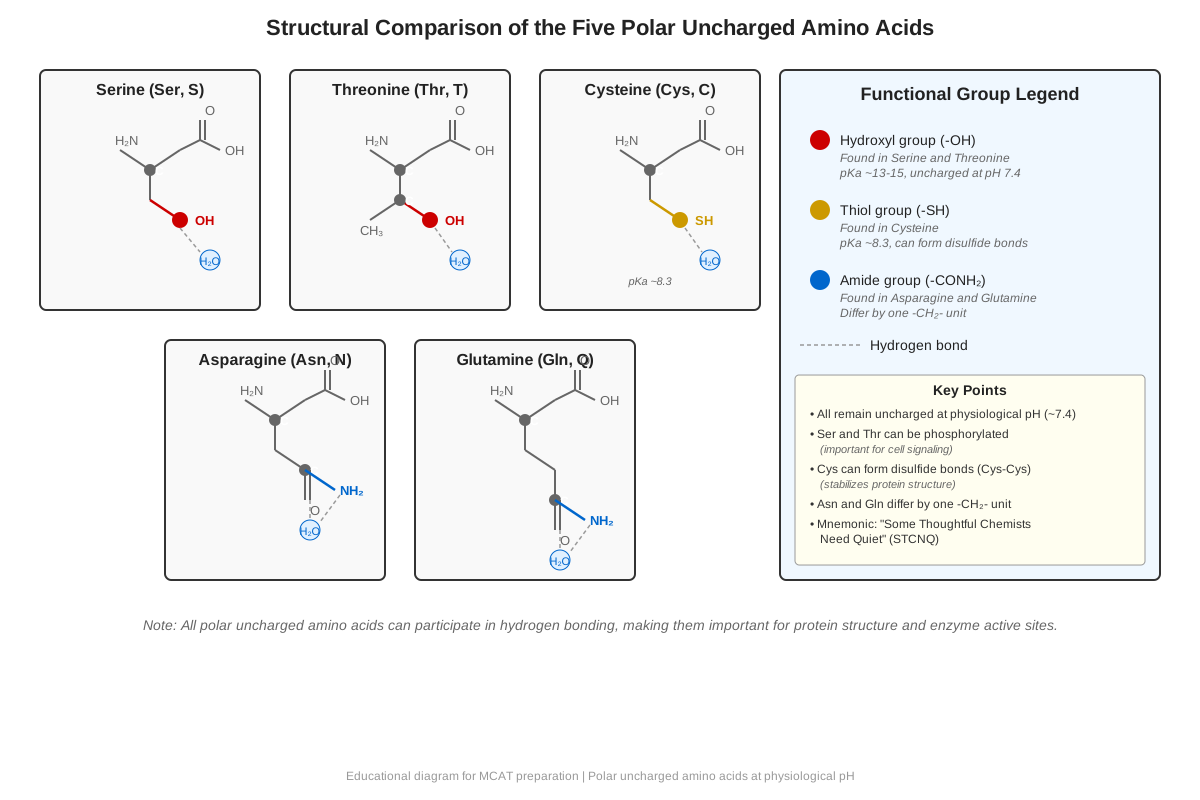
Polar uncharged amino acids are amino acids whose side chains contain polar functional groups capable of forming hydrogen bonds but do not possess ionizable groups that would carry a charge at physiological pH (7.4). This classification includes exactly five amino acids: serine (Ser, S), threonine (Thr, T), cysteine (Cys, C), asparagine (Asn, N), and glutamine (Gln, Q). The polarity arises from the presence of electronegative atoms (oxygen, nitrogen, or sulfur) that create partial charges (δ+ and δ-) within the side chain, enabling dipole-dipole interactions and hydrogen bonding with water and other polar molecules.
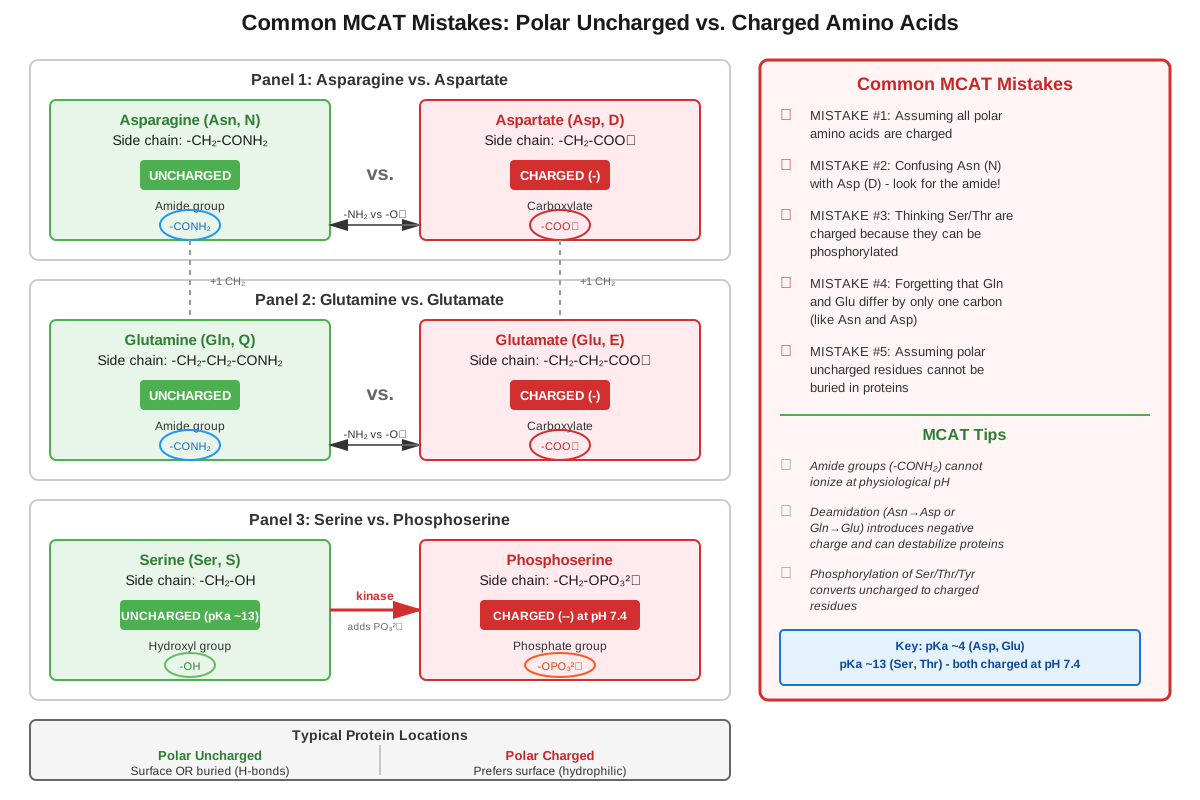
The distinction between "polar" and "charged" is critical for MCAT success. While charged amino acids (aspartate, glutamate, lysine, arginine, and histidine) carry full positive or negative charges at pH 7.4, polar uncharged amino acids contain functional groups that remain neutral. For example, the hydroxyl group (-OH) in serine can act as both a hydrogen bond donor and acceptor, but the oxygen does not fully deprotonate under physiological conditions, maintaining the side chain's neutral status.
Individual Amino Acid Characteristics
Serine (Ser, S)
Serine contains a hydroxyl group (-OH) attached to a methylene group, making it the smallest polar uncharged amino acid. The hydroxyl group serves as both a hydrogen bond donor (through the hydrogen) and acceptor (through the oxygen's lone pairs). Serine appears frequently in enzyme active sites, particularly in the catalytic triads of serine proteases (chymotrypsin, trypsin, elastase) where it acts as a nucleophile. The hydroxyl group can be phosphorylated by kinases, making serine a critical regulatory site in signal transduction pathways. Serine's small size allows it to fit into tight spaces within protein structures while maintaining the ability to form stabilizing hydrogen bonds.
Threonine (Thr, T)
Threonine resembles serine but contains an additional methyl group attached to the beta carbon, creating a secondary alcohol rather than serine's primary alcohol. This structural difference has important consequences: threonine is bulkier than serine, possesses a chiral center at the beta carbon (making it one of only two amino acids with two chiral centers), and is slightly more hydrophobic due to the methyl group. Like serine, threonine serves as a phosphorylation site in cellular signaling. The additional methyl group can participate in hydrophobic interactions while the hydroxyl group maintains hydrogen bonding capability, making threonine particularly useful at interfaces between hydrophobic and hydrophilic protein regions.
Cysteine (Cys, C)
Cysteine contains a thiol group (-SH), making it unique among the polar uncharged amino acids. The sulfur atom is less electronegative than oxygen, making the thiol group a weaker hydrogen bond participant than hydroxyl groups, but sulfur's larger size and polarizability give cysteine distinctive properties. Most importantly, two cysteine residues can undergo oxidation to form a disulfide bond (cystine), creating covalent cross-links that dramatically stabilize protein structure. Disulfide bonds typically form in extracellular proteins or in the oxidizing environment of the endoplasmic reticulum but are rare in the reducing environment of the cytoplasm. Cysteine also participates in enzyme catalysis, particularly in cysteine proteases (papain, cathepsins) and in metal coordination in zinc finger proteins and iron-sulfur clusters.
Asparagine (Asn, N)
Asparagine contains an amide group in its side chain, consisting of a carbonyl (C=O) and an amino group (NH₂). This structure makes asparagine an excellent hydrogen bond participant, with the carbonyl oxygen serving as an acceptor and the amino hydrogens serving as donors. Asparagine is the site of N-linked glycosylation in the consensus sequence Asn-X-Ser/Thr (where X is any amino acid except proline), making it critical for protein folding, stability, and trafficking. The amide group is polar but does not ionize at physiological pH because the nitrogen's lone pair is delocalized into the carbonyl, reducing its basicity. Asparagine is structurally similar to aspartate (differing only by the replacement of a carboxyl group with an amide), but this difference changes the residue from charged to uncharged.
Glutamine (Gln, Q)
Glutamine is the longer homolog of asparagine, containing an additional methylene group in its side chain before the terminal amide group. This extra carbon makes glutamine more flexible and able to reach further in forming hydrogen bonds within protein structures. Like asparagine, glutamine's amide group participates extensively in hydrogen bonding but remains uncharged at physiological pH. Glutamine is structurally similar to glutamate (the charged amino acid), differing only in the replacement of a carboxyl with an amide group. Glutamine serves as a nitrogen donor in biosynthetic reactions and is the most abundant free amino acid in human blood. In proteins, glutamine residues often appear in regions requiring hydrogen bonding capability with extended reach.
Comparison Table
| Amino Acid | Three-Letter | One-Letter | Side Chain Structure | Key Functional Group | Special Properties |
|---|---|---|---|---|---|
| Serine | Ser | S | -CH₂-OH | Hydroxyl (1° alcohol) | Smallest; phosphorylation site; nucleophile in catalysis |
| Threonine | Thr | T | -CH(OH)-CH₃ | Hydroxyl (2° alcohol) | Two chiral centers; phosphorylation site; more hydrophobic than Ser |
| Cysteine | Cys | C | -CH₂-SH | Thiol | Forms disulfide bonds; metal coordination; redox active |
| Asparagine | Asn | N | -CH₂-CONH₂ | Amide | N-glycosylation site; similar to Asp but uncharged |
| Glutamine | Gln | Q | -CH₂-CH₂-CONH₂ | Amide | Longer than Asn; nitrogen donor; most abundant free amino acid |
Role in Protein Structure
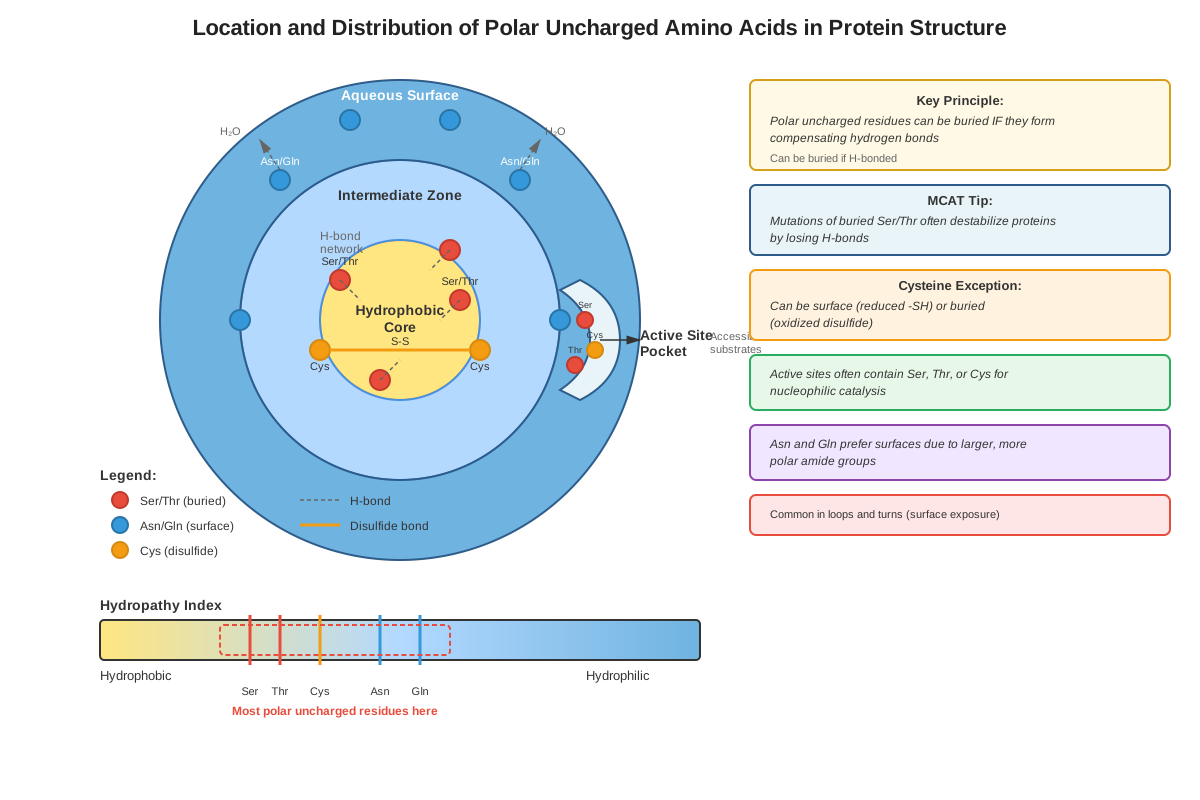
Polar uncharged amino acids play distinctive roles in protein architecture based on their ability to interact with both aqueous environments and other protein residues. These amino acids frequently appear at protein surfaces where they can form hydrogen bonds with water molecules, increasing protein solubility. However, unlike charged amino acids, polar uncharged residues can also be buried within protein interiors if they form compensating hydrogen bonds with other polar residues or with the protein backbone.
In secondary structures, serine and threonine commonly appear in beta-sheets where their side chains can extend away from the sheet structure without causing steric clashes. Asparagine and glutamine frequently appear in alpha-helices, where their longer side chains can reach back to form hydrogen bonds with backbone carbonyl or amino groups, stabilizing the helical structure. Cysteine's role is unique: when forming disulfide bonds, cysteine residues constrain protein structure, often stabilizing loops and preventing unfolding.
At protein-protein interfaces, polar uncharged amino acids provide specificity without the pH-dependent behavior of charged residues. They can form networks of hydrogen bonds that stabilize protein complexes while allowing for conformational changes that would be restricted by the stronger electrostatic interactions of charged residues.
Role in Enzyme Catalysis
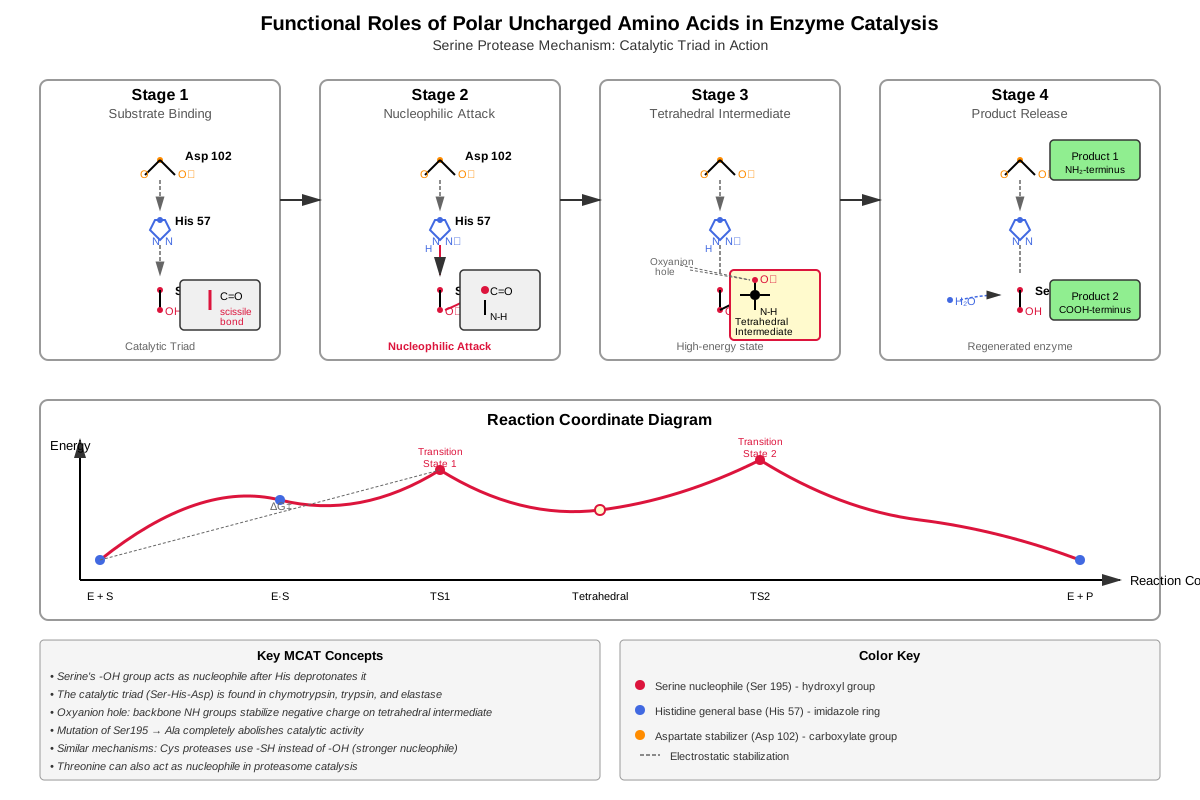
Several polar uncharged amino acids participate directly in enzyme mechanisms. Serine proteases use a catalytic triad of serine, histidine, and aspartate, where serine's hydroxyl group acts as a nucleophile attacking peptide bonds. The mechanism involves serine becoming temporarily covalently attached to the substrate, forming an acyl-enzyme intermediate. Cysteine proteases use a similar mechanism but with the thiol group as the nucleophile, which is more reactive than serine's hydroxyl at neutral pH.
Threonine serves as the catalytic nucleophile in proteasomes, the cellular protein degradation machinery. The N-terminal threonine's amino group (not the side chain hydroxyl) performs the nucleophilic attack, but the hydroxyl group helps position and activate the amino group. This unusual mechanism highlights how even subtle differences in amino acid properties can be exploited for catalysis.
Post-Translational Modifications
Polar uncharged amino acids serve as major sites for post-translational modifications that regulate protein function. Phosphorylation of serine, threonine, and (less commonly) tyrosine residues by kinases adds negative charges that can alter protein conformation, create binding sites for other proteins, or regulate enzyme activity. Approximately 30% of cellular proteins undergo phosphorylation, making this one of the most important regulatory mechanisms in cell biology.
N-linked glycosylation occurs at asparagine residues in the consensus sequence Asn-X-Ser/Thr, where oligosaccharides are attached during protein synthesis in the endoplasmic reticulum. This modification affects protein folding, stability, trafficking, and recognition. O-linked glycosylation occurs at serine and threonine residues, particularly in mucins and other secreted proteins.
Disulfide bond formation between cysteine residues represents a covalent modification that dramatically stabilizes protein structure. This oxidation reaction is catalyzed by protein disulfide isomerase (PDI) in the endoplasmic reticulum and is essential for the proper folding of many secreted and membrane proteins.
Concept Relationships
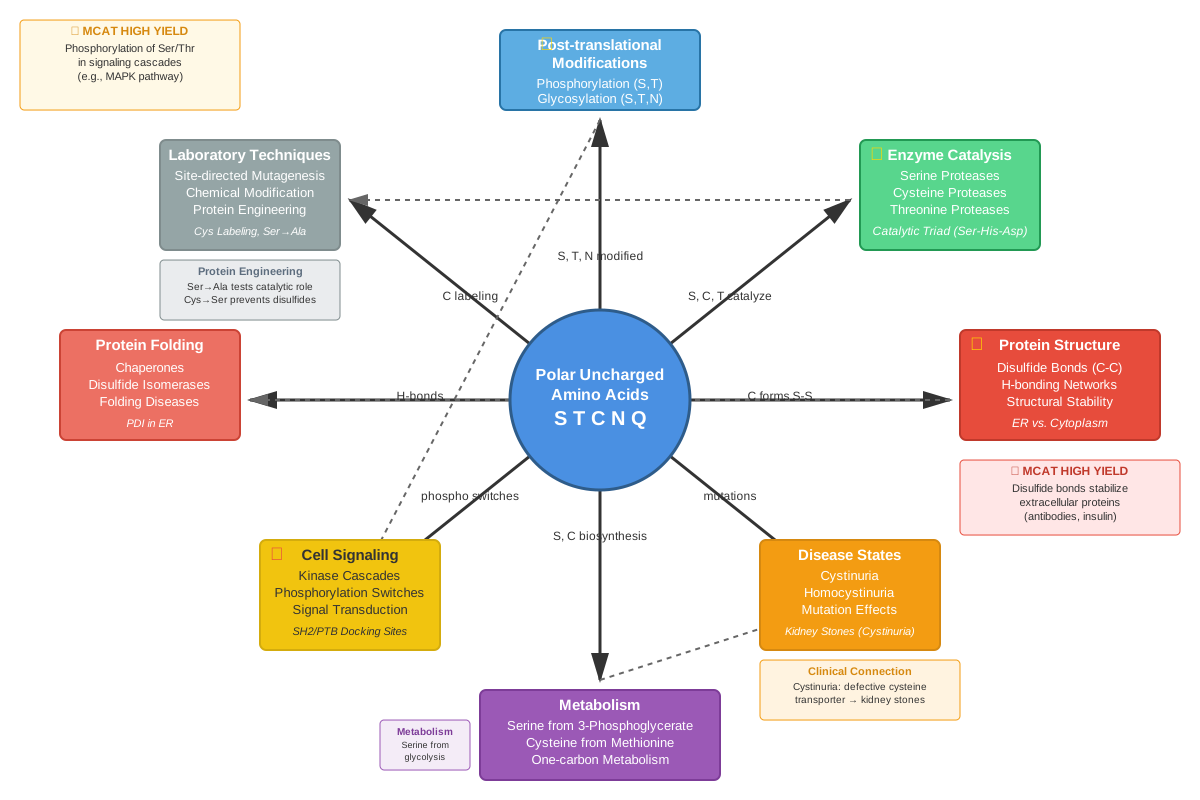
The five polar uncharged amino acids form a conceptually unified group based on their shared ability to participate in hydrogen bonding without carrying charges, yet each possesses distinctive properties that determine its specific roles in proteins. Serine and threonine are closely related, both containing hydroxyl groups that serve as phosphorylation sites and participate in hydrogen bonding; threonine can be viewed as a methylated, more hydrophobic version of serine. Asparagine and glutamine form another pair, both containing amide groups; glutamine extends asparagine's reach by one methylene group, allowing it to form hydrogen bonds with more distant residues. Cysteine stands alone with its unique thiol chemistry and ability to form disulfide bonds.
These amino acids connect to prerequisite knowledge of hydrogen bonding (which explains their polarity), pH and ionization (which explains why they remain uncharged at physiological pH), and basic amino acid structure (which provides the framework for understanding how side chain properties determine amino acid classification). The concept of electronegativity explains why oxygen, nitrogen, and sulfur atoms create the polar character that defines this group.
Polar uncharged amino acids bridge to advanced topics in protein structure and function. Understanding their properties enables prediction of protein folding patterns (hydrophobic residues buried, polar uncharged residues at surfaces or forming internal hydrogen bonds), enzyme mechanisms (serine and cysteine as nucleophiles), protein regulation (phosphorylation of serine and threonine), and protein stability (disulfide bonds from cysteine). These connections extend to signal transduction (kinase cascades phosphorylating serine/threonine), protein trafficking (N-glycosylation of asparagine), and disease mechanisms (mutations affecting critical polar uncharged residues).
The relationship map flows as follows: Basic amino acid structure → Side chain properties → Polar uncharged classification → Hydrogen bonding capability → Protein structure roles → Enzyme catalysis → Post-translational modifications → Cellular regulation and disease. Each level builds on the previous, creating an integrated understanding essential for MCAT success.
Quick check — test yourself on Polar uncharged amino acids so far.
Try Flashcards →High-Yield Facts
⭐ Exactly five amino acids are polar uncharged: serine (S), threonine (T), cysteine (C), asparagine (N), and glutamine (Q)—memorize this list completely
⭐ Serine, threonine, and tyrosine are the three amino acids that undergo phosphorylation by kinases, with serine and threonine being the polar uncharged members of this group
⭐ Cysteine is the only amino acid that forms disulfide bonds, creating covalent cross-links that stabilize protein structure, particularly in extracellular proteins
⭐ Asparagine is the site of N-linked glycosylation in the consensus sequence Asn-X-Ser/Thr, essential for protein folding and trafficking
⭐ Serine serves as the nucleophile in serine protease catalytic mechanisms, forming a temporary covalent bond with the substrate in the catalytic triad (Ser-His-Asp)
- Threonine contains two chiral centers (alpha carbon and beta carbon), making it one of only two amino acids with this property (the other is isoleucine)
- Cysteine has the lowest pKa of any amino acid side chain (~8.3 for the thiol group), making it partially ionized at physiological pH and highly reactive
- Polar uncharged amino acids can be buried in protein interiors if they form compensating hydrogen bonds with other residues or the backbone
- Glutamine is the most abundant free amino acid in human blood and serves as a nitrogen donor in biosynthetic reactions
- The hydroxyl groups of serine and threonine can act as both hydrogen bond donors and acceptors, making them versatile in protein structures
- Asparagine and glutamine are structurally similar to aspartate and glutamate respectively, differing only by replacement of a carboxyl group with an amide group
- Disulfide bonds form in oxidizing environments (extracellular space, ER lumen) but are typically reduced in the cytoplasm's reducing environment
Common Misconceptions
Misconception: All polar amino acids are charged at physiological pH.
Correction: Polarity and charge are distinct properties. Polar uncharged amino acids contain electronegative atoms that create partial charges (δ+ and δ-) enabling hydrogen bonding, but they do not possess ionizable groups that would create full positive or negative charges at pH 7.4. Only aspartate, glutamate, lysine, arginine, and histidine carry charges at physiological pH.
Misconception: Cysteine is always involved in disulfide bonds in proteins.
Correction: Cysteine residues only form disulfide bonds in oxidizing environments, primarily in extracellular proteins or within the endoplasmic reticulum. In the reducing environment of the cytoplasm, cysteine residues typically remain as free thiols. Additionally, many cysteine residues serve other functions such as metal coordination or catalysis rather than disulfide bond formation.
Misconception: Serine and threonine are interchangeable because both contain hydroxyl groups.
Correction: While both contain hydroxyl groups and can be phosphorylated, threonine's additional methyl group makes it bulkier, more hydrophobic, and possesses a second chiral center. These differences affect where each amino acid can fit in protein structures and how they influence local hydrophobicity. Mutations between serine and threonine can significantly affect protein function.
Misconception: Polar uncharged amino acids are always found on protein surfaces.
Correction: While polar uncharged amino acids frequently appear at protein surfaces where they interact with water, they can also be buried in protein interiors if they form compensating hydrogen bonds with other polar residues or backbone atoms. The key determinant is whether the polar groups can satisfy their hydrogen bonding potential, not simply whether they are polar.
Misconception: Asparagine and glutamine are basic amino acids because they contain amino groups.
Correction: Although asparagine and glutamine contain nitrogen atoms in their amide groups, these nitrogens are not basic at physiological pH. The nitrogen's lone pair is delocalized into the adjacent carbonyl group through resonance, dramatically reducing its ability to accept protons. These amino acids are polar and uncharged, not basic. The basic amino acids are lysine, arginine, and histidine.
Misconception: The thiol group in cysteine makes it a strong acid.
Correction: While cysteine's thiol group has the lowest pKa (~8.3) among amino acid side chains, making it more acidic than hydroxyl groups, it is still a relatively weak acid. At physiological pH (7.4), most cysteine residues remain protonated (neutral), though a small fraction exists as thiolate anions. This partial ionization contributes to cysteine's reactivity in enzyme catalysis and disulfide bond formation.
Worked Examples
Example 1: Predicting Mutation Effects
Question: A researcher performs site-directed mutagenesis on a cytoplasmic enzyme, replacing a serine residue in the active site with alanine. The mutant enzyme shows dramatically reduced activity. Wild-type enzyme activity is restored when the serine is replaced with threonine instead. Which of the following best explains these observations?
Step 1 - Analyze the amino acid properties:
- Serine (wild-type): polar uncharged, contains hydroxyl group (-OH)
- Alanine (first mutant): nonpolar, contains only a methyl group (-CH₃)
- Threonine (second mutant): polar uncharged, contains hydroxyl group (-CH(OH)-CH₃)
Step 2 - Identify the critical functional group:
The key difference between serine and alanine is the presence versus absence of the hydroxyl group. The fact that threonine (which also has a hydroxyl group) restores activity indicates that the hydroxyl group is essential for enzyme function.
Step 3 - Consider the role of the hydroxyl group:
In enzyme active sites, hydroxyl groups can serve multiple functions:
- Hydrogen bonding with substrate
- Acting as a nucleophile in catalysis
- Stabilizing transition states
- Coordinating metal ions
Step 4 - Evaluate why threonine works:
Threonine contains a hydroxyl group like serine, though it's a secondary alcohol rather than primary and has an additional methyl group. The restoration of activity suggests the hydroxyl group's chemical properties (hydrogen bonding or nucleophilicity) are critical, and threonine's hydroxyl can perform the same function despite the structural differences.
Answer: The serine residue likely participates in catalysis through its hydroxyl group, either as a nucleophile or through hydrogen bonding with the substrate or transition state. Alanine lacks this functional group entirely, eliminating this catalytic capability. Threonine's hydroxyl group can substitute for serine's, maintaining the essential chemical function despite the additional methyl group. This pattern is consistent with serine's known role in enzyme mechanisms, particularly in serine proteases and other hydrolases.
MCAT Connection: This example demonstrates how understanding amino acid properties enables prediction of mutation effects—a common MCAT question type. The exam frequently presents mutagenesis experiments and asks students to explain results based on amino acid chemistry.
Example 2: Analyzing Protein Localization
Question: A passage describes a newly discovered protein with the following characteristics: it contains multiple disulfide bonds, has several asparagine residues that are glycosylated, and functions in cell-cell recognition. Based on these properties, where is this protein most likely located?
Step 1 - Analyze disulfide bond presence:
Disulfide bonds form between cysteine residues in oxidizing environments. The cytoplasm maintains a reducing environment (high glutathione concentration) that prevents disulfide bond formation. Disulfide bonds are stable in:
- Extracellular space
- Endoplasmic reticulum lumen
- Periplasmic space (in bacteria)
Step 2 - Consider N-glycosylation:
N-linked glycosylation occurs at asparagine residues in the consensus sequence Asn-X-Ser/Thr. This modification:
- Occurs in the ER lumen during protein synthesis
- Is retained as proteins move through the secretory pathway
- Is found on secreted proteins and extracellular domains of membrane proteins
- Does NOT occur on cytoplasmic proteins
Step 3 - Evaluate the functional role:
Cell-cell recognition requires proteins to be accessible at the cell surface, either as:
- Secreted proteins in the extracellular matrix
- Extracellular domains of transmembrane proteins
Step 4 - Integrate the evidence:
All three characteristics (disulfide bonds, N-glycosylation, cell-cell recognition function) point to the same conclusion: this protein must be either secreted or a transmembrane protein with its functional domain in the extracellular space.
Answer: This protein is most likely either a secreted protein or a transmembrane protein with its functional domain exposed to the extracellular environment. The presence of disulfide bonds indicates an oxidizing environment (not cytoplasmic), N-glycosylation confirms passage through the ER and Golgi (the secretory pathway), and the cell-cell recognition function requires extracellular localization. Examples of such proteins include antibodies (secreted), cell adhesion molecules like cadherins (transmembrane), and selectins (transmembrane).
MCAT Connection: This example integrates multiple concepts involving polar uncharged amino acids (cysteine's disulfide bonds, asparagine's glycosylation) with protein trafficking and cellular compartmentalization. The MCAT frequently tests whether students can use biochemical properties to predict protein localization, a skill that requires understanding both amino acid chemistry and cell biology.
Exam Strategy
When approaching polar uncharged amino acids MCAT questions, begin by identifying which of the five amino acids (S, T, C, N, Q) are mentioned or implied in the question stem or passage. Create a quick mental checklist of each amino acid's distinctive properties: serine and threonine for phosphorylation, cysteine for disulfide bonds, asparagine for N-glycosylation, and glutamine for extended reach in hydrogen bonding.
Trigger words and phrases to watch for include:
- "Phosphorylation site" → think serine or threonine
- "Disulfide bond" or "oxidizing environment" → think cysteine
- "N-linked glycosylation" or "Asn-X-Ser/Thr" → think asparagine
- "Hydrogen bonding" without mention of charge → consider all five polar uncharged amino acids
- "Nucleophile in catalysis" → think serine or cysteine
- "Extracellular protein stability" → think cysteine (disulfide bonds)
- "Signal transduction" or "kinase" → think serine or threonine phosphorylation
For process-of-elimination strategies, remember that polar uncharged amino acids occupy a middle ground between nonpolar and charged amino acids. If a question asks about amino acids that can interact with water but won't be strongly affected by pH changes, eliminate both nonpolar amino acids (can't interact well with water) and charged amino acids (affected by pH). If a question involves enzyme catalysis with a nucleophilic amino acid, eliminate all amino acids except serine, cysteine, and threonine (though threonine is less common in this role).
When analyzing site-directed mutagenesis experiments (extremely common on the MCAT), use this systematic approach:
- Identify the original amino acid and its key properties
- Identify the replacement amino acid and its properties
- Determine what functional group or property was lost or gained
- Connect the functional change to the observed phenotype
- Consider whether the change affects structure, catalysis, or regulation
Time allocation for polar uncharged amino acid questions should be efficient because these are typically straightforward classification or property-based questions. Discrete questions should take 30-45 seconds, while passage-based questions might require 60-90 seconds. If you find yourself spending more time, you may be overthinking—return to the fundamental properties of the five amino acids and apply them directly to the question.
For questions involving protein structure prediction, use the rule that polar uncharged amino acids can be either buried or surface-exposed depending on whether they can form compensating hydrogen bonds. If the question provides structural context suggesting available hydrogen bonding partners, a buried polar uncharged residue is reasonable. If no such context exists, predict surface exposure.
Memory Techniques
Mnemonic for the five polar uncharged amino acids: "Some Truly Crazy Nerds Question" (Serine, Threonine, Cysteine, asparagiNe, Glutamine). This mnemonic captures all five in a memorable phrase.
Alternative mnemonic focusing on one-letter codes: "STCNQ" can be remembered as "Scientists Test Crazy New Questions" or visualized as a sequence that includes the first three letters (S-T-C) in alphabetical order, making it partially self-organizing.
Visualization for disulfide bonds: Picture two cysteine residues as two hands reaching toward each other and clasping (forming the S-S bond). The "clasped hands" image reinforces that disulfide bonds create stable, covalent connections between protein regions. Remember that these "hands" can only clasp in oxidizing environments—visualize them being pulled apart by reducing agents in the cytoplasm.
Mnemonic for phosphorylation sites: "STY" (Serine, Threonine, tYrosine) can be remembered as "Signal Transduction Yields" phosphorylation. While tyrosine is not a polar uncharged amino acid (it's classified as aromatic), remembering that S and T are two of the three phosphorylation targets is high-yield.
Acronym for N-glycosylation: The consensus sequence "Asn-X-Ser/Thr" can be remembered as "Asparagine needs Xtra Sugar/Treats" where X represents any amino acid except proline. This captures both the sequence and the concept of sugar (glycan) attachment.
Visualization for amide groups: For asparagine and glutamine, visualize the amide group as a "question mark" shape (? ) where the carbonyl oxygen curves around like the top of the question mark and the NH₂ group forms the dot. This reinforces that these amino acids end in "ine" (asparagiNe, glutamiNe) and contain nitrogen.
Memory aid for serine protease mechanism: "Seriously Hissy Asp" captures the catalytic triad (Serine-Histidine-Aspartate) in serine proteases. The phrase suggests that serine is serious about catalysis, with histidine and aspartate helping.
Structural comparison memory aid: Remember that asparagine and glutamine are "amide versions" of aspartate and glutamate respectively. The mnemonic "Asparagine is Aspartate's amide" and "Glutamine is Glutamate's amide" uses the shared prefixes to link the pairs.
Summary
Polar uncharged amino acids—serine, threonine, cysteine, asparagine, and glutamine—represent a critical classification of amino acids defined by their ability to participate in hydrogen bonding through electronegative atoms in their side chains while remaining neutral at physiological pH. Each of the five possesses distinctive properties: serine and threonine contain hydroxyl groups that serve as phosphorylation sites and participate in catalysis; cysteine contains a thiol group that forms disulfide bonds and coordinates metals; asparagine serves as the site for N-linked glycosylation; and glutamine provides extended reach for hydrogen bonding. These amino acids appear throughout protein structures, frequently at surfaces where they interact with water, but can also be buried if they form compensating hydrogen bonds. Their roles in enzyme catalysis (serine and cysteine as nucleophiles), post-translational modifications (phosphorylation of serine and threonine, glycosylation of asparagine, disulfide bond formation by cysteine), and protein stability make them essential for understanding protein function and regulation. Mastery of polar uncharged amino acids enables students to predict mutation effects, analyze experimental results, understand enzyme mechanisms, and connect biochemical concepts to cellular processes and disease—all high-yield skills for MCAT success.
Key Takeaways
- Exactly five amino acids are polar uncharged (S, T, C, N, Q), distinguished by their ability to form hydrogen bonds without carrying charges at physiological pH
- Serine and threonine are major phosphorylation sites in cellular signaling, with hydroxyl groups that also participate in enzyme catalysis
- Cysteine uniquely forms disulfide bonds that stabilize protein structure, particularly in extracellular proteins and the ER lumen
- Asparagine is the site of N-linked glycosylation in the Asn-X-Ser/Thr consensus sequence, essential for protein folding and trafficking
- Polar uncharged amino acids bridge hydrophobic and hydrophilic environments in proteins, appearing at surfaces, in active sites, and at protein-protein interfaces
- Understanding these amino acids enables prediction of mutation effects, enzyme mechanisms, and protein localization—all common MCAT question types
- Post-translational modifications of polar uncharged amino acids (phosphorylation, glycosylation, disulfide bond formation) represent major regulatory mechanisms in cell biology
Related Topics
Charged amino acids (aspartate, glutamate, lysine, arginine, histidine) complement polar uncharged amino acids in protein structure and function. Understanding the distinction between polar and charged residues is essential for predicting protein behavior at different pH values and analyzing electrostatic interactions. Mastering polar uncharged amino acids provides the foundation for understanding how proteins balance hydrophobic, polar, and charged residues to achieve proper folding and function.
Enzyme kinetics and mechanisms build directly on knowledge of polar uncharged amino acids, particularly serine and cysteine's roles as nucleophiles in catalytic mechanisms. Understanding how these amino acids participate in catalytic triads and transition state stabilization is essential for analyzing enzyme function and inhibition.
Protein structure and folding requires integration of all amino acid classifications, with polar uncharged amino acids playing key roles at protein surfaces and in forming internal hydrogen bond networks. This topic extends understanding of how amino acid properties determine three-dimensional structure.
Post-translational modifications including phosphorylation, glycosylation, and disulfide bond formation all involve polar uncharged amino acids. These modifications regulate protein function, localization, and stability, connecting amino acid chemistry to cellular regulation and signal transduction.
Protein purification and analysis techniques often exploit the properties of polar uncharged amino acids, particularly cysteine's reactivity and the charge changes induced by phosphorylation. Understanding these amino acids enhances interpretation of experimental results in MCAT passages.
Practice CTA
Now that you've mastered the core concepts of polar uncharged amino acids, it's time to reinforce your understanding through active practice. Work through the practice questions and flashcards to test your ability to classify amino acids, predict mutation effects, and analyze enzyme mechanisms. Focus particularly on questions involving site-directed mutagenesis, protein localization, and post-translational modifications—these represent the highest-yield question types on the MCAT. Remember that understanding polar uncharged amino acids provides the foundation for more advanced topics in protein biochemistry, enzyme function, and cellular regulation. Your investment in mastering this topic will pay dividends across multiple sections of the MCAT. You've got this!
Sign up free to keep reading
Create a free AnvayaPrep account to finish this MCAT guide on Polar uncharged amino acids — plus flashcards and practice questions.