Overview
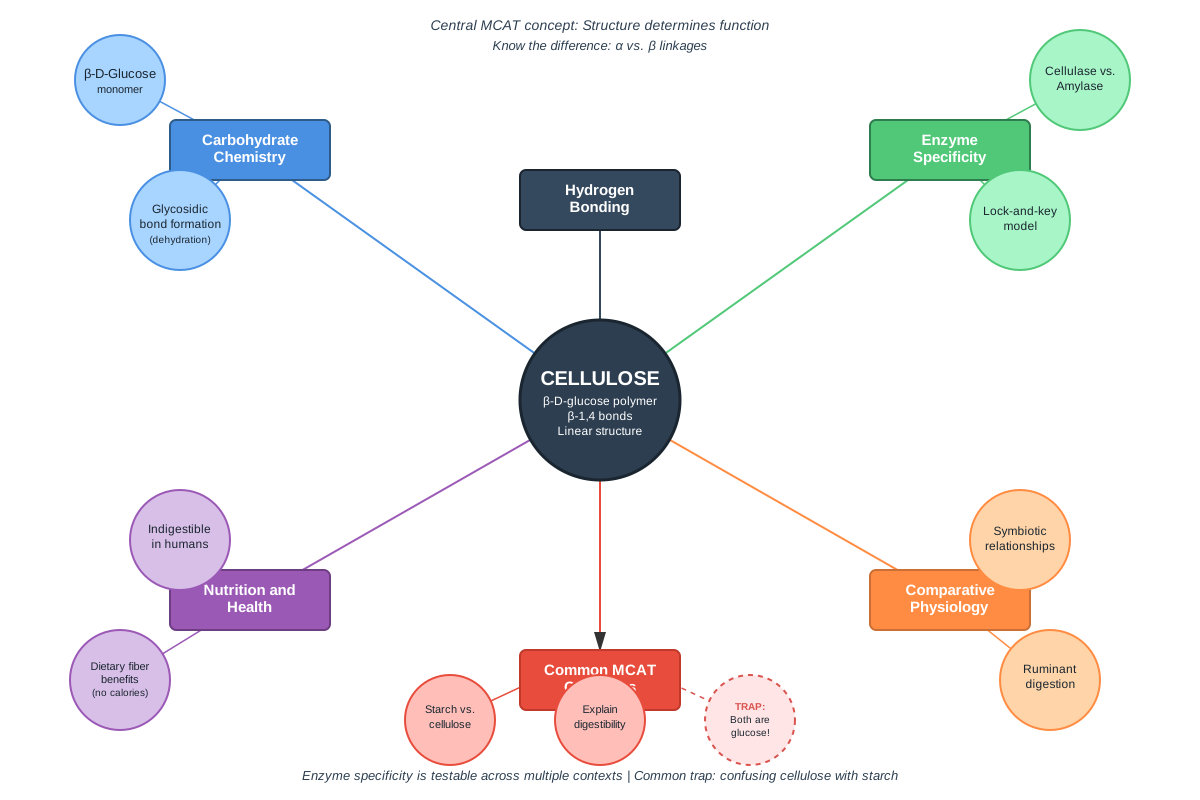
Cellulose is a structural polysaccharide that represents one of the most abundant organic molecules on Earth, forming the primary component of plant cell walls. In the context of Biochemistry and the MCAT, cellulose serves as a critical example of how subtle structural differences in carbohydrates can dramatically alter biological function. While cellulose and starch are both polymers of glucose, the β-1,4-glycosidic linkages in cellulose create a linear, rigid structure that most animals cannot digest, contrasting sharply with the α-1,4-linkages in starch that humans readily break down for energy. This distinction exemplifies the fundamental biochemical principle that structure determines function—a concept that permeates MCAT testing across multiple disciplines.
Understanding cellulose biochemistry is essential for MCAT success because it integrates multiple testable concepts: carbohydrate structure and nomenclature, enzyme specificity, hydrogen bonding, and evolutionary adaptations in digestion. The MCAT frequently tests students' ability to distinguish between different polysaccharides based on their glycosidic linkages, predict digestibility based on enzyme availability, and explain why structural differences lead to functional differences. Questions may appear in discrete format, asking about cellulose structure directly, or embedded within passages discussing nutrition, plant biology, or comparative physiology.
From a broader biochemical perspective, cellulose connects to fundamental concepts including monosaccharide chemistry, polymer formation through dehydration synthesis, the role of hydrogen bonding in macromolecular structure, and the specificity of enzyme-substrate interactions. Mastering cellulose provides a foundation for understanding other structural carbohydrates like chitin, as well as the broader principle that organisms have evolved specialized enzymes to metabolize specific substrates. This topic bridges organic chemistry, biochemistry, and biology—making it a high-yield area for integrated MCAT questions.
Learning Objectives
- [ ] Define cellulose using accurate biochemistry terminology, including its monomer composition and glycosidic linkage type
- [ ] Explain why cellulose matters for the MCAT, particularly in questions involving carbohydrate structure and digestibility
- [ ] Apply cellulose knowledge to exam-style questions involving polysaccharide comparison and enzyme specificity
- [ ] Identify common mistakes related to cellulose, particularly confusion with starch and other glucose polymers
- [ ] Connect cellulose to related biochemistry concepts including glycosidic bonds, hydrogen bonding, and enzyme specificity
- [ ] Distinguish between α and β anomers of glucose and predict how this affects polymer properties
- [ ] Analyze the structural features that make cellulose indigestible to humans but digestible to certain organisms
- [ ] Evaluate the role of hydrogen bonding in cellulose's structural properties and biological function
Prerequisites
- Monosaccharide structure and nomenclature: Understanding glucose structure, including α and β anomers, is essential because cellulose is a polymer of β-D-glucose units
- Glycosidic bond formation: Knowledge of dehydration synthesis and how monosaccharides link together provides the foundation for understanding cellulose polymerization
- Basic organic chemistry functional groups: Recognizing hydroxyl groups and their ability to form hydrogen bonds explains cellulose's structural stability
- Enzyme-substrate specificity: Understanding that enzymes recognize specific three-dimensional structures explains why humans cannot digest cellulose
- Polymer concepts: Familiarity with how monomers form polymers through condensation reactions applies directly to polysaccharide formation
Why This Topic Matters
Clinical and Real-World Significance
Cellulose plays a crucial role in human nutrition as dietary fiber, despite being indigestible. It promotes intestinal health by adding bulk to stool, preventing constipation, and potentially reducing colon cancer risk. The inability of humans to digest cellulose has shaped dietary recommendations and our understanding of nutritional requirements. In contrast, ruminant animals (cattle, sheep) and termites harbor symbiotic microorganisms that produce cellulase enzymes, allowing them to derive energy from plant material that humans cannot utilize. This evolutionary adaptation has profound implications for agriculture, ecology, and comparative physiology—all topics that may appear in MCAT biological passages.
MCAT Exam Statistics and Question Types
Cellulose appears on the MCAT with moderate frequency, typically in 2-4 questions per exam either directly or as part of broader carbohydrate passages. Questions most commonly test:
- Structural comparison questions (40%): Distinguishing cellulose from starch, glycogen, or chitin based on glycosidic linkages
- Digestibility and enzyme specificity (30%): Explaining why humans lack cellulase or why certain organisms can digest cellulose
- Hydrogen bonding and physical properties (20%): Connecting molecular structure to macroscopic properties like tensile strength
- Experimental interpretation (10%): Analyzing data from studies involving cellulose degradation or structural analysis
Common Exam Passage Contexts
Cellulose frequently appears in MCAT passages discussing:
- Comparative digestive physiology and symbiotic relationships
- Plant cell wall structure and function
- Biofuel production from cellulosic biomass
- Nutritional studies on dietary fiber
- Evolutionary adaptations in herbivores
- Structural biology and X-ray crystallography studies of polysaccharides
Core Concepts
Molecular Structure and Composition
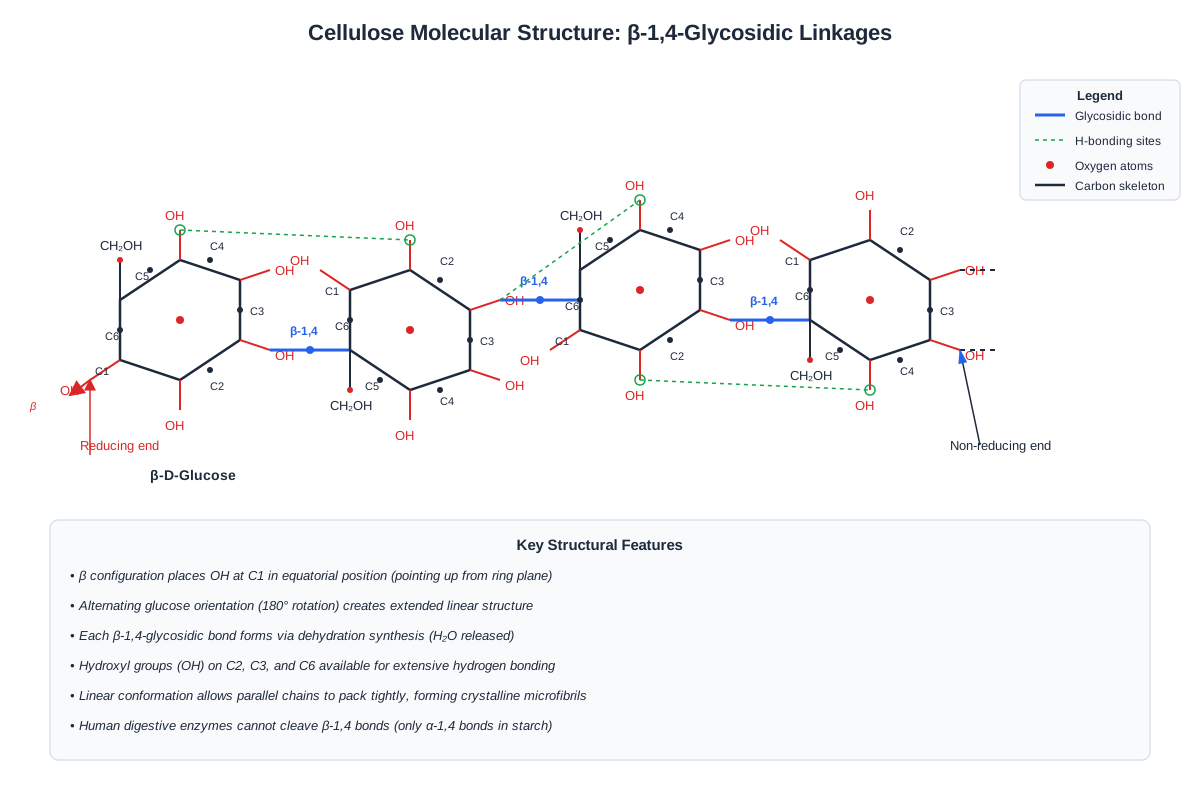
Cellulose is a linear polysaccharide composed exclusively of β-D-glucose monomers linked by β-1,4-glycosidic bonds. Each glucose unit is rotated 180° relative to its neighbors, creating an extended, ribbon-like structure. This contrasts fundamentally with starch, which contains α-D-glucose linked by α-1,4-glycosidic bonds. The β configuration refers to the orientation of the hydroxyl group on carbon-1 (the anomeric carbon) of glucose—in β-glucose, this hydroxyl projects above the plane of the ring, while in α-glucose it projects below.
The β-1,4-glycosidic linkage forms when the hydroxyl group on carbon-4 of one glucose molecule undergoes a condensation reaction with the hydroxyl group on carbon-1 of another glucose molecule, with the carbon-1 hydroxyl in the β (equatorial) position. This linkage type is critical because it determines the overall three-dimensional structure of the polymer. While both cellulose and starch are glucose polymers, the different anomeric configurations create entirely different shapes and properties.
A single cellulose molecule (also called a cellulose chain) can contain 300 to over 10,000 glucose units, depending on the source. The molecular formula for cellulose can be represented as (C₆H₁₀O₅)ₙ, where n represents the number of glucose units. The degree of polymerization (DP) varies: cotton cellulose has a DP of approximately 10,000, while wood cellulose typically has a DP of 300-1,700.
Structural Organization and Hydrogen Bonding
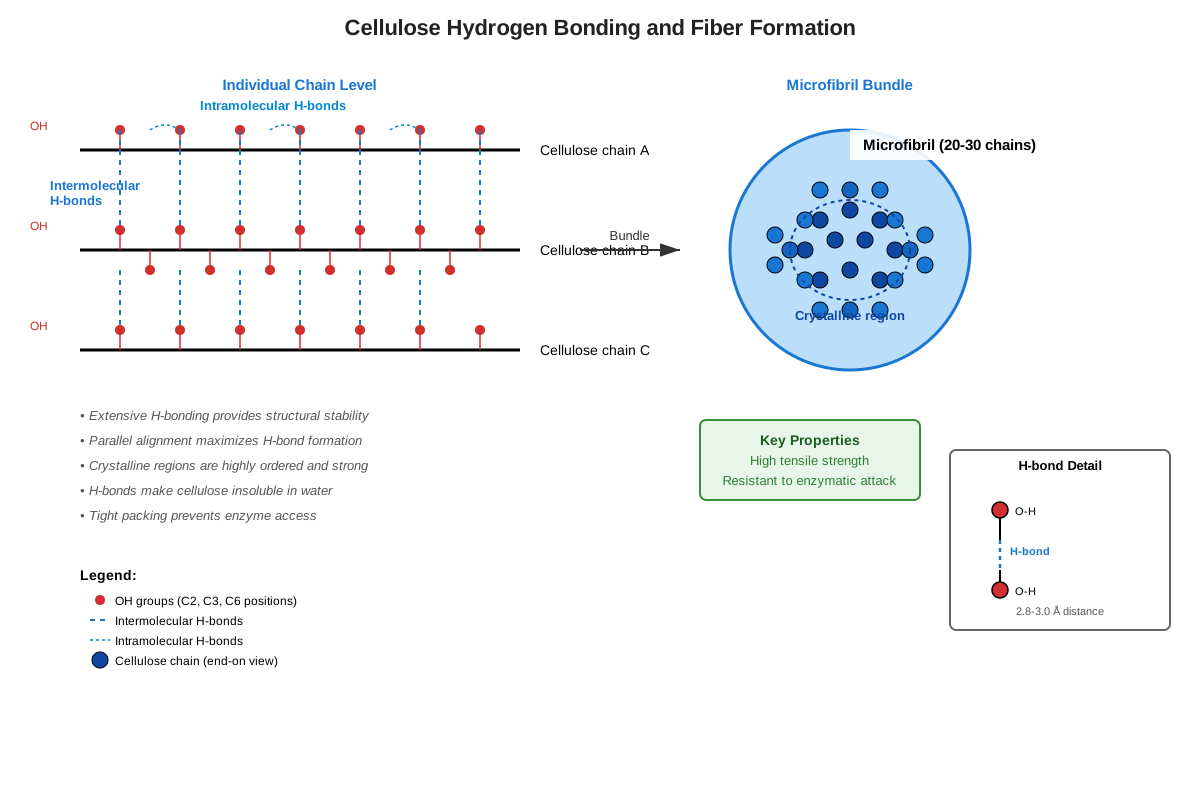
Individual cellulose chains associate through extensive hydrogen bonding to form microfibrils, which further aggregate into larger fibrils. The linear structure of cellulose, resulting from the β-1,4-linkages, allows multiple chains to align parallel to each other. Each glucose residue has three hydroxyl groups available for hydrogen bonding: one on carbon-2, one on carbon-3, and one on carbon-6. These hydroxyl groups form both intramolecular hydrogen bonds (within a single chain) and intermolecular hydrogen bonds (between adjacent chains).
The hydrogen bonding network creates a highly ordered, crystalline structure that gives cellulose exceptional tensile strength—comparable to steel on a weight-for-weight basis. This structural organization makes cellulose ideal for its biological role as a structural component of plant cell walls. The crystalline regions of cellulose are interspersed with amorphous (less ordered) regions, and this combination of crystalline and amorphous domains affects cellulose's physical properties and susceptibility to enzymatic degradation.
The extensive hydrogen bonding also makes cellulose insoluble in water and most organic solvents, despite having numerous hydrophilic hydroxyl groups. This insolubility is crucial for cellulose's structural function—plant cell walls must maintain their integrity even when exposed to water.
Comparison with Other Polysaccharides
Understanding cellulose requires distinguishing it from other glucose polymers:
| Polysaccharide | Monomer | Glycosidic Linkage | Structure | Function | Digestible by Humans? |
|---|---|---|---|---|---|
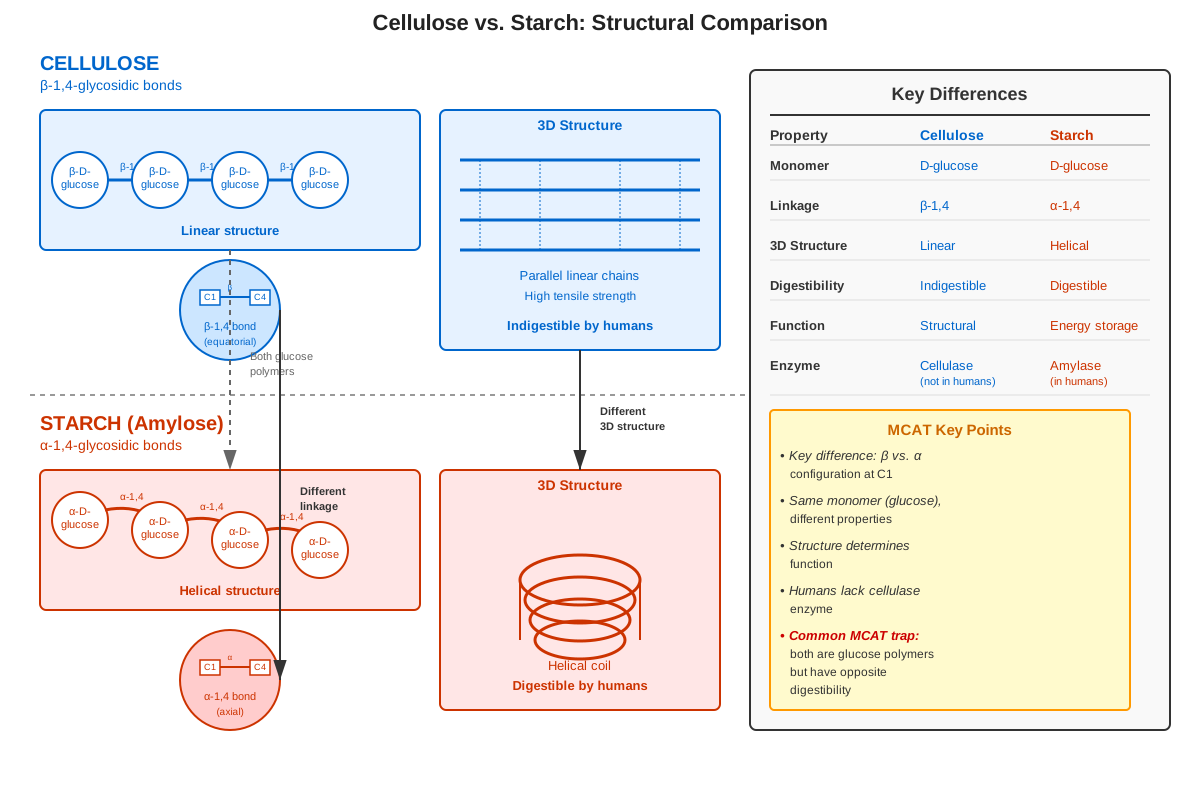
| Cellulose | β-D-glucose | β-1,4 | Linear, rigid | Structural (plant cell walls) | No |
| Starch (amylose) | α-D-glucose | α-1,4 | Helical | Energy storage (plants) | Yes |
| Starch (amylopectin) | α-D-glucose | α-1,4 and α-1,6 | Branched | Energy storage (plants) | Yes |
| Glycogen | α-D-glucose | α-1,4 and α-1,6 | Highly branched | Energy storage (animals) | Yes |
| Chitin | N-acetyl-β-D-glucosamine | β-1,4 | Linear, rigid | Structural (arthropod exoskeletons) | No |
The key distinction between cellulose and starch lies in the anomeric configuration of the glycosidic bond. This seemingly small difference—the orientation of a single hydroxyl group—creates dramatically different three-dimensional structures and biological properties. The α-1,4-linkages in starch create a helical structure that is more compact and accessible to digestive enzymes, while the β-1,4-linkages in cellulose create an extended structure stabilized by hydrogen bonding.
Enzymatic Degradation and Digestibility
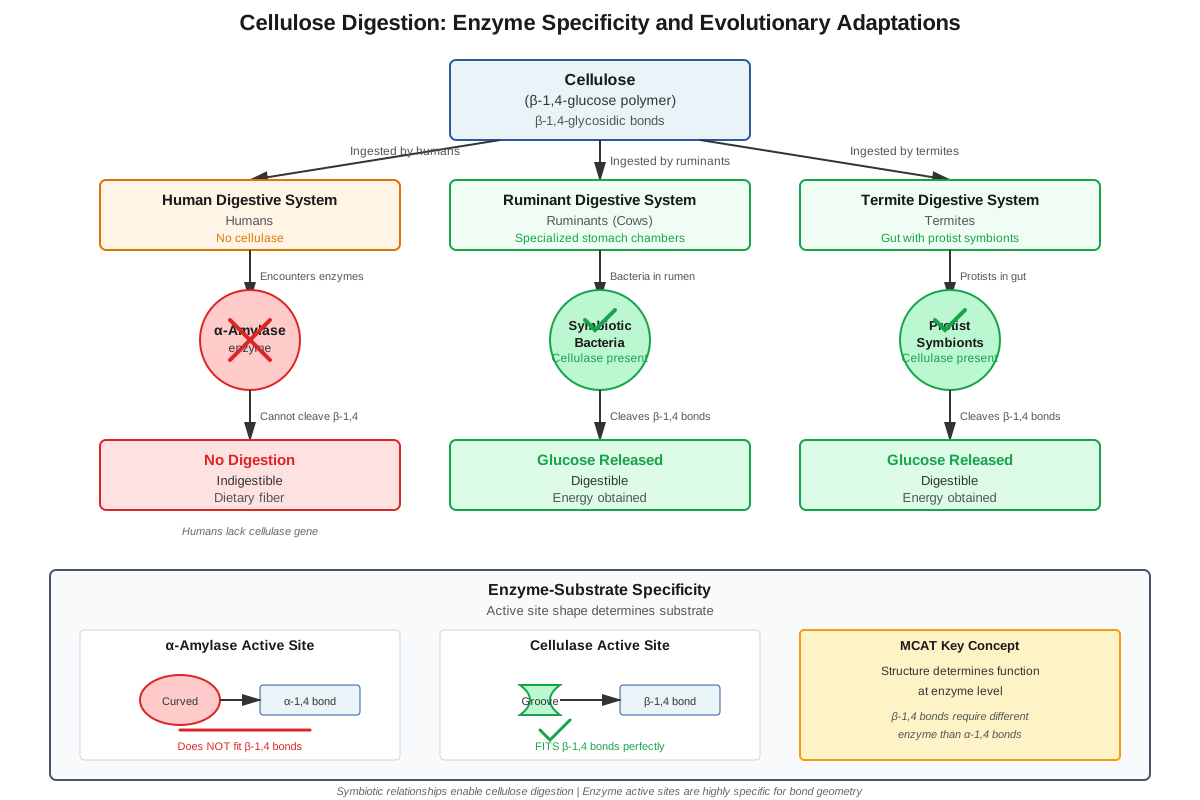
Humans and most animals lack cellulase, the enzyme required to hydrolyze β-1,4-glycosidic bonds. Human digestive enzymes, including amylase (which breaks down starch), are specific for α-glycosidic linkages and cannot accommodate the different three-dimensional structure presented by β-linkages. This enzyme specificity exemplifies the lock-and-key model of enzyme function: the active site of amylase is shaped to bind α-linkages but cannot properly position β-linkages for catalysis.
Organisms that can digest cellulose—including ruminants (cows, sheep, goats), termites, and some fungi and bacteria—produce cellulase enzymes. In ruminants, these enzymes are actually produced by symbiotic microorganisms living in specialized stomach chambers. The cellulase enzyme complex typically includes multiple components:
- Endoglucanases: Randomly cleave internal β-1,4-glycosidic bonds in cellulose chains
- Exoglucanases (cellobiohydrolases): Remove cellobiose units (glucose dimers) from chain ends
- β-glucosidases: Hydrolyze cellobiose into individual glucose molecules
This multi-enzyme system is necessary because cellulose's crystalline structure makes it highly resistant to degradation. The enzymes must work synergistically to break down both crystalline and amorphous regions.
Biological Functions and Significance
In plants, cellulose serves as the primary structural component of cell walls, providing mechanical strength and rigidity. Plant cell walls typically contain 40-50% cellulose by dry weight, embedded in a matrix of other polysaccharides (hemicelluloses and pectins) and proteins. This composite structure functions like reinforced concrete, with cellulose microfibrils acting as the reinforcing rods.
For humans, cellulose functions as dietary fiber or "roughage." Although indigestible, cellulose provides important health benefits:
- Increases stool bulk and promotes regular bowel movements
- Reduces transit time of material through the digestive tract
- May bind potentially harmful substances and facilitate their elimination
- Provides substrate for beneficial gut bacteria in the colon
- May help regulate blood glucose and cholesterol levels
The ecological significance of cellulose cannot be overstated—it represents the most abundant organic compound on Earth, with an estimated 100 billion tons produced annually through photosynthesis. The carbon cycle depends heavily on cellulose production by plants and its eventual decomposition by microorganisms.
Concept Relationships
The understanding of cellulose builds upon and connects to multiple biochemical concepts in a hierarchical and interconnected manner:
Monosaccharide chemistry → Glucose anomers → Glycosidic bond formation → Polysaccharide structure → Biological function
At the foundation, knowledge of glucose structure, particularly the distinction between α and β anomers, directly determines the type of glycosidic linkage that forms. The β-1,4-glycosidic linkages in cellulose create a linear structure, which enables extensive hydrogen bonding between chains, which produces crystalline microfibrils, which provide structural strength to plant cell walls.
Enzyme specificity ← Active site structure ← Substrate three-dimensional shape ← Glycosidic linkage configuration
Working backward, the inability of humans to digest cellulose traces directly to enzyme-substrate specificity. Human amylase evolved to recognize and catalyze the hydrolysis of α-glycosidic bonds, and its active site geometry cannot accommodate β-linkages. This connects cellulose to broader principles of protein structure and function.
Cellulose also relates laterally to other structural polysaccharides, particularly chitin, which shares the β-1,4-linkage pattern but uses N-acetylglucosamine instead of glucose as its monomer. Both serve structural roles and resist digestion by most animals. Understanding cellulose facilitates learning about chitin and other structural carbohydrates.
The concept of dietary fiber connects cellulose to nutrition, physiology, and even microbiology (gut microbiome). The symbiotic relationships that enable cellulose digestion in ruminants illustrate evolutionary adaptations and ecological relationships, bridging biochemistry with organismal biology—a common MCAT integration point.
High-Yield Facts
⭐ Cellulose is a linear polymer of β-D-glucose units connected by β-1,4-glycosidic bonds
⭐ Humans cannot digest cellulose because they lack cellulase enzyme; human amylase only hydrolyzes α-glycosidic bonds
⭐ The β-1,4-linkages cause alternating glucose units to be rotated 180° relative to each other, creating a linear structure
⭐ Extensive intermolecular hydrogen bonding between parallel cellulose chains creates crystalline microfibrils with high tensile strength
⭐ Cellulose serves as the primary structural component of plant cell walls, while starch serves as energy storage
- Cellulose is the most abundant organic compound on Earth, produced at approximately 100 billion tons annually
- Each glucose residue in cellulose has three hydroxyl groups available for hydrogen bonding (on C-2, C-3, and C-6)
- Ruminant animals digest cellulose through symbiotic microorganisms in their digestive systems that produce cellulase
- Cellulose functions as dietary fiber in humans, promoting intestinal health despite being indigestible
- The degree of polymerization in cellulose ranges from 300 to over 10,000 glucose units depending on the source
- Chitin, found in arthropod exoskeletons, has a similar structure to cellulose but uses N-acetylglucosamine monomers
- Cellulase enzyme systems include endoglucanases, exoglucanases, and β-glucosidases working synergistically
Quick check — test yourself on Cellulose so far.
Try Flashcards →Common Misconceptions
Misconception: Cellulose and starch are identical because both are made of glucose.
Correction: While both are glucose polymers, cellulose contains β-D-glucose with β-1,4-glycosidic bonds, while starch contains α-D-glucose with α-1,4-glycosidic bonds. This difference in anomeric configuration creates entirely different three-dimensional structures and biological properties. Cellulose is linear and structural; starch is helical (amylose) or branched (amylopectin) and serves energy storage.
Misconception: Humans cannot digest cellulose because it's too large or complex.
Correction: Size is not the issue—humans can digest starch molecules that are equally large. The inability to digest cellulose stems from enzyme specificity: human digestive enzymes (amylase, maltase) are specific for α-glycosidic bonds and cannot catalyze the hydrolysis of β-glycosidic bonds due to the different three-dimensional structure these bonds create.
Misconception: Since cellulose has many hydroxyl groups, it should be water-soluble like glucose.
Correction: While individual glucose molecules are water-soluble, cellulose's extensive intermolecular hydrogen bonding between chains creates a highly ordered crystalline structure that is insoluble in water. The hydrogen bonds between cellulose chains are stronger than the potential hydrogen bonds between cellulose and water molecules, preventing dissolution.
Misconception: Dietary fiber provides calories because it's a carbohydrate.
Correction: Although cellulose is chemically a carbohydrate, humans cannot break it down into absorbable glucose units due to the lack of cellulase. Therefore, cellulose passes through the digestive system largely intact and provides essentially zero calories to humans. The 4 calories per gram rule for carbohydrates applies only to digestible carbohydrates.
Misconception: The β in β-1,4-glycosidic bond refers to the bond between carbon-1 and carbon-4.
Correction: The β refers to the anomeric configuration of the hydroxyl group on carbon-1 of the glucose molecule (pointing above the ring plane), not to the bond itself. The 1,4 indicates that the bond connects carbon-1 of one glucose to carbon-4 of the next glucose. A complete description requires both pieces of information: the anomeric configuration (β) and the carbons involved (1,4).
Misconception: All animals that eat plants can digest cellulose.
Correction: Most animals, including humans and most mammals, cannot digest cellulose directly. Only animals with specialized adaptations—either producing their own cellulase (rare) or harboring symbiotic microorganisms that produce cellulase (more common, as in ruminants and termites)—can break down cellulose. Many herbivores derive nutrition from plant proteins, starches, and other digestible components while the cellulose passes through undigested.
Worked Examples
Example 1: Structural Analysis and Digestibility
Question: A researcher isolates two polysaccharides from different sources. Polysaccharide A is readily digested by human salivary amylase, while Polysaccharide B is not digested by any human enzymes but is broken down by enzymes from rumen bacteria. Both polysaccharides are composed entirely of glucose monomers and have similar molecular weights. Explain the structural difference between these polysaccharides and why this difference affects digestibility.
Solution:
Step 1: Identify what we know
- Both are glucose polymers (homopolysaccharides)
- Similar molecular weights (similar chain lengths)
- Different digestibility by human enzymes
- Polysaccharide B is digested by rumen bacteria
Step 2: Connect to cellulose knowledge
Polysaccharide A is likely starch (amylose or amylopectin) because it's digested by human amylase. Polysaccharide B is likely cellulose because it's not digested by humans but is broken down by rumen bacteria (which produce cellulase).
Step 3: Explain the structural difference
The key difference is the glycosidic linkage type:
- Polysaccharide A (starch) contains α-1,4-glycosidic bonds between α-D-glucose units
- Polysaccharide B (cellulose) contains β-1,4-glycosidic bonds between β-D-glucose units
This difference arises from the anomeric configuration of the glucose monomers—whether the hydroxyl group on carbon-1 is in the α (axial/below ring) or β (equatorial/above ring) position.
Step 4: Explain the digestibility difference
Human amylase has an active site specifically shaped to recognize and bind α-glycosidic linkages. The enzyme's catalytic residues are positioned to facilitate hydrolysis of α-bonds but cannot properly position β-bonds for catalysis. The β-configuration creates a different three-dimensional structure that doesn't fit the enzyme's active site—this is enzyme-substrate specificity.
Rumen bacteria produce cellulase, an enzyme with an active site shaped to accommodate β-1,4-glycosidic bonds, allowing them to hydrolyze cellulose.
Key Learning Points: This example demonstrates how subtle structural differences (anomeric configuration) lead to dramatic functional differences (digestibility), illustrating the fundamental biochemical principle that structure determines function. It also reinforces enzyme specificity and the lock-and-key model.
Example 2: Experimental Interpretation
Question: An experiment measures the tensile strength of purified cellulose under different conditions. When cellulose is treated with a chemical that disrupts hydrogen bonds, its tensile strength decreases by 70%. When the same cellulose is treated with an enzyme that hydrolyzes β-1,4-glycosidic bonds, the material completely loses structural integrity. Explain these results in terms of cellulose structure.
Solution:
Step 1: Analyze the hydrogen bond disruption result
The 70% decrease in tensile strength when hydrogen bonds are disrupted indicates that intermolecular hydrogen bonding is the primary source of cellulose's mechanical strength. Individual cellulose chains are held together in crystalline microfibrils by extensive hydrogen bonding between the hydroxyl groups on adjacent chains. When these bonds are disrupted, the chains can slide past each other more easily, dramatically reducing tensile strength.
However, the material doesn't completely fall apart (only 70% reduction), indicating that the covalent β-1,4-glycosidic bonds within each chain still maintain some structural integrity. The individual chains remain intact even though they're no longer held together as tightly.
Step 2: Analyze the glycosidic bond hydrolysis result
When β-1,4-glycosidic bonds are hydrolyzed by cellulase, the covalent bonds within each cellulose chain are broken. This converts long polymer chains into shorter oligosaccharides and eventually individual glucose molecules. Complete loss of structural integrity makes sense because:
- The long chains that provide the structural framework are broken into small pieces
- Even if hydrogen bonding between fragments still occurs, short fragments cannot provide the same structural support as long chains
- The material essentially becomes a mixture of glucose and short oligosaccharides with no structural properties
Step 3: Integrate the findings
This experiment demonstrates the hierarchical structure of cellulose:
- Primary structure: Covalent β-1,4-glycosidic bonds create long chains (broken by cellulase)
- Secondary/tertiary structure: Hydrogen bonding between chains creates crystalline microfibrils (disrupted by hydrogen bond-breaking chemicals)
Both levels of structure contribute to cellulose's function, but the covalent bonds are more fundamental—without intact chains, hydrogen bonding alone cannot maintain structure.
Key Learning Points: This example reinforces the importance of both covalent and non-covalent interactions in determining macromolecular properties. It also illustrates how experimental manipulation can reveal structural features and demonstrates the type of data interpretation questions common on the MCAT.
Exam Strategy
Approaching MCAT Questions on Cellulose
When encountering cellulose questions on the MCAT, follow this systematic approach:
- Identify the question type: Is it asking about structure, function, digestibility, or comparison with other polysaccharides?
- Look for trigger words:
- "β-1,4" or "beta-1,4" → cellulose (or chitin)
- "α-1,4" or "alpha-1,4" → starch or glycogen
- "indigestible," "dietary fiber," "roughage" → cellulose
- "plant cell wall," "structural" → likely cellulose
- "energy storage" → likely starch or glycogen, NOT cellulose
- Draw it out if needed: For complex structural questions, quickly sketch the glucose units with their linkages. The β-1,4-linkage creates an alternating pattern where every other glucose is flipped 180°.
- Apply enzyme specificity logic: If a question asks why something can or cannot be digested, think about enzyme-substrate specificity. The presence or absence of the appropriate enzyme (cellulase for cellulose, amylase for starch) determines digestibility.
Process of Elimination Tips
When using process of elimination on cellulose questions:
- Eliminate answers that confuse cellulose with starch: If an answer choice says cellulose is an energy storage molecule or is easily digested by humans, eliminate it immediately.
- Watch for α vs. β confusion: Answer choices that incorrectly assign α-linkages to cellulose or β-linkages to starch are wrong.
- Be wary of oversimplifications: Answers that attribute cellulose's indigestibility to "size" or "complexity" rather than enzyme specificity are typically incorrect.
- Check for complete explanations: The best answer will often mention both the structural feature (β-1,4-linkages) AND the functional consequence (indigestibility due to lack of cellulase).
Time Allocation
For discrete cellulose questions, aim to spend 60-90 seconds. These are typically straightforward if you know the core concepts. For passage-based questions involving cellulose:
- Spend 1-2 minutes identifying where cellulose is mentioned and what role it plays in the passage
- Reference back to the passage for specific details but rely on your content knowledge for fundamental concepts
- Don't get bogged down in complex experimental details unless the question specifically asks about them
Memory Techniques
Mnemonics and Acronyms
"BETA Cellulose is BETTER for BUILDING"
- BETA = β-1,4-glycosidic bonds in cellulose
- BETTER for BUILDING = structural function (vs. energy storage)
- This distinguishes cellulose from starch (alpha linkages, energy storage)
"Humans Can't Hack Cellulose"
- Humans Can't Hydrolyze Cellulose
- Reminds you that humans lack cellulase
- The alliteration makes it memorable
"STARCH = STORAGE, CELLULOSE = STRUCTURE"
- Simple alliteration connecting function to molecule
- Both start with 'S' for starch/storage and 'C' for cellulose/structure
Visualization Strategies
The Ladder Analogy: Visualize cellulose as a ladder lying flat:
- The vertical rails are the glucose chains
- The rungs are hydrogen bonds between chains
- This helps remember that cellulose has both covalent bonds (within chains) and hydrogen bonds (between chains)
- Breaking the rungs (hydrogen bonds) weakens the structure but doesn't destroy it
- Breaking the rails (glycosidic bonds) completely destroys structural integrity
The Flip-Flop Pattern: For remembering the alternating orientation in cellulose:
- Imagine glucose units as shoes in a line
- In cellulose (β-1,4), every other shoe is flipped (toe-heel-toe-heel)
- In starch (α-1,4), all shoes point the same direction
- This creates the linear vs. helical difference
The Lock-and-Key Mismatch: Visualize enzyme specificity:
- Amylase is a lock designed for α-linkages (the key)
- β-linkages are the wrong key shape—they won't fit
- This explains why humans can't digest cellulose despite having enzymes for starch
Summary
Cellulose is a linear structural polysaccharide composed of β-D-glucose monomers connected by β-1,4-glycosidic bonds, making it fundamentally different from starch despite both being glucose polymers. The β-configuration causes alternating glucose units to rotate 180°, creating an extended structure that allows extensive intermolecular hydrogen bonding between parallel chains. This hydrogen bonding produces crystalline microfibrils with exceptional tensile strength, making cellulose ideal for its role as the primary structural component of plant cell walls. Humans cannot digest cellulose because they lack cellulase enzyme; human digestive enzymes are specific for α-glycosidic bonds and cannot accommodate the different three-dimensional structure of β-linkages. Although indigestible, cellulose functions as dietary fiber, promoting intestinal health. For the MCAT, the critical distinctions are: cellulose has β-1,4-linkages (vs. α-1,4 in starch), serves structural functions (vs. energy storage), and is indigestible by humans (vs. readily digested starch). Understanding these differences and their molecular basis is essential for answering questions about carbohydrate structure, enzyme specificity, and comparative physiology.
Key Takeaways
- Cellulose is a linear polymer of β-D-glucose units linked by β-1,4-glycosidic bonds, distinguishing it from starch which has α-1,4-linkages
- The β-1,4-linkages create an alternating pattern where glucose units rotate 180° relative to neighbors, producing a linear, extended structure rather than a helix
- Extensive intermolecular hydrogen bonding between parallel cellulose chains creates crystalline microfibrils that provide exceptional tensile strength for plant cell walls
- Humans cannot digest cellulose due to lack of cellulase enzyme; human amylase is specific for α-glycosidic bonds and cannot hydrolyze β-bonds
- Cellulose serves as dietary fiber in humans, providing health benefits despite being indigestible, while functioning as the primary structural component in plants
- Enzyme-substrate specificity explains digestibility differences: the three-dimensional structure created by β-linkages doesn't fit the active site of human digestive enzymes
- Structure determines function: the seemingly small difference between α and β anomeric configurations creates dramatically different biological properties and roles
Related Topics
Starch and Glycogen: Understanding cellulose provides the foundation for learning about other glucose polymers. Starch (plant energy storage) and glycogen (animal energy storage) both contain α-1,4-glycosidic bonds, making them digestible by humans. Comparing these molecules reinforces how structural differences determine function.
Chitin: This structural polysaccharide shares cellulose's β-1,4-linkage pattern but uses N-acetylglucosamine monomers instead of glucose. Mastering cellulose makes learning chitin straightforward and reinforces the concept that similar linkage patterns create similar structural properties.
Enzyme Kinetics and Specificity: Cellulose's indigestibility exemplifies enzyme-substrate specificity, connecting to broader topics in enzyme function, including the induced-fit model, active site structure, and factors affecting enzyme activity.
Carbohydrate Metabolism: Understanding which carbohydrates humans can and cannot digest (cellulose vs. starch) is foundational for learning about glycolysis, gluconeogenesis, and metabolic regulation.
Plant Cell Biology: Cellulose's role in cell walls connects to broader topics in plant structure, including turgor pressure, plasmodesmata, and the differences between plant and animal cells—all testable on the MCAT Biology section.
Practice CTA
Now that you've mastered the core concepts of cellulose structure, function, and MCAT relevance, it's time to reinforce your learning through active practice. Attempt the practice questions and flashcards associated with this topic to test your understanding and identify any remaining gaps. Remember, the MCAT rewards not just knowledge but the ability to apply that knowledge quickly and accurately under pressure. Each practice question you work through builds the pattern recognition and analytical skills that will serve you on test day. You've built a strong foundation—now strengthen it through deliberate practice. Your investment in understanding cellulose will pay dividends not only on direct cellulose questions but also on integrated questions involving carbohydrate structure, enzyme specificity, and comparative physiology. Keep pushing forward!
Sign up free to keep reading
Create a free AnvayaPrep account to finish this MCAT guide on Cellulose — plus flashcards and practice questions.