Overview
Starch is a complex polysaccharide that serves as the primary storage form of glucose in plants, making it one of the most abundant carbohydrates in the human diet and a critical topic for MCAT Biochemistry. Understanding starch structure, digestion, and metabolism is essential for success on the MCAT because it bridges multiple high-yield concepts including carbohydrate chemistry, enzyme kinetics, digestive physiology, and metabolic regulation. The MCAT frequently tests starch in the context of nutritional biochemistry, comparative biology (plant vs. animal glucose storage), and enzyme mechanisms, particularly in passage-based questions that integrate biochemistry with biology and organic chemistry.
From a biochemical perspective, starch represents an elegant solution to the challenge of glucose storage. While glucose itself is highly soluble and osmotically active, storing it as a branched or linear polymer dramatically reduces osmotic pressure while maintaining rapid accessibility when energy demands increase. This principle directly parallels glycogen storage in animals, making starch an ideal comparative topic for MCAT questions. The Starch Biochemistry tested on the MCAT encompasses its molecular structure (amylose and amylopectin), glycosidic bond types, enzymatic degradation pathways, and the physiological consequences of starch digestion.
Starch MCAT questions typically appear in biochemistry and biology passages, often integrated with topics such as enzyme specificity, carbohydrate metabolism, digestive system physiology, and even evolutionary adaptations. Understanding starch at the molecular level enables students to predict enzyme behavior, interpret experimental data about carbohydrate digestion, and analyze metabolic pathways. This topic connects foundational knowledge of monosaccharides and disaccharides to more complex concepts like glycogen metabolism, gluconeogenesis, and insulin signaling, making it a central hub in the Carbohydrates unit.
Learning Objectives
- [ ] Define Starch using accurate Biochemistry terminology
- [ ] Explain why Starch matters for the MCAT
- [ ] Apply Starch to exam-style questions
- [ ] Identify common mistakes related to Starch
- [ ] Connect Starch to related Biochemistry concepts
- [ ] Compare and contrast the structural and functional differences between amylose and amylopectin
- [ ] Describe the enzymatic mechanisms involved in starch digestion and identify the specific glycosidic bonds cleaved
- [ ] Analyze experimental data involving starch hydrolysis and predict products based on enzyme specificity
Prerequisites
- Monosaccharide structure: Understanding glucose structure is essential because starch is a glucose polymer; recognizing α-D-glucose specifically is critical for understanding glycosidic bond formation
- Glycosidic bond formation: Knowledge of condensation reactions between monosaccharides provides the foundation for understanding how glucose units link to form starch polymers
- Basic enzyme kinetics: Familiarity with enzyme-substrate interactions is necessary to understand how amylases and other enzymes break down starch
- Carbohydrate nomenclature: Understanding terms like aldose, ketose, and reducing sugars helps distinguish starch properties from other carbohydrates
- Organic chemistry functional groups: Recognition of hydroxyl groups and acetal linkages is required to understand starch chemical structure
Why This Topic Matters
Starch is clinically and physiologically significant as the primary source of dietary carbohydrates for most human populations worldwide. The digestion and absorption of starch directly impacts blood glucose regulation, insulin response, and energy metabolism. Conditions such as diabetes mellitus, metabolic syndrome, and glycogen storage diseases all relate to carbohydrate metabolism pathways that begin with starch digestion. Understanding starch structure also explains the concept of glycemic index—why some starches (resistant starch, high-amylose foods) are digested more slowly than others, affecting postprandial glucose levels.
On the MCAT, starch appears in approximately 3-5% of biochemistry questions and frequently in biology passages discussing digestive physiology or plant biology. Questions may present experimental scenarios involving starch hydrolysis, ask students to predict enzyme specificity based on bond types, or require interpretation of data from carbohydrate metabolism studies. The topic commonly appears in passage-based questions that integrate multiple disciplines: a biology passage might discuss evolutionary adaptations in salivary amylase genes, while a biochemistry passage might present kinetic data on starch-degrading enzymes.
Common MCAT question formats include: identifying products of partial starch hydrolysis; comparing starch and glycogen structure and function; predicting which enzymes can cleave specific glycosidic bonds; analyzing experimental results from iodine tests or reducing sugar assays; and explaining physiological consequences of impaired starch digestion. The topic also appears in discrete questions testing basic carbohydrate knowledge and in passages requiring students to apply biochemical principles to novel experimental contexts.
Core Concepts
Definition and Chemical Structure
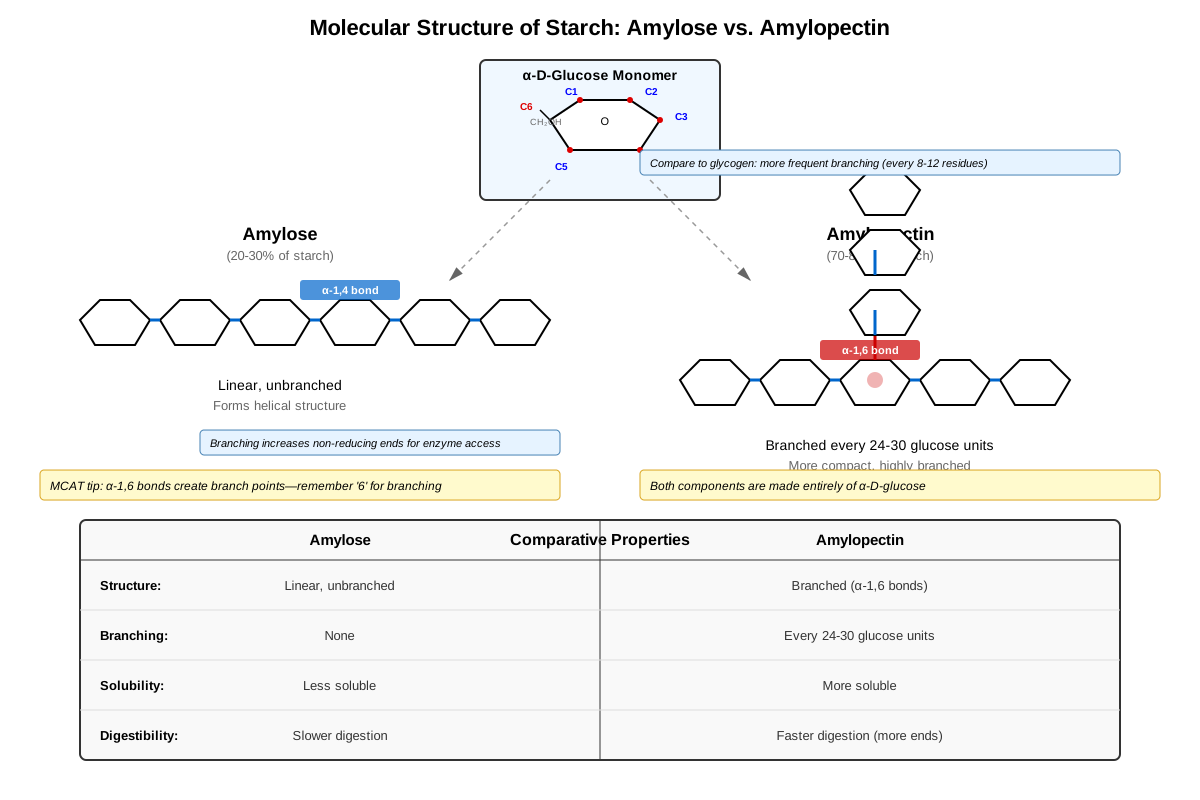
Starch is a polysaccharide composed entirely of α-D-glucose monomers linked by glycosidic bonds. It serves as the primary carbohydrate storage molecule in plants, found abundantly in seeds, tubers, and roots. Starch exists in two distinct structural forms: amylose and amylopectin, both of which are polymers of glucose but differ significantly in their branching patterns and physical properties.
Amylose is a linear, unbranched polymer consisting of glucose units connected exclusively by α-1,4-glycosidic bonds. These bonds form between the hydroxyl group on carbon 1 of one glucose molecule (in the α-configuration) and the hydroxyl group on carbon 4 of the adjacent glucose molecule. Amylose typically contains 200-2,000 glucose residues and adopts a helical secondary structure due to the geometry of the α-1,4 linkages. This helical structure can accommodate iodine molecules, producing the characteristic blue-black color in the iodine test for starch.
Amylopectin is a branched polymer that contains both α-1,4-glycosidic bonds (forming the linear chains) and α-1,6-glycosidic bonds (creating branch points). The α-1,6 linkages occur approximately every 20-25 glucose residues, creating a highly branched, tree-like structure. Amylopectin molecules are much larger than amylose, containing up to 10,000 glucose residues. The branched structure provides multiple terminal glucose residues that can be simultaneously accessed by enzymes, allowing for more rapid mobilization of glucose when needed.
Starch vs. Glycogen Comparison
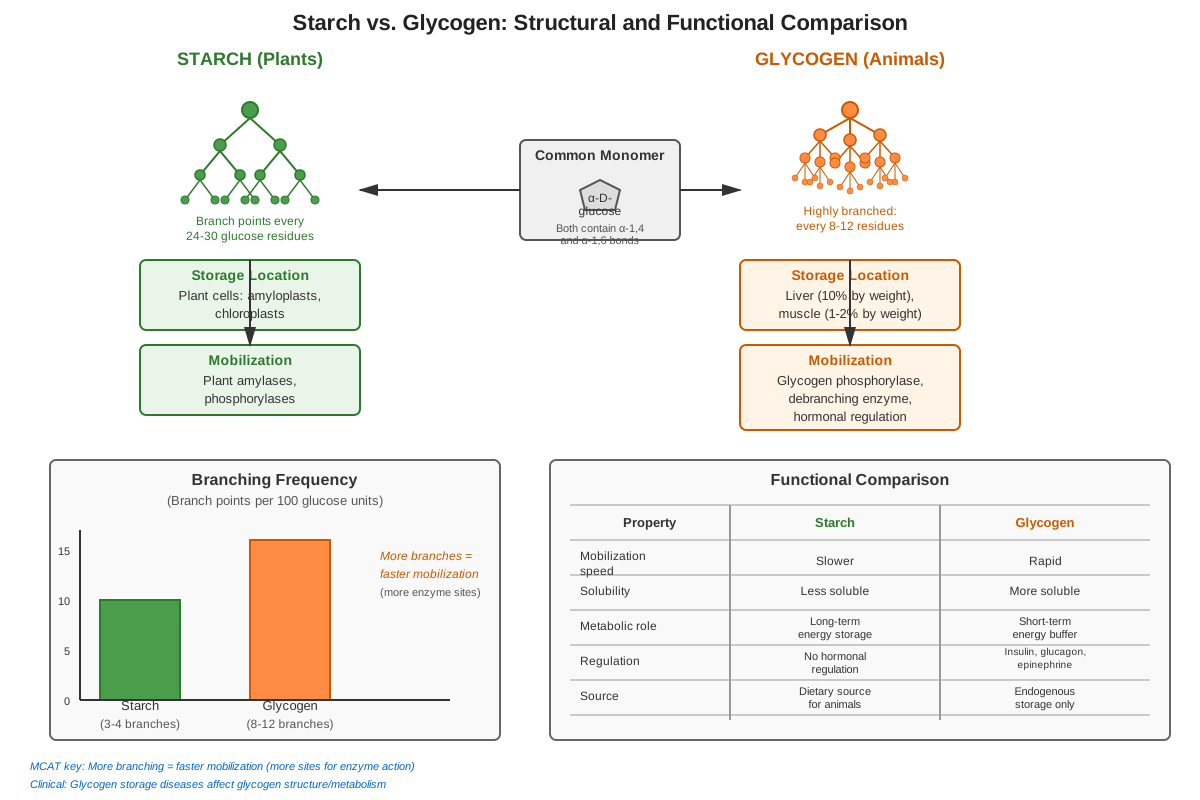
Understanding the similarities and differences between starch and glycogen is high-yield for the MCAT, as comparative questions frequently appear on the exam.
| Feature | Starch (Amylopectin) | Glycogen |
|---|---|---|
| Organism | Plants | Animals, fungi, bacteria |
| Primary bonds | α-1,4-glycosidic | α-1,4-glycosidic |
| Branch bonds | α-1,6-glycosidic | α-1,6-glycosidic |
| Branch frequency | Every 20-25 residues | Every 8-12 residues |
| Structure | Less branched | Highly branched |
| Size | Up to 10,000 glucose units | Up to 55,000 glucose units |
| Solubility | Limited (forms granules) | More soluble |
| Function | Long-term energy storage | Short-term energy storage |
| Location | Chloroplasts, amyloplasts | Liver, muscle primarily |
Both molecules use α-glycosidic bonds (as opposed to the β-bonds in cellulose), making them digestible by human enzymes. The more frequent branching in glycogen reflects the need for rapid glucose mobilization in animals, while starch's less frequent branching is adequate for plant energy storage needs.
Starch Digestion and Enzymatic Breakdown
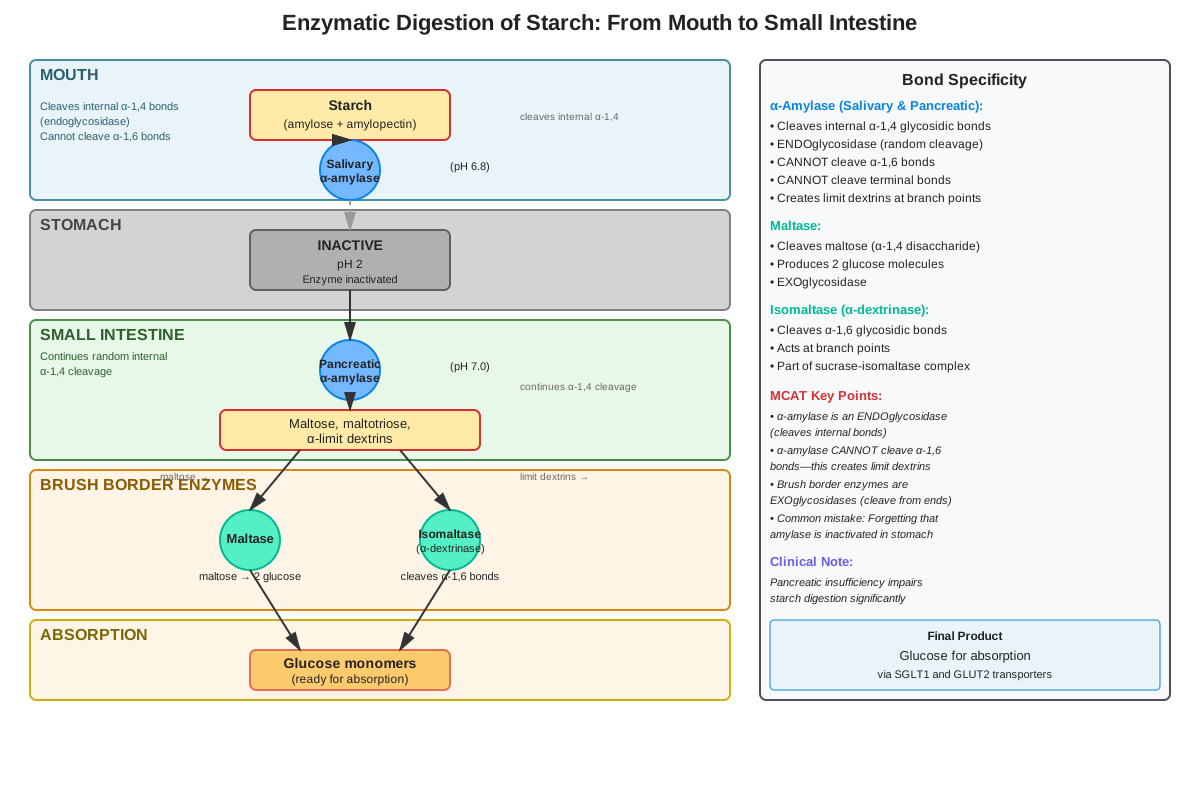
The digestion of starch begins in the mouth and continues through the small intestine, involving multiple enzymes with specific substrate preferences. Understanding enzyme specificity for different glycosidic bonds is critical for MCAT questions.
Salivary α-amylase (also called ptyalin) initiates starch digestion in the oral cavity. This enzyme is an endoglycosidase that randomly cleaves internal α-1,4-glycosidic bonds within amylose and amylopectin chains, but cannot cleave α-1,6 bonds or α-1,4 bonds immediately adjacent to branch points. The products of salivary amylase action include shorter polysaccharide chains called dextrins, the disaccharide maltose, and small amounts of glucose. Salivary amylase activity is temporarily halted in the stomach due to low pH but resumes when the food bolus enters the duodenum.
Pancreatic α-amylase continues starch digestion in the small intestine. It has similar specificity to salivary amylase, cleaving internal α-1,4 bonds but not α-1,6 bonds. The major products of pancreatic amylase action are maltose, maltotriose (a trisaccharide), and α-limit dextrins (branched oligosaccharides containing α-1,6 bonds that amylase cannot cleave).
Final digestion occurs at the brush border of the small intestine through the action of several disaccharidases and oligosaccharidases:
- Maltase cleaves maltose into two glucose molecules
- Isomaltase (α-dextrinase) specifically cleaves α-1,6-glycosidic bonds in limit dextrins
- Sucrase-isomaltase complex has dual activity for both sucrose and α-1,6 bonds
- Glucoamylase removes glucose units sequentially from the non-reducing ends of oligosaccharides
The resulting monosaccharides (primarily glucose) are then absorbed by enterocytes via sodium-glucose cotransporters (SGLT1) and facilitated diffusion transporters (GLUT2).
Physical and Chemical Properties
Starch exhibits several distinctive properties that are testable on the MCAT:
- Iodine test: Starch produces a blue-black color with iodine solution due to iodine molecules becoming trapped within the helical structure of amylose. Amylopectin produces a red-brown color. This test is used to detect starch presence and can indicate the extent of hydrolysis.
- Non-reducing sugar: Despite being composed of glucose (a reducing sugar), starch is classified as a non-reducing sugar because the anomeric carbons of glucose units are involved in glycosidic bonds, except for one reducing end per molecule. With thousands of glucose units, this single reducing end is negligible.
- Hydrophilic but insoluble: While starch contains numerous hydroxyl groups making it hydrophilic, the large molecular size and extensive hydrogen bonding between chains cause it to form insoluble granules rather than dissolving.
- Enzymatic vs. acid hydrolysis: Complete acid hydrolysis of starch yields only glucose, while enzymatic hydrolysis produces a mixture of products depending on enzyme specificity. This distinction is important for interpreting experimental results.
Metabolic Fate and Physiological Significance
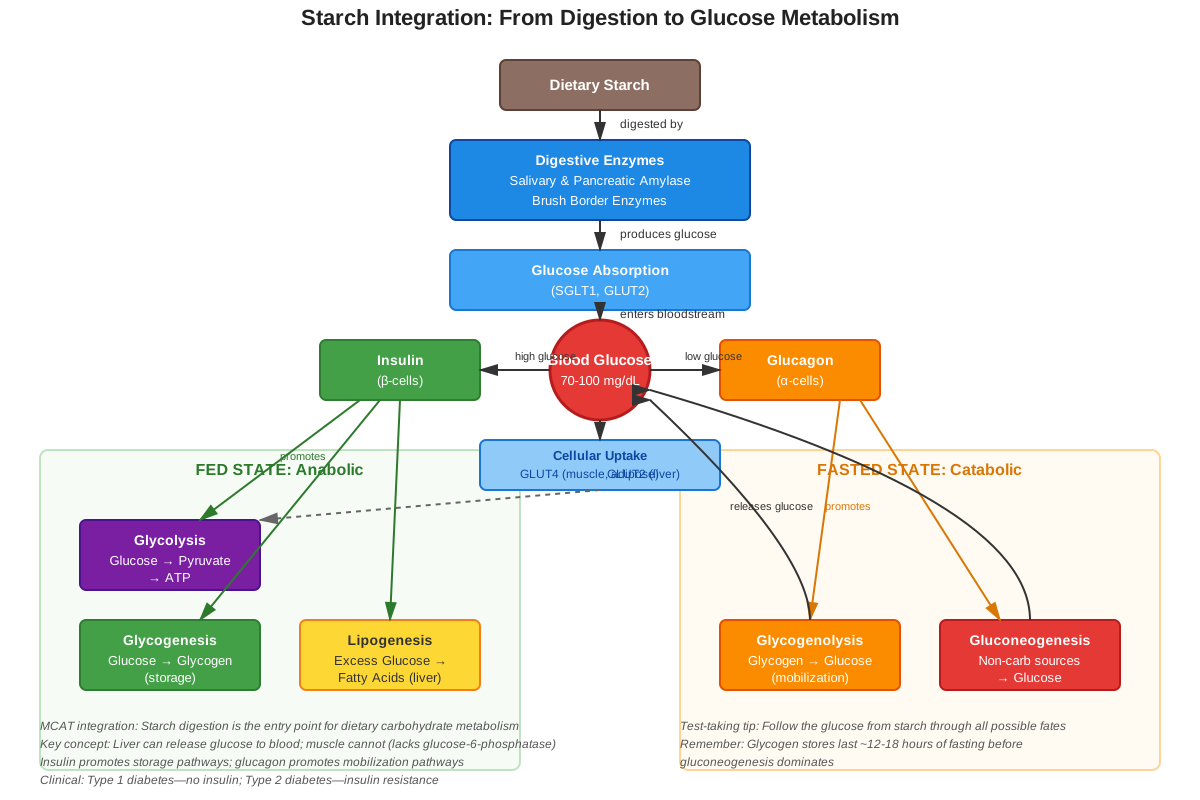
After digestion and absorption, glucose derived from starch enters the hepatic portal circulation and travels to the liver. The liver plays a central role in regulating blood glucose levels through several pathways:
- Glycolysis: Glucose can be immediately oxidized for energy
- Glycogenesis: Excess glucose is polymerized into glycogen for storage
- Lipogenesis: When glycogen stores are saturated, glucose can be converted to fatty acids
- Pentose phosphate pathway: Glucose can be shunted to produce NADPH and ribose-5-phosphate
The rate of starch digestion affects the glycemic response—how quickly blood glucose rises after consumption. High-amylose starches and resistant starches (starch that resists digestion) produce lower glycemic responses, while highly branched, gelatinized starches produce rapid glucose spikes. This concept connects to clinical topics like diabetes management and metabolic health.
Concept Relationships
The study of starch integrates multiple biochemical concepts in a hierarchical and interconnected manner. At the foundation, monosaccharide structure (specifically α-D-glucose) determines the properties of starch through the geometry of glycosidic bond formation. The α-configuration at the anomeric carbon creates α-glycosidic bonds, which adopt a different spatial arrangement than β-bonds, making starch digestible by human enzymes while cellulose (with β-bonds) is not.
Glycosidic bond formation → starch polymer structure → enzyme specificity: The specific types of glycosidic bonds (α-1,4 vs. α-1,6) directly determine which enzymes can cleave them. This relationship is bidirectional—understanding enzyme specificity helps predict starch digestion products, while knowing starch structure helps predict which enzymes are required for complete digestion.
Starch digestion connects to carbohydrate metabolism through the glucose products generated. Glucose absorption → blood glucose regulation → insulin signaling → glycolysis/glycogenesis represents a critical pathway tested on the MCAT. The comparison between starch (plant storage) and glycogen (animal storage) illustrates evolutionary adaptations and metabolic differences between kingdoms.
The concept also connects to enzyme kinetics: amylase activity can be analyzed using Michaelis-Menten kinetics, and factors affecting enzyme activity (pH, temperature, inhibitors) are frequently tested using starch as the substrate. Additionally, starch relates to digestive system physiology, including the role of different digestive organs, the importance of brush border enzymes, and nutrient absorption mechanisms.
Finally, starch connects to organic chemistry through understanding acetal formation (glycosidic bonds are acetals), hydrolysis reactions, and the distinction between reducing and non-reducing sugars. This interdisciplinary nature makes starch an ideal topic for integrated MCAT passages.
High-Yield Facts
⭐ Starch consists of two components: amylose (linear, α-1,4 bonds only) and amylopectin (branched, α-1,4 and α-1,6 bonds)
⭐ α-Amylase cleaves internal α-1,4-glycosidic bonds but cannot cleave α-1,6 bonds or terminal bonds
⭐ Amylopectin branches approximately every 20-25 glucose residues; glycogen branches every 8-12 residues
⭐ Complete starch digestion requires both amylase (for α-1,4 bonds) and isomaltase (for α-1,6 bonds)
⭐ Starch produces a blue-black color with iodine due to iodine trapping in the amylose helix
- Starch is a non-reducing sugar despite being composed of glucose because anomeric carbons are involved in glycosidic bonds
- Salivary amylase is inactivated by stomach acid but pancreatic amylase continues digestion in the small intestine
- The products of amylase action on starch include maltose, maltotriose, and α-limit dextrins
- Brush border enzymes (maltase, isomaltase, glucoamylase) complete the final steps of starch digestion to produce glucose
- Resistant starch escapes digestion in the small intestine and is fermented by colonic bacteria, producing short-chain fatty acids
- Both starch and glycogen use α-D-glucose monomers, distinguishing them from cellulose which uses β-D-glucose
- Starch granules are semicrystalline structures that must be gelatinized (heated in water) for optimal enzyme access
Quick check — test yourself on Starch so far.
Try Flashcards →Common Misconceptions
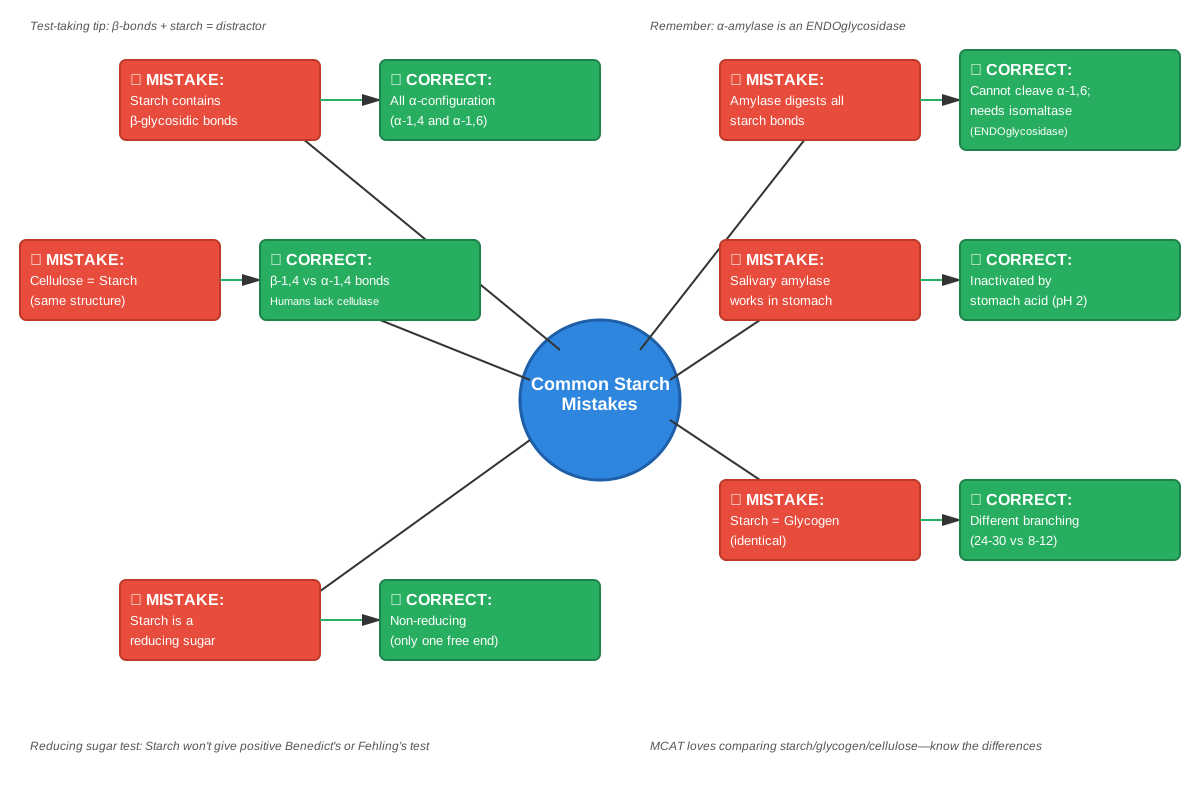
Misconception: Starch and cellulose are both plant polysaccharides made of glucose, so they should both be digestible by human enzymes.
Correction: While both are glucose polymers, starch contains α-1,4-glycosidic bonds while cellulose contains β-1,4-glycosidic bonds. Human digestive enzymes (amylases) are specific for α-bonds and cannot cleave β-bonds due to the different three-dimensional structure. The β-configuration creates a linear, rigid structure that human enzymes cannot accommodate in their active sites.
Misconception: Amylase completely digests starch into glucose monomers.
Correction: Amylase is an endoglycosidase that cleaves internal α-1,4 bonds, producing shorter oligosaccharides (dextrins), maltose, and maltotriose, but not free glucose. Additionally, amylase cannot cleave α-1,6 branch points. Complete digestion to glucose requires brush border enzymes including maltase, isomaltase, and glucoamylase.
Misconception: Starch is a reducing sugar because it's made of glucose, which is a reducing sugar.
Correction: Starch is classified as a non-reducing sugar because nearly all anomeric carbons (the reactive carbons in reducing sugars) are involved in glycosidic bonds and therefore cannot act as reducing agents. While each starch molecule has one free anomeric carbon at the reducing end, this is negligible compared to the thousands of glucose units in the polymer.
Misconception: Glycogen and amylopectin have the same structure since both are branched glucose polymers with α-1,4 and α-1,6 bonds.
Correction: While both are branched polymers with the same bond types, glycogen is much more highly branched (every 8-12 residues) compared to amylopectin (every 20-25 residues). This structural difference reflects functional differences: glycogen's extensive branching allows for more rapid glucose mobilization needed in animals, while amylopectin's less frequent branching is adequate for plant storage needs.
Misconception: All dietary starch is digested and absorbed in the small intestine.
Correction: A portion of dietary starch, called resistant starch, escapes digestion in the small intestine due to physical inaccessibility (trapped in cell walls), crystalline structure (raw potato starch), or chemical modification (retrograded starch). This resistant starch reaches the colon where it is fermented by bacteria, producing short-chain fatty acids and contributing to colon health.
Misconception: The iodine test for starch works because iodine chemically reacts with glucose units.
Correction: The blue-black color in the iodine test results from physical trapping of iodine molecules (I₃⁻ and I₅⁻) within the helical structure of amylose, not from a chemical reaction. This is a physical interaction based on the geometry of the helix, which creates a cavity that accommodates iodine molecules. Amylopectin produces a different color (red-brown) because its branched structure cannot form the same type of helix.
Worked Examples
Example 1: Predicting Products of Enzymatic Digestion
Question: A researcher incubates purified amylopectin with excess pancreatic α-amylase until the reaction reaches completion. Which of the following products would be present in the highest concentration?
A) Glucose
B) Maltose
C) α-Limit dextrins
D) Amylose
Solution:
Step 1: Identify the substrate structure. Amylopectin is a branched glucose polymer with α-1,4-glycosidic bonds in linear regions and α-1,6-glycosidic bonds at branch points.
Step 2: Determine enzyme specificity. Pancreatic α-amylase is an endoglycosidase that cleaves internal α-1,4-glycosidic bonds. Critically, it cannot cleave α-1,6 bonds or α-1,4 bonds immediately adjacent to branch points.
Step 3: Predict products. As amylase cleaves α-1,4 bonds throughout the amylopectin molecule, it will produce:
- Maltose (two glucose units) from cleaving between glucose pairs
- Maltotriose (three glucose units) from some cleavage patterns
- α-Limit dextrins (branched oligosaccharides containing α-1,6 bonds that amylase cannot cleave)
Step 4: Determine the most abundant product. Since amylopectin has branch points every 20-25 glucose residues, and amylase cannot cleave near these branches, α-limit dextrins will accumulate as the major product. These are the "limit" of amylase digestion—the enzyme cannot proceed further.
Step 5: Eliminate incorrect answers:
- (A) Glucose: Amylase does not produce free glucose; it cleaves internal bonds, not terminal ones
- (B) Maltose: While produced, it will be less abundant than limit dextrins
- (D) Amylose: This is a different form of starch (unbranched); it's not a product of amylopectin digestion
Answer: C) α-Limit dextrins
This question tests understanding of enzyme specificity and the structural features of amylopectin. The key insight is recognizing that α-1,6 bonds are resistant to amylase, creating a "limit" to digestion.
Example 2: Comparing Starch and Glycogen Function
Question: A passage describes an experiment comparing glucose mobilization rates from starch in plant cells versus glycogen in liver cells. The results show that glycogen can release glucose approximately 3 times faster than starch when both are exposed to their respective degradative enzymes under optimal conditions. Which structural feature best explains this difference?
A) Glycogen contains β-1,4-glycosidic bonds while starch contains α-1,4 bonds
B) Glycogen has more frequent branch points, providing more sites for simultaneous enzyme action
C) Starch molecules are larger than glycogen molecules, requiring more time for complete degradation
D) Glycogen is stored in the cytoplasm while starch is stored in specialized organelles
Solution:
Step 1: Identify what the question is asking. We need to explain why glycogen releases glucose faster than starch based on structural differences.
Step 2: Recall the key structural difference. Both starch (amylopectin) and glycogen are branched polymers, but glycogen branches much more frequently (every 8-12 residues) compared to amylopectin (every 20-25 residues).
Step 3: Connect structure to function. Enzymes that degrade these polymers (glycogen phosphorylase for glycogen, plant starch phosphorylase for starch) work from the non-reducing ends of chains. More branch points mean more non-reducing ends available simultaneously.
Step 4: Apply the concept. If glycogen has branches every 8-12 residues and amylopectin every 20-25 residues, glycogen has approximately 2-3 times more branch points per unit mass. This means 2-3 times more enzyme molecules can work simultaneously on a glycogen molecule, explaining the ~3-fold faster glucose release.
Step 5: Evaluate answer choices:
- (A) Incorrect: Both contain α-bonds, not β-bonds
- (B) Correct: More branches = more enzyme binding sites = faster degradation
- (C) Incorrect: While possibly true, size alone doesn't explain the rate difference; structure does
- (D) Incorrect: While true, cellular location doesn't directly explain the intrinsic rate of enzymatic degradation
Answer: B) Glycogen has more frequent branch points, providing more sites for simultaneous enzyme action
This question integrates structural biochemistry with enzyme kinetics and physiological function. It demonstrates why animals evolved a more highly branched storage polymer—the need for rapid glucose mobilization during fight-or-flight responses or between meals.
Exam Strategy
When approaching MCAT questions about starch, begin by identifying what aspect of starch the question addresses: structure, digestion, comparison to other carbohydrates, or experimental analysis. Questions often hinge on understanding enzyme specificity, so immediately note which enzymes are mentioned and recall their specific substrates.
Trigger words and phrases to watch for:
- "α-amylase" or "amylase" → think α-1,4 bond cleavage, cannot cleave α-1,6 bonds
- "Complete digestion" → requires multiple enzymes including isomaltase for branch points
- "Iodine test" → indicates starch presence; blue-black color for amylose
- "Reducing sugar" → starch is NOT a reducing sugar; products of digestion (maltose, glucose) are
- "Branching" or "branch points" → focus on α-1,6 bonds and frequency differences between starch and glycogen
- "Glycemic response" or "blood glucose" → consider rate of digestion and absorption
Process-of-elimination strategies:
- For enzyme specificity questions, eliminate any answer suggesting amylase produces free glucose or cleaves α-1,6 bonds
- For structure comparison questions, eliminate answers that confuse α and β bonds or that incorrectly state starch is more branched than glycogen
- For digestion sequence questions, remember the order: mouth (salivary amylase) → stomach (inactive) → small intestine (pancreatic amylase) → brush border (disaccharidases)
- For experimental questions, if the passage describes incomplete digestion, the products must include oligosaccharides, not just monosaccharides
Time allocation advice:
Starch questions are typically straightforward if you know the core concepts, so don't overthink them. Spend 60-90 seconds on discrete questions and 90-120 seconds on passage-based questions. If a question asks about enzyme products, quickly sketch the substrate structure and mark which bonds the enzyme can cleave—this visual approach prevents errors and takes only 15-20 seconds.
For passage-based questions, pay special attention to figures showing experimental results (chromatography, enzyme kinetics, product analysis). The MCAT loves to present data about starch hydrolysis and ask you to interpret results based on enzyme specificity or reaction conditions.
Memory Techniques
Mnemonic for amylase specificity: "Amy can't BRANCH out" (Amylase cannot cleave branch points/α-1,6 bonds)
Mnemonic for starch components: "Amy's STRAIGHT, Amy's PECTIN has BRANCHES"
- Amylose = straight (linear)
- Amylopectin = branches
Visualization for glycosidic bonds: Picture the numbers as a clock: α-1,4 bonds are like 1 o'clock to 4 o'clock (a moderate angle, creating a helix), while α-1,6 bonds are like 1 o'clock to 6 o'clock (a sharp angle, creating a branch). This helps remember that 1,4 bonds form chains and 1,6 bonds form branches.
Acronym for starch digestion products: "My Mouth Makes Dextrins" (Maltose, Maltotriose, α-limit Dextrins) - the three main products of amylase action
Memory aid for branch frequency: "Glycogen is GREAT at branching" - Glycogen has Greater branching (every 8-12) compared to amylopectin (every 20-25). The word "GREAT" has 5 letters, and 8-12 is roughly half of 20-25, helping you remember the approximate 2:1 ratio.
Visualization for iodine test: Imagine amylose as a spiral staircase (helix) with iodine molecules as people standing inside the spiral. The people (iodine) are trapped in the architecture (helix), creating the blue-black color. Amylopectin's branches prevent this perfect spiral, so fewer iodine molecules are trapped, creating a different color.
Summary
Starch is a plant storage polysaccharide composed of α-D-glucose monomers arranged in two forms: linear amylose (α-1,4 bonds only) and branched amylopectin (α-1,4 and α-1,6 bonds). Understanding starch structure is essential for predicting enzyme specificity during digestion, which begins with salivary and pancreatic α-amylase cleaving internal α-1,4 bonds to produce maltose, maltotriose, and α-limit dextrins. Complete digestion requires brush border enzymes including isomaltase for α-1,6 bonds. The comparison between starch and glycogen—particularly the difference in branching frequency—explains functional differences between plant and animal glucose storage. Starch is a non-reducing sugar that produces a characteristic blue-black color with iodine due to physical trapping in the amylose helix. For the MCAT, focus on enzyme specificity, structural comparisons with glycogen, digestion products, and the ability to interpret experimental data involving starch hydrolysis. Mastering these concepts enables success on both discrete questions and integrated passages involving carbohydrate biochemistry.
Key Takeaways
- Starch consists of amylose (linear, α-1,4 bonds) and amylopectin (branched, α-1,4 and α-1,6 bonds), both composed of α-D-glucose monomers
- α-Amylase cleaves internal α-1,4-glycosidic bonds but cannot cleave α-1,6 bonds, producing maltose, maltotriose, and α-limit dextrins
- Complete starch digestion requires multiple enzymes: amylase for α-1,4 bonds and isomaltase for α-1,6 bonds at branch points
- Glycogen is more highly branched (every 8-12 residues) than amylopectin (every 20-25 residues), allowing faster glucose mobilization in animals
- Starch is a non-reducing sugar and produces a blue-black color with iodine due to iodine trapping in the amylose helix
- Understanding enzyme specificity for different glycosidic bonds is critical for predicting digestion products and interpreting experimental results
- Starch digestion connects to broader metabolic pathways including glycolysis, glycogenesis, and blood glucose regulation
Related Topics
Glycogen metabolism: After mastering starch structure and digestion, studying glycogen synthesis (glycogenesis) and breakdown (glycogenolysis) provides insight into animal carbohydrate storage and the hormonal regulation of glucose homeostasis. Understanding starch provides the structural foundation for appreciating glycogen's more complex regulation.
Cellulose and dietary fiber: Comparing starch (α-bonds, digestible) with cellulose (β-bonds, indigestible) illustrates how subtle structural differences create dramatic functional consequences. This comparison is high-yield for MCAT questions about carbohydrate chemistry and digestive physiology.
Carbohydrate metabolism pathways: Starch digestion produces glucose, which enters glycolysis, the citric acid cycle, and oxidative phosphorylation. Understanding starch as the entry point for dietary carbohydrates contextualizes these metabolic pathways.
Enzyme kinetics and regulation: Amylase provides an excellent model for studying enzyme specificity, pH effects, and inhibition. Advanced study might include salivary amylase gene copy number variation and its evolutionary significance.
Diabetes and metabolic disorders: The glycemic response to different starches connects biochemistry to clinical medicine, explaining why dietary recommendations emphasize complex carbohydrates and fiber.
Practice CTA
Now that you've mastered the biochemistry of starch, it's time to reinforce your knowledge through active practice. Attempt the practice questions and flashcards associated with this topic to test your understanding of enzyme specificity, structural comparisons, and experimental interpretation. Focus especially on questions that integrate starch with other carbohydrate concepts or that present novel experimental scenarios—these mirror the integrated, application-based questions you'll encounter on test day. Remember, understanding starch structure and digestion provides a foundation for numerous high-yield MCAT topics, so investing time in practice now will pay dividends across multiple content areas. You've got this!
Sign up free to keep reading
Create a free AnvayaPrep account to finish this MCAT guide on Starch — plus flashcards and practice questions.