Overview
Catalytic efficiency is one of the most important quantitative measures in enzyme kinetics, representing how effectively an enzyme converts substrate into product. This parameter combines both the binding affinity of an enzyme for its substrate and the speed at which the catalytic reaction proceeds. For the MCAT, understanding catalytic efficiency is essential because it bridges multiple high-yield concepts in Biochemistry, including enzyme kinetics, Michaelis-Menten kinetics, and the physiological significance of enzyme function.
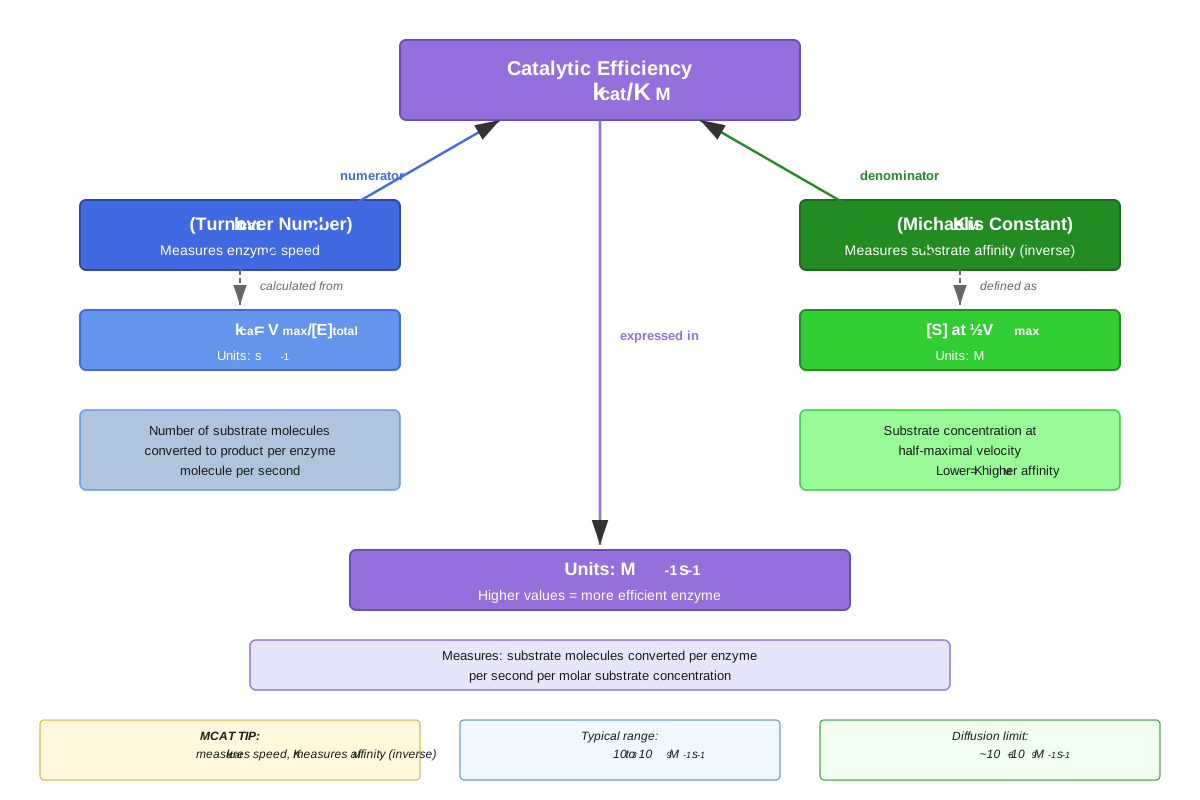
The catalytic efficiency of an enzyme is expressed as the ratio kcat/KM, where kcat represents the turnover number (the maximum number of substrate molecules converted to product per enzyme molecule per unit time) and KM is the Michaelis constant (the substrate concentration at which the reaction velocity is half of Vmax). This single parameter elegantly captures how "perfect" an enzyme is at its job—enzymes with higher catalytic efficiency are better at finding and converting their substrates, even when substrate concentrations are low. Some enzymes have evolved to achieve catalytic efficiencies approaching the diffusion limit (108 to 109 M⁻¹s⁻¹), meaning they catalyze reactions nearly every time they encounter a substrate molecule.
Understanding catalytic efficiency is crucial for the MCAT because it frequently appears in passage-based questions that require students to interpret experimental data, compare enzyme variants, or predict the physiological consequences of mutations. This topic connects directly to broader themes in biochemistry including metabolic regulation, enzyme inhibition, and evolutionary adaptation. Mastery of catalytic efficiency enables students to tackle complex questions about enzyme function in both normal physiology and disease states, making it a high-yield topic that appears across multiple sections of the exam.
Learning Objectives
- [ ] Define catalytic efficiency using accurate Biochemistry terminology
- [ ] Explain why catalytic efficiency matters for the MCAT
- [ ] Apply catalytic efficiency to exam-style questions
- [ ] Identify common mistakes related to catalytic efficiency
- [ ] Connect catalytic efficiency to related Biochemistry concepts
- [ ] Calculate and compare catalytic efficiency values from experimental data
- [ ] Predict how changes in kcat or KM affect overall catalytic efficiency
- [ ] Analyze the physiological significance of catalytic efficiency in metabolic pathways
Prerequisites
- Michaelis-Menten kinetics: Understanding the fundamental equation and parameters (Vmax, KM) is essential because catalytic efficiency is derived directly from these values
- Enzyme structure and function: Knowledge of how enzymes bind substrates and catalyze reactions provides the mechanistic foundation for understanding what catalytic efficiency measures
- Basic kinetics and rate laws: Familiarity with reaction rates, rate constants, and concentration dependence is necessary to interpret the mathematical meaning of kcat/KM
- Logarithms and scientific notation: Required for comparing catalytic efficiency values that often span several orders of magnitude
- Protein-ligand binding: Understanding binding affinity and dissociation constants helps explain the KM component of catalytic efficiency
Why This Topic Matters
Clinical and Real-World Significance
Catalytic efficiency has profound implications for human health and disease. Genetic mutations that reduce an enzyme's catalytic efficiency can cause metabolic disorders, even if the enzyme is expressed at normal levels. For example, certain variants of phenylalanine hydroxylase with reduced catalytic efficiency cause phenylketonuria (PKU), a condition that requires dietary management. Conversely, understanding catalytic efficiency guides drug design—many pharmaceutical agents work by reducing the catalytic efficiency of disease-related enzymes through competitive or non-competitive inhibition.
In evolutionary biology, catalytic efficiency reveals how natural selection has optimized enzymes for their specific cellular roles. Enzymes involved in rate-limiting steps of essential metabolic pathways often exhibit extremely high catalytic efficiency, while enzymes in regulatory positions may have lower efficiency to allow for better control. This concept also explains why some enzymes require cofactors or allosteric regulators—these molecules can dramatically enhance catalytic efficiency when metabolic demand increases.
MCAT Exam Statistics
Catalytic efficiency appears in approximately 15-20% of enzyme kinetics questions on the MCAT, making it a high-yield topic. Questions typically appear in one of three formats:
- Passage-based quantitative questions (40% of catalytic efficiency questions): Students must calculate kcat/KM from experimental data presented in tables or graphs
- Conceptual comparison questions (35%): Students compare wild-type and mutant enzymes or different enzymes in the same pathway
- Application questions (25%): Students predict physiological outcomes based on changes in catalytic efficiency
The topic most commonly appears in Biochemistry passages but also shows up in integrated passages that combine biochemistry with molecular biology or physiology. Questions often require students to interpret Lineweaver-Burk plots, compare enzyme variants, or explain the significance of catalytic efficiency values in biological contexts.
Core Concepts
Definition and Mathematical Expression
Catalytic efficiency is defined as the ratio of the catalytic rate constant (kcat) to the Michaelis constant (KM):
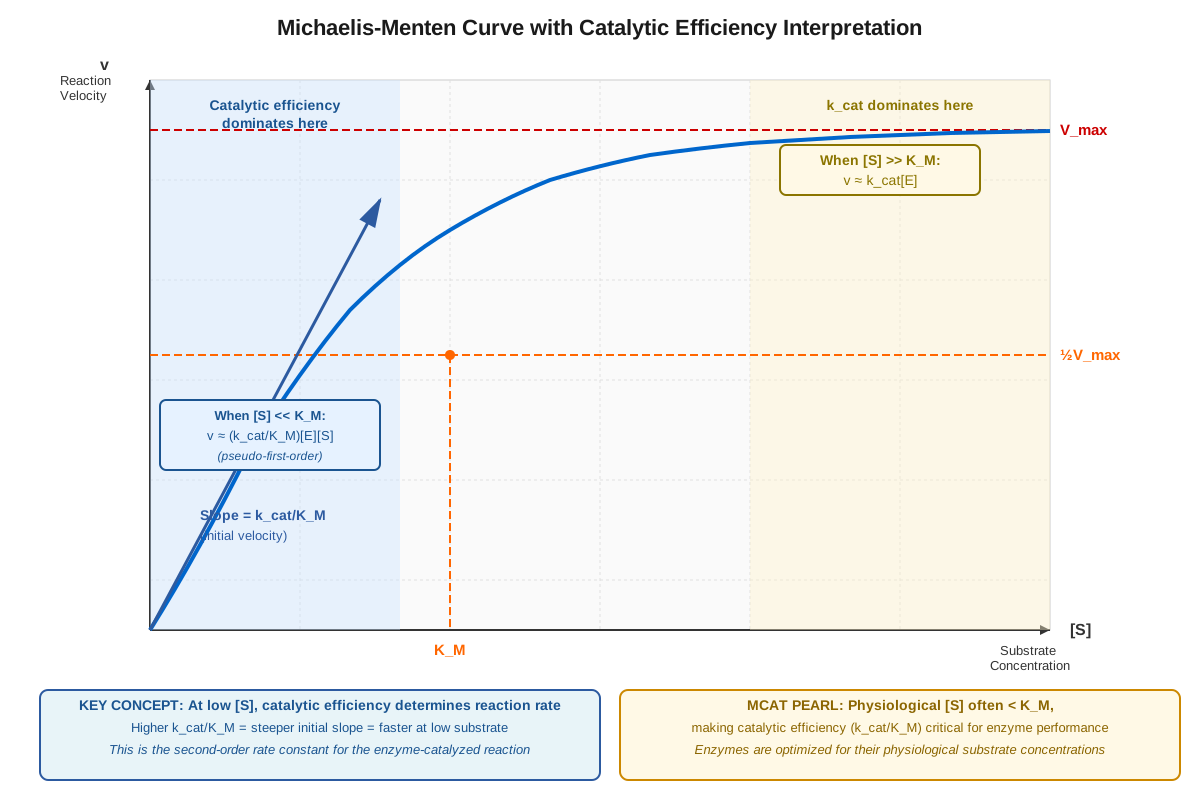
Catalytic Efficiency = kcat/KMThis parameter has units of M⁻¹s⁻¹ (or M⁻¹min⁻¹), representing a second-order rate constant. The catalytic efficiency tells us how rapidly an enzyme can process substrate molecules when substrate concentration is low—specifically, when [S] << KM. Under these conditions, the reaction velocity is directly proportional to both enzyme and substrate concentrations, and the proportionality constant is kcat/KM.
The turnover number (kcat) represents the maximum number of substrate molecules converted to product per active site per unit time when the enzyme is saturated with substrate. It is calculated as:
kcat = Vmax/[E]totalThe Michaelis constant (KM) represents the substrate concentration at which the reaction velocity equals half of Vmax. While KM is often approximated as a measure of substrate binding affinity, it actually reflects a combination of rate constants for substrate binding, dissociation, and catalytic conversion.
Physical Meaning and Interpretation
The catalytic efficiency parameter elegantly captures two essential aspects of enzyme function: substrate recognition (reflected in KM) and catalytic power (reflected in kcat). An enzyme with high catalytic efficiency excels at both finding its substrate and converting it to product quickly.
When substrate concentrations are much lower than KM (the physiologically relevant condition for many enzymes), the Michaelis-Menten equation simplifies to:
v = (kcat/KM)[E][S]This reveals that kcat/KM acts as an apparent second-order rate constant for the enzyme-substrate interaction. The enzyme behaves as if it directly converts free substrate to product without forming a detectable enzyme-substrate complex.
Diffusion-controlled limit: The theoretical maximum catalytic efficiency is approximately 10⁸ to 10⁹ M⁻¹s⁻¹, determined by how quickly enzyme and substrate molecules can diffuse together in aqueous solution. Enzymes that approach this limit are called "catalytically perfect" enzymes because they catalyze a reaction essentially every time they encounter a substrate molecule. Examples include:
- Catalase: ~4 × 10⁷ M⁻¹s⁻¹
- Carbonic anhydrase: ~8 × 10⁷ M⁻¹s⁻¹
- Acetylcholinesterase: ~1.6 × 10⁸ M⁻¹s⁻¹
- Triose phosphate isomerase: ~2.4 × 10⁸ M⁻¹s⁻¹
Factors Affecting Catalytic Efficiency
Several factors can alter an enzyme's catalytic efficiency:
Temperature: Increasing temperature generally increases kcat (faster catalysis) but may also increase KM (weaker binding) due to increased molecular motion. The net effect on kcat/KM depends on which parameter is more temperature-sensitive.
pH: Changes in pH affect ionization states of amino acid residues in the active site, potentially altering both substrate binding (KM) and catalytic mechanism (kcat). Each enzyme has an optimal pH where catalytic efficiency is maximized.
Ionic strength: Salt concentration affects electrostatic interactions between enzyme and substrate, particularly important when substrate or active site residues are charged.
Mutations: Amino acid substitutions can affect catalytic efficiency by:
- Altering active site geometry (affects both kcat and KM)
- Changing substrate binding affinity (primarily affects KM)
- Disrupting catalytic residues (primarily affects kcat)
- Affecting protein stability (can influence both parameters)
Comparing Catalytic Efficiency Values
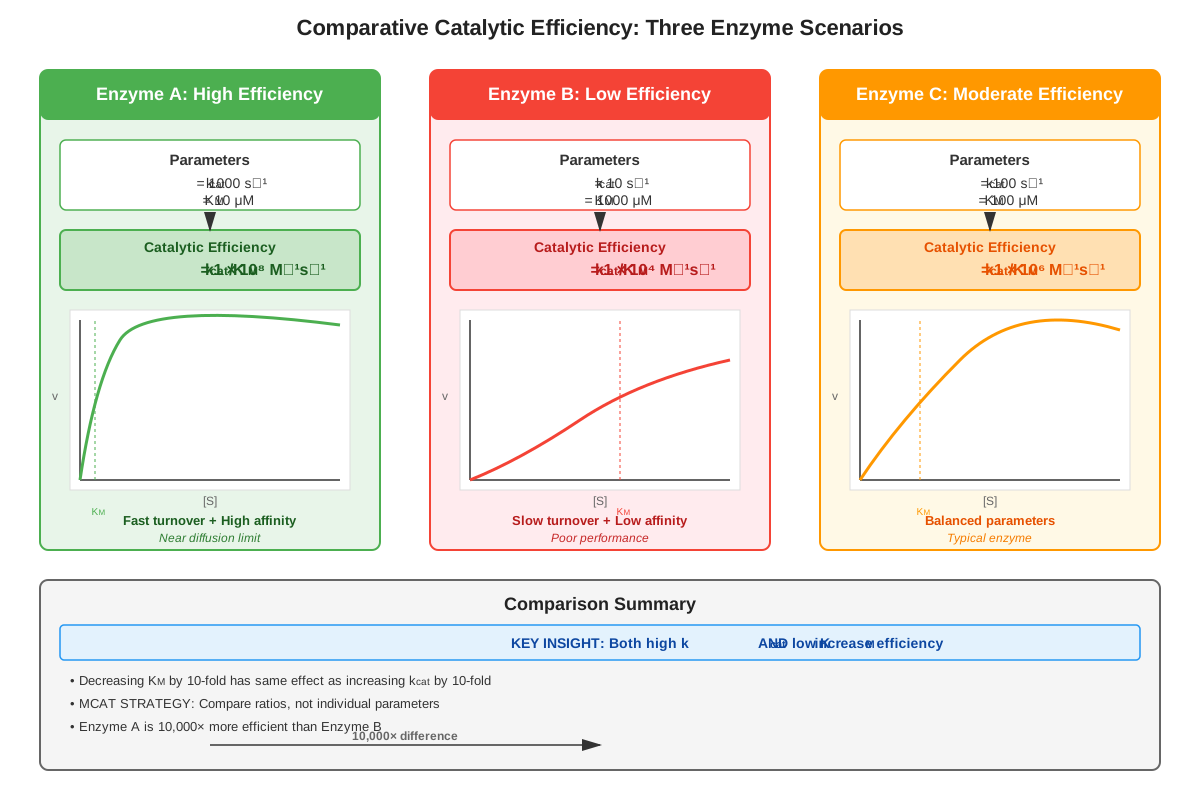
When comparing enzymes or enzyme variants, the catalytic efficiency provides more physiologically relevant information than kcat or KM alone:
| Scenario | kcat | KM | kcat/KM | Interpretation |
|---|---|---|---|---|
| Enzyme A | High | High | Moderate | Fast catalysis but poor substrate binding |
| Enzyme B | Low | Low | Moderate | Slow catalysis but excellent substrate binding |
| Enzyme C | High | Low | High | Optimal: fast catalysis and good binding |
| Enzyme D | Low | High | Low | Poor: slow catalysis and weak binding |
This table illustrates that two enzymes with similar catalytic efficiency (Enzymes A and B) may achieve that efficiency through completely different mechanisms. For the MCAT, recognizing that catalytic efficiency integrates both binding and catalytic steps is crucial for interpreting experimental data.
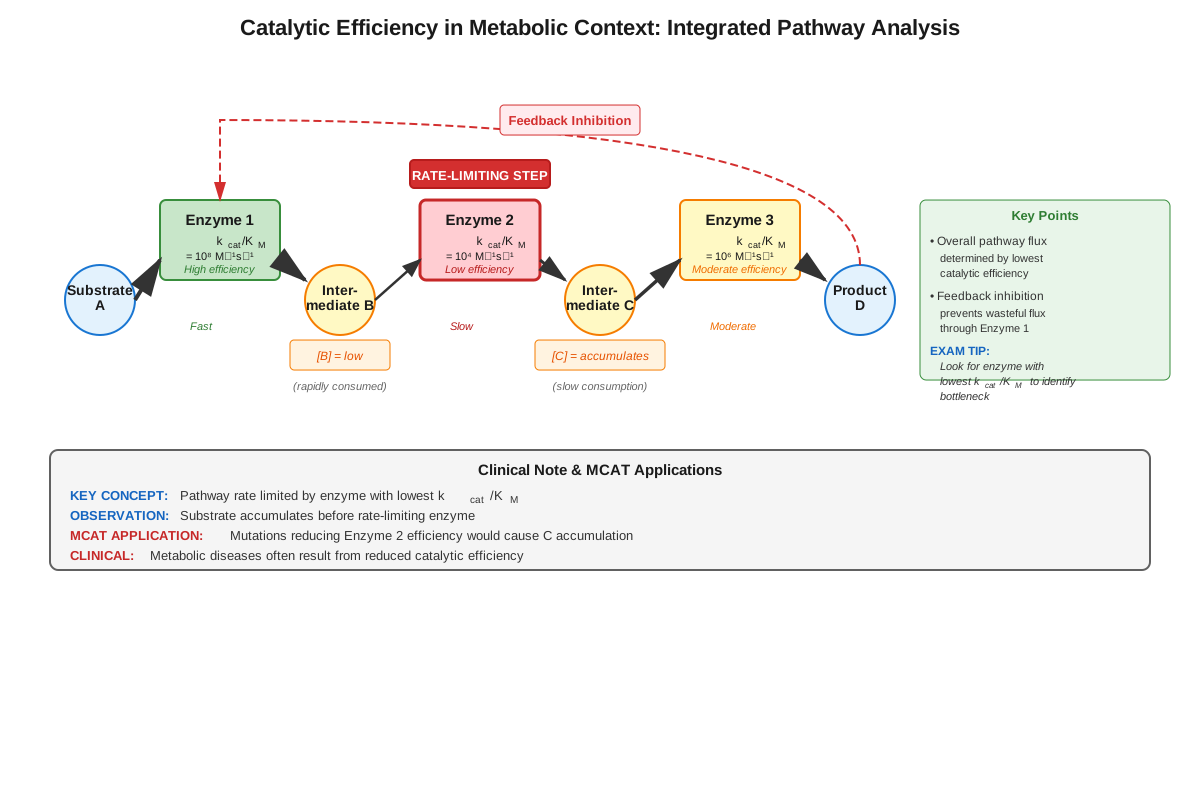
Catalytic Efficiency in Metabolic Context
In metabolic pathways, enzymes often operate under conditions where substrate concentration is well below KM. Under these circumstances, catalytic efficiency (not Vmax or kcat alone) determines the reaction rate. This has important implications:
Substrate channeling: In multi-enzyme complexes, high catalytic efficiency allows efficient transfer of intermediates between active sites, even when intermediate concentrations are very low.
Metabolic regulation: Enzymes at branch points or regulatory steps often have lower catalytic efficiency, allowing their activity to be more sensitive to changes in substrate concentration or regulatory molecules.
Rate-limiting steps: The enzyme with the lowest catalytic efficiency in a pathway often determines the overall flux through that pathway, assuming substrate concentrations are below KM for all enzymes.
Specificity Constant
The term specificity constant is synonymous with catalytic efficiency. This name emphasizes that kcat/KM reflects how specifically an enzyme discriminates between its true substrate and alternative substrates. An enzyme with high specificity for substrate A over substrate B will have a much higher kcat/KM value for A than for B.
The specificity constant is particularly useful when comparing how a single enzyme processes different substrates, or when analyzing promiscuous enzymes that can catalyze reactions with multiple substrates. The ratio of specificity constants for two substrates directly predicts the ratio of reaction velocities when both substrates are present at equal concentrations.
Concept Relationships
The concept of catalytic efficiency sits at the intersection of multiple fundamental biochemistry principles. Michaelis-Menten kinetics provides the mathematical framework from which catalytic efficiency is derived—specifically, kcat/KM emerges naturally from the Michaelis-Menten equation when substrate concentration is low. Understanding this derivation requires knowledge of steady-state assumptions and rate constants for elementary reaction steps.
Enzyme structure directly influences catalytic efficiency through the arrangement of active site residues. The induced fit model and transition state stabilization explain how enzymes achieve high kcat values, while binding pocket complementarity and electrostatic interactions determine KM. Changes in either aspect affect the overall catalytic efficiency.
The relationship flows as follows: Enzyme structure → determines → Active site properties → which establish → kcat and KM values → which combine to give → Catalytic efficiency → which determines → Physiological reaction rate (when [S] << KM) → which influences → Metabolic flux and Cellular function.
Enzyme inhibition connects to catalytic efficiency because different inhibitor types affect kcat and KM differently. Competitive inhibitors increase apparent KM without changing kcat, thereby reducing catalytic efficiency. Non-competitive inhibitors decrease kcat without affecting KM, also reducing catalytic efficiency. Uncompetitive inhibitors decrease both parameters proportionally, potentially leaving catalytic efficiency unchanged.
Allosteric regulation modulates catalytic efficiency by inducing conformational changes that alter active site geometry. Positive allosteric effectors typically increase catalytic efficiency (by decreasing KM, increasing kcat, or both), while negative effectors decrease it.
The concept also connects forward to metabolic pathway analysis, where comparing catalytic efficiencies of sequential enzymes helps identify rate-limiting steps and regulatory points. In enzyme evolution, selective pressure often optimizes catalytic efficiency for physiologically relevant substrates while maintaining lower efficiency for alternative substrates, explaining enzyme specificity.
High-Yield Facts
⭐ Catalytic efficiency (kcat/KM) has units of M⁻¹s⁻¹ and represents a second-order rate constant
⭐ The diffusion-controlled limit for catalytic efficiency is approximately 10⁸ to 10⁹ M⁻¹s⁻¹
⭐ When [S] << KM, the reaction velocity is directly proportional to kcat/KM, making this parameter physiologically most relevant
⭐ Catalytic efficiency integrates both substrate binding affinity (KM) and catalytic rate (kcat) into a single parameter
⭐ Enzymes approaching the diffusion limit are called "catalytically perfect" because they catalyze reactions nearly every time they encounter substrate
- Competitive inhibitors decrease catalytic efficiency by increasing apparent KM while leaving kcat unchanged
- Non-competitive inhibitors decrease catalytic efficiency by decreasing kcat while leaving KM unchanged
- The specificity constant (another name for catalytic efficiency) determines how an enzyme discriminates between different substrates
- Mutations that increase KM or decrease kcat will reduce catalytic efficiency and may cause metabolic disease
- In metabolic pathways, the enzyme with the lowest catalytic efficiency often represents the rate-limiting step when substrate concentrations are low
- Temperature and pH affect catalytic efficiency by altering both the binding and catalytic steps of the reaction
- High catalytic efficiency is particularly important for enzymes that process substrates present at very low cellular concentrations
- The ratio of catalytic efficiencies for two substrates predicts the ratio of reaction velocities when both substrates are present at equal concentrations
Quick check — test yourself on Catalytic efficiency so far.
Try Flashcards →Common Misconceptions
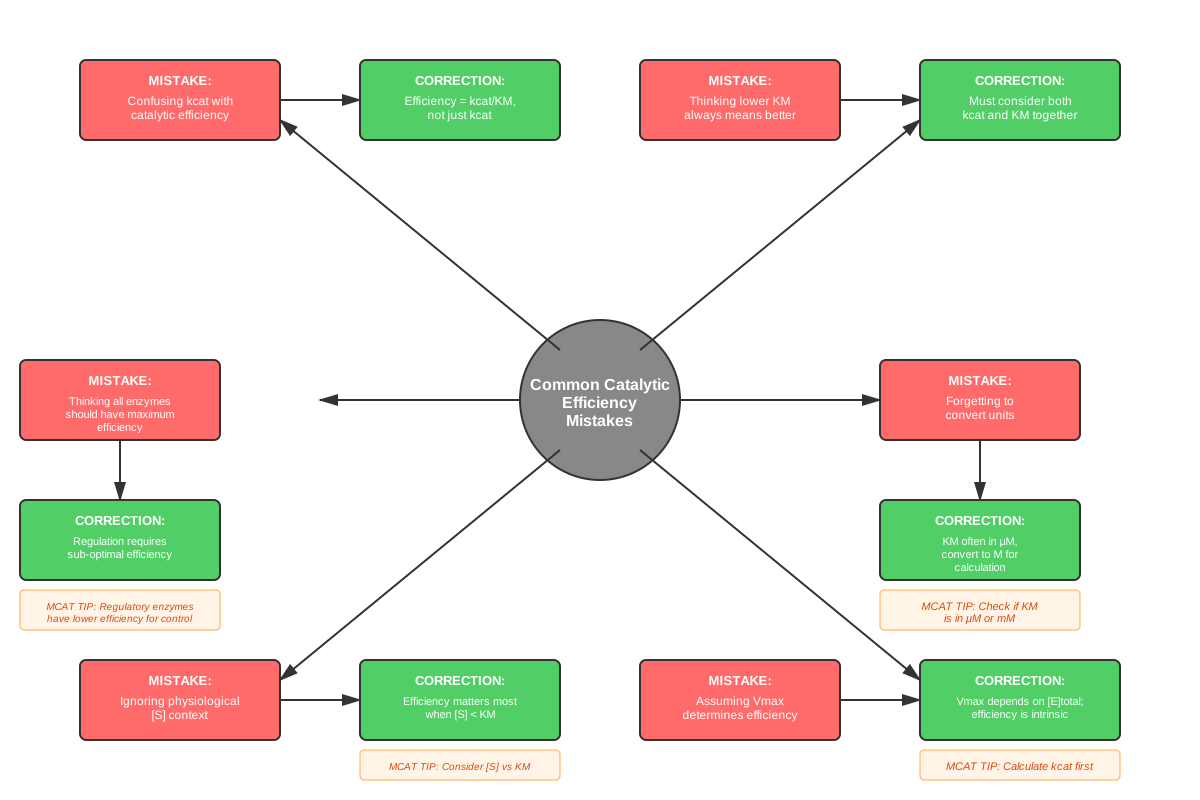
Misconception: KM is the dissociation constant (Kd) for the enzyme-substrate complex, so lower KM always means tighter binding.
Correction: KM is not simply Kd; it equals (k₋₁ + kcat)/k₁, where k₋₁ is the dissociation rate constant, kcat is the catalytic rate constant, and k₁ is the association rate constant. KM approximates Kd only when kcat << k₋₁ (when catalysis is much slower than substrate dissociation). For many enzymes, kcat contributes significantly to KM, so changes in KM don't necessarily reflect changes in binding affinity alone.
Misconception: Higher kcat always means higher catalytic efficiency.
Correction: Catalytic efficiency depends on the ratio kcat/KM, not kcat alone. An enzyme with very high kcat but also very high KM may have lower catalytic efficiency than an enzyme with moderate kcat and low KM. The physiologically relevant parameter is the ratio, not the individual components.
Misconception: Catalytic efficiency is most important when substrate concentration is high (near saturation).
Correction: Catalytic efficiency is most relevant when substrate concentration is low ([S] << KM), which is the physiological condition for many enzymes. When substrate is saturating ([S] >> KM), the reaction velocity approaches Vmax and becomes independent of KM, making kcat (not kcat/KM) the determining factor.
Misconception: All enzymes should evolve toward maximum possible catalytic efficiency.
Correction: While some enzymes have evolved to approach the diffusion limit, many enzymes maintain lower catalytic efficiency for regulatory purposes. Enzymes at metabolic branch points or regulatory steps often benefit from moderate efficiency, allowing their activity to be more responsive to changes in substrate concentration or regulatory molecules. Maximum efficiency isn't always optimal for cellular function.
Misconception: If two enzymes have the same catalytic efficiency, they function identically in the cell.
Correction: Enzymes with identical kcat/KM values may achieve that efficiency through different combinations of kcat and KM, leading to different behavior under various conditions. An enzyme with high kcat and high KM will respond differently to changes in substrate concentration than one with low kcat and low KM, even if their catalytic efficiencies are equal. Additionally, factors like tissue distribution, regulation, and substrate availability affect physiological function beyond catalytic efficiency alone.
Misconception: Catalytic efficiency can be increased indefinitely by decreasing KM.
Correction: The diffusion-controlled limit constrains maximum catalytic efficiency. Once kcat/KM approaches 10⁸-10⁹ M⁻¹s⁻¹, further improvements are impossible because the rate is limited by how quickly enzyme and substrate can diffuse together in solution. At this point, the enzyme catalyzes a reaction essentially every time it encounters a substrate molecule, and no improvement in binding affinity or catalytic mechanism can increase efficiency further.
Worked Examples
Example 1: Calculating and Comparing Catalytic Efficiency
Question: An enzyme has a Vmax of 100 μmol/min when the total enzyme concentration is 2 μM. The KM for this enzyme is 50 μM. A mutant version of the enzyme has a Vmax of 80 μmol/min at the same enzyme concentration and a KM of 20 μM. Which enzyme has higher catalytic efficiency, and what is the ratio of their catalytic efficiencies?
Solution:
Step 1: Calculate kcat for the wild-type enzyme.
kcat = Vmax/[E]total = (100 μmol/min)/(2 μM)
kcat = 50 min⁻¹ = 50/60 s⁻¹ = 0.833 s⁻¹
Step 2: Calculate catalytic efficiency for wild-type.
(kcat/KM)WT = 0.833 s⁻¹ / 50 μM = 0.833 s⁻¹ / (50 × 10⁻⁶ M)
(kcat/KM)WT = 1.67 × 10⁴ M⁻¹s⁻¹
Step 3: Calculate kcat for the mutant enzyme.
kcat = Vmax/[E]total = (80 μmol/min)/(2 μM)
kcat = 40 min⁻¹ = 40/60 s⁻¹ = 0.667 s⁻¹
Step 4: Calculate catalytic efficiency for mutant.
(kcat/KM)mutant = 0.667 s⁻¹ / 20 μM = 0.667 s⁻¹ / (20 × 10⁻⁶ M)
(kcat/KM)mutant = 3.33 × 10⁴ M⁻¹s⁻¹
Step 5: Compare the catalytic efficiencies.
Ratio = (kcat/KM)mutant / (kcat/KM)WT = 3.33 × 10⁴ / 1.67 × 10⁴ = 2.0Answer: The mutant enzyme has higher catalytic efficiency—twice that of the wild-type enzyme. This demonstrates that even though the mutant has lower Vmax (and therefore lower kcat), its substantially lower KM more than compensates, resulting in superior overall catalytic efficiency. This mutant would be more effective at processing substrate under physiological conditions where substrate concentration is likely below KM.
MCAT Connection: This type of calculation directly addresses Learning Objectives 1, 3, and 6. MCAT questions often present data in tables and ask students to determine which enzyme variant would be most effective in vivo, requiring calculation and interpretation of catalytic efficiency.
Example 2: Physiological Significance of Catalytic Efficiency
Question: Two enzymes in a metabolic pathway, Enzyme X and Enzyme Y, catalyze sequential reactions. Enzyme X has kcat = 1000 s⁻¹ and KM = 100 μM. Enzyme Y has kcat = 100 s⁻¹ and KM = 1 μM. In the cell, the substrate for Enzyme X is present at 10 μM, and the product of Enzyme X (substrate for Enzyme Y) is present at 0.5 μM. Which enzyme is more likely to be rate-limiting for the overall pathway?
Solution:
Step 1: Calculate catalytic efficiency for both enzymes.
(kcat/KM)X = 1000 s⁻¹ / 100 μM = 1000 s⁻¹ / (100 × 10⁻⁶ M) = 1.0 × 10⁷ M⁻¹s⁻¹
(kcat/KM)Y = 100 s⁻¹ / 1 μM = 100 s⁻¹ / (1 × 10⁻⁶ M) = 1.0 × 10⁸ M⁻¹s⁻¹
Step 2: Determine if substrates are below KM for each enzyme.
- For Enzyme X: [S] = 10 μM << KM = 100 μM ✓
- For Enzyme Y: [S] = 0.5 μM << KM = 1 μM ✓
Both enzymes operate under conditions where [S] << KM, so catalytic efficiency determines reaction velocity.
Step 3: Calculate relative reaction velocities using v = (kcat/KM)[E][S].
Assuming equal enzyme concentrations:
vX ∝ (1.0 × 10⁷ M⁻¹s⁻¹)(10 × 10⁻⁶ M) = 0.1 s⁻¹
vY ∝ (1.0 × 10⁸ M⁻¹s⁻¹)(0.5 × 10⁻⁶ M) = 0.05 s⁻¹
Step 4: Interpret the results.
Despite Enzyme Y having 10-fold higher catalytic efficiency, Enzyme X has a 2-fold higher reaction velocity under these cellular conditions because its substrate concentration is 20-fold higher. However, Enzyme Y is operating closer to its capacity relative to substrate availability.
Answer: Enzyme X is more likely to be rate-limiting. Although it has lower catalytic efficiency, the relatively high substrate concentration (10 μM) allows it to maintain reasonable velocity. Enzyme Y, despite superior catalytic efficiency, processes its substrate very rapidly, suggesting it's not limiting. The rate-limiting step is typically the slowest reaction in the pathway, which in this case is Enzyme X. This example illustrates that catalytic efficiency must be considered alongside actual substrate concentrations to predict physiological behavior.
MCAT Connection: This problem integrates multiple concepts (Learning Objectives 5, 7, and 8) and represents the type of passage-based reasoning question common on the MCAT. Students must recognize when to apply catalytic efficiency, perform calculations, and interpret results in a physiological context.
Exam Strategy
Approaching MCAT Questions on Catalytic Efficiency
Step 1: Identify the question type
- Calculation questions: Look for data on Vmax, [E], and KM, or direct values of kcat
- Comparison questions: Identify which enzymes or conditions are being compared
- Conceptual questions: Focus on understanding what catalytic efficiency represents physiologically
Step 2: Check substrate concentration relative to KM
- If [S] << KM: catalytic efficiency (kcat/KM) determines reaction rate
- If [S] >> KM: kcat (or Vmax) determines reaction rate
- If [S] ≈ KM: must use full Michaelis-Menten equation
Step 3: Watch for unit conversions
- Convert all concentrations to the same units (typically M or μM)
- Convert time units consistently (typically seconds)
- Remember: catalytic efficiency has units M⁻¹s⁻¹
Trigger Words and Phrases
Watch for these phrases that signal catalytic efficiency is relevant:
- "At low substrate concentration..."
- "Which enzyme is most efficient..."
- "Specificity constant..."
- "Second-order rate constant..."
- "Diffusion-controlled limit..."
- "Catalytic perfection..."
- "Substrate discrimination..."
These phrases suggest catalytic efficiency is NOT the primary focus:
- "At saturating substrate concentration..." (focus on Vmax or kcat)
- "Maximum velocity..." (focus on Vmax)
- "Half-maximal velocity..." (focus on KM)
Process of Elimination Tips
When comparing enzyme variants:
- Eliminate options that focus solely on kcat or KM without considering their ratio
- Eliminate options that ignore substrate concentration relative to KM
- Eliminate options that confuse KM with Kd (binding affinity)
When interpreting mutations:
- Eliminate options suggesting all mutations that decrease kcat reduce catalytic efficiency (some may also decrease KM proportionally)
- Eliminate options claiming increased KM always indicates weaker binding (KM includes catalytic rate constant)
When analyzing inhibitors:
- Eliminate options that claim competitive inhibitors don't affect catalytic efficiency (they do, by increasing apparent KM)
- Eliminate options suggesting uncompetitive inhibitors change catalytic efficiency (they typically don't, as they affect kcat and KM proportionally)
Time Allocation Advice
For a typical MCAT passage with catalytic efficiency questions:
- 30 seconds: Read the question and identify what's being asked
- 60 seconds: Extract relevant data from passage or tables
- 90 seconds: Perform calculations or reasoning
- 30 seconds: Verify answer and check units
Exam Tip: If a calculation seems too complex or time-consuming, look for conceptual shortcuts. For example, if comparing two enzymes and one has both higher kcat AND lower KM, you don't need to calculate exact values—it definitely has higher catalytic efficiency.
Memory Techniques
Mnemonics
"KATE over KAM" - Remember that catalytic efficiency is kcat (KATE) divided by KM (KAM)
"Cats Eat Mice" - Catalytic Efficiency is Measured in M⁻¹s⁻¹ (inverse Molar per second)
"Low Sub, High Spec" - At Low Substrate concentrations, catalytic efficiency (Specificity constant) determines rate
"PERFECT CATS" - Perfect Enzymes have Really Fast Efficiency Close To diffusion limit (~10⁸ M⁻¹s⁻¹)
Visualization Strategy
The Efficiency Seesaw: Visualize catalytic efficiency as a seesaw with kcat on one side and KM on the other. When kcat goes up (seesaw tips up on that side), efficiency increases. When KM goes up (seesaw tips up on that side), efficiency decreases because KM is in the denominator. This helps remember that changes in either parameter affect the ratio.
The Substrate Concentration Zones:
- Zone 1 ([S] << KM): "Efficiency Zone" - kcat/KM determines rate
- Zone 2 ([S] ≈ KM): "Transition Zone" - both parameters matter
- Zone 3 ([S] >> KM): "Saturation Zone" - kcat determines rate
Visualizing these zones helps quickly determine which parameter matters for a given question.
Acronym for Factors Affecting Catalytic Efficiency
"TEMPI":
- Temperature
- Enzyme mutations
- Metal ions / cofactors
- PH
- Ionic strength
Summary
Catalytic efficiency (kcat/KM) is the single most important parameter for understanding enzyme function under physiologically relevant conditions where substrate concentrations are typically below KM. This second-order rate constant, measured in M⁻¹s⁻¹, elegantly integrates both the binding affinity of an enzyme for its substrate (reflected in KM) and the speed of catalytic conversion (reflected in kcat). Enzymes that have evolved to approach the diffusion-controlled limit of 10⁸ to 10⁹ M⁻¹s⁻¹ are considered catalytically perfect, catalyzing reactions nearly every time they encounter substrate molecules. For the MCAT, students must be able to calculate catalytic efficiency from experimental data, compare enzyme variants, and predict physiological consequences of changes in this parameter. Understanding that catalytic efficiency determines reaction velocity when [S] << KM—the typical cellular condition—is crucial for interpreting passage-based questions. The concept connects to enzyme inhibition (different inhibitor types affect kcat and KM differently), metabolic regulation (enzymes with lower efficiency often serve regulatory roles), and evolutionary biology (selective pressure optimizes efficiency for physiologically relevant substrates). Mastery of catalytic efficiency enables students to tackle complex biochemistry questions involving enzyme kinetics, metabolic pathways, and the molecular basis of disease.
Key Takeaways
- Catalytic efficiency (kcat/KM) is measured in M⁻¹s⁻¹ and represents how effectively an enzyme converts substrate to product when substrate concentration is low
- The parameter integrates both substrate binding (KM) and catalytic rate (kcat), making it more physiologically relevant than either parameter alone
- Catalytic efficiency determines reaction velocity when [S] << KM, the typical condition for many enzymes in cells
- The diffusion-controlled limit (~10⁸-10⁹ M⁻¹s⁻¹) represents the theoretical maximum efficiency, achieved by "catalytically perfect" enzymes
- Different types of enzyme inhibitors affect catalytic efficiency differently: competitive inhibitors decrease it by increasing KM, while non-competitive inhibitors decrease it by reducing kcat
- Comparing catalytic efficiencies of enzymes in a metabolic pathway helps identify rate-limiting steps and regulatory points
- For MCAT questions, always check substrate concentration relative to KM to determine whether catalytic efficiency or Vmax/kcat is the relevant parameter
Related Topics
Enzyme Inhibition: Understanding how competitive, non-competitive, uncompetitive, and mixed inhibitors affect kcat and KM individually helps predict their effects on catalytic efficiency. This knowledge is essential for drug design and toxicology questions.
Lineweaver-Burk Plots: These double-reciprocal plots allow determination of kinetic parameters from experimental data. The x-intercept equals -1/KM and the y-intercept equals 1/Vmax, enabling calculation of catalytic efficiency. Mastering plot interpretation is crucial for passage-based questions.
Allosteric Regulation: Allosteric enzymes can have their catalytic efficiency modulated by regulatory molecules, providing a mechanism for metabolic control. Understanding how positive and negative effectors alter kcat and KM connects to broader themes in metabolic regulation.
Transition State Theory: The molecular basis for high kcat values lies in transition state stabilization. Understanding how enzymes lower activation energy through preferential binding to the transition state explains why some enzymes achieve such high catalytic efficiency.
Metabolic Pathway Analysis: Comparing catalytic efficiencies of sequential enzymes in pathways like glycolysis or the citric acid cycle reveals regulatory strategies and rate-limiting steps, connecting enzyme kinetics to cellular metabolism.
Practice CTA
Now that you've mastered the core concepts of catalytic efficiency, it's time to reinforce your understanding through active practice. Work through the practice questions to test your ability to calculate, compare, and interpret catalytic efficiency values in various contexts. Use the flashcards to drill the high-yield facts and ensure you can quickly recall key relationships during the exam. Remember: understanding catalytic efficiency gives you a powerful tool for analyzing enzyme function across multiple MCAT topics—from biochemistry passages to integrated questions involving metabolism and regulation. Your investment in mastering this concept will pay dividends across numerous questions on test day. You've got this!
Sign up free to keep reading
Create a free AnvayaPrep account to finish this MCAT guide on Catalytic efficiency — plus flashcards and practice questions.